Quick Scan
- Homes & Gardens named 'book drenching' a top 10 living room trend of 2026 — the cocooning effect works even in large rooms.
- Built-in library walls can function as room dividers in open-plan homes, adding spatial definition without structural renovation.
- Full-wall builds range from $600–$1,200 with IKEA BILLY systems to $800–$2,400 for Wayfair modular units, making the trend accessible at multiple budgets.
- Painting interior shelf back panels in a contrasting accent color transforms any modular system into something that reads as custom millwork.
- Integrated LED shelf lighting is non-negotiable — ceiling fixtures alone flatten the wall and leave lower shelves visually dead.
Bare walls had their moment. Minimalism promised calm, but what it delivered — in most living rooms — was a hollow feeling that no amount of abstract art could fix. The library wall living room trend answers that emptiness with something structural, permanent, and deeply characterful: floor-to-ceiling built-in bookshelves that wrap an entire wall or room in layered, personal storage.
Homes & Gardens named ‘book drenching’ one of its top 10 living room trends of 2026 just three weeks ago, describing it as a ‘cocooning effect’ that works even in large, open rooms. Atlanta Bookshelves launched a dedicated Custom Home Library and Built-In Wall System Program on May 27, 2026, citing surging demand as the direct trigger. That is not coincidence — it is a signal.
Two forces are colliding here. The ‘lived-in luxury’ aesthetic is actively displacing cold, spare interiors, and homeowners are tired of furniture they replace every three years. A built-in library wall is the opposite of disposable. It becomes architecture. It becomes the room.
Book Drenching Turns a Living Room Wall Into a Design Statement
What exactly is book drenching? It is the act of covering an entire wall — from floor to ceiling, corner to corner — with shelving that holds books, objects, art, and storage in a single unified composition. The word ‘drenching’ is deliberate. You are not adding a bookshelf. You are saturating the room with it.
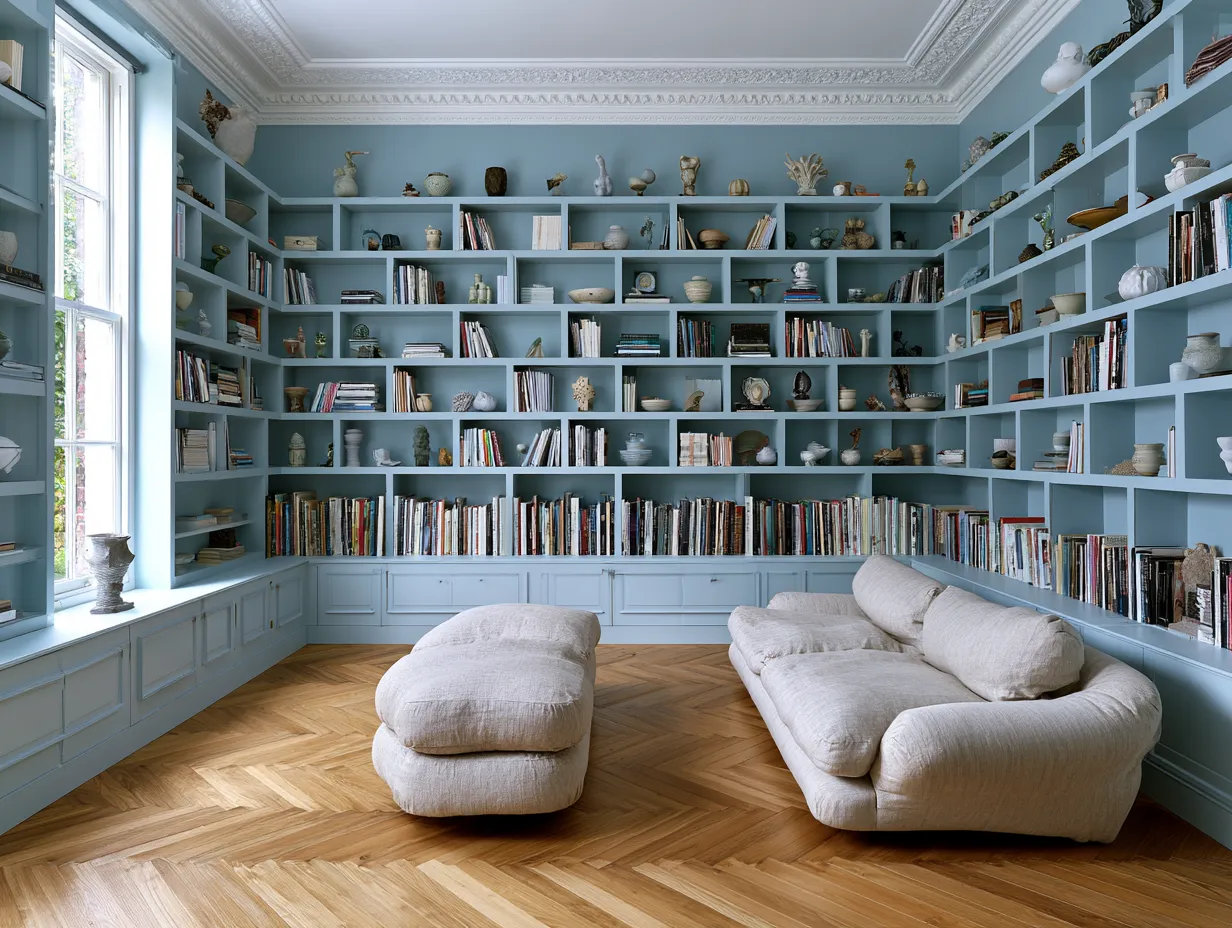
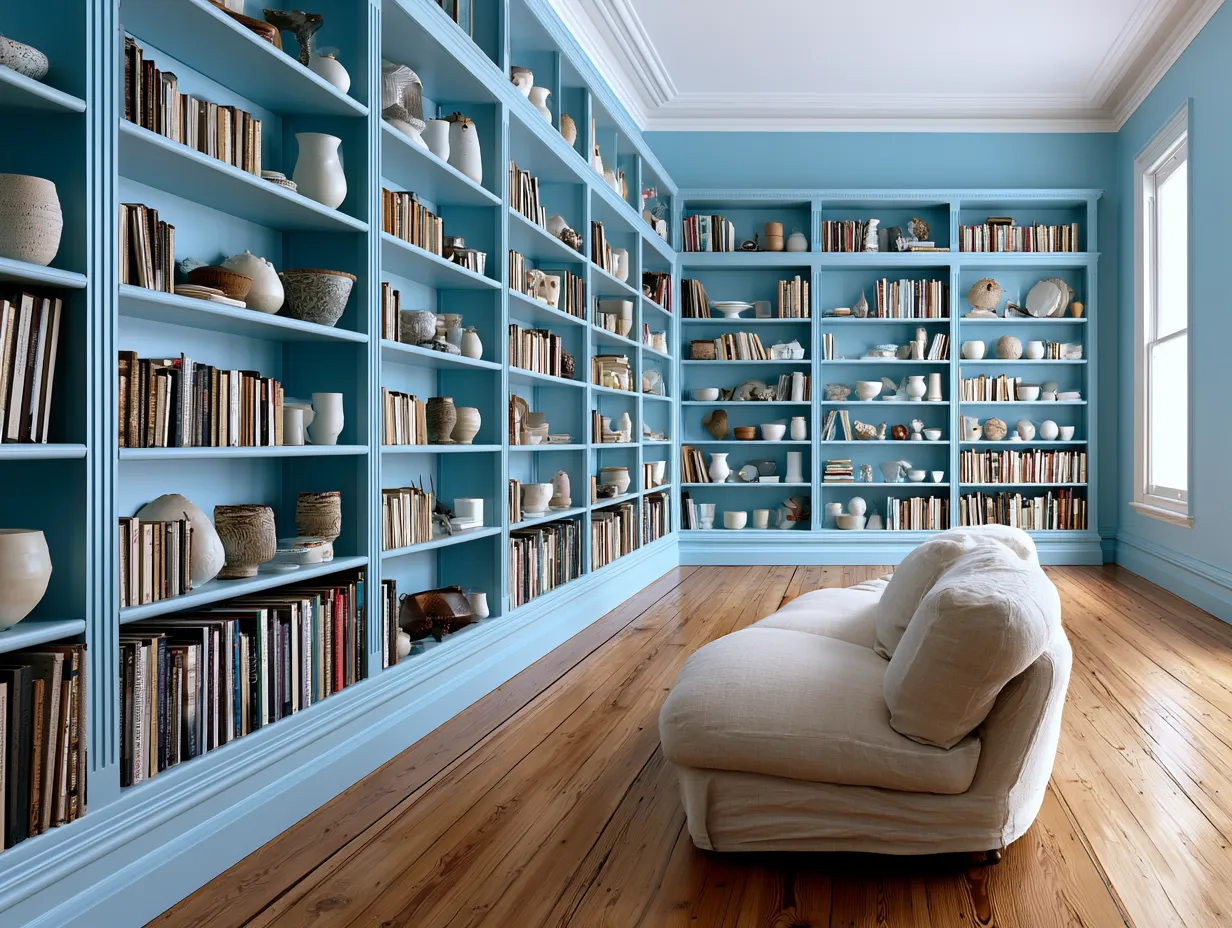
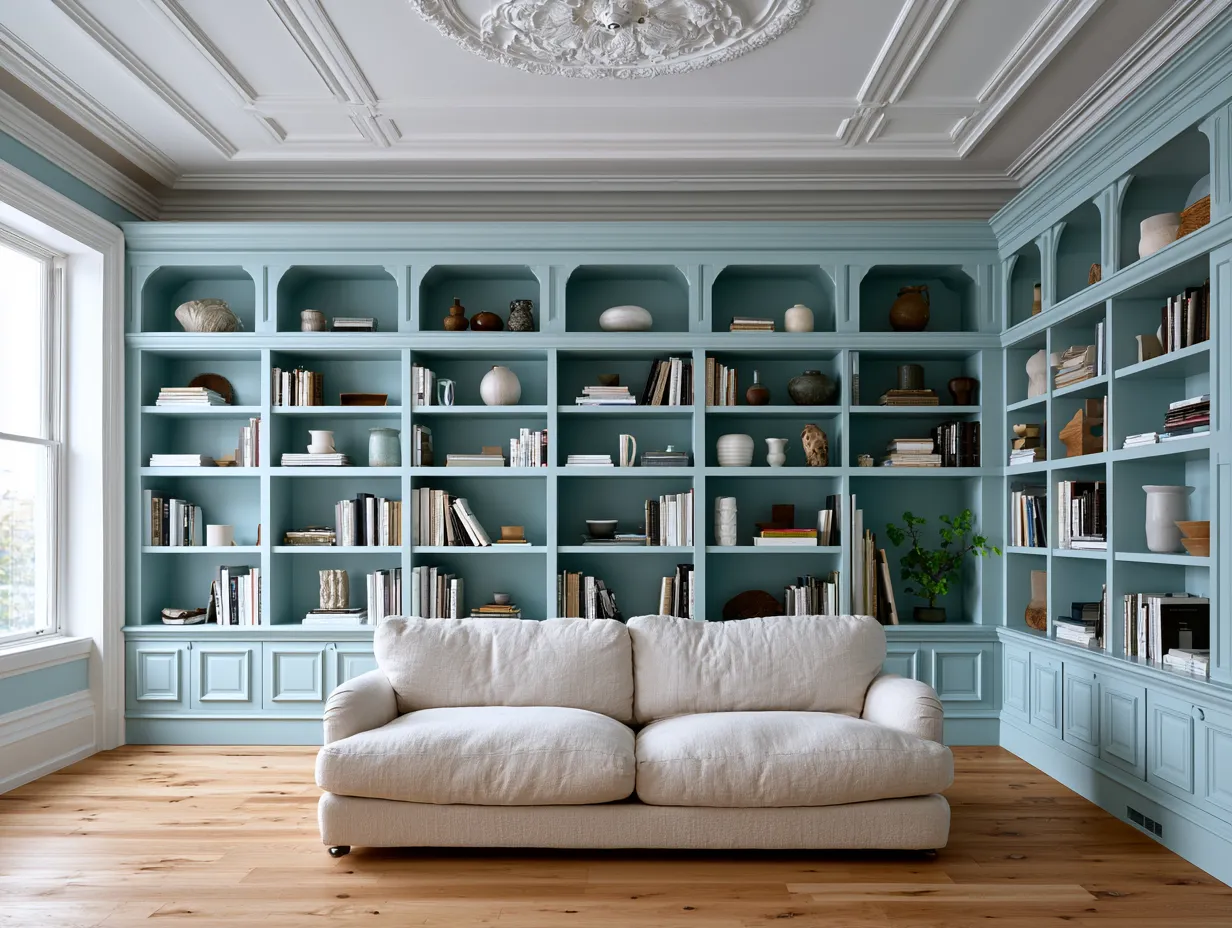
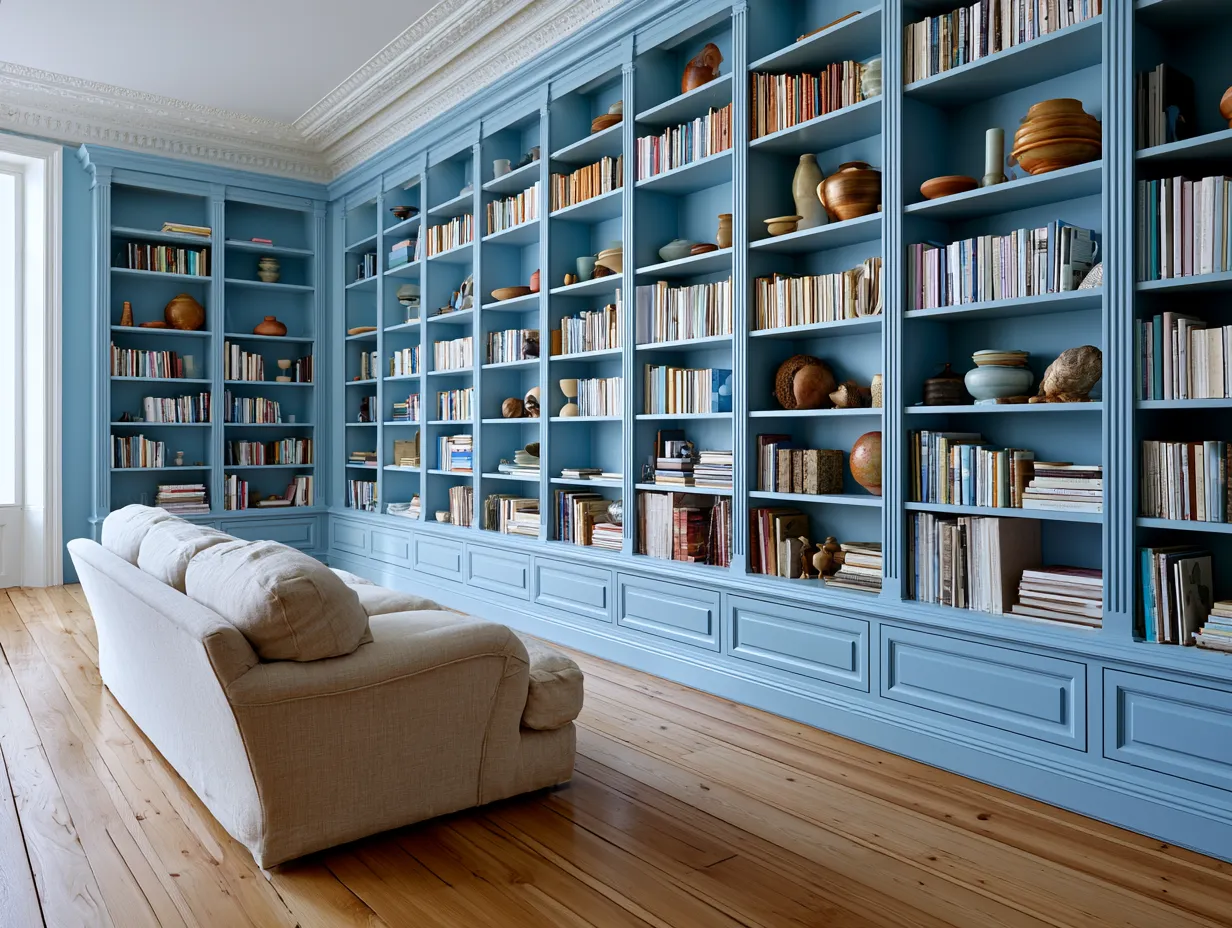
Designer Meg McSherry’s powder-blue floor-to-ceiling built-in bookcase, stretching wall-to-wall inside a heritage-style living room, became one of the most-circulated interior images of spring 2026 across design media. The color is what makes it land. Rather than treating the shelving as furniture, McSherry painted the entire built-in unit in a single saturated hue — unifying shelves, frame, and back panel into one architectural element. That is the move. The shelves stop being storage. They become a backdrop.
Why does this work so well in 2026 specifically? Because it sits at the intersection of two things people are craving: permanence and personality. A library wall cannot be mistaken for a showroom. It carries the marks of a person — their reading history, their objects, their color preferences. Those qualities are exactly what Discovering Japandi Bedroom Design for Zen Interiors identifies as the new currency of considered living: spaces that feel inhabited, not staged.
The anti-advice here is real: do not try to make a library wall look perfectly symmetrical. Rows of evenly spaced, identically sized books read as a prop wall, not a personal one. The shelves that generate the most visual pull online mix book spines, horizontal stacks, objects of varying heights, and intentional gaps. Perfection kills the cocooning effect that makes this trend work in the first place.
Homes & Gardens specifically noted that book drenching creates a cocooning effect even in larger rooms — a quality that matters enormously as open-plan living continues to dominate new builds. A full library wall gives a big, directionless room a psychological anchor. It says: this is the center of the space. Sit here. Stay a while.
Don’t Do This
- Do not aim for perfect symmetry — evenly spaced, identically sized books read as a prop wall and kill the personal, cocooning effect the trend depends on.
- Do not stop built-ins three-quarters up the wall if your goal is room zoning — a gap at the top defeats the spatial separation entirely and the eye reads straight through it.
- Do not rely on ceiling fixtures to light a library wall — they illuminate only the top shelves and flatten the lower two-thirds into a dark mass.
- Do not style the shelves exclusively with design-approved objects — a wall of matching neutral vessels looks like a hotel lobby, not a lived-in library.
Built-In Bookshelves Double as Architecture in Open-Plan Homes
Designer Bethany Adams uses library-wrap built-ins as room dividers in open-plan homes. Her phrasing is worth quoting directly: they ‘serve a dual purpose’ — display and storage on one side, architectural zone separation on the other. That functional argument is driving a significant portion of the search traffic around library wall living rooms right now, because open-plan layouts are everywhere and most people find them harder to furnish than they expected.
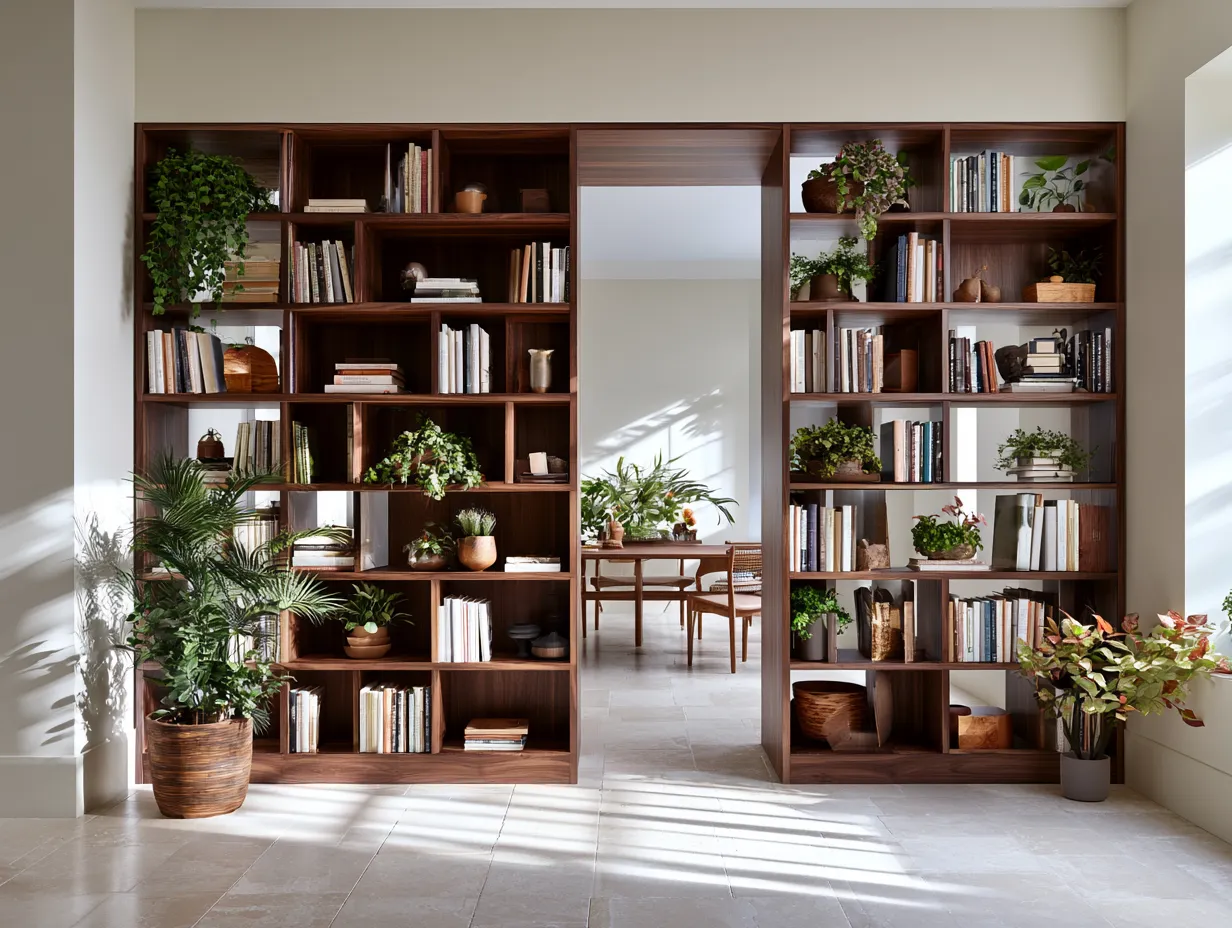
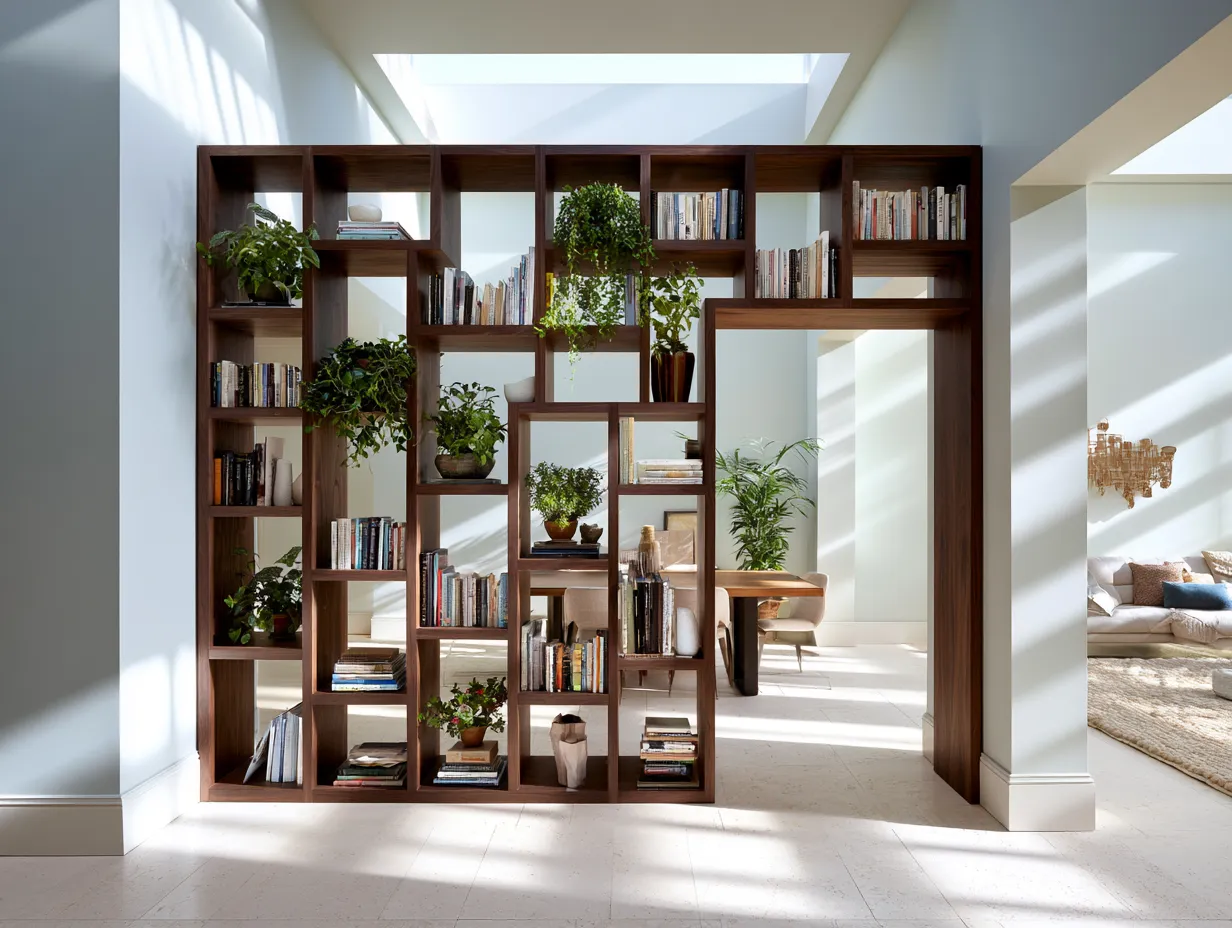
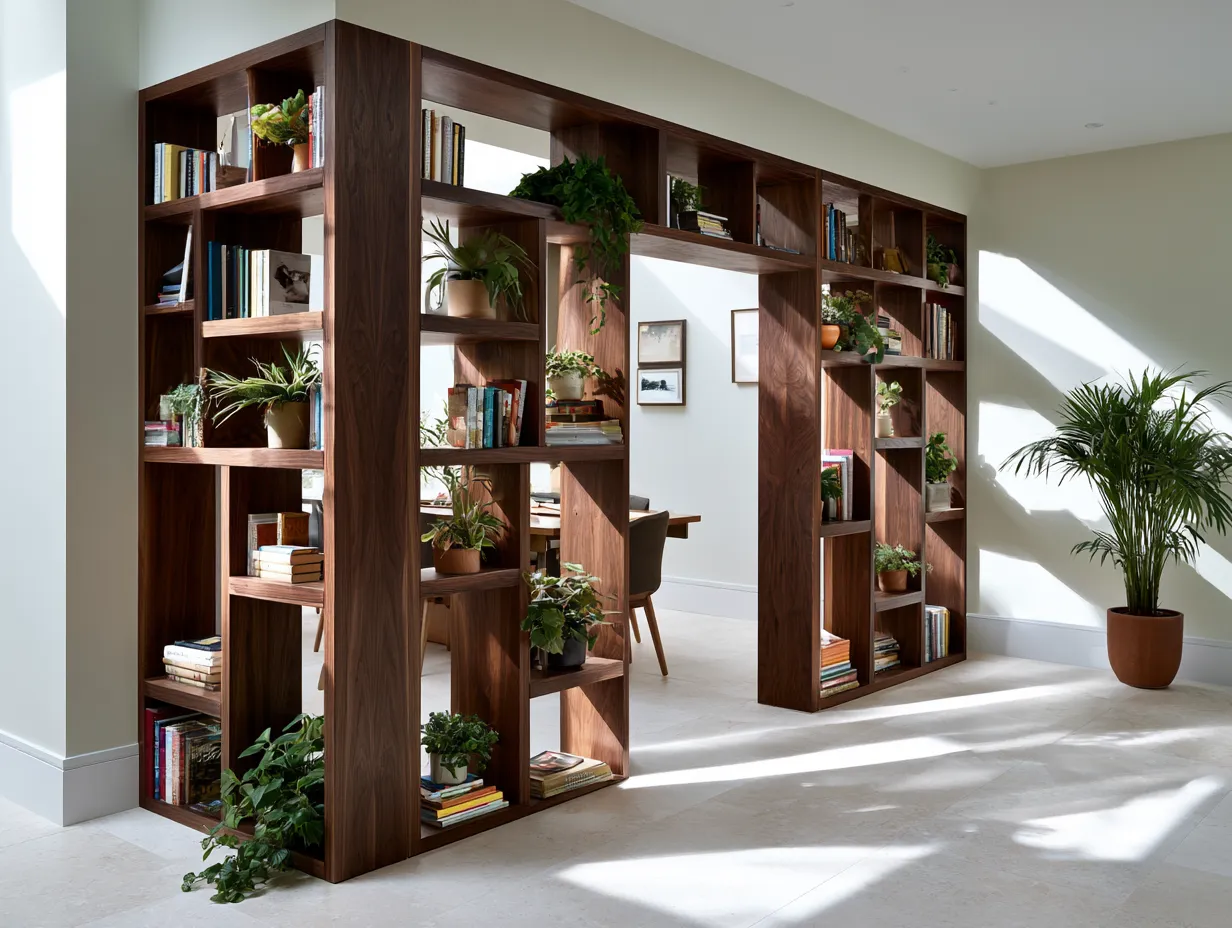
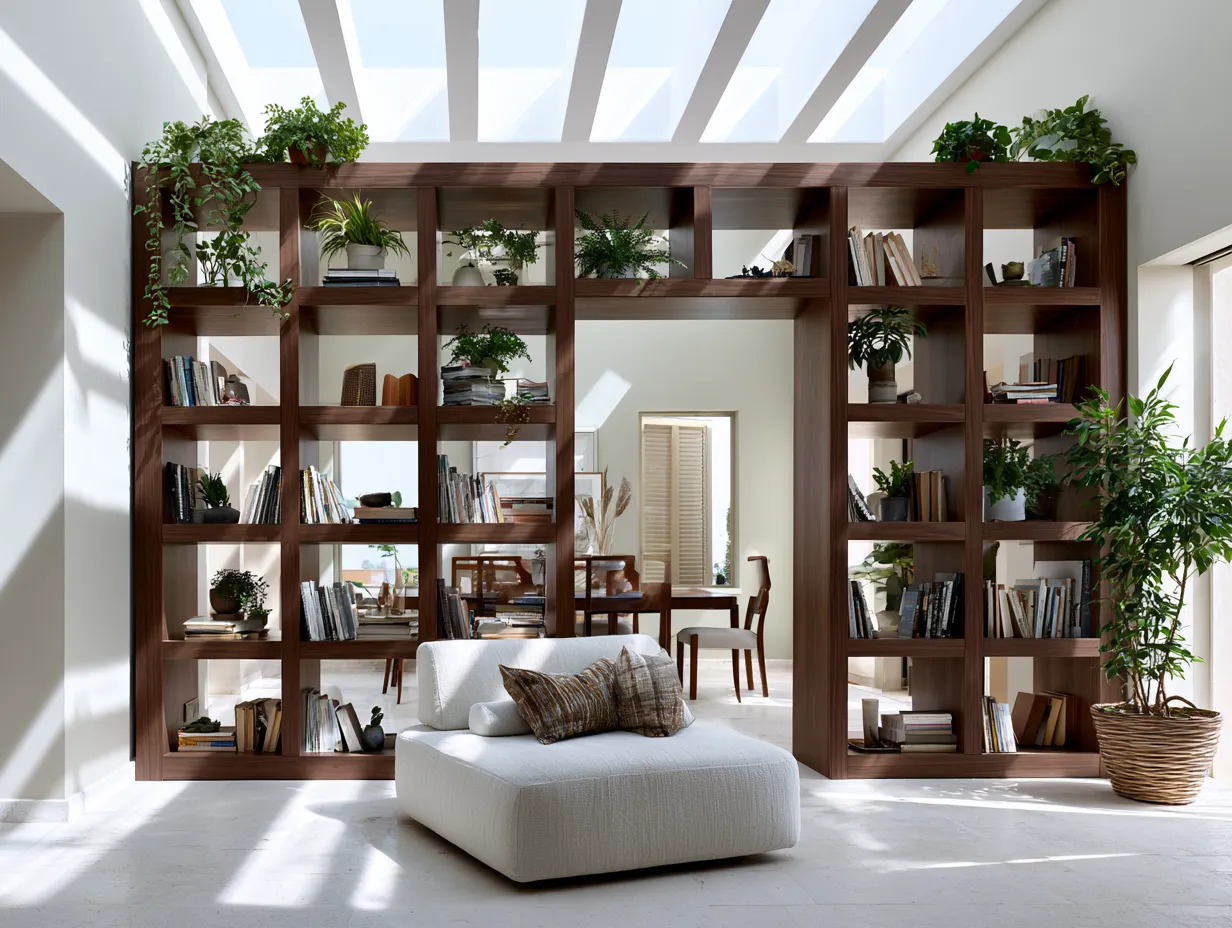
A freestanding sofa and a rug can suggest zones. A floor-to-ceiling built-in actually creates them. The difference is structural. When you walk from a kitchen into a living area and there is a full-height bookshelf wall defining the boundary, the room feels resolved. It does not need additional walls. It does not need a renovation. The shelving does the spatial work that architecture would otherwise require.
Homes full of natural material warmth and layered texture — like those featured in 16 Inspiring Log Home Interiors You Need to See — show exactly why built-ins read as permanent and rooted in a way that modular furniture cannot replicate. The library wall picks up that same language: it looks like it grew with the house.
What should you never do when using built-ins as room dividers? Do not run them to only three-quarters of the ceiling height and leave a gap at the top. That gap defeats the zoning effect entirely — the eye reads through it and the spatial separation collapses. Floor-to-ceiling contact is non-negotiable if the goal is architectural definition rather than decoration.
The practical build path for most homeowners splits into three tiers. Custom millwork from a company like Atlanta Bookshelves (which now offers a dedicated Built-In Wall System Program) delivers the most tailored result but sits at the higher end of budget. Mid-range buyers are finding strong options on Wayfair, where modular library bookcase systems — like a 142-inch three-unit configuration with glass doors, integrated LED lighting, and closed lower cabinets — retail from approximately $800 to $2,400. Entry-level builds use IKEA’s BILLY bookcases with OXNARD or HÖGADAL inserts, with full-wall builds documented repeatedly online at $600 to $1,200 depending on wall width. Each tier produces a genuinely different result, but all three share the same architectural logic: height, continuity, and commitment to the full wall.
| Build Approach | Estimated Cost | Best For |
|---|---|---|
| IKEA BILLY + OXNARD/HÖGADAL inserts | $600–$1,200 | Renters, first-time buyers, DIY-confident homeowners |
| Wayfair modular library systems | $800–$2,400 | Homeowners wanting LED lighting and glass doors without custom build |
| Custom millwork (e.g., Atlanta Bookshelves) | $3,000+ | Permanent installs, heritage homes, precise architectural integration |
Styling a Library Wall Without Losing the Room to Clutter
A fully loaded library wall can do one of two things: anchor a room with warmth and depth, or swallow it in visual noise. The difference is almost entirely in the styling ratio. The 60-30-10 principle applies directly here — approximately 60 percent of shelf space should carry books and objects you actually use or love, 30 percent should be breathing room and intentional negative space, and 10 percent should be a focused moment: a framed print, a sculptural vessel, a stack of oversize art books laid flat.
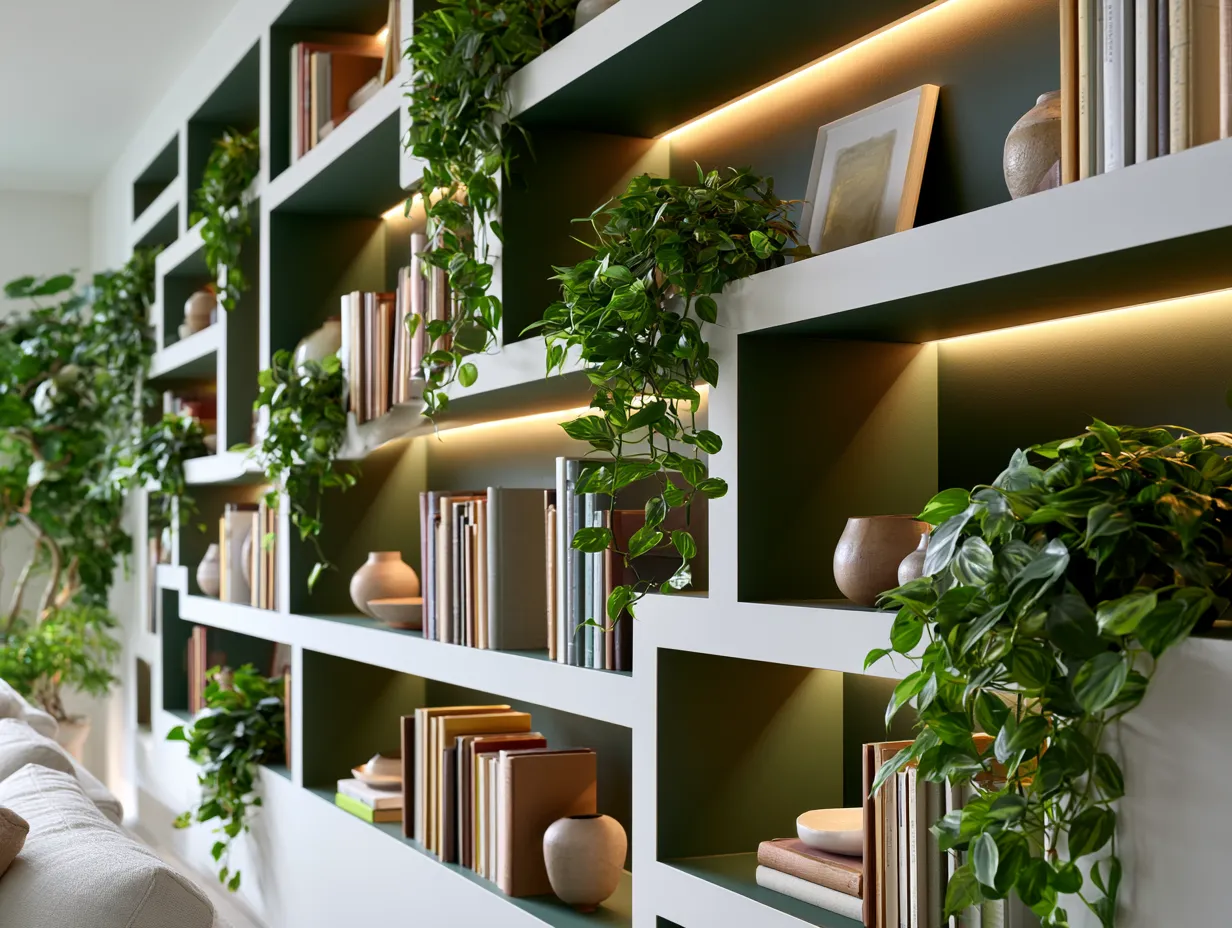
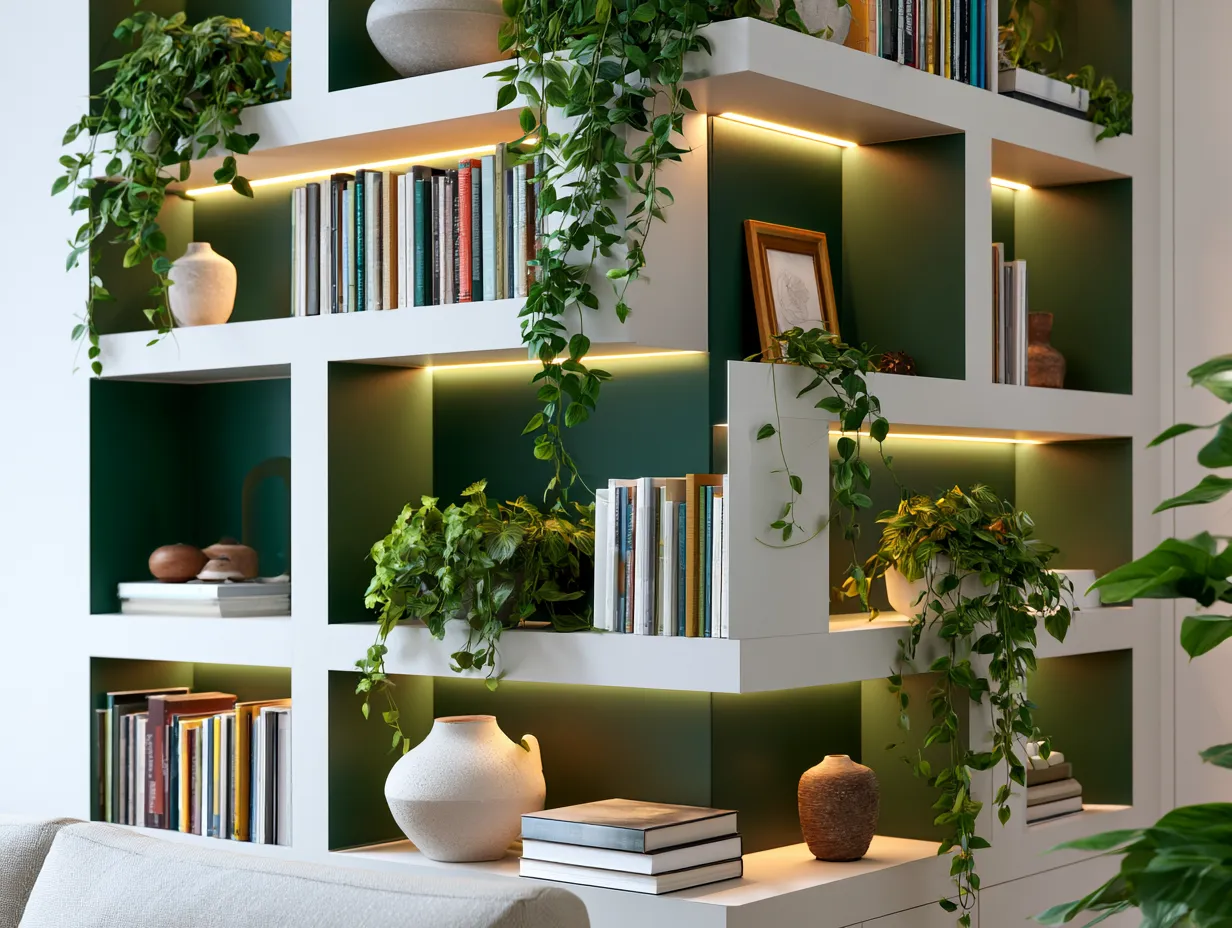
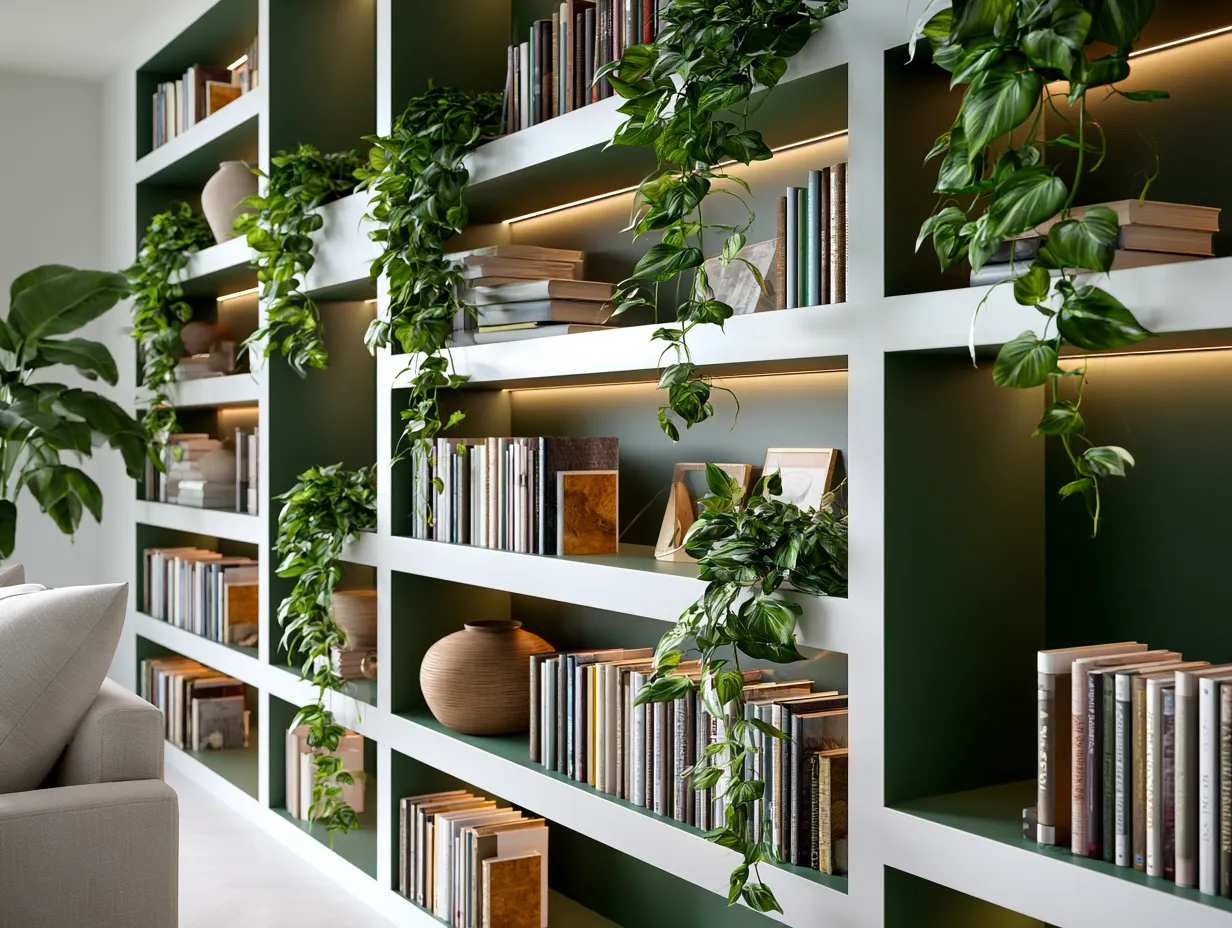
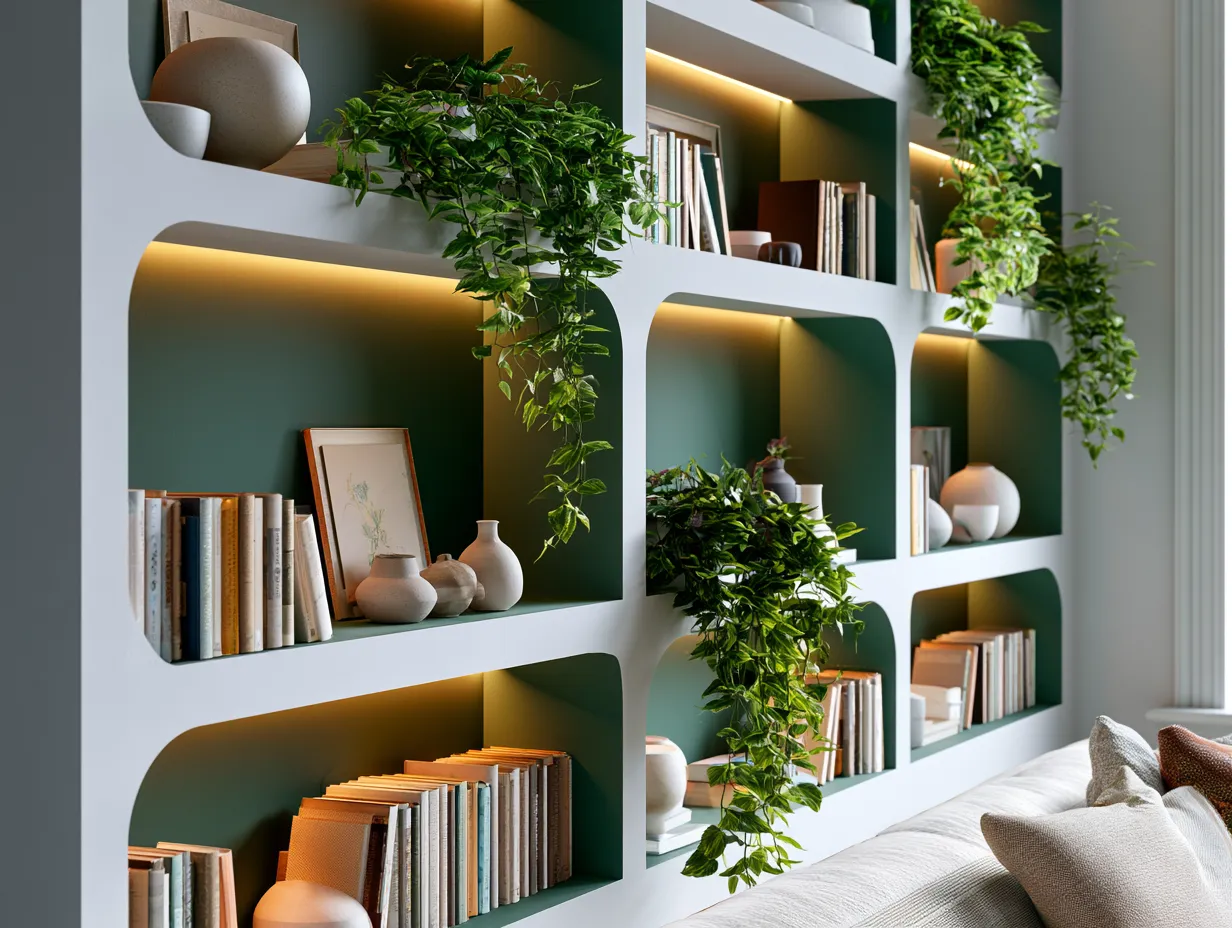
Color plays a bigger role than most people expect. Painting the interior back panels of shelves in a contrasting or accent color — deep forest green, warm terracotta, or a saturated navy — creates depth and makes the shelving look custom regardless of what produced it. This works whether the frame is IKEA BILLY or bespoke millwork. The eye reads the layering as intentional architecture. It costs roughly $30 in paint and fundamentally changes the visual weight of the wall.
What objects should anchor the shelf styling? Ceramics with irregular forms, vintage hardcovers with patinated spines, small framed works leaned rather than hung, trailing plants like pothos or philodendron that soften the linear geometry of the shelves. The goal is accumulated character over time — which is exactly the consumer mindset Pinterest’s 2026 trend tracking is capturing in its data on rising saves around artisan-woven and hand-knotted rugs. People want things that look like they have a history. The library wall delivers that signal immediately.
Lighting is where many library wall builds fall short. Do not rely on ceiling fixtures to illuminate built-in shelves. Ceiling light hits the top shelves and leaves the lower sections dark, which flattens the whole composition. Integrated LED strip lighting inside the shelving — which Wayfair now includes in several modular systems at the $1,200–$2,400 price point — or small puck lights placed at shelf intervals give the wall a glow that reads beautifully in the evening and makes the books and objects visible as individual elements rather than a single dark mass.
The final styling question is always: how personal is too personal? Not very. A library wall that holds only design-approved objects and tastefully matched book spines looks like a hotel lobby. The rooms that stop people mid-scroll on Pinterest — the ones generating saves and shares heading into the summer 2026 home refresh season — are the ones where a worn paperback sits next to a handmade bowl, where kids’ books share a shelf with travel photography volumes. That is what ‘lived-in luxury’ actually means. It is not curated neutrality. It is evidence of a real life, framed by beautiful architecture.
FAQ
how much does a built-in bookshelf wall cost
Costs vary significantly by approach. IKEA BILLY-based full-wall builds run $600–$1,200 depending on wall width. Wayfair modular library systems with glass doors and LED lighting sit at $800–$2,400. Custom millwork from specialists like Atlanta Bookshelves sits above that range and varies by linear footage and finish.
can renters install a library wall without damaging walls
Yes, with the right approach. Freestanding BILLY bookcases secured together and anchored to a single wall stud create a convincing floor-to-ceiling effect without permanent installation. The units can be patched and repainted on move-out. Many renters document this build online at under $800 for a full wall.
what is book drenching in interior design
Book drenching is the practice of covering an entire wall — floor to ceiling, edge to edge — with shelving filled with books and objects. Homes & Gardens named it one of the top 10 living room trends of 2026, noting that the saturation of shelving creates a cocooning effect that changes how a room feels spatially and psychologically.
what color should I paint built-in bookshelf back panels
Deep forest green, saturated navy, warm terracotta, and dusty sage are the most-shared choices in 2026 design media. The goal is contrast with the shelf frame so the back panel reads as a deliberate design layer. Even a $30 paint investment in this area makes modular shelving read as custom millwork.
how do I style a library wall without it looking cluttered
Apply a loose 60-30-10 ratio: 60 percent books and meaningful objects, 30 percent intentional negative space, 10 percent a focused visual moment like a leaned print or sculptural vessel. Mixing horizontal book stacks with vertical rows and varying object heights breaks the rigidity that tips a full shelf into visual noise.
can built-in bookshelves work as room dividers in open-plan homes
Yes — this is one of the primary functional drivers of the trend right now. Designer Bethany Adams specifically uses library-wrap built-ins as zone separators in open-plan spaces, noting they provide both display storage and architectural boundary-setting in a single element. The key is building them floor-to-ceiling so the eye reads a true spatial break.
Save this
Library Wall Living Room Built-Ins Are Architecture, Not Just Furniture
A library wall is a decision about permanence. It says the room is finished — not in the sense of being done, but in the sense of having a spine, a gravity, a reason to enter and stay. That is a quality no gallery wall, floating shelf, or statement sofa can replicate, which is exactly why floor-to-ceiling built-in bookshelves are the defining living room move of 2026.
Start with the wall you ignore most. Build up, not out. Paint the back panels something unexpected. Let the books be real. Save this post.
📌 Save to PinterestComplete guide
Furniture Decor Ideas for Every Room in Your Home
Living room, bedroom, dining, kitchen, outdoor — all in one place
Complete guide
The Living Room Design Ideas Vault Every Home Needs Right Now
Color, walls, furniture, layouts, styles, smart tech — 300+ ideas in one place