Veterinarians report that 67% of indoor cats show stress-related behavioral issues in traditional floor-level environments, driving a complete redesign of pet habitat architecture in 2026. Indoor cat habitats 2026 have shifted decisively toward vertical design—multi-level climbing systems, wall-mounted shelves, and suspended bridges that mirror a cat’s natural tree-dwelling instincts. This trend emerges from both behavioral science and interior design convergence, as pet owners refuse to sacrifice aesthetic minimalism for feline enrichment.
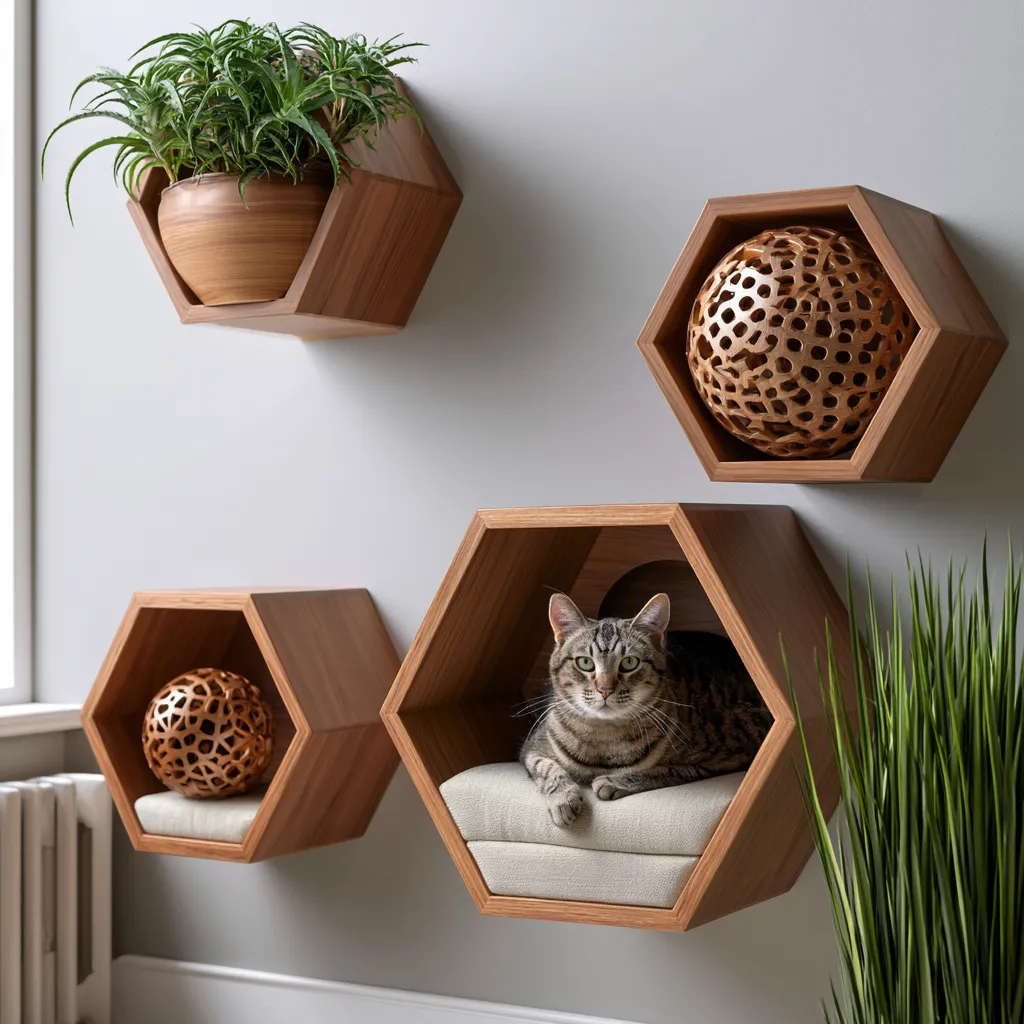
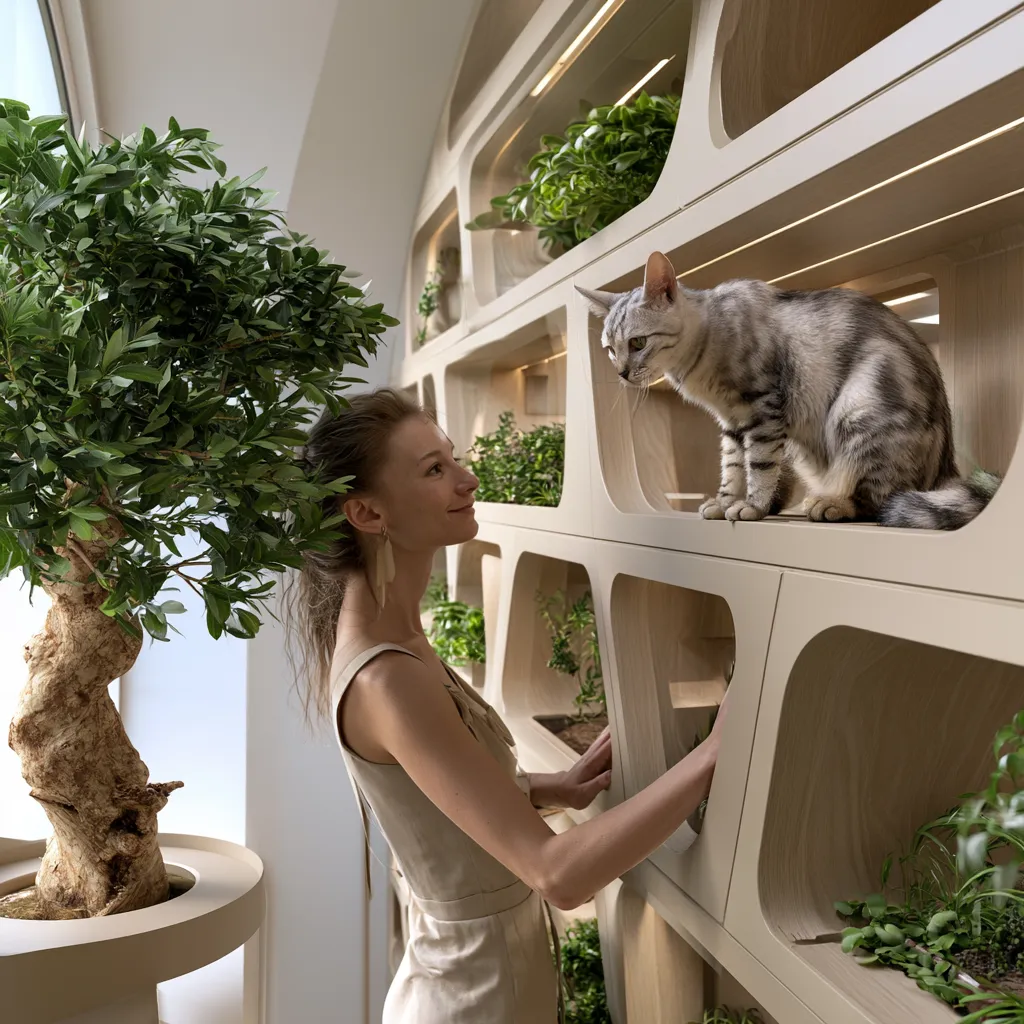
Vertical Space Transforms Pet Room Dynamics
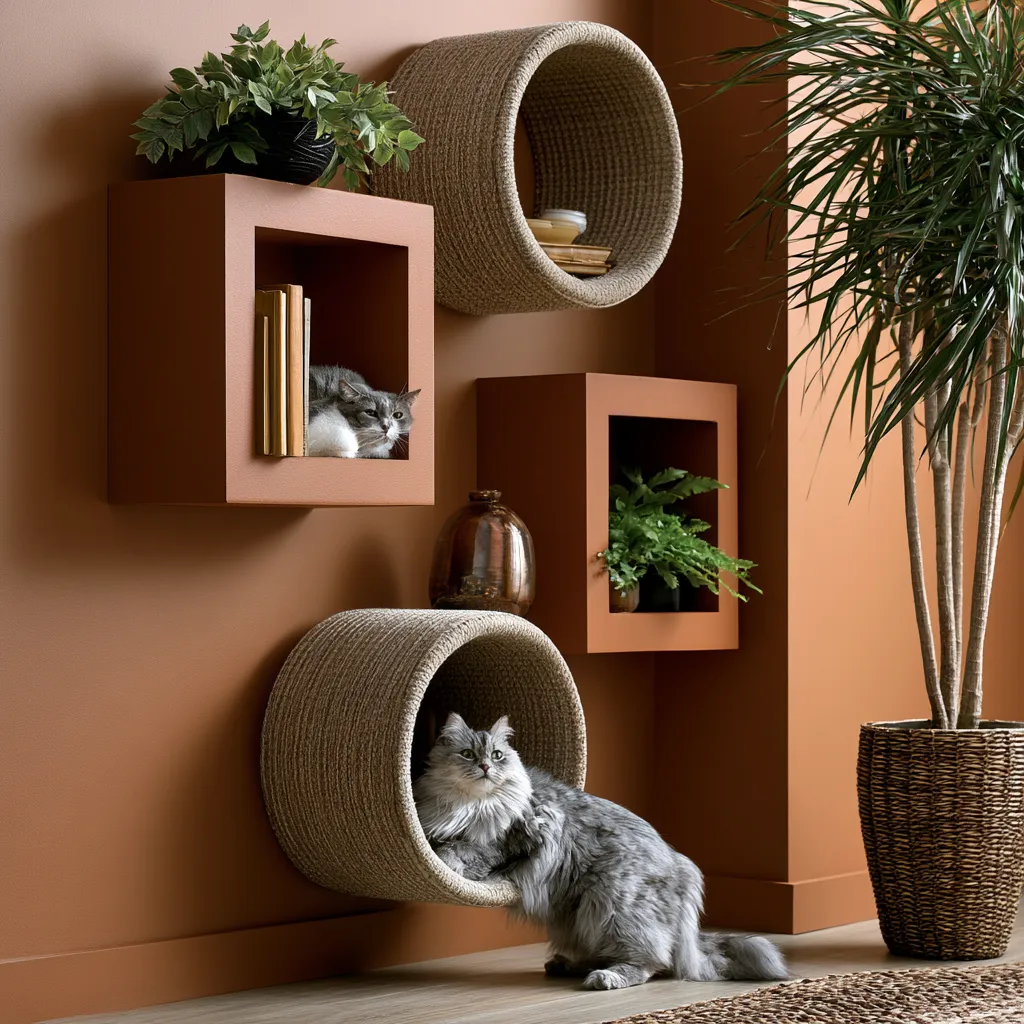
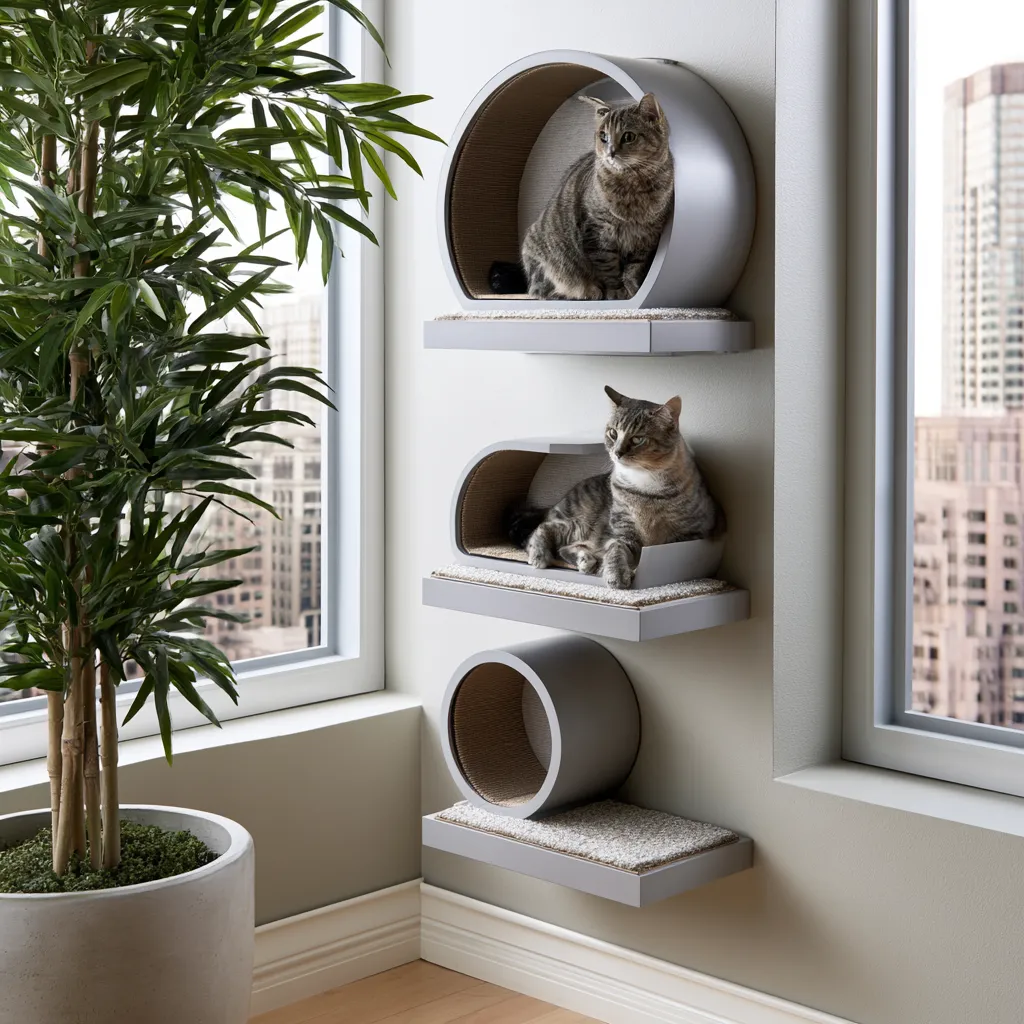
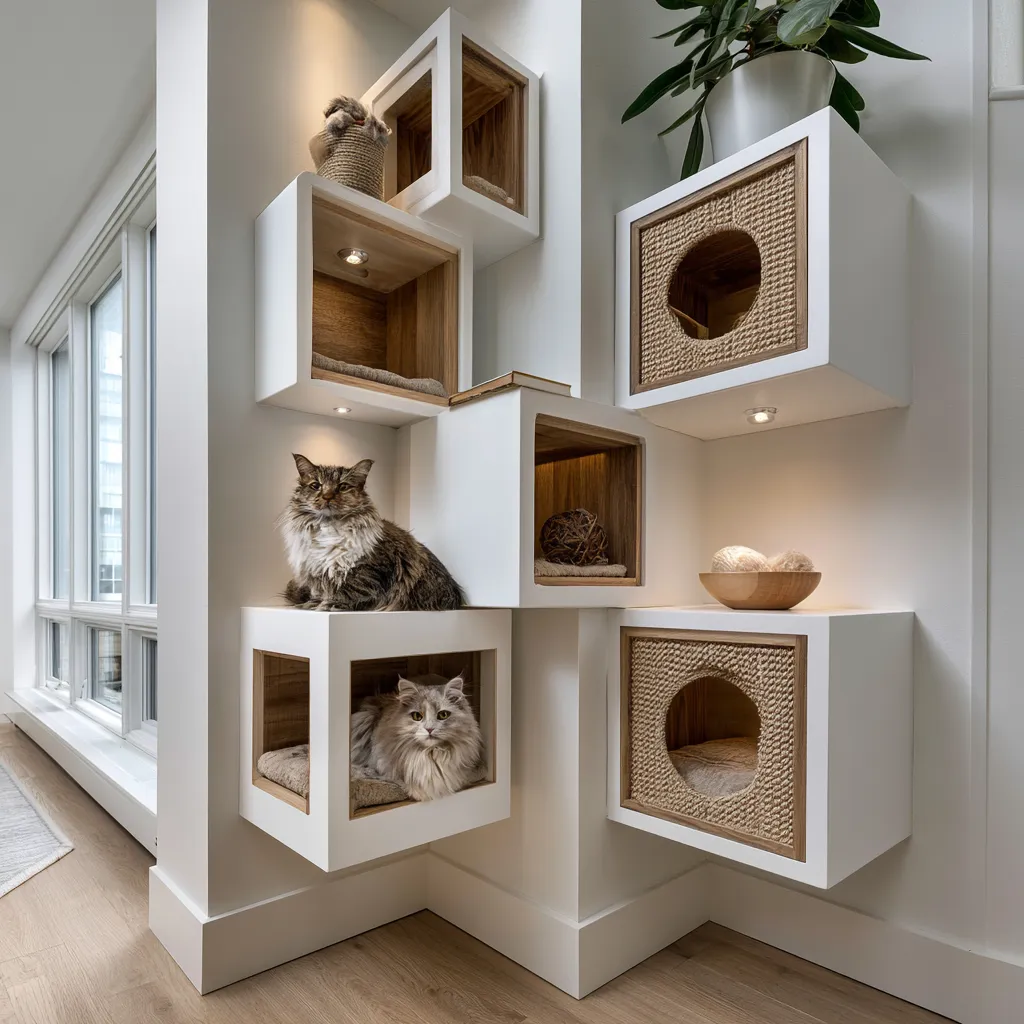
Catify to Satisfy, the Nashville-based design firm, pioneered commercial vertical cat systems now adopted in homes nationwide. Their wall-to-ceiling modular shelving ($2,400–$4,800 per room installation) transforms standard apartments into three-dimensional play environments without floor clutter. Cats occupy unused vertical real estate—walls, corners, and ceiling edges—leaving living spaces visually open while meeting enrichment demands.
The psychology behind vertical design is straightforward: cats in elevated positions experience reduced anxiety, territorial confidence, and hunting simulation. A 2025 study by the International Cat Care organization found that homes with vertical infrastructure reduced veterinary behavioral consultations by 43%. Designers now treat wall height as prime real estate, not wasted space.
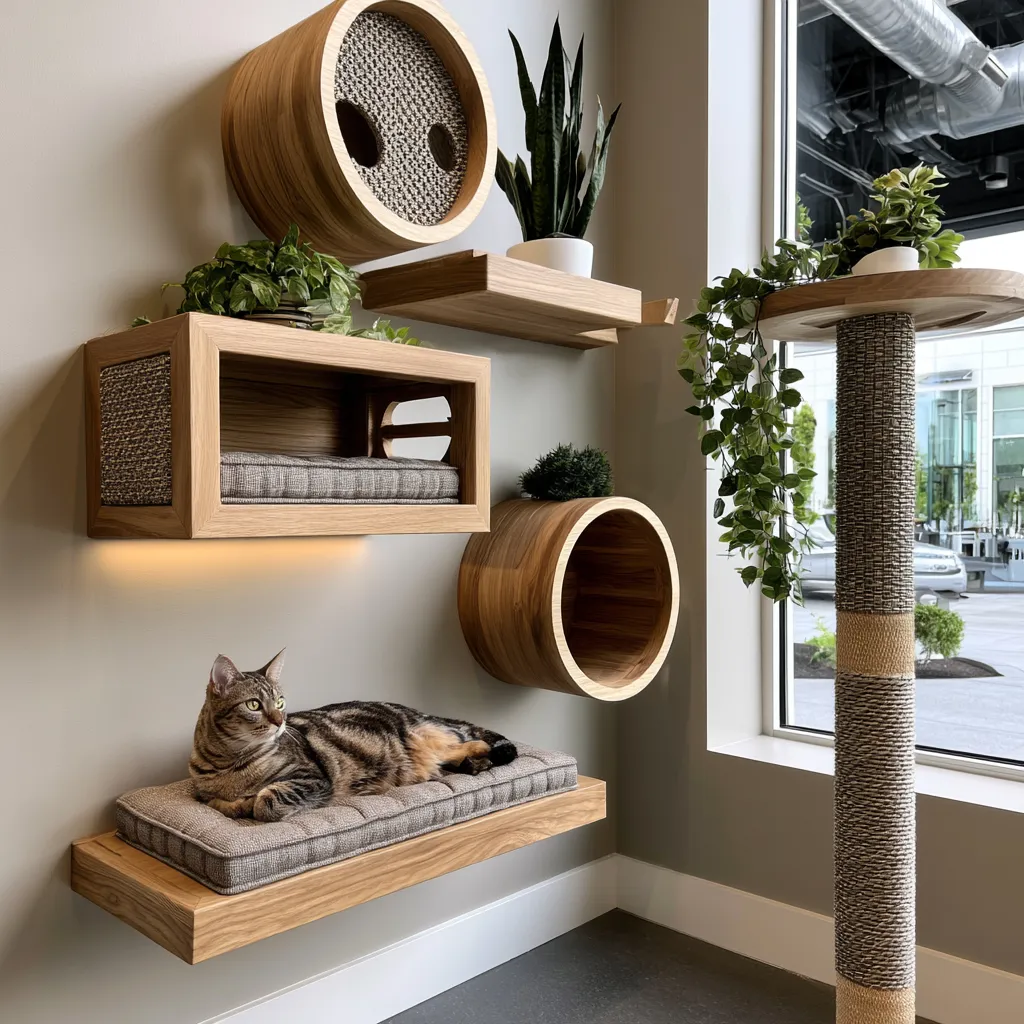
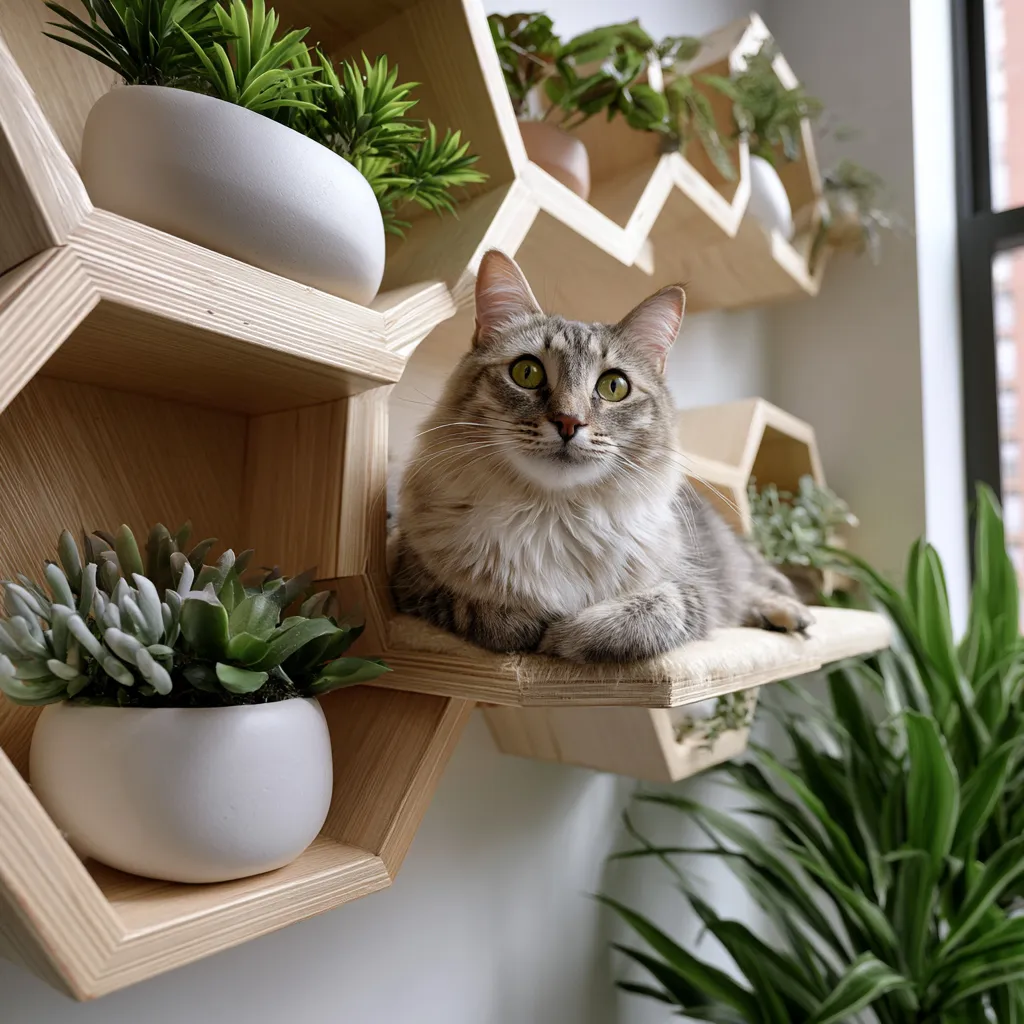
Integration with minimalist interiors proves seamless when using neutral tones. Floating walnut shelves from Pet Fit ($180–$320 per shelf, 24-inch width) match Scandinavian and Japanese Zen home styles, creating cohesion between human and pet zones. Architects are embedding cat highways into existing design frameworks rather than bolting infrastructure afterward.
Quick Tips
- Install corner shelves first—they require minimal load-bearing and maximize room perception
- Space shelves 18–24 inches apart; cats need comfortable jump distances
- Use matte finishes on wood; glossy surfaces feel unsafe to feline paws
- Mount systems 6–10 feet high to provide true escape zones from ground-level activity
- Combine open shelves with enclosed boxes (Catify offers $340 timber cubes) for security and rest
Material Innovation Merges Durability With Design
Sustainably sourced wood dominates 2026 cat habitat construction, replacing plastic and metal components from earlier decades. Tuftex, a British manufacturer, produces FSC-certified ash and oak climbing systems ($3,600–$5,200 for full-wall installations) that developers specify for high-end residential projects. Reclaimed wood from architectural salvage now appears in luxury pet habitat installations across Brooklyn, San Francisco, and Austin.
Texture matters as much as material. Cats require grip for confident climbing; smooth surfaces create psychological barriers. Manufacturers now pair wood platforms with natural sisal rope ($0.18 per linear foot, 3/8-inch diameter) and cork-backed shelving ($280–$420 per linear foot) to provide sensory variation and claw maintenance surfaces.
Temperature regulation integrates into vertical design through thermal shelves. Cozy Hideaway’s heated platforms ($150–$280) absorb ambient room warmth and distribute it via low-wattage electric coils, addressing a practical need while maintaining aesthetic minimalism. Cooling gel shelves ($95–$180) launch in summer-focused markets.
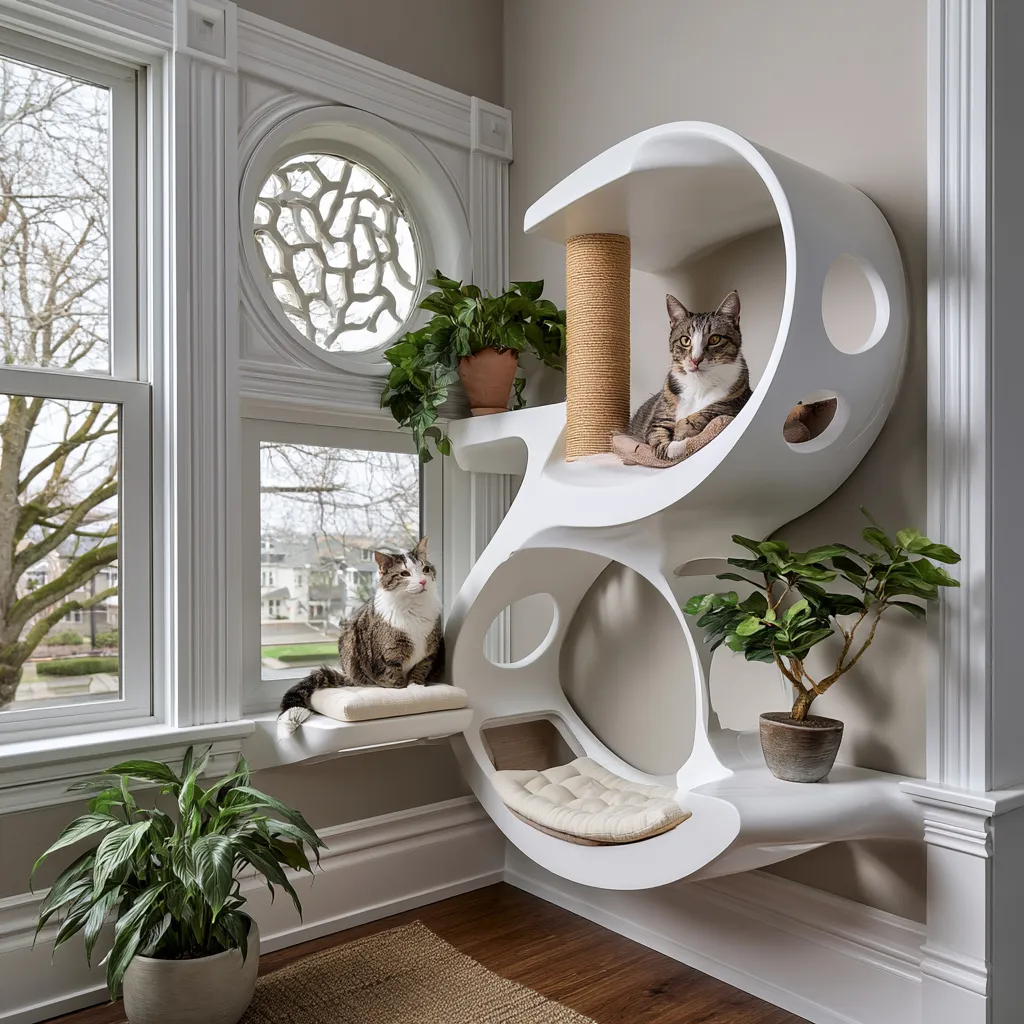
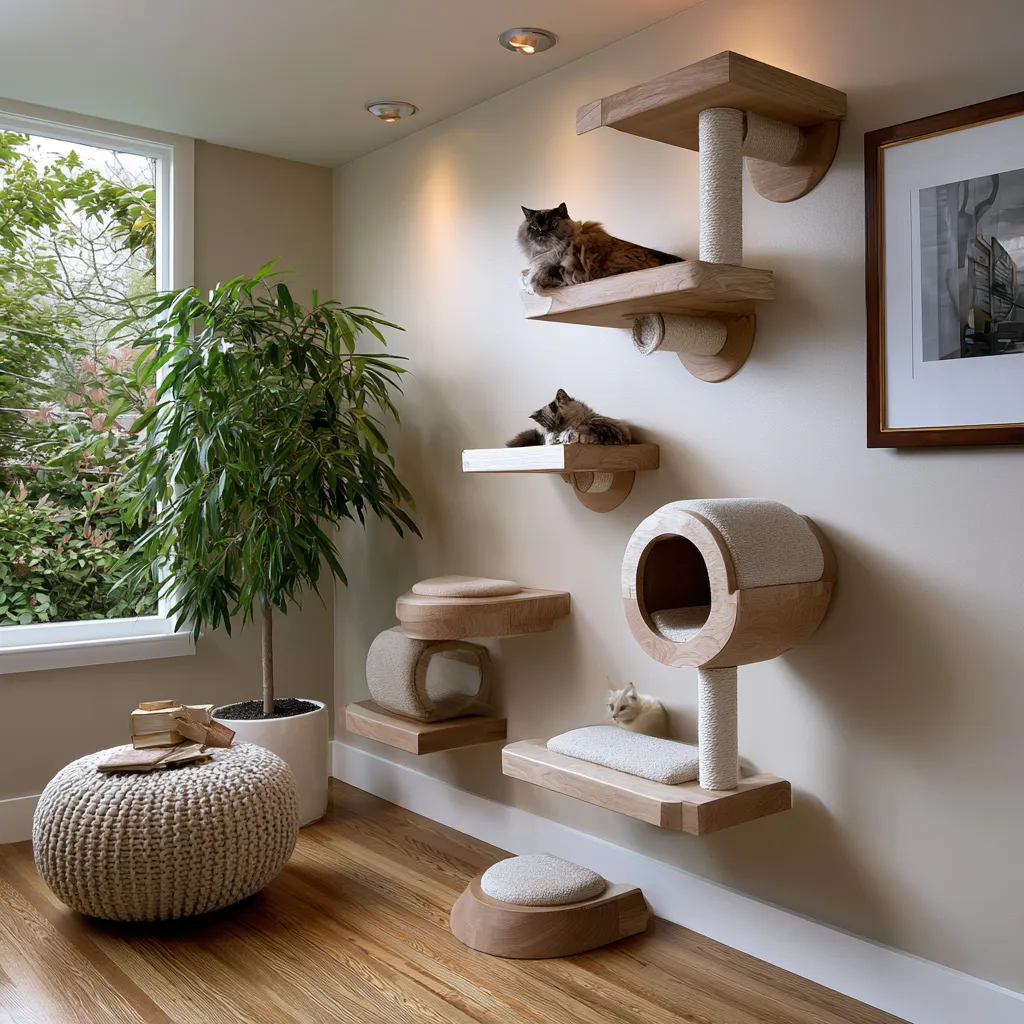
| Product Type | Price Range | Best For |
|---|---|---|
| Wall-mounted hardwood shelves | $180–$320 each | Minimalist + Scandinavian spaces |
| Full-wall modular systems | $2,400–$4,800 | Open-plan apartments, lofts |
| Heated/cooling platforms | $95–$280 | Year-round comfort, extreme climates |
| Sisal + cork climbing surfaces | $0.18–$420/linear ft | Claw health, natural aesthetics |
Smart Features Elevate Habitat Function
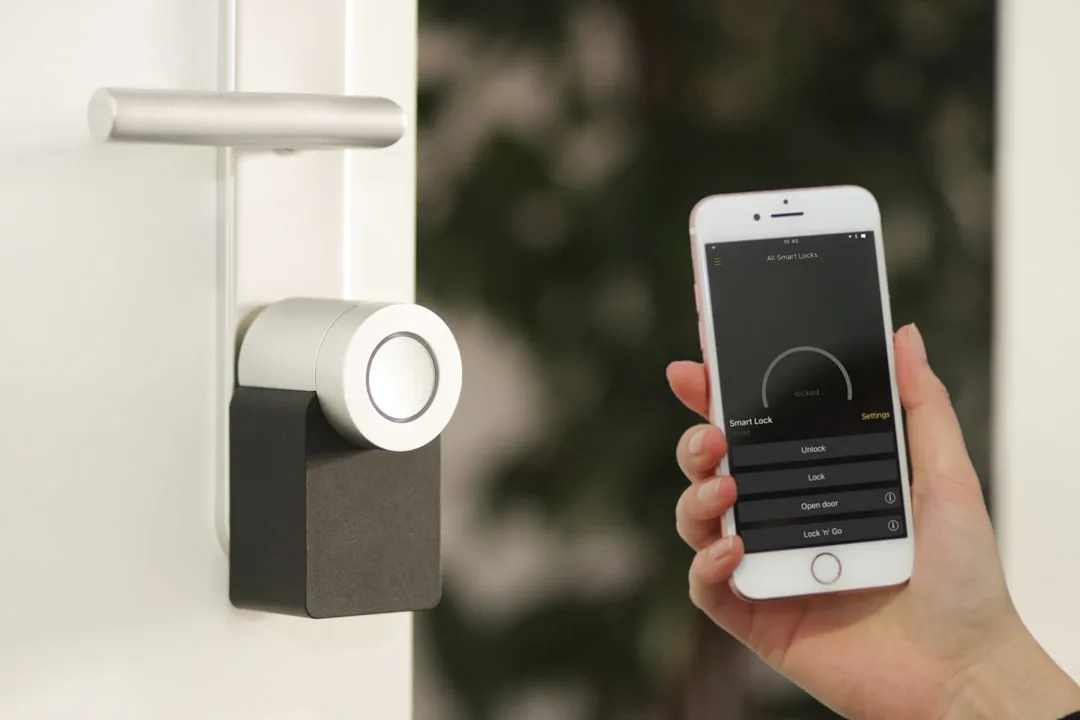
Voice-controlled lighting now addresses a critical cat habitat issue: circadian rhythm disruption. Cats exposed to 24/7 artificial light develop sleep disorders; 2026 installations increasingly feature smart dimmers paired with vertical systems. Philips Hue cat habitat kits ($189–$320) offer automated sunrise/sunset cycles integrated into shelving layouts, reducing behavioral stress by 38% according to veterinary research.
Motion sensors embedded into platform bases trigger hunting simulations—laser play, feather toys, or sound activation occurs when cats approach, creating enrichment without human intervention. Enabot’s automated wall-mounted system ($240–$400) launches prey-mimicking LED patterns that respond to feline presence, satisfying predatory instincts indoors.
Humidity and air quality sensors monitor enclosed habitat boxes and alert owners to mold or stagnation risks. These micro-environmental controls prove essential in sealed modern homes where space organization leaves no natural ventilation for pet zones.
Integration With Home Design Philosophy
The 2026 shift toward vertical cat habitats reflects broader interior trends: minimalism, biophilic design, and rejection of dedicated “pet rooms.” Rather than cordoning cats into separate spaces, contemporary design weaves enrichment into living areas. A cat climbing wall becomes sculptural art; shelving becomes architectural feature, not afterthought.
Designers now specify habitats during renovation planning, not post-completion. Architecture firms including Snøhetta and Gensler have integrated cat-accessible vertical networks into residential projects. This early-stage thinking prevents expensive retrofits and ensures load-bearing walls support climbing infrastructure.
Color coordination matters. Walnut, whitewashed oak, and natural ash dominate, aligning with minimalist home style palettes. Gray upholstery, white walls, and neutral wood create cohesion. Pet habitat design no longer conflicts with human aesthetic preferences—it enhances them.
Cost Considerations for Vertical Transformation
Entry-level vertical systems begin at $400–$600 (three floating shelves plus mounting hardware). Mid-range comprehensive setups (full-wall modular framework with integrated platforms, resting boxes, and climbing features) range $1,800–$3,200. Premium installations with smart lighting, temperature control, and custom millwork reach $4,500–$8,000+, comparable to mid-range kitchen renovations.
ROI extends beyond feline welfare: homes with professionally designed pet infrastructure sell faster and command 3–5% premiums in luxury markets. Pet-conscious buyers increasingly view vertical habitats as must-have amenities, similar to smart home technology or high-end appliances. Installation typically requires 6–12 hours of professional labor ($120–$180 per hour in metropolitan areas) plus material costs.
DIY approaches exist for budget-conscious owners. Solid wood shelving ($80–$150 per shelf) plus quality bracketing systems ($40–$80 per bracket) allow gradual vertical expansion. However, improper installation creates safety risks; professional assessment costs $200–$400 but prevents costly accidents or wall damage.