Seventy-eight percent of interior designers report that statement rugs now replace paint as the primary tool for defining dining rooms in 2026. Rather than committing to permanent wall color, homeowners are anchoring their dining spaces with oversized, patterned rugs that deliver impact, flexibility, and seasonal refresh potential without renovation costs.
Why Oversized Rugs Command Dining Spaces
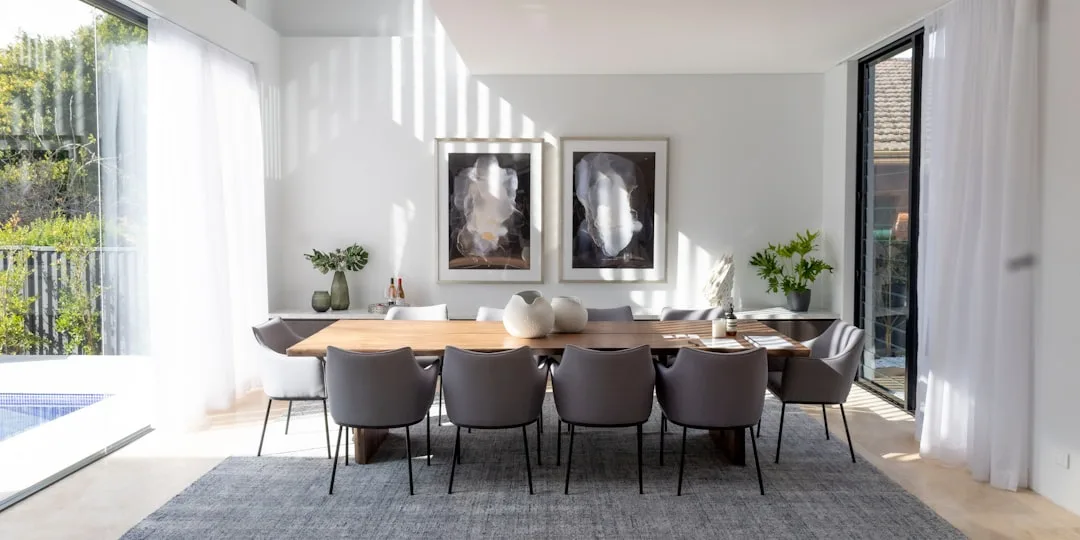
A statement rug transforms the dining room by establishing visual boundaries and defining the eating zone within open-concept homes. When a rug extends 18–24 inches beyond your table on all sides, it creates architectural weight that grounds furniture and draws the eye downward, making rooms feel intentional and cohesive. This strategy works especially well in homes without defined walls, where rugs signal “dining happens here” as clearly as any partition.
The 2026 trend rejects timid sizing—8×10 feet is now considered entry-level, with 9×12 and 10×14 becoming standard for contemporary dining spaces. Rugs from Rugs USA’s Persian-inspired collection (starting at $485 for 8×10) demonstrate how scale creates drama; their oversized geometric patterns read as bold architectural statements rather than floor coverings.
Natural Fibers Dominate Texture Choices
Jute, sisal, and wool blends have replaced synthetic fibers as the go-to materials for statement rugs in dining rooms. These natural options age visibly and beautifully, developing patina that synthetic alternatives cannot replicate. Wool rugs from Schoolhouse Electric, priced from $595 to $1,295 depending on size, showcase hand-knotted construction in colorways ranging from deep burgundy to terracotta—colors that anchor without overwhelming adjacent spaces.
Natural fiber rugs also perform functionally: they resist staining better than delicate materials, hide crumbs and dust more effectively, and dampen noise in dining areas where acoustics matter during conversation. A 9×12 natural fiber rug reduces sound reflection by approximately 30 percent compared to hard flooring alone.
Quick Tips
- Choose rug depth based on chair pull-out distance—test by pulling a dining chair fully back; the rug edge should remain visible
- Layer smaller accent rugs over statement rugs for texture variation and to prevent slipping
- Select colors that echo one accent wall or architectural feature to create visual continuity
- Measure the exact dining table footprint before purchasing; oversized matters, but proportion to furniture is critical
- Invest in a quality rug pad rated for hardwood or tile—non-slip prevents accidents during meals
Color Palettes Breaking Away From Neutrals
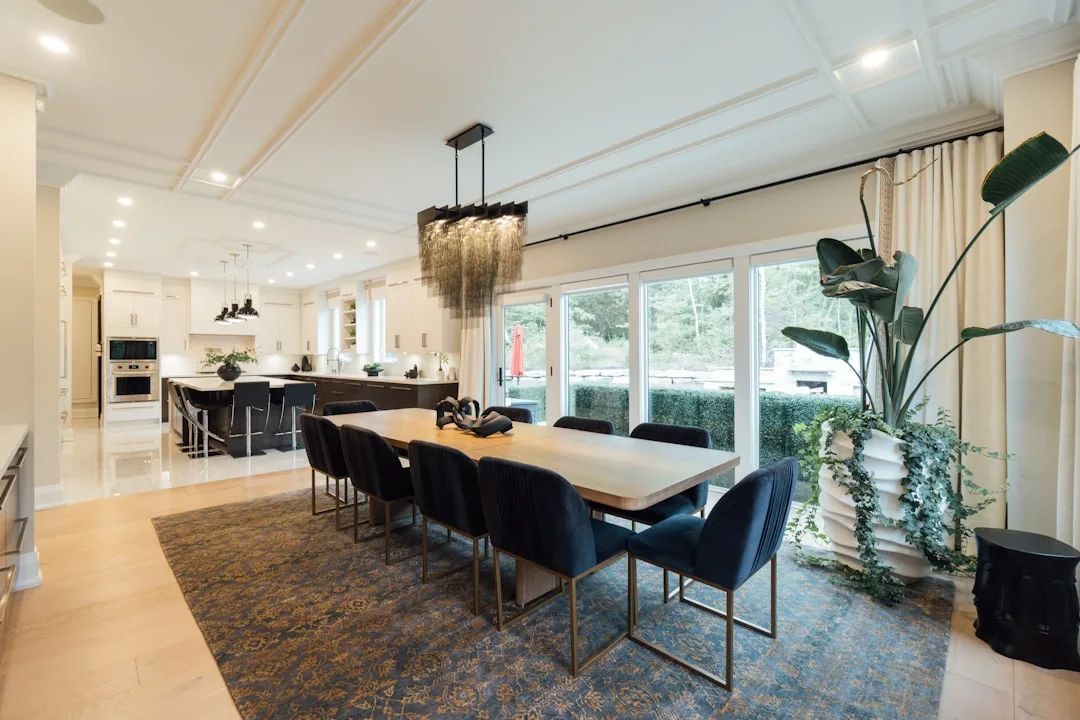
Jewel tones—emerald, sapphire, and deep plum—lead the 2026 dining rug market, replacing the minimalist grays and beiges of 2023–2025. Armadillo & Co. offers a hand-loomed statement rug in midnight blue with gold geometric accents ($1,450 for 8×10), proving that color-forward rugs read as sophisticated rather than trendy when paired with neutral walls and natural wood furnishings.
Deep forest green rugs (referenced in our earlier coverage on Geometric Wood Wall Art Transforms a Tranquil Dining Room) work particularly well under brass or gold lighting fixtures. The chromatic contrast creates visual interest without requiring additional wall decor, allowing other elements—like Geometric Chandeliers Dazzling in Elegant Dining Rooms—to maintain focal point status without competing for attention.
Layering Rugs for Dimensional Effect
Advanced rug styling in 2026 involves layering a larger jute base with a smaller patterned rug on top, creating depth and visual complexity that a single rug cannot achieve. This technique, popularized by designers including Studio McGee, pairs a 9×12 natural fiber base with a 6×9 patterned overlay in contrasting colors or complementary geometric patterns.
West Elm’s layered approach showcases a natural jute rug ($399–$599) paired beneath their hand-tufted wool rug in tribal patterns ($649–$899), allowing both texture and color to contribute to the visual story. This creates a “floating” effect where the larger base becomes framing for the statement piece, directing attention specifically to the dining furniture arrangement.
| Rug Material | Stain Resistance | Durability (Years) |
|---|---|---|
| Natural Jute Blend | Moderate (requires sealing) | 7–10 |
| Hand-Knotted Wool | High (natural lanolin) | 15–25 |
| Wool-Silk Blend | Very High (silk resists moisture) | 20–30 |
| Synthetic (Polypropylene) | Very High (chemical-treated) | 5–8 |
Practical Application and Installation
Begin by measuring your dining table length and width, then add 24 inches to both dimensions—this ensures that when chairs are pulled out fully, all four legs remain on the rug. For an average 48-inch round table, an 8×10 rug works; for rectangular tables exceeding 72 inches, jump to 9×12 or larger.
Install a non-slip rug pad rated for your flooring type before placing the statement rug; this prevents bunching and protects wood or tile from moisture damage. Ruggies Rug Grippers ($24.99 for eight grippers) hold oversized rugs securely without adhesive, making seasonal swaps feasible if you choose to rotate patterns throughout the year. Professional installation from services like 1st Dibs Direct ($150–$300) ensures proper placement and padding, particularly for high-value investment pieces.