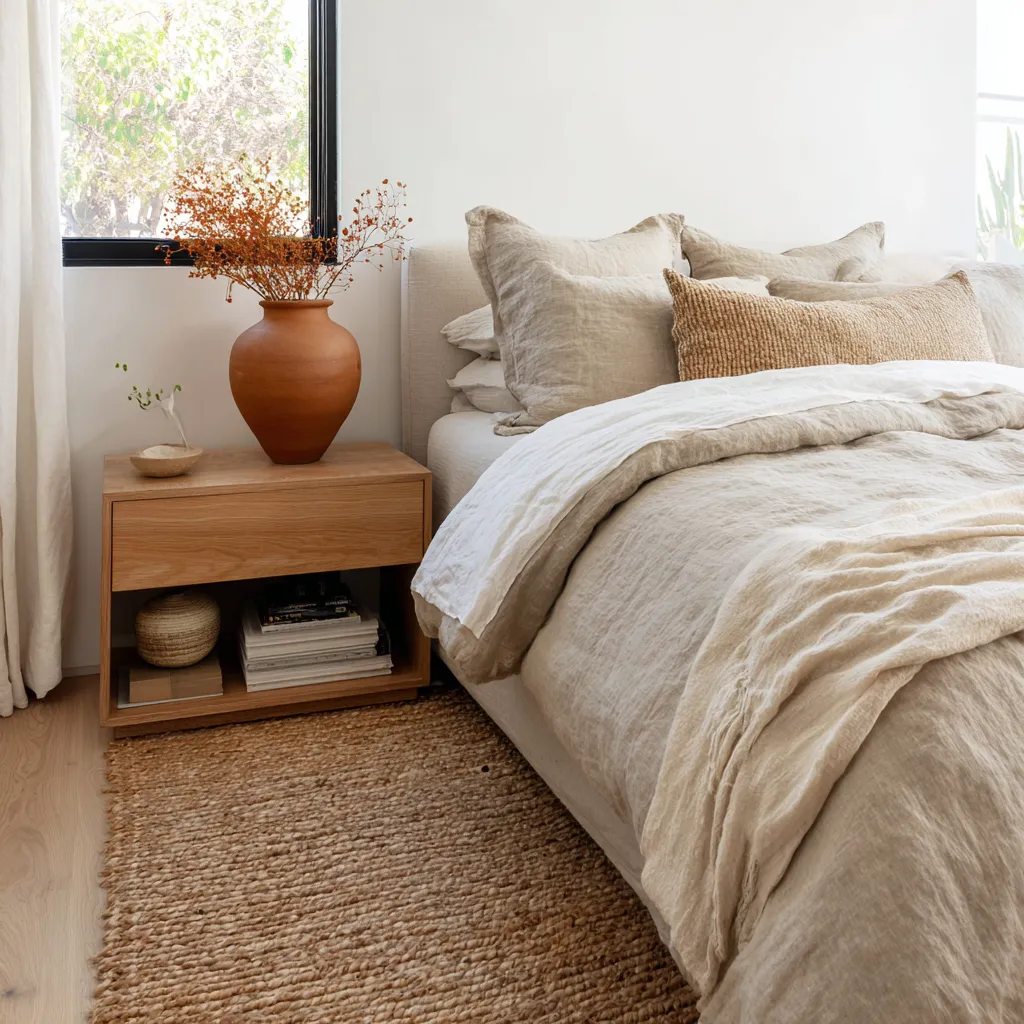
The Instagram-perfect smooth matte wall is experiencing its first significant decline since 2019. Search interest for “plaster walls” has increased 347% since January 2026, while “textured plaster techniques” surged 412% in the same period. More tellingly, Benjamin Moore reported a 28% drop in their ultra-matte finish sales in Q1 2026, with customer inquiries shifting toward compatible primers for plaster and limewash applications.
This isn’t nostalgia. It’s a material rebellion against the algorithmic smoothness that has dominated interiors for nearly a decade. Designers and homeowners are deliberately choosing finishes that photograph imperfectly—surfaces that change with light, reveal the hand of the maker, and improve with age rather than deteriorate.
The Italian Influence and Material Authenticity
The current plaster movement originates from two distinct sources. First, the continued influence of Italian restoration techniques, particularly Venetian plaster and tadelakt, which gained serious traction when Casa Batlló in Barcelona completed its 2024 restoration using traditional lime plaster methods. The project received extensive coverage in architectural publications, exposing millions to the depth and complexity these finishes offer.
Second, the rise of North African and Mediterranean design vocabularies in urban markets. Following the momentum of 3+ Urban Mediterranean Interior Trends for Stylish City Dwellings, American and Northern European designers are importing not just the color palettes but the actual material strategies of these regions—surfaces designed for climate adaptation, longevity, and low-tech maintenance.
Architect Annabelle Selldorf’s recently completed residential tower in Brooklyn features tadelakt plaster in 60% of units, a decision she described as both aesthetic and philosophical. The material requires skilled application, resists moisture naturally, and develops a patina that conventional paint cannot replicate. It’s become a signature detail that adds $40-60 per square foot to project costs—and buyers are paying it.
The Technical Shift: Why Now
Plaster application was historically labor-intensive and required specialized knowledge that largely disappeared from the residential trades. What changed? The professionalization of the artisan economy. Platforms like The Plaster Workshop in London and the American Society of Plasterers launched certification programs in 2024-2025, training a new generation in lime plaster, clay plaster, and tadelakt techniques. There are now approximately 2,400 certified plaster artisans in the US, compared to roughly 300 in 2022.
Material suppliers have also simplified access. Companies like Bauwerk Colour and Portola Paints expanded their lime wash and Roman clay product lines, offering pre-mixed formulations that maintain material authenticity while reducing application complexity. These aren’t faux finishes—they’re genuine mineral-based plasters that cure through carbonation, not evaporation, creating surfaces chemically different from paint.
The ecological argument strengthens the trend’s position. Lime and clay plasters are breathable, regulate humidity, contain zero VOCs, and sequester carbon as they cure. As embodied carbon becomes a standard consideration in residential design, specifying plaster over multiple coats of acrylic paint makes measurable environmental sense.
Application Strategies and Regional Variations
In practice, the plaster revival manifests differently across design sensibilities. Exploring the Charm of New Vintage French Interior Trends shows how Parisian apartments use coarse lime plaster in heritage whites and greys, emphasizing the material’s historical continuity. Meanwhile, Los Angeles designers like Brigette Romanek are applying smooth tadelakt in earthy terracottas and warm neutrals, creating California-Mediterranean hybrids.
The Scandinavian interpretation leans toward clay plasters in pale, chalky tones—materials that enhance hygge sensibilities while meeting strict environmental building standards. Copenhagen-based Norm Architects specified clay plaster throughout their 2026 residential project in Hellerup, noting that the material’s thermal mass and acoustic properties justified the cost premium beyond aesthetics.
Commercial applications are equally telling. Aesop’s recent store openings in Tokyo, Melbourne, and Toronto all feature tadelakt or lime plaster walls, signaling the finish’s association with craft, authenticity, and environmental responsibility—brand values the company wants physically embedded in its retail environments.
Living With Plaster: Maintenance and Reality
Unlike paint, plaster requires a different relationship with maintenance. Minor scuffs and marks often blend into the surface character rather than requiring immediate touch-ups. Lime wash can be reapplied in thin coats without stripping previous layers, making it effectively self-repairing over time. Tadelakt, once cured and sealed with olive oil soap, becomes water-resistant enough for shower applications—a capability that surprises homeowners accustomed to tile-only wet areas.
The finish does demand acceptance of imperfection. Plaster will crack slightly as buildings settle. Color variation across a wall isn’t a defect but an intended characteristic. For clients emerging from the grey-and-white minimalism of the 2010s, this requires aesthetic recalibration. Designers report spending more time on material education now than in previous years, helping clients understand that visible texture isn’t poor craftsmanship but evidence of hand application.
Cost and Accessibility
Raw plaster finishes typically range from $8-25 per square foot for materials and labor, compared to $2-4 for premium paint. Tadelakt and Venetian plaster occupy the higher end of that spectrum, while basic lime wash applications fall closer to $8-12. The investment makes most sense in spaces where walls are the primary design gesture—living rooms, primary bedrooms, entryways—rather than closets or utility areas.
The rental market hasn’t embraced plaster yet, and likely won’t. This is a finish for owner-occupants making long-term material decisions, or for commercial clients using interiors as brand expression. The barrier to adoption isn’t just cost but commitment to a surface that can’t be easily changed and won’t photograph with the crisp uniformity social media traditionally rewards.
What This Means For Design Direction
The plaster movement indicates something broader than a single material trend. It represents a move away from visual perfection toward sensory richness—prioritizing how a space feels to inhabit over how it appears in photographs. It aligns with parallel trends toward visible wood grain, natural stone with inclusions, and handmade tile with dimensional irregularity.
For professionals, this means cultivating relationships with specialized tradespeople and educating clients on material behavior. For homeowners, it offers a way to create distinctive interiors that genuinely differentiate from the flat-painted neutrality that saturated the market for the past decade. The question isn’t whether textured plaster will replace all painted walls—it won’t—but whether your next project might benefit from a surface with depth, character, and material truth.