Bridging the gap between different centuries within a single room is one of the most rewarding challenges in interior styling. Many people assume that a space must strictly adhere to a single timeline to feel cohesive, but leaning entirely into one era often results in a flat, uninspired environment. The true magic happens when you purposefully collide the bold, unrestricted visions of contemporary creators with the heavy, disciplined craftsmanship of the past. Combining these distinct elements requires an understanding of balance, contrast, and spatial dynamics. This guide explores exactly how to execute these daring pairings, ensuring your space feels intentionally curated rather than accidentally cluttered.
Balancing Ultra Modern Art With Dark Antique Wood Furniture
The philosophy of interior styling often relies on the fundamental concept that opposites attract. When you begin mixing ultra modern art with pieces from bygone eras, you are deliberately setting up a visual tension that breathes life into a room. A space filled entirely with items from a single century can quickly feel like a museum exhibit rather than a living, breathing home. This approach to design is not about ignoring the rules; it is about understanding them well enough to bend them to your advantage. The most memorable homes are those that take risks, pairing elements that theoretically should clash but instead create a harmonious friction. Dark woods like mahogany, walnut, and rosewood possess an inherent visual gravity. They pull the eye downward and establish a feeling of permanence, a reminder of the forests they came from and the centuries they have endured. When you introduce ultra modern art into this environment, especially pieces utilizing neon hues, stark black-and-white contrasts, or aggressive abstract strokes, you lift the energy of the room entirely, pulling the viewer’s gaze upward and outward.


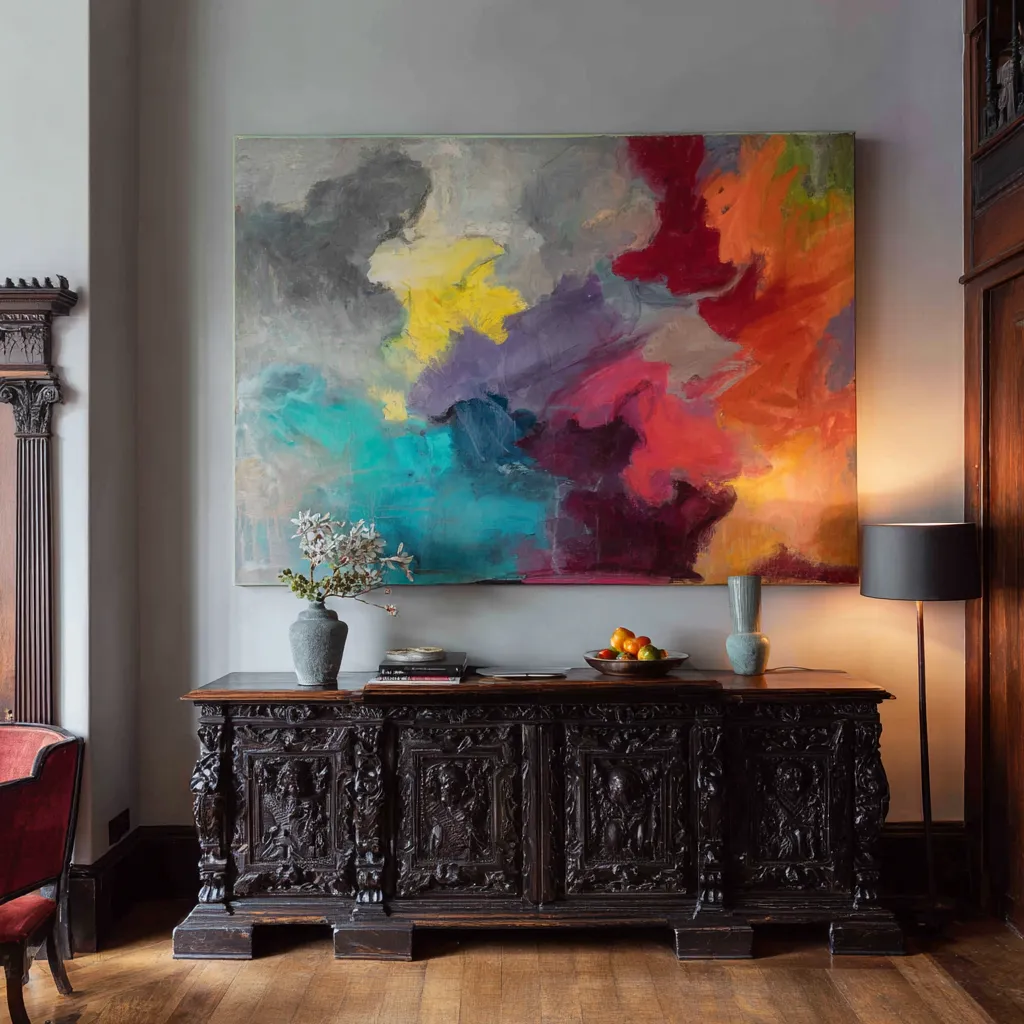
To master this specific juxtaposition, one must first master the concept of visual weight. A massive Victorian credenza anchors a wall with absolute authority. If you hang a delicate, muted watercolor above it, the artwork will be completely swallowed by the furniture’s presence. Instead, the modern art must command just as much attention as the wood beneath it. This is where large-scale, vivid contemporary canvases become invaluable. An oversized acrylic painting featuring slashing geometric lines or a bold color field holds its own against the heaviest antique wood furniture. The trick is to ensure the width of the canvas is proportionate to the furniture, ideally spanning roughly two-thirds to three-quarters of the piece’s width. This creates an invisible geometric box that ties the two distinct elements together into a single, cohesive vignette. The viewer’s eye is trained to see them as a deliberate pair rather than two random objects forced into the same airspace. Furthermore, the thickness of the canvas stretcher bars matters. A deep, chunky canvas profile holds its own against a thick, robust wooden credenza much better than a thin, flimsy canvas panel.
Color theory acts as the invisible thread weaving these disparate centuries together. Every piece of antique furniture has an undertone. Mahogany leans red or purple, walnut often carries green or yellow undertones, and aged cherry is decidedly warm and orange. When selecting your ultra modern art, look for canvases that subtly acknowledge these undertones. A contemporary piece does not need to match the wood perfectly, but finding an abstract painting that features a single stroke of crimson can magically tie it to a mahogany sideboard. Alternatively, you can use the color wheel to your advantage by selecting complementary colors. A bright, Yves Klein blue canvas will make the orange warmth of a vintage oak chest absolutely sing. The vibrancy of the modern art breathes fresh air into the dense, historical color palette of the wood, preventing the space from feeling dark or oppressive. Do not be afraid of neon pinks, electric yellows, or stark, icy whites; these extreme hues are often exactly what is needed to slice through the heaviness of aged timber and bring a sense of youthful energy to a room.
Proportion and scale are just as critical as color when pairing these elements. A common mistake in styling is placing tiny, fragmented contemporary pieces around a massive, monolithic antique. This makes the modern art look like an afterthought. Instead, be bold. A singular, massive contemporary canvas hung low over an antique piece creates an imposing, deliberate focal point. The bottom edge of the frame should hover just a few inches above the surface of the wood, physically bridging the gap between the two items. This proximity forces a dialogue between the smooth, glossy surface of the canvas or its modern frame and the carved, patinated surface of the wood below. The juxtaposition of textures—the flawless new against the imperfect old—is where the true magic of this design strategy lies. You want the viewer to appreciate the crisp lines of the contemporary era immediately followed by the rich, tactile history of the woodworking.
Finally, one must consider the crucial role of negative space. When bringing together two incredibly strong visual elements like ultra modern art and historic woodwork, the surrounding wall space needs to remain relatively quiet. Cluttering the surface of the antique wood furniture with dozens of trinkets will distract from the primary relationship you are trying to establish. Allow the furniture and the canvas to speak for themselves. Perhaps a single, sleek architectural vase or a stack of minimalist books is all the styling the wooden surface needs. By giving the pairing room to breathe, you elevate both the art and the antique furniture, allowing their contrasting characteristics to shine brilliantly without competing with background noise. This intentional restraint is what ultimately makes the bold combination successful and sophisticated. It proves that you have curated your space with intention, selecting only the most impactful pieces to tell the story of your aesthetic journey.
Displaying Modern Art Gallery Walls Over Vintage Oak Consoles
While a single, oversized canvas offers a dramatic focal point, a curated gallery wall presents an entirely different aesthetic opportunity when integrating different eras. The challenge here lies in maintaining order and preventing the arrangement from looking like a chaotic thrift store find. When you anchor a gallery wall of ultra modern art above a weathered light oak console, you are engaging in a delicate balancing act of texture and geometry. The furniture provides a rustic, grounded base, while the wall above it dances with precise lines and contemporary shapes. Oak, particularly in styles like French Provincial or heavily weathered farmhouse, carries a much lighter visual weight than dark Victorian mahogany. It is approachable, tactile, and inherently casual. To elevate this wood and bring it into the present day, it must be contrasted with sharp, unapologetic modernity. The contrast in textures is just as important as the contrast in eras. The rough, splintered, or heavily waxed surface of the vintage wood craves the smooth, unblemished perfection of freshly printed contemporary designs and flawless glass.
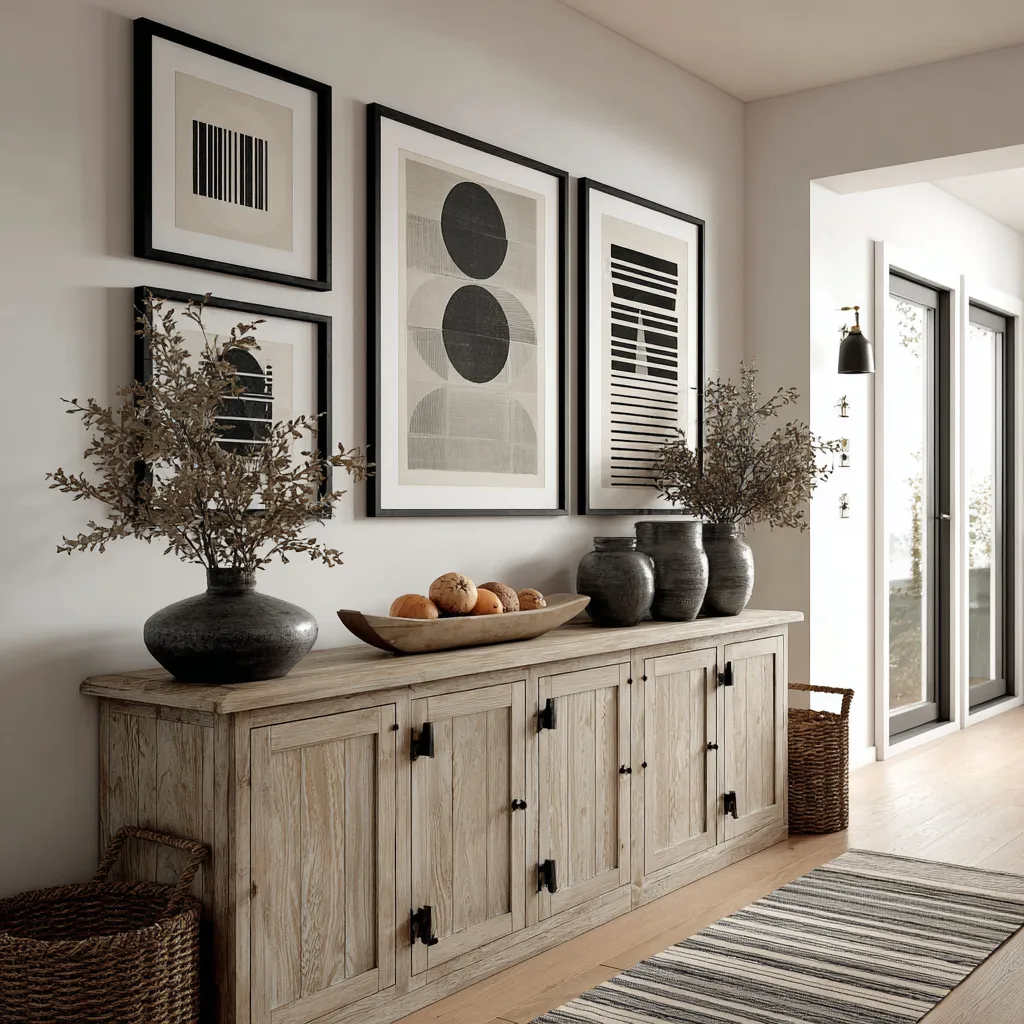


The secret weapon in this specific design scenario is the framing. The frames you choose act as the architectural bridge between the antique wood furniture and the contemporary prints. To create a successful juxtaposition, completely avoid ornate, carved, or distressed frames. Instead, embrace the absolute sleekness of the modern era. Thin, matte black metal frames, crisp white gallery frames, or even frameless acrylic float mounts provide the necessary sharp contrast to the weathered oak. These sleek borders act as a palate cleanser, clearly delineating the boundary between the historical antique furniture below and the futuristic or minimalist art above. When multiple sleek frames are arranged in a precise grid or a carefully balanced asymmetrical layout, they introduce a sense of rigorous contemporary order that beautifully counteracts the organic, imperfect nature of the vintage wood. Consider using dramatically oversized white matting within these sleek frames. A massive expanse of crisp white mat board surrounding a small, intense piece of modern art creates a powerful visual statement that demands attention and provides even more bright, clean space to offset the heavy, dark grains of the timber below.
Selecting the right type of imagery for the gallery wall is paramount. Minimalist geometric prints, stark black-and-white typography, or high-contrast digital illustrations are excellent choices. The starkness of these subjects provides a refreshing counterpoint to the heavy grain and carved details of the oak. Imagine a collection of pure, unadorned circles, squares, and intersecting lines hanging above a console table featuring cabriole legs and floral carvings. The dialogue between the rigid mathematics of the modern art and the flowing, organic lines of the antique wood furniture is incredibly compelling. It tells a story of evolution and sophisticated taste, proving that the homeowner appreciates both the discipline of contemporary design and the romance of historical craftsmanship. This specific pairing prevents the oak from feeling dated and prevents the geometric art from feeling sterile. You can also incorporate typography or bold graphic design prints that feature stark, modern fonts. The crisp edges of sans-serif lettering provide an incredible contrast to the ornate, sweeping curves of French Provincial woodworking, merging the communication styles of two completely different centuries.
The physical arrangement of the gallery wall should intentionally interact with the console table below. The collection of frames should not float aimlessly near the ceiling; it must feel tethered to the antique furniture. Start by hanging the lowest pieces of modern art just a few inches above the tabletop. This physical proximity creates a visual anchor. You can even experiment with leaning one or two of the framed contemporary pieces directly on the surface of the antique wood furniture, overlapping them slightly with the hanging pieces. Leaning art introduces a casual, relaxed studio vibe that perfectly complements the approachable nature of weathered oak. It breaks the rigid grid of the gallery wall and invites the viewer to look closer at the interplay between the crisp edge of the metal frame and the worn, distressed surface of the wood. Furthermore, layering smaller frames in front of larger ones on the tabletop adds a sense of three-dimensional depth that mimics the carved depths of the furniture itself.
Lighting plays an essential role in maximizing the impact of this pairing. A gallery wall requires dedicated illumination to truly pop, especially when mixing ultra modern art with the matte, absorbent surface of vintage wood. Consider installing a sleek, minimalist picture light above the arrangement. A slender brass or matte black LED wand light not only highlights the modern art but also casts a warm, downward glow that emphasizes the texture of the oak console. Alternatively, placing a pair of ultra-modern, geometric table lamps directly on the antique surface flanks the gallery wall and reinforces the juxtaposition. The sharp angles and smooth materials of the lamps echo the frames above, creating a cohesive design narrative that seamlessly blends the old world with the new. By controlling the light and focusing on crisp, modern framing techniques, a gallery wall becomes the ultimate tool for revitalizing historic oak pieces. You are essentially using the modern art to build a contemporary window around the vintage piece, reframing its historical value for a brand new generation of design enthusiasts.
Illuminating Abstract Modern Art On Classic Antique Furniture
The dynamic interplay between different centuries is not limited to two-dimensional canvases hanging on a wall; it extends beautifully into the three-dimensional space of a room. When we transition from paintings to sculptures, the relationship between the artwork and its supporting structure becomes intimately physical. Placing a piece of ultra modern art, such as a sleek, reflective chrome abstract sculpture, directly on top of an ornate, carved walnut pedestal from the nineteenth century creates a breathtaking moment of design friction. This pairing forces the viewer to confront the juxtaposition from every angle as they move around the room. The pedestal, originally designed to hold a classical bust or a traditional urn, is suddenly repurposed to elevate an object that defies historical conventions. This unexpected combination is the hallmark of a truly curated and sophisticated interior. It shows a level of confidence in your aesthetic choices that goes far beyond buying matching sets from a catalog. By taking a piece of antique wood furniture that was carved by hand a hundred years ago and crowning it with a laser-cut, machine-polished piece of contemporary vision, you are collapsing time and creating a singular, profound visual moment.

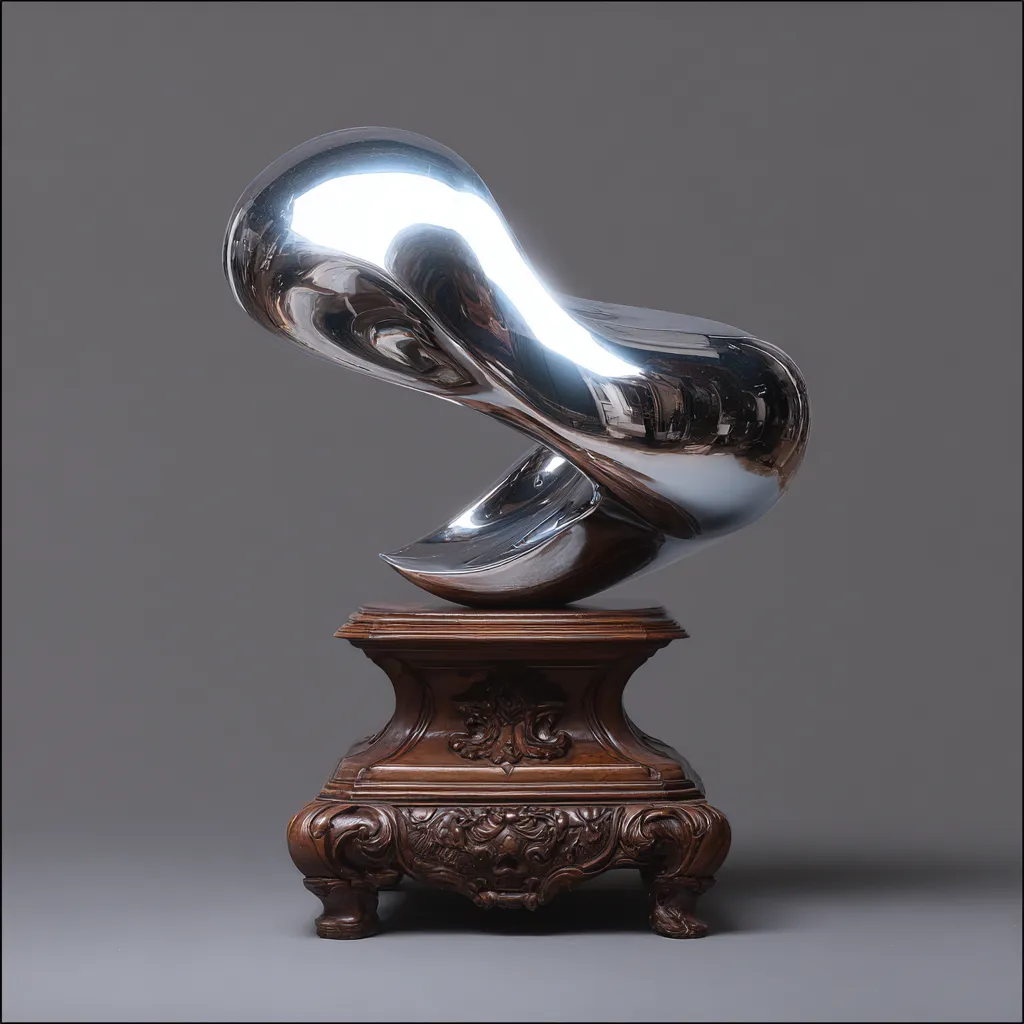


Walnut is a particularly fascinating material to use in this context. It is a dense, rich wood that takes a stain beautifully, often boasting deep, chocolatey tones and a tight, elegant grain. Antique furniture crafted from walnut frequently features intricate turning, fluting, or heavy base carvings that ground it firmly in its historical era. It is undeniably classic and carries a sense of formality. To disrupt this formality and inject a surge of contemporary energy, the sculpture resting upon it must be aggressively modern. Materials like highly polished stainless steel, clear acrylic, or brightly powder-coated aluminum provide the perfect counter-narrative to the dark, absorbent nature of the walnut. The modern art must offer a stark contrast in both material and form, abandoning literal representation in favor of fluid abstractions, sharp geometric angles, or mirrored surfaces. The total absence of recognizable human or animal forms in the sculpture forces the brain to focus entirely on the pure aesthetic relationship between the shiny metal and the carved antique wood furniture, elevating the pairing from mere decoration to a true philosophical statement about the progression of design.
The magic of pairing a reflective chrome sculpture with antique wood furniture lies in the interaction of light and surroundings. A highly polished modern sculpture acts almost like a funhouse mirror, capturing the colors, lights, and shapes of the room and distorting them across its curves and angles. When placed on a dark walnut base, the bottom of the sculpture will inevitably reflect the rich, brown tones of the wood, subtly integrating the two pieces. Meanwhile, the upper portions of the chrome will reflect the ceiling, the windows, and the ambient light, creating a bright, ethereal presence that seems to float above the heavy, grounded antique furniture. This continuous visual dialogue between the heavy, matte history of the wood and the weightless, reflective future of the metal is endlessly fascinating and constantly changes throughout the day as the light shifts. During the morning hours, the chrome might catch the cool, blue light of dawn, sharply contrasting with the warm, dark walnut. By evening, the ambient glow of the room’s lighting will turn the metal into a warm, glowing orb that seems to melt seamlessly into the dark timber base beneath it.
Spatial dynamics are crucial when working with three-dimensional pairings. Unlike a painting that occupies a flat plane, a sculpture on a pedestal commands physical volume within the room. This specific combination of ultra modern art and antique furniture is incredibly effective for activating dead corners or transitional spaces like wide hallways and foyers. The verticality of the pedestal draws the eye upward, making the ceiling feel higher, while the gleaming modern art at the top acts as a beacon, drawing people into the space. However, it is vital to ensure the scale of the sculpture is appropriate for the pedestal. An overly massive chrome piece will make the slender walnut base look precarious and top-heavy, while a tiny sculpture will be dwarfed by the pedestal’s visual weight. The base of the sculpture should comfortably occupy the top surface of the antique wood furniture, leaving just enough breathing room around the edges to frame the artwork beautifully. If the pedestal has a square top, a sculpture with a round or irregular base can introduce another layer of pleasing geometric contrast.
Finally, intentional lighting is absolutely necessary to bring this specific pairing to life. Three-dimensional modern art requires directional lighting to highlight its curves, edges, and material qualities. A ceiling-mounted spotlight directed straight down onto the chrome sculpture will create dramatic highlights and deep shadows, emphasizing its abstract form. The spill-over light from this spot will gently illuminate the carved details of the antique wood furniture below, showcasing the craftsmanship of the walnut without washing it out. If a ceiling spot is not possible, a sleek, minimalist floor lamp positioned nearby can achieve a similar effect by casting a strong, directional beam across the vignette. By carefully controlling the illumination, you ensure that both the futuristic sculpture and the historic pedestal are given the attention they deserve, cementing their status as a unified, breathtaking focal point that perfectly encapsulates the thrill of mixing eras. You create a gallery-quality installation right inside your own home, proving that the greatest design achievements often happen when we are brave enough to let different centuries collide.
Mastering this specific design approach frees you from the restrictive rules of matching sets and single-era styling. By trusting your eye for contrast and focusing on the relationship between sleek contemporary lines and rich historical textures, you can build a living space that is entirely unique to your tastes. The juxtaposition of new and old creates a dynamic, engaging environment that honors the craftsmanship of the past while boldly celebrating the innovations of the present.