For the better part of a decade, the dominant wedding aesthetic followed a predictable script: white linens, white florals, pampas grass, and a neutral palette that photographed well and offended no one. That era is closing. In 2026, the couples shaping the season are rejecting the sanitized, algorithm-friendly look in favor of color — deep, deliberate, and deeply personal color.
Brides Are Rejecting the Pantone Playbook and Going Their Own Way
The shift is not a minor seasonal adjustment. According to Aubrey Rowden, owner of Love Tree Studios, “brides are rejecting the Pantone color of the year and all-white minimalism” in favor of bold, bright palettes that feel self-authored rather than trend-dictated. This is a meaningful departure. For years, bridal color decisions flowed downstream from Pantone’s annual announcement, landing in ribbon choices, stationery, and centerpieces with predictable uniformity. That pipeline is breaking down.
What is replacing it is more textured. Planner and color expert Blasena, quoted in Over The Moon’s 2026 trend report, describes the new palette as one that moves “from muted olives and warm neutrals to deep berry accents and sculptural whites” — a shift she frames as less about theme and more about mood. The distinction matters: a theme is imposed from outside; a mood is drawn from within. That internal sourcing is exactly what defines the 2026 wedding color conversation.
The Whole Wedding Party Reflects This — Not Just the Centerpieces
Color in 2026 is not confined to florals or table linens. It is moving through the entire visual language of the wedding, including the wedding party itself. Rowden notes that bridesmaids’ dresses are getting more creative, with couples incorporating subtle patterns and mismatched patterned gowns that hold together through a shared palette rather than a single fabric. The effect reads as curated without being uniform — which is precisely the point.
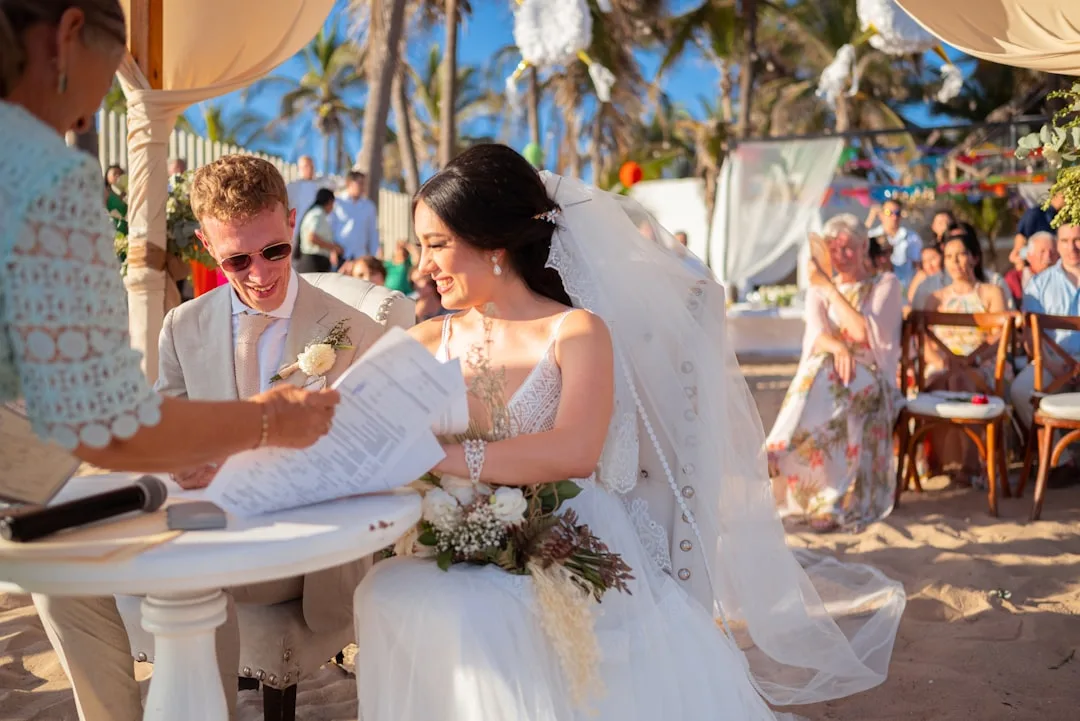
Groom style is following suit. Designers across the industry are observing that grooms are now making bolder fashion choices, particularly for auxiliary events like rehearsal dinners and welcome parties. Even the classic black tuxedo is being reworked with wider lapels, double-breasted silhouettes, and colored suiting that echoes the palette the couple has built for the entire weekend. Photographer Liz Banfield puts it directly, noting she gives “a gold star to grooms who personalize their look, such as wearing a colored suit, adding a unique brooch or shoes.”
For bridal gown choices, lace and embellishment are back at the center of the 2026 aesthetic — not as a nostalgic throwback but as a vehicle for expression. According to Kaylin Garcia, general manager at Walters Wedding Estates, “lace sleeves, fully-lace dresses and fully embellished gowns are popular” precisely because they carry visual richness without relying on color alone. When paired with a bold palette, the result is layered rather than loud.
Florals Have Moved From Decoration Into Architecture
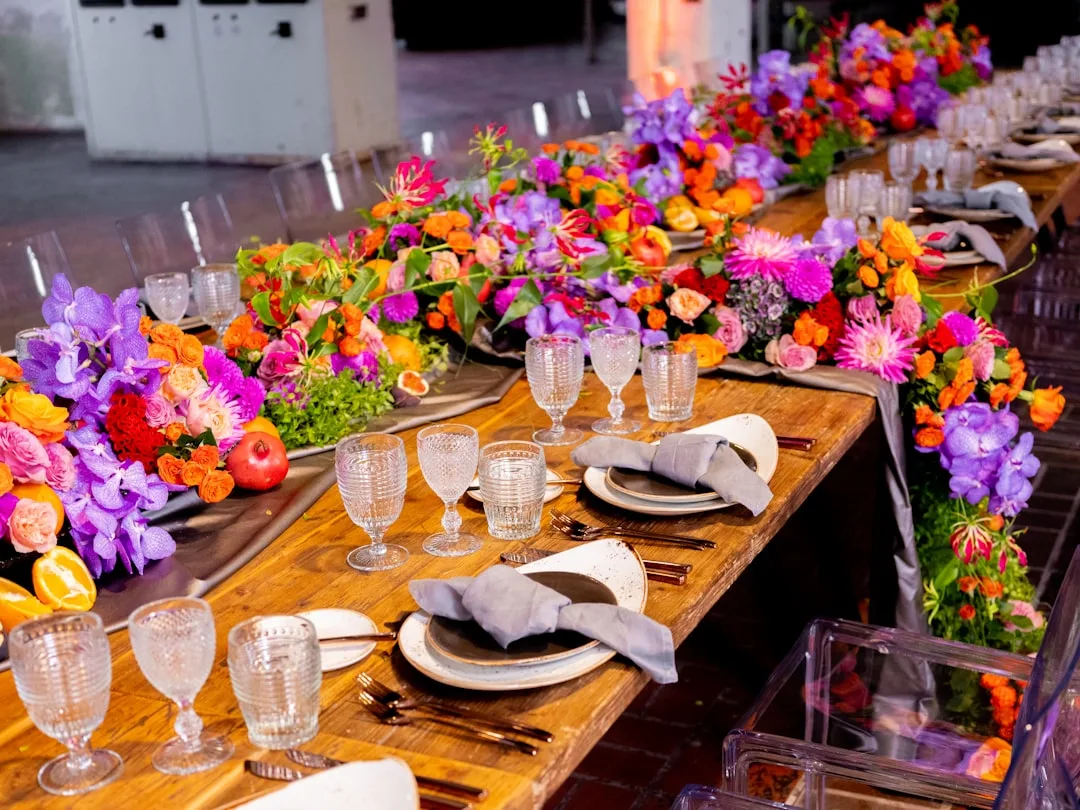
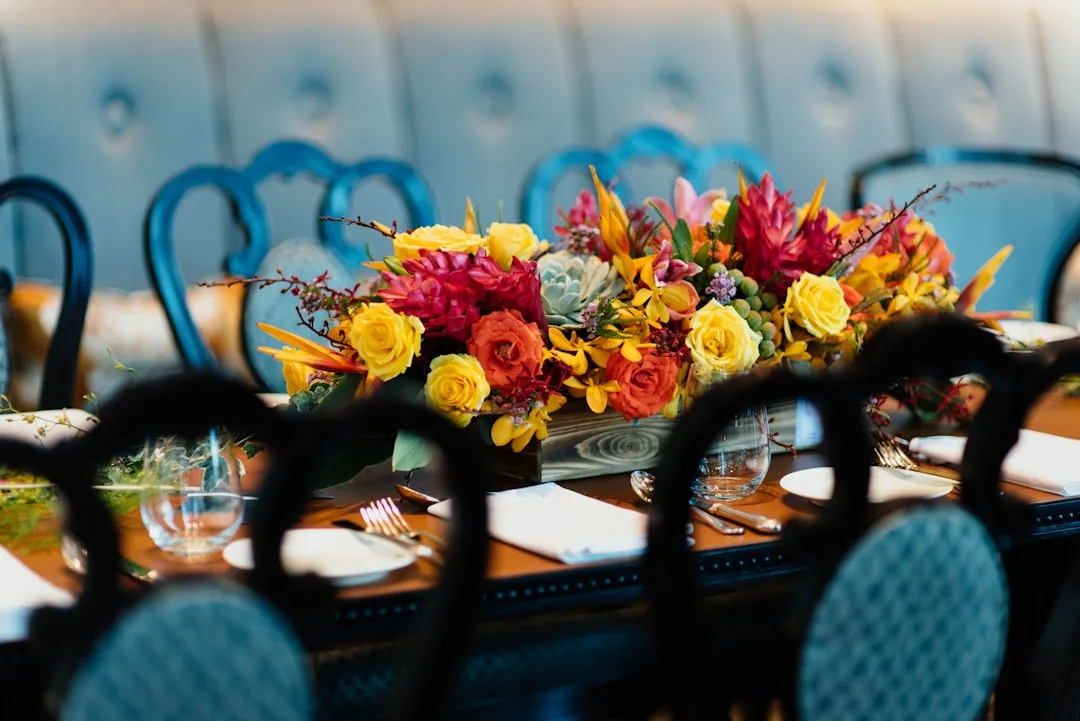
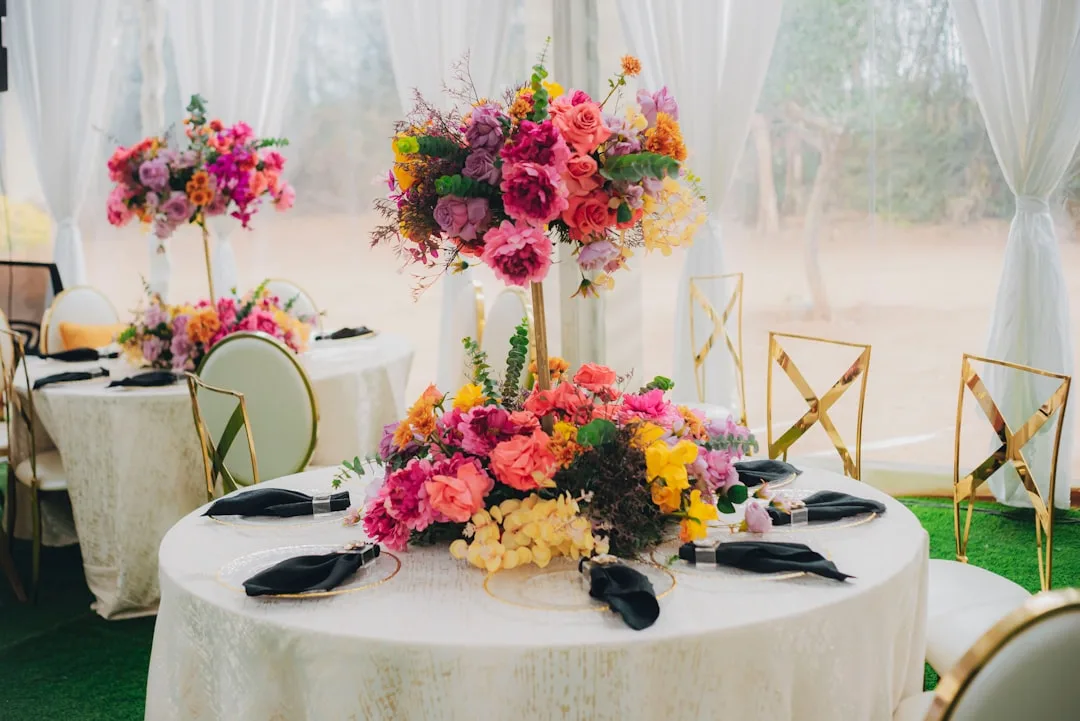
Perhaps nowhere is the color revolution more visible than in floral design. The traditional bouquet — symmetrical, tightly packed, pastel — is losing ground to arrangements that function more like sculptural installations. Design studios including PHKA and Loam Studio are pushing toward what Oh, Maria Flores describes as “art pieces rather than props, unexpected shapes, daring color choices.”
One of the fastest-growing expressions of this shift is the “bouquet bag” — florals carried in a purse rather than held in the traditional style. It is an unconventional format that signals just how thoroughly couples are rethinking every inherited convention. If you want to see where the maximalist floral instinct is already being applied at full scale, the 3+ Boho Wedding Decor Trends You’ll Love on ArtFasad traces the aesthetic lineage that made this creative freedom possible.
Vibrant florals are also being paired with colorful linens and expressive paper goods in a way that replaces the pared-back palettes that dominated wedding design from roughly 2018 to 2024. The overall effect is one of warmth and density — a deliberate counterpoint to the airy, whitewashed rooms that defined the Instagram wedding era.
Color Reaches the Ceiling — Literally
The 2026 color moment is not stopping at eye level. Planner Silavin, contributing to Over The Moon’s annual forecast, points to a strong trend of “treating the ceiling as a main character in the event design” — using draping, textured fabrics, florals, and oversized pendants to bring color and dimension overhead. What was once an afterthought is now being treated as a primary design surface, and saturated hues are a central part of that elevation.
This extends to lighting. In 2026, warm uplighting, hanging lantern clusters, and floating chandelier installations are being chosen not just for ambiance but to deepen and shift color across a room as the evening progresses. The ceiling and lighting choices compound the palette work happening at table level, creating immersive environments rather than decorated rooms.
Where Hairstyle Meets the Palette Moment
The color conversation extends to hair in ways that are more than incidental. Brides building bold, expressive palettes are making equally considered choices about their hair — opting for styles that hold visual weight and presence. The 8+ Half Up Half Down Wedding Hair Trends You Need to Know This Year at ArtFasad captures the structural approaches brides are gravitating toward — styles that read as intentional against a richly colored backdrop rather than disappearing into it.
The Practical Move for Couples Planning Now
If you are in the planning window for a 2026 or early 2027 wedding, the color question is no longer secondary. It is the organizing principle. Industry experts including Amy Grammer of Milliner’s Row frame the 2026 aesthetic as one built around balance: “elevated but expressive, classic but not too formal, fashionable but not forced.” That balance is easier to achieve when color is chosen for personal resonance rather than trend compliance.
The practical path is to start with two or three colors that carry genuine meaning — a location, a memory, a fabric — and build outward from there into florals, linens, wedding party attire, and paper goods. The couples and planners defining 2026 weddings are not asking what palette is trending. They are asking what palette could only belong to them. That question, more than any Pantone announcement, is producing the most visually coherent and emotionally resonant weddings the industry has seen in years.
Complete guide
Wedding Hairstyles for Every Length Role and Vision
Brides, bridesmaids, guests, mothers of the bride — all in one place
Complete guide
Party Fashion Outfits That Turn Every Room Into a Runway
Disco, holiday, pool, white party, themed dress codes — all in one place
Complete guide
Fashionable Green Outfits That Own Every Room
Emerald, olive, neon, mint, forest, wasabi — every green look in one place