Bridal hair half up half down is the one style that keeps topping Pinterest boards for a real reason: it solves the wedding hair dilemma without compromise. The length stays visible, the face stays framed, and you never have to choose between formal and relaxed. The catch is that not every variation holds equally well through a six-hour reception day — and the one you choose should be matched to your venue before it’s matched to your dress.
According to The Knot’s 2025 Real Weddings Study, the average bridal hair styling service costs $150 — but a half up half down look with added texture, braiding, or accessories can push into the higher end of that range depending on complexity. A separate hair trial ($150–$300) is where you find out whether your chosen variation survives four hours, whether accessories sit right at camera distance, and whether the pinned section needs reinforcing. Skip the trial and you’re gambling on a day that gets photographed from every angle.
Soft waves, boho braids, and sleek floral styles each have a different relationship with humidity, movement, and photography light. Understanding that difference before you sit in the stylist’s chair is the shortest path to hair you actually love at 9pm.
Quick Scan
- Soft waves with a pinned half up section suit medium-to-long hair best and hold through a full reception without restyling.
- Boho braids — fishtail, waterfall, or three-strand — work especially well for outdoor and garden weddings where an undone look is the point.
- Sleek floral half up styles photograph cleanest indoors; statement accessories need controlled lighting to read properly on camera.
- A bridal hair trial runs $150–$300 and is the most impactful preparation you can make for any half up style.
- Bridesmaid half up blowouts average around $50 versus a bride’s $150 — budget these separately.
- Jennifer Behr’s mother-of-pearl Zinnia pins ($325 for a set of 5) are the accessory most consistently recommended by editorial stylists for the sleek half up look.
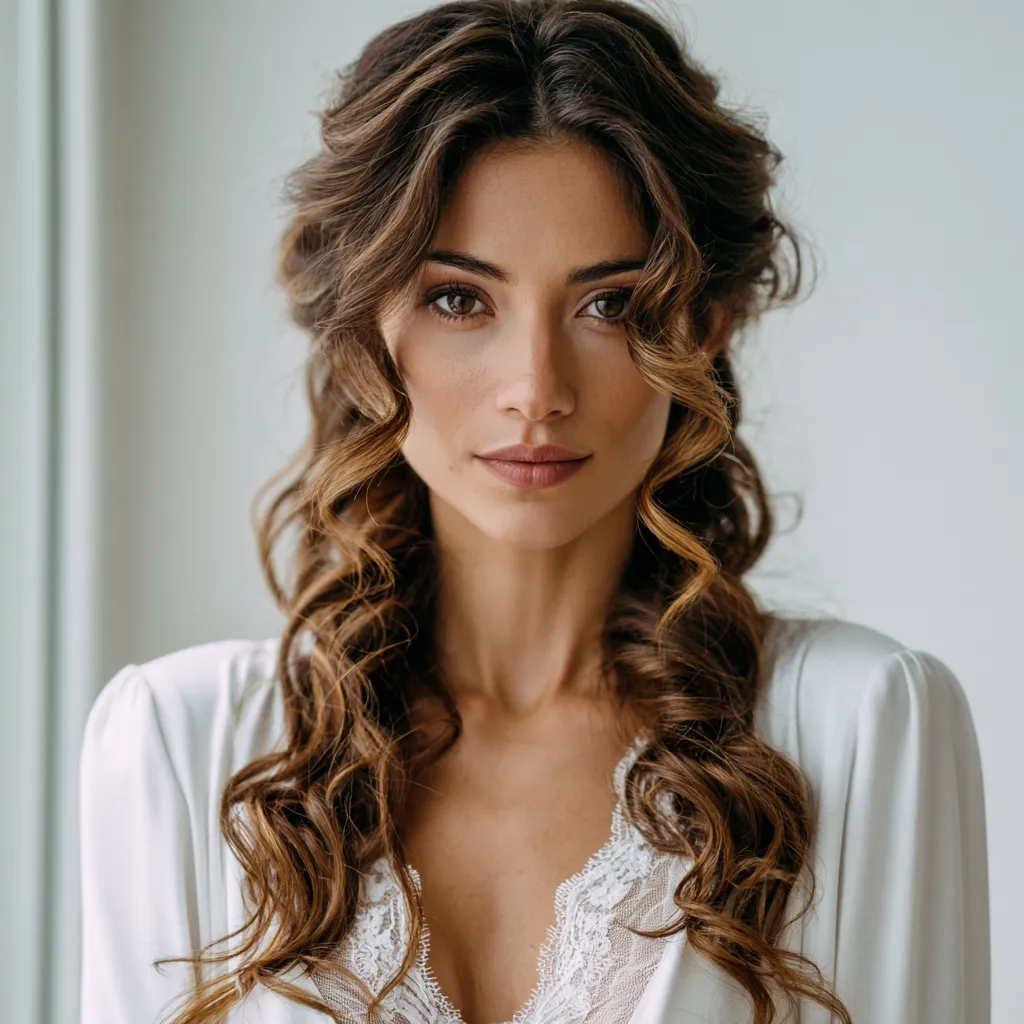
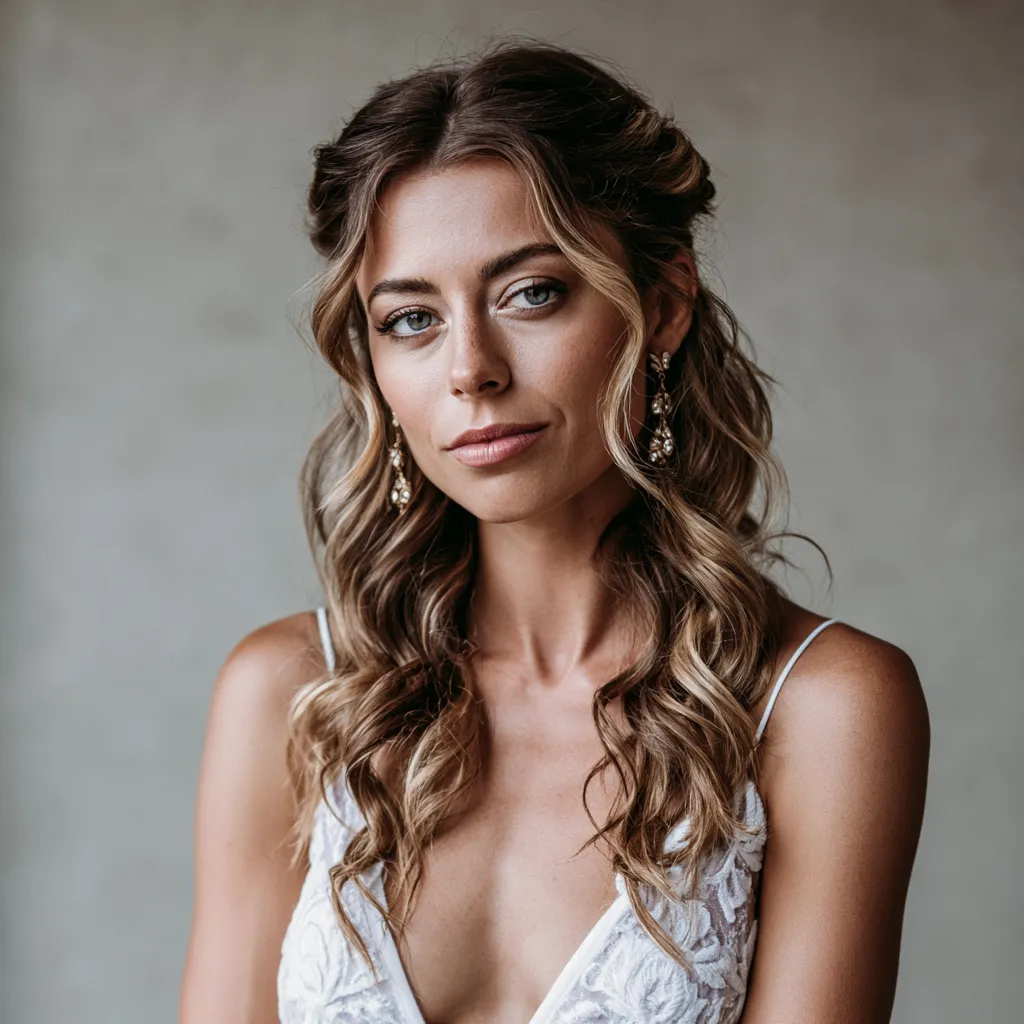
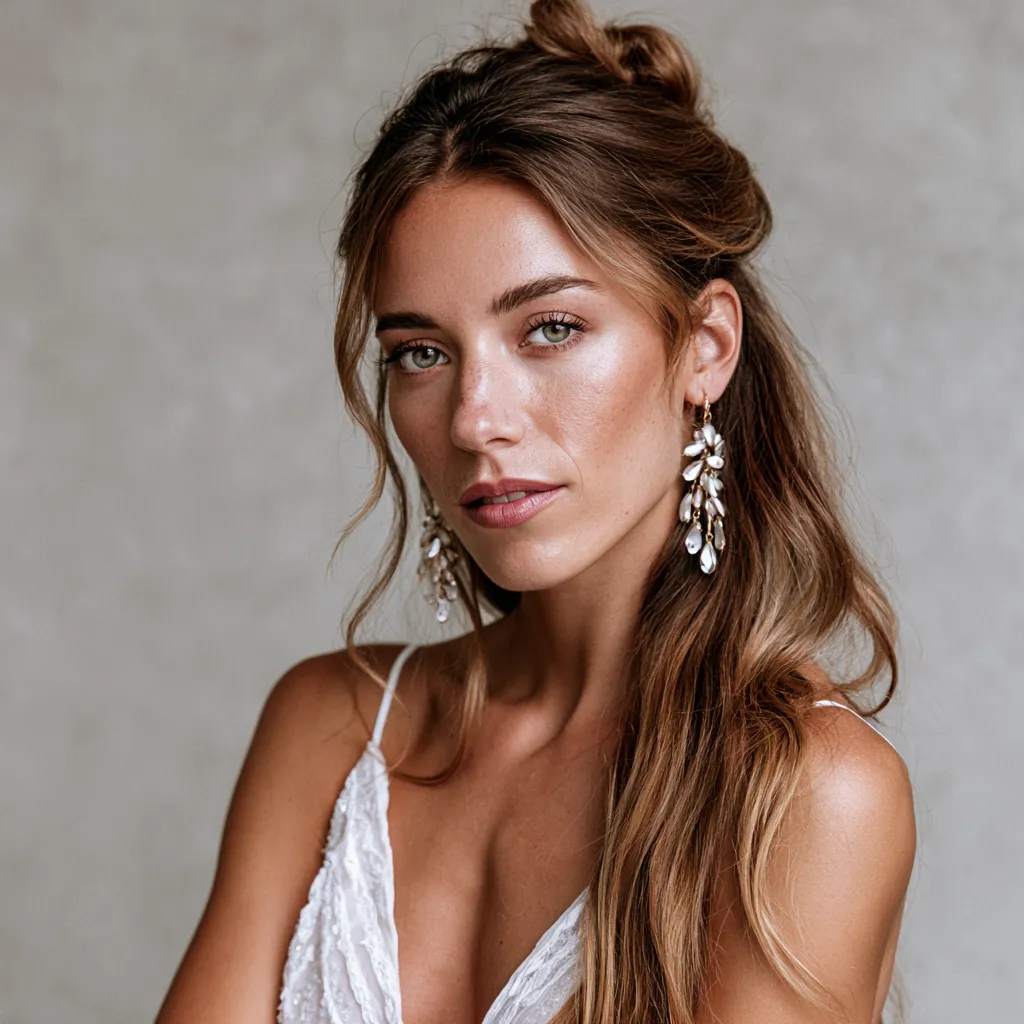
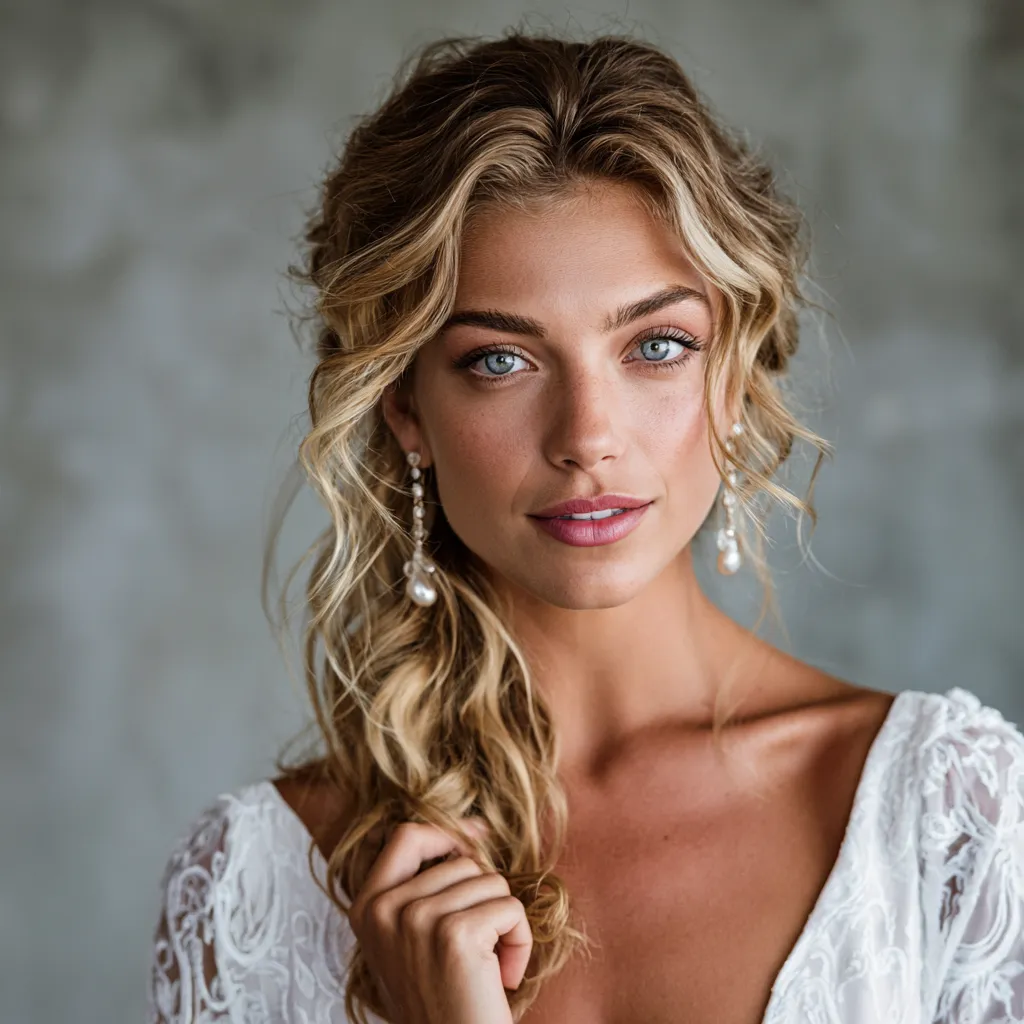
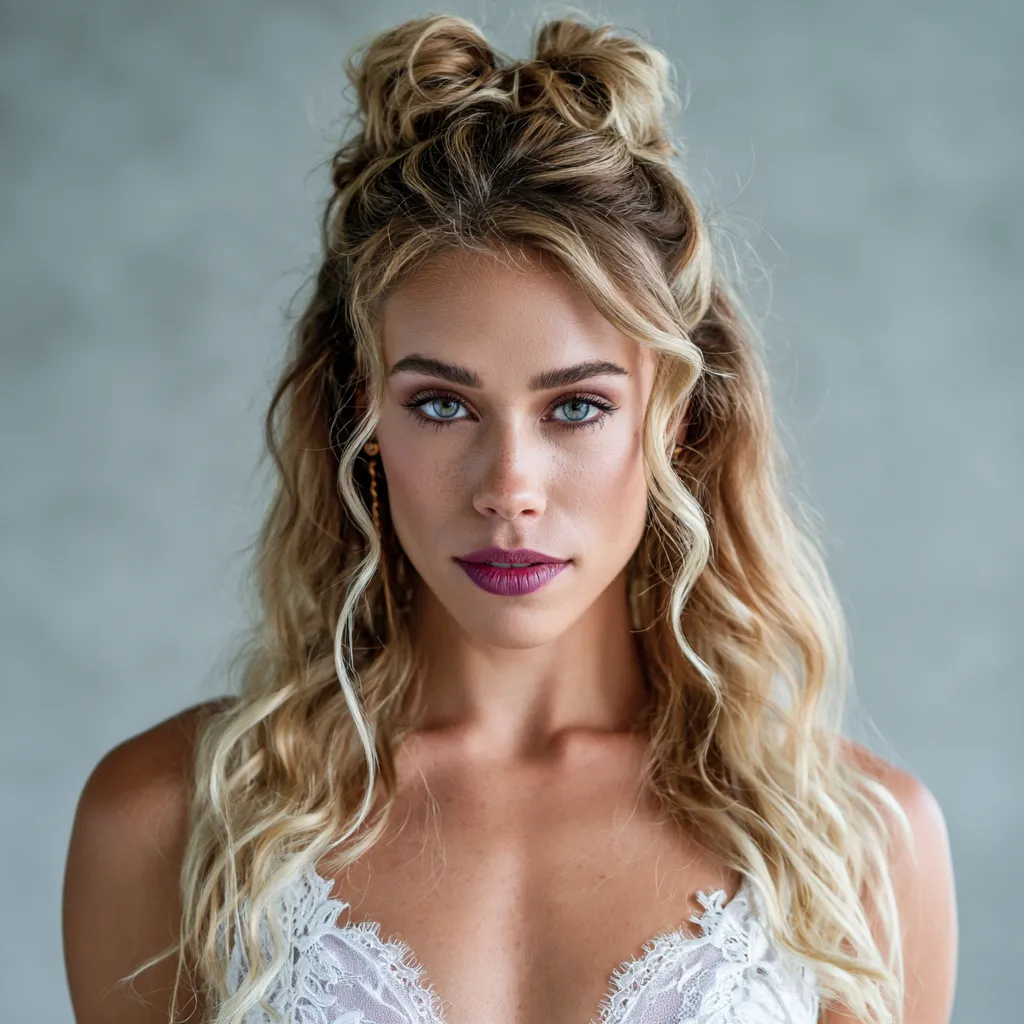
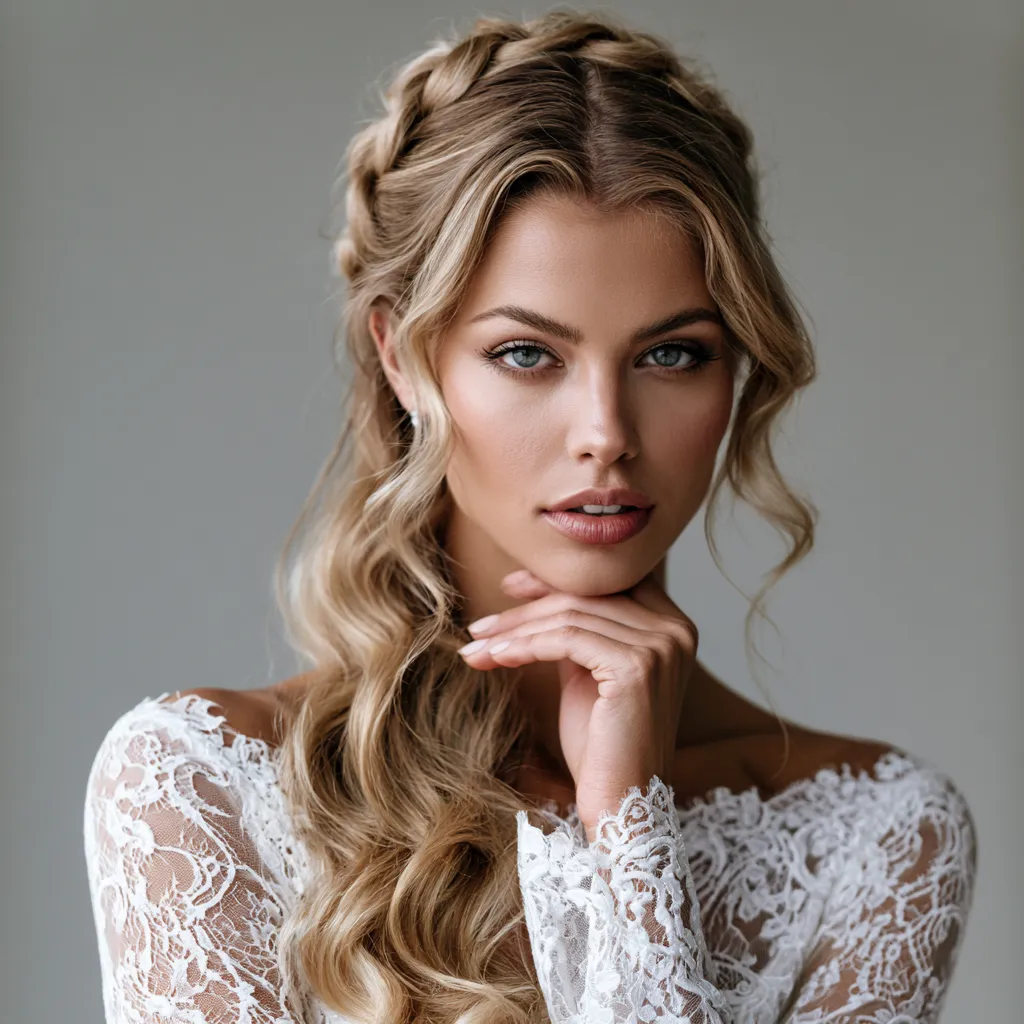
Soft Waves Pull Off Bridal Hair Half Up Half Down Without Looking Like You Tried Too Hard
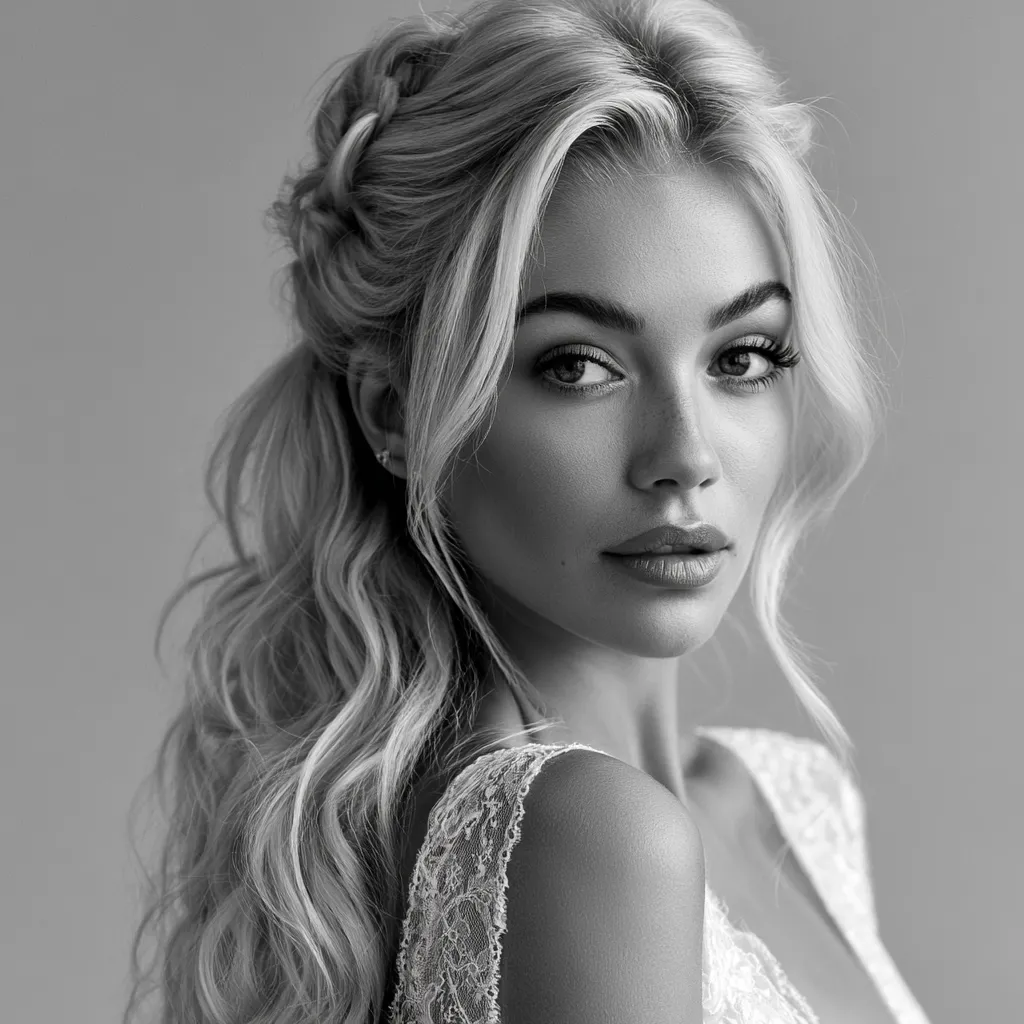
Bridal hair half up half down with soft waves is the style that photographs in every light — but it requires more technical preparation than it looks. The loose curl pattern comes from a 1.25-inch wand or large hot rollers set before the pin-back section is anchored; stylists typically allow 40 minutes for this look alone. The top section needs to be secured with crossed bobby pins beneath the visible layer, not on top — otherwise the silhouette collapses by cocktail hour. Ask your stylist specifically about this when booking.
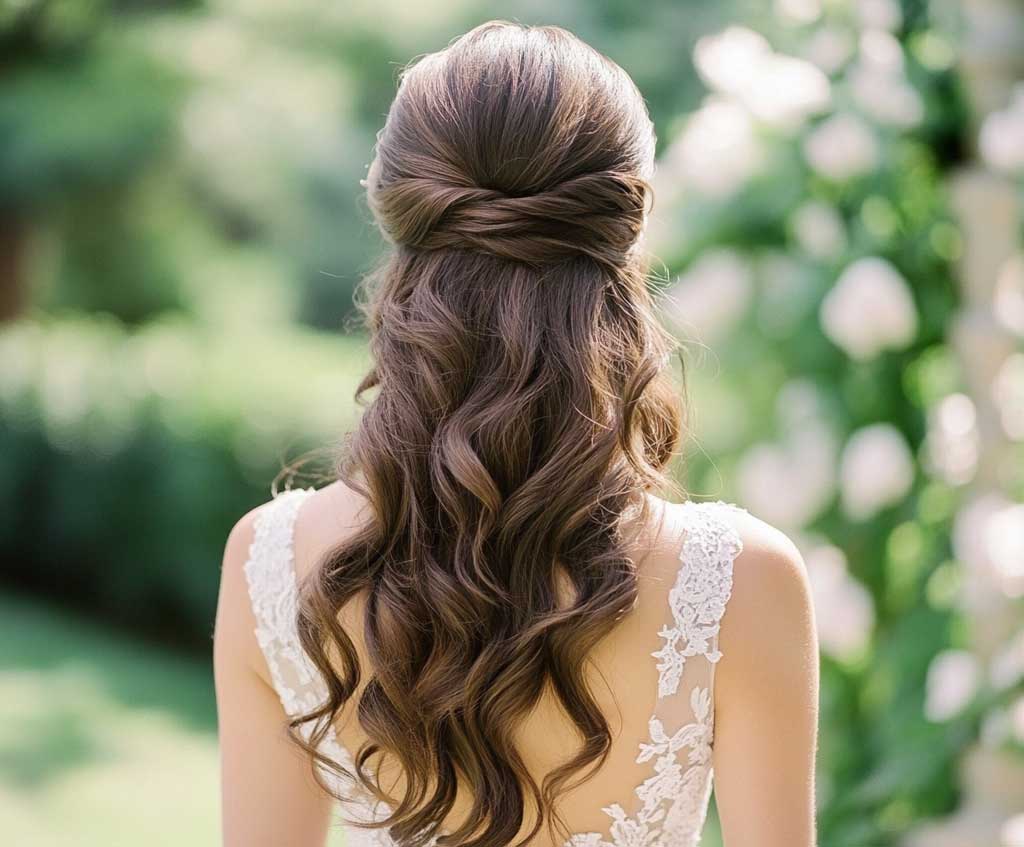
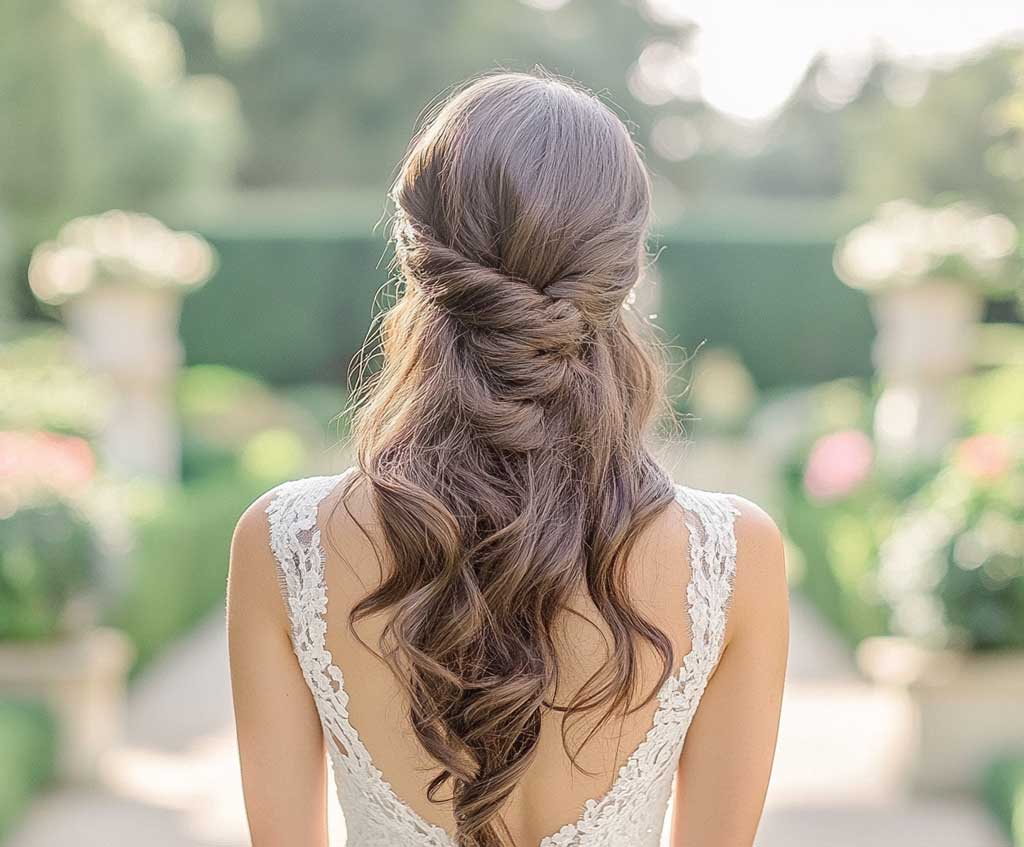
Soft waves create movement without weight, which is why they work so reliably for outdoor garden and countryside ceremonies. Wind is not an enemy here — it’s part of the aesthetic. The trick is applying a medium-hold spray before curling, not after. Products applied post-curl coat the surface and prevent the waves from moving naturally, which is exactly the wrong result. A lightweight sea salt spray worked through dry hair before the iron is the lower-budget alternative most professional stylists use on non-extension hair. What doesn’t work is dry shampoo as a volume substitute — it creates a matte, flat texture at the crown that reads as unwashed in photos.
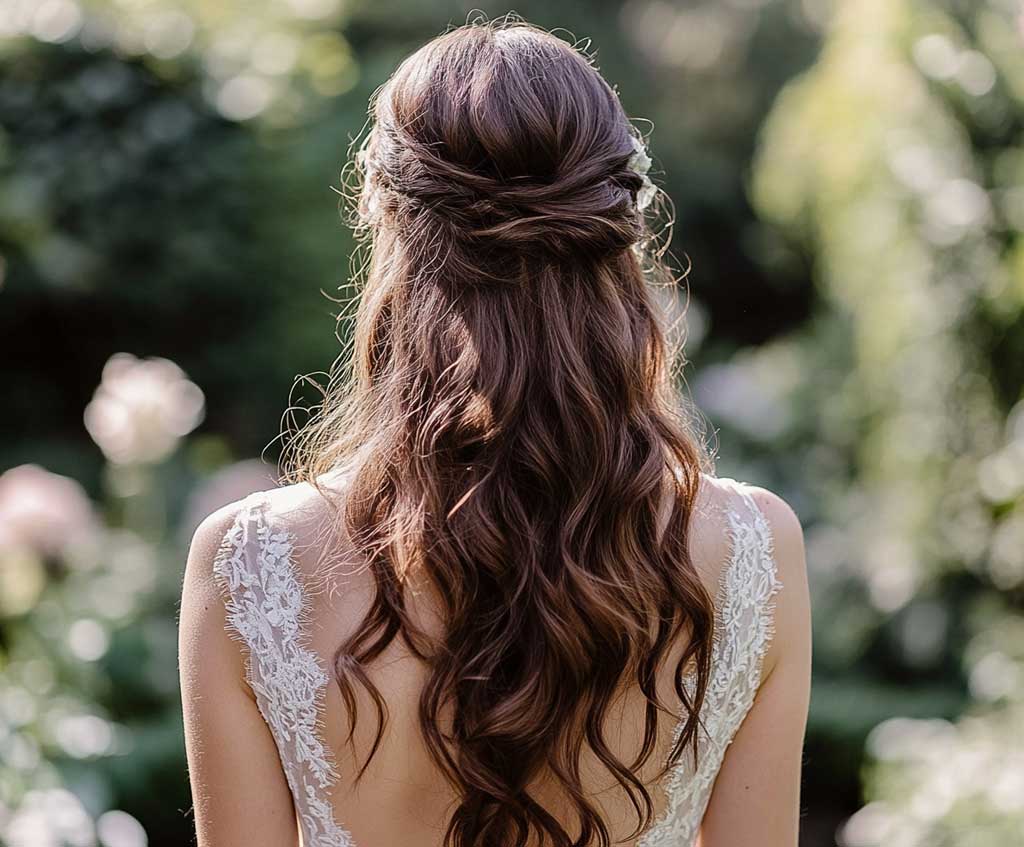
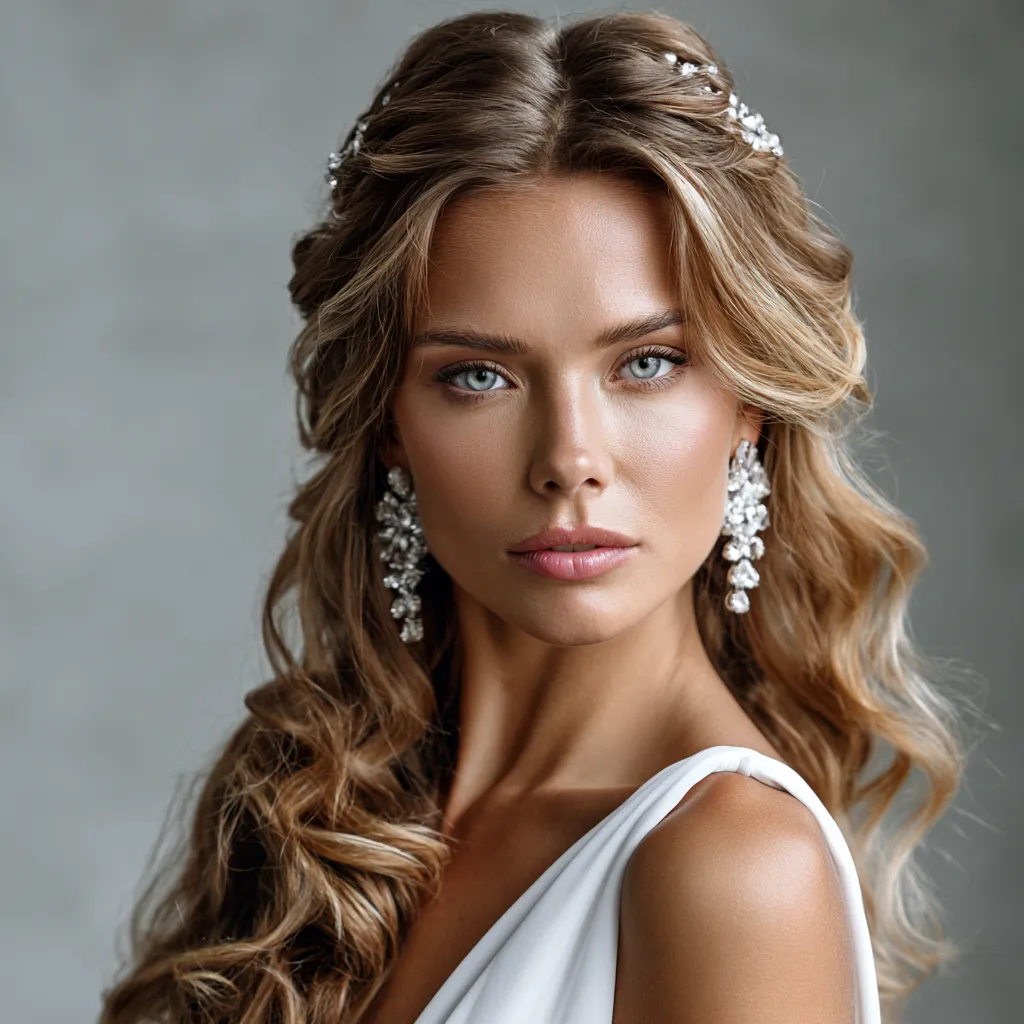
Pearl or crystal pins scattered through the waves add catch-light in flash photography — exactly what the crown section needs when the rest of the hair is dark or brunette. Does this style work on fine hair? Yes, but only with volume powder at the roots and at least two invisible elastics layered under the pin-back section to create the appearance of density. For brides with collarbone-length hair, romantic wedding hairstyles for medium hair use the same wave technique at a shorter length and are worth checking before the trial.
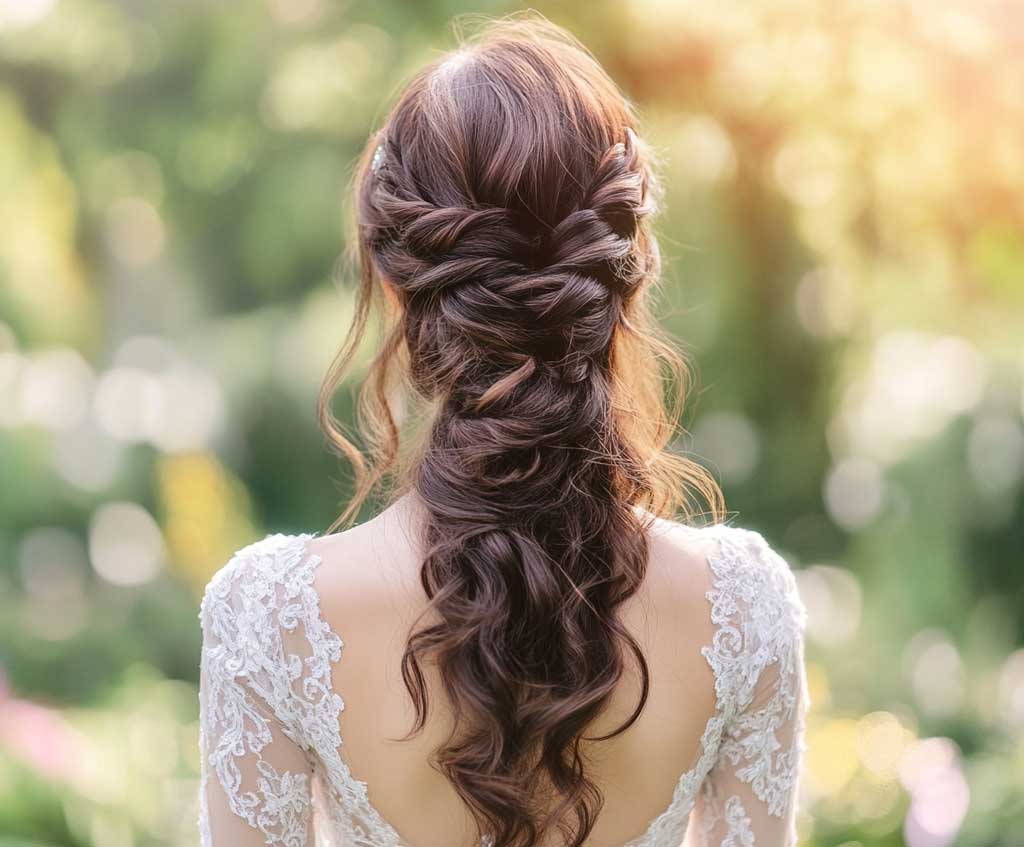
The one situation where soft waves fail reliably is high outdoor humidity combined with very fine hair and no extensions. The curl drops within two hours, leaving a half-pinned silhouette that photographs as though the style came undone. The fix is a 20-minute set in large hot rollers before the stylist begins, giving the curl memory time to lock into the shaft. Stylists who skip this and go straight from iron to pin are the ones whose clients end up unhappy by mid-reception. It adds 20 minutes to the appointment and changes the entire outcome.
Boho Bridal Braids Change Everything About Half Up Half Down for Outdoor Weddings
Boho half up half down wedding hair with braided accents is the style most likely to improve as the day goes on — which is the opposite of most bridal hairstyles. A fishtail or waterfall braid that starts slightly loose develops more texture with movement and minor frizz, and that texture reads as intentional bohemian styling rather than breakdown. The braid also holds the half up section more securely than pins alone, which is why braided styles survive beach receptions and vineyard ceremonies better than waves do on the same hair type.
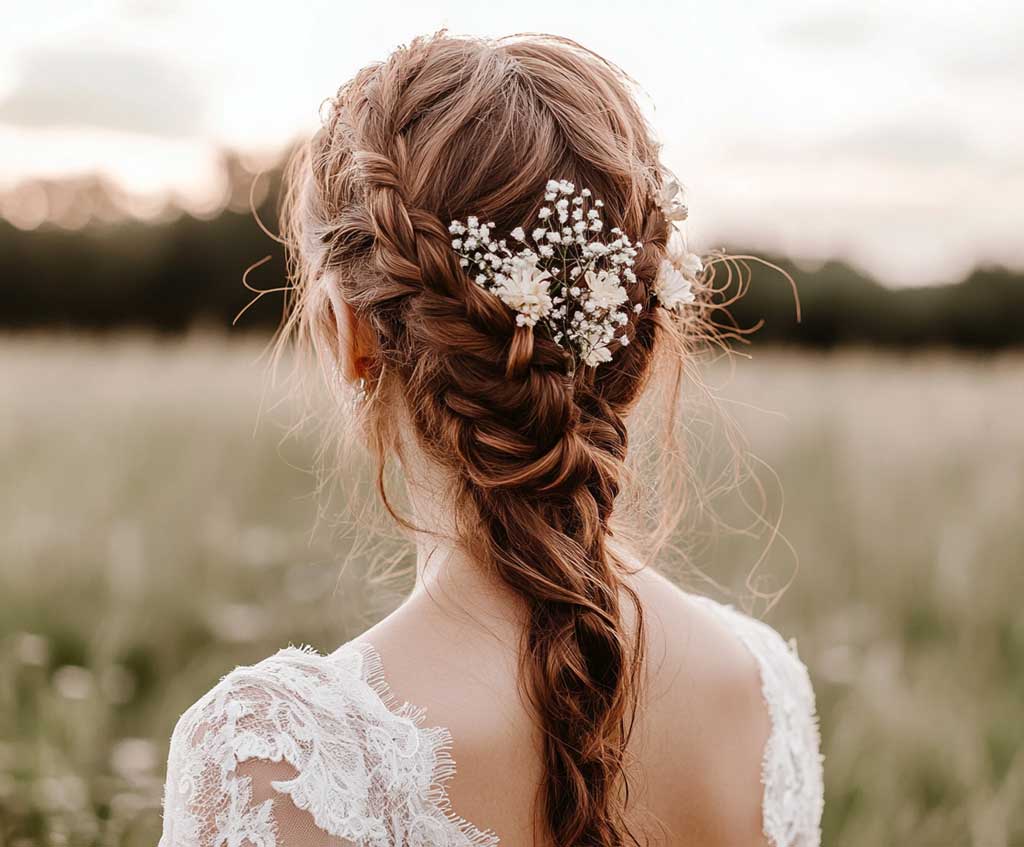
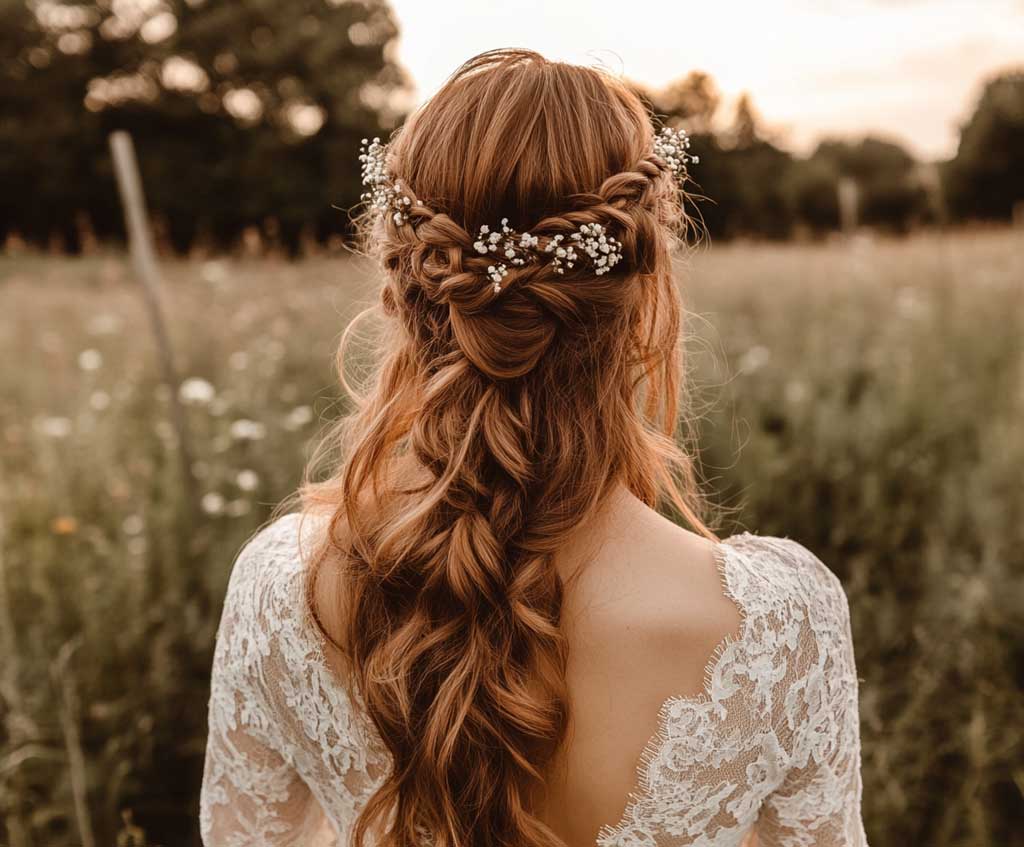
Fishtail, waterfall, and classic three-strand braids each create a different visual weight at the crown. The fishtail reads as most intricate and works best on thick hair where there’s enough strand width for the interlocking pattern to show at normal photography distance. The waterfall braid — where horizontal strands drop through the pattern — creates a lighter, more ethereal silhouette and is faster for a stylist to execute, making it the better choice when the appointment is running long. Small flowers under 2cm — baby’s breath, daisies, wax flowers — are what stylists reach for when adding botanicals to braids. Large blooms like peonies or full roses are too heavy and pull the braid loose; they belong in the bouquet, not the hair.
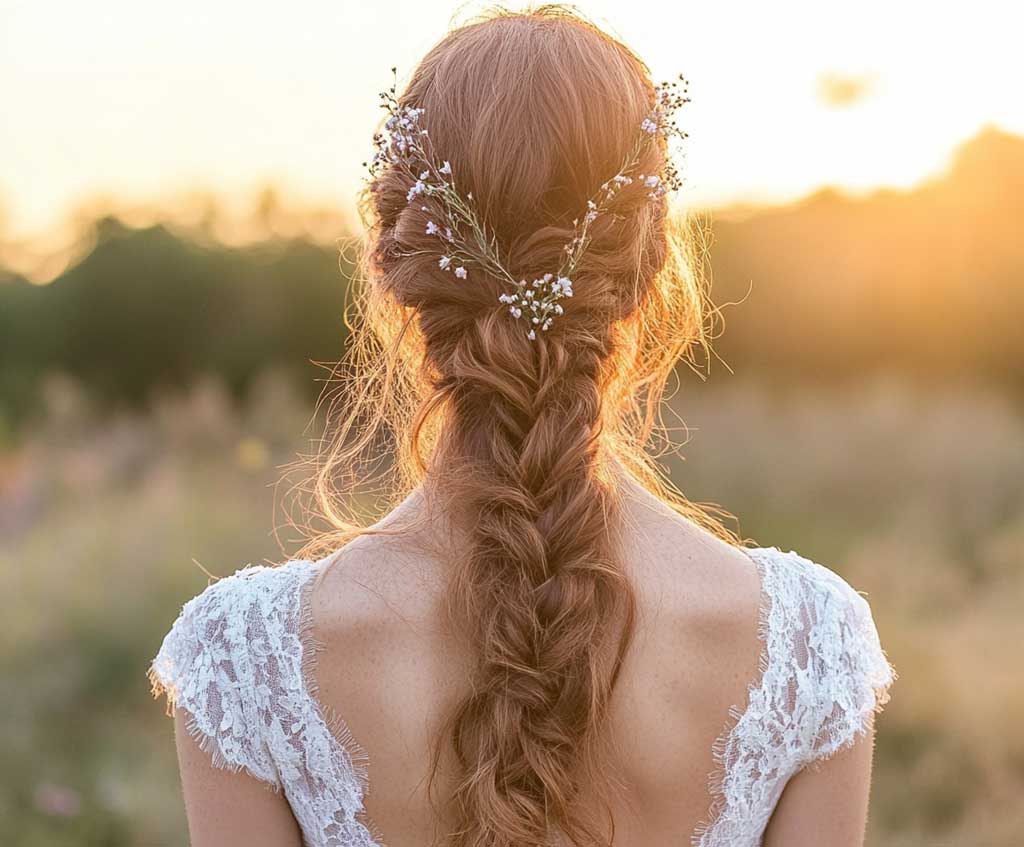
The underrated secret of boho braided half up hair is the face-framing tendrils — two or three strands pulled free around the temples and lightly curved with a small iron. Without them, the style reads as severe or unfinished. Stylists recommend leaving tendrils at minimum 2 inches so they have enough weight to curve rather than frizz outward. Why does this matter in photos? Tendrils caught by natural side-lighting create a softness that no accessory replicates, particularly in the close-up ceremony shots. The braid-on-braid approach — a waterfall braid on top with loose rope braids through the lower section — is the current direction editorial boho bridal hair is moving. For long hair styles that carry the same braided texture further with metallic details, wedding hairstyles for long hair with pearl accents show where to take the accessory choices next.
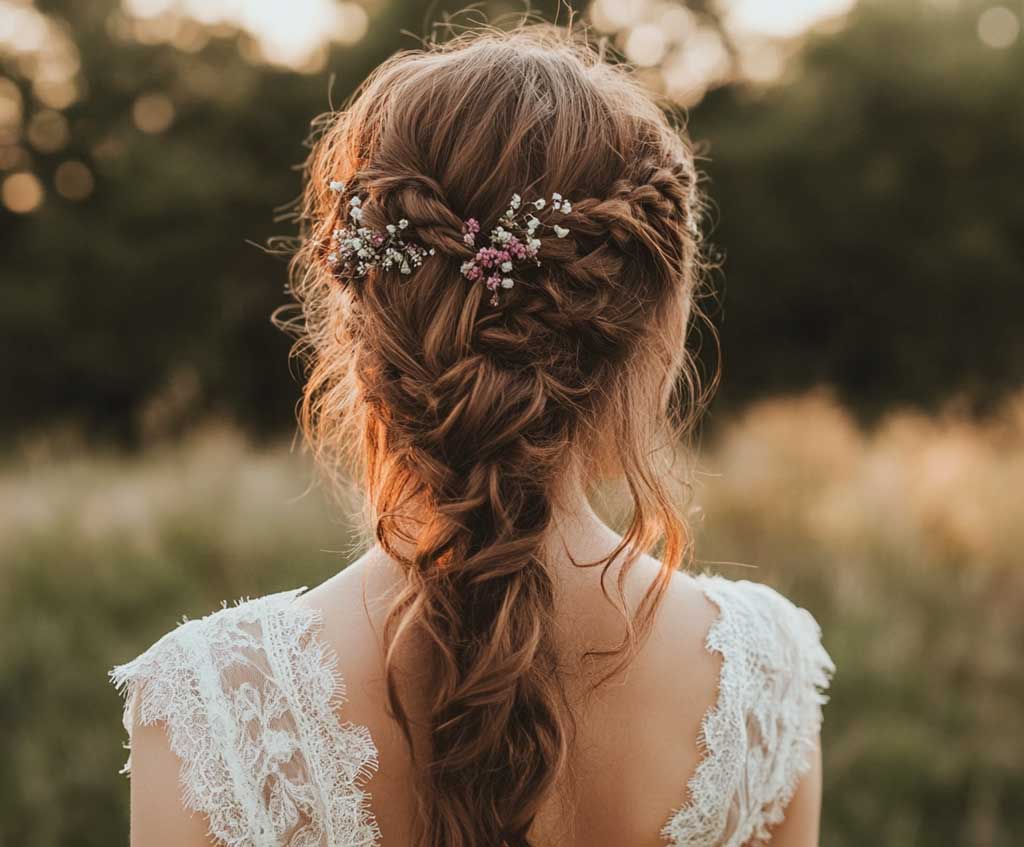
Never attempt a fishtail braid on freshly washed, silky-smooth hair without a texture product first — it slides apart within an hour. The braid structure needs friction to stay woven, and freshly conditioned hair has none. A dry texture spray or light-hold cream worked through the hair before braiding solves this completely and takes 90 seconds. This is the single most common reason boho half up styles fail on wedding days, and it is entirely preventable with one product step.
Don’t Do This
Avoid placing oversized fresh blooms directly into the braid structure — roses and peonies are too heavy and pull the braid loose by the ceremony. Stick to baby’s breath, small daisies, or wax flowers under 2cm, and secure each one individually with a small hair pin rather than pushing stems into the braid. Also avoid mixing boho braid texture with sleek serum applied to the lower section: the two finishes fight each other and the result looks neither intentional nor polished.
Floral Accessories Make the Sleek Half Up Half Down Work Only When the Rest of the Look Steps Back
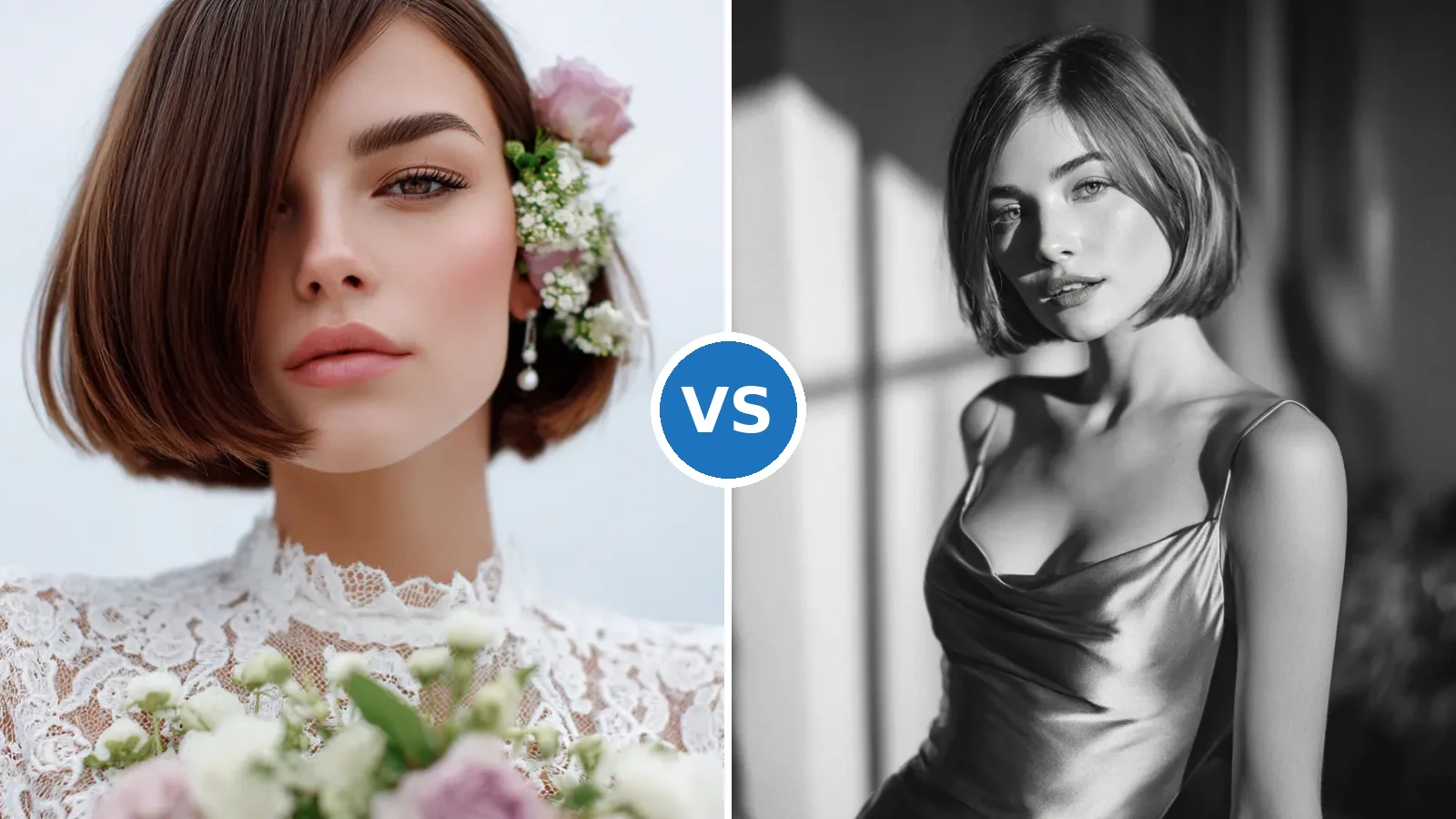
Sleek bridal hair half up half down with floral accessories is the most editorial of the three looks — and the most unforgiving when anything is off. The hair needs to be genuinely smooth and frizz-free, not just ironed-flat. That means starting with a professional-grade smoothing serum and blow-drying with a boar bristle brush before any heat styling. The pulled-back section must be perfectly level and symmetrical, because every minor asymmetry is amplified by the clean texture surrounding it. This is the style where a hair trial is non-negotiable, not just recommended — 73% of brides in The Knot’s 2025 survey hired a beauty professional, and the sleek half up is the reason most stylists cite for why.
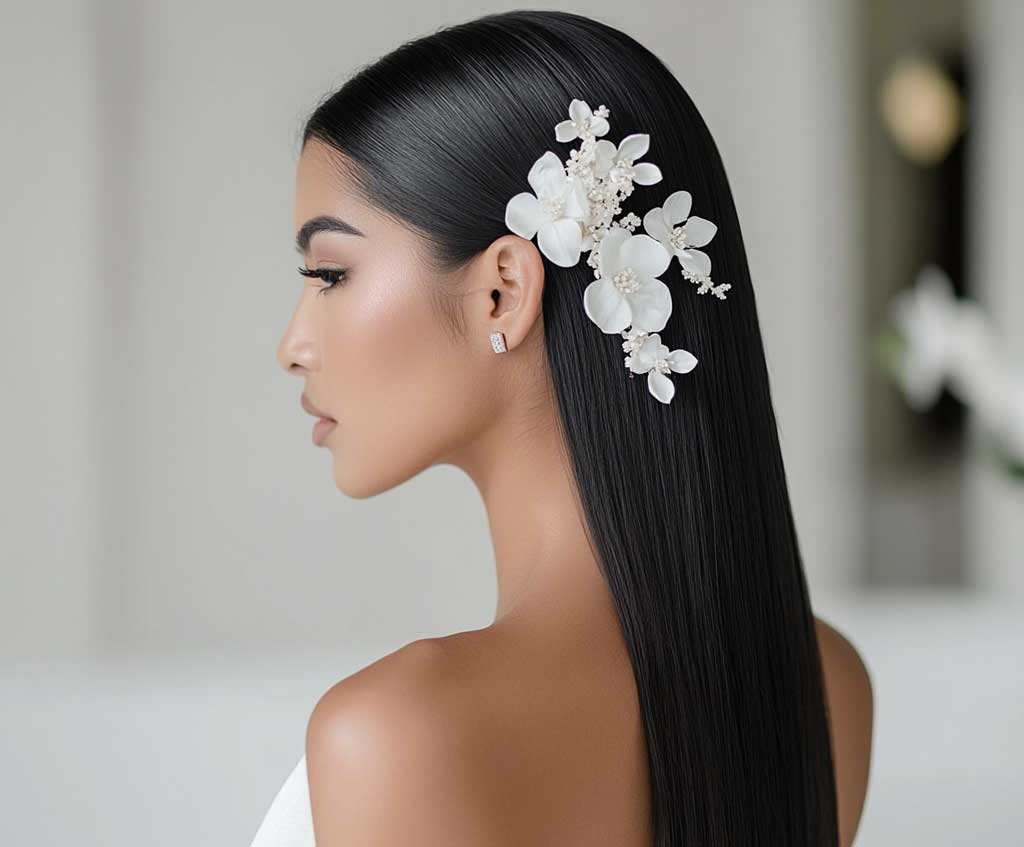
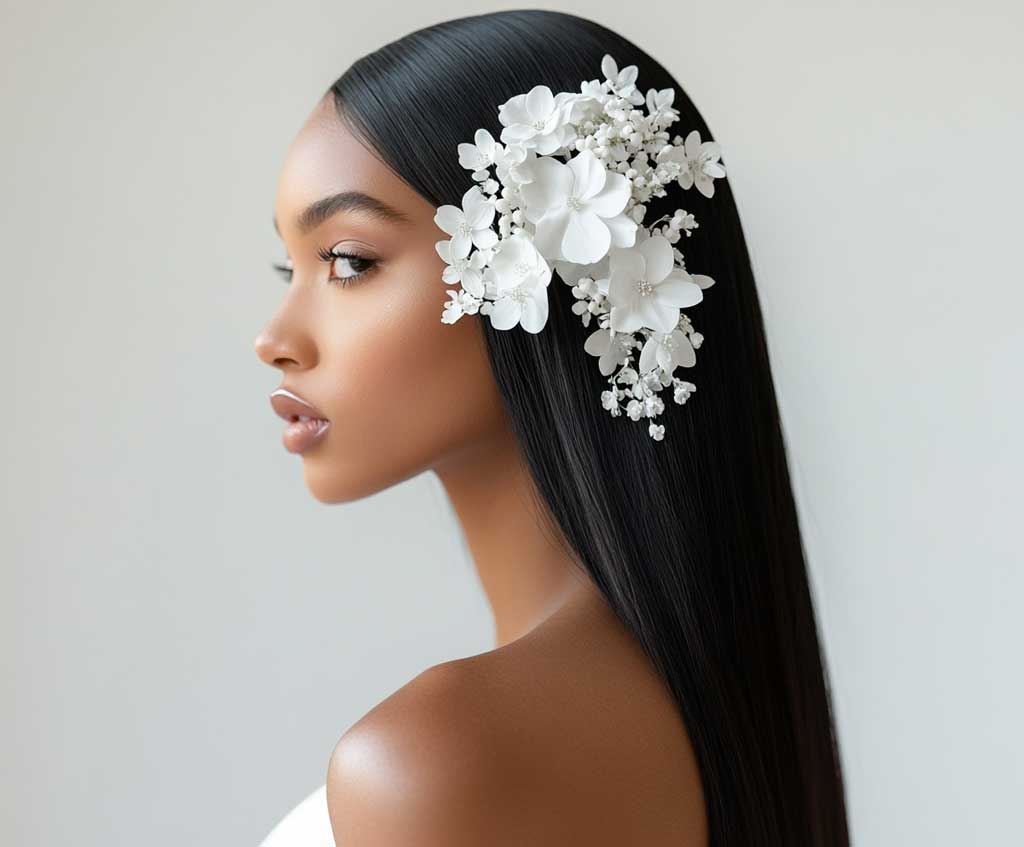
The accessories function as the single visual statement when everything else is stripped back — which means choosing them deliberately. Jennifer Behr’s Zinnia mother-of-pearl hairpins ($325 for a set of 5) are the version most frequently photographed in editorial bridal contexts: the carved flowers are small enough to stay proportional against a smooth pinned section and catch light without competing with the face. The Gretel pearl hairpin at $178 per pin is the single-statement option for brides who want one focal point rather than a scattered cluster. The most common accessory mistake: reaching for fabric florals in off-white when the gown is pure white. The difference between ivory and white reads starkly on camera, so always compare accessories in the same lighting as the dress before committing.
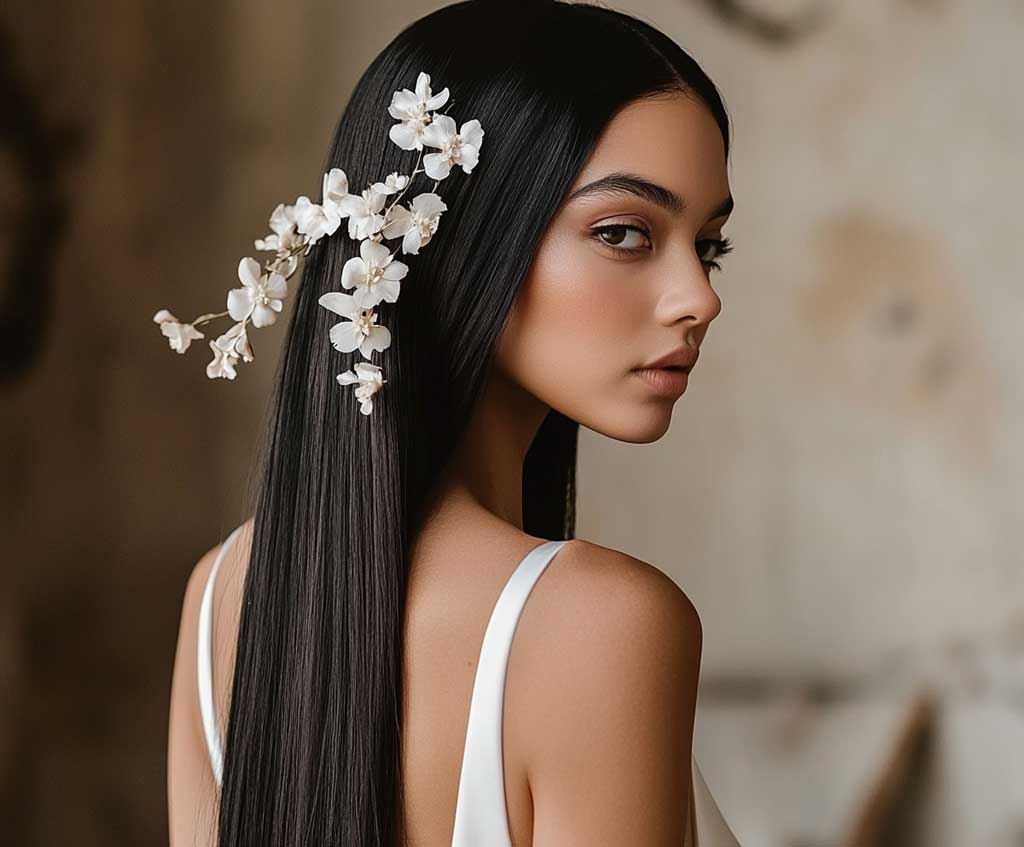
Does the sleek half up suit all hair types? No. It was designed for straight or naturally smooth hair with at least moderate density. Fine hair struggles to hold the pin-back section because there’s not enough grip on the shaft. The fix is a light texturizing powder applied at the roots specifically under the pinned section — not through the visible top layer — which creates internal grip without altering the smooth surface. Curly or wavy hair that’s been straightened for this style carries a real risk of reverting outdoors in humidity; a sealing spray over the entire finished look is essential, not optional. Skip it and you’re looking at a style that’s beautiful at 2pm and disheveled by 5pm.
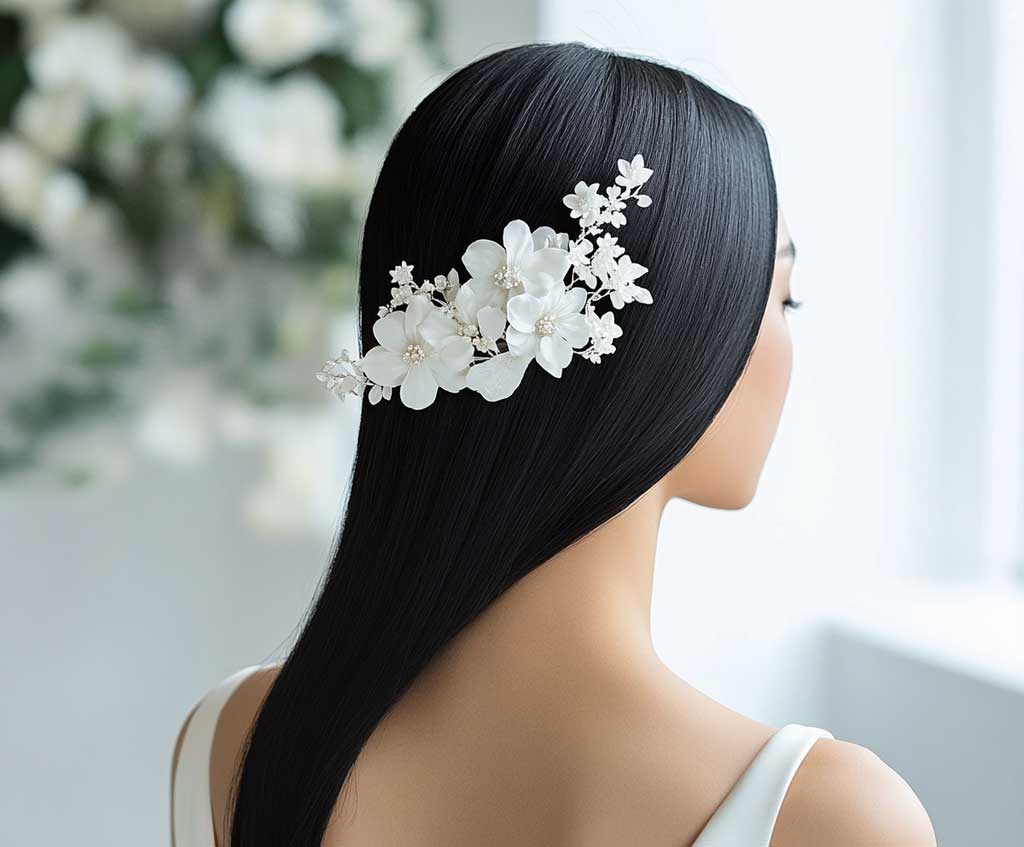
Sleek floral half up styles are the least forgiving outdoors. Wind catches straight smooth hair differently than waves or braids, and the result tends to be hair stuck to lip gloss rather than a deliberate silhouette. Reserve this style for indoor ballrooms, formal chapels, and dim-lit reception halls where the environment won’t challenge the structure. For outdoor ceremonies that transition indoors, use the sleek look for the reception change rather than the ceremony.
| Style | Best Venue | Durability | Key Risk |
|---|---|---|---|
| Soft Waves Half Up | Outdoor garden, countryside | Touch-up at 4–5 hours | Curl drop in high humidity |
| Boho Braid Half Up | Rustic, vineyard, beach | Improves through the day | Smooth hair — braid slides |
| Sleek Floral Half Up | Indoor ballroom, formal chapel | Re-smooth every 2 hours | Reversion on wavy/curly hair |
Professional wedding hair styling costs an average of $150 on the day itself, with a separate trial at $150–$300 that is the real investment for any half up style. For a full breakdown of what drives bridal beauty costs by region, service type, and bridal party size, The Knot’s bridal beauty cost guide publishes real-couple data annually and is the most accurate benchmark available.
Bottom Line
The half up style that photographs best is the one matched to your venue first, your dress second
Soft waves work everywhere. Boho braids survive everything outdoors. Sleek floral only delivers its full effect under controlled indoor light.
A hair trial at $150–$300 is how you find out before the day — not during it.
Accessories must match the gown’s white tone exactly; ivory and white diverge dramatically on camera. Save this post.