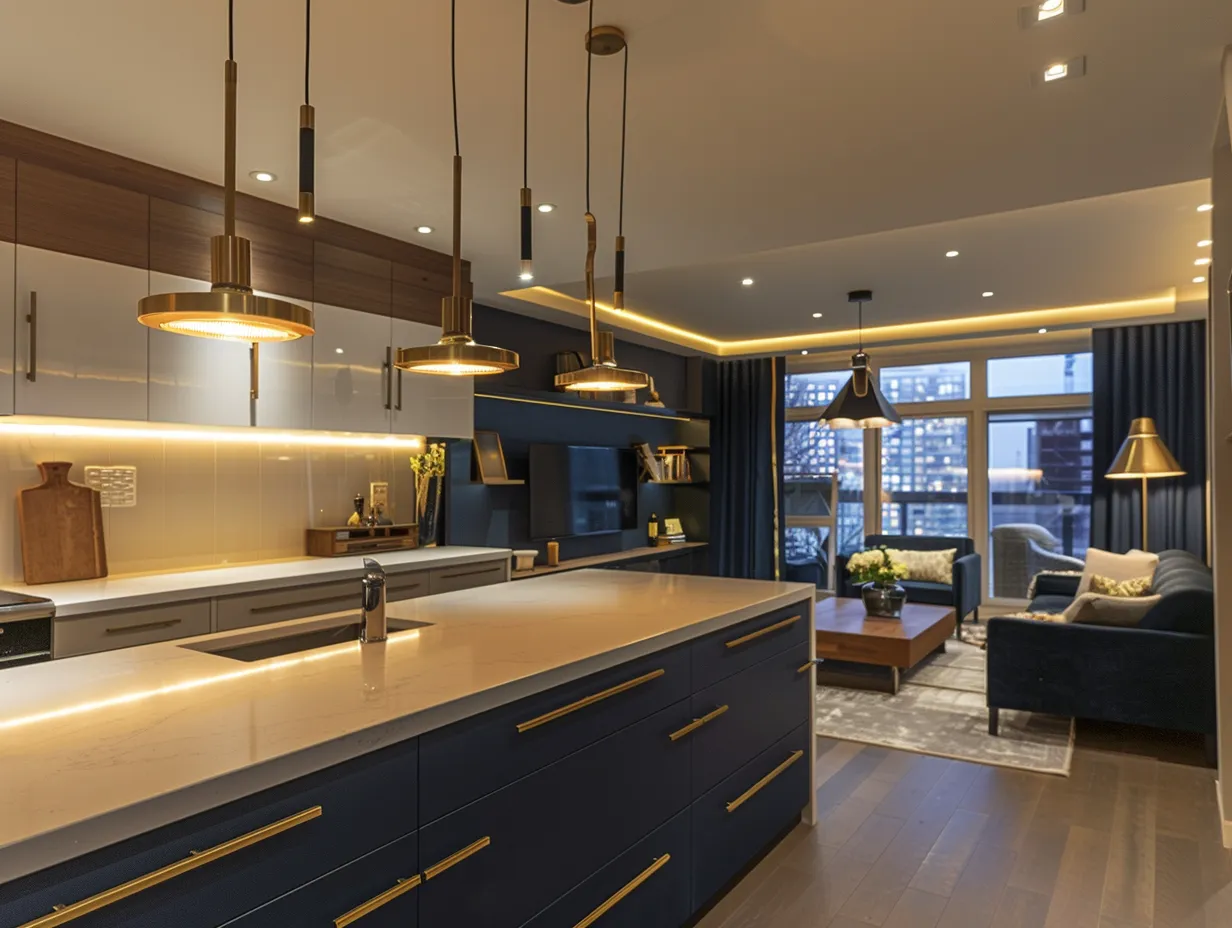
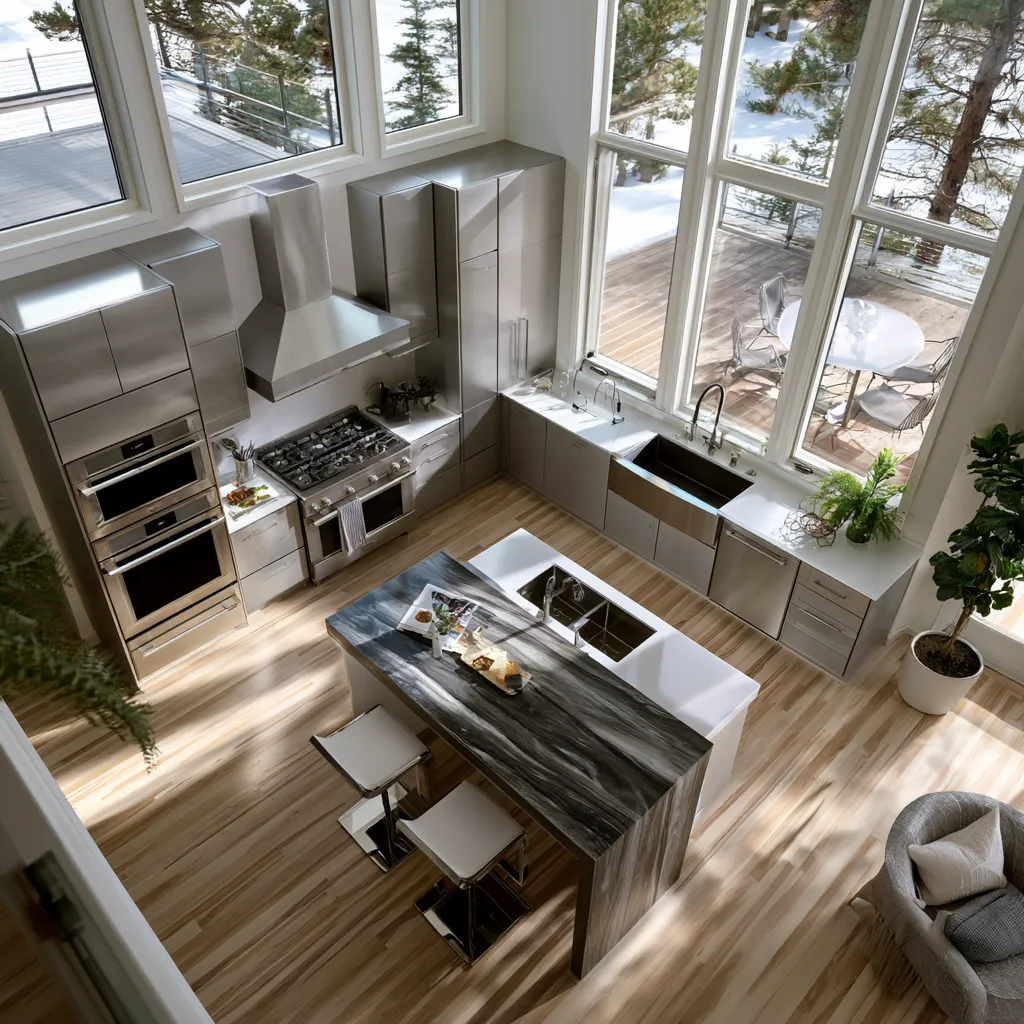
I’ve ripped out three kitchens in the last six years. Every single time, the bar counter decision ate more hours than the cabinets. The countertop shape changes how you cook, where people sit, and whether the space feels cramped or wide open.
Bar counters aren’t decorative extras. They’re load-bearing decisions — financially and spatially. Pick a waterfall edge and you’re committing $2,000 to $5,000 in extra slab material. Go with a floating design and you better confirm your wall studs can handle the weight.
Below are three modern kitchen bar counter designs I keep coming back to. One uses a waterfall countertop for a high-end dining setup. One wraps a curve around integrated appliances. The third floats off the wall with undermount LEDs and almost no visual weight. Each solves a different problem, and each comes with trade-offs nobody tells you about upfront.
Quick Summary
Waterfall bar counter: Countertop slab wraps to the floor. High-end look, $2K–$5K material premium, hides cabinet sides. Best for open-plan kitchens with dining seating.
Curved bar counter: Rounded countertop with integrated sink and dishwasher. Adds 25–40% fabrication cost. Best for social kitchens where you prep and entertain simultaneously.
Floating minimalist bar: Thin cantilevered countertop with LED undermount lighting. Requires hidden steel brackets. Best for small kitchens where floor space matters most.
Standard bar height: 40–42 inches from floor to counter surface. Pendant lights hang 30–34 inches above the counter.
Waterfall Bar Counter Design With Built-In Dining
Skip cheap engineered quartz if you’re doing a full waterfall edge. I tried a $40-per-square-foot slab on a waterfall island once. Six months later the mitre joint yellowed and the seam cracked. Real talk. Calacatta or Dekton panels in the $65-to-$90 range hold up far better at the 90-degree bend because they’re cut from thicker stock and the resin bonding is tighter.
The pendant lights above a bar counter like this need to hang 30 to 34 inches above the surface. Lower than that and tall guests smack their heads. Higher and the light pools on the floor instead of the countertop. I’ve seen electricians default to 40 inches and the whole dining zone looks like an afterthought. Measure twice. Hang once.
Handle-less push-to-open cabinets underneath a waterfall counter look incredible for about three weeks. Then fingerprints coat the fronts. A matte lacquer finish in dark grey or charcoal hides prints better than gloss white. My contractor pushed gloss because the markup was higher. Don’t fall for that.

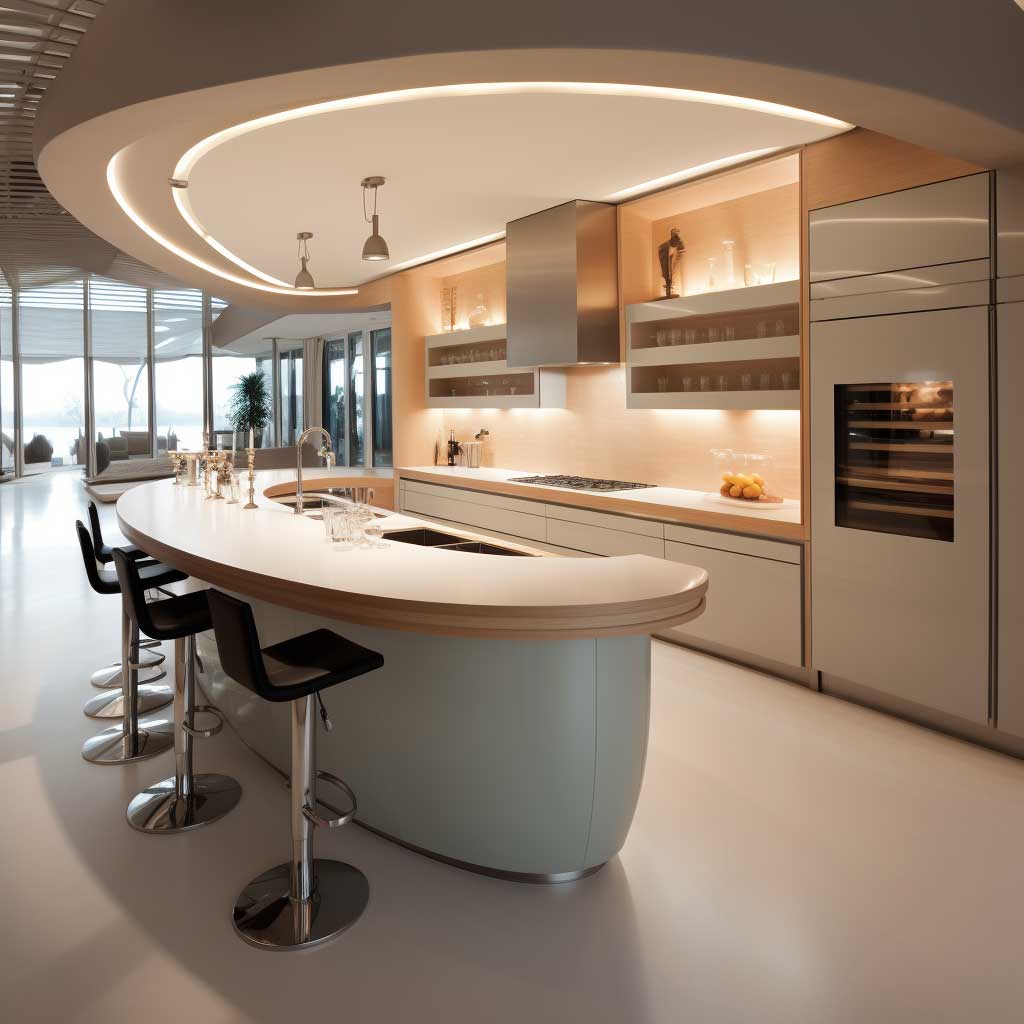
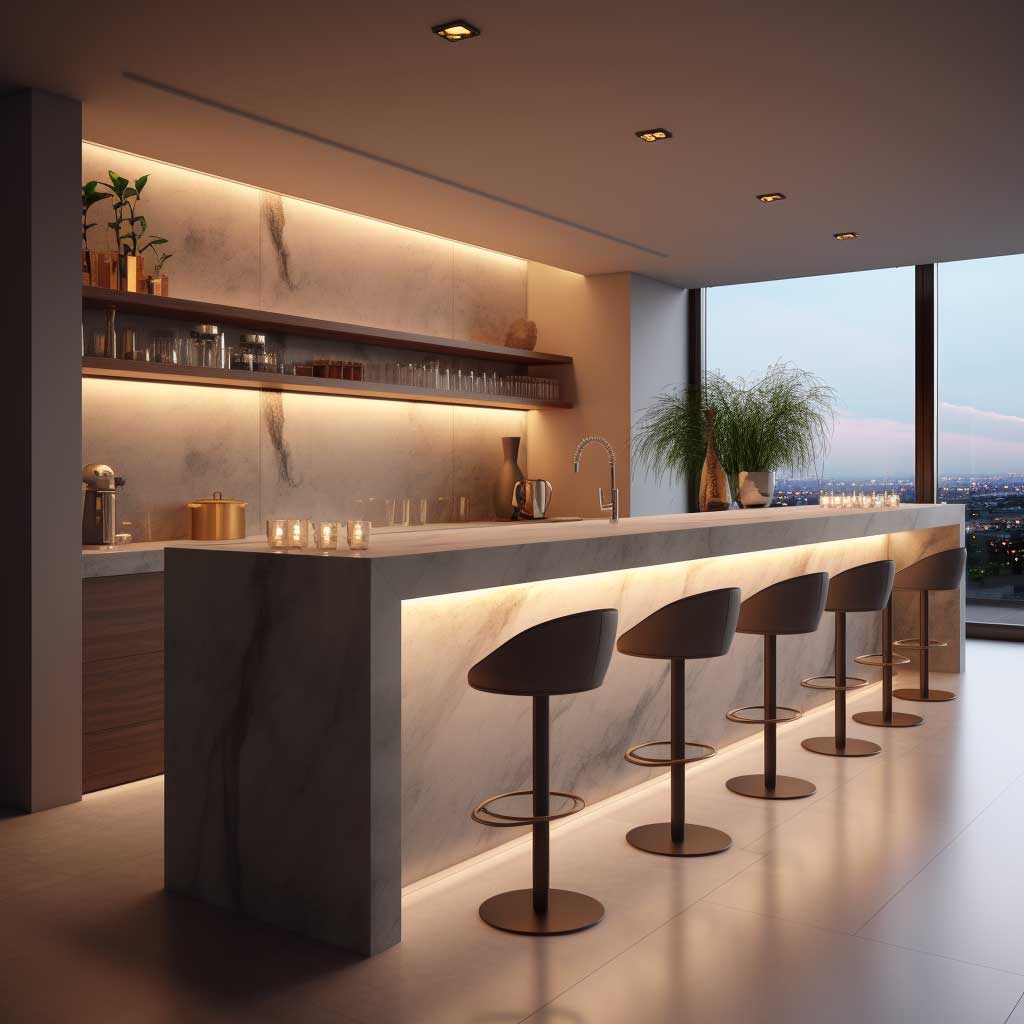
This first photograph portrays a modern kitchen bar counter design that successfully incorporates dining into the kitchen landscape. It’s an elegant arrangement that’s both practical for everyday use and perfect for entertaining guests.
A central feature of this design is the waterfall countertop. This unique detail, where the countertop material continues down to the floor, creates a stunning visual effect. The smooth, uninterrupted lines add a sense of depth and sophistication to the space.


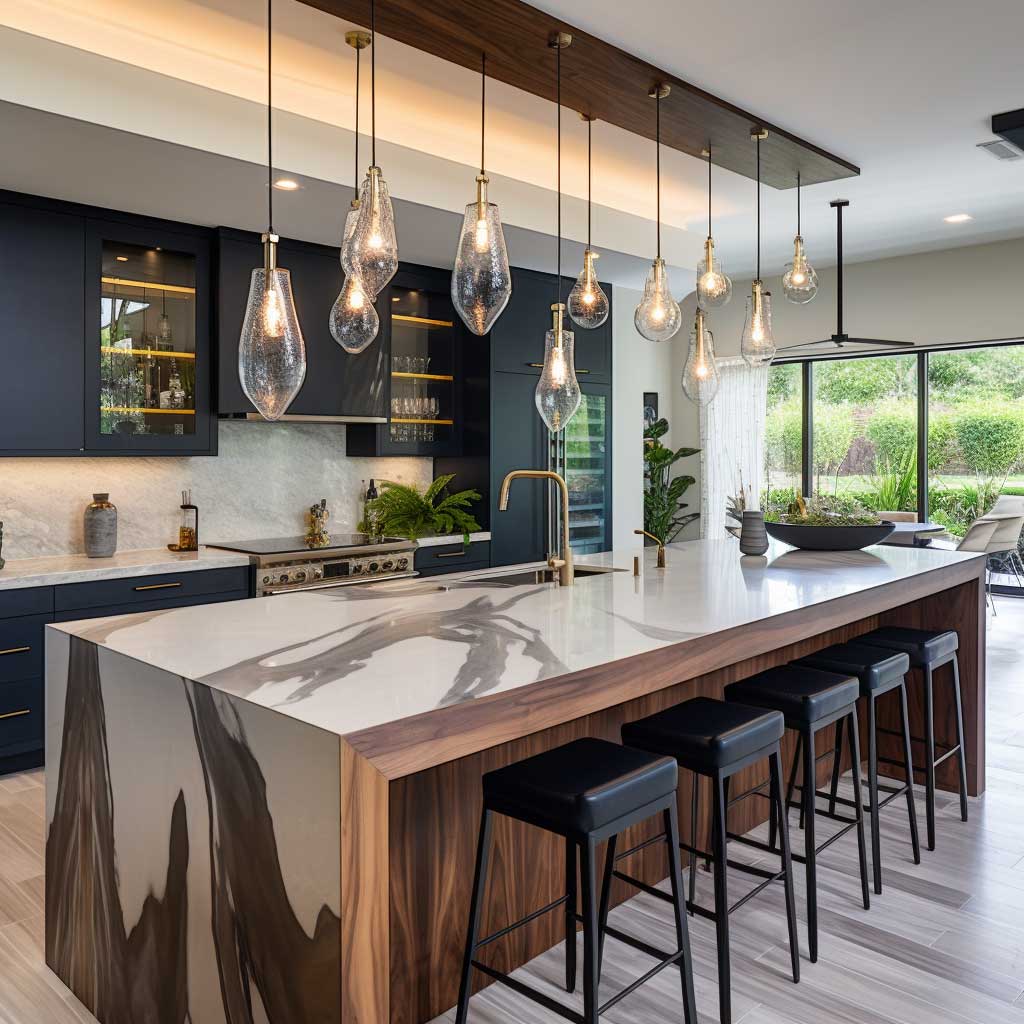
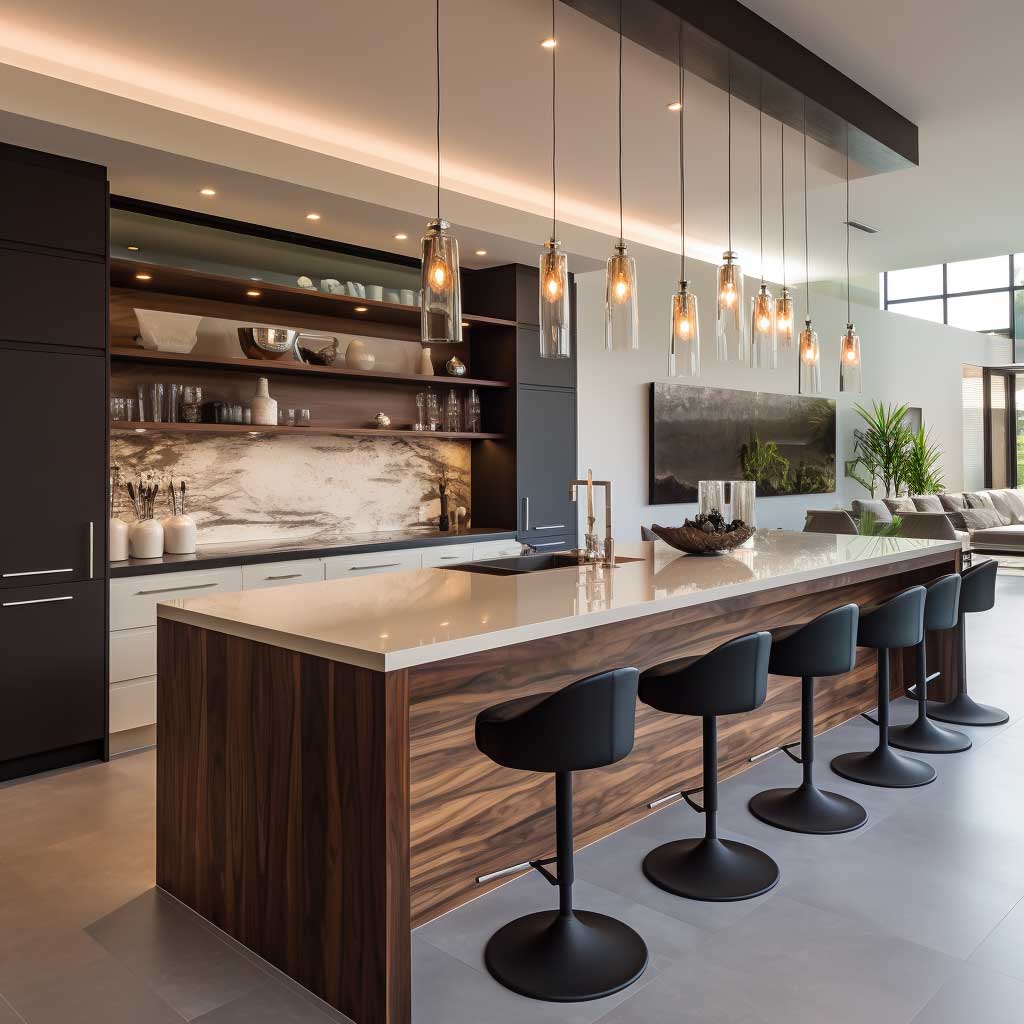
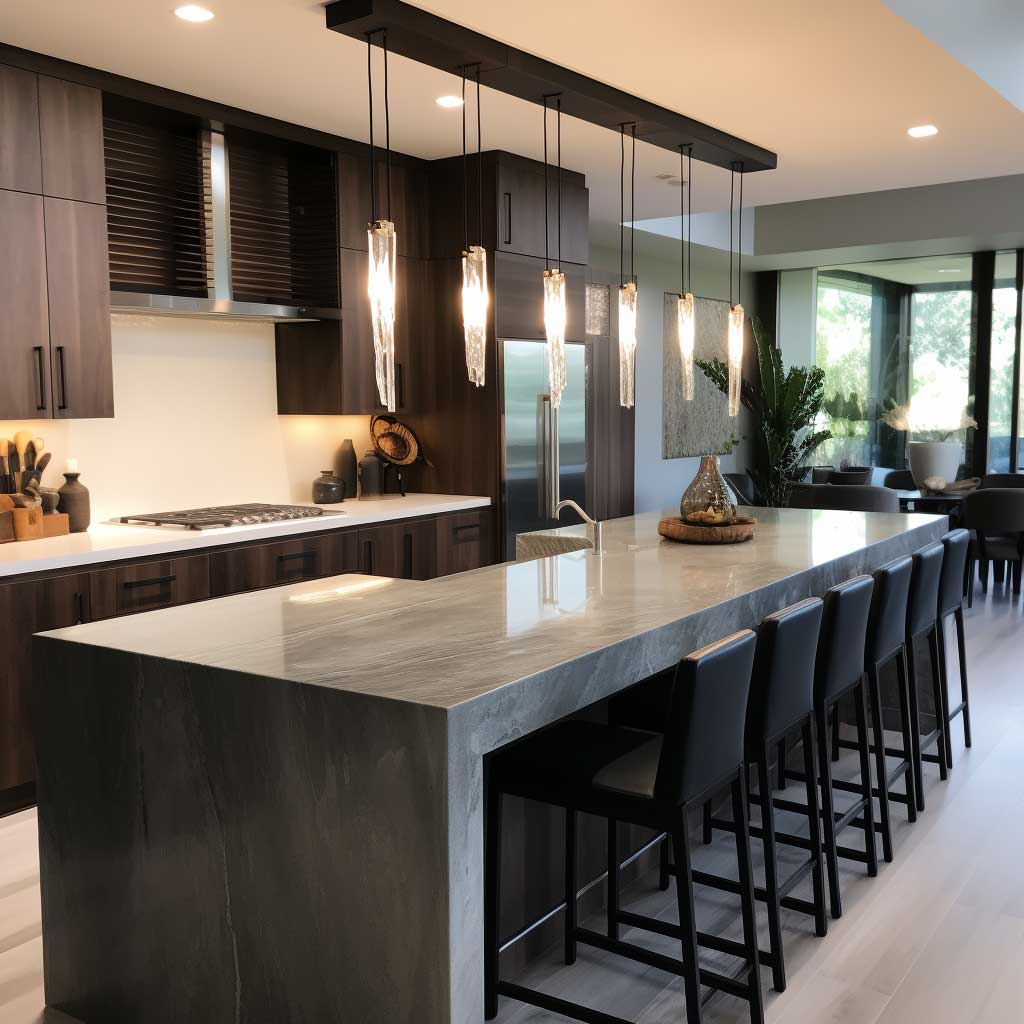
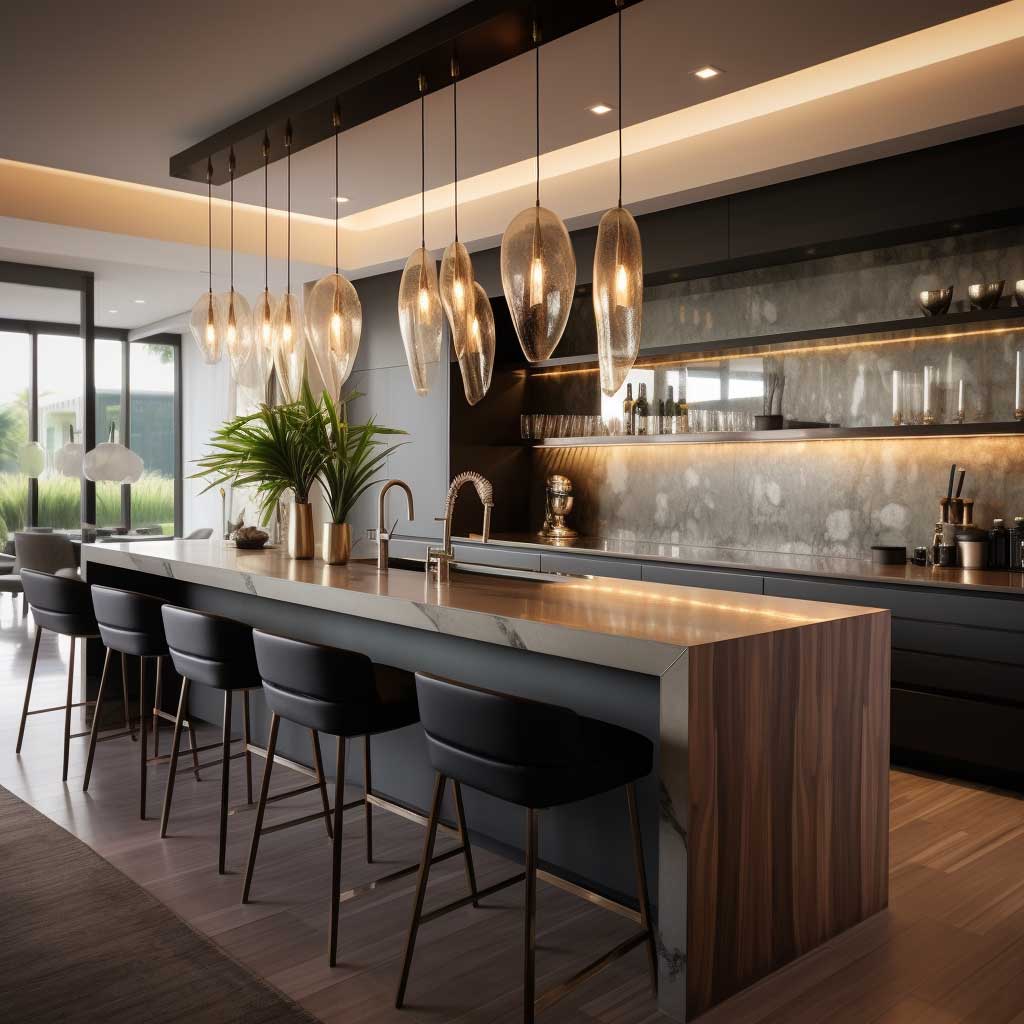
Equipped with high chairs, the bar counter provides an informal dining area that encourages engagement. The positioning of the bar counter allows anyone seated there to interact with someone working in the kitchen, fostering a sociable environment.
Above the bar counter, a series of pendant lights create an intimate dining atmosphere. These fixtures not only provide focused lighting but also serve as stylish design elements that enhance the modern aesthetic of the space. Choosing the right pendant shape and finish makes or breaks the whole bar area — for more ideas, see these minimalist kitchen island pendant lighting ideas.
| Feature | Waterfall Counter | Curved Counter | Floating Counter |
|---|---|---|---|
| Material Cost | $$$ (extra slab) | $$$ (CNC cut) | $$ (thin profile) |
| Best Countertop | Quartz, Dekton | Corian, HI-MACS | Honed granite |
| Seating Capacity | 3–4 stools | 4–5 stools | 2–3 stools |
| Built-In Storage | Handle-less cabinets | Open shelving | Hidden drawers |
| Integrated Appliances | No | Sink + dishwasher | No |
| Best For | Open-plan entertaining | Cook-and-host kitchens | Small or narrow kitchens |
| Biggest Downside | Seam cracking risk | Plumbing cost | Sag without steel brackets |
This design also cleverly incorporates storage solutions. Sleek, handle-less cabinets underneath the bar counter offer an unobtrusive place to store kitchen essentials, further emphasizing the clean, streamlined look.
Overall, this modern kitchen bar counter design is a perfect blend of functionality and aesthetic appeal. It creates a welcoming space for dining and conversation, proving how innovative design can enhance the usability and ambiance of a kitchen.
Curved Bar Counter With Integrated Sink and Dishwasher
Curved countertops cost 25 to 40 percent more than straight runs. That’s the fabrication premium for CNC-routing the curve and polishing a non-linear edge. Corian and HI-MACS thermoform well for tight radii under 24 inches. Quartz doesn’t bend — it has to be cut in segments and seamed, and those seams show.
Open shelving under a bar counter looks airy in photos. Dust is the real story. Any shelf within two feet of a cooktop collects grease film within days. I ditched open shelves on my second kitchen and replaced them with frosted glass cabinet doors. Same visual lightness, zero grease buildup on my wine glasses.
Running plumbing through a curved island is a headache your contractor will bill you for. Budget an extra $800 to $1,500 for the rough-in on a sink plus dishwasher line through a non-standard shape. Worth it if you actually cook at the counter. Not worth it if you just want the look.
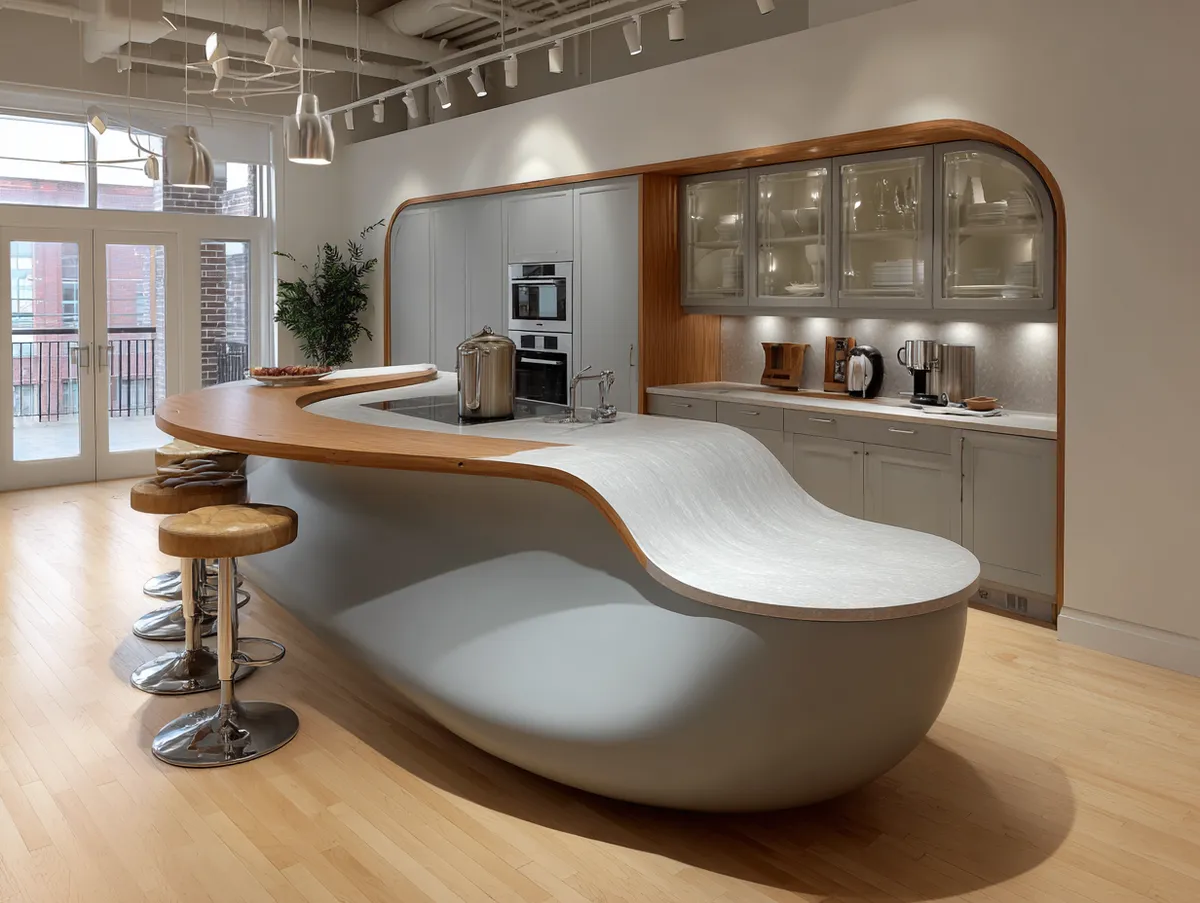
The second photograph introduces us to a modern kitchen bar counter design that highlights fluidity and elegance. This design shows how curvature and integrated appliances can redefine the kitchen’s visual and functional landscape.
The primary feature of this design is the bar counter’s curved countertop. The fluid lines give a sense of movement, making the kitchen feel more dynamic and inviting. It also allows for comfortable seating around the curve, creating a more interactive dining experience.


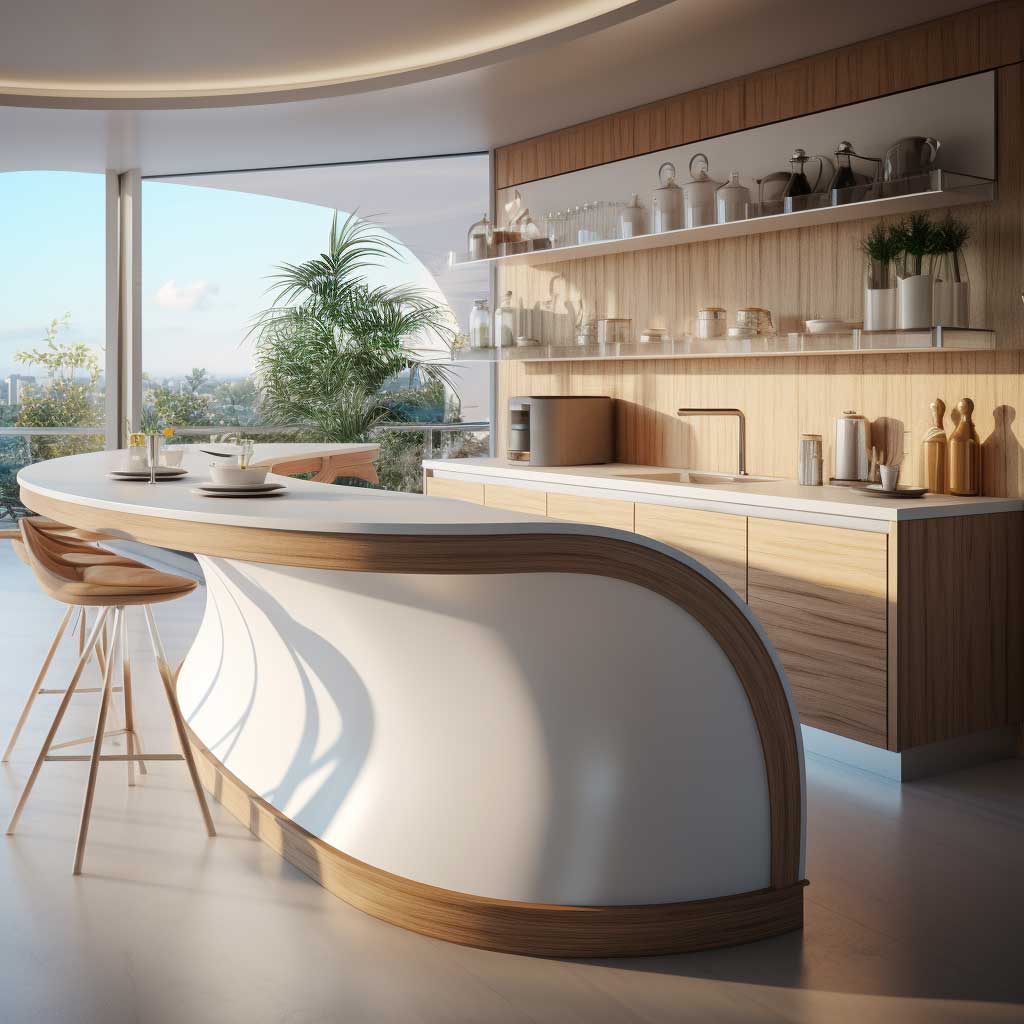
The bar counter includes integrated appliances like a sink and a dishwasher, making it a functional workspace as well as a dining area. This multifunctionality turns the bar counter into a central hub in the kitchen, a place where meal preparation and dining can occur simultaneously.
Another noticeable design aspect is the open shelving underneath the bar counter. This provides convenient access to dishes and glassware, further enhancing the counter’s functionality. The open design also adds a casual, airy feel to the kitchen, contrasting nicely with the sleekness of the countertop.
The choice of materials also adds to the modern aesthetic. A glossy white countertop is paired with warm wood shelving, creating a balanced blend of contemporary sleekness and natural warmth. For thousands of real kitchen bar counter photos sorted by style and material, browse the kitchen bar counter gallery on Houzz.
In conclusion, this modern kitchen bar counter design beautifully illustrates how fluid design elements and smart integration of appliances can create a functional, stylish, and interactive kitchen space.
Floating Minimalist Bar Counter With Undermount Lighting
A floating countertop without proper steel bracket support will sag within a year. I watched a friend’s 8-foot cantilevered Caesarstone bar develop a visible dip at the far end because the installer used wooden brackets instead of hidden steel T-supports. The fix cost more than the original install. Steel boning matters.
LED strip lights under a floating bar run $12 to $30 per meter for warm white 2700K strips. Cool white LEDs below a matte black countertop make the whole kitchen look like a dental office. Stick with warm. Philips Hue lightstrips at about $80 for a 2-meter run let you shift colour temperature, which is nice but not mandatory.
Matte black countertops scratch visibly. Every plate, every set of keys, every rough ceramic mug leaves a faint mark. Honed granite in absolute black holds up better than matte-finished engineered quartz for daily abuse. It reads the same shade in photos but handles life far better. I learned that the hard way after six months of babying a Silestone surface that still looked scratched.

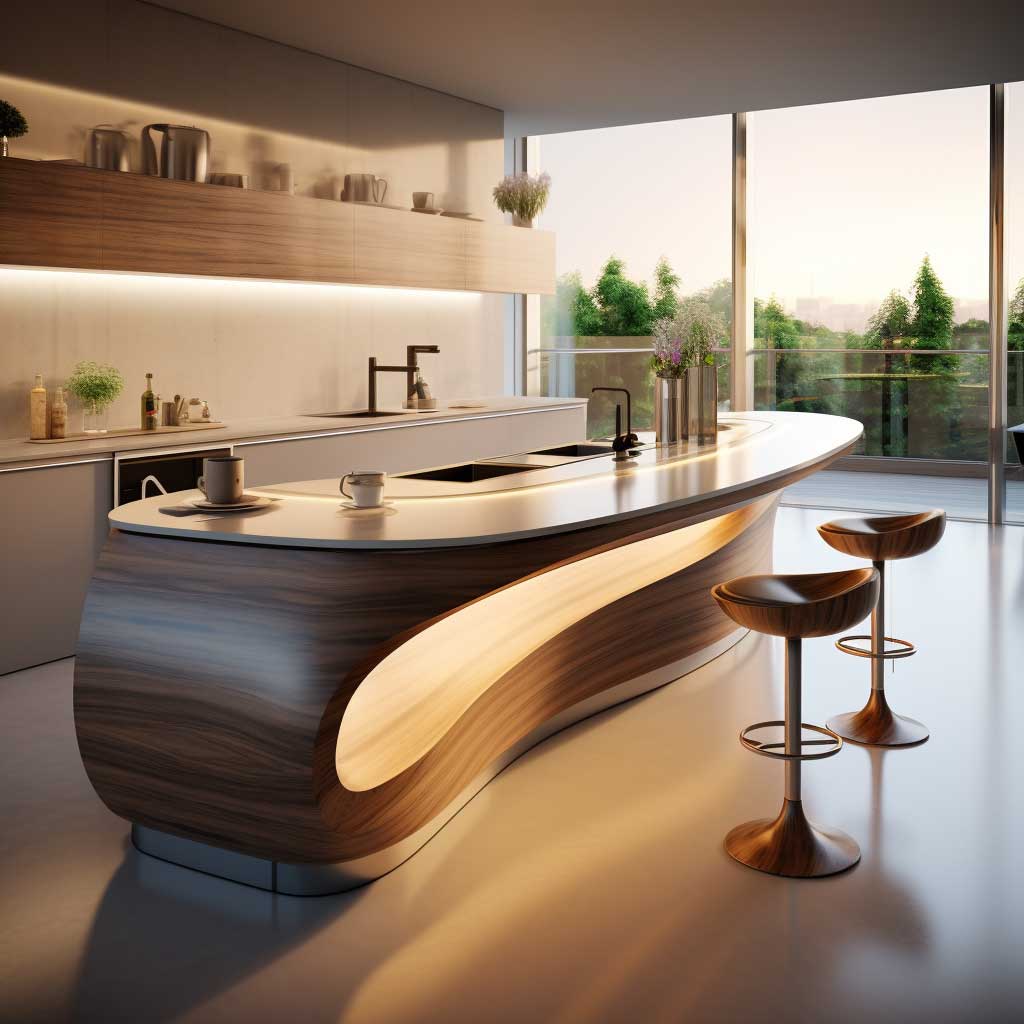
The third photograph presents a modern kitchen bar counter design that exemplifies minimalist mastery. With its sleek lines and understated design elements, this bar counter offers a tranquil, contemporary dining space.
The design’s standout feature is the thin, floating countertop. The slim profile, combined with the floating design, gives the bar counter a light, airy feel. This minimalist aesthetic helps to keep the kitchen space open and uncluttered.


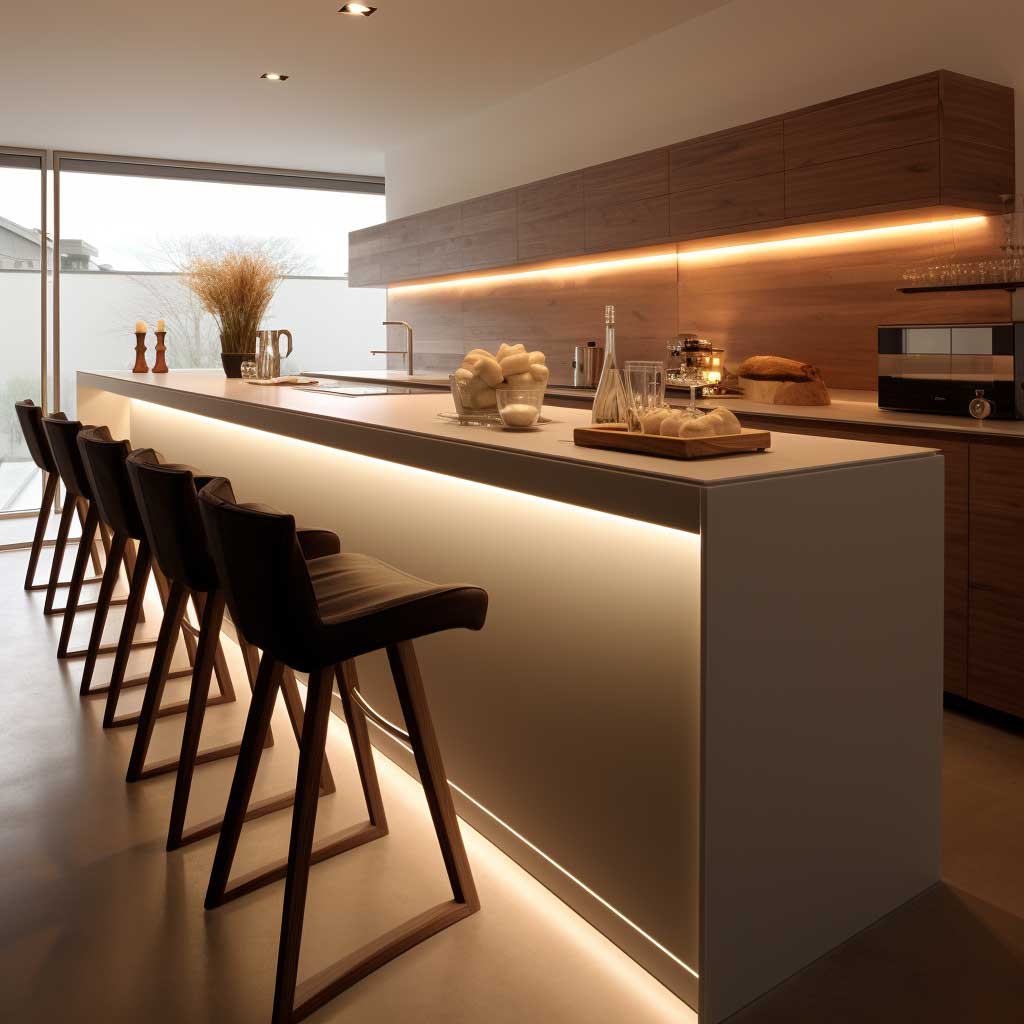
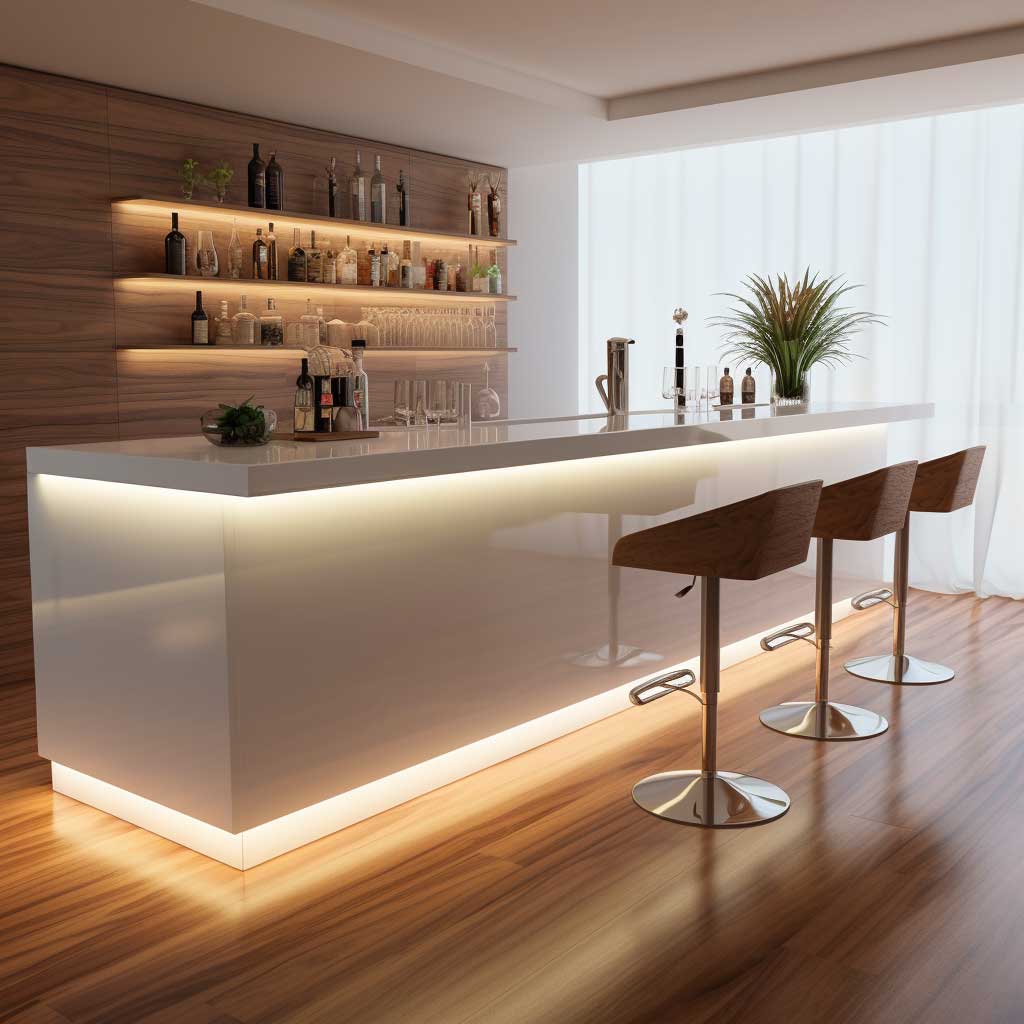

Despite the countertop’s delicate appearance, it offers enough space for comfortable dining. Paired with modern bar stools, it provides a relaxed, casual dining area perfect for quick meals or coffee breaks. A similar approach works well for minimalist kitchen island designs in small kitchens where every inch counts.
Underneath the floating countertop, undermount lighting illuminates the area below. This not only adds a functional lighting element but also enhances the floating effect of the countertop. The soft glow adds a cozy, inviting ambiance to the dining area.
Storage is subtly incorporated into the design with sleek, handle-less drawers beneath the bar counter. These provide a place to store cutlery and tableware without interrupting the minimalist aesthetic.
In terms of materials, the use of a matte black countertop with a white base creates a striking contrast. The simplicity of the color palette further reinforces the minimalist design.
In conclusion, this modern kitchen bar counter design shows how minimalist principles can be applied to create a peaceful, functional, and visually stunning kitchen space.
How to Plan a Modern Kitchen Bar Counter
A step-by-step process for choosing and installing a modern kitchen bar counter — from measuring your space to final lighting placement.
Tools & Materials:
- Tape measure
- Stud finder
- Level
- Countertop slab (quartz, granite, or solid surface)
- Hidden steel brackets or T-supports
- LED strip lighting (2700K warm white)
Measure Your Available Space
Record kitchen width, distance from the nearest wall, and ceiling height. Bar counters need at least 12 inches of knee clearance on the seating side and 36 inches of walkway behind the stools.
Choose a Counter Shape
Waterfall for open-plan entertaining, curved for cook-and-host setups, floating for small kitchens. Match the shape to how you actually use the room, not the shape that looks best in isolation.
Select Materials and Get Slab Quotes
Visit at least two fabricators. Get quotes per square foot installed — not just material price. Confirm mitre joint quality for waterfall edges, CNC capability for curves, and steel bracket availability for floating designs.
Plan Plumbing and Electrical Rough-In
If your bar counter includes a sink or dishwasher, schedule plumbing rough-in before the countertop arrives. Run electrical for pendant lights and under-counter LEDs at this stage too. Retrofitting later costs double.
Install the Counter and Mount Lighting
Set the countertop on levelled supports. For floating bars, bolt steel brackets to studs first. Hang pendant lights 30 to 34 inches above the surface and test brightness before committing to a final position.
What Actually Matters When Picking a Bar Counter
Three designs, three completely different trade-offs. Waterfall edges look expensive because they are expensive — but they also hide dishwasher panels and create a finished end that cheap islands can’t fake. Curved counters turn the kitchen into a social space where people actually sit and talk while you cook. Floating bars keep the floor clear and make a small kitchen feel twice its size.
None of them work if you skip the structural homework. Confirm your slab thickness before committing to a waterfall mitre. Price out the CNC cut before falling in love with a curve. Test your wall studs before you bolt a 150-pound countertop to them.
Pick the shape that matches how you actually use the kitchen — not the one that photographs best on someone else’s renovation blog.
FAQ
How tall should a kitchen bar counter be?
What is the best countertop material for a waterfall bar counter?
How much does a curved kitchen bar counter cost?
Can a floating bar counter support daily use without sagging?
What lighting works best above a kitchen bar counter?
Complete guide
Every Modern Kitchen Design Idea Worth Stealing Right Now
Layout, cabinets, islands, materials, color, lighting — all in one place