Simple tree house designs get abandoned half-built every spring because people skip the two decisions that matter before any lumber gets cut: picking the right tree and choosing rot-resistant wood. I’ve watched three neighbours nail particle board to a soft maple and wonder why the floor was spongy by August. This post covers the easy simple tree house designs worth building — from basic backyard platforms for kids to shaded adult retreats — with real material costs and the structural mistakes that make most DIY treehouses fail within two years.
Cedar runs $2–$4 per linear foot at Home Depot. Pressure-treated 2x4s cost about $1.10 per foot. Neither of those numbers is scary. What’s scary is finding out, after a winter, that you used neither. Skip the treated lumber debate and just buy Western red cedar for anything that contacts the tree — it’s naturally rot-resistant without leaching chemicals into living wood the way pressure-treated pine can.
Quick Scan
- Best tree species for a treehouse platform: oak, maple, Douglas fir, or beech (branches 8+ inches in diameter)
- Material budget for a basic simple tree house: $300–$600 for lumber, hardware, and roofing
- Biggest structural mistake: building the platform off-center over the trunk — it will lean
- Best backyard treehouse for kids: open-deck platform, rope ladder, and a roof overhang — no walls needed
- Adult retreat version: add a railing, two windows, and a hinged door — total upgrade costs around $150 extra
- Don’t skip: TABs (Treehouse Attachment Bolts) — they flex with tree movement instead of shearing off like lag screws
Build Your Dream Retreat with Simple Treehouse Inspirations
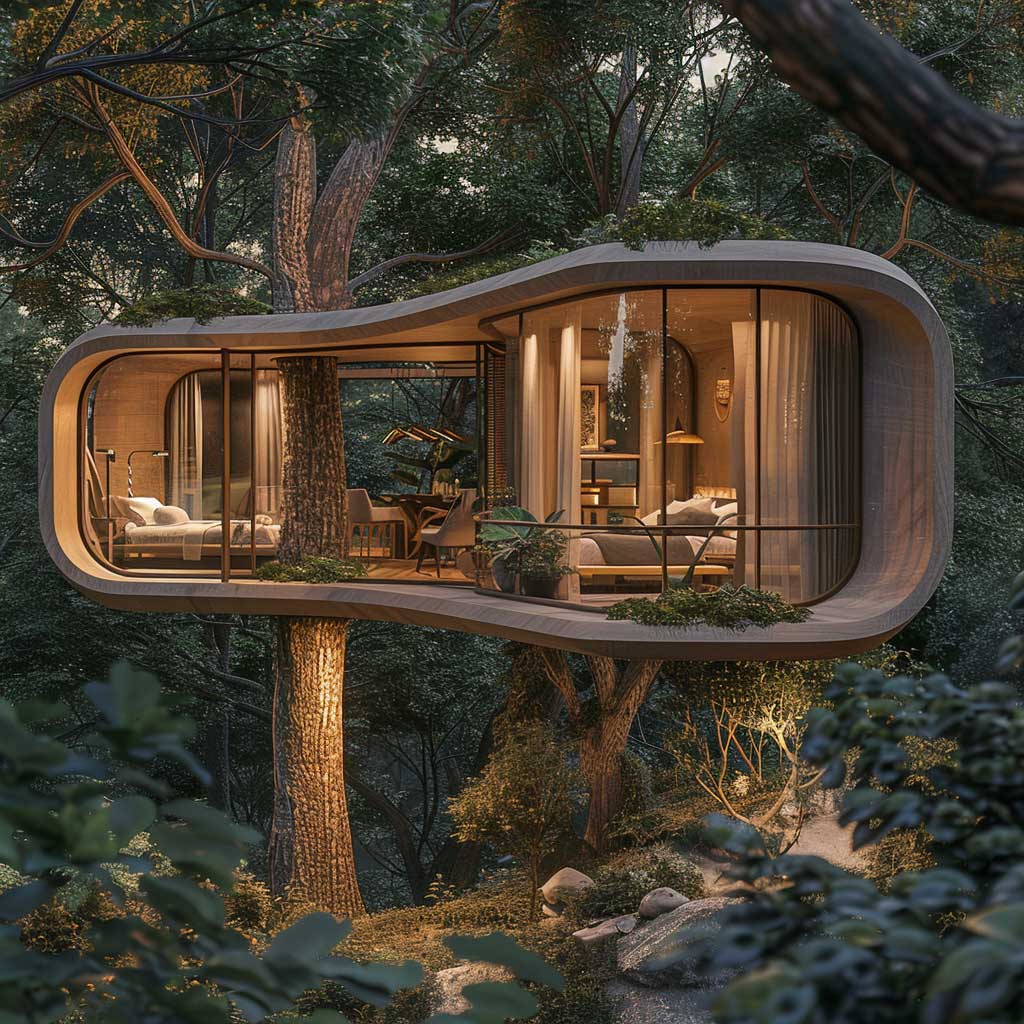
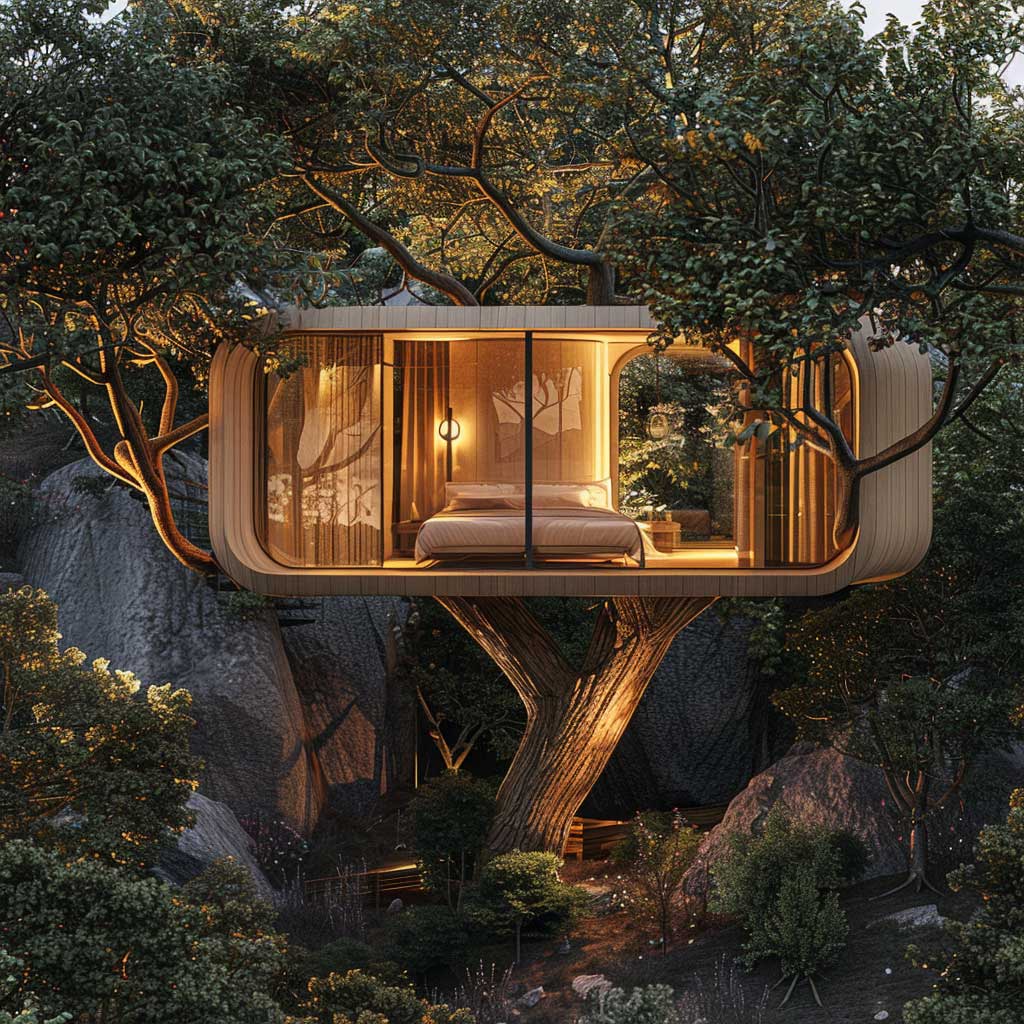
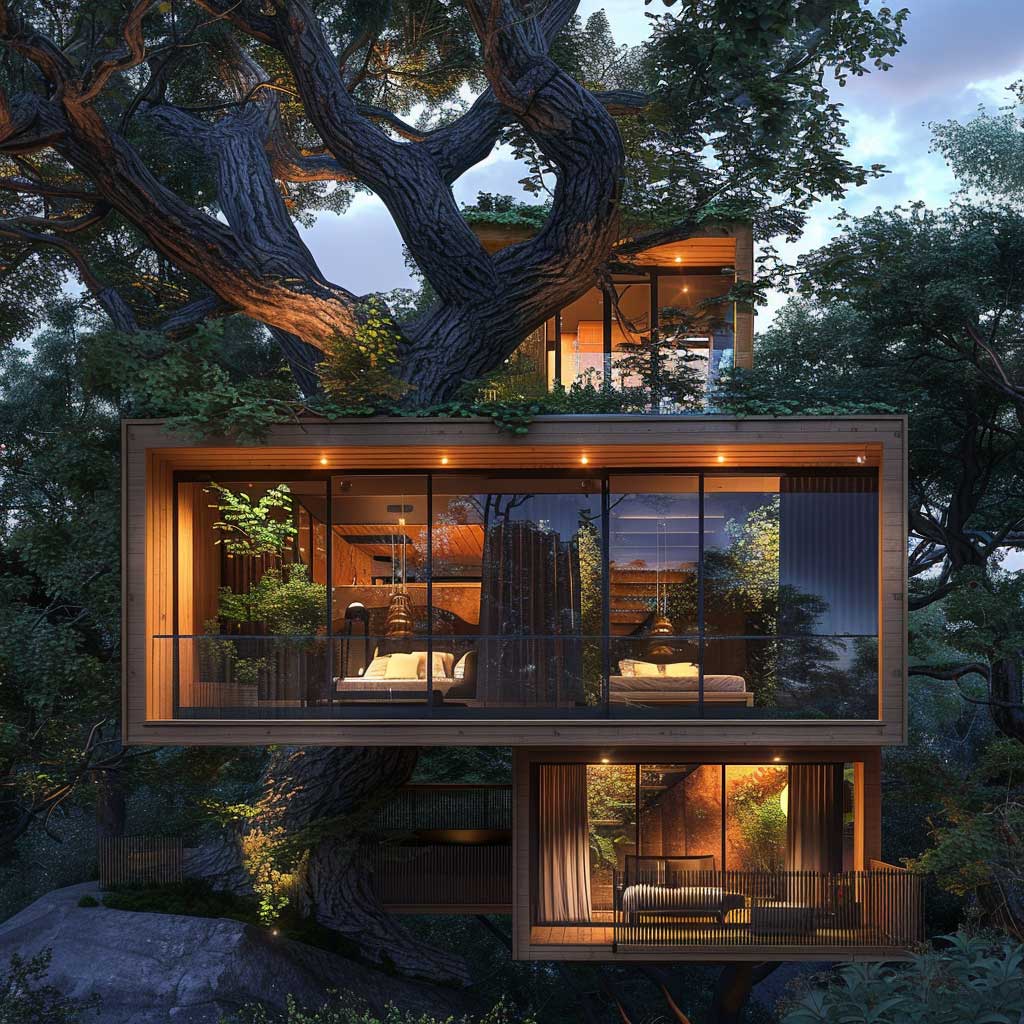
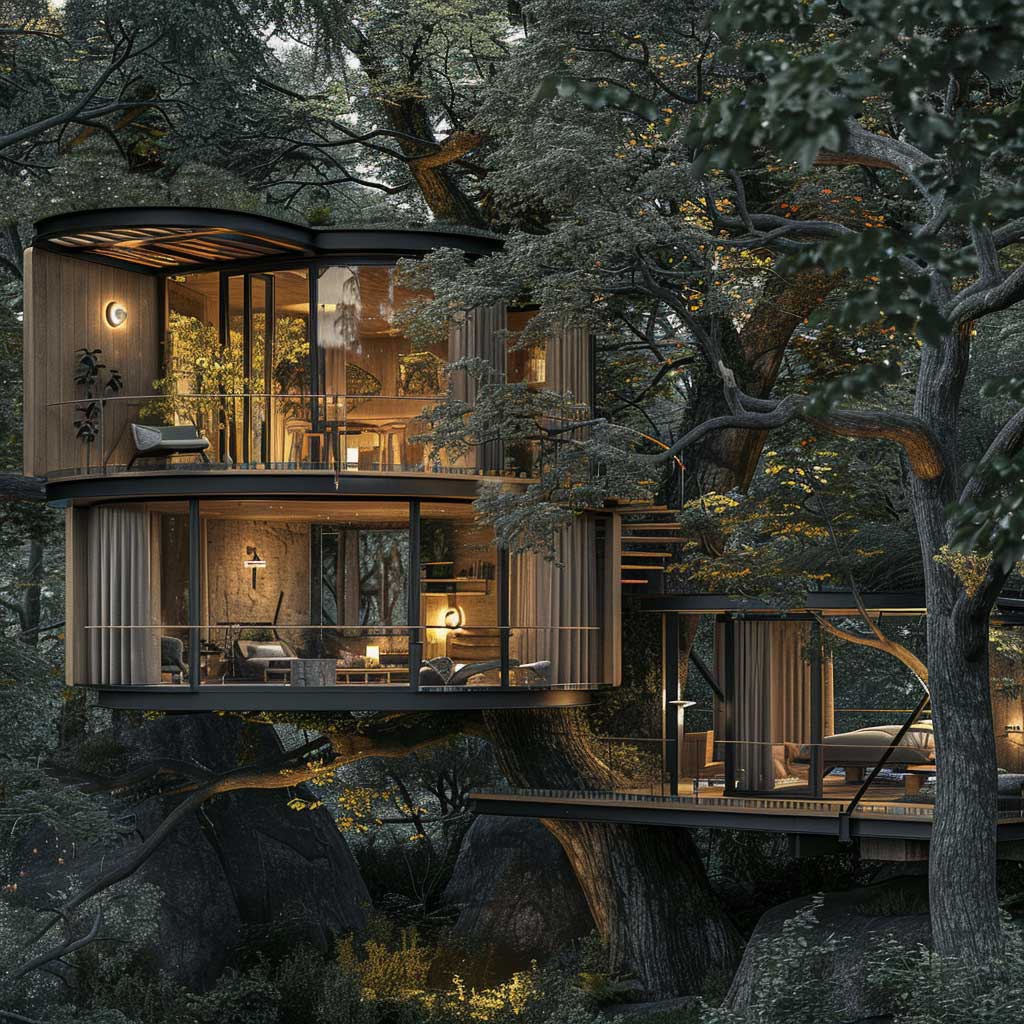
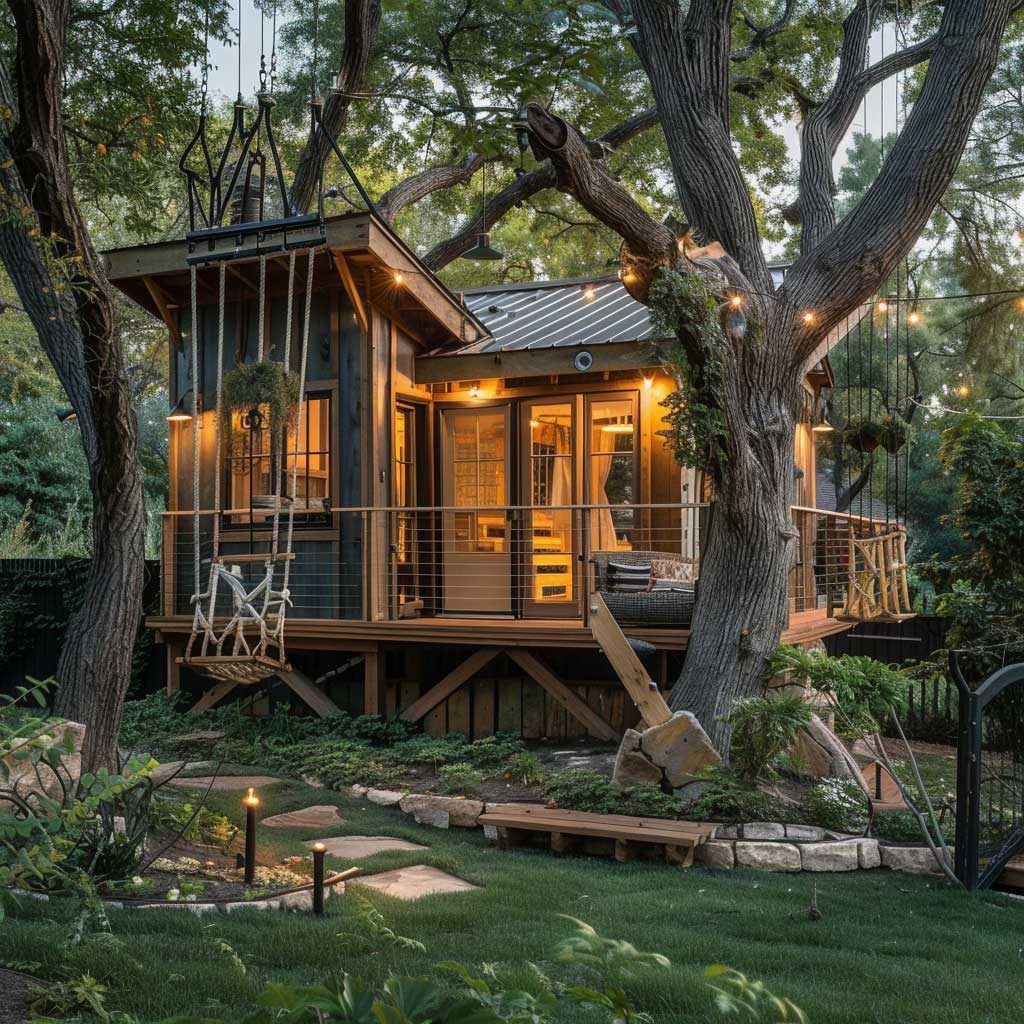
The retreat-style treehouse isn’t a kids’ fort with cushions thrown in — it’s a different structural category. You need a full railing (code minimum is 36 inches high), a proper door with a threshold, and at least two operable windows so you’re not sitting in a box of humid air by July. I built my own off a white oak with 10-inch branches using a single Garnier Limb bolt as the primary anchor and two knee braces below. Total lumber cost at the time was $410. It took two weekends and one extra set of hands for the wall sections.
Natural materials aren’t just aesthetic preference here — they perform better. Cedar siding and a corrugated metal roof (around $80 for a 10×10 section at most farm supply stores) handle freeze-thaw cycles without cracking the way composite panels do. You’ll notice the texture of unfinished cedar changes colour season to season, silver-grey by year two. That’s not failure. That’s correct.
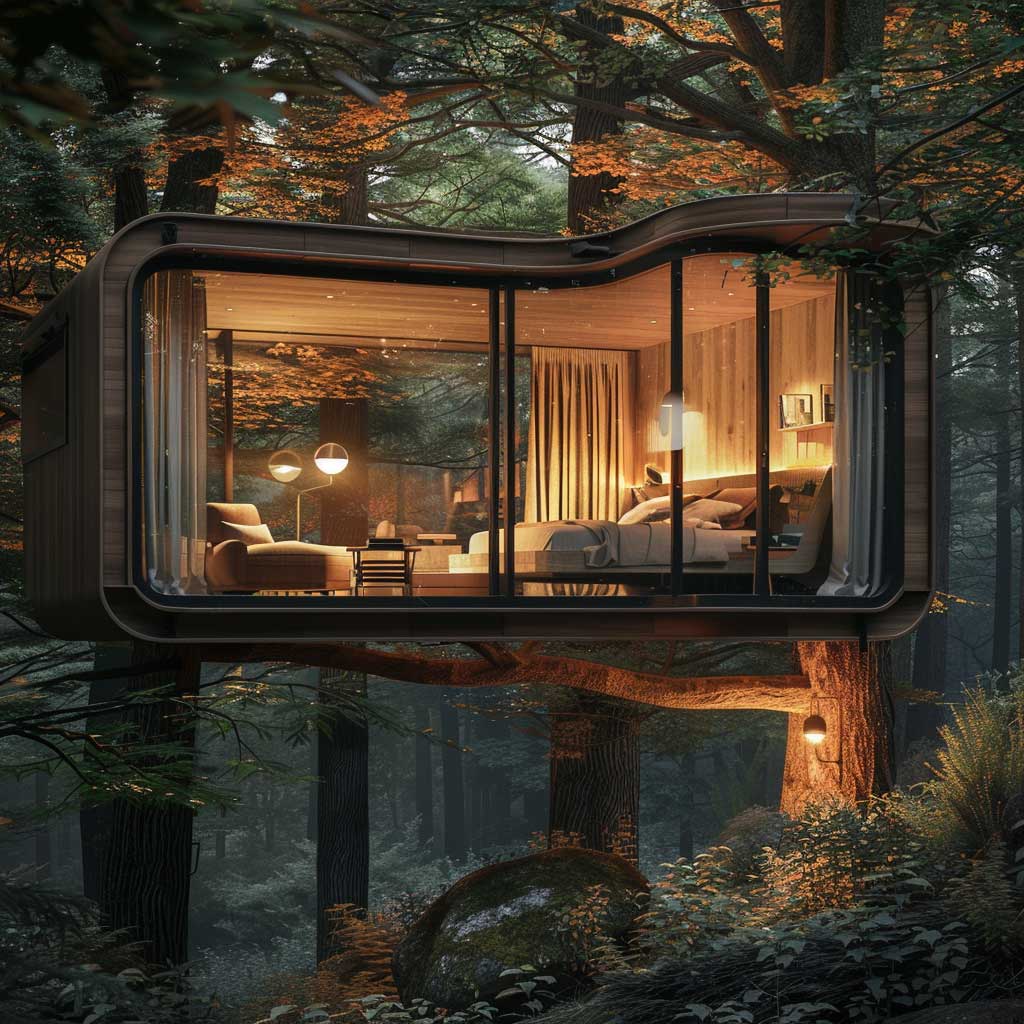
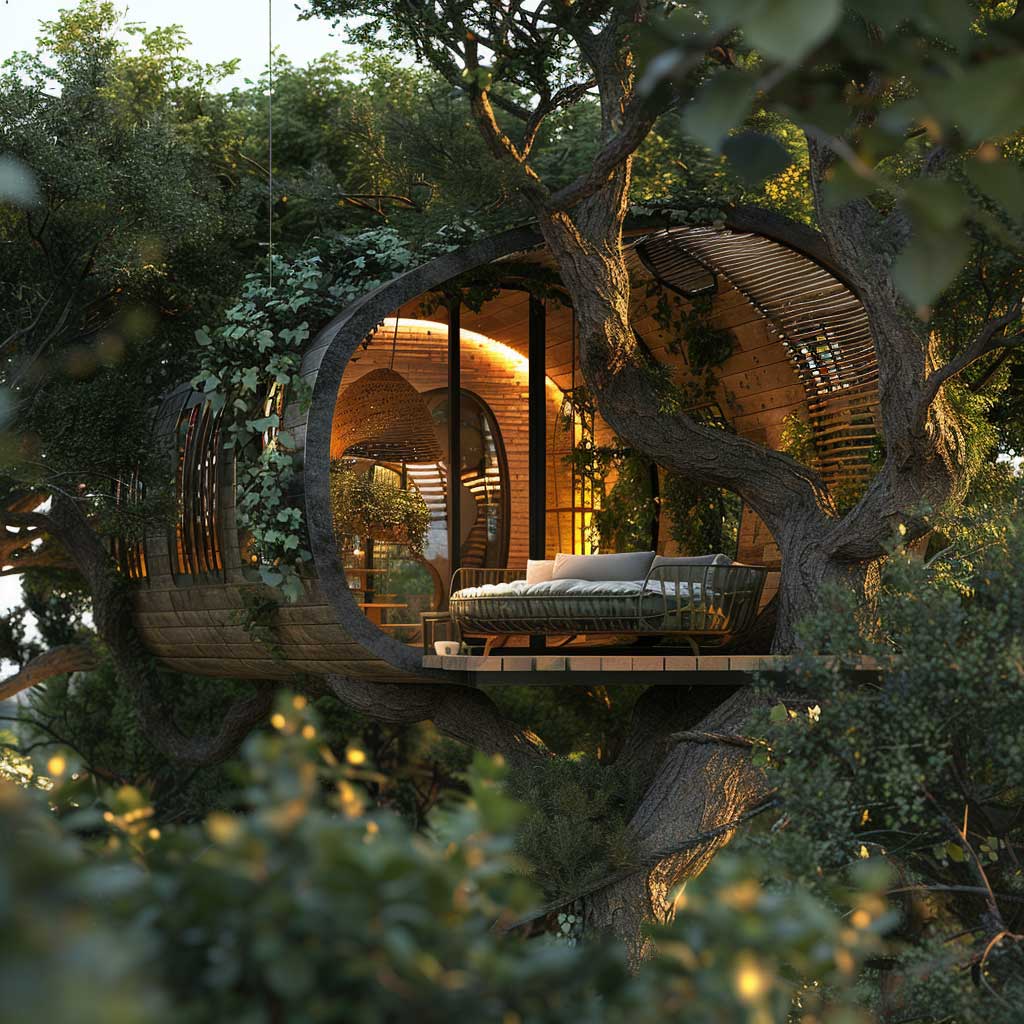
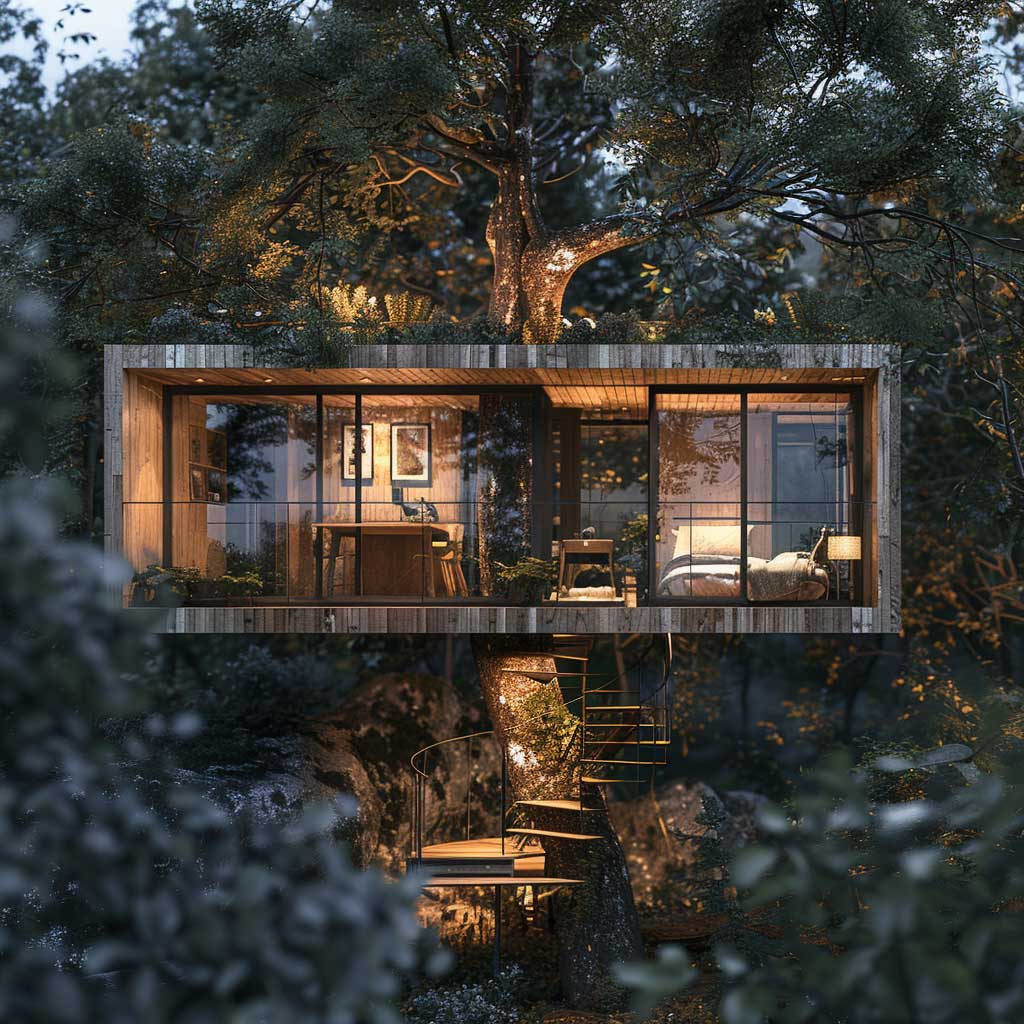
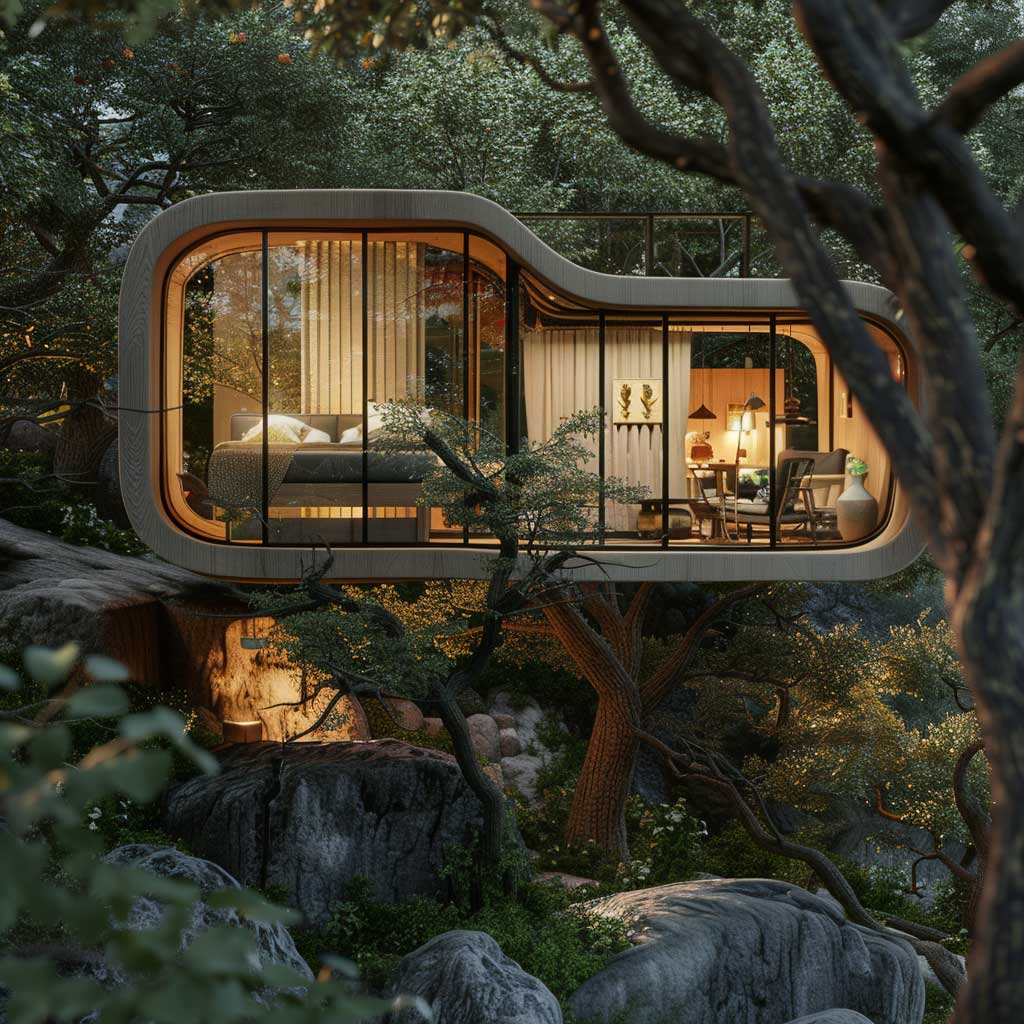
What doesn’t work for a retreat-style build: any design that puts the platform higher than the lower third of the tree. I’ve seen people go for 15-foot decks on a trunk that starts swaying noticeably at 8 feet in any wind. Stay low. The view at 7 feet is already good. The sway at 15 feet in a storm is not a feature.
Think of the finished retreat like a small guesthouse that grew out of the ground — it needs the same logic as a real room. One skylight-size window facing north for diffuse light, a door that swings out (not in, you’ll hit your knees on everything), and a small overhang above the entrance so rain doesn’t pool on the threshold. None of that is complicated. All of it gets skipped in most basic treehouses.
Simple Backyard Treehouse Platforms Kids Return to Every Day
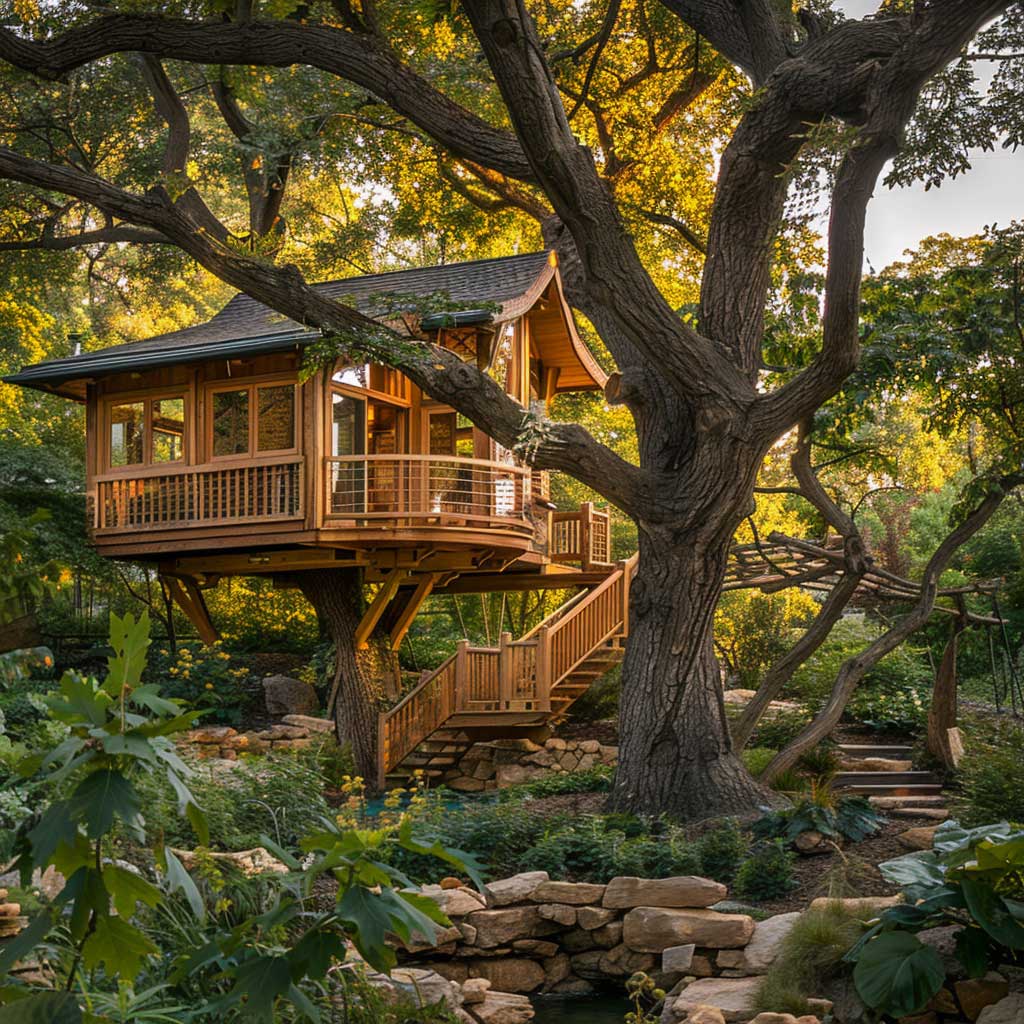
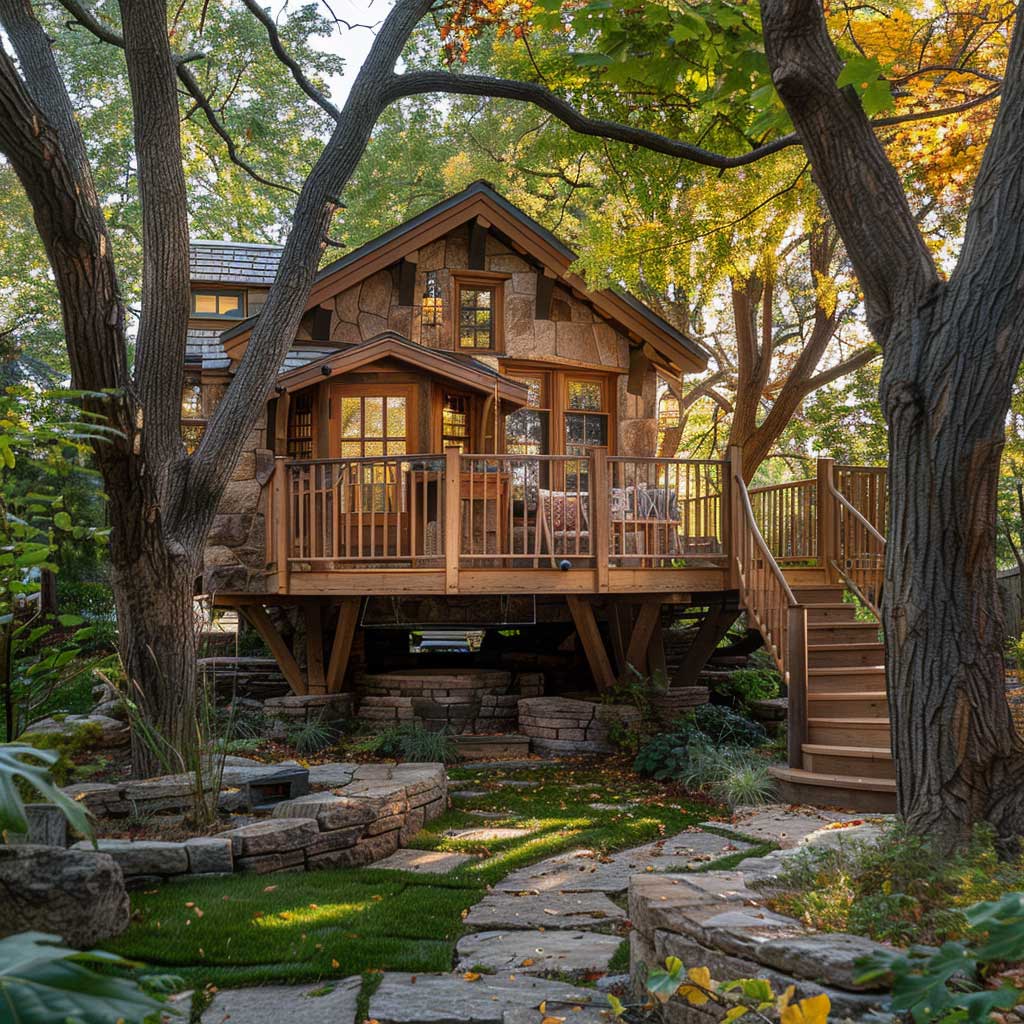
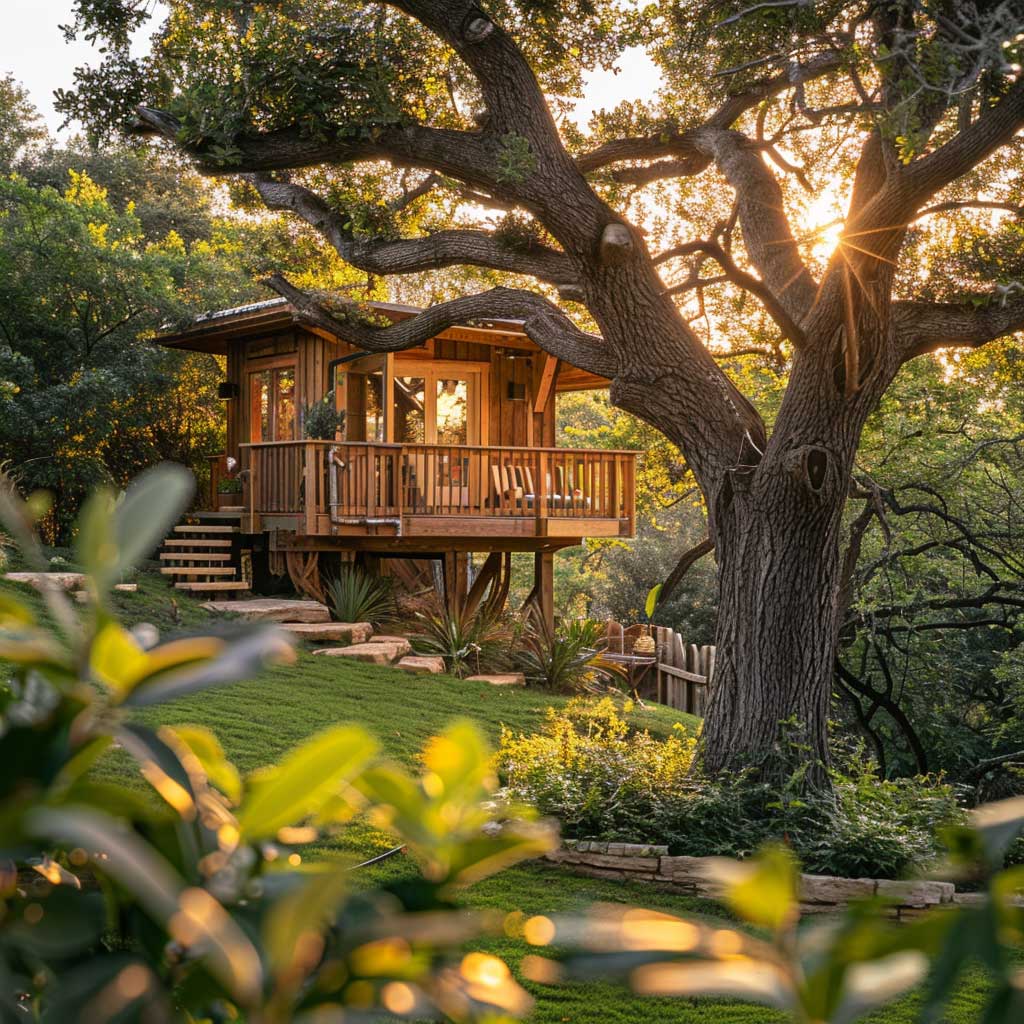
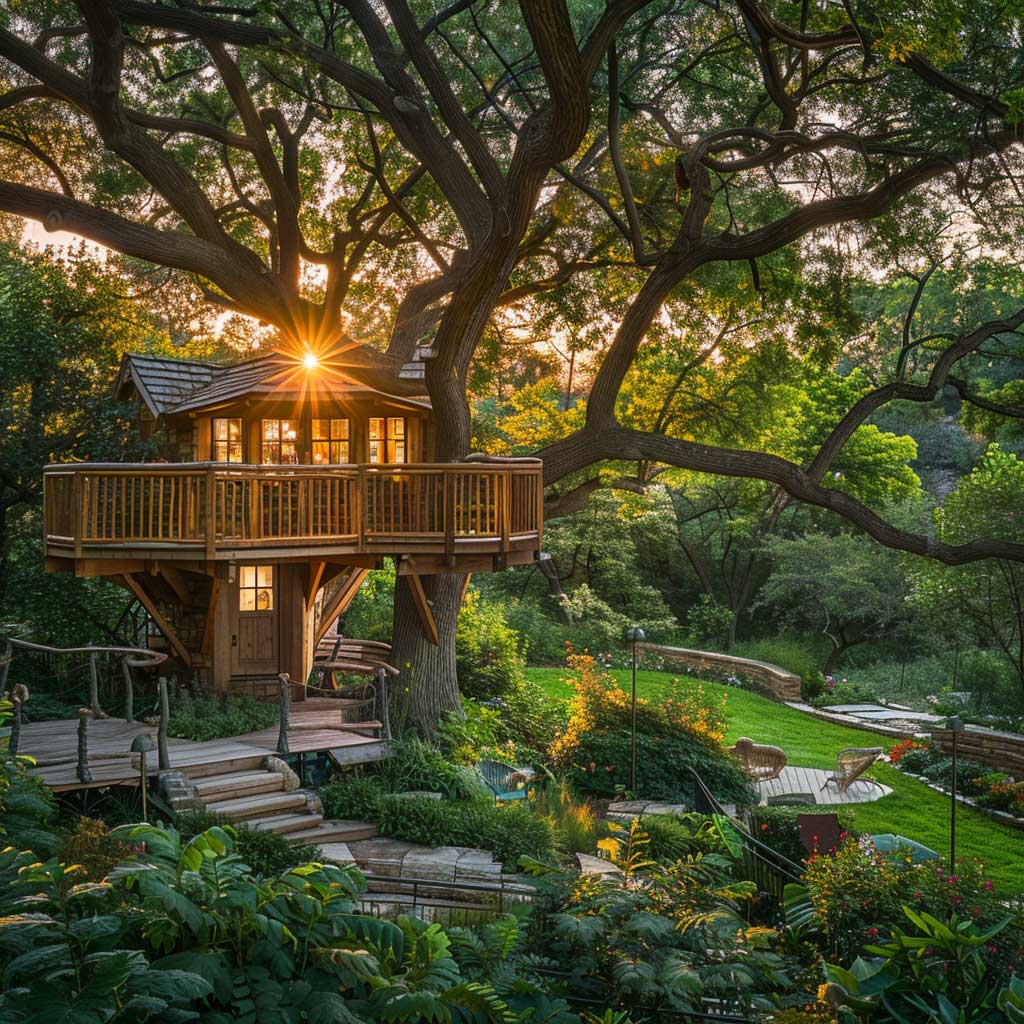
The easiest simple treehouse design that actually gets used is an open platform — no walls, a roof overhang of about 18 inches on one side, and a rope ladder. That’s the whole plan. I stole this format from a Family Handyman build and it took one weekend with two adults and about $280 in materials (treated lumber for the support frame, cedar decking boards, four lag bolts). Kids return to a platform like this every single day. They do not return to an elaborate fort that took six weeks to build and has a door that sticks.
Platform size matters more than height. You want at least 6×6 feet of usable deck space so two kids can actually move around without falling off each other. Eight by eight is better and adds maybe $40 to the lumber cost. Don’t go smaller. A 4×4 platform is a shelf, not a treehouse.
Imagine stepping into your backyard and being greeted by a solid wood platform in the branches of a sturdy tree. Step platforms look charming but they collect leaves and go slippery fast — my go-to is a simple rope ladder with wooden rungs spaced 10 inches apart, rated for 250 lbs. Amazon sells them for $35–$45 under brands like Sorbus and Toughout. Skip the decorative knotted ones from craft stores. They’re for photos, not actual use, and you’ll find out why the first time someone tries to come down in wet socks. You can see more ideas for organizing the space around your build in this post about cool backyard design ideas.
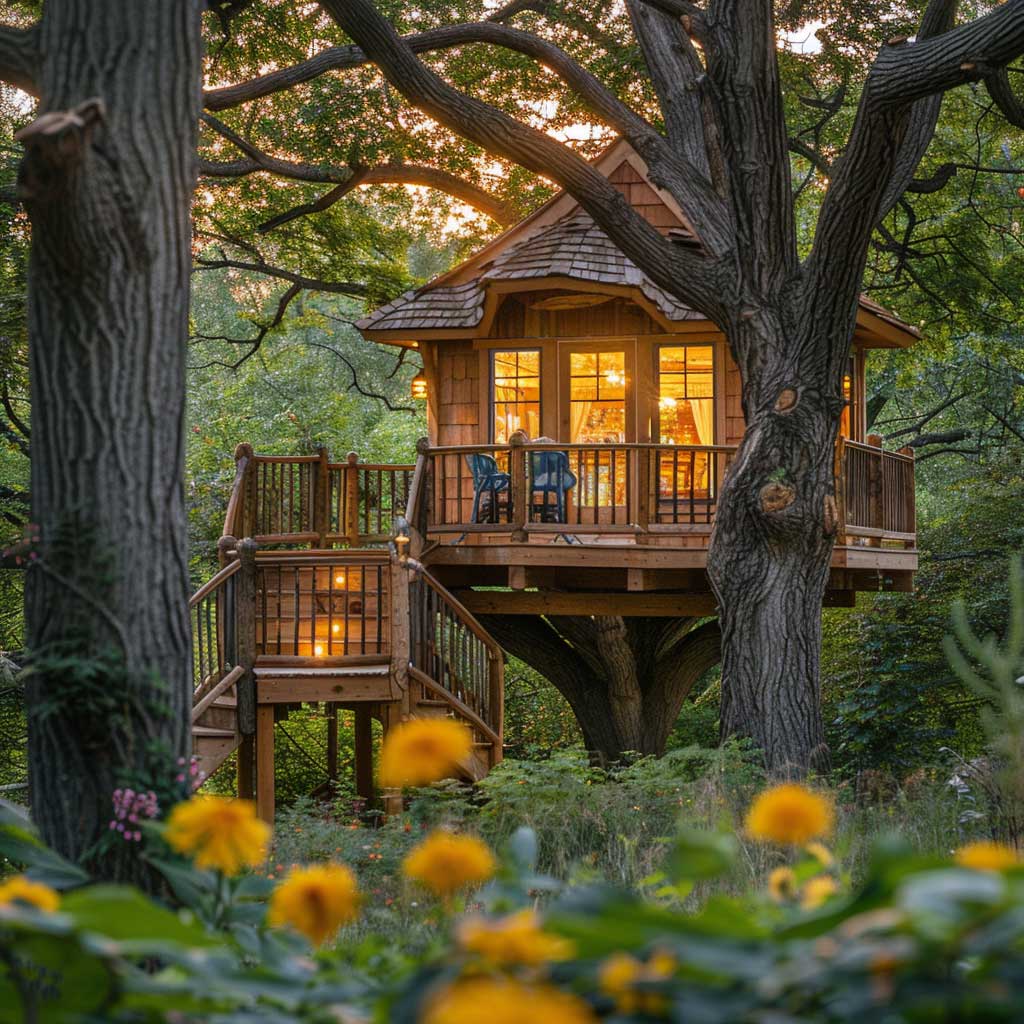
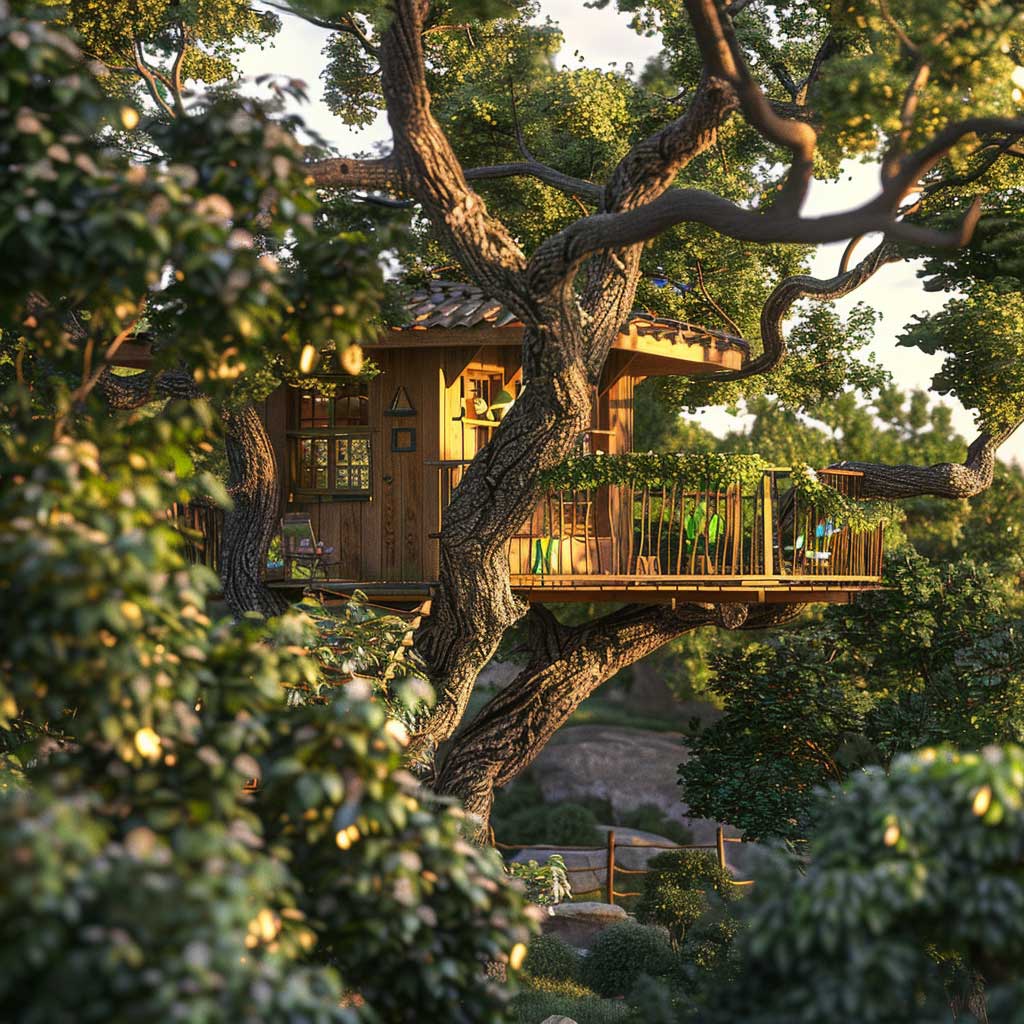
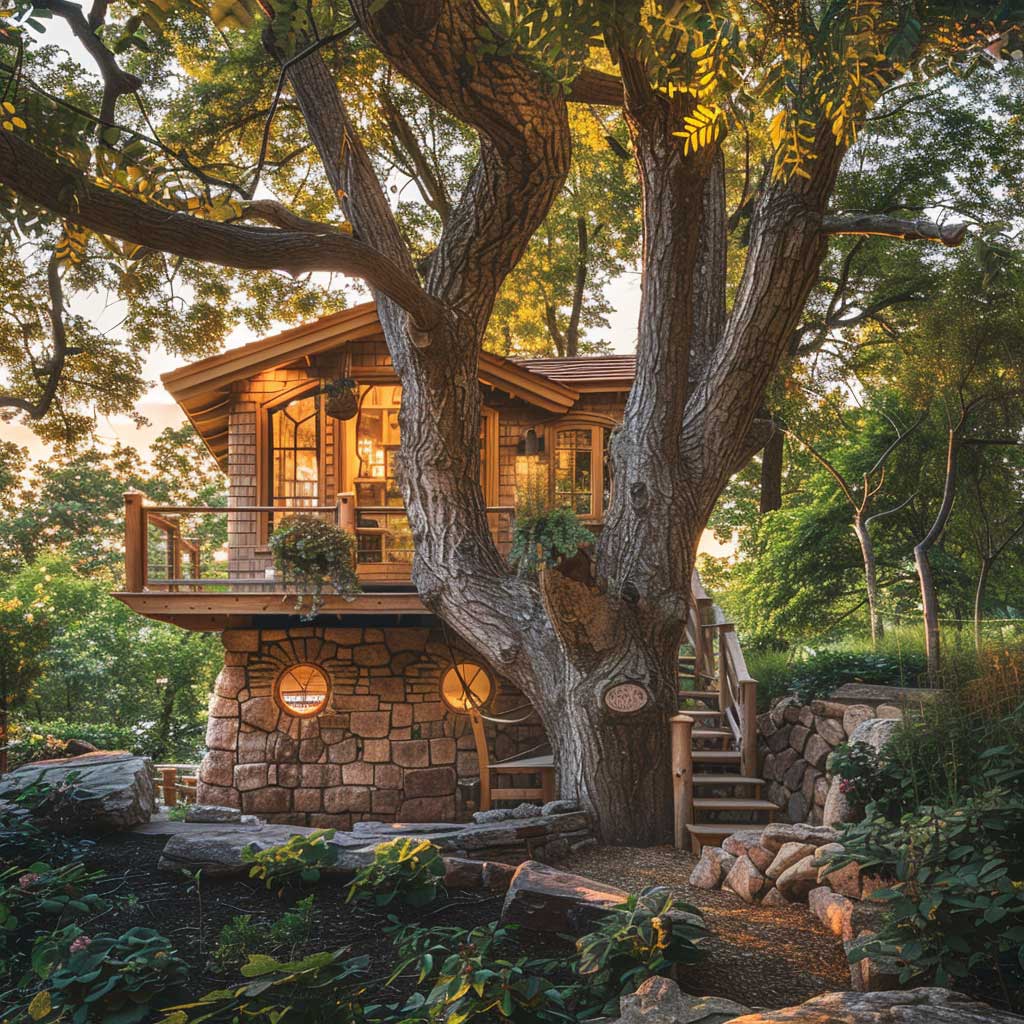
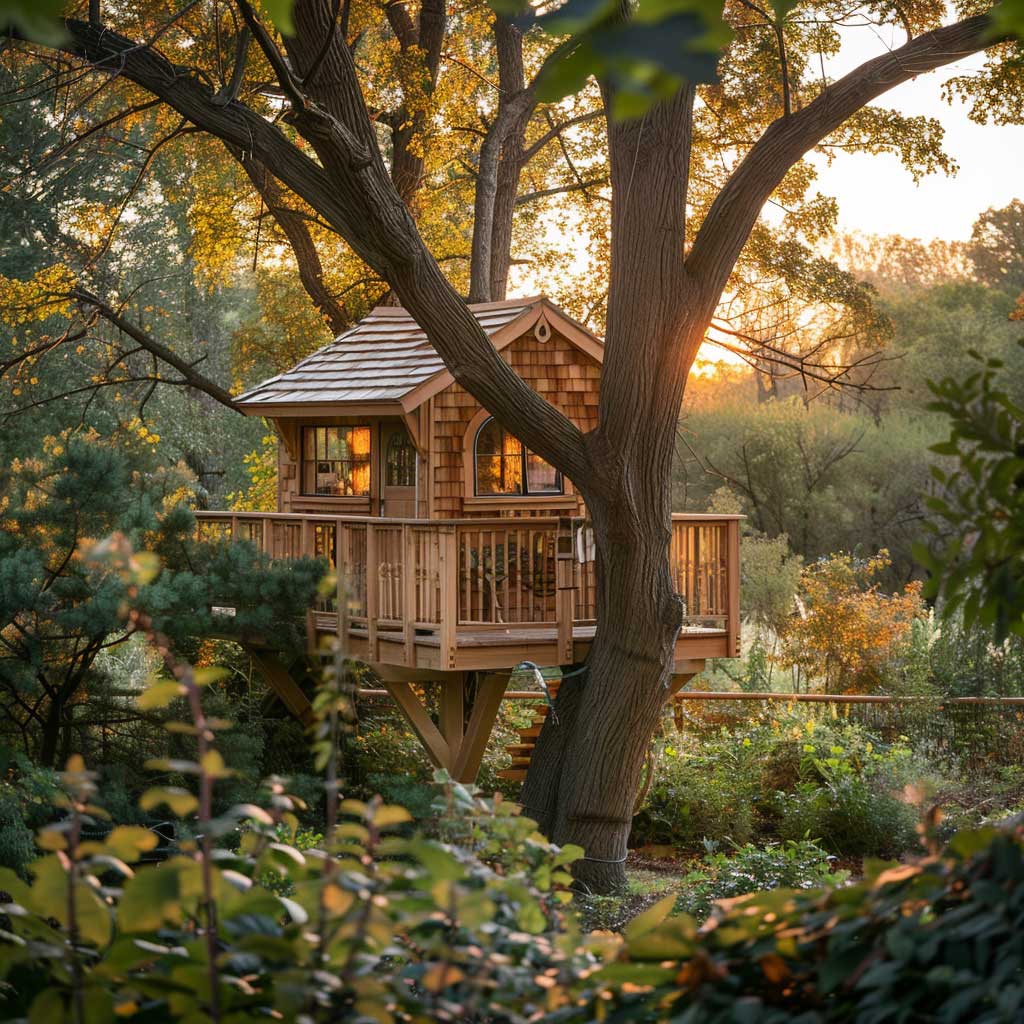
For tree species, you need branches that are at least 8 inches in diameter at the point where the platform will sit. Maple, oak, Douglas fir, or beech are the standard recommendations from contractors — not because other trees can’t hold weight, but because these species don’t go brittle in the same way fast-growing softwoods like silver maple do. I had a neighbour build on a silver maple. The branch cracked through on a windless afternoon in October. Nobody was in it. Small mercies.
Don’t Do This
- Don’t use standard untreated pine for the support frame. It will rot within 18 months in most climates. I’ve seen this happen in year one in the Pacific Northwest. Cedar or pressure-treated pine for anything structural.
- Don’t skip the diagonal bracing on the platform. A flat frame with no cross bracing will wobble under load. Four kids on a platform at once will tell you immediately.
- Don’t build higher than the lower third of the tree. Motion at the top of a tree in wind is dramatically different from motion at 6 feet. It’s not pleasant inside a structure that sways 8 inches in each direction.
- Don’t drill multiple fasteners within 6 inches of each other into the trunk. Trees seal rather than heal around bolts, and clustered drilling weakens that section of the trunk faster than a single well-placed TAB.
Family Treehouse Builds Where the Kids Take Over the Interior
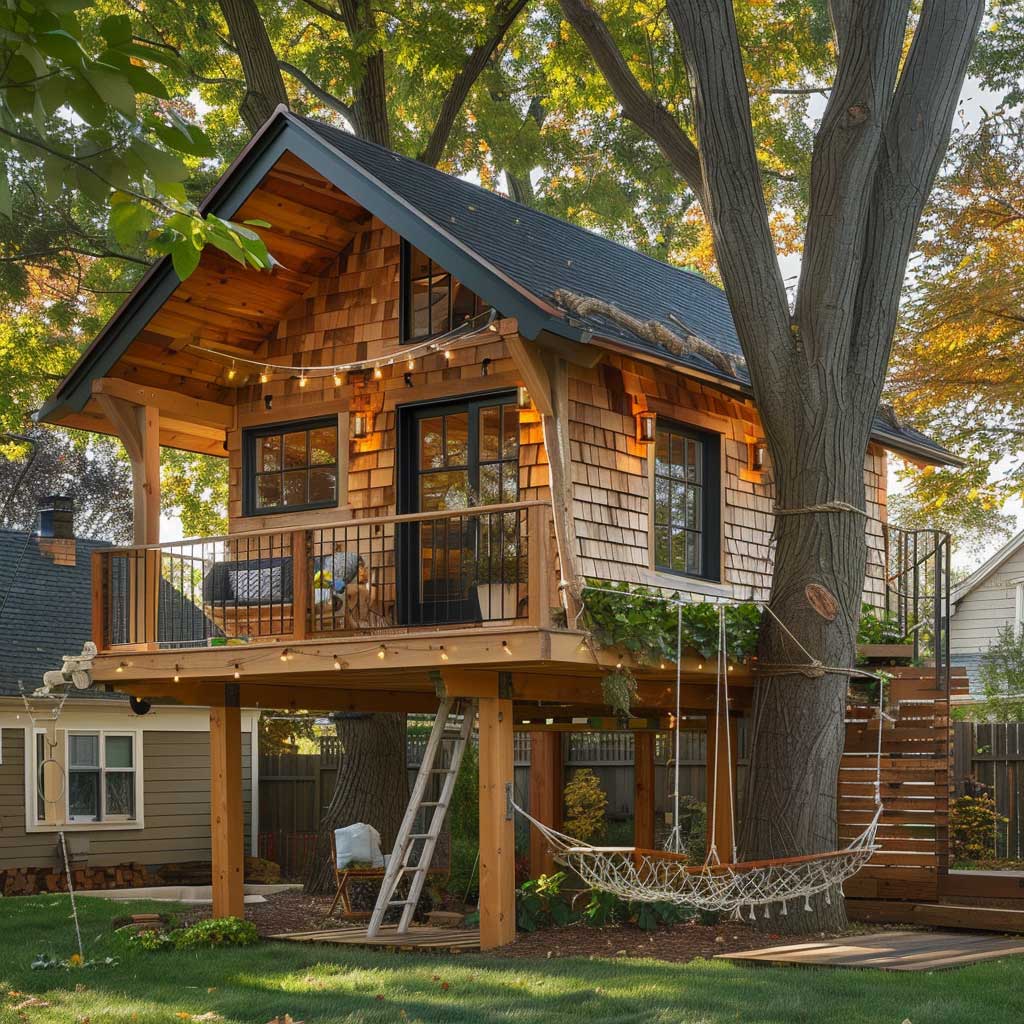
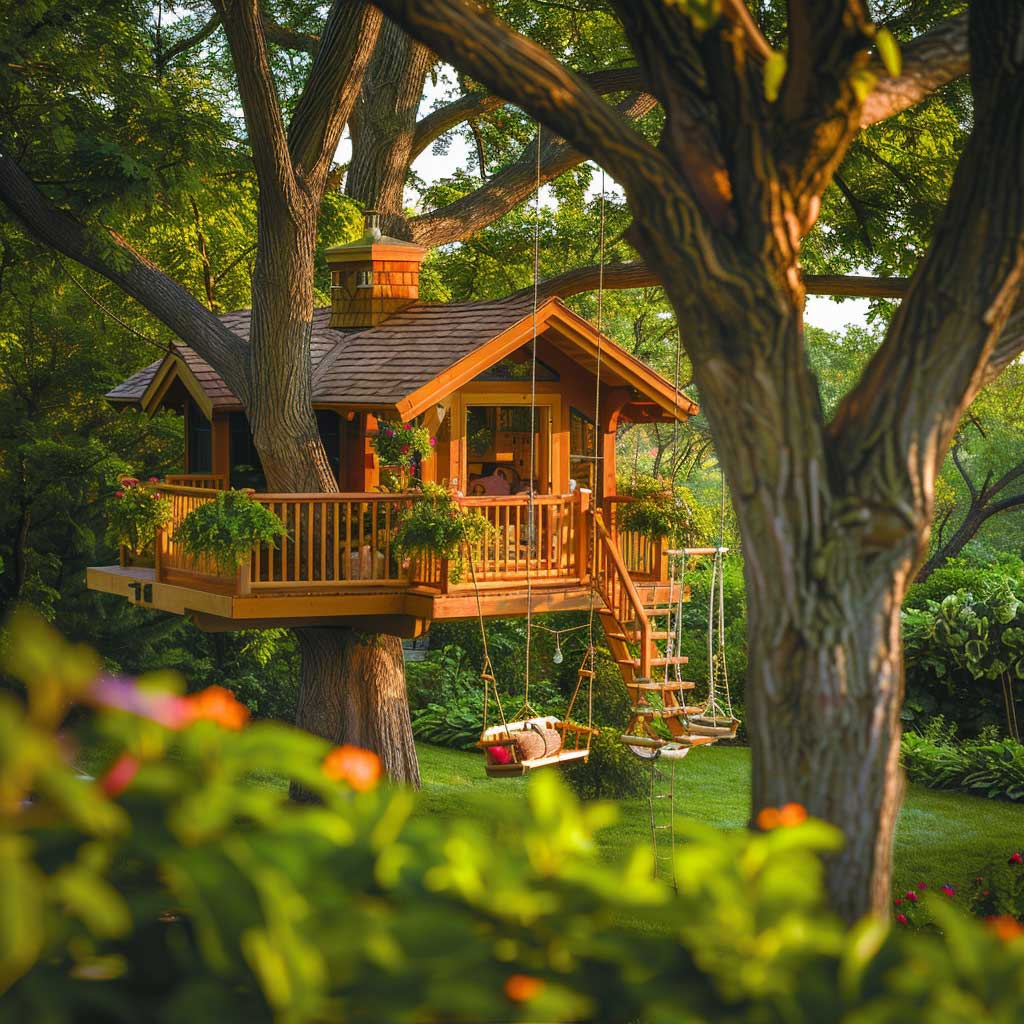
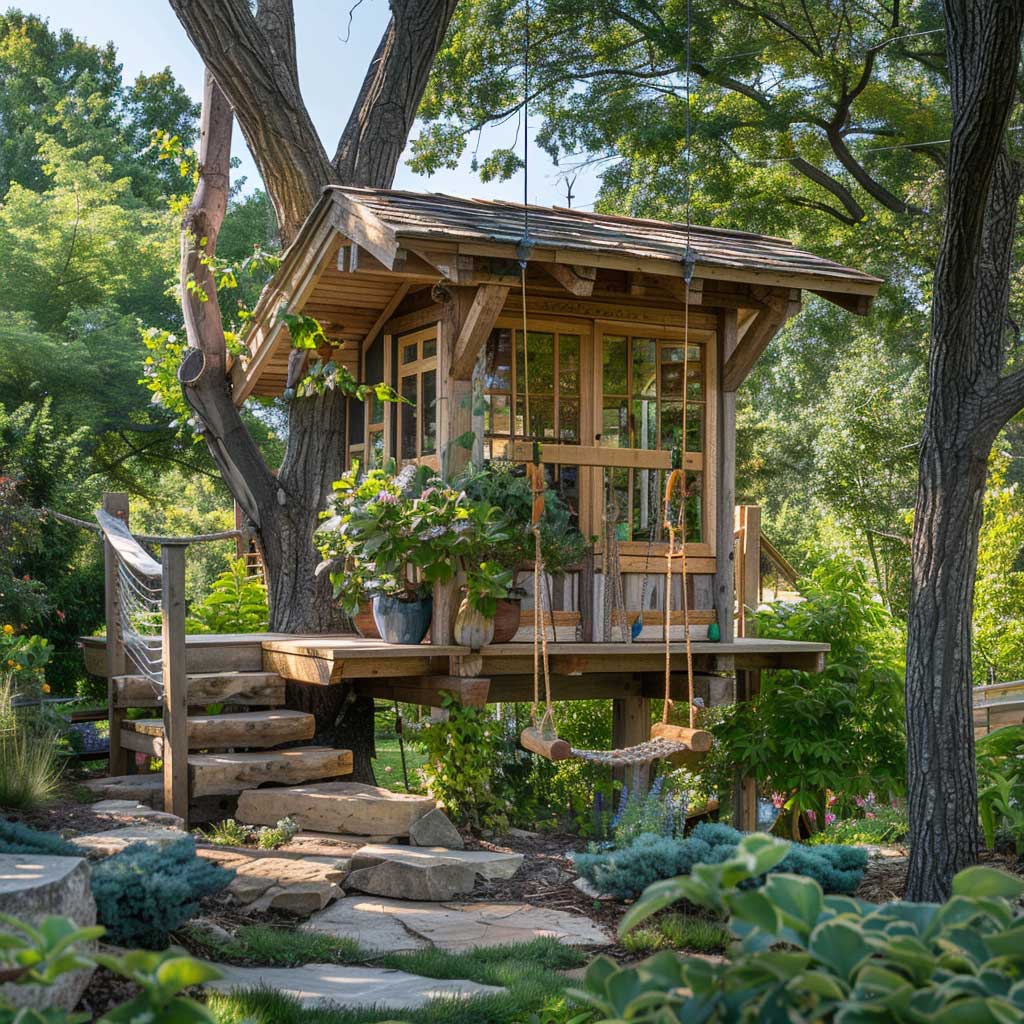
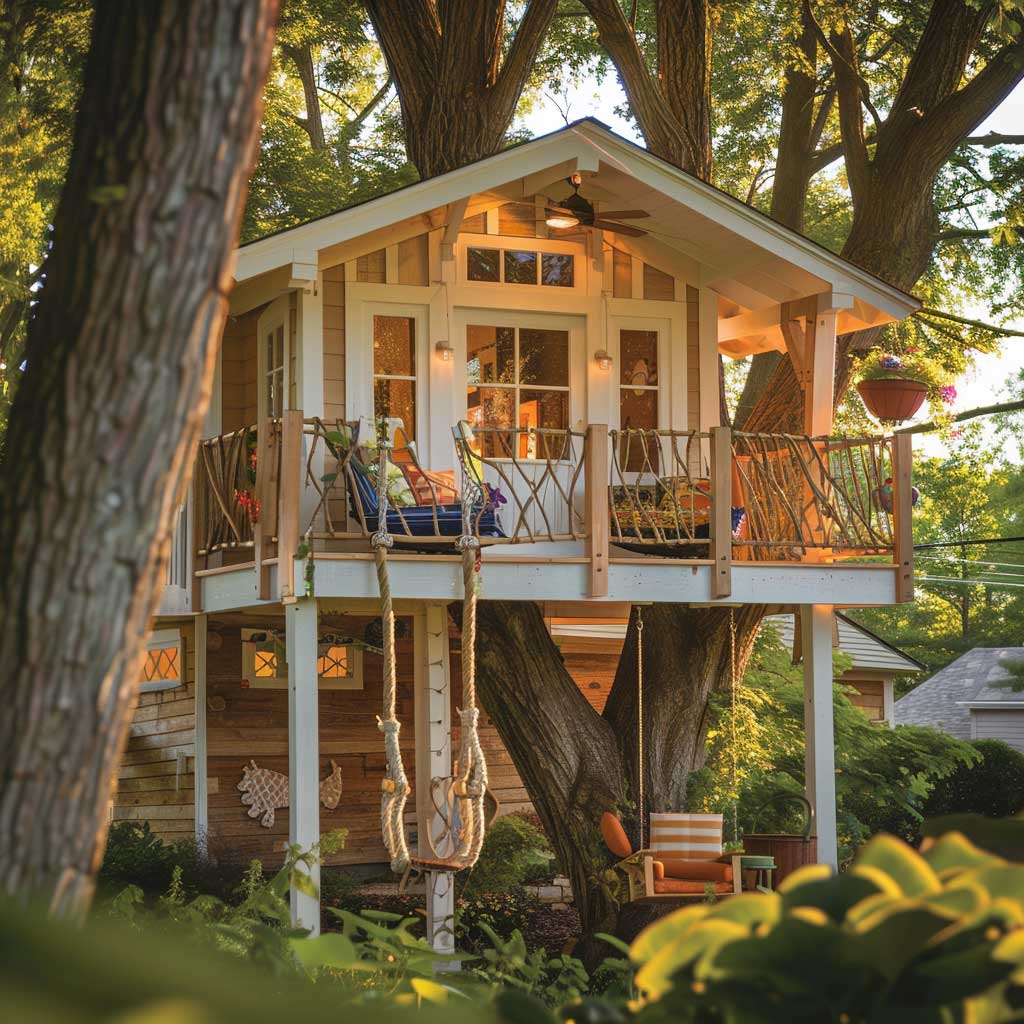
A family treehouse works as a project when you split the labour: adults handle everything structural — the platform, support beams, railing, roof — and kids handle everything above floor level. My experience is that children aged 6 and up can sand, paint, hang hooks, and choose where things go with almost no supervision. What they cannot do is estimate load, which is why you don’t let them pick where the rope swing attaches. That part stays with whoever owns a drill.
Looking for a treehouse for kids that uses every square foot? Interior nooks work better than open floor space for most kids. A reading corner with a 12-inch-wide shelf at seating height costs $12 in lumber. A pulley system for hauling snacks up costs $18 in hardware from any hardware store. A chalkboard wall is just a $15 can of chalkboard paint on plywood you were already buying. These additions cost under $50 combined and get used 100 times more than any themed decoration you buy prepackaged.
What doesn’t work: buying a pre-assembled kit from a big-box store and expecting it to feel like a real treehouse. Most kits top out at 6 feet, are made of pine that will grey and crack in under three years, and the hardware is whatever the manufacturer sourced cheapest. KidKraft playhouses are fine ground-level structures. In a tree? Build from scratch or hire a proper treehouse contractor.
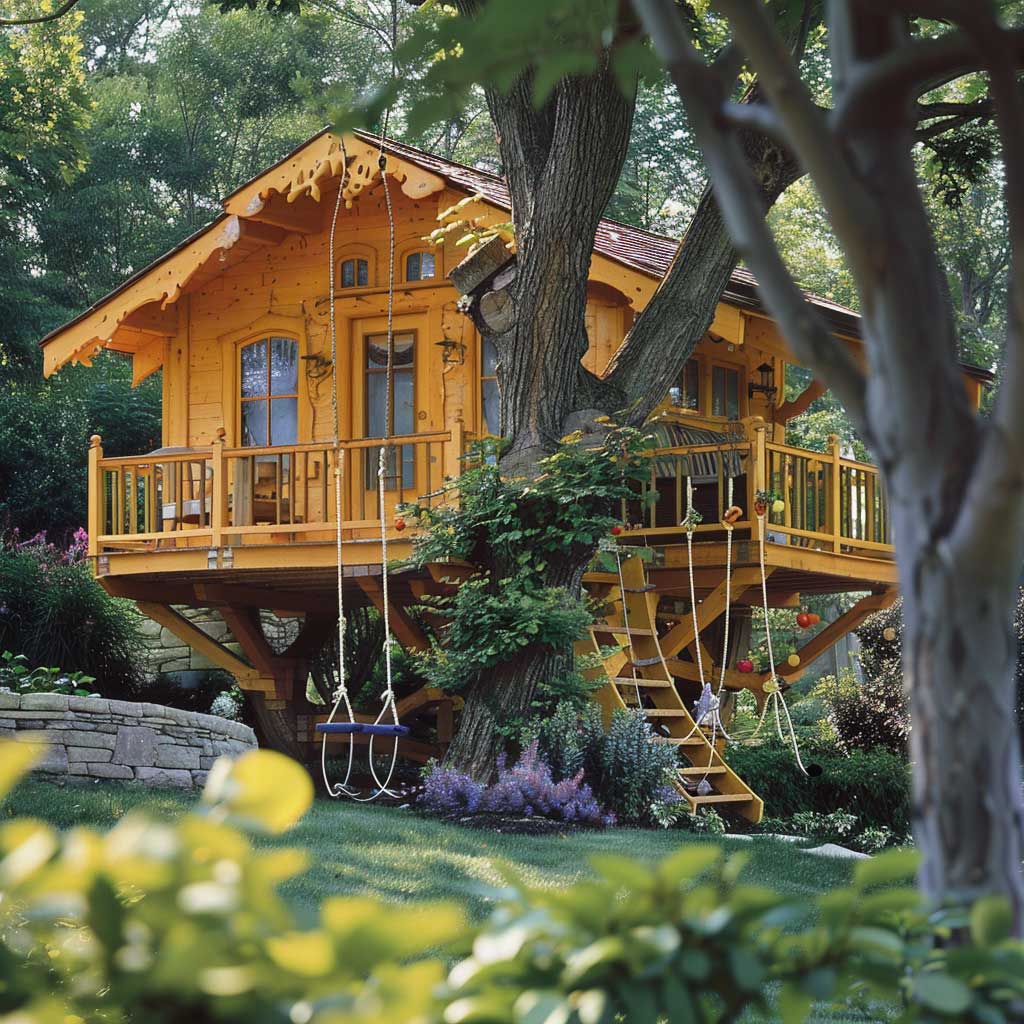
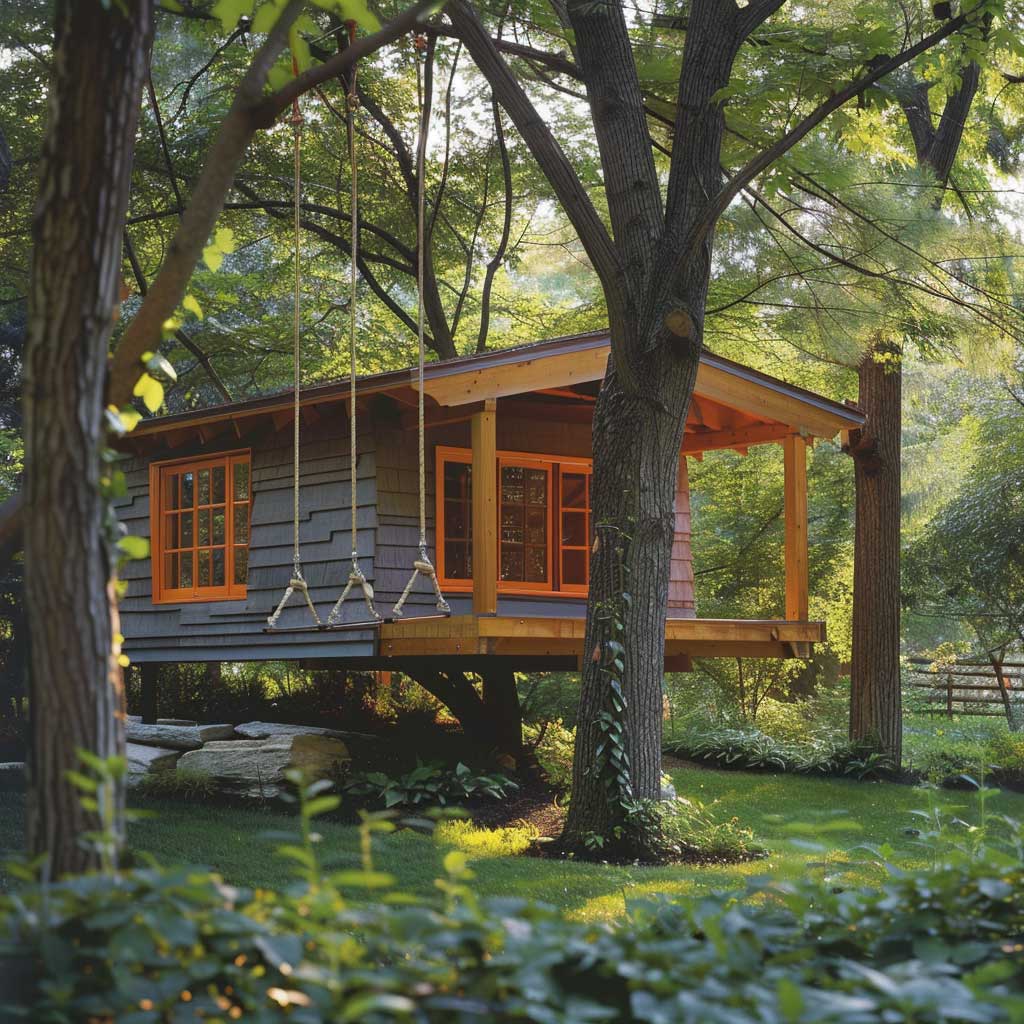
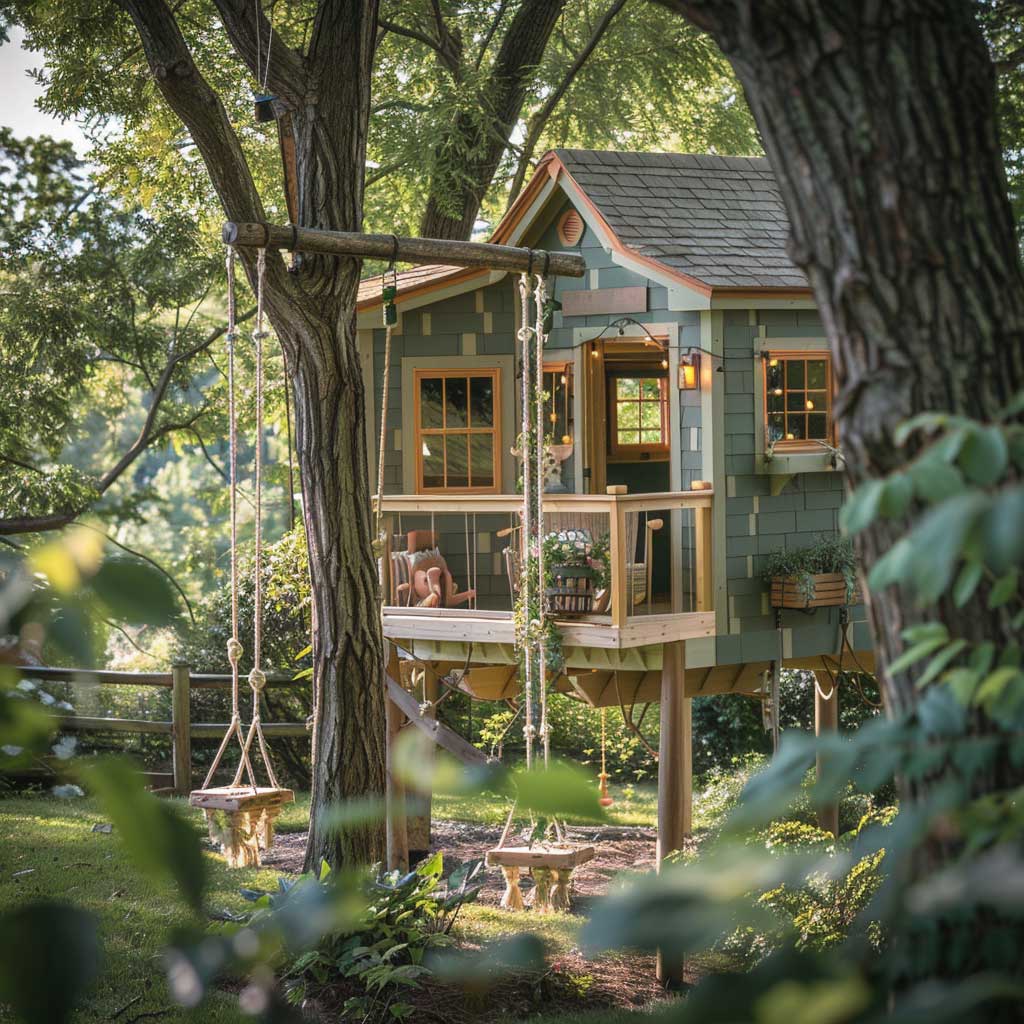
Building teaches something a bought object never does. The first time a kid realizes they’re sitting inside something they helped put together, the pride is visible. I’ve watched seven-year-olds spend four hours straight in a treehouse they’d sanded the floor of and painted the door frame on. That same child spent 20 minutes in a $800 KidKraft structure before asking if they could go watch TV. The box-store version is a waiting room. The built version is a destination.
Keep the structural footprint simple. An 8×8 platform with a gable roof, two small windows, and a hinged door is the maximum complexity you want for a first build. It comes in under $700 in materials if you source cedar locally. Beyond that, you’re into contractor territory — which is fine, but call it what it is. Minimalist backyard landscaping around the base of the tree makes the whole structure look intentional rather than accidental.
For a full step-by-step structural walkthrough including platform framing, beam placement, and ladder installation, this guide from LawnStarter covers all 11 stages with practical instructions and tool lists.
Final Thought
The simplest tree house design is the one your kids never stop using. Over-engineered means abandoned.
Cedar, a TAB bolt, and an 8×8 platform with a rope ladder — that’s the formula. Everything else is optional.
Skip the kits. Source your own lumber. Build the railing before anyone goes up.
Save this post before you buy a single board.