Dark living room ideas have a reputation problem. People assume dark means small, or cold, or one bad lamp away from a cave. Wrong on all counts.
I’ve spent time in rooms painted charcoal gray, deep navy, and near-black. The ones that work aren’t the ones with the most light thrown at them to “fix” the darkness. They’re the ones that lean in. Velvet that absorbs the shadow. Wood that holds warmth in its grain. Blues moody enough to feel like a hotel suite, not a basement.
Dark living room aesthetic isn’t about going goth. It’s about density — layering materials and color so the room feels intentional, not accidental. A dark modern living room done right reads as a choice, not a mistake.
Every section below covers one approach. Pick one. Or steal pieces from all five. Just don’t try to brighten it up with beige throw pillows after. That’s where it goes wrong.
Quick Scan
5 Dark Living Room Ideas in This Post
- Velvet: the material that earns the luxury label in a dark room
- Moody Blues + Low Lighting: navy walls, warm-toned bulbs, floor lamps only
- Dark Walls + One Accent Color: terracotta, not yellow — one focal point maximum
- Dark Wood: walnut or ebonized oak, one tone throughout, not mixed
- Monochrome: matte vs gloss finish contrast keeps it from going flat
Dark Living Rooms Earn the Luxury Label When Velvet Shows Up
Velvet in a dark living room isn’t a trend. It’s a structural decision. The pile catches light differently at every angle — morning sun reads as one shade, a dimmed floor lamp reads as something else entirely. That shift is what makes the room feel alive when nothing’s moving.
My go-to pairing: a deep emerald or ink-blue velvet sofa against a wall painted in Farrow & Ball’s Railings (around $120/liter). The contrast is enough to give the room a center without touching the ceiling or floor. Don’t go burgundy on a dark wall unless you want the whole thing to read as a 1990s restaurant.
Velvet cushions alone won’t do it. You need velvet on a large surface — sofa, accent chair, or curtains floor-to-ceiling. Scatter cushions in velvet on a linen sofa is the beige-pillow mistake applied to texture.
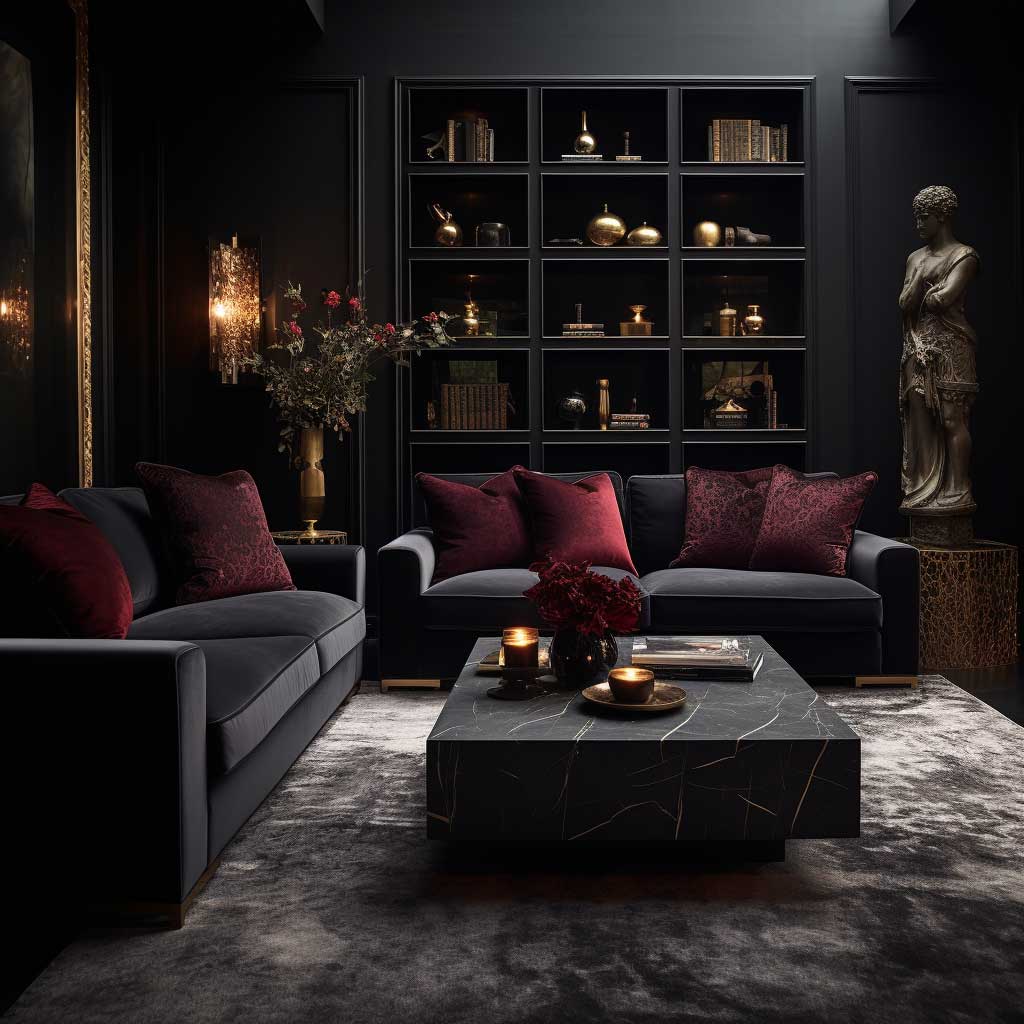


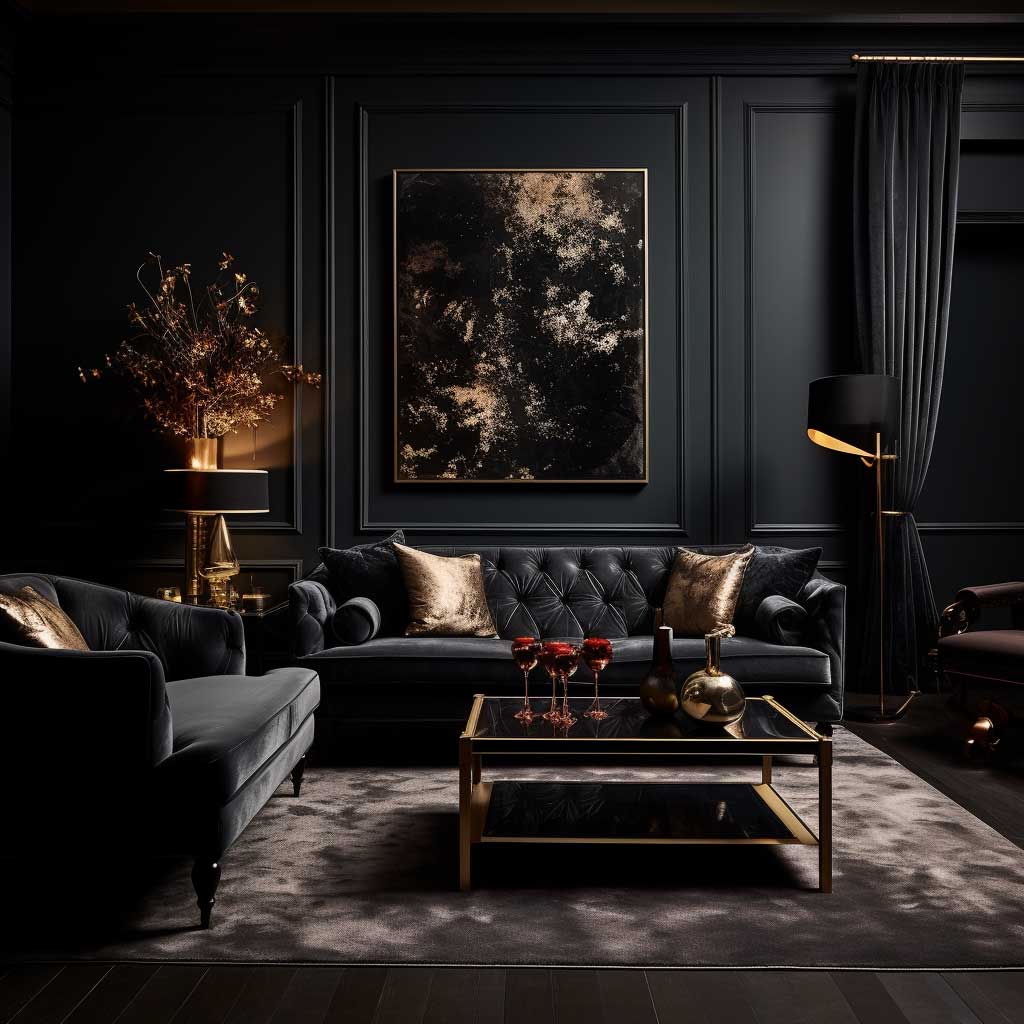
The world of interior design is vast, with endless possibilities and combinations. Among the many options, dark living room ideas have carved a niche, offering a unique blend of luxury, drama, and intimacy. If you’re working out how color changes the feel of an entire room, modern living room paint colours is worth reading alongside this. One standout direction: velvet, a material that reads as opulence without a single other change to the room.
Velvet, with its plush texture and rich sheen, has always been associated with luxury. Historically, it was a fabric reserved for royalty and the elite. Today, it has found its way into modern homes, bringing with it a touch of elegance and grandeur. When combined with dark living room ideas, velvet takes on a new dimension, creating spaces that are both cozy and sophisticated.
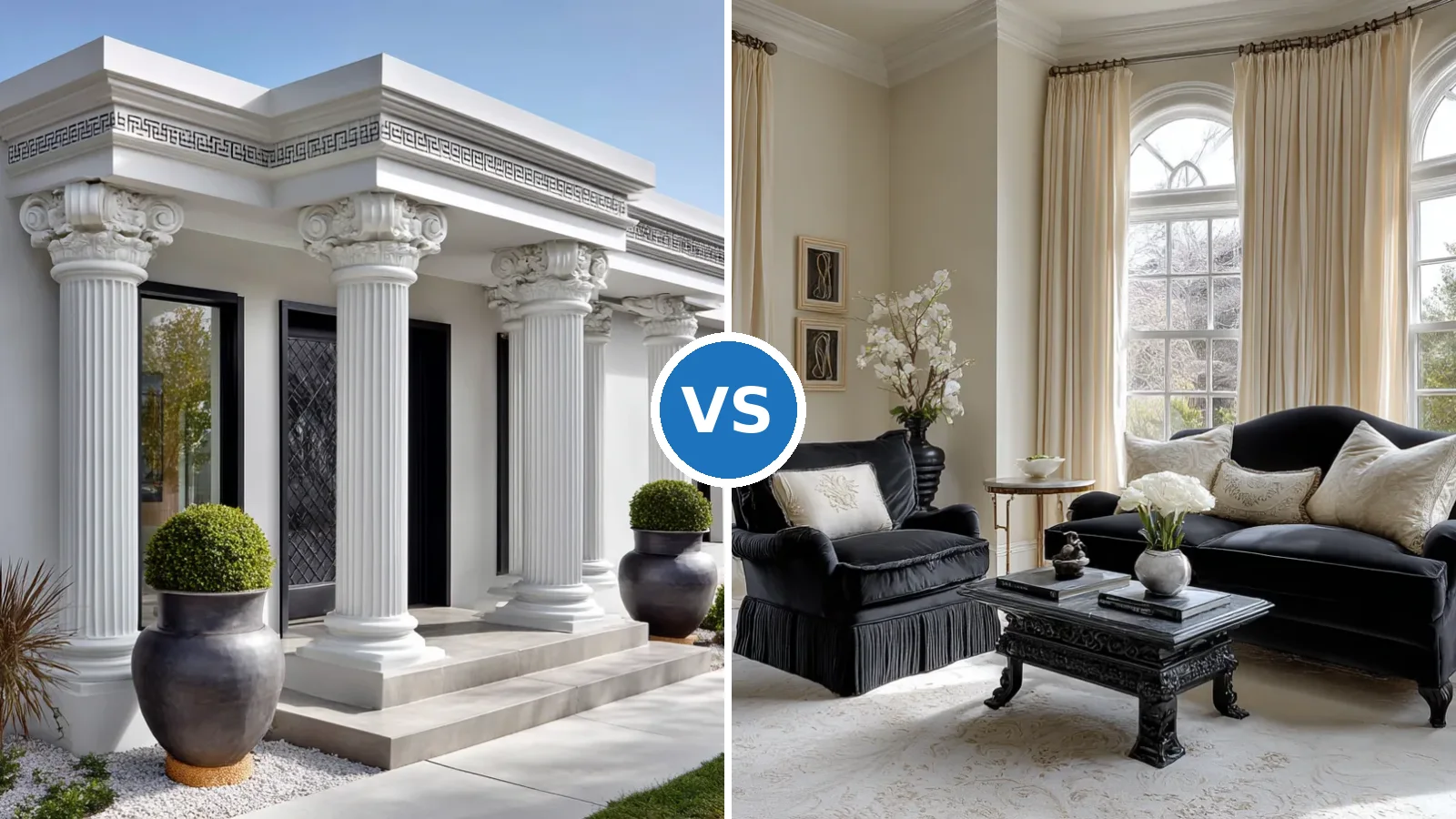
The beauty of velvet lies in its versatility. It can be used in various forms, from sofas and armchairs to curtains and cushions. In a dark living room, a velvet sofa becomes the centerpiece, drawing attention with its lustrous finish and inviting texture. The deep hues of the fabric, whether it’s a rich navy, emerald green, or even a deep burgundy, complement the room’s dark palette, adding depth and dimension.
But it’s not just about aesthetics. Velvet, with its dense pile, offers unparalleled comfort. It’s soft to the touch, making it perfect for lounging and relaxation. In a dark living room, this comfort is amplified, creating a space that’s perfect for unwinding after a long day.
Another advantage of incorporating velvet into dark living room ideas is the play of light. Velvet, with its reflective surface, interacts beautifully with light, creating a dynamic interplay of shadows and highlights. This interaction adds a touch of drama to the room, making it feel alive and vibrant.
However, while velvet offers numerous benefits, it’s essential to use it judiciously. Overdoing it can make the room feel heavy and overwhelming. The key is to strike a balance, using velvet as an accent rather than the dominant material.
In conclusion, velvet dreams in dark living spaces represent the perfect fusion of luxury and comfort. They showcase the versatility of dark living room ideas, proving that with the right materials and design approach, it’s possible to create spaces that are both elegant and inviting.
Navy Sits in a Dark Living Room Differently When the Lighting Source Is Low
The problem with dark living room lighting isn’t quantity. It’s height. Overhead fixtures push light straight down, and in a dark room that creates a harsh divide between ceiling and floor. Not moody. Just flat.
Floor lamps placed in corners do something overhead lighting can’t — they push light up the wall, which makes the room feel taller while keeping the overall ambiance dim. I run two of these in my living room. One near the sofa arm, one in the corner behind the TV cabinet. The overlap creates depth without a single overhead fixture switched on.
For navy walls specifically, warm-toned bulbs (2700K) read as amber against the blue and give you that intimate bar-at-9pm feel. Cool white at 4000K turns the same room into an interrogation room. Don’t do it.
Wall sconces work better than pendants here. Plug-in sconces from brands like Rejuvenation (around $180–240 each) mean you’re not cutting into the wall — useful if you rent or if you change your mind about placement.

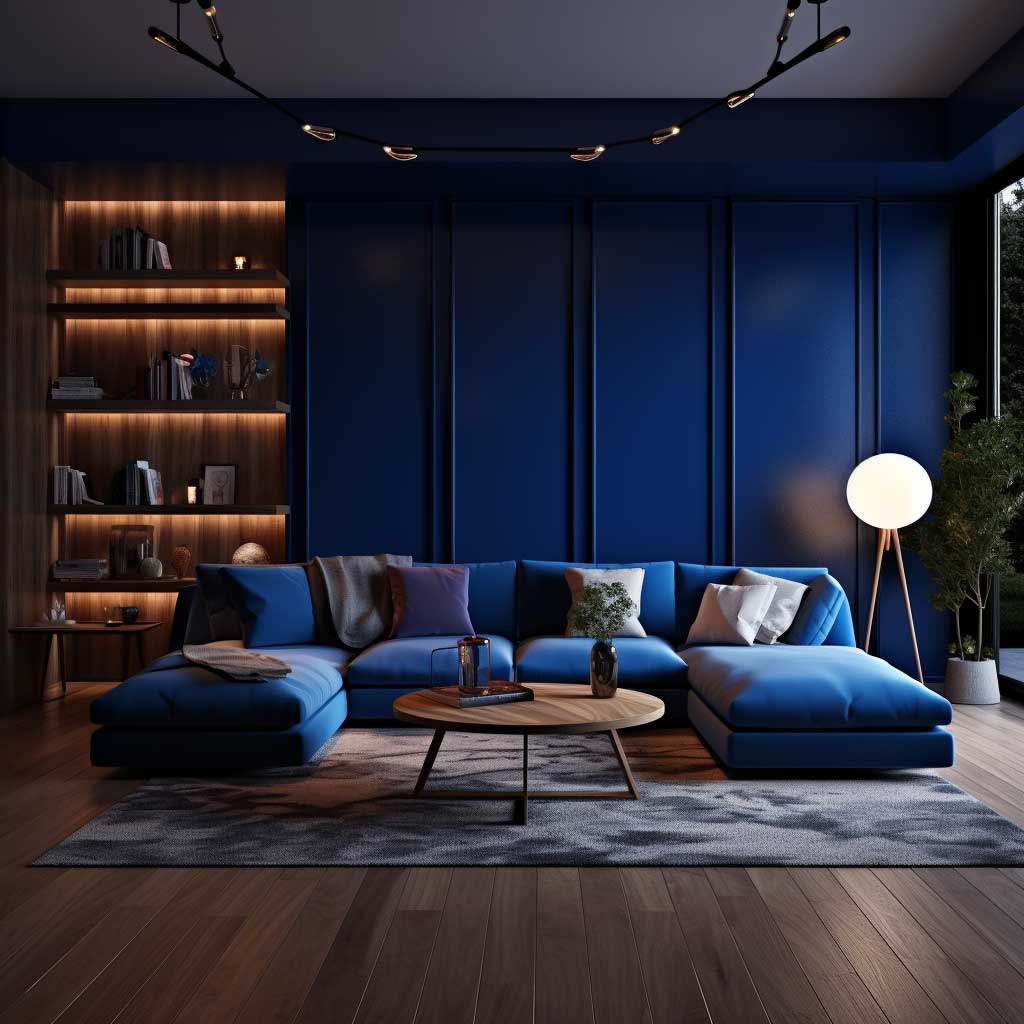


Dark living room ideas are all about creating a sense of drama, intimacy, and luxury. Among the various design elements that can achieve this, color and lighting stand out. Moody blues, with their depth and richness, combined with ambient lighting, offer a unique design perspective, creating spaces that are both dramatic and cozy.
Blue, as a color, has always been associated with calmness and serenity. However, when used in darker shades, it takes on a whole new dimension. Moody blues, whether it’s navy, teal, or even indigo, add depth to a room. They create a sense of coziness, making the space feel intimate and inviting.
Incorporating moody blues into dark living room ideas is all about balance. While the color itself is rich and dramatic, it’s essential to ensure that it doesn’t overpower the space. Using it as an accent wall, or even in the form of upholstery or decor, can add the right amount of drama without making the room feel closed in.
However, color alone is not enough. Lighting plays a crucial role in bringing the room to life. Ambient lighting, with its soft glow, complements the moody blues perfectly. It enhances the color’s richness, creating a warm and inviting ambiance.
Floor lamps, table lamps, and wall sconces each do a different job. Floor lamps push ambient light upward along the wall. Table lamps create pools of warmth at eye level. Sconces frame a focal point — a sofa, a piece of art, an alcove. For a detailed breakdown of how each lighting type performs in dark color schemes, Homes & Gardens covers the 10 design rules for dark spaces with specific placement logic worth bookmarking. The goal is a soft glow that exists below the ceiling line, not at it.
In conclusion, moody blues and ambient lighting in dark living room ideas represent the perfect blend of color and light. They showcase the power of design, proving that with the right elements, it’s possible to create spaces that are both dramatic and cozy.
Living Room With Dark Walls Needs Exactly One Bright Thing to Snap Into Focus
Dark walls work until you add too many things to counter them. Bright rug, bright cushions, bright artwork, bright lamp. The room starts to fight itself and nobody wins. You need one focal accent. One.
Terracotta does the job better than yellow or red in a living room with dark walls. It’s warm without being aggressive. A single terracotta-colored ceramic lamp base on a side table, around $60–80 from something like CB2’s seasonal line, gives the eye somewhere to land without blowing the whole atmosphere.
Artwork counts as your bright thing if it’s large enough. A single canvas, 24×30 minimum, in a saturated warm tone above the sofa reads as intentional. Four small frames scattered around a dark wall read as indecision. Pick one.


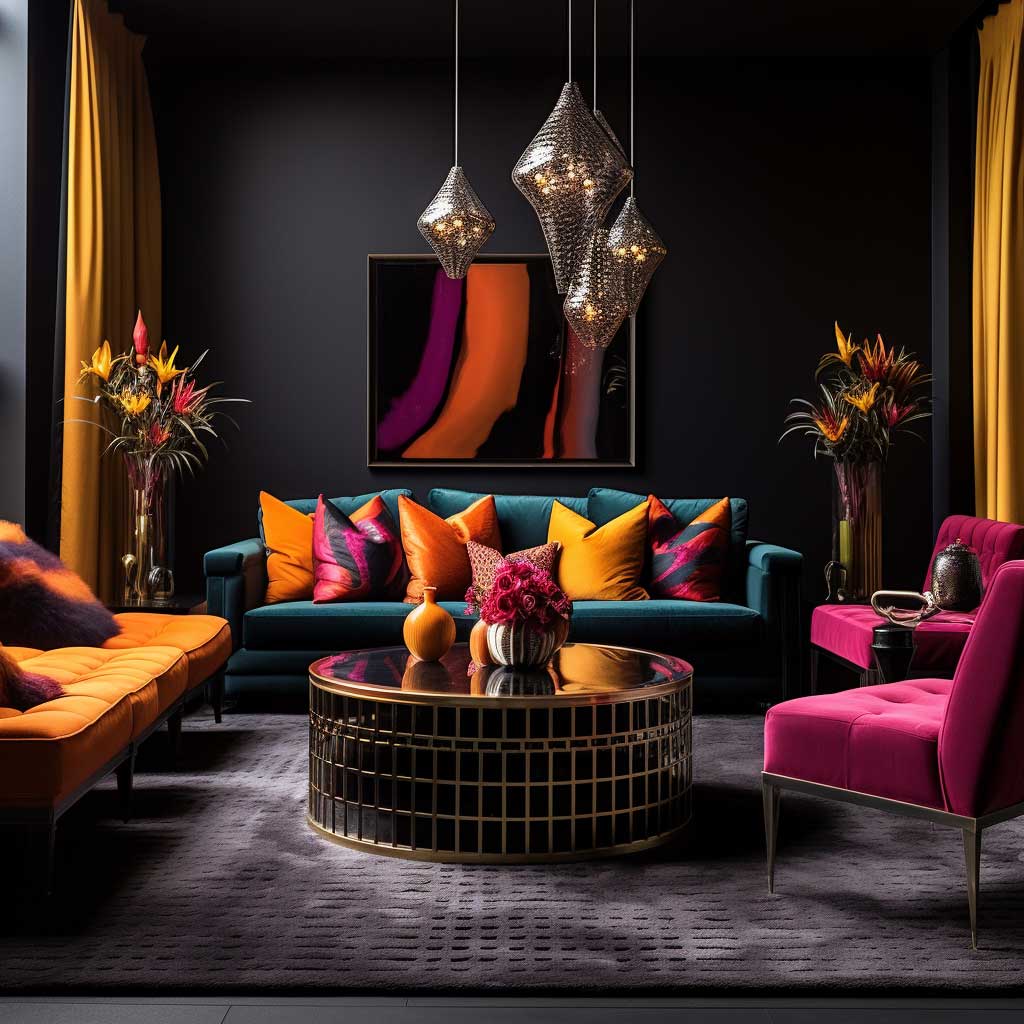
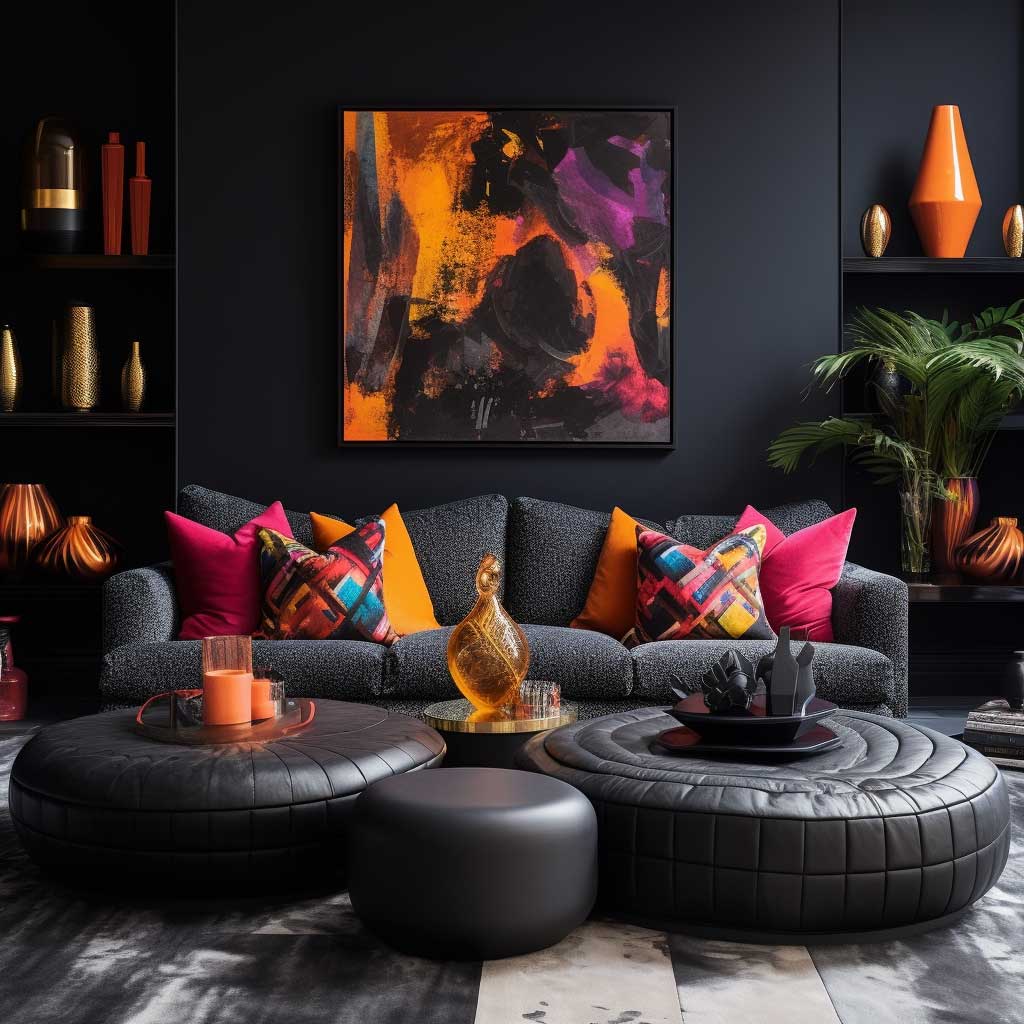
The world of dark living room ideas is vast and varied. While the overarching theme is the use of darker hues, there’s a lot of room for creativity and experimentation. One such design approach that stands out is the use of dark walls punctuated by vibrant pops of color.
Dark walls, whether it’s charcoal gray, deep navy, or even black, create a sense of drama and intimacy. They make the room feel cozy, creating a perfect backdrop for relaxation and unwinding. However, while dark walls add depth and dimension, they can also make the room feel closed in and overwhelming.
This is where pops of color come in. Vibrant accents, whether it’s in the form of upholstery, decor, or even artwork, break the monotony of the dark walls, adding a touch of liveliness and dynamism. These pops of color, whether it’s a bright yellow, fiery red, or even a refreshing green, create a contrast that’s both visually appealing and energizing.
Incorporating pops of color into dark living room ideas is all about balance. While the vibrant accents add a touch of liveliness, it’s essential to ensure that they don’t overpower the space. Using them judiciously, in the form of cushions, rugs, or even wall art, can add the right amount of contrast without making the room feel chaotic.
In conclusion, dark walls and pops of color in dark living room ideas represent the perfect blend of drama and dynamism. They showcase the versatility of design, proving that with a bit of creativity, it’s possible to create spaces that are both moody and lively.
Don’t Do This
Four Dark Living Room Mistakes That Undo Everything
- Overhead lighting only. A single ceiling fixture in a dark room creates a harsh drop-off. Use floor lamps in corners instead.
- Too many accent colors. Pick one. Terracotta cushion AND yellow lamp AND red rug = chaos, not contrast.
- Matching wood tone to wall color. Dark walnut against dark charcoal disappears. You need tonal separation — even within dark.
- Glossy black paint on all four walls. It looks like a tunnel, not a room. One feature wall maximum, or go matte.
Dark Wood Keeps a Dark Living Room From Feeling Like a Void
Dark wood and dark walls shouldn’t match exactly. That’s the version that disappears. You want contrast within the darkness — walnut furniture against charcoal paint, or ebonized oak shelving against deep navy. The tonal difference is what gives the room structure.
Exposed ceiling beams in dark oak are the single most effective move in a rustic dark living room. They add vertical rhythm and make high ceilings feel deliberate rather than just tall. Budget reality: reclaimed beam cladding from suppliers like Rustic Lumber Co. runs $8–14 per linear foot. A medium living room with 4 beams costs $300–600 installed. Worth it.
The mistake I see constantly: mixing too many wood tones. Dark walnut coffee table, medium-oak shelving, painted pine side table. It reads as unfinished rather than collected. Commit to one wood tone throughout, then let the wall color do the contrast work.


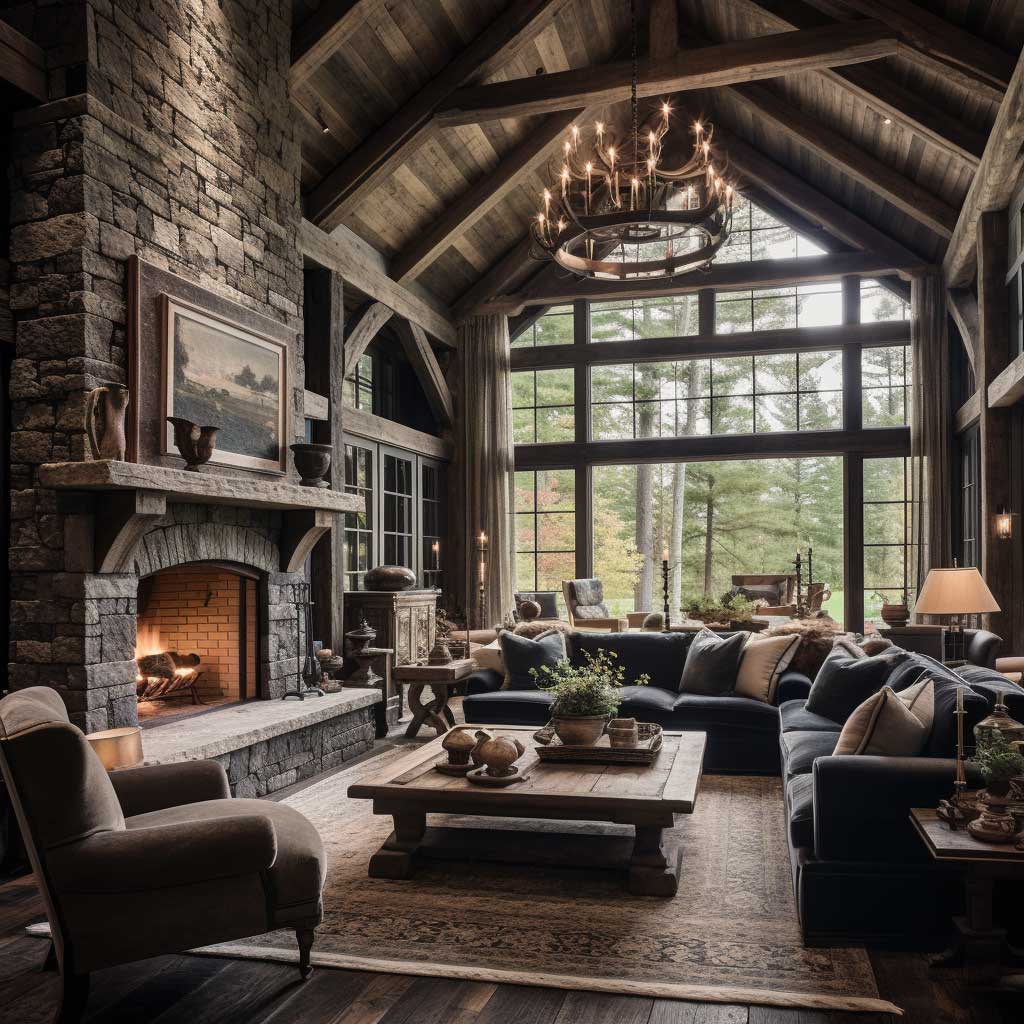
Delving deeper into the realm of dark living room ideas, the allure of wood becomes evident. Wood, with its natural grain and timeless appeal, has always been a favorite in interior design. However, when combined with darker palettes, it takes on a new dimension, exuding rustic charm and sophistication.
Dark wooden accents in living rooms can be both subtle and bold. From dark wooden beams adorning the ceiling to intricately carved wooden furniture, the possibilities are endless. These wooden elements, with their rich hues and textures, add depth to the room, making it feel warm and inviting.
One of the primary advantages of incorporating dark wooden accents into living room designs is the sense of continuity it creates. Wood, being a natural material, connects the indoors with the outdoors. In a dark living room, this connection becomes even more pronounced, creating a space that feels grounded and in harmony with nature.
However, while dark wooden accents add rustic charm, they also offer flexibility in terms of design. They can be combined with various other materials and colors to create a unique aesthetic. For instance, dark wooden furniture against a deep blue wall can create a nautical theme, while the same furniture against a charcoal gray wall can feel more contemporary.
Another significant aspect of dark wooden accents is their durability. Wood, especially when treated and maintained, can last for decades, making it a sustainable choice for those looking to invest in timeless furniture and decor.
In conclusion, the rustic charm of dark wooden accents in living rooms showcases the versatility of dark living room ideas. It proves that even within a darker palette, there’s room for warmth, charm, and a touch of nature.
| Approach | Best Wall Color | Key Material | Lighting Type | Works Worst When |
|---|---|---|---|---|
| Velvet | Farrow & Ball Railings | Velvet sofa (large surface) | Floor lamp, 2700K bulbs | Used only on cushions, not large surfaces |
| Moody Blues | Navy / Indigo | Plug-in sconces | Warm amber, below ceiling line | Cool-white bulbs (4000K) — reads clinical |
| Dark Walls + Accent | Charcoal / Near-black | One ceramic accent piece | Table lamp with accent shade | More than one accent color used |
| Dark Wood | Deep navy / Charcoal | Walnut or ebonized oak | Warm recessed or beam-level | Mixed wood tones across furniture |
| Monochrome | Black / Dark gray | Bouclé + gloss lacquer contrast | Multiple low sources, no overhead | All surfaces same finish — reads flat |
All-Dark Monochrome Rooms Fall Flat Without This One Texture Move
Monochrome dark living rooms die by sameness. Every surface reads at the same visual weight and the eye has nothing to land on, nothing to follow. The fix isn’t color. It’s finish contrast.
Matte wall paint next to a glossy lacquered cabinet. Bouclé fabric on a chair against a smooth leather sofa. A concrete side table beside a silk-look cushion. The room stays within its single-color logic but the surfaces start talking to each other. That conversation is what makes it feel designed instead of just dark.
High-pile rugs in the same charcoal or black range as the walls are underrated here. They absorb sound, which makes a dark monochrome room feel genuinely quiet — not just visually, but physically. That’s the dark living room aesthetic people are actually chasing: a room that shuts out the rest of the house.
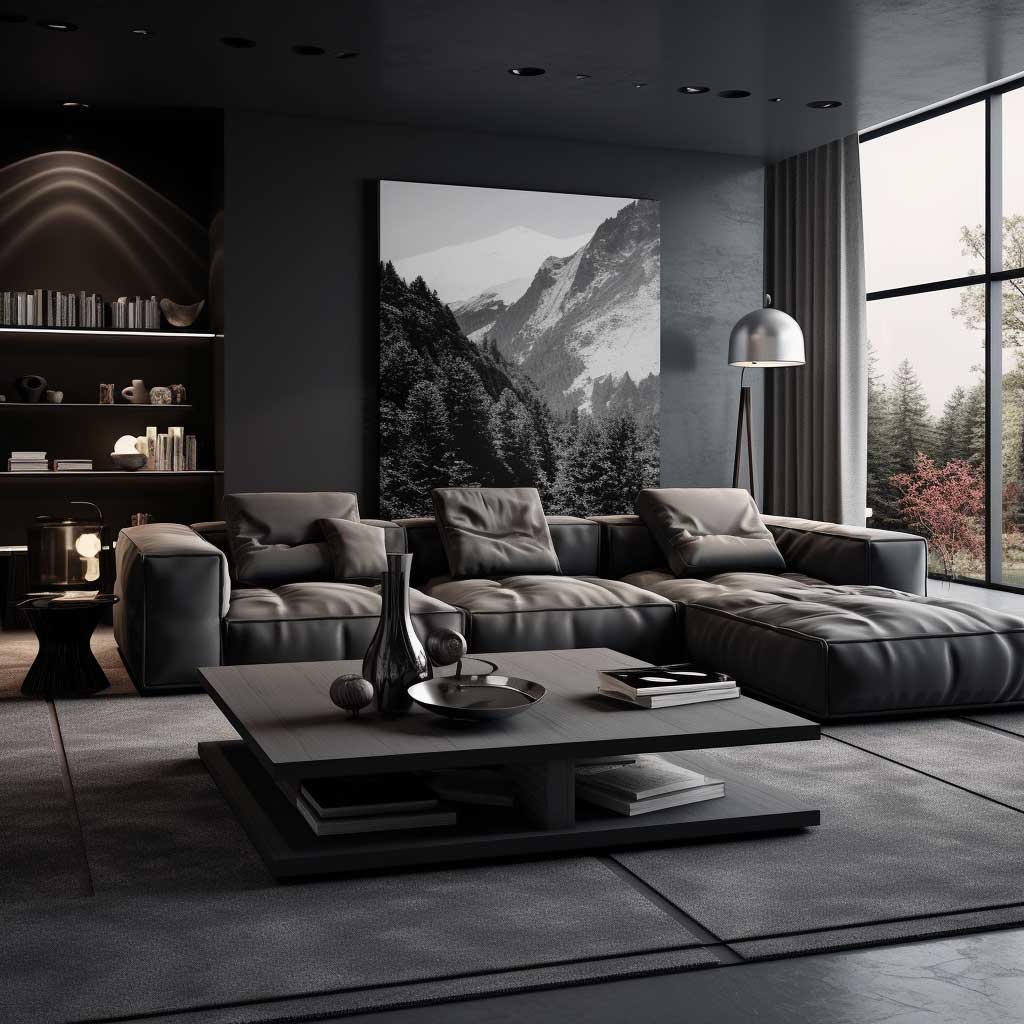


Monochrome in a dark living room is all about discipline — one color, multiple shades, no exceptions. It’s the design approach that looks most intentional when it works and most accidental when it doesn’t. For rooms where the base color is closer to neutral gray or off-black, beige living room decor shows how tone-on-tone works at the lighter end of the same logic. The rule transfers directly: vary finish and texture, not hue.
The beauty of monochrome lies in its simplicity. By using varying shades of a single color, it creates a sense of unity and cohesiveness. In dark living rooms, this principle is often applied using shades of black, gray, and white. The result is a space that feels sophisticated and modern.
However, while monochrome creates a harmonious ambiance, it’s essential to ensure that the room doesn’t feel flat or monotonous. This is where texture and pattern come in. By incorporating different materials, finishes, and patterns, it’s possible to add depth and dimension to the room, making it feel dynamic and alive.
For instance, a deep gray velvet sofa against a charcoal gray wall can add a touch of luxury, while a patterned rug in varying shades of black can add visual interest. Similarly, metallic accents, whether it’s in the form of fixtures, decor, or even furniture, can break the monotony, adding a touch of glamour to the room.
In conclusion, monochrome magic in dark living rooms showcases the power of simplicity. It proves that with the right design approach, it’s possible to create spaces that are both dramatic and harmonious, offering a unique blend of luxury and simplicity.
Related Topics
FAQ
Does a dark living room make a room look smaller?
What color goes with dark walls in a living room?
What is the best lighting for a dark living room?
Can dark living room ideas work in a small space?
What is dark living room aesthetic exactly?
What's the best dark paint color for a living room?
Dark Living Room Ideas
A Dark Room Done Right Feels Expensive. Done Wrong, It Just Feels Small.
The five approaches here — velvet, moody blues, dark walls with a single accent, dark wood, monochrome — all work because they commit. Half-committed dark rooms are the ones that look unfinished.
Dark living room aesthetic isn’t about blocking out light. It’s about choosing which surfaces absorb it and which ones catch it. Get that ratio right and the room stops looking dark. It starts looking intentional.
Save this post. Come back when you’re standing in a paint aisle with a charcoal chip in your hand wondering if you’re about to make a mistake.
Complete guide
The Living Room Design Ideas Vault Every Home Needs Right Now
Color, walls, furniture, layouts, styles, smart tech — 300+ ideas in one place