A loft playroom idea that actually works starts with one realization: vertical space is the most wasted square footage in a house. I’ve seen families spend $3,000 on a playroom addition when the answer was already above their heads. A loft play area, done right, keeps the rest of your home quiet, organized, and adult-friendly — while giving kids a world that feels entirely their own. These seven layouts prove the loft playroom concept at every budget and square footage.
What nobody tells you upfront: a poorly planned loft playroom loft becomes unusable within six months. Sloped ceilings eat your furniture choices, awkward proportions kill the zone layout, and inadequate lighting turns the whole space into a storage dump. Plan the zones before you pick a single paint color.
Quick Scan
- Target age range: 2–10 years across all setups shown
- Budget range: $800 (DIY mural + floor mats) to $6,500 (custom built-in slide + climbing wall)
- Layouts covered: Enchanted forest, playhouse loft, active adventure loft, small loft playroom setup
- Flooring picks: EVA foam tiles ($1.50–$3/sq ft), cork ($4–$8/sq ft), rubber tiles ($3–$6/sq ft)
- Safety first: Reinforce railings before any furniture goes in — 42 inches minimum height for play areas above 30 inches off the ground
The Enchanted Forest Loft Draws Kids In Without a Single Toy on the Floor
Murals do something furniture cannot: they set the stage before a child says a word. My go-to move for this type of loft play area is commissioning a local muralist for $400–$900 rather than using wall decals, which peel at the seams within a year and look cheap from across the room. The forest mural in this setup covers the full accent wall — floor to sloped ceiling — turning the architectural awkwardness of the loft into part of the narrative. Kids don’t see a sloped wall. They see a treeline.
You need the reading nook under the lowest point of the slope. That’s the spot most designers waste on a toy bin, but it’s actually the only place a child-scaled nook fits without making the ceiling feel oppressive. Build it in — a plywood platform, a three-inch foam cushion from IKEA’s SULTAN range at around $60, and a string light above it. Done. The nook becomes the most-used corner in the room.
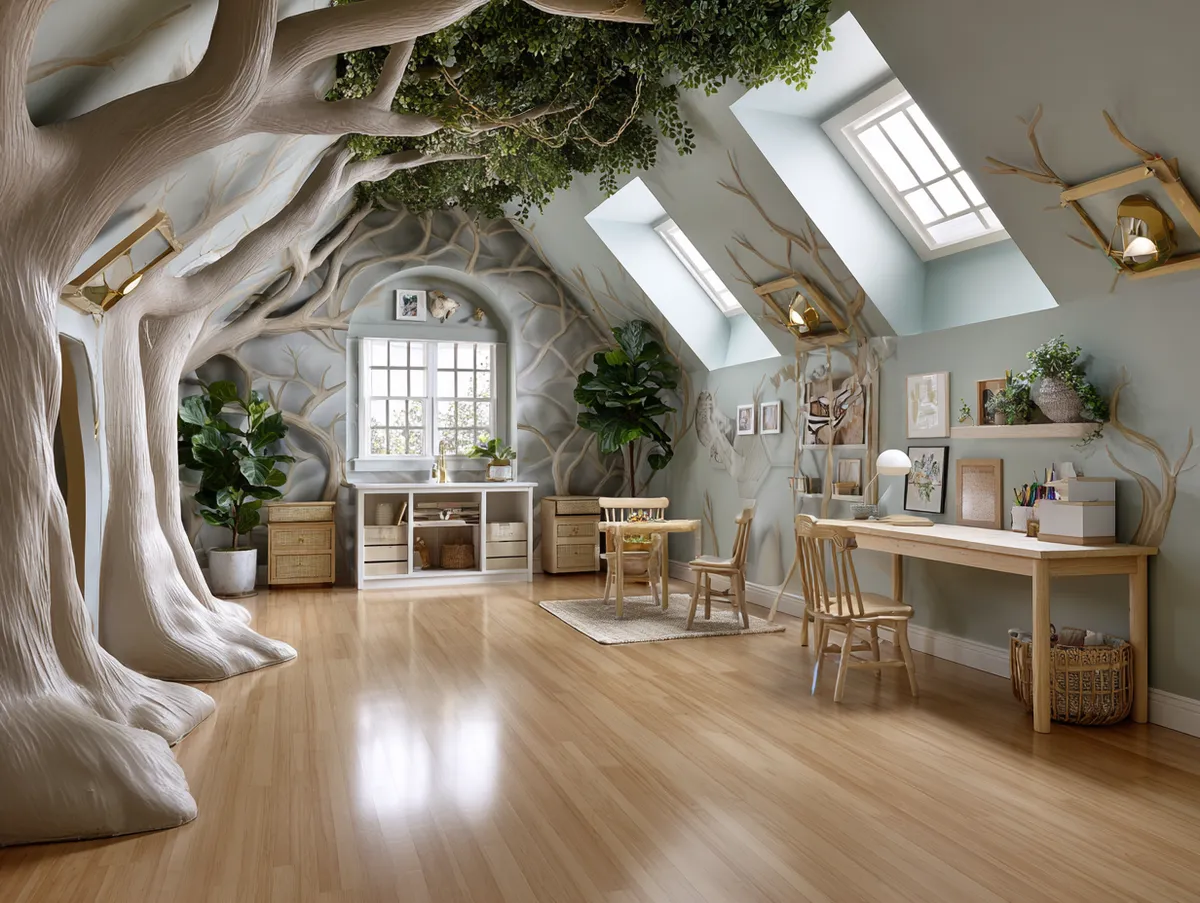
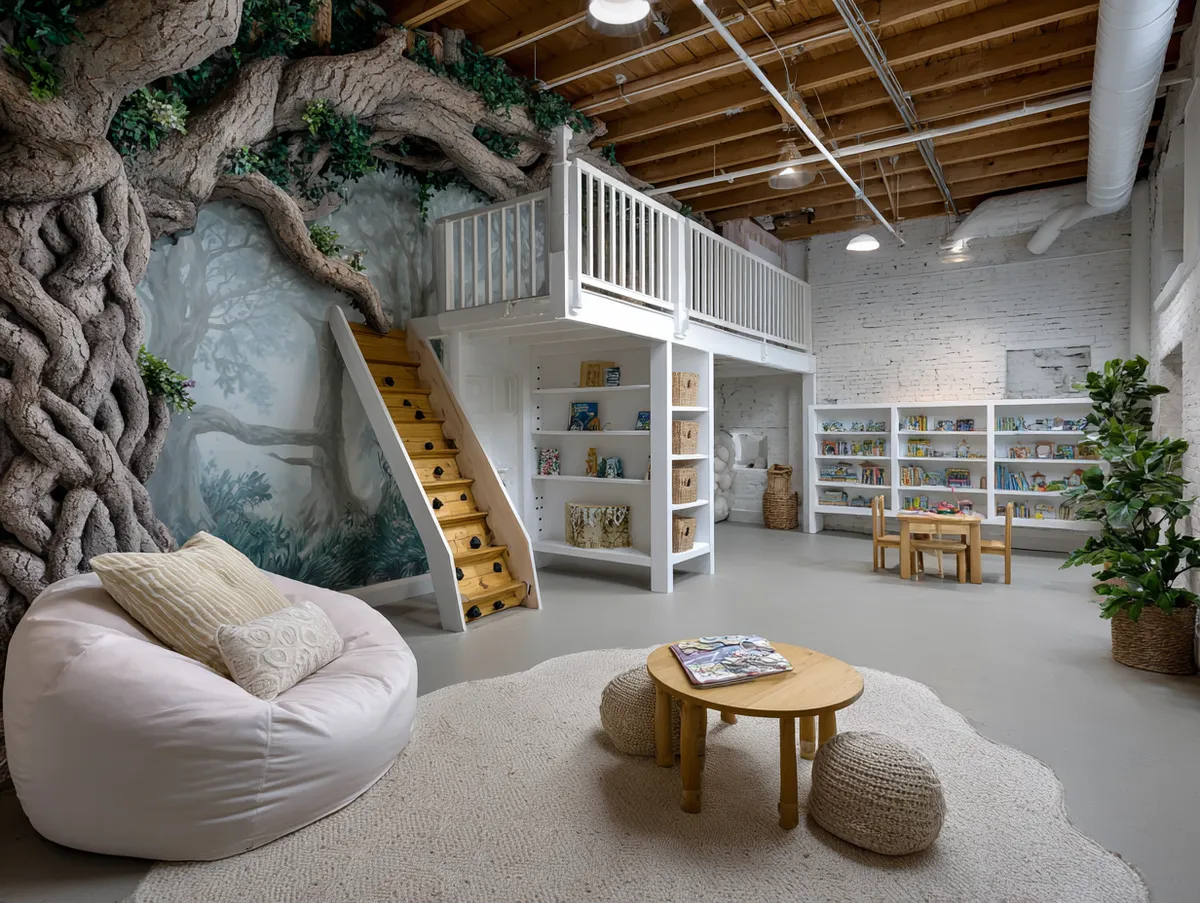
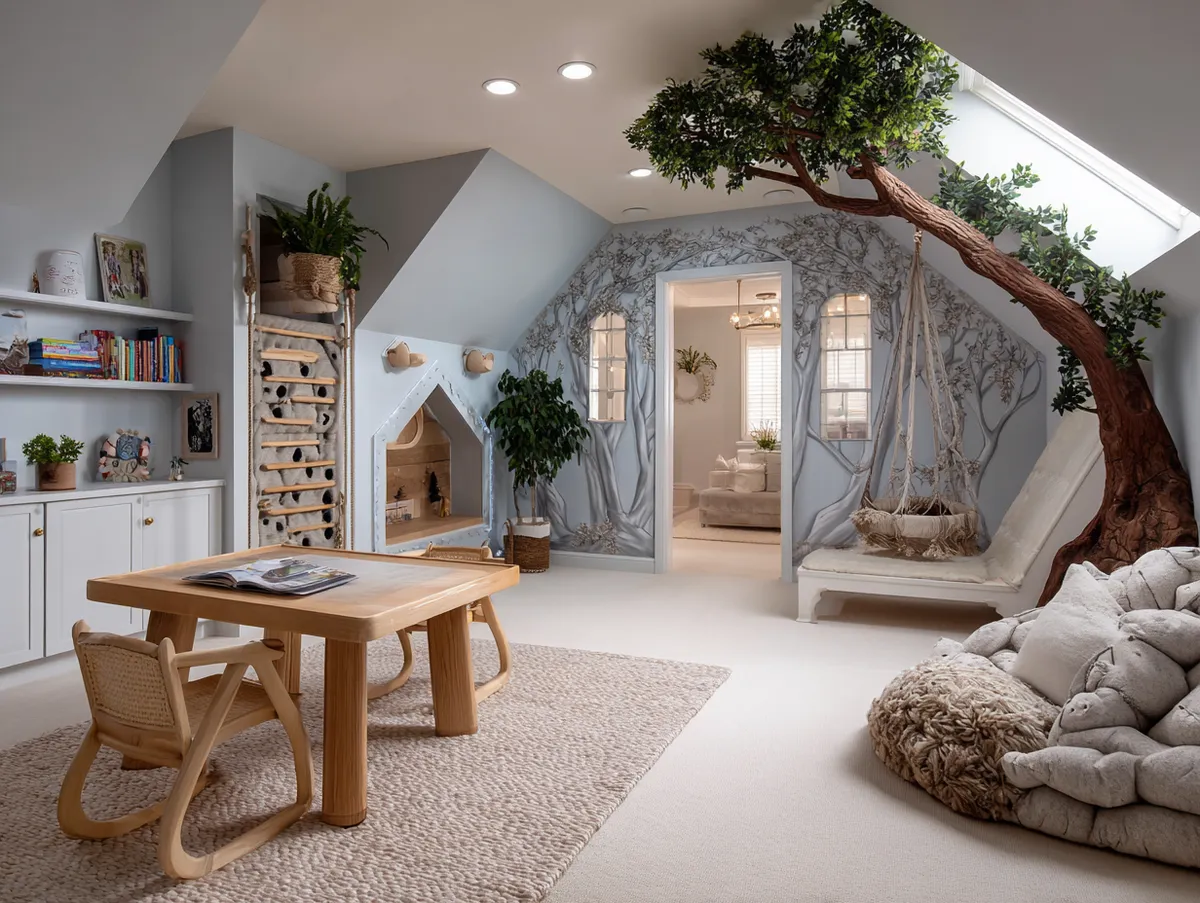
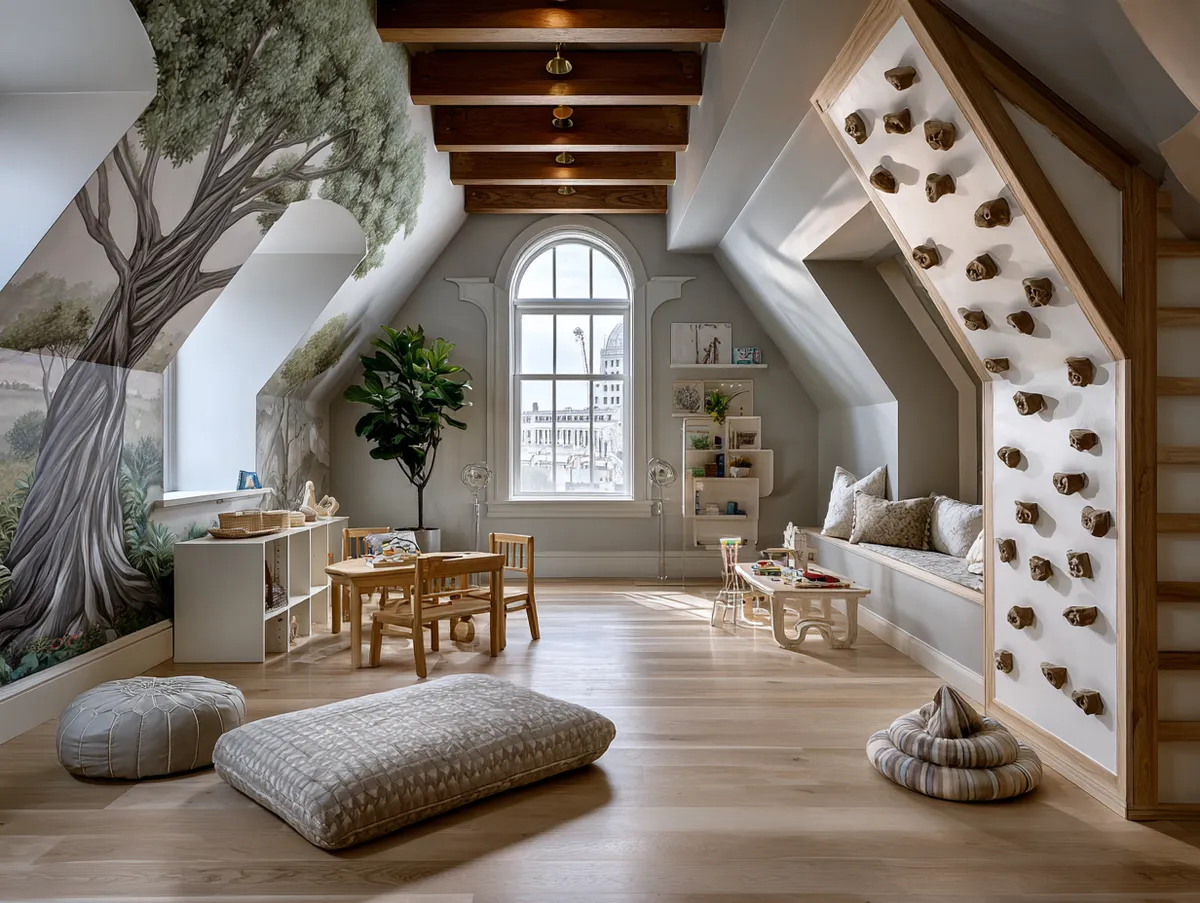
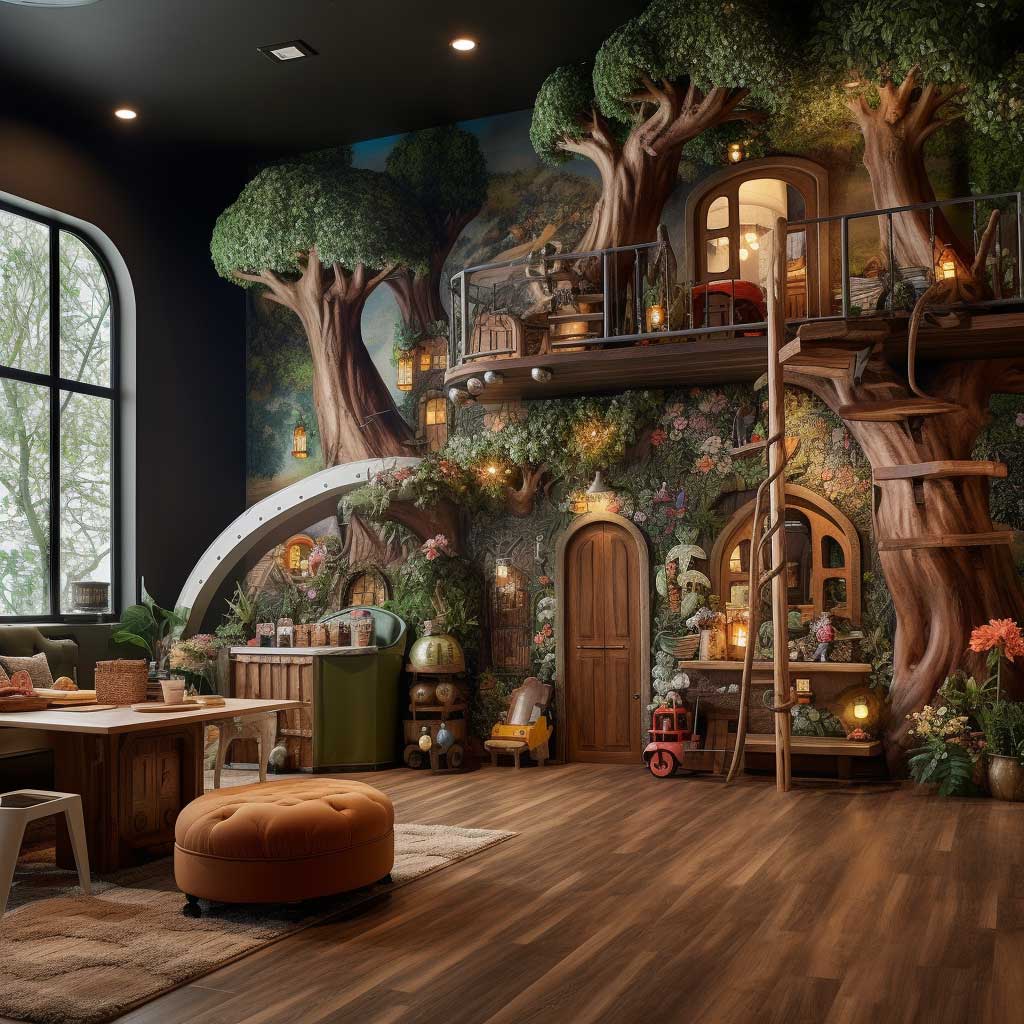
The craft table belongs in the zone with the best natural light — usually near the loft window, not pushed against the dead-wall corner where everyone instinctively puts it. I stole this trick from a designer working on a Scandinavian preschool layout: face children toward light when they’re doing detailed work. Painting and drawing output improves noticeably, and they stay at the table longer. Melissa & Doug rolling art carts at $45–$65 work better here than built-ins because you can wheel them out of the way when the space needs to flip to movement mode.
The mini climbing wall is where this loft playroom idea earns its price tag. A mounted panel with plastic holds — the kind from Atomik Climbing Holds, starting around $30 for a 10-piece set — takes a weekend to install and lasts through multiple kids. Skip the flat-panel gym equipment that looks bolted on as an afterthought. Angle the panel at 10 to 15 degrees off vertical to make it genuinely challenging for ages 4–8 without requiring spotting every climb.
Anti-advice: don’t try to make every corner “educational.” One of the most-returned purchases I’ve seen in kids’ spaces is the wall-mounted alphabet puzzle that looks great on Instagram and gets ignored by day three. Kids learn in movement, not from decorative letters glued at eye level.
A Playhouse Inside a Loft Gives Kids Exactly What They’re Already Pretending
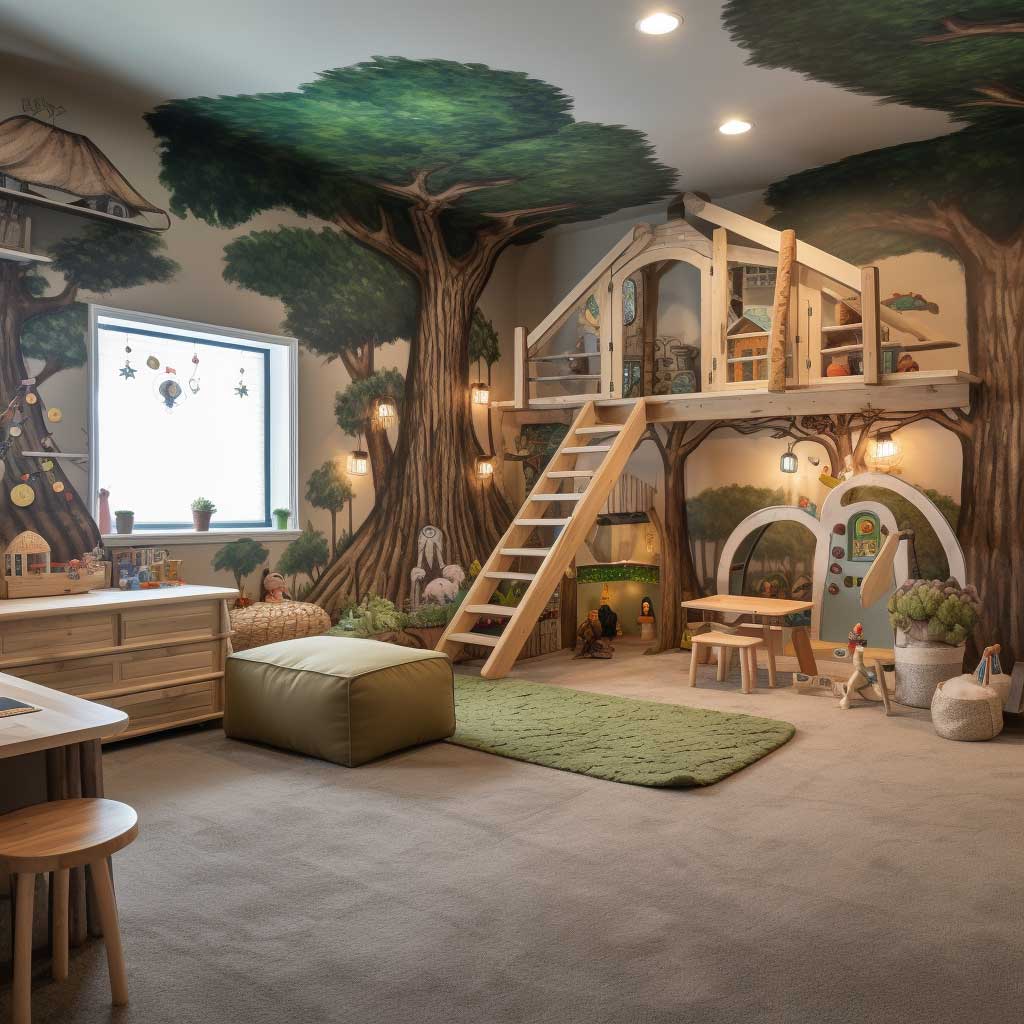
Children build forts because they want a space inside a space. This loft playhouse setup formalizes that instinct with a built structure — framed walls, a real door with a handle they can operate, and a window opening they can lean out of. It’s not precious. It’s functional architecture at a child’s scale. The one I keep recommending to clients is built from 2×3 lumber with shiplap cladding, painted in Benjamin Moore’s Linen White OC-146, for around $600 in materials if you do the framing yourself.
The play kitchen inside the playhouse works harder than any other toy investment at this age range. You need one with a flat cooktop surface, not raised burners that block sight lines into the “kitchen.” KidKraft’s Uptown Espresso kitchen at $240 is the one I’d buy again — it holds up to daily use, the accessories don’t fall through the rack gaps, and the color works with a dozen different wall schemes. Avoid the all-white sets; they show every scuff within two weeks.
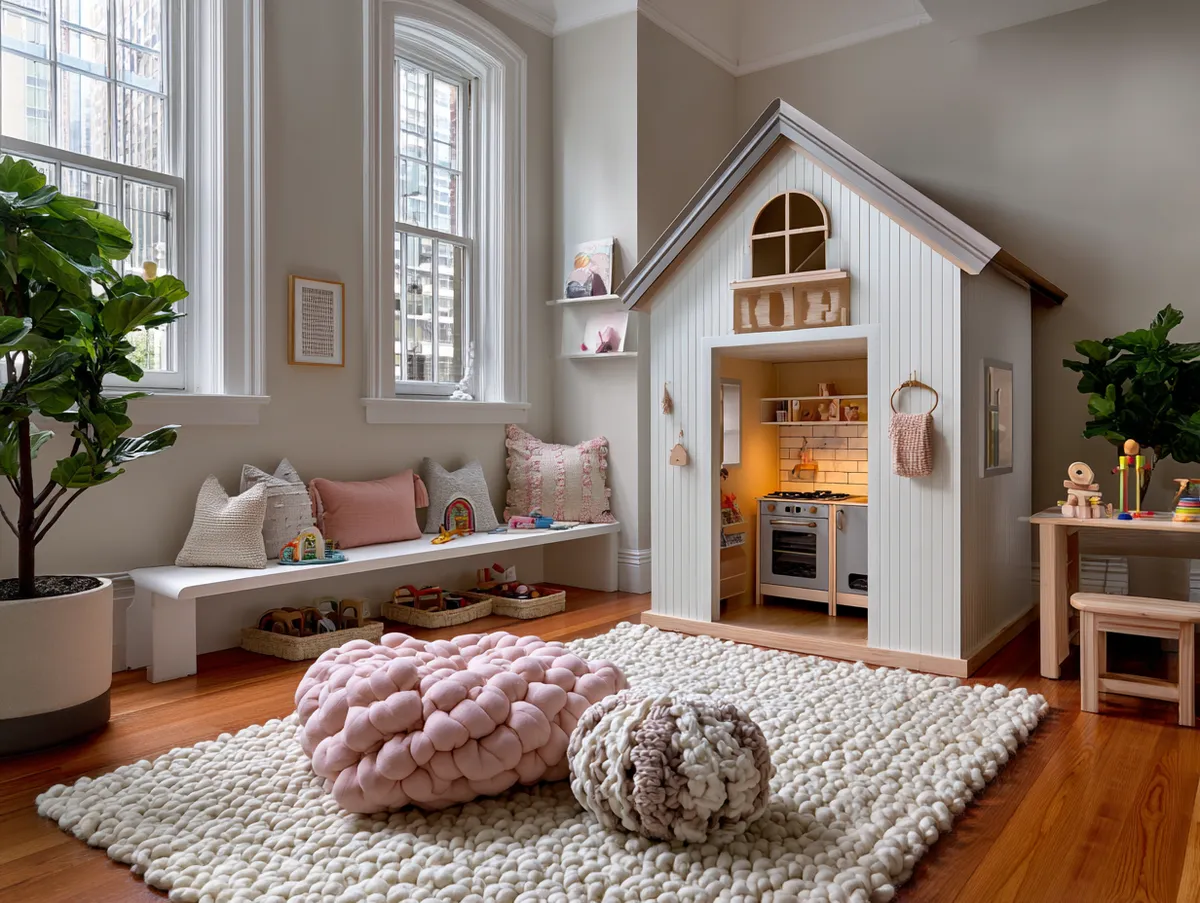
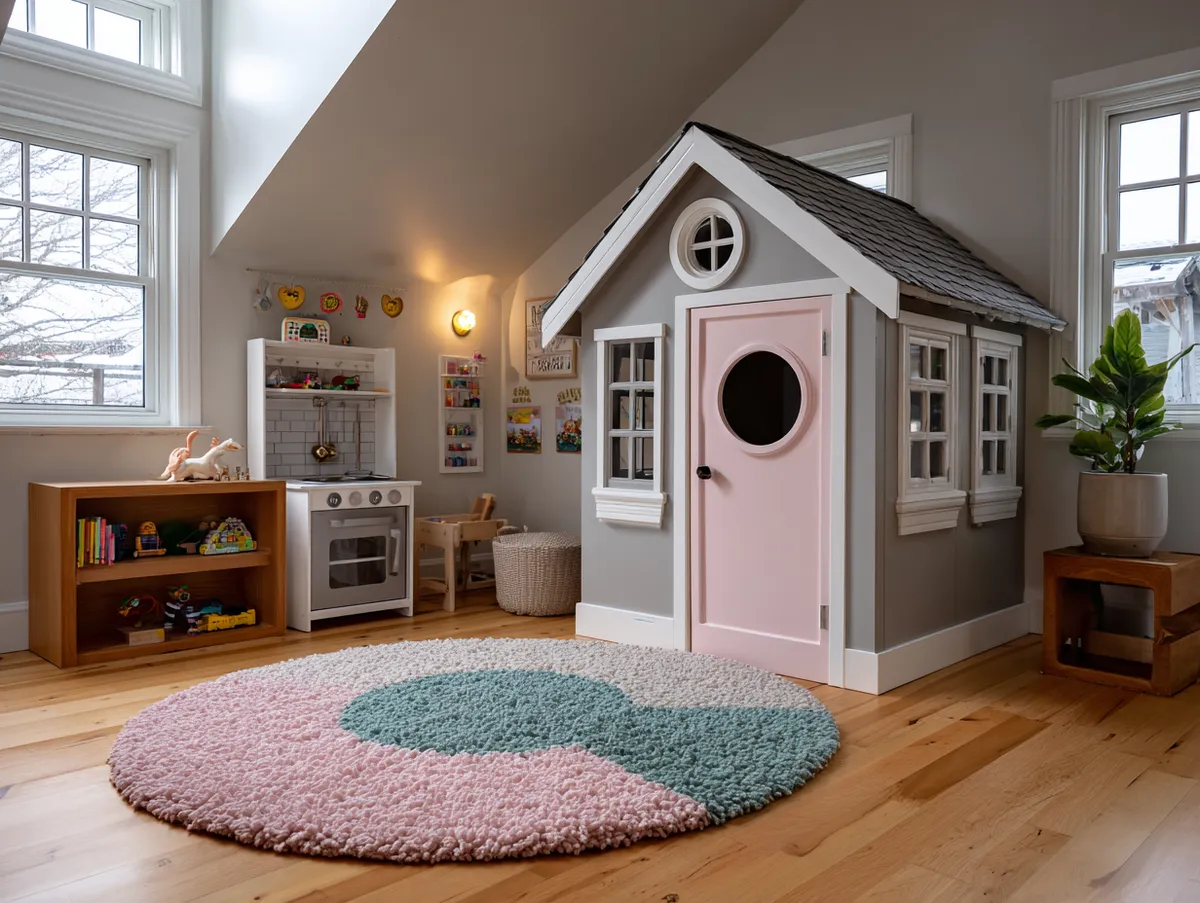
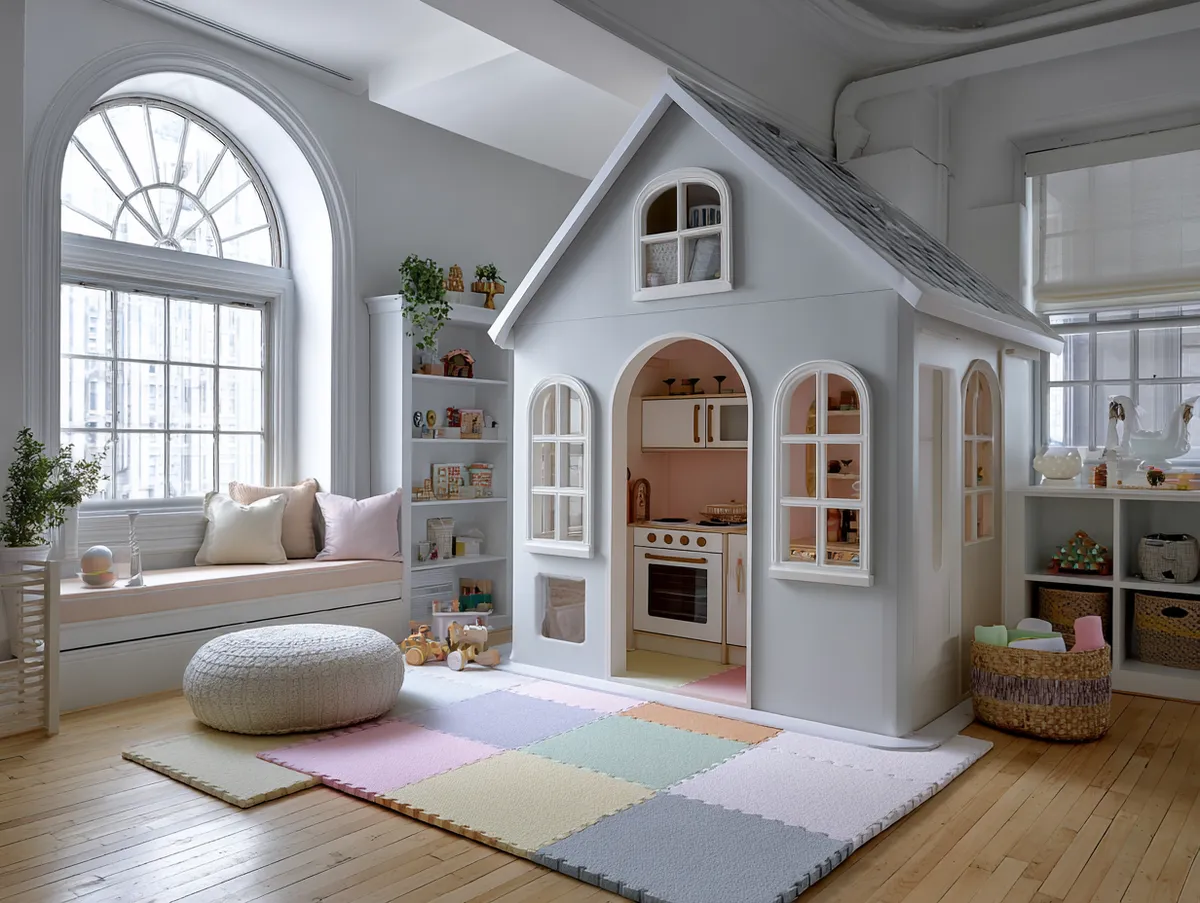
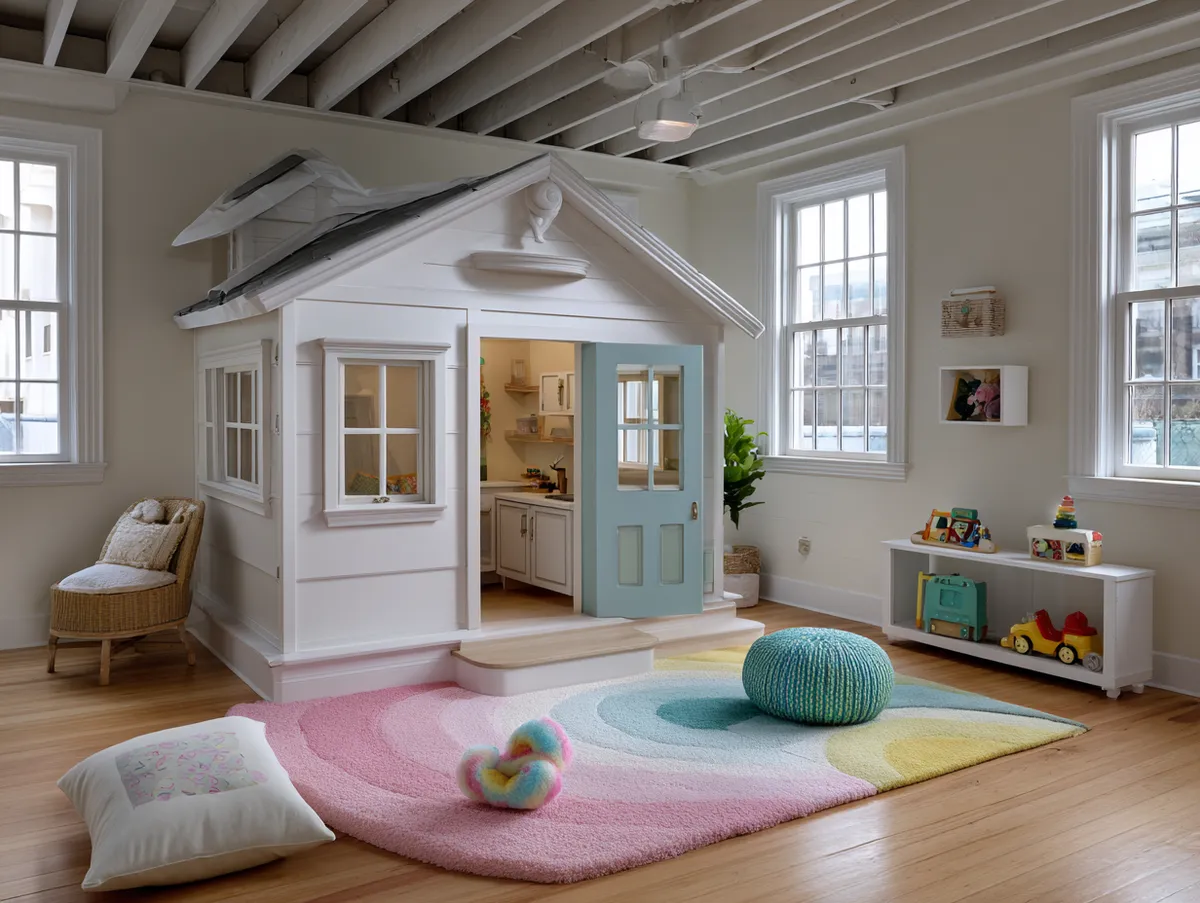
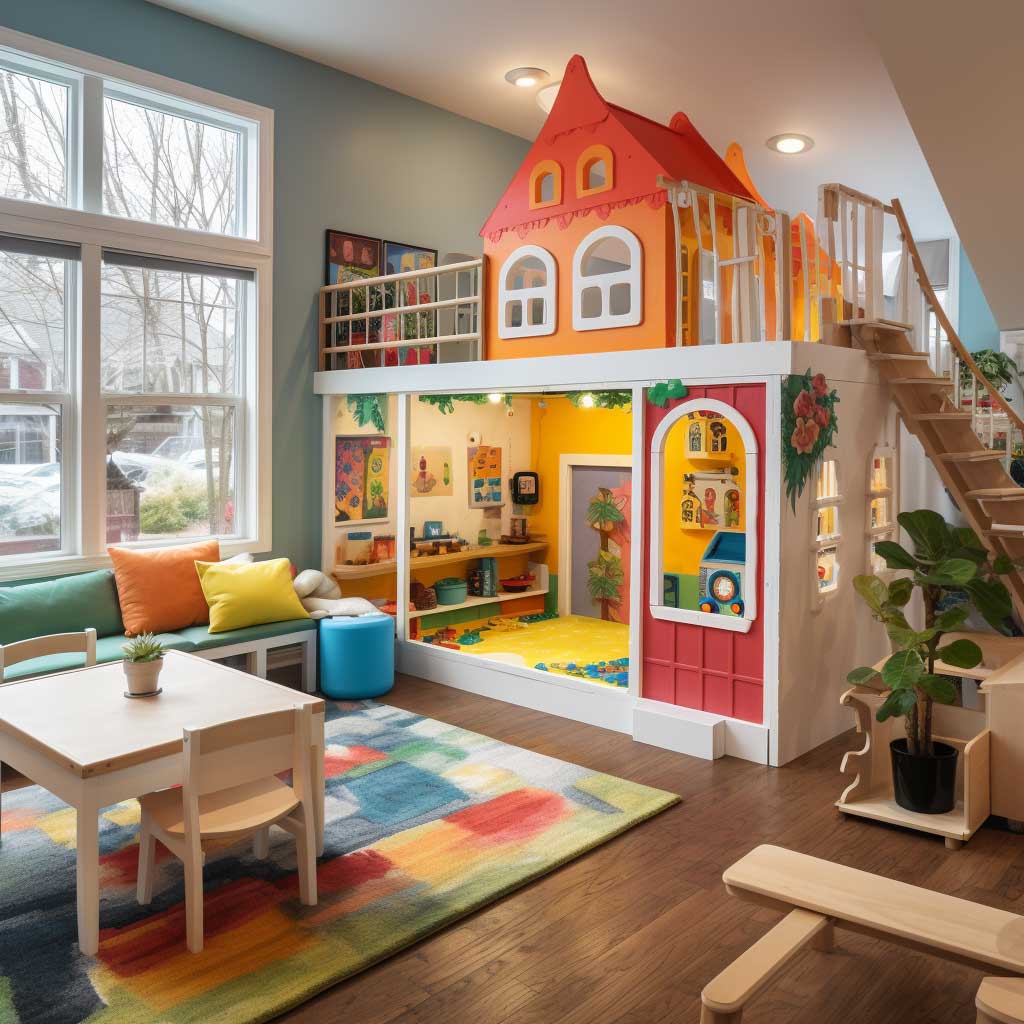
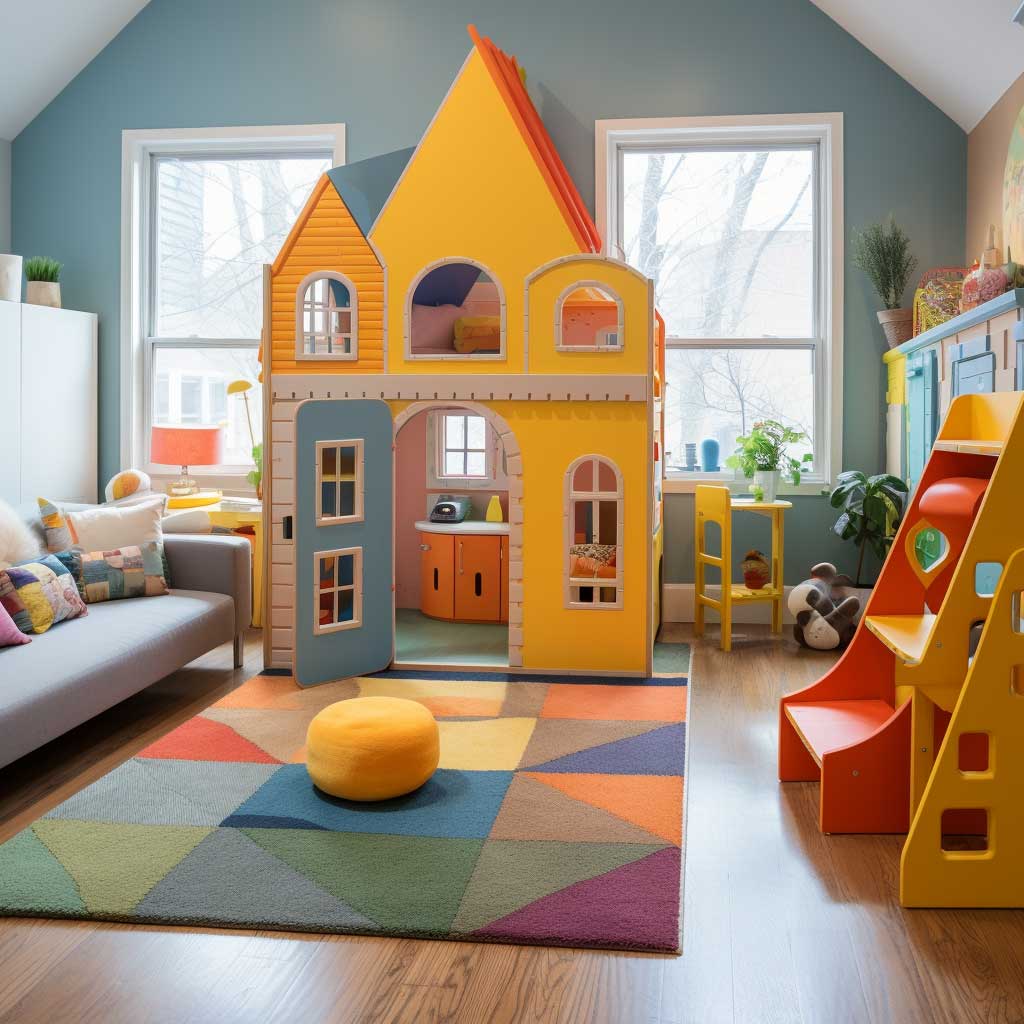
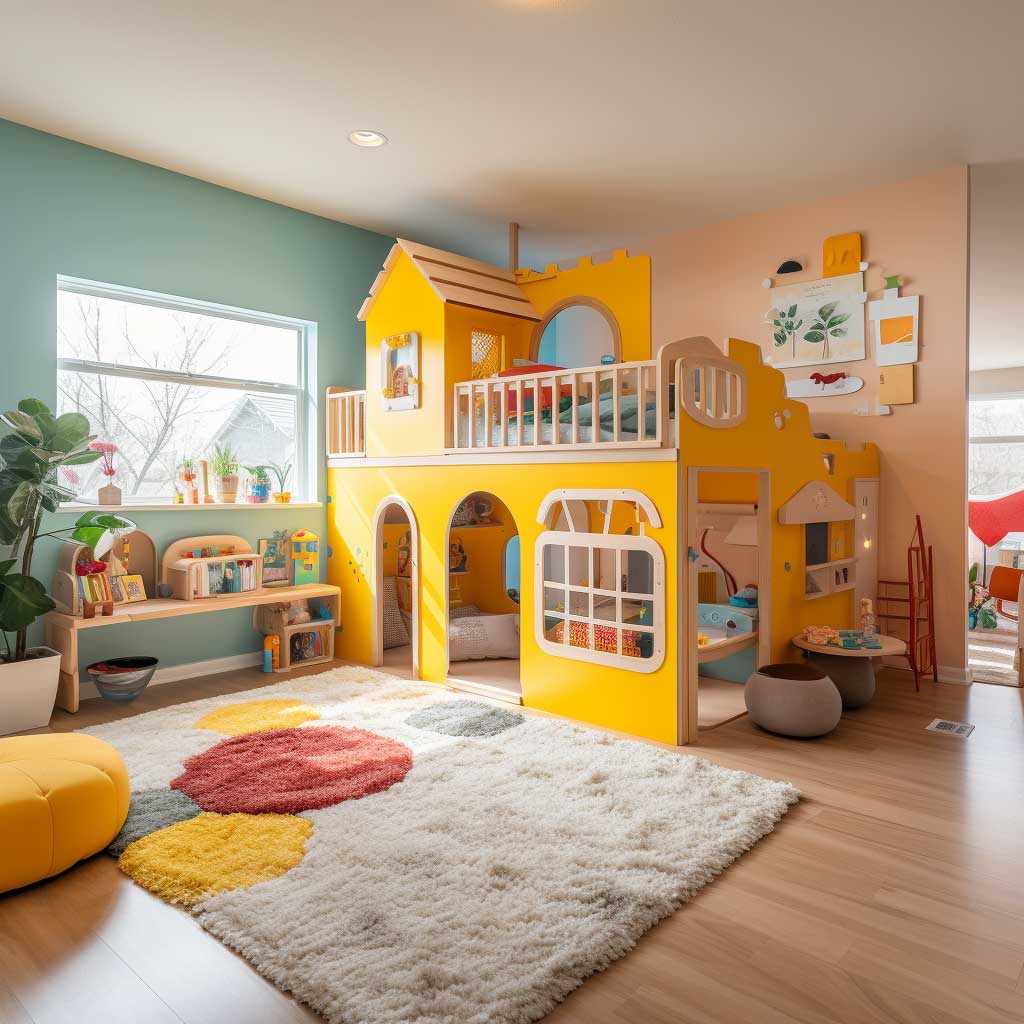
Flooring around the playhouse structure should be soft. Full stop. I’ve watched parents agonize over hardwood continuity throughout the loft and then deal with a split lip when a three-year-old slips at the door threshold. EVA foam interlocking tiles at $1.50–$3 per square foot give you the cushion you need and come in colors that don’t look like a daycare procurement order if you stick to solid neutrals — cream, sage, warm grey. The Skillmatics brand set at $35 for 12 tiles in stone grey is the one I’d recommend to anyone who messages me about this.
Storage in this playhouse loft is a teaching moment, but only if you execute it at child height. Low TROFAST units from IKEA — $45–$65 per unit — labeled with photo icons rather than words work for ages 2 and up. Kids can find and return their own things, which means you stop being the cleanup enforcement officer every evening. Put the bins at the perimeter, keep the center floor clear. A clear floor is an invitation. A floor covered in bins is an obstacle course.
What didn’t work in similar setups I’ve seen: a plush white rug anywhere near the playhouse entrance. It was wrecked in 11 days. Go with a flat-weave, patterned Oeko-Tex certified rug in the $80–$150 range — the pattern hides everything, and flat-weave survives washing.
DON’T DO THIS IN A LOFT PLAYROOM
- Open shelving above 36 inches: Kids climb shelves. They always climb shelves. Anchor everything over 30 inches to the wall studs, or use closed cabinet storage instead.
- Bean bags as primary seating: They look great, get covered in crumbs within a week, and most cheap foam-filled versions deflate to a flat puddle in three months. FOMBAG and Fatboy hold their shape; everything under $40 does not.
- Glossy paint on the play wall: Eggshell or flat. Glossy shows every handprint and every scuff, and in a loft with raking light from sloped windows, it turns into a glare mirror by 3pm.
- Carpet as the main floor: Looks cozy in photos, smells like the inside of a toy chest within six months. Stick with hard flooring plus washable area rugs.
Built-In Slide and Climbing Wall Turns the Loft Into a Vertical Playground
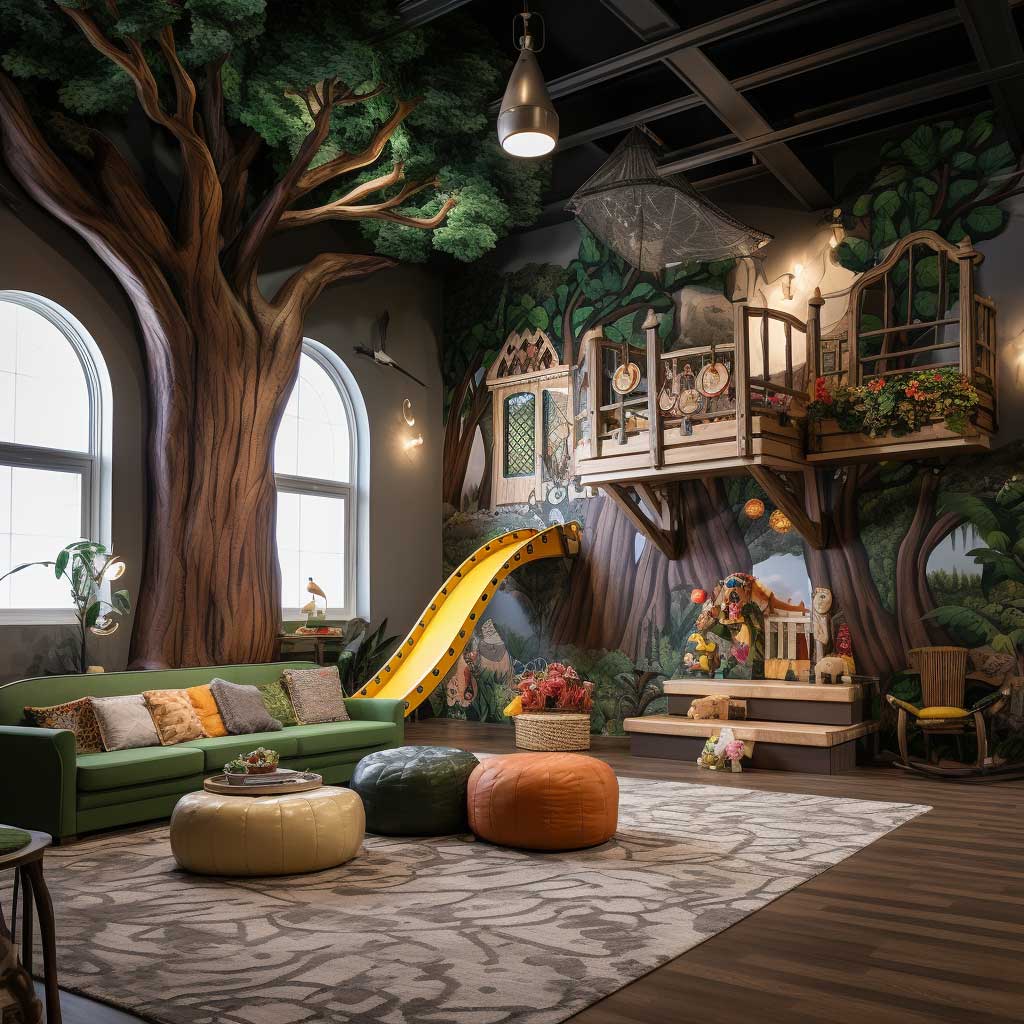
This is the loft playroom idea that earns the most gasps at open houses and the most daily use from actual kids. The built-in slide running from a raised platform to the main floor is not a novelty — it’s a circulation path children choose over the stairs every time, which tells you everything about how they experience space. Expect to spend $2,500–$4,500 for a custom carpenter-built slide in birch plywood with a clear lacquer finish. The slide length needs to be at least 6 feet to control descent speed for kids over 30 lbs.
The climbing wall feeding up to that platform is where the real physical development happens. A 45-degree angle wall with T-nut mounted holds — Kilter Board makes commercial-grade panels starting at $800 for a 4×8 section — gives kids a route problem to solve every time they play. It’s not the same as a standard ladder. Solving a route requires decision-making, weight distribution, and grip strength simultaneously. The American Academy of Pediatrics notes that physical play of exactly this type supports cognitive and emotional development alongside motor skills — meaning the climbing wall is doing double duty whether your kid knows it or not.
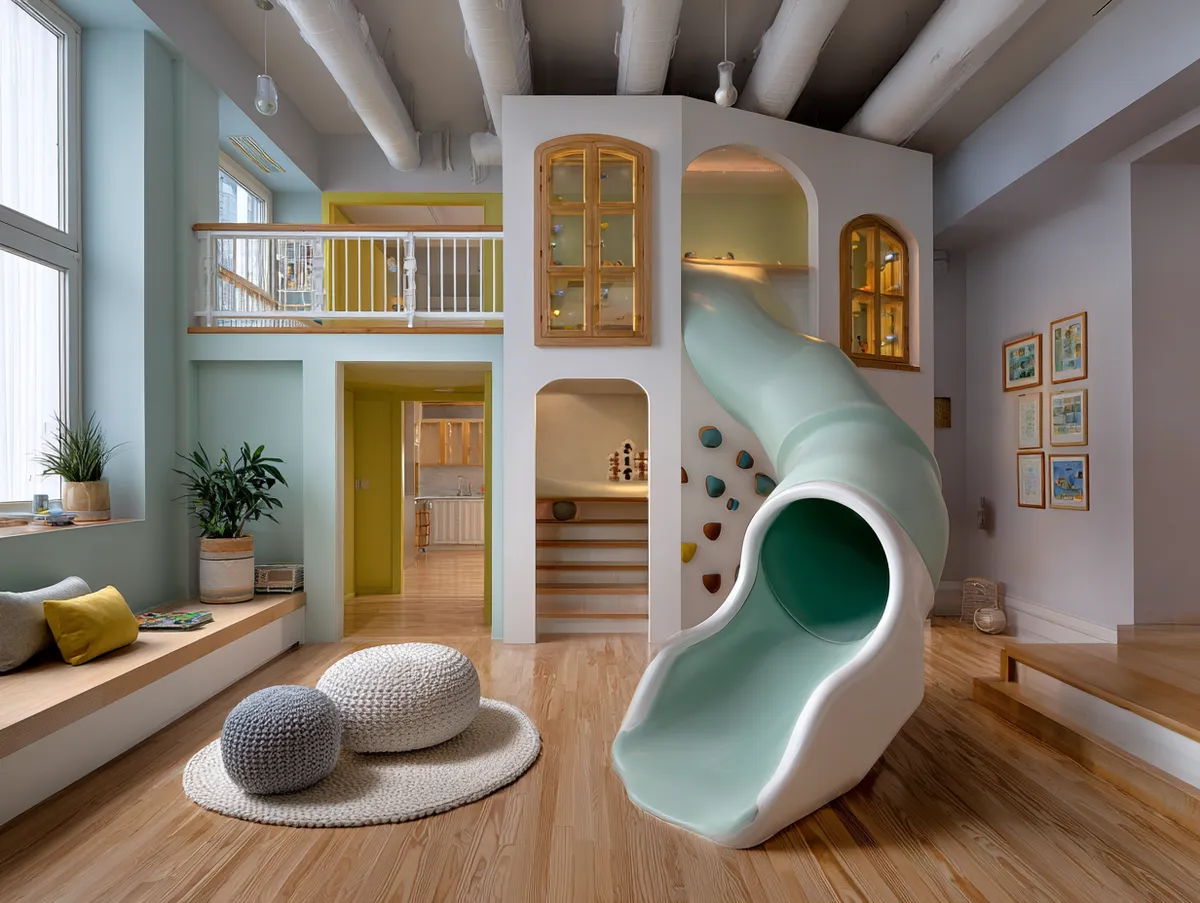
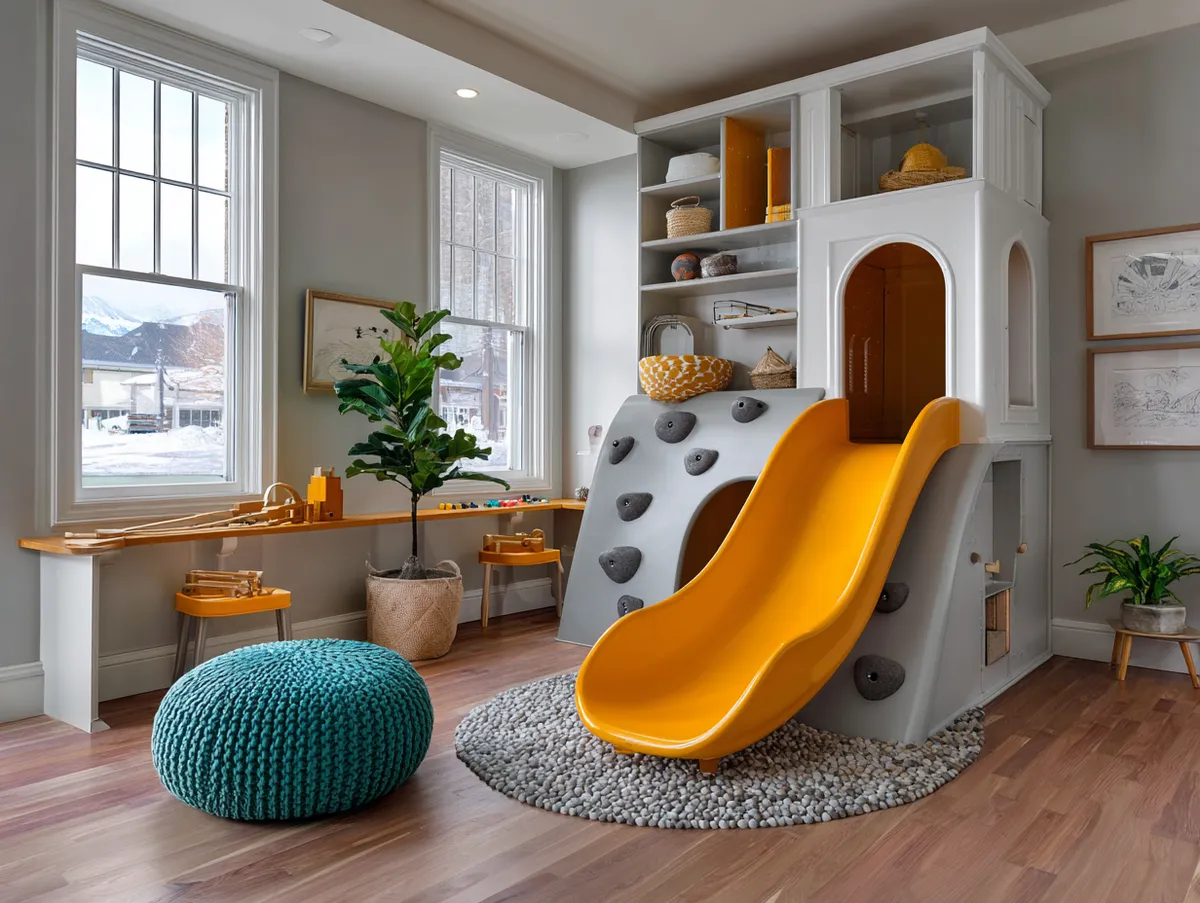
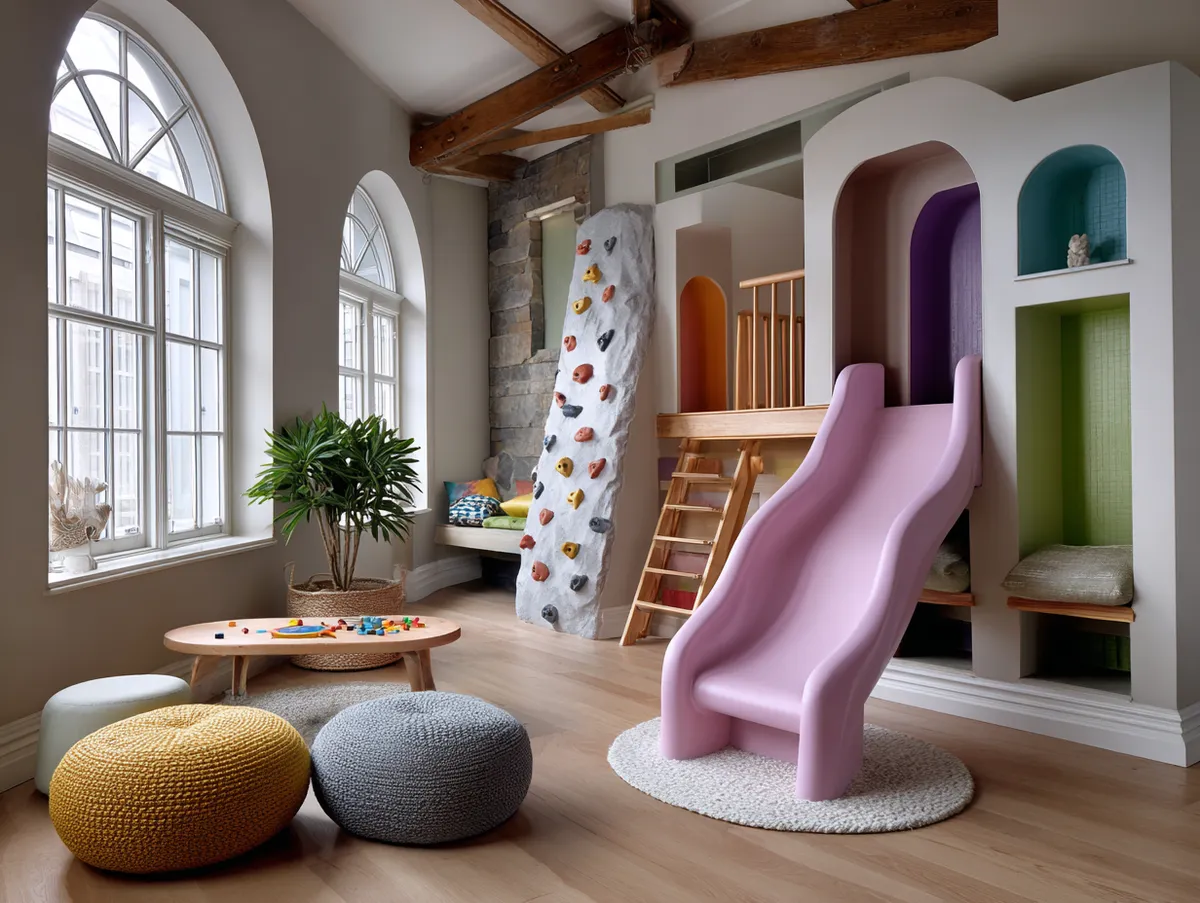
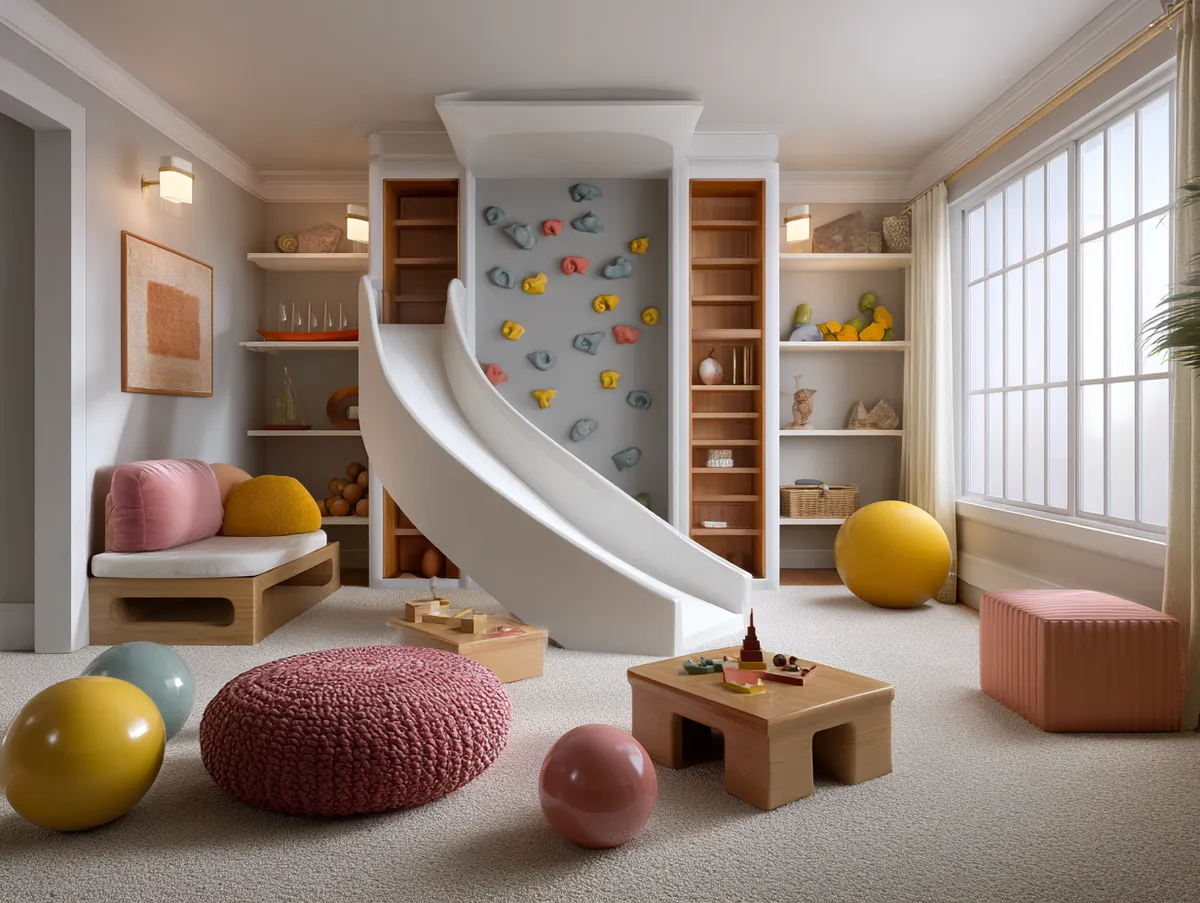
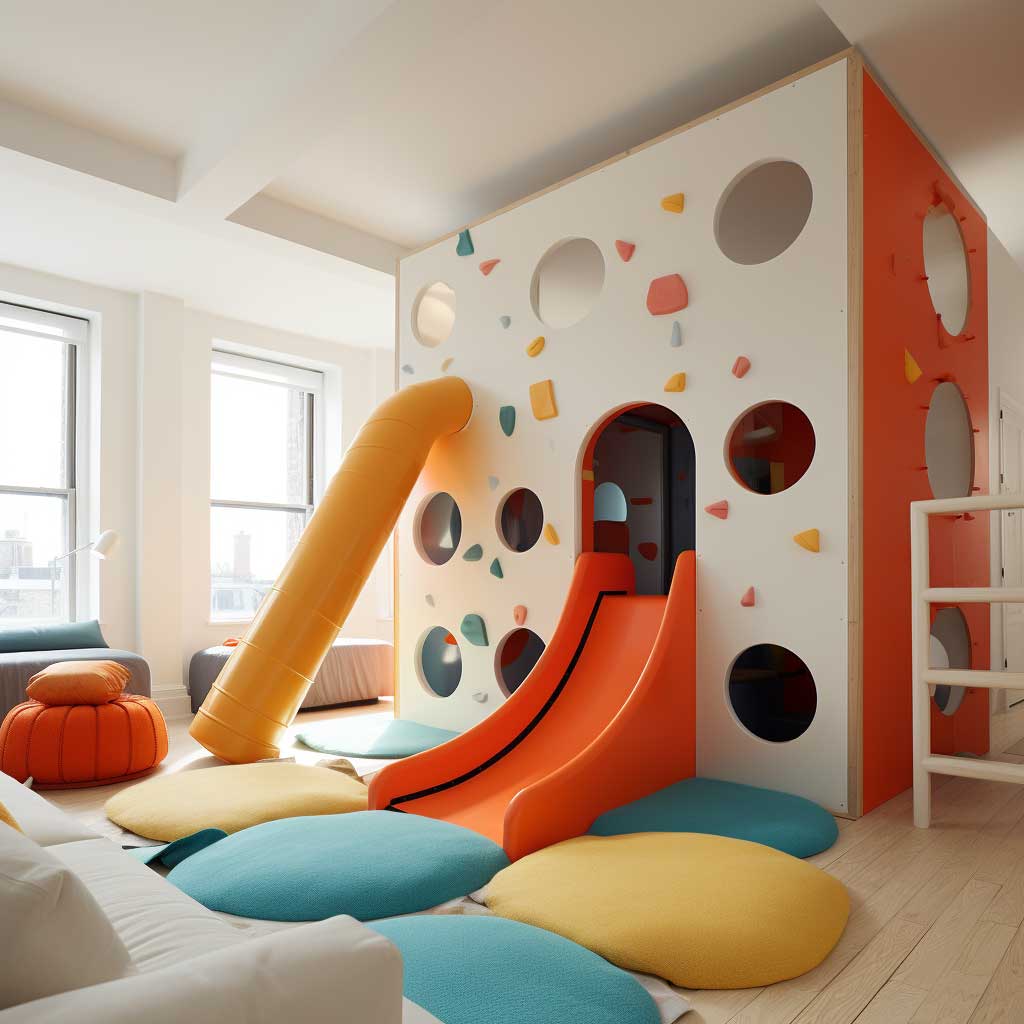
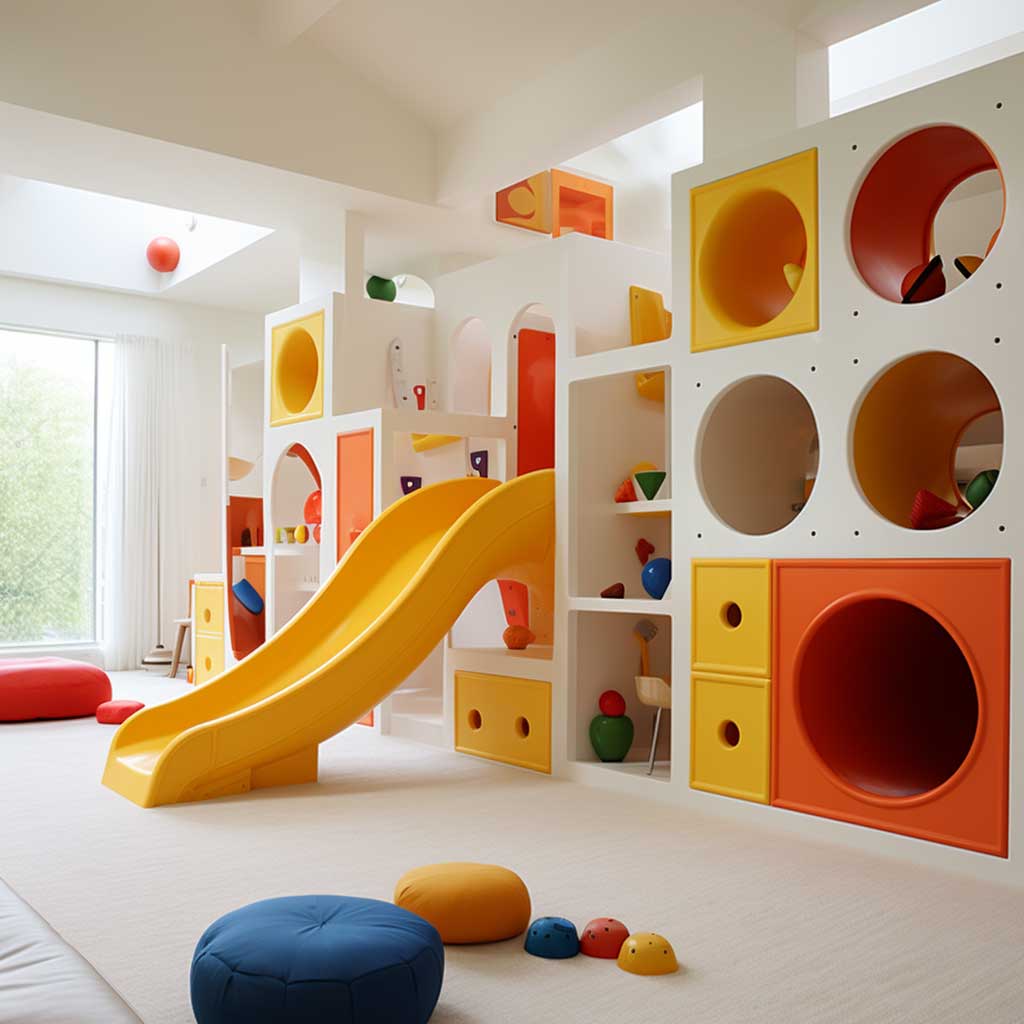
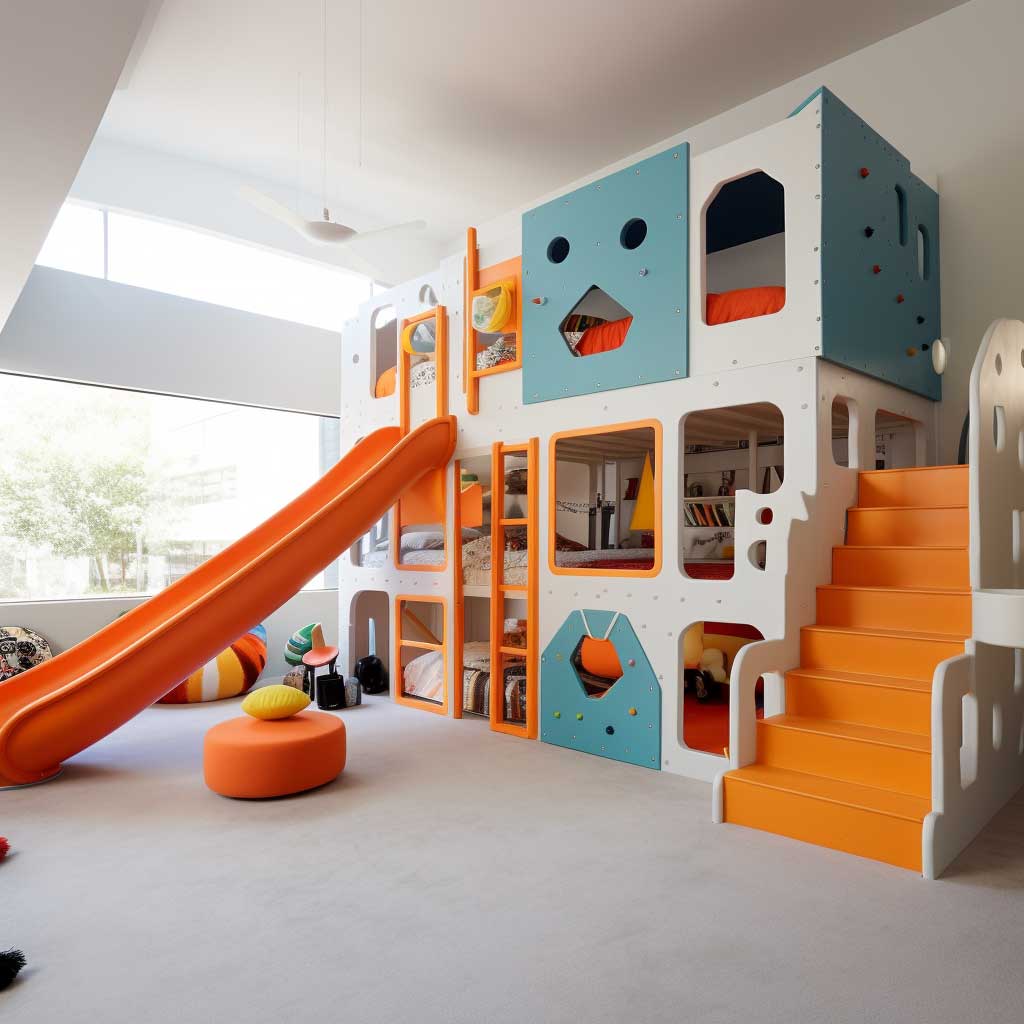
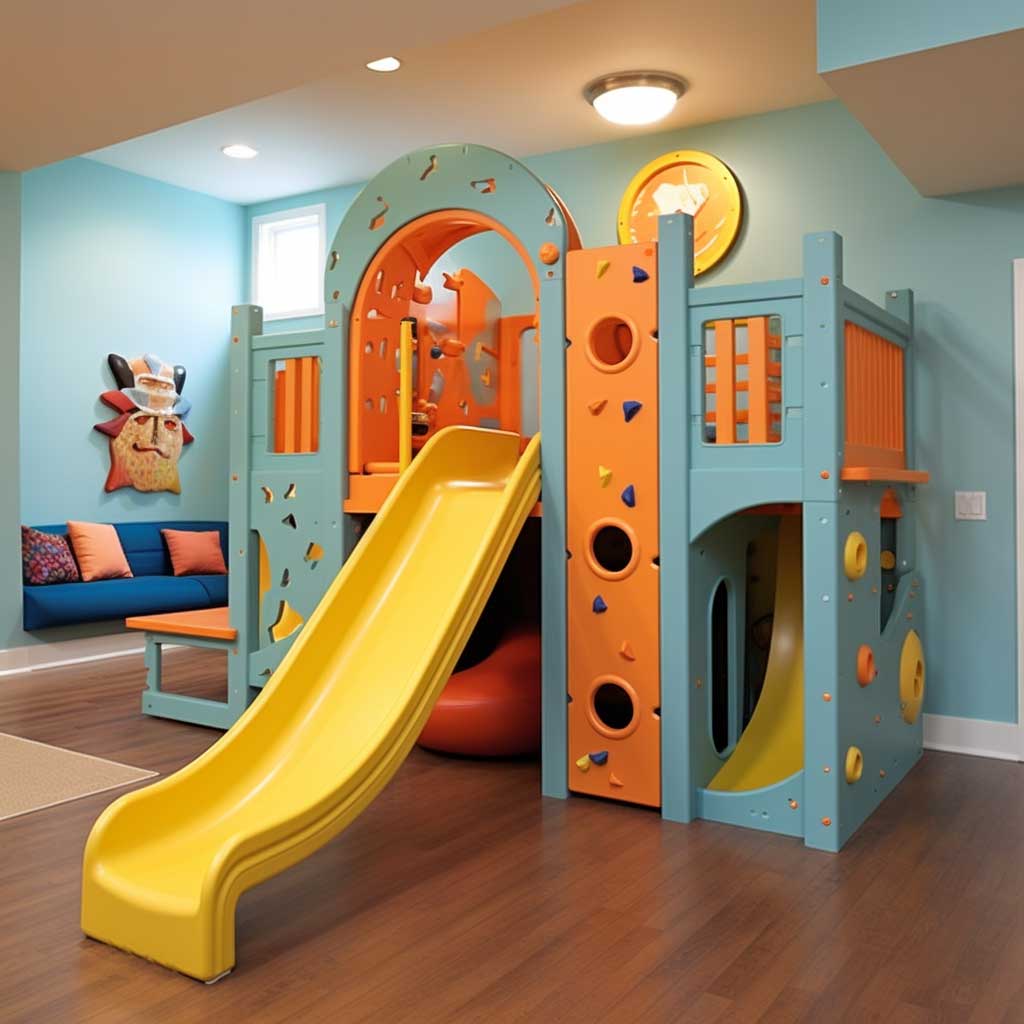
Color in active loft playrooms is not decoration — it’s wayfinding. I use a different accent hue for each zone: one for the climbing area, one for the slide landing zone, one for the quieter table zone. Kids learn spatial cues from color faster than from signs or labels. Farrow & Ball’s Babouche No.223 at the climb zone, Vardo No.288 at the landing, and Elephant’s Breath No.229 at the quiet corner is one combination that photographs beautifully and reads clearly in-person.
Safety at the slide landing is where most DIY builds get it wrong. You need a minimum 36-inch clear run-out zone at the base of any slide — no furniture, no bins, no rugs with a lip that catches sliding feet. Rubber tiles rated for ASTM fall protection, like the ones from Greatmats at $3–$6 per square foot, belong in the landing zone specifically. A standard foam play mat does not have the same fall-attenuation rating.
For small loft playroom ideas where a full built-in isn’t feasible, a freestanding Lifetime Products Geometric Dome Climber at $170 positioned under a higher ceiling point gives you 80 percent of the physical challenge at a fraction of the cost. It collapses flat for storage. The payoff is real: kids who have a physical challenge in their play space use it for longer uninterrupted stretches than kids in rooms with only tabletop activities. Check out how attic room designs for kids use the same vertical logic in sloped ceiling spaces — the principle transfers directly to any loft layout.
Anti-advice: skip the ball pit insert in the slide landing zone. It looks incredible on Pinterest. In reality it collects every crumb, sock, and small toy in the room, becomes impossible to clean by month two, and the plastic balls crack and go sharp-edged when kids land on them from height. The foam landing pad is boring. Use it anyway.
Small Loft Playrooms Work When You Stop Treating Floor Space as the Only Asset
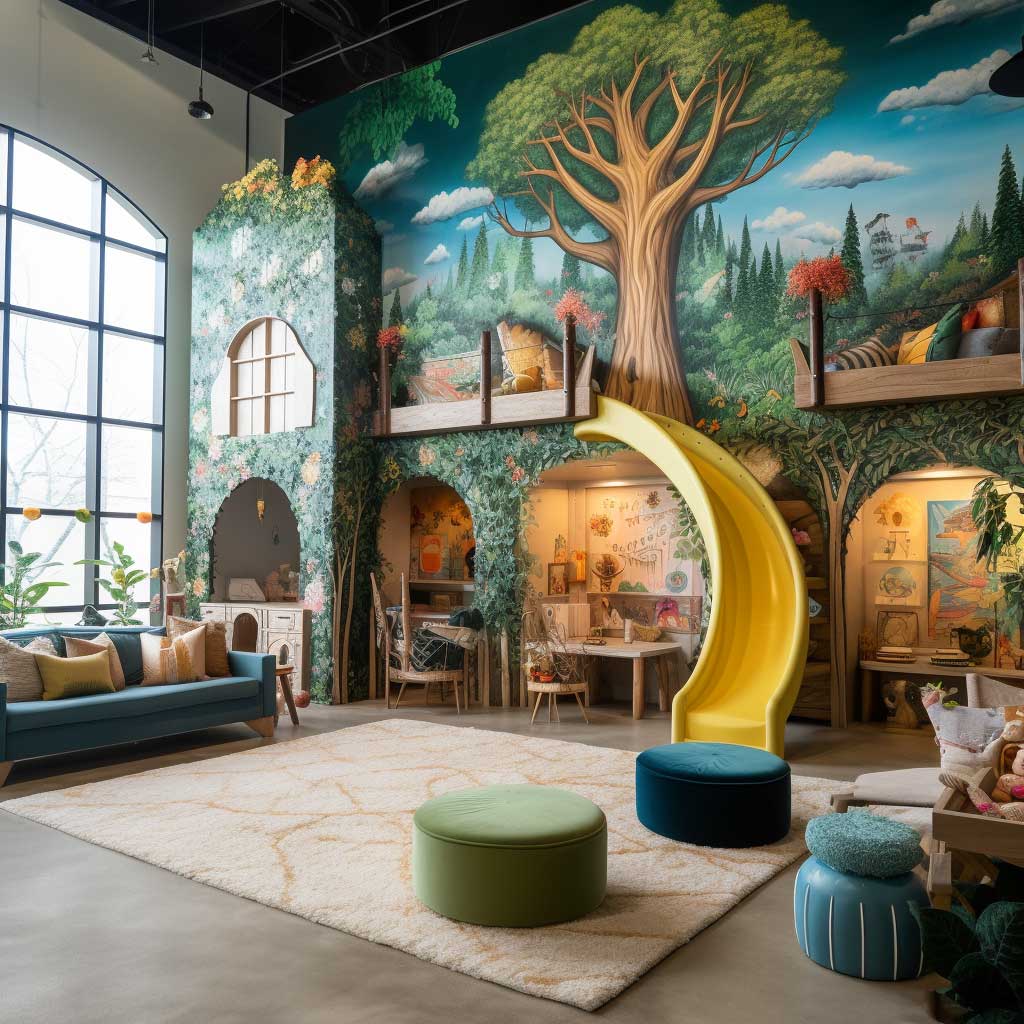
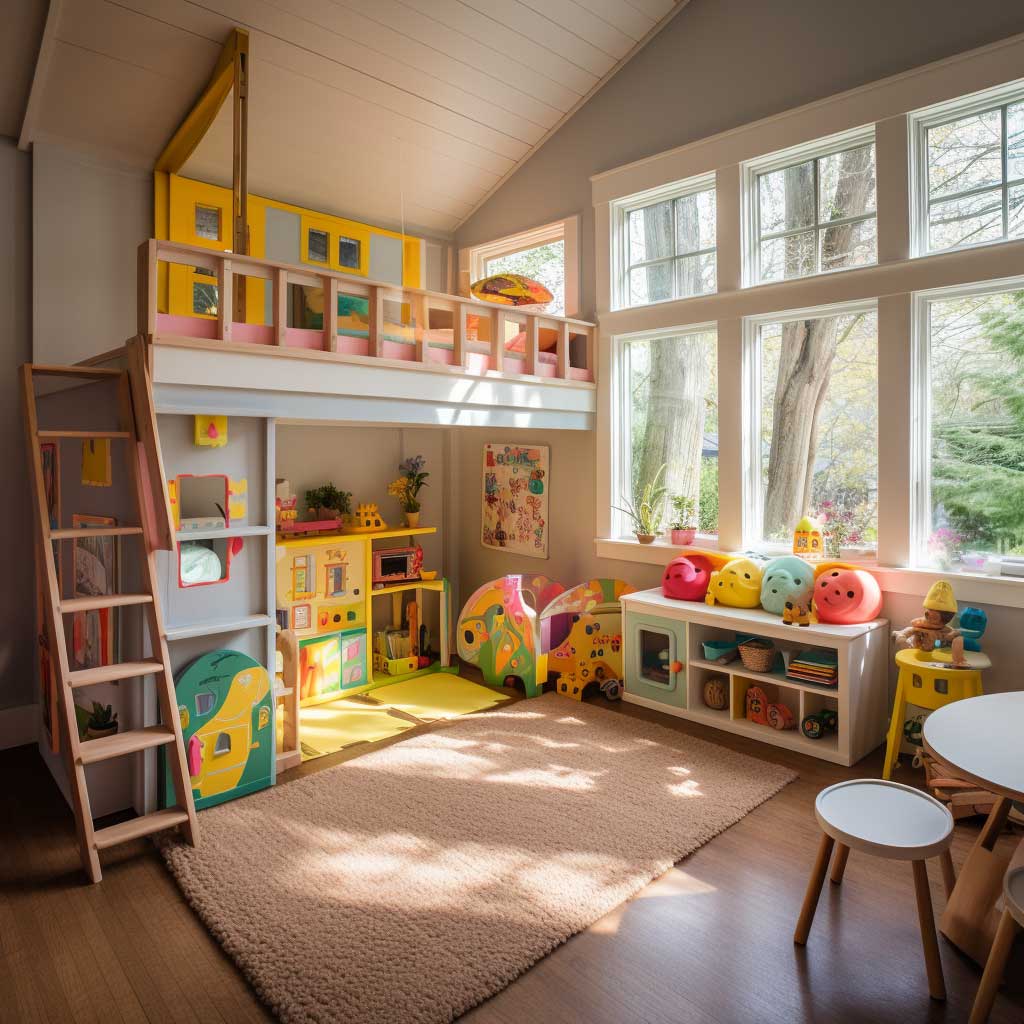
A small loft playroom under 100 square feet can outperform a large room that’s been filled with furniture. The layout secret is vertical zoning: storage goes to the walls from floor to the lowest usable height, the center floor stays completely empty, and the sloped ceiling peak above 5 feet stays clear for movement. That 40 square feet of empty floor in the center of a small loft is worth more than any furniture you could put there.
Wall-mounted rails — the IKEA SKADIS pegboard at $20 per 22×22 inch panel — are the most useful system I’ve put in a small loft playroom. You can hang art supplies, small bins, dress-up accessories, and a magnetic drawing board from the same modular rail without adding a single floor footprint. The pegboard also moves. When your kid’s interests rotate from art to Lego to dinosaur-obsessive, you rearrange pegs rather than buying new furniture.
Lighting in a small loft playroom is non-negotiable. Lofts are typically underlit by their original electrical layout, and a dim space kills creativity faster than any design error. I run LED strip lights along the ridge beam — Govee’s addressable RGBIC strips at $35–$55 let you set warmer tones for quiet time and brighter white for active play — plus a single plug-in pendant over the main floor area. Two light sources, two different temperatures. The difference is immediate. Learn more about organizing the full kids’ room design around these same spatial principles at creative children’s room design inspirations.
What kills a small loft playroom: too many themed items from the same collection. I’ve seen lofts where a parent bought the full Star Wars Pottery Barn Kids set — bedding, storage, wall art, rug — and the room feels like a merchandise display, not a play space. Pick one anchor piece with personality and let everything else be neutral. The themed item punches harder when it’s not competing with eight other themed items.
Loft Playroom Layout — Quick Comparison
| Layout | Best Age | Approx. Cost | Standout Feature |
|---|---|---|---|
| Enchanted Forest | 3–9 | $800–$2,000 | Mural + multi-zone layout |
| Playhouse Loft | 2–7 | $1,200–$3,000 | Built playhouse structure |
| Slide + Climb | 3–10 | $2,500–$6,500 | Built-in slide and climbing holds |
| Small Loft Setup | 2–8 | $400–$1,200 | Vertical storage, clear floor |
The Takeaway
A Loft Playroom Earns Its Keep When the Floor Is Treated Like the Most Expensive Square Footage in the House
Keep it clear. Build up the walls. Put the physical challenge where the ceiling peaks. Those three moves outperform any amount of themed furniture from any catalog at any price point.
Every setup here — from the $800 mural corner to the $6,500 slide build — follows that same structural logic. The aesthetic on top is personal. The logic underneath is not.
Save this post before your next loft planning session. The measurements and product picks are in here for a reason.