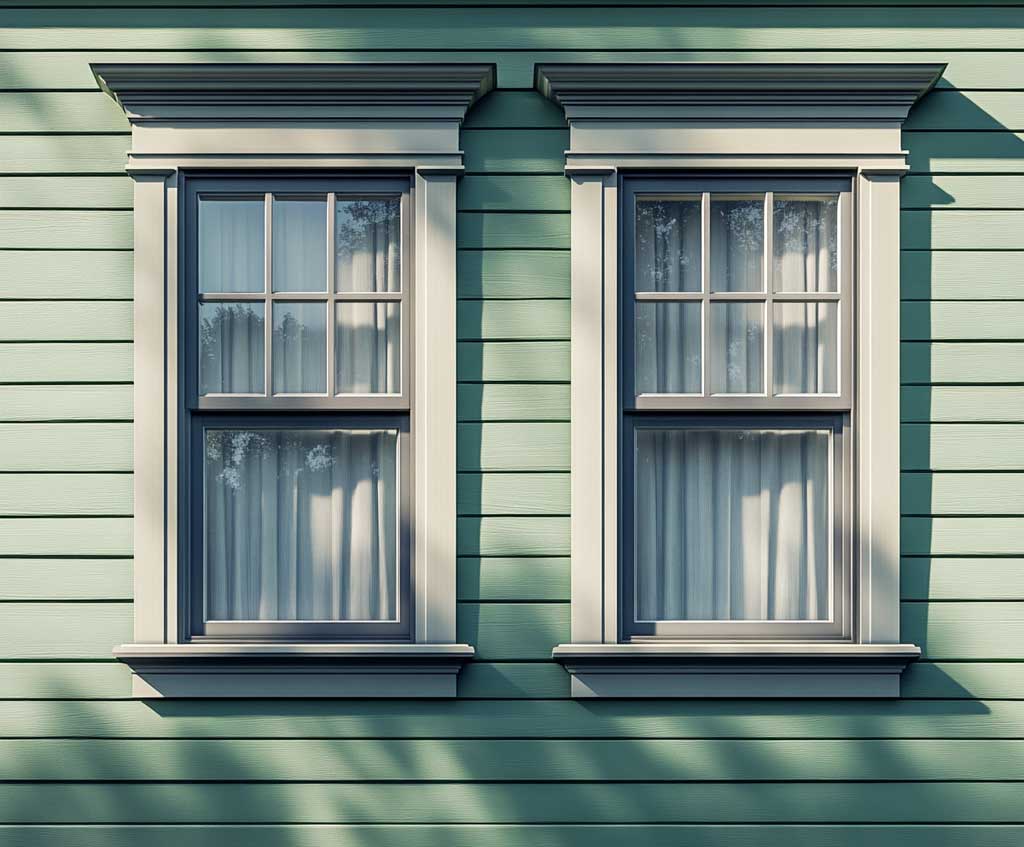
Forest green and stone gray outdoors paint colors create a grounded exterior by pairing a deep botanical tone with the quiet character of mineral gray. This combination works especially well when the house already relates to trees, stone, masonry, or mature landscaping, because the palette echoes materials found around the property. The key is not simply choosing two attractive colors, but controlling their depth, undertones, and placement.
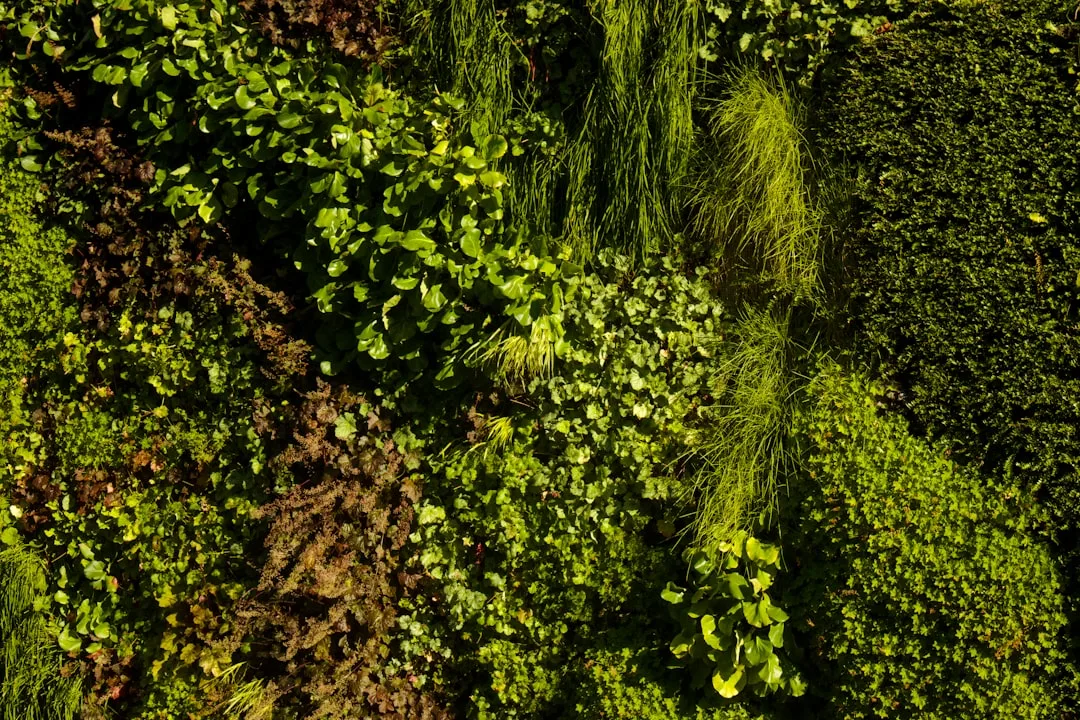
Forest green brings visual weight and can make architectural details feel more defined, while stone gray provides a calmer field for trim, masonry, or secondary surfaces. A dark green can become very heavy on a facade with limited daylight, so the surrounding fixed materials and natural light should guide the final shade. Treat the two colors like the dark leaves and gray rocks in a landscape: related, but never identical in visual weight.
Quick Scan
- Forest green gives a facade depth and a strong connection to planted surroundings.
- Stone gray works as a quieter counterpoint for walls, trim, masonry, or secondary volumes.
- LRV runs from 0 to 100, so darker greens can absorb substantially more light than pale neutrals.
- A restrained palette usually reads more clearly than several competing exterior colors.
- Test both shades outdoors because daylight can change their apparent temperature and depth.
Forest Green Gives Classic Exteriors Their Deepest Color
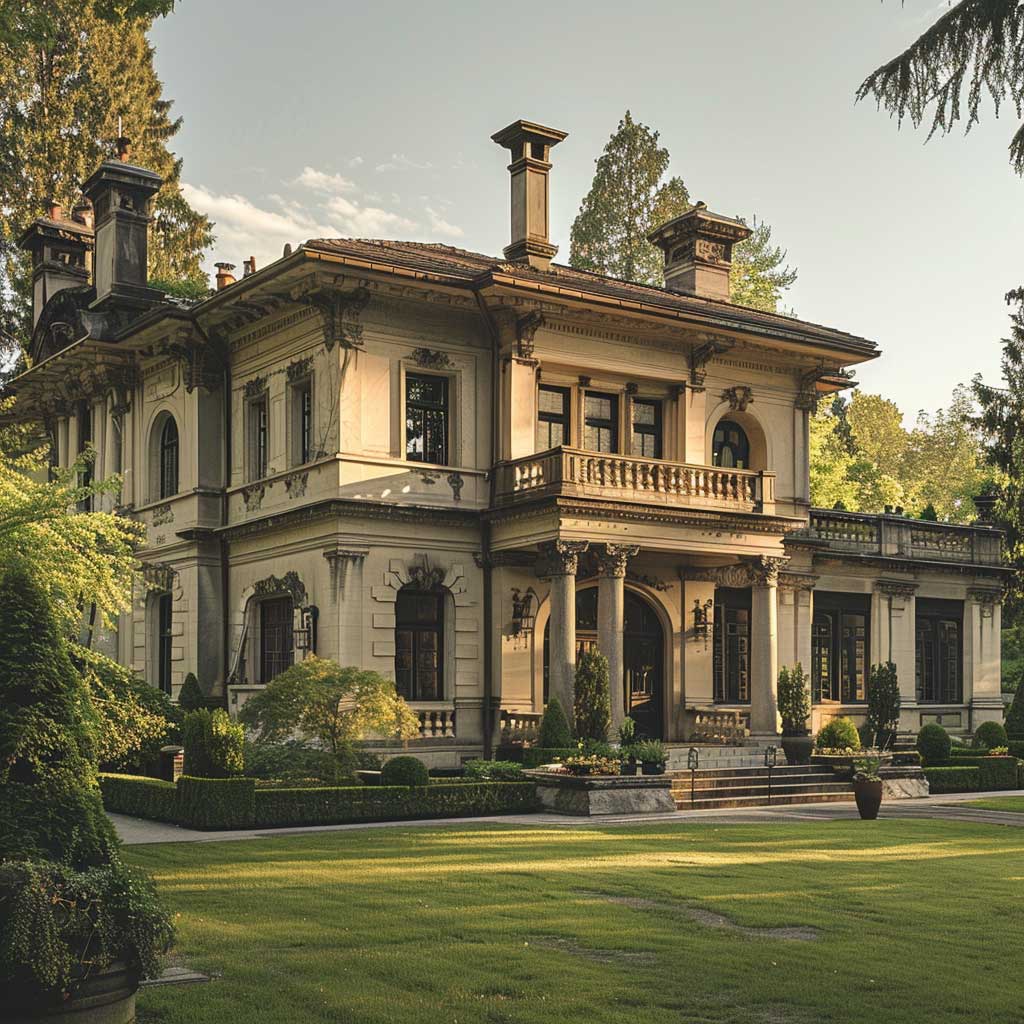
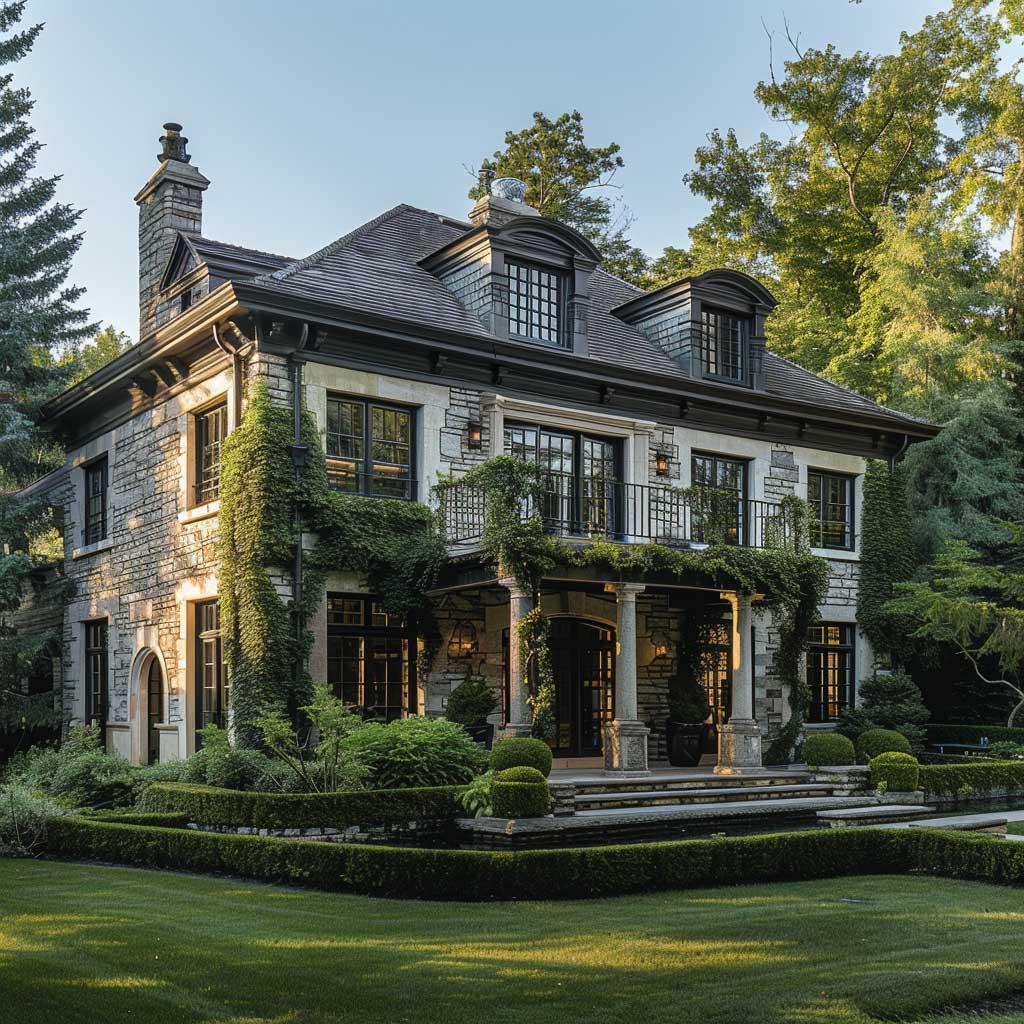
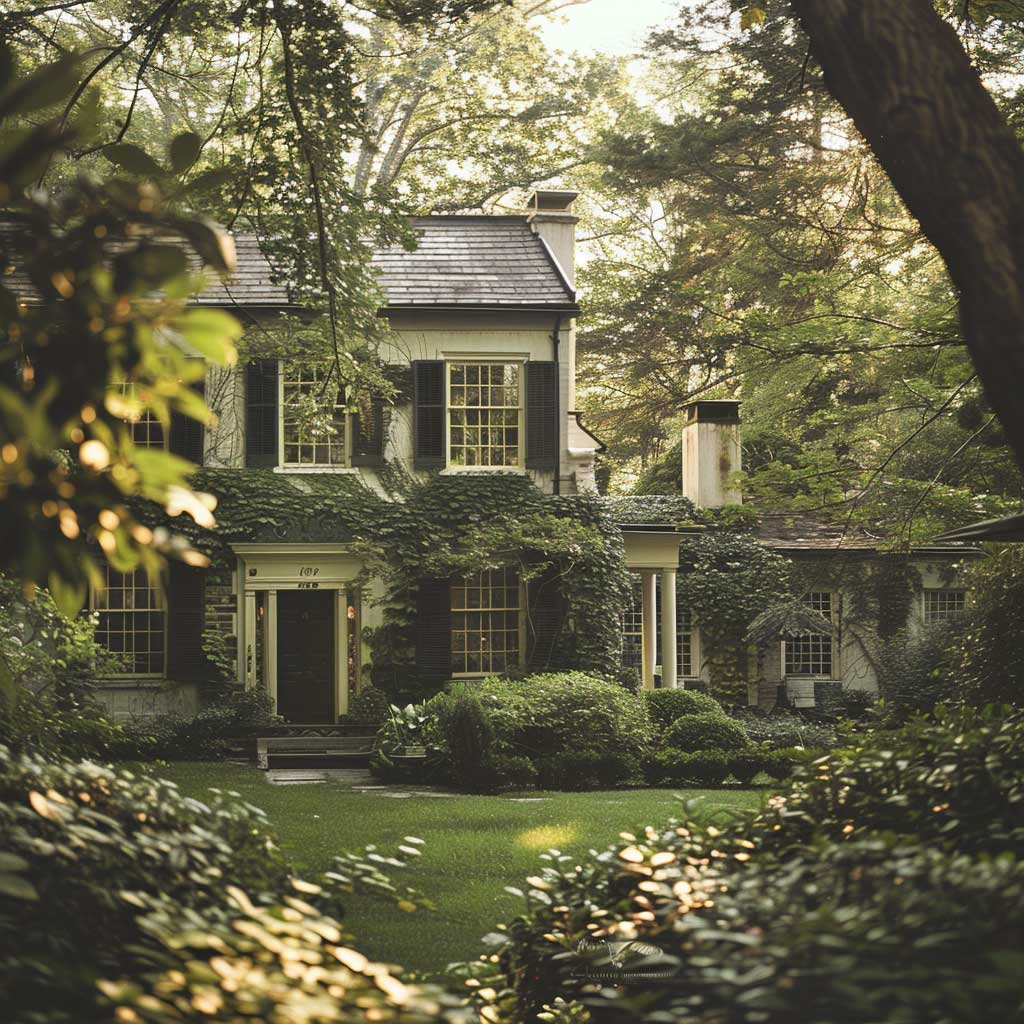

Forest green exterior house colors work by giving broad wall surfaces enough depth to make trim, windows, stone, and landscaping read as deliberate parts of one composition. The shade is particularly convincing when the property has substantial greenery, because the facade shares a visual language with the garden rather than competing with it. What makes a dark green successful is usually its relationship to the fixed elements, not its strength on a paint card.
A useful reference point is Glidden Enchanted Forest Green, listed with an LRV of 7, where 0 represents absolute black and 100 represents pure white. That number illustrates why very dark forest greens can behave almost like charcoal in shadowed areas. If the question is whether such a color can cover an entire facade, the answer depends on exposure, architecture, and surrounding materials; use lighter trim or stone to keep the composition legible. For broader context on long-lasting exterior palettes, see timeless exterior paint colors for houses.
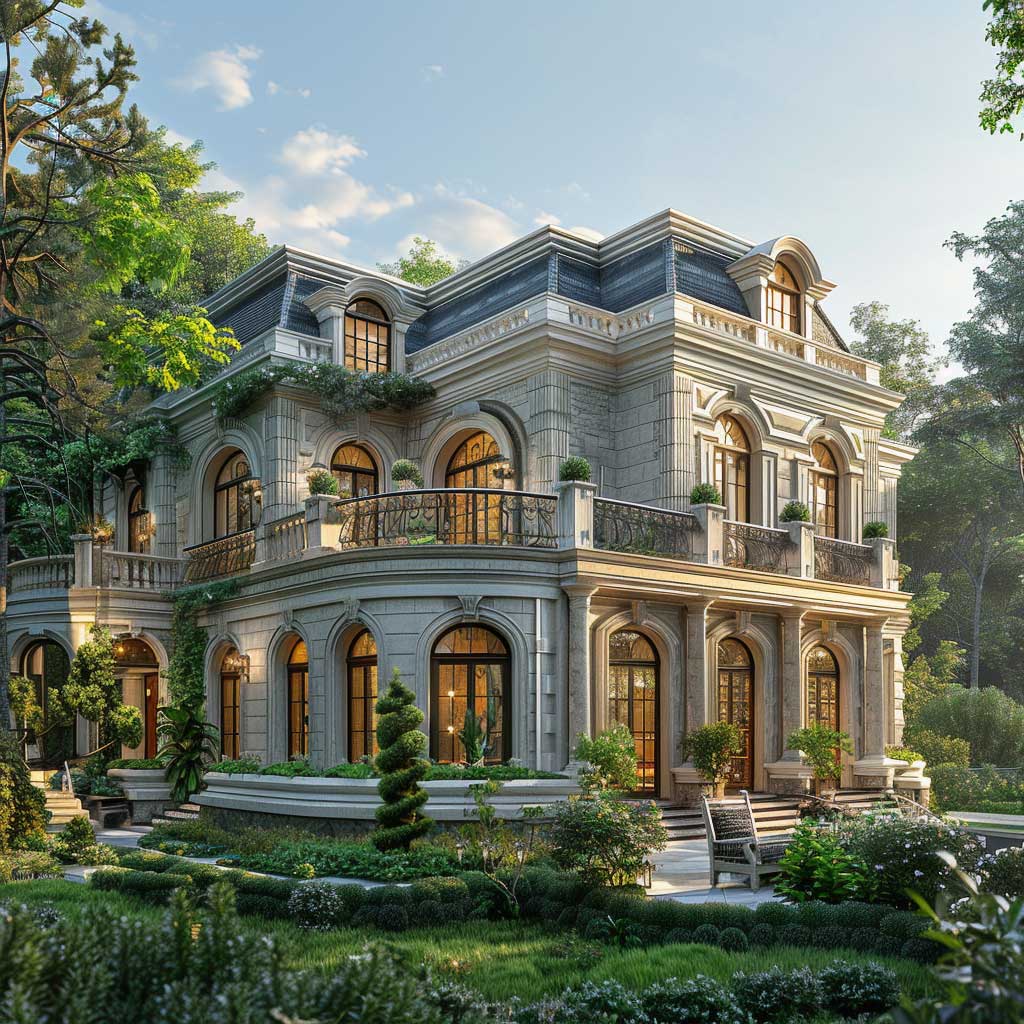
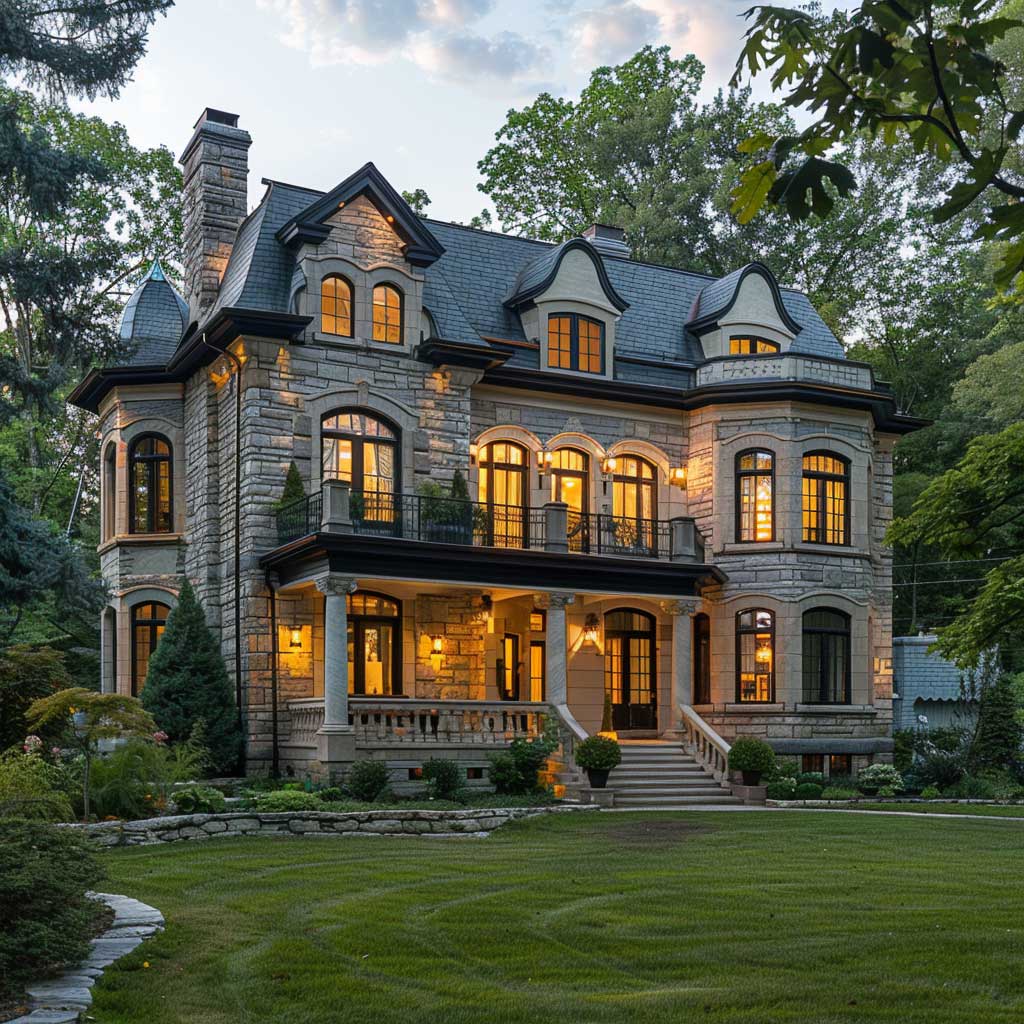
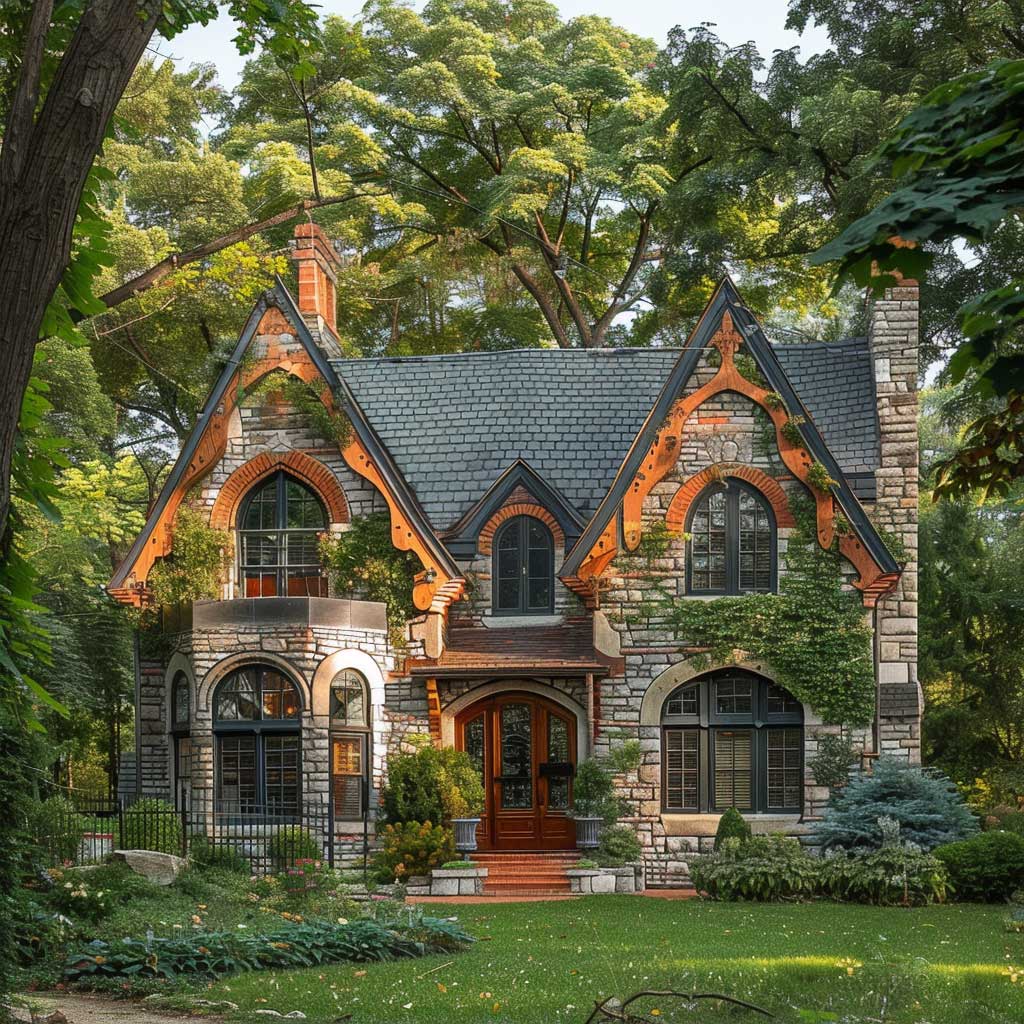
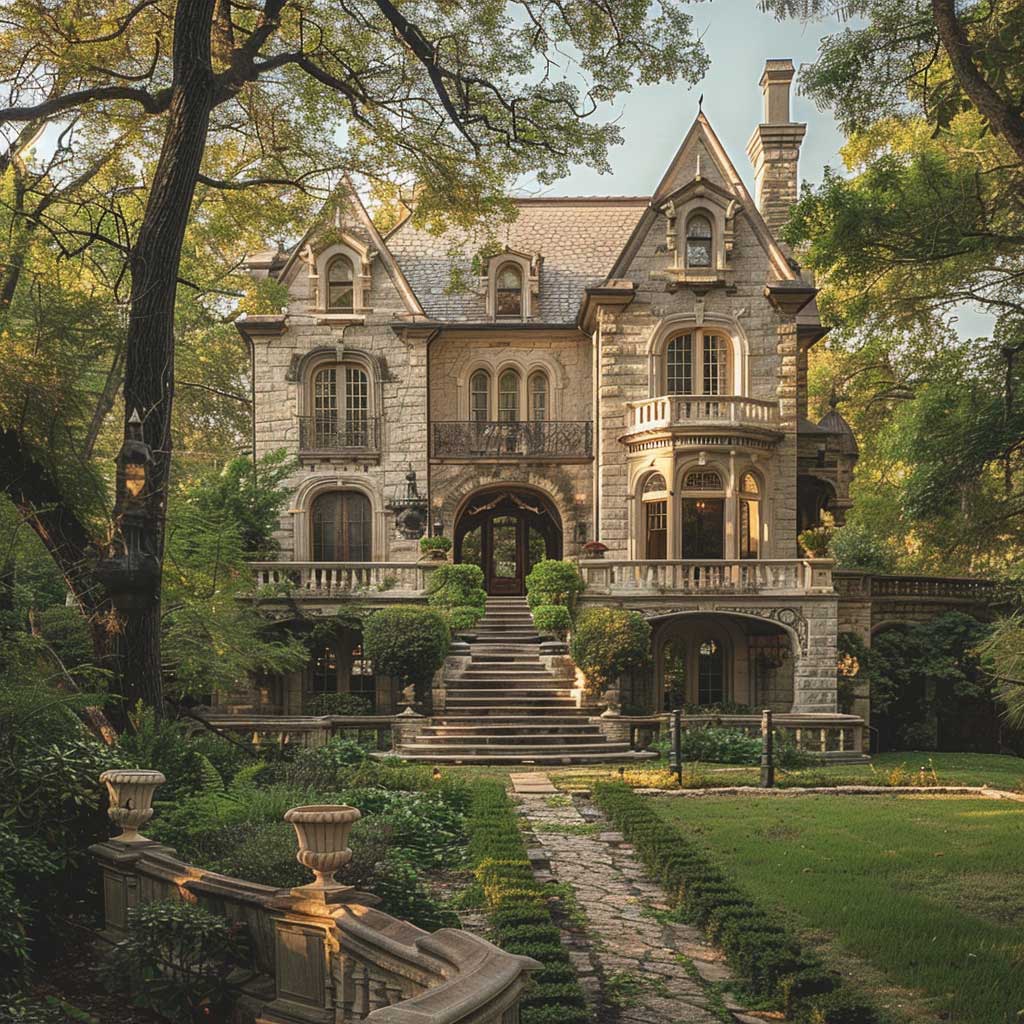
Light changes the personality of forest green across the day, much like a wooded path looks darker beneath a canopy than it does in open sun. This makes a green painted house especially dependent on orientation and nearby trees. A muted gray-green can keep the facade composed where a saturated deep green would become visually dominant, so sample size and location matter as much as the named color.
What should be avoided? Do not select the darkest green simply because it looks dramatic in a small digital swatch. A facade magnifies undertones and shadows, so a color that feels balanced in a catalog can become nearly black beside dark roofing or dense vegetation. Use a large exterior sample and compare it against the roof, stone, paving, and permanent trim before committing.
Stone Gray Keeps the Exterior Quiet and Architectural
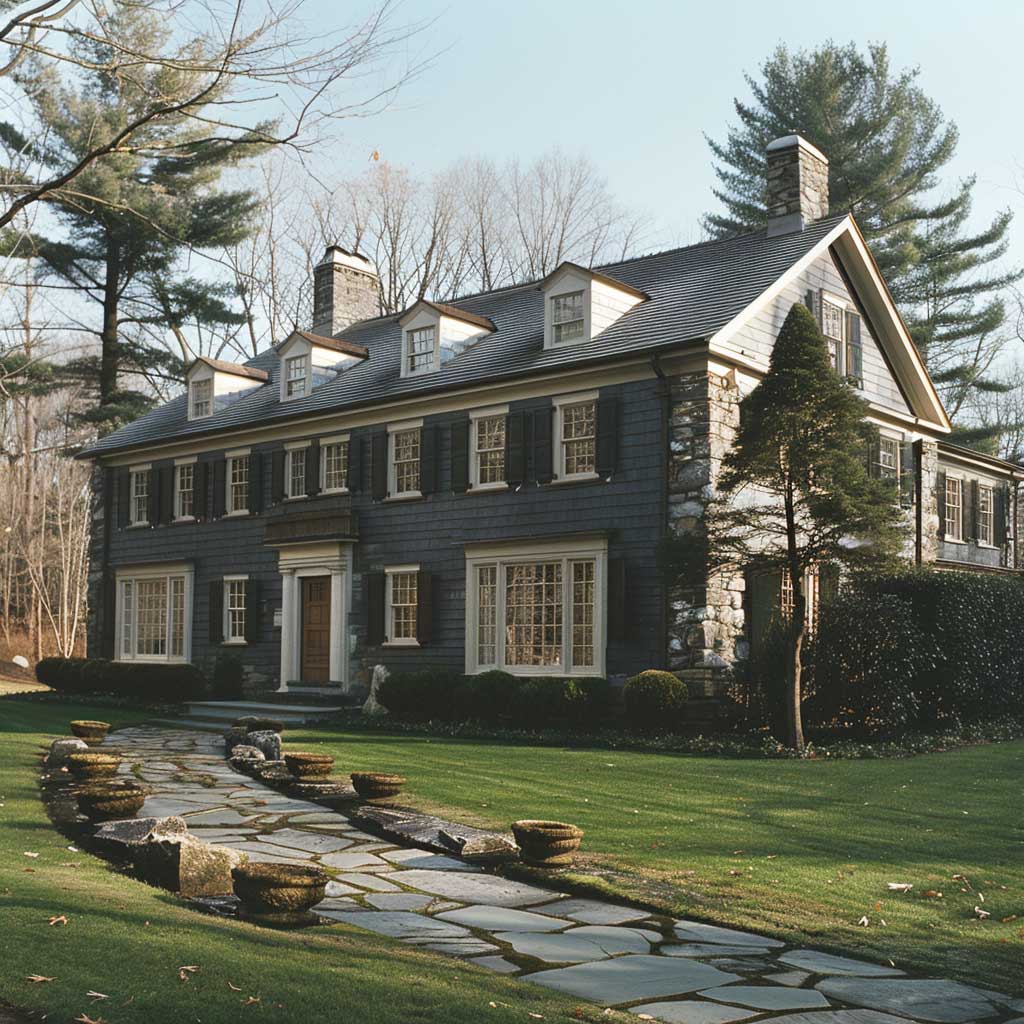
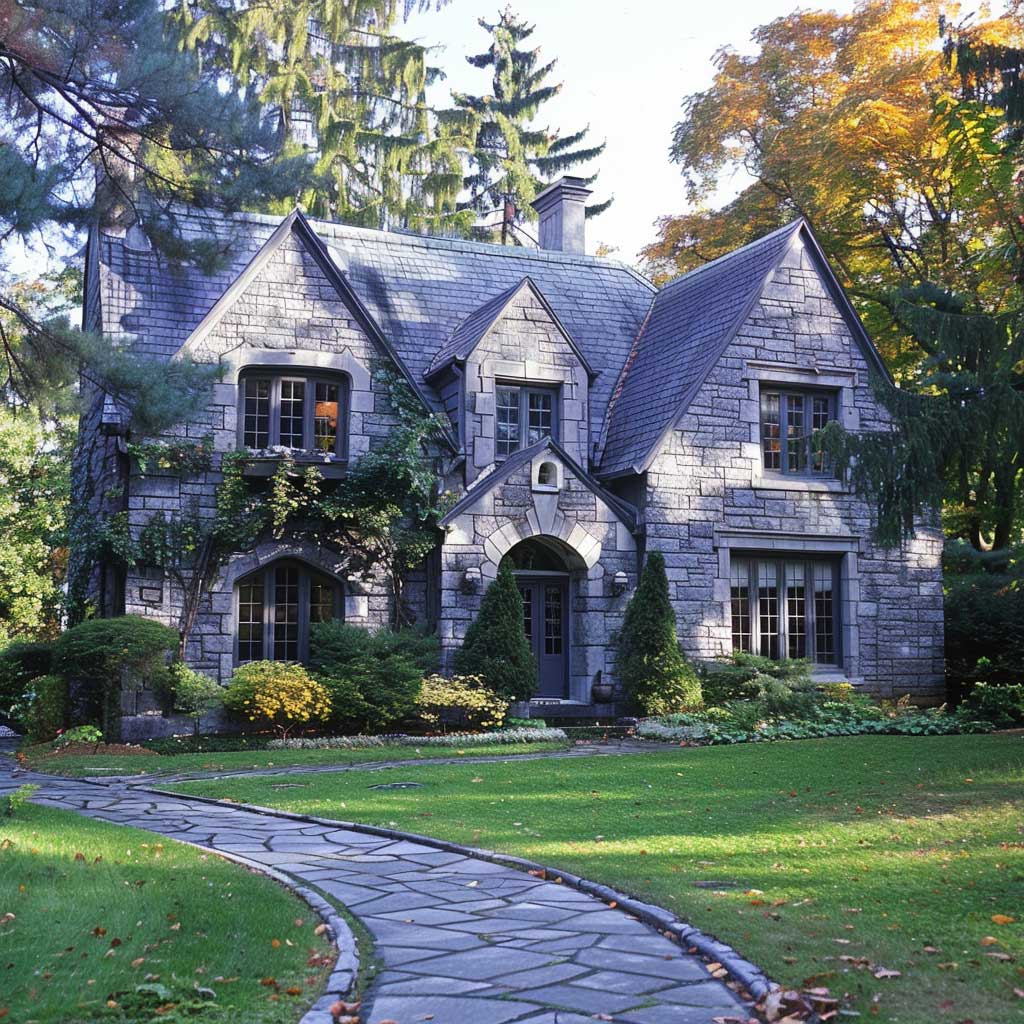
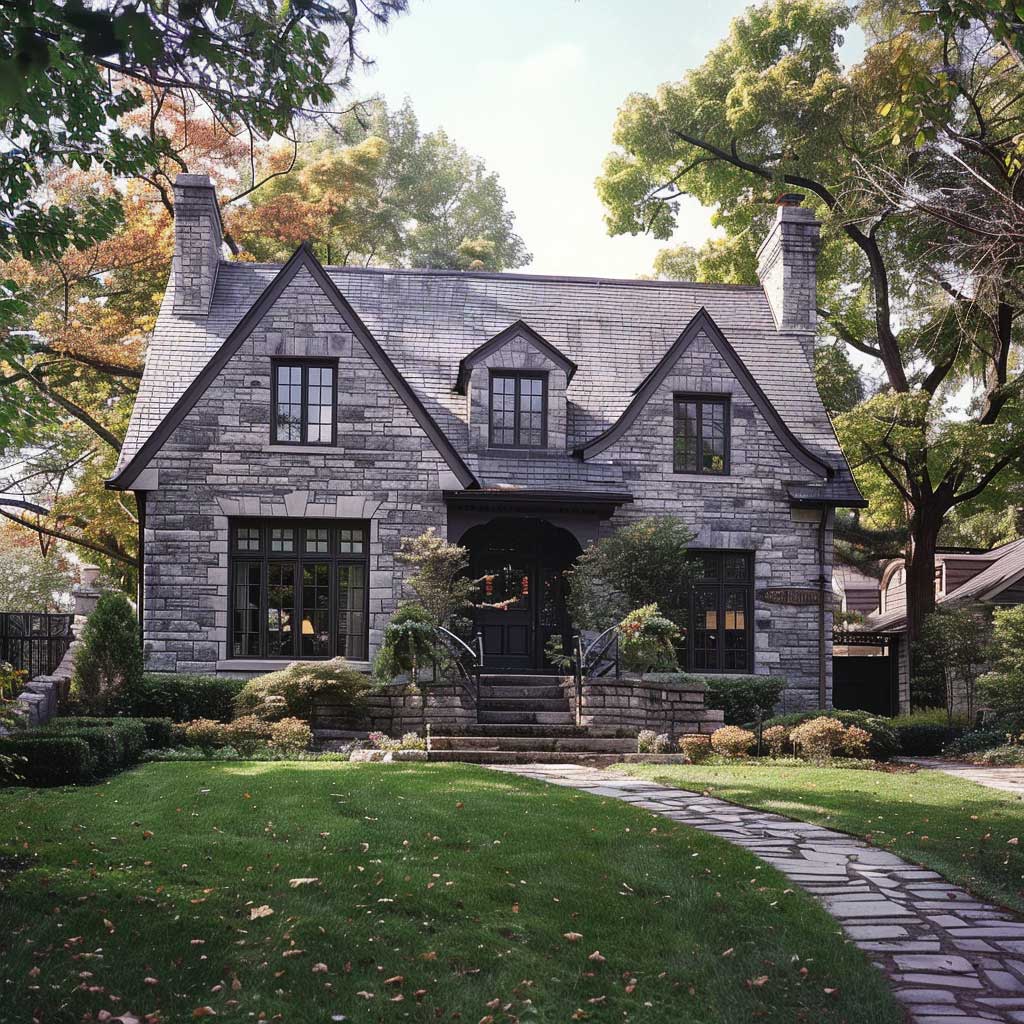
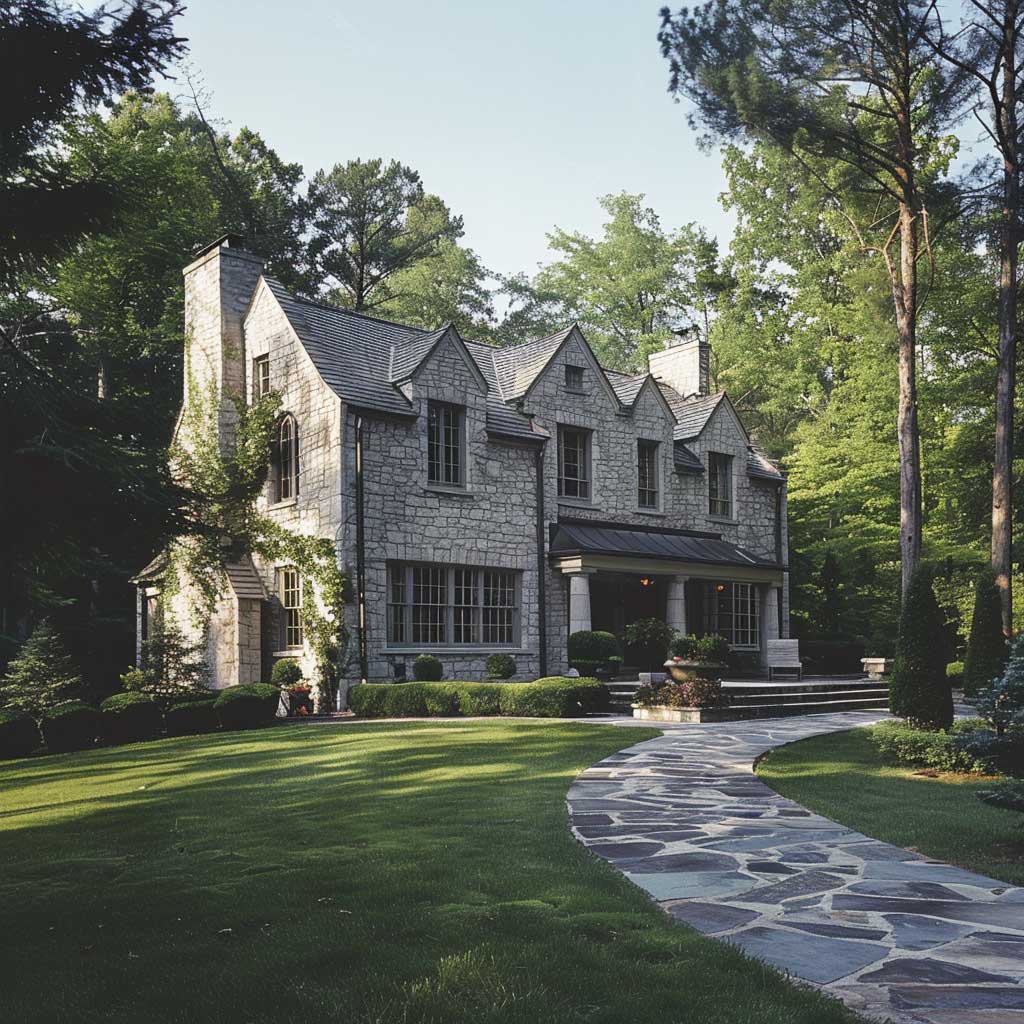
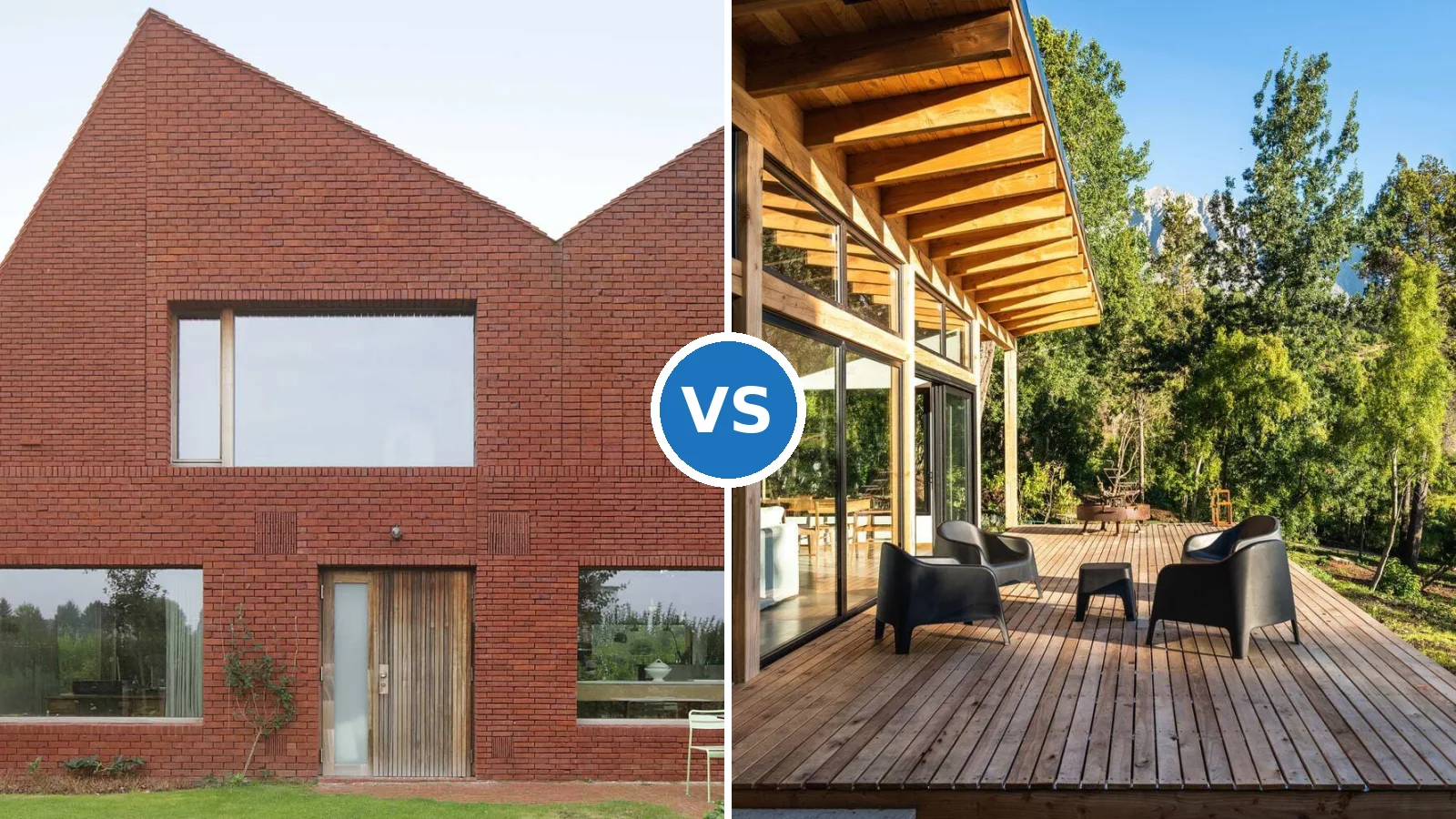
Stone gray exterior paint gives the composition a mineral anchor, especially when the property includes masonry, concrete, slate, or weathered stone. Unlike a very dark green, gray can recede visually and leave the architecture to carry more of the attention. The result resembles a stone wall beside a forest: the gray supplies structure while the green supplies depth and life.
Light reflectance is worth checking before choosing a gray because two shades with similar names can behave very differently outdoors. Benjamin Moore, for example, lists Capilano Bridge at an LRV of 39.89 and defines LRV on a 0–100 scale, giving a useful technical reference for judging how much light a color reflects. Does a gray need to be light to work? Not necessarily, but the darker the body becomes, the more carefully its contrast with trim and green accents must be controlled. Review the shade beside fixed materials rather than judging it alone.
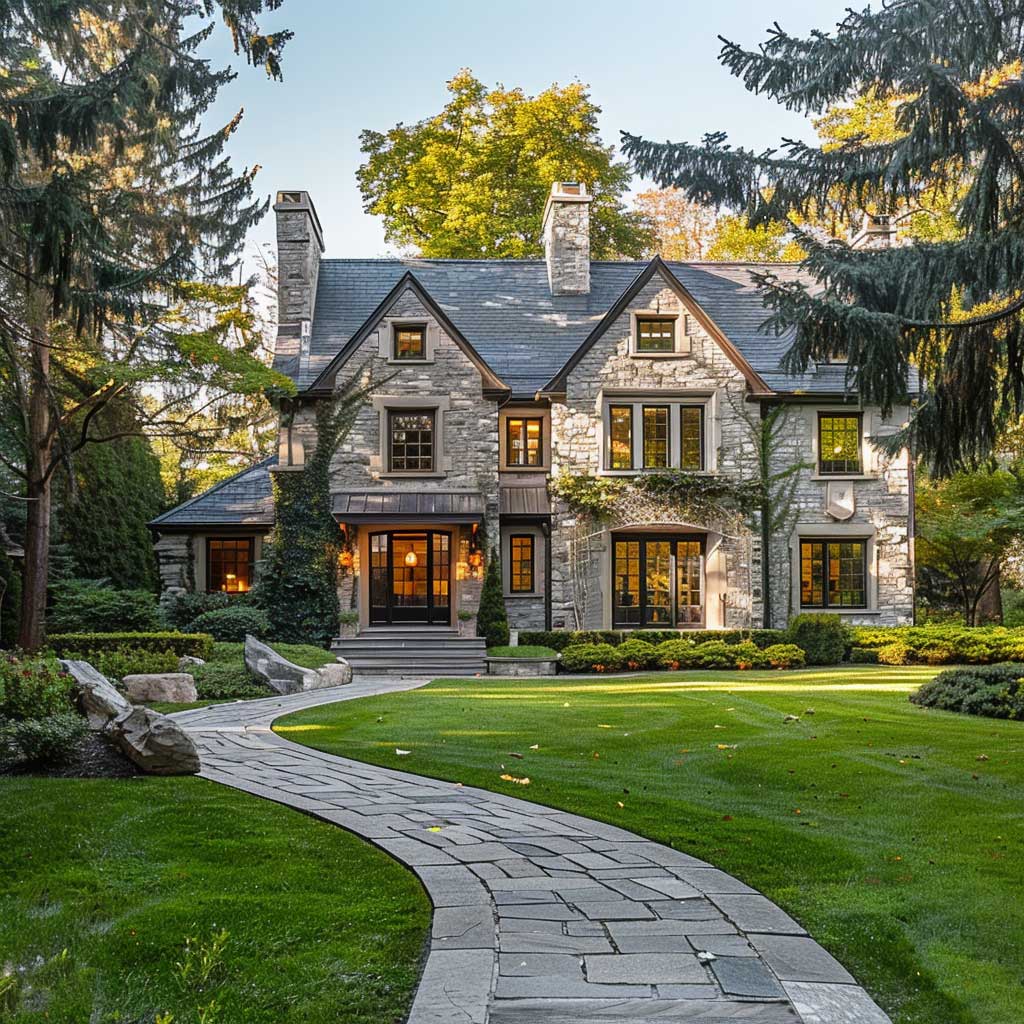
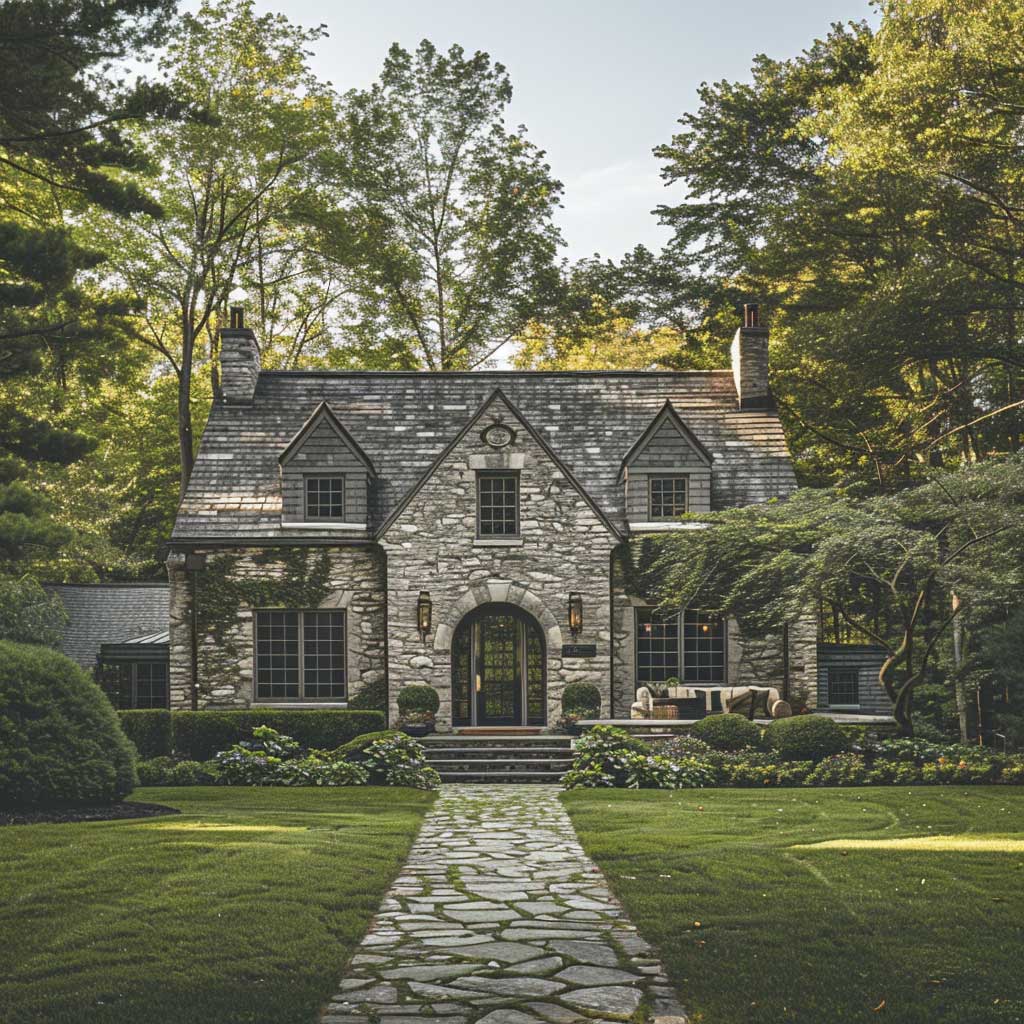
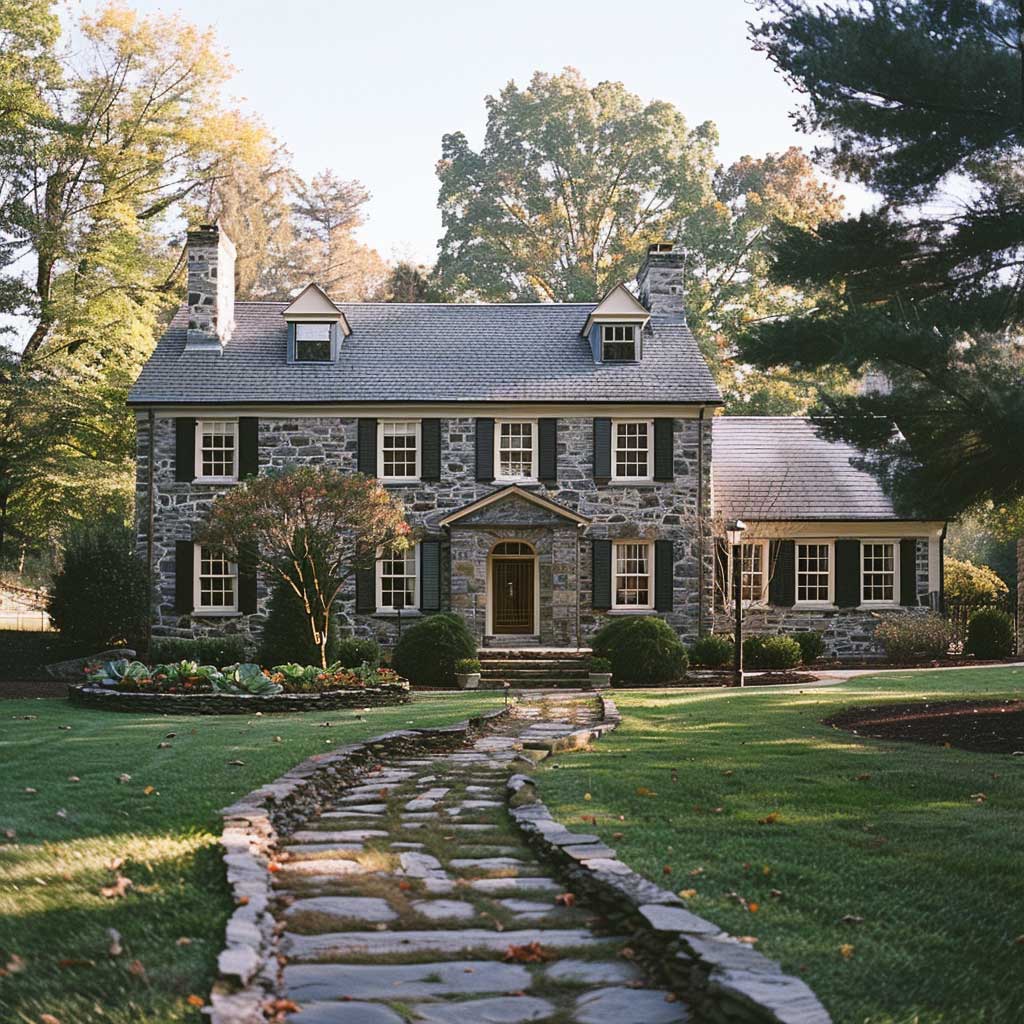

Gray becomes particularly useful when the house already contains several textures that should remain visible. A restrained stone-gray field can connect masonry, roofing, paths, and metalwork without forcing every surface into the same hue. If the gray leans too blue beside warm stone or timber, the facade may feel divided, so compare undertones at the actual building rather than trusting the label.
Do not assume that a neutral gray is automatically safe. Cool daylight can pull some grays toward blue, while warm afternoon light can reveal beige or taupe undertones. The practical test is simple: view a substantial sample at different times and keep the shade only if the relationship with the fixed materials remains convincing. For another look at exterior palette planning, see these house exterior paint colour combinations.
A Classic Facade Gets Its Edge from Forest Green and Stone Gray Outdoors Paint Colors
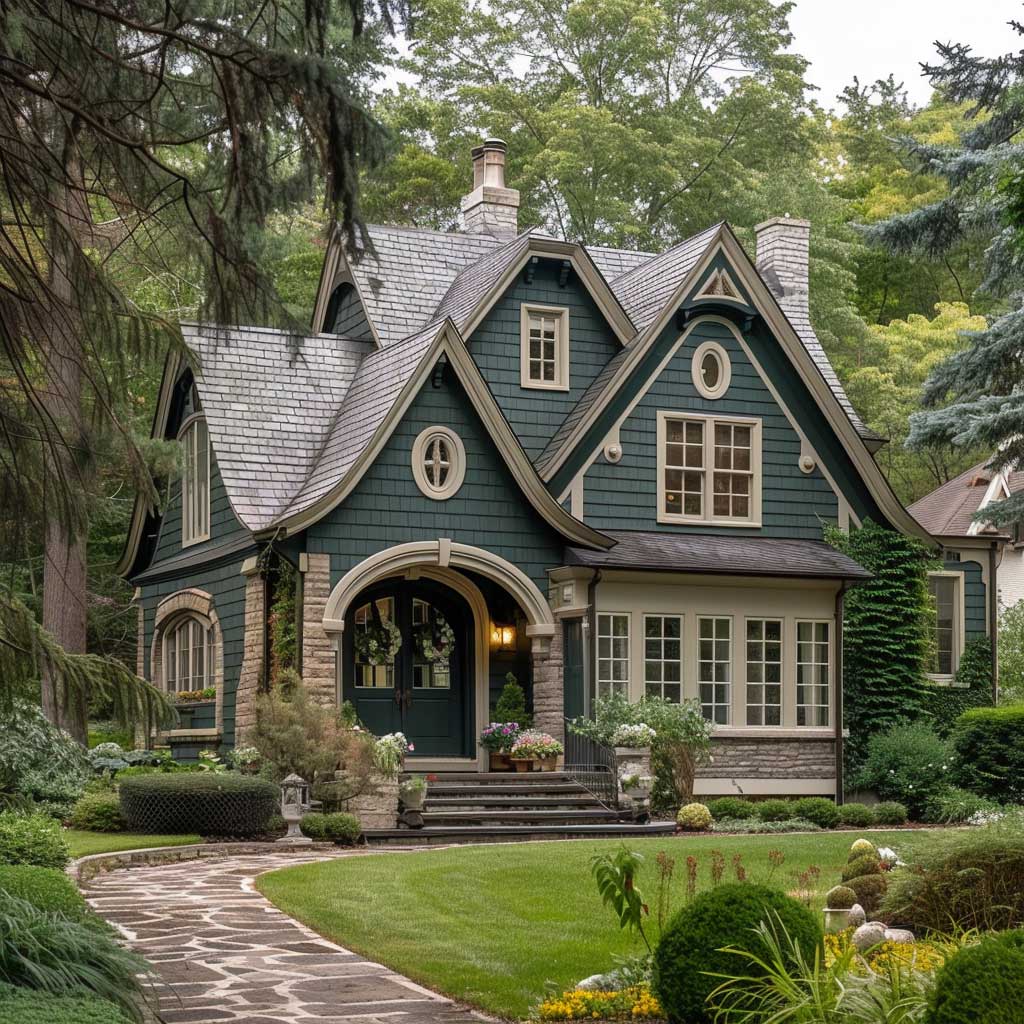
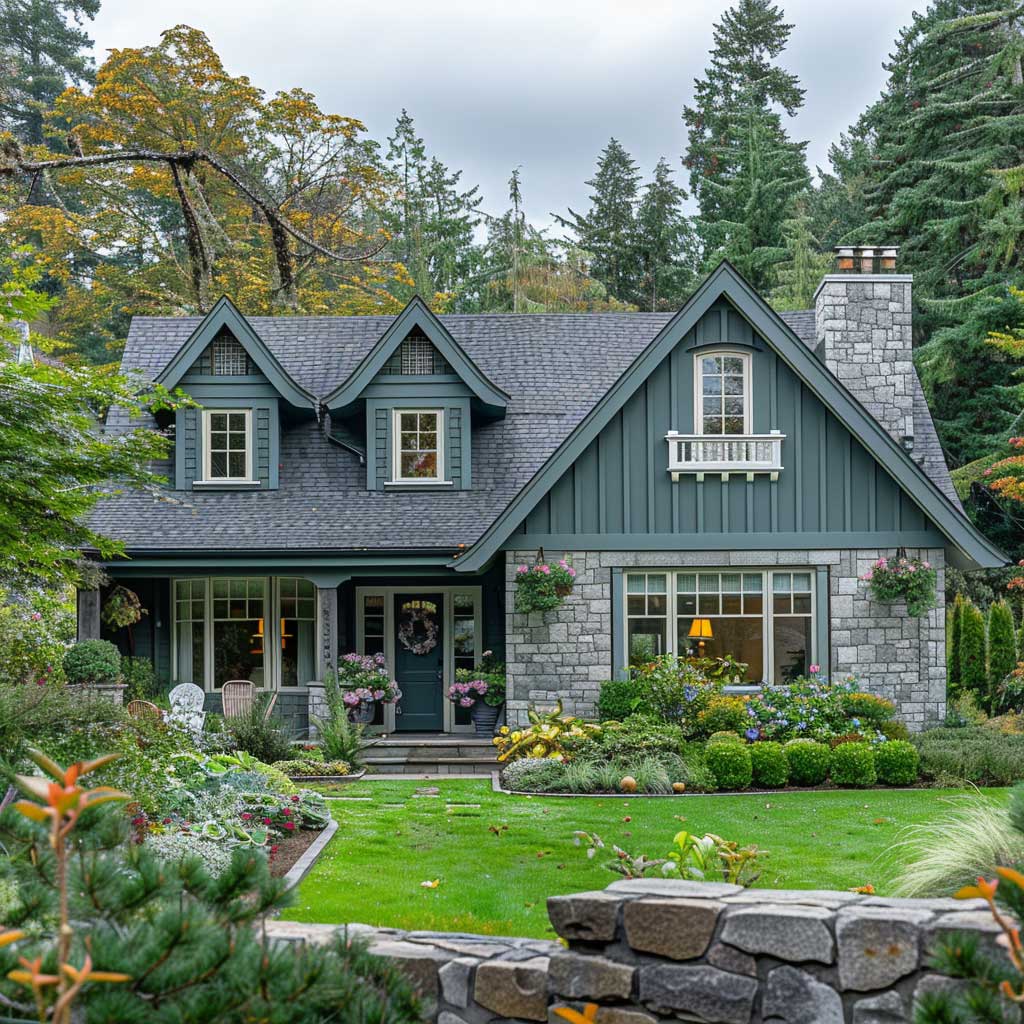
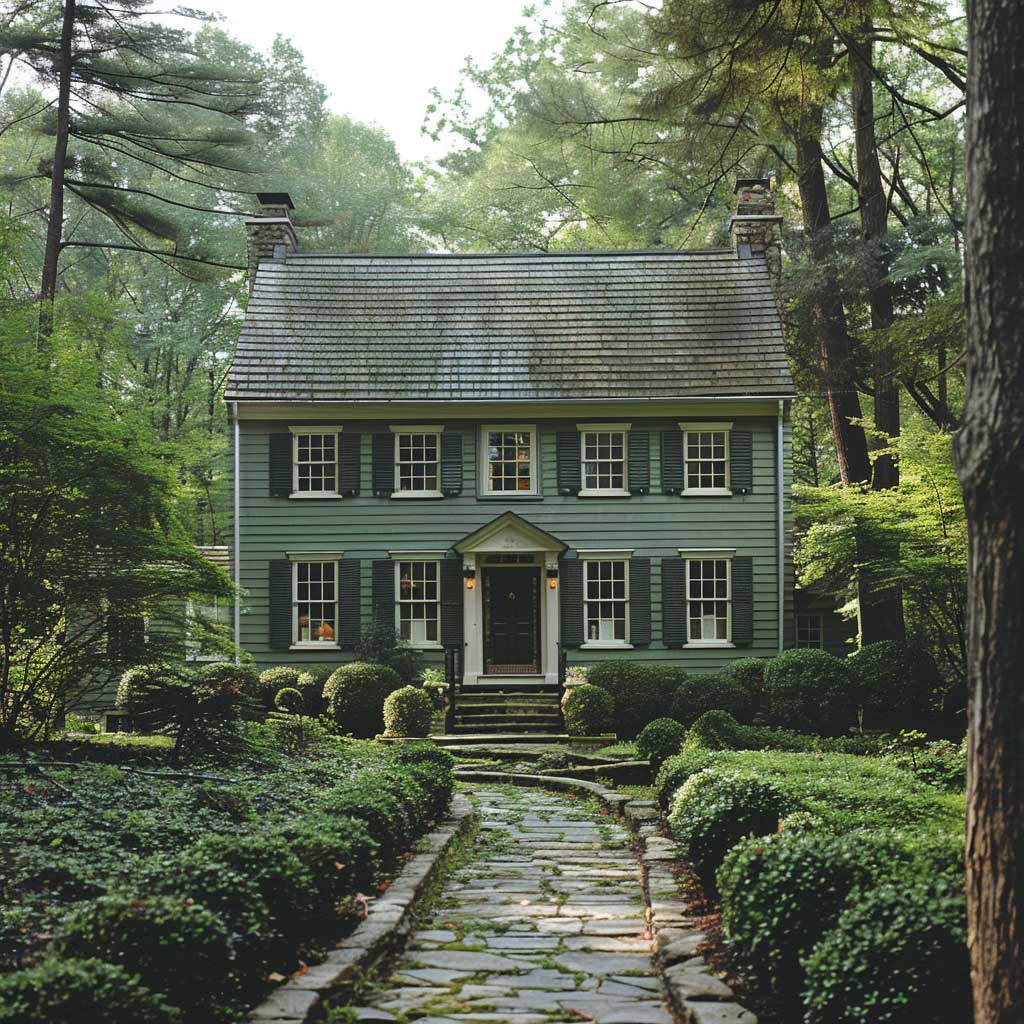
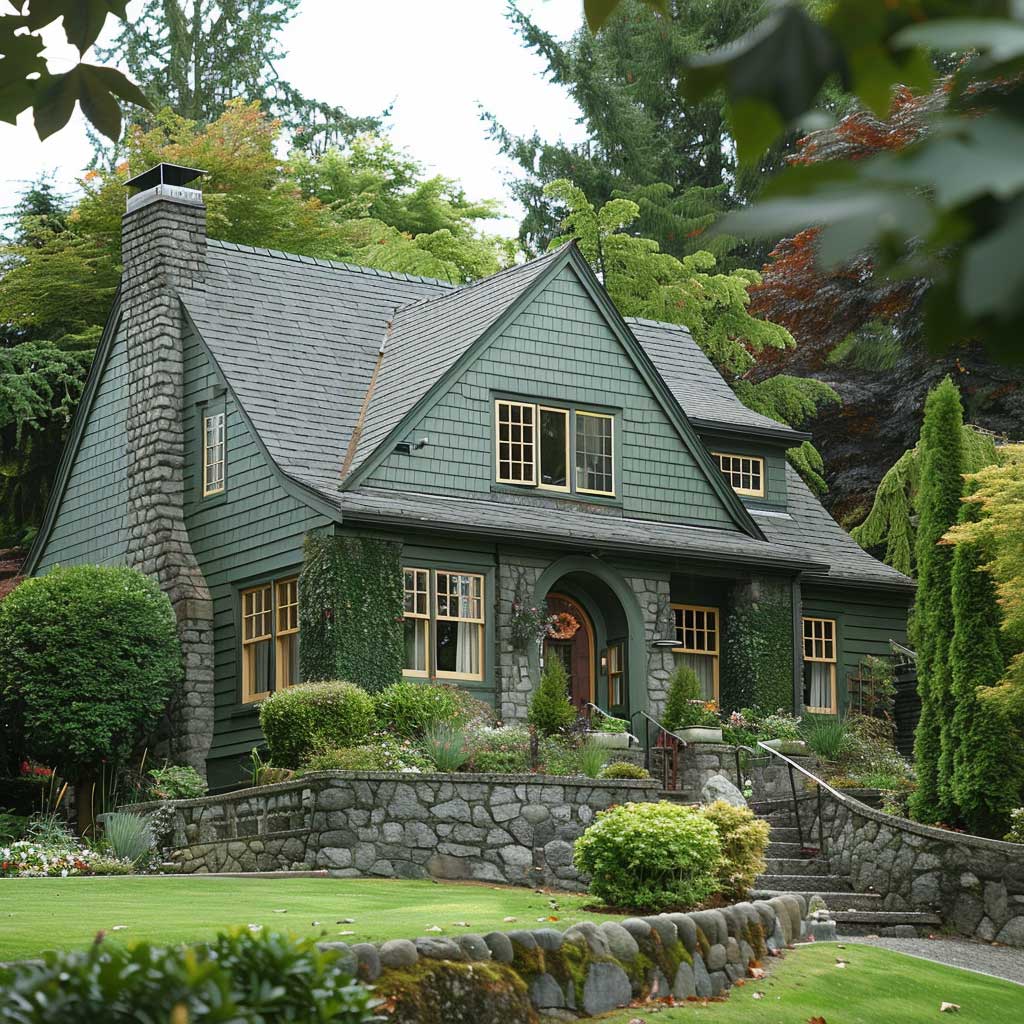
The green and gray exterior color combination works when each shade has a clear job: green supplies the visual mass or focal depth, while gray creates breathing room around it. This is especially effective when the architecture contains separate planes, trim bands, stone sections, or other elements that naturally divide the palette. A useful starting point is the 70/20/10 proportion often used for exterior color planning: dominant body, secondary trim or material, and a restrained accent.
Which color should dominate? For a wooded property, forest green can occupy the larger surfaces while stone gray supports trim, masonry, or secondary volumes; on a house with abundant stone or gray roofing, reversing the emphasis can make more sense. Think of the palette as a landscape painting rather than two paint cans placed side by side. The strongest result usually comes when one color clearly leads and the other explains it.

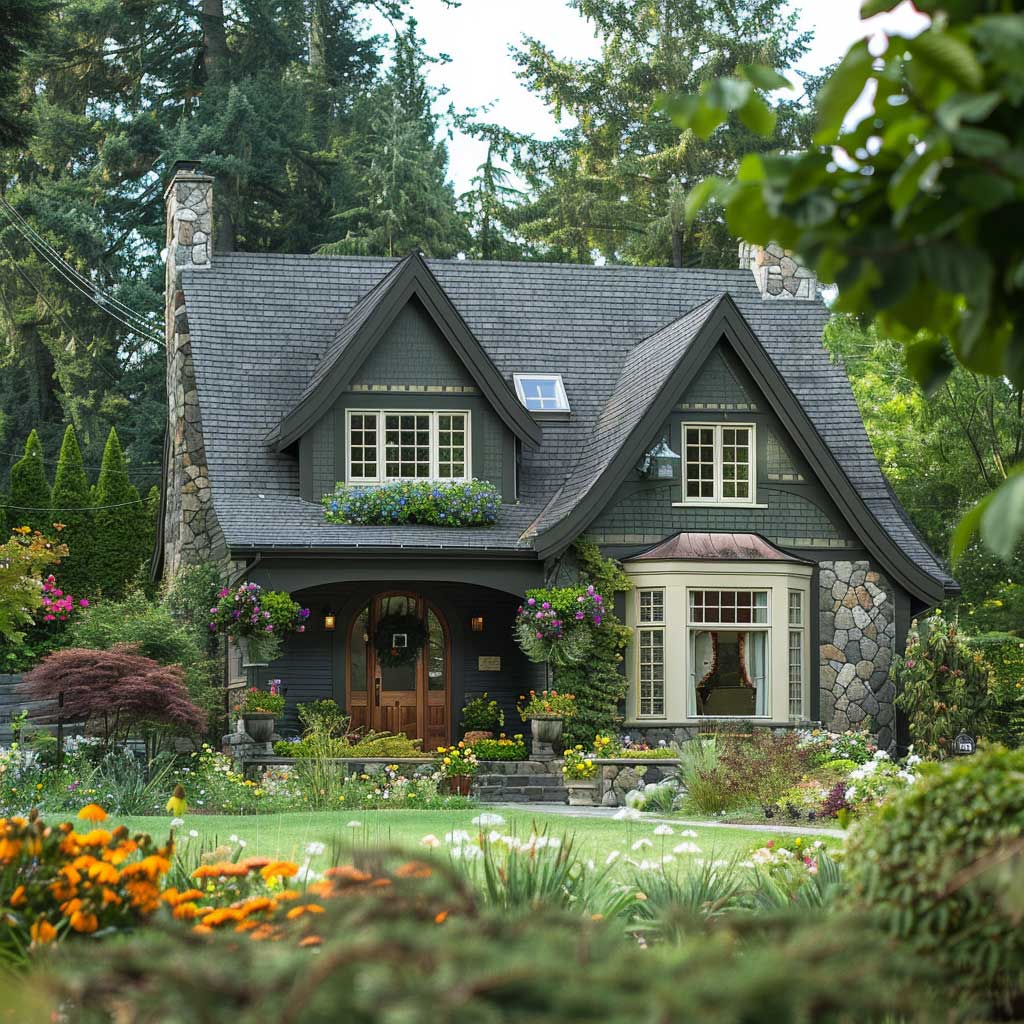
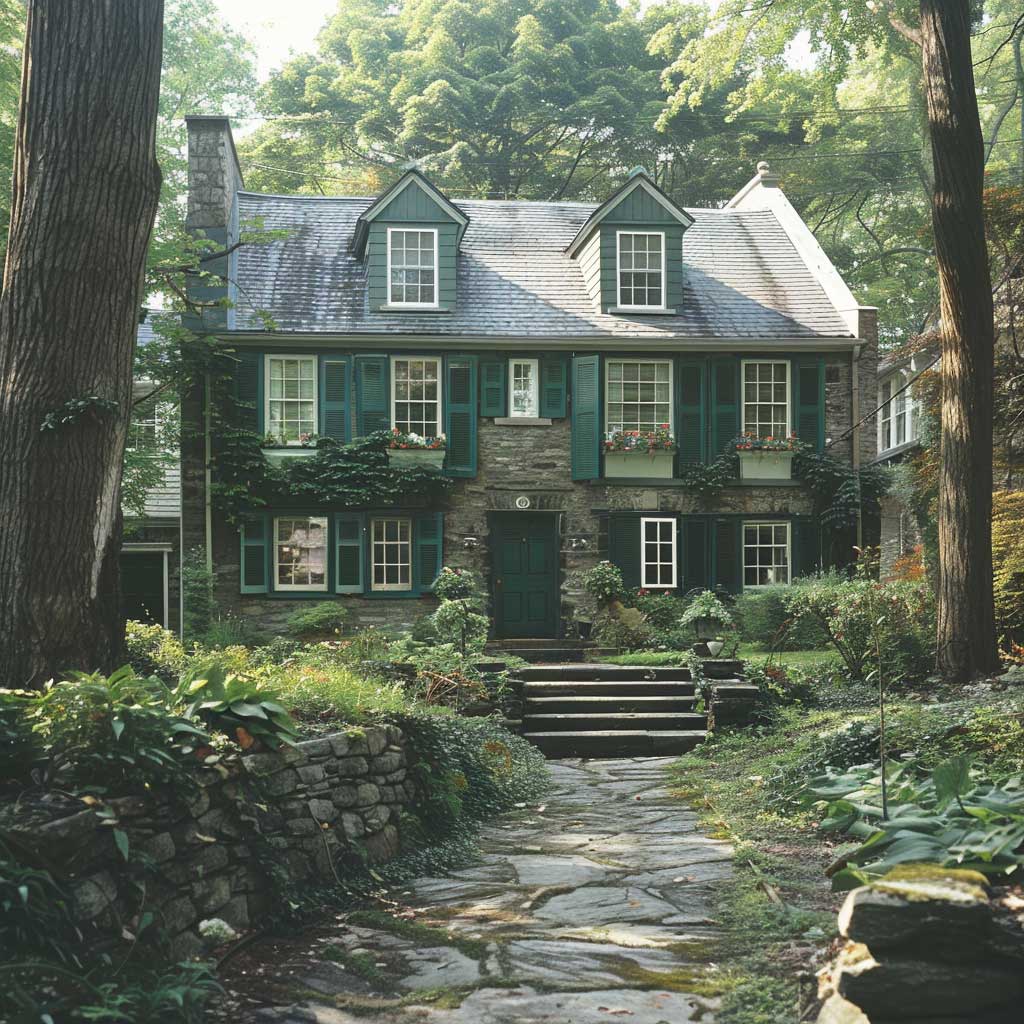
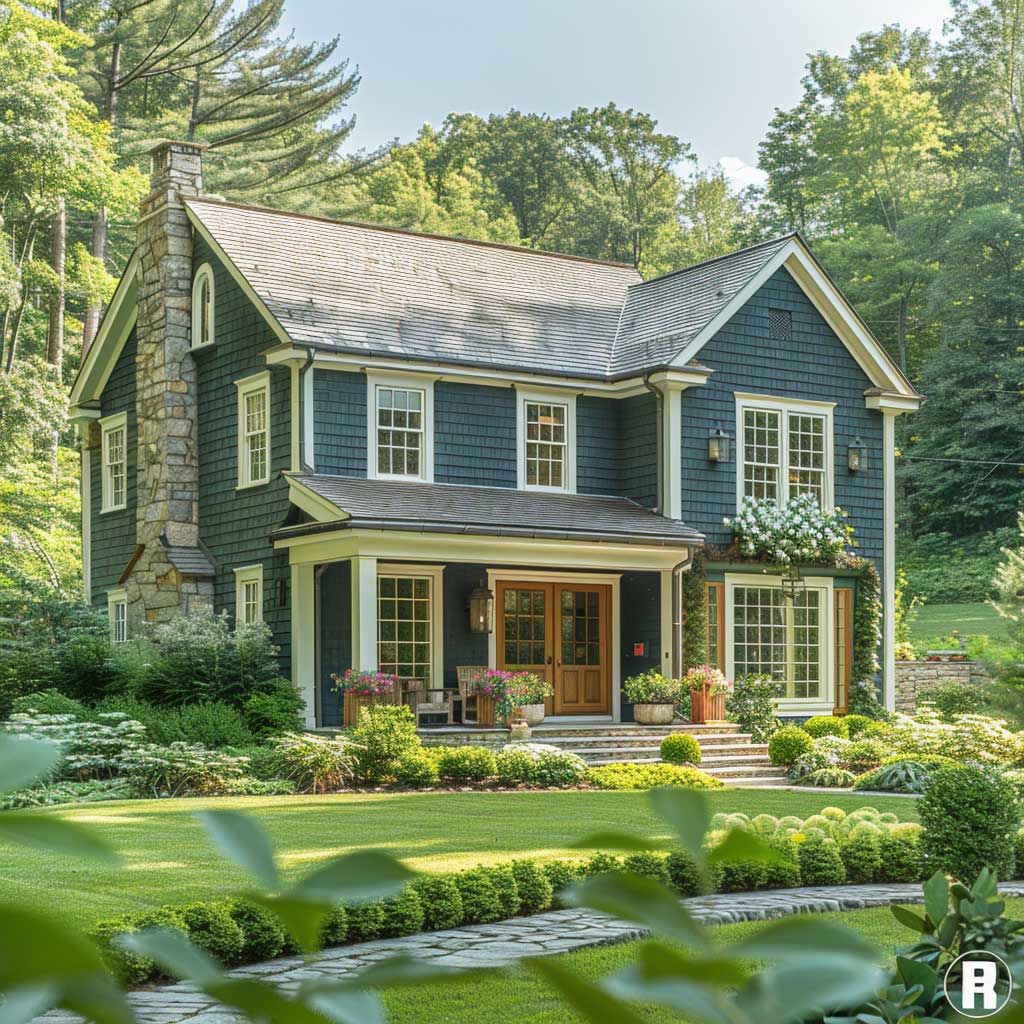
The relationship becomes strongest when the surrounding materials reinforce at least one side of the palette. Gray stone, slate, concrete, or metal can repeat the mineral note, while timber and planting can make the green feel intentional. If the question is how much contrast to use, start with the existing roof and masonry rather than adding a third paint color; the fixed materials already provide visual information.
Don’t Do This
Do not choose forest green and stone gray independently from the rest of the property. A dark green beside blue-gray roofing can become colder than expected, while a warm gray next to yellow-green paint can look muddy. Test the complete combination on the actual facade, inspect it in changing daylight, and keep accent colors limited so the main relationship remains clear.
- Check the roof, masonry, paving, and permanent trim before choosing either paint.
- Test large samples on more than one facade orientation.
- Compare the green and gray together rather than evaluating each shade separately.
- Reserve the strongest contrast for architectural features that deserve emphasis.
For technical color evaluation, Sherwin-Williams explains that LRV uses a 0–100 scale and notes that natural light changes how paint appears through the day. Its guidance also recommends considering orientation and undertones rather than judging a color under store lighting alone. Use that information as a final check after seeing the actual samples on the building.
THE TAKEAWAY
Forest green and stone gray can turn a simple exterior palette into a layered architectural composition.
Let one color lead and use the other to support structure, materials, and landscape.
Check undertones and LRV, then judge large samples in real daylight before ordering the full quantity.
The most convincing green-and-gray exteriors do not depend on dramatic color alone. They work because the palette follows the architecture, repeats tones already present in the property, and leaves enough contrast for windows, trim, stone, and landscaping to remain readable. Choose the relationship first and the exact paint shade second.