Industrial farmhouse decor works because it refuses to pick a side. You get the warmth of distressed wood and the raw edge of blackened steel in the same room, and somehow it doesn’t fight — it settles. I’ve redesigned three rooms using this approach, and every time the formula holds: one material grounds, the other sharpens. Pull it off, and your space reads less like a catalog and more like a place someone actually lives in and loves.
The style sits at the crossroads of rustic industrial decor and modern farmhouse restraint. That crossroads is exactly where the friction lives — and where it gets interesting. You’re not decorating a barn. You’re not decorating a loft. You’re doing both at once, on purpose.
Quick Scan
- Industrial farmhouse decor blends reclaimed wood, raw metal, and neutral palettes — no barn kitsch required
- The living room anchors the look; aged wood coffee tables + matte black metal frames do the heavy lifting
- Kitchens: open metal-pipe shelving over white subway tile is the ratio that works
- Bedrooms go softer — wrought iron frames, linen neutrals, exposed brick as a backdrop
- Lighting is load-bearing: Edison cage pendants over dining tables change the room’s entire personality
- Palette: soft gray, creamy white, raw wood. Nothing else needs to be on that list
- Avoid the windmill signs and “gather” scripts — they signal a dated version of this style
The Living Room Is Where Industrial Farmhouse Decor Either Lands or Falls Flat

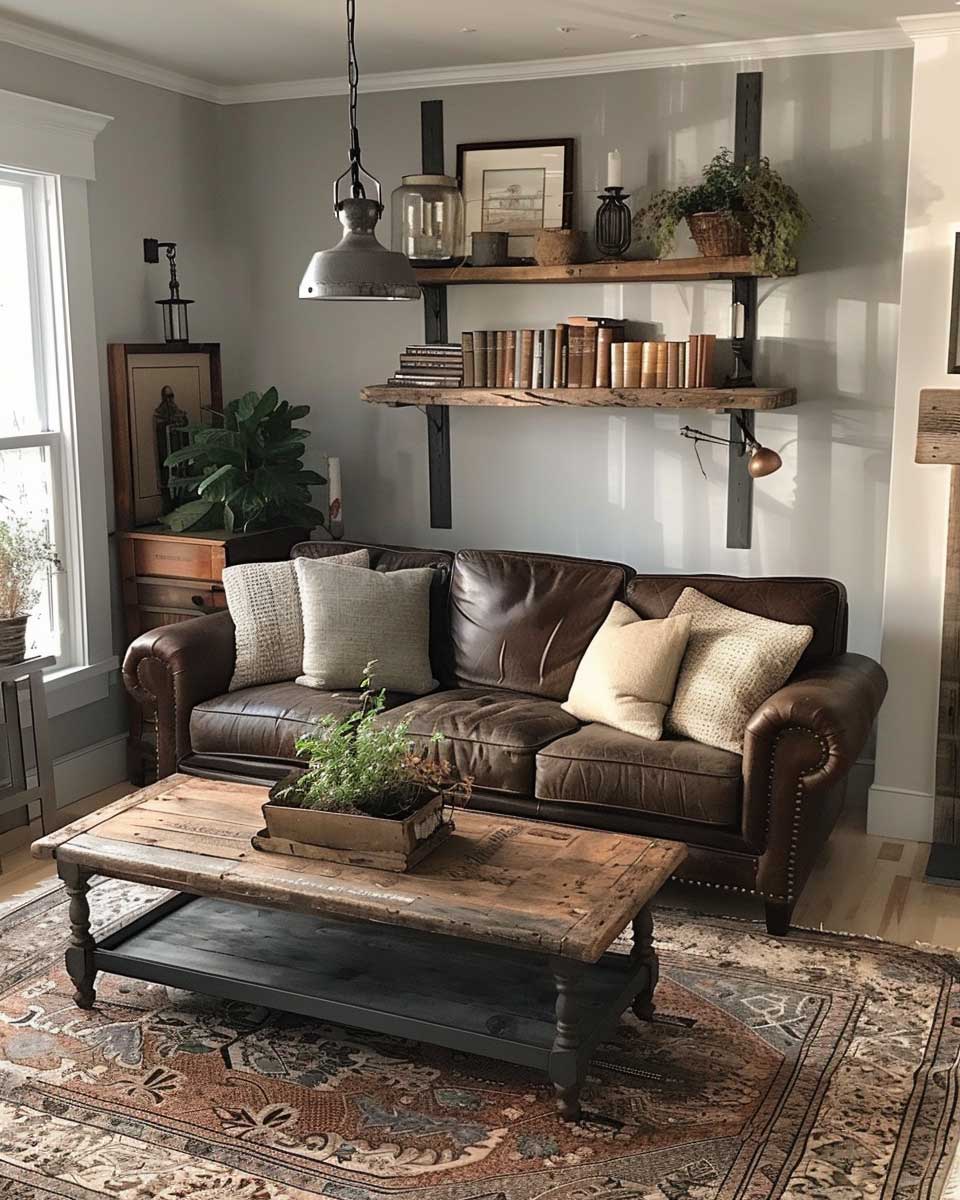

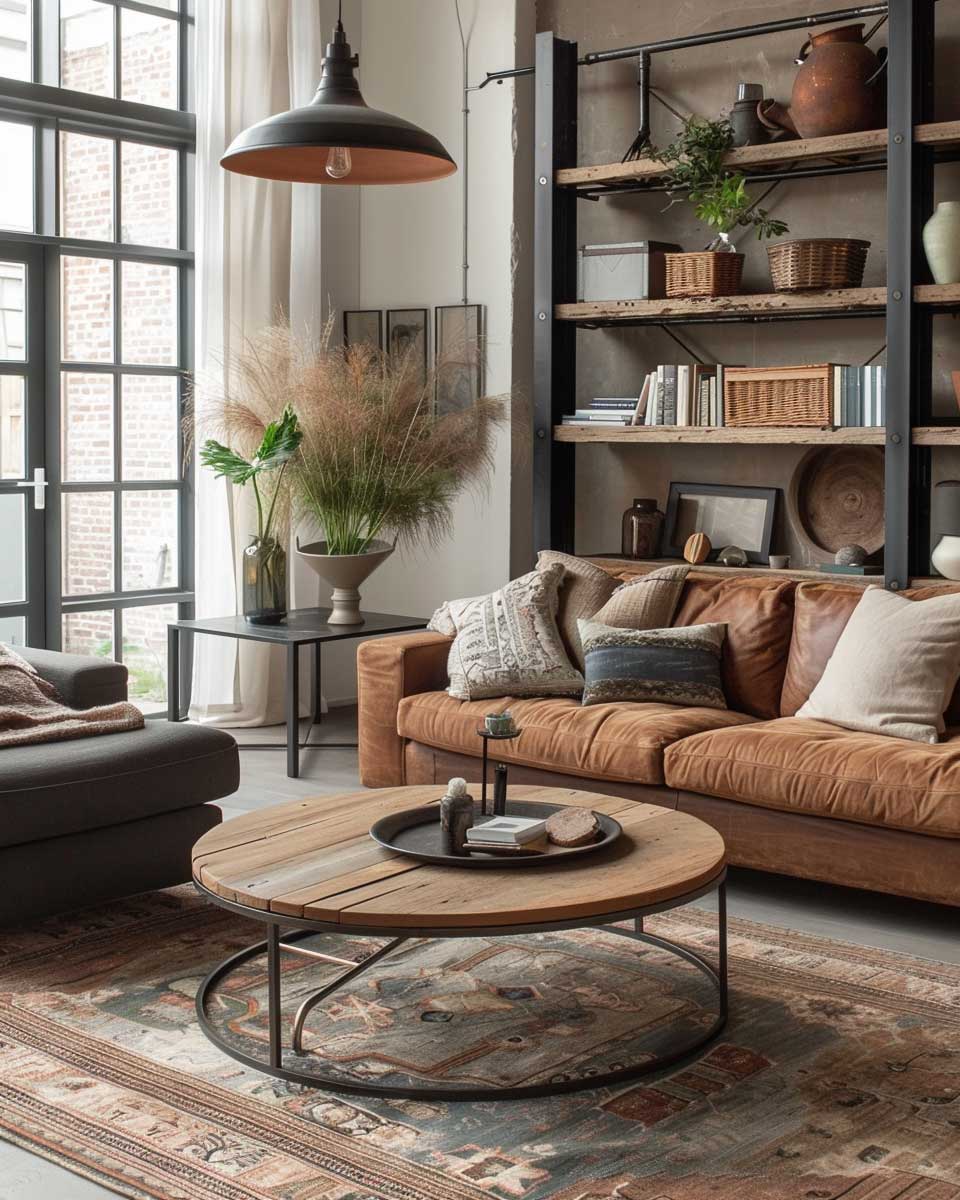
Start with the coffee table. I own two of these — both distressed wood with matte black metal legs — and they are the single piece that made everything else make sense in each room. CB2’s Spoke table runs around $599 and anchors the farmhouse rustic industrial decor vibe without screaming “theme.” The legs do the industrial work; the wood does the warmth. That’s the formula.
Pendant lighting is not optional here. Cage-style pendants with Edison bulbs — from brands like Kichler or the more budget-friendly Globe Electric — hang over the seating zone like punctuation at the end of a sentence. They cast the kind of amber glow that makes distressed finishes read as intentional rather than worn-out. You’ll notice the whole room tightens up the moment the right pendant goes in. I stole this trick from a Houzz photo I saved three years ago and still use it every time.
Bookshelves and side tables with reclaimed wood tops and pipe-style metal frames layer in without competing. What doesn’t work: mixing too many metal finishes. Brass next to matte black next to brushed nickel looks like indecision, not eclecticism. Pick one metal finish and repeat it across light fixtures, hardware, and frame accents. My go-to is matte black — it reads modern against raw wood without leaning too cold.
Greenery earns its place here. Trailing pothos or a fiddle-leaf fig on a reclaimed wood shelf breaks up the hard-material weight of the room — the contrast of green against gray metal is genuinely striking. One trailing plant does more than five decorative objects. Antique finds on open shelves add a story layer, but limit them. Three vintage pieces with breathing room beat a crowded shelf every time. Think of it like a good sentence: fewer words, more meaning.

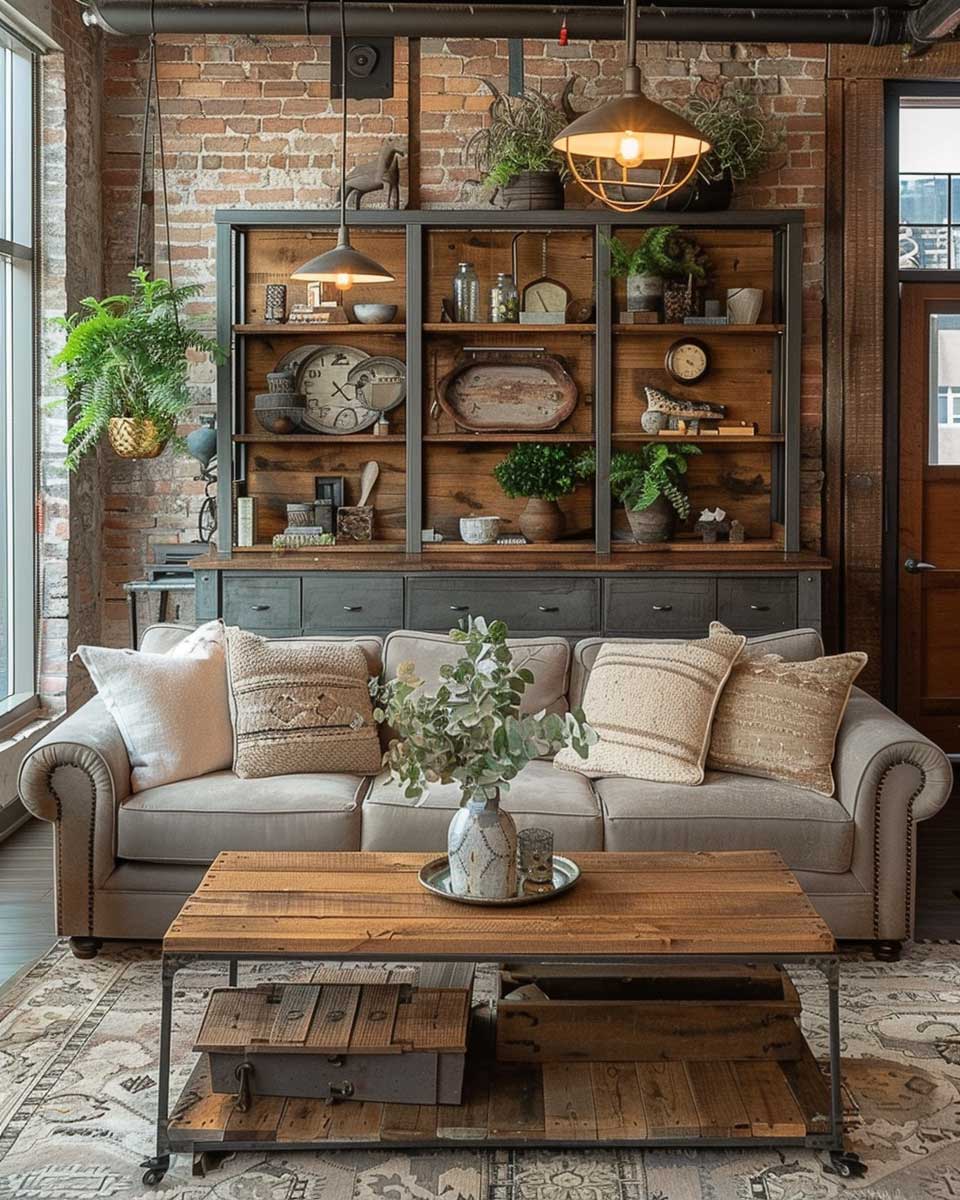


The palette for all of this: soft gray walls, creamy white trim, and raw wood. Nothing else needs to compete. This isn’t a canvas for color — it’s a backdrop that makes the textures do the work. When people ask me why their living room feels busy despite having nice pieces, it’s usually because there are too many competing paint tones pulling focus. Neutral and committed is always sharper than neutral and undecided.
You want your room to feel like it evolved, not that it was assembled in a weekend from one retailer. The farmhouse and industrial decor combination rewards mixing timelines: a $1,200 sofa from Article alongside a $45 vintage find from an estate sale. That tension between new and old is not a mistake. It’s the point. More on building that industrial chic layering approach here.
Room by Room — How the Farmhouse Industrial Style Shifts Without Losing the Thread


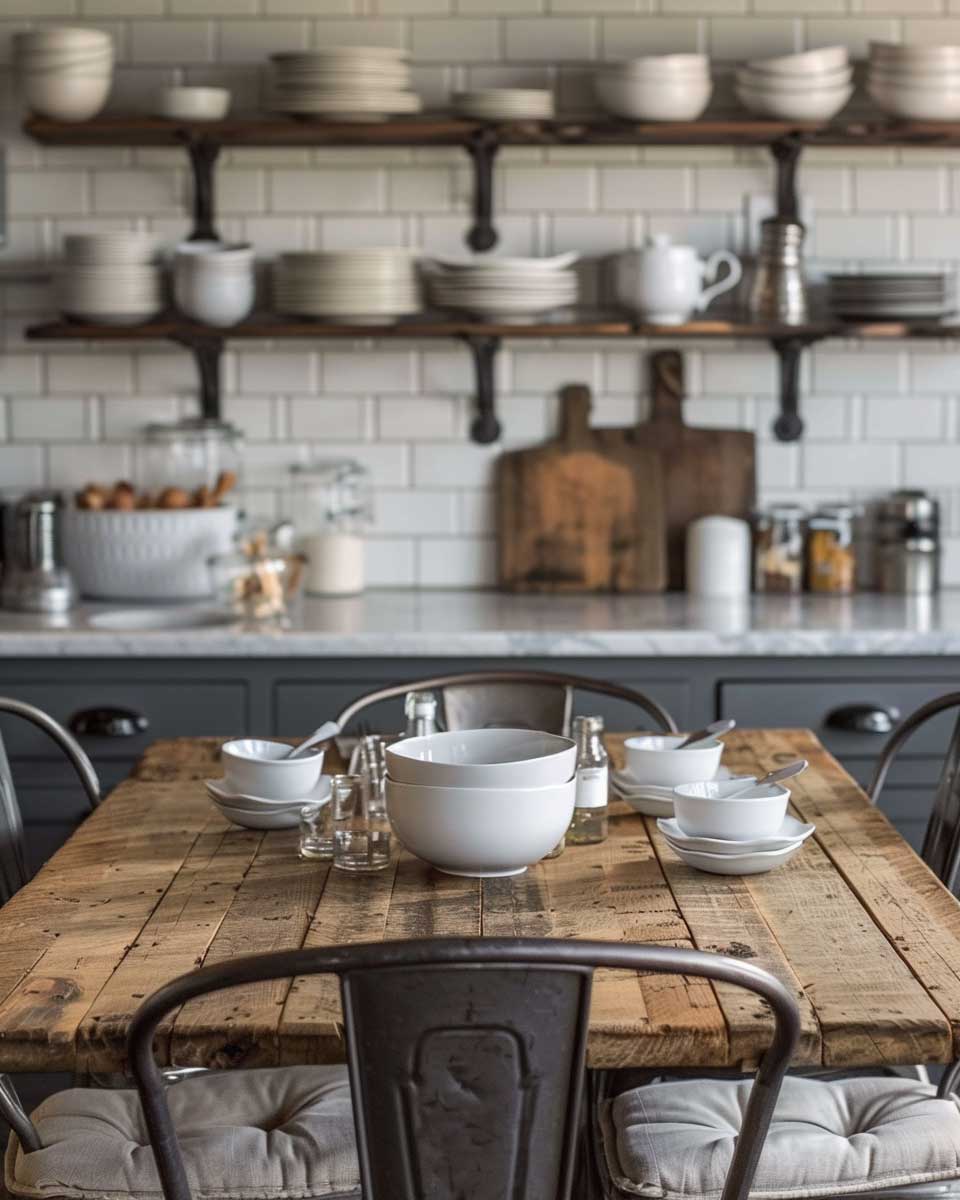
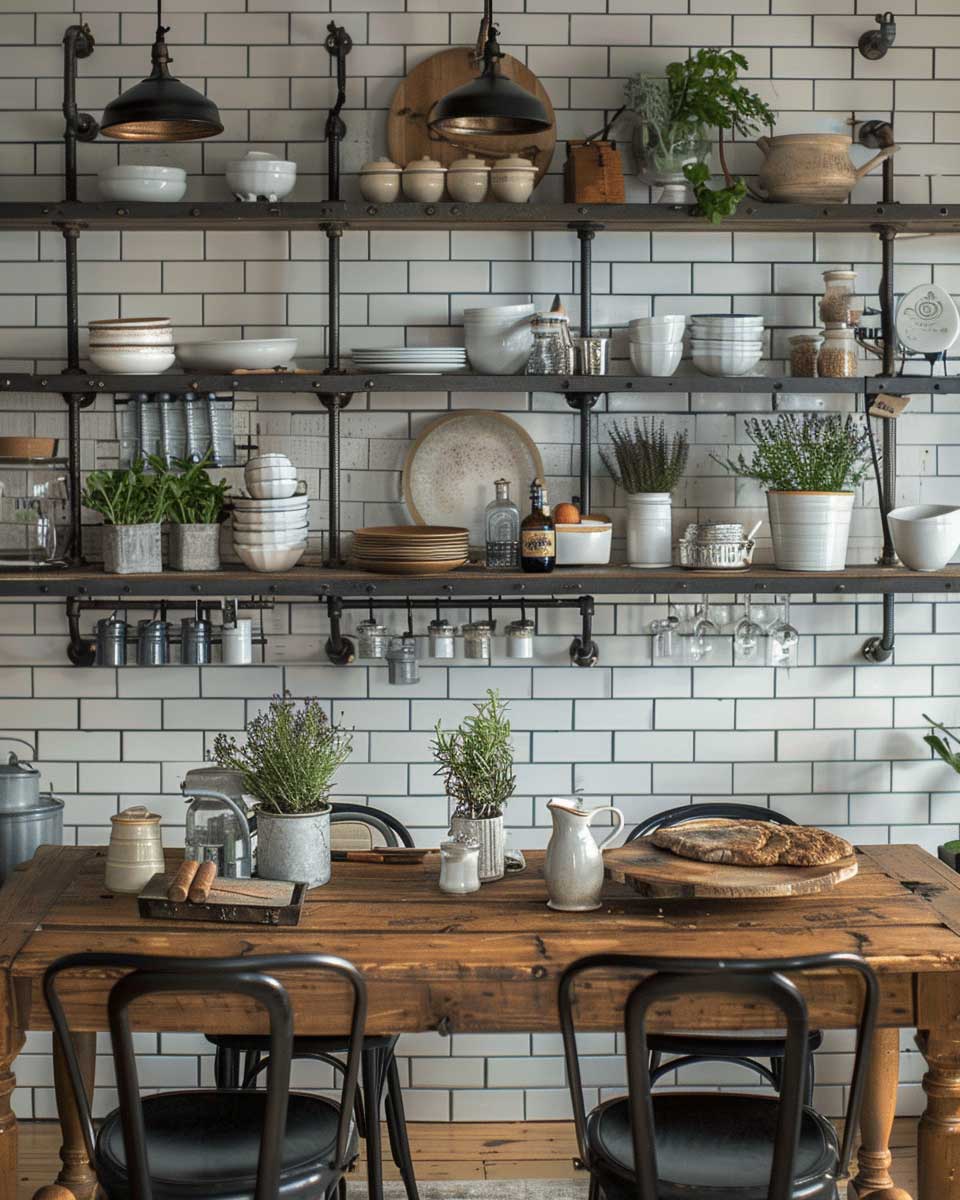
The kitchen is where industrial farmhouse decor ideas get their most practical expression. Open shelving built from black iron pipe and reclaimed wood — a setup you can DIY for under $150 in parts from Home Depot — displays your ceramics against white subway tile with an effortlessness that actual kitchen cabinets can’t replicate. Dishes become objects when the backdrop is right. I’ve seen this in three different kitchens and the effect doesn’t get old.
For the dining zone, a solid reclaimed wood farmhouse table paired with matte black metal bistro chairs is the combination that carries the most visual weight. IKEA’s KULLABERG chairs at $79 each do the industrial job without the artisan price tag. Overhead: a vintage industrial chandelier or a cluster of cage pendants. Don’t attempt the farmhouse table with matching farmhouse chairs — that tips into country kitchen, which is a different aesthetic entirely.
Bedrooms dial down the industrial signal and lean into the farmhouse warmth. A wrought iron bed frame — I recommend the Zinus Florence at around $250 — against exposed brick or a plank wall gives you the industrial nod without making the room feel like a converted factory floor. Natural linen in oat or warm white drapes over it. Add one metal bedside lamp and you’re done. What doesn’t work here: too many metal accent pieces. The bedroom is where the farmhouse wins and the industrial retreats gracefully.
Don’t Do This
Buying a “farmhouse decor bundle” from a big-box store is the fastest way to kill this aesthetic. Pre-matched sets — coordinated throw pillows, a matching coffee table, a wood sign that says “farmhouse” — flatten the entire look into something that reads staged rather than lived-in. The style depends on visual tension between materials and eras. When everything was purchased in the same Tuesday afternoon, that tension disappears. Buy the anchor piece first, live with it for two weeks, then add one thing at a time. Also: stop buying “gather” signs and distressed windmill decor. Those have been shorthand for generic farmhouse since 2016 and they date a room instantly.


Even bathrooms absorb the farmhouse industrial decor style without looking forced. Metal-framed mirrors — the kind with a raw or blackened finish — above a reclaimed wood vanity is a combination Native Trails calls out as a core element of the style, and they’re right. The wood brings warmth to a space that’s all hard surfaces by nature. Add vintage-style exposed faucets in matte black and you’ve done more design work than most people do with a full renovation. Keep the wall tile simple: subway or large-format concrete-look tile. Patterned tile fights the materials instead of letting them breathe.
The coherence across rooms comes from repeating the same metal finish and the same wood tone — not from buying matching furniture sets. Think of those two choices as the through-line: everything else can vary. That’s what separates a designed home from a decorated one.
Texture and Color Are Doing the Real Work in Rustic Industrial Decor


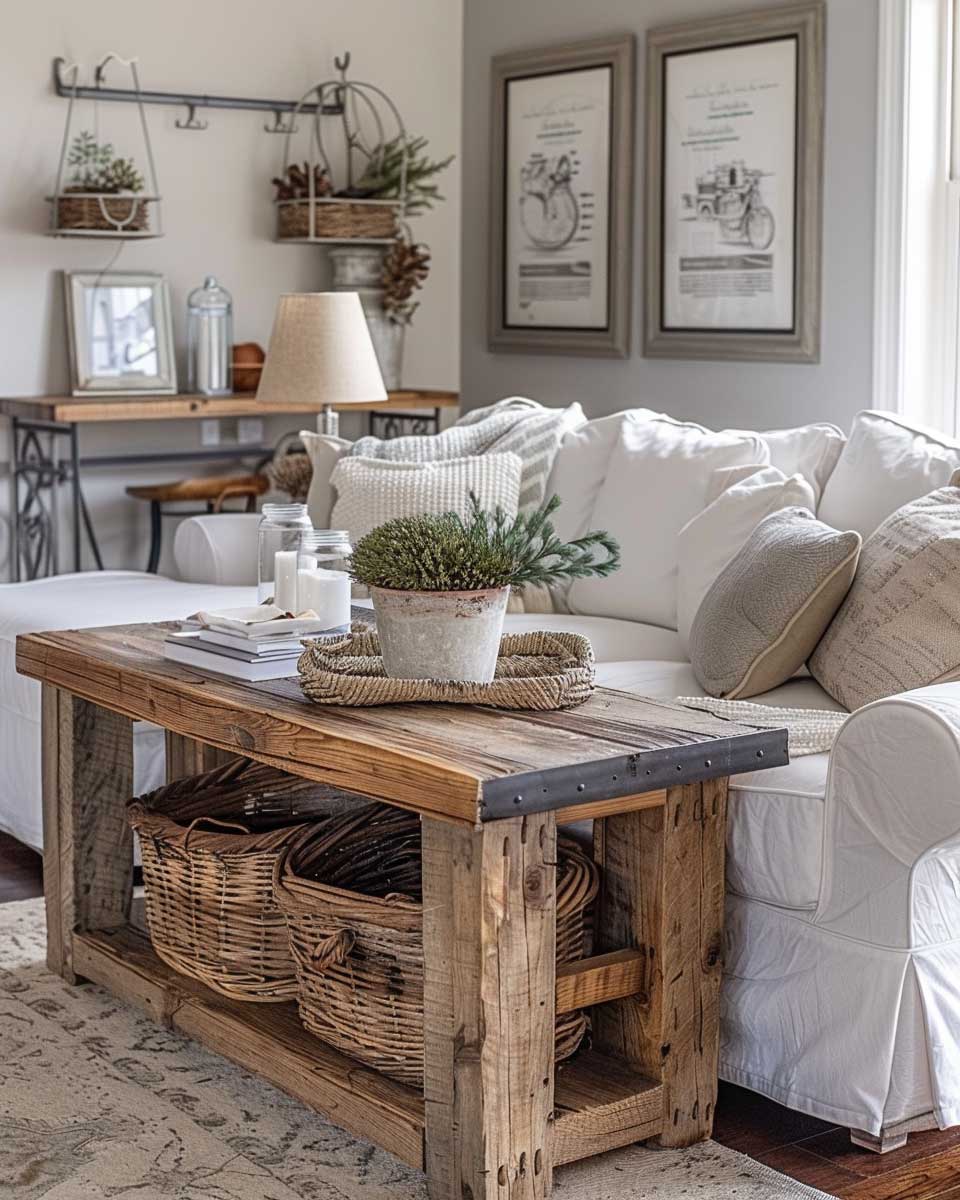
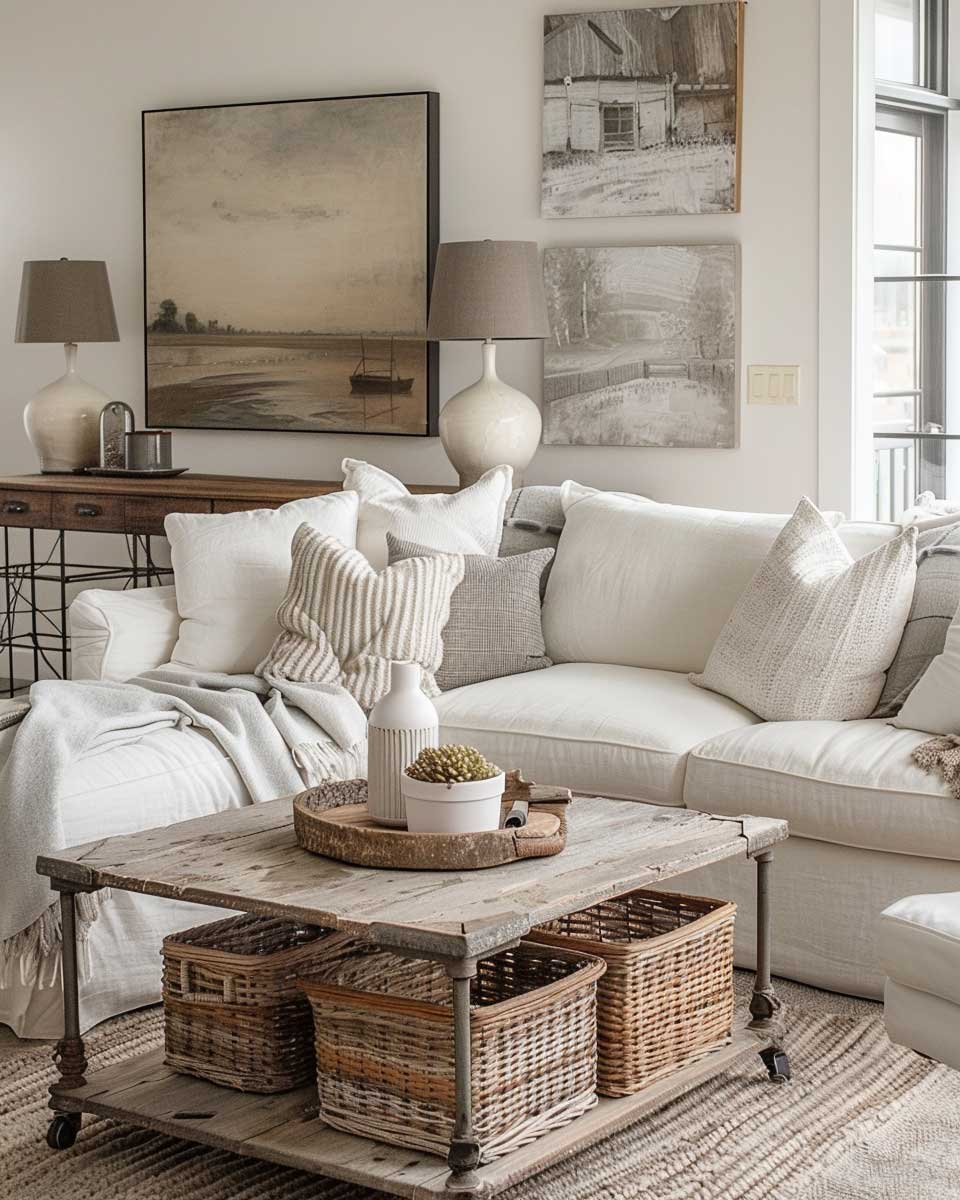
Texture is where rustic industrial decor separates itself from every other neutral-palette style. You can have the exact same gray wall paint as a Scandinavian minimalist room and end up in completely different visual territory — because the difference is what you put in front of it. Rough-hewn wood against smooth concrete tile. A jute rug under a steel-legged table. A linen throw over a leather sofa. Each pairing creates friction, and that friction is what the eye finds interesting.
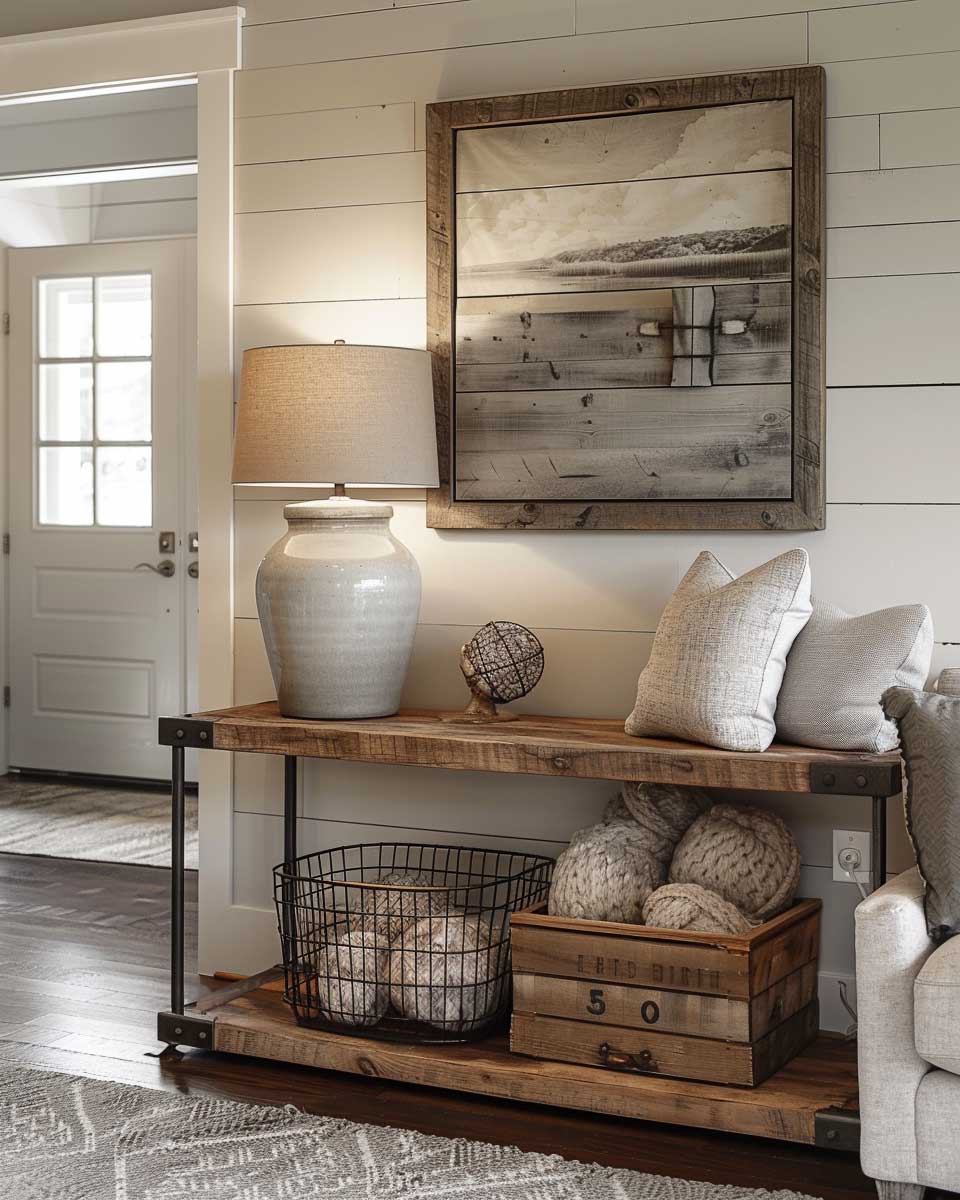
The entryway sets the tone before anyone sees the rest of the house. My go-to: a repurposed wood console table with hairpin legs in matte black, topped with one industrial-style lamp and a wire basket for keys and mail. Total cost: under $300 assembled. It reads as intentional immediately. Wire baskets — the kind that look like they came from a workshop — are underrated as storage objects in this style. Functional and appropriate at the same time.
Softer elements need to enter the equation or the room becomes uncomfortable. A plush sectional — something like the Pottery Barn Turner sectional in a warm gray performance fabric — does the farmhouse softness when everything else is going hard. The cushion depth matters: shallow cushions look more formal and reduce the lived-in quality you’re after. Pile them with cotton and linen throw pillows. No velvet here — velvet competes rather than complements. Grey modern farmhouse living rooms handle this soft-material balance particularly well — worth reading alongside this piece.
Color discipline is non-negotiable. The palette is soft gray, creamy white, and warm natural wood. Full stop. What I’ve seen fail: adding navy as an “accent,” or bringing in sage green “for freshness.” Both pull the room toward a different aesthetic and suddenly the whole thing loses its focus. If you want color, put it in a plant. That’s literally the only exception that holds. The neutrality of the palette is not a limitation — it’s what makes the wood and metal read at full strength instead of competing with a busy color story.
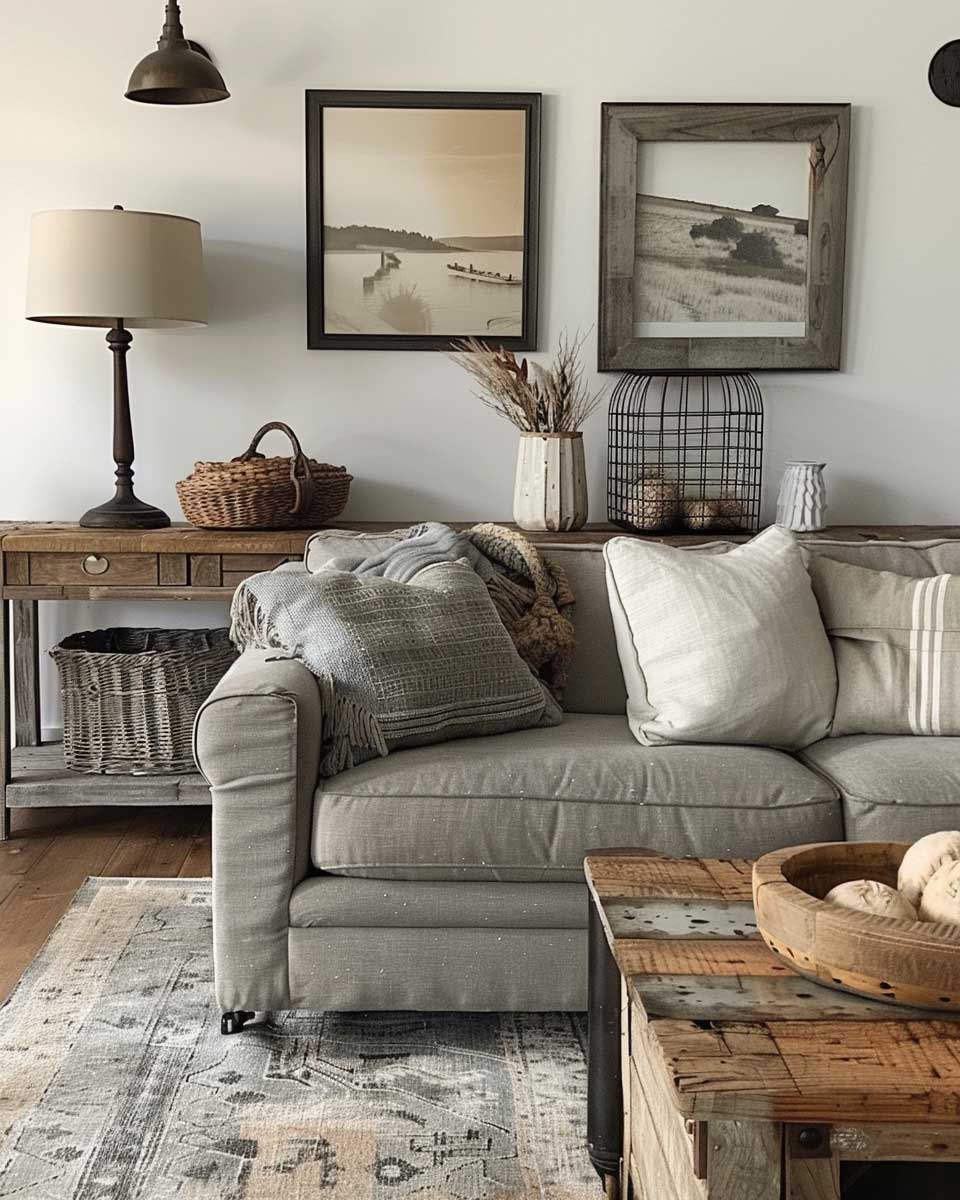
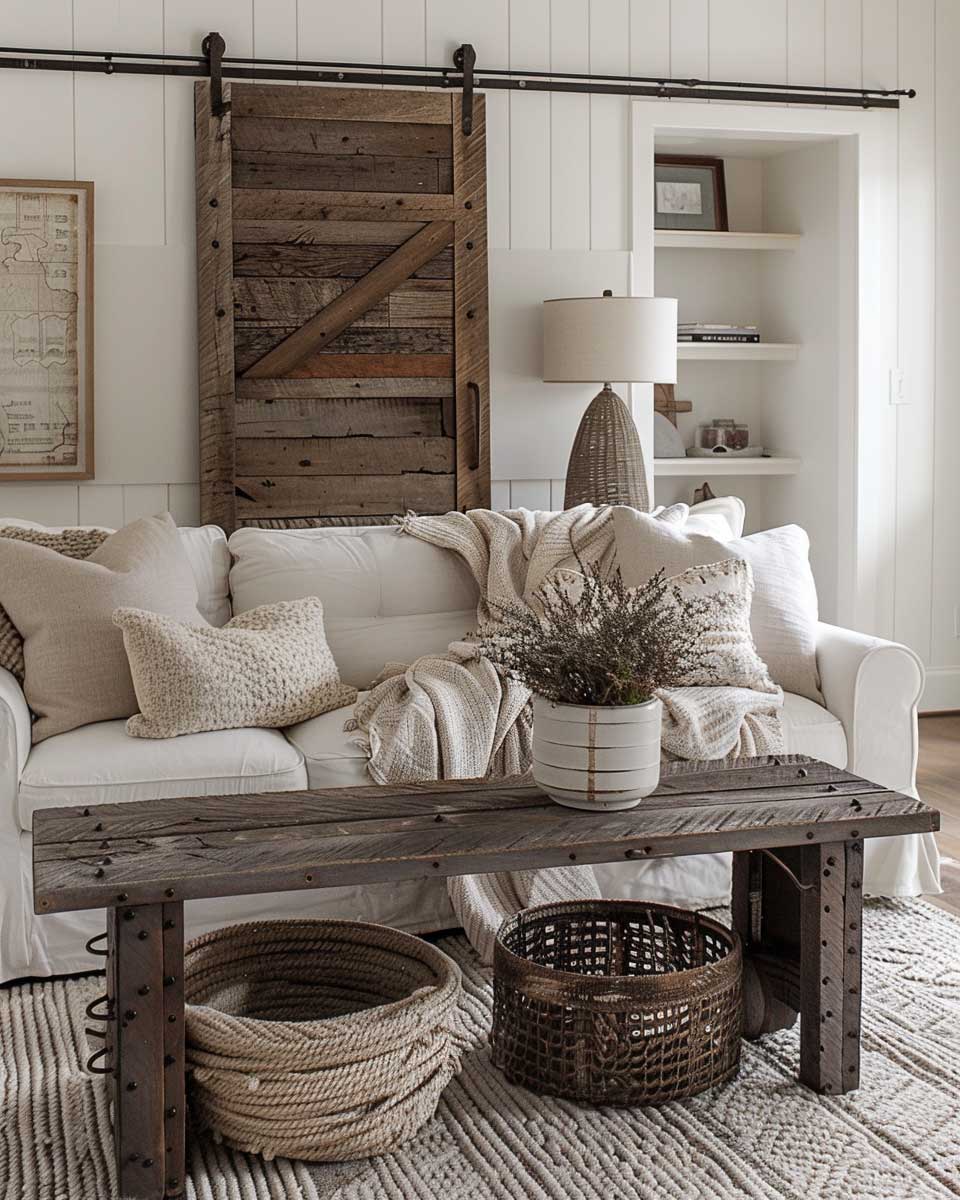
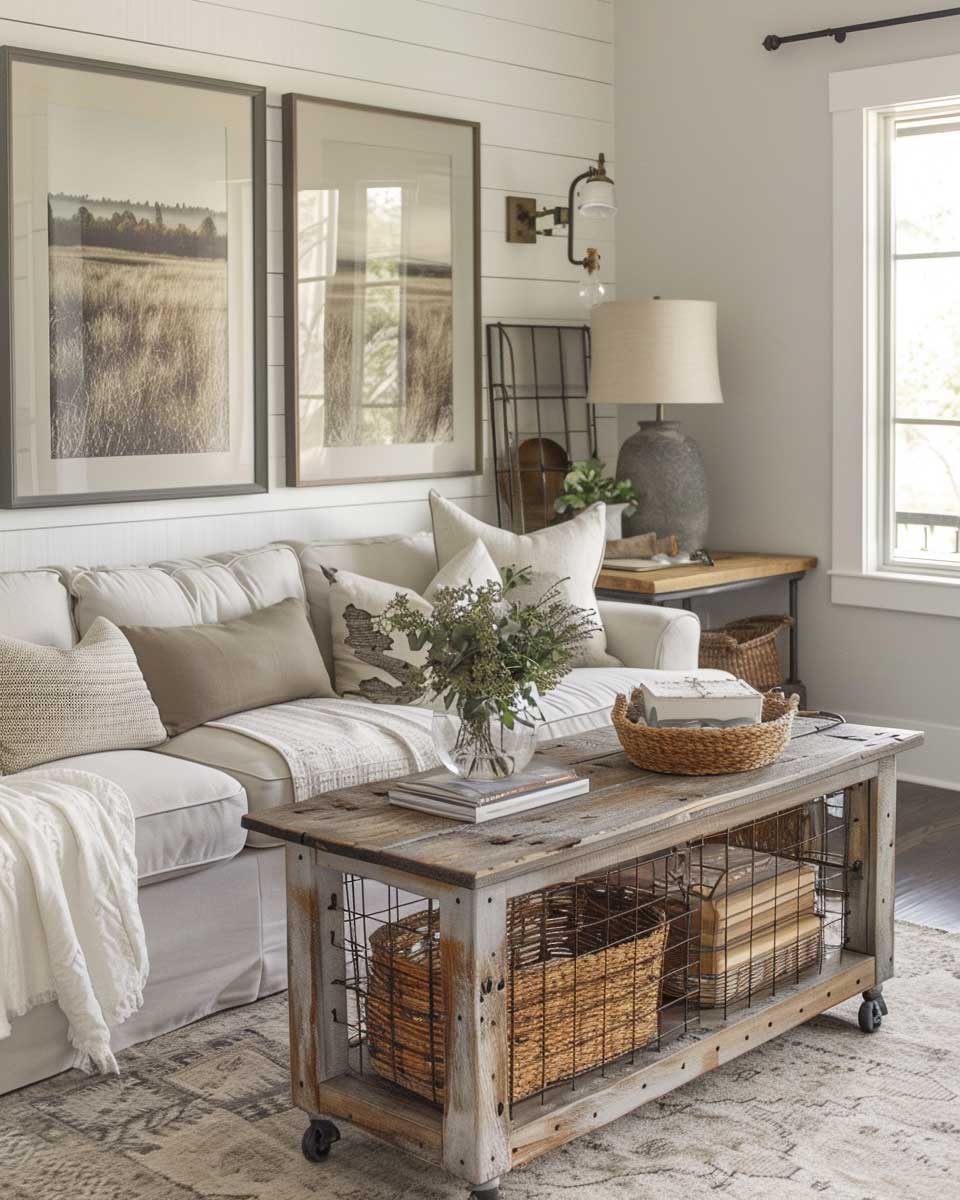
Area rugs are an undervalued texture anchor. A jute or sisal rug from Ruggable or Loloi in the $200–$400 range grounds the furniture grouping and adds natural fiber warmth against the harder surfaces. What’s not worth doing: a shag rug or anything with a pattern that competes with the wood grain. The rug should quiet down, not perform. A flat-weave or low-pile option in warm ivory or faded gray handles the floor layer without creating visual noise.
Personal objects — vintage finds, an old factory clock, a piece of architectural salvage leaned against the wall — personalize the space in a way purchasing decisions can’t. I found a reclaimed factory window frame at an estate sale for $12 and hung it as wall art. It does more for the room than three framed prints from a home store ever could. The question to ask yourself when choosing decor: does this look like it has a past? More ideas for industrial metal wall decor that carries that same quality are worth bookmarking.
FINAL TAKE
Industrial Farmhouse Decor Holds Because the Materials Earn Their Place
Reclaimed wood doesn’t just look good next to black metal — it provides something that mass-produced furniture fundamentally can’t: evidence of a life before this room. That’s why the combination lands, and why the style keeps pulling people in even as trends cycle around it.
Start with your coffee table and your pendant light. Get those two right and the rest of the room will tell you what it needs. Don’t chase a finish line — chase the friction between materials that makes a space feel real.
Save this post and come back to it when you’re ready to commit to one room at a time.