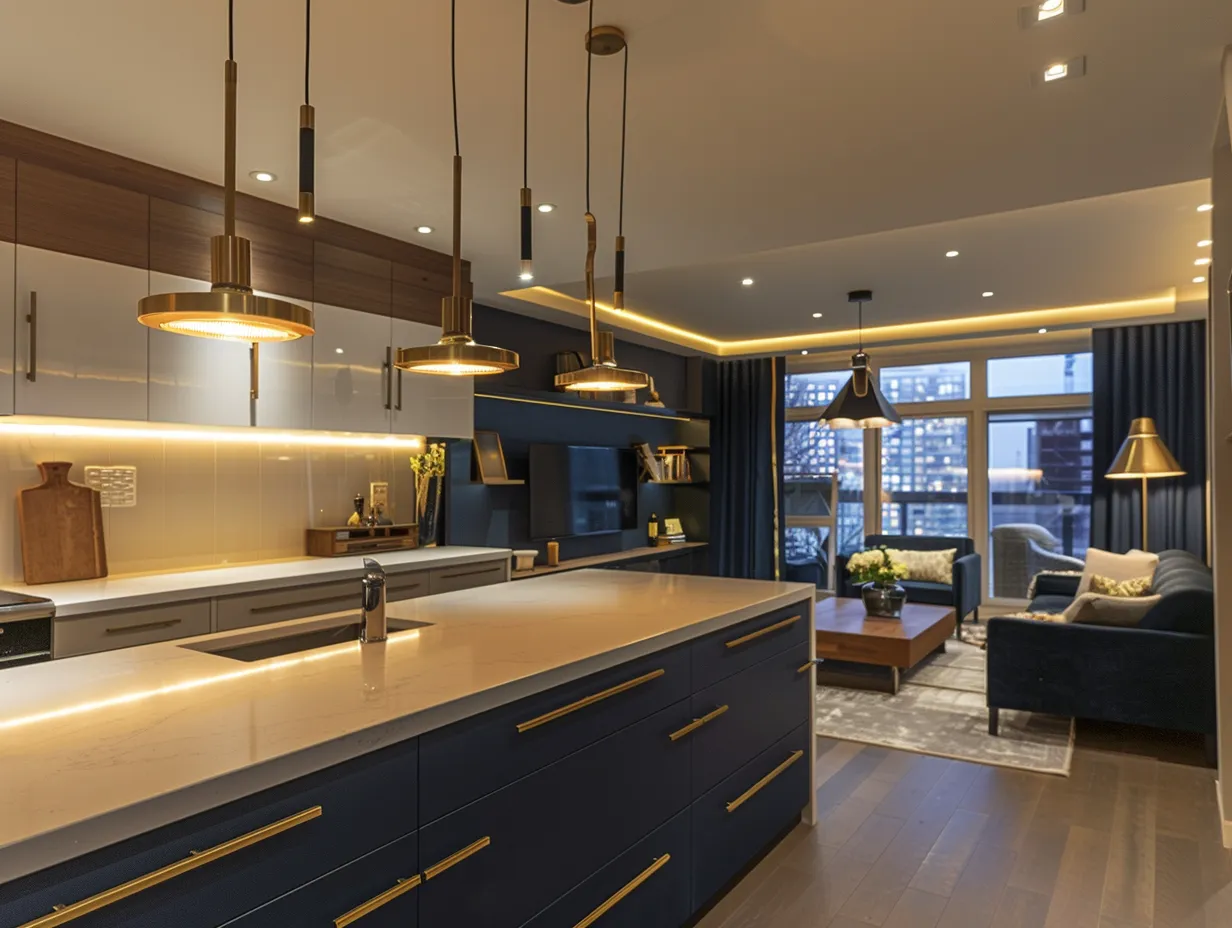
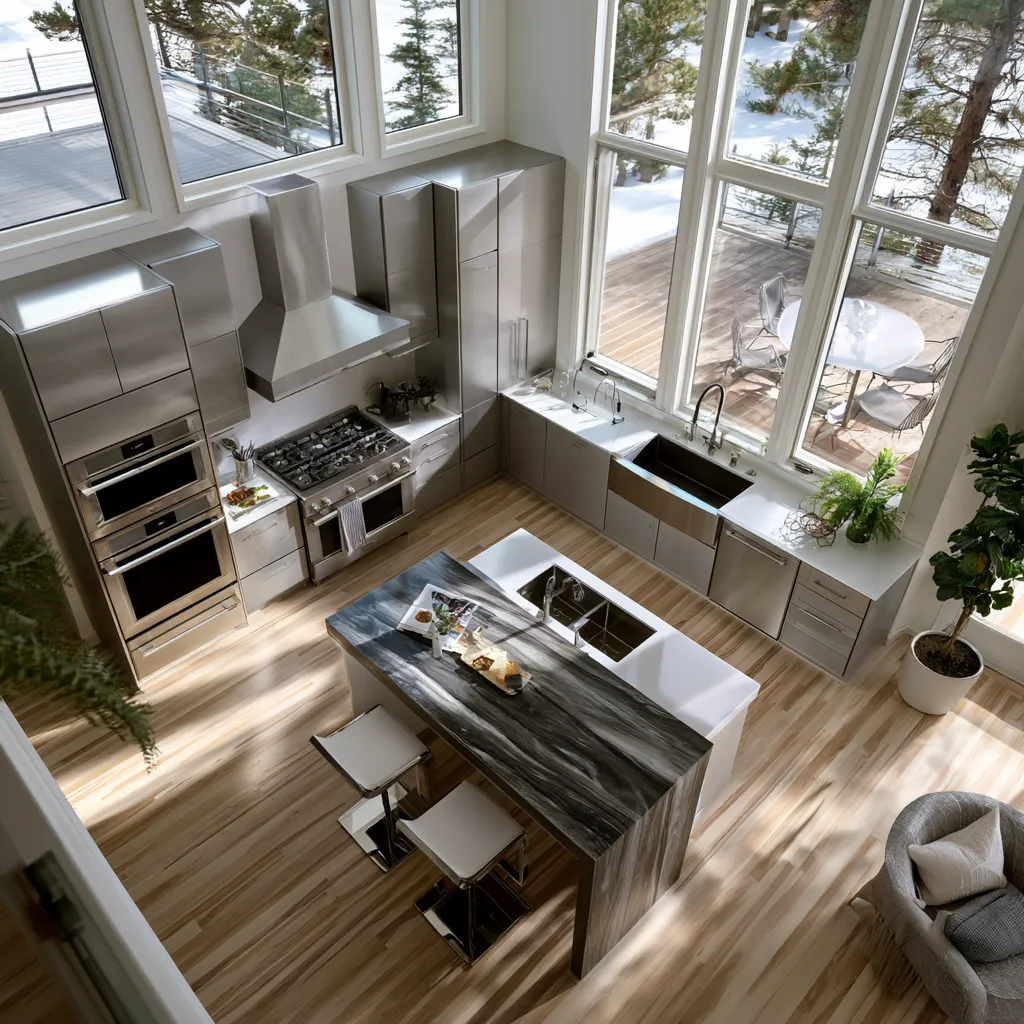
Most American kitchen designs look great in photos and feel cold in real life. You walk in, nothing’s out of place, and somehow it still doesn’t feel like anyone cooks there. That’s the problem with copying the aesthetic without understanding the logic behind it.
American kitchen design is built around one idea: the kitchen is where the household actually lives. Not just a cooking zone. The layout reflects that. Open plans, central islands, integrated storage — none of it is decorative. It solves a real problem of getting three people making dinner without stepping on each other.
Get the structure right first. Color, hardware, and lighting are finishing moves, not starting points. Pick those before you nail the layout and you’ll repaint within two years. I’ve seen it happen.
Quick Scan
What makes American kitchen design actually work:
- Open-plan layout that connects to the living area — not just a cooking zone
- Flat-panel cabinetry in muted tones: white, greige, or deep navy island contrast
- Ceiling-height storage to eliminate dead space above 8-foot cabinets
- Pull-out drawer inserts (Rev-A-Shelf, $45–$120) — skip them and regret it
- Three separate lighting circuits: task, pendant, and recessed on dimmers
- Integrated appliances with matching cabinet panels — fridge, dishwasher, microwave
- Material layering: quartz counter + wood shelf + handmade tile backsplash
American Kitchen Style Reads Minimal Because the Structure Does the Work
Flat-panel cabinetry in a matte finish runs around $8,000–$14,000 for a mid-size kitchen with a U-shape layout. That’s the price point where American kitchen design starts to look intentional rather than budget-constrained. Below that, you’re usually looking at thermofoil doors that show seams within three years.
The color decision is simpler than people make it. White, warm white, greige, or a deep navy island against a neutral surround — those four directions cover 90% of successful American kitchen design. I’ve tried sage green on lowers twice. Both times the client wanted to repaint by year two. Trendy reads dated faster than classic.
Don’t skip the hardware budget. It’s 2% of your total spend and it changes how the whole room reads. Brushed brass on flat-panel white cabinetry does something matte black can’t — it adds warmth without adding pattern. Matte black in a kitchen with dark countertops disappears entirely. That’s not minimal, that’s just invisible.
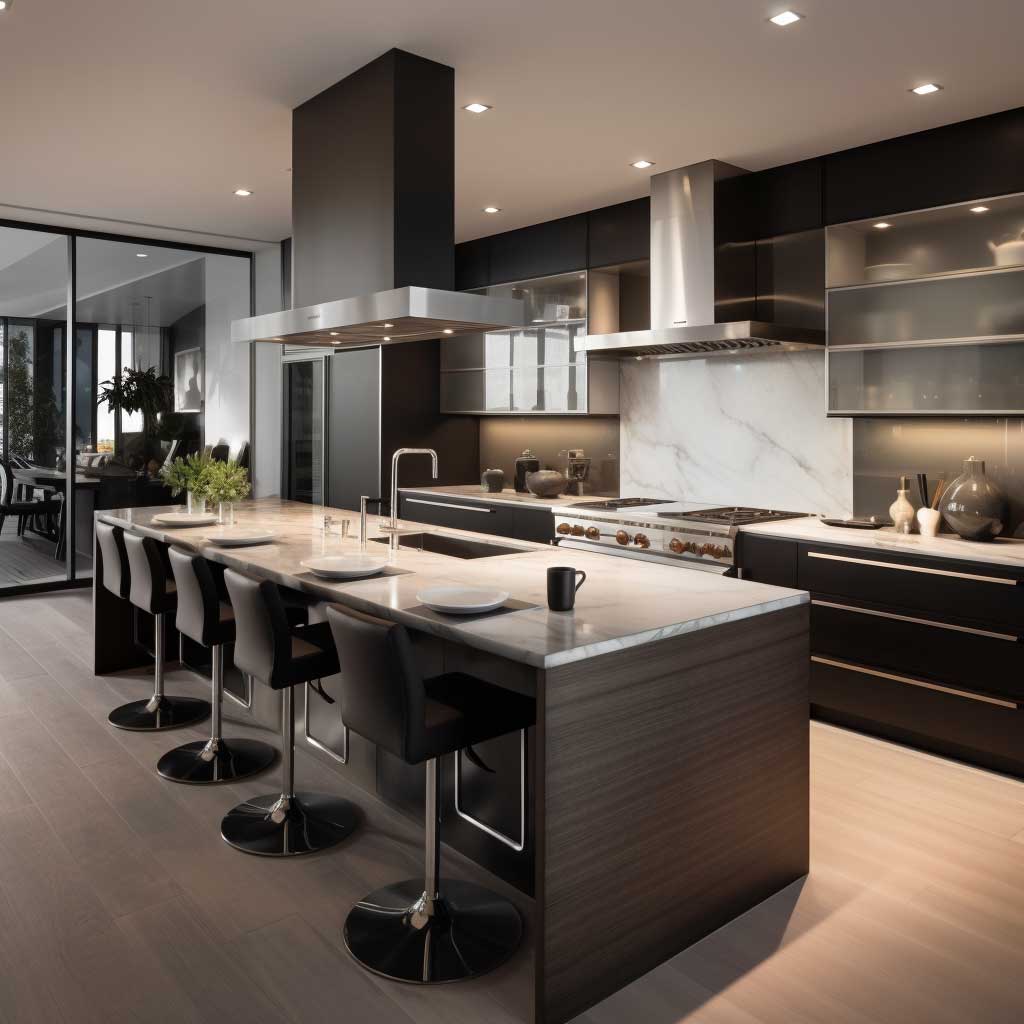


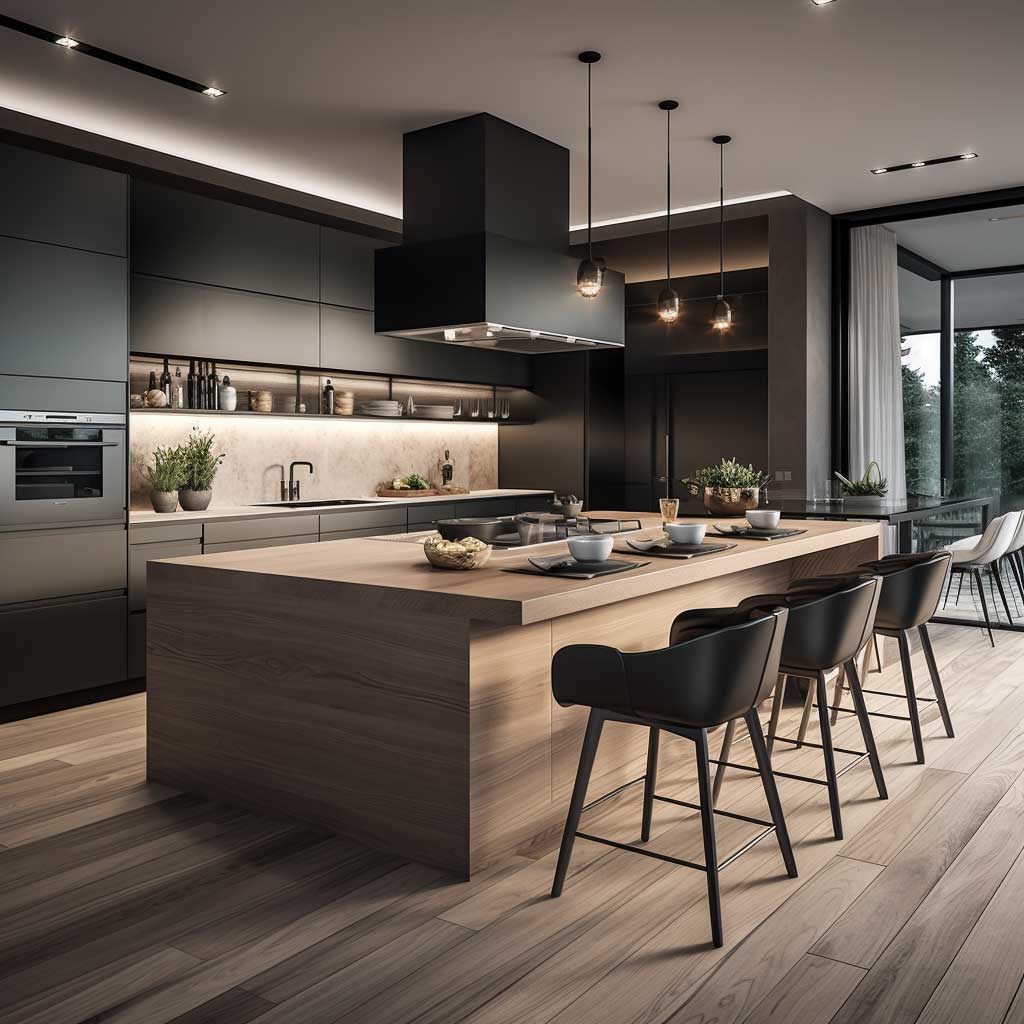
Modern American kitchen design has come to epitomize sleek elegance, marrying form and function in a way that transforms the heart of the home. This design philosophy goes beyond mere aesthetics; it’s a lifestyle choice that reflects a preference for uncluttered spaces, clean lines, and a harmonious blend of materials and colors.
In the world of modern American kitchen design, minimalism reigns supreme. This doesn’t mean sparse or cold; rather, it’s about choosing elements that offer maximum impact with minimal fuss. Cabinetry in these kitchens often features flat-panel doors, free from intricate moldings or ornate handles. Colors tend to be muted or monochromatic, creating a calming backdrop against which select pieces of art or bold splashes of color can stand out.
The layout is a critical component of modern American kitchens. Open-plan designs are popular, seamlessly integrating the kitchen with living and dining areas. This fosters a sense of community and openness, making the kitchen a gathering place for family and friends. The inclusion of a central island is more than a style statement; it’s a functional hub where cooking, dining, and socializing coexist.
In terms of appliances, the modern American kitchen boasts the latest in technology, blending seamlessly into the design. Integrated appliances that tuck away into the cabinetry, induction cooktops, and smart refrigerators are common features. These elements not only enhance the kitchen’s functionality but also contribute to its sleek, modern aesthetic.
Lighting is another critical element. In modern American kitchens, lighting is both a functional necessity and a design statement. Under-cabinet lights, pendant lights over islands, and recessed ceiling lights all play a role in creating an ambiance that is both warm and functional.
In conclusion, the sleek elegance of modern American kitchen design is a testament to the beauty of simplicity. By focusing on clean lines, functional layouts, and a harmonious blend of materials and colors, these kitchens become timeless spaces that offer both comfort and sophistication.
American Kitchen Designs Hide This Much Storage in Plain Sight
Pull-out drawer inserts from Rev-A-Shelf run $45–$120 per unit and fit inside existing base cabinets. Most kitchen designers specify them for pots, spices, and cleaning supplies. Most homeowners skip them to save money and spend three years annoyed at their lower cabinets. Don’t do that.
The ceiling-height cabinet mistake I see constantly: builders stop cabinets at 8 feet and leave 18 inches of dead space above. That gap collects dust and makes the kitchen look unfinished. Extend to the ceiling, add a ladder if needed, and use the top section for seasonal storage. American kitchen designs in the $150k+ renovation bracket always do this. You can do it for $600 in a weekend with ready-to-assemble add-ons.
Open shelving sounds good in theory. In practice, it’s a weekly dusting obligation and a daily styling task unless you’re committed to keeping only matching pieces on display. I own two kitchens with open shelves — one works, one’s been a mistake since day one. The difference is whether you actually cook in it. If you do, close it up.


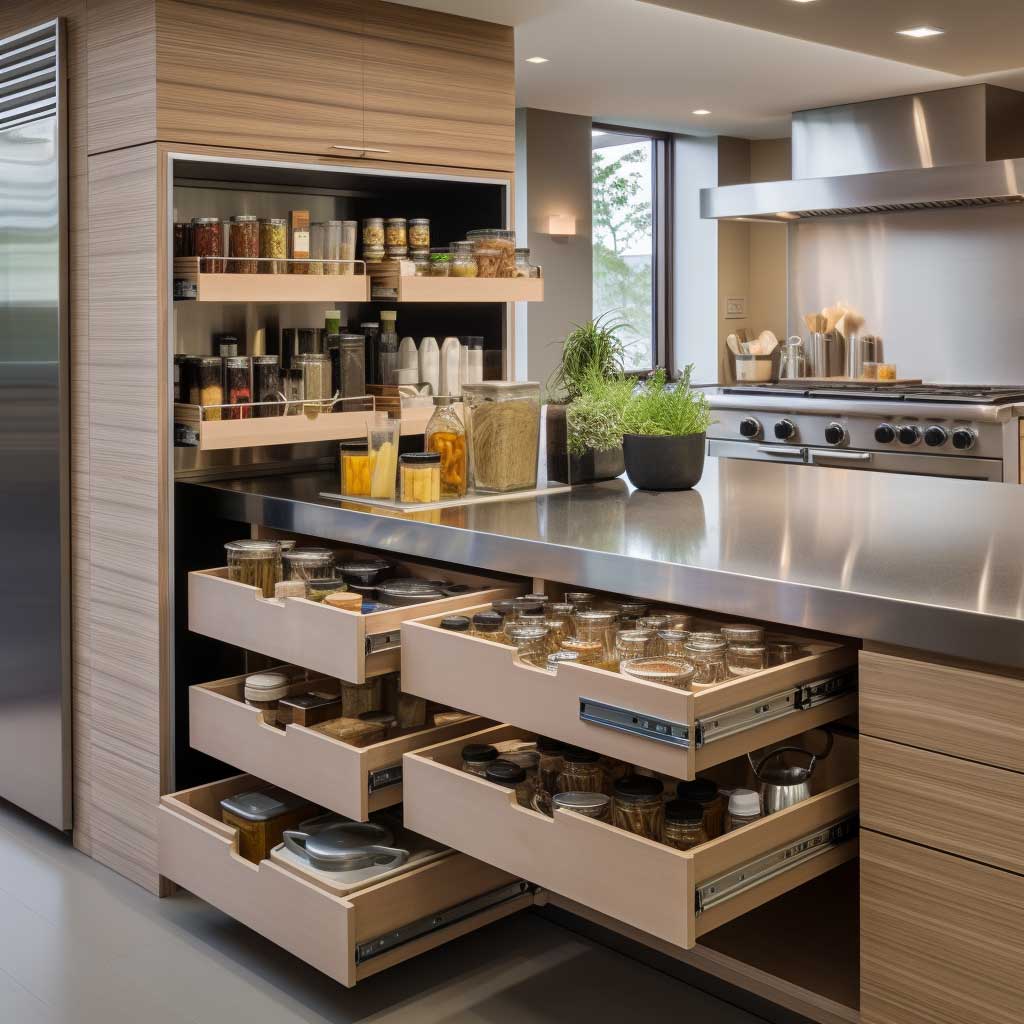
The hallmark of modern American kitchen design is not just in its aesthetic appeal but in its innovative approach to storage. Efficient and smart storage solutions are essential in creating a kitchen that is both functional and stylish. This aspect of kitchen design is particularly crucial in modern homes, where maximizing space and reducing clutter is key.
| Storage Type | Cost Range | Best For | Common Mistake |
|---|---|---|---|
| Pull-out drawer inserts | $45–$120/unit | Pots, spices, cleaning supplies | Skipping them to cut budget |
| Ceiling-height cabinets | $600–$2,000 add-on | Seasonal items, visual height | Stopping at 8 feet, leaving dead space |
| Integrated appliance panels | $300–$800/appliance | Fridge, dishwasher, microwave | Mismatching panel finish to cabinet door |
| Island with base cabinets | $2,000–$6,000 | Prep area + hidden storage combo | Making it too wide (over 48 inches) |
| Open shelving | $150–$400/run | Display only — matching pieces | Using in a working kitchen with daily cooking |
Modern American kitchens often employ creative storage options that maximize utility and enhance the overall design. Custom cabinetry is a staple in these designs, tailored to fit the specific needs and dimensions of the space. Pull-out drawers, corner cabinets with lazy Susans, and built-in organizers help in utilizing every inch of available space efficiently. The same storage logic applies across warm wood cabinet kitchen designs, where material choice changes the feel but the structural approach stays the same.
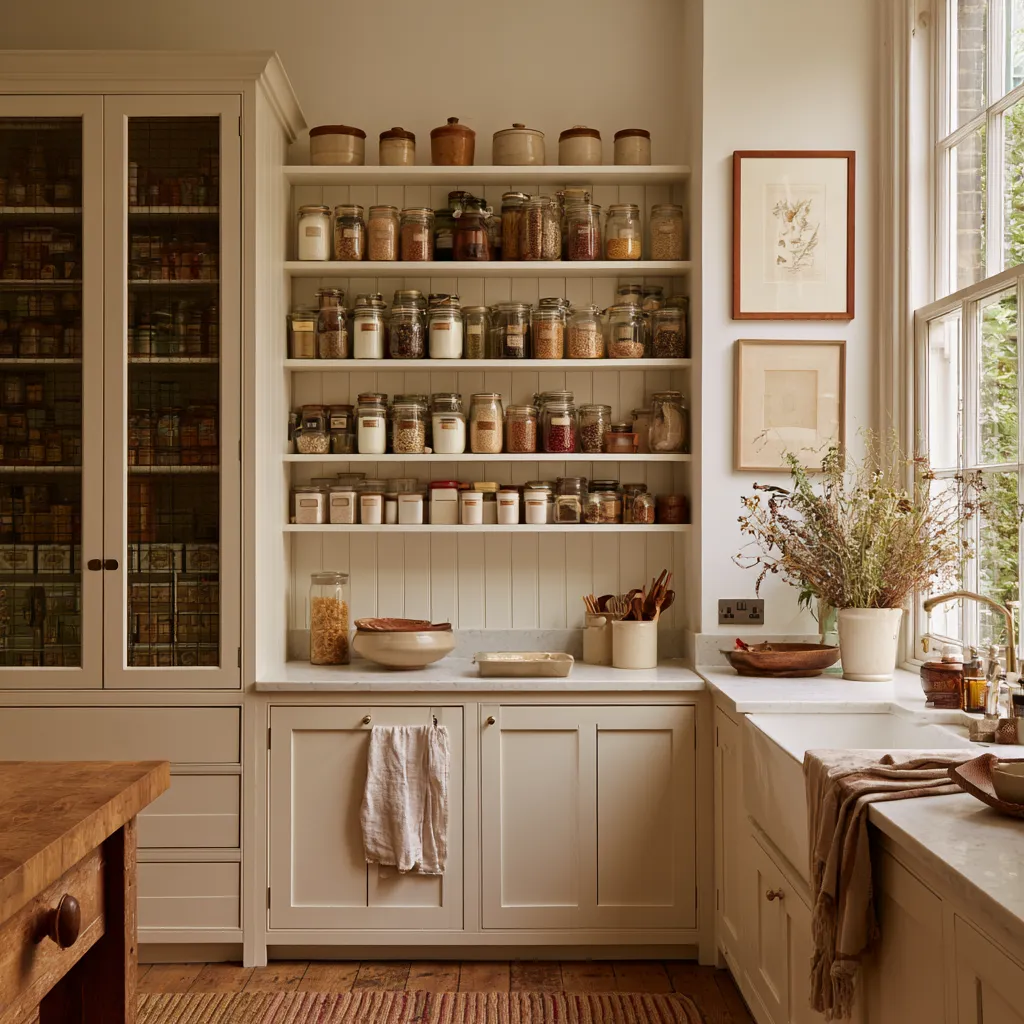
The use of overhead cabinets that extend up to the ceiling is a common feature in modern American kitchens. This not only provides additional storage space but also draws the eye upward, creating an illusion of height and spaciousness. Glass-front cabinets or open shelving are sometimes incorporated to break the monotony of solid cabinetry, offering display space for decorative items or everyday dishes.
Integrating appliances into the cabinetry is another trend in modern American kitchen design. This approach ensures a seamless look and contributes to the minimalist aesthetic. Appliances like refrigerators and dishwashers are fitted with custom panels that match the cabinetry, creating a cohesive and unclutter appearance. This integration not only enhances the kitchen’s visual appeal but also makes for a more ergonomic and streamlined space.
The modern American kitchen also embraces versatile islands that double as storage units. Islands often feature cabinets, drawers, and sometimes even appliances like wine coolers or microwave drawers. This not only adds to the kitchen’s storage capacity but also makes the island a multifunctional piece, serving as a prep area, dining space, and storage solution all in one.
Innovative storage solutions in modern American kitchens are not just about practicality; they’re about creating a space that feels open, uncluttered, and organized. By incorporating smart storage options, these kitchens can maintain their sleek and modern aesthetic while being fully functional and user-friendly.
In conclusion, innovative storage is a cornerstone of modern American kitchen design. Through custom cabinetry, integrated appliances, and multifunctional islands, these kitchens achieve a balance of style and utility. They demonstrate that with thoughtful design, even the most functional elements of a space can contribute to its overall beauty and elegance.
Don’t Do This
American kitchen design mistakes that are harder to fix than you think:
- Trendy cabinet colors. Sage green, terracotta, and mustard date within 3 years. Stick to neutral lowers with one accent direction.
- Skipping cabinet hardware. “Hardware-free” push-open cabinetry in a busy kitchen gets greasy and marked within months. It looks better in showrooms than in real life.
- Open shelving in a working kitchen. If you cook daily, anything on open shelves gets greasy and dusty. It’s a styling task, not a design solution.
- Island that’s too wide. Over 48 inches across and you’re walking around it instead of working at it. American kitchen designs work with islands at 36–42 inches deep maximum.
- Stopping cabinets at 8 feet. That gap above collects dust and makes the ceiling look lower. Extend to the ceiling — or at minimum add crown molding to close the line.
- One lighting circuit for the whole kitchen. You lose all atmosphere control after dark. Three circuits, three dimmers. Non-negotiable.
The Layout Decision That Separates Good American Kitchen Design From Flat
The work triangle is real but it’s not the whole story. American kitchen design in open-plan spaces has to account for traffic flow from adjacent rooms, not just the refrigerator-to-stove path. If your island sits between the living room entry and the sink, every dinner party turns into a bottleneck. Move the island 18 inches and the whole room breathes differently.
Material layering is what makes American kitchen designs feel expensive without a full renovation budget. A quartz countertop at $55–$85 per square foot paired with a wood floating shelf and a ceramic tile backsplash in a handmade format creates three different textures. Same budget, twice the visual depth compared to a single-material approach. Stone on every surface reads expensive but ends up feeling cold.
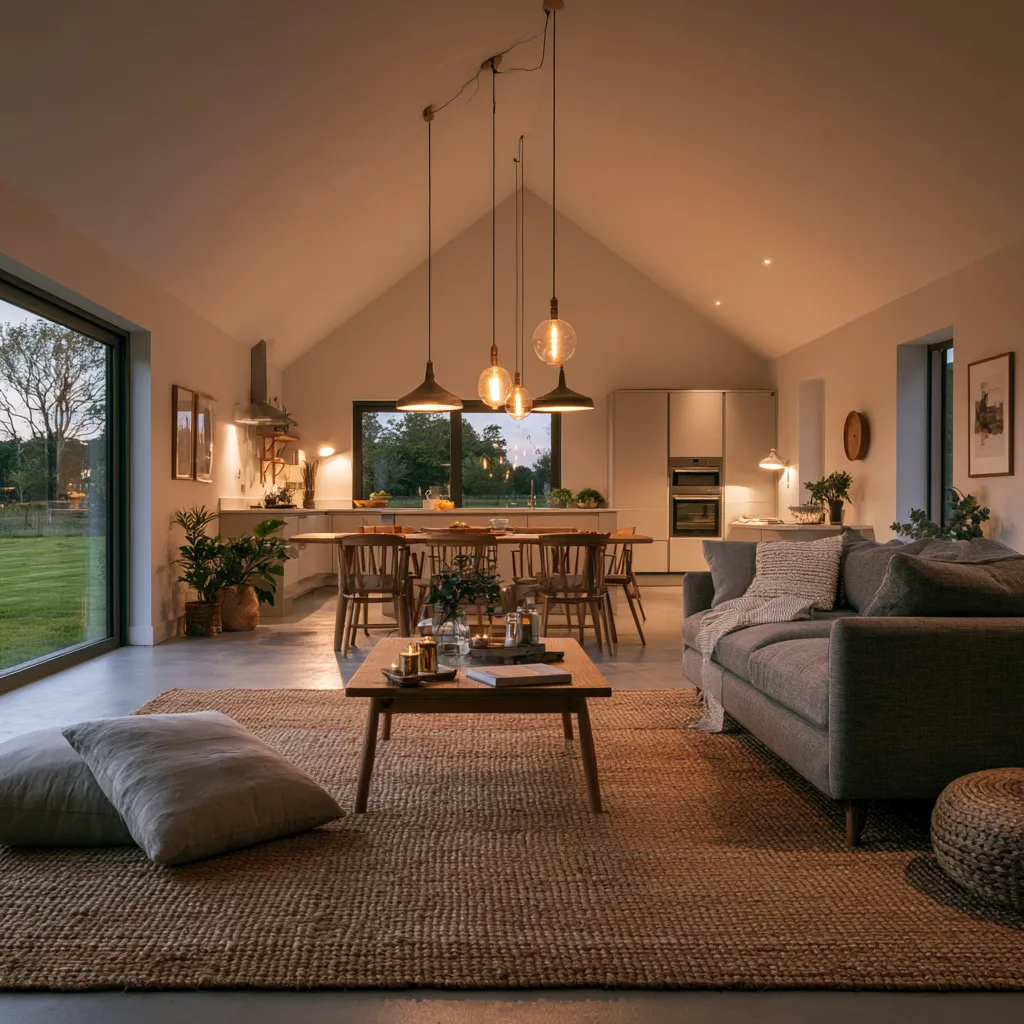
The lighting layer people skip: task lighting under cabinets, pendant lighting over the island, and recessed ambient lighting on a dimmer are three separate systems. Treating them as one flattens the room after dark. American kitchen style at the higher end always separates these circuits. A licensed electrician charges $200–$400 to split them during a remodel — it’s worth every dollar.


Modern American kitchen design strikes a perfect balance between function and aesthetics, creating spaces that are as beautiful as they are practical. This harmony is achieved through thoughtful design, where every element serves a purpose and contributes to the overall look and feel of the kitchen.
The layout is key in achieving this balance. Modern American kitchens often feature an open-plan design, promoting a seamless flow between the kitchen and adjacent living areas. This not only makes the space more inviting but also enhances its functionality, facilitating easier movement and interaction during meal preparation and entertaining. If you’re working with a smaller footprint, the same principles apply — see how renter-friendly kitchen design hacks apply open-plan logic without permanent changes.
The choice of materials in modern American kitchens is deliberate, with a focus on durability, maintenance, and beauty. Natural materials like stone, wood, and granite are popular for countertops and islands, offering longevity and timeless elegance. Similarly, high-quality laminates and composites are used for cabinetry, providing durability and a wide range of aesthetic options. For layout and clearance standards that govern how these spaces are planned professionally, the NKBA Kitchen & Bath Planning Guidelines cover over 65 technical rules on activity centers, lighting, and material coordination.
The integration of technology is another aspect where function and aesthetics converge in modern American kitchens. Smart appliances, touch-controlled faucets, and under-cabinet lighting systems not only add convenience and efficiency but are also designed to blend seamlessly with the kitchen’s aesthetic.
In conclusion, the harmony of function and aesthetics in modern American kitchen design is about creating a space that meets the demands of daily life while providing a visually appealing and welcoming environment. Through thoughtful layout, material selection, and technology integration, these kitchens stand as a testament to the idea that practicality and beauty can coexist harmoniously in design.
Final Take
American Kitchen Design That Actually Holds Up
American kitchen design works when the structure is right — open layout, real storage, and materials that age without looking tired. Get those three things locked in before you spend a dollar on hardware or paint.
The kitchens that still look good ten years out all have one thing in common: nothing in them was chosen for the trend. Every cabinet, every countertop edge, every light fixture was picked to work with the layout, not against it.
Save this post. Come back when you’re standing in front of a contractor quote and need to remember what actually matters.