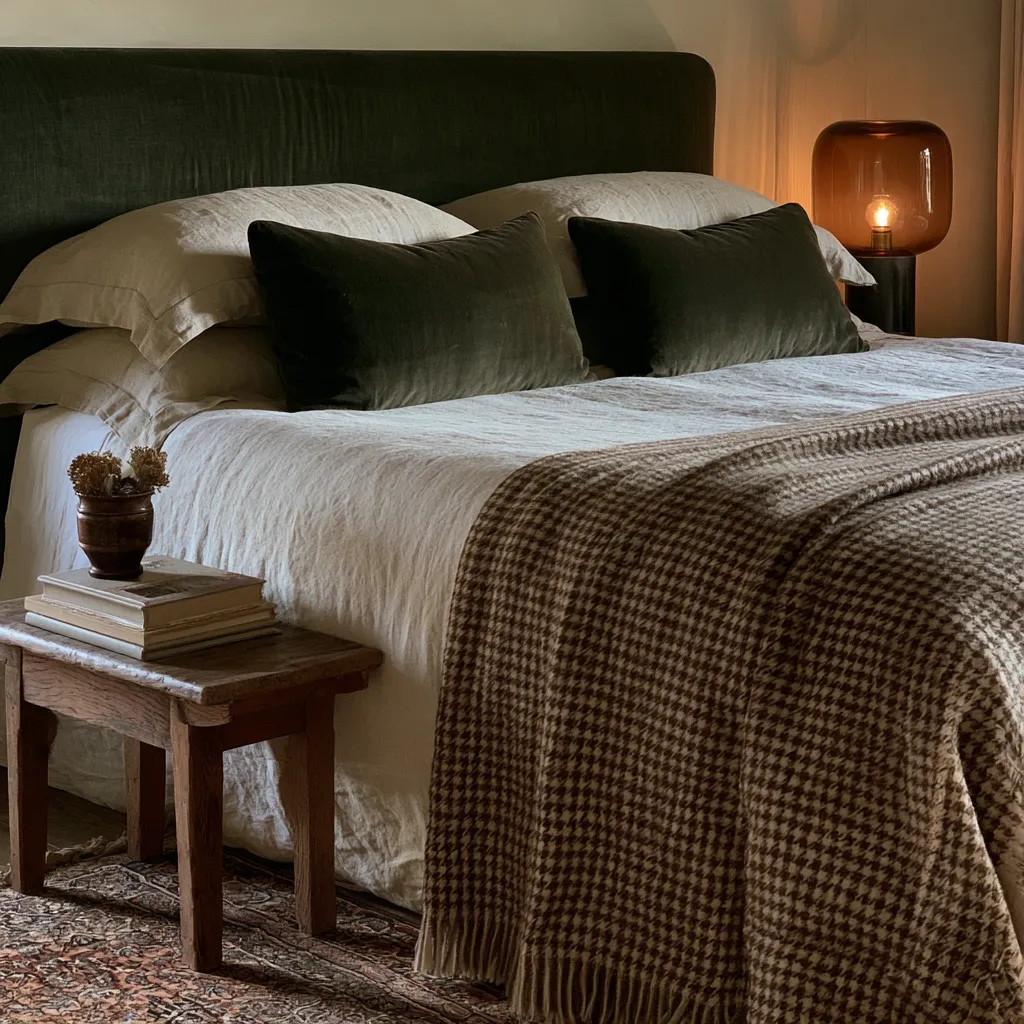
Bedroom blinds ideas deliver precise light control and solid privacy without the bulk of heavy drapes. The right pair blocks street glow, softens morning sun, and keeps the room feeling intentional rather than unfinished.
Most standard windows land between $75 and $200 installed for mid-range options, according to recent industry averages. Motorized versions push that range to $300–$1,000 per opening. Choose based on how much darkness you need at night and how clean the profile should sit against the wall.
Neutral rollers and cellular shades suit quiet rooms; textured or patterned styles add depth when the rest of the décor stays simple. Measure twice, order samples, and test light levels before committing to full width.
- Standard blinds average $75–$200 per window installed
- Cellular and blackout rollers give the strongest sleep darkness
- Motorized options start around $300 and climb past $800
- Neutral finishes keep rooms calm; texture works best as a single accent
- Measure the recess and the face of the frame before ordering
- Layer with side panels only when extra insulation or drama is required
Clean Lines Define Modern Minimalist Bedroom Blinds


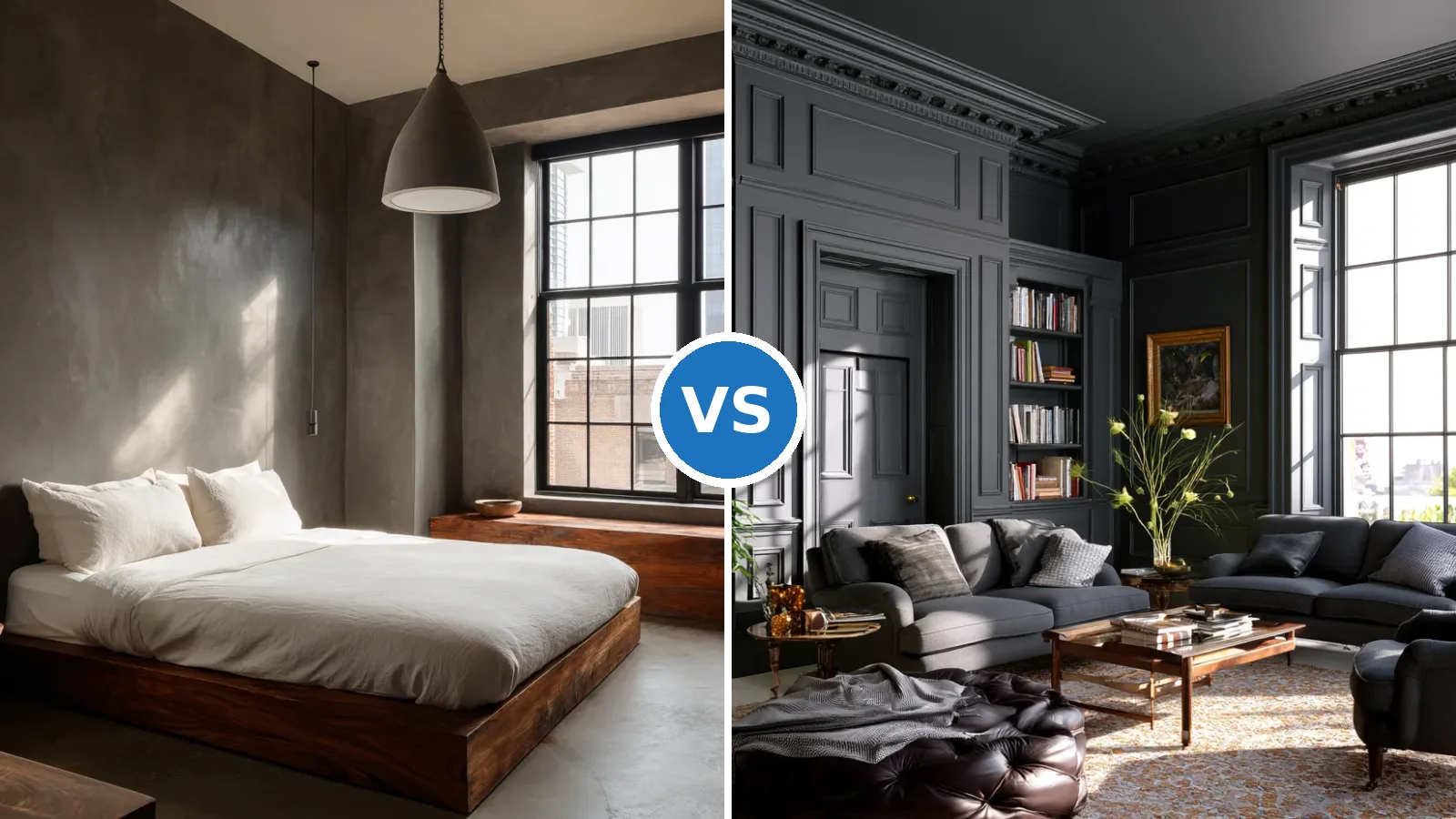
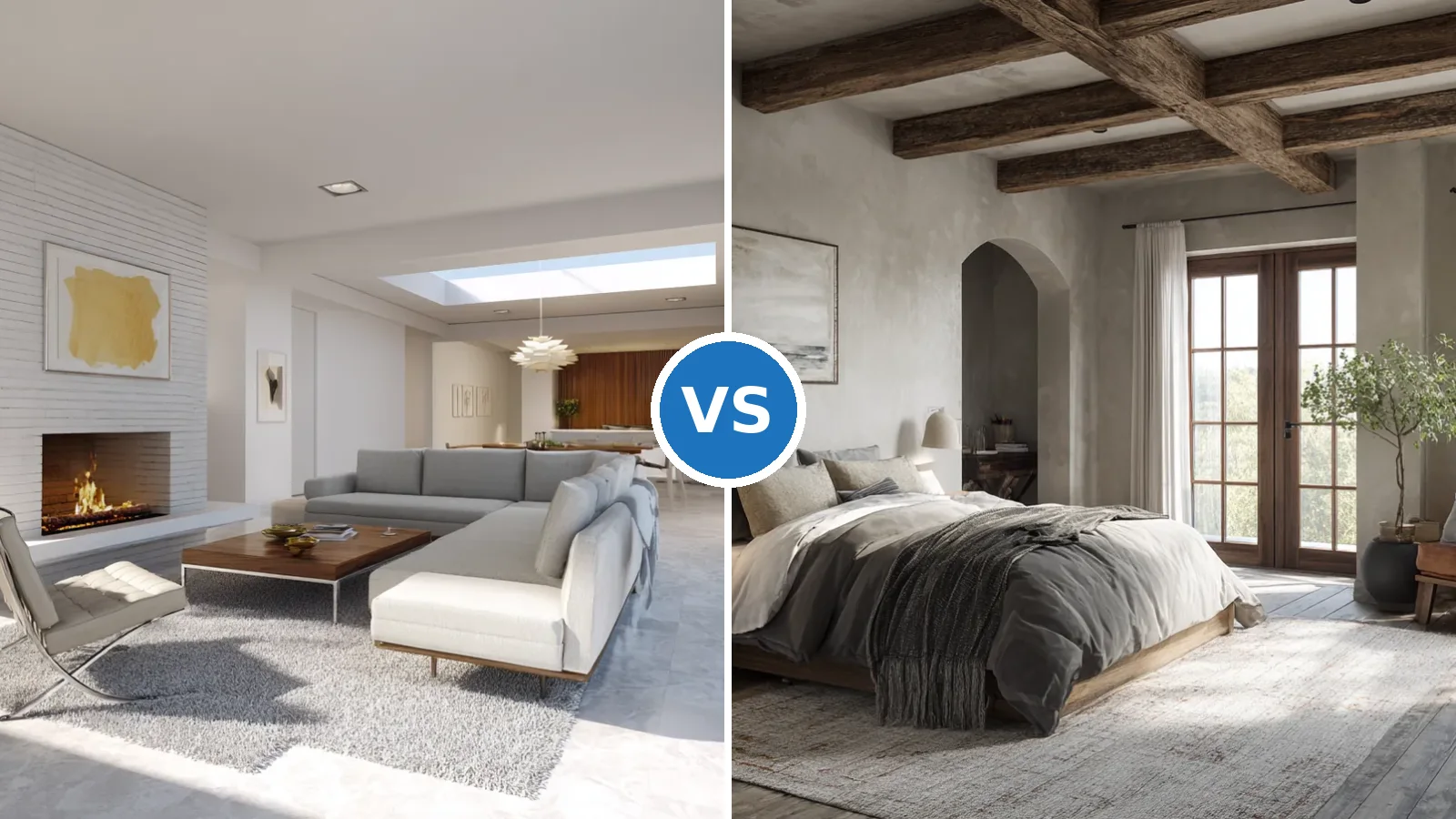
Modern minimalist bedroom blinds keep visual noise low so the bed and floor remain the quiet heroes. Roller and cellular styles sit flush, leave almost no hardware on show, and let the room breathe. Why do so many people still choose busy patterns for small rooms? The extra lines fight the calm they wanted in the first place.
Think of these blinds as the quiet wall switch rather than the statement lamp. Neutral tones—soft white, warm grey, pale taupe—reflect light without glare and pair cleanly with light wood or black metal frames. Average mid-range rollers sit near $80–$150 per standard window. Avoid mounting them inside a deep recess if you want the fabric to clear the sill fully when raised.
Cordless operation removes the dangling cords that collect dust and pose safety issues. Pair a light-filtering fabric for daytime glow with a blackout liner only on the side that faces street lamps. For broader window treatment context, explore these popular bedroom window treatment ideas that show how rollers sit alongside other styles.


Material choice decides both the hang and the upkeep. Bamboo and woven woods add quiet texture yet stay within the minimalist brief when left in natural or pale finishes. Expect to pay a little more for real wood than for vinyl or aluminum, usually $50–$200 per opening. The anti-tip: never choose a high-gloss finish if the room already has reflective surfaces; the extra shine multiplies visual noise.
Textured Surfaces Bring Energy to Contemporary Spaces
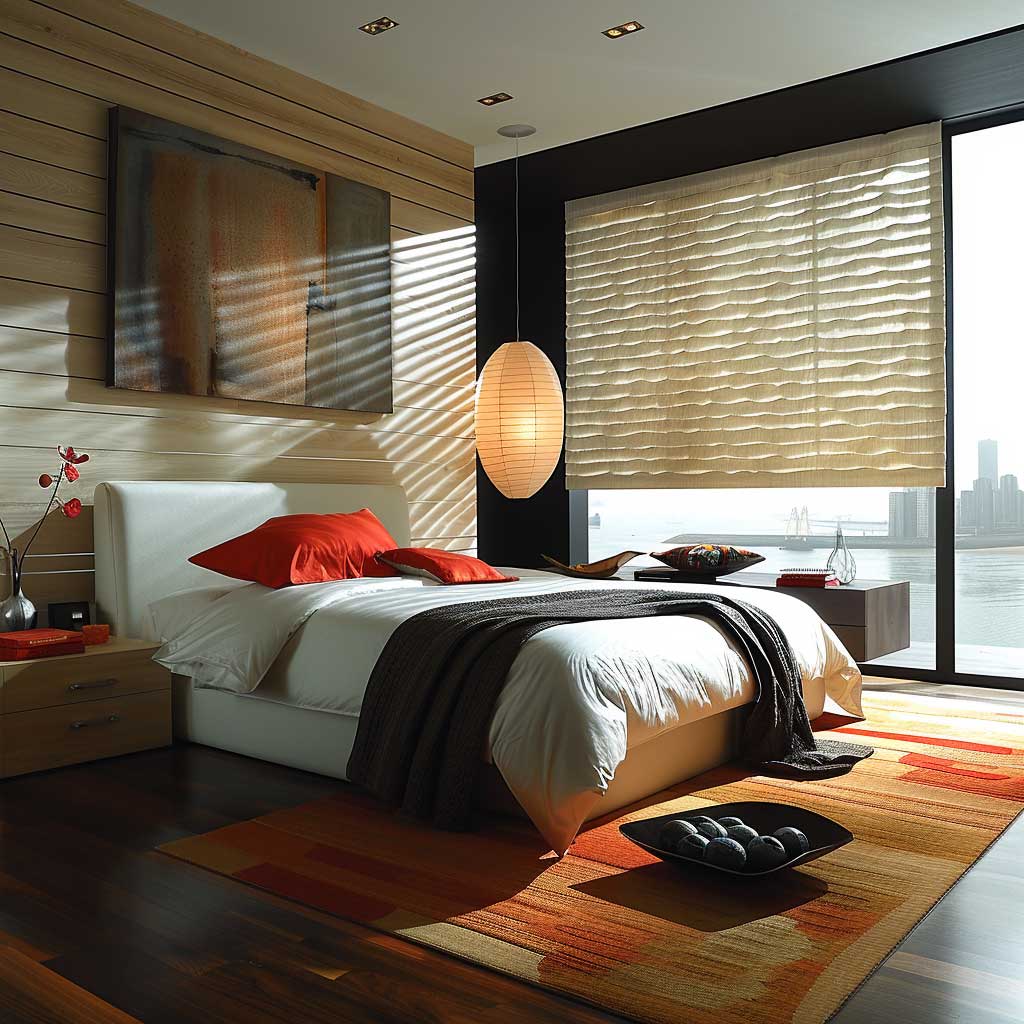


Bold textures in contemporary bedroom blinds turn the window into the room’s quiet accent. Woven fabrics, geometric weaves, and subtle metallic threads catch light and throw soft patterns across the floor. The effect works like a low-relief sculpture—present but never loud.
How much texture is too much? When the blinds compete with a patterned rug or busy bedding, the eye has nowhere to rest. Keep the rest of the palette quiet and let the weave do the work. Mid-range textured options often sit between $100 and $250 per window. Choose a fabric with enough body to hold its shape when raised; limp material loses the architectural edge.
Insulation improves with denser weaves. Cellular constructions trap air and can cut heat transfer noticeably on south-facing walls. The practical check: close the blinds at midday and feel the temperature difference after twenty minutes. If the room still overheats, add a light-filtering liner rather than switching to a heavier style that darkens the space too early.


Color works best when it stays within a narrow family. Deep charcoal or warm taupe with a visible weave feels intentional; high-contrast stripes often date faster. The anti-move: never hang textured blinds on a short drop if the fabric stacks heavily when raised—the bulk will sit in the sightline and look unfinished.
Luxurious Fabrics Soften Vintage-Inspired Rooms


Vintage-inspired rooms gain depth when blinds carry richer fabrics and quieter patterns. Silk-look weaves, soft velvets, and classic damasks filter light the way old lace once did, only with better privacy. The result feels collected rather than staged.
Expect premium fabric blinds to start higher—often $150–$350 per window once linings and hardware are included. What happens if you skip the lining? Daytime privacy collapses and the fabric ages faster under UV. Always specify a blackout or room-darkening liner for east-facing openings if sleep quality matters.
Mount the header a few inches above the frame so the fabric gains visual height. The same trick that makes curtains look taller works for Roman-style or soft-fold blinds. Avoid pairing heavy patterned blinds with equally busy wallpaper; the two patterns cancel each other and leave the room restless.


For rooms that lean warmer, terracotta or deep blue side panels can sit beside the blinds without fighting them. See how fabric weight and undertones behave in these terracotta curtain pairings for bedrooms when you want extra softness at the edges. The combination keeps the blinds as the functional layer and the panels as the mood layer.
Practical Choices for Light Control and Sleep
Blackout performance decides whether the blinds actually help sleep. Cellular shades with a dark liner can block the majority of exterior light; standard rollers need side channels or a tight fit to reach the same level. Research from sleep-focused sources confirms that a dark room supports deeper rest—exactly what blackout-capable blinds deliver when measured and installed correctly.
How dark is dark enough? Close the blinds at night, turn off the room lights, and check for edge glow. Any visible strip means light is still entering. A simple foam or fabric seal along the sides often solves the gap without replacing the product. Average cellular shades fall in the $100–$300 range per window depending on size and motorization.
Motorized systems remove the last bit of friction. Battery or hardwired motors let the blinds close on a schedule or by voice command. Expect the motor package alone to add $200–$600. The practical limit: battery models need recharging every few months; hardwired versions require an electrician but stay silent and reliable for years.
Don’t Do This
- Order blinds without a fabric sample under your actual window light
- Mount the header inside a deep recess if the fabric needs full clearance when raised
- Choose high-gloss finishes in an already reflective room
- Skip the blackout liner on east-facing or street-facing openings
- Pair heavy textured blinds with equally busy wallpaper or bedding
Comparing Common Bedroom Blind Types
| Type | Typical Price Range | Light Control | Best Fit |
|---|---|---|---|
| Roller | $80–$200 | Excellent with blackout | Minimalist, modern |
| Cellular / Honeycomb | $100–$300 | Strong + insulation | Sleep-focused rooms |
| Roman | $150–$400 | Good with liner | Soft traditional looks |
| Wood / Faux Wood | $50–$250 | Adjustable slats | Classic or transitional |
| Motorized any style | $300–$1,000+ | Same as base + convenience | Hard-to-reach windows |
Prices reflect mid-range installed averages for a standard window. Custom sizes, premium fabrics, and smart-home integration push costs higher. Always confirm whether the quote includes the mounting hardware and any side channels needed for true blackout.
Final Choices That Hold Up Over Time
The strongest bedroom blinds ideas start with the light problem you actually have, not the style you saw online. Measure the need for darkness first, then choose the cleanest profile that solves it.
Neutral rollers and cellular shades keep rooms calm and functional for years. Textured or richer fabrics work when the rest of the décor stays quiet enough to let them speak. Motorization is worth the premium only on windows you open and close daily or cannot reach easily.
Order samples, test them against your wall color at different times of day, and check the stack height when fully raised. A well-fitted blind disappears into the architecture; a poorly measured one becomes the first thing you notice every morning.
For more on how color and fabric weight affect sleep spaces, the guidance on making a bedroom dark enough for quality rest remains a practical external reference.