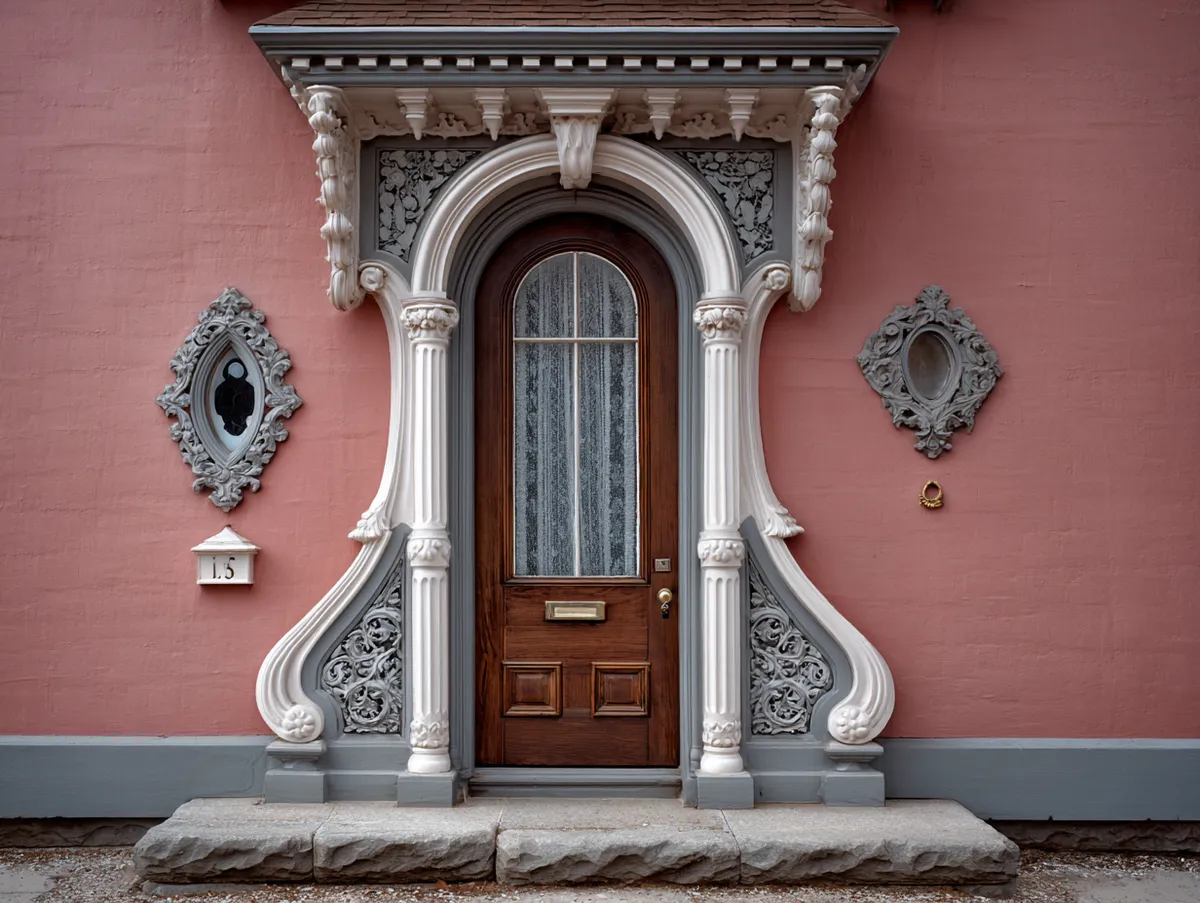
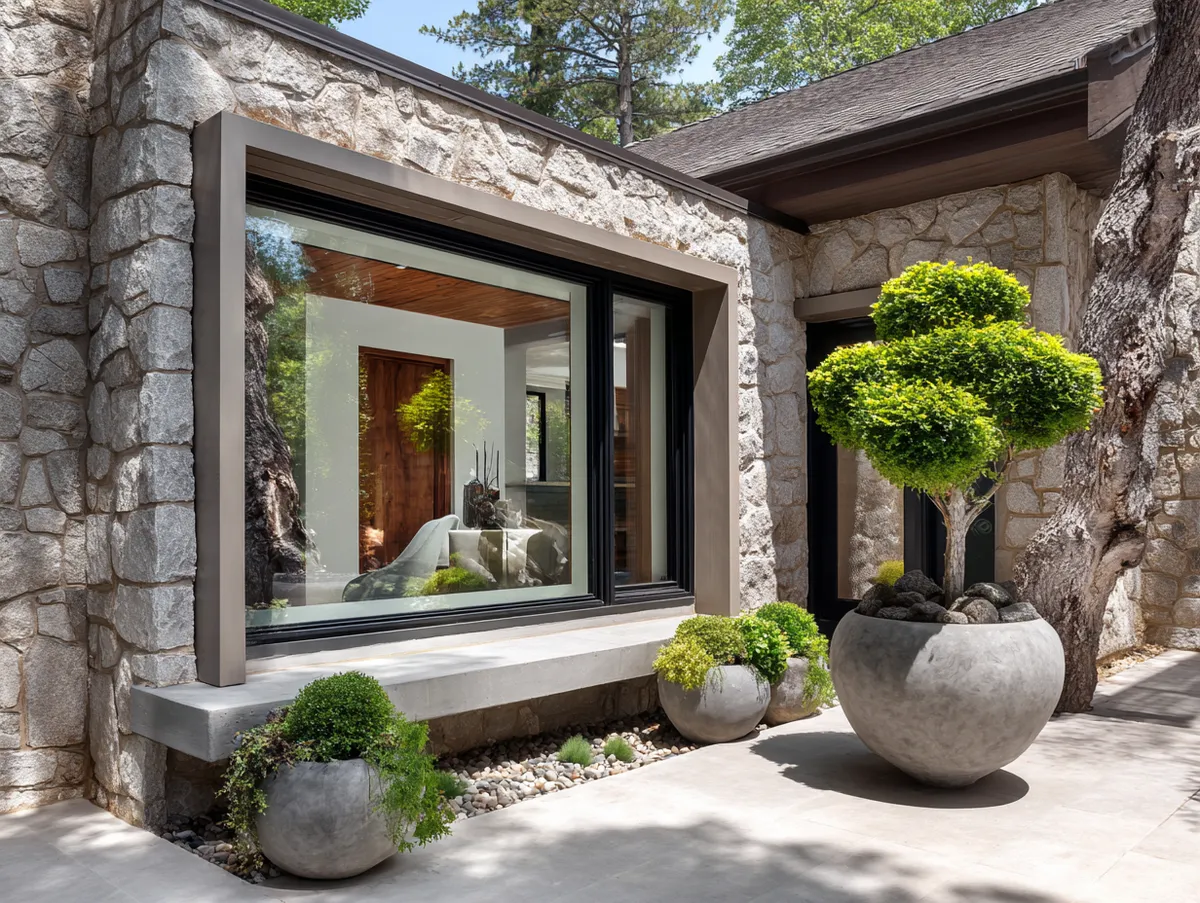
Exterior crown molding for windows is the architectural detail that turns a flat facade into something worth photographing. A bare window reads as a hole in the wall. Add a well-chosen crown profile above it — dentil, ogee, or a clean flat header — and suddenly every window has a brow, a posture, a presence. The difference shows from the street before anyone gets close enough to read a material label.
The four sections below follow the most common decision path: profile style first, then material, then color, then how the whole thing ages. Each section covers what works and, just as importantly, what doesn’t — because the wrong scale or the wrong finish damages curb appeal faster than no molding at all.
Costs are real. According to Angi’s 2026 data from 1,425 verified projects, adding crown molding around doors and windows typically runs $150 to $200 per opening. Material choice alone swings the per-linear-foot price from $1 for foam to $30 for exotic hardwood. Those numbers matter before you commit to a profile.
- Exterior crown molding for windows costs $150–$200 per opening installed (Angi, 2026).
- Polyurethane outperforms wood for exterior use — it doesn’t need repainting every 3–5 years like wood trim does.
- Dentil profiles add shadow depth; flat headers with a drip cap read as modern and clean.
- Profile width must be proportional to wall height — too large looks cartoonish, too small disappears.
- White, cream, and warm gray are the safest crown colors for long-term resale value.
How Profile Shape Determines the Shadow — and the Style
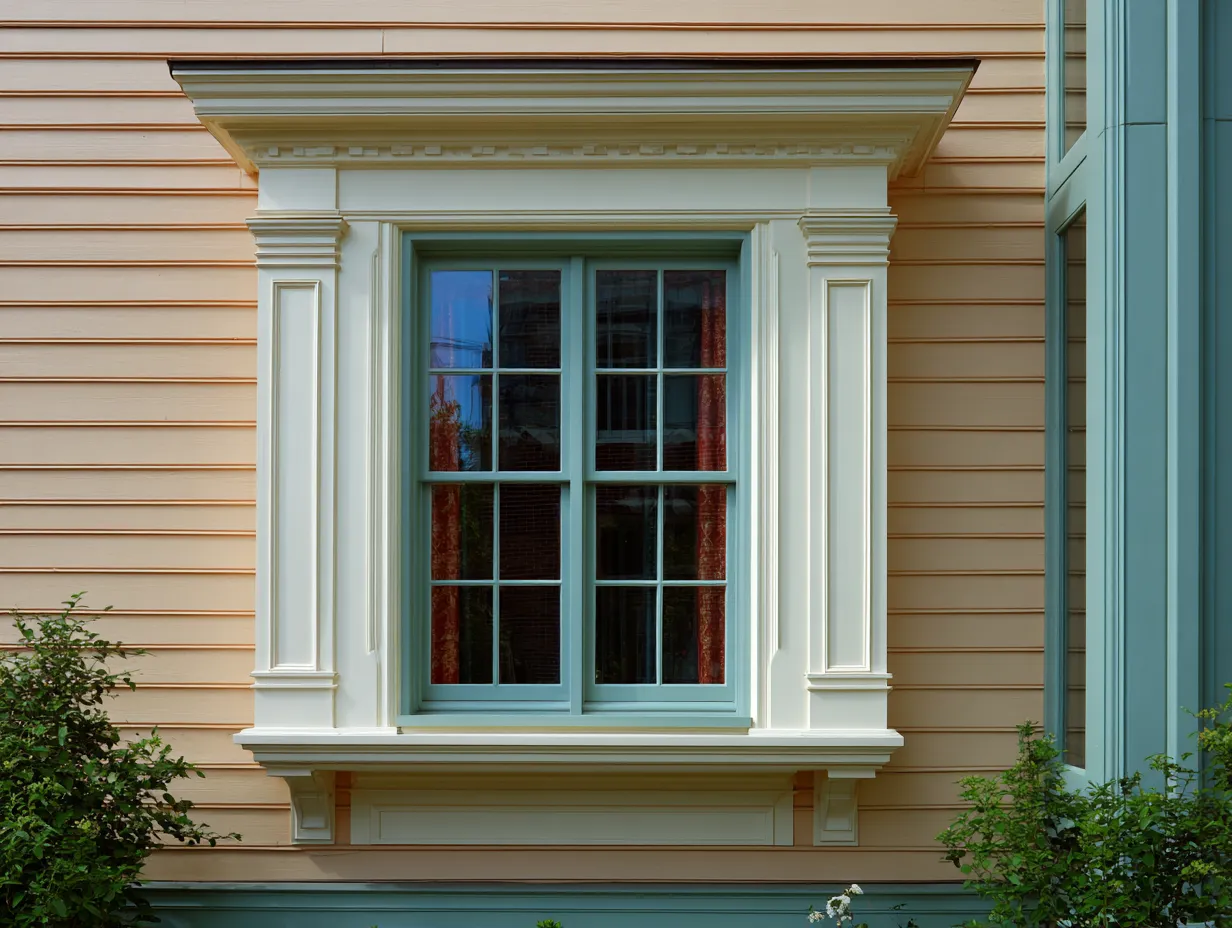
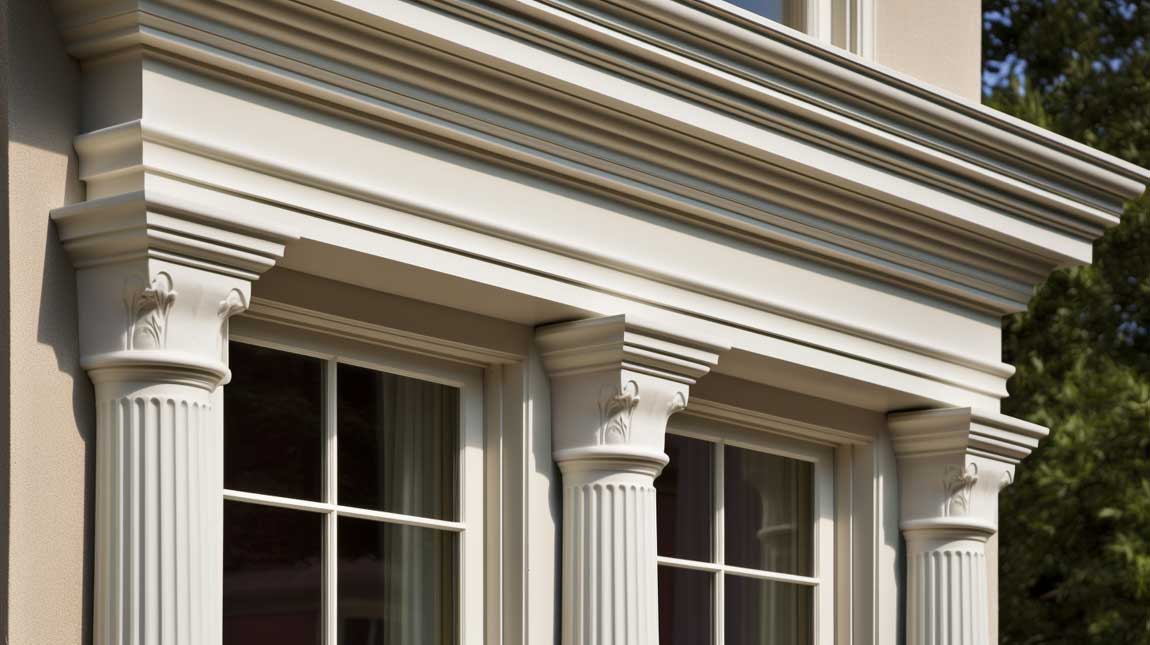
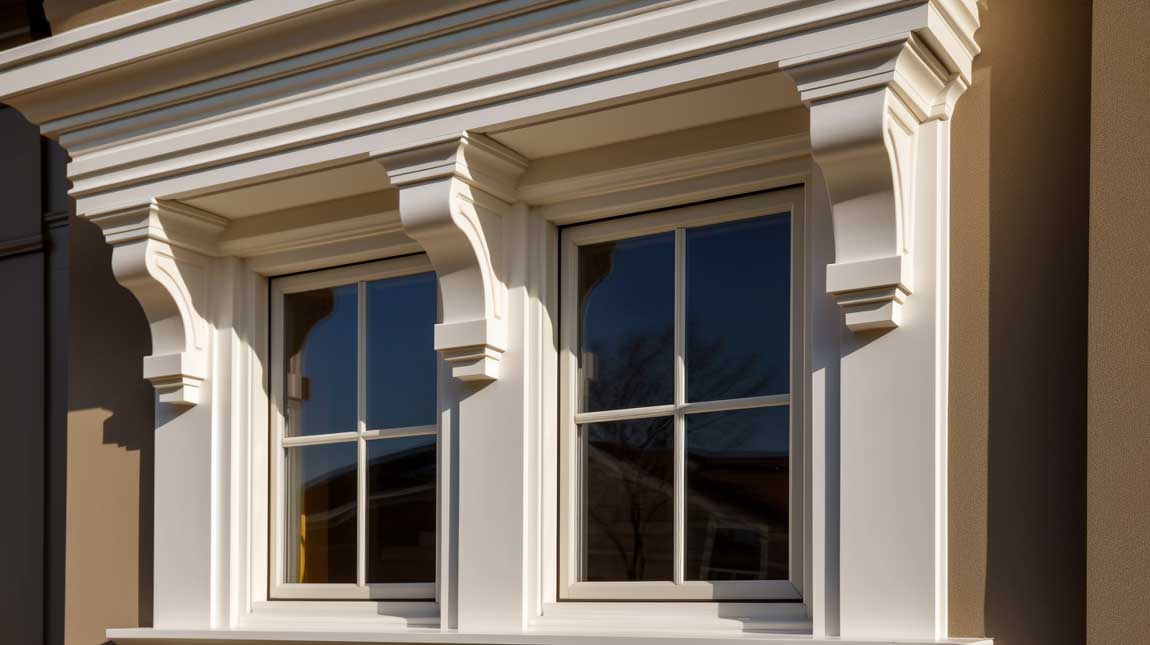
Window crown molding exterior impact starts with profile geometry, not with color or material. The profile is what creates shadow, and shadow is what the eye reads from thirty feet away. A dentil course — those evenly spaced rectangular blocks, typically 2 to 4 inches deep on Colonial Revival facades — creates a rhythmic pattern that shifts with the sun throughout the day. An ogee profile rolls from concave to convex in a single fluid S-curve. A simple fascia with a drip cap reads as a straight horizontal band, clean enough for contemporary homes but still architectural enough to finish a window properly.
Proportion is the single most unforgiving variable. A 4-inch crown on a 10-foot wall section looks completely different than the same crown on a 9-foot section — one reads as decisive, the other as oversized. Stylists recommend measuring the wall plane first and confirming scale with a paper mockup taped in place before ordering anything. What looks correct on a product photo rarely translates directly to your actual facade.
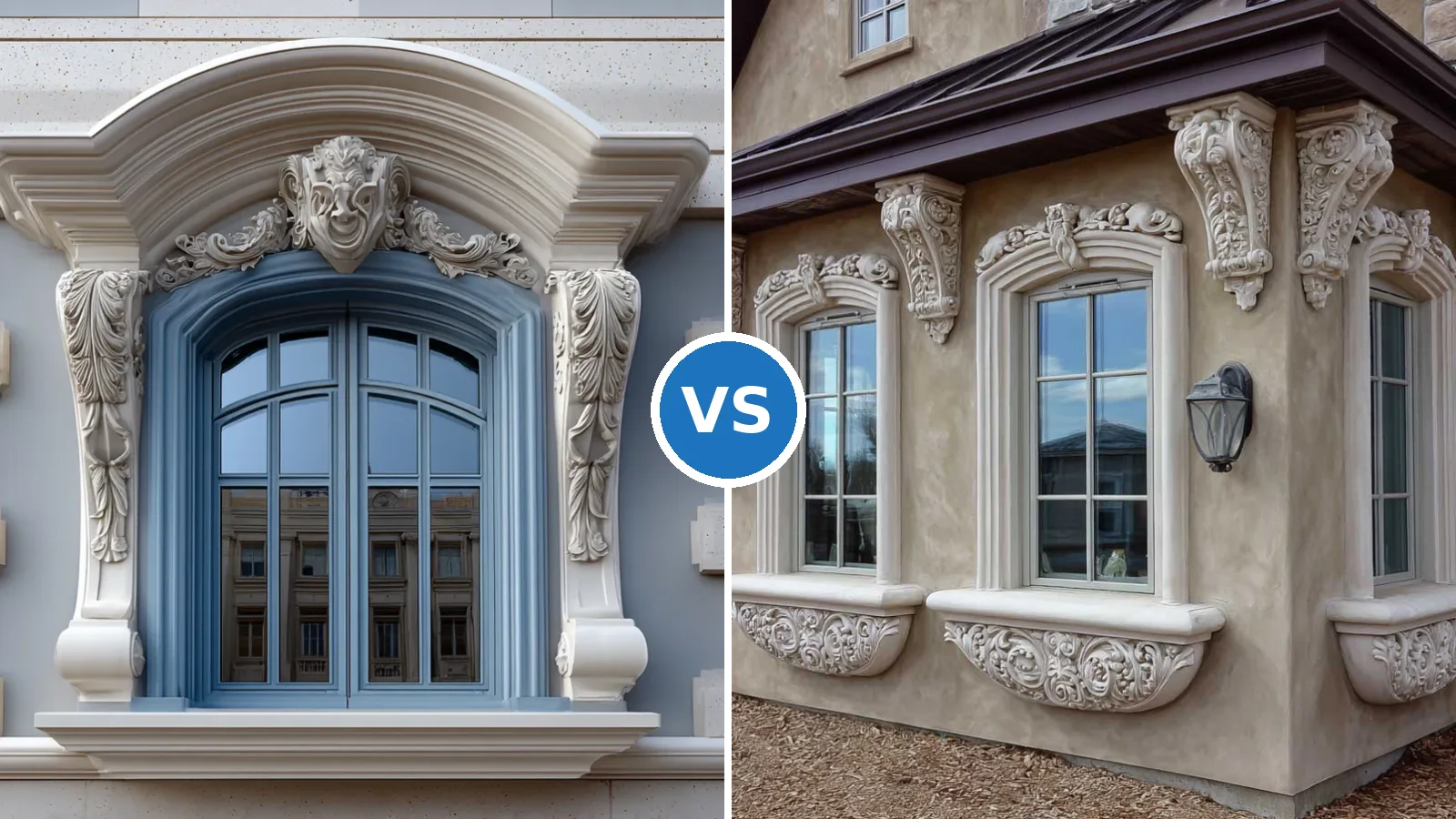
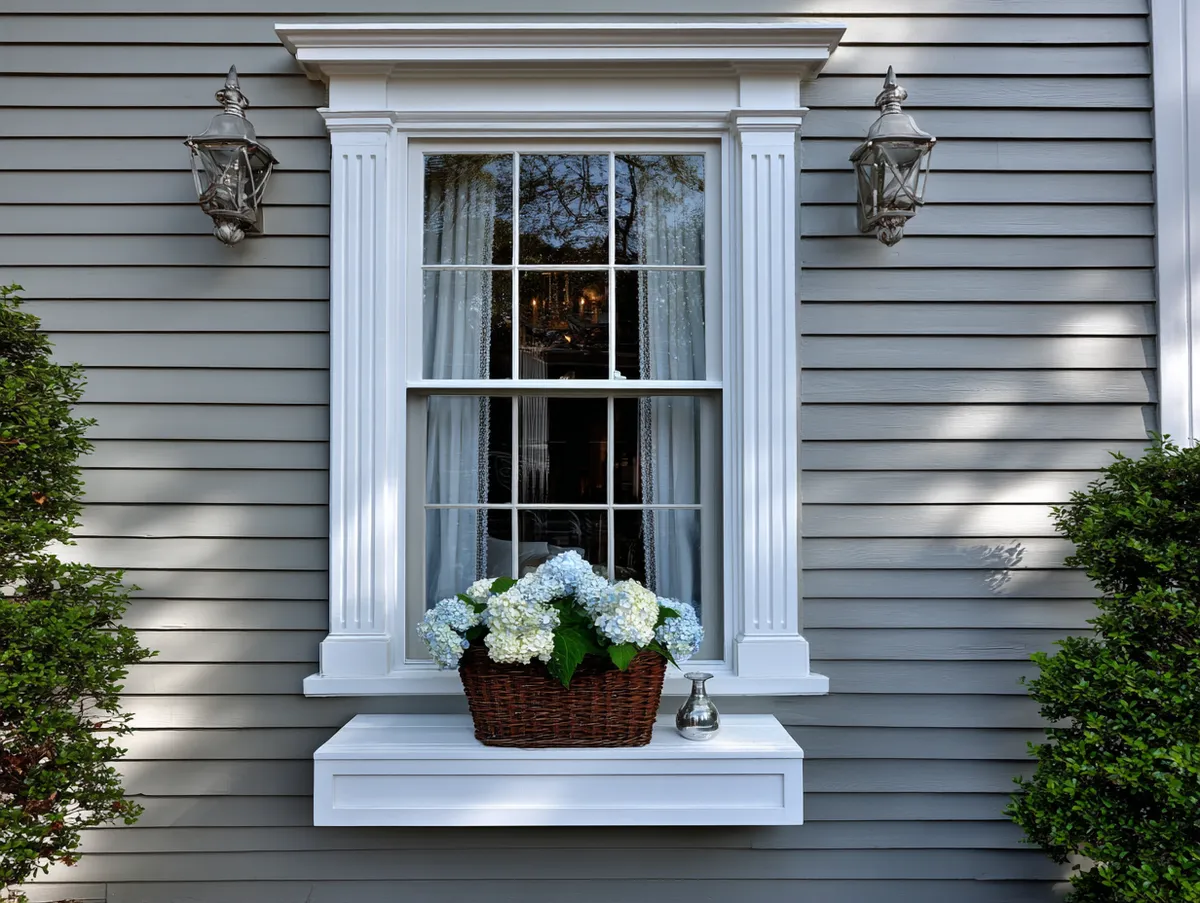
The anti-advice worth internalizing: stacking multiple decorative profiles around a single window does not increase elegance. A crown above, a decorative sill below, pilasters on the sides, and a keystone at the top is how a facade ends up looking assembled from a parts catalog rather than designed. Pick one primary element — usually the crown header — and keep everything else supporting it. Windows with three competing molding elements almost always look worse than windows with one well-chosen one.
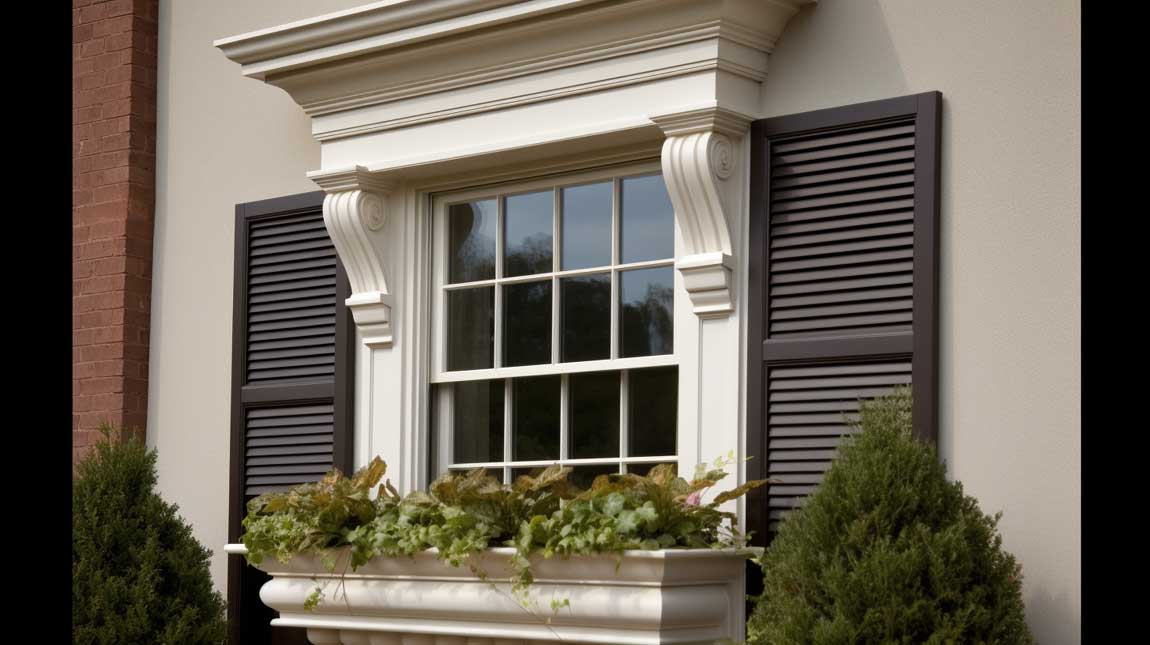
Wood vs. Polyurethane — the Maintenance Gap No One Mentions at the Showroom
Exterior crown molding material choice is really a maintenance schedule decision disguised as an aesthetic one. Wood crown molding — pine, cedar, or mahogany — looks the most authentic against historic facades and takes stain or custom paint finishes that synthetic materials can’t replicate. The cost runs $3 to $30 per linear foot depending on species, per Angi’s 2026 data. The catch is that exterior wood trim requires repainting every 3 to 5 years; without it, wood can deteriorate and need replacement within 10 years, according to industry trim specialists. South- and west-facing windows age fastest because sun exposure is continuous.
Polyurethane is the realistic choice for most homeowners who aren’t restoring a historic property. It resists moisture, rot, and insects, and unlike wood it doesn’t need scraping and repainting on a fixed cycle. The material cost runs $2 to $10 per linear foot — narrower than wood but also more predictable. The trade-off is surface texture: polyurethane doesn’t hold stain well and can dent more easily than hardwood, so it works best in painted white or cream rather than a wood-tone finish.
PVC costs just $1 to $4 per linear foot and handles moisture better than almost anything, which is why it dominates coastal and humid-climate installations. Its limitation is color: PVC is typically only available in white, and its slick surface doesn’t hold paint with the same adhesion as wood or polyurethane. For windows where color flexibility matters — a charcoal-trimmed contemporary home, for instance — PVC becomes the wrong call. Aluminum sits at the other end: $10 to $30 per linear foot installed, genuinely rust-proof, and the only material that works as well in marine environments as it does in dry climates.


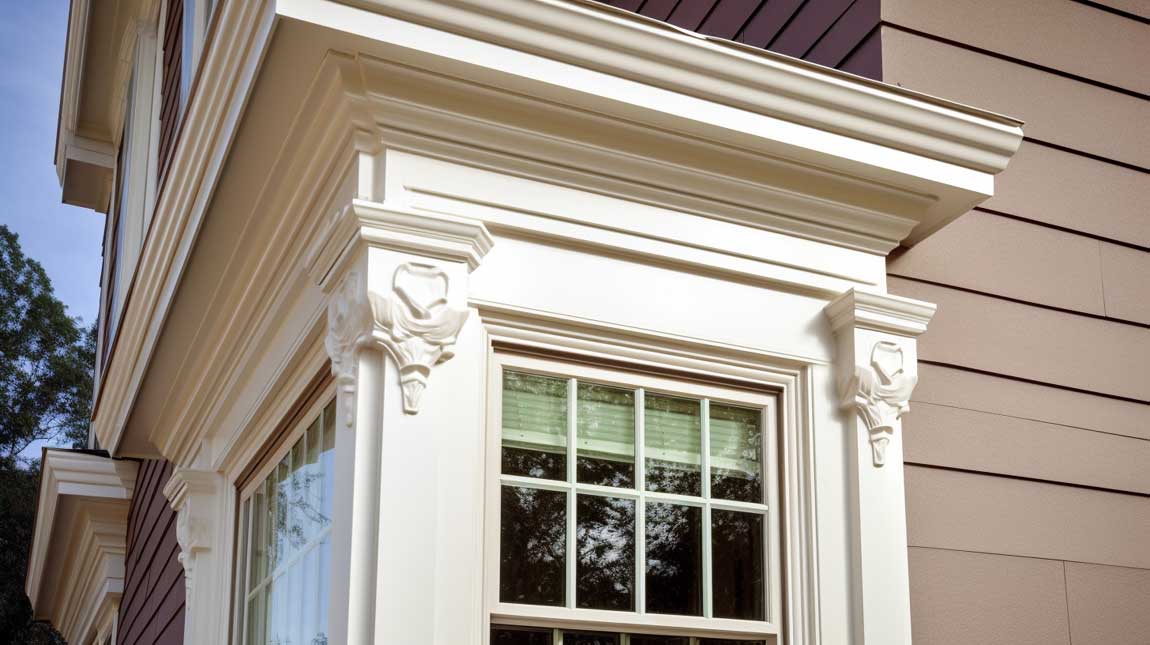
Color on Window Crown Molding — When to Match, When to Contrast
Window trim color strategy divides into two clear camps: match the body color to dissolve the molding into the facade, or contrast it to make each window frame pop. For exterior crown molding for windows, the contrast approach wins far more often — a crown that disappears against siding defeats the purpose of installing it. Classic white or warm cream against colored siding creates visible shadow lines and reads clearly at street distance. Stylists recommend reserving a matched crown color for very modern homes where the goal is to reduce visual noise rather than add architectural detail.
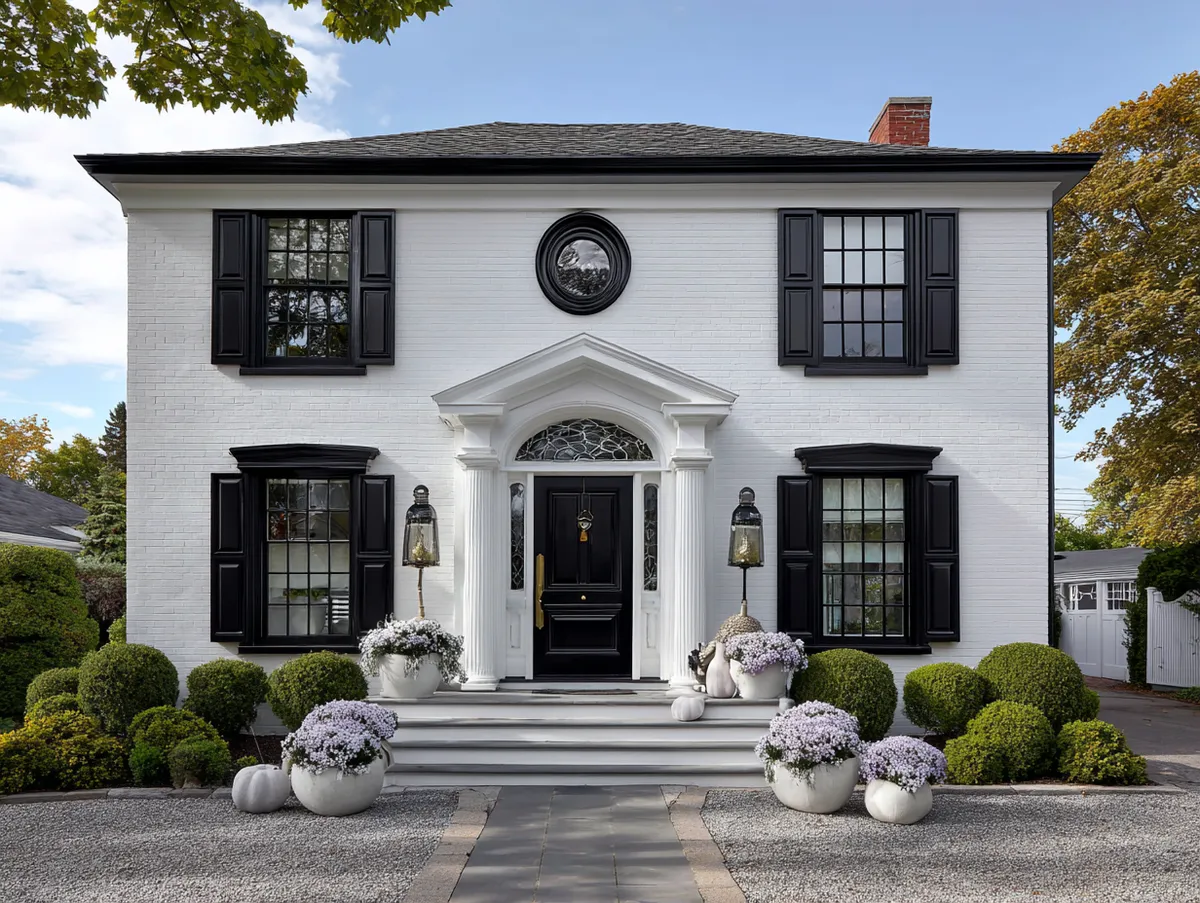
Black crown molding above windows has gained traction, particularly on white brick and board-and-batten exteriors. The effect is sharp — each window reads as a distinct frame with high contrast edges. Explore how this translates in practice with black exterior window trim molding ideas on white facades for before-and-after context. The risk with black in hot climates is heat absorption — black surfaces on south-facing trim run significantly hotter than white, which accelerates paint degradation and can warp thinner synthetic profiles. A UV-resistant topcoat is not optional in that scenario.
Metallic finishes — bronze, brushed nickel, or matte silver — are the riskiest color choice on exterior crown molding. They photograph beautifully but are nearly impossible to match if a section needs repair years later, since metallic paint batches vary across production runs. The practical recommendation: use metallic as an accent on hardware or light fixtures, not as the crown molding finish itself. Soft gray, warm white, and cream will still look intentional in 15 years; metallic finishes age less gracefully and date a facade more quickly than most homeowners anticipate.
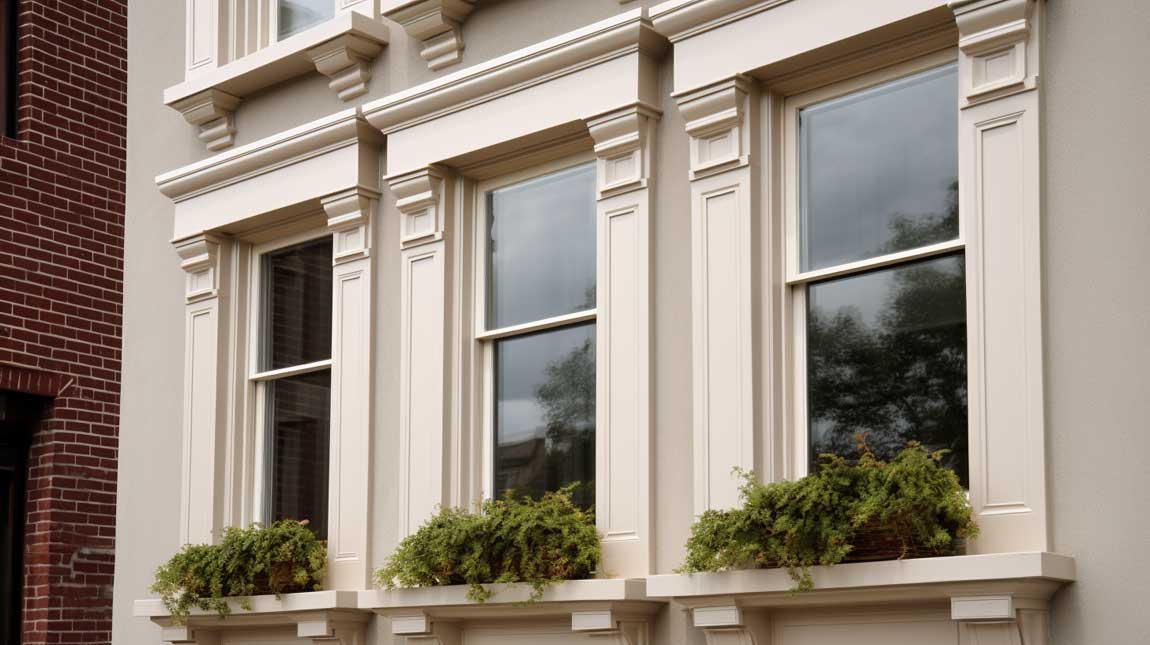
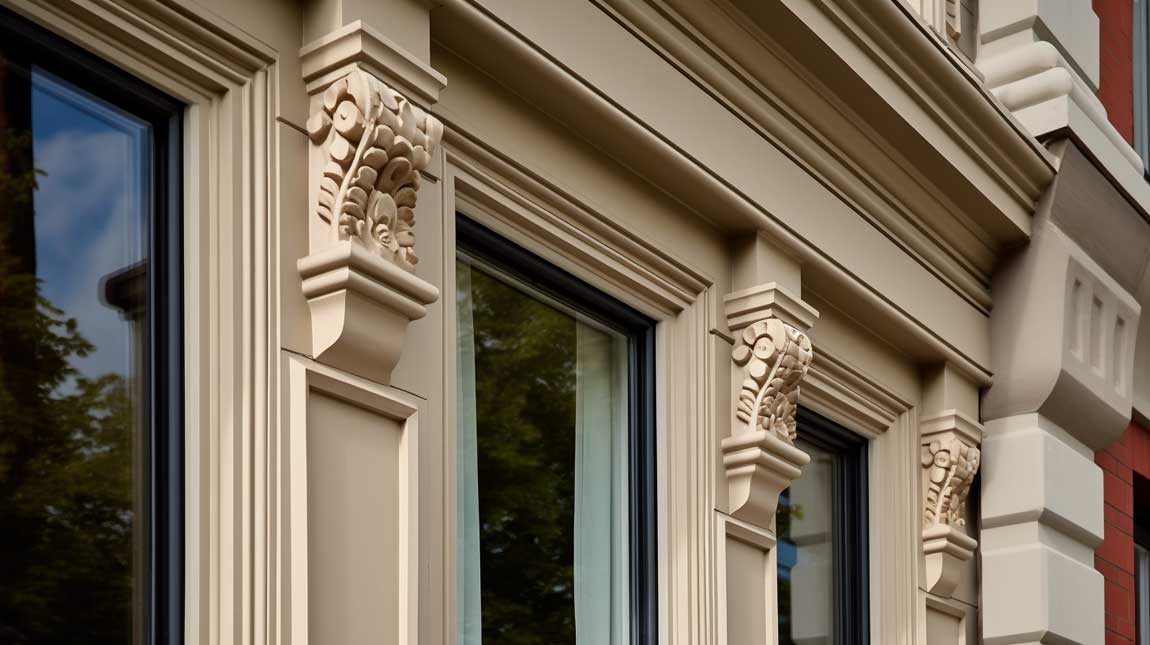

Mixing Styles Without Losing Coherence — the Eclectic Window Crown Approach
Exterior window crown molding ideas that blend traditional profiles with modern materials require one discipline to work: the mixing element has to be material or scale, not both simultaneously. A dentil crown in matte black aluminum reads as a modern interpretation of a classical profile — the contrast is legible because the profile itself is recognizable. Swap that for a custom geometric foam profile in metallic silver and the result stops reading as eclectic and starts reading as confused. The eclectic approach rewards restraint more than experimentation does.
A useful reference point for understanding how different exterior molding types interact across an entire facade: the overview of architectural mouldings for exteriors covers eave, crown, and cornice relationships — details that matter when you’re adding window crowns to a home that already has roofline molding. Mismatched profiles at different levels of the same facade create visual noise that no amount of careful paint color can resolve.
The question worth asking before ordering a mixed-style assembly: does every element on this window surround have a clear reason to be there? A keystone above a crown header makes sense on a Georgian facade where keystones appear consistently across the building. That same keystone on a Craftsman bungalow is decorative confusion. Eclectic works when it reflects the architecture; it fails when it’s just adding elements because they look interesting in isolation. Strip the unnecessary and the remaining combination almost always reads as more sophisticated, not less.

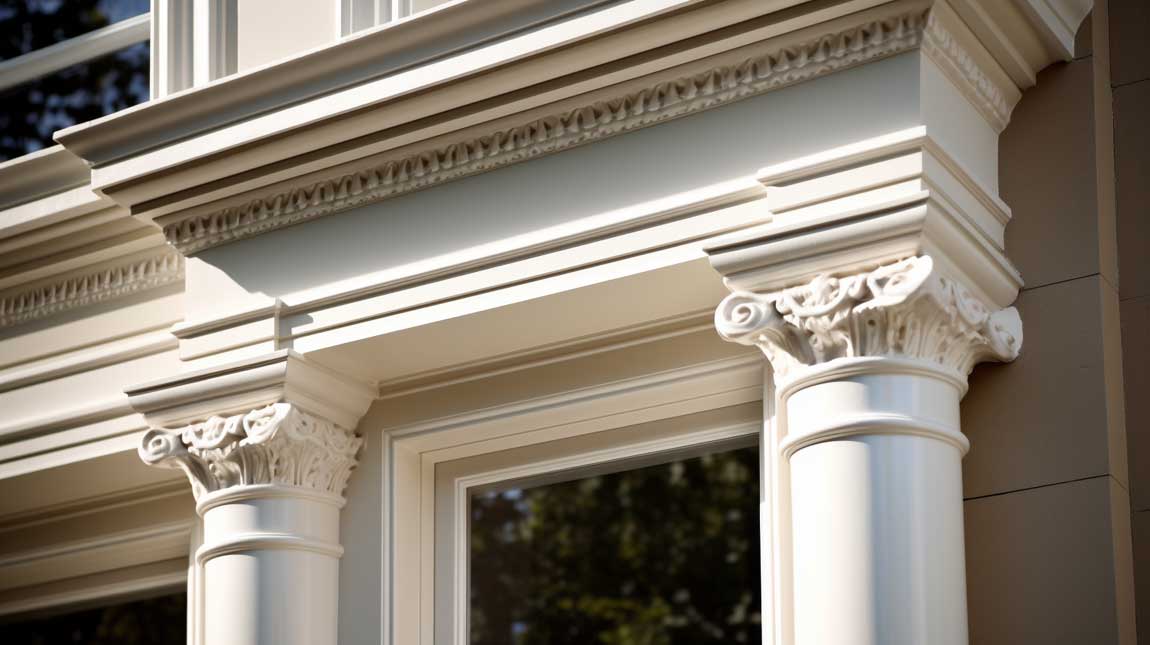

Modern Exterior Crown Molding — When Clean Lines Outperform Ornate Profiles
Window crown molding for modern exteriors works best when it creates visual weight without historical ornament. A 4-inch flat header with a drip cap and a shadow gap at the bottom edge reads as a deliberate architectural element rather than applied decoration. The shadow gap — a small reveal between the window casing and the crown above it — is the detail that separates a considered installation from a contractor’s default. It costs nothing extra and adds the kind of depth that makes a facade look designed rather than assembled.
Aluminum is the preferred material for this approach: $10 to $30 per linear foot installed, genuinely maintenance-free, and available in factory-finished colors that hold for decades without repainting. It doesn’t warp, doesn’t require caulking at joints every few years, and anodized finishes resist fading better than painted polyurethane or wood. The scale of modern crown profiles tends toward 3 to 4 inches — visible but not projecting enough to cast heavy shadow on a flat-planed contemporary home.
What doesn’t work on a modern home: projecting dentil or egg-and-dart profiles that signal a historical style the rest of the building doesn’t support. A mid-century flat-roof home with dentil molding at the windows looks like a category error rather than an eclectic choice. The trick here is that modern crown molding earns its place through proportion and material quality, not through surface complexity. Fewer details executed precisely read as more expensive than many details executed casually.

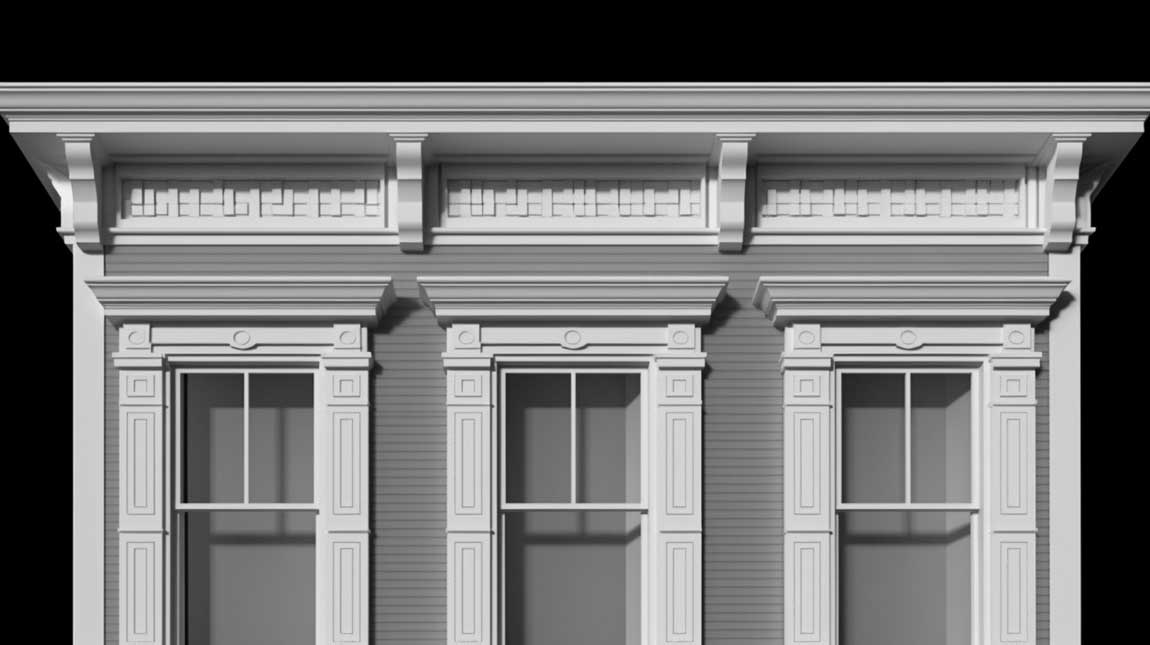
Timeless Window Crown Molding — the Profiles That Still Read Correctly in 20 Years
Exterior crown moulding for windows with long-term staying power shares three characteristics: a profile rooted in a recognizable architectural tradition, a material that doesn’t require constant maintenance to stay presentable, and a color that doesn’t depend on current trend cycles. Georgian dentil, Federal ogee, and simple flat casings with a drip cap have been on residential facades for over two centuries — they don’t go out of date because they were never following a date-specific trend to begin with. The trick is to choose the profile that corresponds to your home’s actual architectural era rather than whatever is trending on design platforms this season.
Polyurethane has become the dominant material for timeless exterior crown molding because it holds its profile indefinitely without the rot, insect damage, or warping that makes wood a long-term liability. A properly installed polyurethane crown at $2 to $10 per linear foot (Angi, 2026) costs less than one full repainting cycle of equivalent wood trim. For homeowners who want the look of traditional wood without the 3-to-5-year maintenance clock, it’s the closest available equivalent.
White remains the default for a reason: it reads correctly against virtually any siding color and doesn’t visually date the way trend colors do. Cream or warm off-white works on homes with warm-toned brick or stone, where pure white would feel artificially cold. Cool gray works on contemporary facades. What doesn’t age well is any crown color that was chosen because it was fashionable rather than because it served the facade’s existing palette — those choices become renovation projects within a decade.

| Profile | Best Fit | Material | Maintenance |
|---|---|---|---|
| Dentil crown | Colonial, Georgian, Federal | Polyurethane or PVC | Low — repaint only when exterior siding is repainted |
| Ogee profile | Victorian, Craftsman | Wood or polyurethane | Moderate — wood needs repaint every 3–5 years |
| Flat header with drip cap | Modern, Contemporary, Ranch | Aluminum or PVC | Very low — aluminum is maintenance-free |
| Crosshead with keystone | Italianate, Greek Revival | Polyurethane or foam | Low — inspect caulk joints annually |
According to Angi’s cost data for 2026, adding crown molding to doors and windows costs $150 to $200 per opening when bundled with a broader trim project — making it one of the more cost-efficient curb appeal upgrades relative to visual impact. For a full breakdown of crown molding costs by material and linear footage, Angi’s 2026 cost report is the most current verified reference.
Final read
Exterior crown molding changes what a window costs to look at — before anyone steps inside.
Profile geometry before color — the shadow a crown casts matters more than its shade at thirty feet.
Polyurethane at $2–$10 per linear foot skips the 3-to-5-year wood repainting cycle. Aluminum is the only truly maintenance-free option and handles coastal climates without compromise.
Match the profile to your home’s actual architectural era. A mismatched dentil on a mid-century flat roof reads as a catalog error, not eclectic charm. Save this post.