Quick Summary
This page covers 15+ entrance canopy design ideas across three styles: modern minimalist (metal, concrete), traditional (wood, wrought iron), and glass. You’ll find material recommendations, real price ranges in dollars, mounting mistakes to avoid, and which canopy design works best for different house types. Modern entrance canopy designs start around $600 for aluminum. Traditional house front canopy designs with solid brackets run $1,500–$2,200. Glass entrance canopies cost $1,800–$4,000 installed.
I’ve walked past hundreds of entrance canopy designs in my neighborhood alone. Most look like afterthoughts. A flat polycarbonate sheet screwed into the wall above the door. No slope. No style. Water pools on top in a rainstorm and drips right onto your head anyway.
Your entrance canopy design sets the tone for the entire house. Get it wrong, and a $400,000 home looks like it’s wearing a cheap hat. Get it right, and even a simple ranch house feels like something out of an architecture magazine.
I pulled 15+ canopy designs for house entrances that actually work — modern minimalist, glass, traditional, gate canopies, and a few hybrids. Every style here includes the material that makes it tick and what to avoid. No $12 plastic awnings from Amazon. Those belong in a yard sale.
Quick Scan — What’s Inside
⬛ Modern entrance canopy design — aluminum, steel, concrete, flat + angled profiles
⬛ Traditional house front canopy design — cedar, wrought iron, ornamental brackets
⬛ Glass entrance canopy design — tempered vs laminated, mounting hardware, costs
⬛ Material comparison table — durability, price, maintenance side by side
⬛ HowTo: how to choose and install an entrance canopy step by step
Entrance Canopy Materials at a Glance
| Material | Best For | Price Range (Installed) | Lifespan | Maintenance |
|---|---|---|---|---|
| Aluminum | Modern, flat, cantilevered | $600–$2,000 | 30+ years | Low — wipe down yearly |
| Steel (galvanized) | Industrial, heavy-duty | $900–$2,500 | 25–40 years | Medium — repaint every 5–7 years |
| Laminated Glass | Light-filled, modern facade | $1,800–$4,000 | 20–30 years | Low — clean glass seasonally |
| Cedar Wood | Traditional, Craftsman, cottage | $1,200–$2,800 | 15–25 years | High — seal or stain every 2 years |
| Wrought Iron | Classic, Victorian, Colonial | $2,000–$4,500 | 50+ years | Medium — rust-proof coat every 3–5 years |
| Polycarbonate (budget) | Temporary, rental, low budget | $80–$300 | 3–5 years | Yellows fast — replace, don’t repair |
Modern Entrance Canopy Design: Clean Lines, Metal & Concrete
Every modern entrance canopy design I’ve seen that actually holds up uses either powder-coated aluminum or galvanized steel. Bare steel rusts in two seasons if you skip the coating. I watched my neighbor’s $1,200 steel canopy turn orange-brown within 18 months because he went with a no-name fabricator who skipped the hot-dip galvanizing. Spend the extra $200 on the finish. It’s the difference between a canopy that looks sharp at year five and one that looks abandoned.
Canopy depth matters more than most people think. Anything less than 36 inches of projection won’t keep rain off you while you fumble for keys. My go-to recommendation? 48 inches minimum. That’s enough to cover two adults standing side by side. Deeper canopies also cast better shadows on the door, which keeps the paint from fading fast. You’ll notice this on south-facing entrances where UV exposure is brutal.
Flat canopy designs for houses look incredible in photos but collect standing water if the installer doesn’t add at least a 2% slope. I learned that the hard way after power-washing puddles off my own flat aluminum canopy every week for a full summer. Slope it. Or go with a slight angle from the start. Nobody talks about drainage, but it’s the thing that separates a good entrance canopy design from a maintenance headache.
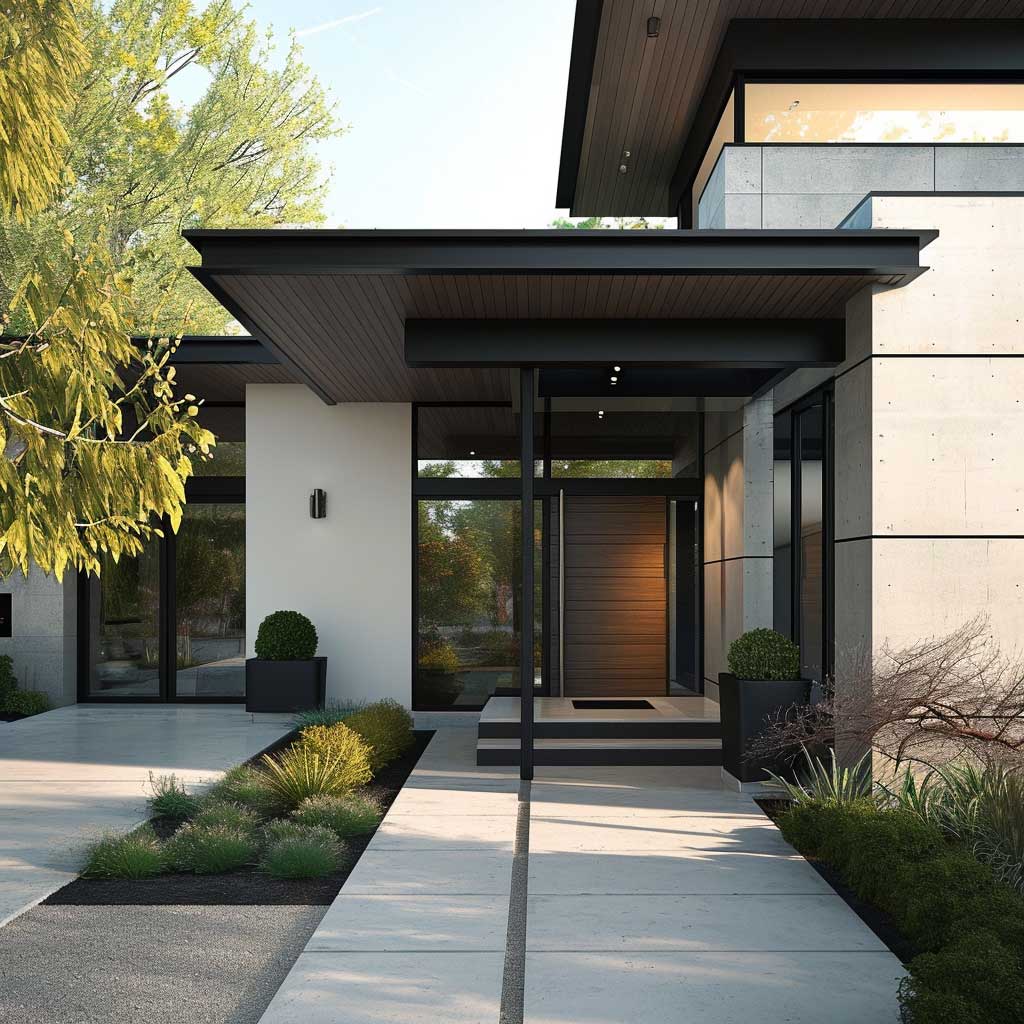
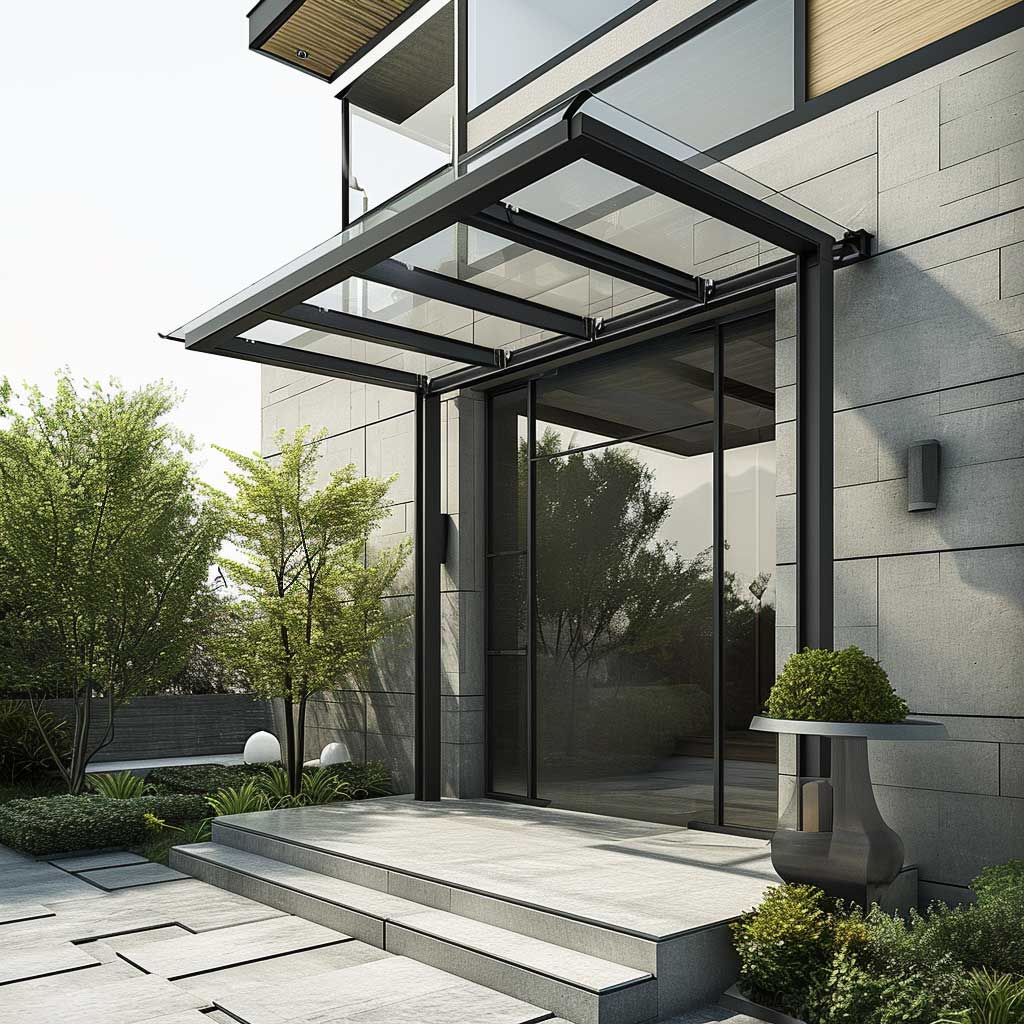

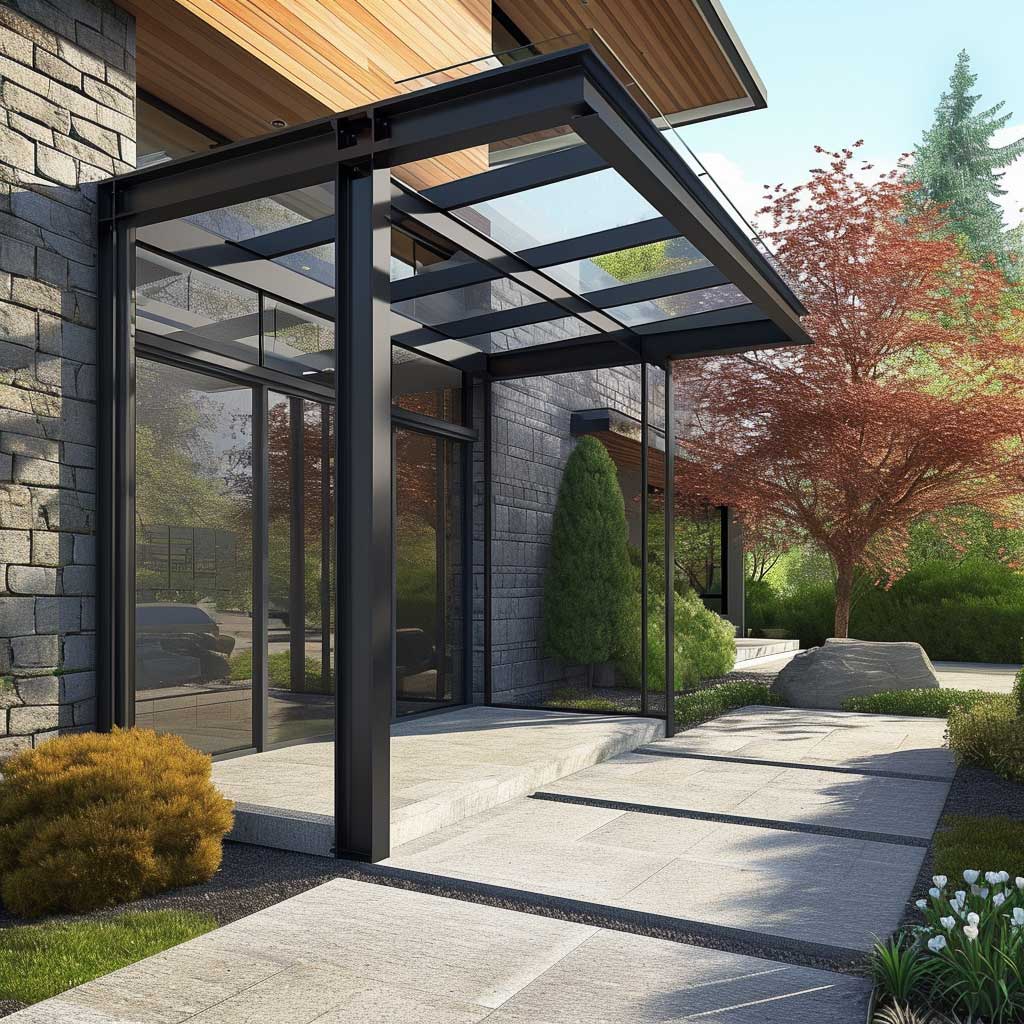
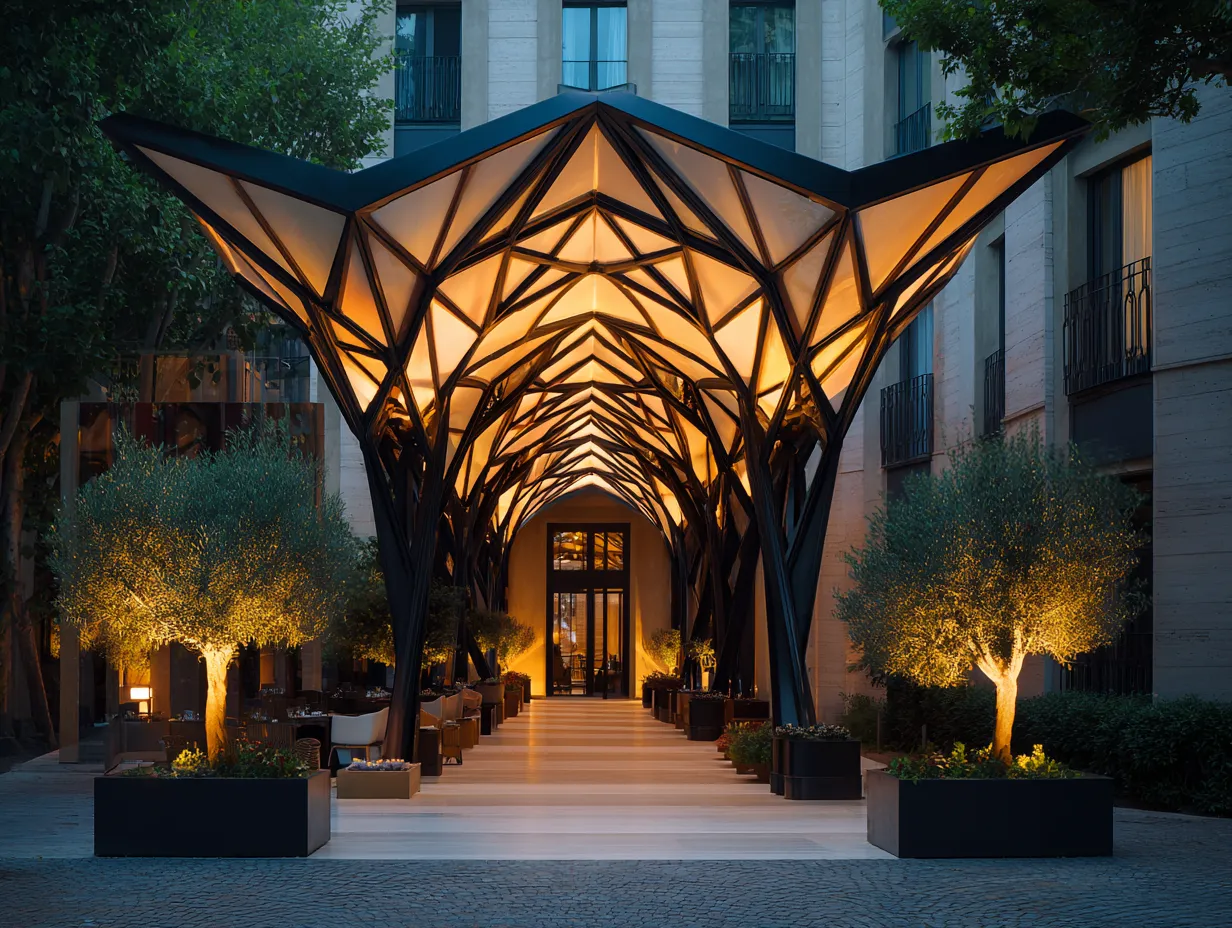
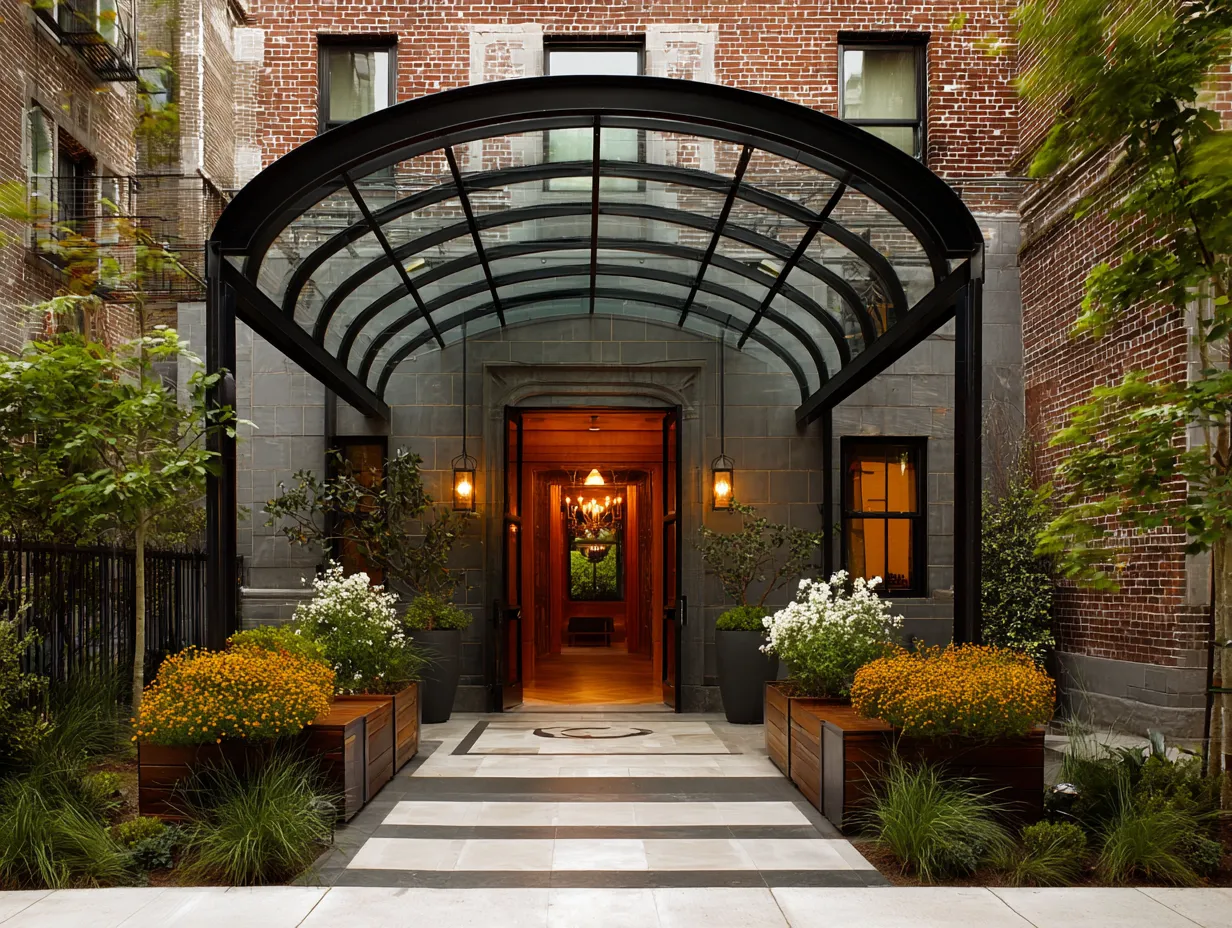
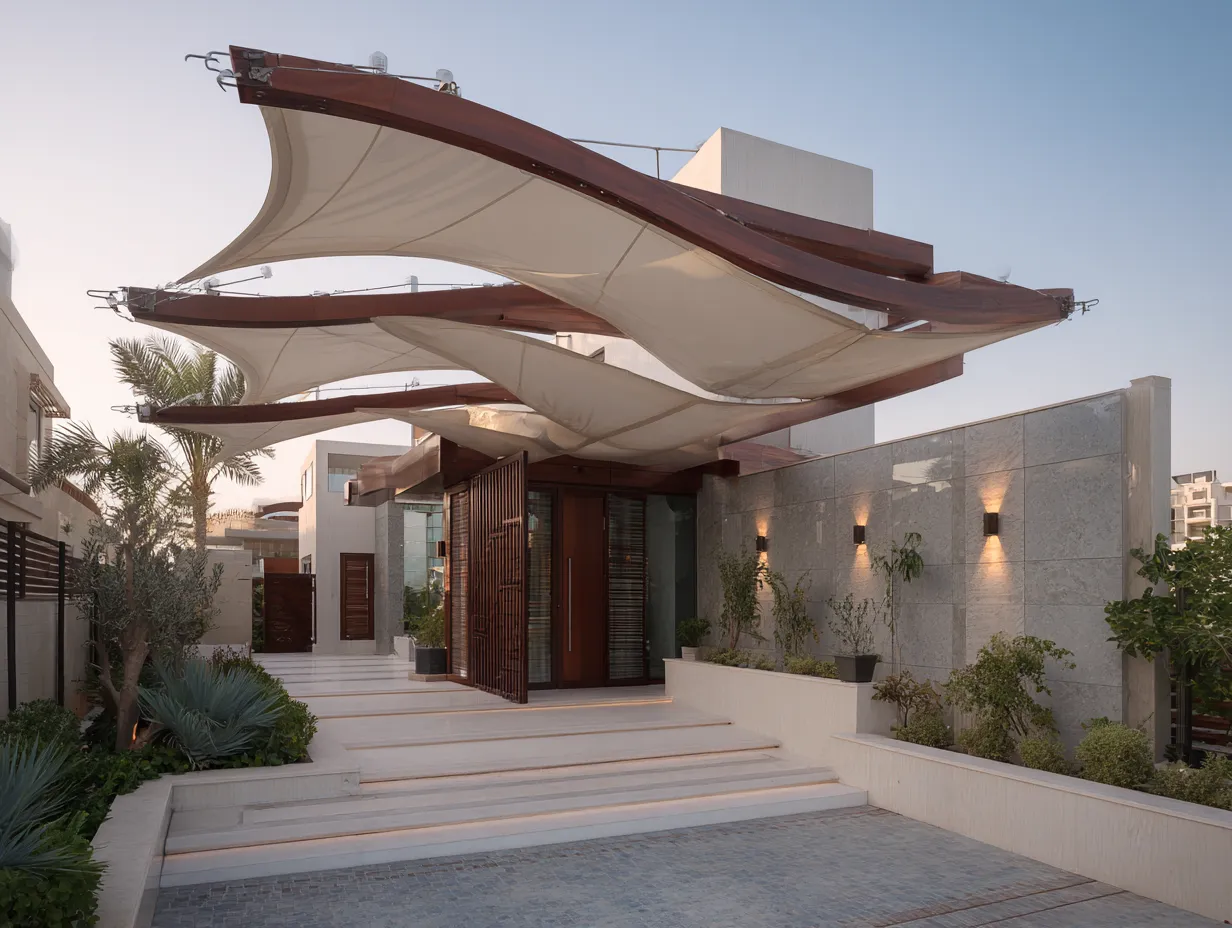
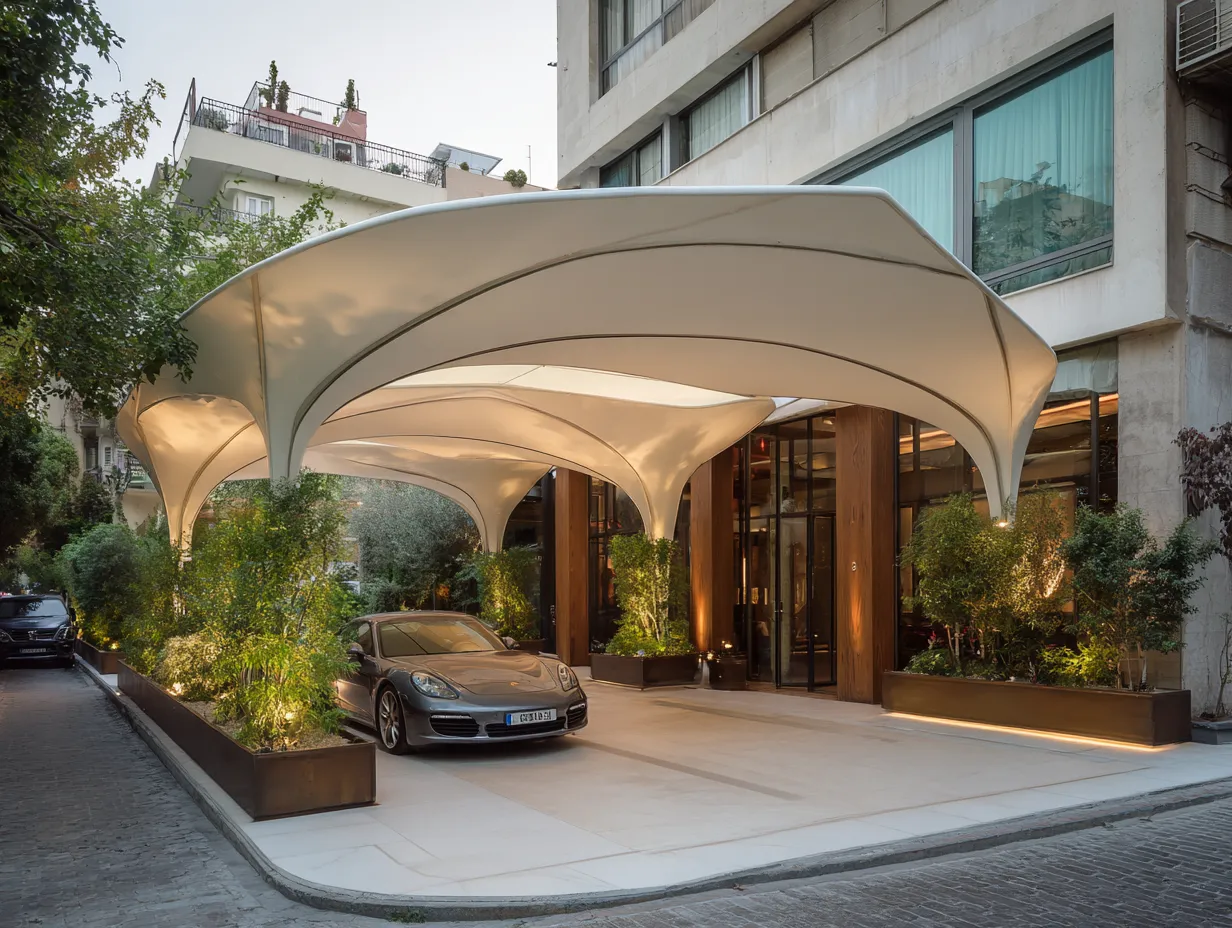
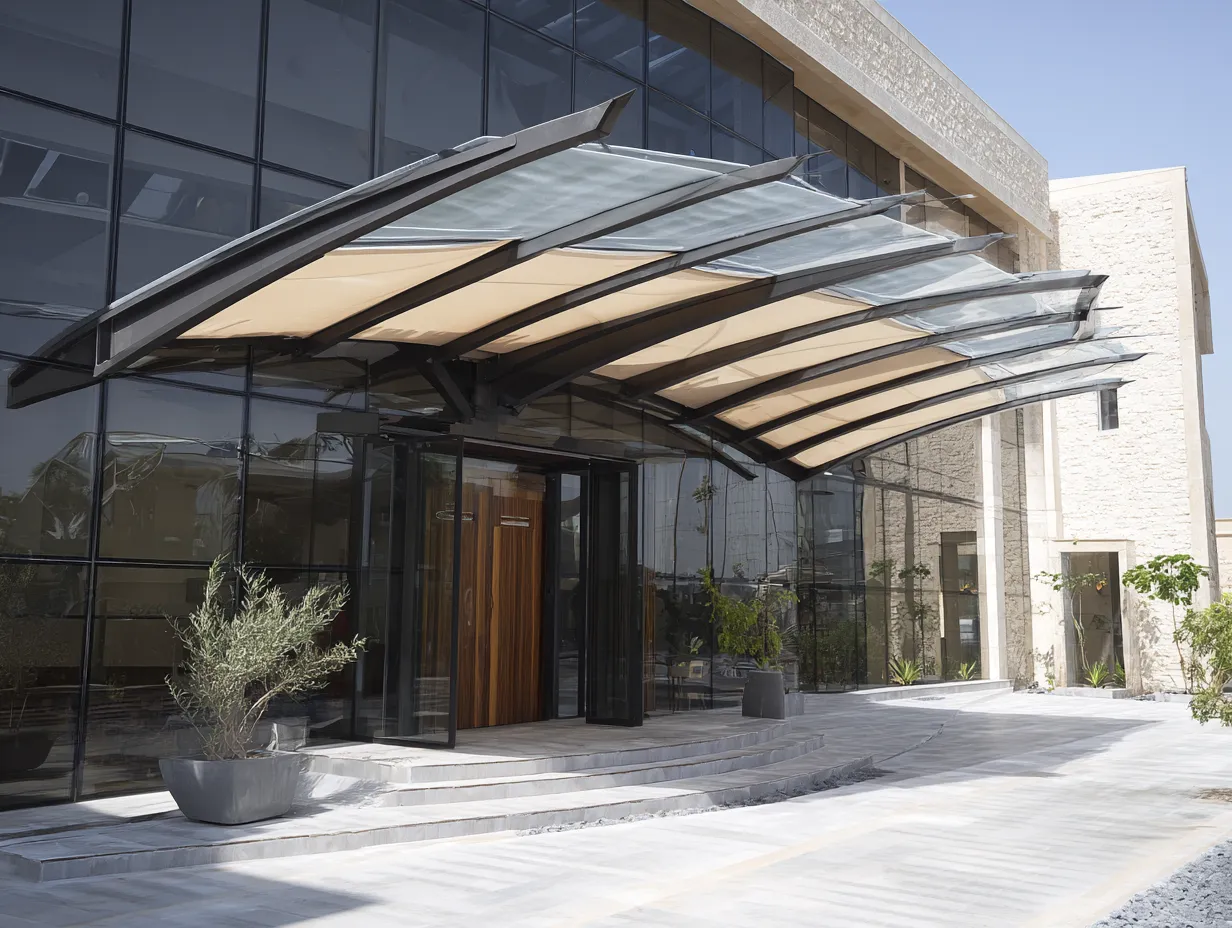
In the realm of architectural design, the entrance of a home sets the tone for the entire structure. The incorporation of a modern minimalist entrance canopy design in urban homes is a testament to the fusion of functionality and aesthetic simplicity. This design approach emphasizes clean lines, uncluttered spaces, and the use of contemporary materials, transforming the entrance into a statement of modern elegance.
The minimalist ethos in entrance canopy design is rooted in the ‘less is more’ philosophy. This is visible in the choice of materials and the overall design language. Common materials used in modern minimalist canopies include metal, glass, and concrete, known for their sleek look and durability. If you’re working with a metal structure, you might also want to see stylish metal modern front door canopy designs for more material-specific ideas. These materials are often used in their most natural, unadorned state, allowing their inherent beauty to stand out.
A key characteristic of these canopies is their clean and geometric lines. Free from ornate details, the design focuses on straight, angular forms that complement the urban landscape. The structure of the canopy, whether it extends from the building in a flat, angled, or curved form, is designed to create a visual impact through its simplicity.
Color plays a subtle yet significant role in minimalist canopy design. Typically, the palette is kept neutral – blacks, whites, and grays are common. These colors not only accentuate the modern appeal but also ensure that the canopy integrates seamlessly with a variety of architectural styles. The emphasis is on creating a harmonious balance with the building’s facade, rather than overpowering it.
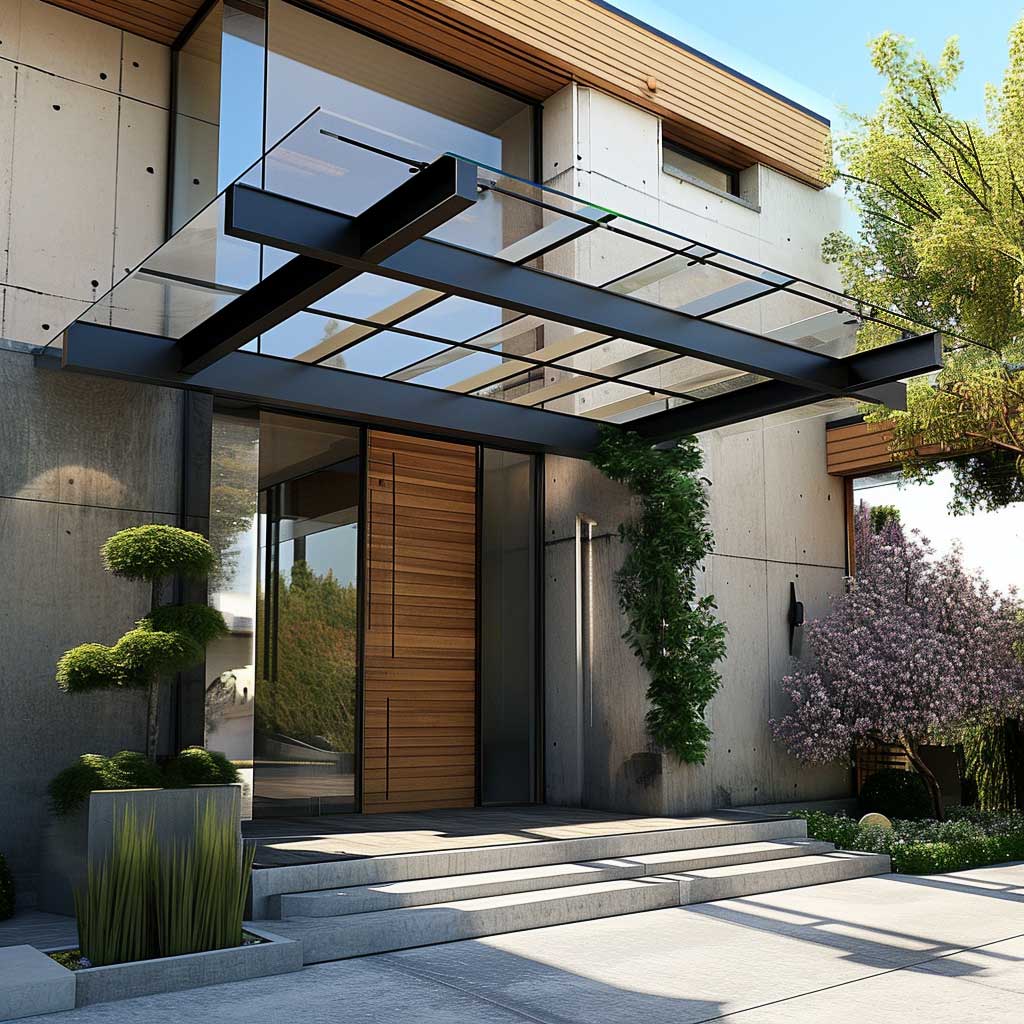
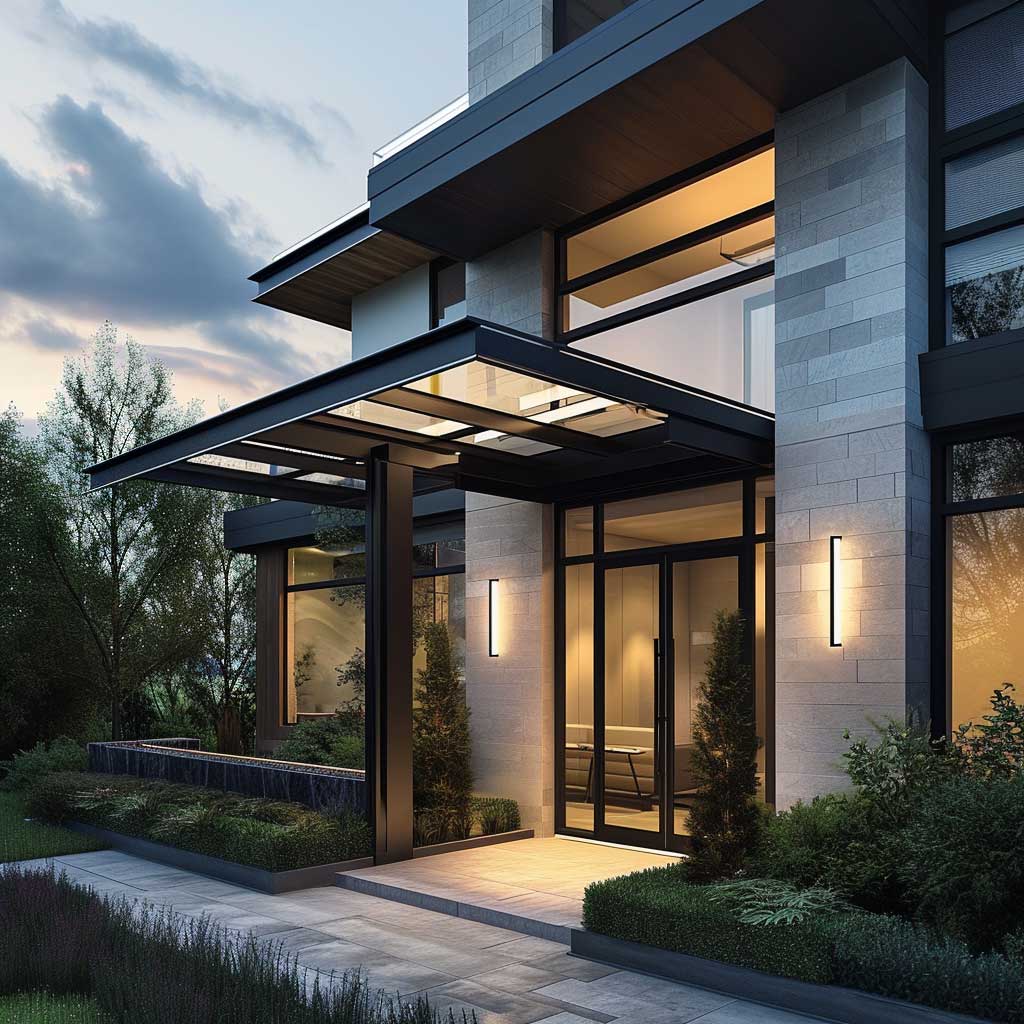

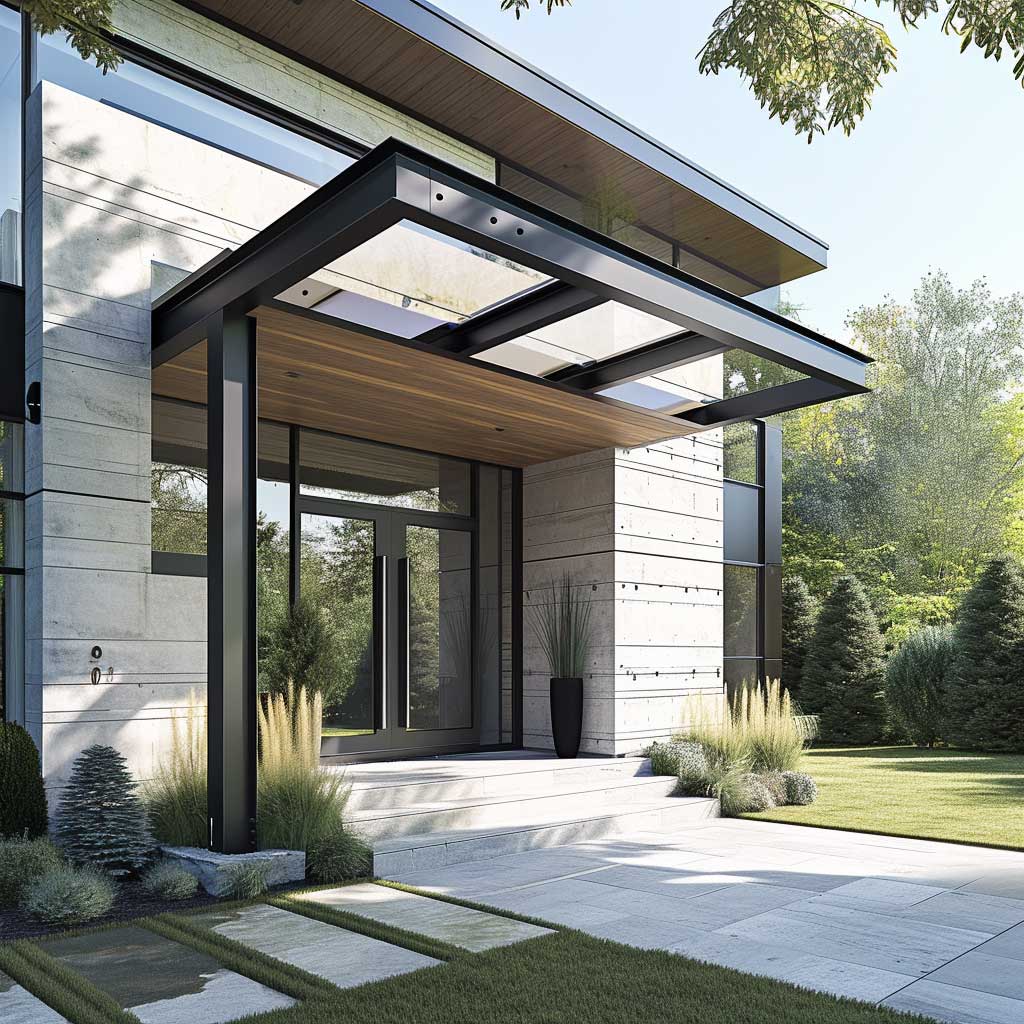
Functionality is another cornerstone of the minimalist approach. The canopy’s primary purpose is to provide shelter from weather elements like rain and sun. This functional aspect is elegantly woven into the design, ensuring that the canopy serves its purpose without compromising on style. Features like integrated drainage systems or sun-reflective coatings are often included, enhancing the usability of the space.
Lighting under the canopy is usually subtle and integrated. Recessed LED lights or simple strip lighting can be used to illuminate the entrance area in the evenings, creating a welcoming glow that enhances the canopy’s form and adds a layer of security.
The modern minimalist canopy also plays a role in the sustainability of the building. By providing shade, it can help in reducing heat gain, thereby lowering energy costs. The use of sustainable materials and energy-efficient lighting further contribute to the eco-friendly aspect of the design.
In essence, the modern minimalist entrance canopy design in urban homes is a reflection of contemporary living – efficient, elegant, and aesthetically pleasing. It is a design choice that speaks of sophistication and an appreciation for the beauty of simplicity.
Traditional House Front Canopy Design That Adds Curb Appeal
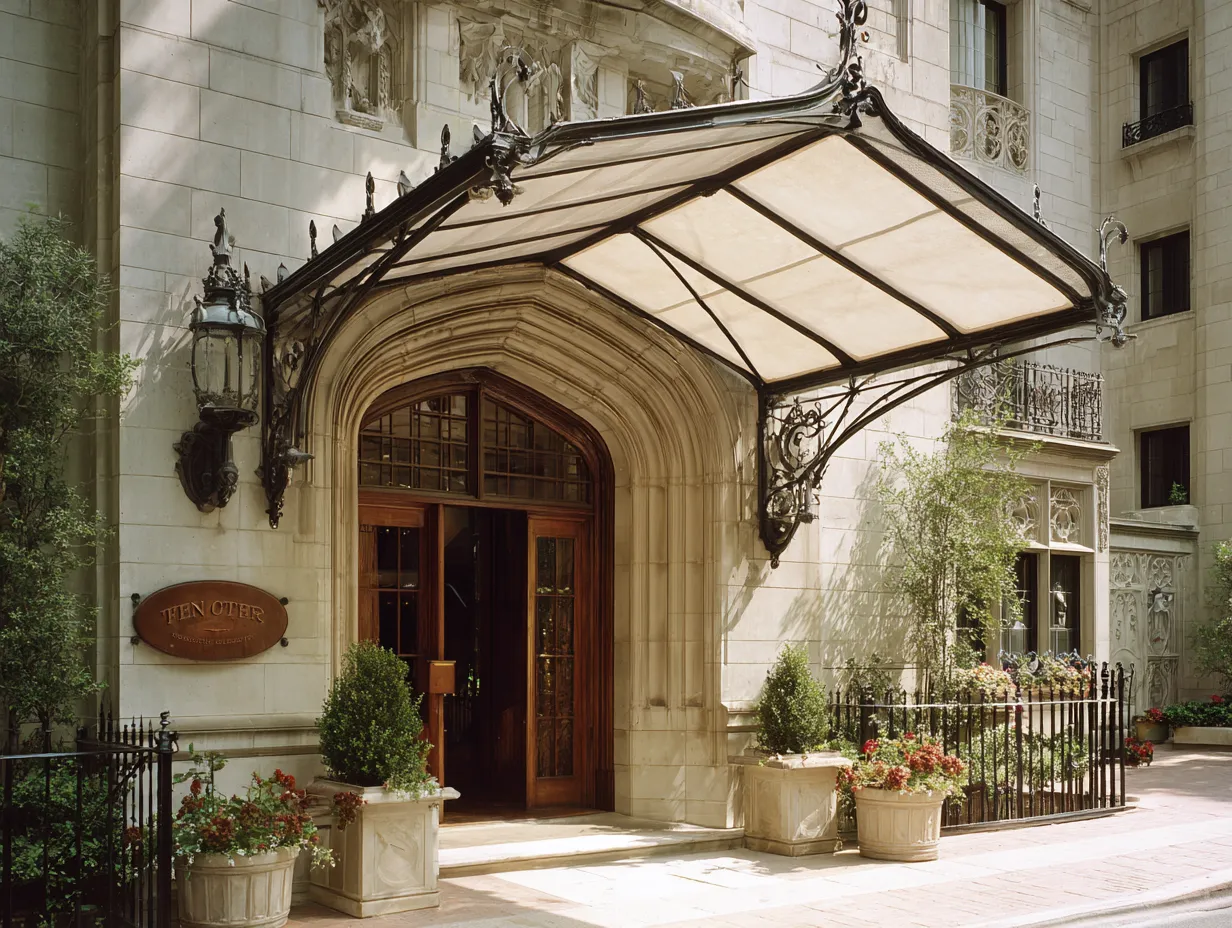
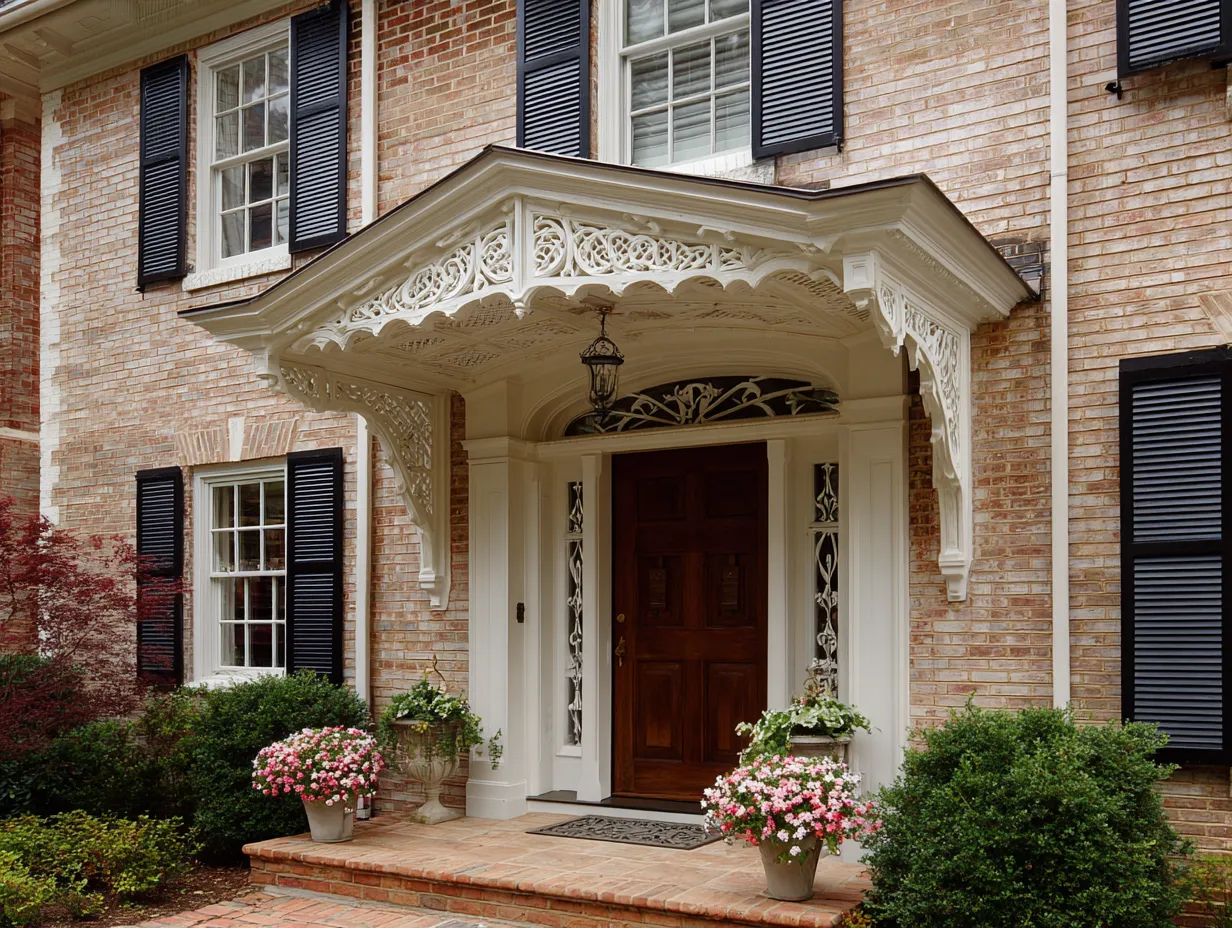
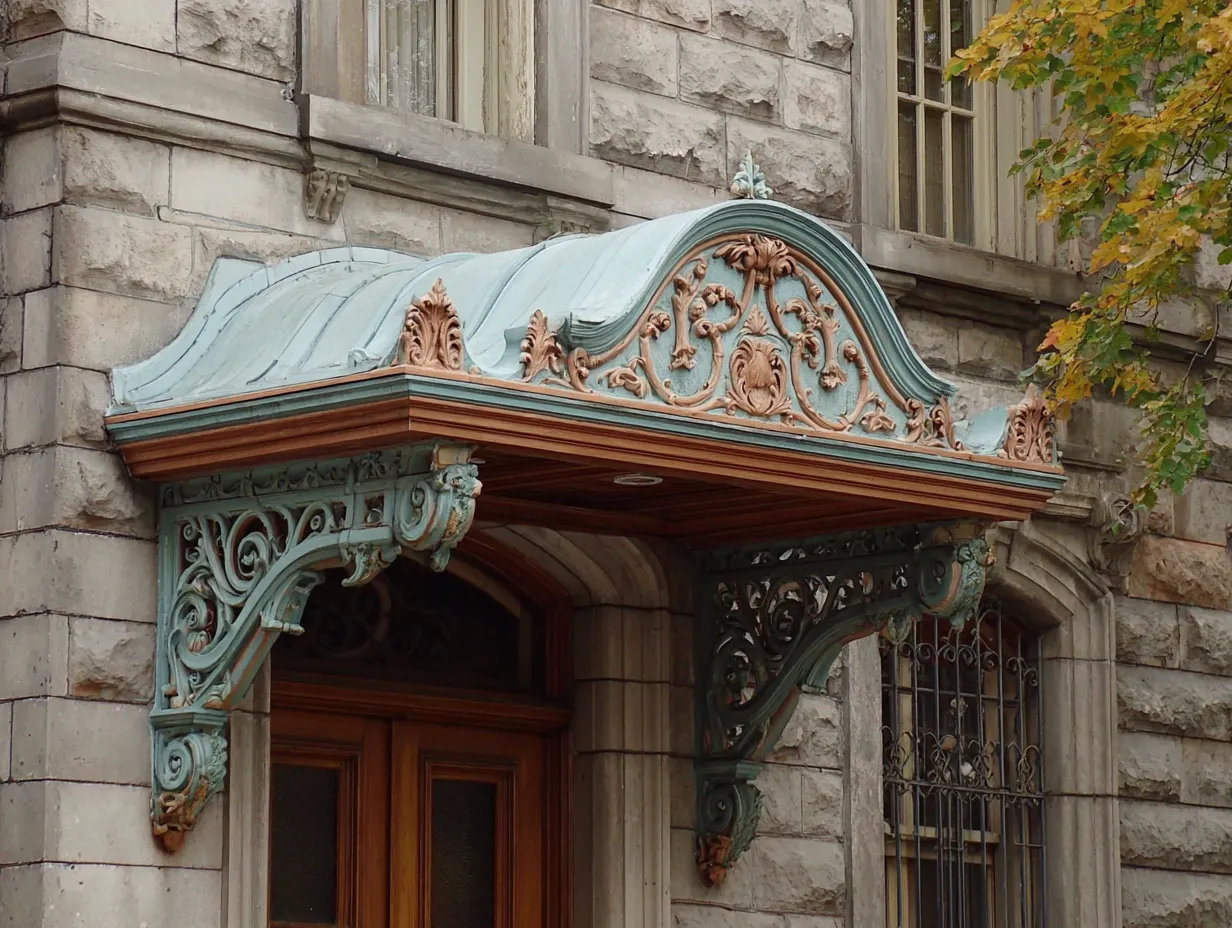
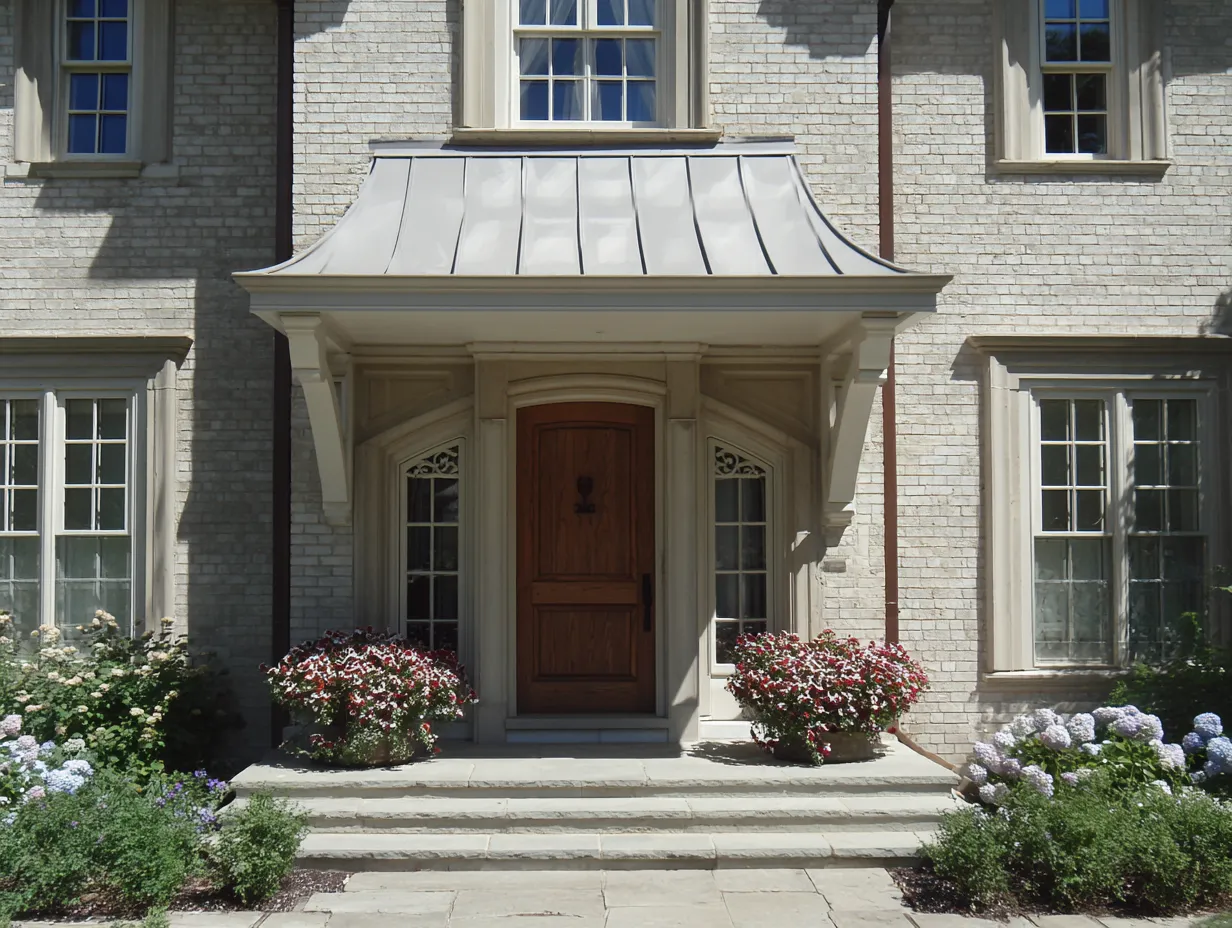
A good house front canopy design in a traditional style starts around $800 for a basic wood bracket canopy and can hit $4,500 for a full wrought iron structure with decorative scrollwork. The sweet spot for most homeowners sits around $1,500 to $2,200. That gets you solid cedar or treated pine with ornamental metal brackets and a copper or standing-seam metal roof. Skip pressure-treated lumber that’s still wet from the treatment plant — it warps within a month.
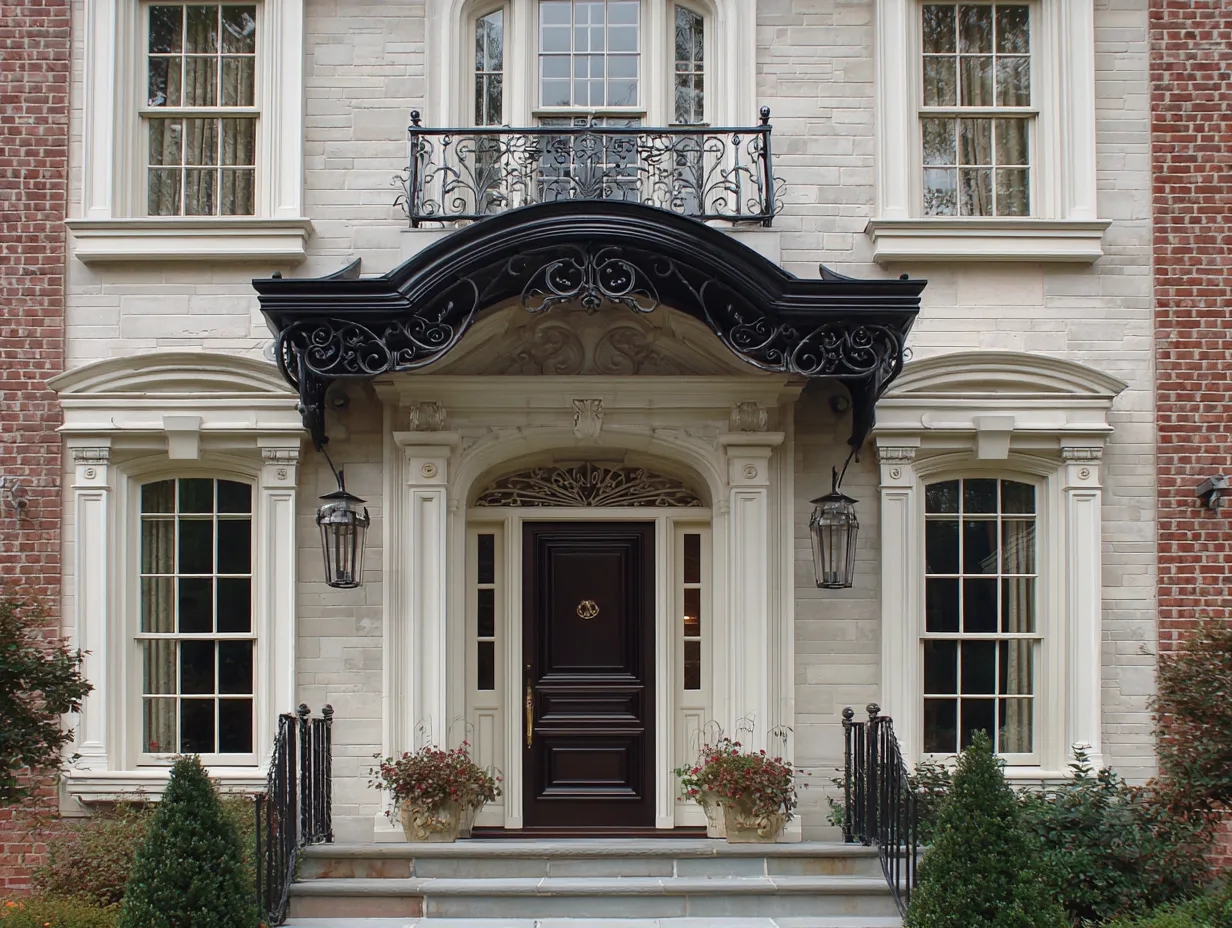
I’ve installed two traditional canopy designs on houses I’ve owned. The first was a prefab kit from a big-box store. Looked fine in the box. Looked cheap on the wall. The brackets were hollow stamped metal, and the whole thing rattled in wind over 25 mph. My second attempt was a custom cedar canopy with solid wrought iron supports from a local fabricator. Cost three times as much. Worth every dollar. The lesson? Hollow brackets are a dead giveaway that your entrance canopy is a budget job. Solid forged metal is quieter, stronger, and looks ten times better up close.
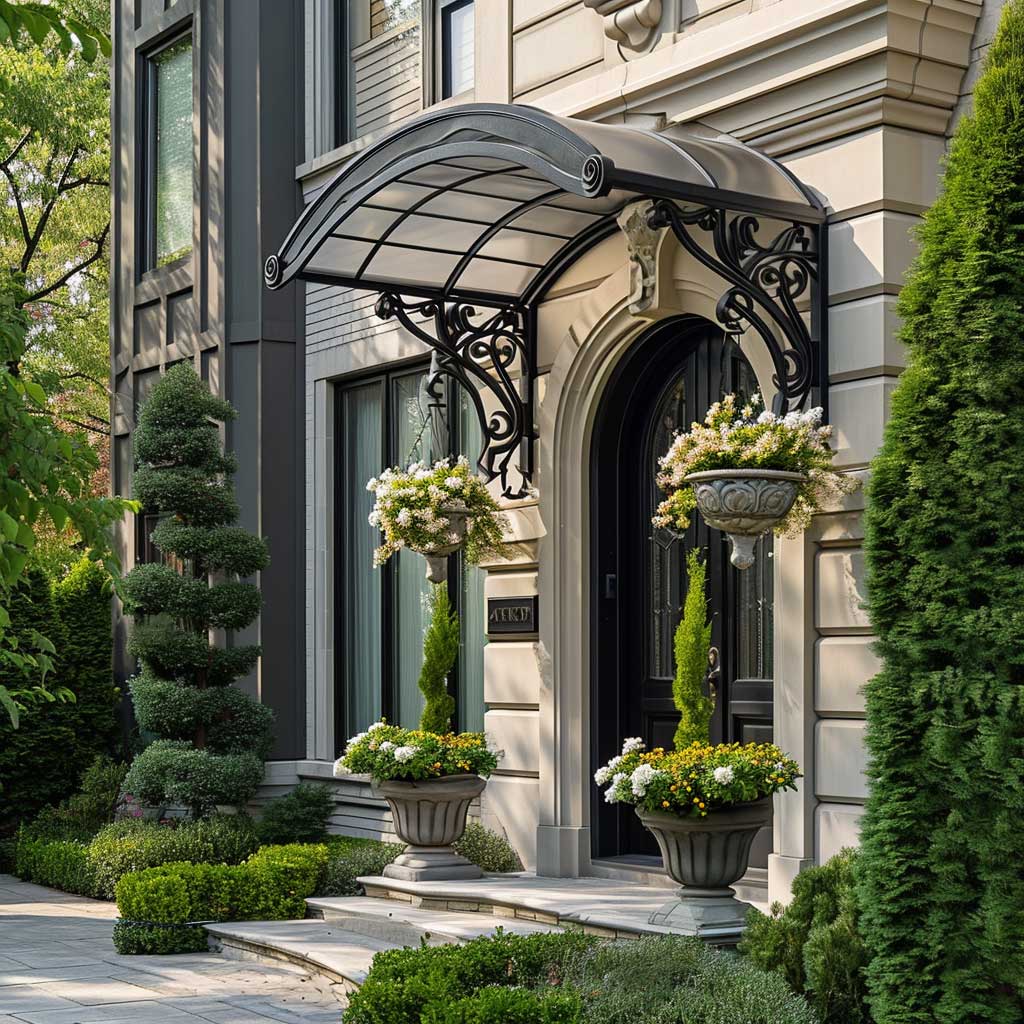
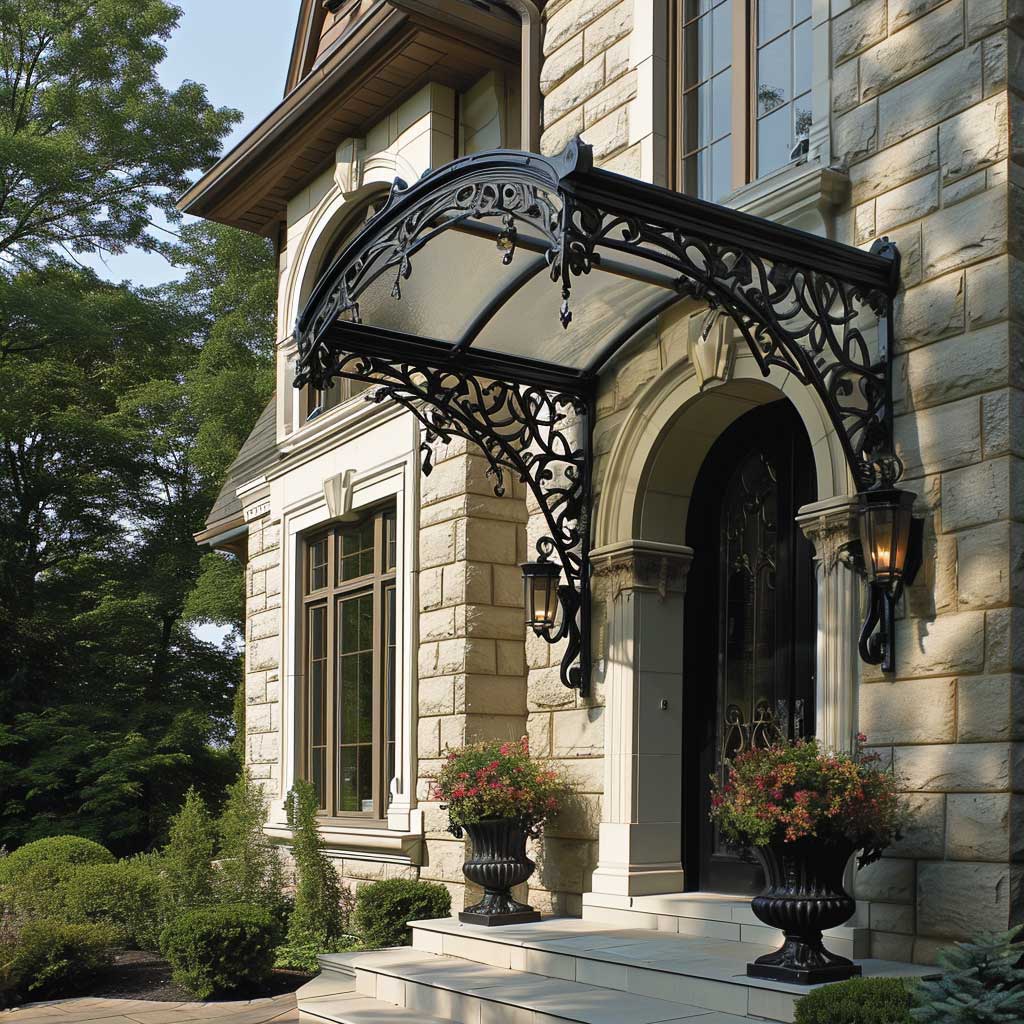
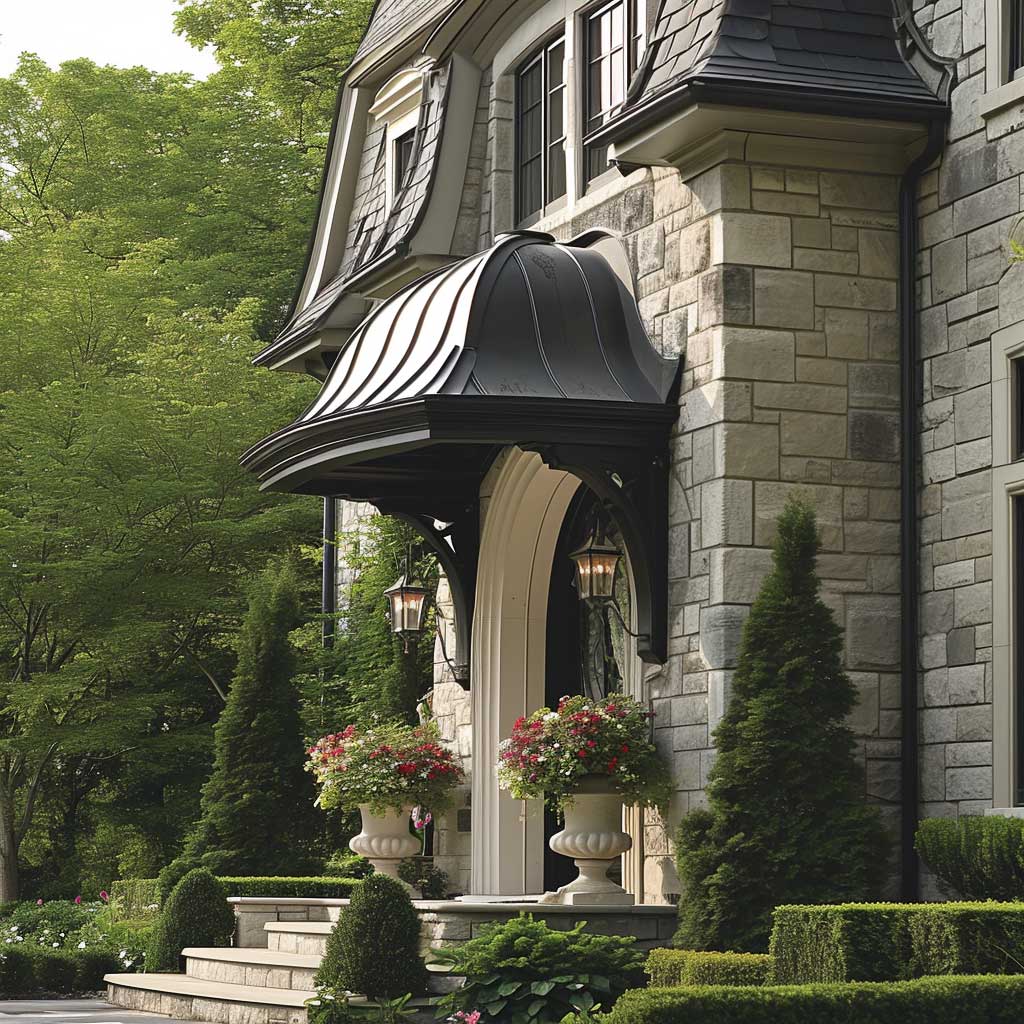
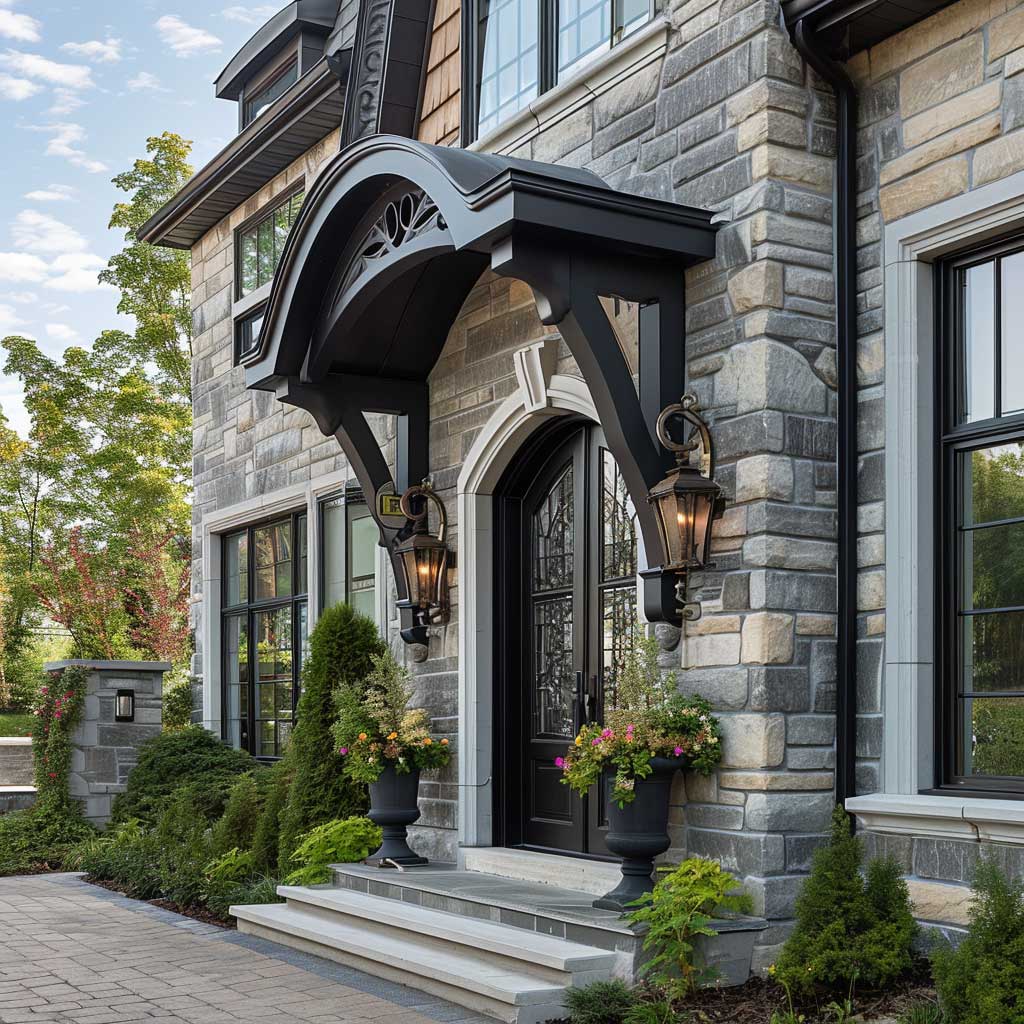
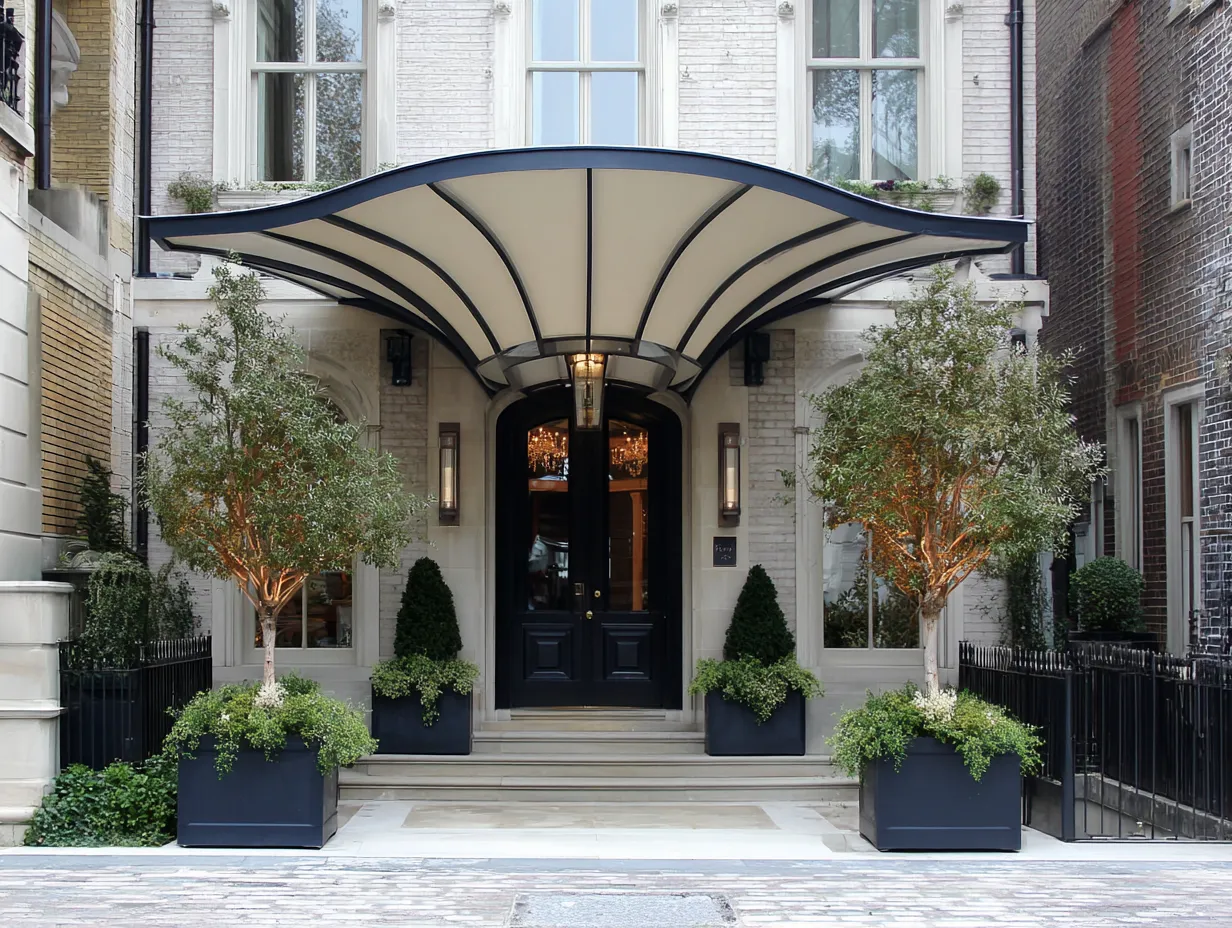
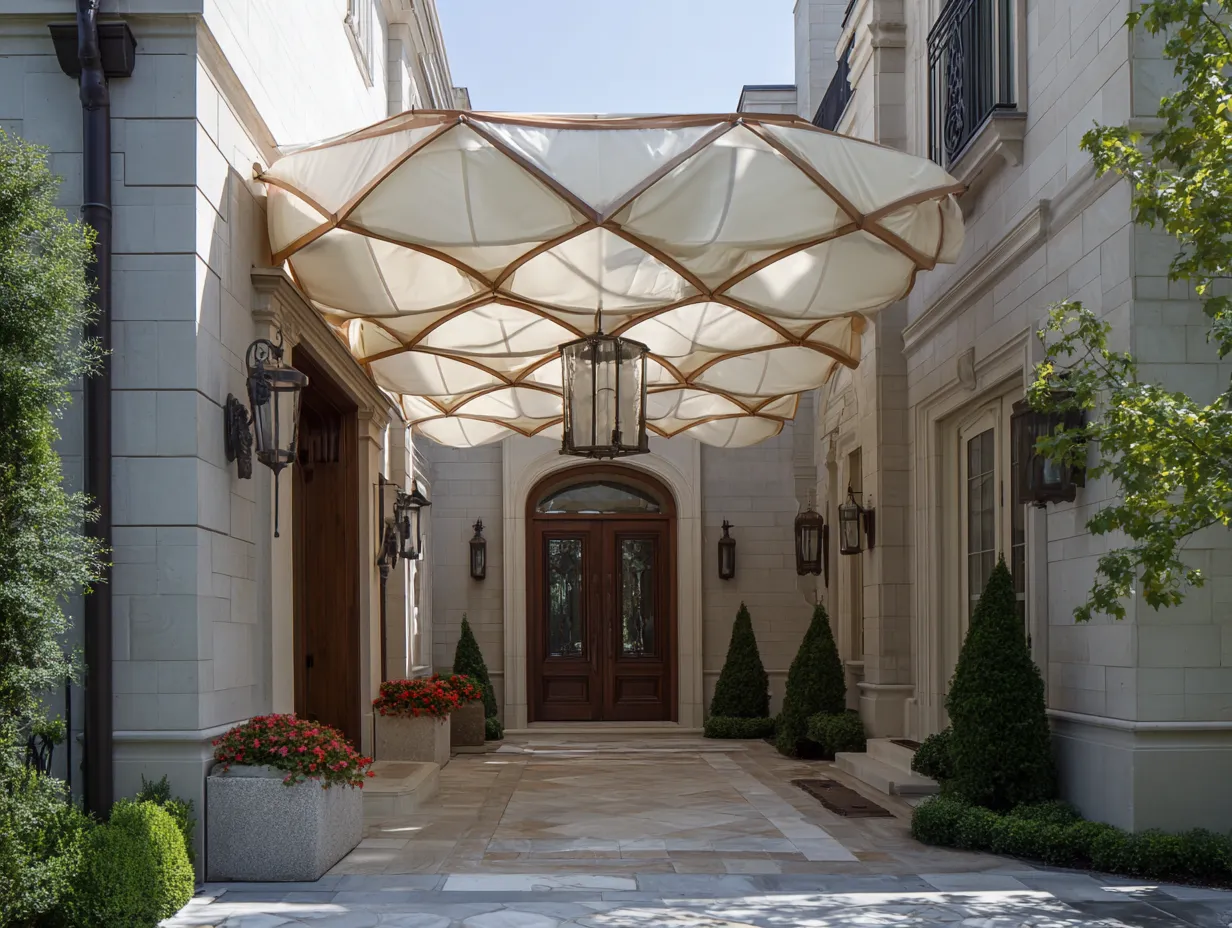
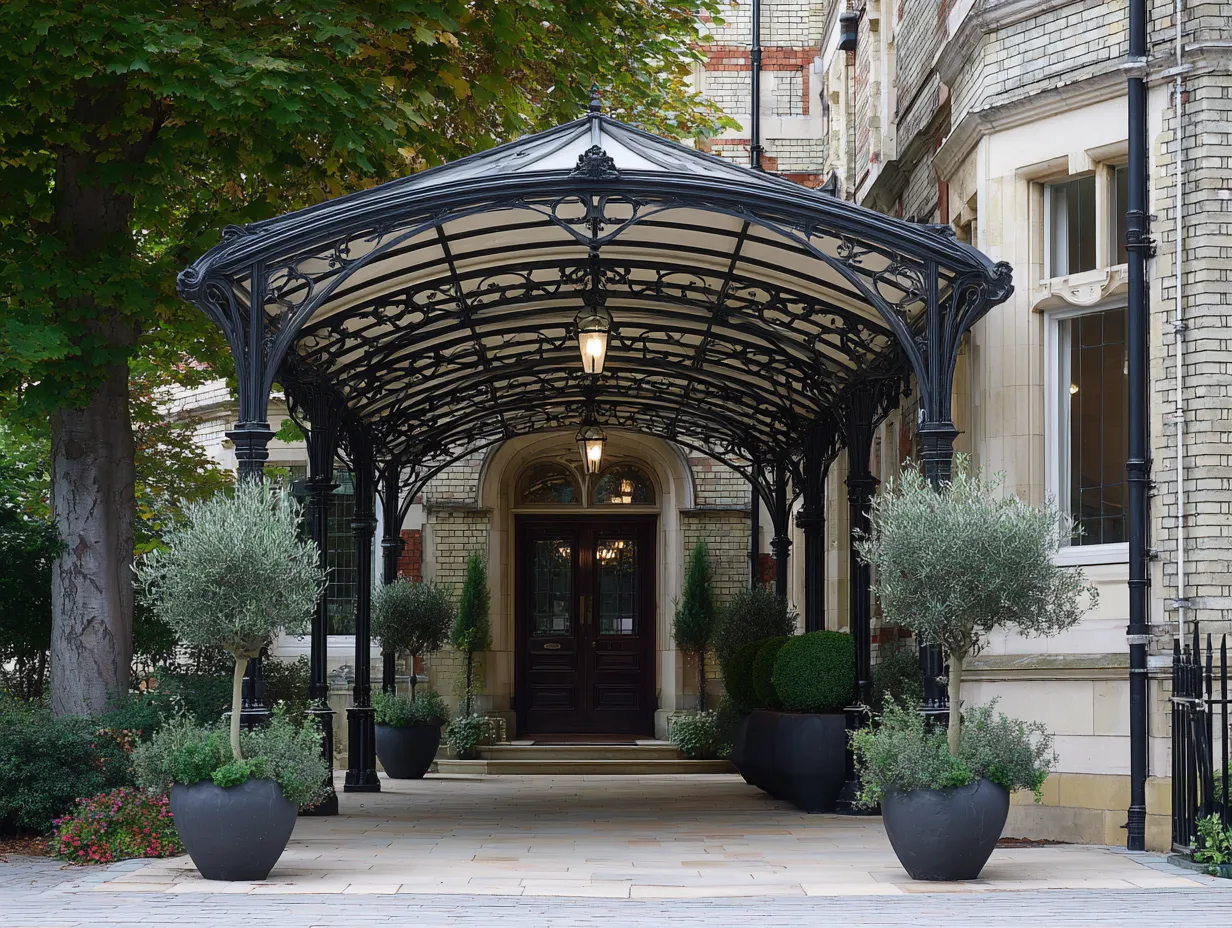
The entrance of a home is more than just a threshold; it’s an invitation, a preview of the style and elegance that lies within. Integrating a traditional entrance canopy design not only enhances the curb appeal of a home but also adds a touch of timeless elegance. If you prefer a natural material over metal, check out these wood modern front door canopy concepts for warm entrance ideas. Traditional canopy designs draw inspiration from classic architectural styles, embodying grace and sophistication that have stood the test of time.
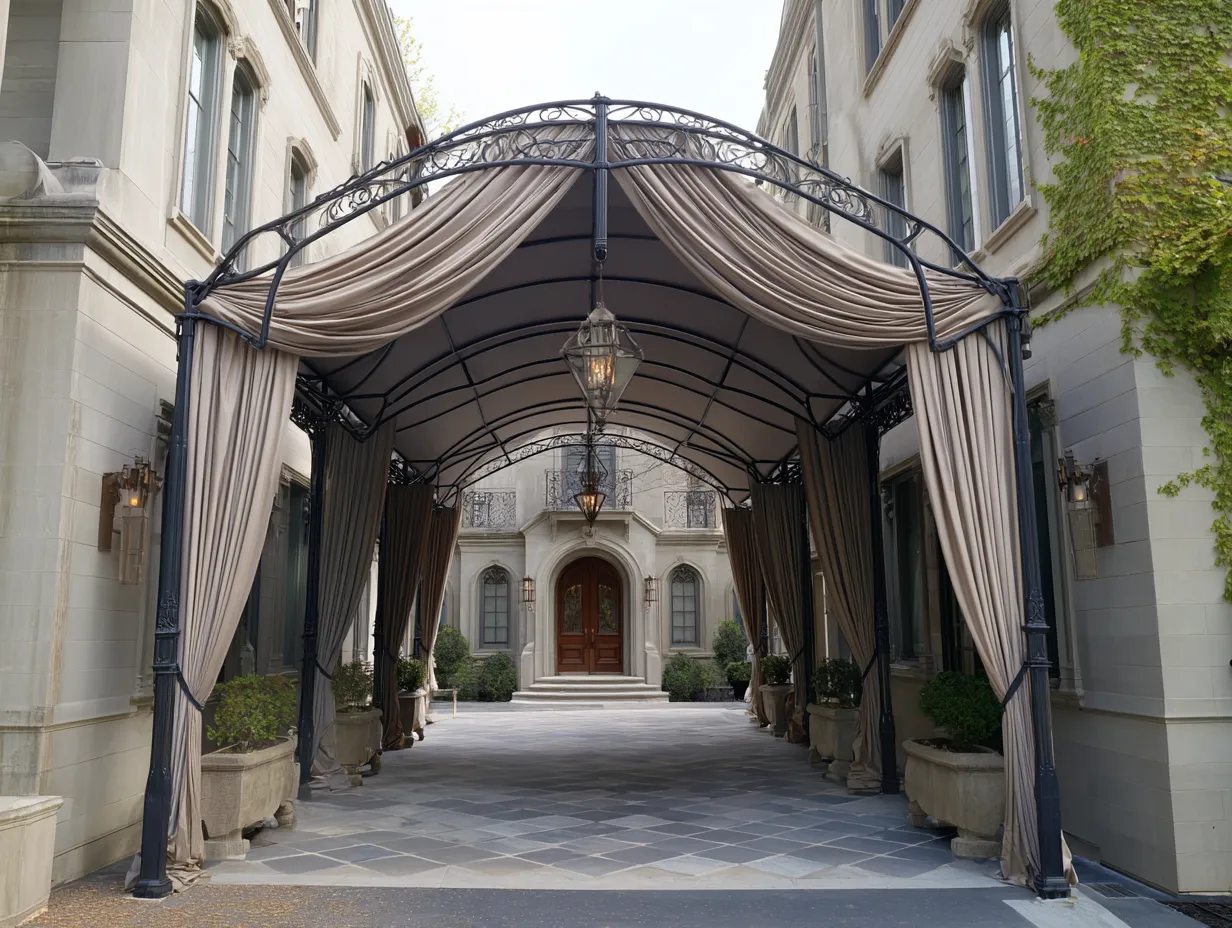
Traditional entrance canopies are often characterized by their intricate designs and use of classic materials like wood, wrought iron, and sometimes glass. These materials are crafted into designs that reflect historical architectures, such as Victorian, Colonial, or Craftsman styles. The beauty of a traditional canopy lies in the details – ornamental brackets, carved woodwork, and decorative moldings all contribute to the overall aesthetic.
The design of a traditional canopy often includes curves and soft lines, contrasting the stark lines of modern minimalist styles. These curves, whether in the form of an arched top or scalloped edges, add a sense of warmth and charm to the home’s entrance. The canopy might also feature intricate patterns or motifs, a nod to the craftsmanship of bygone eras.
Color plays a significant role in traditional canopies. Unlike the neutral palette of modern designs, traditional canopies often feature richer, deeper hues. Classic colors like deep reds, forest greens, or navy blues are popular, as they complement the natural materials used in the canopy’s construction. These colors also contribute to the canopy’s visual impact, making the entrance more inviting and appealing.
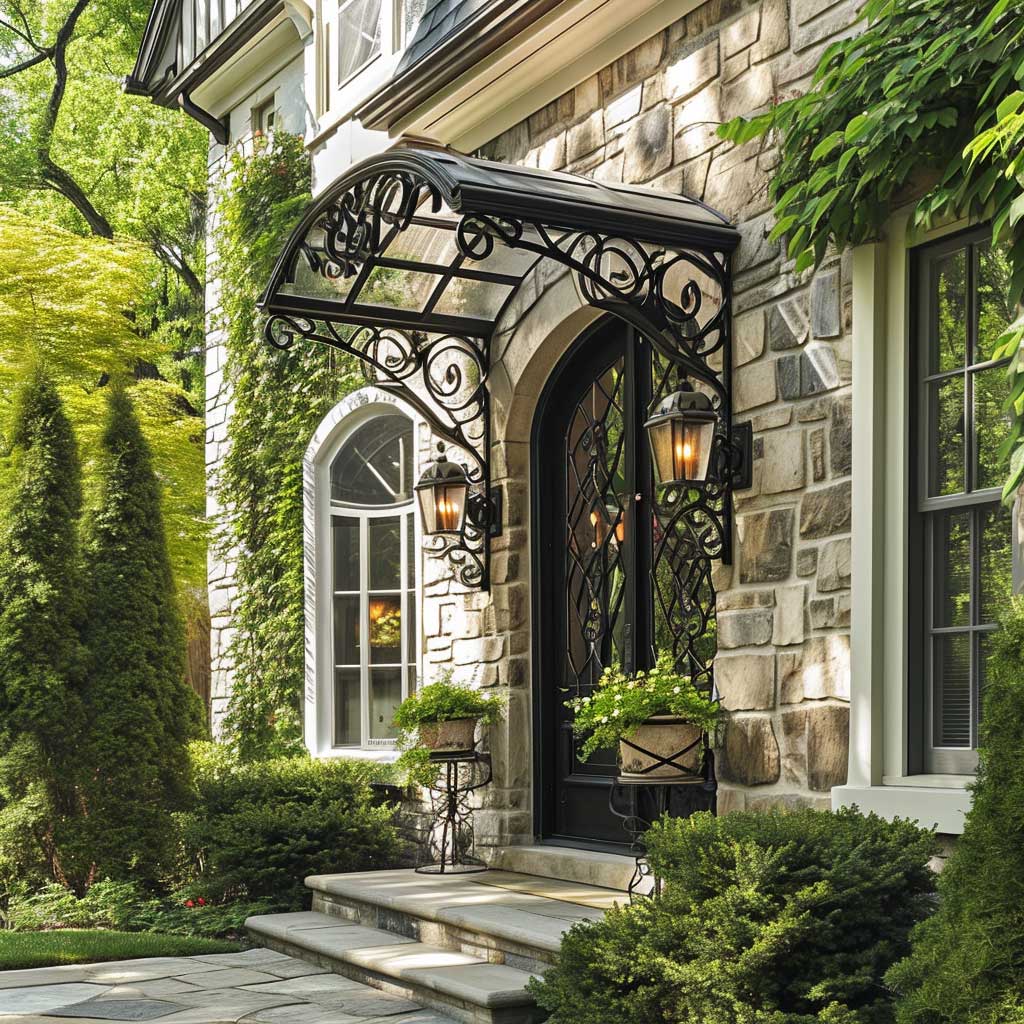

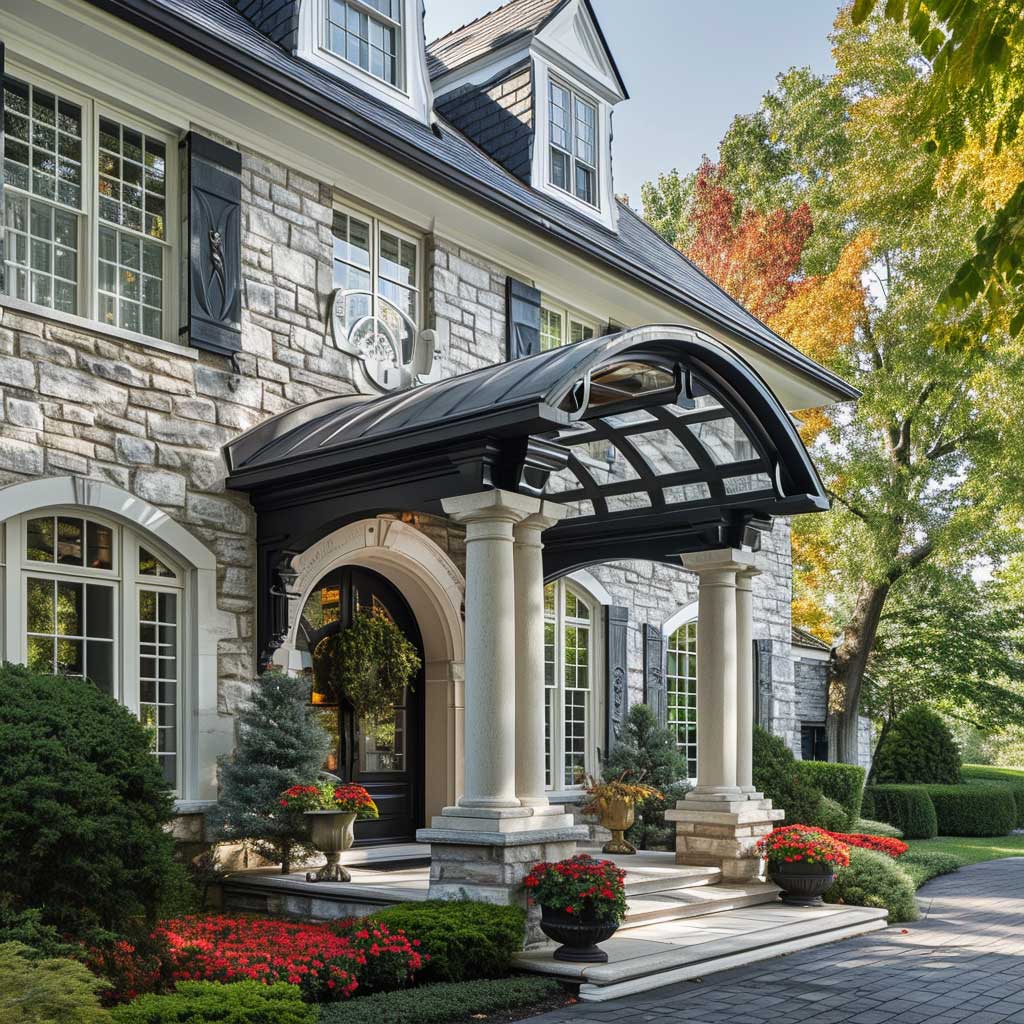
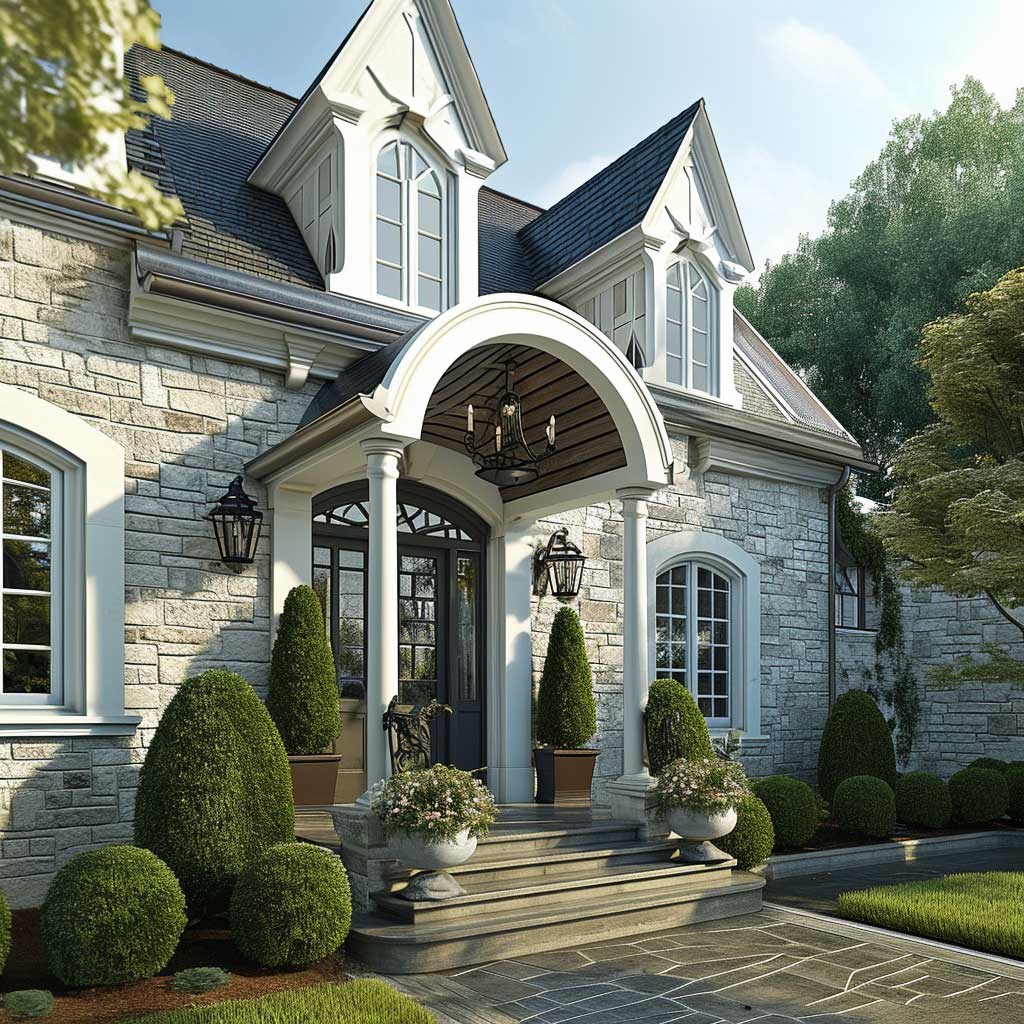
Incorporating a traditional canopy into a home’s entrance is also about creating harmony with the existing architectural elements. Attention is paid to ensuring that the canopy aligns with the style and period of the house, creating a cohesive look. This might involve matching the canopy’s design elements with those found elsewhere on the building’s facade, such as window frames or the front door.
The functional aspect of the traditional canopy is as important as its aesthetics. It serves as a shelter from the elements, protecting the entrance area from rain and sun. This practical feature makes the entrance more accessible and comfortable, enhancing the overall experience of entering the home.
Traditional entrance canopies also have the ability to increase a property’s curb appeal and value. They add an element of luxury and refinement that is often sought after in real estate. The canopy becomes a focal point, drawing the eye and adding to the home’s overall charm and character.
In conclusion, an elegant traditional entrance canopy design is a timeless addition to any home. It embodies the elegance of past architectural styles while providing practical benefits. Such a design not only enhances the curb appeal but also serves as a testament to the enduring allure of traditional aesthetics.
Don’t Do This
Don’t mount a canopy without checking your wall material first. Hollow brick, stucco over foam, and old mortar joints can’t hold canopy brackets without toggle bolts or through-bolts. I’ve seen two canopy collapses in my area — both were lag-screwed into stucco with no backing.
Don’t buy a flat polycarbonate sheet canopy under $150 and expect it to last. The UV coating peels within one summer, the panel yellows, and it flexes so much in wind that the screws loosen. A bad canopy looks worse than no canopy.
Don’t match your canopy color exactly to your front door. It flattens the whole entrance. Pick a canopy finish one shade darker or lighter than the door. Contrast is what gives depth.
Glass Entrance Canopy Design for a Lightweight Modern Look
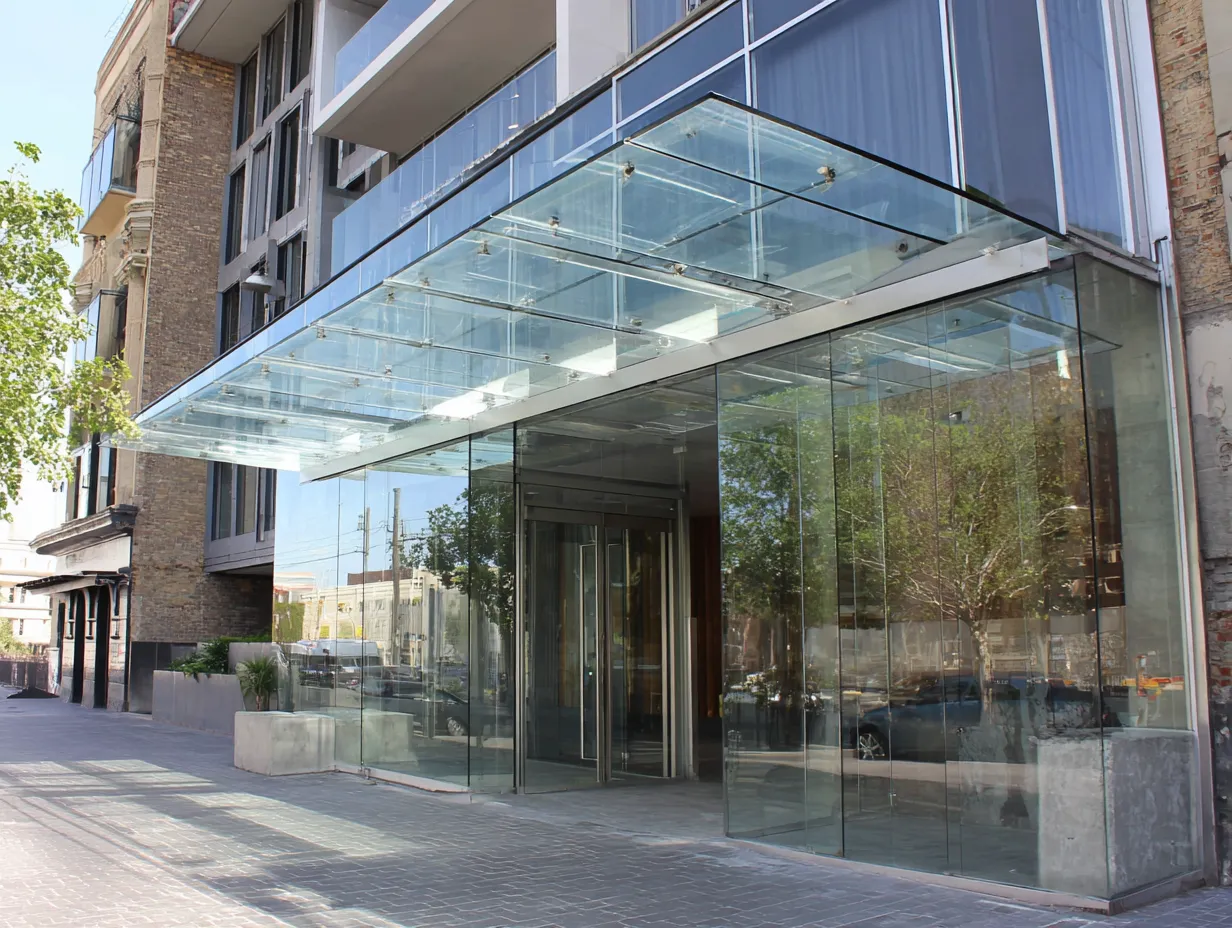
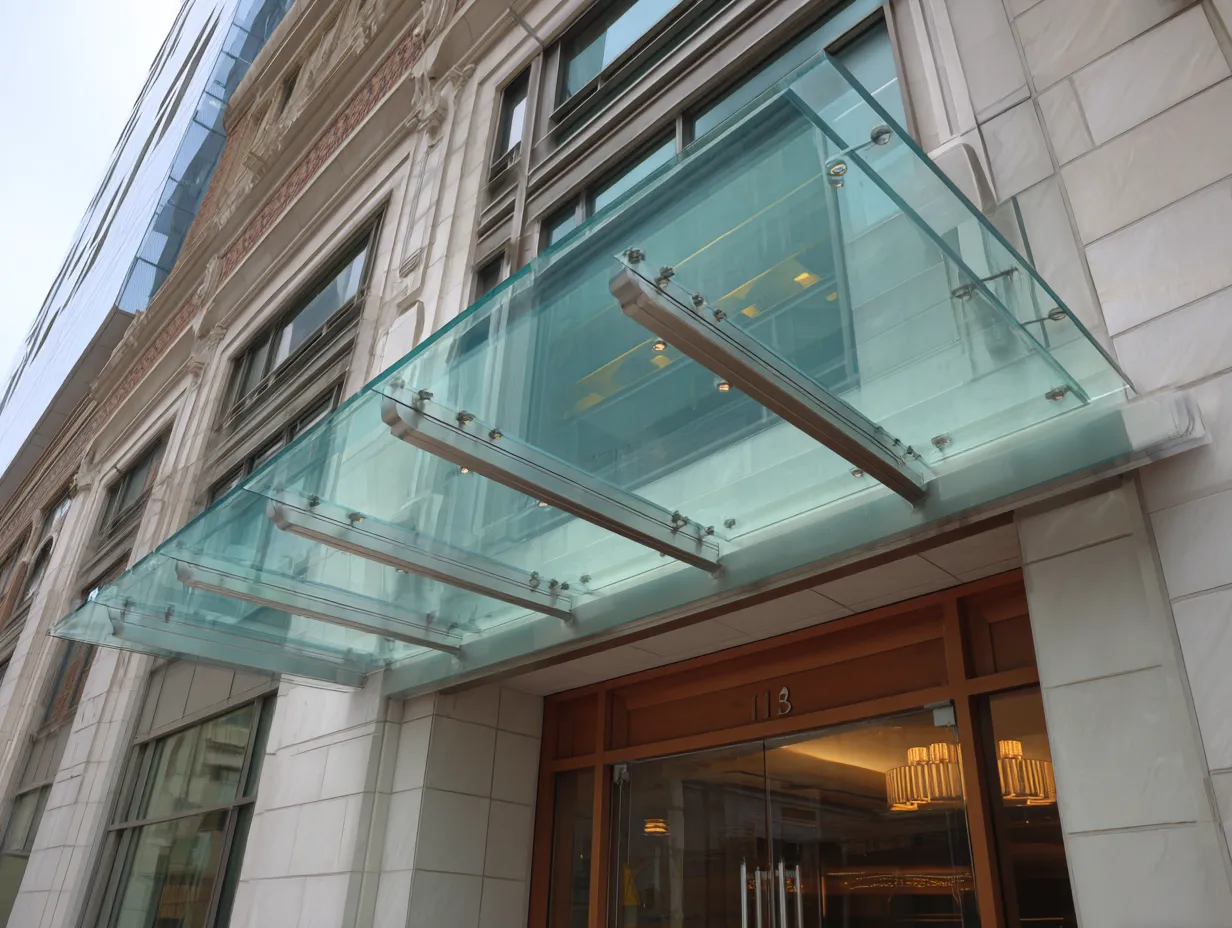
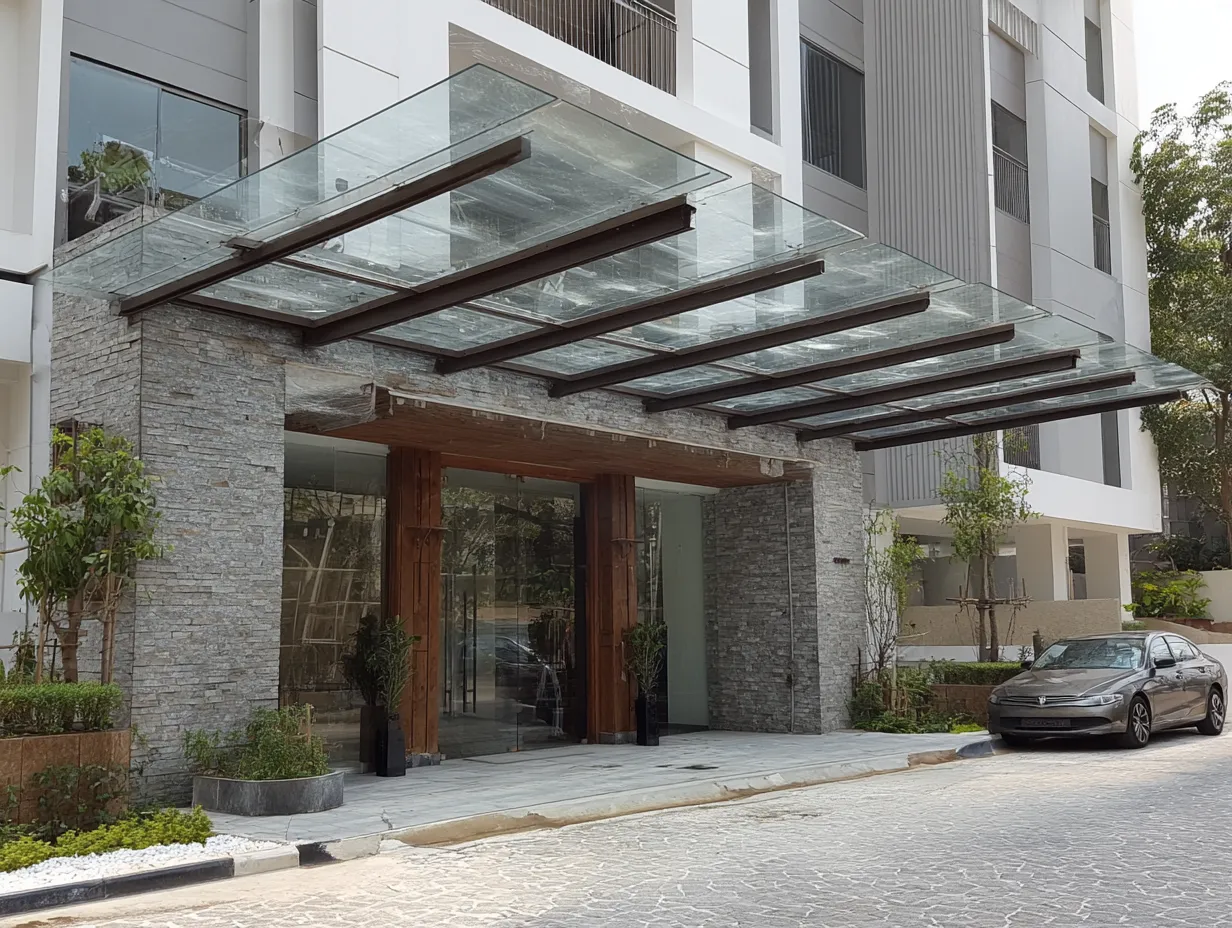
Tempered glass is the minimum for any canopy. Laminated glass is better. Here’s why: tempered glass shatters into small cubes when it breaks. Safe, but you’ll be sweeping your porch for an hour. Laminated glass cracks but stays in one piece, held together by the interlayer film. It’s the same tech used in car windshields. For a residential entrance canopy design, 10mm laminated glass is the standard. Go thicker if you live in a hail-prone area. A single hailstorm can destroy a tempered-only panel, and replacement panels run $180 to $350 each depending on size.
The mounting hardware makes or breaks a glass canopy. Cheap point-fixed fittings from discount suppliers use cast zinc instead of stainless steel. They corrode within a year in coastal climates. My rule: 316-grade stainless steel fittings, always. They cost about $45 per fitting versus $12 for zinc. Four fittings per panel, so you’re adding maybe $130 total for hardware that won’t fail. That’s a no-brainer.
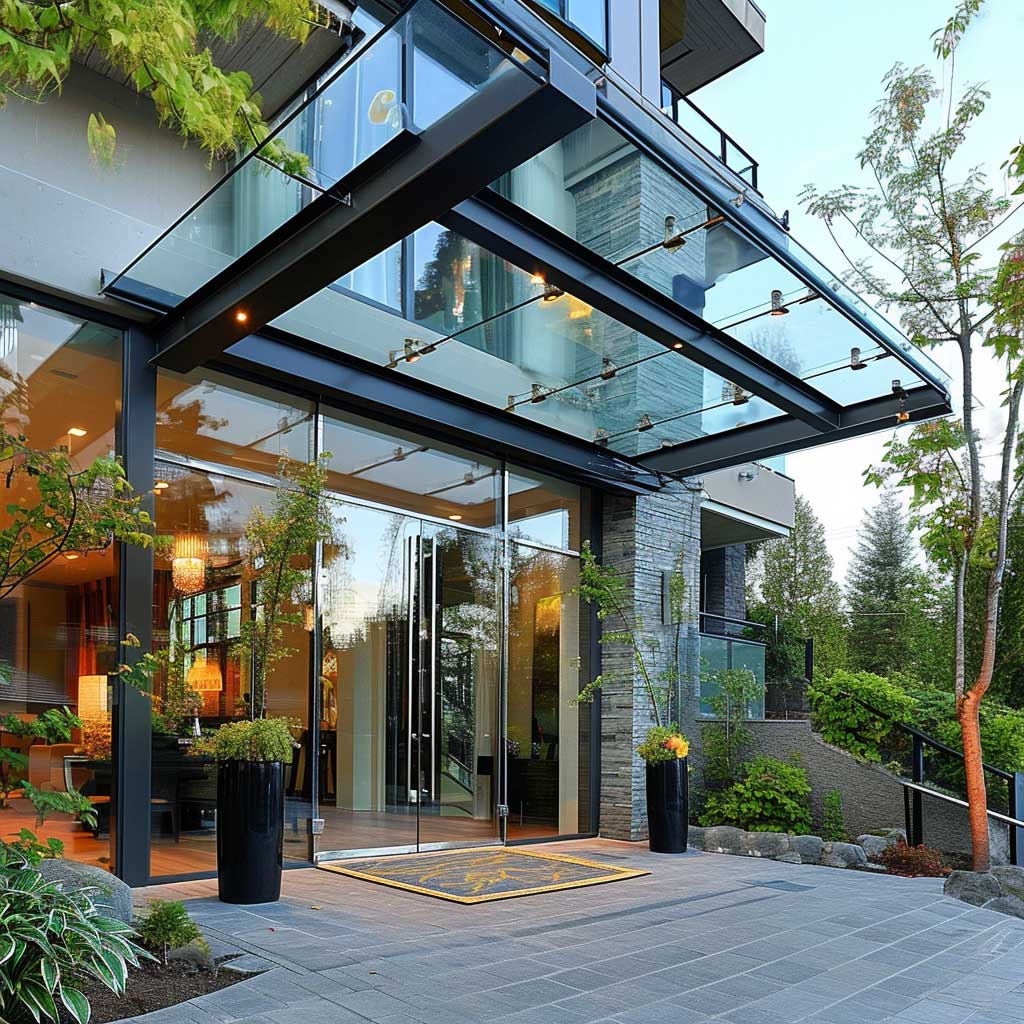
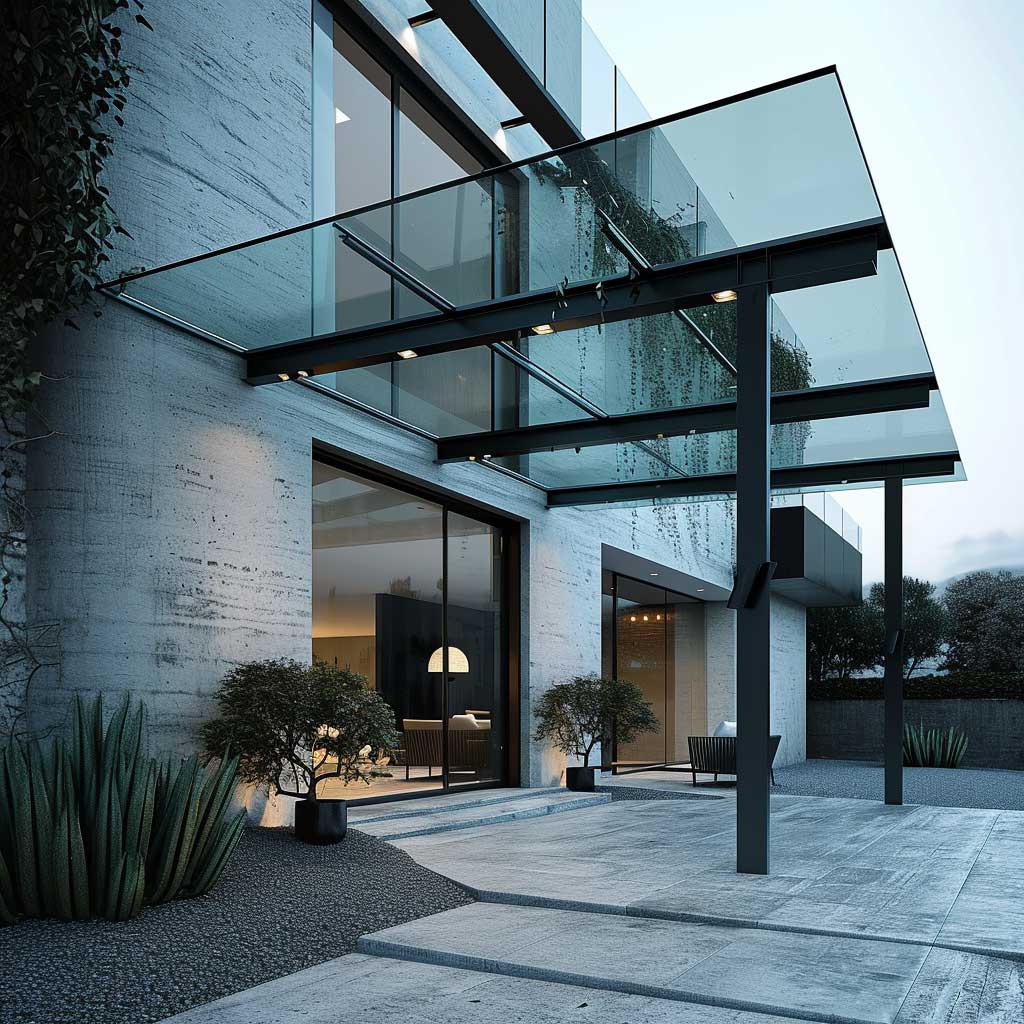
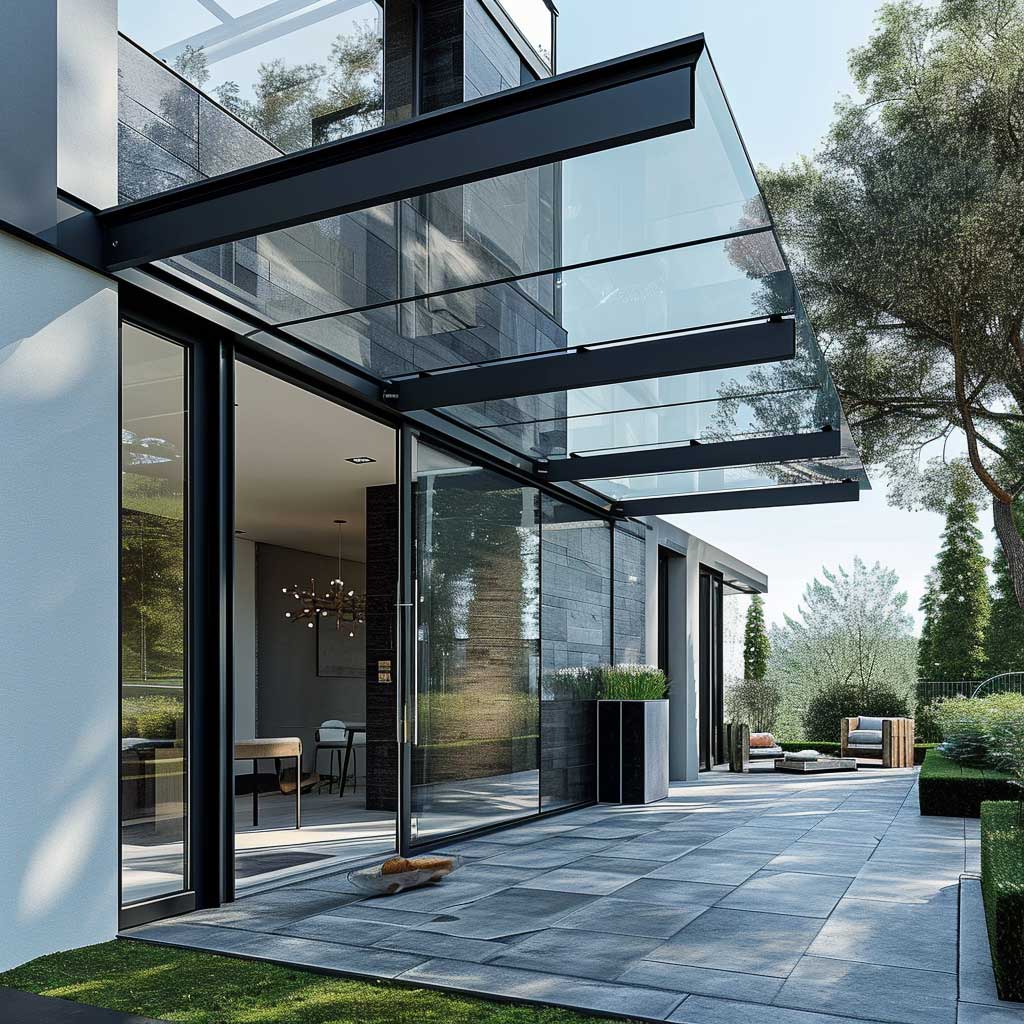

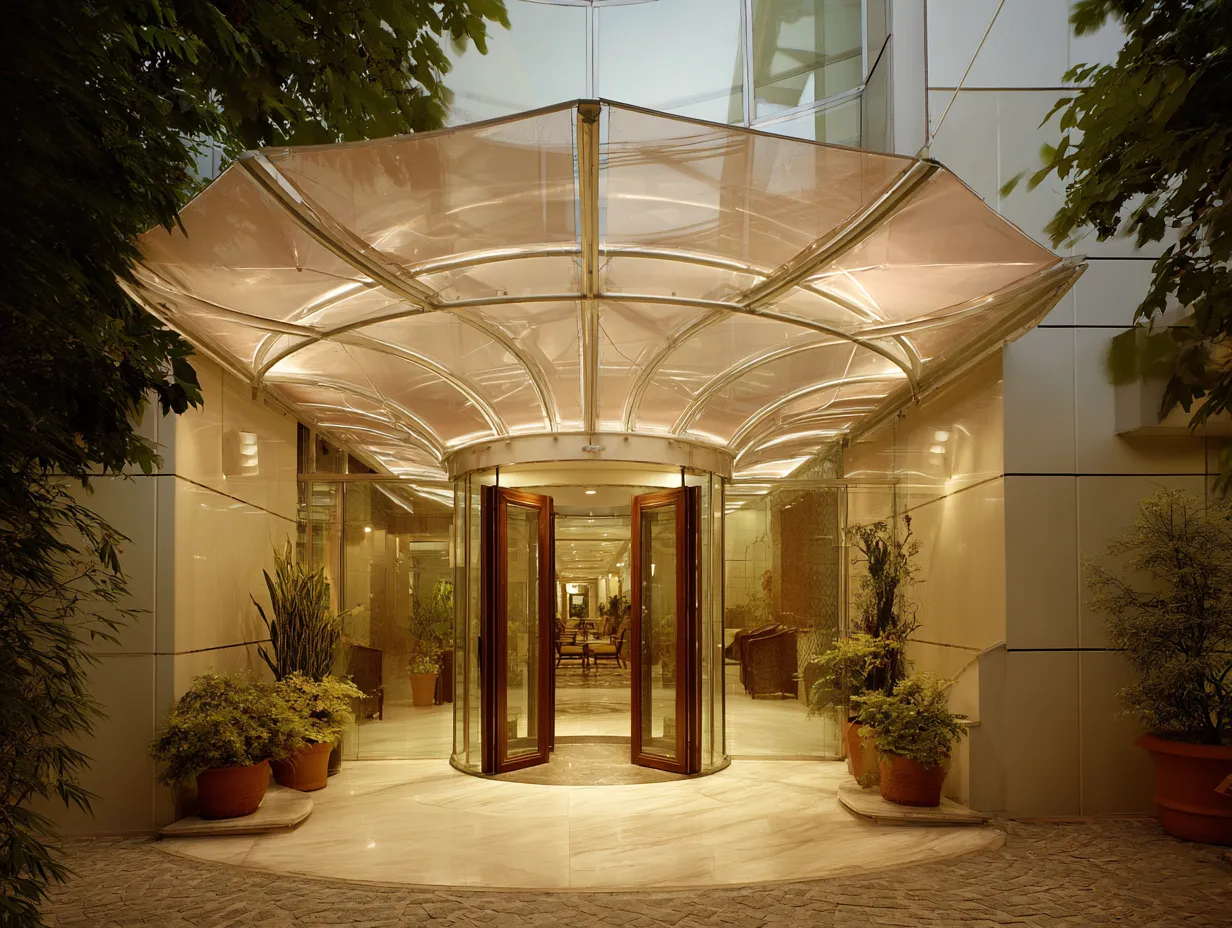
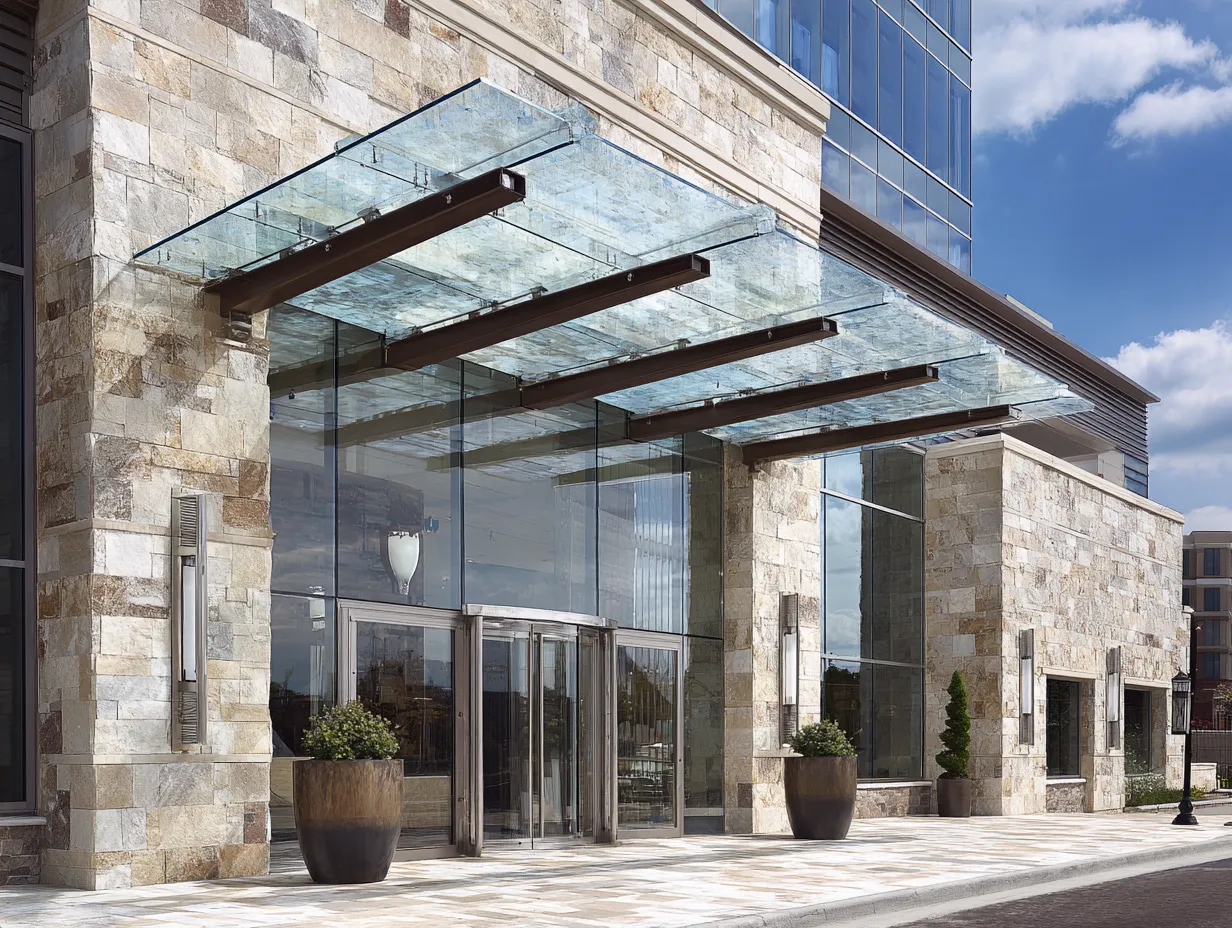
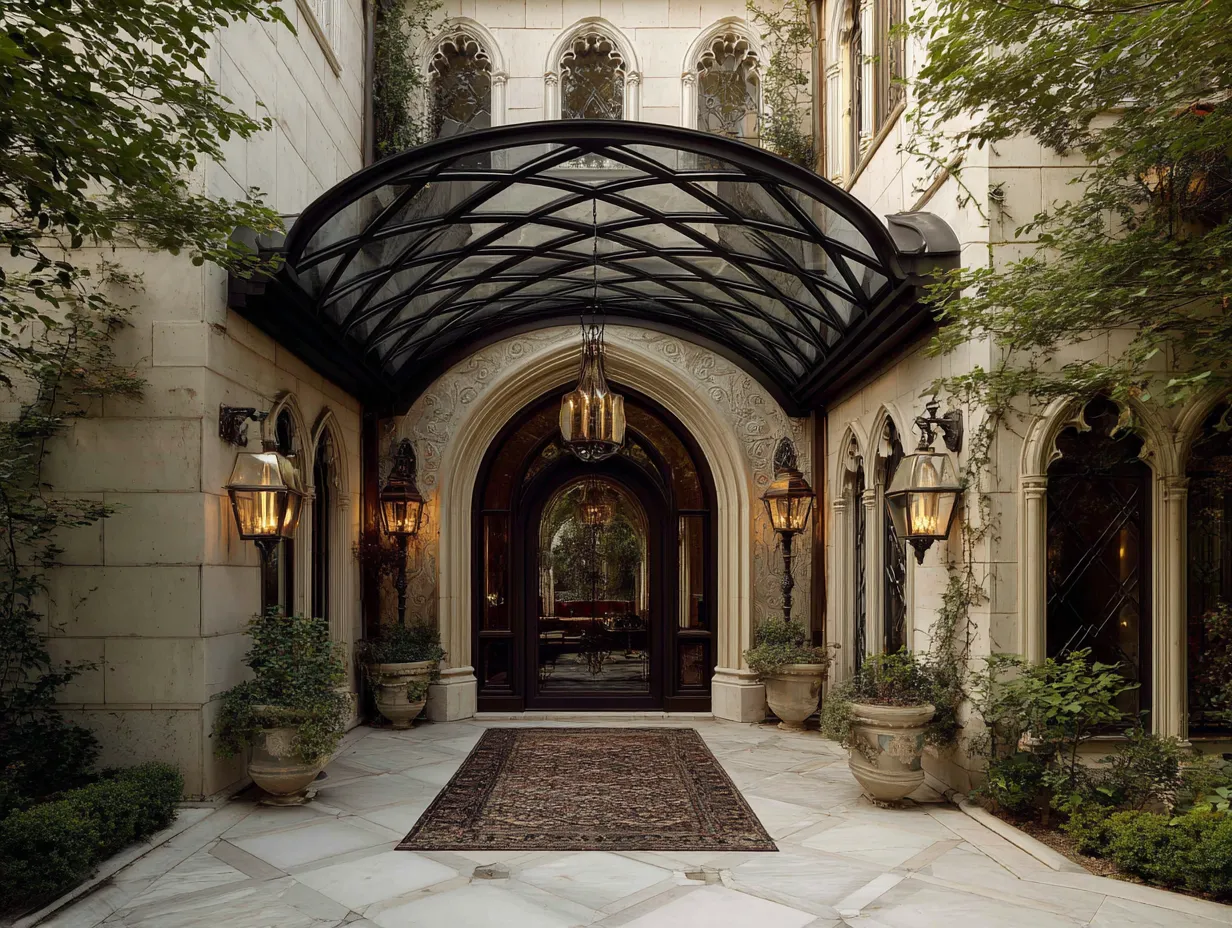
In the contemporary world of architectural design, the use of glass in entrance canopies has emerged as a symbol of modernity and sophistication. An innovative glass entrance canopy design is not just a functional addition to a home’s exterior; it is a statement piece that reflects a fusion of style, innovation, and openness. This design trend brings a sleek and airy feel to the entrance, enhancing the overall aesthetic appeal of the home.
The appeal of a glass canopy lies in its ability to blend functionality with contemporary elegance. The use of glass as a primary material in the canopy design offers a visually light yet striking feature. It creates an illusion of space, allowing natural light to filter through while providing shelter. For hundreds of real entrance canopy examples across different architectural styles, Houzz’s entrance canopy gallery is worth browsing. This interplay of light and transparency makes the entrance area feel open and welcoming.
A key characteristic of glass canopy designs is their minimalist approach. They often feature clean lines and minimal structural elements to maintain a sense of openness and clarity. The support structures, typically made of steel or aluminum, are designed to be sleek and unobtrusive. These materials are not only chosen for their strength and durability but also for their ability to complement the modern aesthetic of the glass.
Color and texture play a subtle but important role in glass canopy designs. The transparency of the glass is its main feature, but it can be enhanced with tints or frosting to match the home’s color scheme. Textured glass options, such as fluted or patterned glass, can add an element of interest without compromising the canopy’s minimalist style.
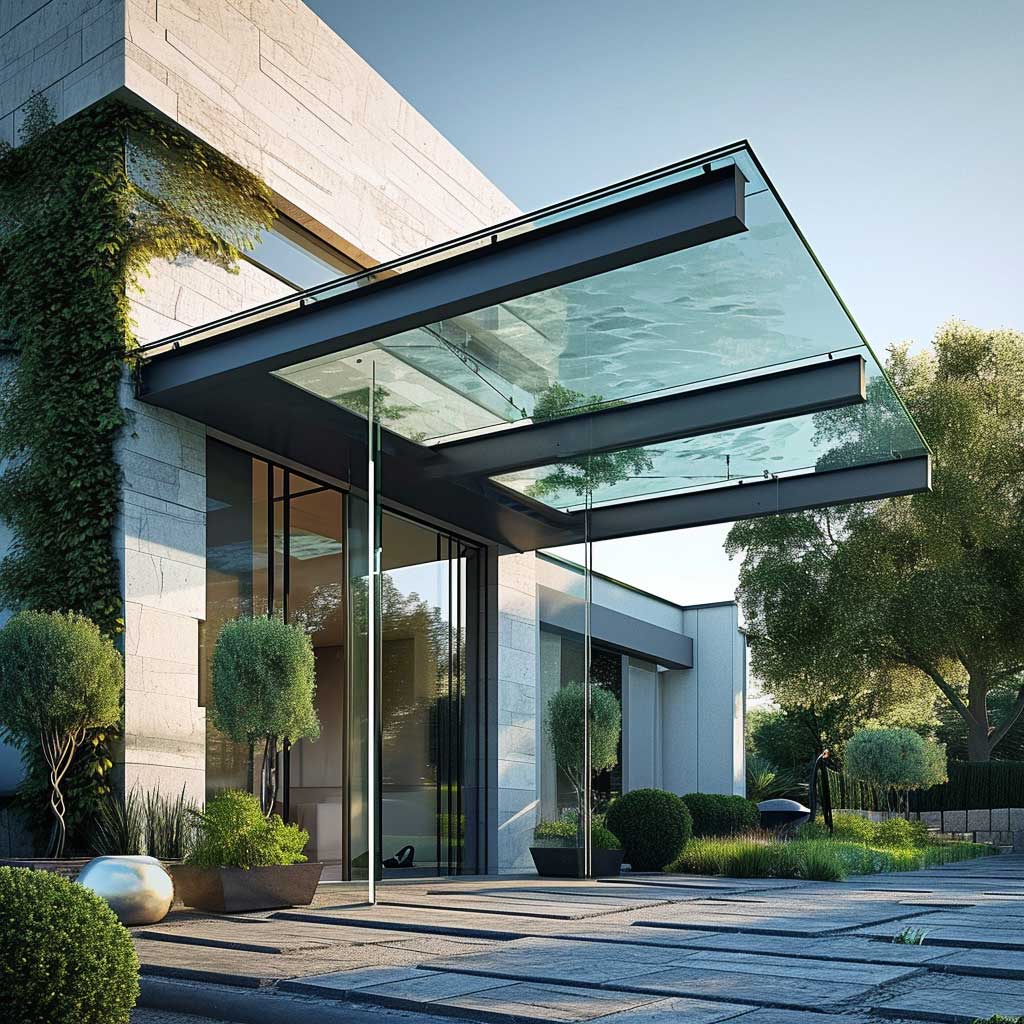
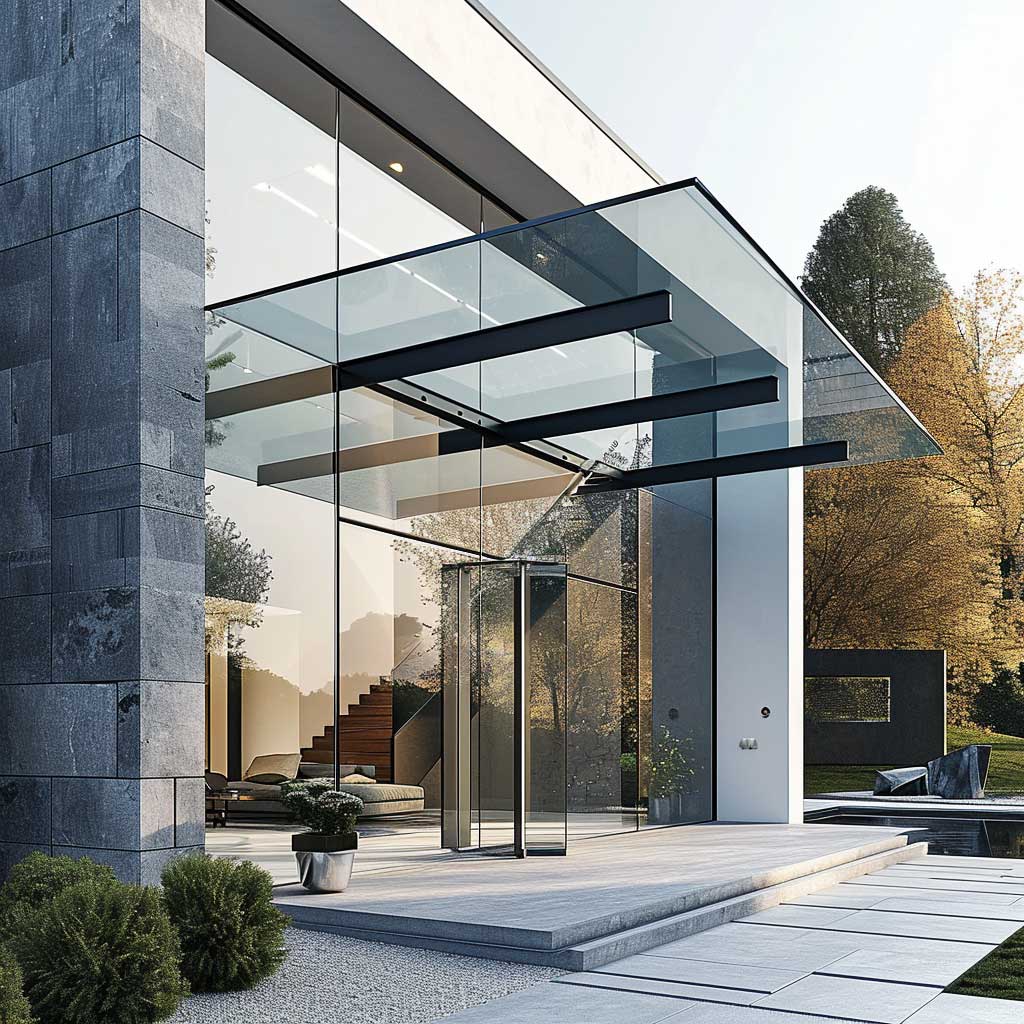
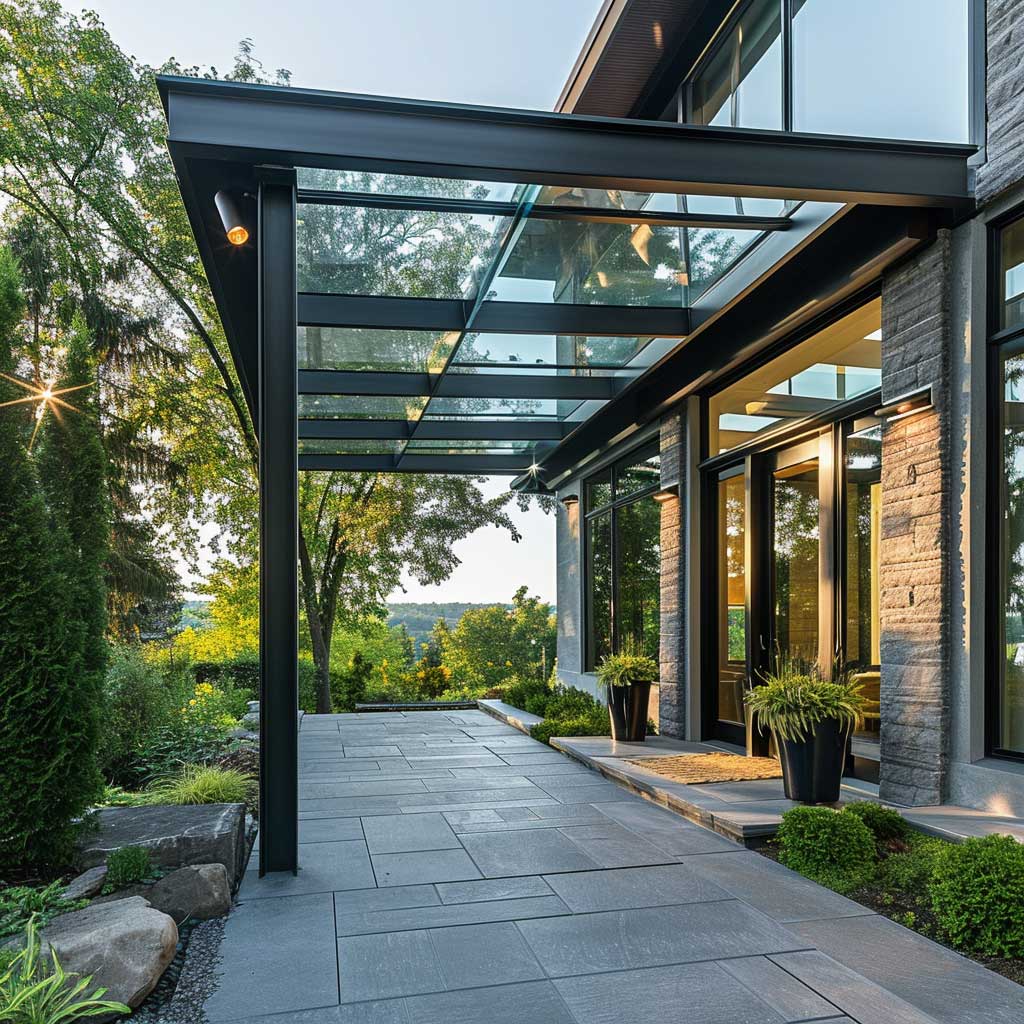

The innovation in glass canopy design extends beyond aesthetics into the realm of technology. Advances in glass manufacturing have led to the development of toughened and laminated glass that is both safe and durable, ideal for use in outdoor structures. Some glass canopies incorporate smart glass technology, which allows the glass to change its transparency depending on the weather, providing optimal comfort in various conditions.
A glass entrance canopy also has the advantage of versatility. It can be designed to complement a range of architectural styles, from ultra-modern homes to more traditional settings. The canopy can be custom-shaped to fit specific spaces, whether it’s a flat, angled, or curved design, making it a suitable option for various entrance layouts.
The environmental aspect of a glass canopy is also noteworthy. By allowing natural light to permeate the entrance area, it reduces the need for artificial lighting during the day, contributing to energy efficiency. This feature, coupled with the use of recyclable materials like glass and metal, underscores the eco-friendly potential of these canopies.
In summary, an innovative glass entrance canopy design offers a blend of style, functionality, and modern technology. It transforms the entrance of a home into a space that is not just sheltered but also aesthetically pleasing and welcoming. The use of glass in canopy design is a testament to the evolving trends in architecture, where materials are used not just for their practicality but also for their ability to elevate the design narrative of a space.
My Take on Entrance Canopy Design
I’ve seen canopy designs that cost $200 and ones that cost $5,000. The expensive ones aren’t always better. The best entrance canopy design is the one that matches your house style, uses the right material for your climate, and has proper drainage. That’s it. Skip the trends that don’t fit your facade. A glass canopy on a Colonial looks as awkward as a wrought iron canopy on a flat-roof modern box.
If this page helped you narrow down your canopy design for your house entrance, save it for later. You’ll need it when you’re standing in a showroom trying to remember whether you wanted laminated or tempered glass.
How to Choose and Install an Entrance Canopy
A step-by-step process for selecting the right entrance canopy design for your house and getting it mounted properly.
Tools needed:
- Tape measure
- Level
- Hammer drill with masonry bits
- Socket wrench set
- Silicone sealant
Check your wall structure
Knock on the wall above your door. Solid brick or concrete can hold canopy brackets with expansion bolts. Stucco over foam or hollow block needs through-bolts with a backing plate inside. Skip lag screws into stucco — they pull out under wind load.
Measure the entrance width and choose projection depth
Measure your door frame width and add 12 inches on each side. That’s your minimum canopy width. For depth, go with 48 inches to cover two people. Write down the height from the door top to where you want the canopy bottom — standard is 8 to 10 inches above the door frame.
Pick your material based on house style and climate
Modern homes look best with aluminum or glass. Traditional homes suit cedar or wrought iron. Coastal climates need 316 stainless fittings and powder-coated aluminum — bare steel rusts fast in salt air. Refer to the comparison table above for price and lifespan details.
Mark mounting points and pre-drill
Hold the bracket template against the wall. Use a level — a crooked canopy is immediately visible and impossible to un-see. Mark all bolt holes with a pencil. Pre-drill with a masonry bit sized for your expansion bolts. Blow out dust from each hole before inserting anchors.
Mount brackets, attach canopy panel, seal the wall joint
Bolt brackets to the wall. Tighten evenly. Slide or bolt the canopy panel onto the brackets. Apply a bead of silicone sealant along the top edge where the canopy meets the wall. This prevents water from running down the wall behind the canopy and causing damp. Recheck level one last time.