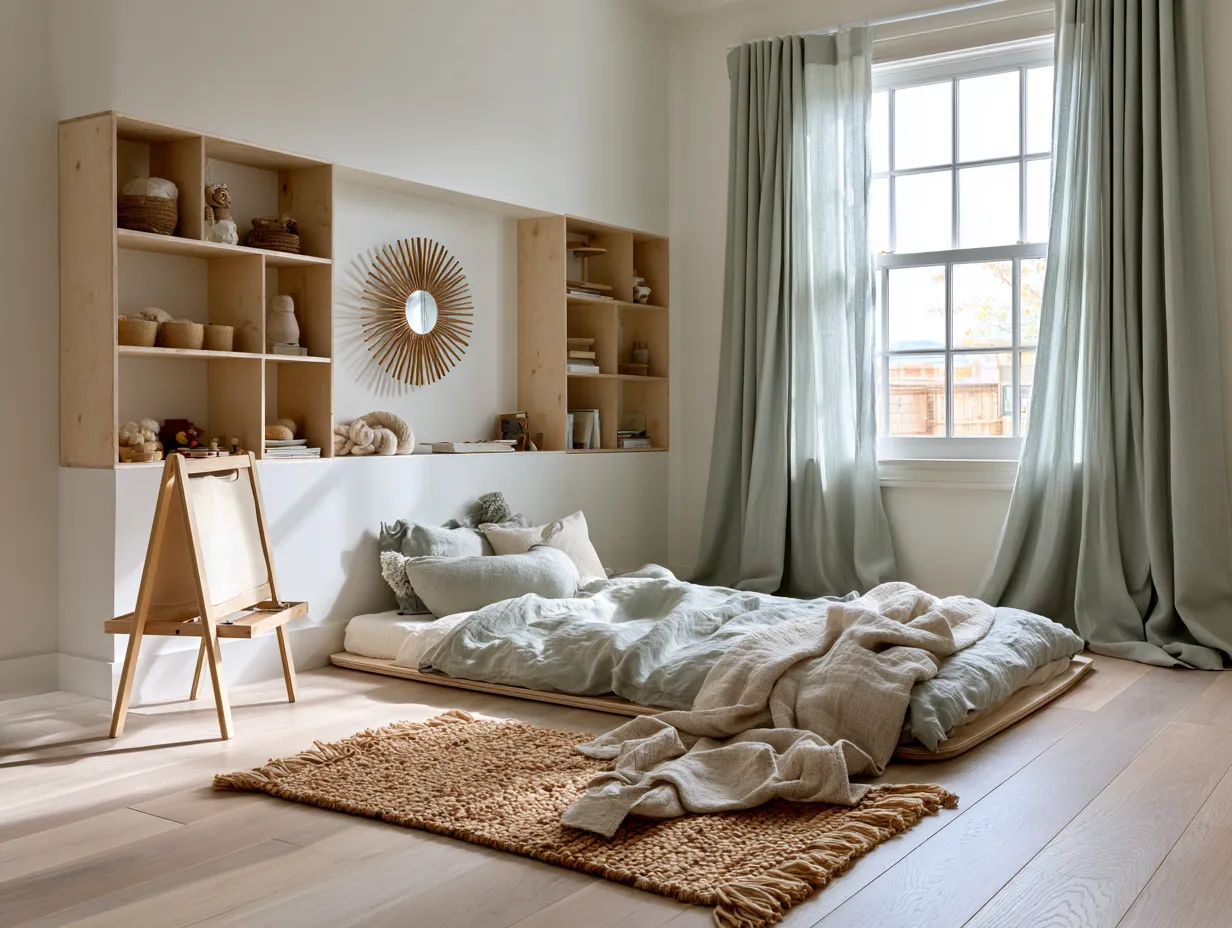
A blue nursery works because soft blue reads as quiet to the eye, and quiet is exactly what a sleeping baby needs. Yes, it suits boys, girls and every gender surprise in between, as long as the shade stays light and slightly grayed. Think of a calm morning sky rather than a swimming pool. Pick the wall color first and test it beside the crib before buying a full can.
Which blues actually soothe? Pale sky blue, powder blue and blue-grey all sit in the calming range, while saturated navy and cobalt tend to energize once they cover every wall. Paint catalogs suggest keeping nursery walls at a light reflectance value (LRV) of 55 or higher, so the room stays bright for diaper changes and night feeds. Save the deep tones for one wall, a rug or the curtains.
Below you will find four palettes, from sky blue to nautical navy, plus a table that matches each one to the light in your room. Babies can spend up to 16 hours a day in this space, so the details deserve a slow afternoon of swatch testing. Start with the Quick Scan box if time is short.
Quick Scan
- Soft sky blue and blue-grey calm a baby’s room, while saturated navy and cobalt do the opposite on every wall.
- Keep main wall paint at LRV 55 or higher so the room stays bright.
- A room temperature of 68 to 72°F (20 to 22°C) matters as much as color for sleep.
- Navy works best as one accent wall, a rug or curtains, not as a full-room finish.
- White trim, light wood and warm grey stop a blue nursery from turning cold.
Sky Blue Walls Give a Blue Nursery Its Calm Base
A sky blue nursery starts on the walls, where a pale, slightly grayed blue does the heavy lifting. Paint databases list soft blue-greens such as Watery and Rainwashed at LRV 57 and 59, which means they bounce back a little over half of the light that hits them. That is the sweet spot for a baby room: bright enough for a 3 a.m. diaper change, quiet enough to sleep in. Test two large swatches and check them at 9 a.m. and 7 p.m.
Should the whole room stay one blue? Not at all, because one shade on walls, rug and curtains reads like the inside of a swimming pool. Skip the matching set and let the paint be the sky, then add clouds through a wallpaper panel or a few removable decals. Keep the clouds sparse, the way they drift on a clear afternoon, and leave wide stretches of plain blue between them.

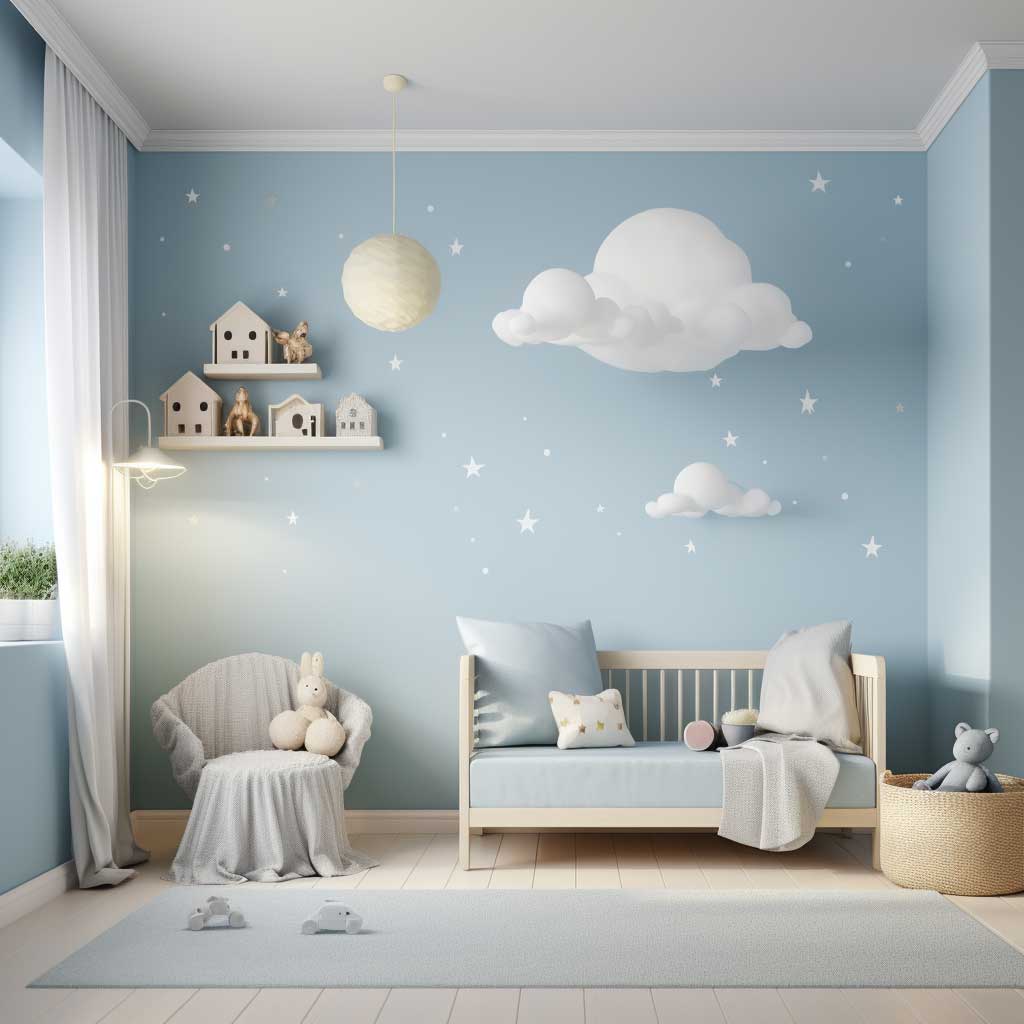
White or light wood furniture looks best against sky blue, because pale frames keep the room airy while the walls carry the color. A crib with clean lines and a glider in oatmeal or soft grey anchor the corner without adding a second loud shade. Avoid dark espresso pieces here; against pale blue they sit like heavy boulders in a cloud. Choose one wood tone and repeat it on the dresser and shelves.
Want a little more depth than plain blue? A second cool hue helps, and this breakdown of a blue and green color combination that keeps rooms calm shows which shades share an undertone. Soft sage against pale sky blue reads like a shoreline, while lime beside blue reads like a paint accident. Use the green only on a shelf, a basket or a single throw.

Lighting and temperature finish the job. Nursery sleep guidance puts the ideal room at 68 to 72°F, about 20 to 22°C, with blackout shades for daytime naps and only a dim night light after dark. A pendant on a dimmer plus a table lamp or sconce gives a soft dawn glow for feeds, with full brightness only when you need it. Bright overhead light at 2 a.m. wakes everyone, so put the dimmer switch within reach of the glider.

Navy and White Stripes Bring the Sea Indoors
A nautical blue nursery leans on navy, crisp white and a little rope-and-anchor detail rather than on full-room dark paint. Deep shades sit far below the LRV 55 comfort zone, and lighting guidelines suggest at least 40 lumens per square foot when dark tones cover a lot of wall. Is that a reason to skip navy? No, it is a reason to ration it. One striped or painted wall with white on the other three keeps the room bright and still reads like a ship’s cabin.


Furniture stays simple: a white or dark wood crib, a dresser in natural oak, and a chair in navy or striped fabric. Skip the full pirate treatment with wheels, ropes and treasure chests on every surface, which turns a nursery into a theme-park queue. Bring the theme through bedding, a striped rug and a single framed chart instead. Repeat navy exactly three times in the room and let white handle the rest.
Wall art featuring ocean scenes gives the theme a focal point without adding another shade of blue. A large coastal print above the changing table works like a window onto the harbor, while a small model boat or brass compass on a shelf adds a touch of adventure. Retailers of children’s art suggest hanging pieces about 90 to 100 cm from the floor once a toddler is exploring, so plan a lower row for later.
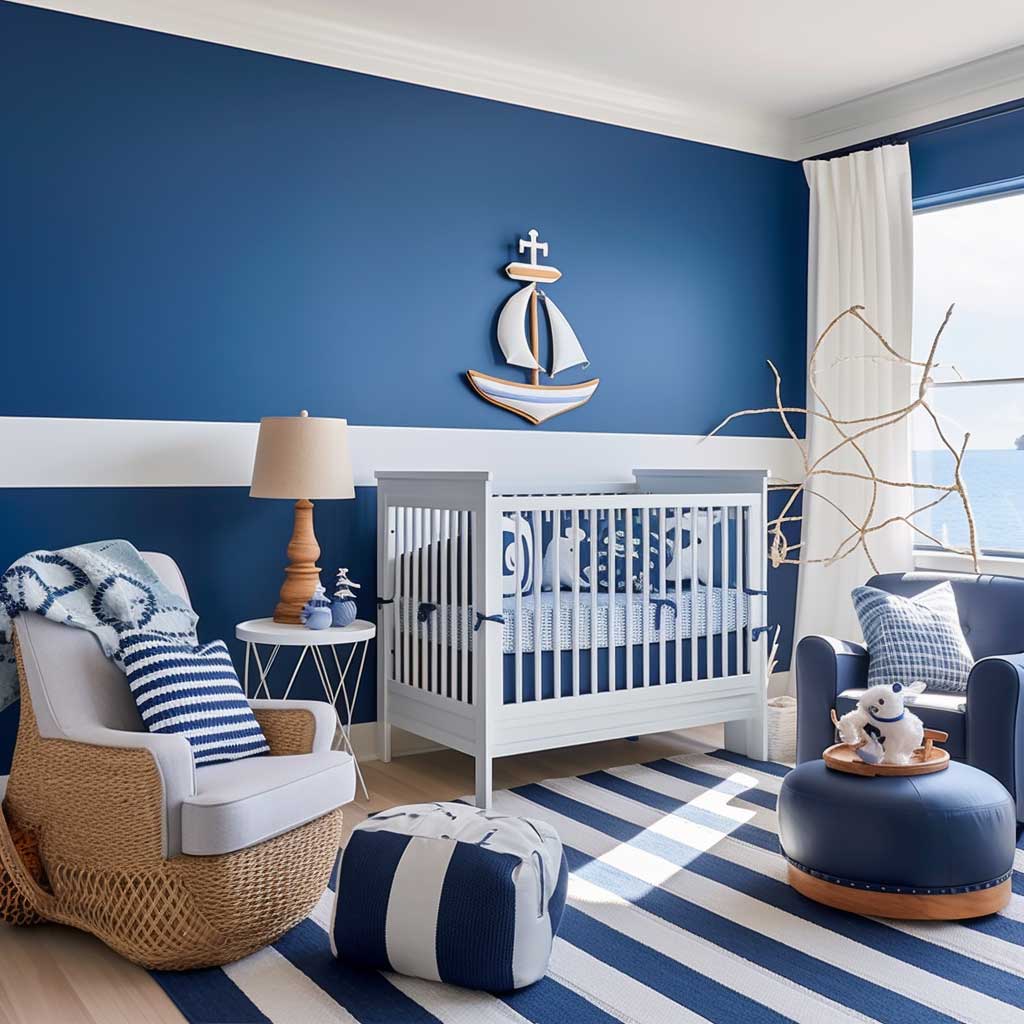

Lighting needs a plan whenever navy is involved. Use a warm ceiling fixture on a dimmer and table lamps with striped or white bases, so the darker wall never swallows the evening. Should the bulbs be cool white to match the theme? No, warm bulbs keep navy from turning icy. Choose warm-white bulbs for every fixture within sight of the crib.
Blue and Grey Pairings That Grow With Your Child
Grey and blue nursery ideas work because grey mutes the blue just enough to keep the room from looking like a baby-shop cliché. Put a soft blue on the main walls and a warm grey on the crib, the dresser or a lower panel, since warm grey stays friendly while cool grey drifts toward hospital territory. Grey acts like the mat around a framed picture: it makes the blue look deliberate. Sample both on the same wall before committing.
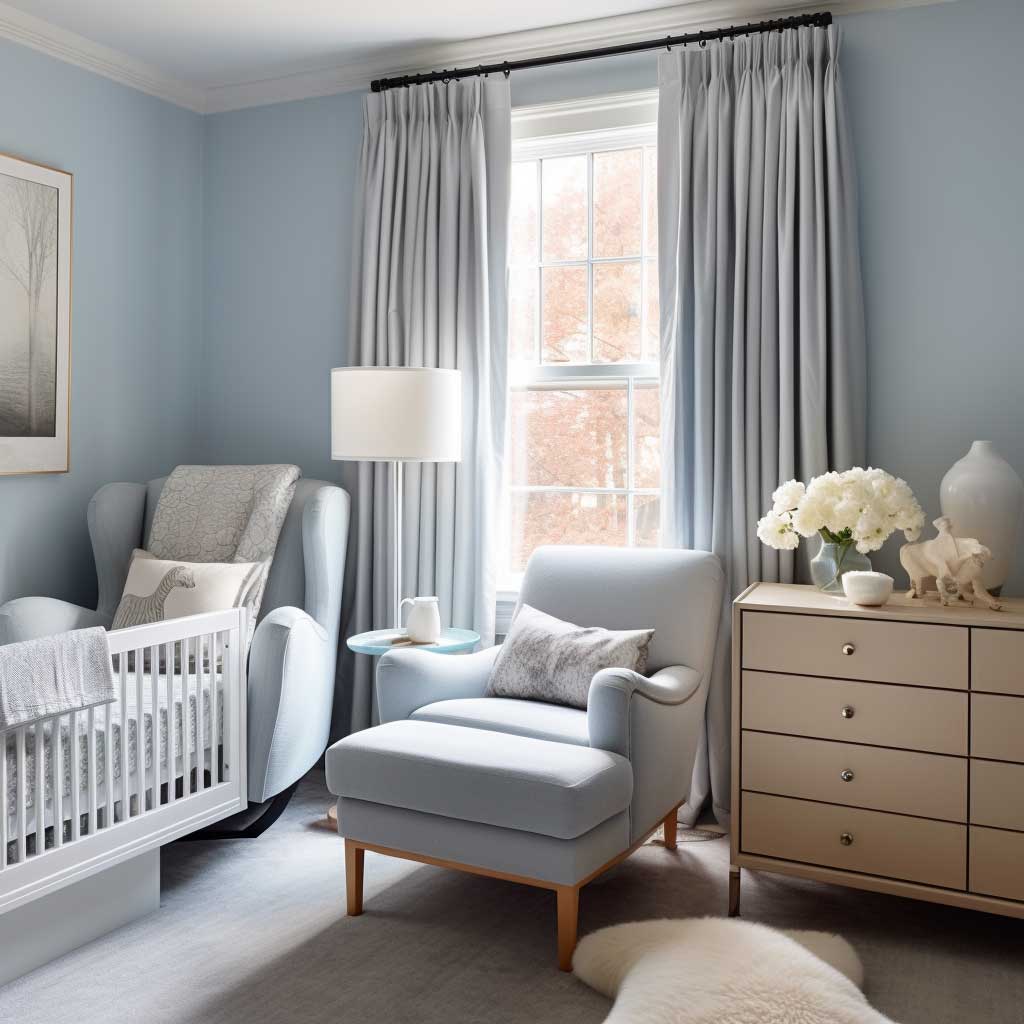

Paint choice matters more here than in almost any other room. Zero-VOC or certified low-VOC paint is the standard for nurseries, and windows open for at least 48 hours after painting clear the smell before the crib goes in. This overview of non-toxic materials parents choose for kids rooms covers paint, flooring and textiles in one place. Should you repaint after a year? Only if the finish has scuffed, because an eggshell or satin sheen wipes clean and lasts.
Textiles carry the whimsy, and a short list keeps the plan tight:
- One blanket in stars or stripes, in blue and grey only
- A grey wool or cotton rug under the glider
- Lined curtains in soft blue for daytime naps
- One playful animal print on the wall, not five
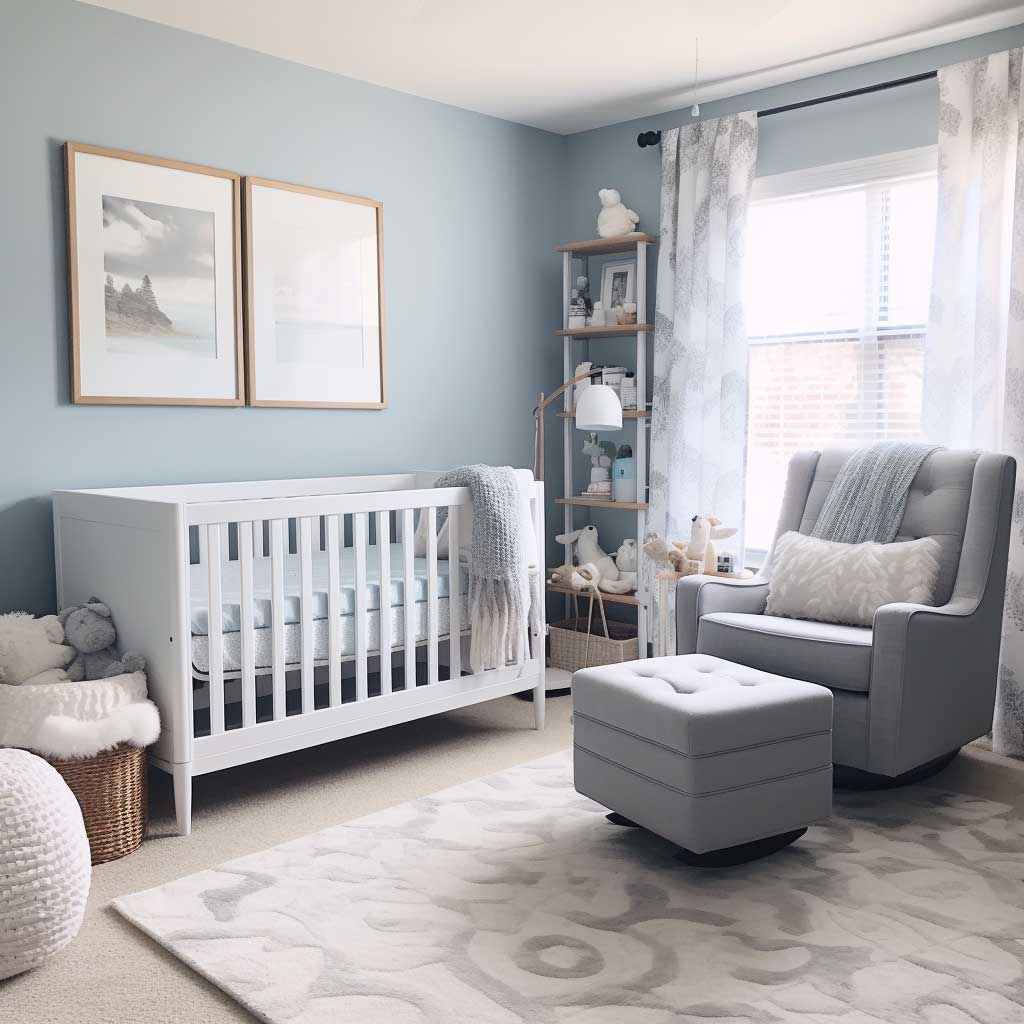
Lighting should stay soft and adjustable. A pendant on a dimmer sets the room, and table lamps or wall sconces handle quiet feeds without waking the whole space. Do you need a statement fixture? No, a simple white shade beats a loud one that competes with the walls. Pick one lamp in grey or white to echo the palette.

Don’t Do This
- Don’t paint navy on all four walls of a room with one small window.
- Don’t match walls, rug and curtains in one identical blue.
- Don’t pair pale blue with cold grey furniture and cool-white bulbs.
- Don’t fill the crib zone with toys and bright objects.
White and Blue Nursery Palettes for Boys and Girls
A white and blue nursery is the safest answer to the baby boy room colour question, and it works just as well for a girl. Blue does not belong to boys: the same pale shade beside blush, oatmeal or a sprig of sage reads as a girl’s room, and beside navy or grey it reads as a boy’s. Trim in a soft white such as Nebulous White, listed at LRV 74 in paint databases, sends light back into a cool room. Repeat that white on the crib, the shelves and the frames.
Sleep specialists quoted in Motherly’s nursery sleep tips favor neutral, cool colors and a short list of toys, because bright objects overstimulate. Is that a rule against color? No, it is a rule against clutter. Keep pattern to one blanket and one print, and store toys out of the crib’s sightline.
Blue Palettes Side by Side
The table lines up the four palettes by the light they need and the rooms they suit. Figures come from paint databases and lighting guidelines, and they shift slightly with finish and window direction.
| Palette | Light guide | Mood | Best for |
|---|---|---|---|
| Sky blue | Walls at LRV 55 or higher | Airy and quiet | Small or north-facing rooms |
| Navy and white | Deep tones need 40+ lumens per square foot | Snug and adventurous | One accent wall, rugs, curtains |
| Blue and grey | Main walls at LRV 55 or higher | Calm and modern | Rooms that must grow into a kid’s room |
| White and blue | White trim near LRV 74 | Fresh and flexible | Boys, girls and gender surprises |
Where This Lands
The best blue nursery is a pale, slightly grayed blue with bright white and warm wood around it.
Use sky blue for the base, keep navy to one wall or a set of textiles, and let grey and white handle the calm.
Test every swatch at two times of day, hold main walls at LRV 55 or higher, and keep the room between 68 and 72°F.
Start with one wall and one shade, then add texture once the light has proven you right.