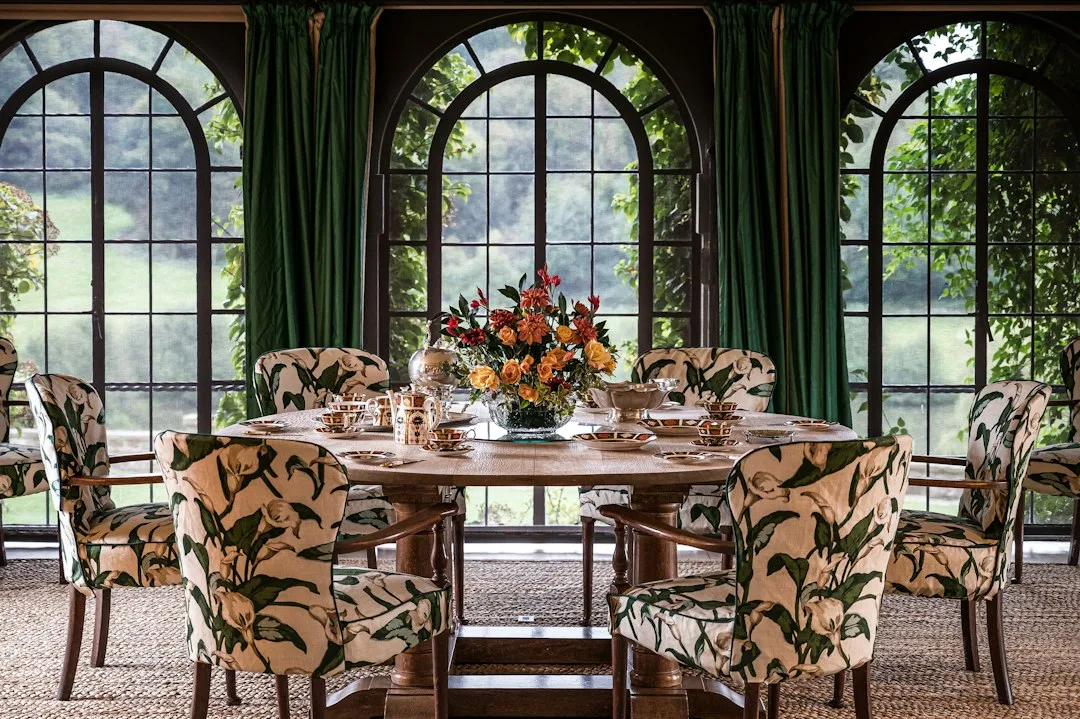
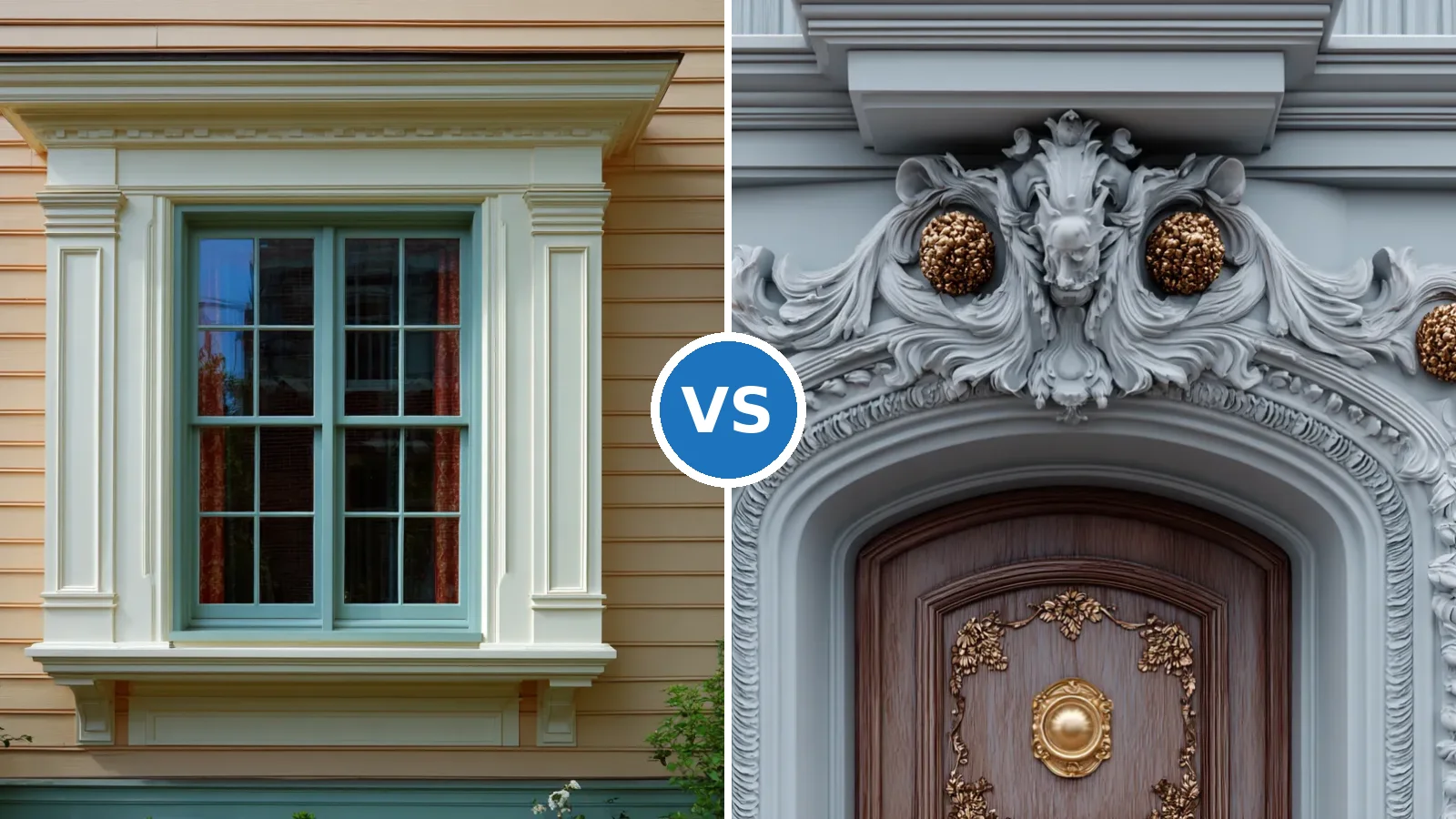
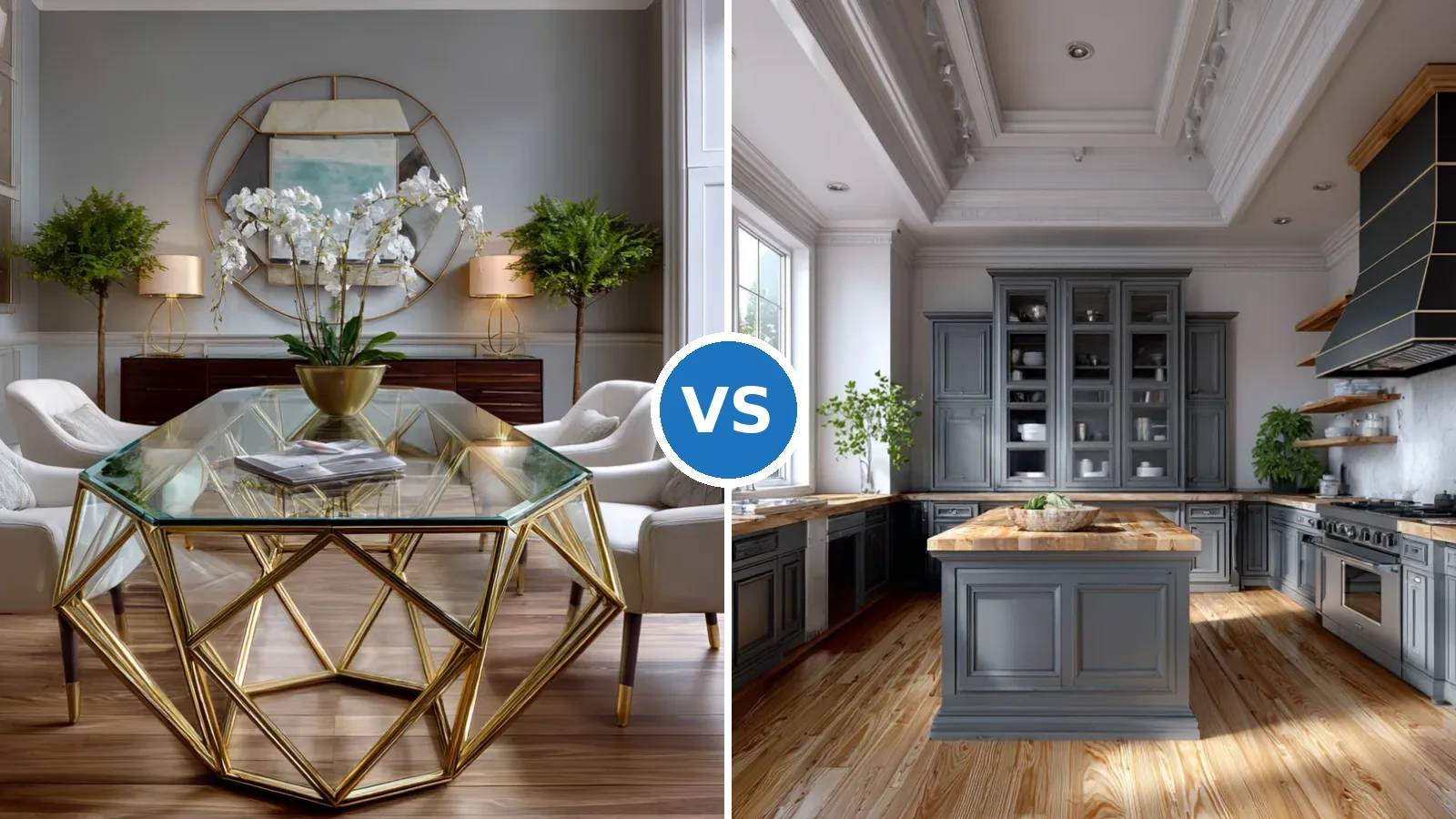
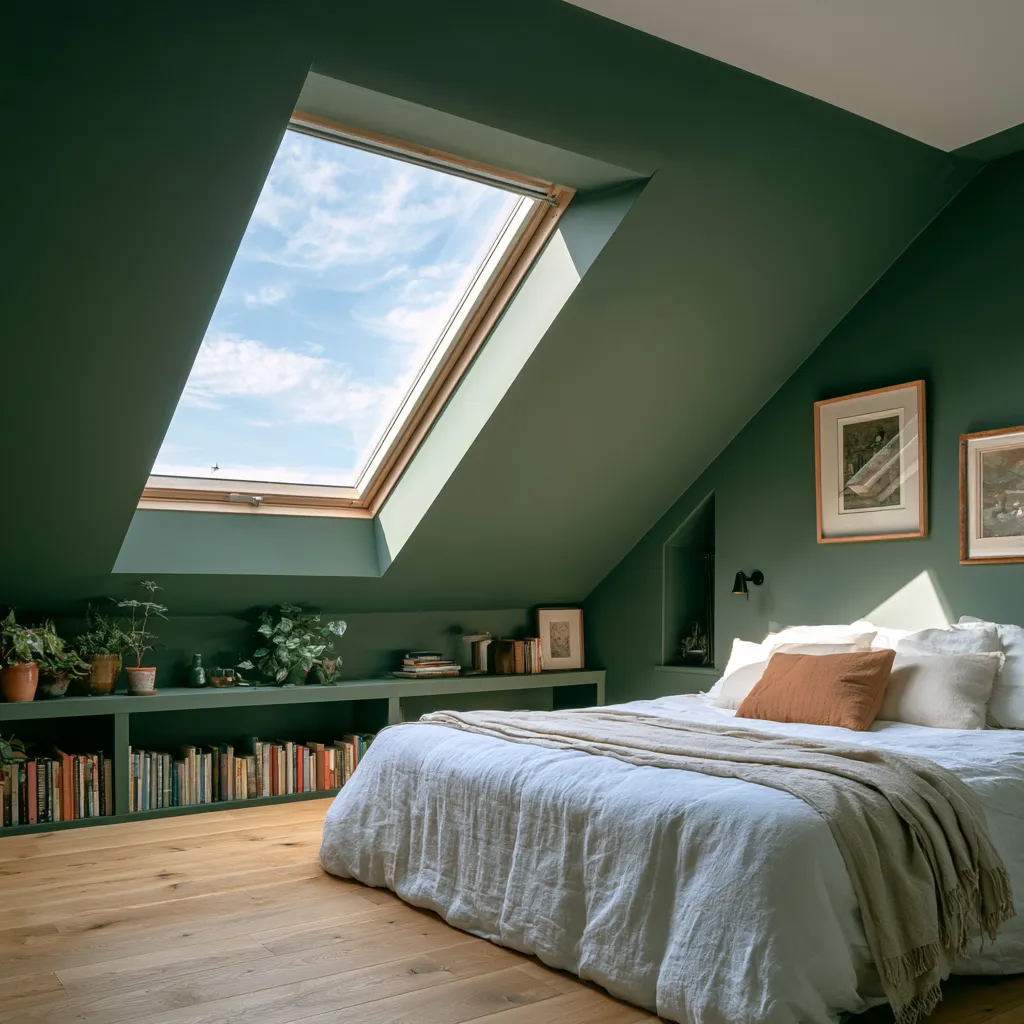
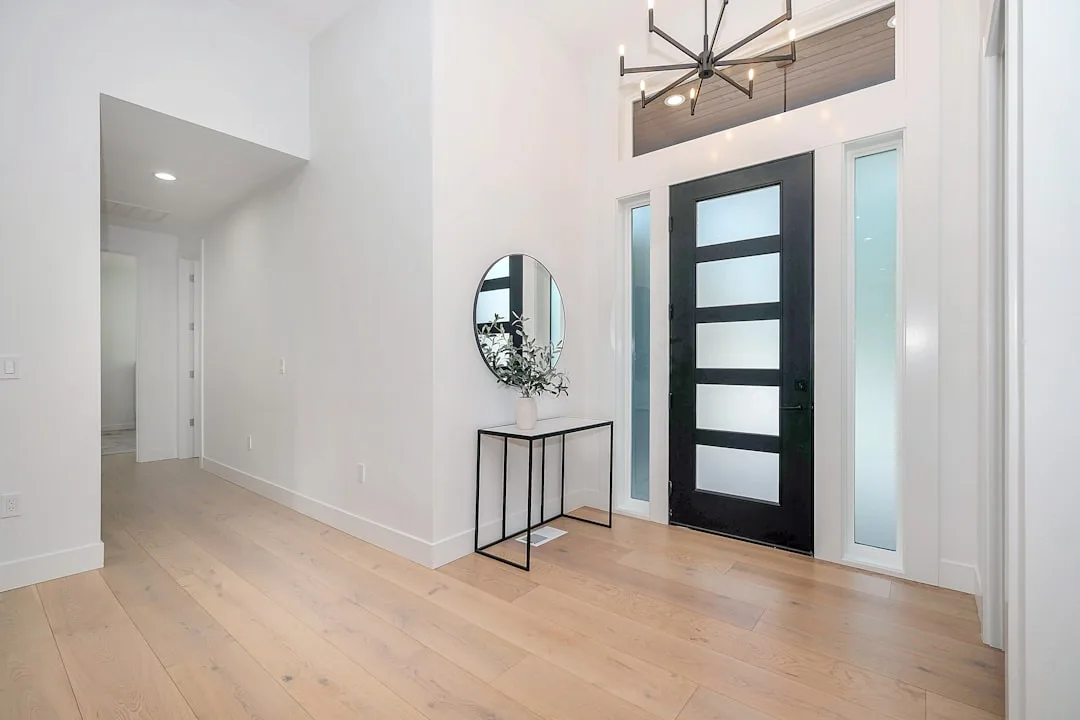
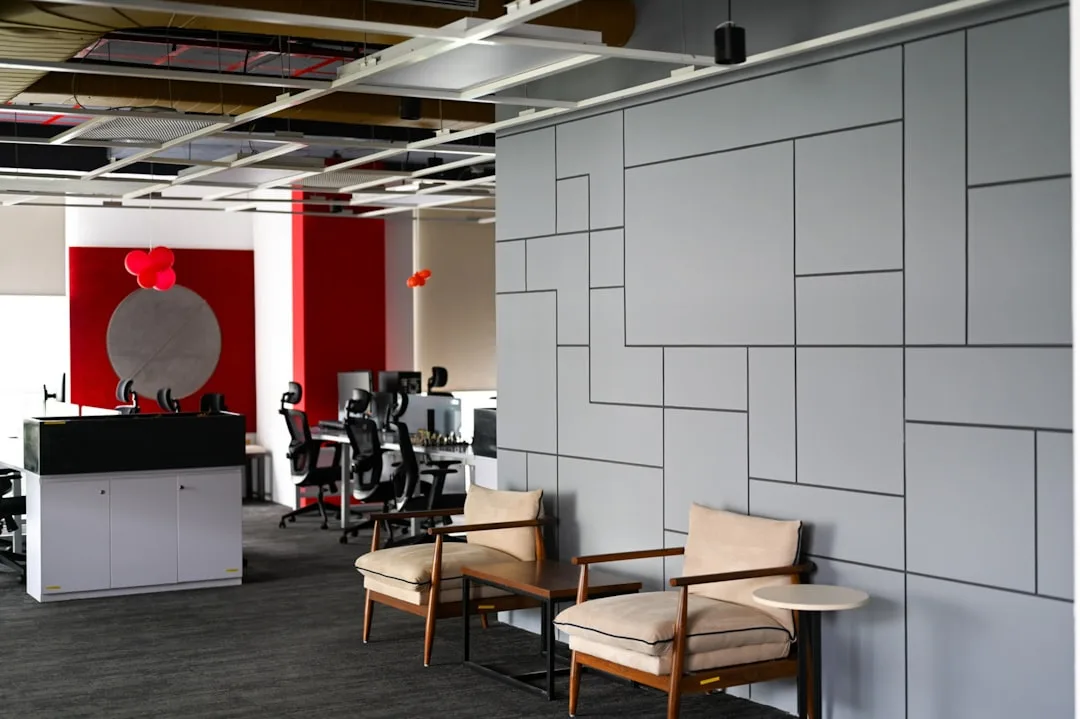
A neo industrial interior pairs neoclassical detail, such as crown moldings, marble and carved furniture, with factory materials like exposed brick, steel windows and metal lighting. Does the mix actually work in a real home? It does when the classical side is built into the architecture and the industrial side supplies the texture, so neither reads as a costume. Loft conversions with ceilings of 10–15 feet give the look the most room, yet a standard apartment can carry it through two or three well-chosen pieces.
Costs stay reasonable when the classical layer goes on selectively. Installed crown molding typically runs $4–$15 per linear foot, while a marble counter averages around $100 per square foot installed, so a single-room upgrade costs far less than a full renovation. Brick veneer at about $6.50–$14.50 per square foot installed delivers the warehouse texture without building a masonry wall. Start with the one surface guests see first.
The 24 photos below move through a living room, a kitchen and a bedroom, each showing a different balance between heritage and hardware. After the rooms come a comparison of industrial style types and a price table for the elements that matter most. Read the living room section first if the ceiling height is still an open question.
- Neo industrial interior design sets neoclassical detail from the 1760s–1830s against loft-era brick and steel.
- Rooms with 12-foot ceilings need 6–12 inch crown molding; 8-foot rooms need only 2.5–6 inch profiles.
- Brick veneer costs about $6.50–$14.50 per sq ft installed vs $12–$34 for solid brick.
- Marble counters average about $100 per sq ft installed; granite runs $40–$150 and stains less.
- Steel windows cost $400–$1,500 each and can last 75+ years; aluminum starts near $75.
- A 2-watt LED filament bulb at 2200K replaces a 40-watt vintage incandescent.
- One classical anchor per room beats ornament on every wall.
Classic Ornament Meets Factory Bones in Neo Industrial Architecture
Neo industrial architecture borrows from two very different eras. The neoclassical revival, sparked partly by the 1748 excavations at Pompeii, shaped grand interiors from the 1760s through the 1830s, while loft living in converted warehouses took off in SoHo in the 1960s. One era brought symmetry, columns and marble, the other brought brick, steel and open floor plates. Think of the result as a tailored wool coat thrown over a work shirt. Keep both histories visible in the architecture, not just in the accessories.
Contemporary industrial architecture usually stops at the raw shell of concrete, ducts and black frames. The neo industrial style adds a second, softer layer on top, so a loft with 10–15 foot ceilings also gets crown moldings, paneled doors and at least one carved or upholstered piece. Is that just industrial decor with a few antiques? Not quite, because the classical layer is architectural, built into ceilings and doors rather than parked on a shelf. Plan the moldings and door panels before choosing a single lamp.
Proportion is where most attempts fail. Loft conversions usually offer 1,000–2,000 square feet and ceilings well above the 2.7–3 metre apartment standard, which is exactly the height classical moldings were drawn for. Heavy ornament squeezed under a low ceiling looks like a ball gown worn in a phone booth. Don’t copy loft photos into a standard room without scaling every profile down.
- Classical layer: crown molding, neo-classic paneled doors, marble, symmetrical furniture, cream and ivory walls
- Industrial layer: exposed brick, steel or black-framed windows, concrete, metal pendants, open ductwork
- Bridge pieces: aged brass, leather upholstery, oak floors and warm 2200–3000K light
Living Room Contrast in Neo Industrial Interior Design
A living room built on neo industrial interior design works when the ceiling speaks classical and the walls speak factory. Installed crown molding typically runs $4–$15 per linear foot, but a room with 12-foot ceilings needs a 6–12 inch profile that can climb to $10–$55 per linear foot. A thin 3-inch trim at that height looks like a pencil line on a billboard. Size the molding to the ceiling first and adjust the material to the budget second.
Exposed brick supplies the industrial half, and it rarely needs a real masonry wall. Brick veneer generally costs about $6.50–$14.50 per square foot installed, compared with $12–$34 for solid brick, because thin units are lighter and faster to set. Does veneer look fake up close? Not when the joints are raked and the mortar color matches old brick, since the eye reads the joint pattern before the brick face. Ask for a mortar sample board before signing off.


Large metal-framed windows are the third ingredient of an industrial contemporary interior design, and they carry most of the budget risk. Steel windows typically cost $400–$1,500 per window and can last more than 75 years, while aluminum frames start around $75–$400. Manufacturers note that aluminum can be finished to resemble steel and weighs about 67% less, so it suits renovations where the wall cannot take extra load. Choose steel for the window everyone faces and aluminum for the rest.
Texture needs restraint to read well. One brick or stone wall facing the sofa does more than four rough walls fighting for attention, the same rule behind stone accent walls that pair raw texture with clean lines. Plush classical sofas in velvet or bouclé then soften the hard backdrop the way a rug softens a stone floor. Don’t line every wall with brick; keep at least one smooth plaster wall for art and moldings.


Furniture closes the loop between the two styles. A carved or button-tufted sofa paired with a steel and glass coffee table reads intentional, while two industrial pieces side by side read like a warehouse showroom. Is symmetry still needed in an open loft? Yes, because matched pairs of lamps or chairs are the cheapest way to signal neoclassical order in a big volume. Place the pairs on either side of the strongest wall.
Marble Counters and Metal Pendants Shape the Kitchen
A neo industrial kitchen leans on marble for its classical weight and on metal for its working edge. Marble counters average about $100 per square foot installed, with most projects between $50 and $200, so a typical 35-square-foot kitchen lands near $3,500. Granite costs a little less at $40–$150 per square foot and resists stains better. Pick marble only if a patina of etch marks feels like character rather than damage.
Which marble suits the look best? Carrara is the usual pick at roughly $70–$100 per square foot installed, while Calacatta material alone runs $175–$400, according to national marble countertop cost figures. Carrara’s soft gray veining sits comfortably beside blackened steel, much like a white shirt beside a charcoal suit. Budget for sealing about once a year, since marble is porous.


Classical cabinetry with industrial hardware is the second pairing that defines the room. Shaker or raised-panel doors in cream, ivory or soft gray echo the restrained palette of the original neoclassical period, while cast iron or blackened steel pulls bring the factory note. Compare that with all-black flat-slab doors, which push the room toward pure industrial and lose the heritage half. Swapping only the hardware on existing doors is the cheapest test of the look.
The wall between counter and cabinets is where many kitchens tip too far one way. A brick-look or glazed subway tile keeps the industrial line, and this breakdown of modern kitchen wall tiles priced per square foot shows installed backsplash prices typically landing at $30–$75 per square foot. A matching marble backsplash looks grand but can cost as much as $6,000 on its own. Don’t run the same marble from counter to ceiling unless the budget truly covers a second slab.
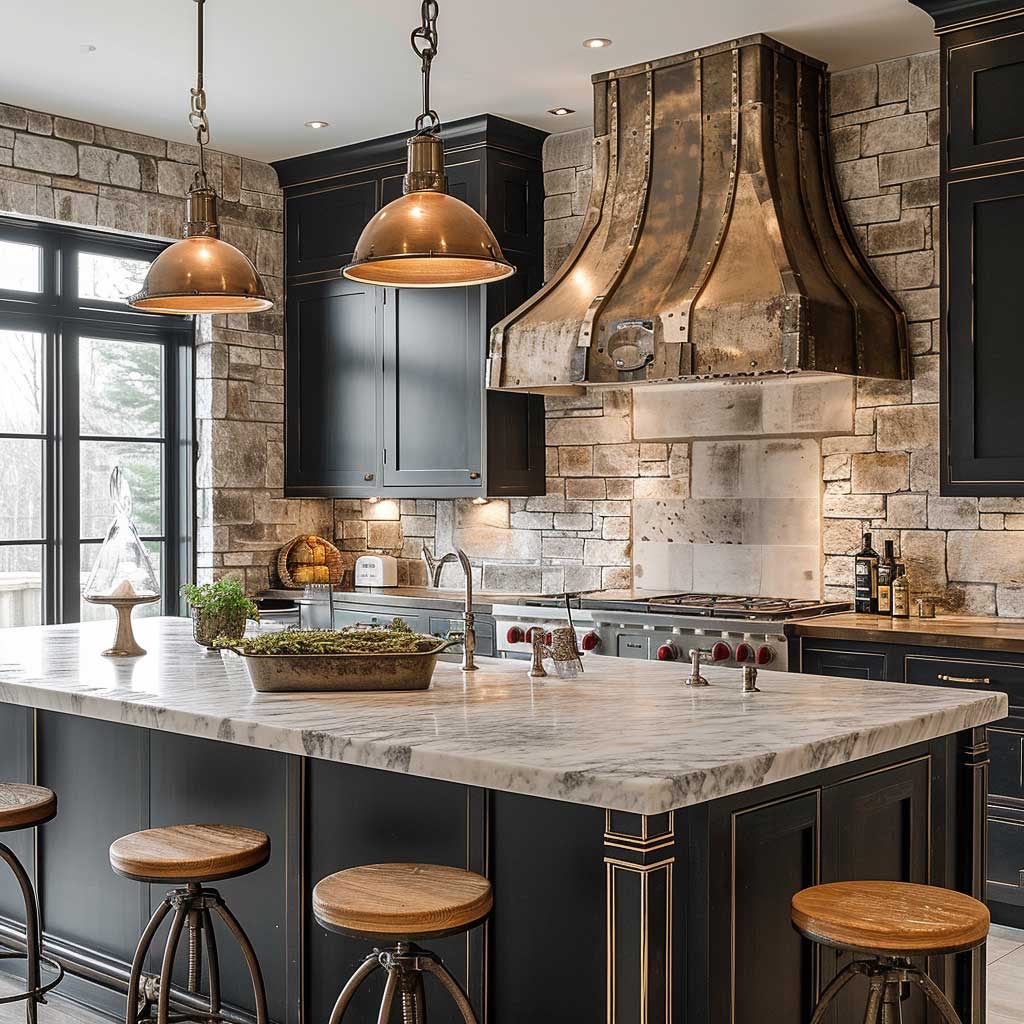


Pendant lights carry the metal finish into the air above the island. Brushed nickel, aged bronze or black enamel shades with exposed bulbs work as both task light and sculpture. Kitchen lighting guides suggest 3000K–4000K over work surfaces and a warmer 2700K–3000K over seating, so one bulb type rarely serves the whole room. Is a vintage filament bulb bright enough for chopping? Usually not, so keep filament bulbs over the table and brighter task light under the cabinets.
Bedrooms Where a Carved Bed Faces Bare Concrete
A neo industrial bedroom works like a velvet jewelry box set inside a concrete safe. The carved or upholstered bed frame carries the classical role, while an exposed concrete or plaster wall behind it supplies the urban edge. Crisp white linen bridges the two, because it reads both hotel-classic and loft-minimal. Keep the headboard wall raw and dress everything at mattress height.
Industrial fixtures with exposed bulbs are the easiest way to bring the factory mood into a room meant for sleep. By manufacturer specifications, an LED filament bulb at 2200K draws about 2 watts, replaces a 40-watt vintage incandescent, gives roughly 180 lumens and is rated around 15,000 hours. That amber glow sits far below the 5000K of cool daylight bulbs, which make concrete look clinical. Choose 2200K for bedside and pendant fixtures and keep cool bulbs out of the room.


Is 180 lumens enough for reading in bed? Not on its own, since a brighter 6-watt filament model produces about 500 lumens and stands in for a 60-watt bulb. Pairing one brighter reading lamp with dim decorative pendants keeps the moody look without straining the eyes. Treat the pendants as candles and the reading lamp as the working tool.
Vintage decor adds the history that new concrete cannot. An antique gilded mirror, a framed classical print or a faded wool rug softens hard surfaces the way a single old book softens a modern shelf. One large mirror above a dresser looks deliberate, while five small frames on the same wall look like a flea-market haul. Don’t fill the concrete wall with art; leave it mostly bare so the bed stays the focus.


Color keeps the room restful. The neoclassical palette of cream, ivory, oyster and soft gray already sits close to concrete, so bedding and curtains in those tones blend the two layers without any fuss. Black metal should appear in two or three spots, such as a bed rail, a lamp and a curtain rod, rather than in every object. Repeat one metal finish across the room to tie the pieces together.
Types of Industrial Interior Design Next to the Neo Industrial Look
The main types of industrial interior design differ mostly in how much they soften the raw shell. Rustic industrial leans on reclaimed wood and brick, Scandinavian industrial adds pale timber and white walls, minimalist industrial strips everything back, and light industrial interior design paints the brick white and swaps black steel for slim aluminum frames. Neo industrial is the only version that adds a historic architectural layer instead of just softer furniture. Pick the type by the ceiling height and daylight you already have.
Which type suits a smaller home? Light industrial usually fits a standard apartment with 2.7–3 metre ceilings, because white brick and aluminum frames at around $75–$400 per window keep the room bright. Neo industrial needs more height to carry crown moldings and a carved bed, so it shines in lofts of 10–15 feet. Treat the ceiling like a frame size that decides how heavy the picture can be.
| Style | Key materials | Signature cost item | Ceiling fit | Upkeep | Best room |
|---|---|---|---|---|---|
| Neo industrial | Brick, steel, marble, crown molding | Marble counter, $50–$200 per sq ft | 10–15 ft lofts | Medium; marble sealed yearly | Living room, kitchen |
| Rustic industrial | Reclaimed wood, brick veneer | Brick veneer, $6.50–$14.50 per sq ft | Any height | Low | Dining room, den |
| Light industrial | White-painted brick, aluminum frames | Aluminum windows, $75–$400 each | 2.7–3 m standard rooms | Low | Small apartments |
| Minimalist industrial | Concrete, black steel, glass | Steel windows, $400–$1,500 each | 10 ft and higher | Low; steel can last 75+ years | Open plans |
| Scandinavian industrial | Pale wood, white walls, metal | LED filament bulbs, 2 W vs 40 W | Any height | Low | Bedroom, home office |
Neo industrial pairs most naturally with minimalist industrial, since both respect clean lines and a limited palette. Rustic pieces fit better in a separate zone, such as a reading nook or dining corner. Don’t mix more than two of these types in one open plan; three styles under one ceiling read like a furniture store.
Industrial Interior Design Elements Worth the Money
Industrial interior design elements vary hugely in price, so the budget should follow the surface people touch and see daily. A marble counter at $50–$200 per square foot gets used every day, while crown molding at $4–$15 per linear foot mostly gets looked at. Is plaster molding worth it over MDF? MDF runs about $4–$10 per linear foot and paints well, while plaster at $6–$20 gives crisper detail but is heavier and more fragile, so keep plaster for the living room ceiling.
Neo-classic doors are an overlooked bridge between the two styles. A raised-panel door painted ivory beside a black steel window frame tells the whole story of the room in one glance, much like a signature at the bottom of a letter. Paneled doors also add classical rhythm without touching the ceiling budget. Replace hollow flat doors first if the rooms still feel too plain.
| Element | Budget pick | Premium pick | Lifespan or upkeep | Where to spend |
|---|---|---|---|---|
| Crown molding | MDF, $4–$10 per linear ft | Plaster, $6–$20 per linear ft | Plaster is fragile before install | Living room ceiling |
| Brick wall | Veneer, $6.50–$14.50 per sq ft | Solid brick, $12–$34 per sq ft | Veneer is lighter and faster to set | One feature wall |
| Windows | Aluminum, $75–$400 each | Steel, $400–$1,500 each | Steel can last 75+ years | Main view window |
| Counters | Granite, $40–$150 per sq ft | Marble, $50–$200 per sq ft | Marble sealed about once a year | Island or one run |
| Bulbs | 2 W LED filament, 180 lumens | 6 W LED filament, 500 lumens | Rated around 15,000 hours | Bedside and dining |
Don’t Do This
- Don’t hang 3-inch trim under a 12-foot ceiling; scale up to a 6–12 inch profile.
- Don’t build solid brick walls for looks alone; veneer at $6.50–$14.50 per sq ft gives the same face for less.
- Don’t light brick or concrete with cool 5000K bulbs; stay between 2200K and 3000K.
- Don’t run marble from counter to ceiling unless the budget covers up to $6,000 for the backsplash alone.
- Don’t mix three metal finishes in one room; pick one and repeat it at least three times.
Where the Balance Lands
Neo industrial interior design pays off when classical detail is built in and industrial texture stays honest, not when both are piled on every surface. One brick veneer wall at $6.50–$14.50 per square foot plus properly scaled crown molding gives more character than a room full of reclaimed props. Treat the contrast itself as the design.
In the kitchen, marble at about $100 per square foot installed suits a single island or run, while granite at $40–$150 handles the busy cooking zone. Seal the marble about once a year. Let the steel hardware and pendants take the knocks.
In living rooms and bedrooms, ceiling height decides the dose. Ceilings of 10–15 feet can carry 6–12 inch moldings and a carved bed frame. A 2.7–3 metre room looks better with a light industrial base and a single classical piece.
Finish with light, because it ties both layers together after dark. A 2200K filament bulb using about 2 watts gives the amber glow the style depends on. Add one brighter 500-lumen reading lamp to keep the room practical.