Industrial loft kitchen design for small spaces works precisely because the constraints force every decision to earn its place. I’ve visited a lot of compact lofts where the kitchen looked like an afterthought. The ones that didn’t share a single trait: the designer stopped trying to fight the space and started working with the raw bones — exposed pipes, soaring ceilings, concrete floors — and turned limitations into the whole point.
You’ll notice immediately that scale works differently here. The ceiling is doing heavy lifting. Use it. Cabinet runs that stop at the standard 30 inches from the floor are leaving the most dramatic real estate in any loft completely wasted. I keep coming back to this every time someone asks why their loft kitchen feels disconnected from the rest of the space — they’ve installed a suburban kitchen inside an urban shell.
What follows are 21 real design concepts organized around what actually works in an industrial loft kitchen — not what looks right in a render but falls apart in practice.
Quick Scan
- Vertical storage to the ceiling is non-negotiable in any loft kitchen under 12 m²
- The island earns its footprint only if it doubles as prep station and dining — no single-function islands
- Exposed pipes, ductwork, and beams are features, not problems. Leave them visible
- Factory-style pendant lighting over an island runs $80–$400 per fixture; it replaces overhead recessed lighting entirely
- Magnetic knife strips and hanging pot racks free up 18–24 inches of counter space — that’s significant in a compact kitchen
- The one finish mistake that kills loft kitchen design: matching all surfaces. Mix concrete, raw wood, and stainless steel deliberately
Vertical Storage Turns the Ceiling Into Your Best Appliance
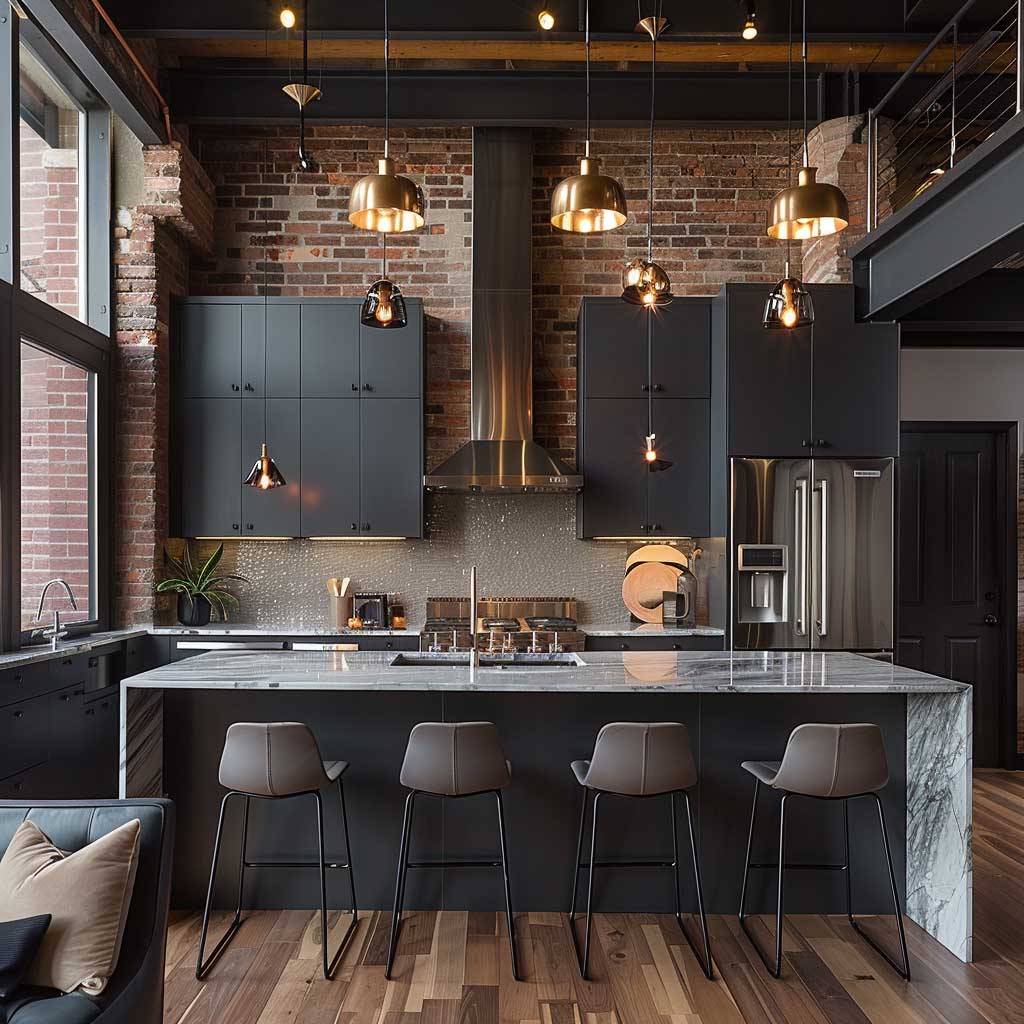
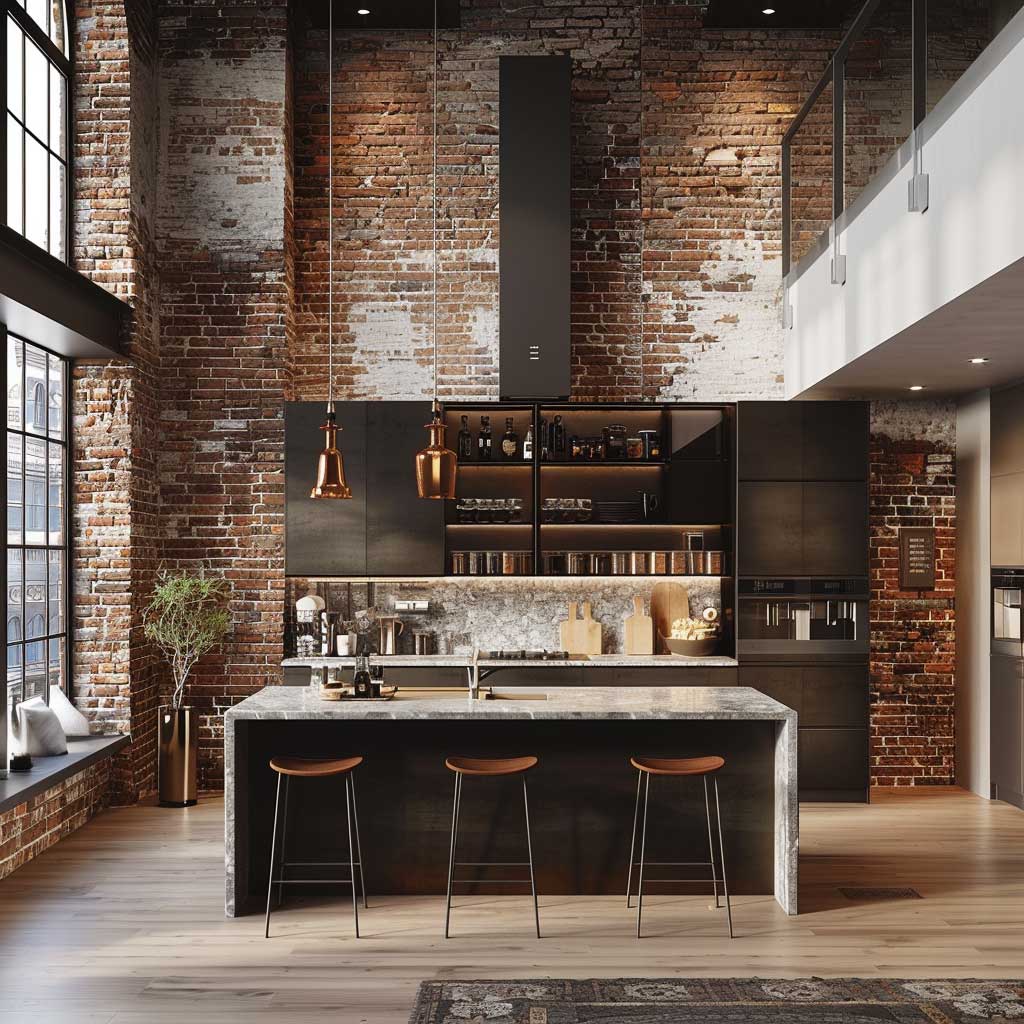
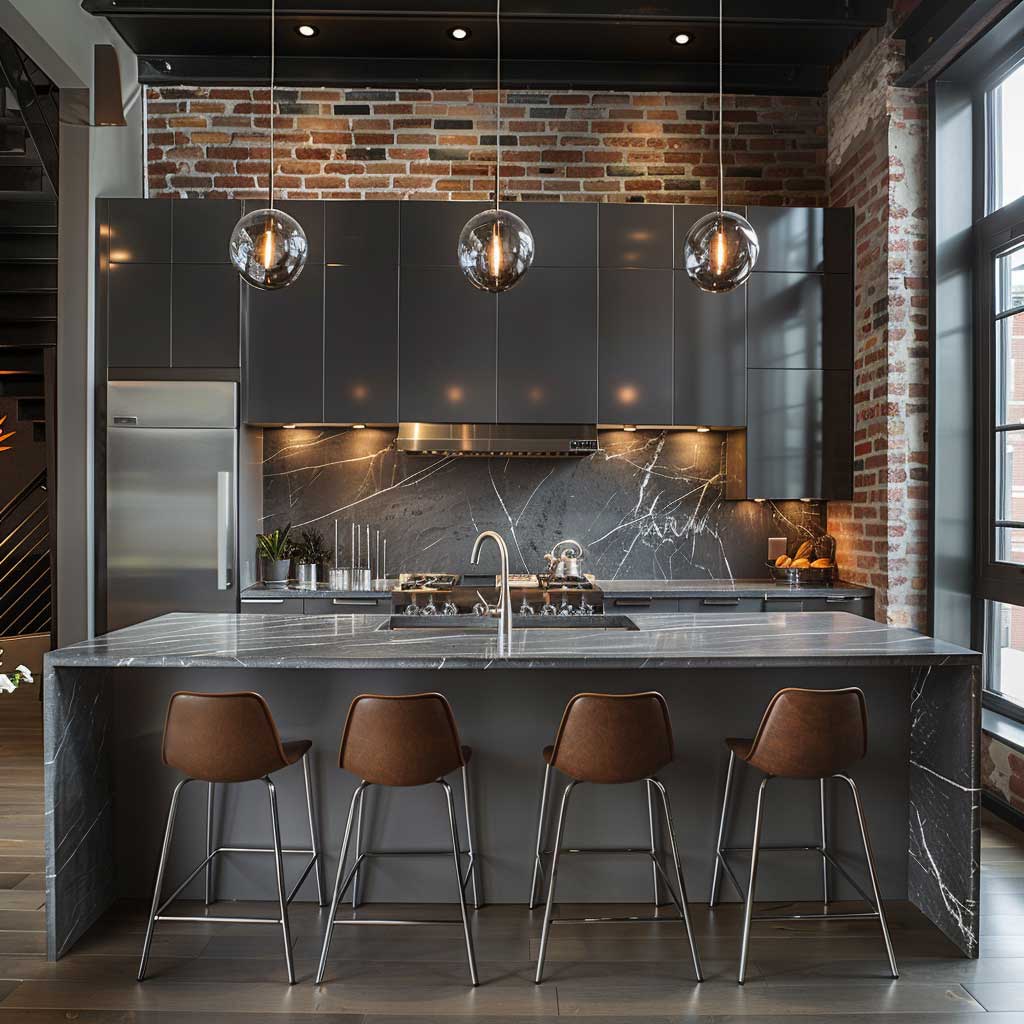
Loft ceilings typically run 10 to 14 feet. That’s two extra shelving zones above what a standard kitchen uses — most homeowners ignore them completely. My go-to move is cabinetry that runs all the way to the ceiling, with a rolling ladder on a steel track to access the upper zone. IKEA’s SEKTION system can be configured this way for under $2,000 total, or you can commission custom flat-front panels in a matte black finish for $4,000–$8,000 depending on linear footage.
High cabinetry in light materials — white lacquer, natural ash veneer, pale concrete laminate — bounces light upward and makes the eye travel toward the ceiling rather than stopping at counter level. Dark cabinet finishes look incredible in loft kitchens but compress the sense of height if you go floor-to-ceiling in dark tones. Reserve the drama for the island or lower cabinets; keep upper storage lighter.
Don’t overlook the wall above your upper cabinets. Floating shelves in the gap between standard cabinet height and the actual ceiling are where I store cast iron, oversized platters, and things I use monthly rather than daily. Reclaimed oak planks on steel L-brackets run about $30–$60 per shelf and read perfectly against exposed concrete or brick. Skip the brackets that match the wall color — the contrast is the point.
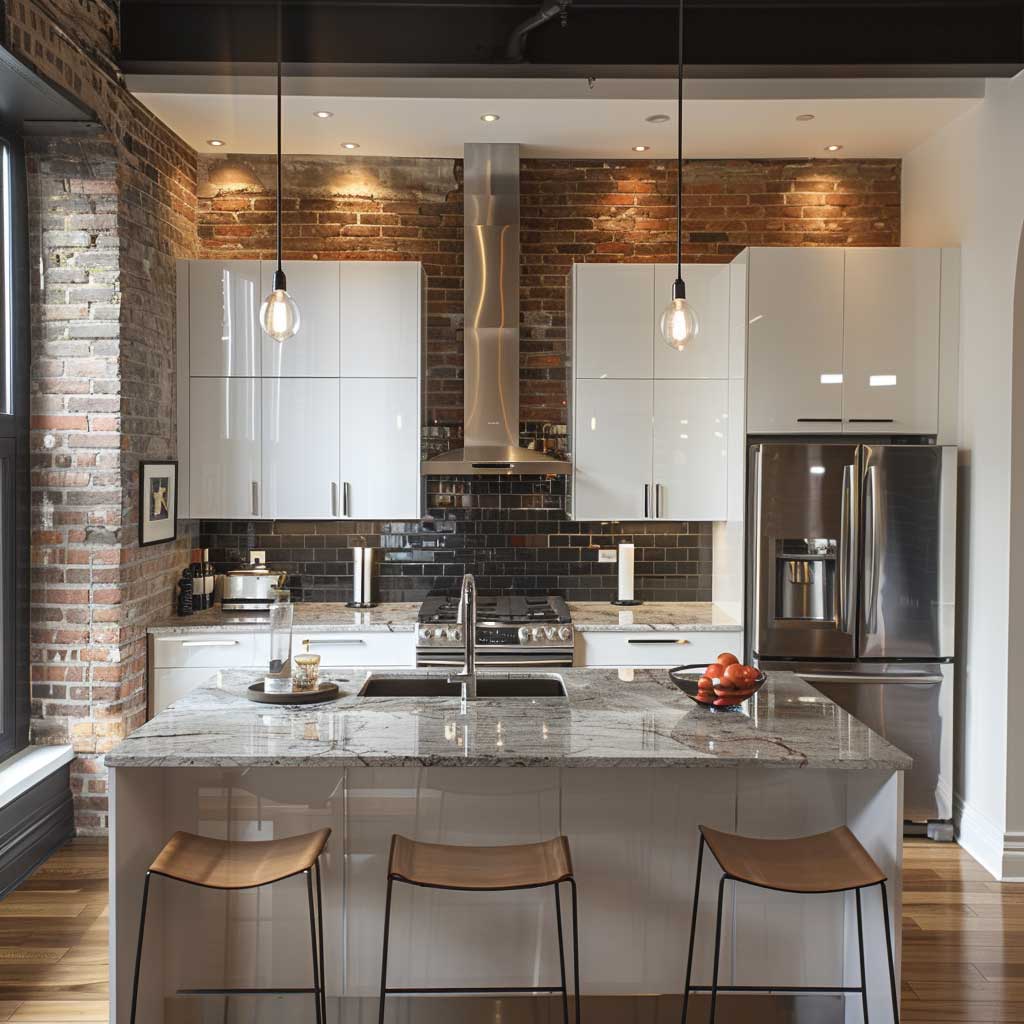
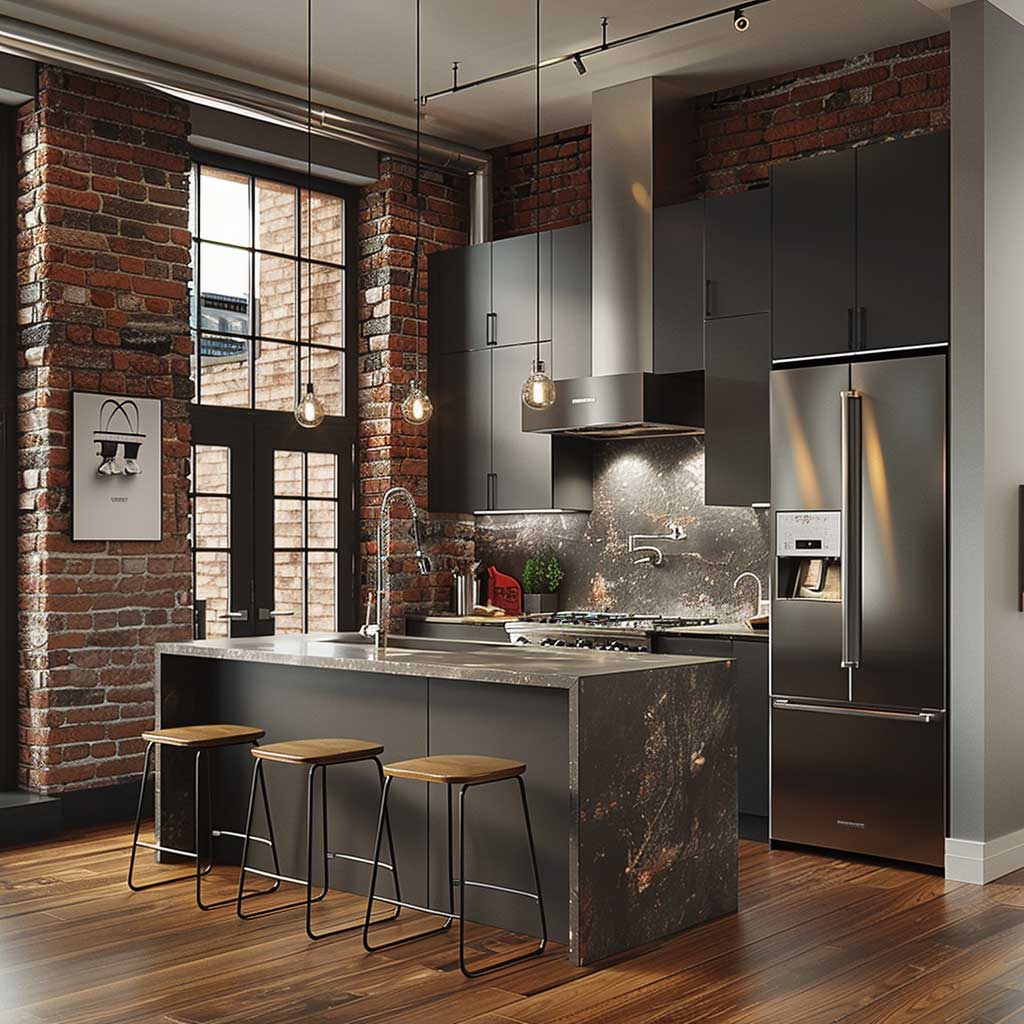

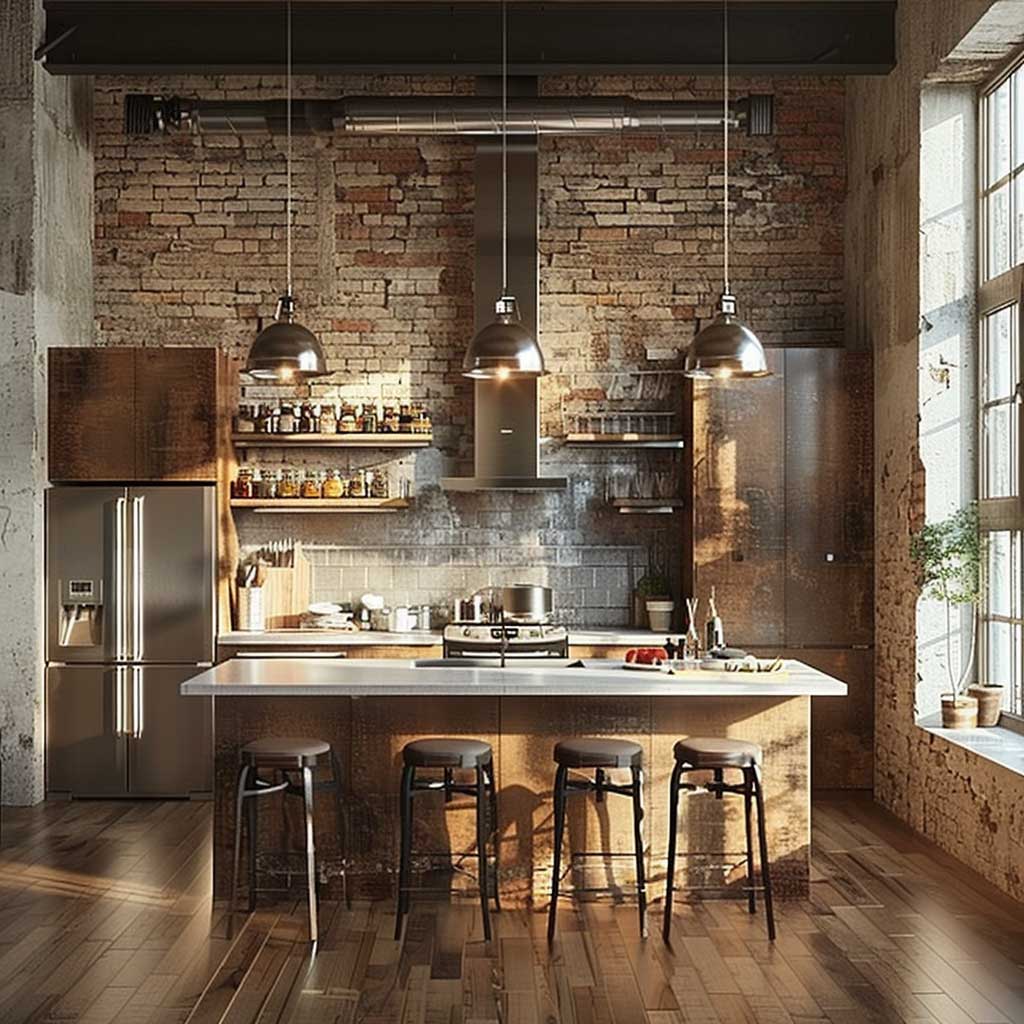
A magnetic knife strip is not a compromise solution — it’s the move in a loft kitchen with limited drawer space. You’ll free up 18 inches of counter. Pair it with a ceiling-mounted pot rack over the island (the kind that uses a heavy-duty pipe grid from a plumbing supplier, not the decorative pot rack from a kitchen store) and you’ve turned the ceiling itself into storage infrastructure.
The pendant lights serving double-duty is something I stole from a project I saw on Houzz — the designer ran her electrical line through a repurposed water pipe, so the conduit became part of the fixture. That’s the mindset for a loft kitchen: every element should read as intentional. An industrial kitchen with a generic pendant that could belong to any suburban house always looks wrong, like someone forgot to finish the thought. More on working with short kitchen proportions here.
Layout Flexibility Is the Real Reason a Wheeled Island Works
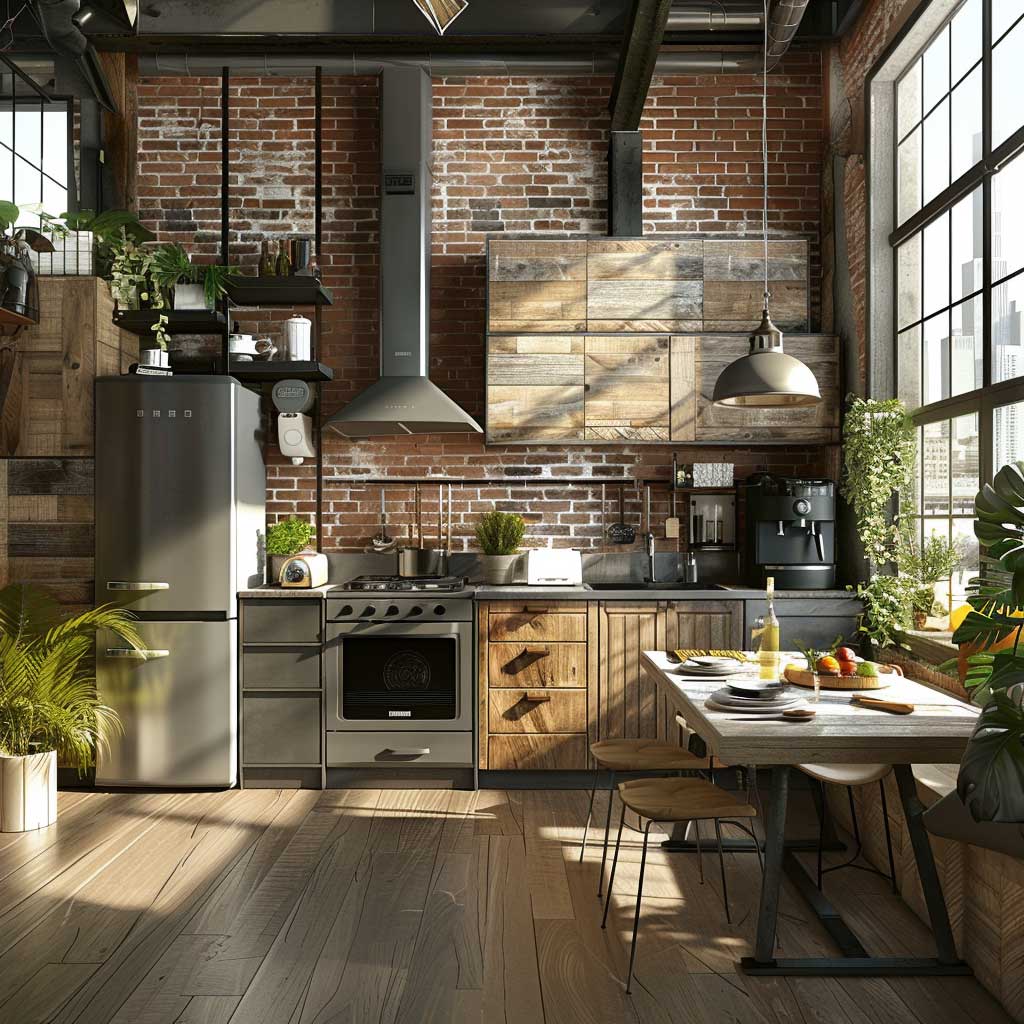
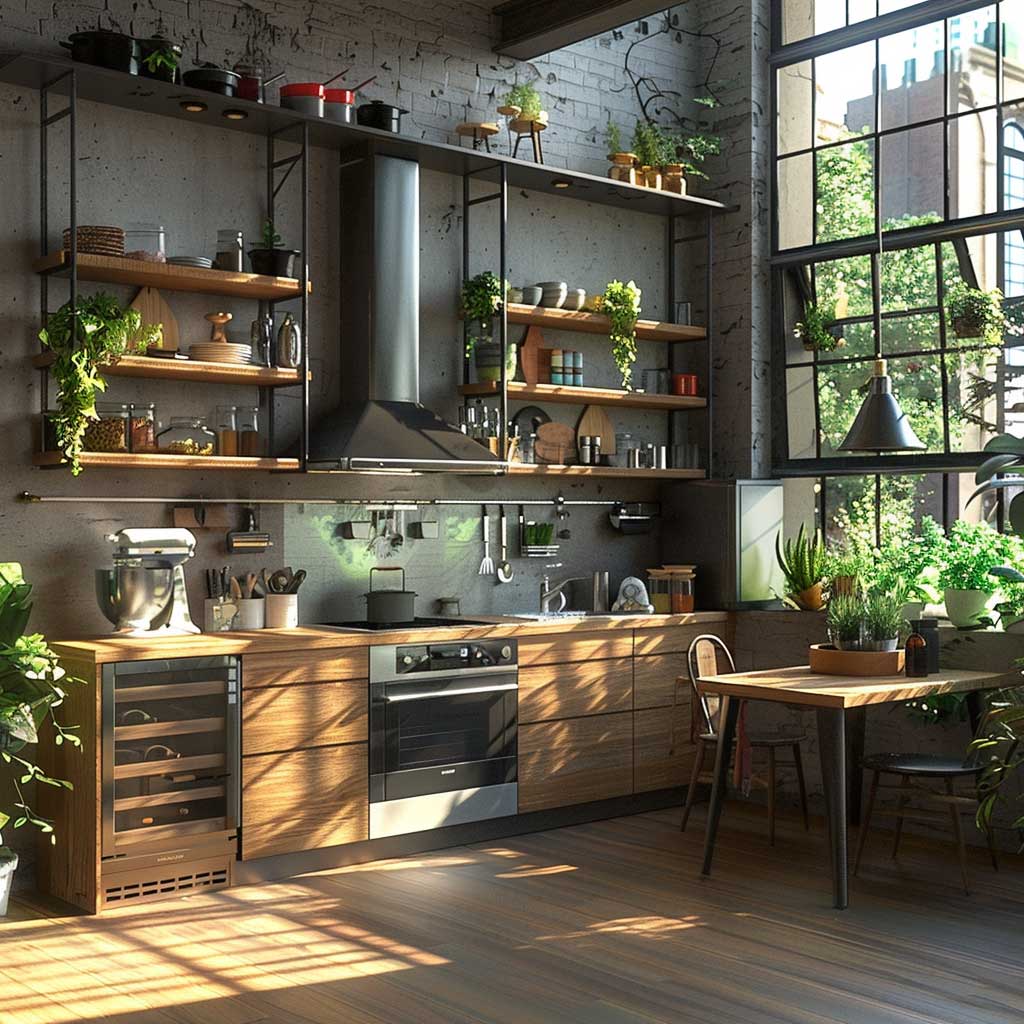

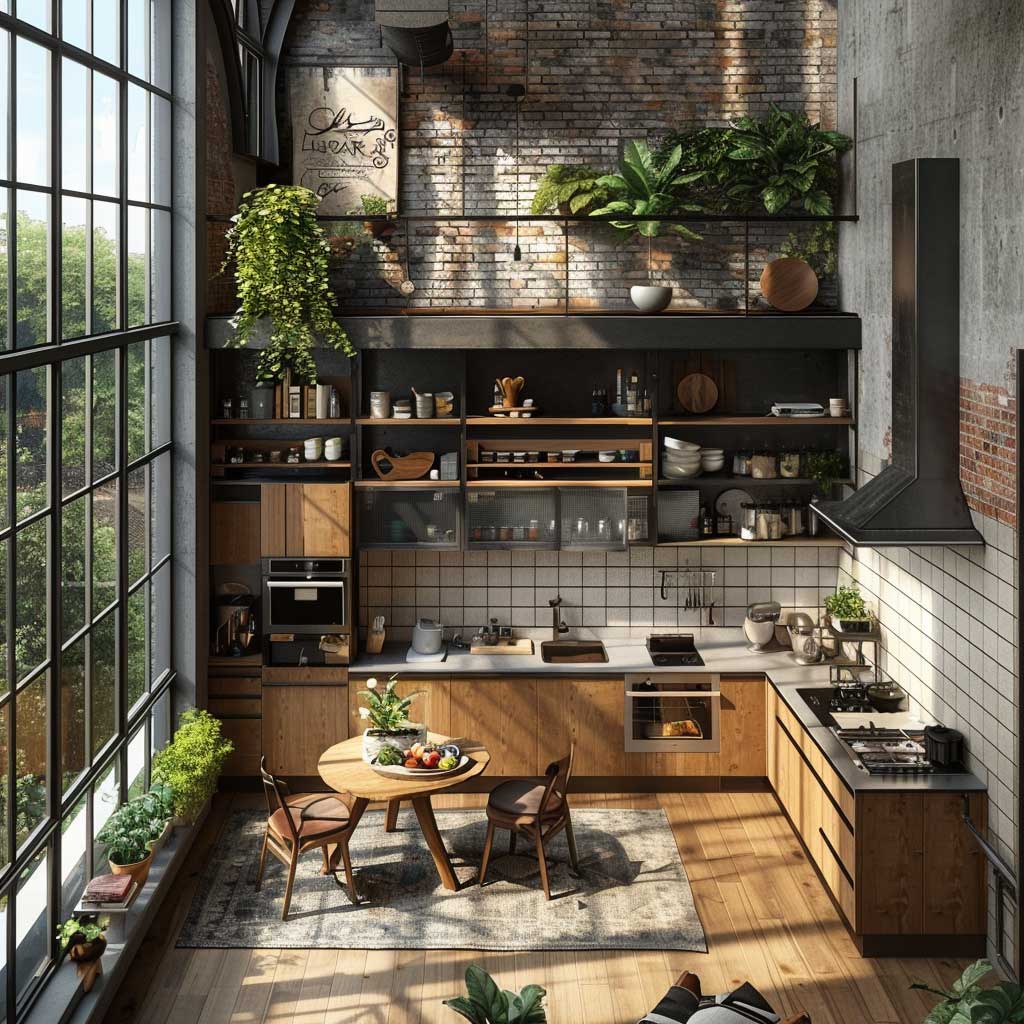
A fixed island in a small industrial loft kitchen is a gamble. You need at least 42 inches of clearance on all sides for comfortable movement — most compact lofts can only deliver that on two sides. A wheeled island with locking casters solves this completely. Slide it toward the wall during a dinner party, pull it out for meal prep, roll it entirely out of the footprint when you’re hosting and need the floor space. Industrial pipe-base designs with reclaimed wood tops run $300–$800 from suppliers like Rejuvenation or CB2.
Fold-down dining surfaces attached to the kitchen wall or the back of the island are the version of this idea that I actually use myself. A wall-mounted fold-down table in solid ash seats two when deployed and disappears flat when not needed — the entire thing is 3 inches off the wall in its folded position. That’s a dining area that costs zero floor space 85% of the time. IKEA’s wall-mount folding tables work for this; their NORBERG model is $40 and holds up to standard dining loads.
Pull-out cabinets and hidden compartments do more work than open shelving in a small industrial loft kitchen, even though open shelves photograph better. The honest reality: open shelves collect grease and require constant visual curation. Reserve open shelving for one or two runs where you’re actually displaying things you want seen — architectural ceramics, a row of matching glass canisters — and put everything else behind flat-front pull-outs. Industrial kitchen island ideas for small kitchens go deeper on this.
What doesn’t work: a kitchen island so large it anchors the room permanently. I’ve seen lofts where the island was specified for a bigger space and arrived looking like a car parked in the kitchen. If you can’t walk around it comfortably in socks without touching the counter on both sides, it’s too big. The loft kitchen layout should feel like a workshop, not a showroom.

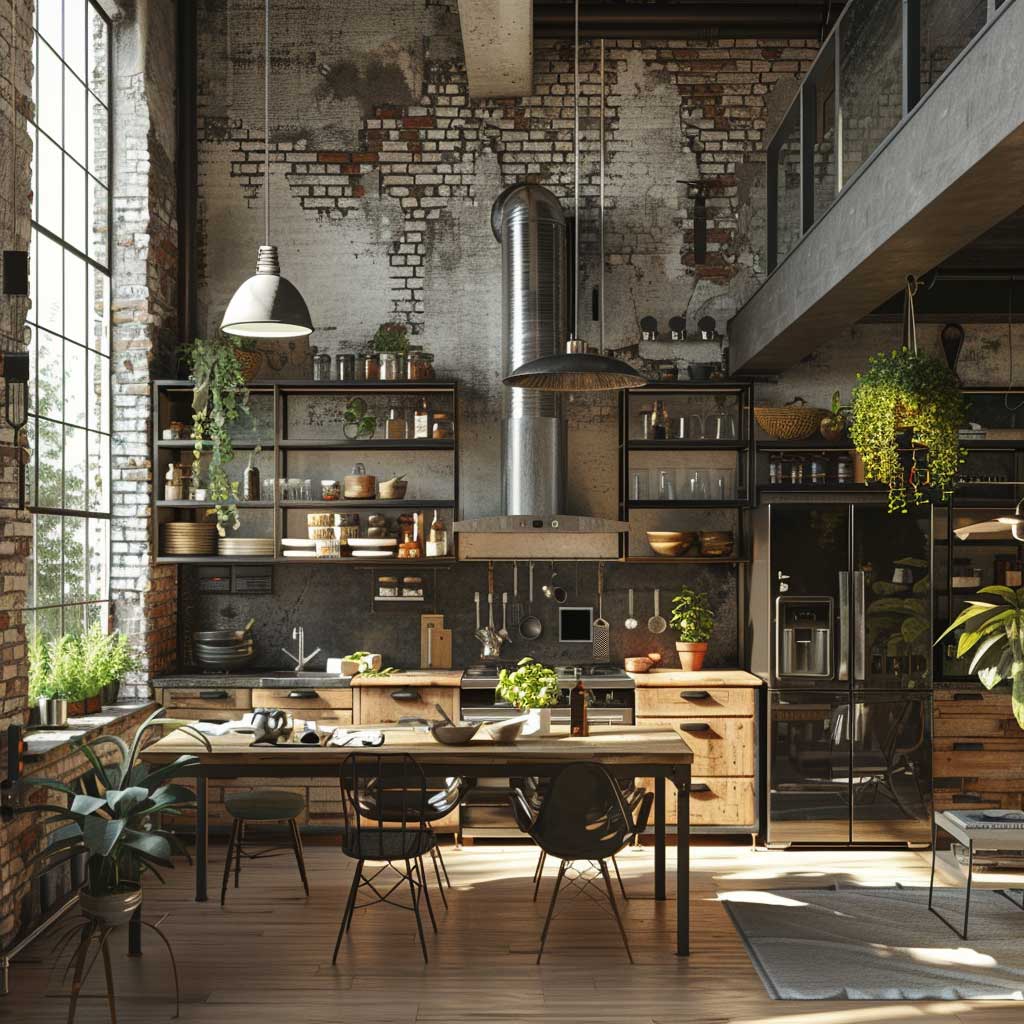


Factory-style windows are one of those loft features that people treat as a neutral backdrop when they should be treating them as a design weapon. Position your primary work surface parallel to the windows. Natural light hits the counter directly, you get a view while cooking, and the kitchen stops feeling claustrophobic even in a footprint under 8 square meters. Large steel-framed windows on a south-facing wall in a Manhattan or Chicago loft renovation are worth preserving over almost any other architectural decision.
Mirrors placed strategically on the wall opposite the windows can double the sense of depth in a compact loft kitchen. This sounds like a decorating trick from 1985, but it works. A full-height antiqued mirror panel behind open shelving adds apparent space without touching the actual square footage. The reflection of the window light across the kitchen is the effect you’re after.
Materials That Fight Each Other Are Doing the Right Thing
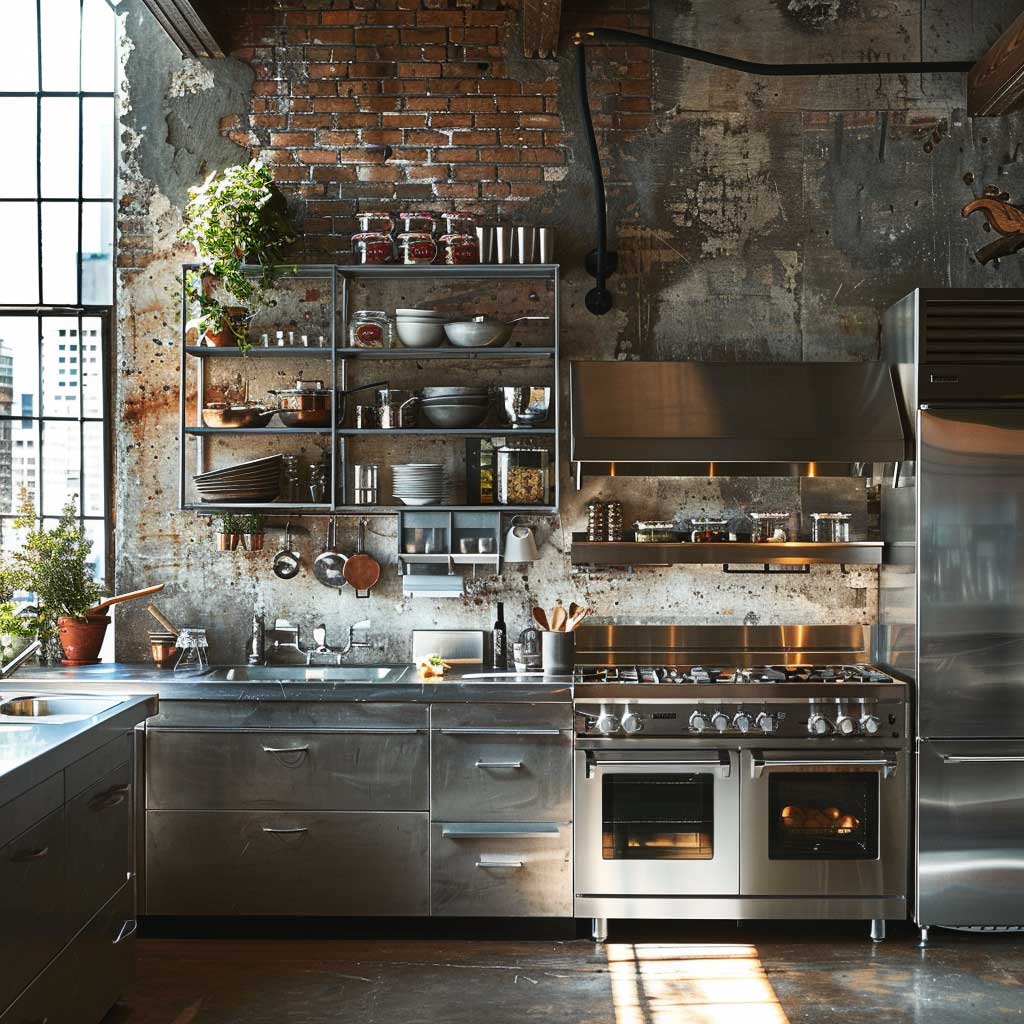

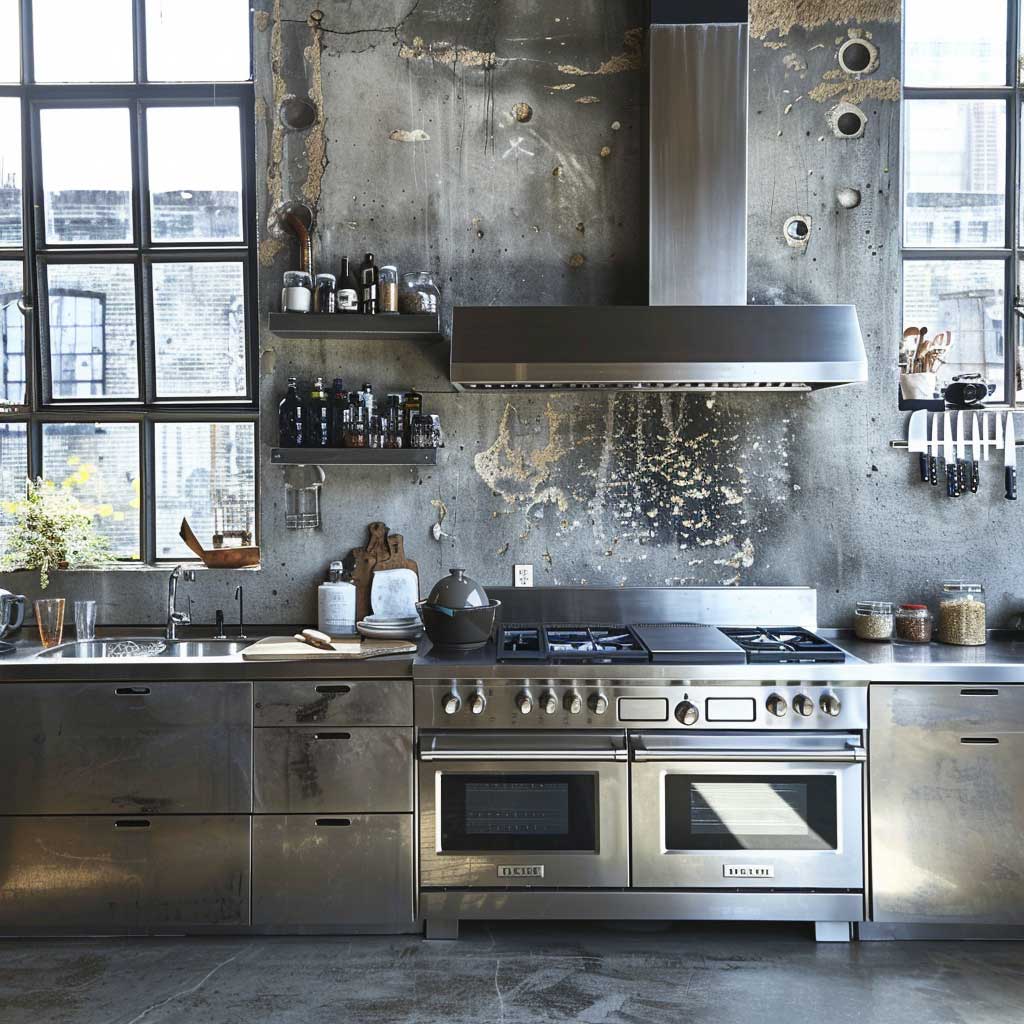

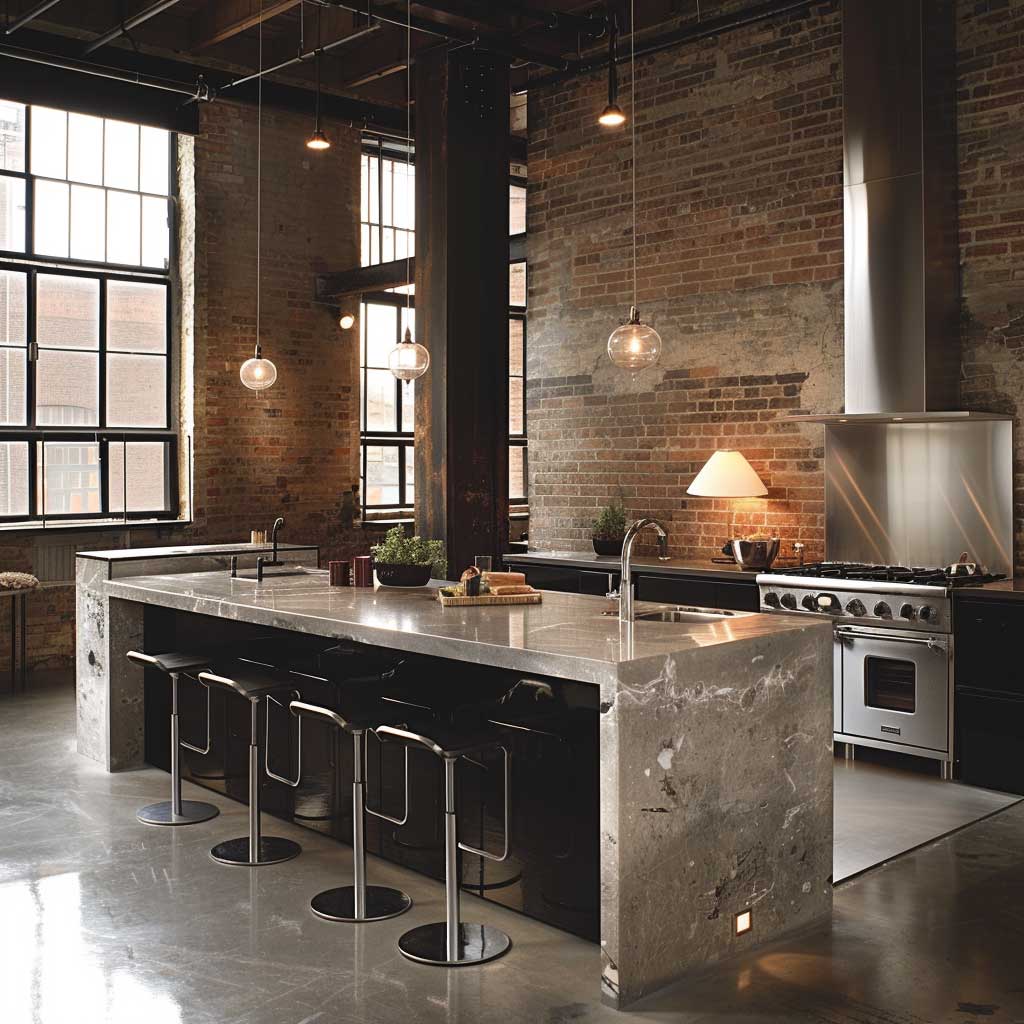
Concrete countertops, raw brick walls, sealed wood shelving, and stainless steel appliances don’t match — and that’s exactly why they work together in an industrial loft kitchen. The visual tension between polished and raw surfaces is what gives the space character. I own two cast-iron pans that live on a steel hook rack above my counter, and they look better there than in any cabinet because the material reads correctly in the context of exposed pipes and concrete overhead.
Induction cooktops are the functional choice for compact loft kitchens because they flush-mount into the surface and add zero visual bulk. Bosch’s 800 Series 30-inch induction cooktop runs around $1,200–$1,400 and sits perfectly flush with a concrete or stone surface. The alternative — a freestanding gas range — reads as a residential appliance stuck into an industrial shell, and you’ll notice that incongruity every time you look at it.
Floating shelves in steel and glass hit the industrial note harder than wood alone while keeping the visual weight low. You’ll see this most effectively when the shelf material contrasts with the wall behind it — raw brick is the classic backdrop, but unfinished concrete plaster works equally well. The transparency of glass shelves on a steel bracket makes the wall readable through the shelf, which matters enormously in a compact kitchen where every visual plane needs to breathe.
Don’t Do This
Matching all your surface finishes. This is the industrial kitchen mistake I see most often. Matte black cabinets, matte black fixtures, matte black handles, matte black pendant lights — by the time you’ve matched everything, you’ve created a monochrome box that feels heavy and airless, not industrial. Industrial design is about material contrast: the brutalism of concrete next to the warmth of wood, the cold finish of steel next to aged brick. Pick one dominant material, let one secondary material fight it, and keep a third as a detail accent. That’s the structure that actually reads as designed rather than just dark.
Hiding ductwork and exposed pipes. This is the second most common error in loft kitchen renovations. Enclosing mechanical elements with drywall soffits costs money and kills the character that makes a loft kitchen distinct from any other kitchen. Paint the ductwork the same color as the ceiling if the raw metal color bothers you — that’s the neutralizing move. Don’t box it in.
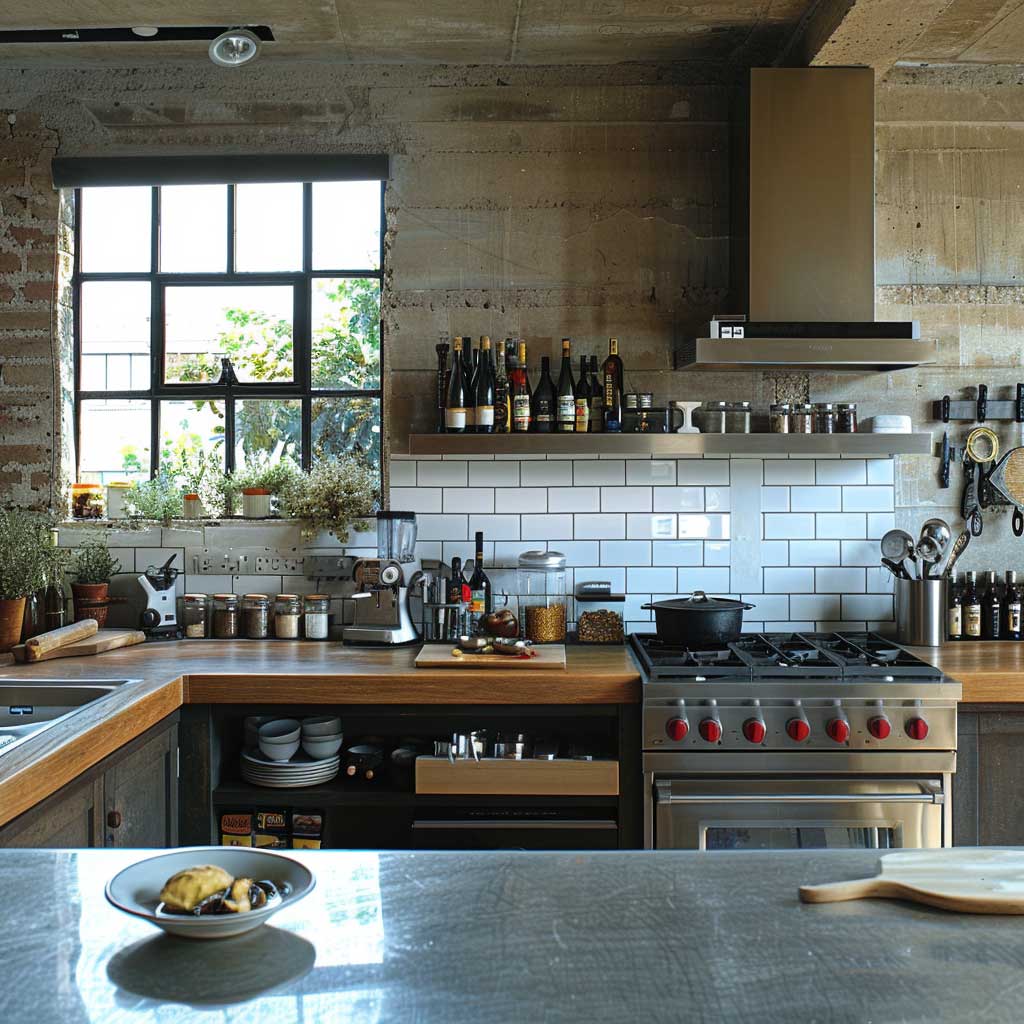
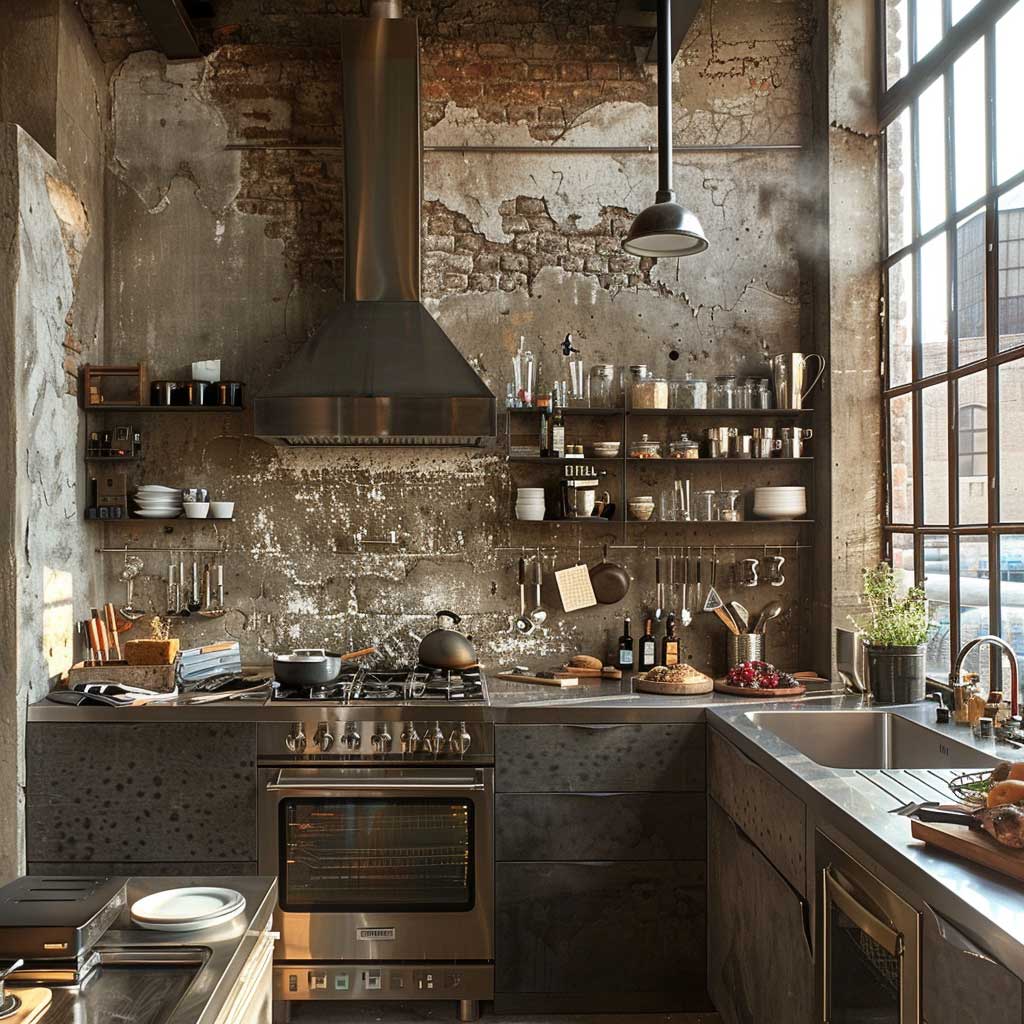
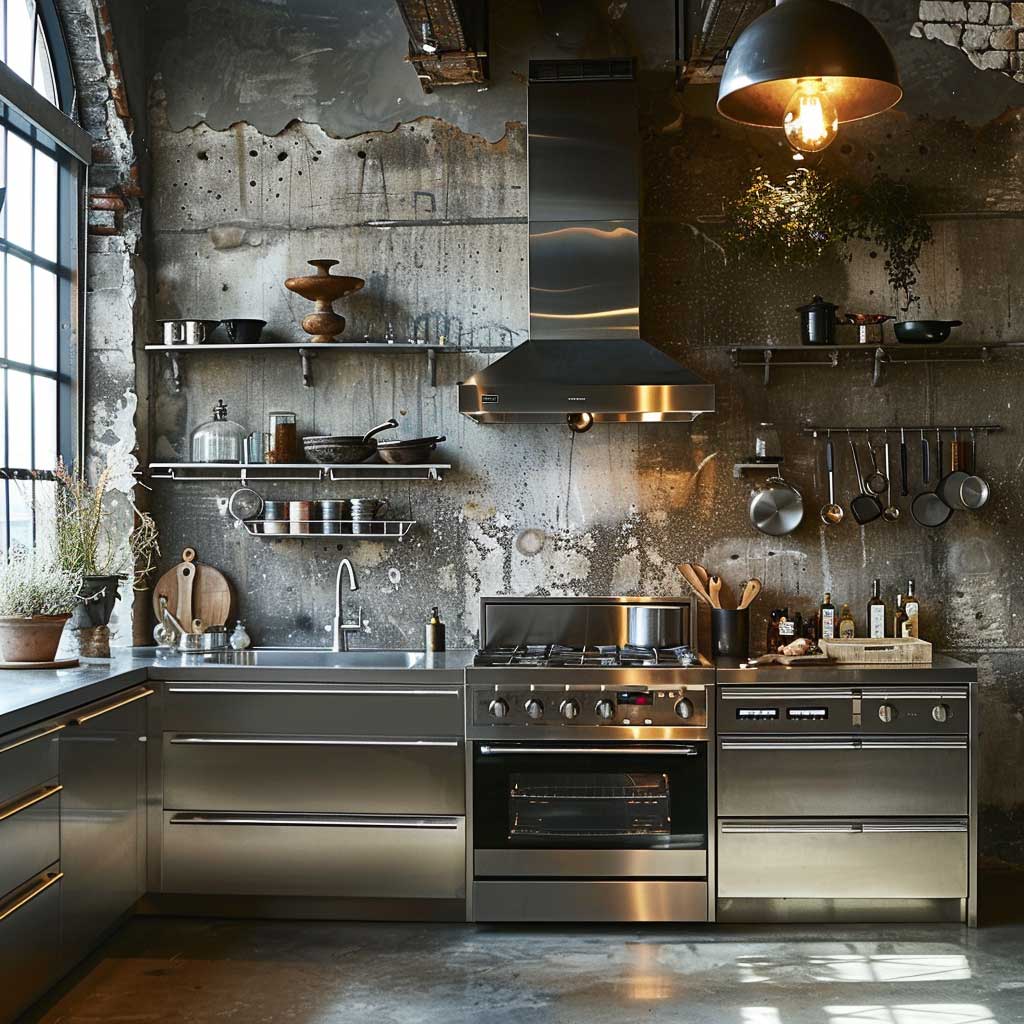
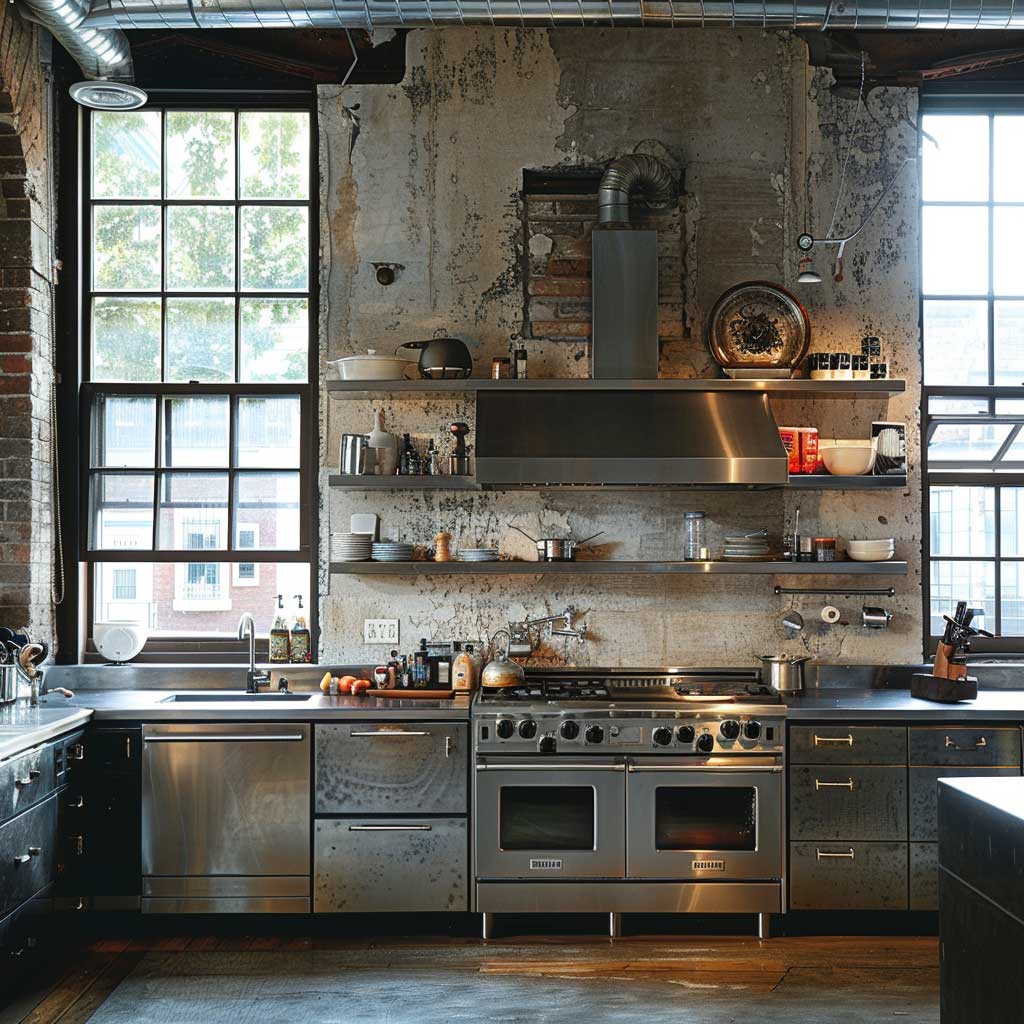
Appliance selection in a compact industrial kitchen operates on a ruthless logic: if it doesn’t earn its counter space, it leaves. An oven with an integrated air fryer — like the Samsung 30-inch Flex Duo at around $1,800 or the Café series from GE at $2,200 — eliminates one appliance entirely. A compact dishwasher built into the cabinetry run preserves counter space that a freestanding unit would consume. The microwave disappears into a cabinet cutout at the $500–$700 price point with trim kits available from most major brands.
Backsplash is where loft kitchens are allowed to have a personality moment without compromising the industrial character. A handmade subway tile in a warm off-white ($4–$8 per square foot) against a raw concrete countertop is clean and reads right. A bold geometric encaustic cement tile ($12–$22 per square foot) adds the individual character the space needs without competing with the architectural features. What doesn’t work: generic polished marble tile in a loft kitchen. It looks like a bathroom transplanted to the wrong room. Houzz’s archive of industrial kitchen photos shows this contrast clearly across hundreds of real projects.
The Takeaway
A Small Industrial Loft Kitchen Works Because the Constraints Are the Design
Every restriction in a compact loft kitchen — the ceiling you can’t raise, the pipes you can’t hide, the square footage that won’t grow — has a design answer that makes the result look more intentional than a larger, easier space would. You’re not working around the loft. You’re working with it.
The kitchens that pull this off share one discipline: nothing in the room is apologetic. The exposed ductwork is painted and lit. The small island moves. The ceiling-height cabinets have a ladder. Every material clash is deliberate.
Save this post before your next loft kitchen project — these concepts apply to any industrial kitchen under 15 square meters.