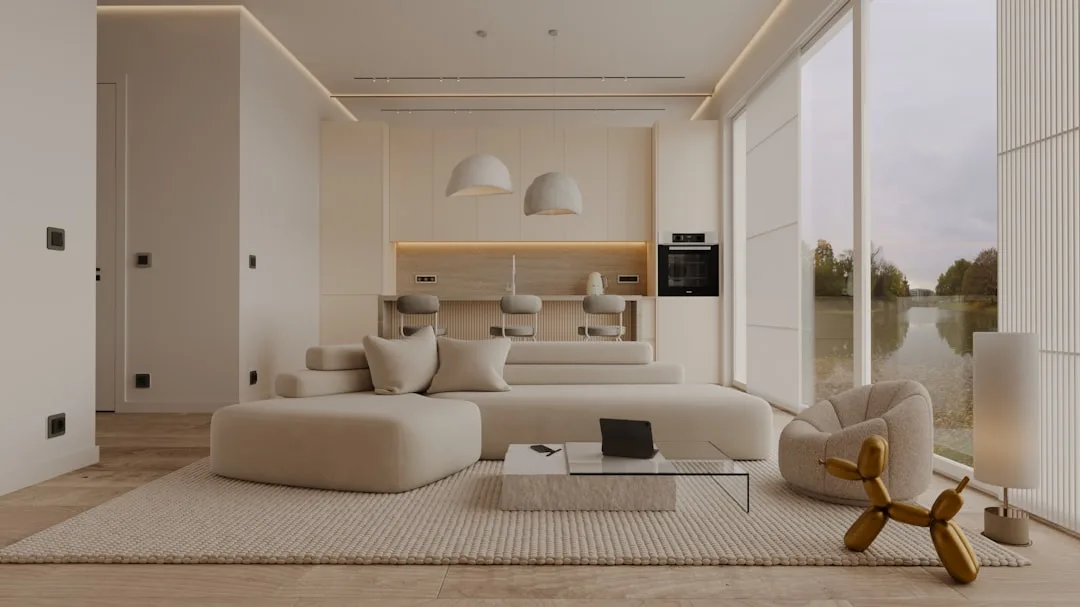
Simple pop design for hall is the one renovation that punches well above its price point. I’ve watched friends spend thousands on furniture and lighting, then stare at a blank flat ceiling that flattens everything below it — and the fix cost them $200 and four days of skilled labour. Plaster of Paris (POP) lets you add cornices, tray layers, or geometric frames to the ceiling without touching a single wall.
You’ll notice the difference the moment you walk in. A plain hallway with no ceiling detail reads as an afterthought. Add even a single recessed tray in POP and the entire passage feels curated — not because you added furniture, but because the room gained a fifth dimension. The ceiling stopped being dead space and started doing visual work.
What most people get wrong is choosing an overcomplicated pattern for a narrow corridor. My go-to rule: the smaller the hall, the flatter and cleaner the POP profile. Stick to a single-layer border or a slim central medallion. Reserve the multi-tier cascading designs for sitting rooms and drawing rooms where there’s enough floor area to justify the height drama above.
Simple POP design for hall typically costs ₹70–₹150 per sq ft ($1–$2 USD) for basic profiles, rising to ₹300+ for multi-layer work. A single-layer border or tray ceiling suits narrow hallways best — going bigger in a small space compresses the room rather than opening it. Neutral wall colours (white, warm grey, soft greige) let POP details read cleanly. Recessed LED cove lighting inside the tray costs around $30–$60 extra per linear metre and transforms even the simplest profile into something that looks custom. Hall pop colour choice matters: white-on-white reads classic; a contrasting ceiling paint in greige or soft blue gives the POP relief actual depth.
Minimalist POP Frames Turn Hallways Into Galleries
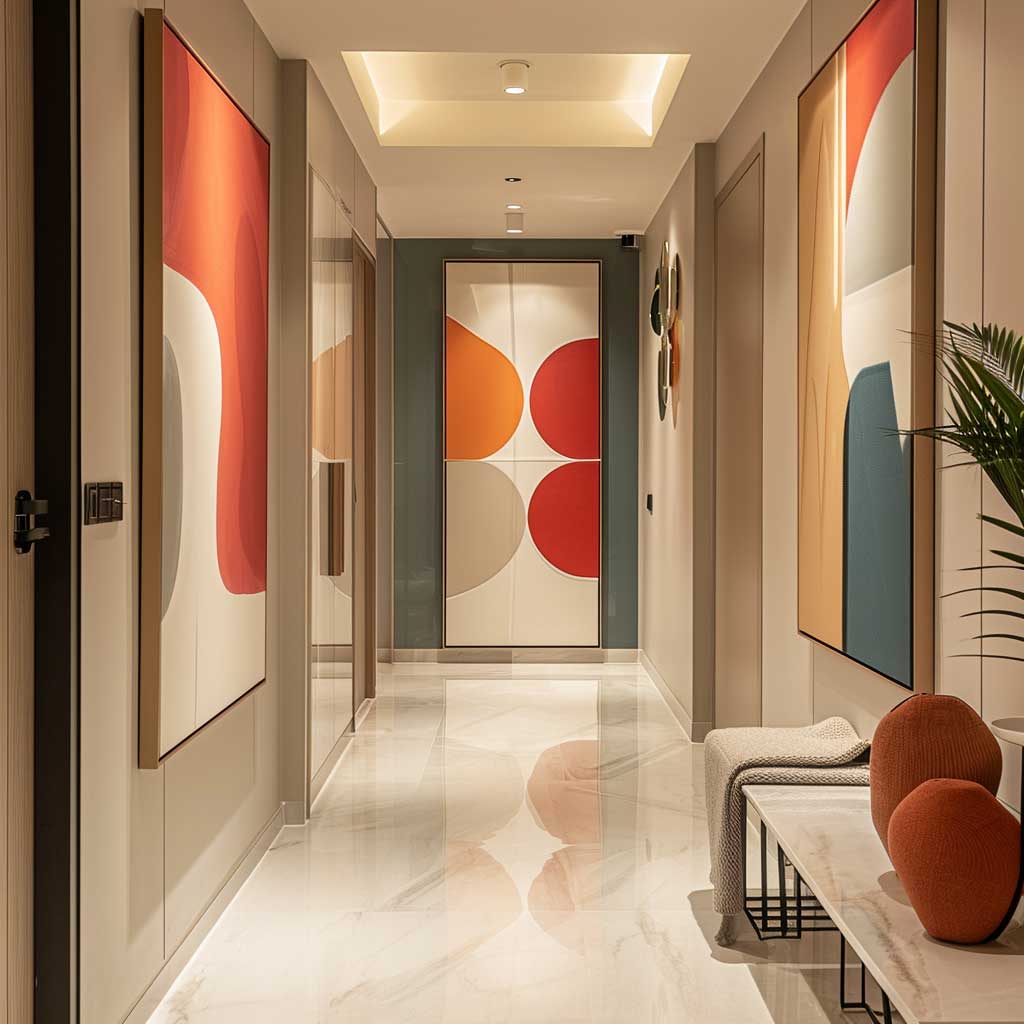


Simple pop design for hall works exactly like a picture frame works for art — it gives the space a contained, intentional boundary that makes everything inside it look more deliberate. The trick I stole from a Mumbai interior contractor: run a 4-inch flat POP border along the ceiling perimeter, set it 6 inches in from the wall edge, and paint the recessed field two shades darker than the walls. That negative shadow between the border and the wall does more visual heavy lifting than any chandelier. Dust-coloured walls (think Asian Paints Royale “Greige Whisper”) against a bright white POP frame cost under ₹12,000 all in for a standard 100 sq ft hall ceiling.
What doesn’t work: mixing two different POP profile styles in the same hall. I’ve seen homeowners add a chunky egg-and-dart cornice at the wall junction and then a sleek flat tray at the ceiling centre — it reads like two different rooms collided. Pick one language and commit. For a modern home, that means flat profiles and tight 90-degree corners. For a colonial bungalow, the ornate cornice is the language and the centre stays clean.
Recessed spotlights punched through the POP field at regular 18-inch intervals create a gallery-corridor effect that makes any hallway feel 30 percent longer than it actually is. You’ll notice visitors slowing down instead of rushing through — which is exactly the point of a well-designed entrance passage. LED GU10s from Syska or Wipro run about ₹200–₹350 each and last 25,000 hours, so the running cost over a decade is negligible.
Does the POP profile need to match the door architrave style? Not always — but the finishes should rhyme. Matte POP with matte-painted woodwork is a safe pairing. Shiny POP (high-gloss painted) against raw timber doors is where things go wrong; the contrast reads unfinished rather than intentional.


LED cove lighting hidden inside the POP tray recess is the single upgrade I recommend to every person planning a hall renovation. The light source stays invisible — you see only the warm amber glow washing the ceiling — and the effect makes the plasterwork look three times more expensive than it actually is. Budget ₹150–₹250 per linear foot for the LED strip itself; Philips Hue White Ambiance or Havells’ Retrofit strips are both reliable at that price point.
For more inspiration on how POP design plays against colour on the ceiling, the guides at Top Modern POP Ceiling Designs for Your Hall show how illumination choices shift the entire mood of the same basic profile.
Hall Colour and POP Together — Where Most Renovations Fall Apart


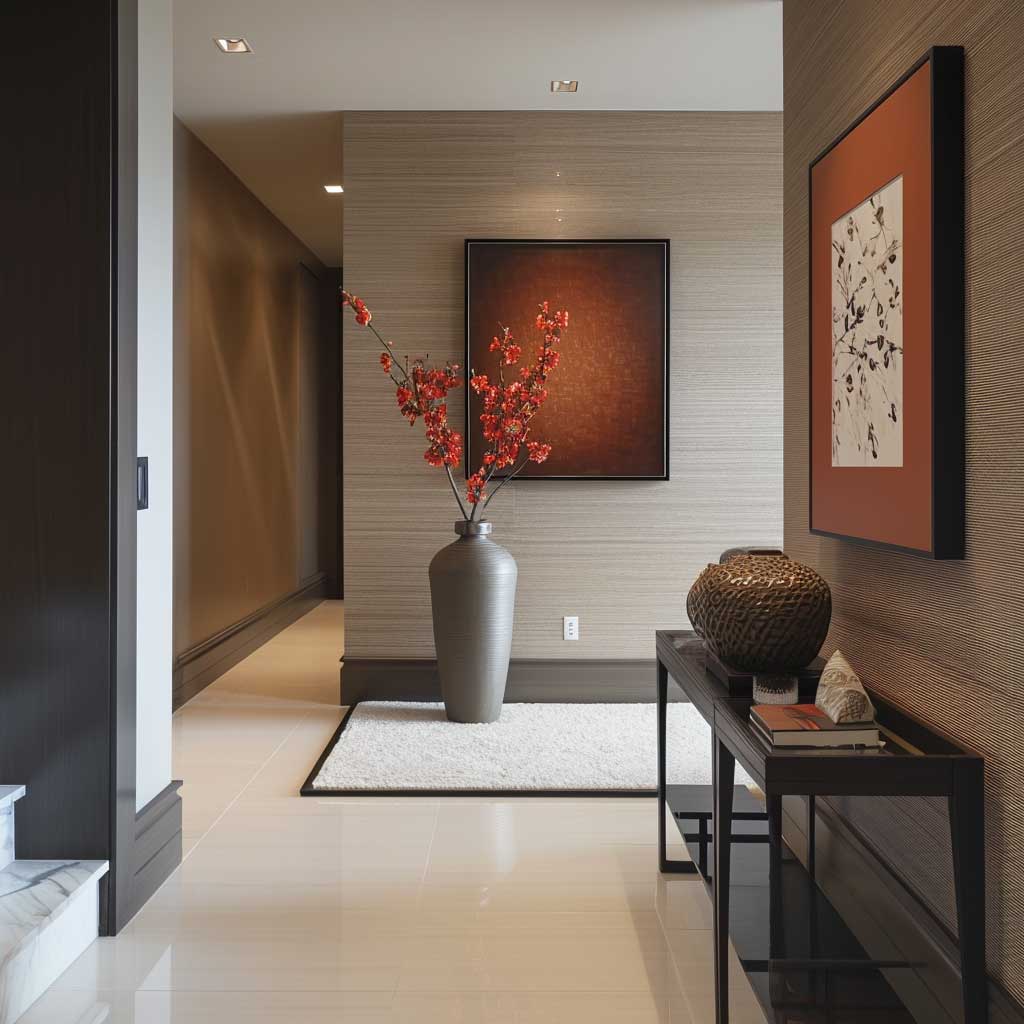

Pop hall colour is the decision that determines whether your POP profile reads as a design feature or disappears into the ceiling. The mistake I’ve watched people make repeatedly: painting the POP the exact same shade as the ceiling field and then wondering why the plasterwork is invisible. You’ve paid for craftsmanship that no one can see. The rule is contrast, not matching — even a half-shade difference in LRV (Light Reflectance Value) between the POP moulding and the ceiling field creates a shadow line that makes the profile pop.
My go-to combination for a hall: Asian Paints Royale “Brilliant White” (LRV 93) on the POP itself and “Pebble Dust” or “Warm Fleece” on the ceiling field between the tray borders. That 15-point LRV gap is enough to read from the doorway. Wall colour sits one level warmer — something in the soft greige to sage range. The whole palette costs roughly ₹6,000–₹8,000 in Royale Shyne finish for a 10×12 ft hall, walls and ceiling combined.
Bold colour on the walls with white POP is a pairing that works when the hall is at least 4 feet wide and has ceiling height above 9 feet. Navy blue walls with crisp white POP cornice is classic — the white profile acts like a reset button between the dark wall and the ceiling, stopping the room from feeling like a cave. What kills it: using a warm cream on the POP against cool-toned navy. The undertone clash is subtle but your brain registers it as something being slightly off, even if you can’t name why.
Is a two-tone POP ceiling worth the extra cost in a hall? Almost never. The hall is a transitional space — people move through it, they don’t sit and stare. A single contrasting colour on the POP profile is all the visual interest this room needs. Save the two-tone treatment for a drawing room ceiling where there’s a sofa pointing at it. You can explore specific palette pairings for hall walls at Hall Wall Colour Combinations That Make Every Entry Feel Designed.


Lighting placement relative to POP colour matters more than most contractors will admit. A warm 2700K LED inside a white POP tray reads amber and cosy. The same 5000K daylight LED reads clinical — the white plaster looks almost blue-white. I own two lamps in the same cove profile, one per temperature, and the 2700K version makes the room feel three times more considered. Specify the colour temperature when ordering your LED strips; don’t leave it to the electrician’s default.
Small hall? The fastest trick: paint the ceiling field — the area inside the POP border — one shade darker than the surrounding walls. It sounds counterintuitive, like making the ceiling heavier, but it actually frames the space. Think of it like a stage set: the darker background pushes the walls forward and makes the room feel wider, not taller. Designers have used this trick in boutique hotel corridors for decades.
Avoid painting your POP ceiling design in a high-gloss finish in a narrow hall. Gloss magnifies every imperfection — nail holes, joint lines, brush marks — and in a corridor where light hits the ceiling at a raking angle, you’ll see every flaw from 10 feet away. Stick to eggshell or matte for POP profiles in halls; reserve gloss for furniture and doors where it reads as intentional. Also: never use the builder-grade POP powder from a local hardware store for visible profiles. It shrinks more on drying, which means hairline cracks appear within 18 months. Specify branded POP — JK Plasto or Saint-Gobain Gyproc Easyfinish cost roughly 20% more and last 15–20 years without cracking.
Simple POP Design for Room — When the Sitting Room Ceiling Changes Everything


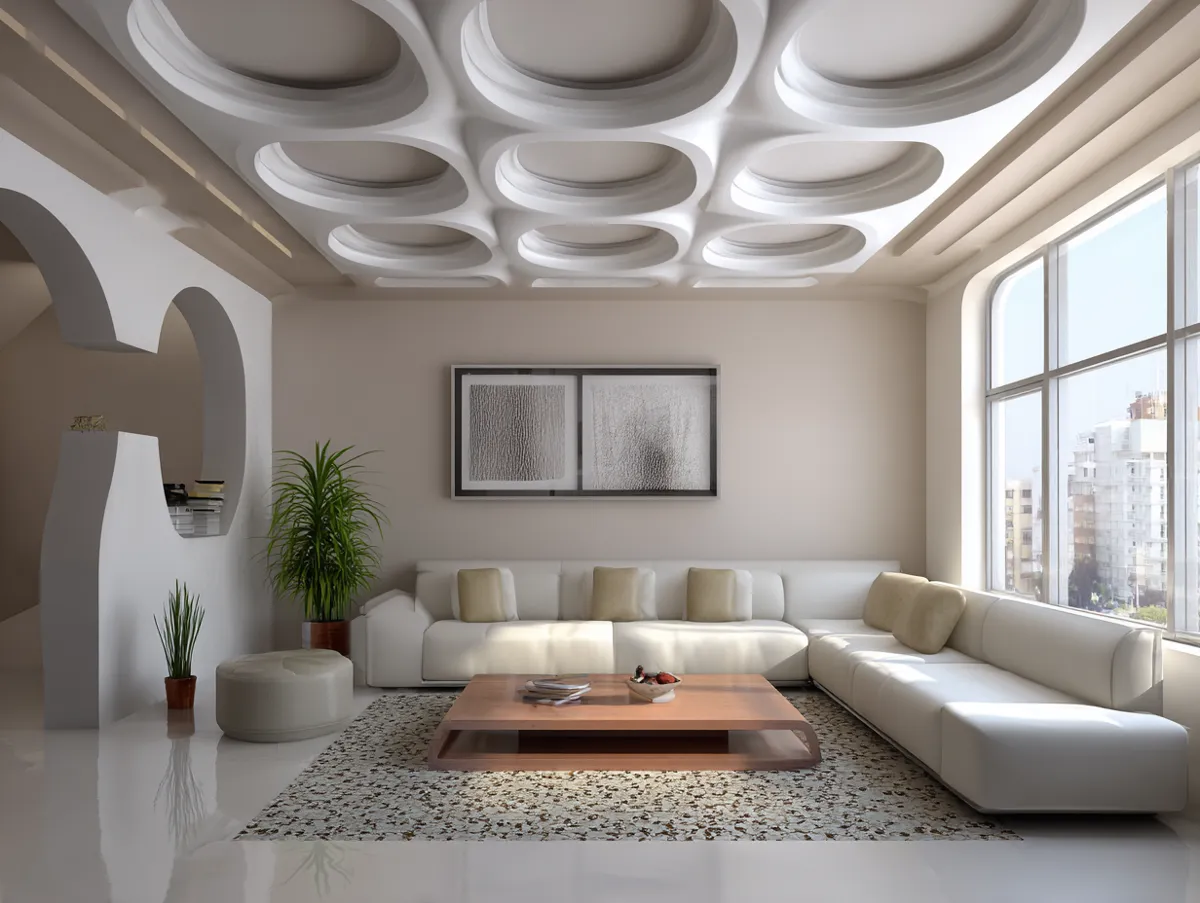
Simple pop design for room — specifically the sitting room — operates on a different logic than the hall. You have more floor area, which means you can justify more ceiling drama without it feeling oppressive. My go-to starting point for a sitting room: a two-layer tray ceiling, outer ring flush at ceiling height, inner ring dropped 4 inches, with LED cove lighting running between the two levels. Total POP cost for a 200 sq ft sitting room in this configuration: roughly ₹18,000–₹28,000 depending on contractor and city.
The sitting room is where POP design for room benefits most from a central medallion paired with a flush border — it’s the architectural equivalent of placing a rug under the coffee table. Both gestures do the same thing: they anchor the seating group and tell the room where its centre is. Stick to a medallion diameter that’s 1/3 of the room’s shortest dimension. A 12-foot-wide room takes a 4-foot medallion — anything larger and it starts to look like it belongs in a baroque palace, not a modern home.
What’s the single POP upgrade most worth the money in a sitting room? Cove lighting beats every other addition by a wide margin. I’ve renovated three sitting rooms with nothing but a simple flat tray plus warm LED cove, no medallion, no cornice — and every visitor assumes the room cost twice what it did. The human eye reads indirect ceiling light as luxury because it’s what you see in high-end hotels. Philips WiZ smart LED strips let you dim the cove separately from the main downlights, which costs about $45 for a 5-metre run and gives you instant mood control.
Avoid the temptation to add a POP ceiling fan cutout at the very centre of an otherwise elegant medallion. The fan blade clearance forces the medallion to be oversized, and most ceiling fans spin off-centre relative to the seating arrangement — so you end up with a design that looks pulled in two directions. Mount the fan on its own flush bracket and let the medallion be purely decorative at the sofa’s eye-line centre.


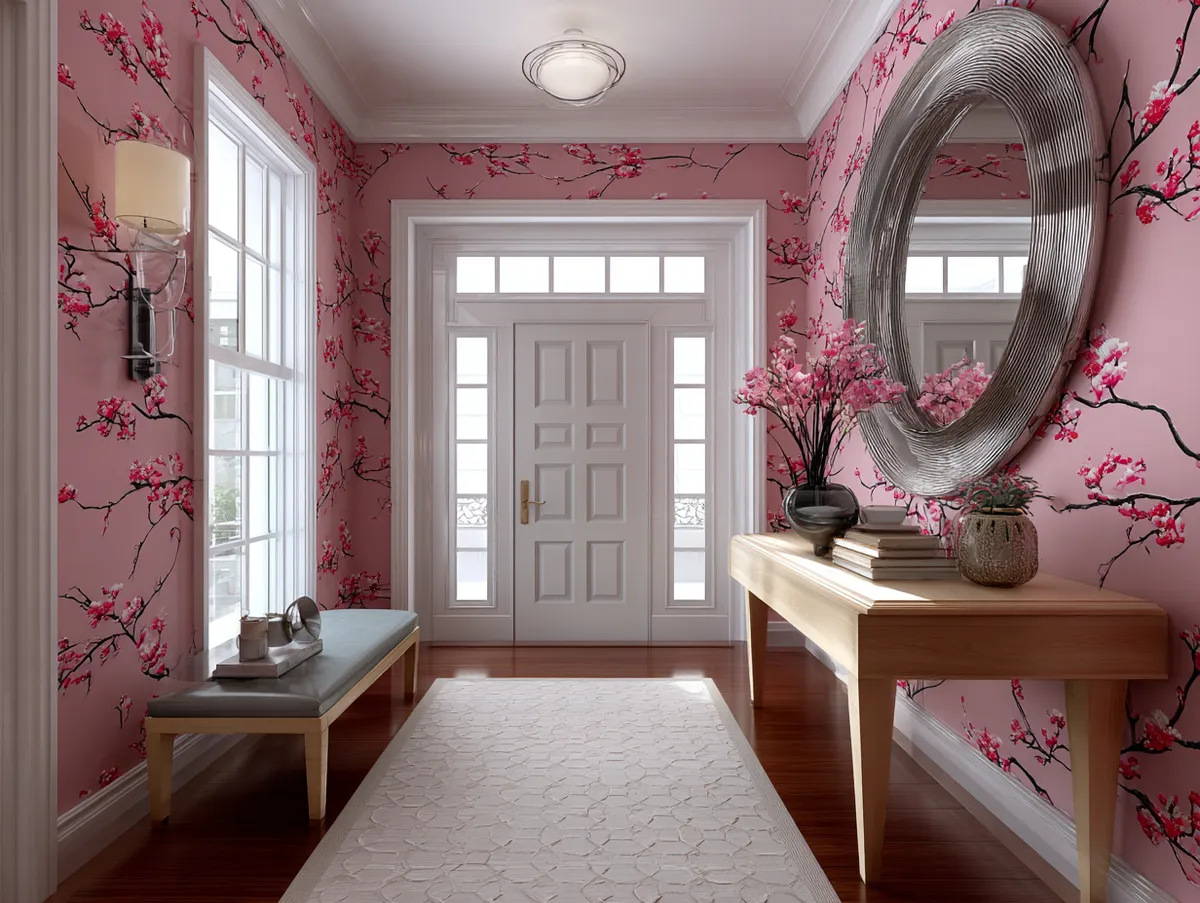
POP and wallpaper on one accent wall is a combination I’ve been using in sitting rooms since 2021 — the plasterwork on the ceiling frames the room from above while the wallpaper creates a backdrop from behind the sofa. The two materials never compete if you keep them in different planes. Brewster Wallcovering’s “Grasscloth 2” line ($45–$65 per roll) in warm hemp tones pairs particularly well with white POP and terracotta or sage wall paint on the remaining three walls. The 2024 version of this combination adds a single thin POP reveal strip where the wallpapered wall meets the ceiling — it costs ₹3,000–₹5,000 and makes the junction look custom-built rather than wallpaper-glued-to-the-top-of-the-wall.
For detailed ideas on how colour and texture interact with POP in hall and sitting room spaces, the 3 Hall Room Colour Combination Secrets for a Perfectly Balanced Decor piece covers the wall side of the same equation.
The Takeaway
A simple POP border costs less than a sofa cushion set — and outlasts it by 15 years
The ceiling is the one surface in your hall that nobody competes with — no furniture blocks it, no clutter covers it. A flat POP border at ₹70–₹150 per sq ft is the highest-ROI upgrade in any hall renovation.
Match the POP to Brilliant White, push the ceiling field half a shade warmer, and run a 2700K LED strip in the tray recess. That three-part combination works in a 60 sq ft entrance corridor and a 400 sq ft drawing room alike.
Skip the high-gloss paint finish on POP profiles. Matte or eggshell only — gloss reveals every imperfection under raking corridor light. Save this post.