Small porch ideas work best when you stop trying to hide the size and start designing around it. I’ve styled porches under 40 square feet that got more compliments than full wraparounds — because the constraints forced real decisions. Whether you’re working with a 4-foot stoop or a narrow covered entry, the fixes are specific and repeatable. No filler furniture. No generic planters from the big-box aisle.
Simple porch designs beat complicated ones every time. The GSC data on this page shows most searchers are looking for something achievable on a weekend, not a renovation. I’ve pulled together the approaches that actually photograph well and hold up through seasons.
Quick Scan
- Lighting first — string lights and lanterns do the heavy lifting on narrow porches
- One anchor seat beats two cramped chairs in tight entries
- Doormat + one planter + one wall element = the minimum viable porch
- Solar-powered fixtures cut install time and cord clutter
- Vertical planters and wall-mounted pieces reclaim floor space without sacrifice
String Lights on a Small Porch Change the Entire Street-Level Read


Lighting is the only porch element that works from inside the house and outside simultaneously. I run G40 globe string lights from Home Depot — about $24 for a 25-foot strand — along the ceiling edge of my 6-foot entry, and the whole front reads as warm and finished after dark. The bulb size matters: G40s photograph well, while the smaller G20s look cheap at distance. Don’t skip this because it seems minor.
Lanterns earn their floor space on a tiny porch because they’re vertical, not horizontal. A pair of 18-inch black metal lanterns flanking the door costs around $35–$60 from Threshold at Target and anchors the entryway like a column would on a larger home. LED flame bulbs inside preserve the flickering effect without fire risk. What doesn’t work: wicker lanterns left out through rain — they warp and mold within one season, full stop.
Solar fixtures are the practical call for porches without exterior outlets. The Solpex solar string lights (around $18 on Amazon) hold charge through overcast days and require zero wiring. You’ll notice the warm 2700K color temperature reads as intentional design; the cool white 5000K versions look like a parking garage. Swap seasonal colors — amber in fall, warm white in winter — and the porch feels current all year without any new furniture purchases.


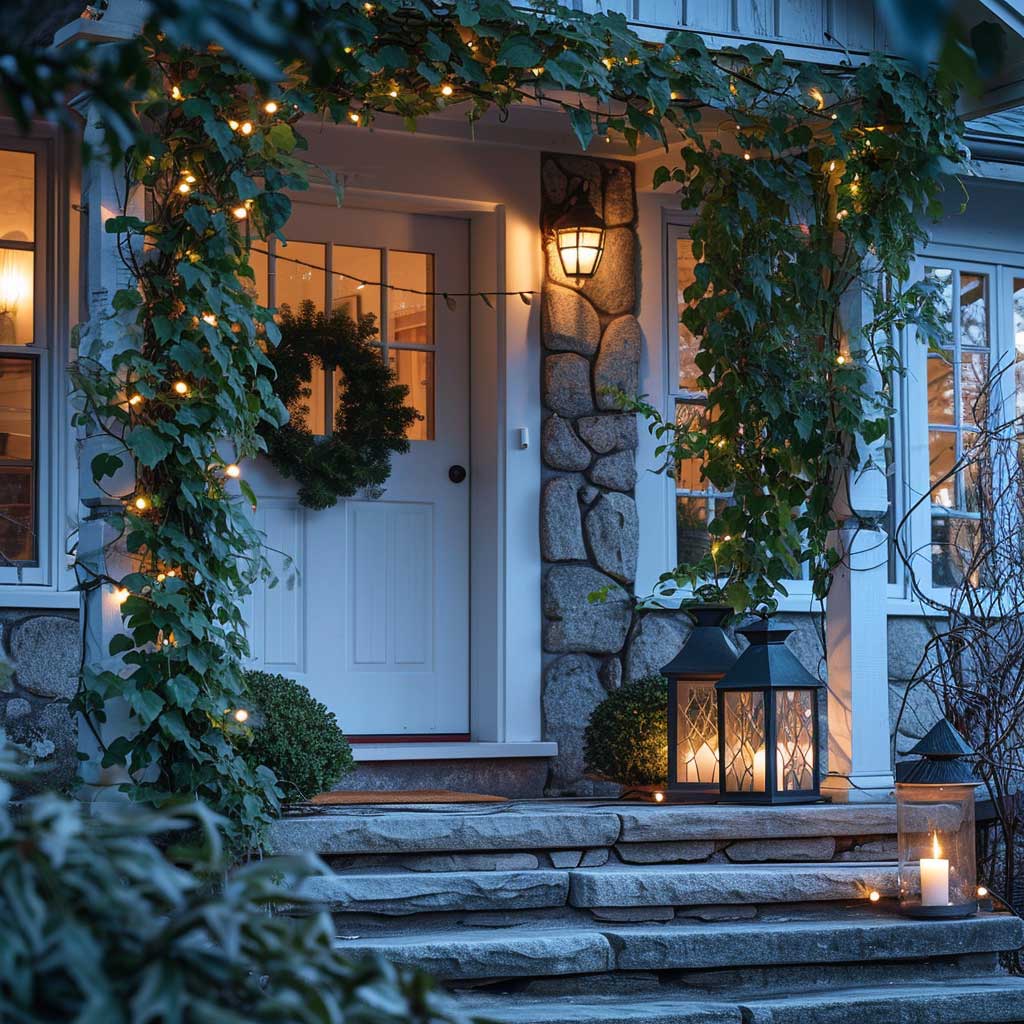

One thing I stole from a professional stager: always combine two light sources at different heights. One overhead string plus one ground-level lantern creates depth on a porch that’s barely six feet deep. A single ceiling fixture, no matter how nice, reads flat. The layering is the trick — same principle as interior lighting design, just cheaper to execute outside.
Seating on a Narrow Front Porch — One Good Chair Beats Two Bad Ones

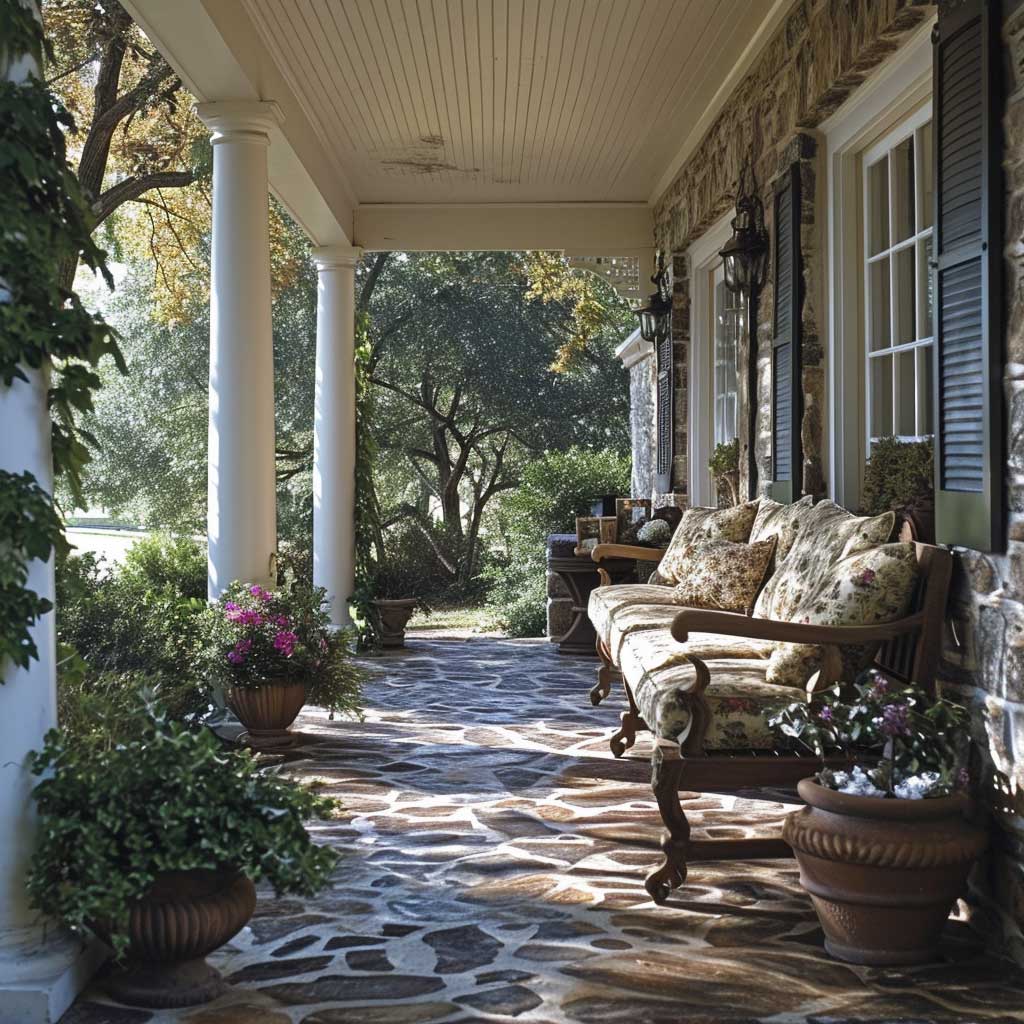


My go-to for porches under 8 feet wide is a single storage bench — the kind from IKEA’s ÄPPLARÖ line at around $129 or the Outdoor Benches at Wayfair in the $80–$120 range. The storage lid keeps cushions inside when it rains. A double bench in a narrow entry forces everyone to turn sideways and looks like a waiting room. Not the vibe. One confident piece of furniture reads as a design decision; two crammed pieces read as indecision.
Does the chair need to be comfortable or does it need to look comfortable? On a front porch, the answer is mostly the latter. I’ve bought chairs that photograph beautifully but nobody actually sits in — and that’s fine for a 5-foot entry where the seat is more architecture than furniture. The Better Homes & Gardens Bryant collection at Walmart runs $89–$119 per chair and holds up well in rain. For cushions, Sunbrella fabric withstands UV and moisture; generic polyester fades in one summer.
A small side table transforms a seat into a destination. Round pedestal tables under 18 inches in diameter don’t block traffic flow on tight porches. I use a $27 folding tray table from Amazon that I bring inside during storms — no mildew, no warping. What consistently looks wrong: matching all-weather “patio sets” marketed as front porch furniture. The matching cushion-chair-table combos sold together at big-box stores are designed for backyards, not entries — they’re scaled wrong and the styling reads suburban in a bad way.
Dont Do This on a Small Front Porch
- Two chairs when there’s only width for one. Cramming a pair of Adirondacks onto a 5-foot porch blocks the door and makes the entry feel like an obstacle course.
- Generic matching patio sets. Umbrella-table-chair combos are backyard furniture. On a small front porch they announce “I gave up.”
- Wicker lanterns left outside year-round. They mold and warp. Use powder-coated metal or ceramic only.
- Cool white (5000K) string lights. The color temperature looks like a job site. Stick with warm white 2700K.
- Oversized welcome mats. A mat that runs edge to edge shrinks the visual floor space. 18×30 inches is the right size for most small entries.


Stacking or folding chairs solve the “I want two seats but only have space for one” problem honestly. The Fermob Bistro folding chair at around $200 each is the high-end answer — powder-coated steel, folds flat against the wall, and looks deliberate rather than temporary. If that’s over budget, the Cosco Outdoor Living Folding Chair at $35 at Target stacks and handles weather without complaint. Neither is embarrassing. Both beat the overcrowded alternative.
What a Doormat and Two Planters Actually Signal to Every Visitor


A doormat is the most cost-effective piece of decor per square foot on a small porch — and most people waste it on a beige rectangle from TJ Maxx. You need it to carry color, pattern, or a phrase that matches the house’s personality. The Coir Doormat from Mackenzie-Childs runs $85 and signals immediately that this entry was thought about. For a $15 version, the Entryways brand on Amazon has hand-woven coir patterns that hold up to foot traffic and look three times the price.
Planters on a small front porch should be tall, not wide. Two identical planters flanking a door — 24 inches tall, 10 inches diameter — frame the entry without eating floor space. Tall grasses, boxwood balls, or potted evergreens keep the shape consistent year-round. I own two 24-inch powder-coated steel planters from Pottery Barn ($79 each on sale) that have outlasted three sets of plastic alternatives. Avoid: short, squat planters in pairs — they read as fire hydrants and disappear visually at street level.
Wall art solves the “something is missing but I can’t add more furniture” problem on narrow porches. Outdoor metal art from companies like Stupell Industries or Stratton Home Decor (both under $50 at Wayfair) attaches flush to the wall and adds visual interest without reducing walkable floor space. Think of the blank porch wall as the space above a couch — it needs one strong piece, not a gallery of small ones. More front porch decor approaches that work at street level are worth reviewing if you’re building out the full entry design.


DIY elements land differently than store-bought on a small porch — because they carry specificity. A handmade wind chime using copper pipe ($12 in materials) reads as a deliberate creative act; the $8 mass-produced version from HomeGoods reads as filler. I’ve made address plaques from reclaimed wood that cost under $20 and that guests comment on every time. The key is finishing quality: sanded edges, sealed wood, clean paint lines. Rough DIY is worse than no DIY.
Seasonal rotation keeps the artistic layer feeling current without buying new furniture. Swap the doormat for a fall harvest design in October, move one planter to a mum arrangement in November, and add pine cones to the lanterns in December. Seasonal small porch decor ideas by month can help map out a rotation that doesn’t require storage space for twelve different sets of decorations. The bones — planters, mat, lighting — stay constant. Only the accessories rotate.
A wreath on the front door functions as art without using any floor or wall space. Year-round wreaths (eucalyptus, dried cotton stems, preserved boxwood) eliminate the seasonal swap-out problem entirely. The Hearth & Hand line at Target sells preserved wreaths for $40–$65 that last two to three years without replacement. Avoid the foam-and-ribbon wreaths — they look fine in product photography and terrible in person within six months of UV exposure.
Simple Porch Design Comparison — Small Entry Approaches
| Approach | Best For | Approx. Cost | Maintenance Level |
|---|---|---|---|
| String lights + lanterns only | Renters, minimal commitment | $30–$80 | Low |
| Bench + planters + mat | 4–8 ft. narrow entries | $150–$300 | Medium (seasonal plant swap) |
| Full layer: lighting + seating + art + plants | Homeowners, curb appeal focus | $300–$600 | Medium–High |
| Modern minimal (one plant, one fixture) | Contemporary homes, zero clutter goal | $80–$150 | Low |
Modern small front porch ideas have moved away from the “more is more” approach toward restraint with quality. A single architectural pot, a matte black wall sconce, and a natural fiber mat — that’s a complete design. Better Homes & Gardens’ curb appeal research consistently shows that edited entries with two to three high-quality elements outperform busy ones in neighbor perception scores. Less really is more when every square foot counts.
The Takeaway
A small porch done with intention reads bigger than a large one done carelessly.
You don’t need footage — you need three well-chosen elements at different heights. Lighting at the ceiling, a seat or planter at mid-level, and a doormat at the floor. That’s the entire formula.
Start with the lighting. Fix that first and everything else looks more deliberate by association.
Save this post for your next weekend porch refresh — it’s worth revisiting by season.