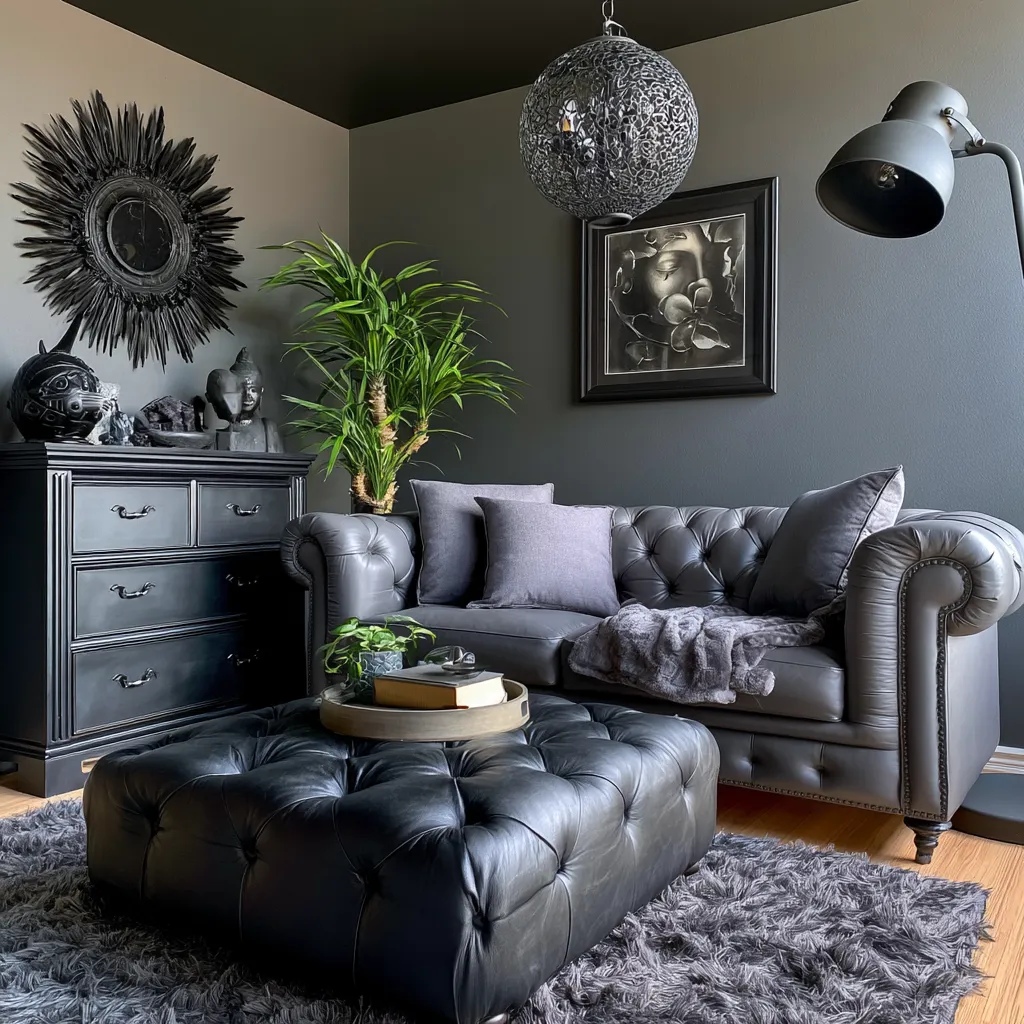
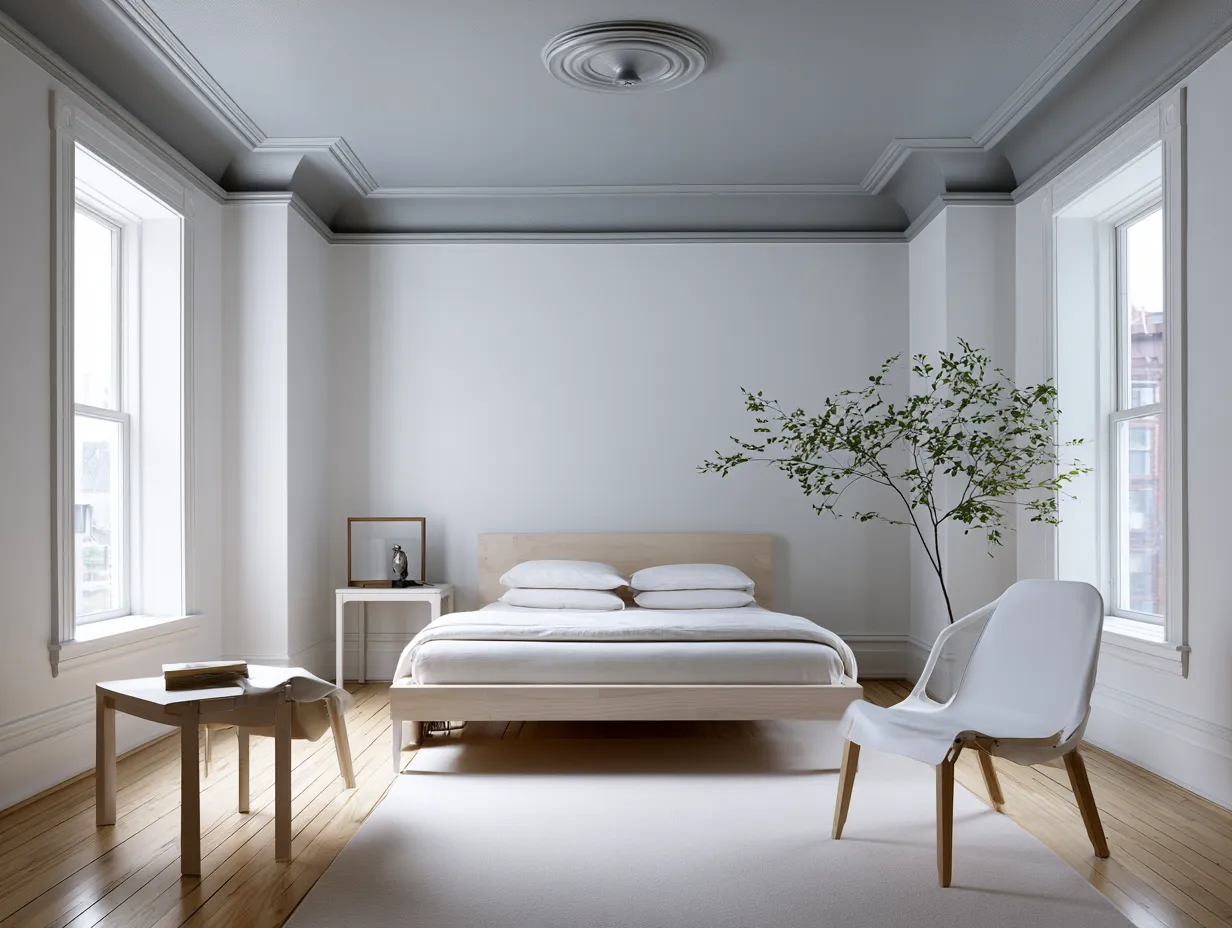
Large wall decor ideas for living room walls work best when they solve scale first and style second. A blank stretch of drywall above a sofa or along an open wall makes even well-chosen furniture feel incomplete. The fastest fixes use either one oversized piece, a carefully planned gallery arrangement, or a surface treatment that changes texture without permanent renovation.
Most living rooms respond well to three approaches: a gallery wall built around personal pieces, a single oversized artwork hung at the correct height, or architectural film that mimics wood, stone, or metal. Each option covers different budgets and timelines, yet all three can turn an empty wall into a clear focal point within a weekend.
Skip scattering small frames across a wide surface. That approach leaves the wall looking sparse no matter how many pieces you add. Instead, match the treatment to the wall’s width and the furniture below it so the result reads intentional rather than temporary.
- Gallery walls succeed when frames share color or style and spacing stays consistent.
- Oversized art works best at 60–75 % of the sofa width and centered 57–60 inches from the floor.
- Architectural film costs roughly $4–8 per square foot and installs without full renovation.
- Plan every layout on the floor before driving a single nail.
- One dominant treatment almost always looks stronger than mixed small objects.
- Avoid hanging pieces higher than eye level unless ceilings exceed ten feet.
Gallery Walls That Turn Empty Space into a Personal Focal Point
Decorating a large living room wall with a gallery arrangement gives the surface personality without relying on a single expensive piece. Think of the wall as a single composition rather than a collection of separate objects. When frames share a color family or mat style, the whole group reads as one deliberate block even if the images differ.
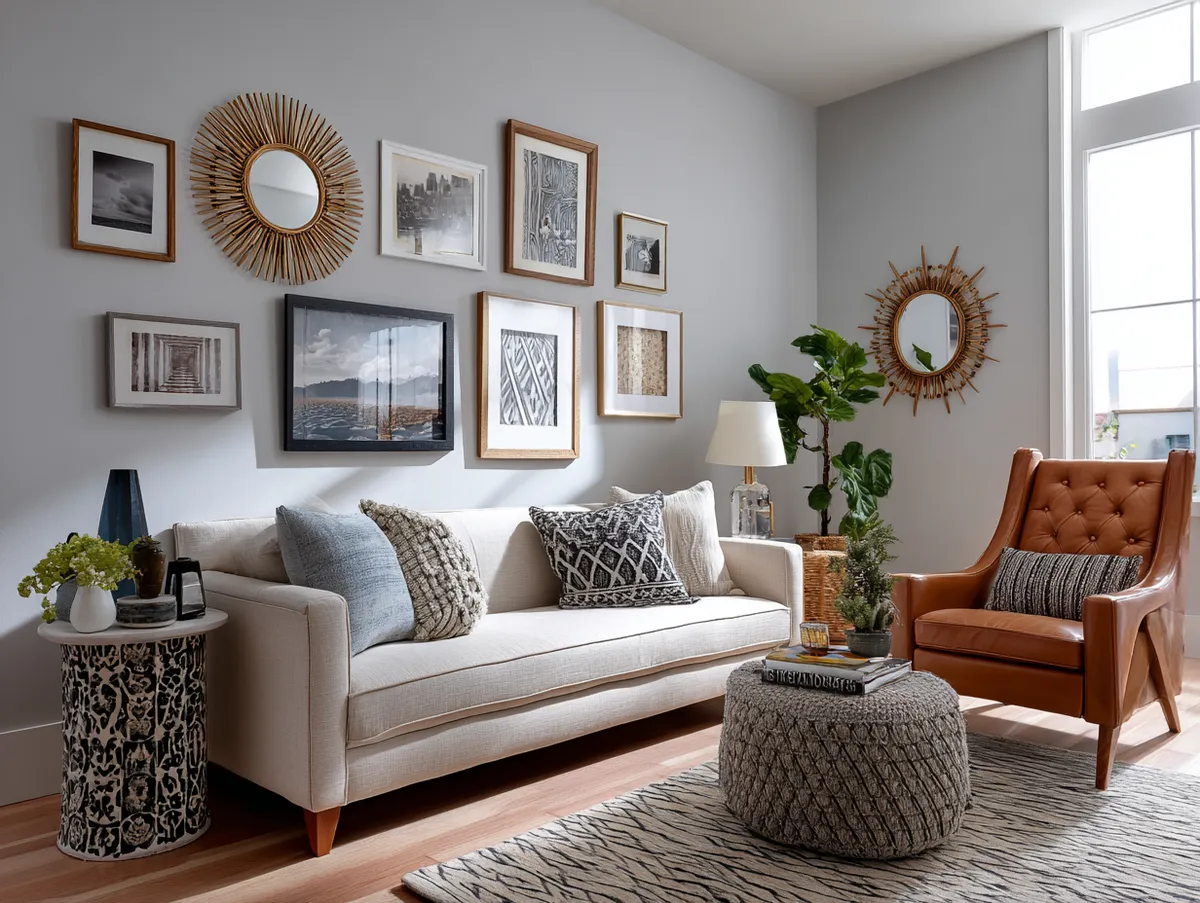
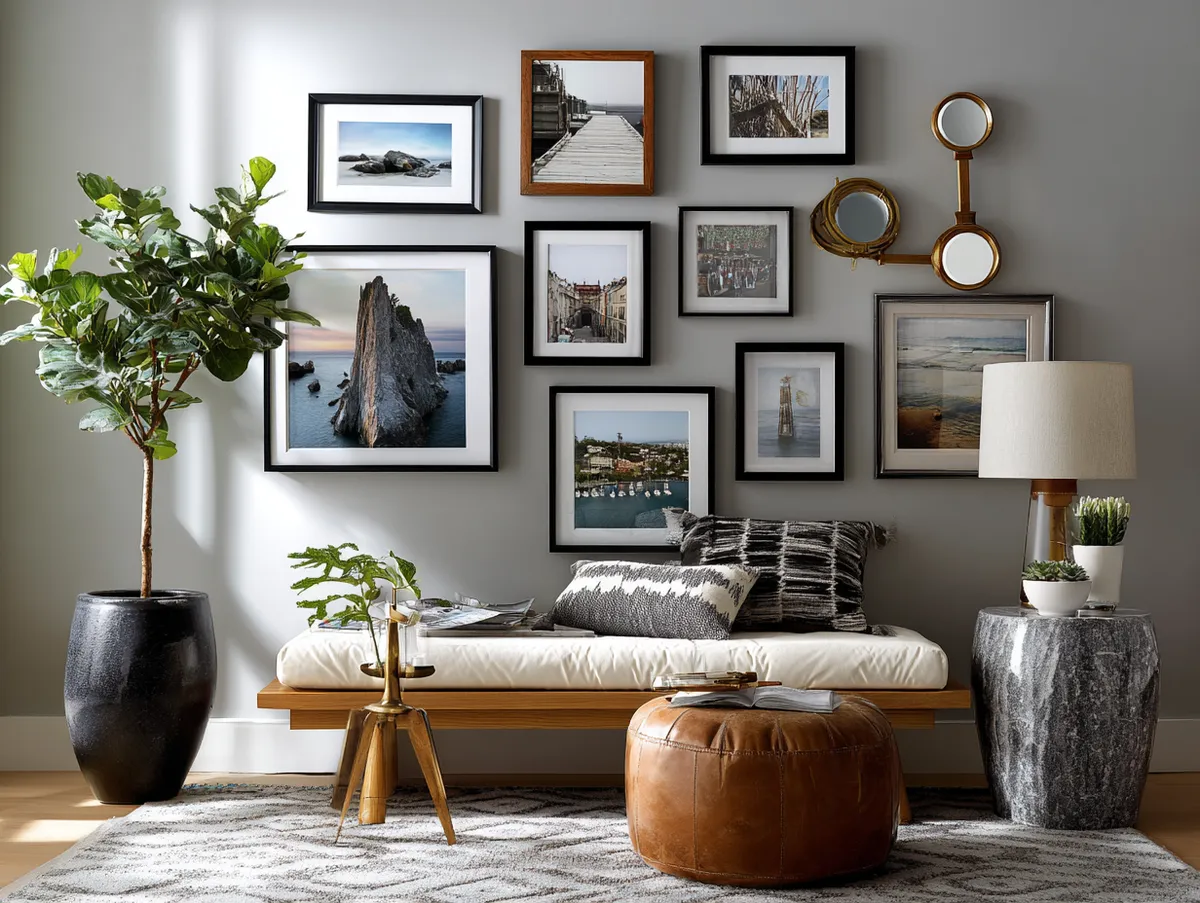
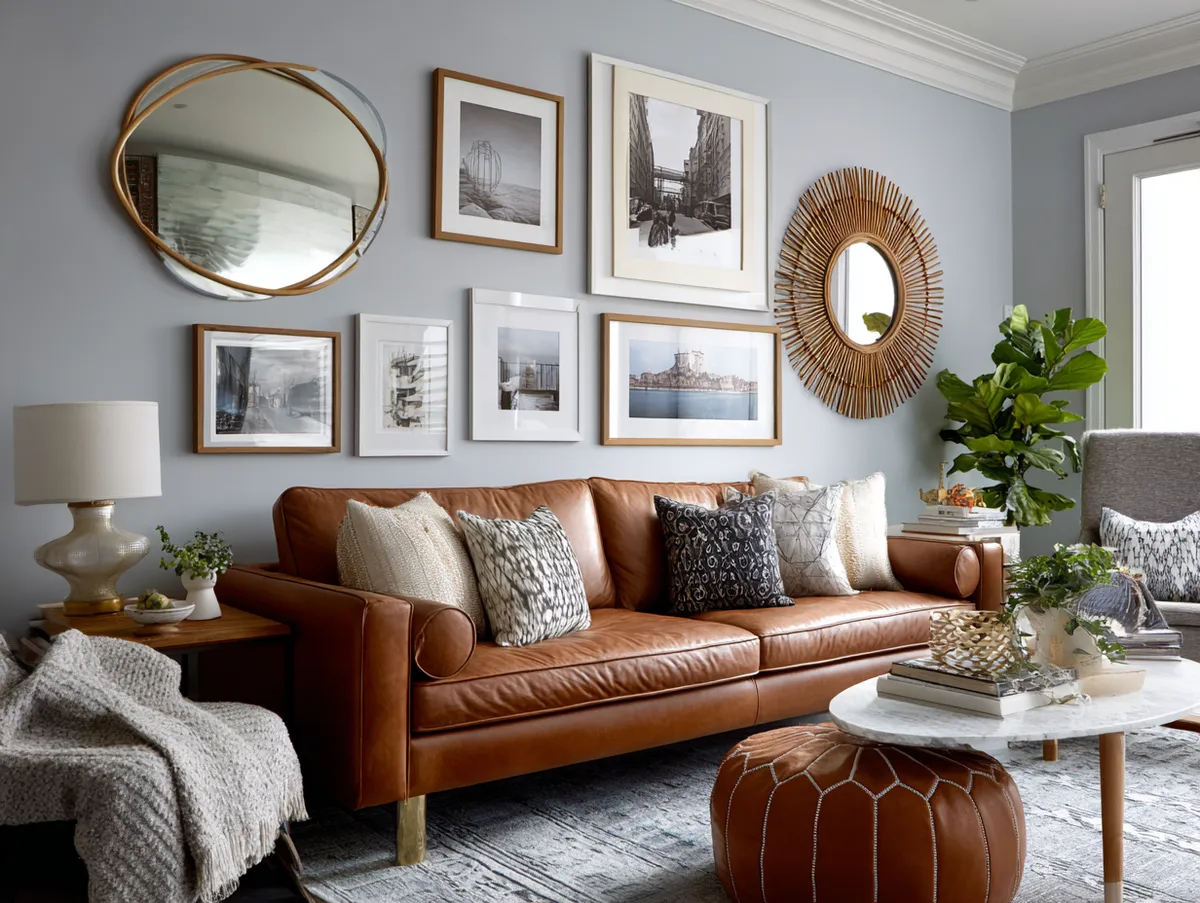
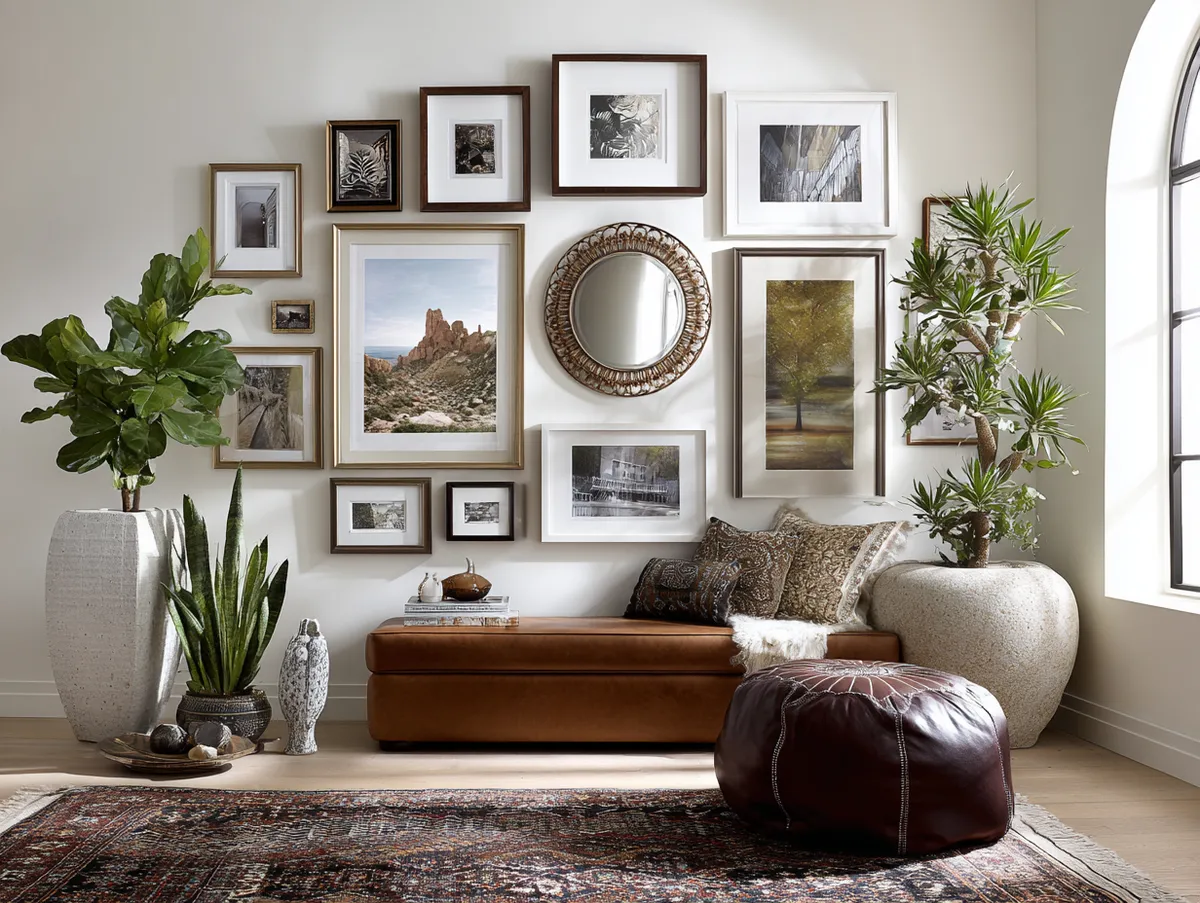
Start by choosing artwork and objects that already exist in the home. Paintings, photographs, small mirrors, and even shallow shelves can sit side by side. The question most people ask is whether mismatched frames will look messy. The answer is simple: keep the outer finish consistent and the mix of sizes becomes an asset rather than a problem.


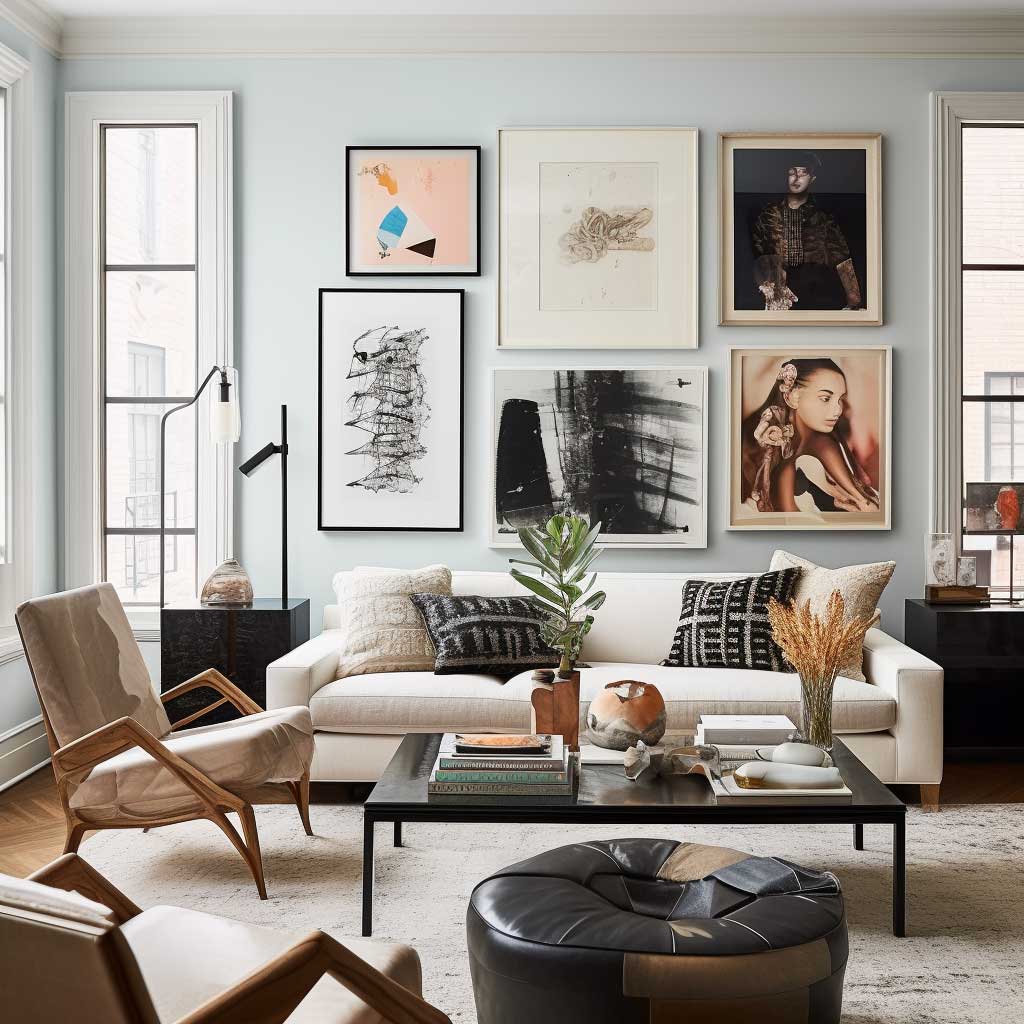

Layout options fall into three practical groups. A strict grid keeps every frame aligned vertically and horizontally for a calm architectural feel. A linear row works well above a long sofa. An organic cluster allows freer spacing and suits rooms that already feel formal. Measure the available wall width first, then mock the arrangement on the floor with painter’s tape so spacing stays even.
- Select pieces with shared color or theme before buying new frames.
- Keep 2–4 inches between frames for breathing room.
- Hang the center of the whole group at roughly 57–60 inches from the floor.
- Use proper picture hooks rated for the heaviest frame in the set.
Do not hang the first piece without a full floor plan. Once nails are in the wall, correcting spacing becomes tedious and leaves visible holes. Treat the gallery the way a museum treats a single large canvas: one measured decision rather than a series of small guesses. For more wall design directions that pair well with gallery arrangements, see how to choose the perfect wall design for your living room.
Oversized Artwork That Commands Attention Without Clutter
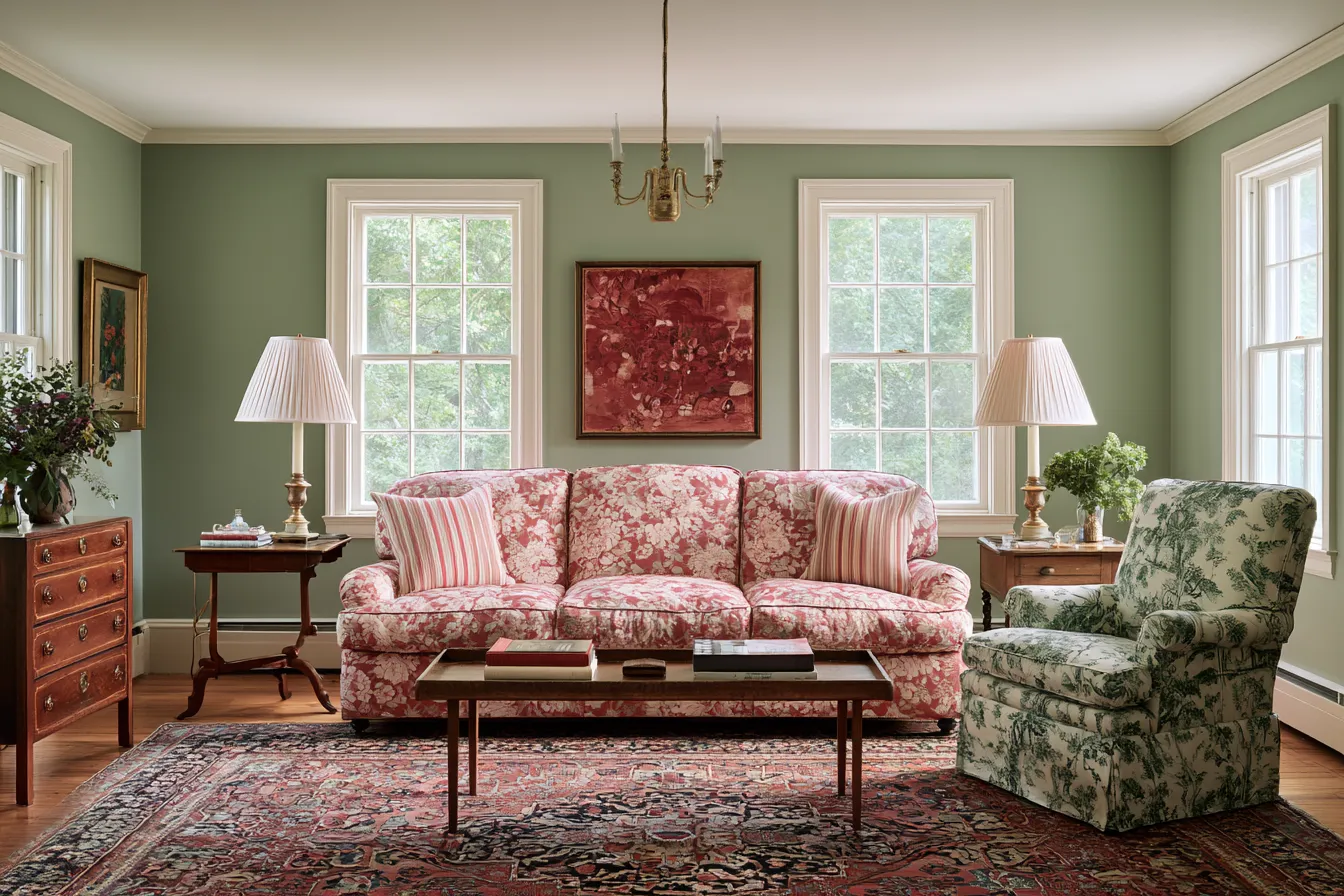
Large wall decor ideas for living room spaces often succeed fastest with one oversized piece. A single canvas or framed print sized at least 40–48 inches in its longest dimension can fill a wall that would otherwise need six or seven smaller frames. The visual weight sits in one place, so the eye rests instead of scanning.
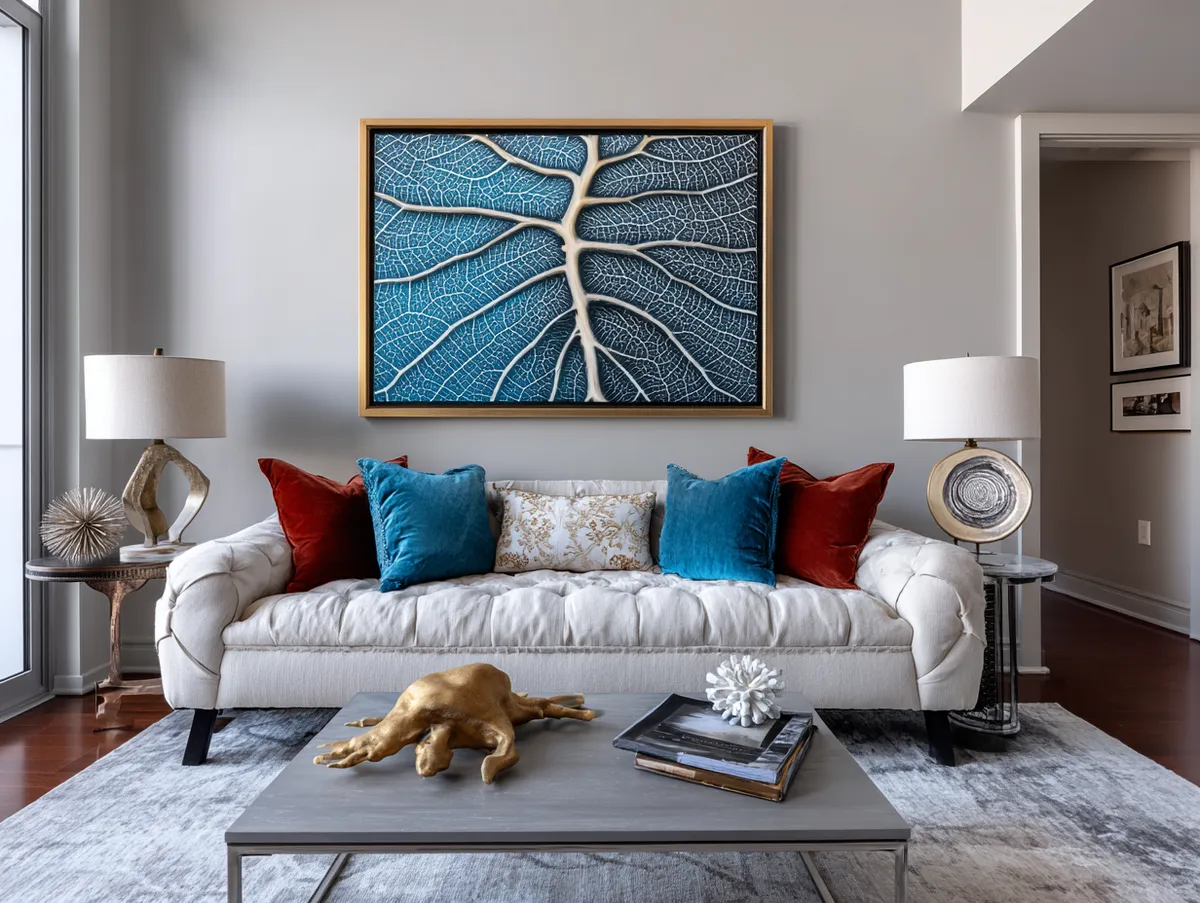
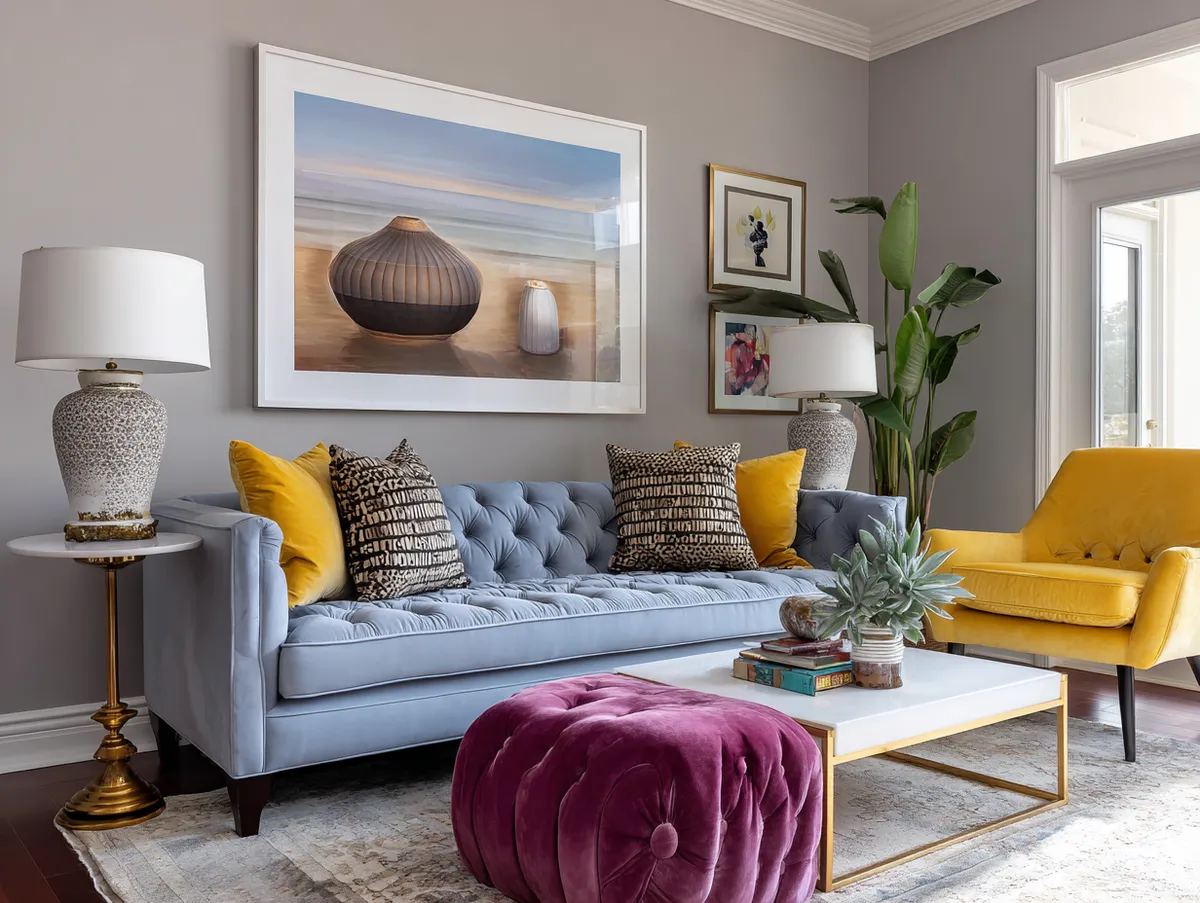
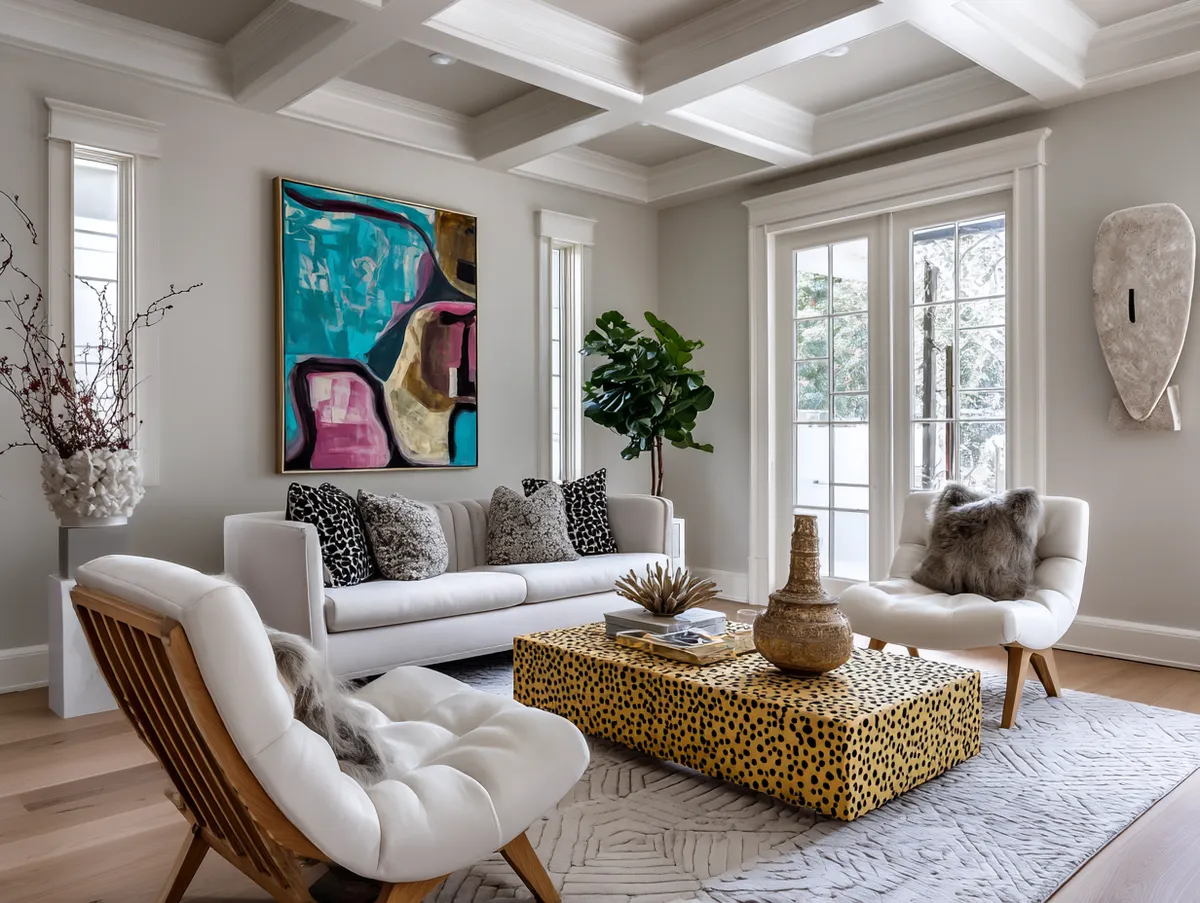
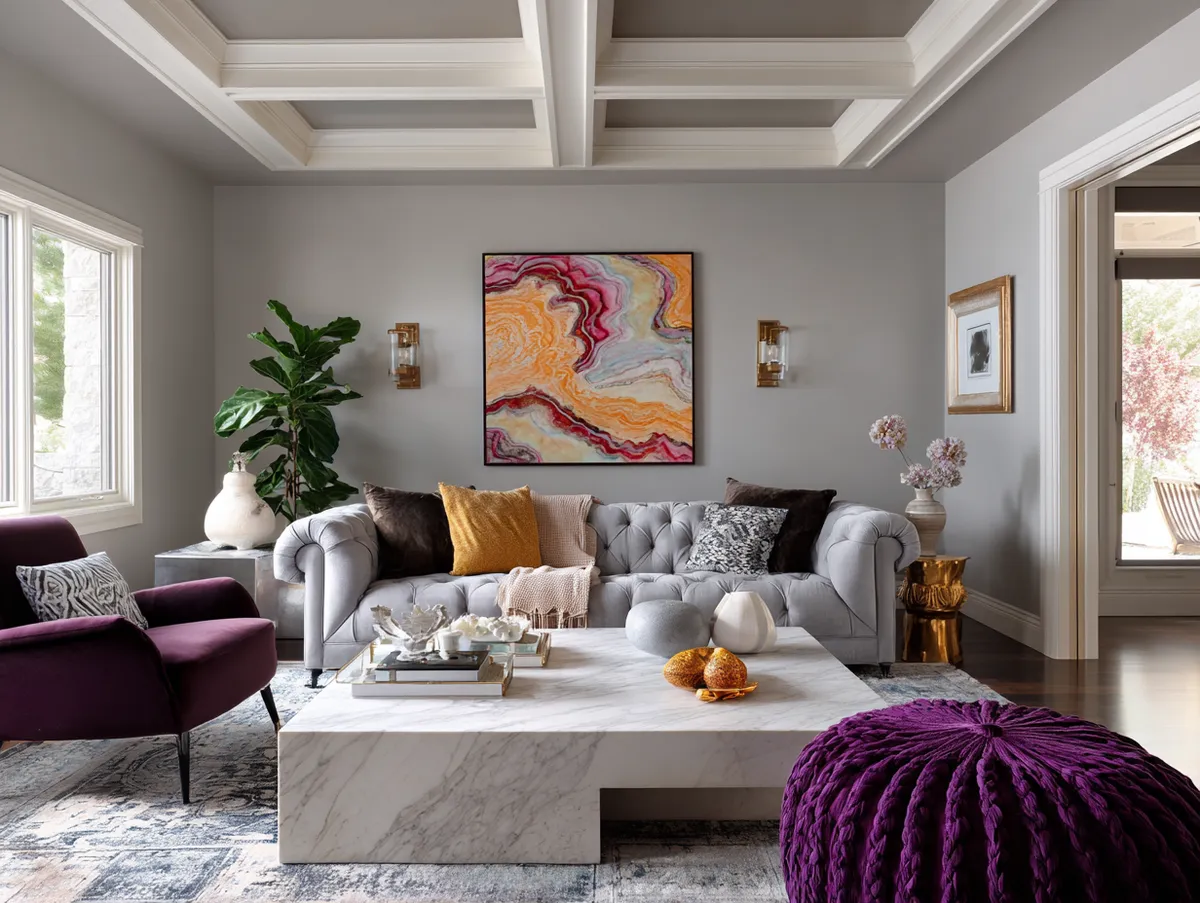
Choose artwork whose colors either echo the sofa and rug or provide deliberate contrast. A cool abstract next to warm wood furniture can wake up the room, while matching tones create calm continuity. The frame should stay simple for modern spaces; ornate molding usually fights contemporary lines.


Hang the center of the piece between 57 and 60 inches from the floor. Above a sofa, leave 6–10 inches of clear space between the top of the backrest and the bottom of the frame. This gap keeps the art connected to the furniture rather than floating awkwardly high. Quality large-format prints in the 40–60 inch range often fall between $100 and $300, while original works climb higher.
Balance the rest of the room around the artwork rather than competing with it. Avoid placing another strong pattern or mirror directly opposite. One dominant object is enough. If the wall still feels bare at the edges, add a floor plant or a slim console rather than more frames.
Architectural Film for Texture Without Full Renovation
Architectural film offers a practical route for large wall spaces when paint or wallpaper feels temporary and real materials feel expensive. The self-adhesive vinyl can replicate wood grain, stone, brushed metal, or solid color finishes. Applied correctly, it changes both appearance and surface feel without demolition.
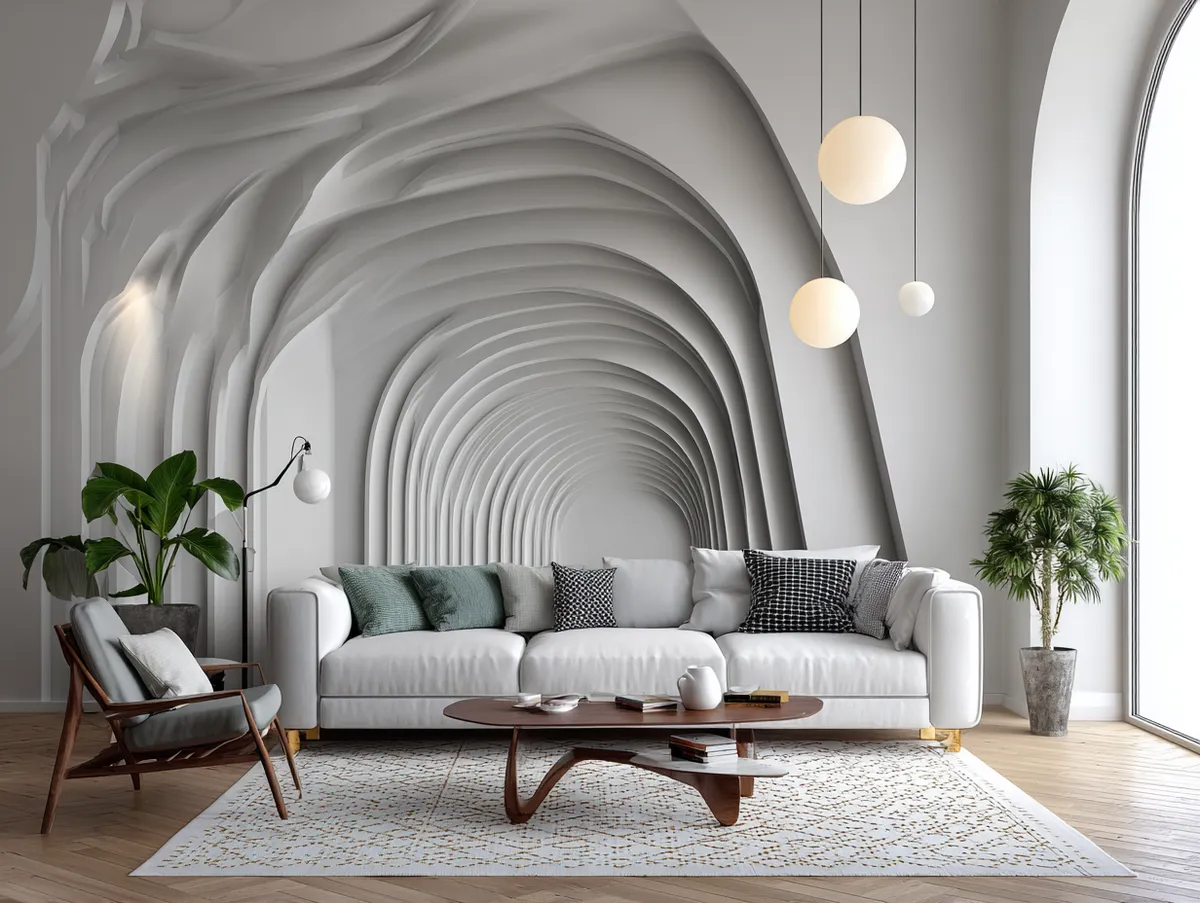
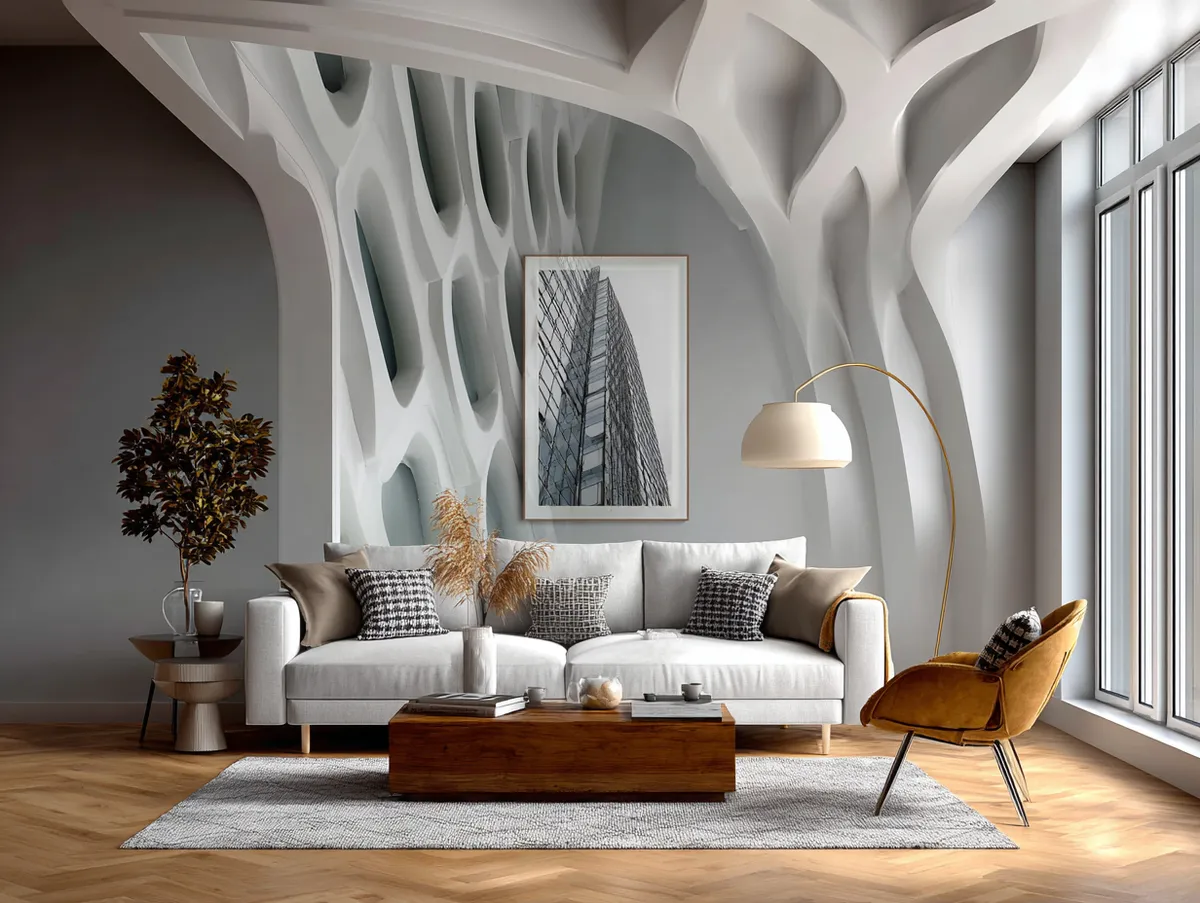
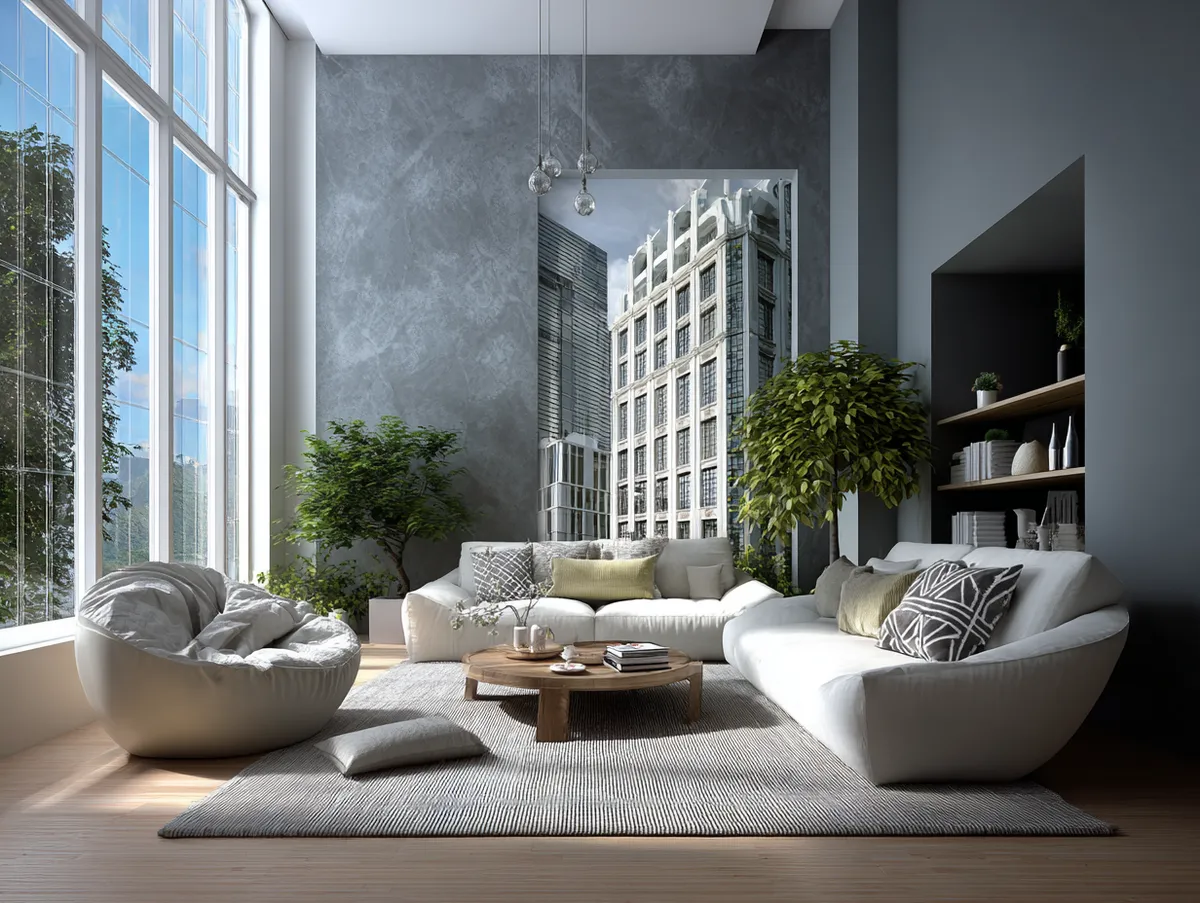
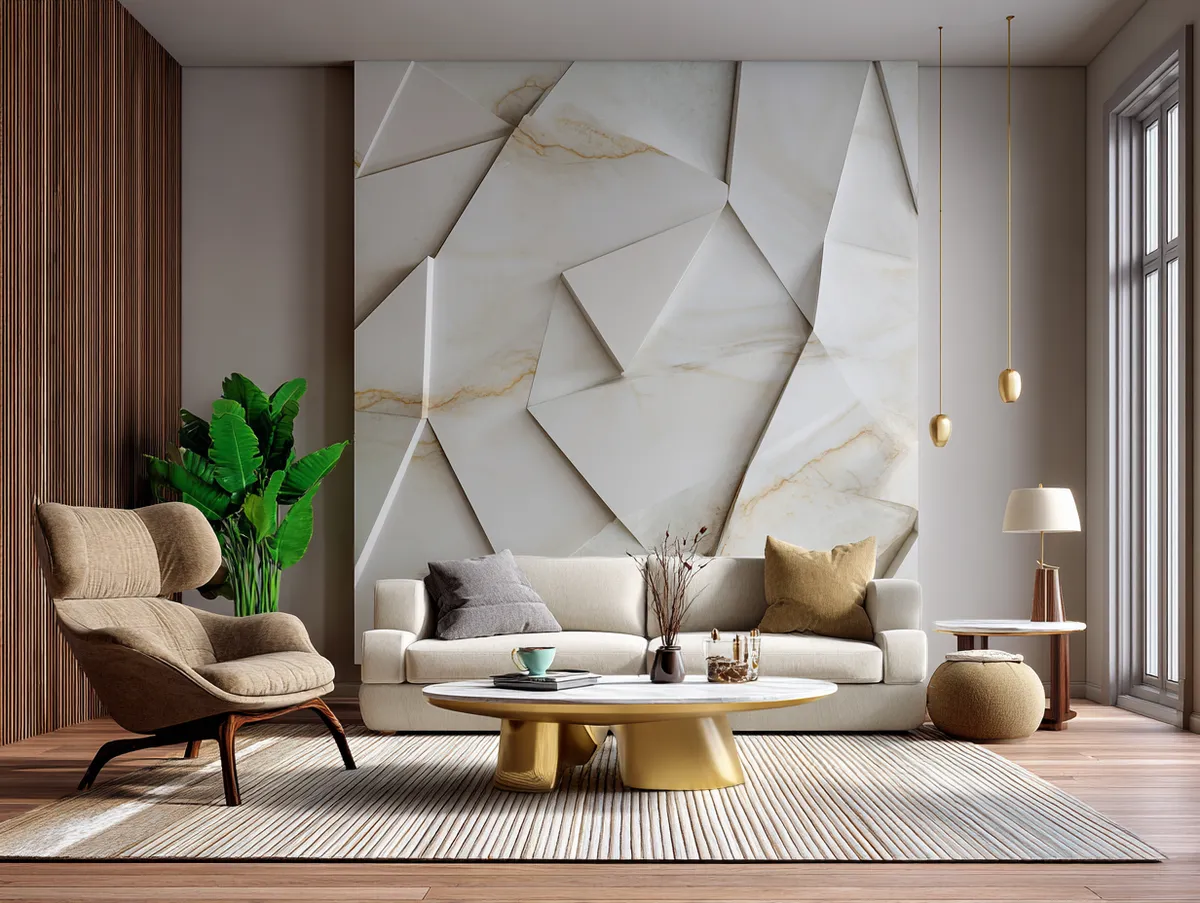
Retail pricing for quality architectural film such as Bodaq typically runs $4–5 per square foot for standard patterns and $7–8 for premium textures. That range sits well below the cost of real wood paneling or stone veneer while still delivering convincing results from normal viewing distance. For related panel approaches that deliver similar impact, explore PVC wall panel designs for living room spaces.

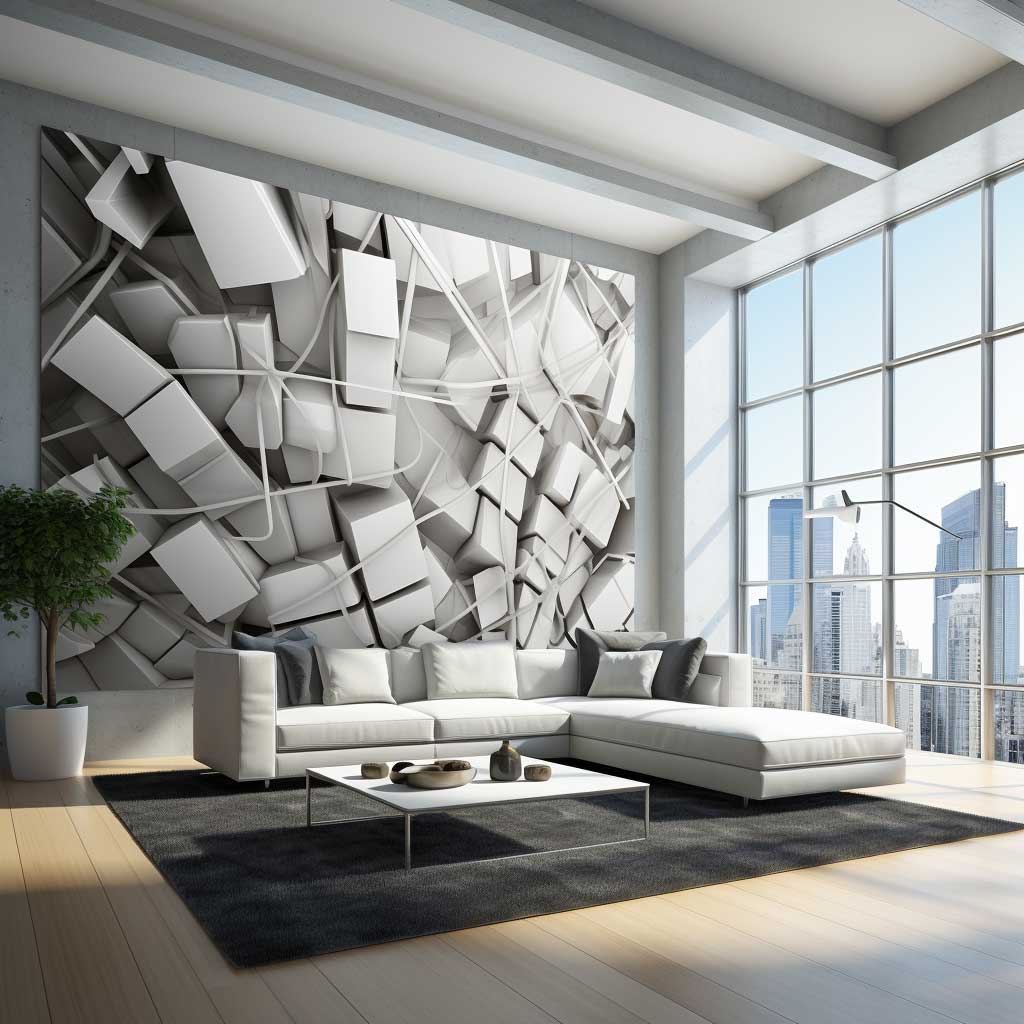


Surface preparation decides success. The wall must be clean, dry, and free of grease or loose paint. Any cracks or holes need filling and sanding first. Cut the film slightly larger than the measured area, then apply from one corner while smoothing bubbles with a squeegee. Trim excess with a sharp blade once the film sits flat.
Do not apply film over textured plaster or peeling paint. The adhesive will telegraph every irregularity and the finish will look amateur. Pair the new surface with simple furniture so the texture remains the star. Trim or molding at the edges can hide seams and give the installation a finished appearance.
Comparing the Three Approaches Side by Side
| Approach | Typical Cost Range | Time to Complete | Best For | Main Limitation |
|---|---|---|---|---|
| Gallery Wall | $150–500 total | 1 weekend | Personal expression and mixed collections | Requires careful spacing and planning |
| Oversized Artwork | $100–700 per piece | Under 2 hours | Clean modern rooms needing one focal point | Scale must match furniture width |
| Architectural Film | $4–8 per sq ft | 1–2 days | Texture change without demolition | Surface must be perfectly smooth |
Practical Choices That Last
Large blank walls reward decisive scale over scattered decoration. Whether the solution is a tightly planned gallery, one commanding canvas, or a textured film surface, the goal remains the same: the wall should feel finished rather than temporary.
Measure twice, mock the layout on the floor, and hang or apply only after the proportions feel right. Keep the center of any artwork near 57–60 inches from the floor and leave breathing room above sofas. These small numbers prevent the most common visual mistakes.
Choose materials and pieces that already relate to the room’s existing colors and furniture. A wall treatment that fights the sofa or rug will never settle into the background. Consistency of finish and correct scale do more work than additional objects ever will.
Start with the approach that matches available time and budget. One well-executed option always outperforms three half-finished experiments. The wall becomes part of the room instead of a problem waiting for the next idea.