Modern brick fence design has moved well past the standard single-course running bond that every contractor defaults to — and the difference in curb appeal is not subtle. I’ve photographed front yards where a well-built brick fence wall design carried the entire property, and others where 60 linear feet of uninspired red brick made a $900,000 house look like an apartment complex perimeter. Pattern, mortar joint profile, brick tone, and what you pair with the masonry all determine which outcome you get. None of those decisions are complicated. They just require making them intentionally.
Brick fence ideas for front yards are different from backyard privacy walls — the front fence is performing for the street, not just the homeowner. That changes the calculus. You want texture that reads from 30 feet away, color that complements the facade, and a height that signals boundary without turning the property into a fortress. Miss any of those and the fence fights the house instead of finishing it.
Quick Scan
- Target budget: Brick fences run $60–$240 per linear foot installed for 3–6 ft walls
- Best patterns for front yards: herringbone, basket weave, stacked (horizontal)
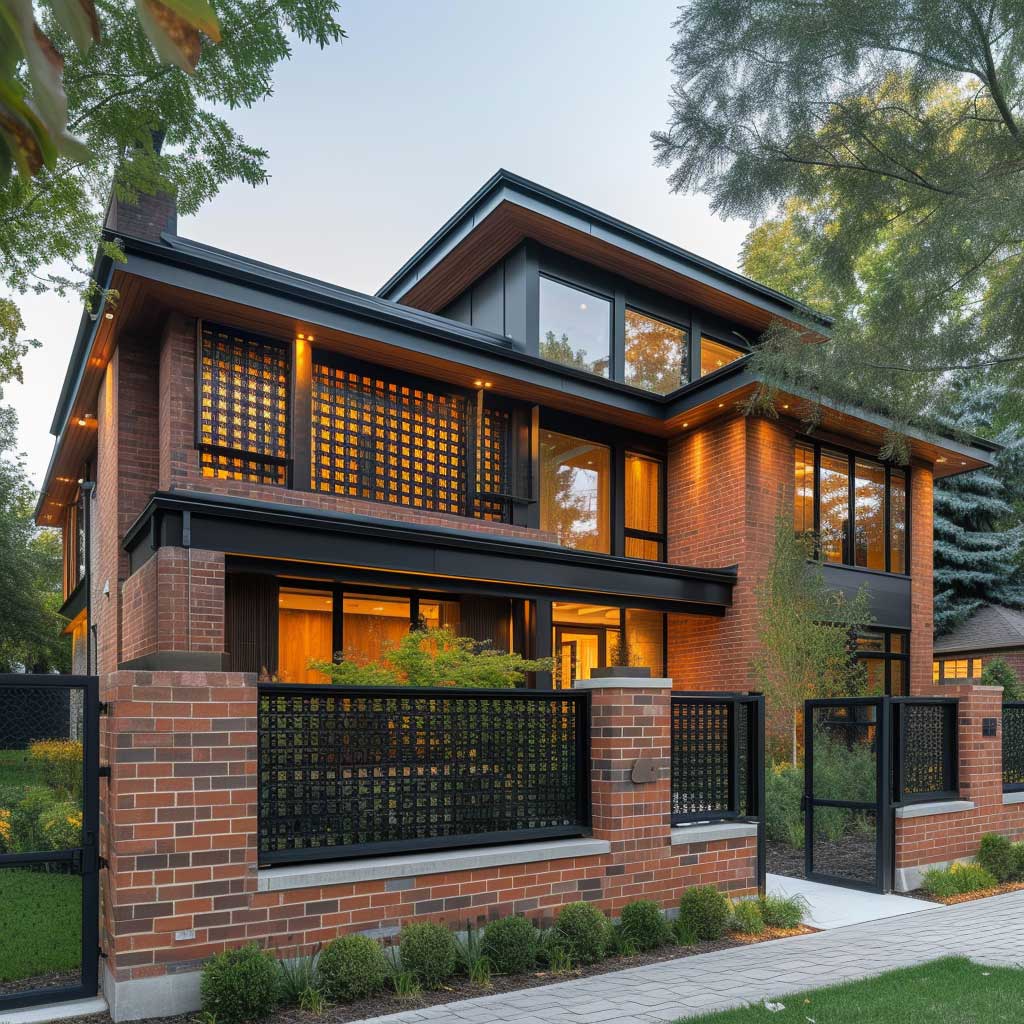
- Modern upgrade: pair brick piers with metal or timber infill panels
- Color truth: iron-spot grey and pale cream bricks age better on contemporary homes than classic red
- Mortar joint: flush joints read modern; concave joints resist water better — pick your priority
- Skip this: painted brick fence on a front yard — it chips, it stains, and you own it forever
Pattern Choice Does More Work Than Brick Color
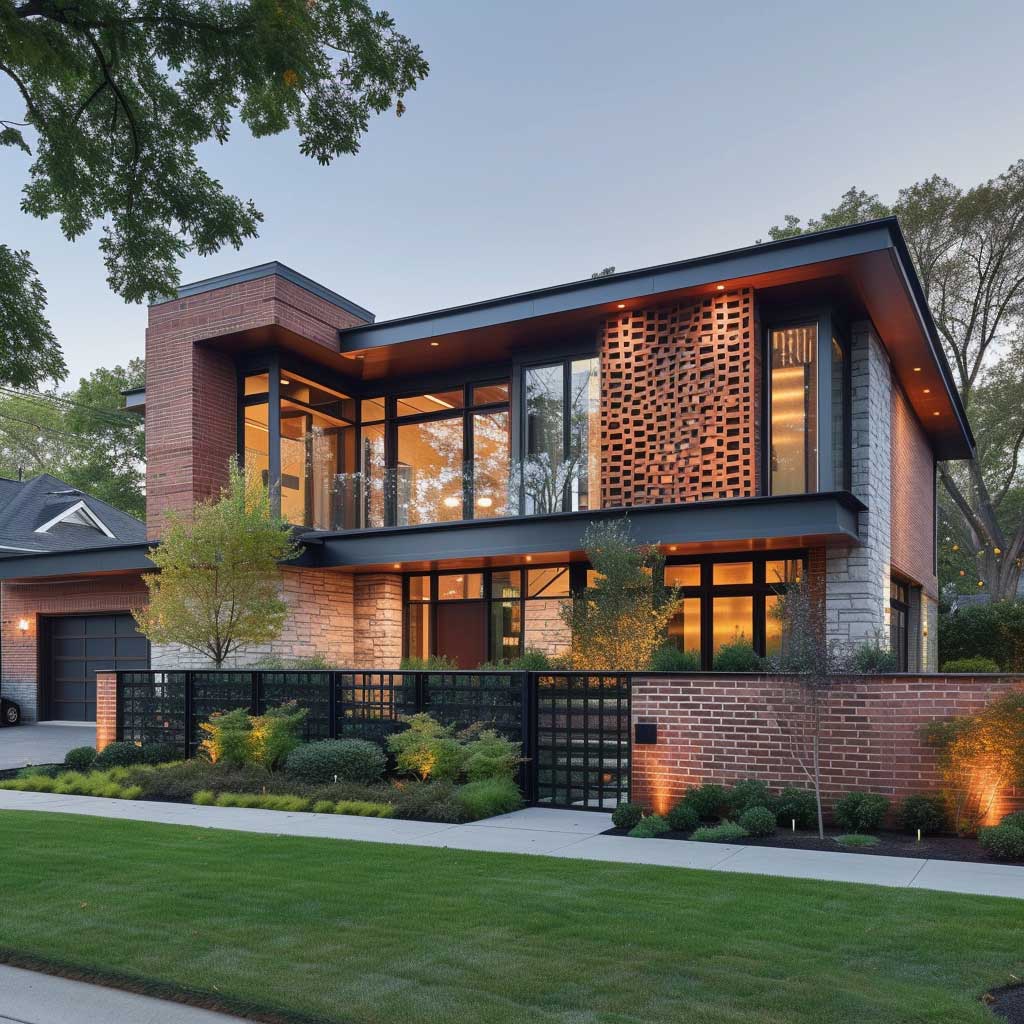

Running bond is the default because it’s fast to lay and structurally redundant — every mason knows it, every apprentice can do it, and that’s exactly why it looks like every other brick fence on the street. Herringbone is the first upgrade worth trying: the 45-degree diagonals catch light differently at every hour of the day, and the pattern stays legible from a car at speed. I’ve had two neighbors ask me about a herringbone front fence I photographed in Melbourne — not one person has ever asked about a running bond fence.
Basket weave sits between herringbone and stacked in terms of visual complexity. Pairs of bricks alternate horizontal and vertical in each cell, creating a woven rhythm that photographs extremely well without demanding specialist-level masonry. Stacked bond — bricks running horizontal with all vertical joints aligned — is the most modern-looking of the three. It requires more precision and a good structural tie system, but the result is a genuinely contemporary brick fence wall design that works next to flat-roofed houses or heavily glazed facades. Avoid stacked bond if your mason can’t demo a clean sample panel first. Misaligned joints in a stacked pattern look worse than any other mistake in masonry.
Mortar joint profile is the detail nobody budgets attention for. Flush joints — mortar scraped flat and smooth — read modern and work with stacked or herringbone patterns. Concave tooled joints create a shadow line that adds depth to running bond and shed water better in rainy climates. Raked joints (mortar set back 3/8 inch) create the most dramatic shadow texture but trap debris and can allow water ingress if not sealed. Choose based on your climate, not just aesthetics. If you’re in a freeze-thaw zone, raked joints on an exposed front fence are a maintenance problem you’re building in on day one.

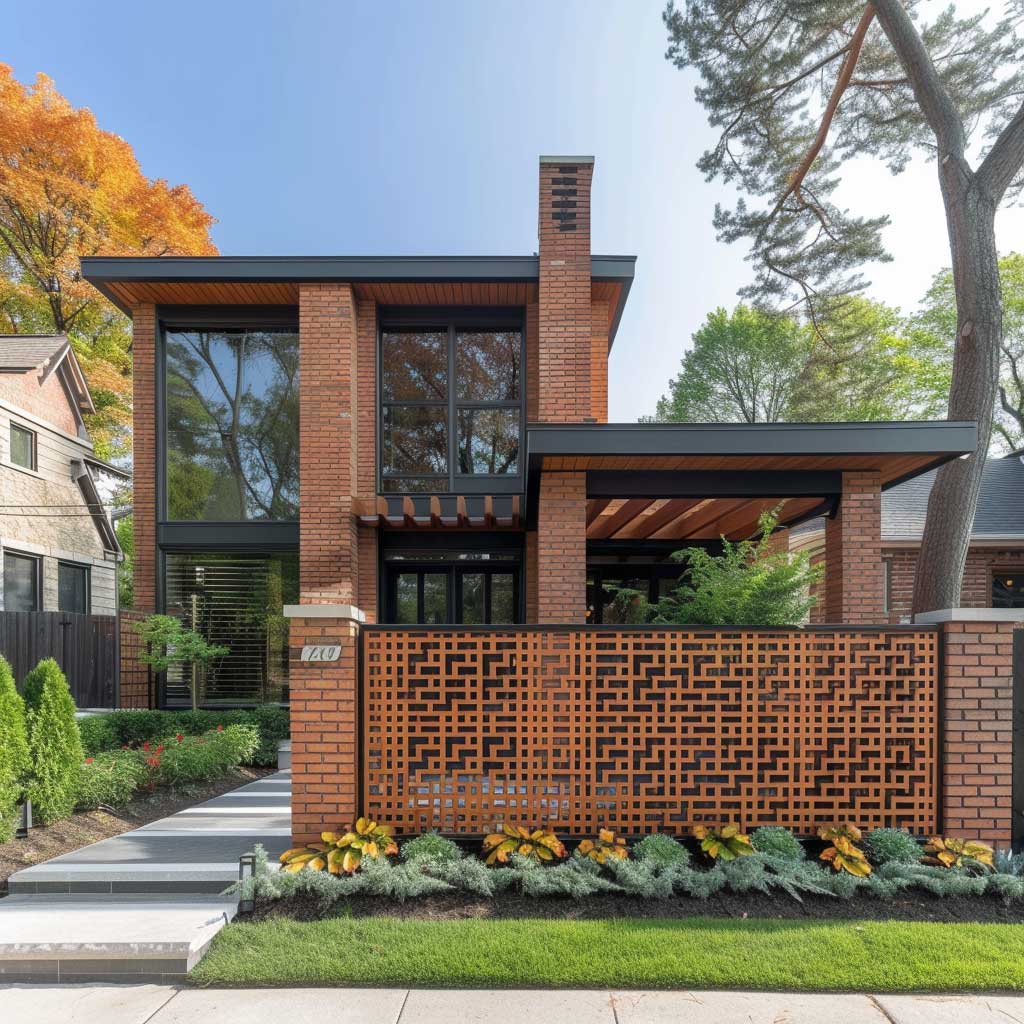
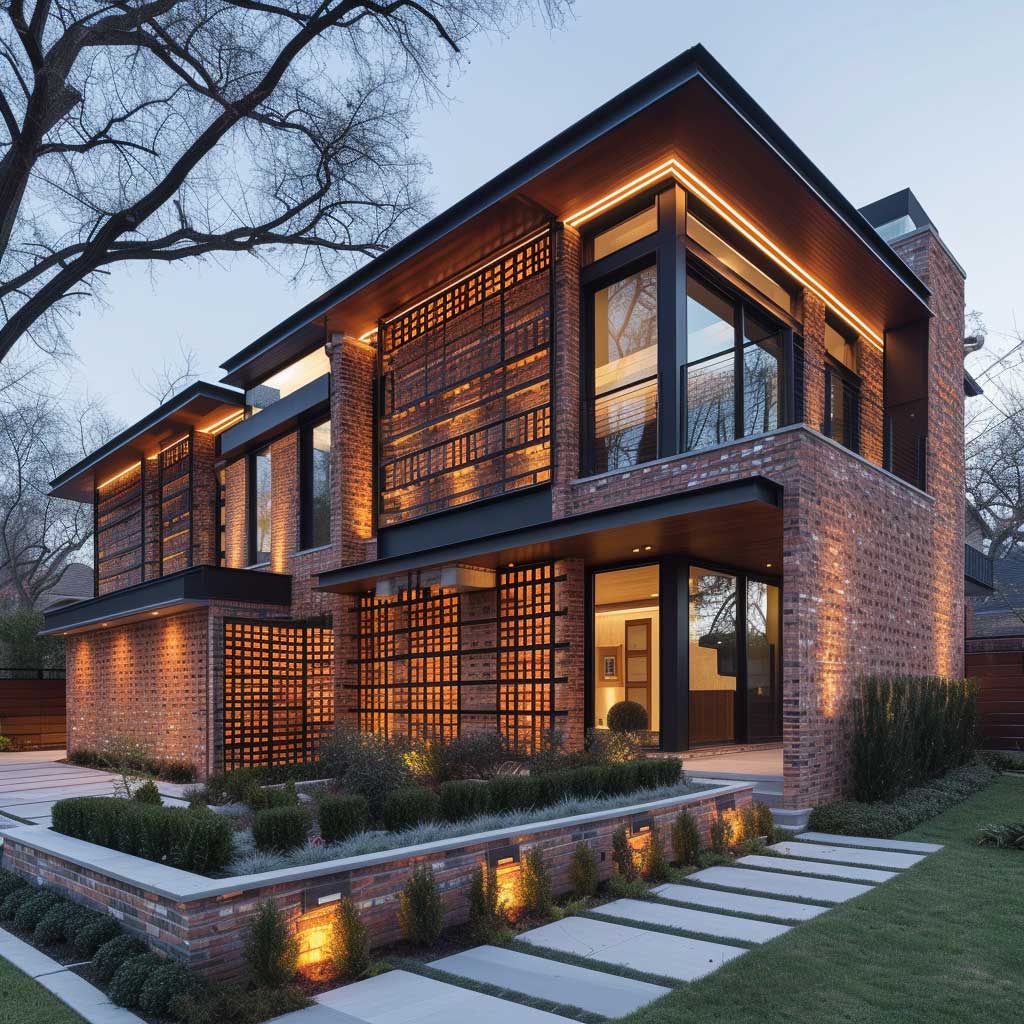

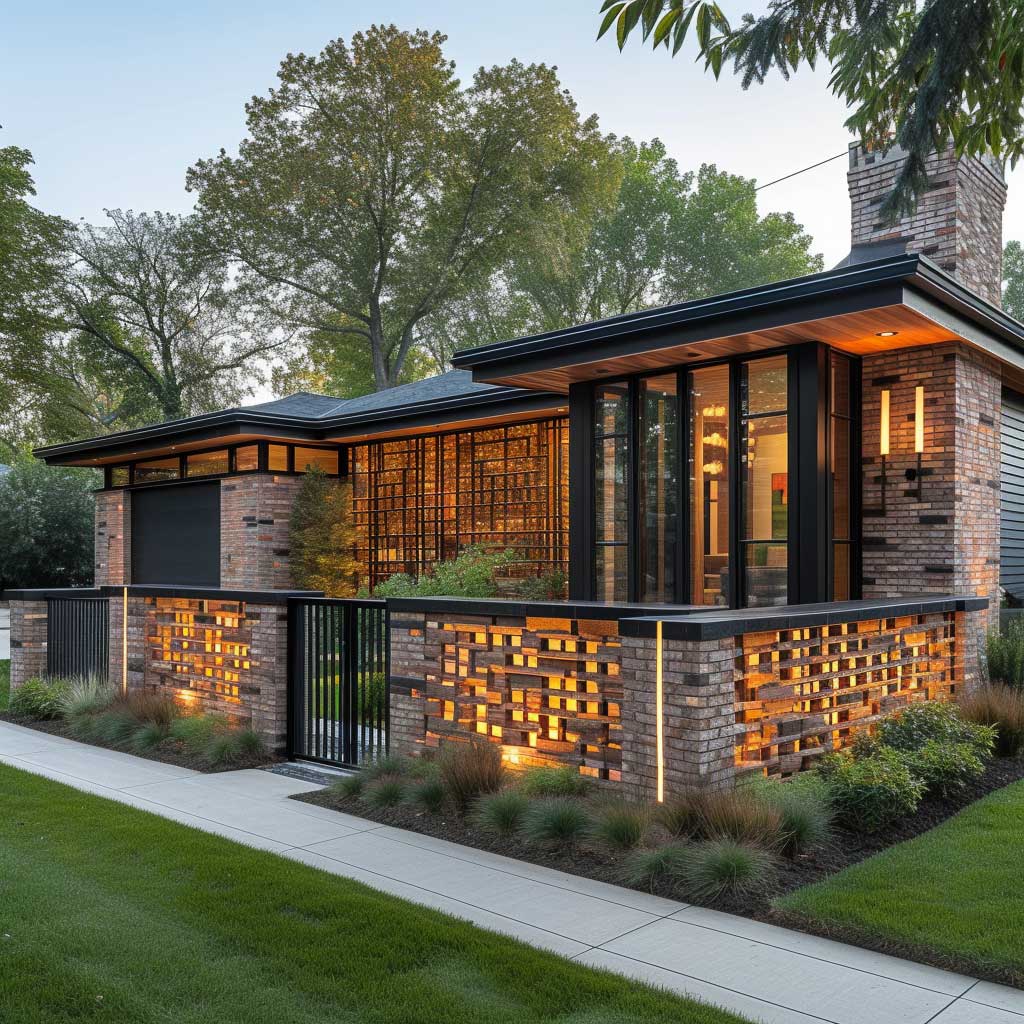
What I’d skip without hesitation is the decorative perforated brick fence — sometimes called a hit-and-miss pattern — on a front-facing boundary. It looks striking in architectural photography but in practice it gives up most of your privacy and collects windblown debris in every opening. Save the perforated treatment for a rear garden feature wall where it earns its keep as a backdrop for climbing plants, not as a security boundary.
Texture within a single pattern is underused. Mixing smooth wire-cut bricks with rougher handmade bricks in the same fence — same color family, different surface — adds a level of depth that no color variation can replicate. Brick wall patterns work the same way indoors, where texture contrast does more than a second color. The front fence is no different.
Modern Brick Fence Designs That Mix Materials Without Looking Cheap
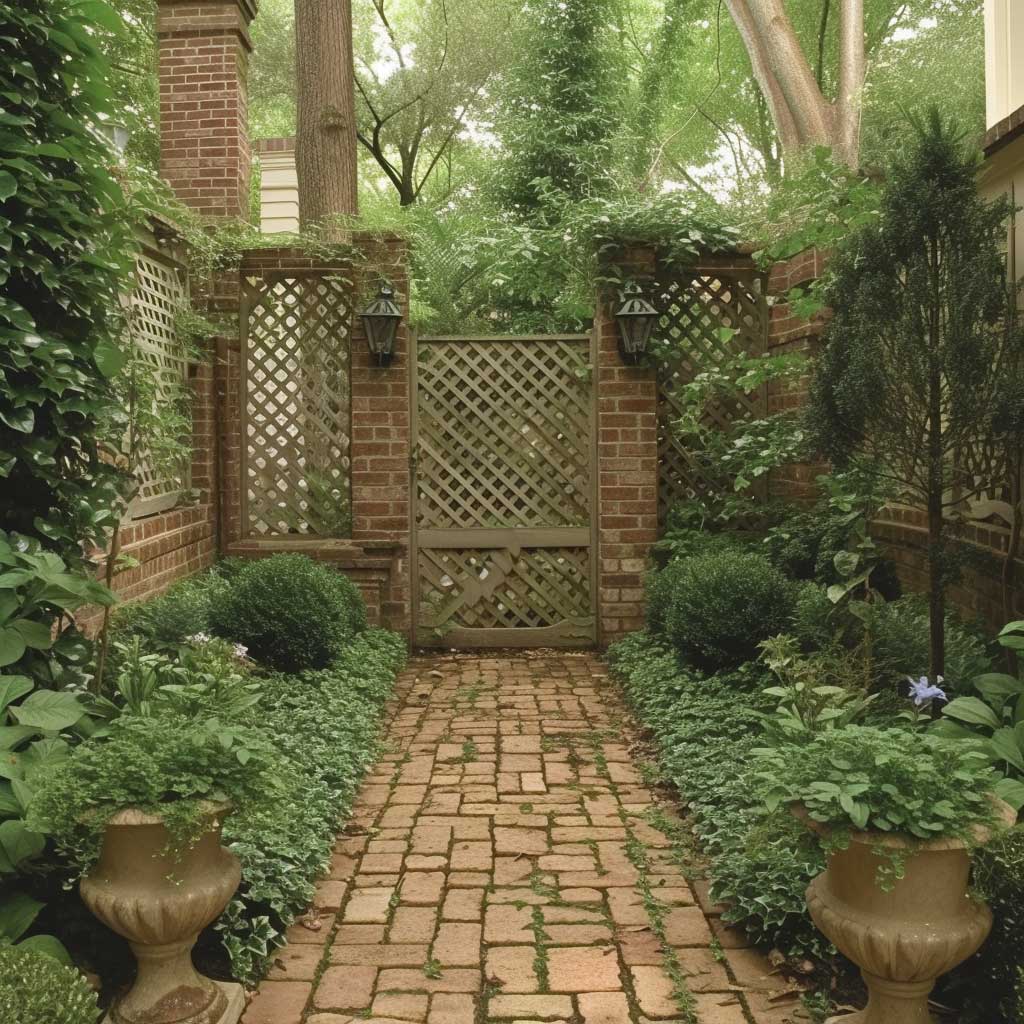


Brick-and-timber is the combination I keep returning to in modern brick fence ideas, partly because it solves a cost problem elegantly. Full brick infill between piers runs $60–$240 per linear foot installed. Brick piers with horizontal hardwood slats as infill costs roughly $15–$30 per linear foot for the infill portion, reducing overall project cost by 30–40% on a typical 80-foot front fence run. You still get the permanence and weight of masonry where it matters — at the columns and base — and the timber does the visual work of filling the spans.
Steel infill is the sharper-edged alternative. Laser-cut Corten panels in a brick pier frame age into a rust patina that echoes the iron-oxide tones of classic brick — my go-to recommendation for contemporary homes where the facade already uses raw or blackened metal. Powdercoated flat steel in charcoal or satin black also works cleanly. What doesn’t work is wrought-iron scrollwork in a fence anchored by modern grey-brick piers. The ornate metalwork needs heritage brickwork to make sense; paired with pale stack-bonded piers it looks like a gate that arrived from a different property.
Glass panel inserts come up often in modern brick fence design conversations and I’m more selective about recommending them. Clear glass needs cleaning constantly, and a residential front fence in a tree-lined street will have algae blooming on the lower panels within 18 months. Frosted or reed-texture glass is more forgiving and still gives you light passage through the fence — which is the whole reason you’re using glass instead of brick infill. Budget an extra $40–$90 per square foot for glass over steel or timber, plus annual cleaning if the panels are clear.
Don’t Do This
Don’t mix more than two materials in one fence run. Brick piers plus timber infill plus a wrought iron gate plus a glass panel plus a stone coping cap is not a design decision — it’s a material panic attack. Pick a primary material and one accent. The fence should feel resolved, not assembled from offcuts.
Don’t install untreated timber infill between brick piers in a climate with 40+ inches of annual rainfall. The moisture differential between the brick (which breathes) and the timber (which swells and shrinks) will open gaps in your panel joinery within three years. Thermally modified or pressure-treated hardwood only.
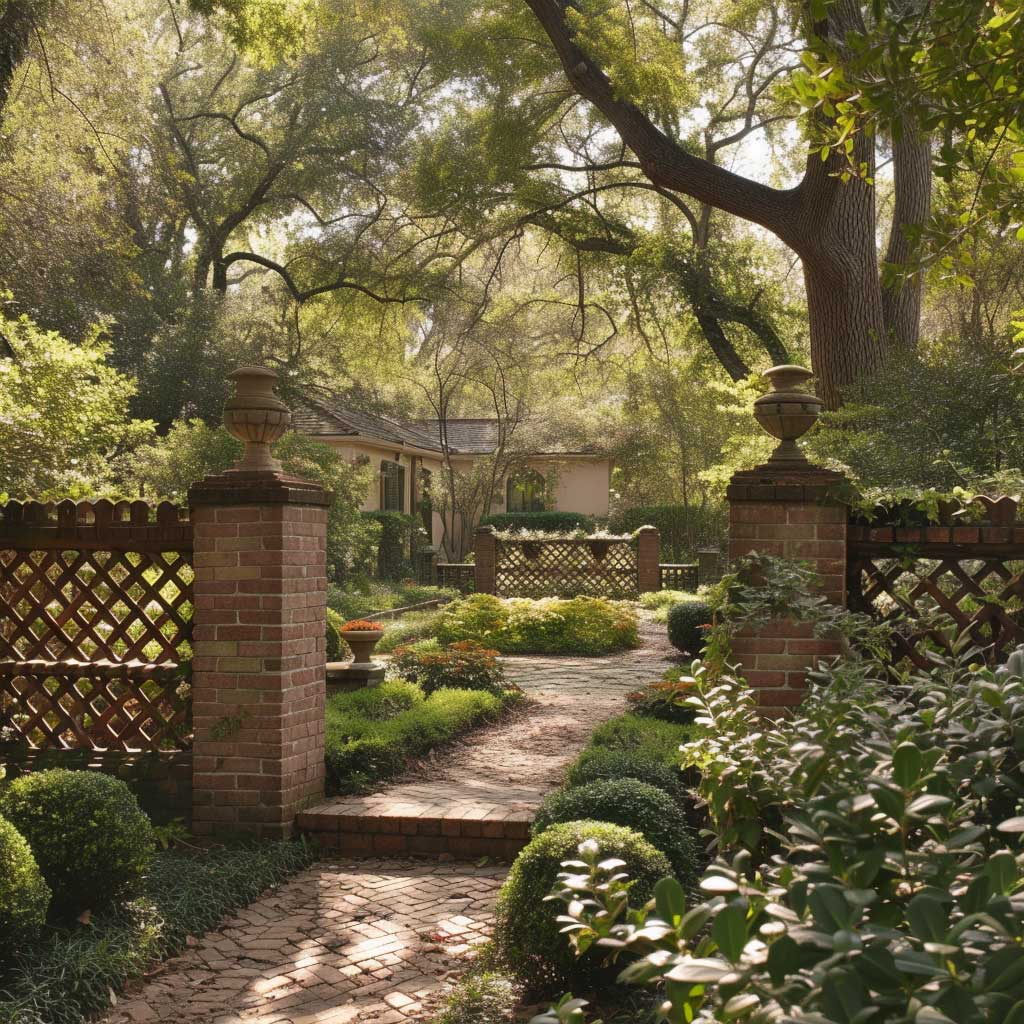
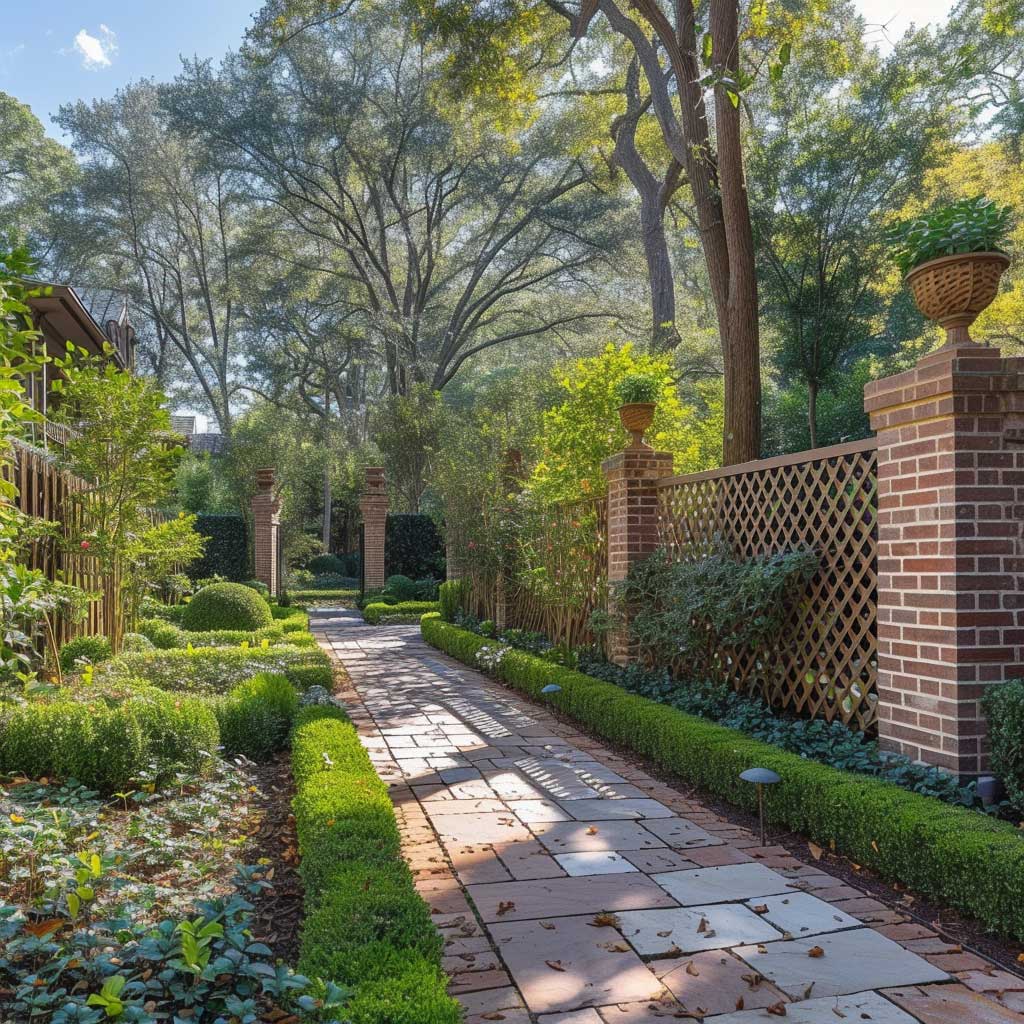
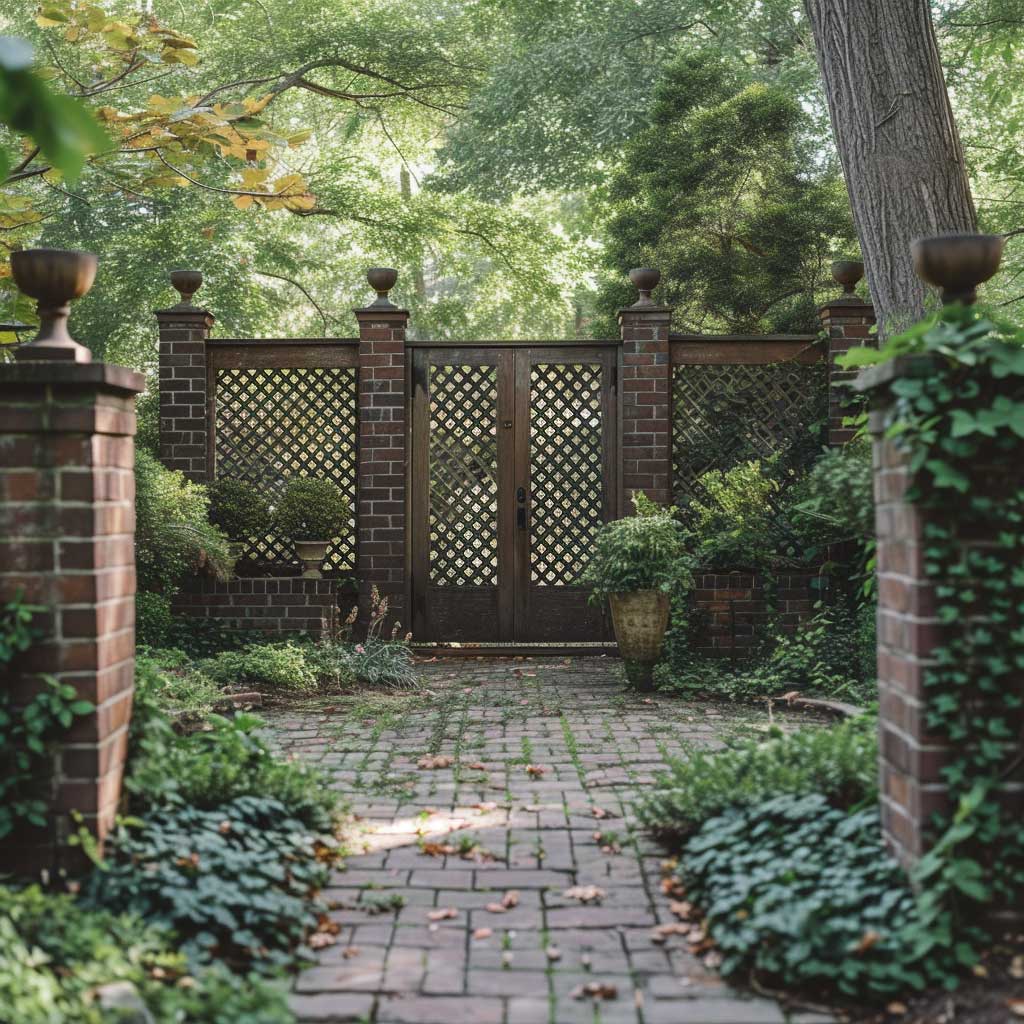
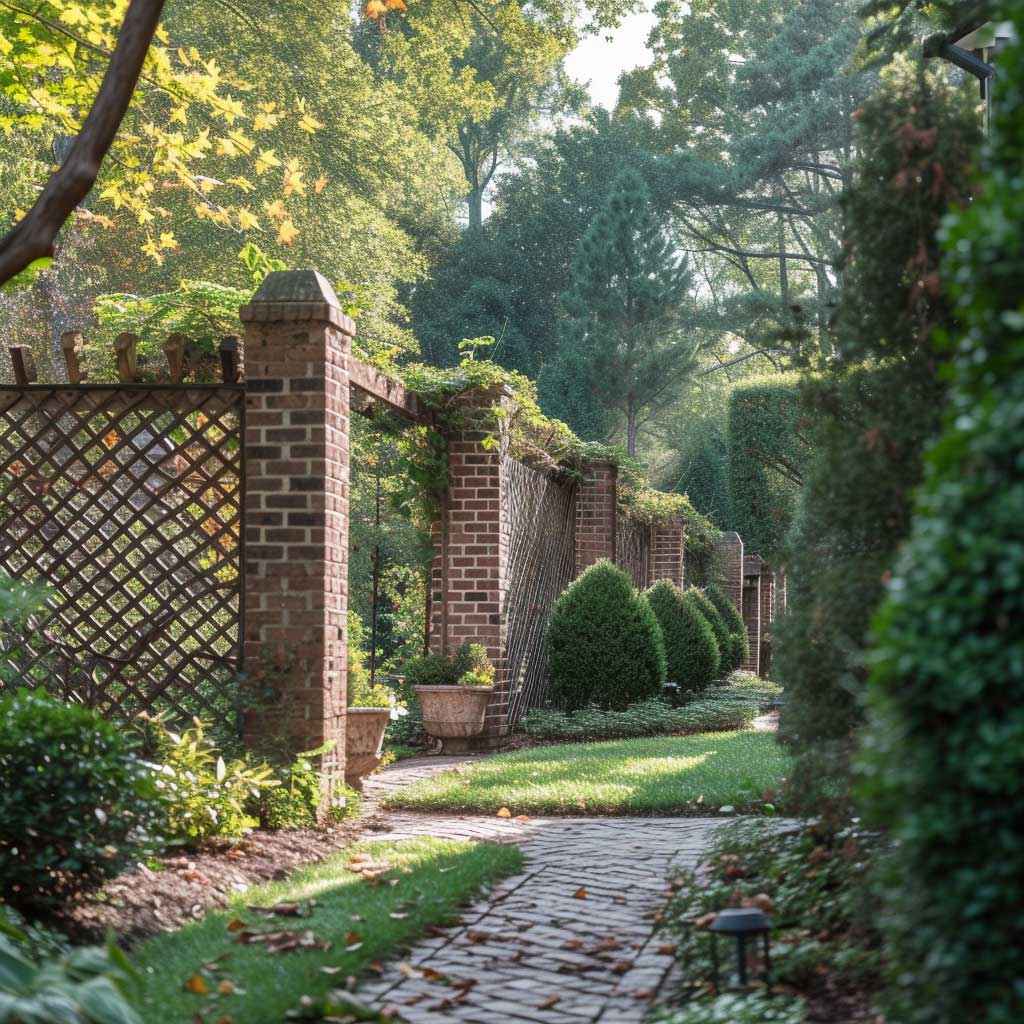
One combination I stole from a landscape architect I worked with in Brisbane: a 450mm-high continuous brick base course in running bond, topped with 900mm of horizontal hardwood slats with a 20mm gap between each board. You get a solid base that handles soil contact and splash-back, privacy from the timber at seated and standing eye level, and visibility for the top third of your garden. Total fence height reads as generous without walling off the street entirely. The base also doubles as an informal seat ledge — useful if you have a front garden that people actually use.
Brick Color Is Where Front Yard Fences Get Matched or Mismatched

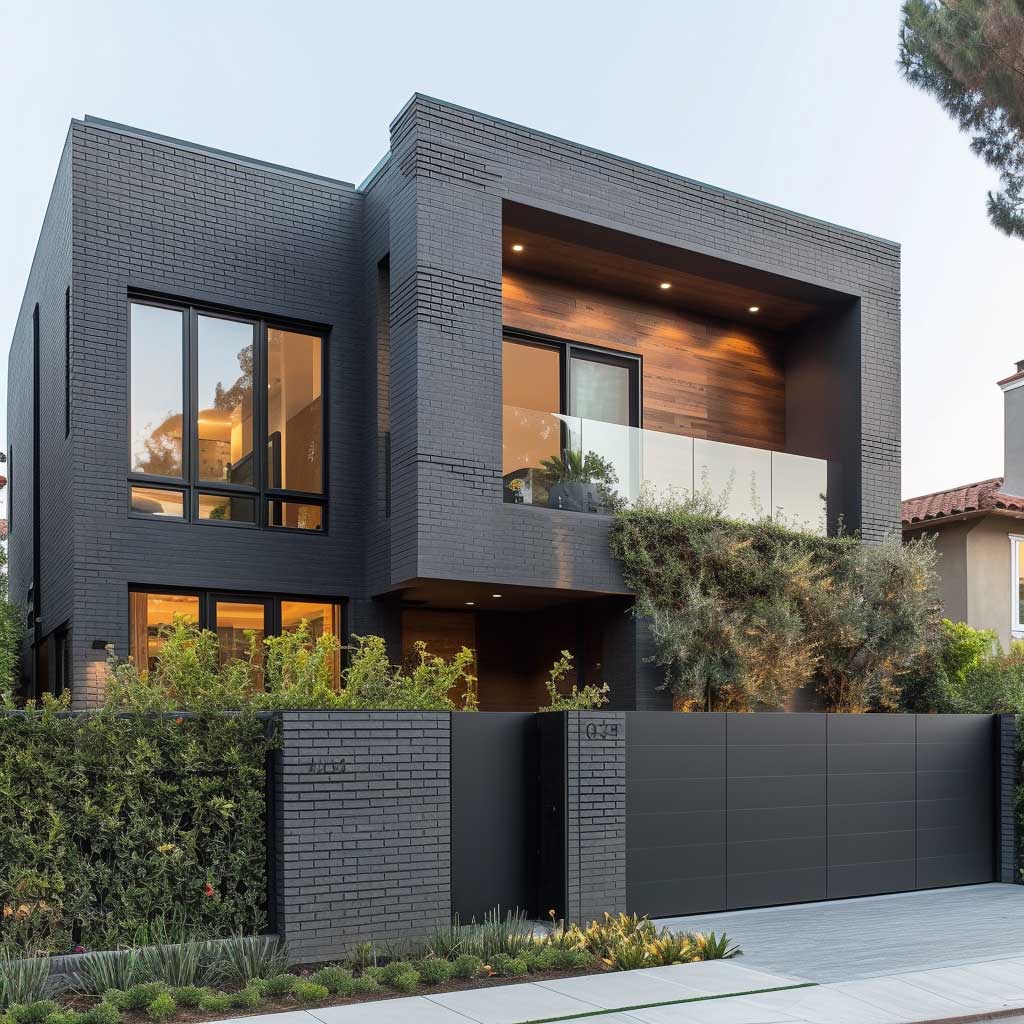


The rule I use for brick fence color is the same one I use for exterior window trim: match the fence brick to the facade brick within one tone step, or go deliberately darker. A fence that matches the house reads as designed. A fence that’s close but not quite — a slightly warmer or cooler red than the facing brick — reads as a mistake. The deliberate-contrast approach works better for contemporary homes: iron-spot grey or charcoal brick against a white-render facade is a decision, not an accident. You’ll notice it from the kerb and so will everyone else.
Classic red brick is the hardest to match because the production variation in traditional clay bricks is wide. Two batches from the same manufacturer can differ enough to look like different products on the same wall. If you’re building a fence to complement an existing red-brick house, take a sample brick from the house to the brick supplier — don’t rely on the name on a catalog page. Belden Brick’s Autumn Blend and Glen-Gery’s Colonial Red are both named ‘red’ and they’re not the same color in sunlight by any measure.
Pale cream and white bricks photograph beautifully and age badly in wet climates. Efflorescence — the white salt bloom that migrates to the surface as water moves through the masonry — is almost invisible on white brick and very visible on red or grey. That’s a genuine advantage. The trade-off is that organic staining from iron in the soil, mold, and algae shows clearly on pale bricks. If your property has mature trees over the fence line, pale cream brick will be grey-green within five years without annual cleaning. Exterior brick wall design choices follow the same logic — what reads well in a render doesn’t always hold up in a northern-facing garden.

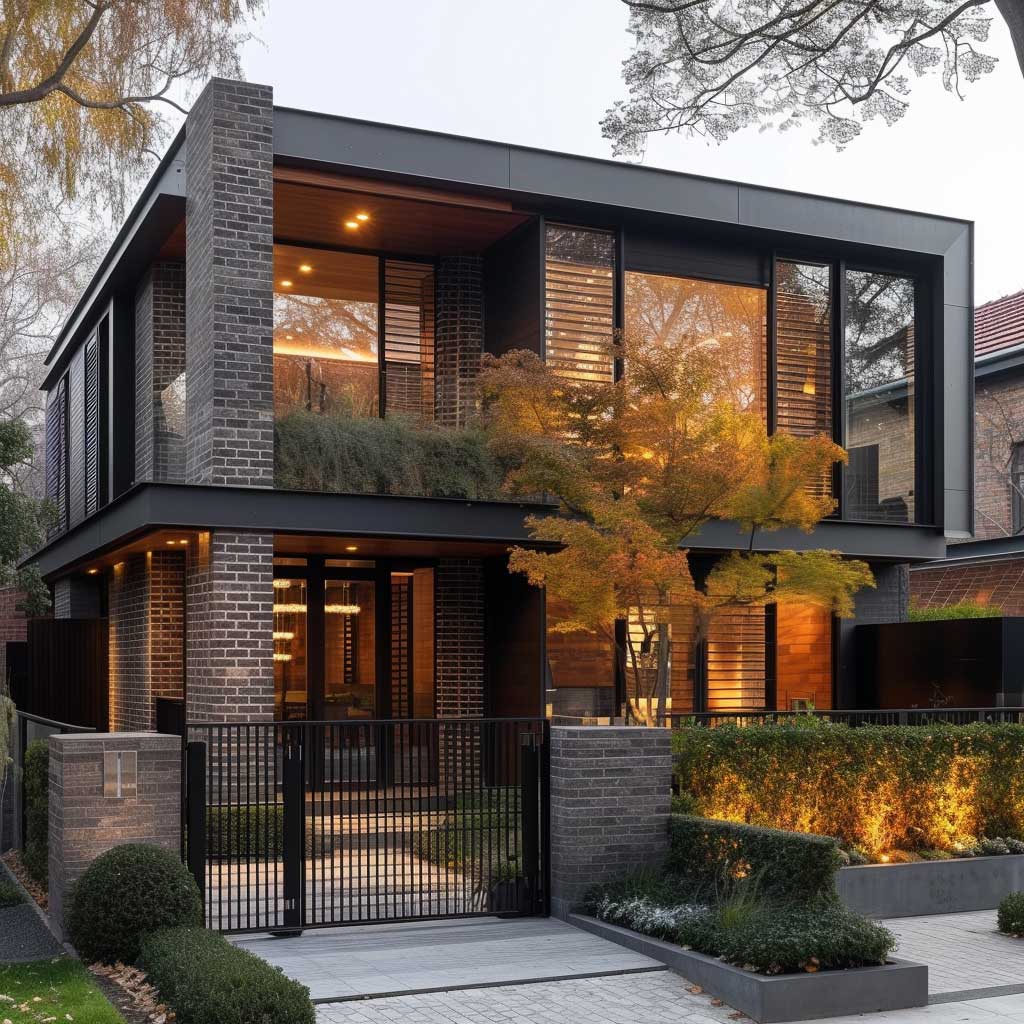


Reclaimed brick is the exception to most of these color-matching rules. The variation in a reclaimed brick — fade marks, mortar residue, soft face weathering — is so pronounced that a fence built from salvaged material reads as intentionally aged regardless of what the house facade does. I own two salvaged brick samples from a 1920s Sydney terrace demolition; they’d look correct next to a contemporary all-glass house. The material carries its own context. Reclaimed brick sourced from local demolition yards typically costs $350–$600 per thousand, versus $200–$400 per thousand for new production brick, but you spend significantly less on the labor of making varied colors look intentional.
Mortar color is the quiet variable that changes how a brick color reads at distance. White mortar with red brick makes the fence lighter and more traditional — the classic English street effect. Dark grey or charcoal mortar with the same red brick reads heavier, more contemporary, and makes individual bricks read crisply. You’ll notice the difference from 15 feet away. On a modern brick fence design with pale or grey bricks, I almost always specify a mid-grey mortar — it keeps the whole assembly from going flat. Front garden brick wall designs benefit most when mortar color is treated as a design decision, not a leftover choice after the brick is picked.
| Brick Type | Best Climate | Approx. Cost / 1,000 | Aging Behavior | Best Paired With |
|---|---|---|---|---|
| Classic red clay | Any | $200–$400 | Darkens slightly; efflorescence on new builds | Wrought iron, timber |
| Iron-spot grey | Any | $280–$480 | Very stable; hides staining well | Corten steel, black metal |
| Pale cream / white | Dry climates | $260–$440 | Algae/mold visible in shade or wet | Charcoal steel, glass |
| Charcoal / black | Any | $320–$550 | Very stable; efflorescence shows white | White render, pale timber |
| Reclaimed brick | Any | $350–$600 | Already aged; very stable appearance | Any material; self-sufficient aesthetic |
Brick Fence Height and Foundation Are the Two Things Nobody Budgets Correctly
Brick fence height for a front yard is a local zoning question before it’s a design question. Most residential front fence regulations cap solid masonry fences at 3 feet (900mm) without a permit; side and rear boundaries typically allow up to 6 feet (1800mm). Build at the wrong height and you’re either demolishing and rebuilding or applying for a retrospective permit — I’ve watched both happen. Pull the local code before your mason quotes.
The foundation is where brick fences fail, and it’s almost never visible when they fail. A concrete footing below the frost line — typically 12–18 inches deeper than the surface in cold climates, shallower in frost-free zones — prevents the fence from heaving, cracking, and leaning over a 5–10 year cycle. Most brick fence quotes that look cheap are cutting here: a compacted gravel base instead of a proper concrete footing with rebar. You’ll save $800 upfront and spend $3,000 in crack repairs within a decade. Concrete footings for a residential brick fence cost $75–$125 per cubic yard poured; for a 60-foot front fence run, that’s typically 1.5–2 cubic yards — a $150–$250 line item that is not optional.
Capping is the other structural detail that doubles as a design decision. A flat brick cap sheds rain poorly and is the first thing to crack in freeze-thaw. A pitched stone cap — bluestone, granite, or precast concrete — moves water off the top of the fence and adds a clean finish line. Precast concrete caps in a chamfered profile run $5–$12 per linear foot. Natural bluestone caps cost $15–$30 per linear foot but their longevity is effectively permanent. That’s a reasonable premium for a fence you’re building once. The full cost breakdown for brick wall construction shows that capping and footing together represent about 20% of total project cost on a standard residential fence — cutting both is where the quality problems concentrate.
Drainage weep holes in the base course are unglamorous and important. Without them, water that infiltrates the fence body from above has nowhere to go except into the mortar joints from the inside, which accelerates deterioration faster than surface weathering. One 10mm weep hole per meter of run at the base course level is the standard, and most homeowners never notice them. Their absence is noticeable within 8–10 years when the mortar starts spalling from moisture pressure.
Worth Bookmarking
Modern Brick Fence Design Comes Down to Three Decisions Made Before the Mason Arrives
Pattern, material pairing, and mortar joint profile are all fixed choices — you can’t change them once the wall goes up. Color is the most visible decision but the least consequential; a beautiful herringbone fence in the wrong-height brick with raked joints in a wet climate will disappoint regardless of color.
Get samples on-site. Have your mason dry-lay one meter of your chosen pattern before the first bag of mortar opens. And budget the footing properly — it’s invisible forever and determines whether the fence still looks right in 2035.
Save this post before you meet with your landscaper or mason — having the vocabulary makes the conversation faster and the result better.