Living room interior wall stone cladding is one of those moves that photographs like a five-star hotel and costs a fraction of what people assume. I’ve watched homeowners blow $4,000 on the wrong slab size, end up with a wall that looks like a fireplace surround at a chain steakhouse, and spend another $1,500 fixing it. The material isn’t the problem. The pattern, the proportion, and the lighting placement — that’s what separates a room that reads editorial from one that reads renovation project.
Natural stone pulls something no wallpaper or paint finish can replicate: weight. Visual weight. You feel it the moment you walk in, the way you feel a cathedral ceiling before you consciously register how high it is. What follows are real rooms that got it right — and exactly why each one works.
🪨 Stone type matters more than color — split-face ledgestone adds depth; flat-cut slabs read modern
💡 Lighting angle changes everything — graze the wall from above, not straight-on
🛋️ Contrast your furniture — rough stone needs smooth upholstery, not more texture
📐 One wall, not four — full-room stone cladding kills a living room’s scale
💰 Budget reality — Norstone stacked panels run $12–$18/sq ft installed; loose ledgestone starts around $6/sq ft
Refined Stone Wall Cladding Changes a Living Room Before You Add a Single Piece of Furniture
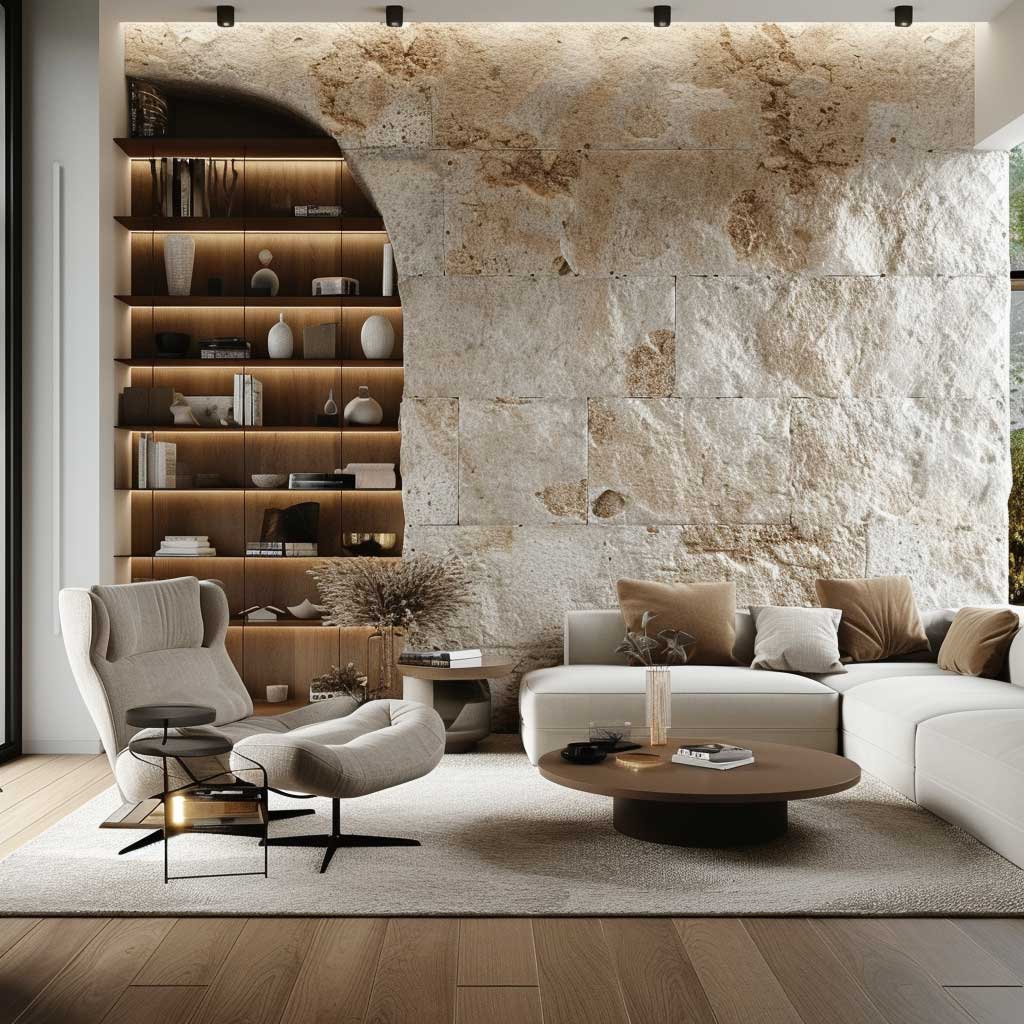
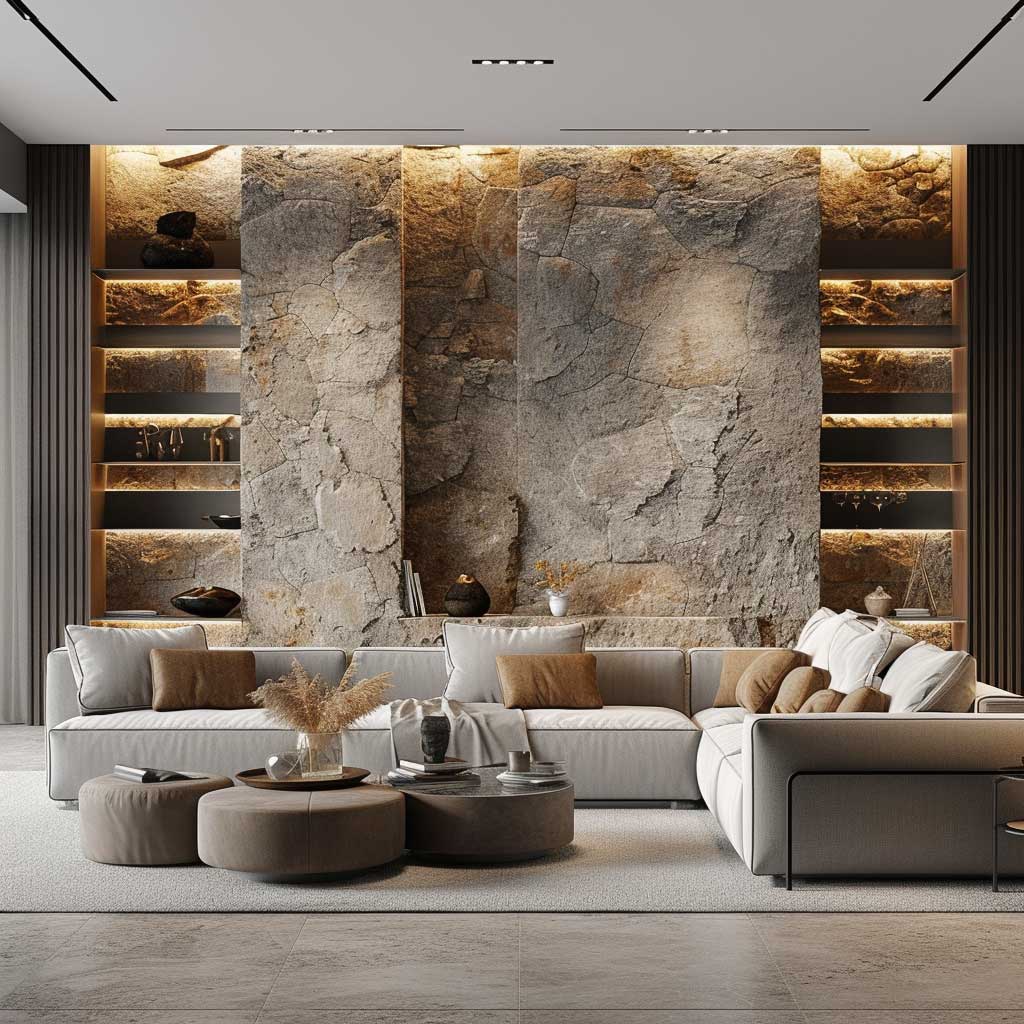
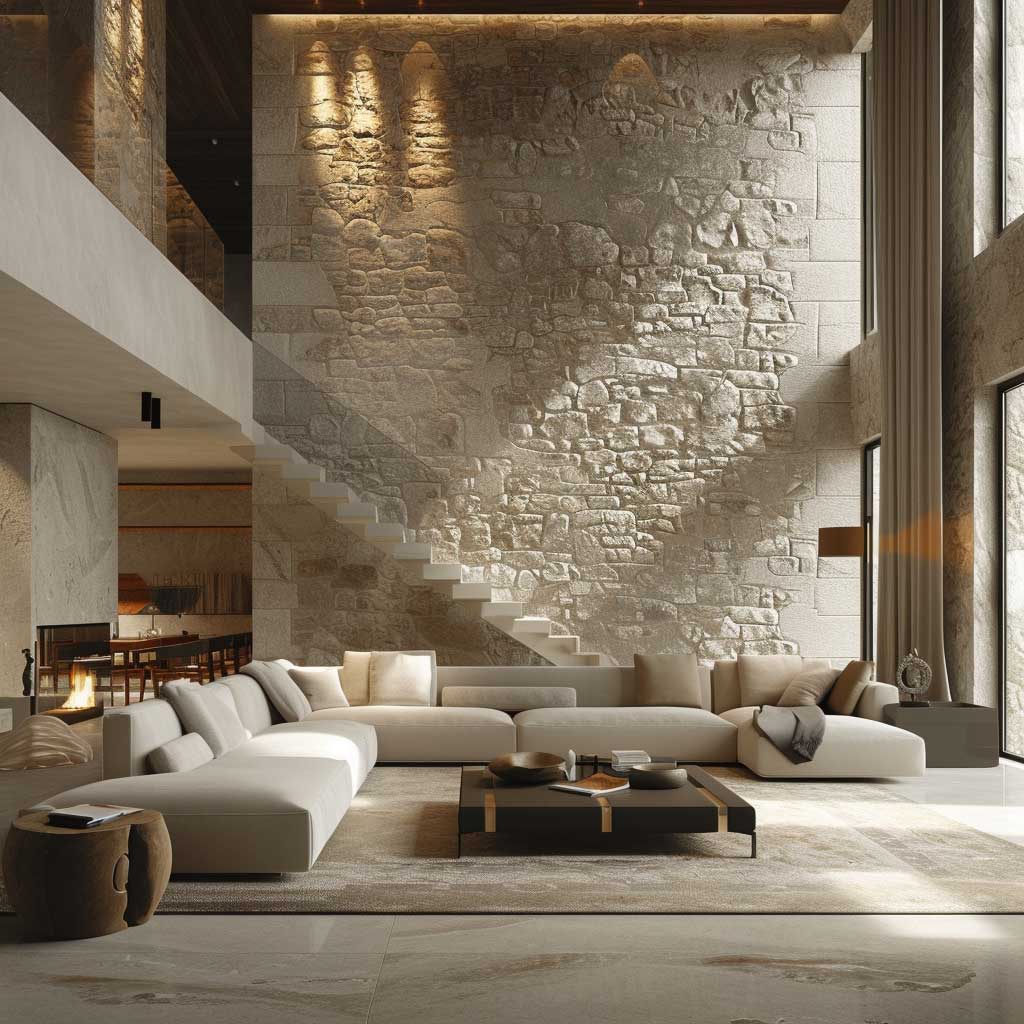
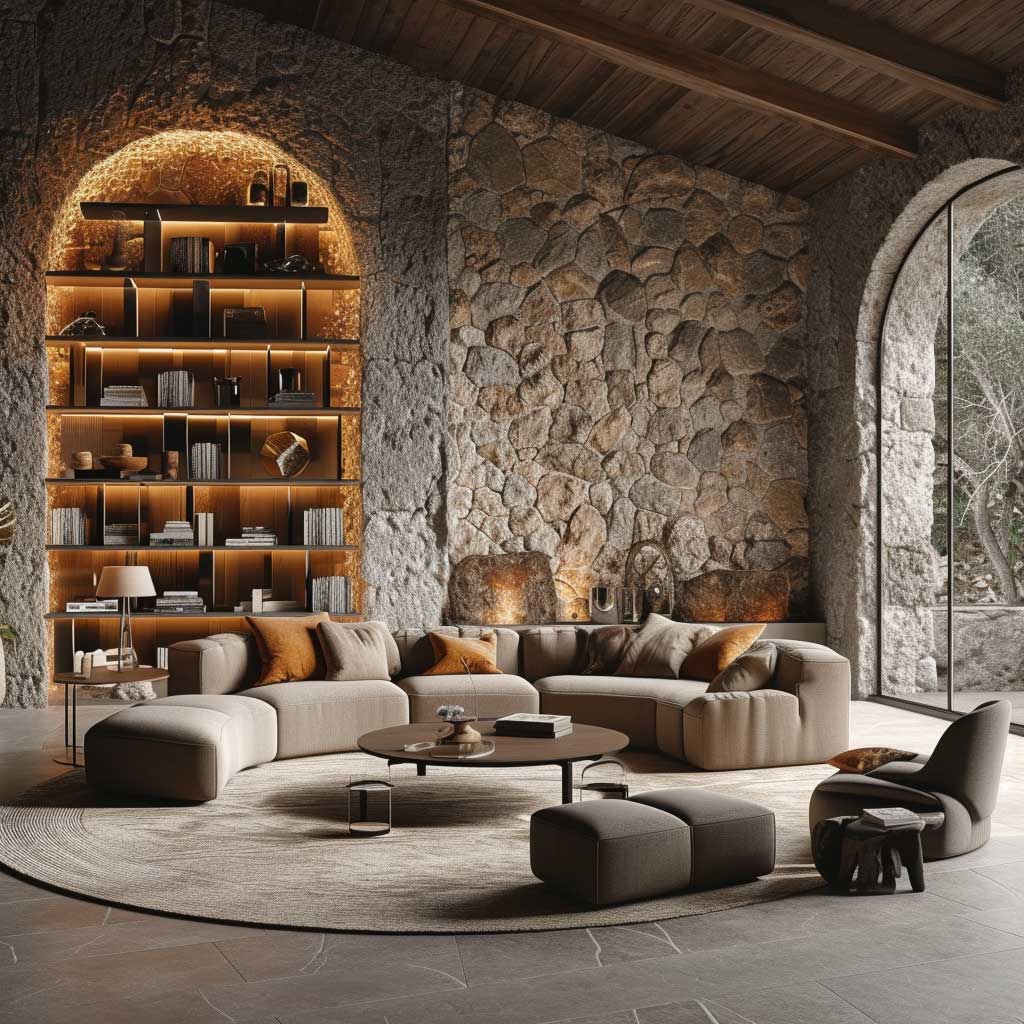
The rooms in this section all use what installers call a staggered horizontal lay — rectangular stones offset like brickwork but with irregular heights. It’s the pattern I’d choose every time over a running bond for interior residential walls. Running bond is fine on exteriors; inside, it starts to feel like a garden retaining wall. Staggered horizontal keeps the movement without the contractor-yard energy.
Notice the color family in each shot: the stones sit in the warm ochre-to-grey range, never veering into the cool blue-grey palette that dominates cheaper panels. Warm stone pulls the room inward in the way a cashmere throw does — it makes the space feel deliberate. Cold grey stone, meanwhile, fights with most sofa fabrics and reads clinical under anything less than perfect lighting.
I tested this theory the hard way. My first stone wall used a slate-grey split-face panel I bought on sale from a tile clearance warehouse. $4.20 per square foot — genuinely a bargain. The room looked like a corporate lobby. The pieces here use tones closer to Norstone’s Ochre Blend or the warm sandstone colourways from this breakdown of stone accents in modern home interiors, and the difference is not subtle.
Furniture pairing in these rooms follows one consistent logic: the rougher and more textured the stone, the smoother and simpler the upholstery. Plush velvet sofas, leather sectionals, linen cushions in single-colour covers. Stack texture on texture — stone plus bouclé plus chunky knit — and you get a room that looks like a Pinterest board made by someone who has never lived in one.
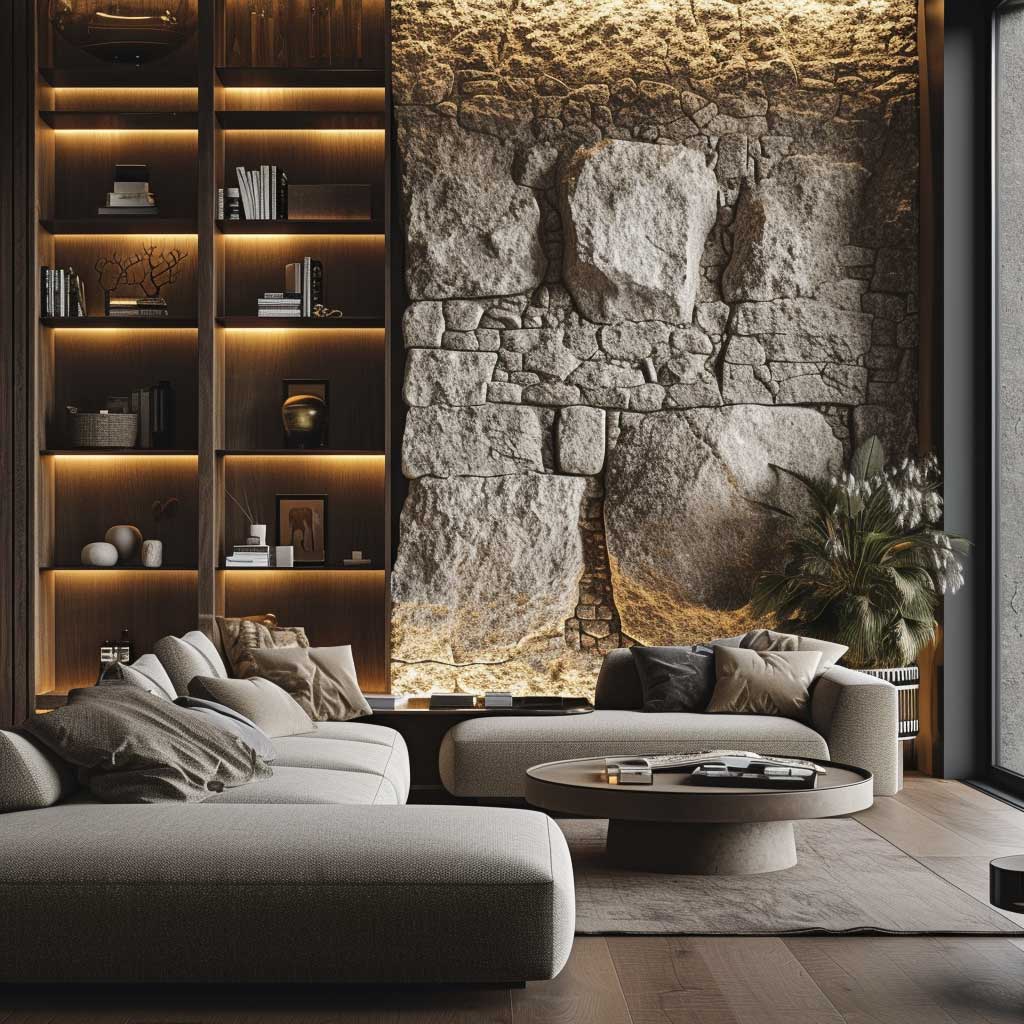
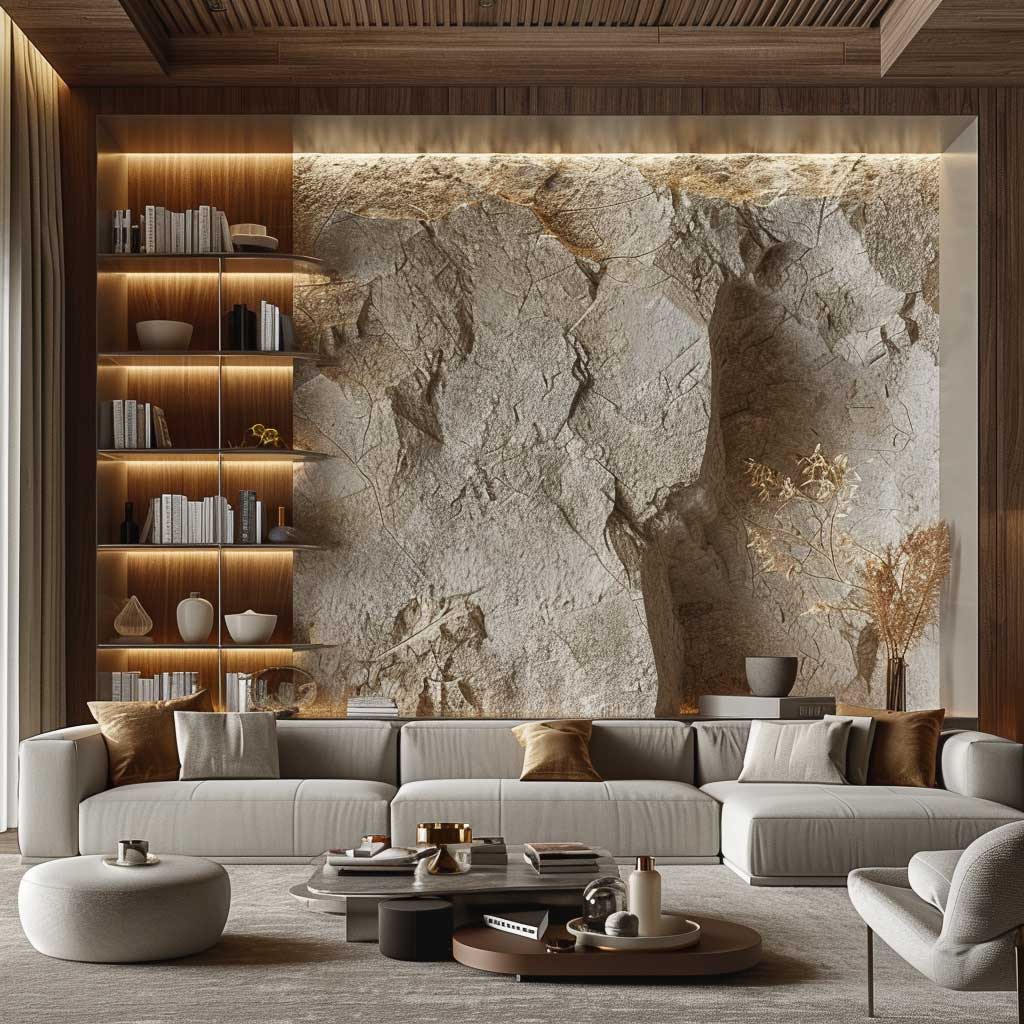
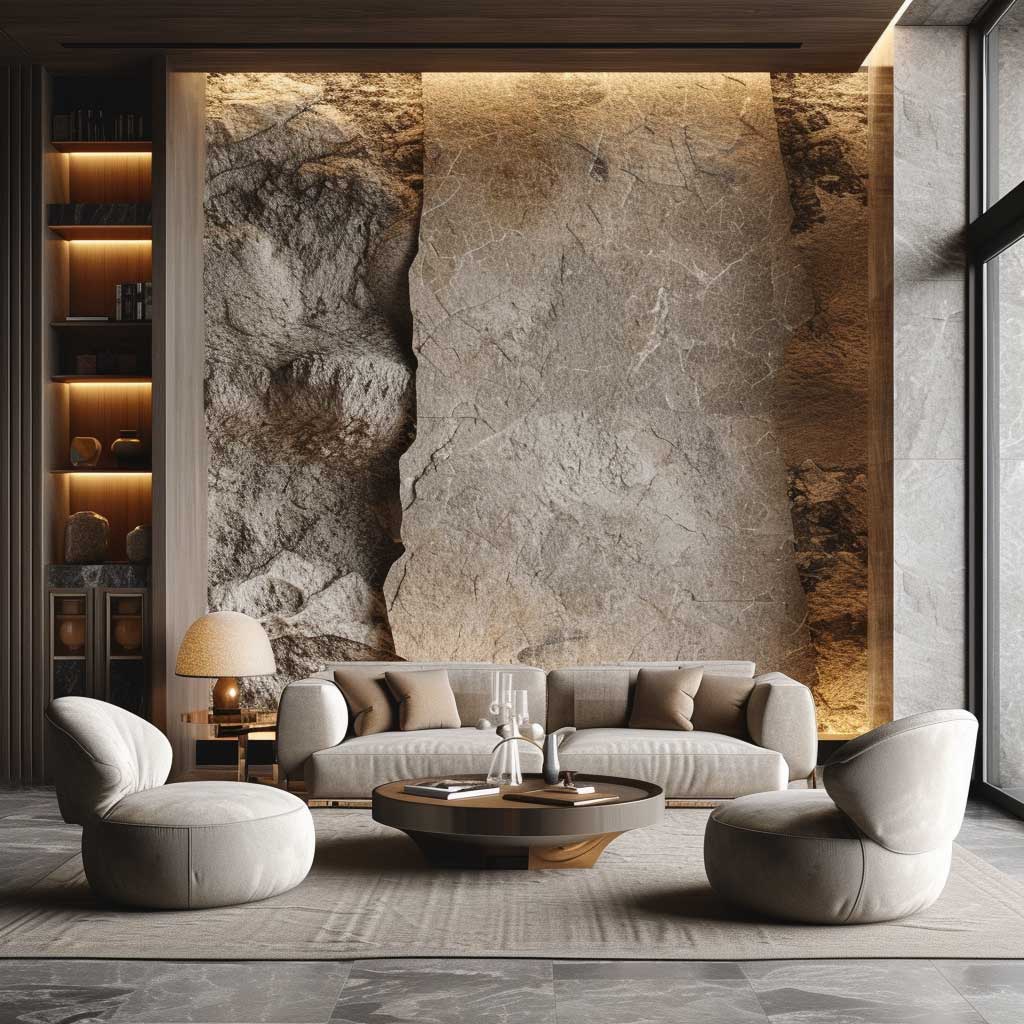
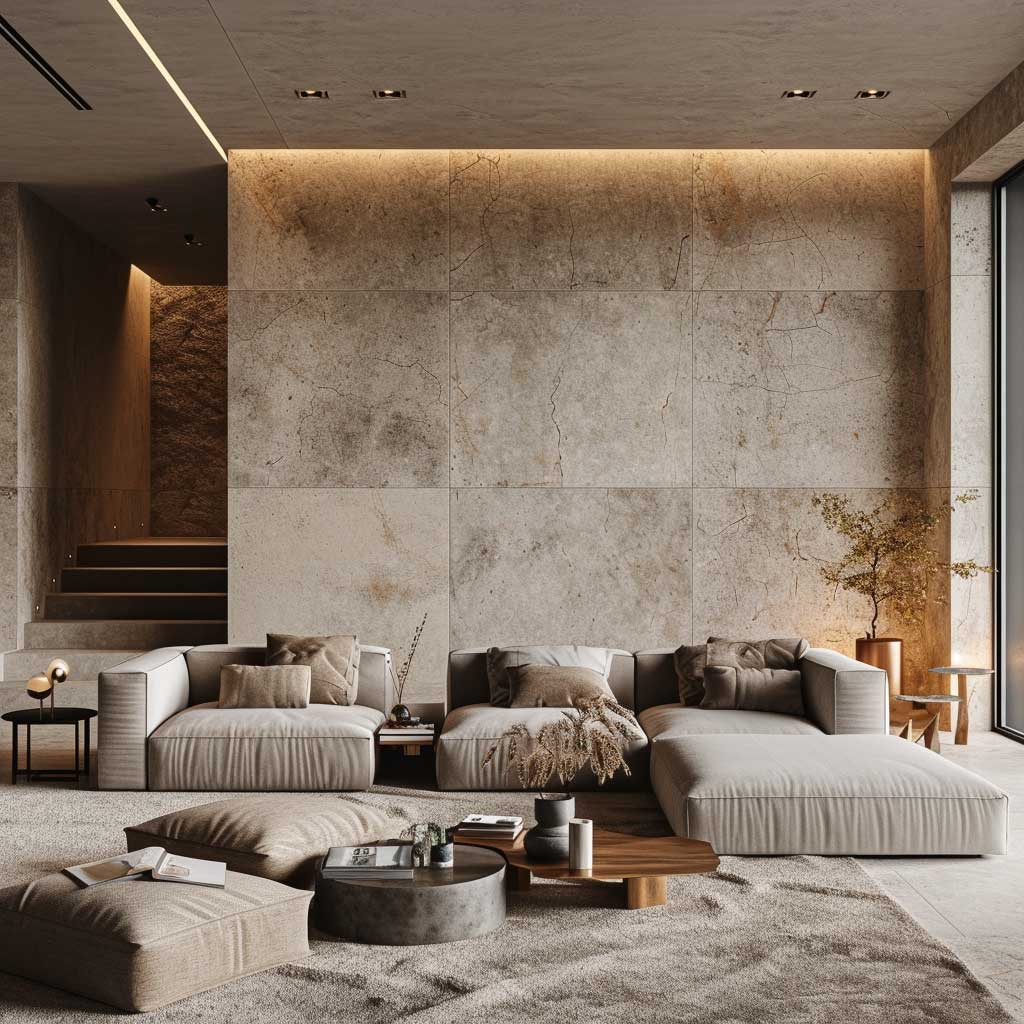
Lighting in every room here is indirect and grazing, meaning the light source comes from above and angles down across the surface of the stone rather than projecting straight at it. Grazing light catches the relief of each stone edge and creates micro-shadows that make the texture pop. Flat frontal lighting — a common mistake — flattens those same textures and makes premium split-face stone look like printed wallpaper. You need at least 40 watts of warm LED strip or adjustable wall sconces positioned 6–8 inches from the wall surface.
Durability in practice: I’ve had living room stone cladding in two homes over eight years. Total maintenance — one re-seal with Miracle Sealants 511 Impregnator ($28 at most tile suppliers) after year three. That’s it. Dust with a dry cloth, skip the water sprays, and the surface looks identical to install day.
Modern Living Room Wall Tiles in Stone Do One Thing Paint Never Can
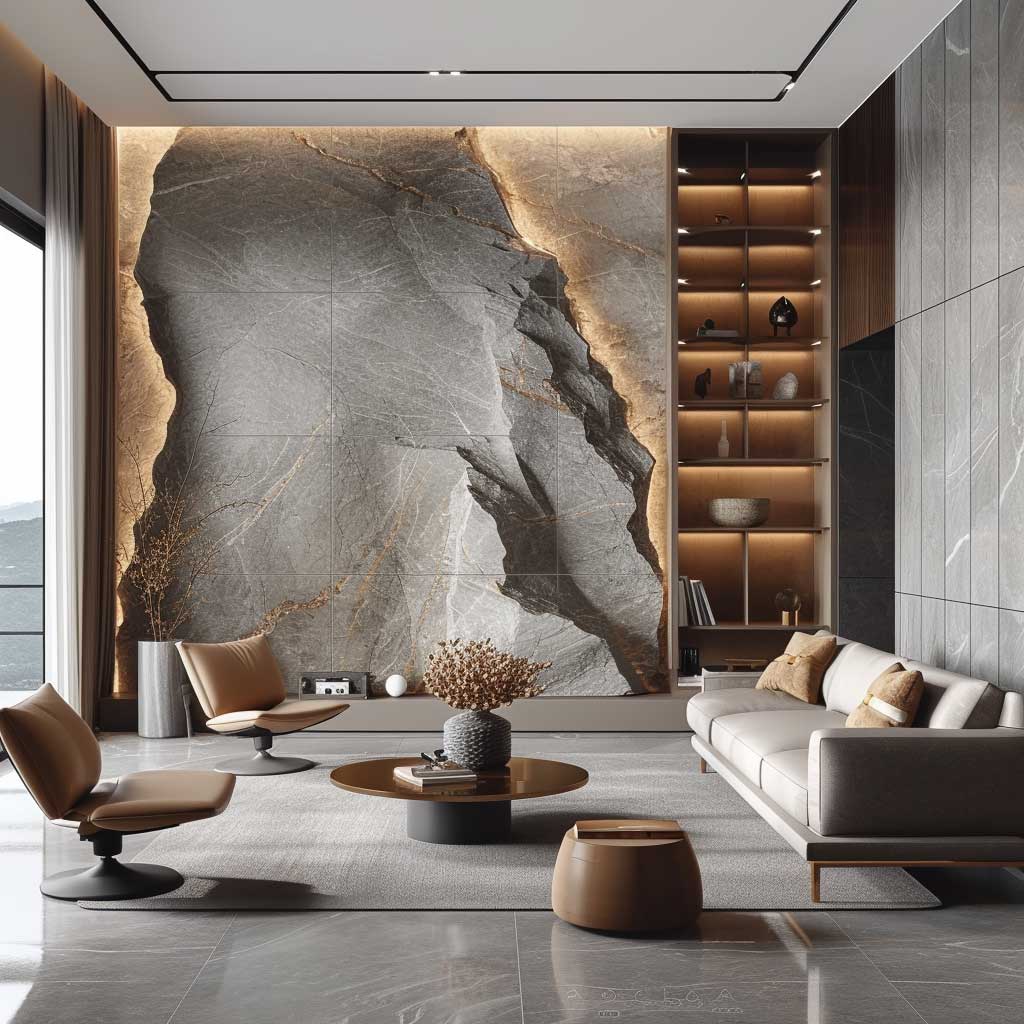
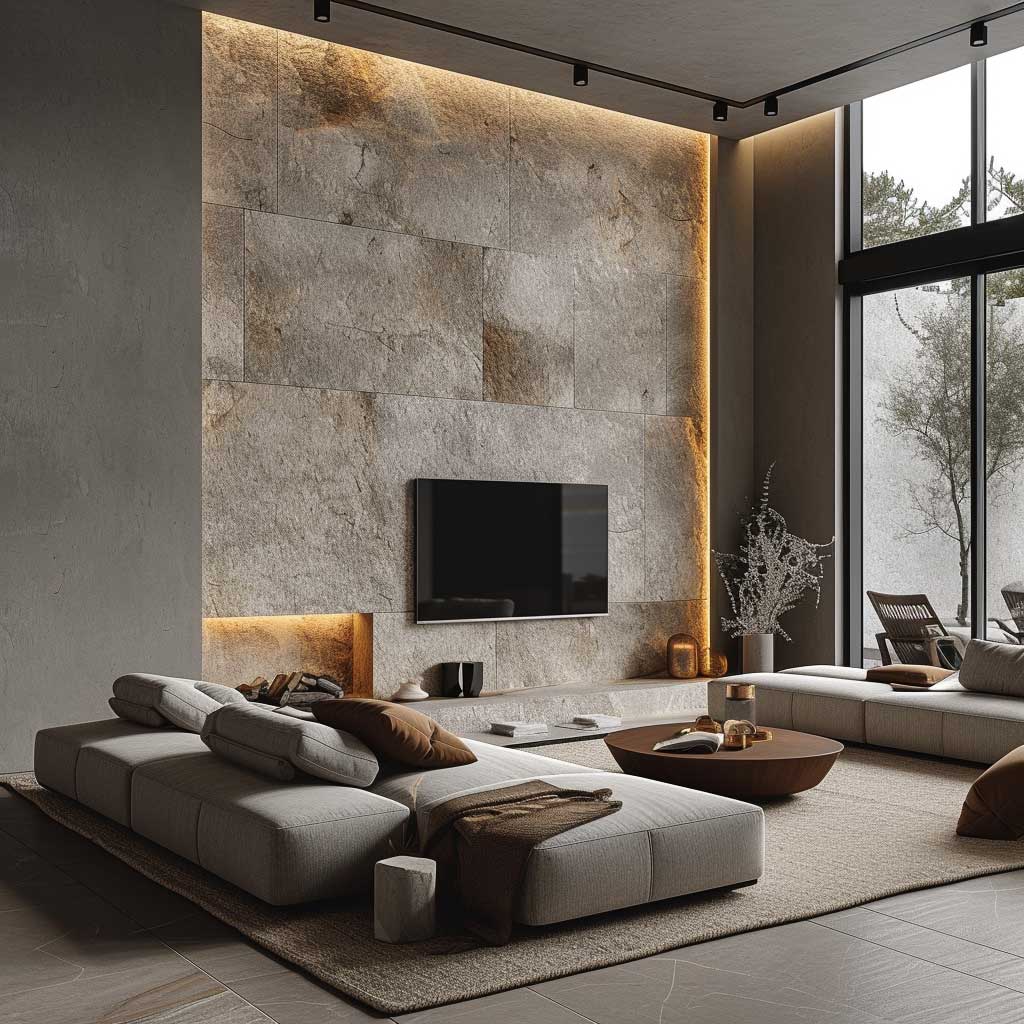
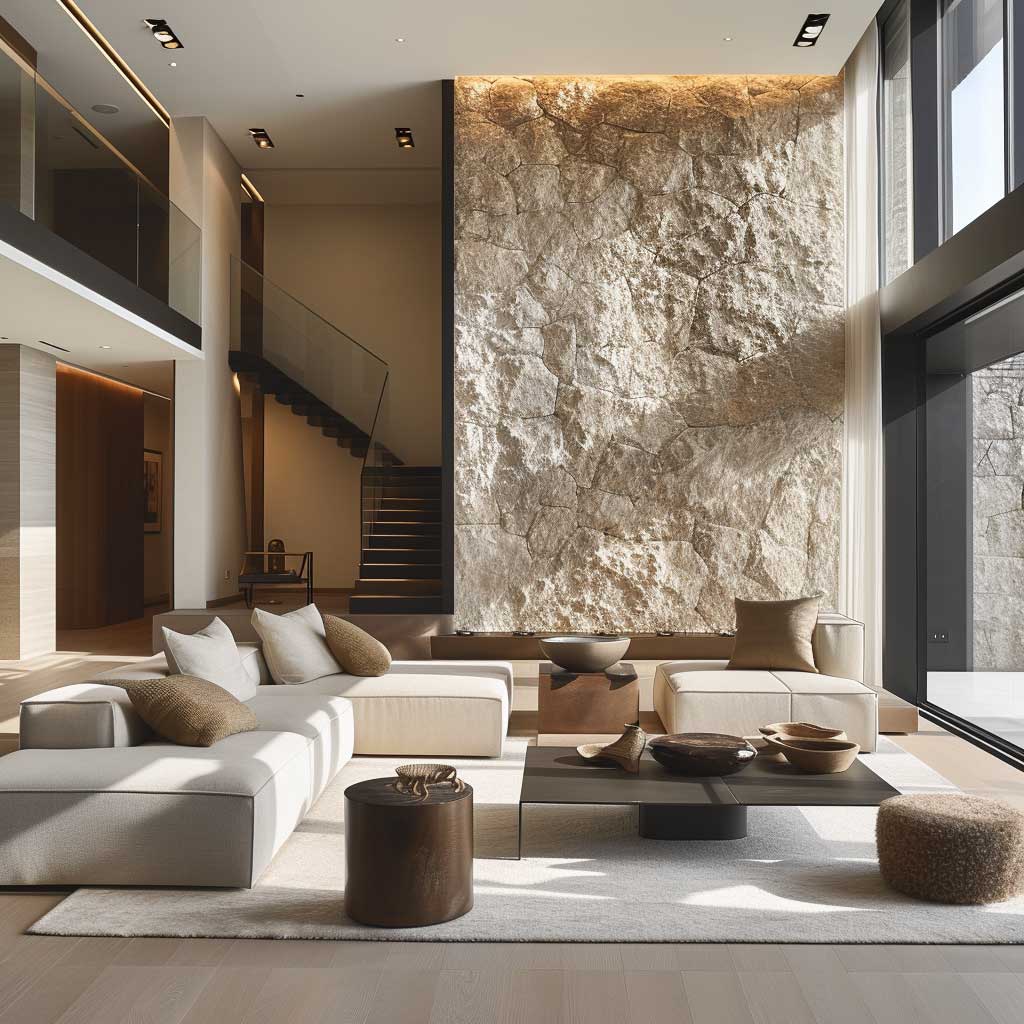

Paint covers a wall. Stone defines it. That’s not a poetic distinction — it changes how every other surface in the room behaves. A stone feature wall in a contemporary living room acts like a fixed point around which everything else orbits: the sofa angle, the coffee table choice, the artwork position. You’ll notice that rooms without a strong anchor surface tend to drift — furniture arrangements feel temporary, like the owners are still deciding.
For modern living room wall tile designs in stone, the format I see working consistently is large-format linear cladding. Norstone’s PLANC system, for instance, uses 31.5-inch lengths that run horizontally across the wall in a way that reads almost like natural wood grain — but with the visual weight of stone. The Surface Shop offers a similar STRATA format starting around $14/sq ft. Avoid panels cut to 12×12 inch squares; they turn a feature wall into a fireplace showroom sample board.
Stone’s acoustic effect is one nobody mentions until they’ve lived with it. I moved into a house with a full-height stone wall in the open-plan living area and the room was noticeably quieter than any previous apartment. Stone absorbs mid-range frequencies, which means ambient noise — conversation, TV, street sound bleed — all drops to a more comfortable baseline. You’re essentially getting acoustic treatment with your design choice. Try getting that from a paint job.
Don’t clad all four walls. I’ve seen it twice, both times in homes trying to replicate cave-lodge resort aesthetics. It never lands. The room shrinks visually, the ceiling drops, and the furniture looks like it’s been swallowed. One wall — full height, floor to ceiling — is the correct move. Everything else is a contractor upsell you don’t need.
Don’t skip the pre-sealer on porous stone. Limestone and some sandstone varieties will absorb the adhesive mortar before it cures properly if you don’t seal the back of the panels first. You’ll get hollow spots and eventual delamination. Ask your installer about this specifically — many skip it to save time.
Don’t choose polished marble for a wall cladding application. Polished surfaces at wall height catch every fingerprint, every dust particle, and every reflection in a way that reads chaotic in natural light. Honed or split-face finishes photograph better and live better.
The linear arrangement in these rooms also creates something I think of as the horizon effect — long horizontal lines that visually widen the room rather than pushing the eye upward. In rooms under 14 feet wide, this matters enormously. You can read more on how stone achieves this kind of spatial shift in this piece on stone walls in intimate indoor settings.
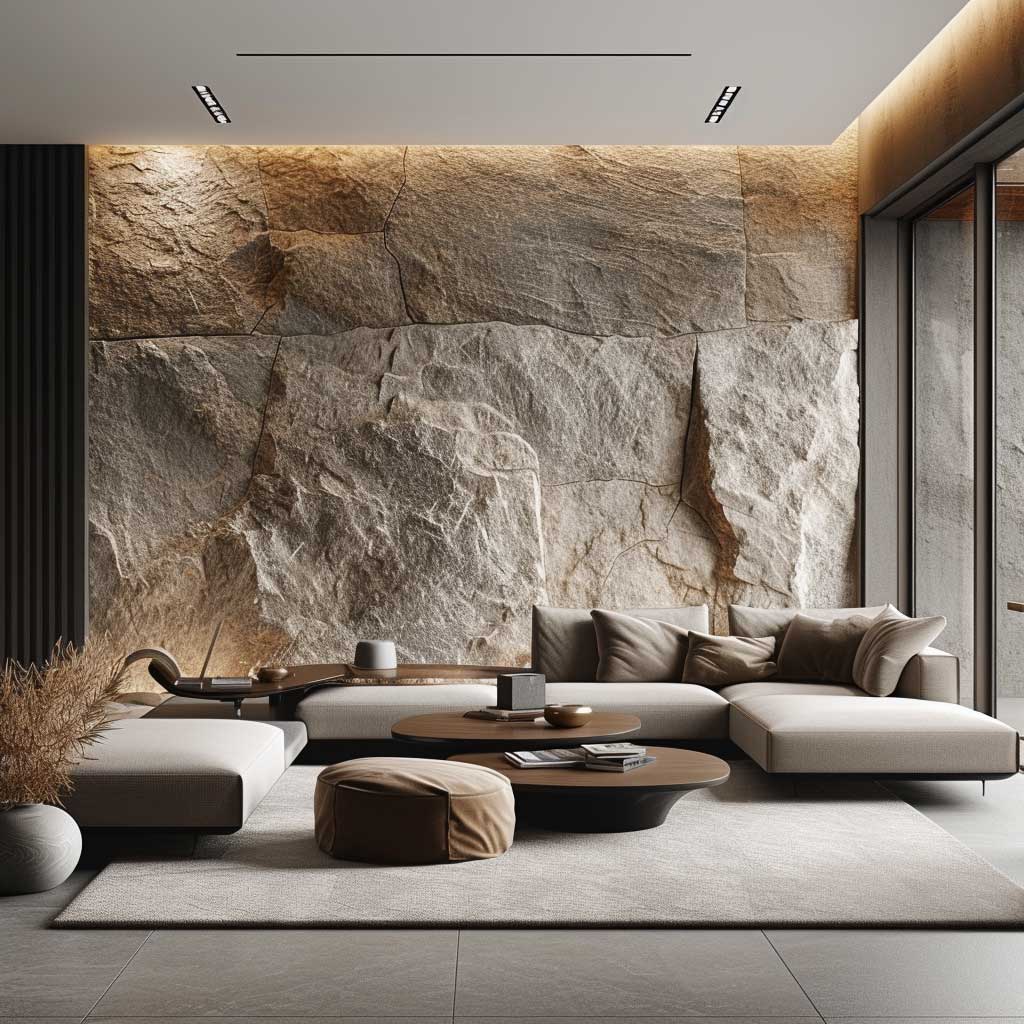
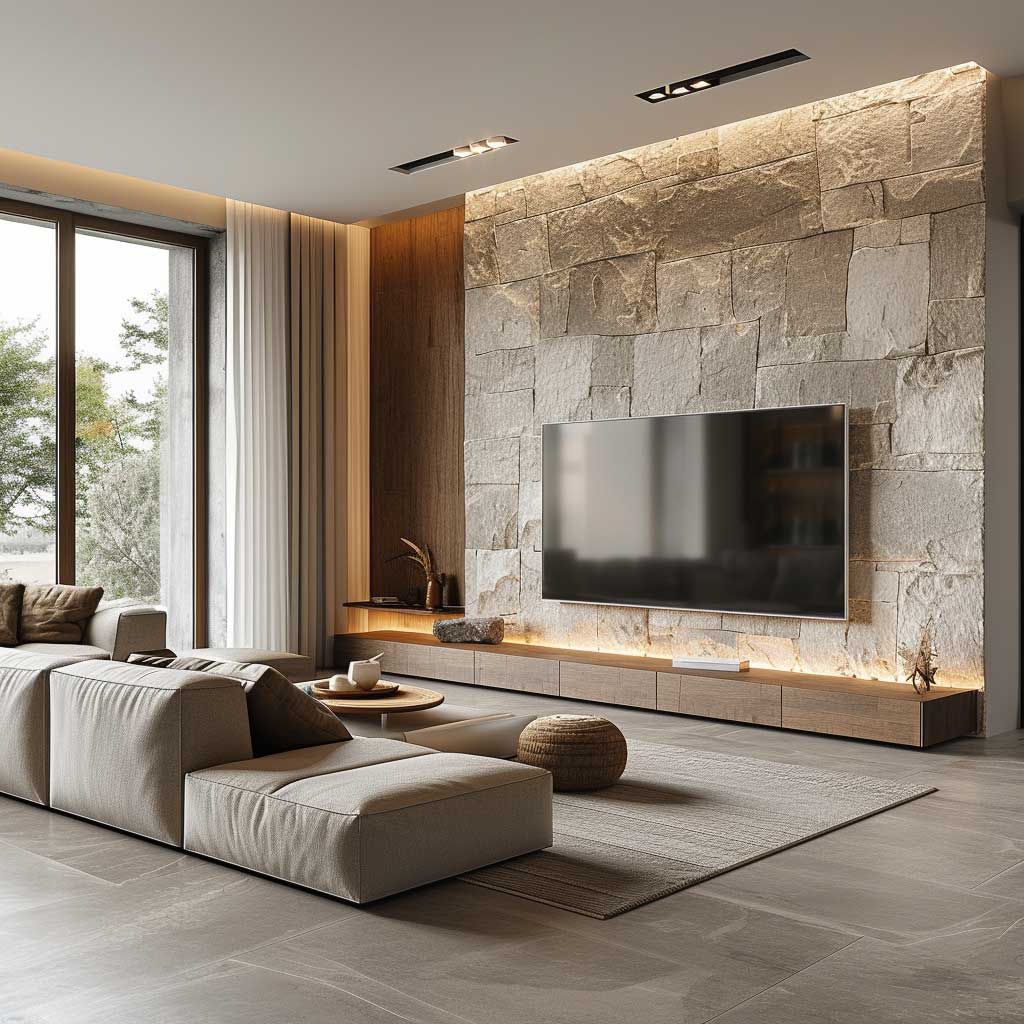
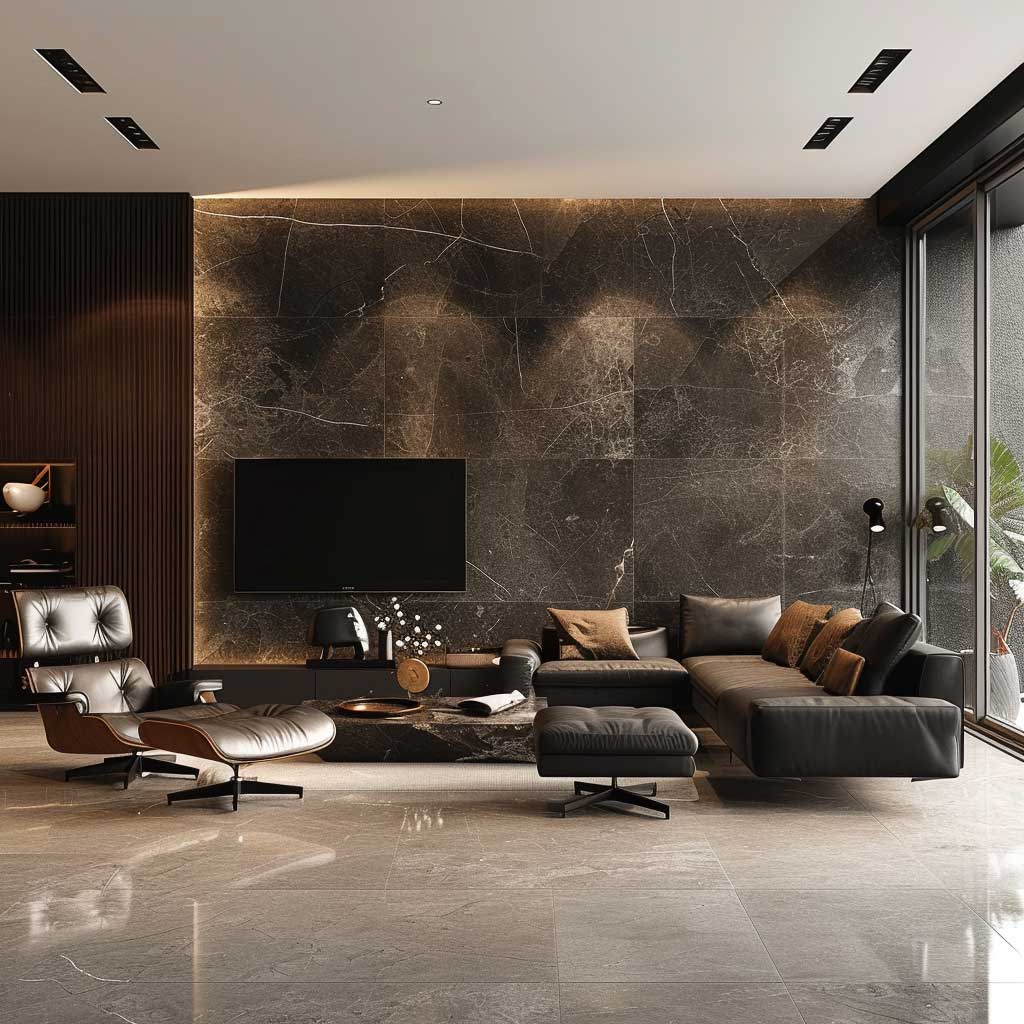
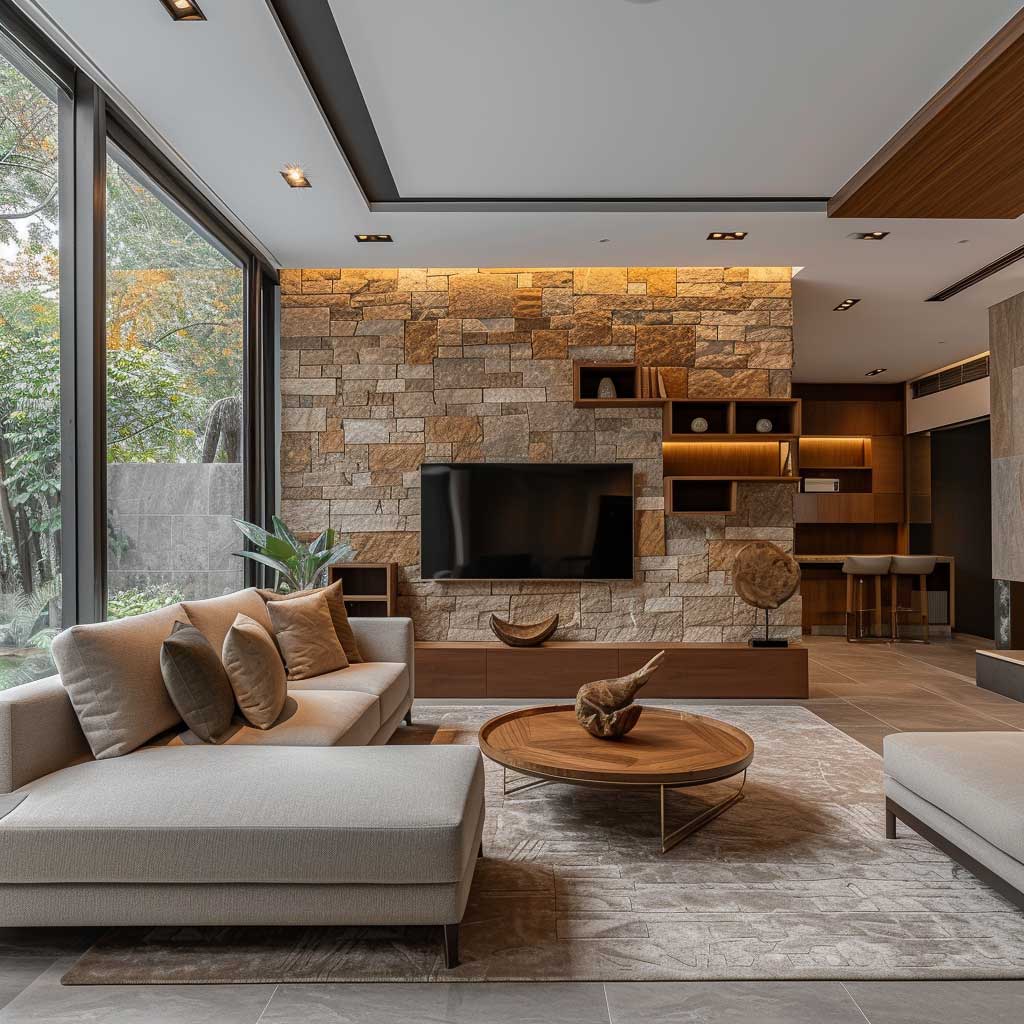
Minimalist furniture is the correct counterpoint to stone in a contemporary room — not because it’s trendy, but because it’s functionally correct. Stone is already doing a lot of visual work. It has color, texture, shadow, depth. Your sofa’s job is to not compete. Clean profiles, flat weaves, single-tone cushions. The moment you introduce a high-contrast pattern or a deep tufted finish in front of a stone wall, you’re running two lead characters in the same scene. One has to yield. Stone never does.
The practical case for stone cladding in modern applications is also about longevity. A high-quality natural stone veneer panel from Norstone USA carries a 25-year manufacturer warranty on the product itself. That’s longer than most kitchen cabinets, longer than most flooring choices, longer than the mortgage term on a starter home. Design choices measured in decades justify a higher upfront cost.
Natural Stone Wall Cladding in Living Rooms Earns Its Price Point Across Twenty Years of Use

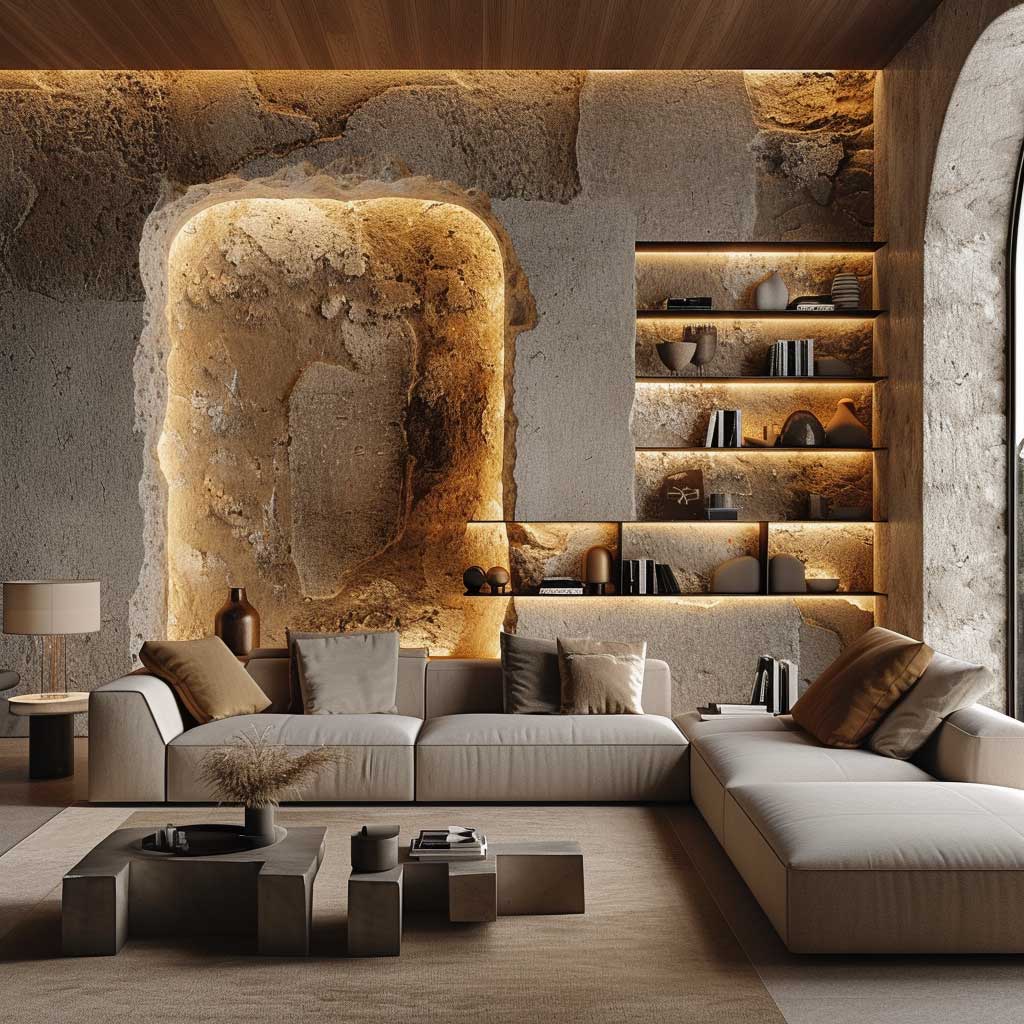
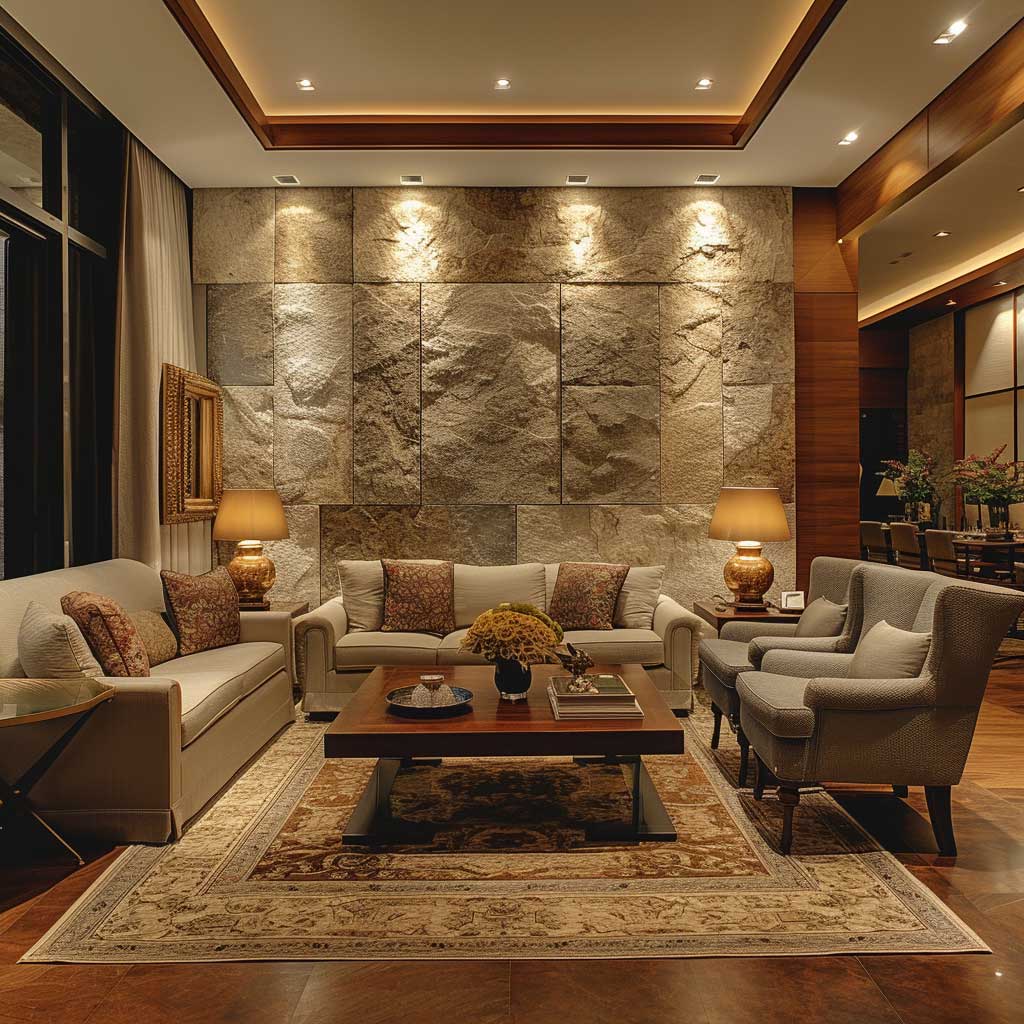
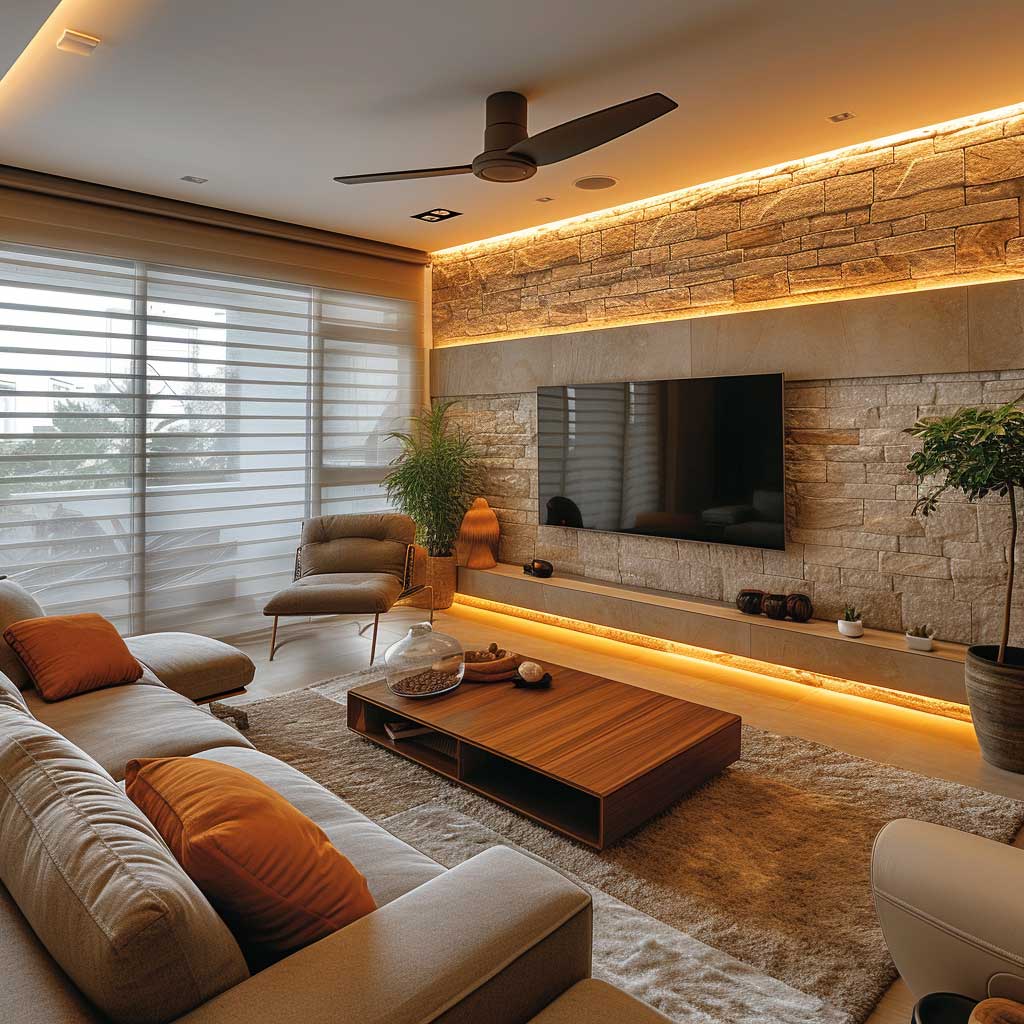
Natural stone wall cladding in a living room is a different proposition from stone tiles on a bathroom floor or kitchen backsplash. At wall height, with sofa-level sightlines, it’s what you look at for most of your waking hours at home. The rooms in this section use materials in the limestone and sandstone family — warmer, more porous, more organic than the polished marbles that dominate hotel lobbies. I own two walls like this. The colour hasn’t shifted in six years, and the texture still catches afternoon light the same way it did on installation day.
Uniqueness is the underrated selling point. No two slabs of natural stone are identical. What does that mean in practice? Your living room will never look precisely like anyone else’s. I’ve had guests who have seen the exact same product line at a showroom describe my wall as looking completely different — different hue distribution, different texture depth, different grain direction. That’s the quarry lottery working in your favour.
What’s the correct pairing for warm-toned natural stone? My go-to is dark walnut timber shelving, raw brass fixtures, and low-slung furniture in a biscuit or oat linen. Don’t reach for grey. Grey furniture against warm stone creates a temperature conflict that reads unresolved — like a room that can’t decide if it’s modern or rustic. The stone has already decided. Your furnishings should agree with it, not argue.
On the practical end: natural stone cladding provides real thermal mass. In a room that receives morning sun, the stone absorbs heat through the day and releases it slowly through the evening, reducing heating load by a measurable amount in colder months. This isn’t a marketing claim — it’s physics. It also means the wall surface stays cool to the touch in summer, which is a small daily pleasure in warmer climates.

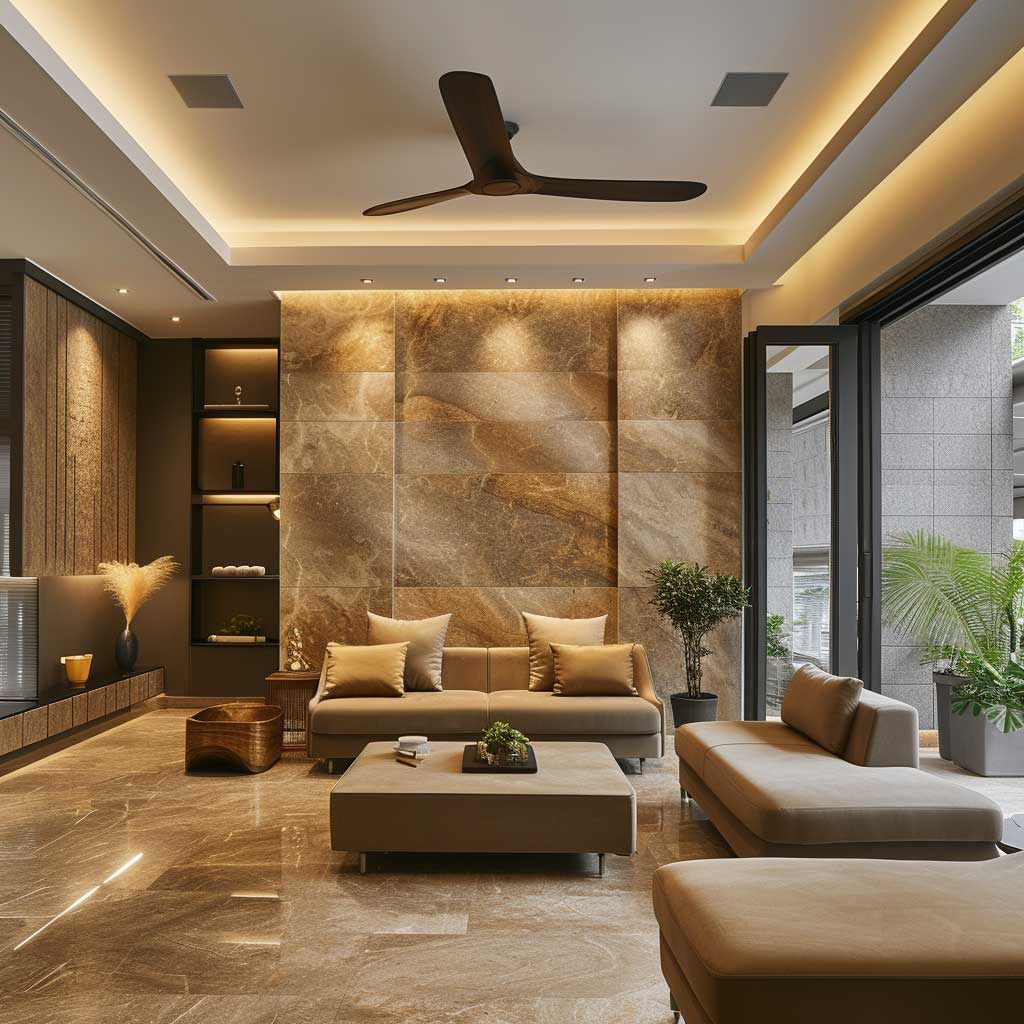
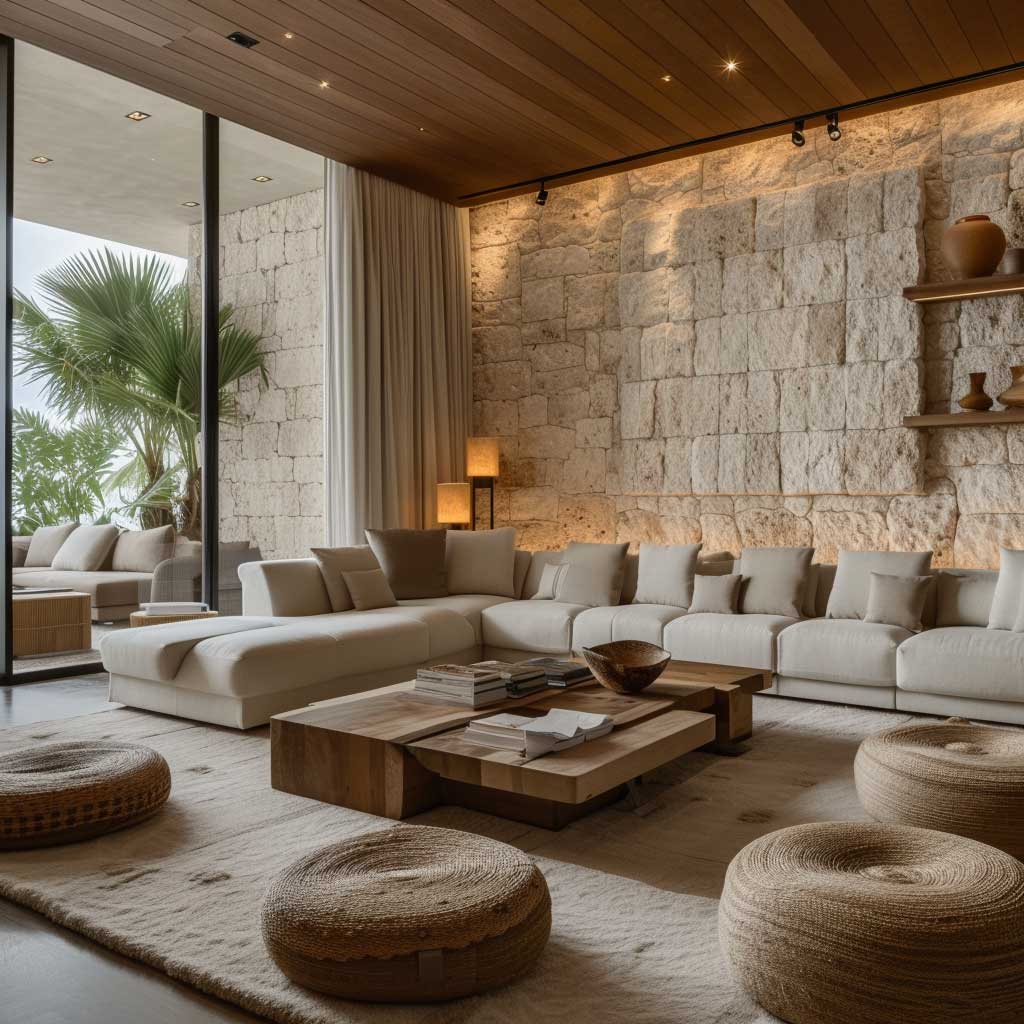
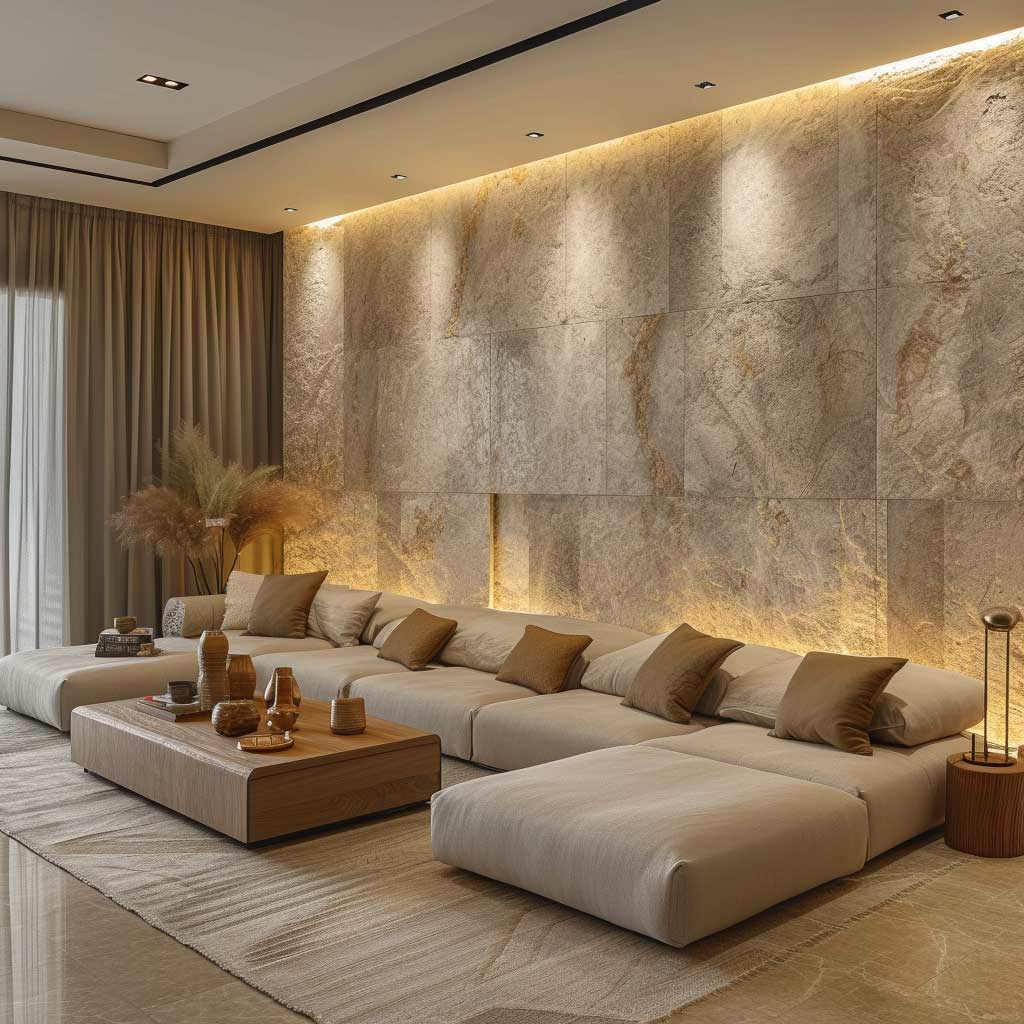
Rustic versus refined comes down to finish, not material. Rough split-face sandstone in an otherwise minimalist room reads refined because of the contrast. That same stone in a room full of reclaimed wood, linen curtains, and antique brass reads rustic. The stone doesn’t change. The room context does. This is why the same material photographs completely differently on different designers’ portfolios — they’re leveraging the same raw input to opposite ends.
One more consideration for living rooms specifically: sound. Natural stone cladding absorbs ambient noise. It’s not dramatic — you’re not building a recording studio — but it reduces the harsh treble bounce you get from flat painted drywall. Conversations across the room feel closer. TV audio doesn’t scatter. It’s the difference between a room that sounds like a box and one that sounds like a room.
The bottom line
Living room interior wall stone cladding pays for itself in the first resale conversation.
Pick warm-toned stone in a split-face or honed finish. Keep it to one wall. Light it from above, not straight-on. Pair it with smooth, single-tone upholstery and dark timber accents.
Skip polished marble at wall height. Skip full-room cladding. Skip cheap grey panels sold by the clearance pallet.
Save this post before your next showroom visit — the pattern and lighting notes alone will save you a costly do-over.