An orange and fuchsia outfit works at the office when one color leads and the other plays support, not when both shout at full volume. Stylists often use the 60-30-10 split: roughly 60% for the dominant shade, 30% for the secondary one and 10% for accents. In practice that means orange trousers or a skirt carry the bulk, fuchsia sits on the top, and a neutral shoe, bag or belt takes the last slice.
Does the pairing really pass in a professional setting? Yes, in creative and business-casual offices, provided the cuts stay tailored and the accessories stay quiet. Both hues sit close together on a 12-part color wheel, only about three steps apart, so they read as related rather than clashing. The three pairings below cover trousers, a pencil skirt and culottes, with 4 reference looks for each one.
- Split color roughly 60-30-10: dominant orange, secondary fuchsia, about 10% neutral accents.
- Orange and fuchsia sit about three hues apart on a 12-part wheel, so they blend more than complementary pairs.
- Trousers vs pencil skirt: trousers suit 8-hour active days, the skirt suits meetings and client events.
- Culottes are the warm-weather pick; a neutral blazer turns the sleeveless top into meeting wear.
- Opaque tights start around 60 denier; 40 denier is semi-sheer and lighter for autumn.
- Gold jewelry and black, nude or white shoes keep both brights in check.
Fuchsia Wrap Top Meets Orange Pleated Trousers
A fuchsia and orange outfit built on pleated trousers is the easiest entry point, because the trousers take the larger share of color. Orange on the legs covers roughly 60% of the look, while a fuchsia wrap top fills about 30%. Think of it like a sunset photo: the orange band is wide, the pink band sits above it, and nothing else competes. Pick a mid-weight trouser with a front crease so the bright shade still reads as tailoring.
Which top fabric works best? A wrap in jersey or crepe drapes softly against the structured pleats, the classic soft vs sharp contrast that keeps a bold palette from looking costumed. Satin pushes the shine too far for a 9-to-5 setting. Choose a matte finish on the top and the trousers will look intentional.
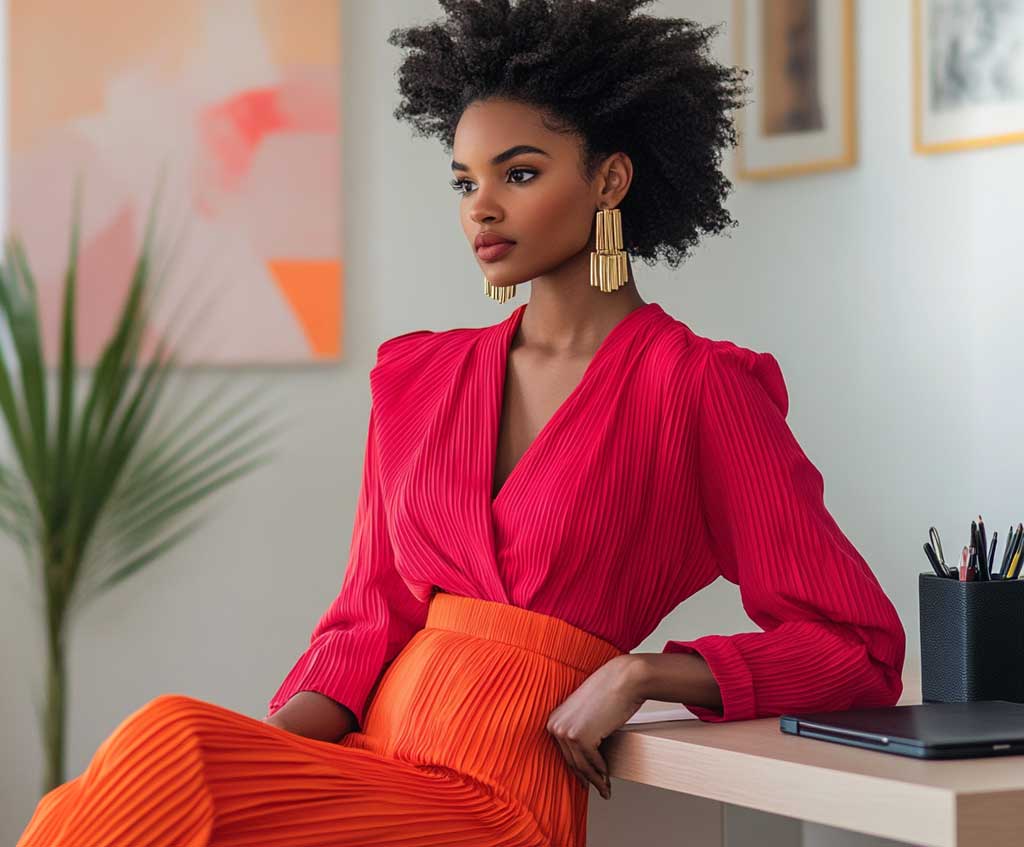


The final 10% belongs to accessories, and this is where most bright outfits go wrong. Gold earrings, a slim watch and a black or cognac leather bag give the eye somewhere calm to rest. A tucked wrap top marks the waist and splits the two colors into clean blocks. Keep your shoe in a single neutral, and the pairing looks deliberate rather than loud.
Pink with orange is a natural follow-up for anyone already comfortable in softer shades; the step from blush to fuchsia is smaller than it looks. For calmer starting points, these preppy pink outfit ideas with pleated skirts and pastel blazers show how pink behaves next to neutrals. In autumn, add a camel coat or grey cardigan over the wrap, since a third bright layer would tip the balance. One neutral outer layer is enough to carry the look into cooler weeks.
The Pencil Skirt Version of an Orange and Fuchsia Outfit
An orange pencil skirt with a fuchsia button-up shirt is the sharper, more formal take on this color pairing. Here the skirt covers less of the body than trousers, so the split shifts closer to 50/50, and the contrast reads stronger. A crisp collar and a skirt at or just below the knee pull it back into office territory. Reserve this version for presentations, networking events and client meetings.
Should the shirt be tucked in? Always, because an untucked shirt over a pencil skirt erases the waist and turns two clean blocks into one blur. A belt in black, tan or nude adds a thin neutral line between the colors, like the grout between two bright tiles. Pointed-toe pumps in black or nude finish the line from hip to floor.


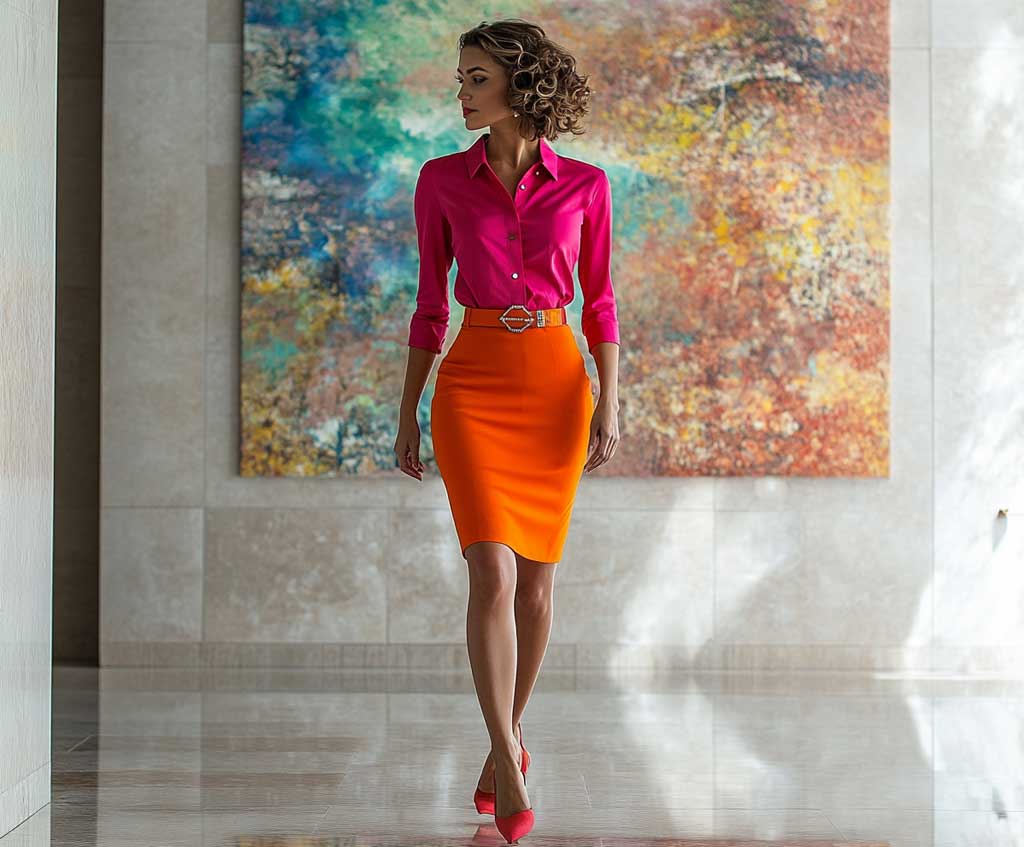
Cold months need legwear, and denier decides how the skirt looks. Hosiery makers describe 40 denier as semi-sheer and around 60 denier as fully opaque, with 80 denier as the warmer winter weight. Black 60 denier tights act as a neutral column under orange, while sheer nude tights keep the summer version light. Match the tights to your shoes and the leg reads longer.
- Warm days: sheer nude tights or bare legs with nude pumps.
- Autumn: 40 denier black tights for a semi-sheer, lighter feel.
- Winter: 60 to 80 denier opaque black tights with a tailored coat.
- Don’t wear both brights at equal 50/50 volume with bright shoes on top; the 10% accent should stay neutral.
- Don’t pair a satin fuchsia top with satin orange bottoms; two shiny brights look like eveningwear at 9 a.m.
- Don’t add a third bright such as lime green; a three-bright outfit loses the calm the office needs.
- Don’t swap opaque tights for 40 denier in deep winter if the skirt is short; coverage drops noticeably.
Breezy Summer Wear With Orange Culottes and a Fuchsia Shell
Orange culottes with a fuchsia sleeveless top are the warm-weather answer to the fuchsia and orange outfit question. Wide legs move air like an open window, while a structured shell keeps the upper half neat. The culottes still carry roughly 60% of the color, so the pairing follows the same rule as the trouser version. Choose a mid-calf length so the hem sits clear of the ankle and shows the shoe.
Is a sleeveless top too casual for work? On its own in a conservative office, often yes; under a navy, beige or grey blazer, no. The blazer turns the same outfit from summer Friday wear into meeting wear in about 10 seconds. Keep one unstructured blazer at your desk for exactly this switch.


White loafers or low block heels suit long days better than stilettos, and a white belt echoes the shoes for a tidy three-part palette. Gold hoops and a plain watch fill the accent slice without adding color. White vs black accessories is a real choice here: white looks fresher in summer, black looks sharper after dark. Pick white for daytime and black for the evening swap.
Going straight from desk to dinner takes two changes, not ten: strappy heels for the loafers and a small clutch for the tote. The same logic runs through these office-to-after-hours preppy outfit transitions, where one swap of shoes and bag resets the mood. In cooler months, a beige or grey trench layers over the culottes without adding a third bright. Pack the heels in your bag in the morning and the evening plan costs nothing.
Shades That Make Fuchsia With Orange Look Expensive
Which colors go with fuchsia beyond orange is the question behind half the searches for this pairing. Orange, green and violet are the three secondary colors, and fuchsia sits between red and violet, which is why it meets orange so comfortably. Neutrals such as black, white, navy and beige calm it down, while purple and coral keep it in the warm family. A quick test: hold the two garments together in daylight, because office lighting flattens differences between shades.
Magenta-leaning fuchsia is not a fringe shade either. Pantone named Viva Magenta 18-1750 its Color of the Year for 2023, and a muted Fuchsia Rose held the same title back in 2001. Burnt orange vs bright tangerine changes the mood more than any accessory: burnt orange looks autumnal and quieter, tangerine looks summery and louder. Match the intensity of both brights so neither looks washed out.
| Pairing | Approx. color split | Formality (1–5) | Best season | Shoe and legwear |
|---|---|---|---|---|
| Wrap top + pleated trousers | 60% orange / 30% fuchsia / 10% neutral | 3 | All year, coat in autumn | Neutral pumps |
| Button-up shirt + pencil skirt | About 50% / 40% / 10% | 4 | All year, 60–80 denier tights in winter | Pointed nude or black pumps |
| Sleeveless shell + culottes | 60% orange / 30% fuchsia / 10% white | 2 (4 with blazer) | Summer | White loafers or low block heels |
Where Bright Office Dressing Lands
Orange and fuchsia pass the office test when the split follows roughly 60-30-10 and the last 10% stays neutral. That one rule matters more than which garment you pick.
Trousers are the most forgiving option for 8-hour days, the pencil skirt is the most formal, and culottes win once the temperature climbs. Start with trousers if you have never worn the two colors together.
Legwear and outer layers decide the season: 60 denier opaque tights and a camel or grey coat in winter, bare legs and a blazer in summer. Keep every extra layer neutral.
For evenings, two swaps are enough: heels for flats and a clutch for the tote. Everything else in these looks can stay exactly as it was at 9 a.m.