Modern minimalist kitchen design gets misread constantly — people strip the color but keep the clutter, or they buy handle-free cabinets and leave a toaster, a knife block, and three succulents on the counter. The result looks like a compromise, not a kitchen. Real minimalist modern kitchen design works because every surface serves one job, and nothing exists just to fill space. I’ve spent years photographing these kitchens, and the ones that photograph well at 8 AM with no staging share exactly one trait: nothing extra on the counter.
Contemporary minimalist kitchen design isn’t about austerity. It’s about precision. The cabinets have to be right, the countertop material has to be right, and the lighting has to be integrated — not decorative. You’ll notice it immediately when one of those three is off. This article walks through three real kitchen setups and the specific decisions that make each one work.
Quick Scan
- Target aesthetic: contemporary minimalist kitchen — flat panels, integrated appliances, no hardware
- Cabinet material: matte lacquer or slab-door MDF, $180–$320 per linear foot installed
- Countertop pick: honed Calacatta quartz — zero maintenance, handles heat, doesn’t stain
- Cooktop: Gaggenau or Bosch induction, flush-mounted — visible only when on
- Lighting: recessed LEDs plus under-cabinet strips — no pendants over the island in strict minimalism
- The rule: if it’s not used every single day, it goes in a drawer
Symmetry Earns Its Keep in Flat-Panel Minimalist Kitchens
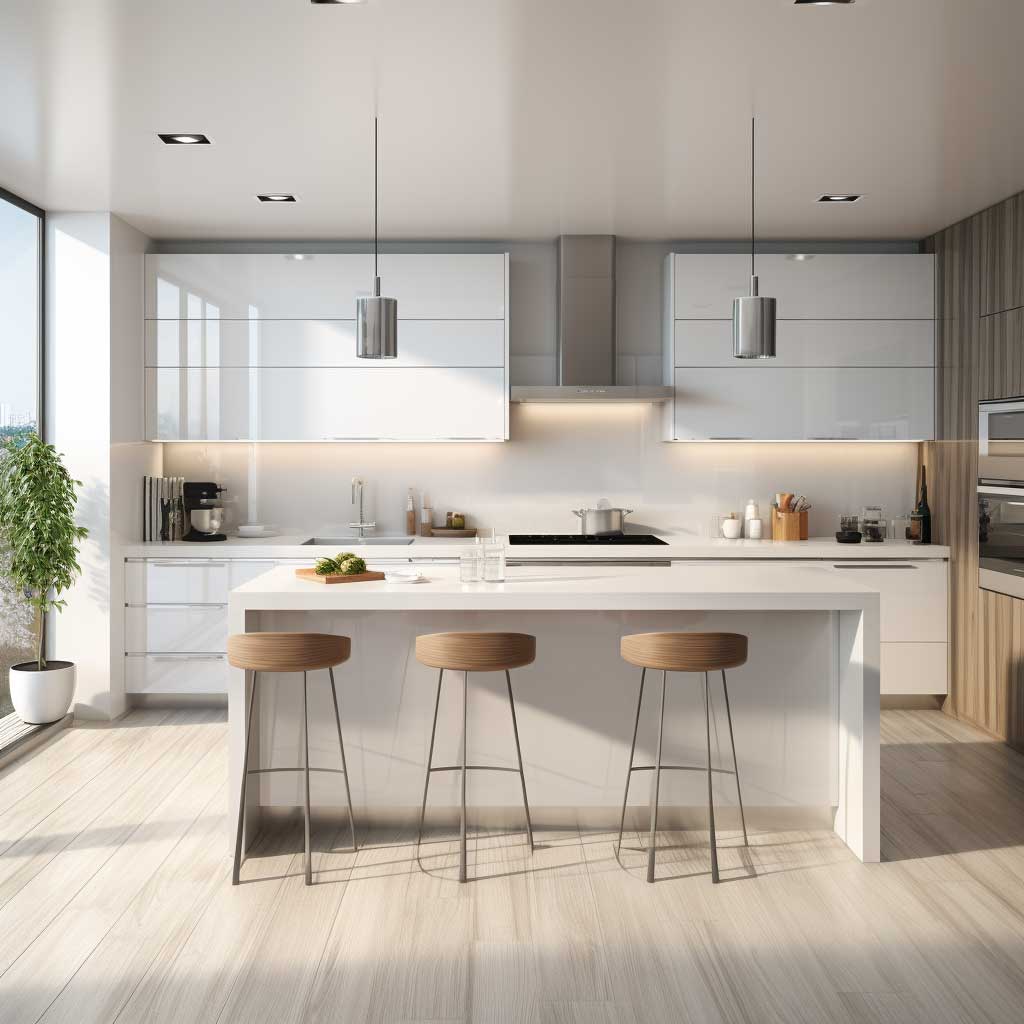
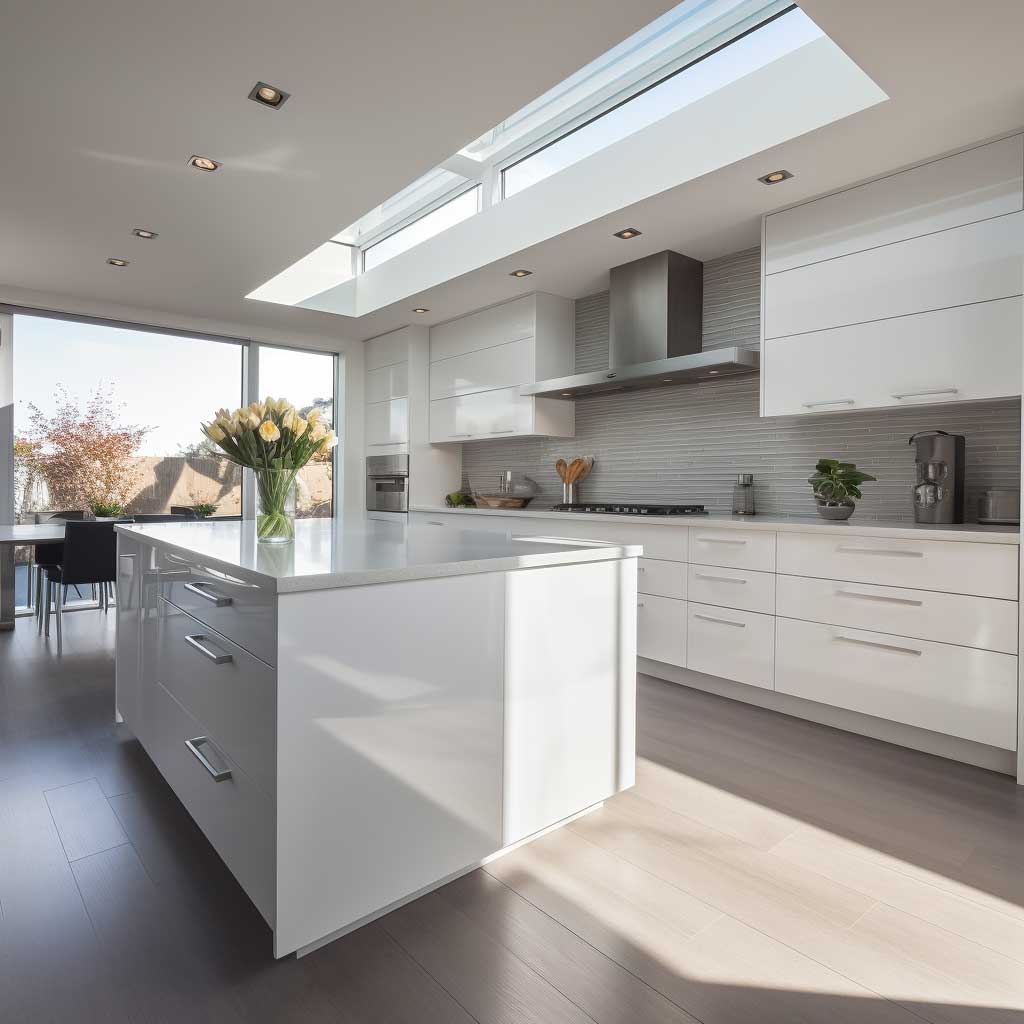

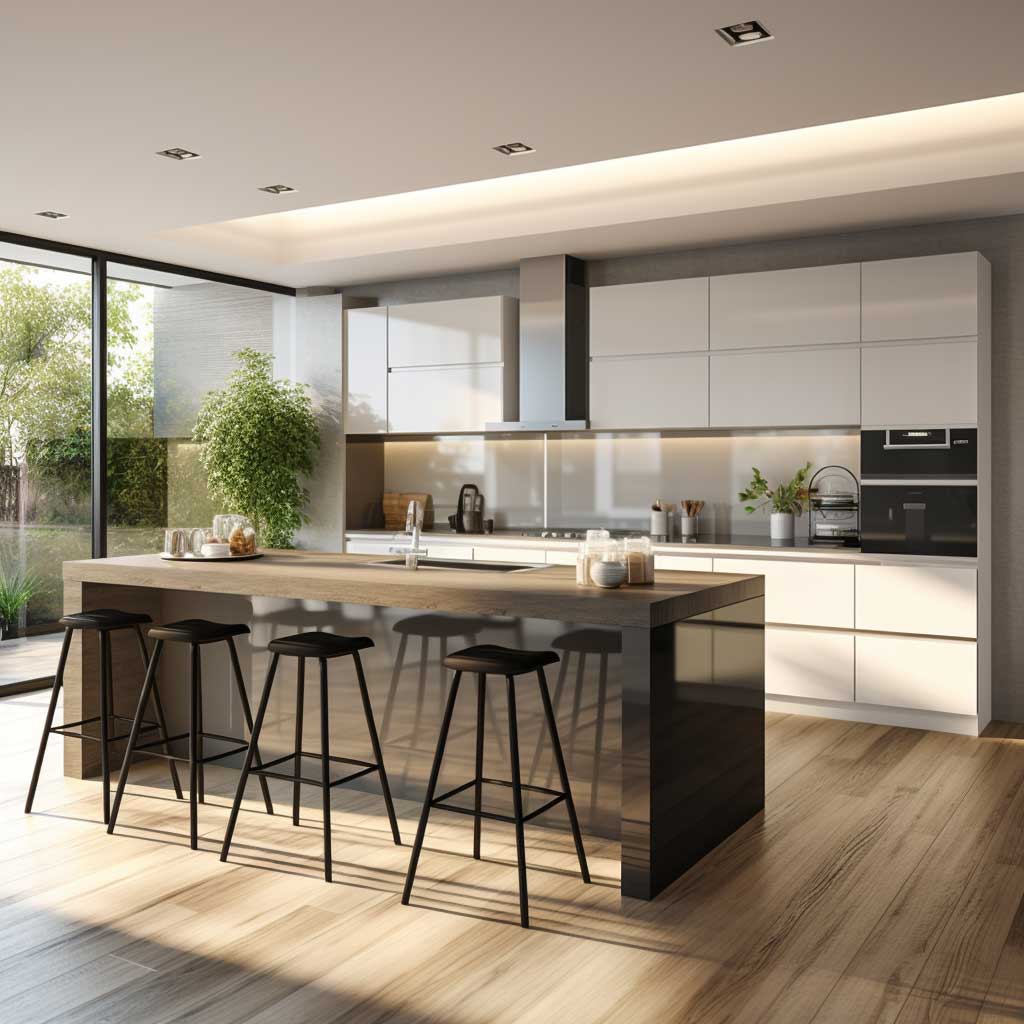
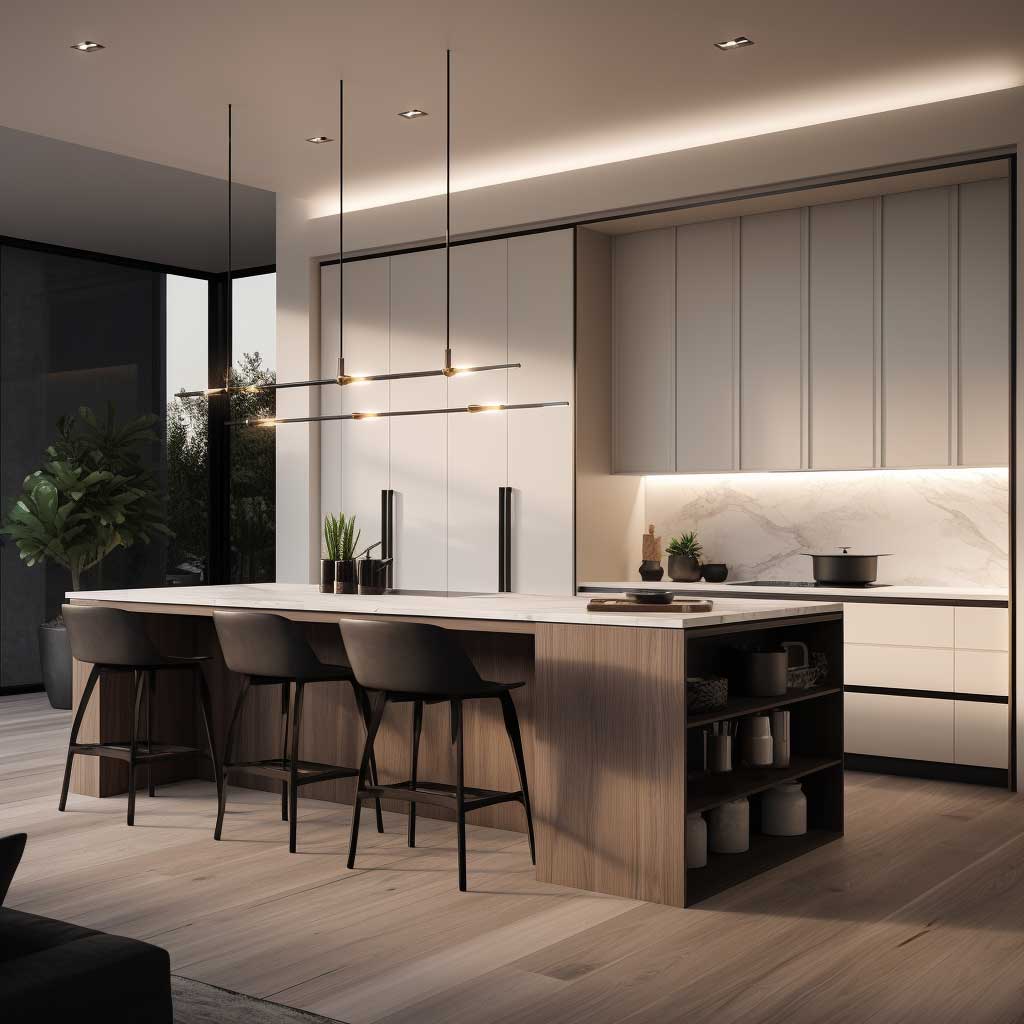
Symmetry in a minimalist kitchen isn’t decoration — it’s load-bearing. When both runs of cabinetry are the same height, same depth, and same door profile, your eye has nowhere to snag. I installed slab-style flat-panel doors in my own project last year and the effect was immediate: the room looked three feet wider without touching a wall. The catch is that symmetry punishes any deviation. One cabinet door that’s 2mm off-plane reads like a mistake, not a detail.
The color palette here is warm white and soft grey — not stark, not creamy. Benjamin Moore White Dove sits right in that range. Matte finish on the cabinets is non-negotiable. Gloss under recessed lighting shows every fingerprint like evidence. I learned this one late. The countertop in matte Calacatta quartz at around $75–$110 per square foot installed adds contrast without shouting.
Every appliance is flush or hidden. The induction cooktop sits level with the countertop. The oven is built into the cabinetry stack. The refrigerator disappears behind a panel. Does this cost more than standard integration? Yes — budget an extra $2,000–$4,000 for panel-ready appliances and the millwork to match. Worth every dollar if the kitchen is what you’re actually photographing.
Storage is push-to-latch throughout. Touch-latch mechanisms from Grass or Blum run about $28–$35 per door and hold up reliably. Avoid the budget-brand push catches — they fail in under two years on doors used multiple times a day. The flooring is large-format porcelain, 24×24 or 32×32 inches, in a warm neutral. No rugs. Nothing on the floor breaks the plane.
Don’t Do This
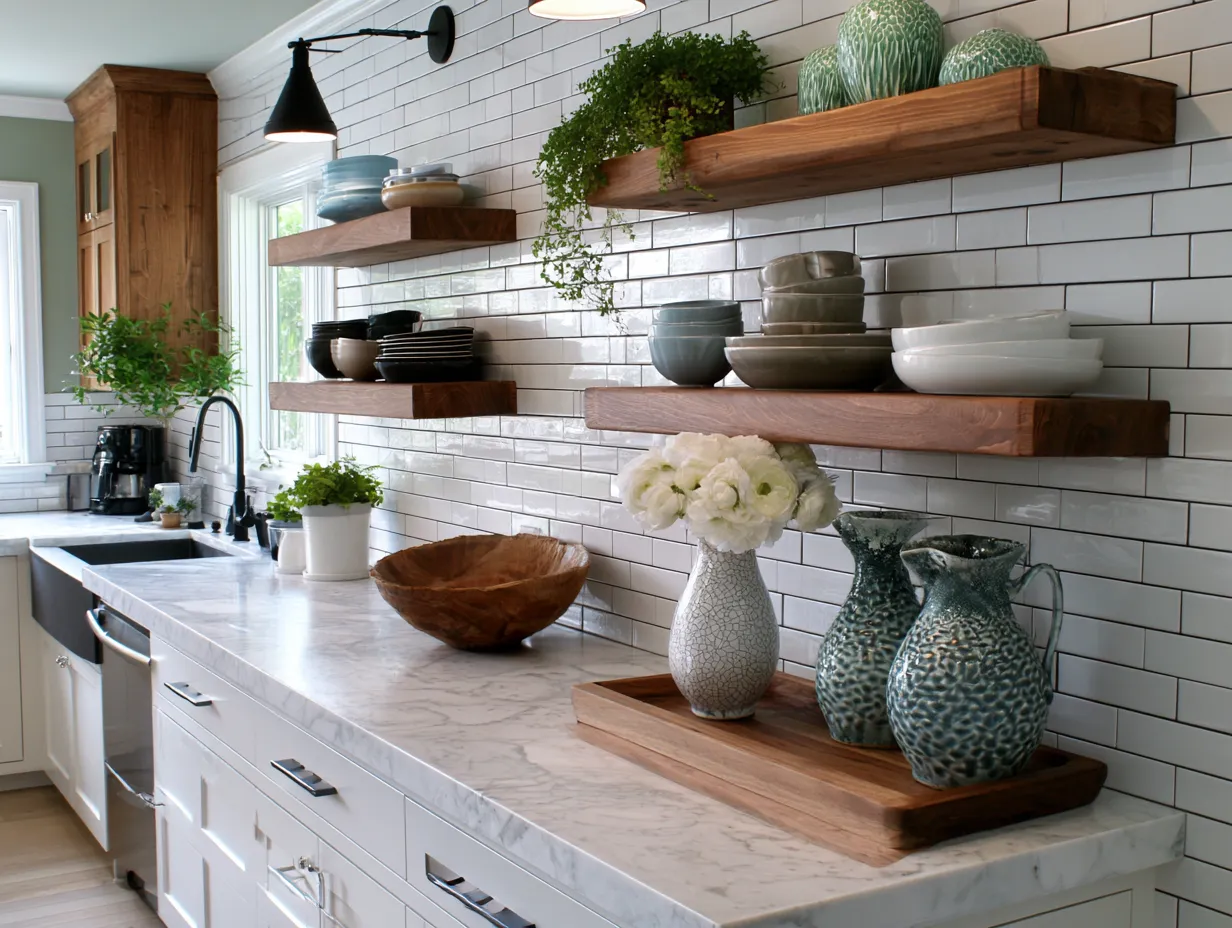
Open shelving on one wall of an otherwise closed minimalist kitchen is not a “design detail.” It’s a maintenance problem. You will style it once, photograph it, and then let it accumulate cooking grease, mismatched mugs, and cookbooks you haven’t opened. I’ve seen this in three renovation projects. The owners without exception regretted the shelves within six months. If you want visual relief in a flat-panel run, use a recessed niche with integrated LED strip — not an open shelf.
No Upper Cabinets, No Clutter — How the Island Holds the Room Together
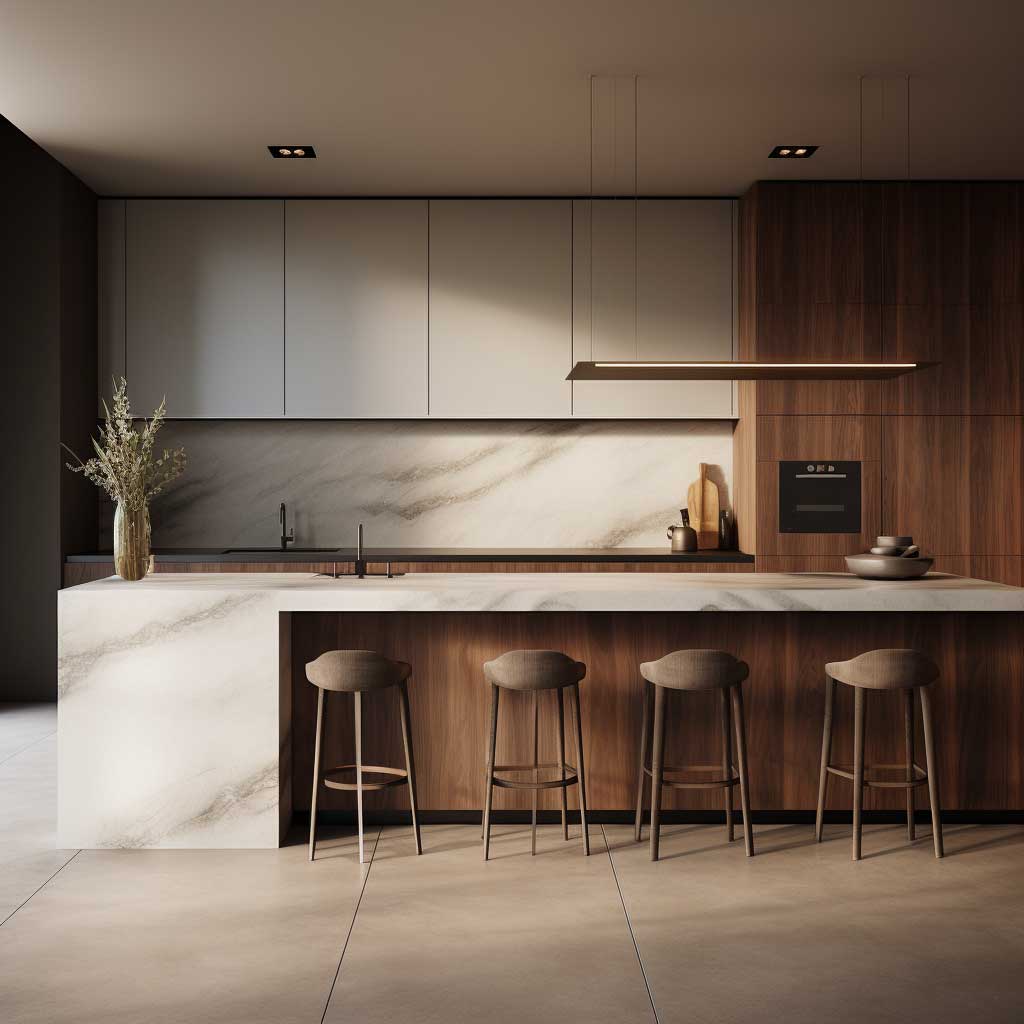
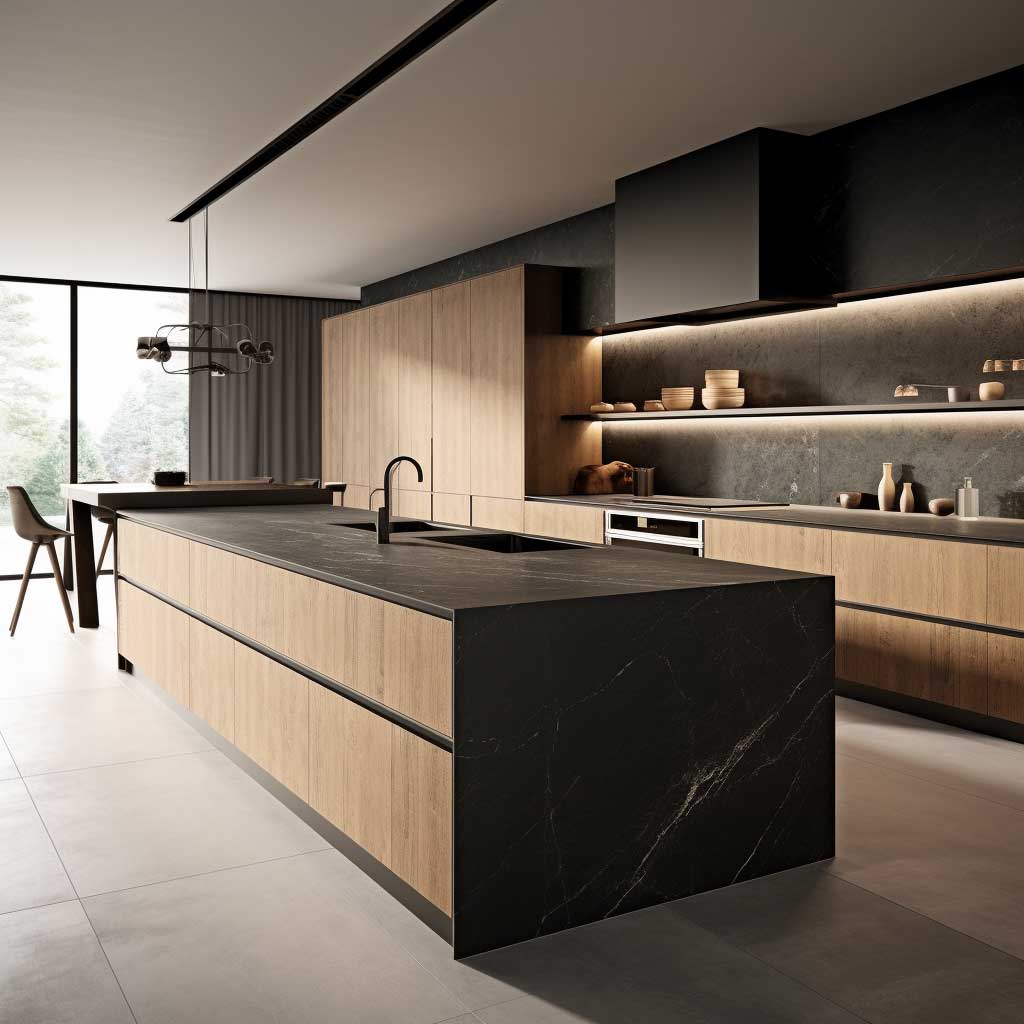
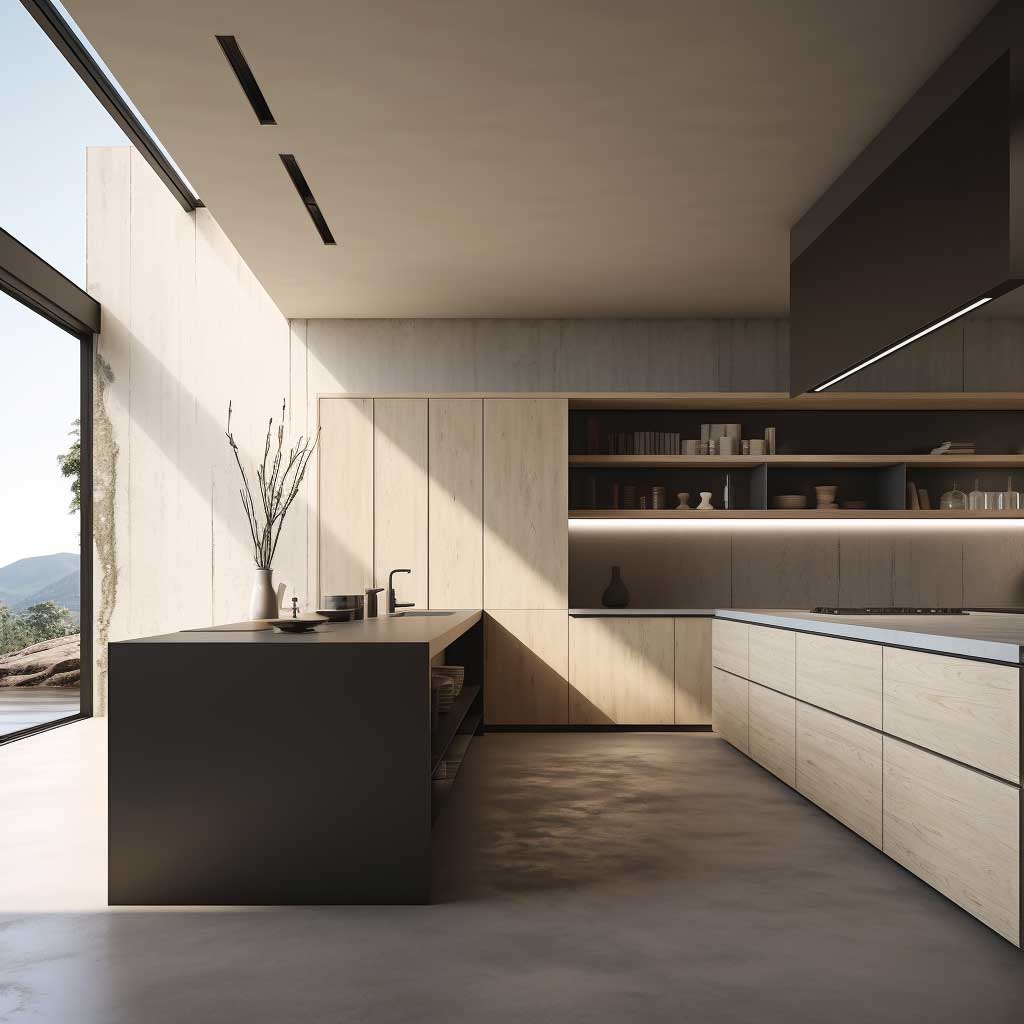
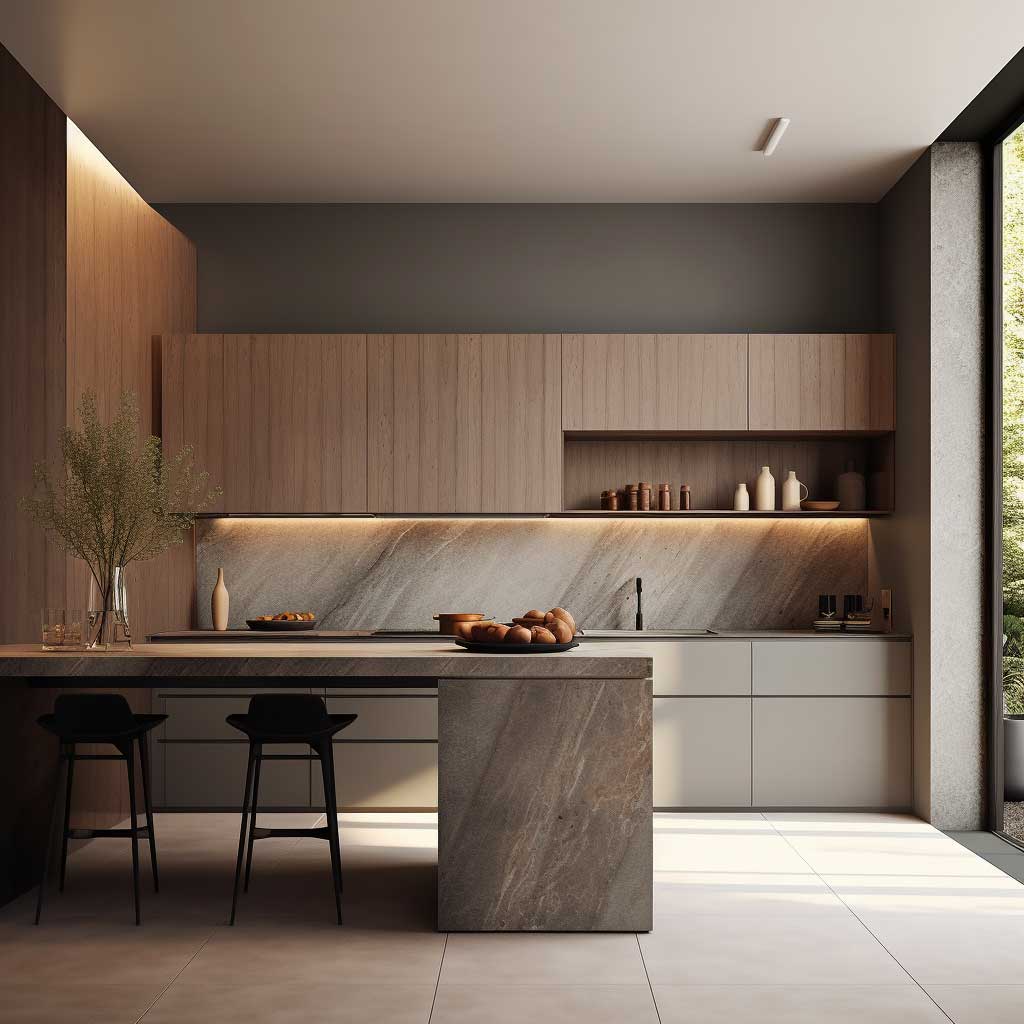
Removing the upper cabinets is the single most divisive move in minimalist kitchen design. Clients always resist it. They want the storage. My answer: you will use 20% of that upper cabinet space regularly and tolerate the visual noise of the other 80% every single day. The kitchen shown here ditches upper cabinets entirely and routes storage into a full-height pantry column at one end of the run. You’ll gain a wall that breathes, and the ceiling feels eight inches higher even if it isn’t.
The island here is the spatial anchor — not a decorative feature, a structural one. It’s the kind of design that works like a fulcrum: push it twelve inches in any direction and the whole room tips wrong. The countertop appears to float because the base is recessed, painted the same color as the floor. Undermount drawer glides on the island keep the exterior face completely clean. I own two Blum Tandem systems and they still operate like new after four years of daily use.
Light wood flooring — white oak, sanded and oiled, around $12–$18 per square foot installed — grounds the space without competing with the cabinetry. The warmth of the wood is doing the emotional work that people usually assign to color. Wide planks at 5 or 7 inches read as more intentional than standard 3-inch strips. Narrow planks in a pale kitchen look like an afterthought.
What color is the island? Not white. Off-white is too close to the perimeter cabinets and the contrast disappears. A soft warm grey — Farrow & Ball Purbeck Stone or similar — reads as grounded without going dark. Dark grey islands photograph well but feel heavy in person if the kitchen is under 200 square feet. For minimalist kitchen island layouts in smaller spaces, proportioning the island to the room is the decision that determines everything else.
Waterfall Edge, Dark Countertop, Nothing Else — the Third Kitchen Layout
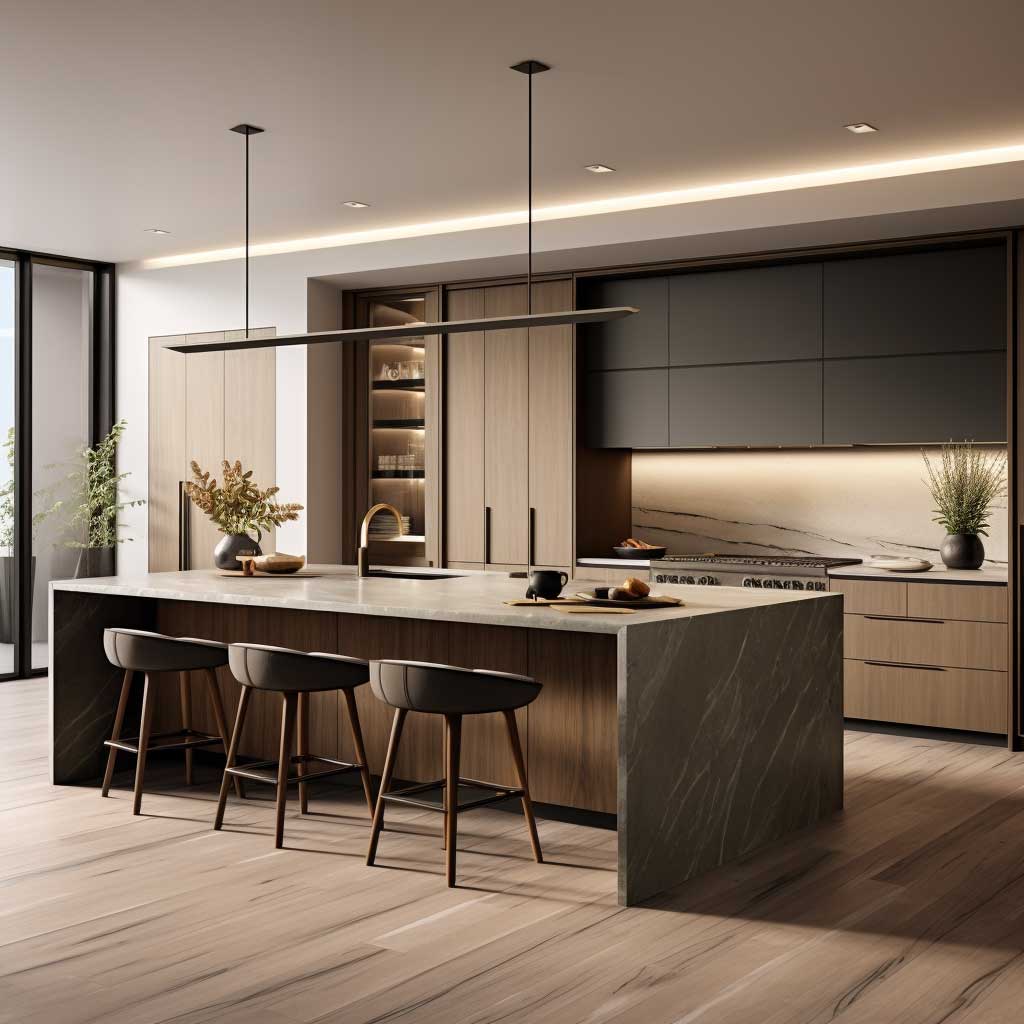
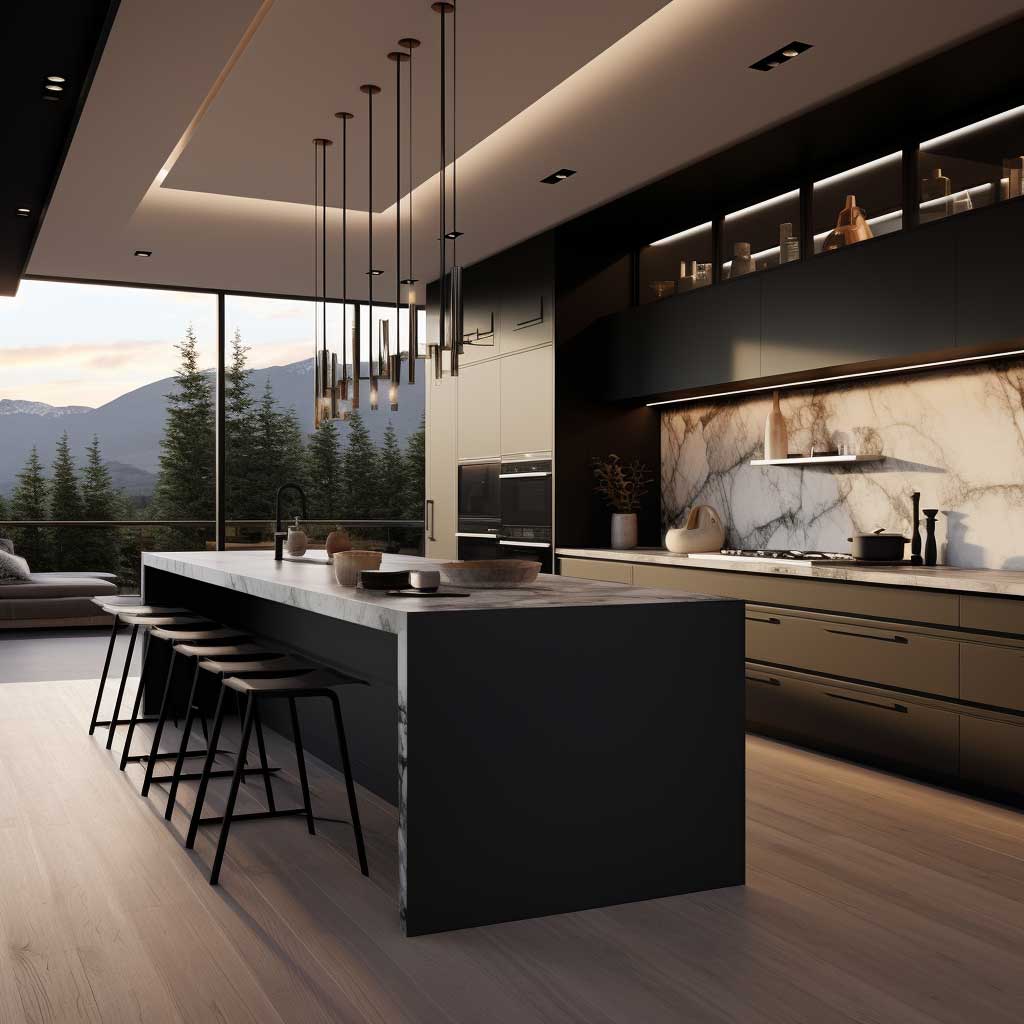
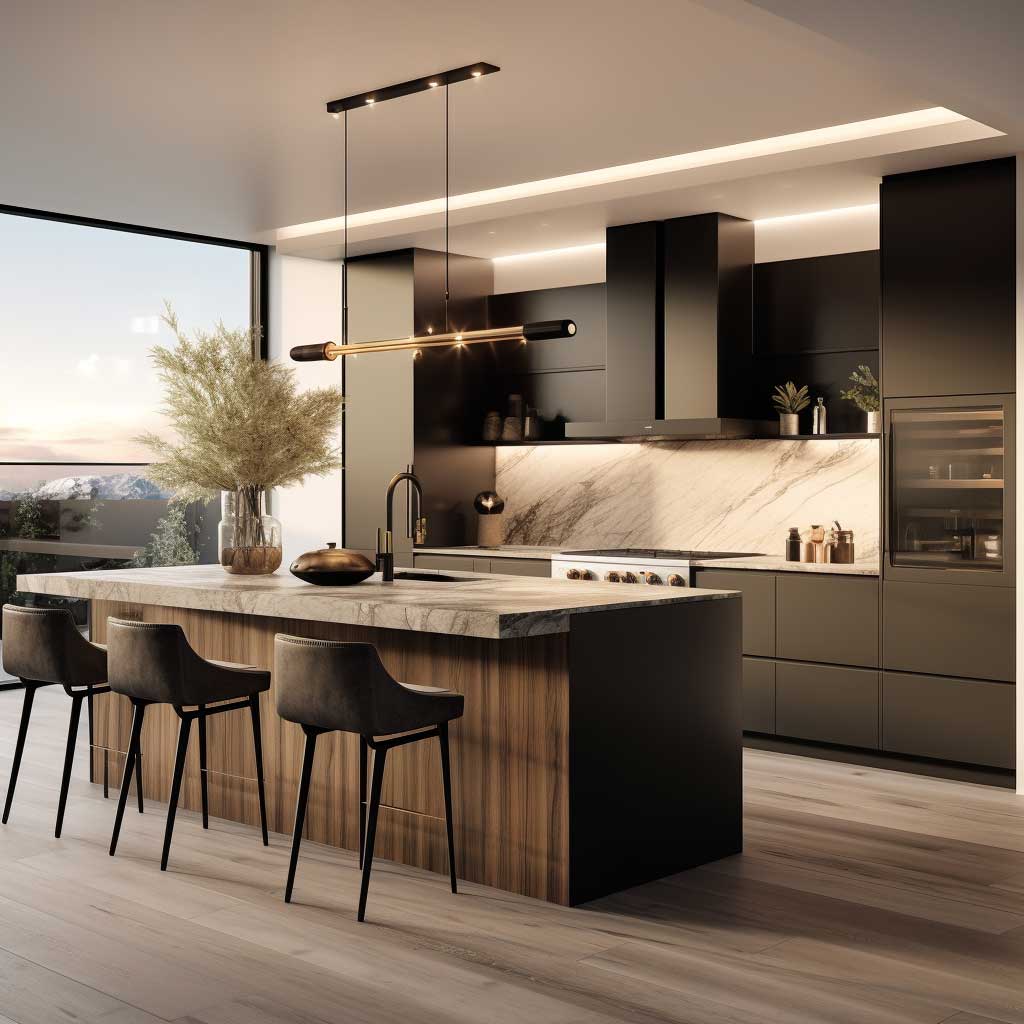
The third layout uses contrast instead of tone-on-tone — white perimeter cabinets against a black quartz island with a waterfall edge that drops to the floor on both sides. Black quartz from Silestone’s Eternal Charcoal line runs about $85–$130 per square foot. The waterfall detail adds another 20–25% to the stone cost, but it’s the element that makes this kitchen feel designed rather than assembled. I stole this trick from a project in Milan I photographed in 2022. No other detail in the room needed to be interesting after that.
Handle-free cabinets here use a slight finger-pull recess routed into the door edge — not a push-latch, not a rail. The recess adds about $8–$12 per door to the cabinet cost and lasts indefinitely because there are no mechanical components. Integrated under-cabinet LED kitchen lighting keeps the worktop illuminated without pendant fixtures breaking the ceiling line. The ceiling in a minimal kitchen is sacred. Nothing should hang from it.
The appliance question: the induction cooktop in this layout is the Gaggenau 400 Series, around $2,400 for a 36-inch model. Expensive, yes. But it sits completely flush against the countertop and produces zero visual noise when off. Cheaper induction models have raised bezels — sometimes only 3mm — that catch the eye and undermine the whole flush concept. The oven is built into the cabinet stack at eye level. The refrigerator is panel-ready. Budget brands skip panel-ready refrigerators as a cost-cut. Don’t let them.
Large-format floor tiles in the same warm neutral as the cabinetry carry the eye from the perimeter to the island without interruption. White kitchen design variations show how tile scale changes the perceived room size — a 12×12 tile in this footprint would look like a bathroom. The 32×32 format is the minimum worth specifying in a kitchen over 150 square feet.
Kitchen design experts at Dwell emphasize that the move toward panel-ready appliances and flush cooktop installation is redefining how kitchens feel — less utility room, more living space. That shift is exactly what makes the third layout here work: the kitchen reads as a room with an island, not an appliance cluster with cabinets around it.
Final Word
Modern minimalist kitchen design isn’t a style. It’s a commitment to removing everything that doesn’t earn its place.
Flat-panel cabinets, flush appliances, and a countertop with nothing on it are not deprivation — they’re precision. The kitchens that look effortless took more decisions, not fewer. Every door profile, every tile format, every millimeter of countertop overhang was chosen deliberately.
The most common mistake: buying the look and keeping the habits. Handle-free cabinets with a coffee machine, an air fryer, and a fruit bowl on the counter aren’t minimalist. They’re a showroom cabinet with a real kitchen inside.
Save this post before your next kitchen planning session — coming back to it with a floor plan in hand hits differently.