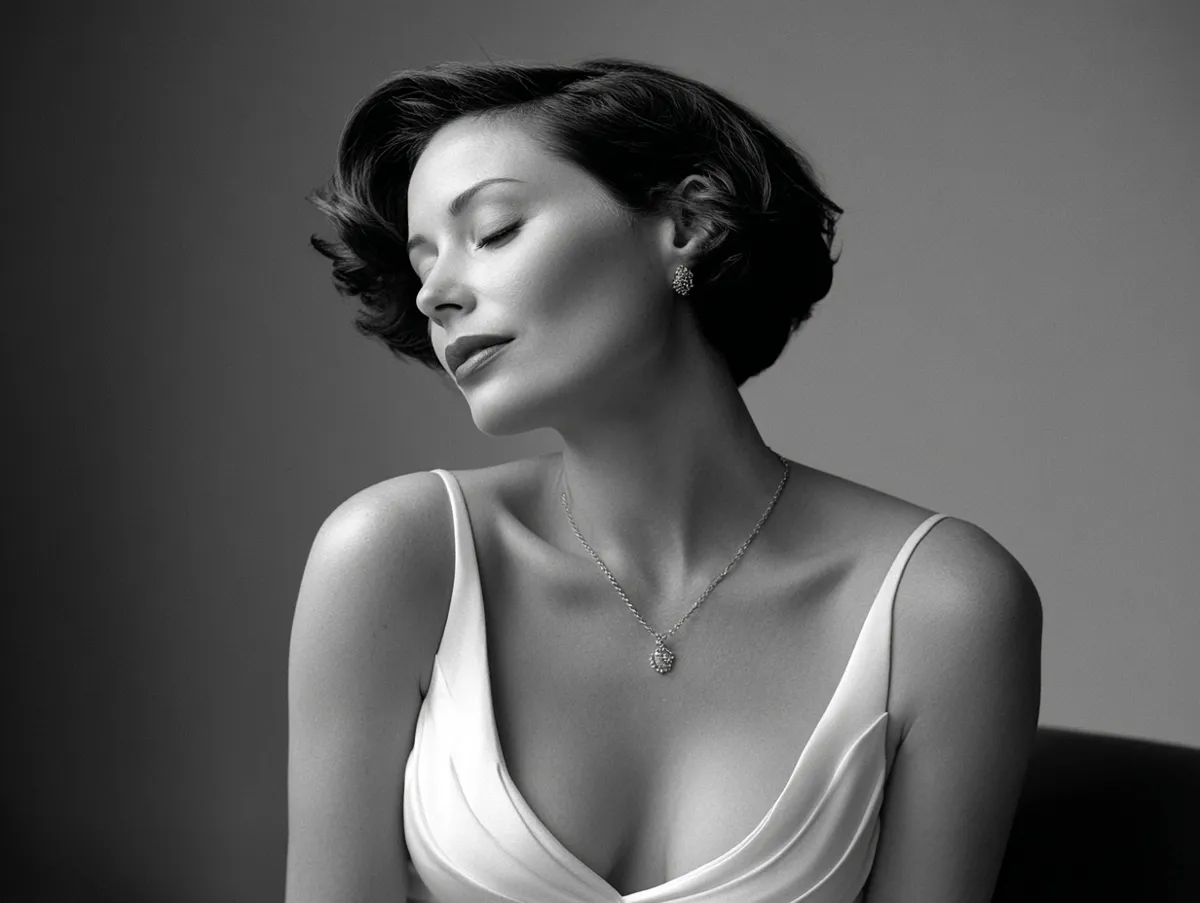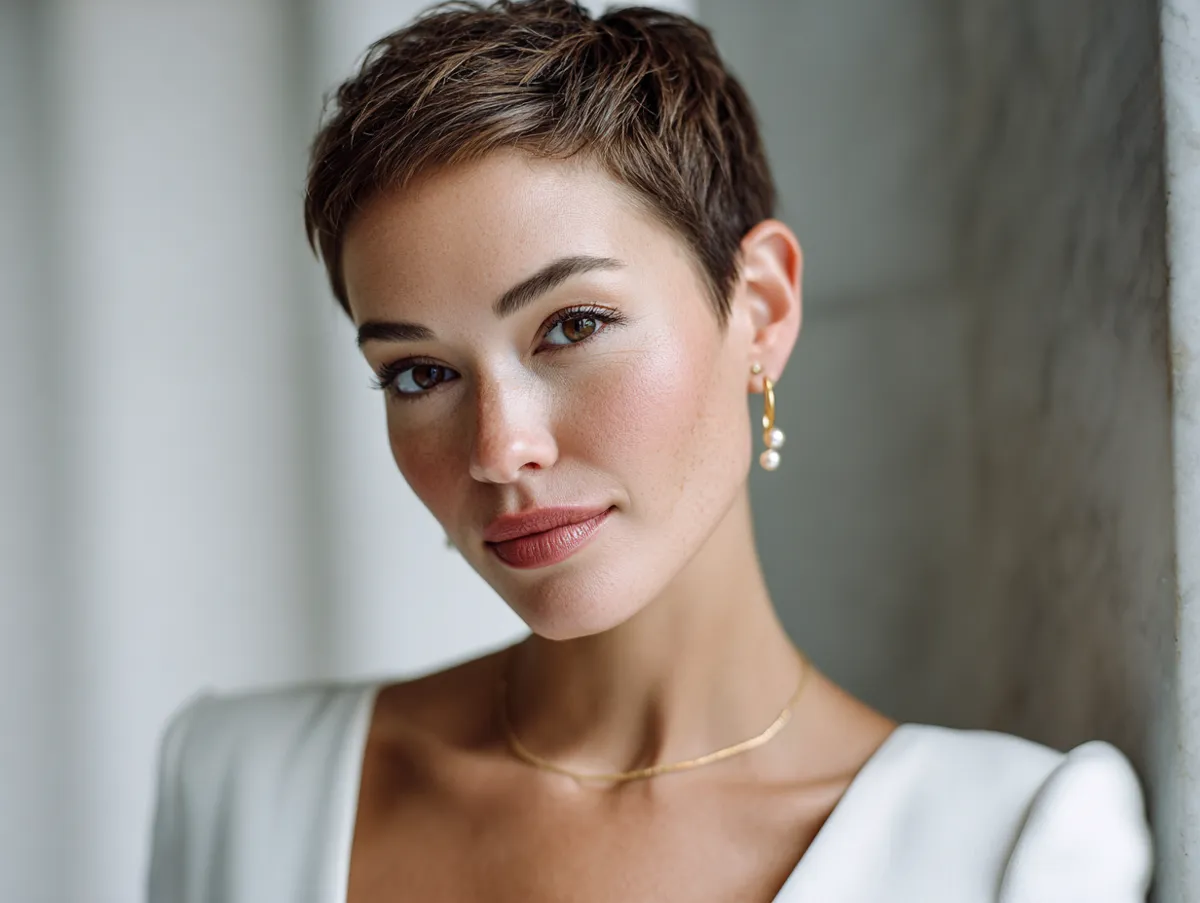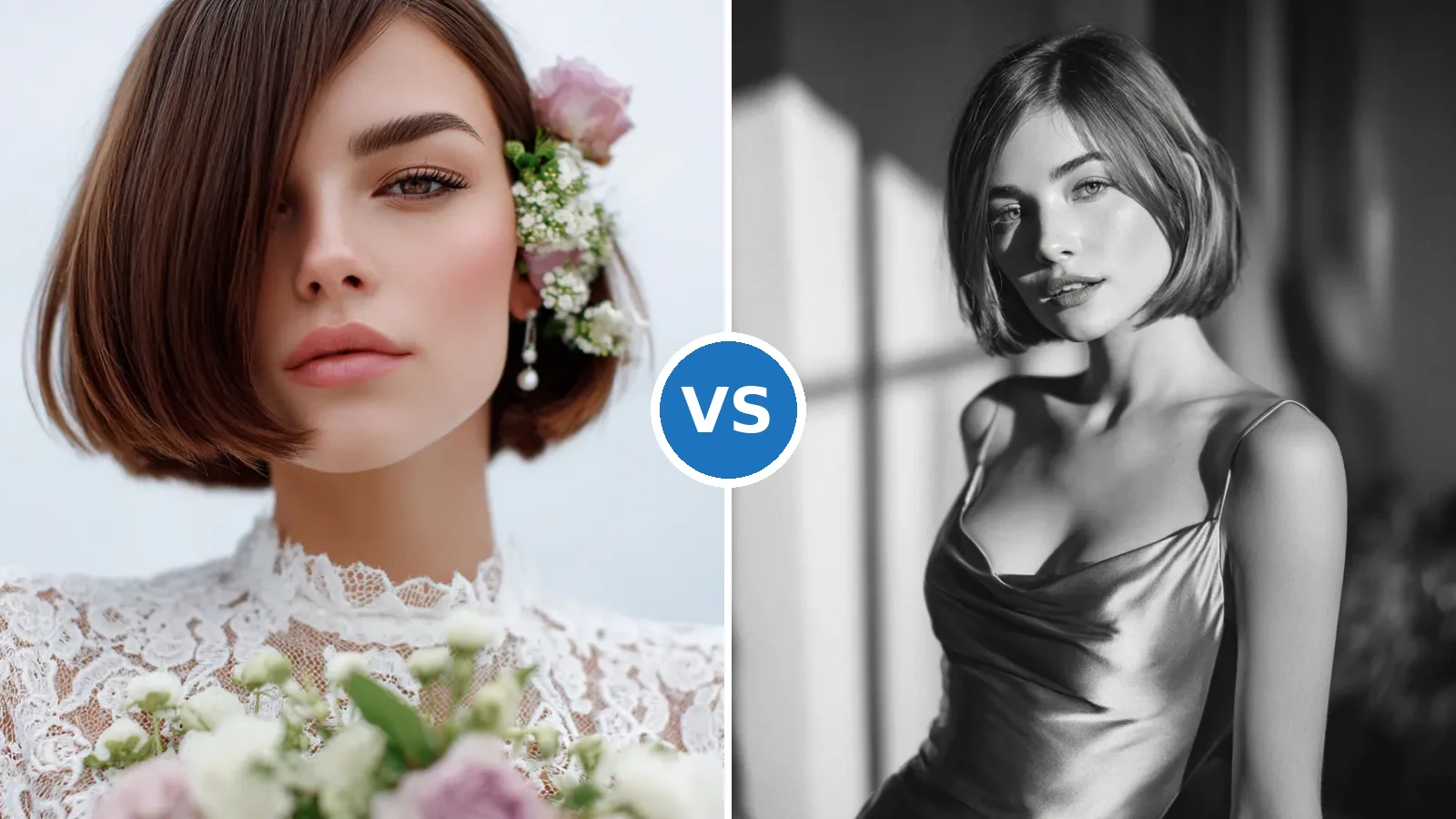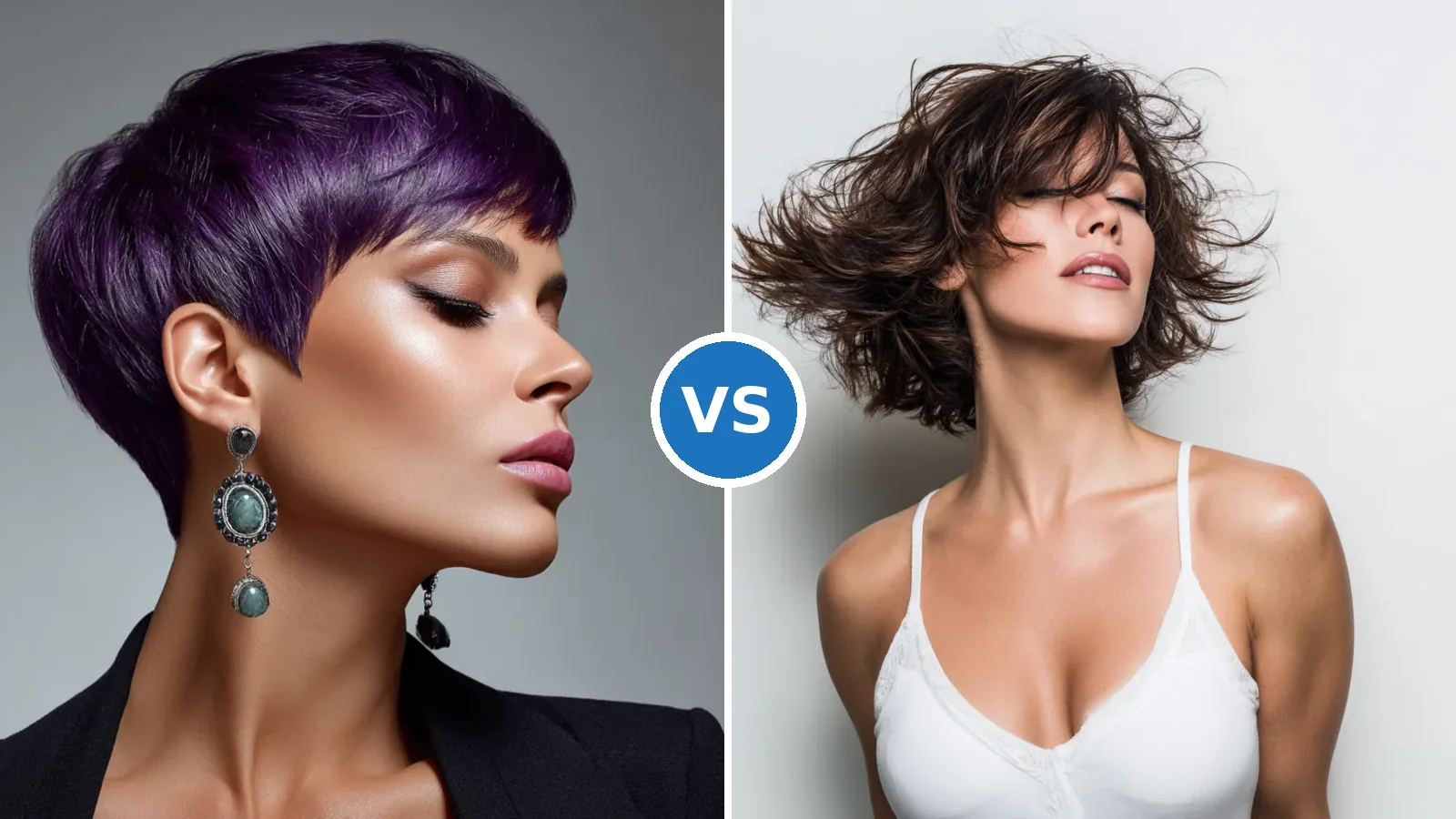
Short hair wedding styles with veil get dismissed before brides even try them — and that’s a mistake. I’ve watched stylists skip the veil conversation entirely the moment a client shows up with a bob or a pixie, as if a cropped cut automatically disqualifies you. It doesn’t. The real question is placement: where the comb lands on your head determines everything, from silhouette to how long the whole thing stays put on the dance floor. This post covers four distinct looks — platinum side sweep, vintage finger waves, red sculpted pixie, and jet-black straight bob — each paired with a veil strategy that actually holds.
Every image here shows a short-haired bride wearing a veil without tricks, apologies, or elaborate updos. Short bridal hair with veil works because the exposed neckline and face geometry create a canvas that longer hair actually covers. You’ll notice the veil does different visual work on each silhouette below — sometimes it adds drama, sometimes it softens an architectural cut. Neither outcome needs length.
Quick Scan
- Main veil challenge for short hair: grip — there’s less hair to anchor a comb, so technique matters more than length
- Platinum blonde side sweep → cathedral or fingertip veil placed at crown
- Chestnut finger waves → birdcage or elbow-length with antique lace trim
- Bold red pixie → dramatic cathedral veil as contrast piece
- Jet black straight bob → pearl-detailed veil tucked at nape or hairline
- Best anchor method: criss-cross two bobby pins over veil comb teeth in an X — holds on even fine, straight hair
- Veil alternatives worth knowing: birdcage, Juliet cap, headband-veil combos
Platinum Blonde Sleek Side Sweep Earns Its Veil Placement at the Crown
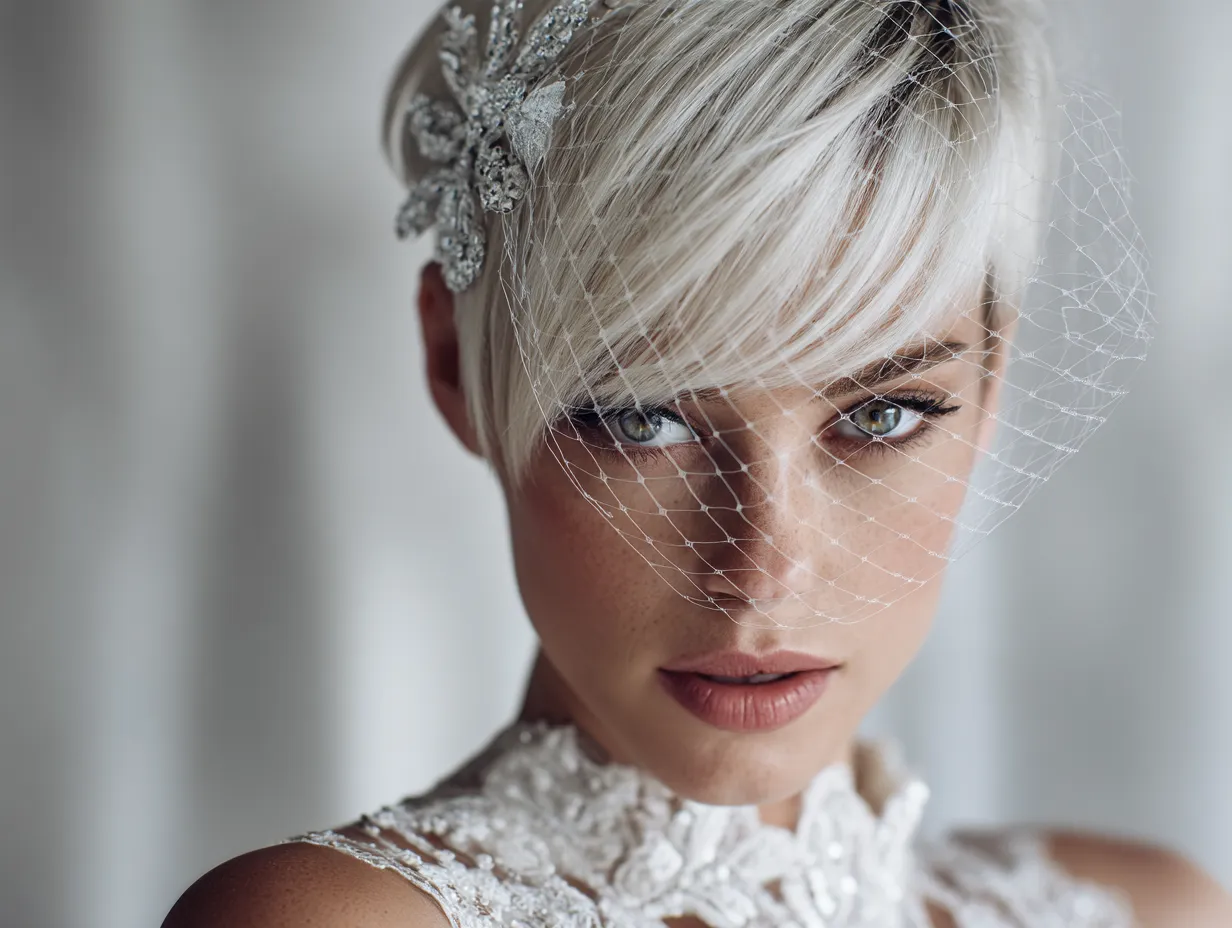
Platinum on a side-swept bob reads like architecture — and that’s exactly the right foundation for a short hair bridal veil look that holds all day. The icy tone plays beautifully with tulle and organza, which are light enough to flutter without flattening the style. I’ve seen brides try ivory silk veils with platinum hair and it falls flat every time; go bright white or soft champagne and the whole thing snaps into focus. Heart-shaped faces do especially well here because the asymmetric part draws attention to cheekbones before the veil is even in frame.
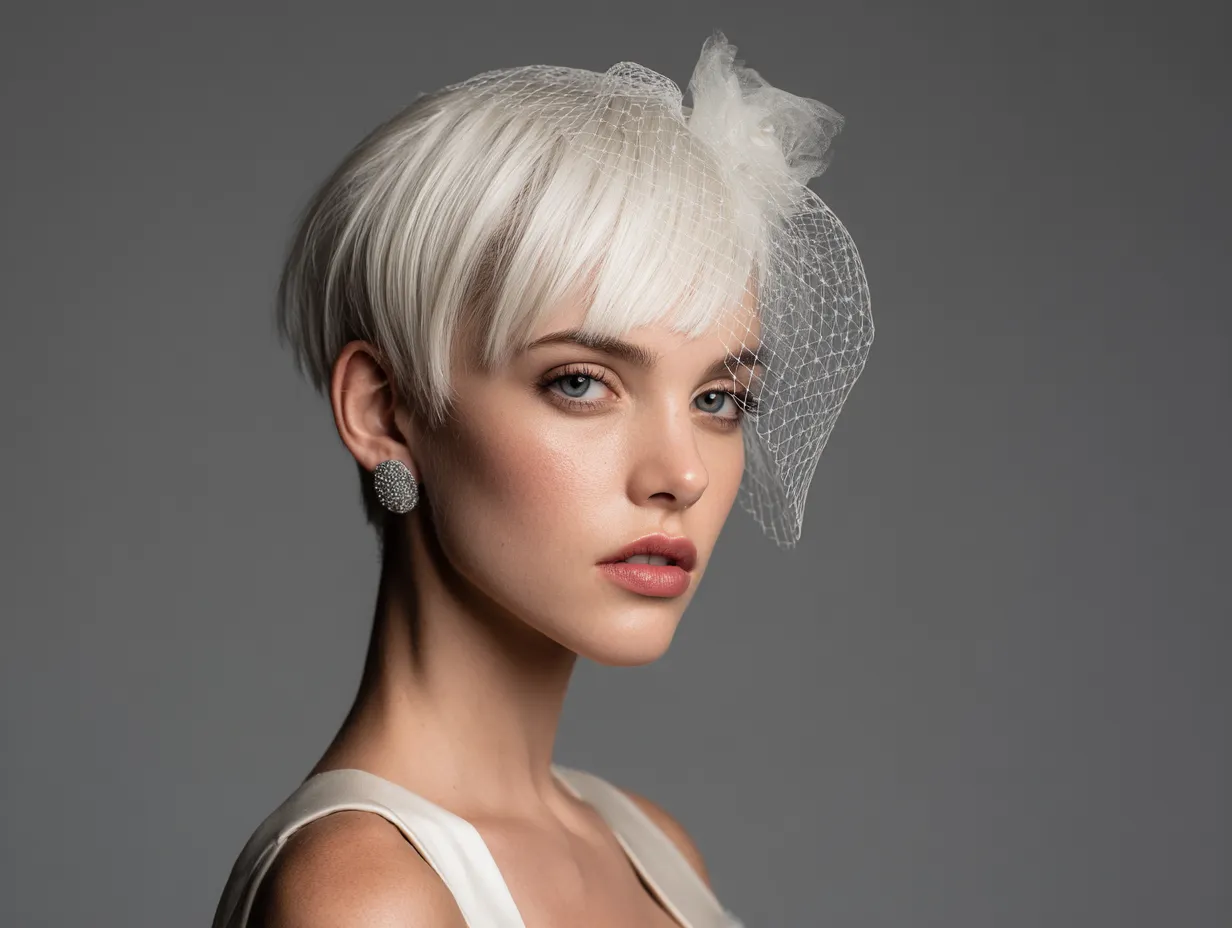
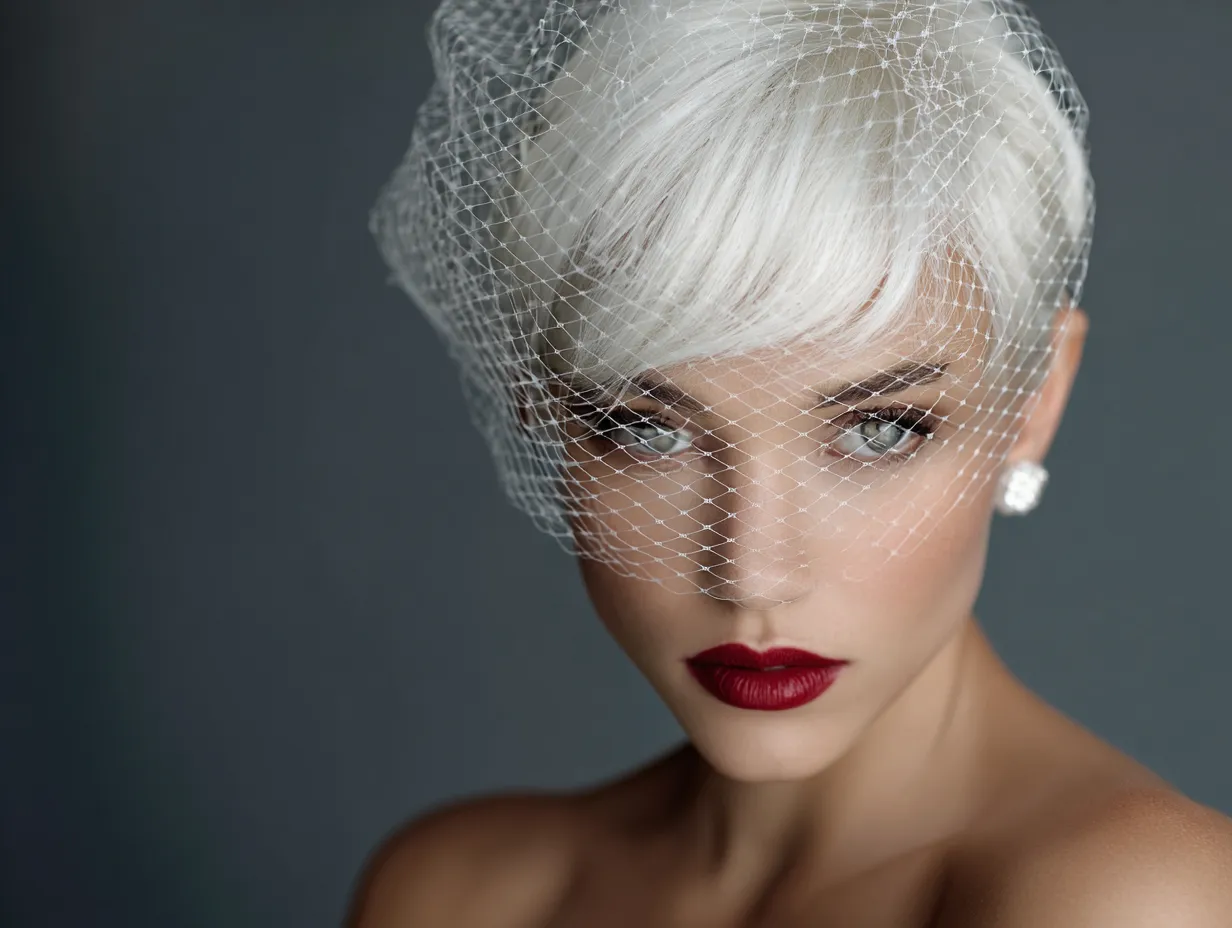
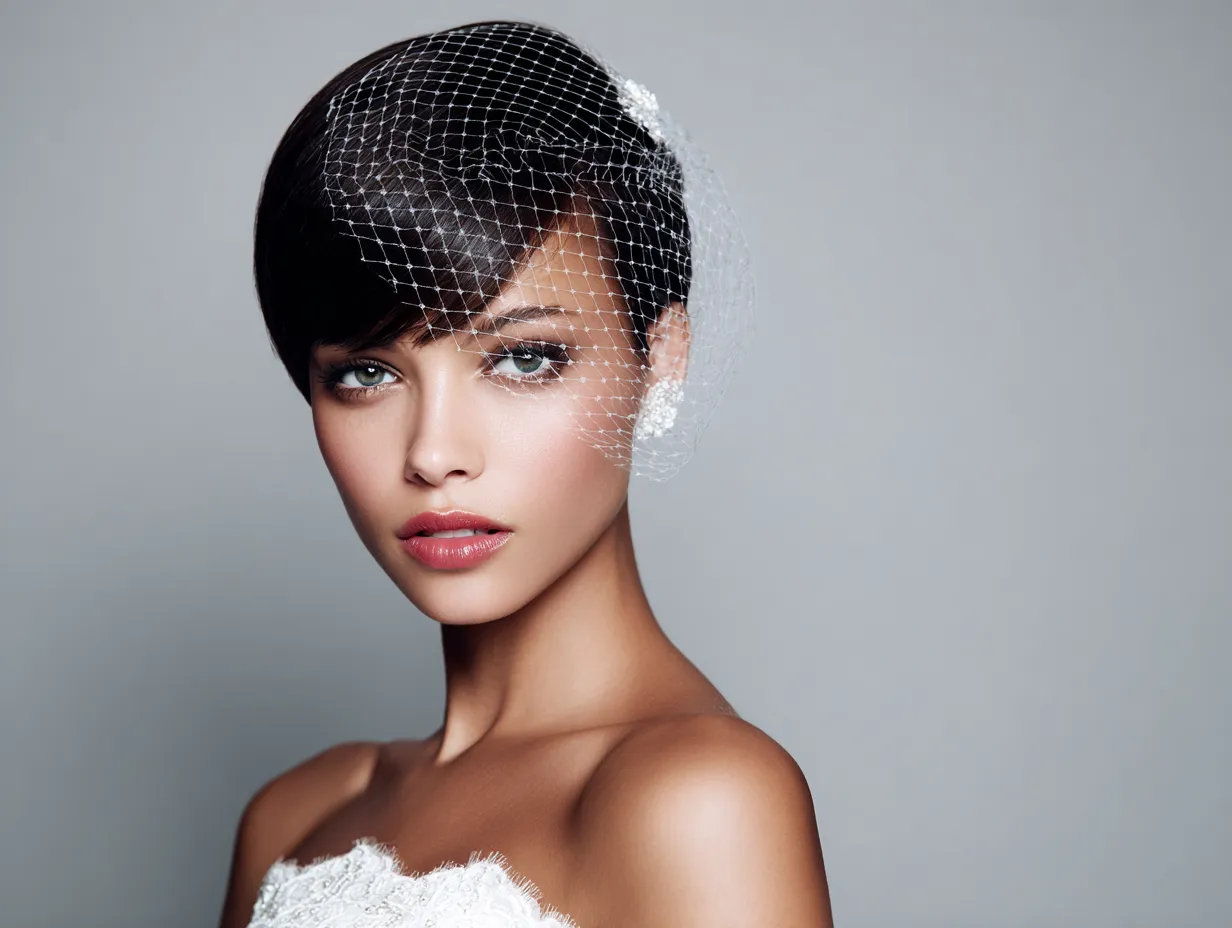
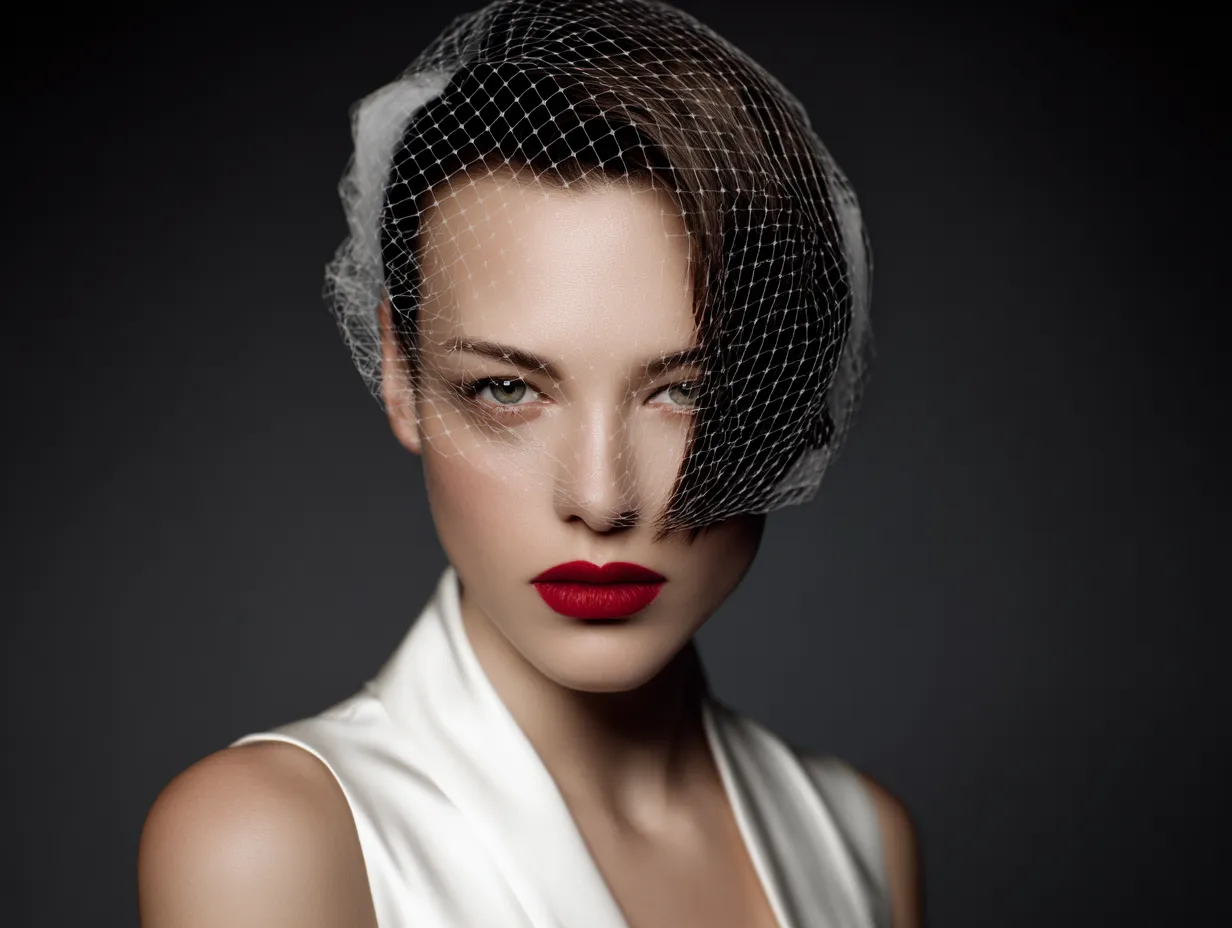
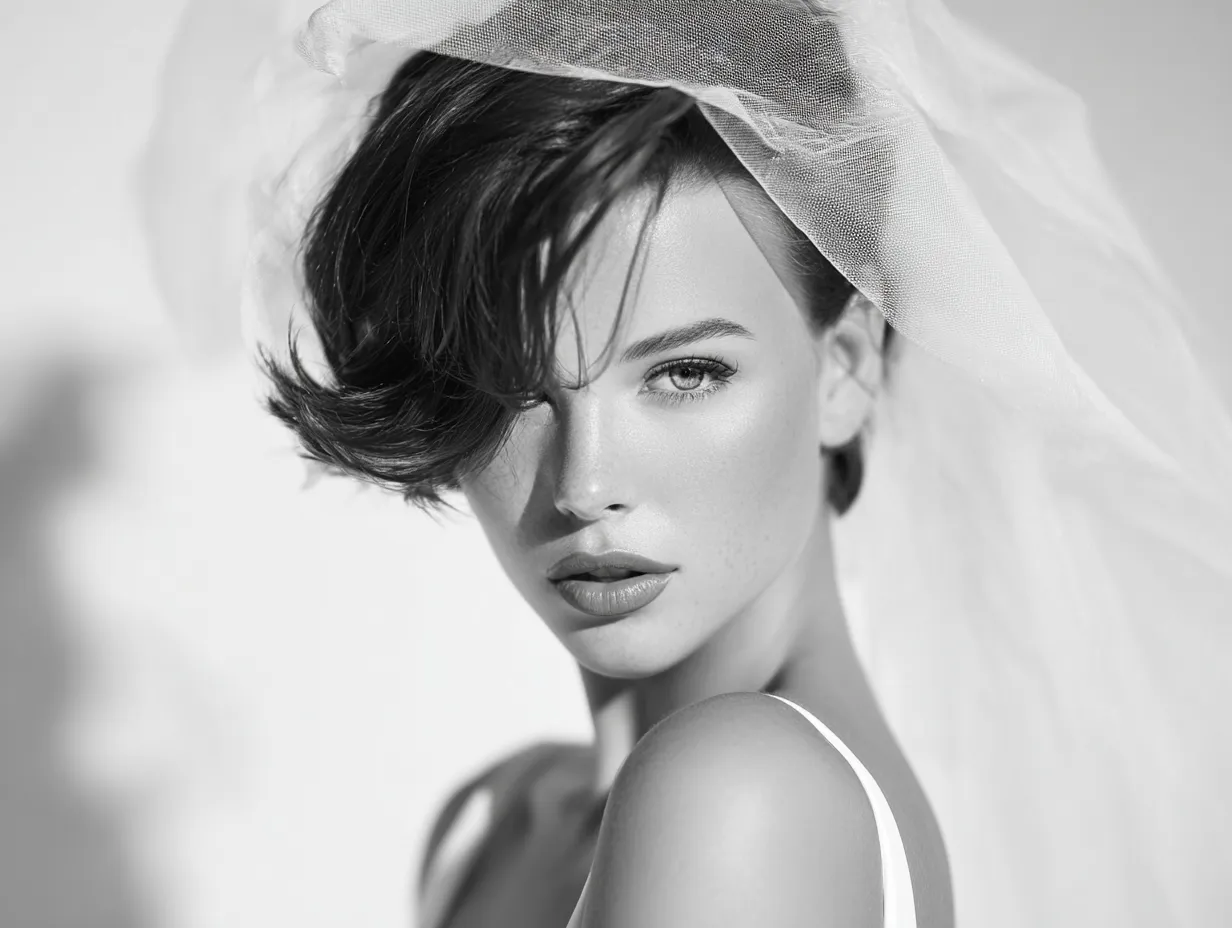
A straightening iron set to 390°F plus a pea-size drop of Kenra Platinum Silkening Mist ($28) gives you the high-gloss finish this look needs. The deep side part creates drama on its own — you don’t need product to fake it. Secure the veil comb at the crown with the curve facing down, then criss-cross two bobby pins in an X directly over the comb teeth. That’s the part most stylists skip, and it’s why veils slip on straight, fine hair.
Cool-toned skin gets the most out of platinum, but you can warm it up slightly with a half-tone of ash beige if full ice reads too severe in your venue’s lighting. The veil acts as accent here, not coverage. Positioning it behind the crown rather than tucked under the hairline keeps the sculptural line of the bob completely intact. For a gallery wedding, civil ceremony, or any venue where architecture is already doing the heavy lifting, this short wedding hair with veil delivers restraint as a full aesthetic decision.


Glossy Chestnut Finger Waves Pull Vintage Veils Into Something That Actually Photographs
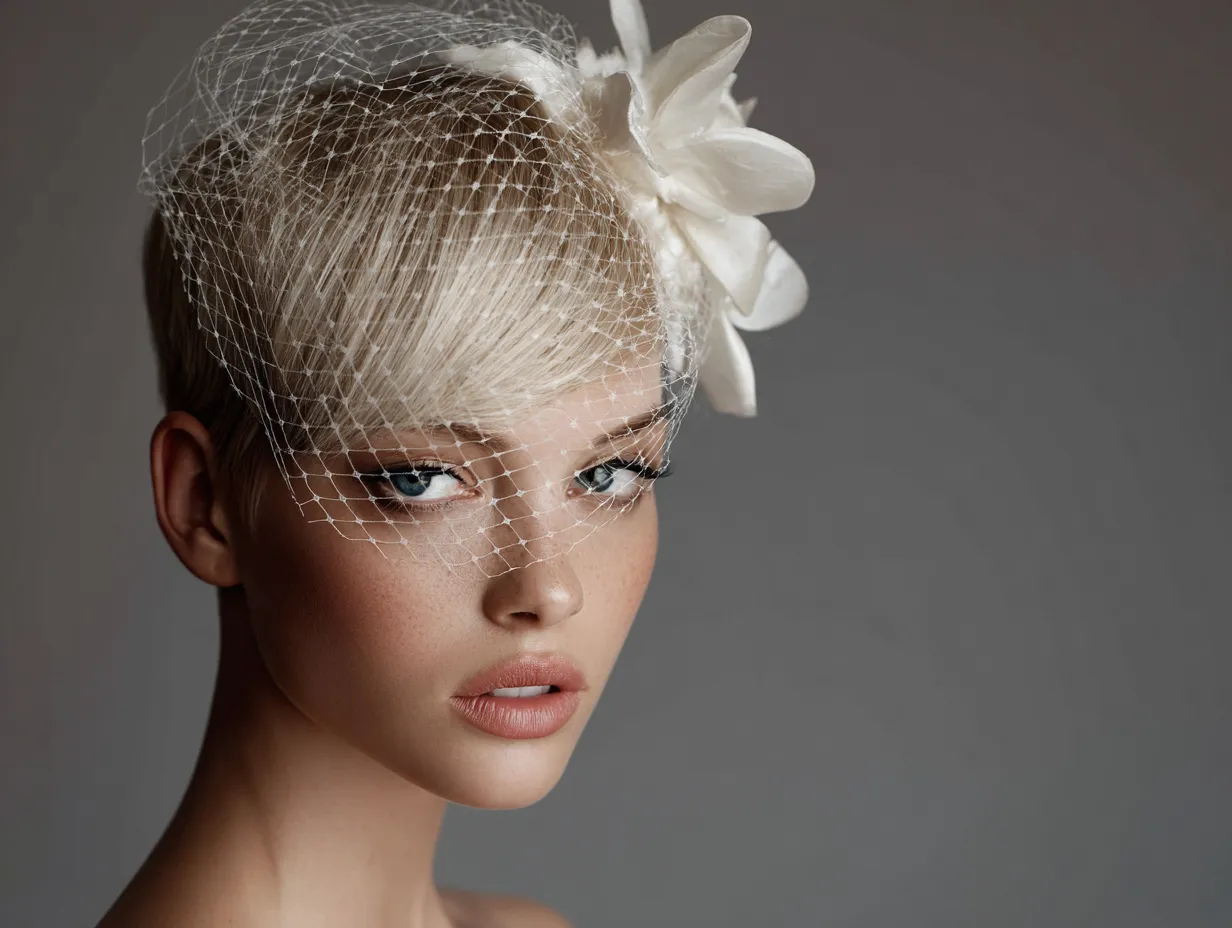
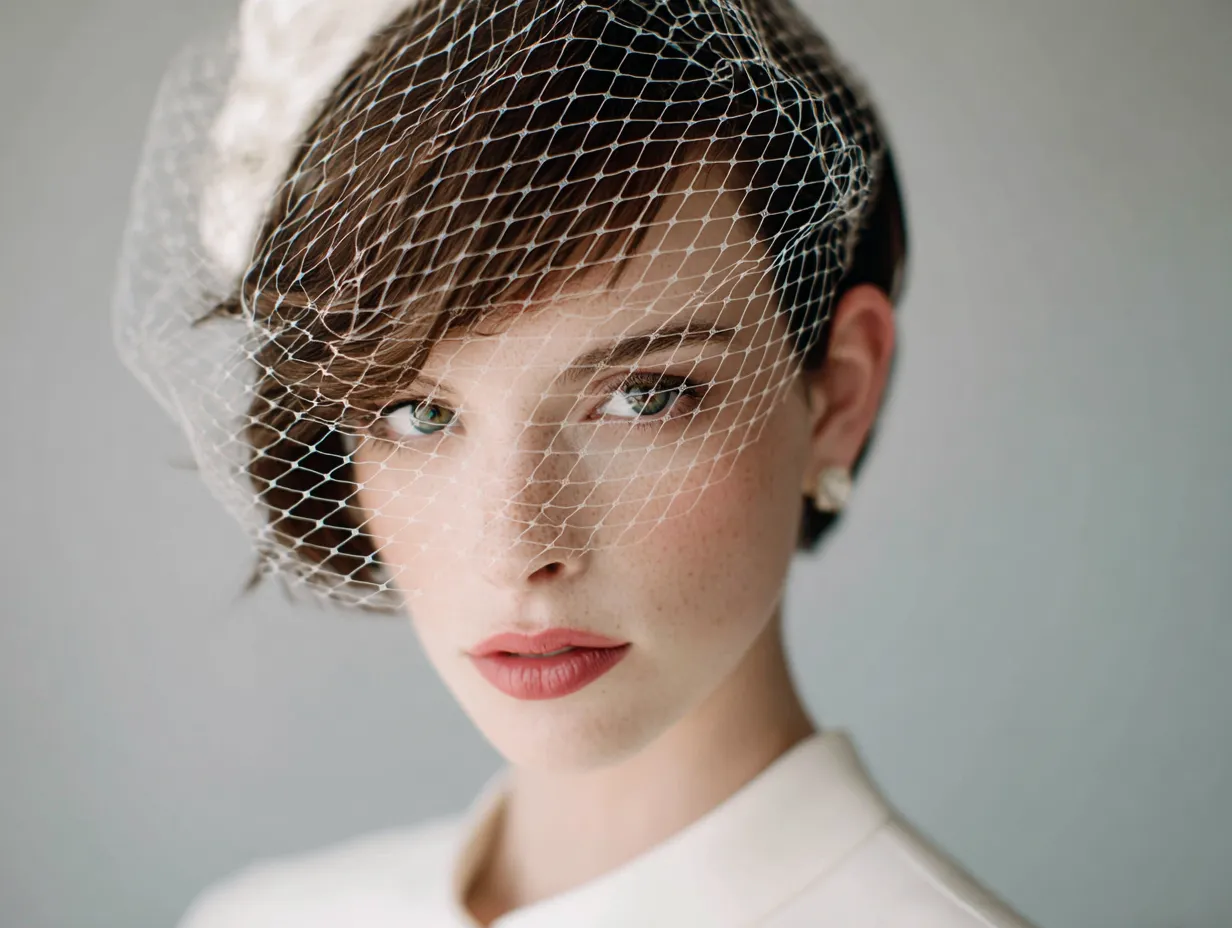
Finger waves on a chestnut bob are the short hair wedding veil option nobody thinks of until they see it — and then they can’t unsee it. The S-curve of the wave creates a natural ledge for a birdcage or elbow-length veil to sit against, which solves the grip problem that plagues straight short cuts. My go-to for this look is a birdcage veil with French netting from Kleinfeld or a custom Etsy piece running $45–$95 — the fine mesh catches the warm brown tones and creates depth that tulle simply can’t match. Avoid full-length flowing veils here; they swamp the architectural quality of the waves and you lose the whole point of the look.
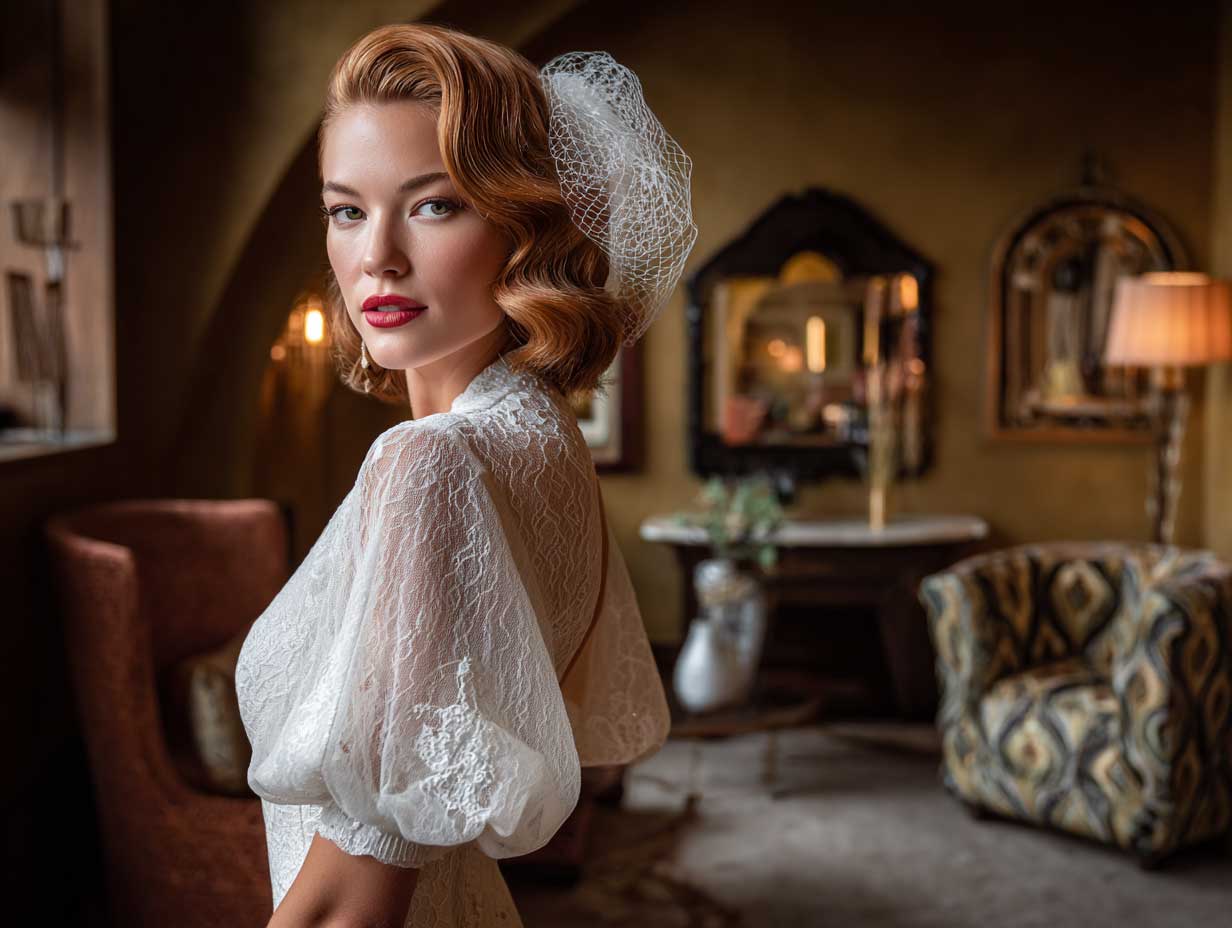


You’ll need wave clamps, a small-tooth comb, and setting lotion — I use Lottabody Texturizing Setting Lotion ($8 at Sally Beauty) and let it dry completely before removing clamps. Rush the drying and the waves go limp by cocktail hour. Once set, a single pass of gloss spray like Bumble and bumble Shine On Finishing Spray ($32) locks in the rich brown and gives it that old-Hollywood depth that reads warmth in every photo format. Oval and round face shapes are the sweet spot for this style — the horizontal wave lines add width in flattering places.
Position the birdcage veil just above the brow line, secured with the netting extending forward over the eyes. That’s the placement that creates the romantic shadow photographers love. Pair it with a high-neck gown or art deco earrings from Anthropologie or any vintage shop — the whole look functions like a time capsule. You can also wear this with a shoulder-length elbow veil from elegant shoulder-length bob styles if you want to see how the proportions shift at a slightly longer cut.
Red Sculpted Pixie Makes the Cathedral Veil the Second Statement, Not the First
A fiery red pixie does something clever with a cathedral veil — it flips the visual hierarchy. On long hair, the veil is background fabric; on a red pixie, it becomes a deliberate contrast element, the way a white gallery wall makes a single painting pop. You need that cathedral length (108 inches minimum) for the proportion to work; a fingertip or elbow veil on a pixie just looks like an afterthought. Hair wax like American Crew Defining Paste ($16) or Bumble and bumble Sumotech ($34) defines edges without weight, keeping the cut’s architecture sharp under ceremony lighting.


Deep red complements medium to dark skin tones and photographs sharply under both natural daylight and flash — test this at your hair trial, not on the wedding day. Square and angular face shapes benefit most from the veil’s airy softening effect behind the silhouette. What doesn’t work: a heavily embellished or beaded veil edge here. The intricate detail competes with the hair color and you end up with visual noise instead of contrast. Plain raw edge or barely-there ribbon edge keeps the focus where it belongs — the cut itself.
Attach the veil comb at the occipital bone rather than the crown; on a pixie this placement keeps the veil weight from pulling the style forward. A small section of hair teased lightly at that spot before the comb goes in gives the teeth something real to grip. Bridal veil alternatives for brides with short hair like the Juliet cap also work here if you want more coverage without abandoning the editorial feel. City weddings, rooftop ceremonies, industrial venues — this is the combination built for them.
Don’t Do This
Skip the clip-in volume pieces under a veil comb. I’ve seen brides add clip-in extensions near the crown for “veil grip” — the idea being more hair equals more anchor. It creates the opposite effect. The extensions shift independently from your natural hair, and by photo hour two the veil comb is riding on the extension clip instead of your scalp. There’s nothing underneath it to hold. Use a texturizing spray like Kenra Platinum Dry Texture Spray ($24) on your own hair and criss-cross the bobby pins over the comb. That’s it. Extensions under the veil comb are the number one reason short-haired brides lose their veil before the first dance.
Do not over-tease a fine pixie crown for grip. Teasing beyond a half-inch section breaks fine hair strands and creates a matted patch that neither combs out smoothly nor photographs cleanly. One small section, lightly backcombed — not a full crown tease.
Jet Black Straight Bob Shows What Restraint Actually Looks Like Under a Pearl Veil
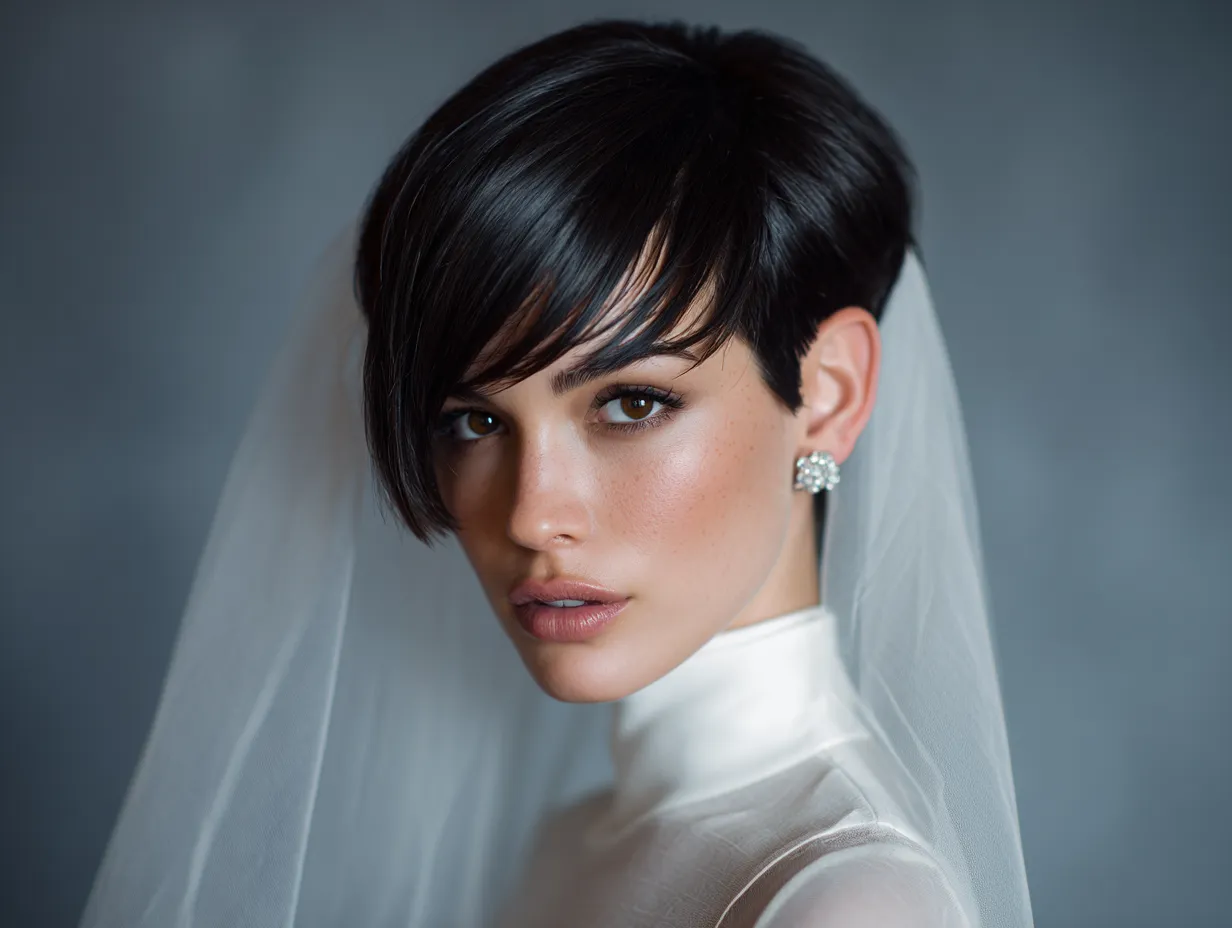
A jet-black bob with a pearl-detailed veil is the bridal equivalent of a navy suit — it always reads correct and it never stops photographing well. You need the bob to be genuinely straight, not just blow-dried smooth. A flat iron in small half-inch sections with a heat protectant like GHD Heat Protect Spray ($25) builds that mirror finish. The contrast between the black hair and an ivory or white veil is high enough that even minimal pearl embellishment registers clearly — you don’t need to spend $300 on heavily beaded tulle.
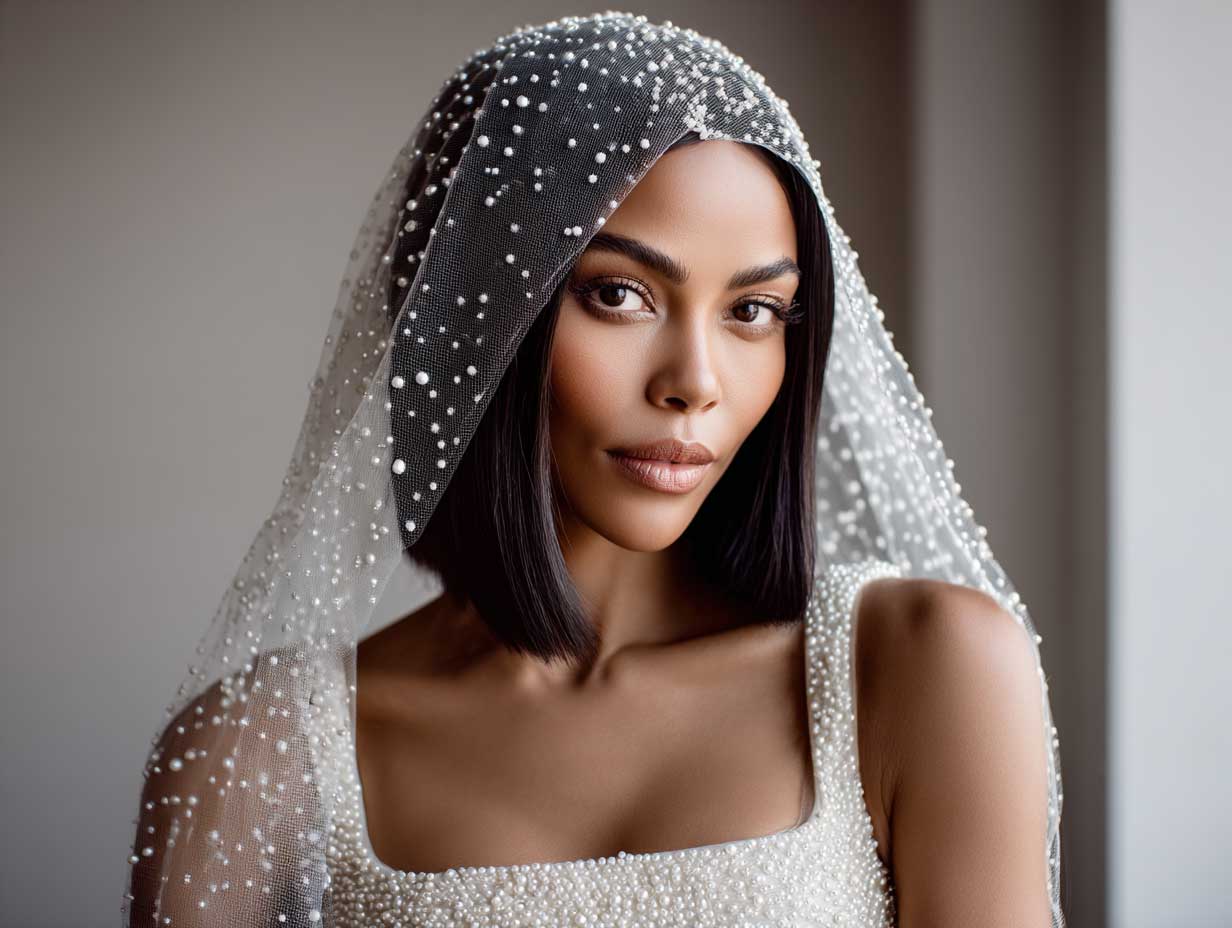


The middle part elongates round and heart-shaped faces and keeps symmetry intact when the veil is centered at the nape or just under the hairline. Tuck the veil comb at the nape rather than the crown for this look — it preserves the clean top line of the bob and makes the veil appear to emerge from behind the hair rather than sitting on top of it. Round face shapes, in particular, gain from keeping the crown area uninterrupted by hardware. The style is about minimalist control, and every placement decision should serve that logic.
For a deeper read on how veil attachment changes with cut length, The French Wedding Veil’s placement guide covers comb curve direction and stylist trial recommendations in useful detail. Gallery weddings, minimalist estates, modern city venues — this bob works in all of them without a single adjustment. It’s the short wedding hair style that lets the dress, makeup, and moment exist without competition.
The Bottom Line
Short Hair Doesn’t Need More Length to Wear a Veil Right — It Needs Better Placement
The four looks above prove that short wedding hairstyles with veil aren’t a workaround or a compromise. They’re a different visual language — one where the hair’s architecture stays visible and the veil does specific, intentional work rather than covering everything.
The criss-cross bobby pin method over the comb teeth costs nothing and solves the grip problem every stylist blames on hair length. Texture spray before comb insertion, curve of the comb facing down, placement matched to the specific cut — that’s the whole formula.
Save this post before your hair trial so you can show your stylist exactly which placement matches your cut.