Asian Paints exterior colour shades do something most paint brands don’t: they hold their pigment through monsoon season, scorching UV exposure, and the kind of humidity that turns a beige facade grey-green within two summers. I’ve photographed enough repaint disasters to know that the first choice of Asian paint colour outside makes or breaks a façade for at least a decade. The three shades covered here — Majestic Mauve, Sapphire Serenity, and Golden Glow — each solve a different problem that homeowners consistently get wrong when picking exterior colours. None of them are safe. That’s the point.
What most people get wrong is treating exterior paint as a single decision. It isn’t. The shade on the wall interacts with door and window frame colours, roofline material, ambient light at different times of day, and whether the facade faces north or south. Asian Paints has over 2,200 colours in its Apex Ultima range — which already tells you something about the scope of what’s possible and how easy it is to choose the wrong one without a framework.
Quick Scan
- Majestic Mauve — warm-cool blend, works on minimalist and heritage facades alike, pair with white or charcoal trim
- Sapphire Serenity — deep blue with grey undertones, best on north-facing or coastal homes, needs white trim not off-white
- Golden Glow — warm gold, urban homes, bungalows, and townhouses; skip it entirely if your roof is red tile
- Asian Paints Apex Ultima: 8-year performance warranty, anti-algal formula, silicone additive technology — this is the product line to use on any of these shades
- Test swatches for 48 hours outdoors, not indoors. What looks mauve inside looks pink outside in direct sun.
Majestic Mauve on a Modern Facade — What It Actually Takes to Pull It Off
Mauve is the colour people order and then panic about. I’ve seen it happen. The shade card looks subdued in the store, the contractor mixes it correctly, and then the first coat goes on and you’re suddenly looking at something that reads strongly pink in afternoon light. Majestic Mauve from the Asian paint colour outside collection sits right at the edge of that risk — it’s a red-leaning mauve, not a blue-leaning one, which means morning light flatters it and direct midday sun pushes it warm. Know this before you commit.
The reason it works on contemporary facades is the same reason it looks wrong on villas with a lot of ornamental detailing: Majestic Mauve reads as a deliberate, singular statement. It needs clean lines to land properly. You need it, simple. A boxy modern home with dark grey window frames and a flat concrete roofline? Perfect. A house with arched windows, decorative brackets, and a terracotta roof? Skip this one entirely — the mauve will fight every warm element and lose.


Trim colour is where most people make the expensive mistake. White seems like the safe pairing, but pure white next to Majestic Mauve creates a harsh contrast that ages badly — it looks clinical rather than considered within three years. Charcoal grey trim is my go-to recommendation here. It absorbs the warmth of the mauve without fighting it, and it photographs neutral in every light condition. I’ve watched four neighbours repaint their trim after going white first. Save yourself the ₹40,000–₹60,000 repaint cost.
Door colour is the one accent you get to play with. Exterior colour combinations that hold up long-term almost always use a single focal point to anchor the palette — the door is yours. Navy or dark teal works against Majestic Mauve in a way that earns the facade a second look. Avoid bronze or gold door handles if you go the charcoal trim route — the hardware will disappear. Matte black hardware is the right call.
Sapphire Serenity on House Exteriors — the Blue Exterior Asian Paints Gets Right
Blue exterior house paint from Asian Paints is requested constantly, and Sapphire Serenity is the shade that actually delivers what people think they’re ordering when they say “blue.” It reads blue-grey rather than sky blue, which means it doesn’t look like a swimming pool from the street. That grey undertone is what makes it professional. Pure bright blue on an exterior is nearly impossible to balance — it competes with the sky, overwhelms small facades, and fades unattractively to a washed-out slate within five to seven years.
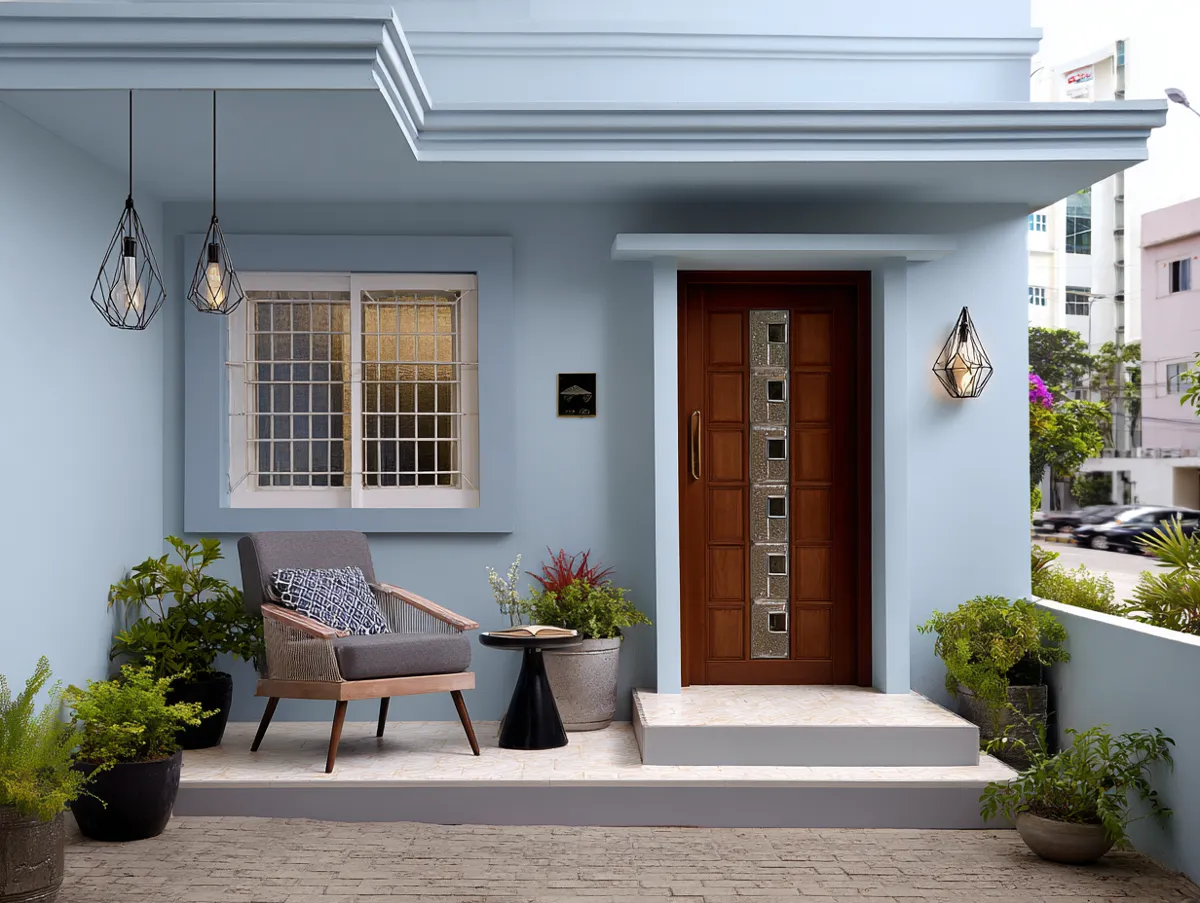
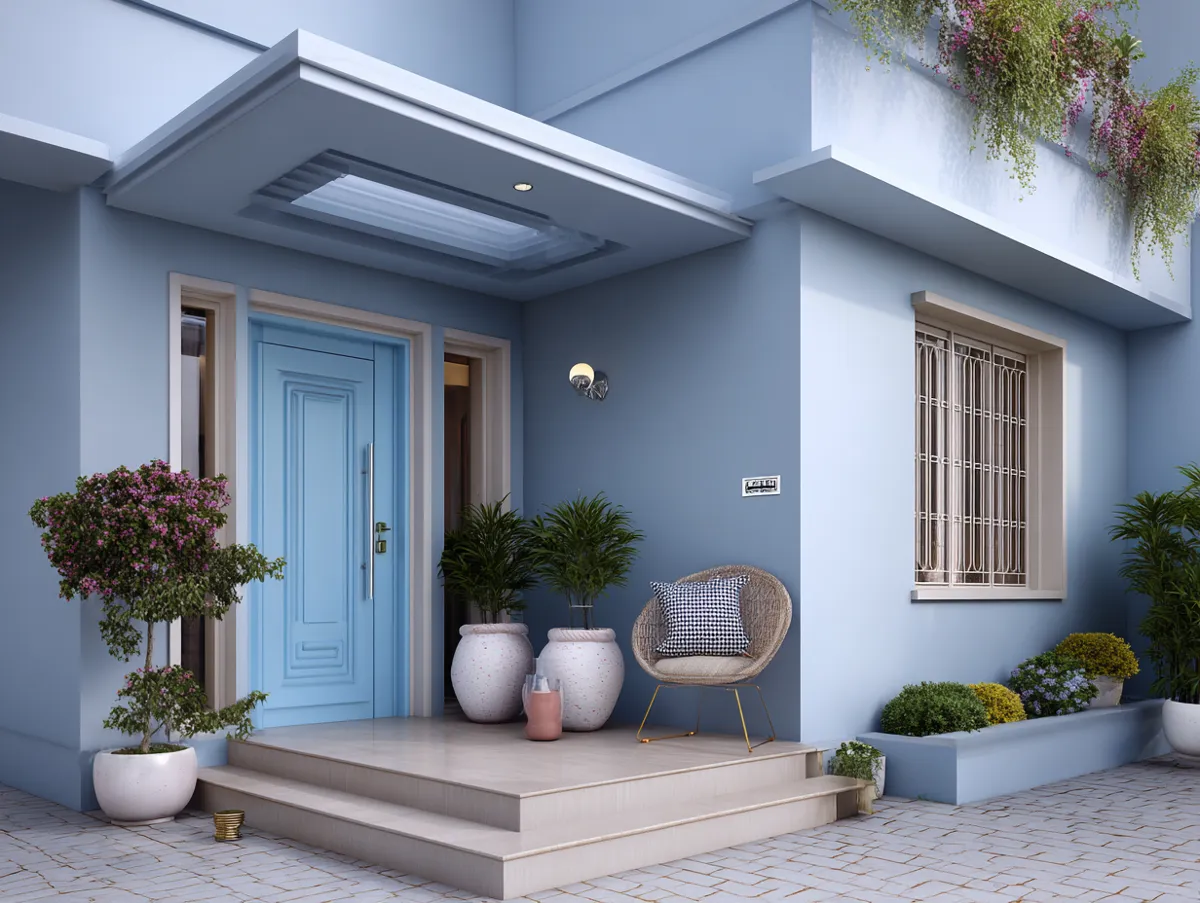


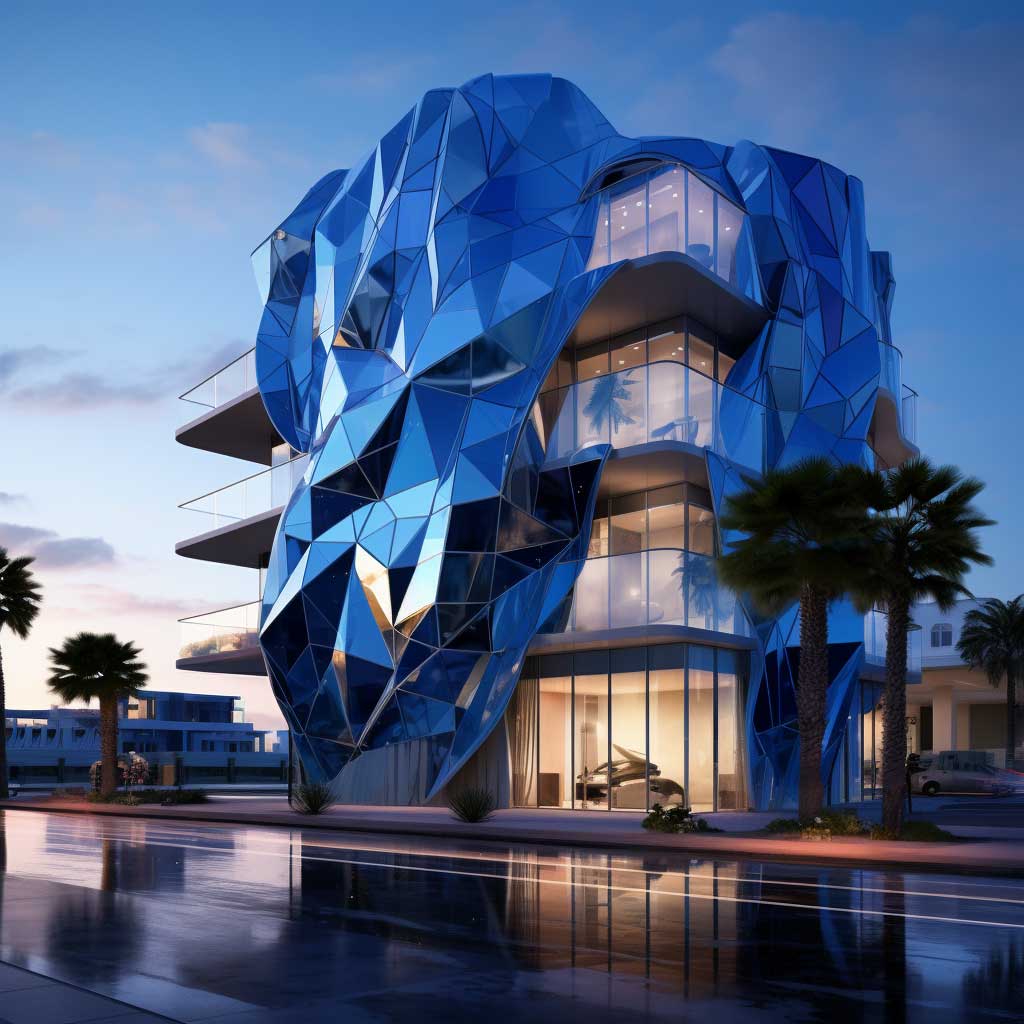


North-facing facades are where Sapphire Serenity performs best. The shade deepens slightly in reduced light, which creates a richer, more intentional appearance on facades that don’t get direct afternoon sun. South-facing homes should be careful — full sun will push this shade cooler and slightly more purple by late afternoon, which can look unintentional if you haven’t tested the swatch in direct light first. I stole this observation from a colour consultant who paints high-end residential builds in Bangalore and Chennai, and she was right.
What trim colour to use? White — but not pure white. Off-white with warm undertones, like Asian Paints Brilliant White or similar warm-base whites, softens the transition. Pure white creates a line so sharp it reads almost industrial. The goal is contrast without harshness. Don’t use grey trim on Sapphire Serenity — you’ll lose the definition of the shade and the whole facade will read as one flat colour from a distance. That’s the most common mistake I see on mid-range housing developments that go blue and regret it within two years.
Don’t Do This with Asian Paints Exterior Colours
- Don’t test swatches indoors. Colour swatches look completely different under natural outdoor light. Majestic Mauve will appear pink. Sapphire Serenity will look navy. Golden Glow will seem orange. Test for a minimum of 48 hours on an exterior wall in the actual sun exposure your facade receives.
- Don’t skip the primer. Applying Apex Ultima without the appropriate exterior primer reduces both coverage and the 8-year warranty performance. The primer adds 15–20% cost. The repaint you’ll do in year four without it costs four times that.
- Don’t pair Golden Glow with a red or terracotta tile roof. The warm tones stack on each other and the result looks dated immediately. Grey or dark slate rooflines are the only ones that balance Golden Glow correctly.
- Don’t use the same shade on boundary walls as on the main facade. The shade code is the same, but boundary walls fade faster due to street-level dust and exhaust exposure. Match by visual assessment after 12 months, not by reusing the original code.
Golden Glow Reads Differently on Urban Homes Than the Shade Card Suggests
Golden Glow from the Asian paint colour outside range is the shade that photographs better than it looks in person — until you see it on a completed facade, and then it makes complete sense. It’s a warm, slightly muted gold that sits closer to harvest wheat than to metallic yellow. You need this distinction before ordering. Clients who expect chrome-adjacent warmth are disappointed. Clients who understand they’re getting a sophisticated warm neutral are delighted — and they get more compliments from neighbours than any other exterior colour I’ve seen chosen in the last three years.

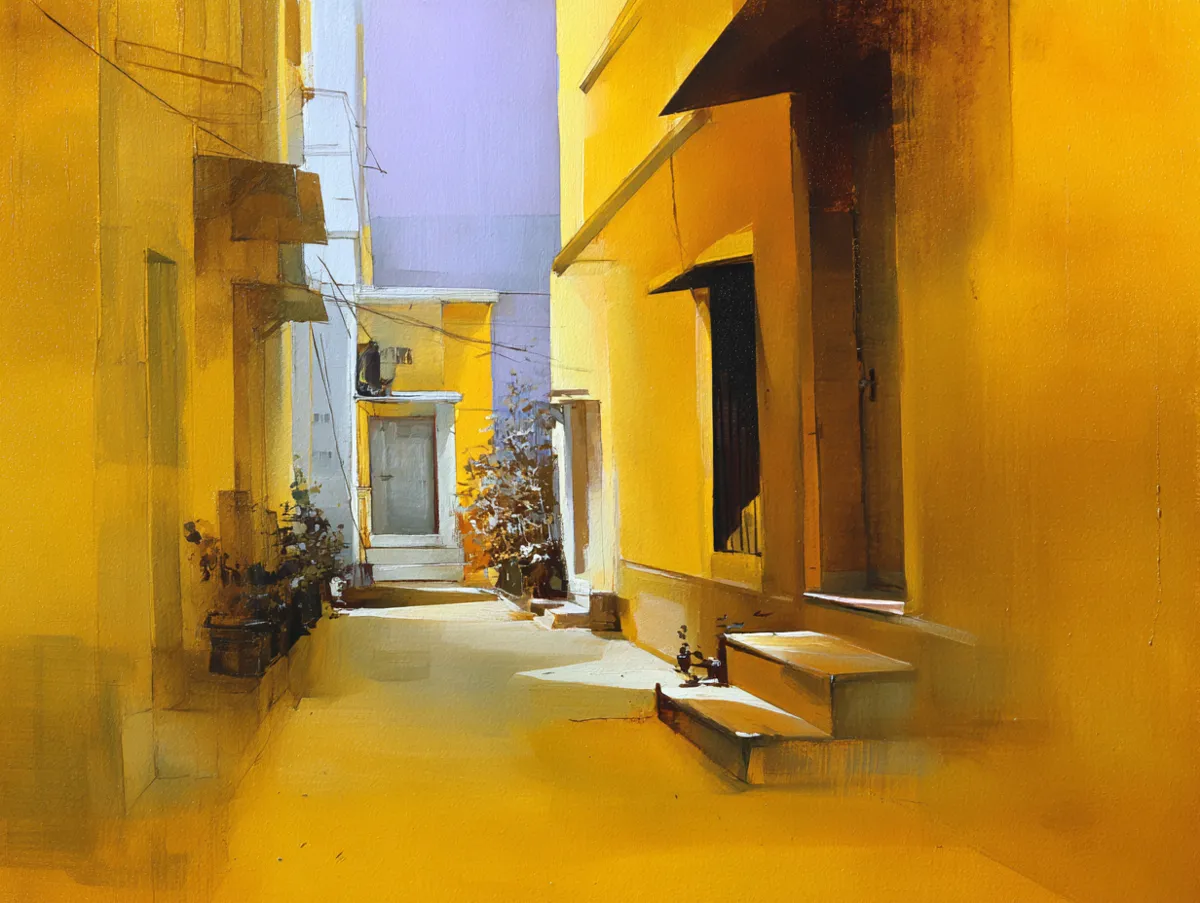
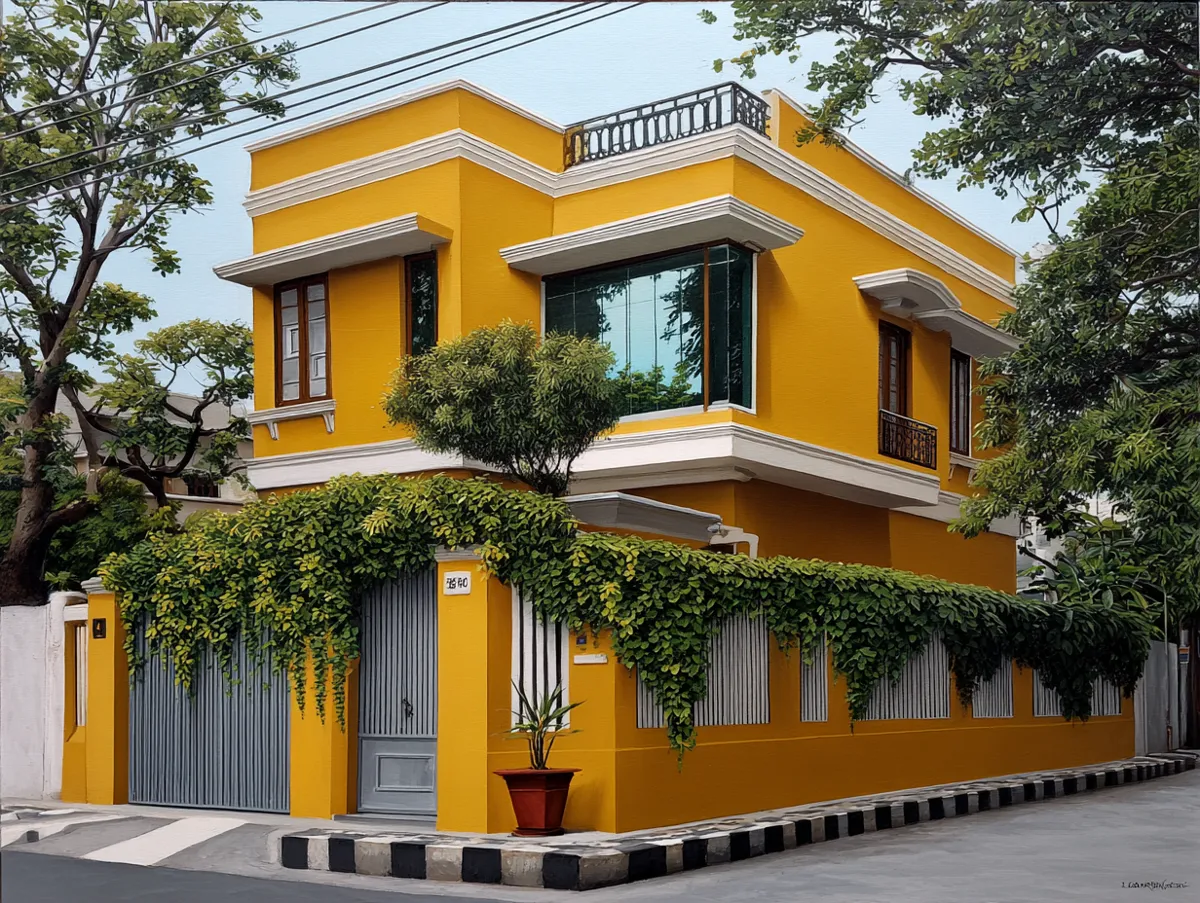
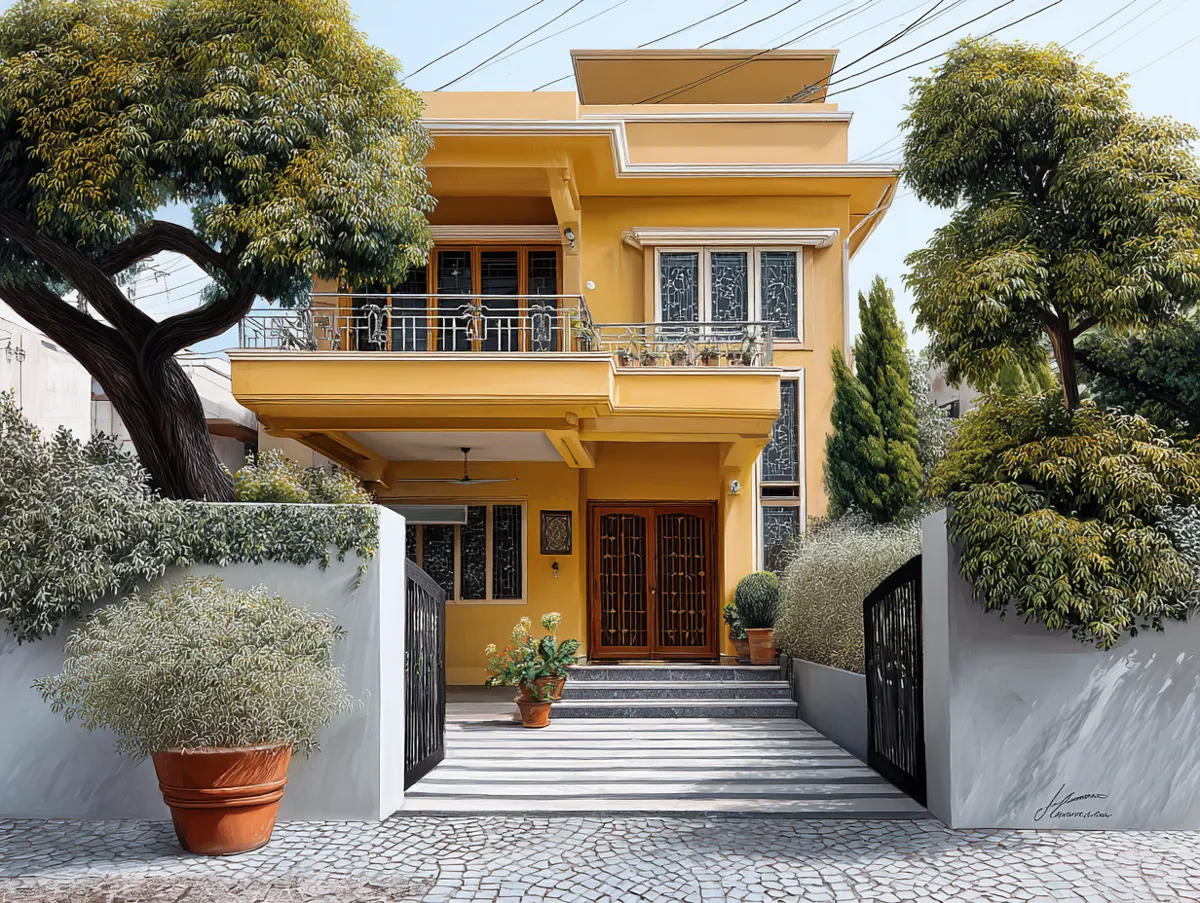


Bungalows are where Golden Glow earns its reputation. The shade references something the best residential architects do instinctively: they use warm wall colour to borrow visual warmth from evening sun rather than fighting it. Golden Glow essentially acts as a sundial — it looks neutral at 10am, rich at 3pm, and almost luminous at dusk. No other shade in this palette does that, and it’s the reason that a completed Golden Glow exterior looks like it was photographed with a filter. It wasn’t. That’s just how warm ochre interacts with angled light.
The roof constraint is real and non-negotiable. Grey slate, dark charcoal, or even a matte black roof sets Golden Glow up correctly — the cool roofline cools down the warm wall and creates balance. If your existing roof runs warm — terracotta, brick red, or brownish clay tile — Golden Glow is the wrong exterior choice and no amount of trim colour will fix it. You’ll end up with a facade that looks monochromatic warm, like a sunset that stayed too long. Pick Sapphire Serenity instead and thank me later.
Asian Paints Apex Ultima is the product line I’d apply any of these shades in — the 8-year warranty isn’t marketing. The Apex Ultima product page confirms the full technical spec: 100% acrylic formula with PU Serum, Colour Stay Pro pigment technology, and Dirt Pick Up Resistance for facades in dusty urban environments. The 20L can runs approximately ₹12,710, which covers roughly 90 sq ft per litre for two coats. For a typical 1,000 sq ft facade, budget around ₹1.4–₹1.6 lakh in paint alone before labour.
Colour Combination Logic — Doors, Windows, and Where Asian Paints Gets Specific
Asian Paints produces a specific shade card for exterior colour combinations, including door and window frame recommendations paired to each wall shade. I’ve cross-referenced those recommendations against real-world results and the shade card is mostly right, with one consistent exception: the brand tends to suggest complementary warm door colours for warm wall shades. In practice, contrast outperforms complement every time at the exterior scale. A warm Golden Glow wall with a cool dark door reads sharper and more intentional than a warm wall paired with a warm honey door that disappears into the facade.
For grey exterior house paint Asian Paints recommends similar logic — cool-neutral wall, warm or high-contrast door. That’s the right call. Doors are the handshake of the facade. They’re what guests look at when they approach, and they’re what you see every time you leave the house. Spending ₹3,000–₹5,000 on a quality exterior door paint — Asian Paints Door & Window Enamel or equivalent — is never a mistake. I own two homes and I’ve repainted the front doors three times without touching the walls. Door colour is where you get to change your mind cheaply.
Outside wall paint colour names from Asian Paints come with four-digit codes on the shade card. Request the physical shade card rather than relying on screen representations — screen colours are not calibrated to exterior paint pigment, and the difference between how Mauve Star (code 0345) looks on a monitor versus a swatch in afternoon sun is significant. Anyone who has ever ordered fabric online and received the wrong colour knows exactly what I mean. Proven exterior paint colour combinations always start with a physical swatch test, not a screen.
| Shade | Best Roof Colour | Trim Pairing | Door Accent | Avoid |
|---|---|---|---|---|
| Majestic Mauve | Dark grey / concrete | Charcoal grey | Navy or dark teal | Terracotta roof, ornate trim |
| Sapphire Serenity | Dark slate / charcoal | Warm off-white | Crisp white or brass | Grey trim, red brick surrounds |
| Golden Glow | Charcoal / matte black | Deep brown or black | Dark navy or forest green | Red/terracotta roof, warm trim |
Final Verdict
Asian Paints Exterior Colours Reward the Homeowners Who Test Before They Commit
Pick one of the three shades based on roof colour first, not preference. The facade is the largest surface you own — it needs to work with the fixed elements, not fight them.
Apply in Apex Ultima for the 8-year warranty and anti-algal formula. Any contractor who argues against primer is charging you a shortcut you’ll pay for twice.
Save this post and come back when you have the shade card in hand. The comparison table holds across most Indian climates.
Related Topics