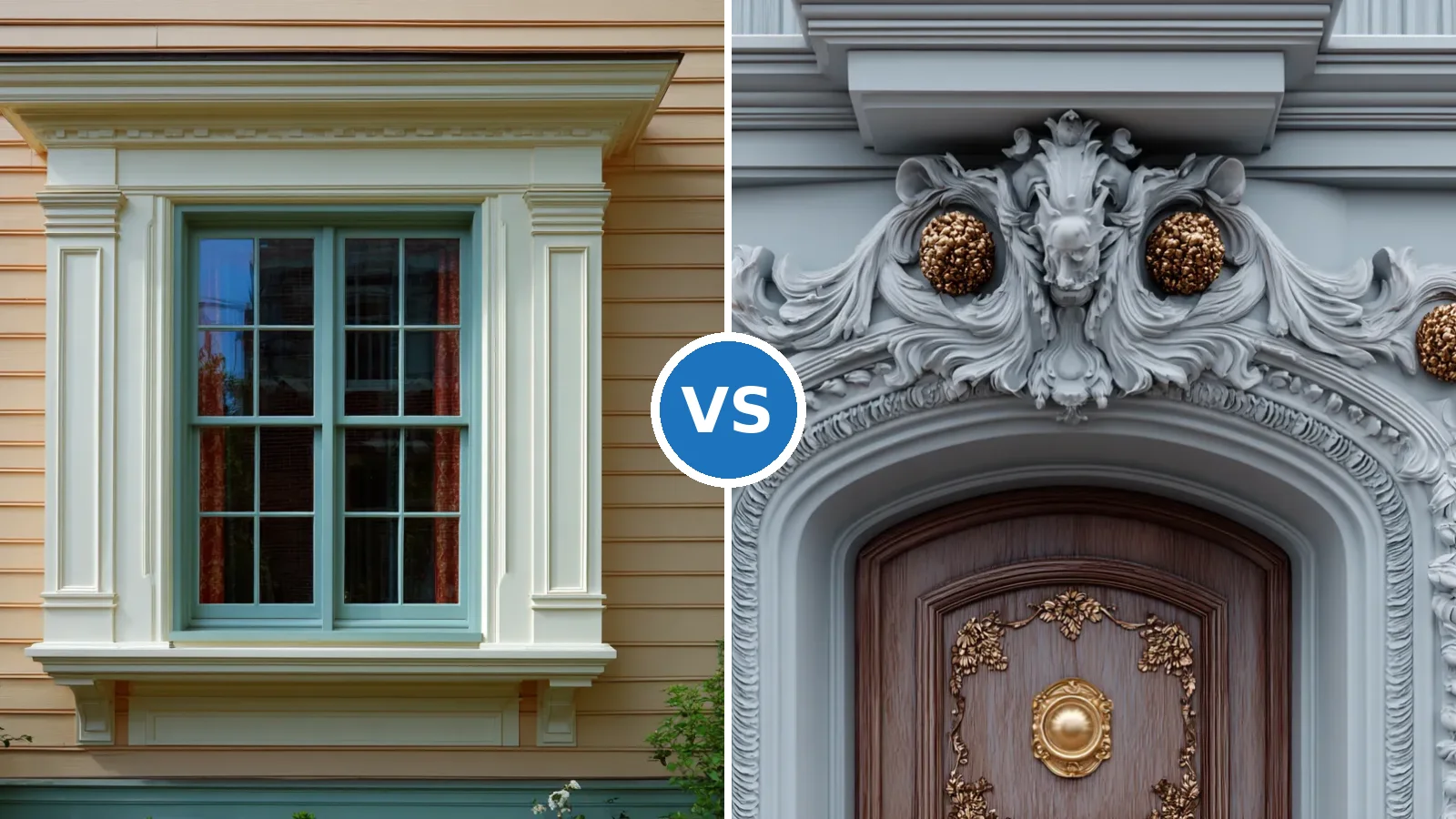
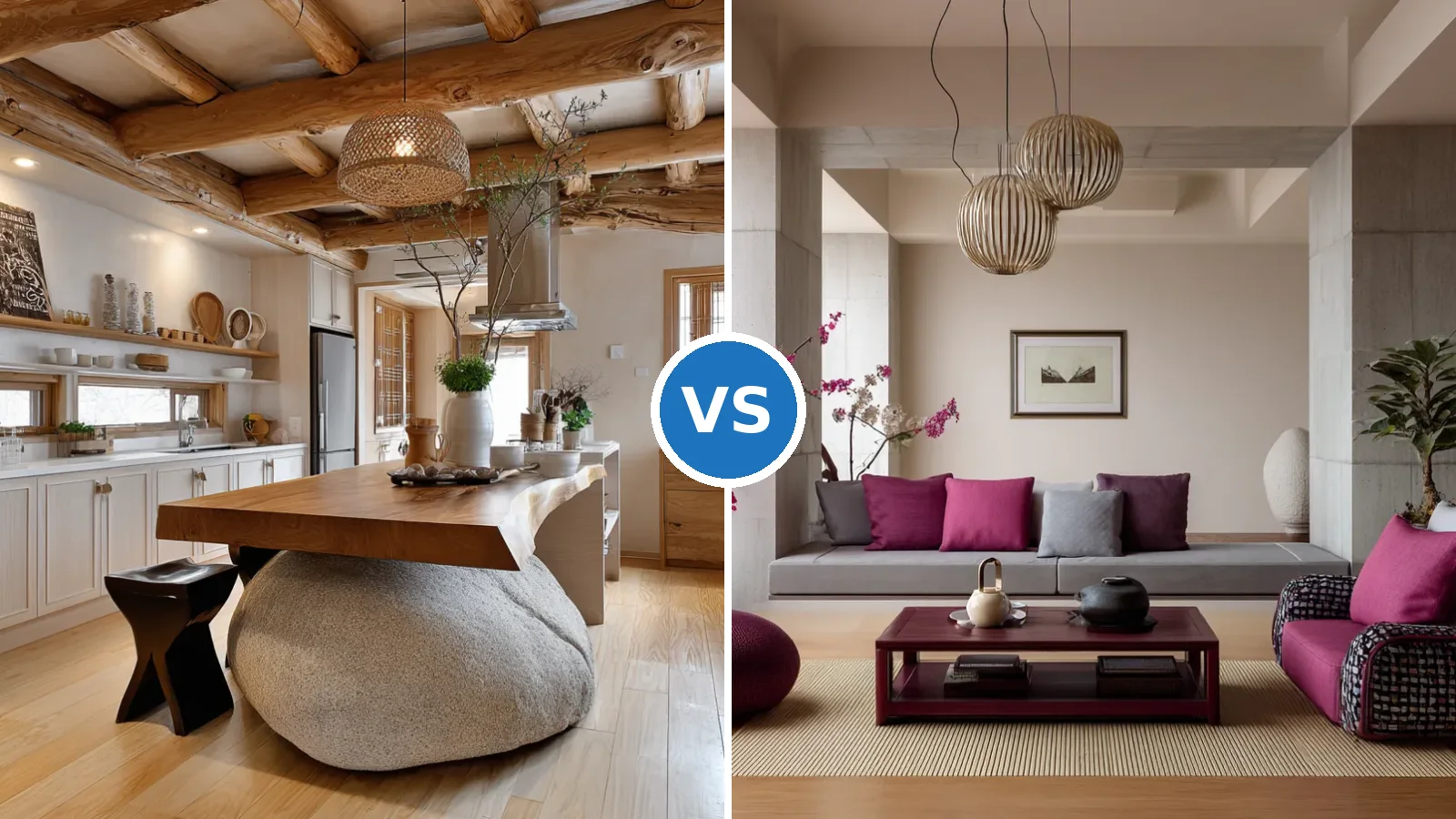
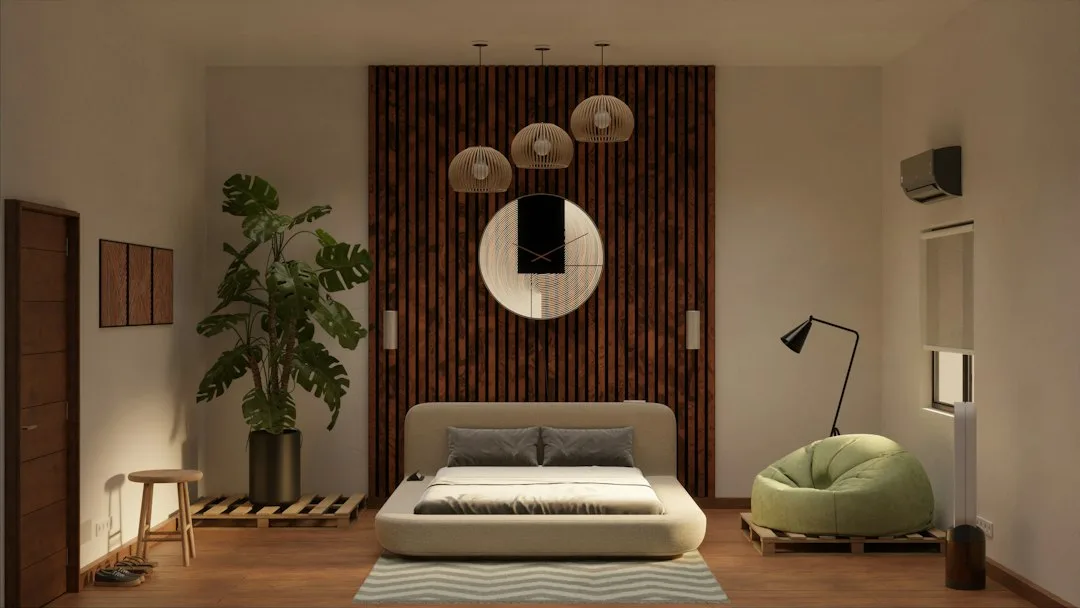
Modern baroque interior design works because it solves the problem most luxury interiors can’t: grandeur that doesn’t feel exhausting to live in. I’ve walked through rooms that nail this — ornate carved furniture next to flat-front cabinetry, crystal chandeliers above concrete floors, damask wallpaper on one wall and matte white on the other three. The friction between those two registers is what makes modern baroque interior design feel genuinely high-end rather than merely decorated.
You don’t need a palace footprint. A 300-square-foot living room can carry one baroque piece — a gilded mirror, a crystal pendant, a velvet sofa with carved walnut legs — and read as considered rather than cluttered. The baroque contribution is detail and weight. The modern contribution is restraint. Pull both off simultaneously and you get a room that photographs better than any all-white interior and holds up in person.
What ruins most attempts is ratio. Too many ornate pieces and the room tips into period drama. Too few and the modern side wins completely, erasing any baroque identity. My rule across every room I’ve styled in this direction: one dominant baroque focal point per space, everything else in service to it.
- How to anchor a modern baroque living room without overcrowding it — and which furniture lines actually hold up
- The bedroom approach that uses low light as a design tool (and why baroque headboards usually backfire)
- A modern baroque dining room strategy built around the chandelier first, table second
- Neo baroque interior design: what distinguishes it from standard baroque and where the line sits
- The exact colour pairings that make deep jewel tones look intentional alongside contemporary pieces
Modern Baroque Living Room Furniture Does the Heavy Lifting
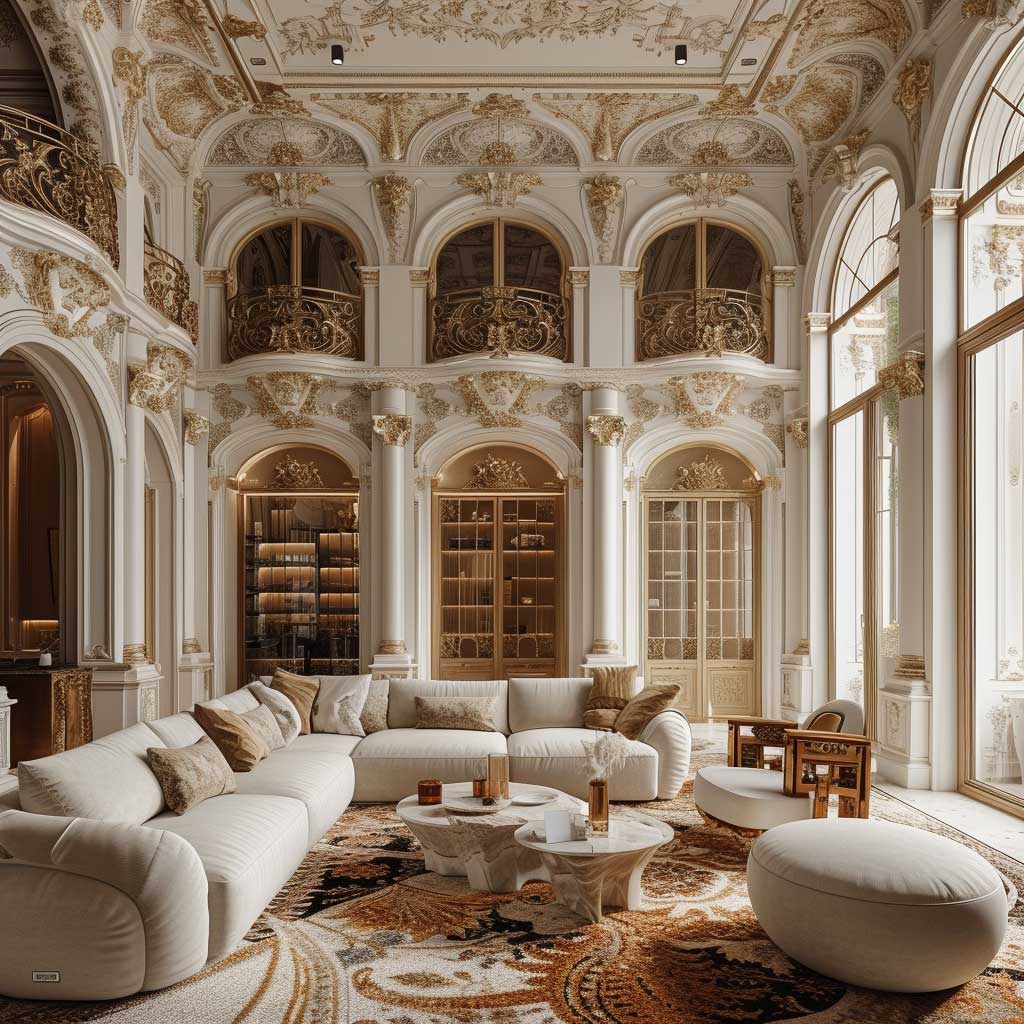

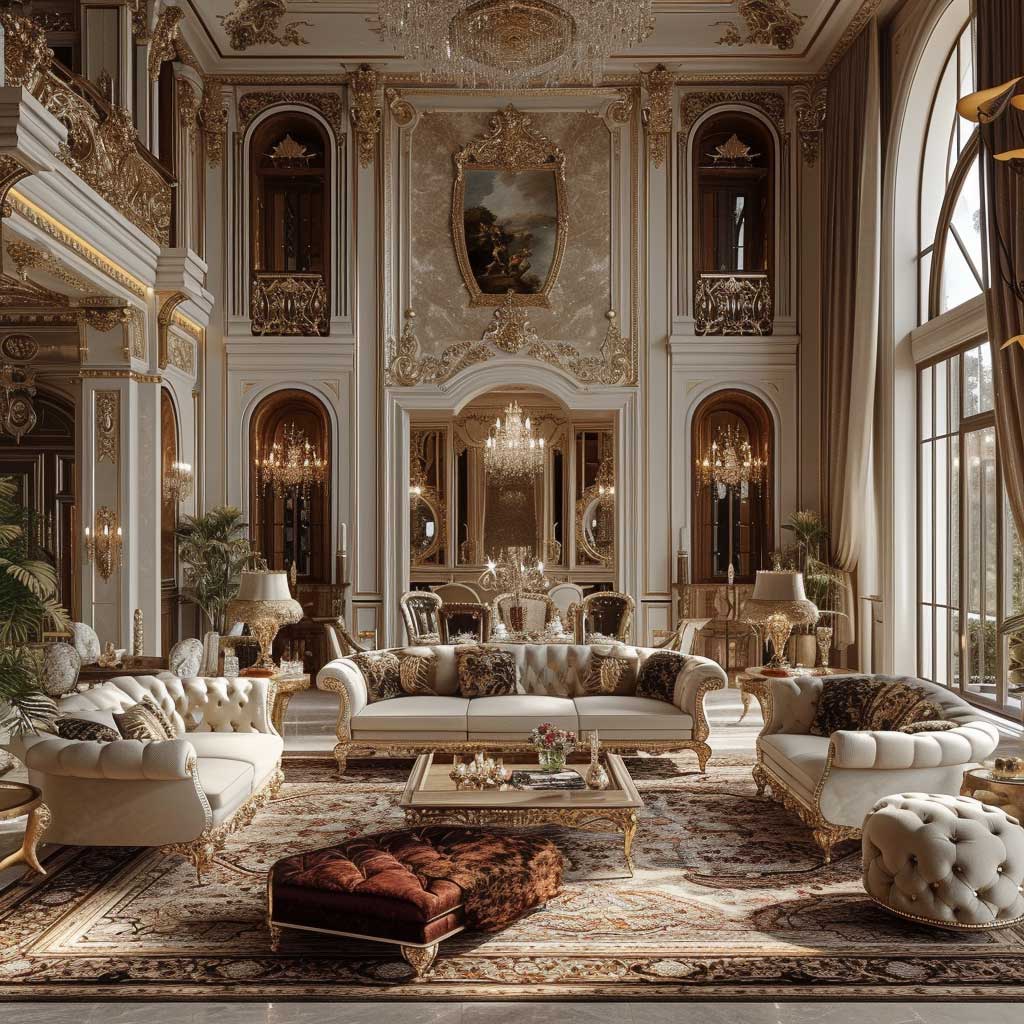
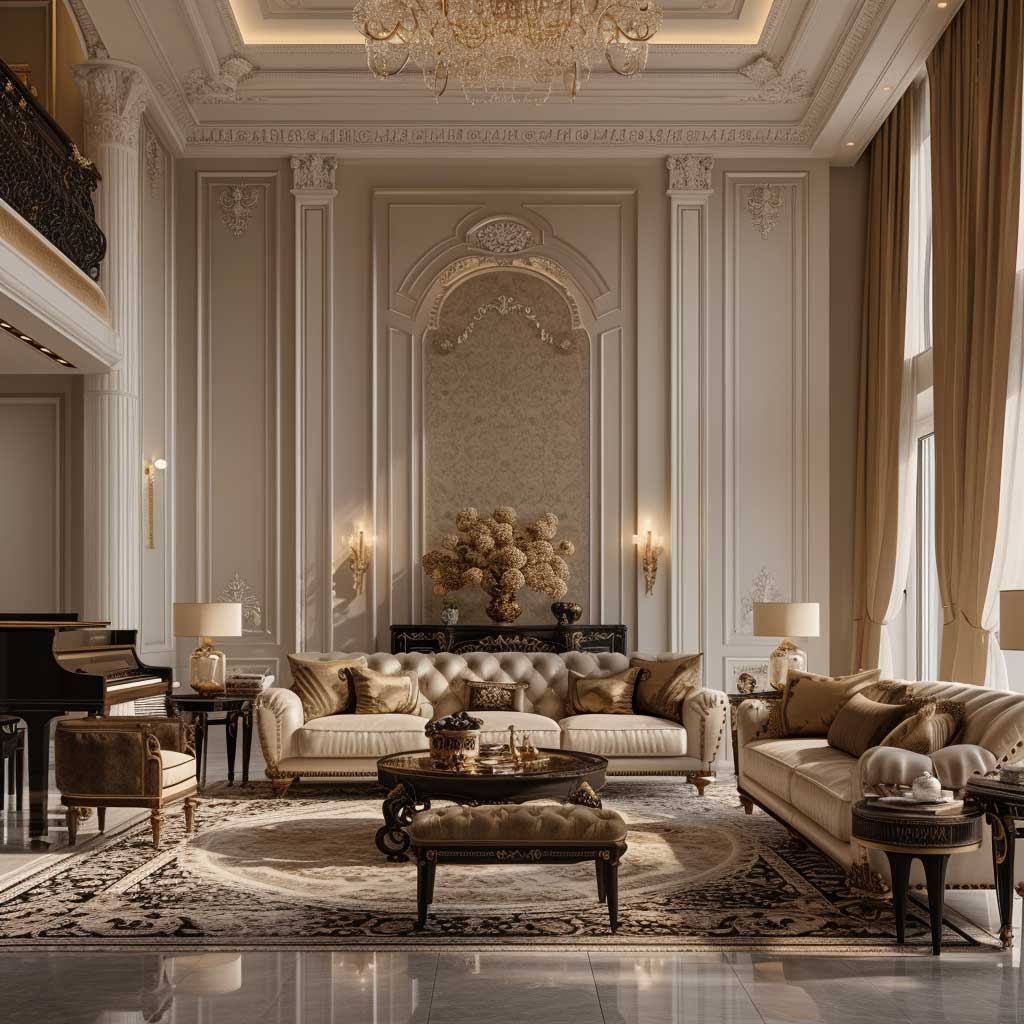
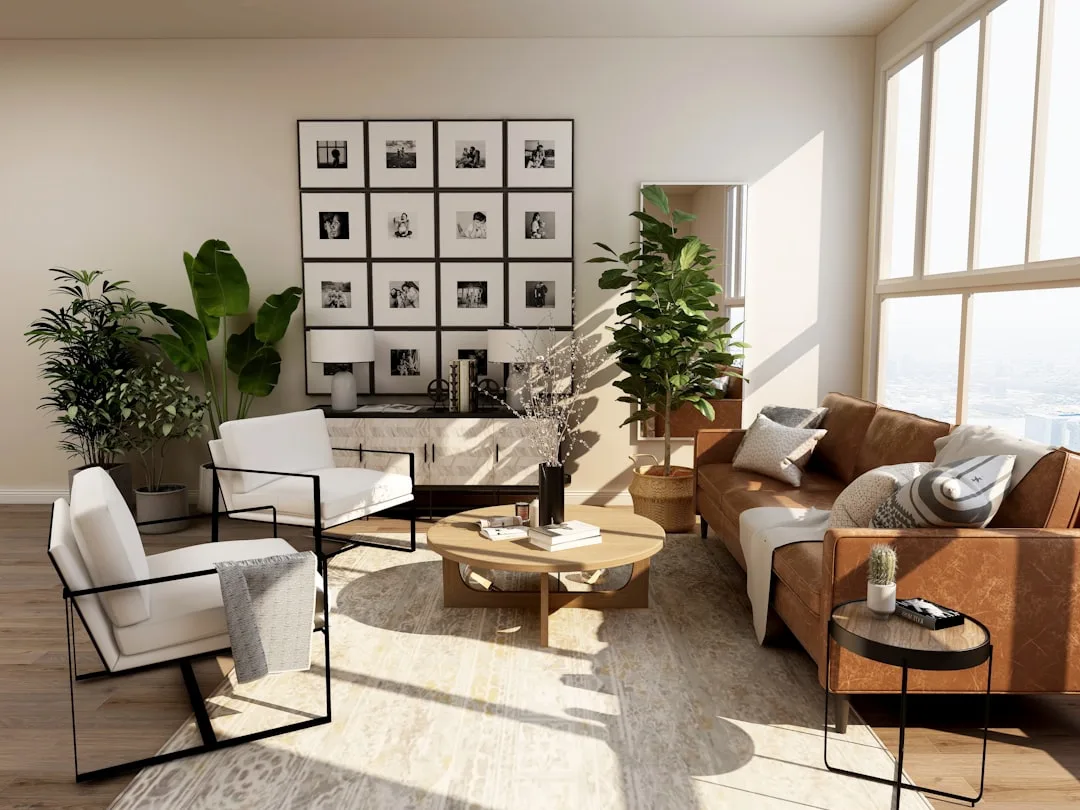
Modern baroque interior design in a living room starts at the sofa — not the chandelier, not the rug, not the wall treatment. Your sofa is the largest horizontal surface in the room and it dictates whether everything else reads as intentional or accidental. I’ve bought sofas in the wrong fabric for this style twice before landing on a velvet-upholstered frame with carved walnut legs: the Caracole Signature line runs around $3,200 and holds the baroque register without tipping into period furniture. The carved legs do the ornate work; the tight upholstery keeps the silhouette contemporary.
Colour in a modern baroque living room is where most people get cautious and shouldn’t. Deep blues, rich purples, and saturated golds set against soft cream or warm greige are the combinations that actually photograph well and feel right in person — like standing inside a Caravaggio painting that somehow has good acoustics. You’ll notice the colour does the baroque lifting when you keep the furniture shapes clean. A deep sapphire velvet sofa against a warm off-white wall and a simple linen rug reads as high design, not heavy. A matching sapphire sofa, sapphire cushions, and sapphire curtains in the same room reads as a showroom display from 2009.
Lighting is where I see the most expensive mistakes made in this style. A crystal chandelier from Schonbek or a vintage piece from 1stDibs ($400–$2,000 depending on scale) is the right centrepiece, but only on a dimmer. At full brightness a crystal chandelier makes a baroque living room look like a hotel lobby. At 30–40% after dark it does exactly what baroque lighting was designed to do: cast pools of warm light that make surfaces glow and shadows dramatic. Wall sconces with ornate detailing at $150–$300 each add a secondary layer without competing with the chandelier overhead.
Wall treatments deserve one wall — not four. Elaborate damask wallpaper on a single accent wall behind the main seating, paired with matte white or warm greige on the remaining three, gives the room its baroque identity without the claustrophobia that full-room pattern coverage creates. My go-to supplier for damask wallpaper in this context is Schumacher’s Chiang Mai or Baroque Rose patterns, priced around $120 per double roll. Modern art pieces hung on the plain walls create the contemporary counterweight that makes the pattern wall feel editorial rather than dated. What doesn’t work: feature wall in a bold paint colour and pattern wallpaper on the same room — that’s two focal moments competing and neither wins.
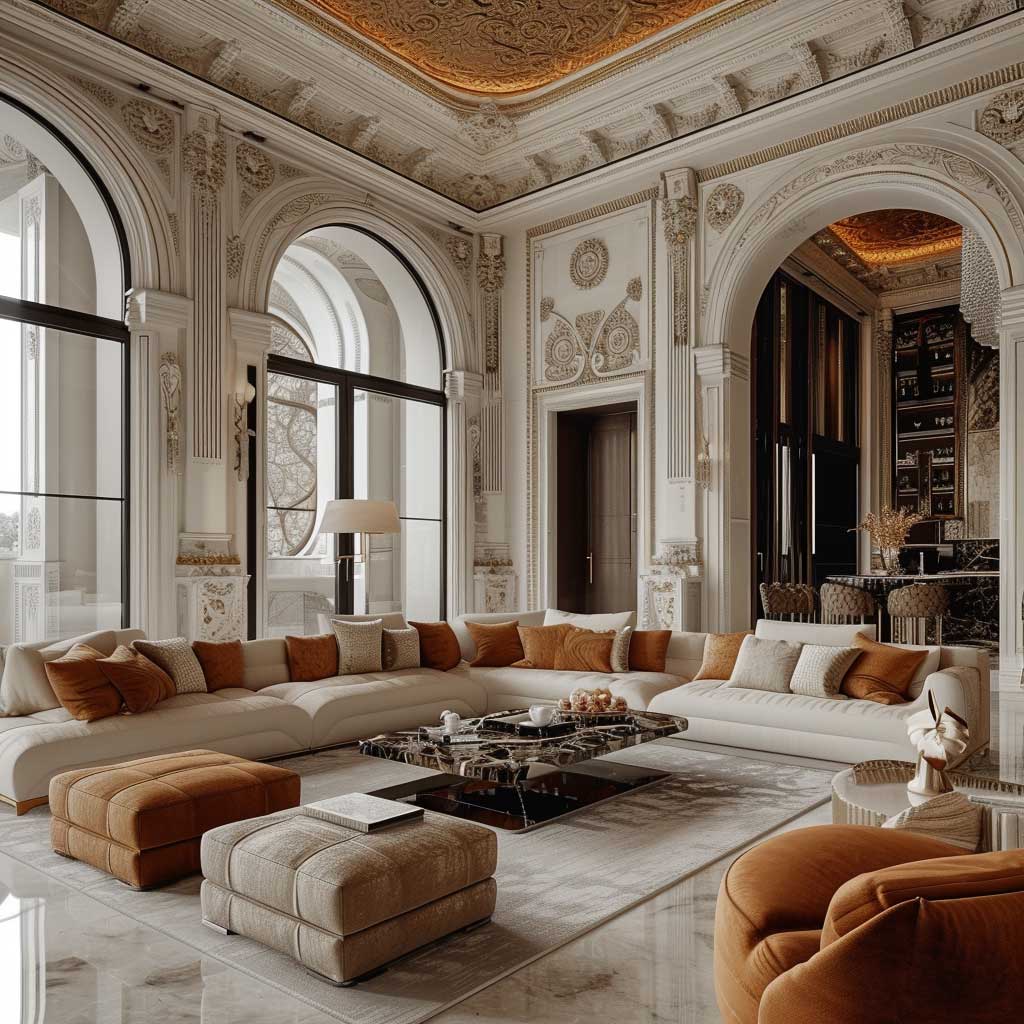


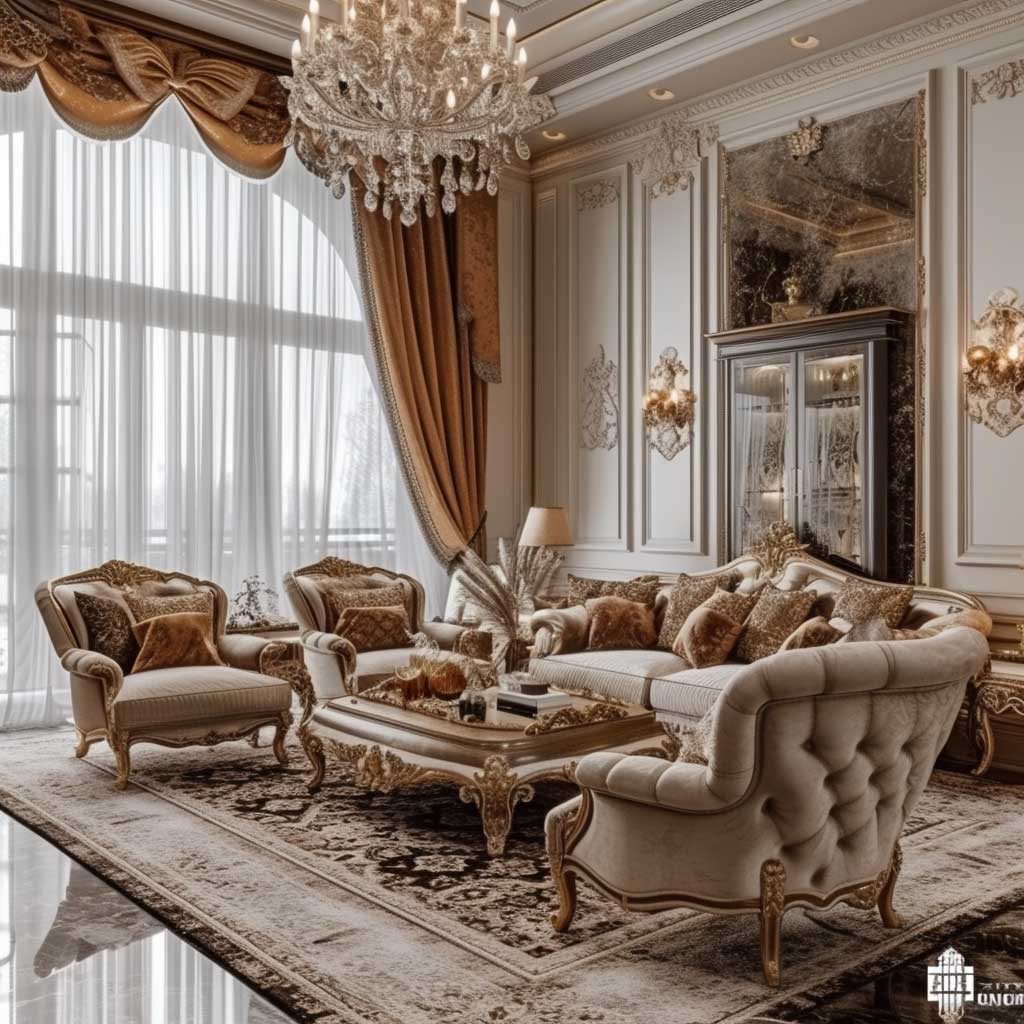
Texture is the invisible architecture of a modern baroque living room. Silk and brocade curtains in floor-length drops alongside a high-pile rug in a neutral — not white, it turns grey within three months — create the tactile layering that makes a room feel expensive even before you notice the chandelier. The IKEA MAJGULL velvet curtains at around $60 per panel are a genuine sleeper hit for this application: they hang with enough weight to read as intentional, and the deep teal and forest green colourways are exactly the baroque-adjacent hues that make the whole approach cohere.
Art placement follows a single rule I stole from a Warsaw apartment: one large piece on the wall facing the main seating, framed ornately, nothing else on that wall. A salon arrangement with fifteen prints destroys the restraint that makes modern baroque feel different from full maximalism. For an interior that bridges baroque grandeur with calm, contemporary livability, this breakdown of minimalist baroque approaches covers the ratio logic in useful detail.
Modern Baroque Interior Design in the Bedroom Works After Dark

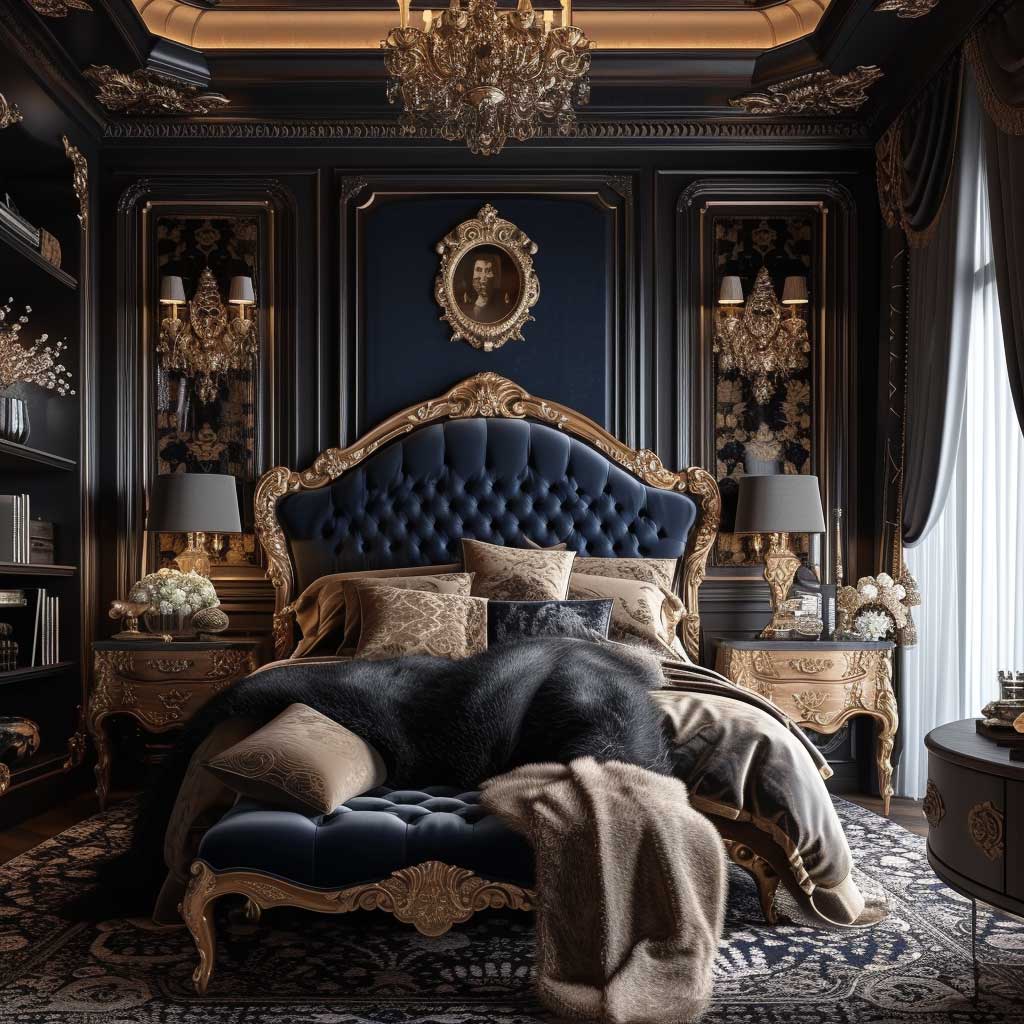

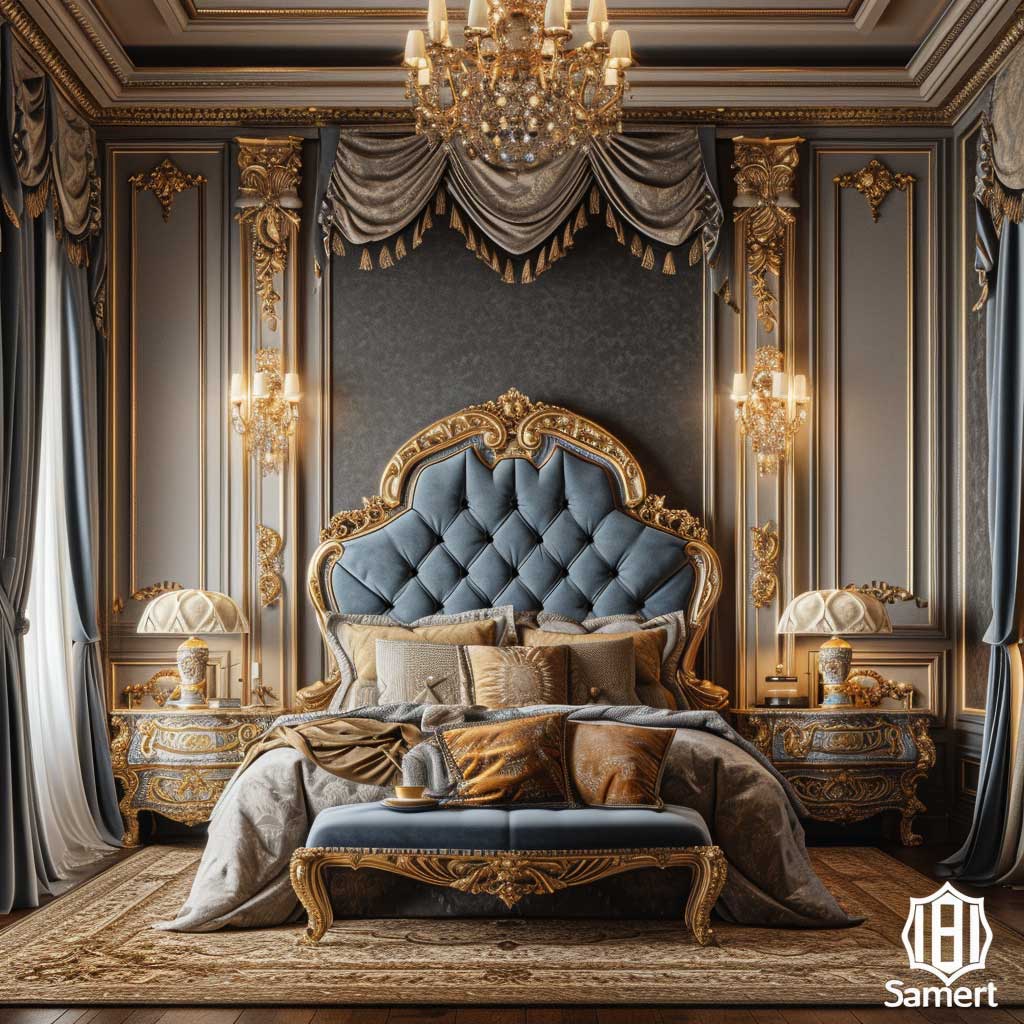
Baroque in a bedroom has one design advantage the living room doesn’t: you experience it primarily in low light. A gilded wall sconce at 10pm reads completely differently from the same fixture at noon, and the evening version is the one that justifies the entire approach. Design the bedroom for how it looks after dark, not how it looks in the Sunday afternoon light. The drama lives in the shadows cast by ornate fixtures, not in the surface details visible under full daylight.
The bed frame should be the most restrained piece in a modern baroque bedroom — and this is exactly where most people get it backwards. A carved baroque headboard paired with an otherwise minimal room looks like a theatre prop, not a considered interior. I’ve seen this mistake in four different staged apartments and it kills the premise every time. My go-to is a platform frame in matte black or walnut at 45–50cm from the floor: the West Elm Haven frame at around $1,299 or the CB2 Cama frame at $1,099 both sit at the right height and profile. Let the accessories carry the baroque identity.
Your one baroque focal point in the bedroom should be either the mirror or the ceiling fixture — not both. A vintage gilded mirror from 1stDibs or a secondhand market find under $150 placed opposite the window doubles natural light and gives the room its focal moment. Pair it with bedside lamps that are entirely plain: a ceramic base with a white linen shade costs under $80 each at H&M Home and does exactly what task lighting needs to do without competing for attention. Is a crystal chandelier in the bedroom worth the investment? Yes, but only in rooms with ceiling height above 2.7 metres — below that the fixture crowds the space and reads as a size miscalculation rather than a design choice.
Colour in a modern baroque bedroom should follow the jewel-on-neutral principle. Emerald green or sapphire blue for accent walls and textiles, set against muted tones of dusty rose, soft sage, or warm greige. I own two bedrooms styled this direction and both use the same underlying logic: one saturated colour repeated three times across the room — a cushion, a throw, a curtain panel — against a near-white wall base. The repetition reads as intentional; the restraint reads as modern. Avoid grey as a wall base in this context; it deadens gold and brass accents and makes the whole baroque register look cold.

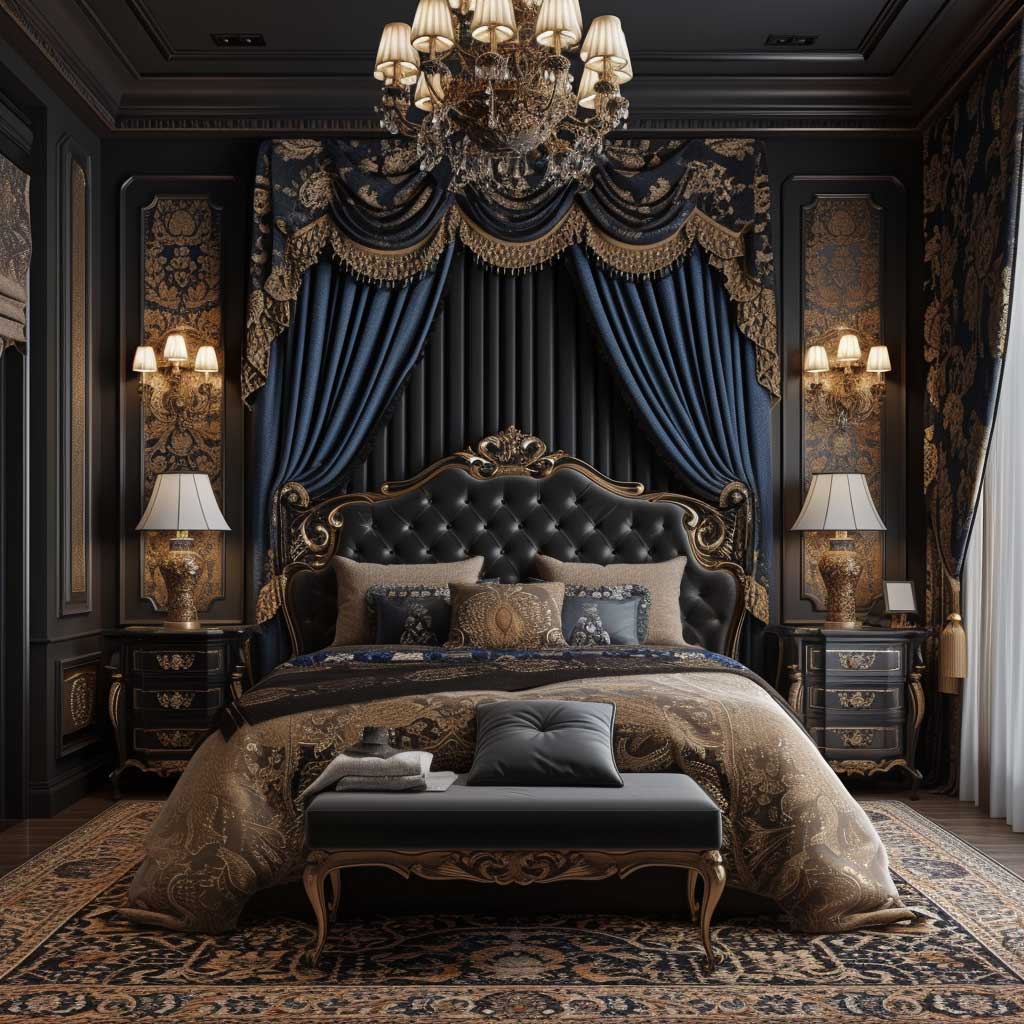


Textiles carry the opulence that the furniture restrains. You need at minimum one fabric with actual sheen — brocade, silk, or a high-thread-count satin-weave cotton in the bedding. Not synthetic satin from a fast-fashion source; it photographs correctly but feels cheap and disrupts sleep. A silk-cotton blend duvet cover from Bedfolk runs around $280 and holds its drape for years. The difference in tactile quality is immediate and the sheen under low evening light is exactly the baroque sensory experience a bedroom in this style needs to deliver.
Accessories in a modern baroque bedroom are chosen for maximum impact at minimum quantity. An ornate mirror, one piece of framed artwork in a gilded frame, and a decorative vase on a flat-front dresser — that’s the ceiling. Three ornate pieces with everything else plain creates a room that feels considered. Six ornate pieces with plain backgrounds creates a room that feels like a consignment store. Keep the bedside surfaces to a lamp and one book. Nothing else. You’ll notice the room reads more expensive because of what’s absent.
A Baroque Style Dining Room Starts at the Ceiling, Not the Table
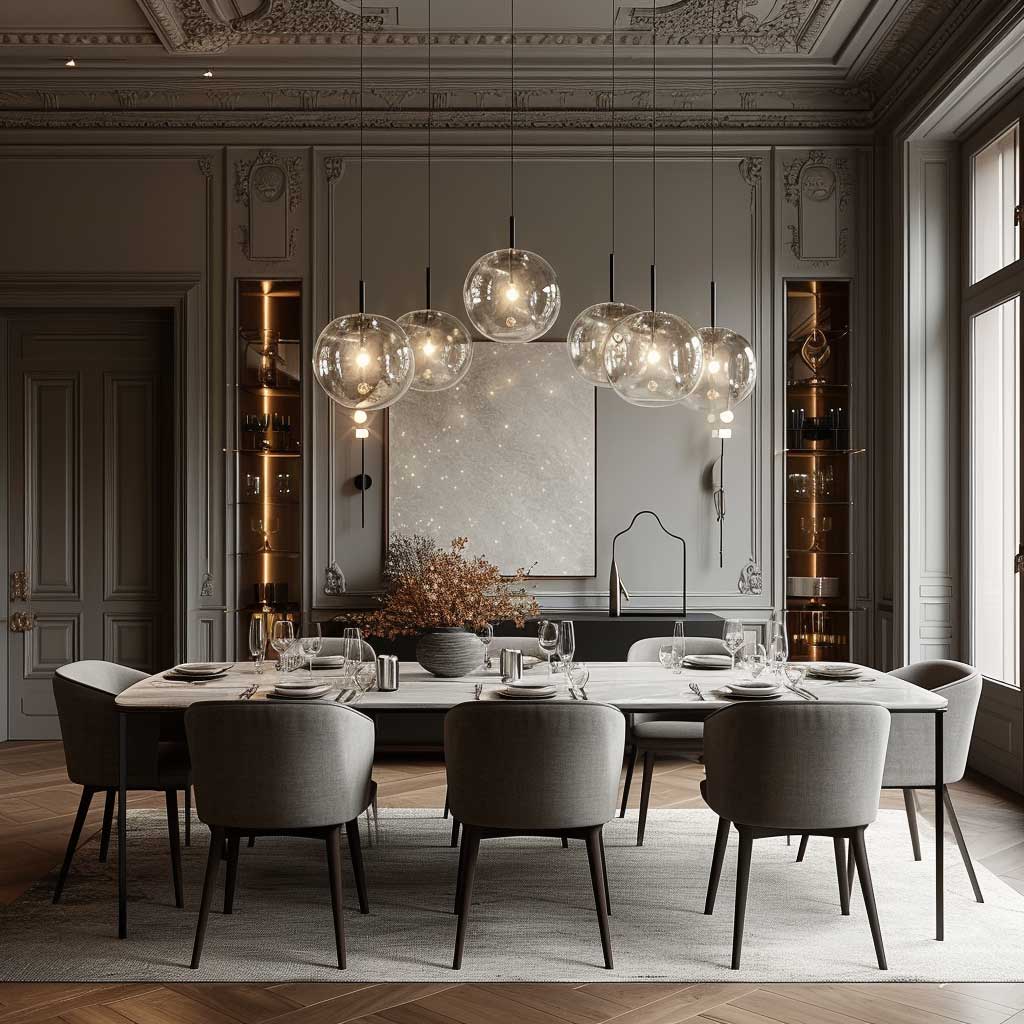
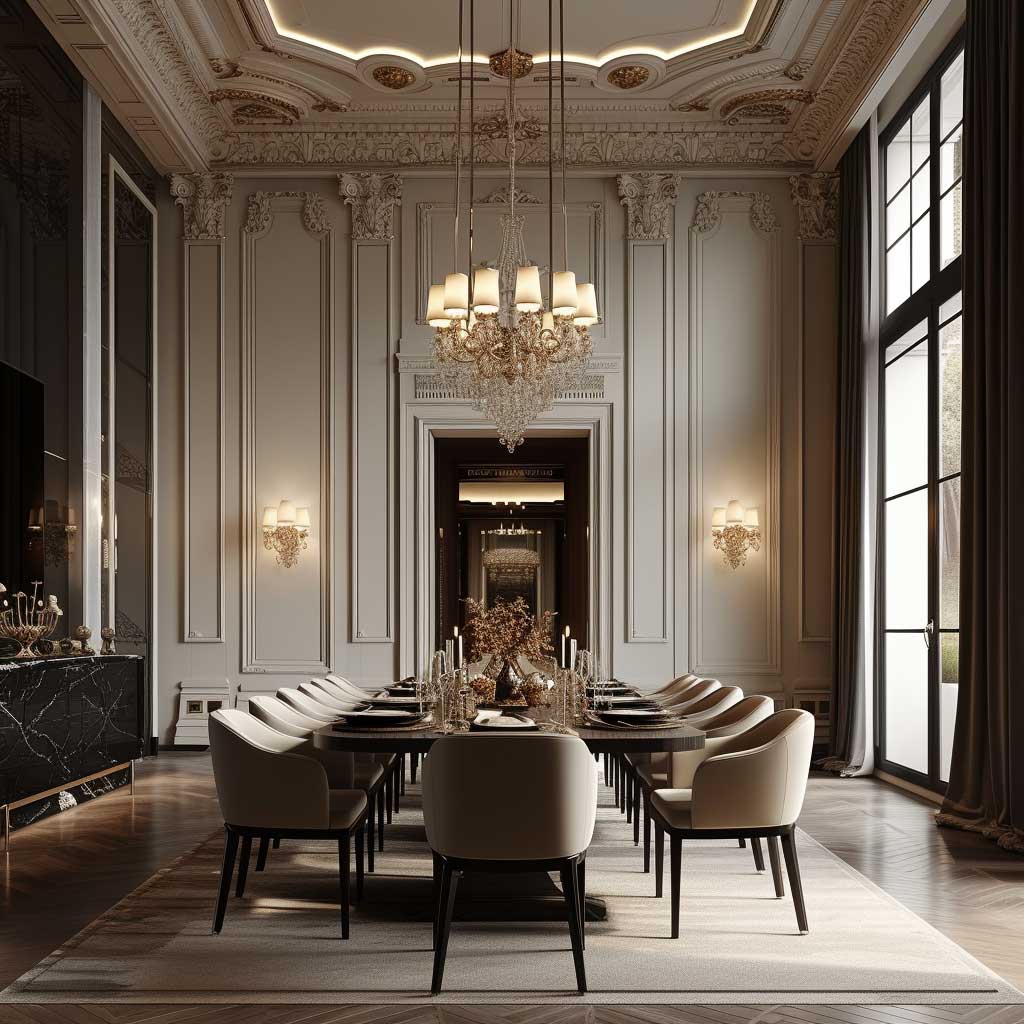

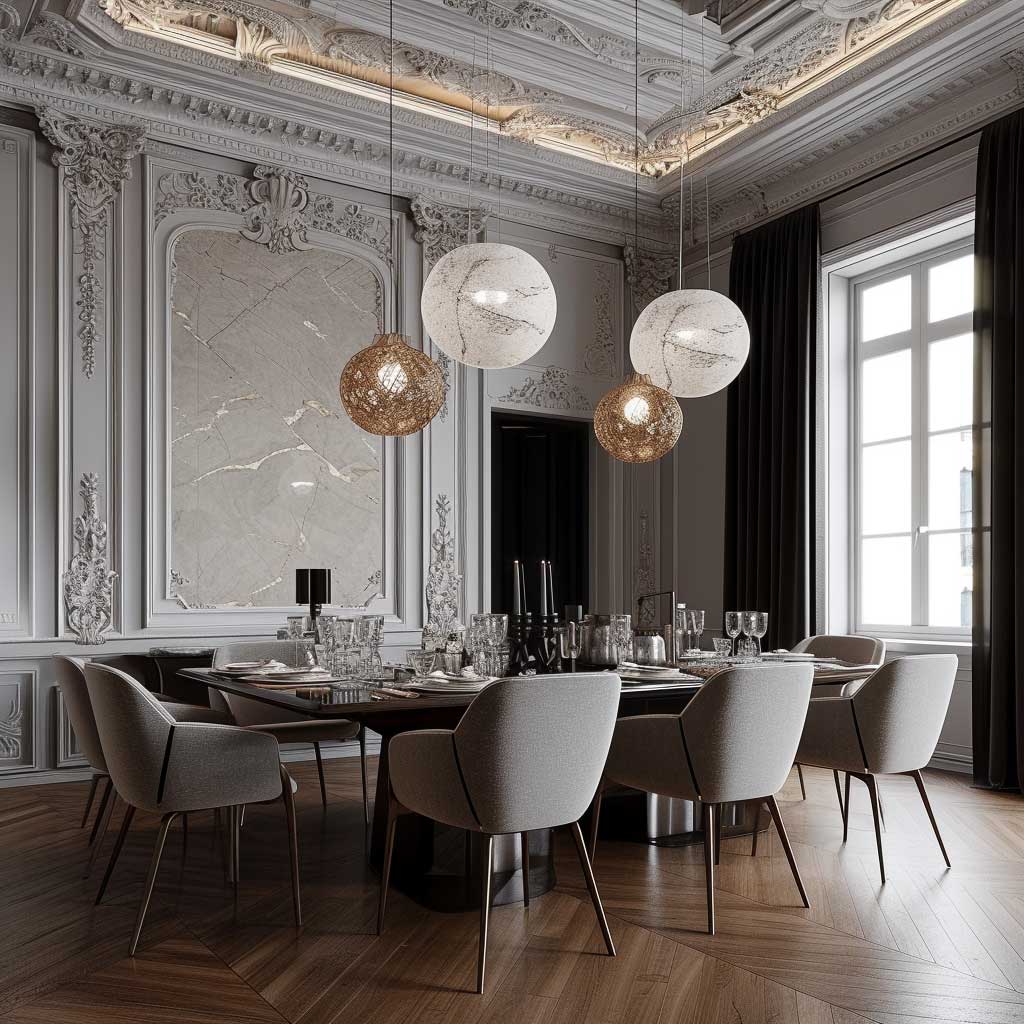
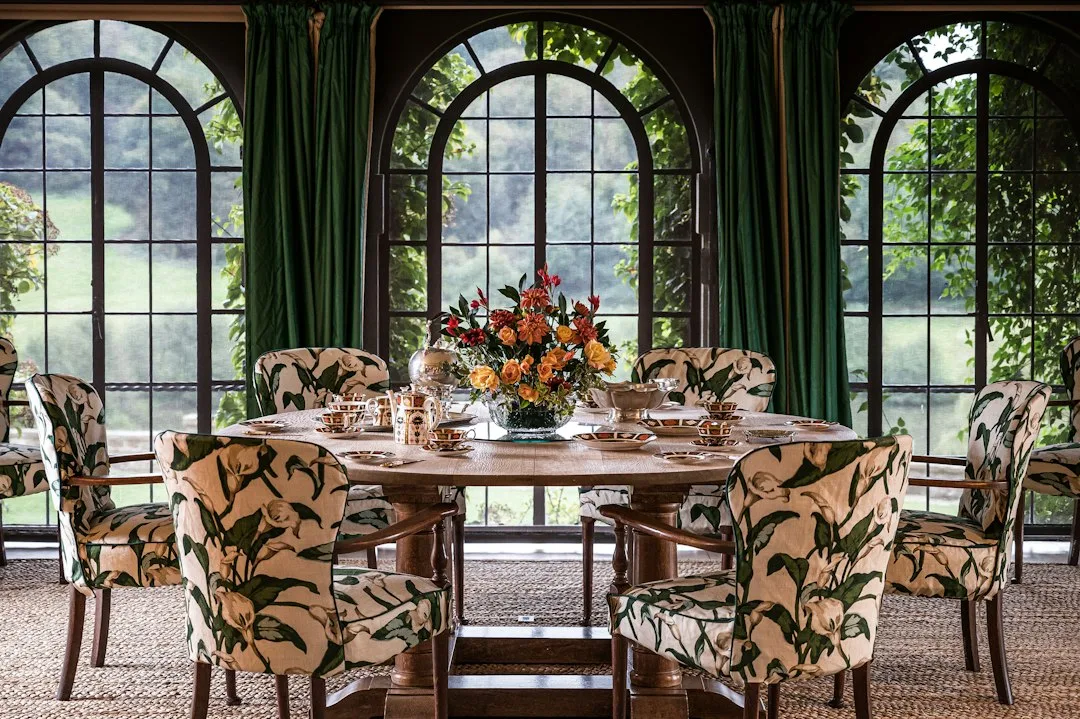
Modern baroque interior design in a dining room works best when you make the chandelier the first decision, not the table. Hang the fixture, note how it anchors the room’s scale and drama, then choose a table that sits directly beneath it with enough visual weight to hold its own. I’ve photographed dining rooms where this sequence was reversed — a beautiful baroque table topped with a generic pendant — and the result always looks like a prop in the wrong scene. The chandelier sets the room’s register; the table responds to it.
The dining table in a modern baroque context should resolve the style’s central tension in one object: ornate on the structural elements, contemporary on the surface. An intricately carved base — think scrolled legs, cabriole curves, leaf or acanthus detailing — topped with a sleek glass panel or a honed stone surface captures both registers simultaneously. Arteriors makes several dining bases in this direction at $1,800–$3,500; the contrast between the carved wood legs and the unfussy tabletop is exactly the juxtaposition that makes the style feel current rather than period.
Colour in a baroque style dining room can be bolder than any other room in the house because the space is used in focused episodes rather than lived in continuously. Deep reds, royal blues, and rich burgundies — colours that would feel exhausting in a bedroom or living room — perform brilliantly in a dining room because they create the enclosure and drama that make a dinner feel like an event. The Farrow & Ball palette offers Incarnadine, Brinjal, and Hague Blue as the exact hues that sit in this register, all around $120 per 2.5L tin. Pair any of them with warm cream trim and you have a dining room that looks more expensive than it cost to achieve.
Chairs in a modern baroque dining room are where you decide how far to commit. Full baroque dining chairs — Louis XVI silhouettes with carved legs, curved backs, and upholstered seats in brocade or velvet — at around $400–$800 each from Restoration Hardware’s Auberge line create a coherent period-inflected room. Contemporary chairs with one baroque characteristic — a turned leg, a curved back profile, a velvet seat — alongside a more ornate base create the modern baroque hybrid. What absolutely doesn’t work: acrylic ghost chairs next to a carved baroque table. The transparency reads as a different decade entirely and the tension between the two pieces is the wrong kind.

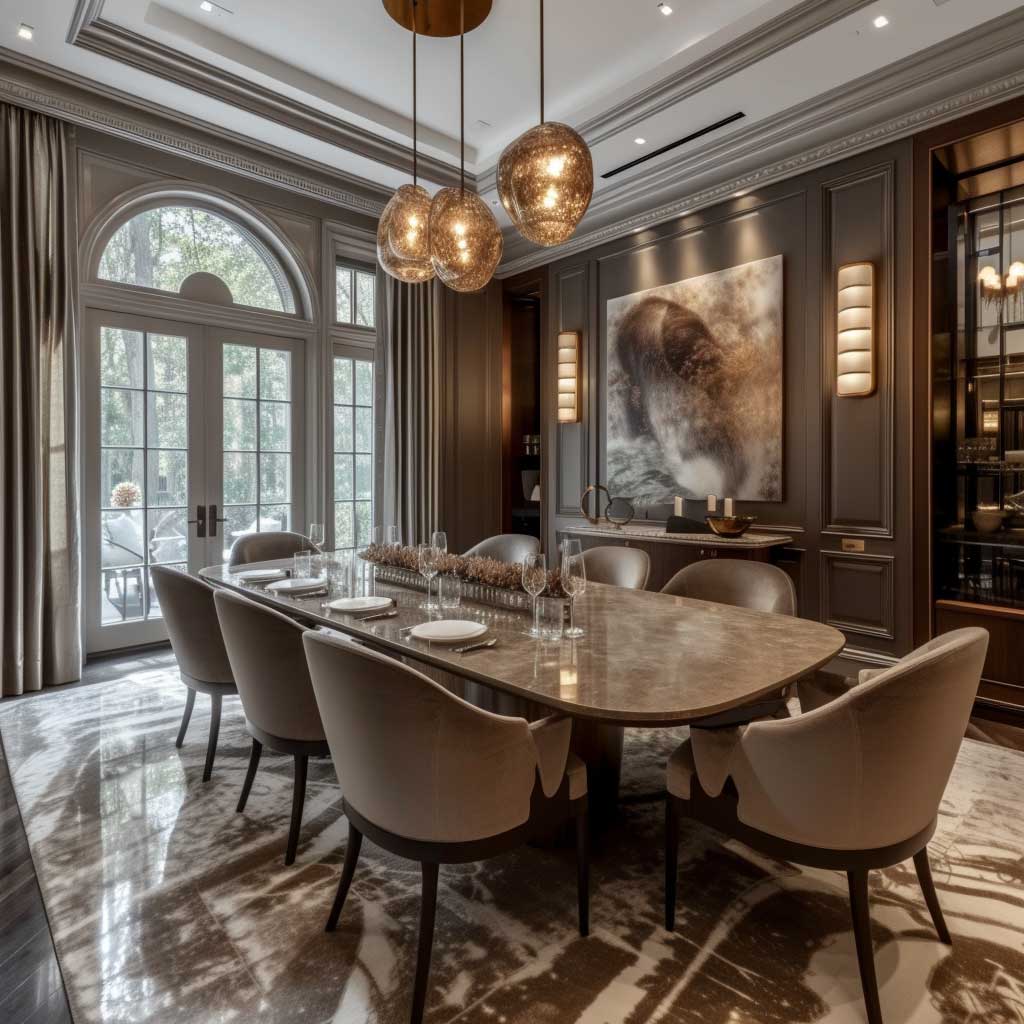

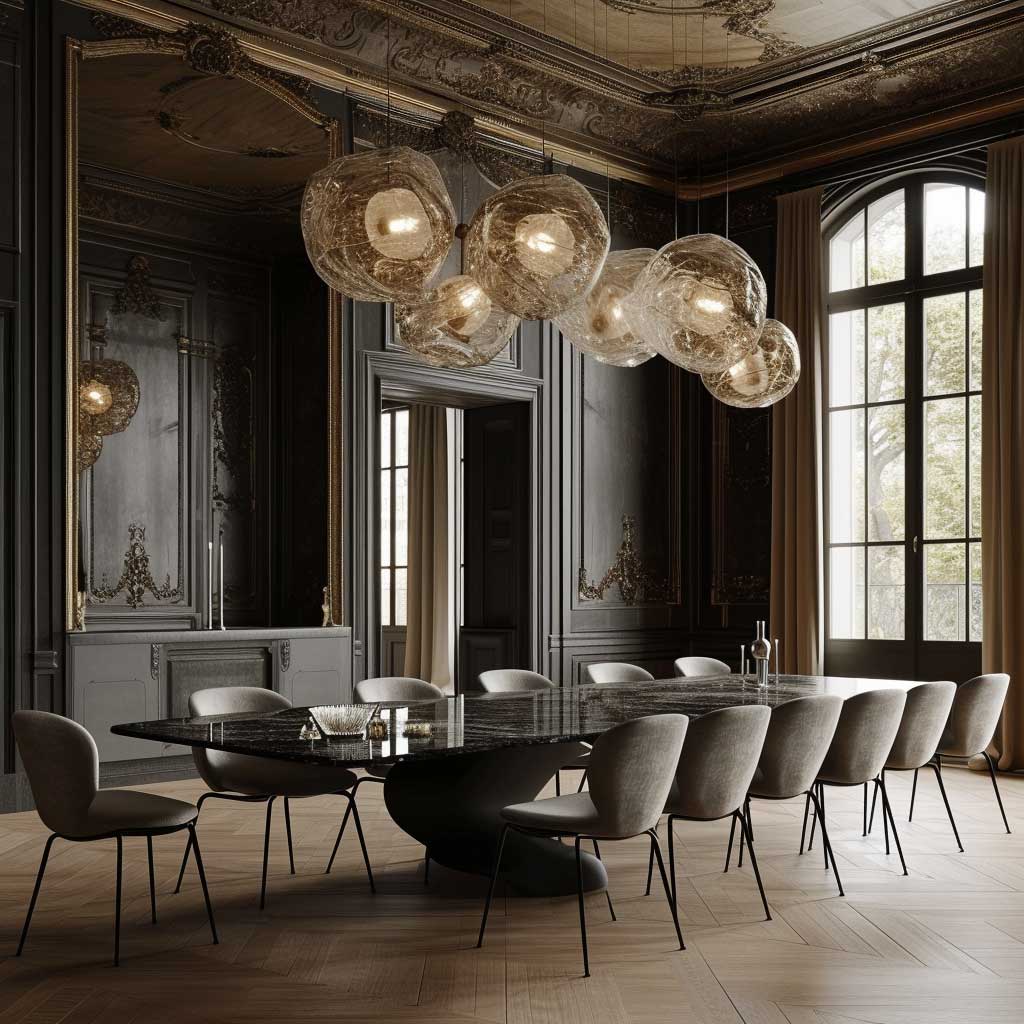
Decorative elements in a baroque style dining room need to earn their place by adding either visual weight or reflective surface — not both at once. Decorative wall mouldings at $8–$15 per linear metre from plaster suppliers add architectural scale without cost. Mirrored surfaces on a sideboard or buffet double the chandelier light and create the depth that makes a dining room feel twice its actual size. Modern art in an oversized format on a plain wall creates the contemporary contrast that stops the room from reading as a period reconstruction. Do all three simultaneously and the room is overcrowded; choose two and it holds together.
Textiles in a modern baroque dining room should be concentrated in two places: the chair upholstery and the curtains. Velvet chair covers in a single jewel tone with a damask table runner as a table accent covers the baroque textile requirement without overwhelming the room’s surface area. Silk curtains in floor-length drops — never shorter, a dining room with cafe-length curtains and baroque ambitions is a contradiction — add the weight and drape that anchor the vertical scale of the space. For interiors that use classical heritage as a contemporary design tool, this feature on neo-classic industrial design covers the material logic that applies across both approaches.
Lighting layers matter more in the dining room than anywhere else in the house. The chandelier handles ambient and drama; that’s its job. Add wall sconces set to 20% to warm the perimeter walls and soften the shadows cast by overhead light. A dimmer on everything is not optional — it’s the mechanism that turns a baroque dining room from a functional space into a theatrical one. At full brightness the room looks like a restaurant that hasn’t discovered mood lighting. At 30–40% with candles on the table it looks like somewhere a Venetian merchant would have hosted dinner in 1680, which is precisely the point.
Final Word
Modern baroque interior design rewards one decision above all others: commit to a single centrepiece and let everything else be quiet.
The living room chandelier, the bedroom mirror, the dining room fixture — pick the piece that earns the room’s attention and build a considered, restrained interior around it. Schonbek, Arteriors, and 1stDibs in the $400–$3,500 range give you the quality level this style needs. Cheaper alternatives read as imitations and the contrast with otherwise good furniture is more damaging than having no baroque piece at all.
Colour, texture, and lighting layers do the heavy lifting once the focal piece is in place. Deep jewel tones against warm neutrals, silk and brocade against flat linen, dimmers at 30–40% after dark — these are the repeating variables across every room in this style.
Save this post to reference when you’re standing in a showroom trying to decide whether the carved console is too much for your space. It almost certainly isn’t.