Purple outfit ideas look effortless on the right person and overdone on everyone else — the difference usually comes down to shade selection and one supporting color, not the amount of purple worn. Pantone named both Burnished Lilac (15-1905) and Amethyst Orchid (17-3628) to its Spring/Summer 2026 top ten, which means the shade family has serious runway credibility right now. That also means the stores are flooded with purple in every saturation level, making it even more important to know what you’re picking up and why.
The real unlock with outfits with purple is treating the shade as a neutral rather than a statement. Lavender behaves like gray; eggplant behaves like navy. Once you approach it that way, styling becomes much less stressful — you stop asking “can I wear purple?” and start asking “which purple, with what?” This article covers the five decisions that turn a purple outfit from questionable to considered.
Skin undertone matters more with purple than with most colors. Cool undertones — common in fair to medium complexions — read beautifully in blue-leaning shades like lavender, wisteria, or violet. Warm and olive complexions tend to pop in red-leaning purples: plum, magenta-violet, and dusty mauve. Getting this one thing right eliminates most of the trial and error at the fitting room mirror.





Quick Scan
- Pantone named two purple shades to its SS2026 top ten — Burnished Lilac and Amethyst Orchid — making this the right moment to build a purple wardrobe.
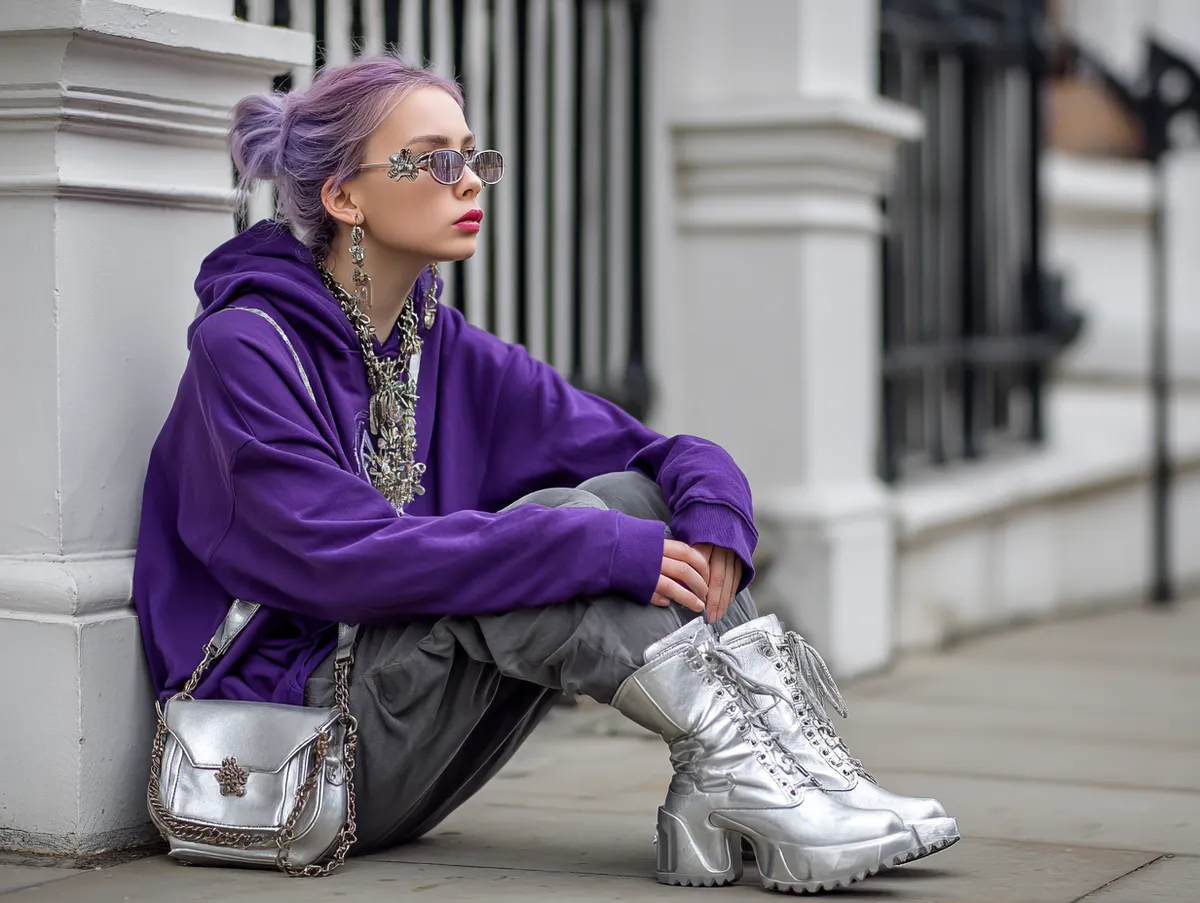
- Gold pairs with warm purples (plum, magenta-violet); silver pairs with cool ones (lavender, wisteria, violet).
- Casual purple outfits work best anchored to one neutral — white, gray, beige, or dark denim — not multiple colors competing for attention.
- All-purple tonal dressing requires mixing textures, not just shades, to avoid looking flat.
- A purple dress with silver jewelry is a tried formula; the risk is matching too closely — add one contrasting element (nude shoe, structured bag in a different color) to break the monotony.
- Colors that actively clash with purple: certain oranges, most teals (unless very intentional), and mint green on cool-toned complexions.
Casual Purple Outfits Built Around One Neutral, Not Three
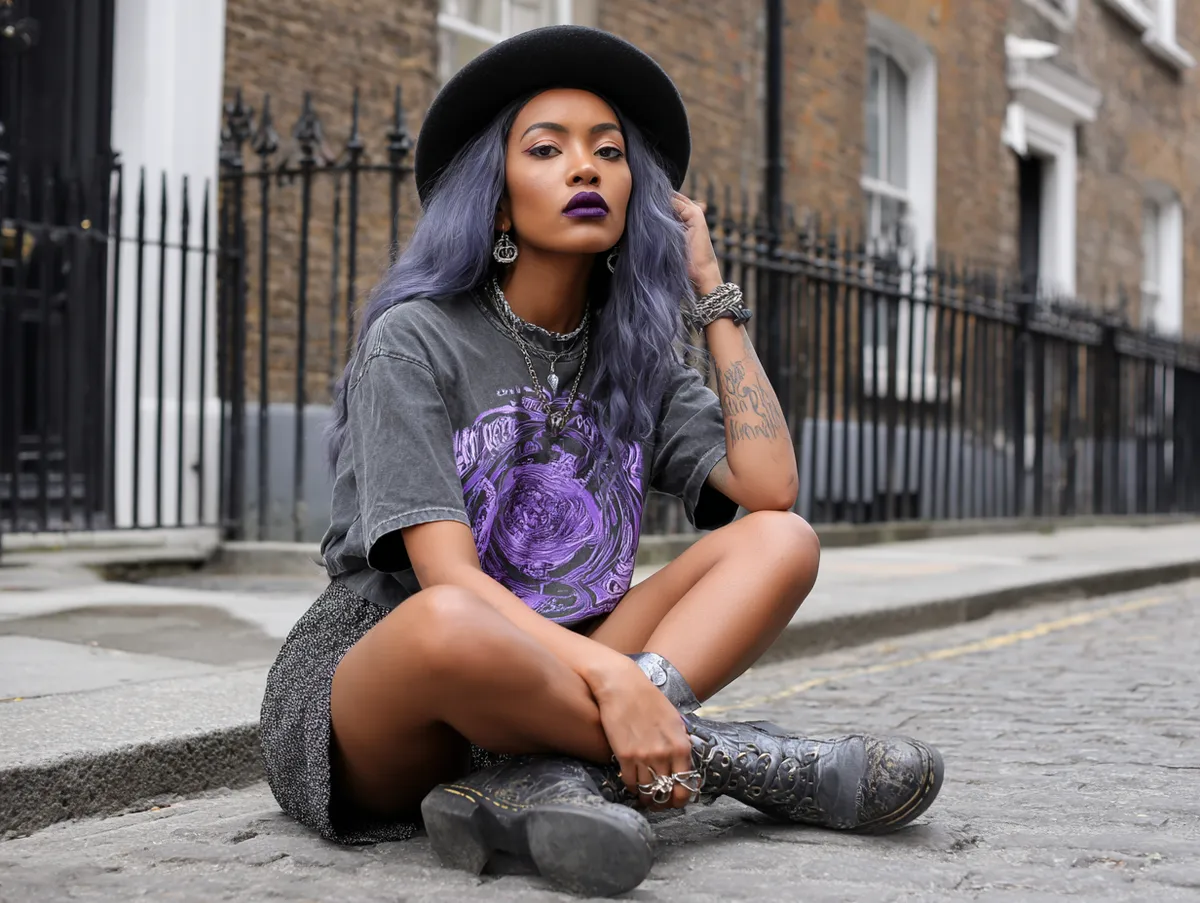
Casual purple outfits succeed when the rest of the outfit steps back. A lavender crewneck over dark denim reads clean and deliberate; the same lavender over khakis and beige sneakers with a camel bag starts to look like indecision. Stylists recommend anchoring the purple piece to a single neutral — white, charcoal, dark denim, or bone — and treating accessories as accents rather than additional colors. The trick here is subtraction, not addition.
Fabric weight matters more than most guides acknowledge. A lightweight lavender t-shirt drapes differently than a boxy lilac sweatshirt, and each calls for different bottoms. Fitted knits in dusty purple pair naturally with wide-leg trousers; oversized silhouettes work better cut with something tapered below. What doesn’t work: pairing an oversized purple top with wide-leg pants in a contrasting color — you lose all definition and the color becomes muddy instead of moody. For a reliable daily uniform, a fitted purple knit (around $25–40 at H&M or similar mid-range retailers) with straight-leg dark denim and white sneakers requires no thought and consistently reads as intentional.


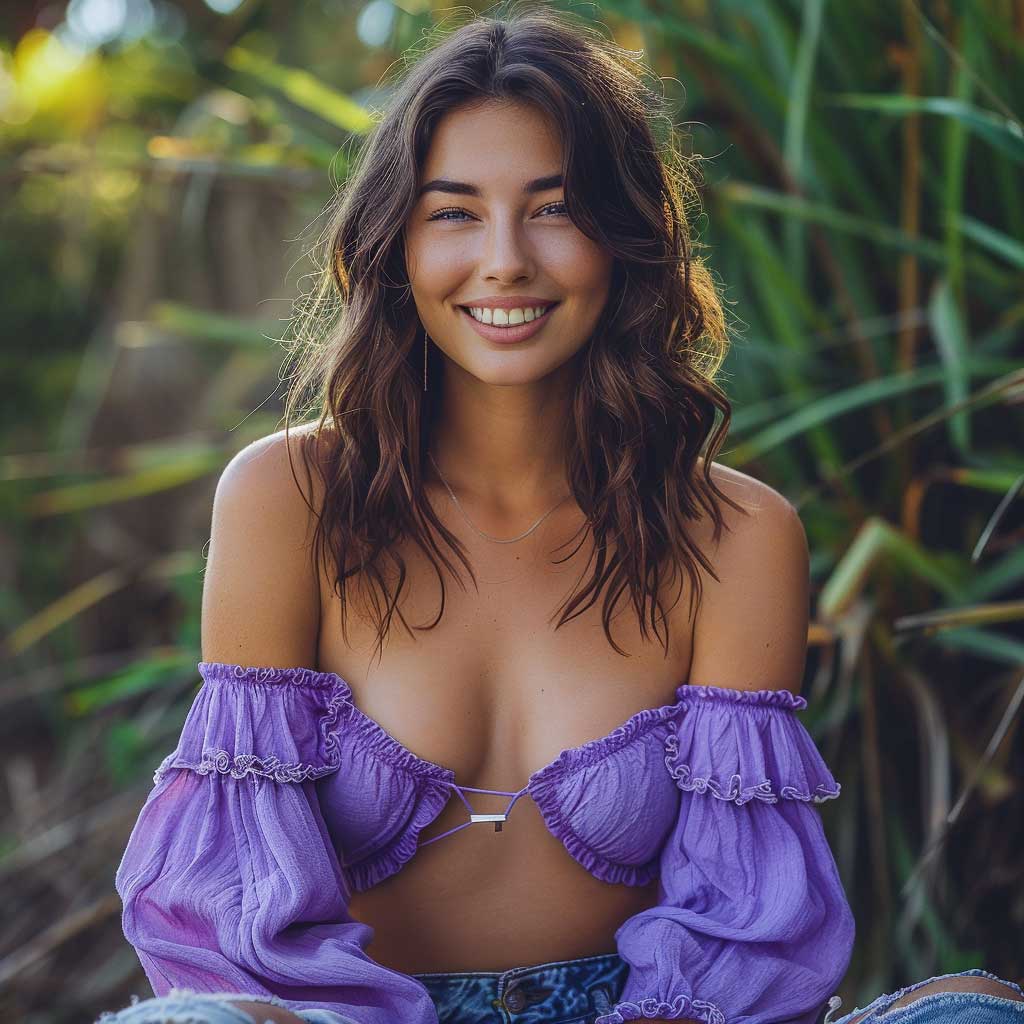

Layering with a denim jacket is the most forgiving move in casual purple dressing — the blue-purple relationship is naturally complementary, and the jacket adds structure without adding another color variable. A cozy cardigan in oatmeal or off-white works similarly for indoor occasions. The instinct to add a colorful scarf or a patterned bag is understandable, but it’s usually the thing that tips a casual purple outfit from “considered” into “costume.” Keep patterned accessories reserved for all-neutral base outfits.
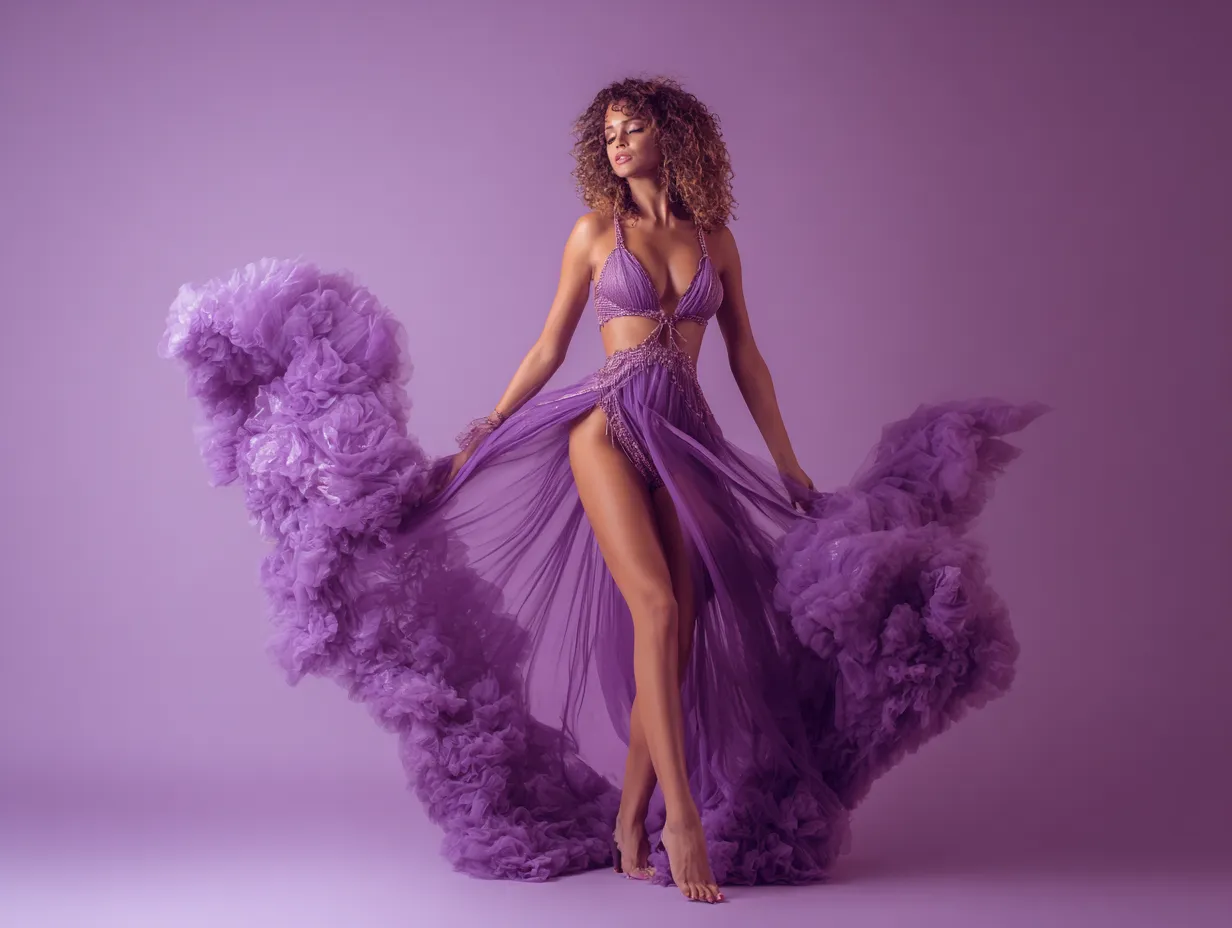
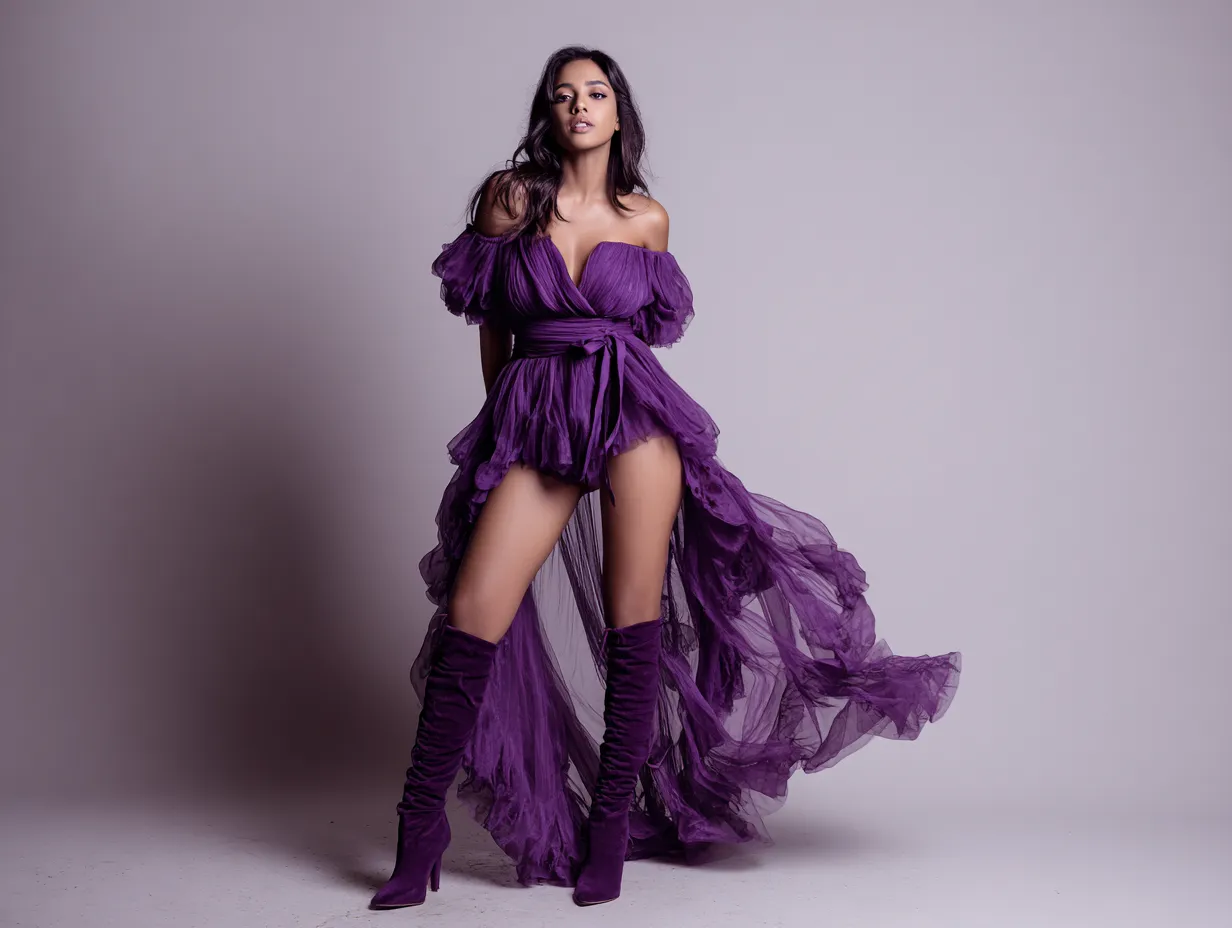
Want to wear soft lavender and lilac in dress form instead of separates? The same neutralizing principles apply — one clean supporting color and a simple shoe. The dress does the talking; everything else holds space.
Colors That Go with Purple Clothes Without Competing
Colors that go with purple clothes fall into two dependable categories: neutrals that step back, and one strategic contrast that makes the purple look intentional. White, gray, beige, black, and dark denim all belong in the first group — they let purple take the lead without adding visual noise. The second group is more interesting: gold (for warm purples like plum and magenta-violet), silver (for cool lavenders and violets), and navy (for a regal pairing that feels both serious and rich). Yellow is technically purple’s complementary color on the wheel, but it demands confidence and minimal additional accessories — one wrong step tips the combination into Halloween territory.
Ask yourself: does this additional color fight the purple or carry it? Emerald green against eggplant creates a bold jewel-tone pairing that works if both pieces are clean and tailored — but the same combination in casual fabrics reads messy. Blush pink beside lavender is a soft, romantic combination that stylists use for bridal and feminine occasion dressing; it can feel slightly costume-like in everyday settings unless one of the two shades is very muted. Beige is genuinely the unsung hero here — a tan pair of pants with a purple blouse, or a camel coat over a violet dress, creates warmth and grounding that most other neutrals can’t match.
Don’t Do This
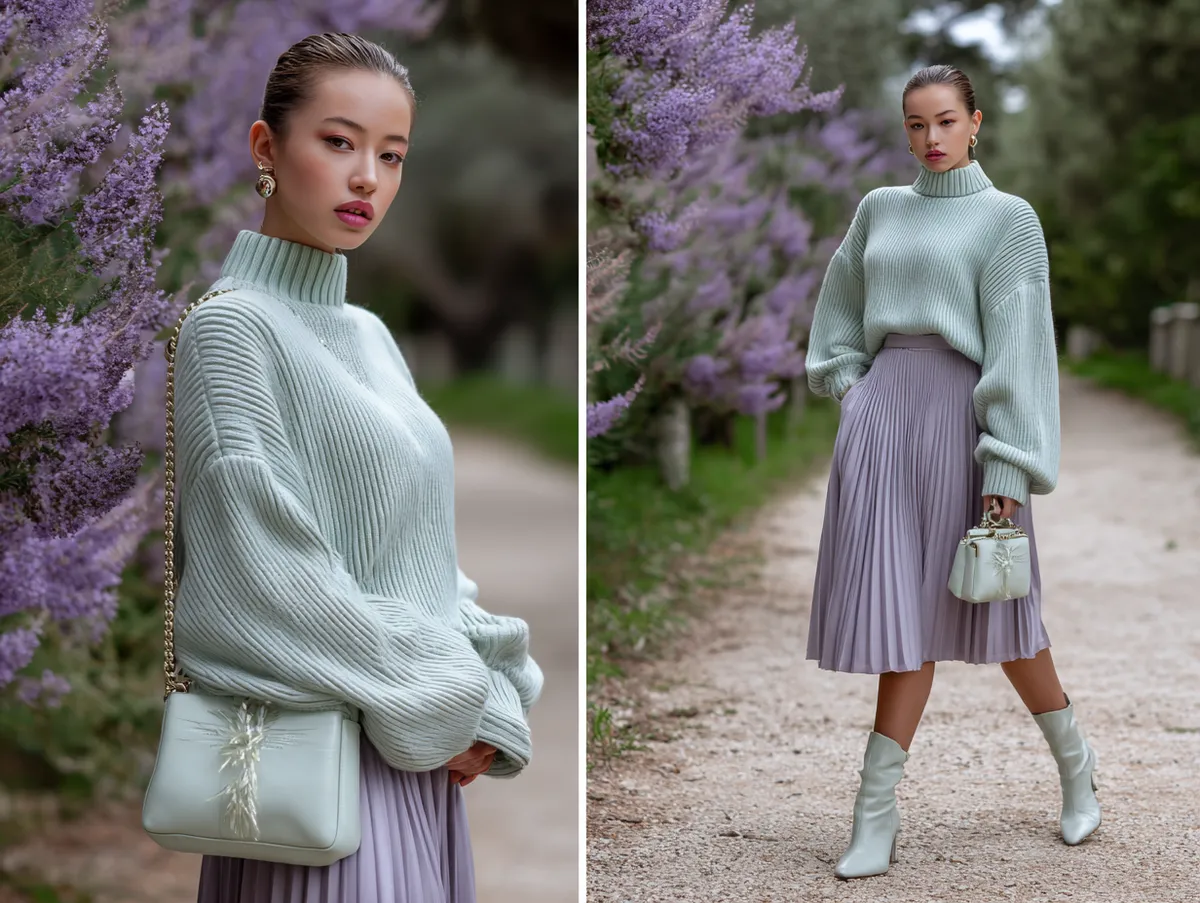
Avoid pairing light purple with light neutrals — lavender on cream on blush creates a washed-out effect where no color has any weight. The combination reads as accidental rather than intentional. If you’re working with a light purple, give it a dark anchor: charcoal trousers, black ankle boots, or deep navy underneath. The contrast makes the lavender intentional rather than indistinct.
The color you most often see paired wrong with purple is orange. Violet and burnt orange create a complementary contrast that can look extraordinary in interior design and terrible in outfit form, mostly because the two saturations rarely match in ready-to-wear. If you want warmth against purple, reach for gold accessories or camel leather instead — the neutral version of orange that plays well with every shade in the purple family.
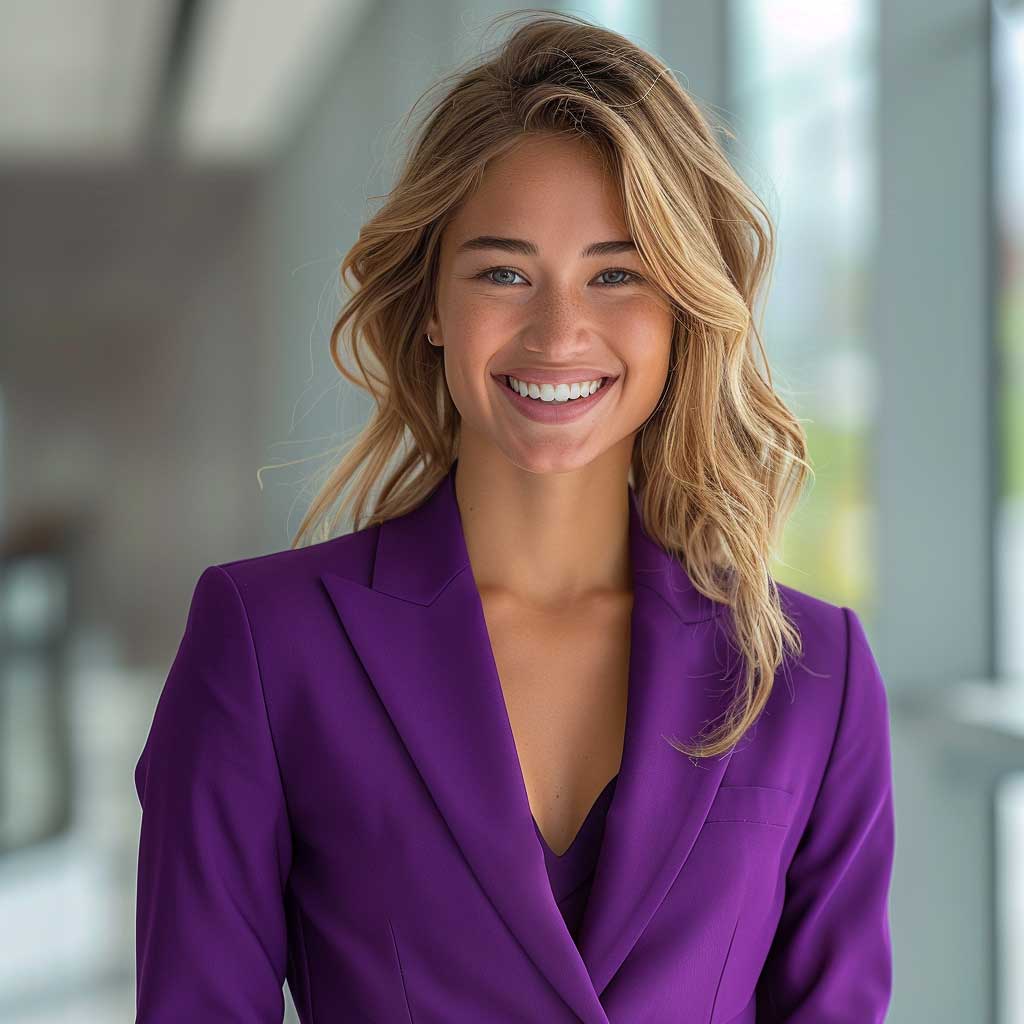


How to Accessorize a Purple Dress Without Dulling It
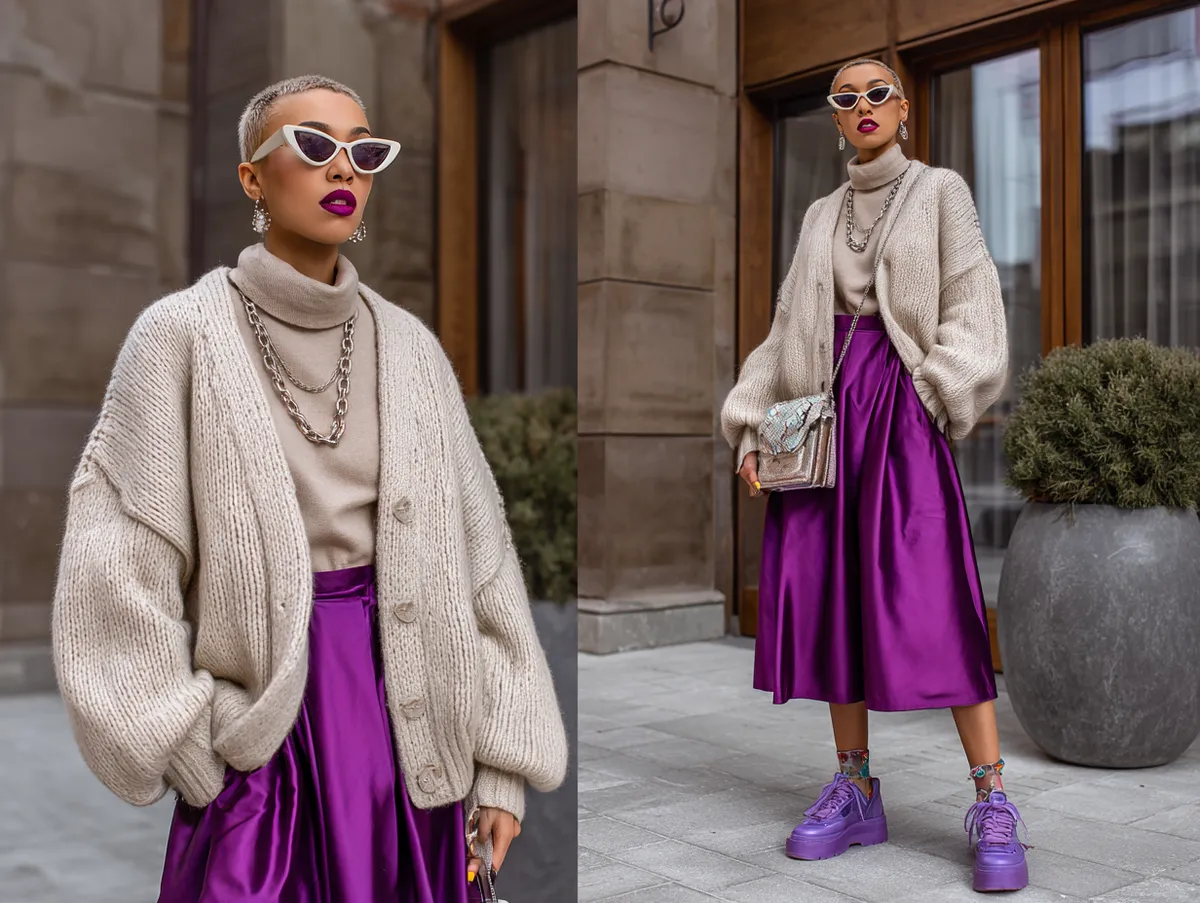
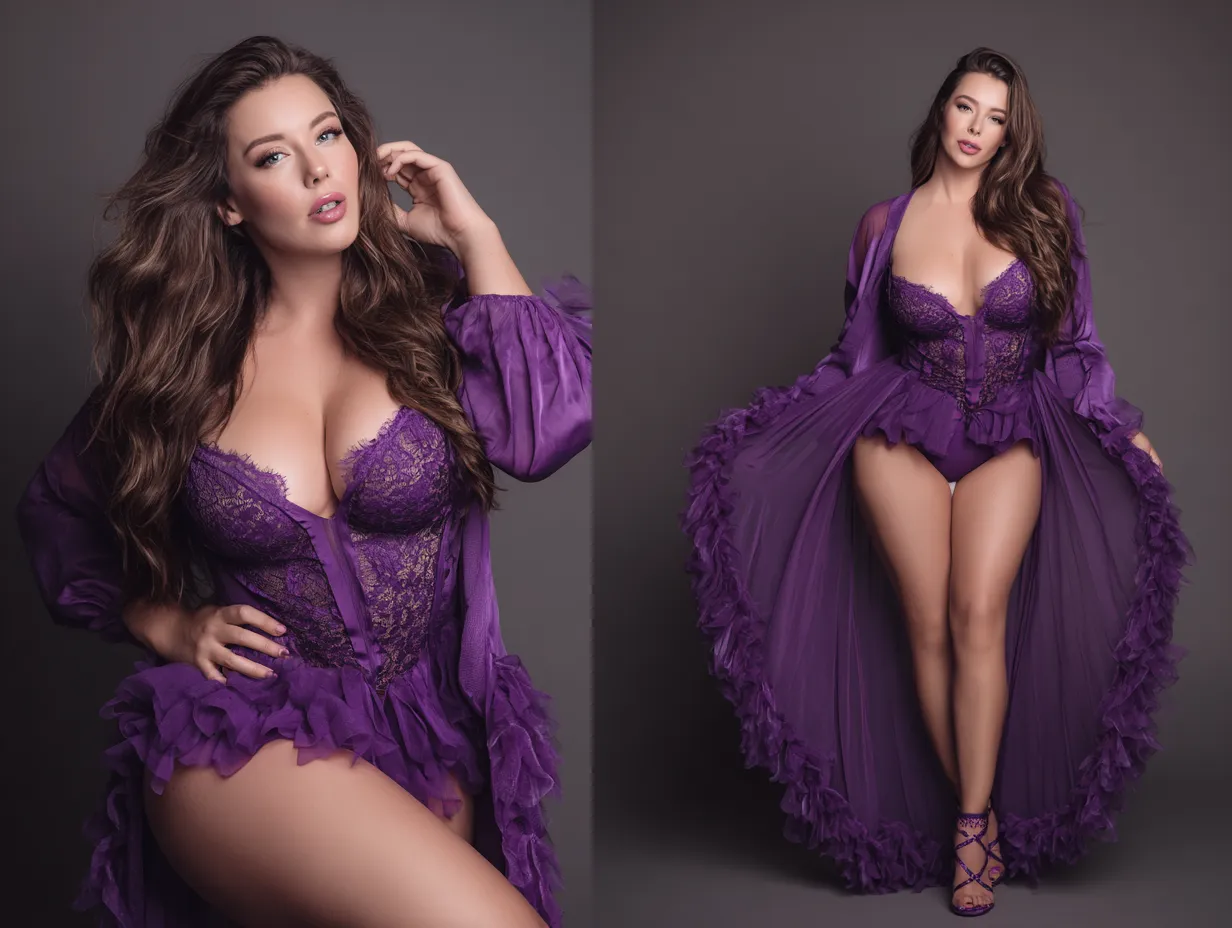
How to accessorize a purple dress comes down to metal choice first, then shoe color, then bag — in that order. Gold complements warm purples (plum, eggplant, magenta-violet) while silver enhances cooler ones (lavender, wisteria, orchid). Getting the metal wrong — silver against warm plum, for example — creates a cold, slightly off undertone that’s hard to pinpoint but easy to feel. Amethyst jewelry is a natural choice because the gemstone’s violet hue harmonizes with the dress rather than competing; sterling silver amethyst earrings retail around $100 at Kohl’s and read far more expensive than that price point suggests.
Shoe color follows a clear hierarchy: nude or blush elongates the leg and stays out of the picture; black anchors the look and works for darker purple shades like eggplant and plum; metallic (gold or silver, matching your jewelry) adds occasion-appropriate glamour; white is a deliberate contrast that only works when everything else is simple. Avoid dark brown with purple — the warm brown reads muddily against most purple undertones, unlike camel leather which works because it sits at a higher contrast point. Pearls as jewelry are an underused move with purple — they bring softness and a slight vintage quality that pairs especially well with dusty lavender and mauve.



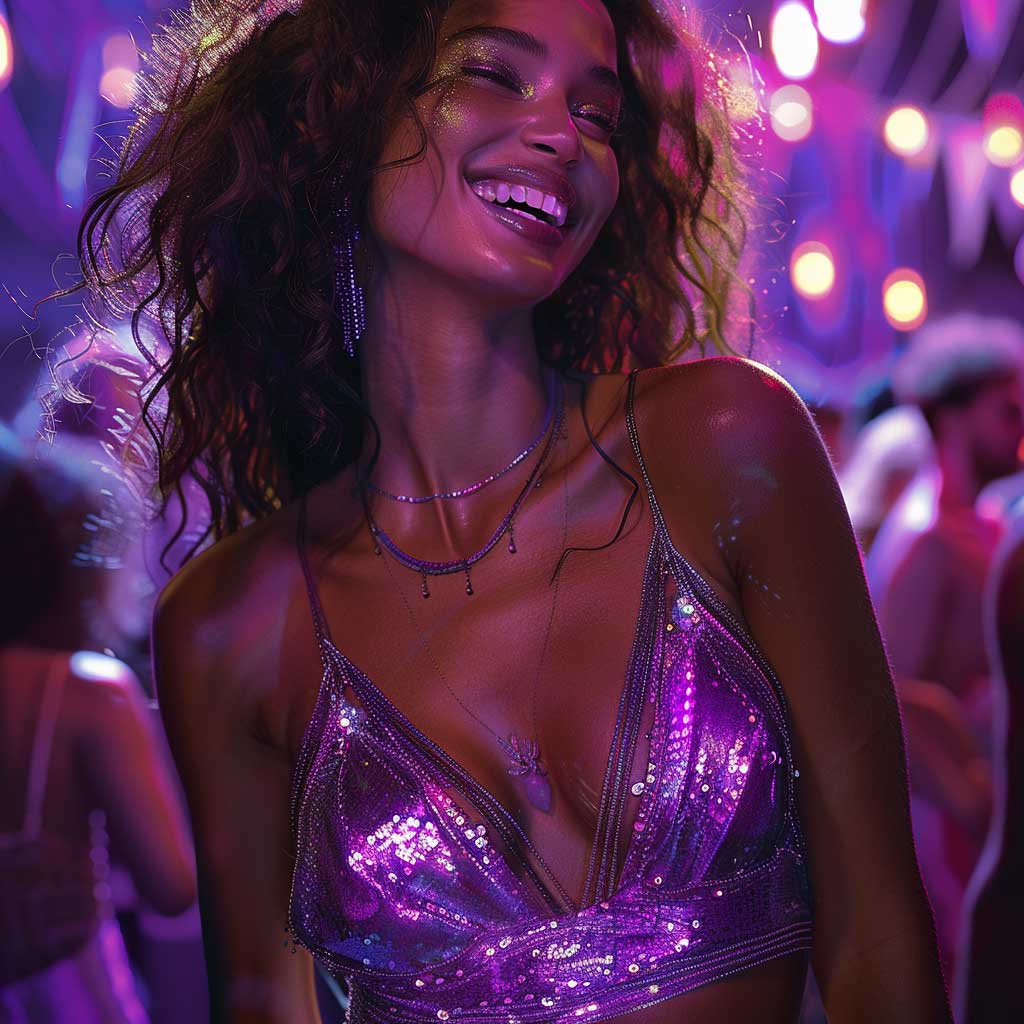
Bag color is where most people overthighten — they match the bag to the dress shade and end up with a monochromatic effect that flattens the entire look. A nude or beige bag lets the dress remain the focus; a metallic clutch adds occasion energy; a contrasting color (ivory, camel, black) creates intentional separation between the two elements. The one bag color that almost never works with purple: tan or medium brown in a matte finish — it adds warmth in the wrong register and muddies the purple’s undertone rather than complementing it. For a reliable night-out formula, pair a violet or plum dress with silver hoop earrings, nude pointed heels, and a small black clutch — you can dress it up with a bold lip and nothing else needs to change.
For purple peplum tops and structured tops rather than dresses, the same accessory logic applies — see purple outfit ideas with peplum tops and tailored shorts for how the silhouette shifts the accessory calculus when the top is the statement piece rather than the full dress.
Wearing All Purple Outfit Looks Without Looking Like a Costume
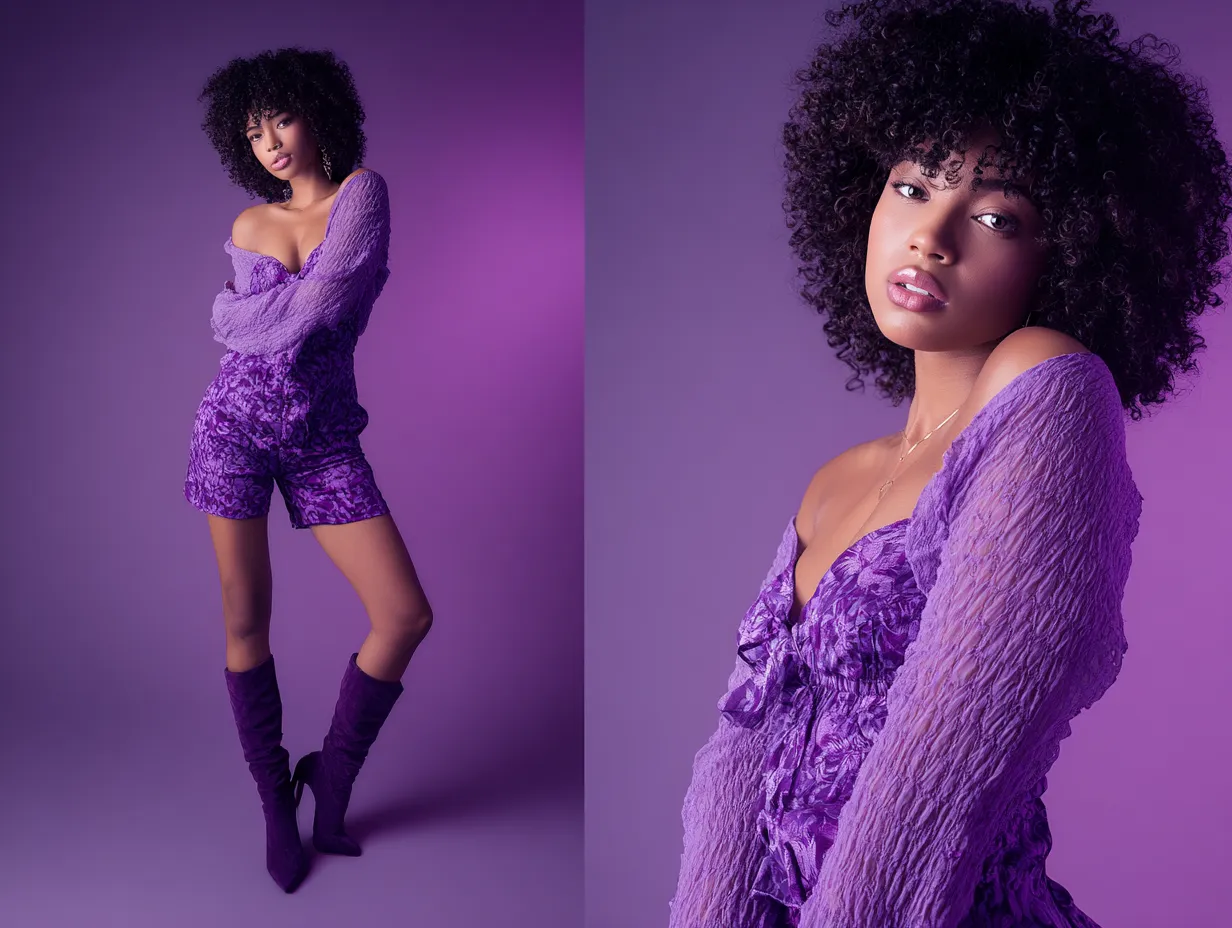
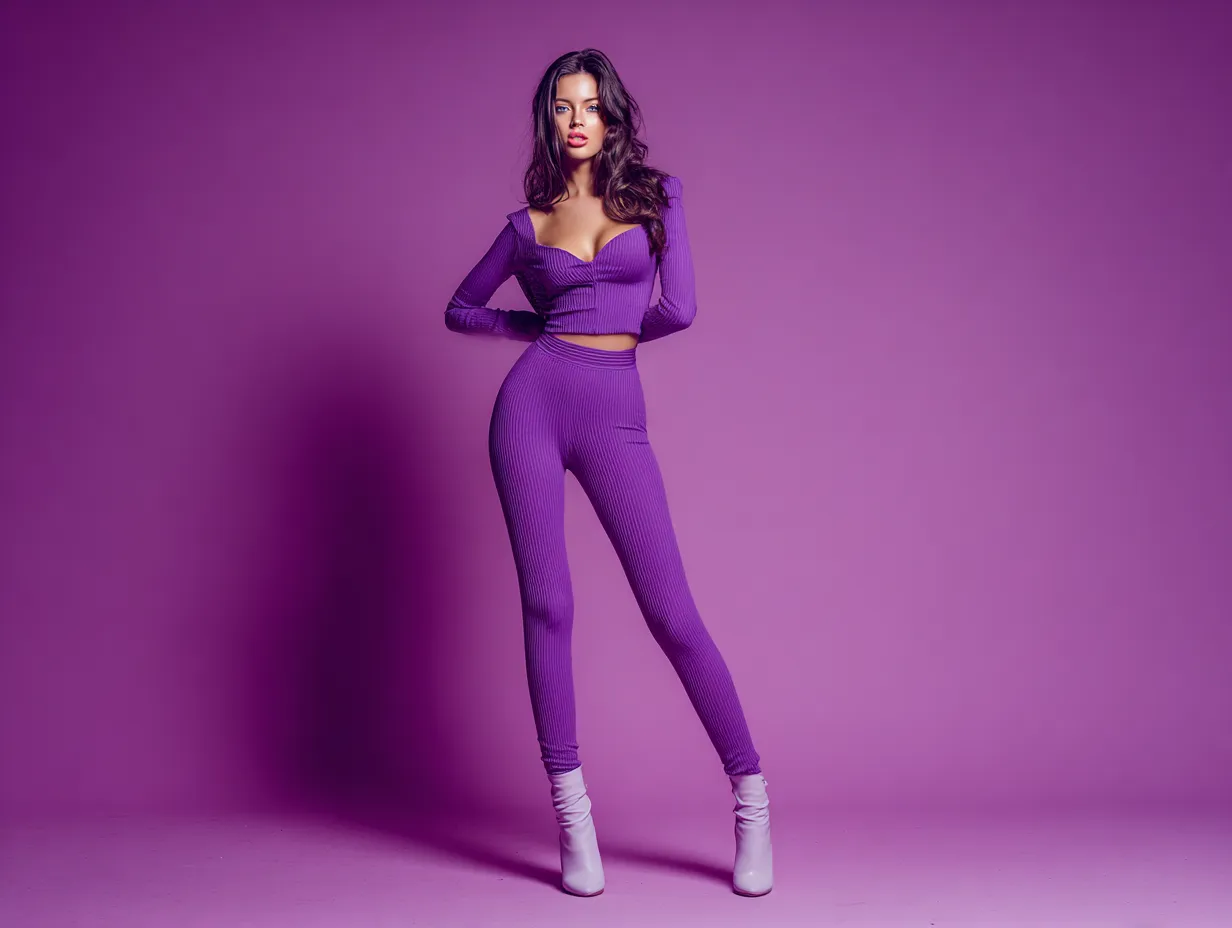
An all purple outfit works when the shades are close but not identical, and the textures are varied enough to create visual separation. Tonal dressing — wearing multiple shades of the same hue — is a technique that high fashion has leaned into heavily, and purple responds well to it because the color family has so many usable steps: wisteria, orchid, lavender, mauve, eggplant, plum. Mixing a lilac ribbed knit with dusty purple wide-leg trousers creates a pulled-together, editorial effect that reads deliberate rather than uniform. The risk is wearing two pieces of the same shade in flat fabrics — you lose depth and the outfit reads as a tracksuit, not a look.
Why does tonal purple work when other monochromatic combinations feel difficult? Purple has enough warm-cool range within a single hue family that stepping across that axis creates natural visual interest. A warm mauve top against a cool violet trouser creates a slight tension that holds the eye — the same reason a gray-beige combination stays interesting even with no contrast color. The anti-advice here: don’t attempt all-purple with five different pieces from five different brands bought at different times. The saturation levels will clash in a way that reads as disorganized. Build a tonal purple look with two pieces max, then use accessories in a single contrasting metal.

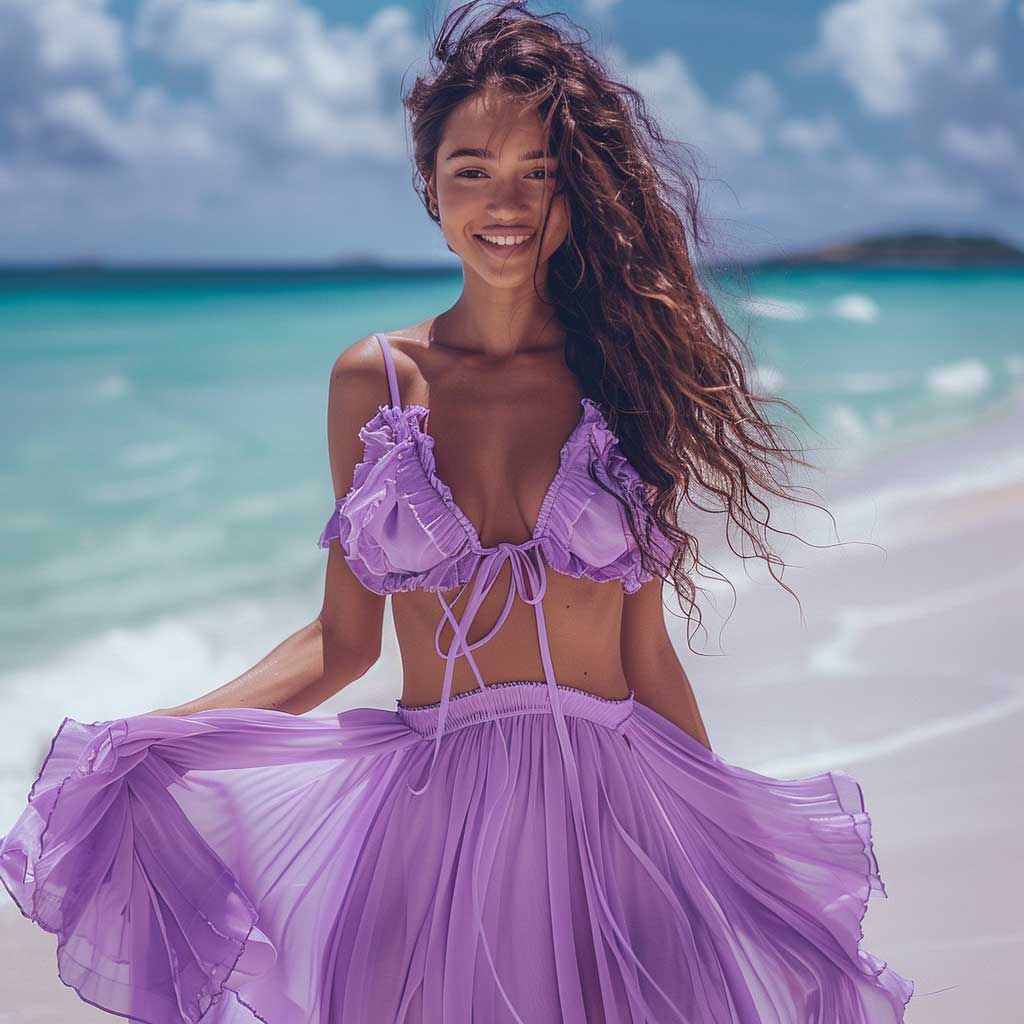


Footwear in an all-purple look requires one of two approaches: either match the shoe to the darkest purple in the outfit (a plum or eggplant shoe grounds the look and creates a clean line from waist to floor), or contrast completely with white or nude (which floats the look and makes it feel lighter and more editorial). The middle-ground shoe — mid-gray, tan, or khaki — neither anchors nor elevates, and tends to make the whole look feel unresolved. For a strong tonal purple outfit, the shoe decision is the last 20% of the outfit but accounts for 60% of whether the final result reads well or not.
The Pantone SS2026 report confirms that both Burnished Lilac and Amethyst Orchid are on the official trend palette this season, which means tonal purple dressing is backed by runway timing — not just personal preference. You can read more about the full color trend report on Pantone’s official NYFW Spring/Summer 2026 page.
| Purple Style | Best Supporting Color | Metal to Use | Common Mistake |
|---|---|---|---|
| Casual purple outfits | Dark denim or white | Gold or silver (match undertone) | Too many colors in one outfit |
| Purple office wear | Black or charcoal | Gold | Over-accessorizing; keep it minimal |
| Purple dress (night out) | Nude or metallic shoes | Silver for cool shades, gold for warm | Matching bag to dress exactly |
| All-purple tonal look | Contrasting textures, not colors | One metal only | Same shade, same fabric = uniform |
| Purple and beige combo | Camel leather accessories | Gold | Pairing with light cream (washes out) |
The Bottom Line
Purple outfits fail at the color pairing level, not the shade level.
The shade of purple you choose matters less than the one supporting color you put beside it. Gold for warm purples, silver for cool ones — get that right and almost everything else follows.
Pantone’s SS2026 palette includes both Burnished Lilac and Amethyst Orchid, making tonal purple dressing a well-timed move for anyone ready to commit to the color family.
Casual purple outfits live or die by how many colors you add alongside the purple — the answer is usually one, not three. Save this post.
Related Topics