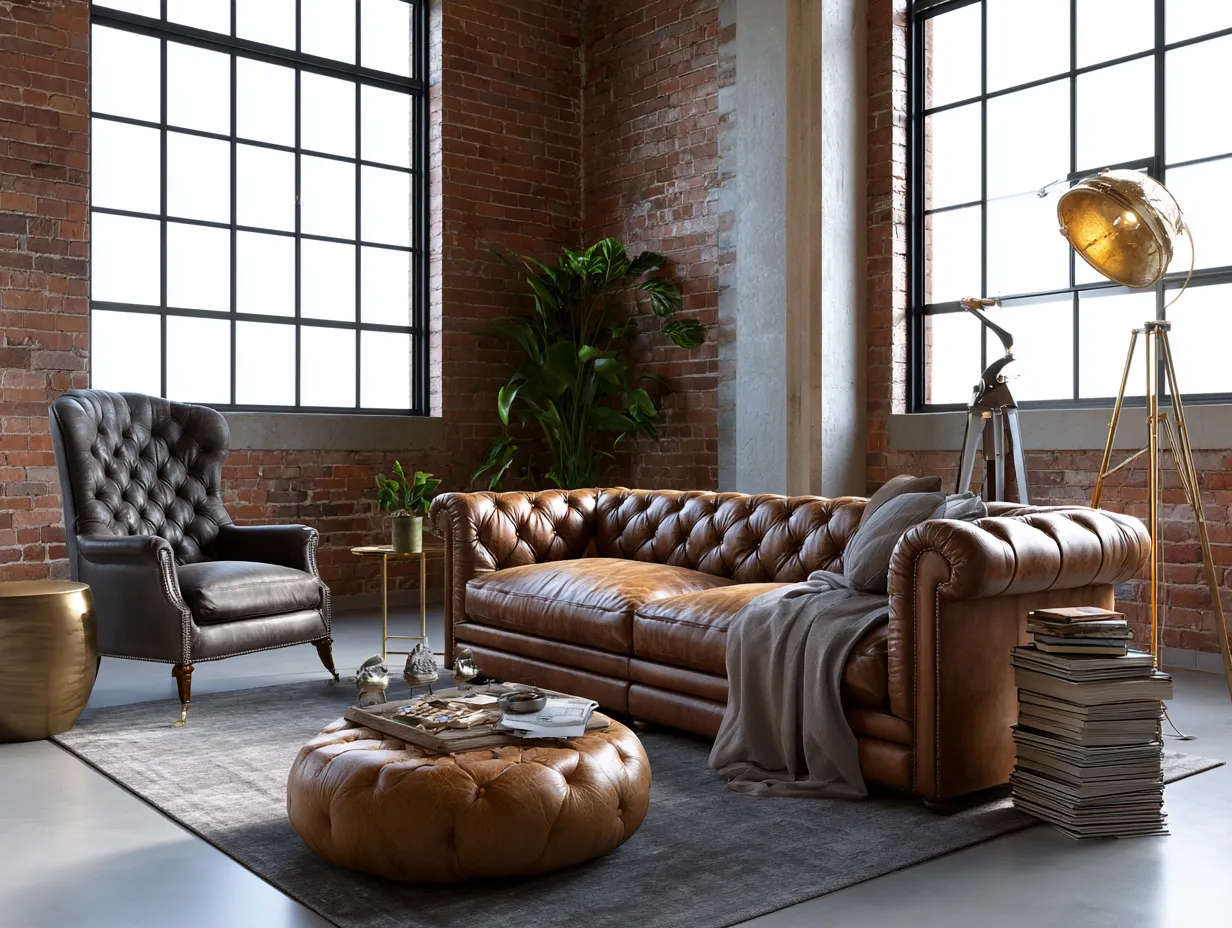
Industrial luxe interior design is what happens when a converted warehouse grows up: exposed brick and steel beams stay, but they share the room with Calacatta marble, plush leather, and chandelier light. I’ve spent years watching this style evolve from loft novelty into a fully realized approach that works in contemporary homes at every price point — and the rooms that do it right share one discipline: they let the raw structure carry the architecture, and let the luxurious materials carry the mood.
You’ll notice the contrast is doing more than aesthetic work here. Polished concrete reflects afternoon light the way a mirror does. Velvet absorbs it. That push-pull between surfaces is what makes industrial luxe feel layered rather than flat — more editorial than either pure industrial or pure luxury would manage on its own. The best rooms in this style cost anywhere from $40,000 to $400,000 to put together, but the logic is the same at either end.
My go-to reference for this aesthetic is New York loft culture of the 1990s, when designers started treating raw structure as a design feature rather than a construction problem. The difference between then and now is that nobody apologizes for the chandelier anymore. The luxe half of the equation gets equal billing.
- Industrial luxe living rooms: why exposed brick plus plush leather is the formula — and what kills it
- Kitchens: the marble island question, polished concrete vs. Caesarstone, pendant light placement
- Bedrooms: why velvet bedding is non-negotiable, and the steel-frame window detail most people miss
- Specific brand names and price ranges for each room
- The single decorating mistake that collapses all three spaces at once
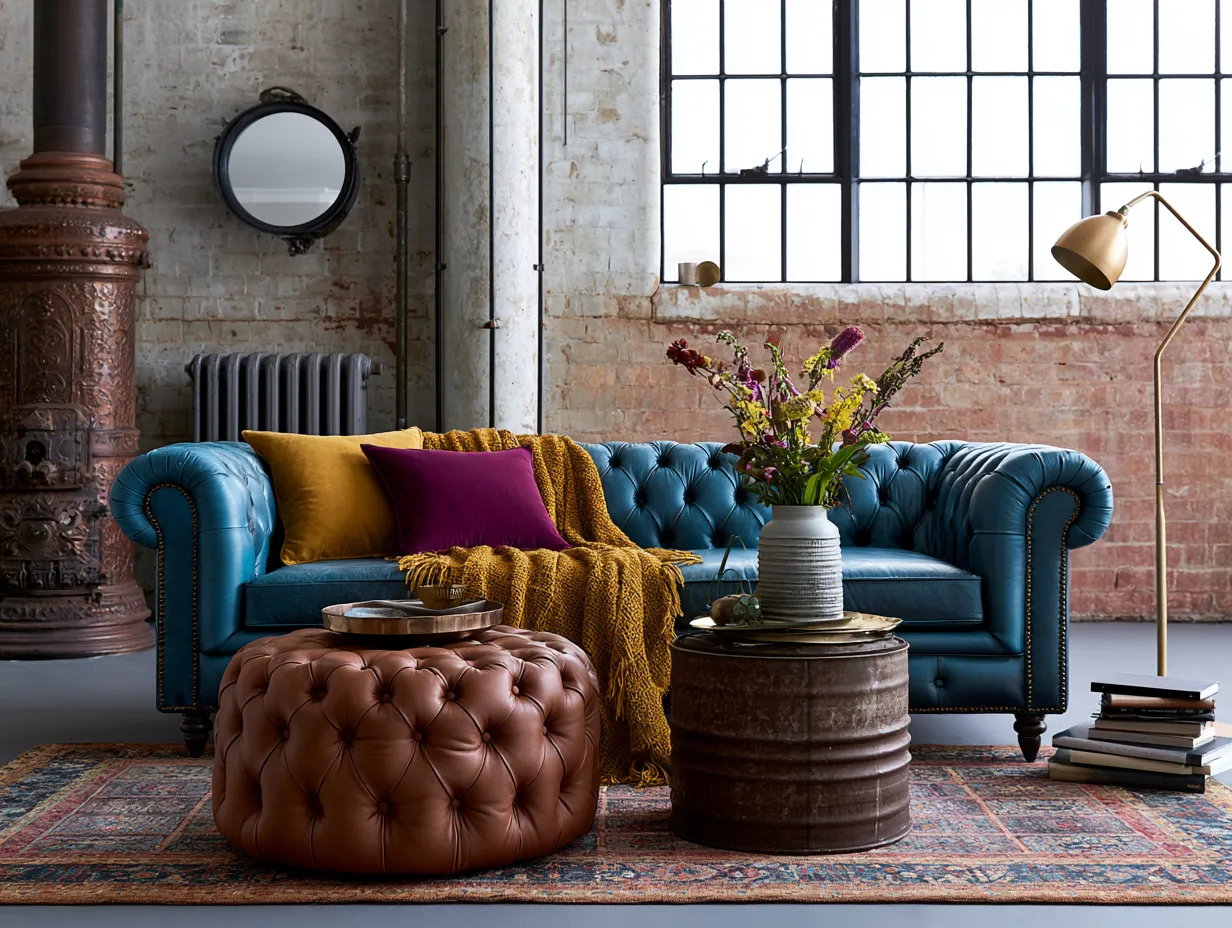
Industrial Luxe Living Rooms Work Because the Brick Does Half the Styling
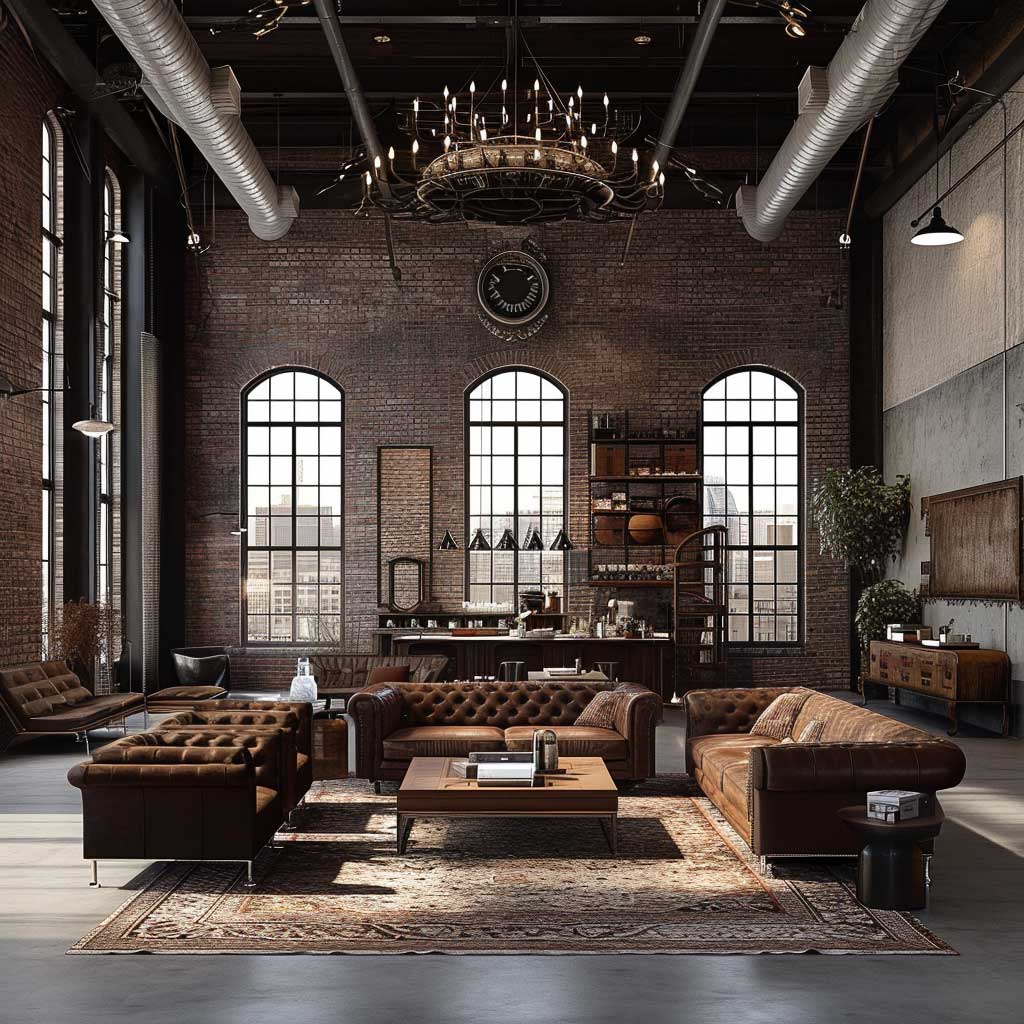
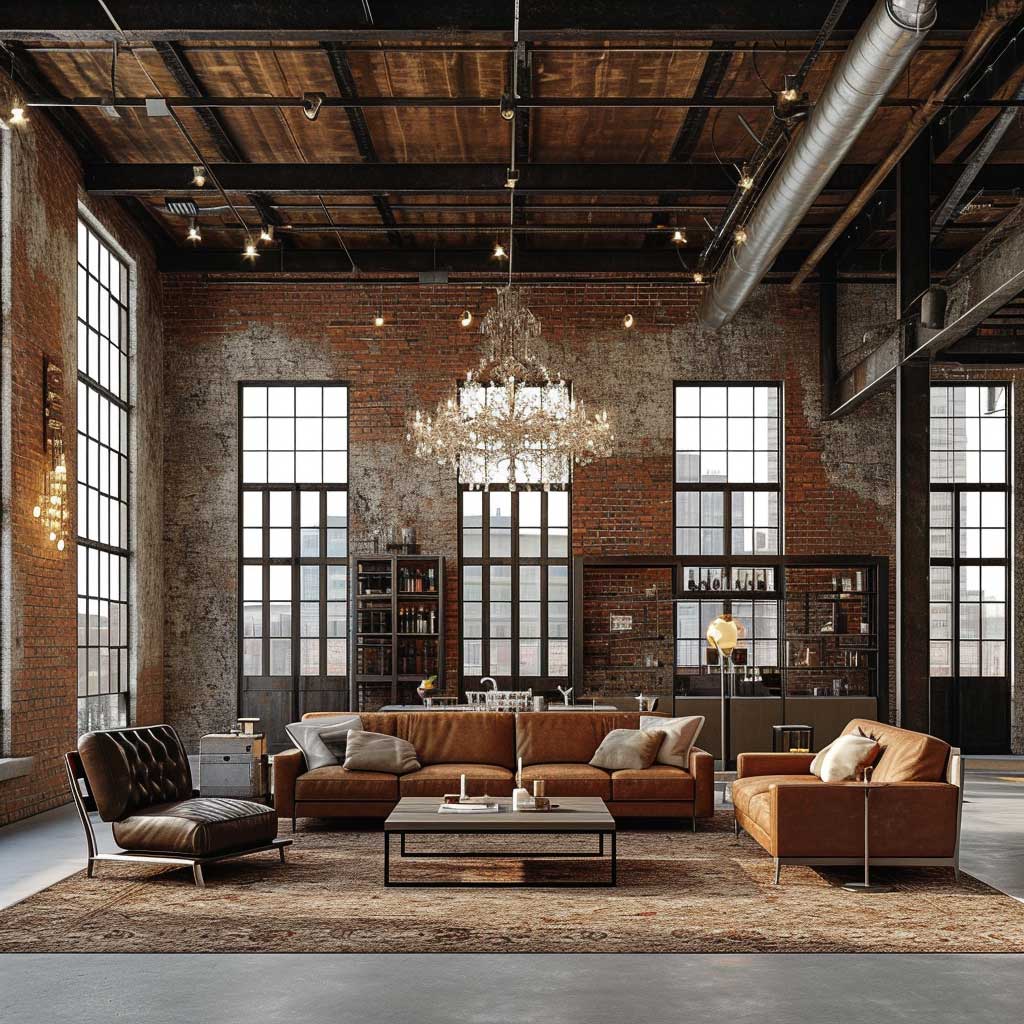
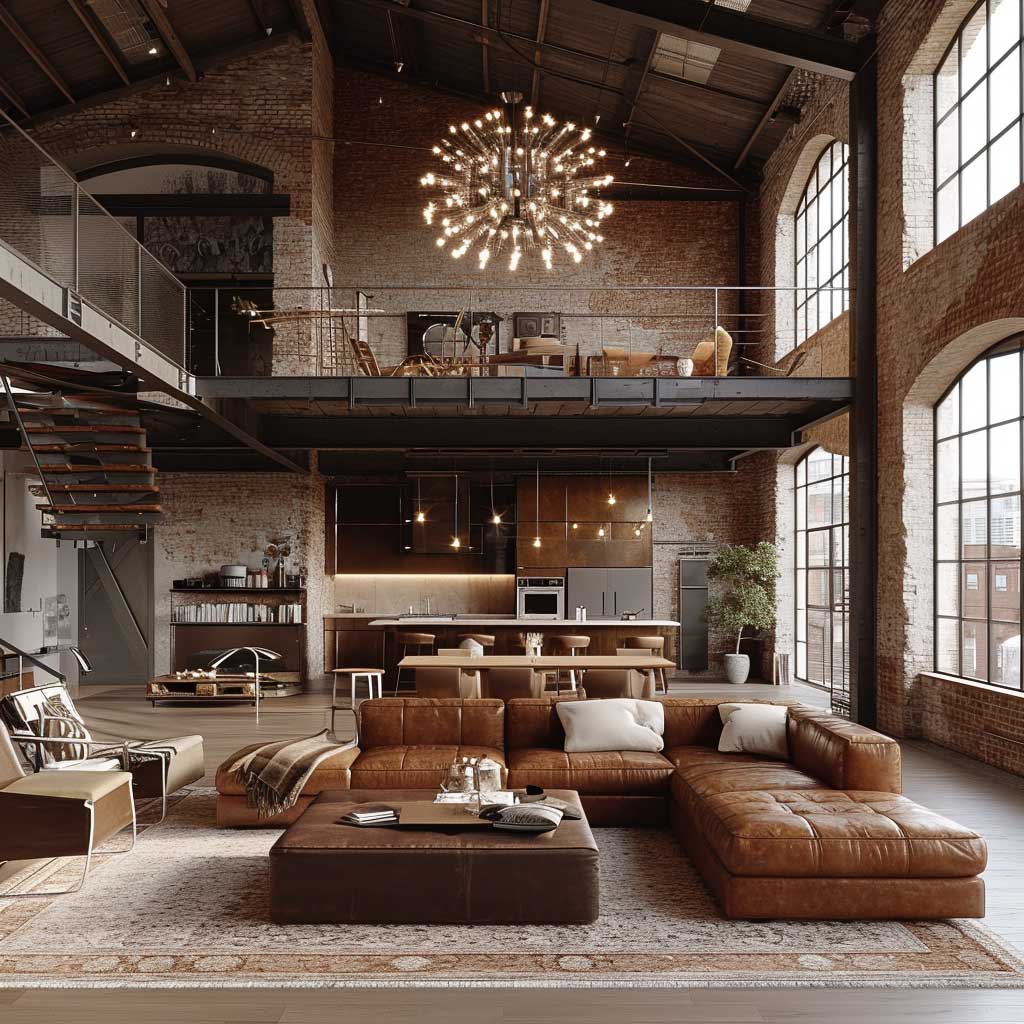
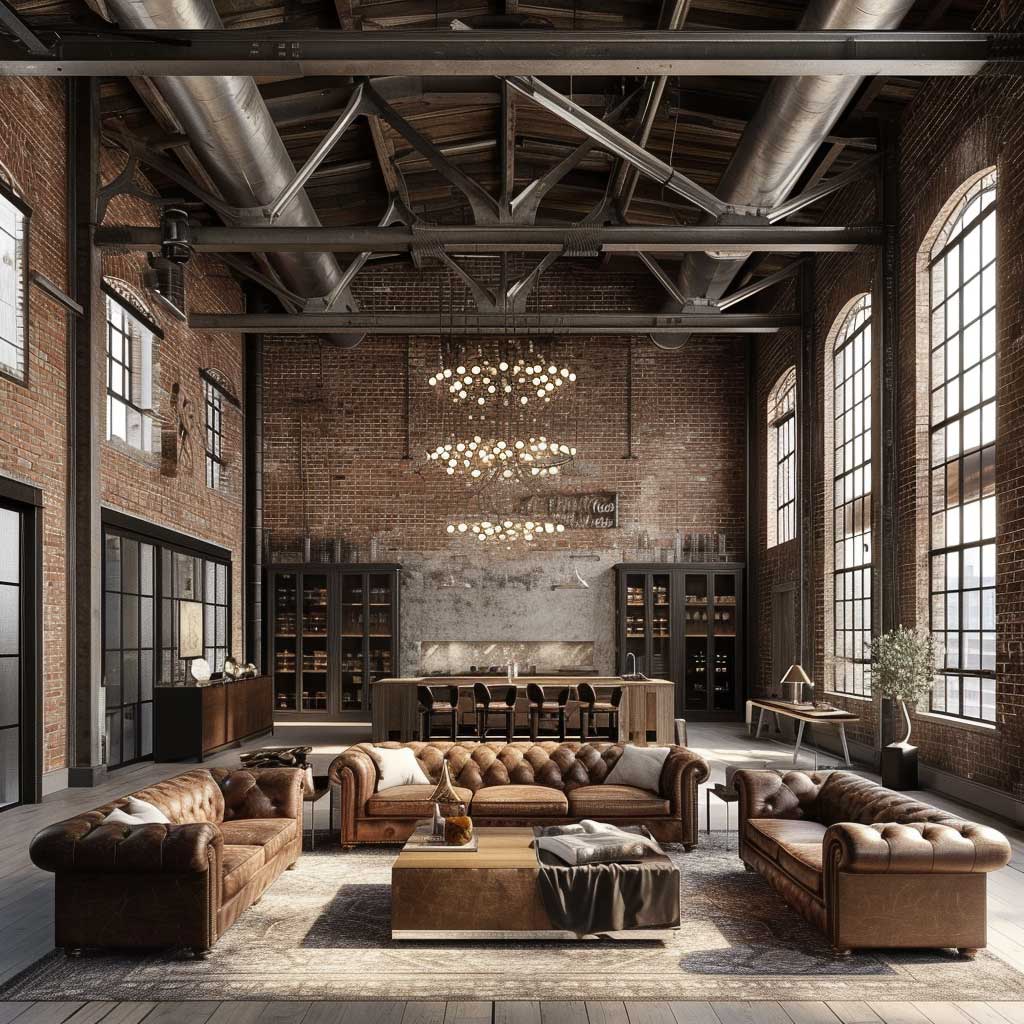
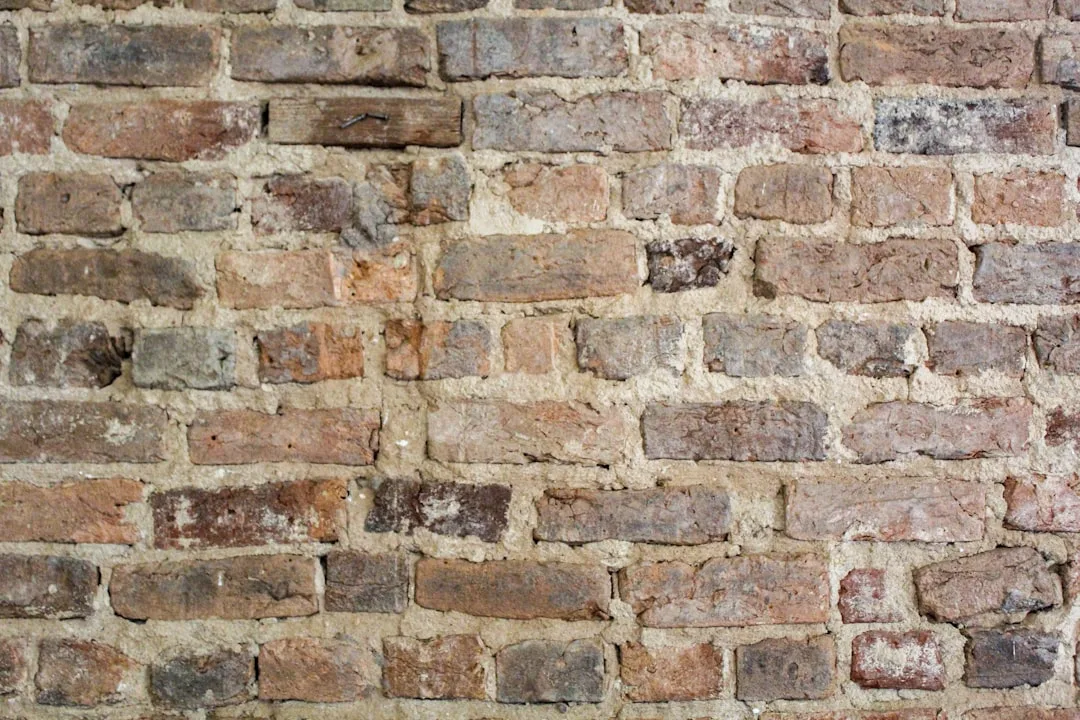
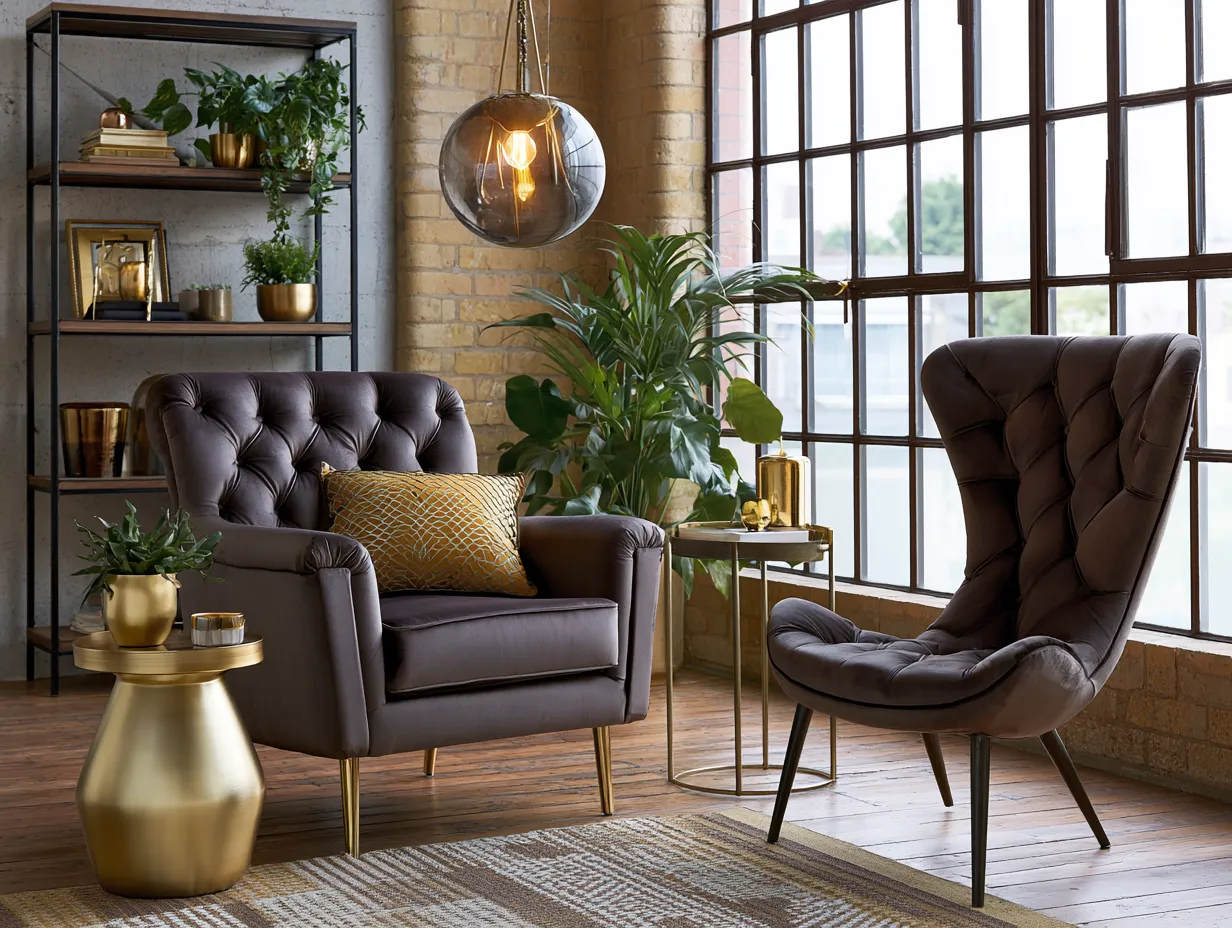
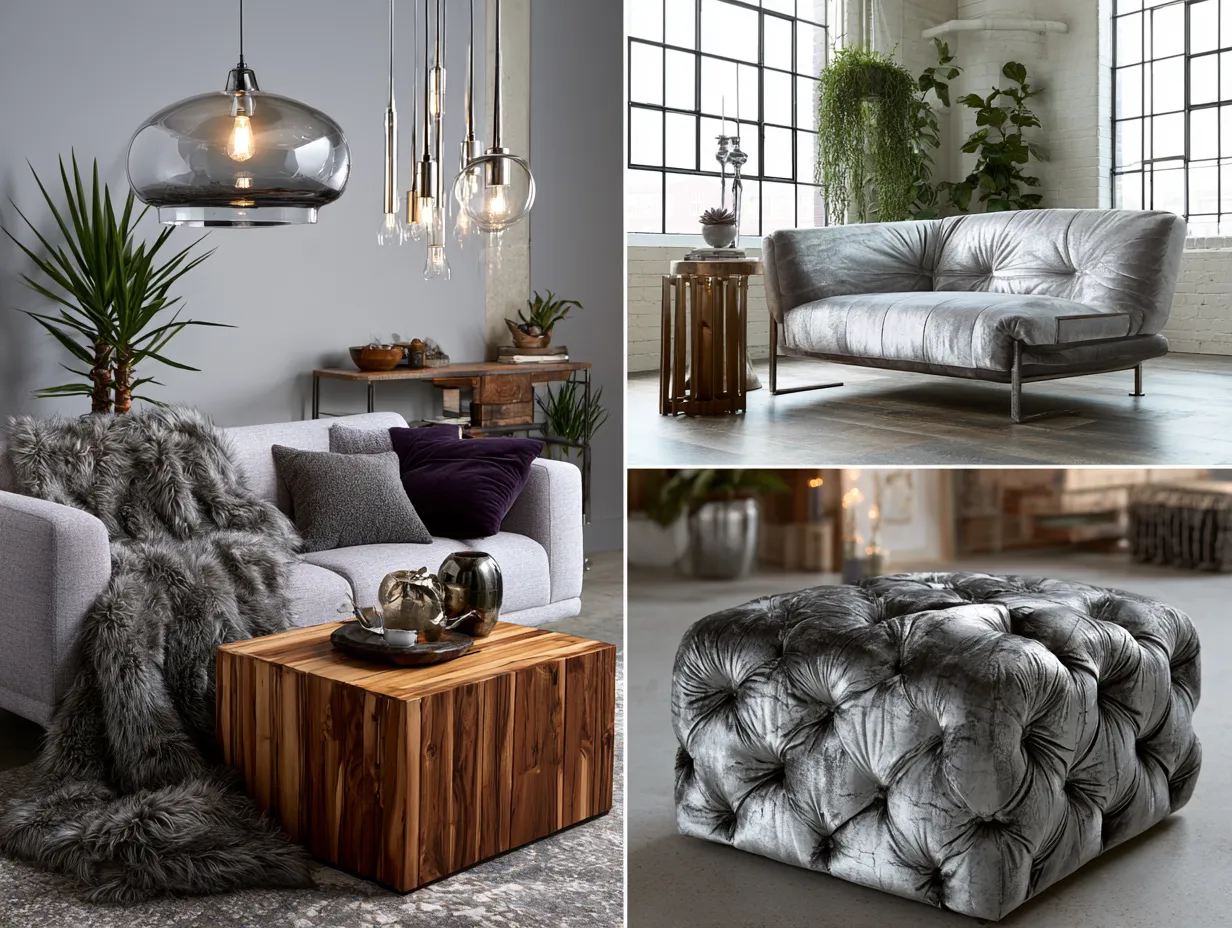
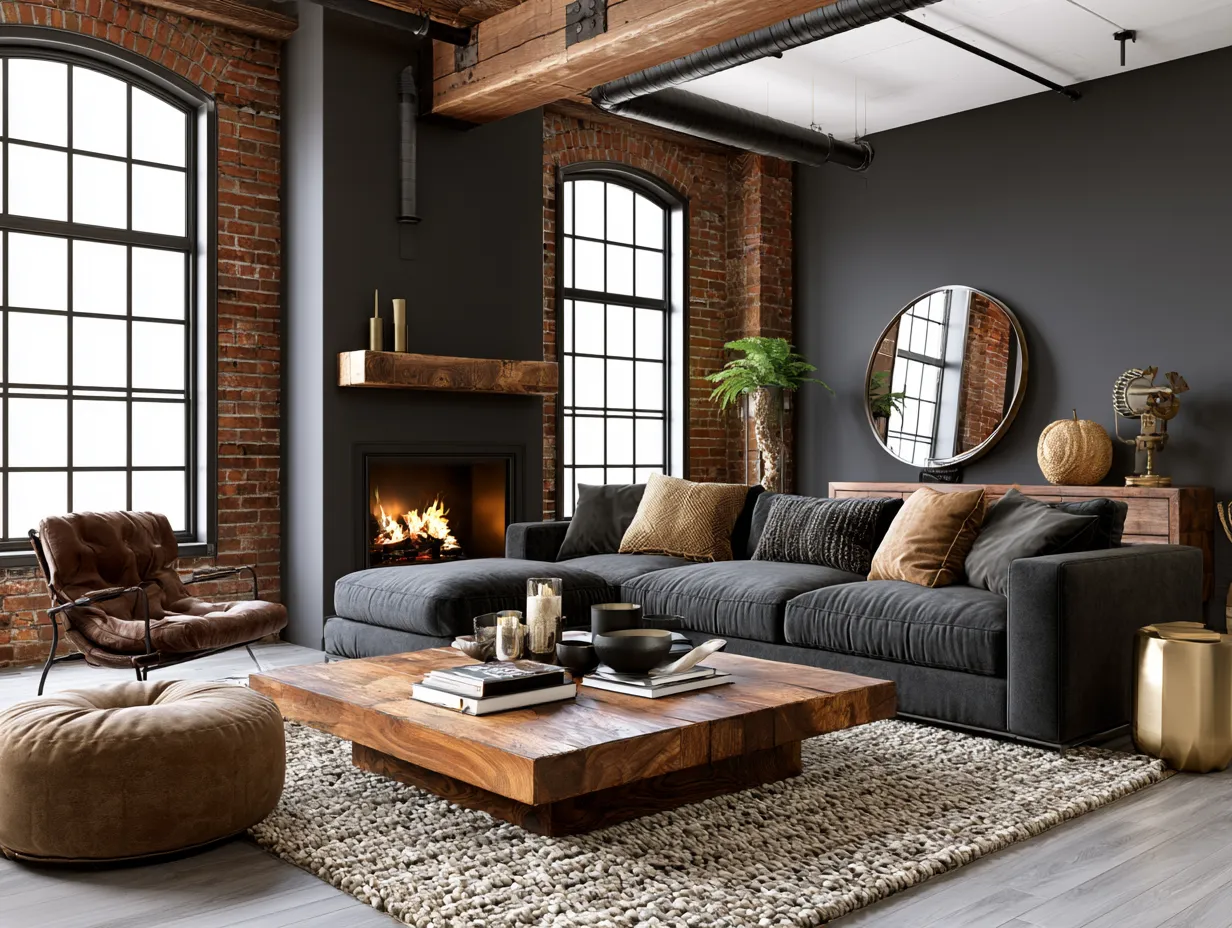
Industrial luxe interior design in the living room starts with one architectural feature — exposed brick — and everything else is a response to it. The brick brings warmth, texture, and a sense of history that no wallpaper can replicate. Rich red-brown tones pull the eye and anchor the room before you spend a dollar on furniture. High ceilings with raw steel or metallic beams amplify that effect, giving the space the proportions of a building that was designed for production, not for comfort. That tension is exactly what you’re after.
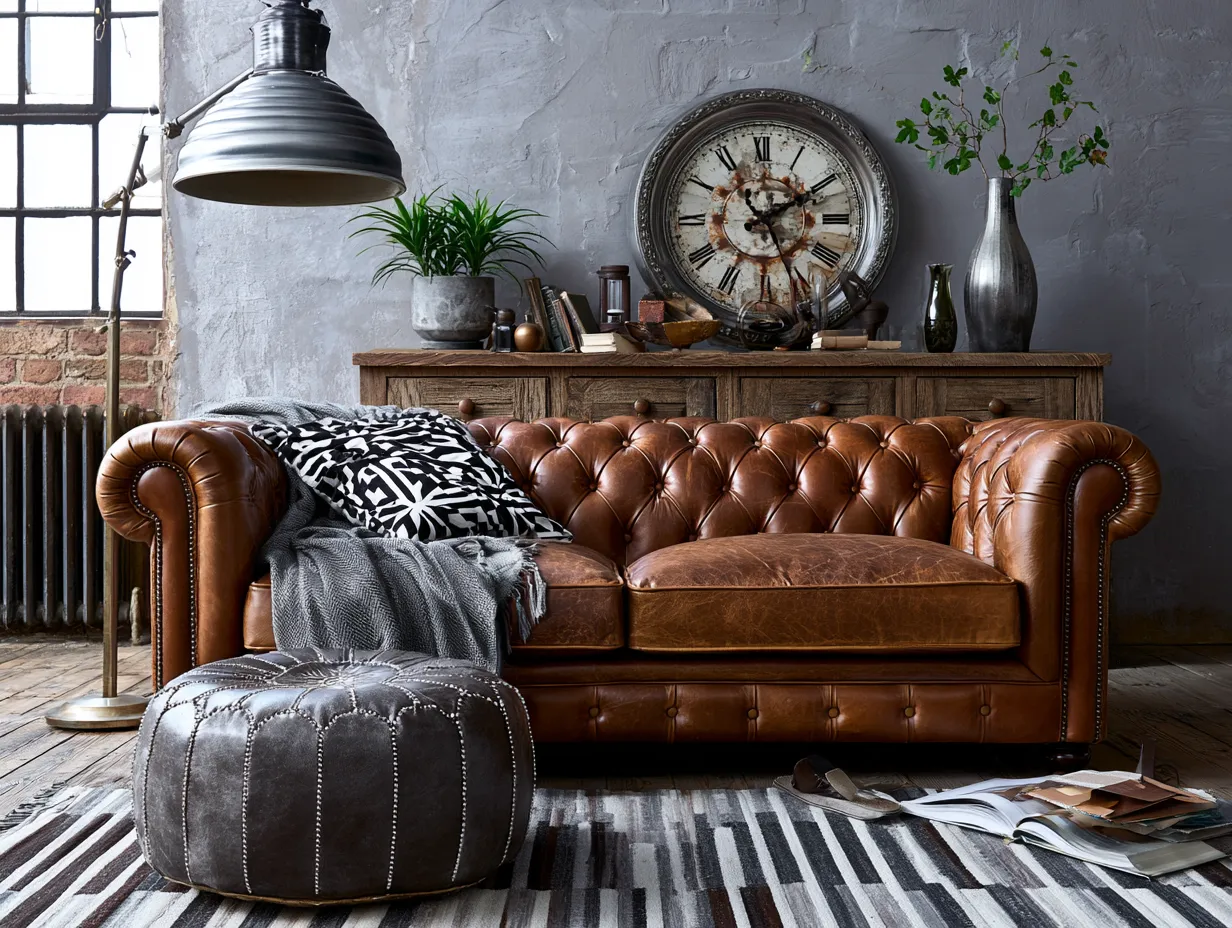
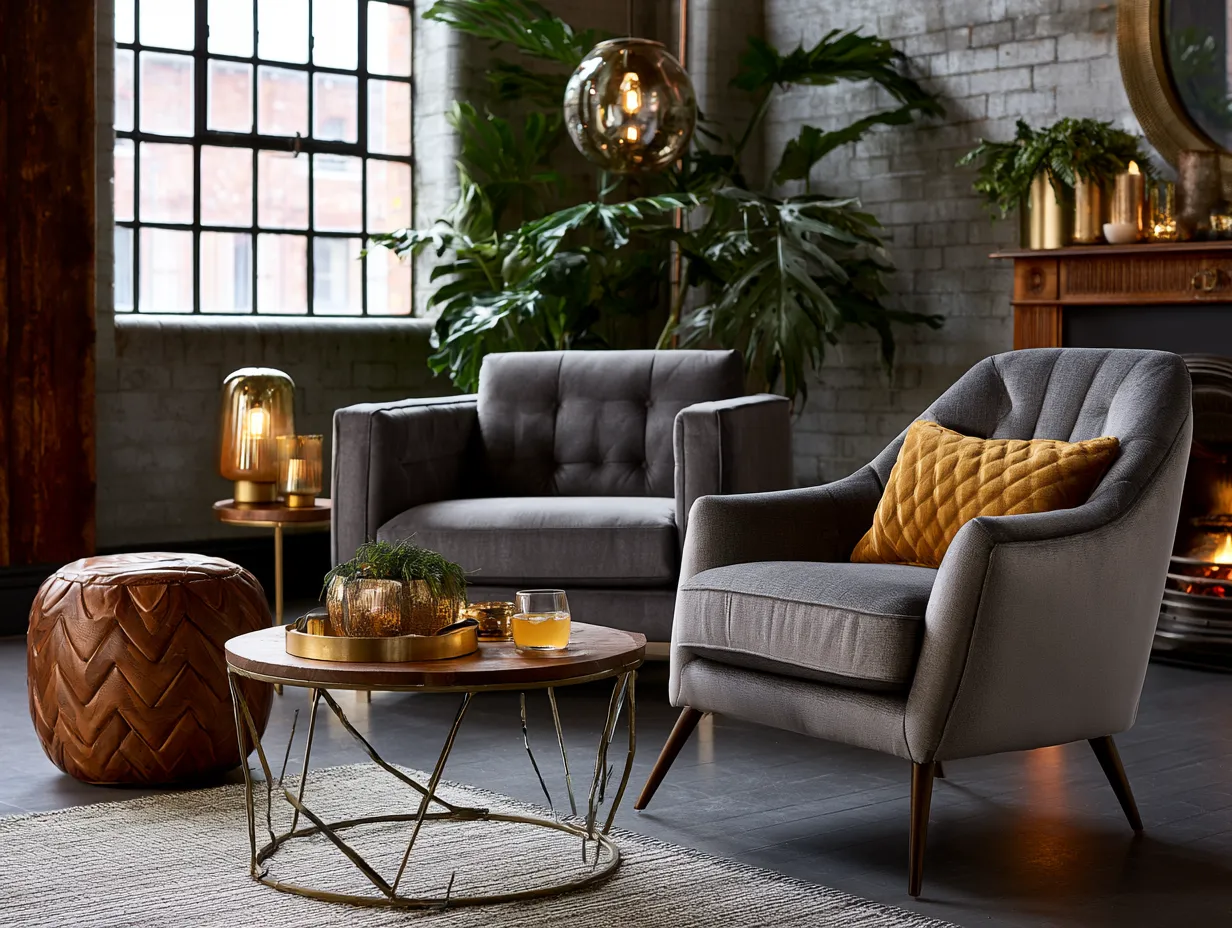
Furniture in this room has one job: soften the rawness without erasing it. I’ve bought two leather sofas specifically for industrial-leaning rooms — a Restoration Hardware Maxwell in saddle leather at around $3,400, and a West Elm Andes in cognac at just under $1,600 — and both worked because they brought warmth and weight without competing with the brick. What doesn’t work? Tight, minimalist upholstery in white or cream. It reads too clinical against exposed masonry, and you lose the sense that anyone actually wants to sit there. Ask yourself this: would a person who just did something physical feel comfortable sinking into this sofa? If the answer is no, the furniture is wrong for the style.
Lighting is where industrial luxe makes its most visible statement. A large chandelier — think Visual Comfort’s Liaison 8-light in aged iron, around $1,200 — does something a bare Edison bulb never could: it introduces unambiguous opulence into a room built from raw materials. The contrast is the point. I stole this principle from a SoHo loft I visited in 2022 where the designer had hung a Murano glass chandelier from an exposed steel I-beam. Nothing else in the room needed to work as hard. Layer in a floor lamp from Arhaus or a wall sconce from Schoolhouse for secondary illumination — chandeliers alone leave corners dark, and dark corners flatten an otherwise layered space.
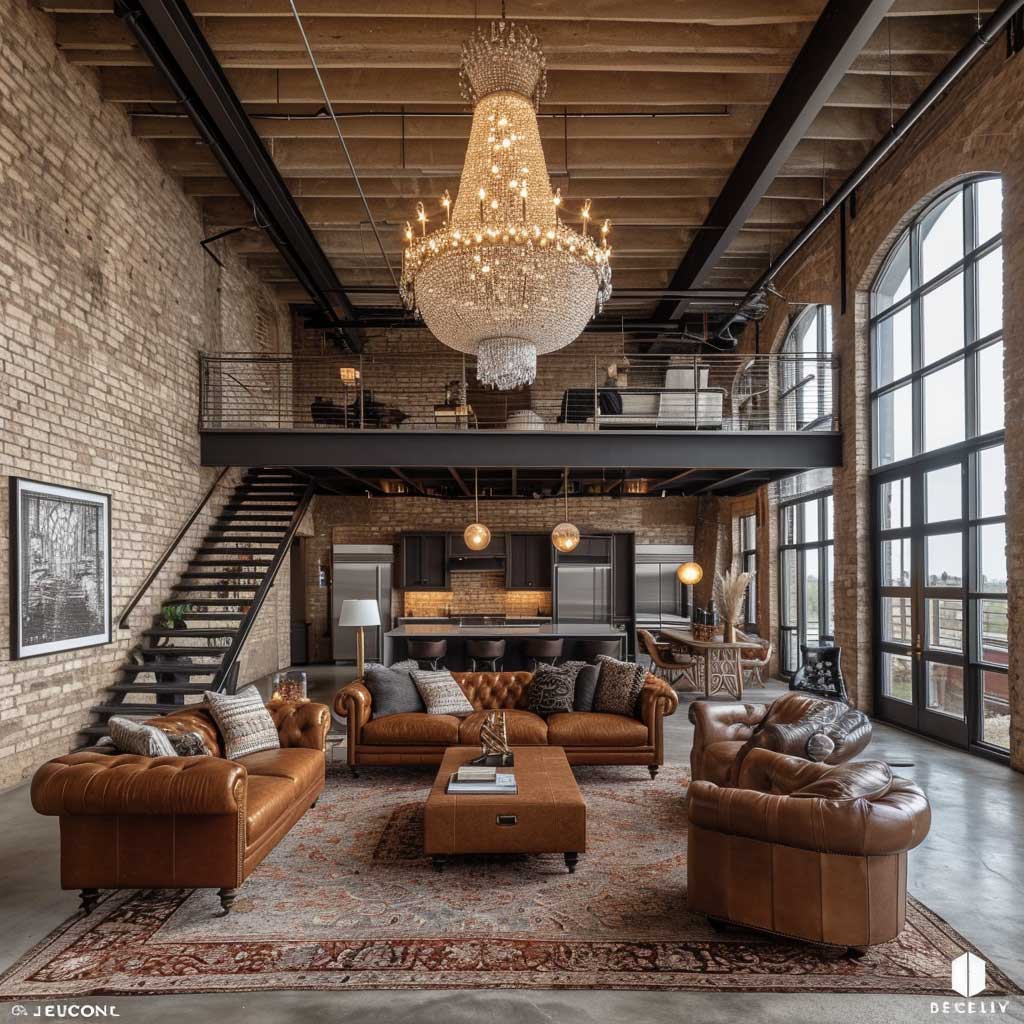
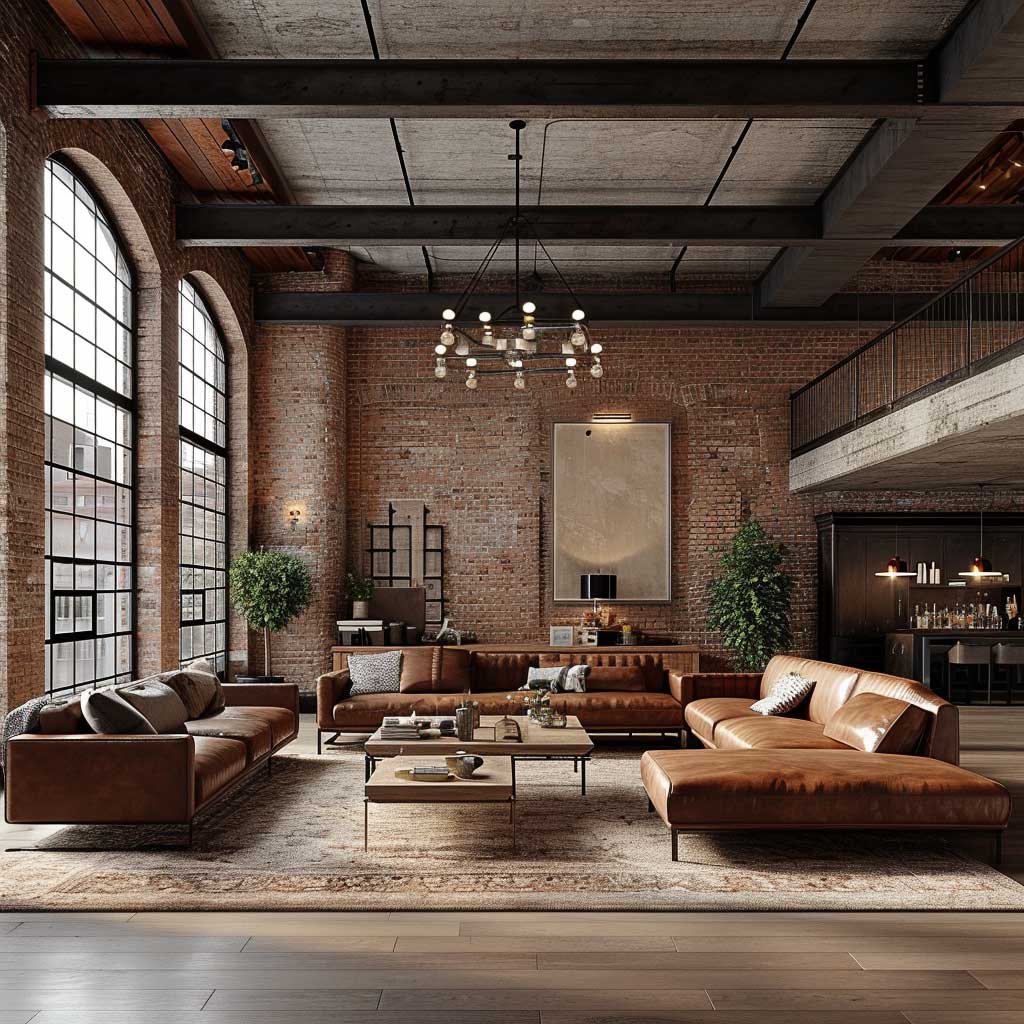
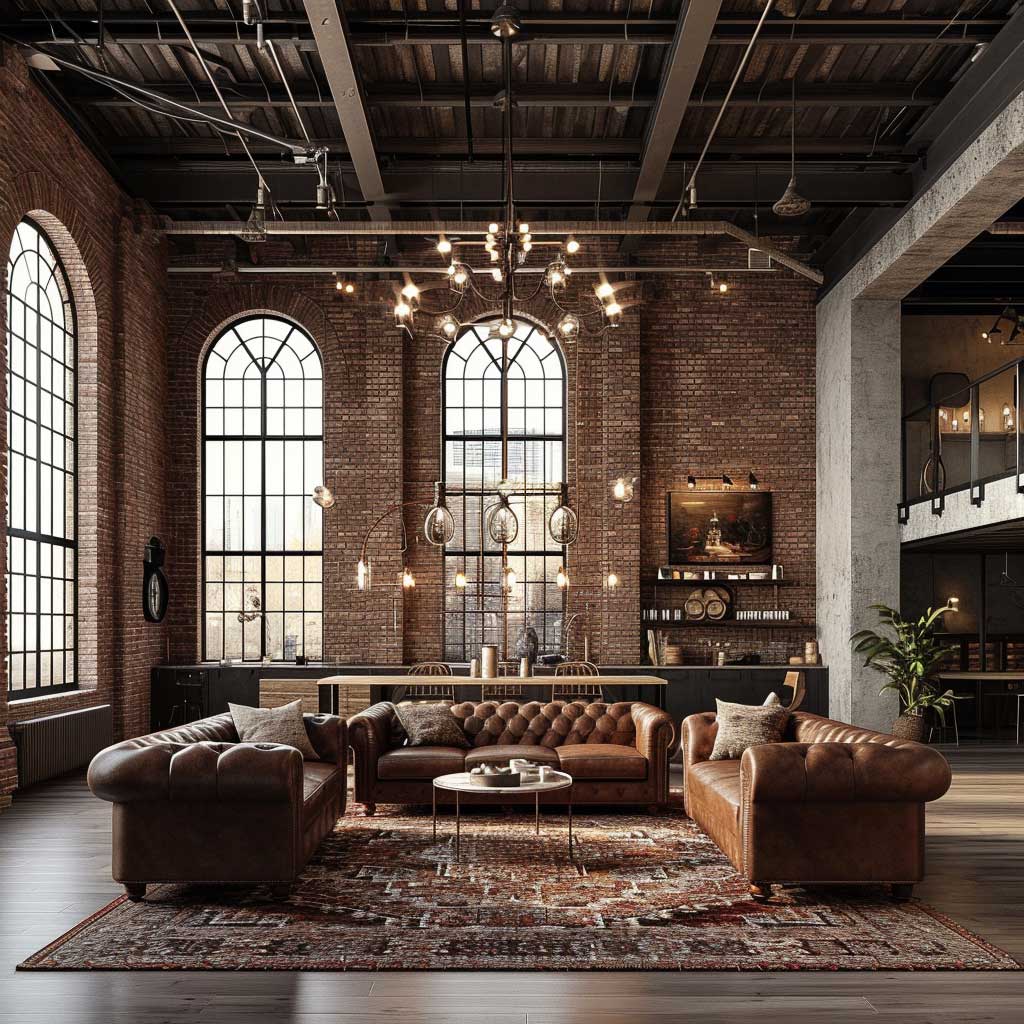
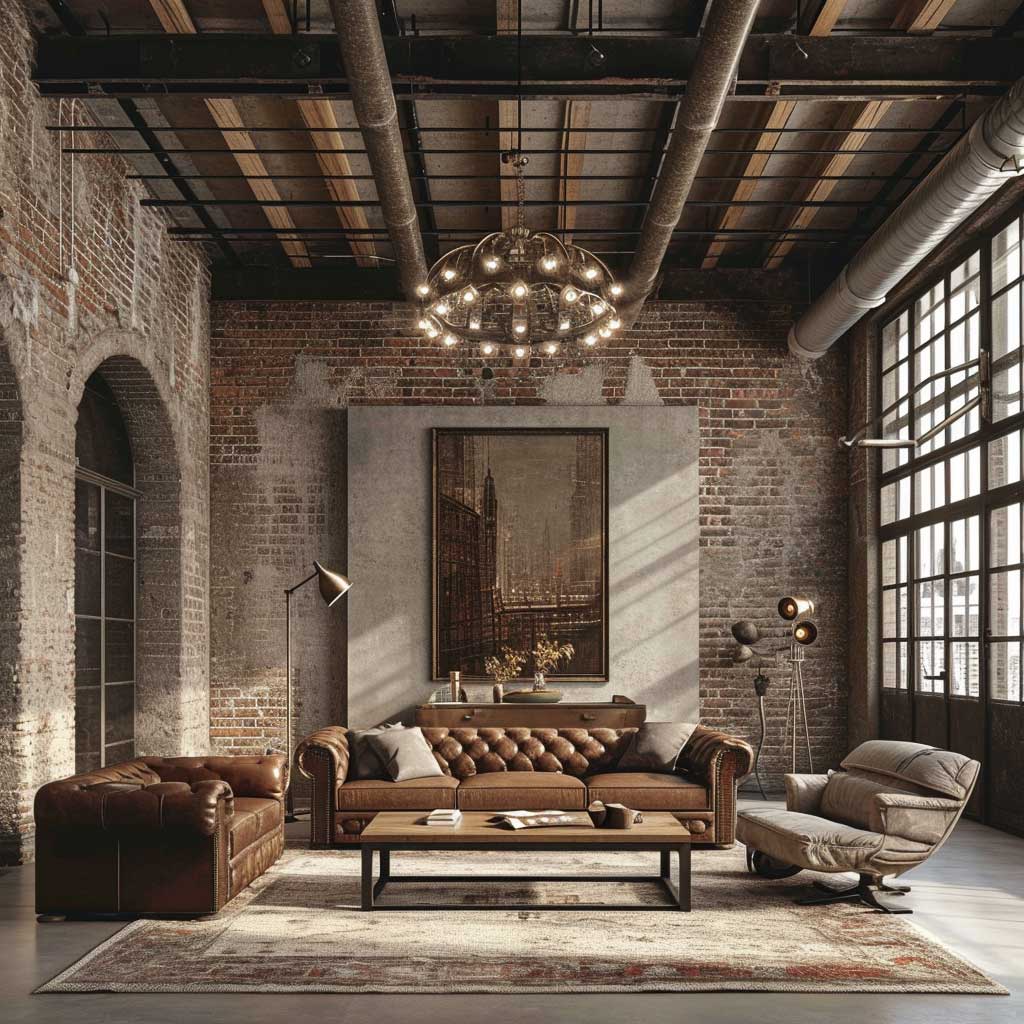
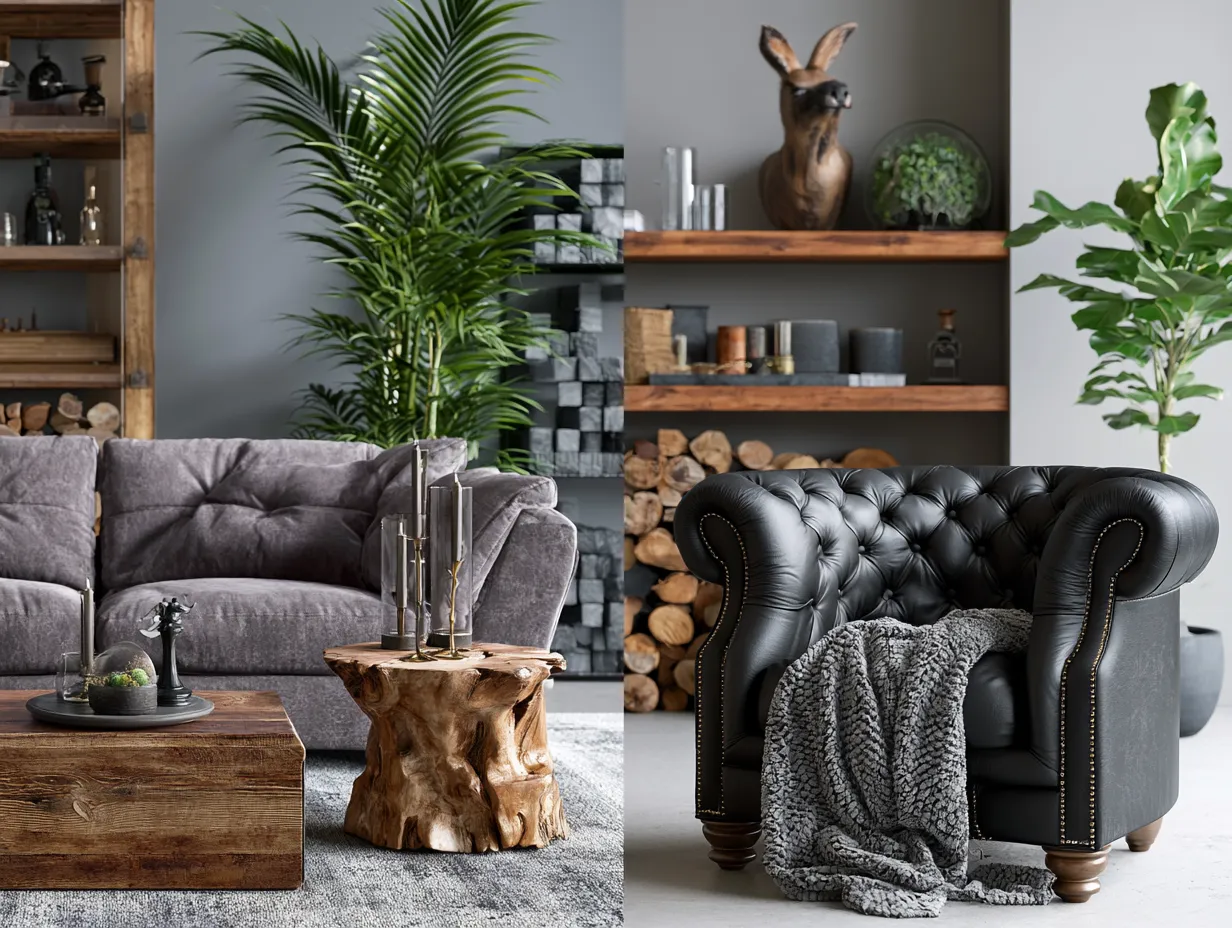
Decorative elements in an industrial luxe living room work like punctuation — a large abstract painting on the brick wall, a vintage Moroccan rug under the coffee table at around $400–$900 from Rugs USA, a pair of artisanal ceramic vases on a sideboard. Each piece should feel like it arrived from a different decade or continent than its neighbors. That apparent incongruity is what prevents the room from looking like a showroom floor. Coordinate by material and scale, not by matching sets. You’ll notice rooms decorated entirely in matched furniture suites look smaller than their square footage, while rooms mixing leather, ceramic, glass, and textile at varying heights read larger and more alive. For more on how industrial colour palettes anchor this effect, see industrial chic colour schemes for interior spaces.
Matching your sofa, rug, and curtains to the same colour family is the fastest way to neutralise everything interesting about this style. Industrial luxe depends on contrast — rough vs. refined, warm vs. cool, heavy vs. delicate. When everything reads as one coordinated palette, the tension disappears and you’re left with an expensive room that looks like a furniture catalogue page. Pick one dominant colour for upholstery, one for textiles, and let the raw materials — brick, concrete, metal — carry a third tone of their own.
Also: bare Edison bulbs on braided cable, alone, without a shade. This was interesting in 2014. Now it signals that nobody made a decision about lighting, which is the one room element that controls mood more than any other.
Industrial Luxe Interior Design in the Kitchen Starts With the Island Material

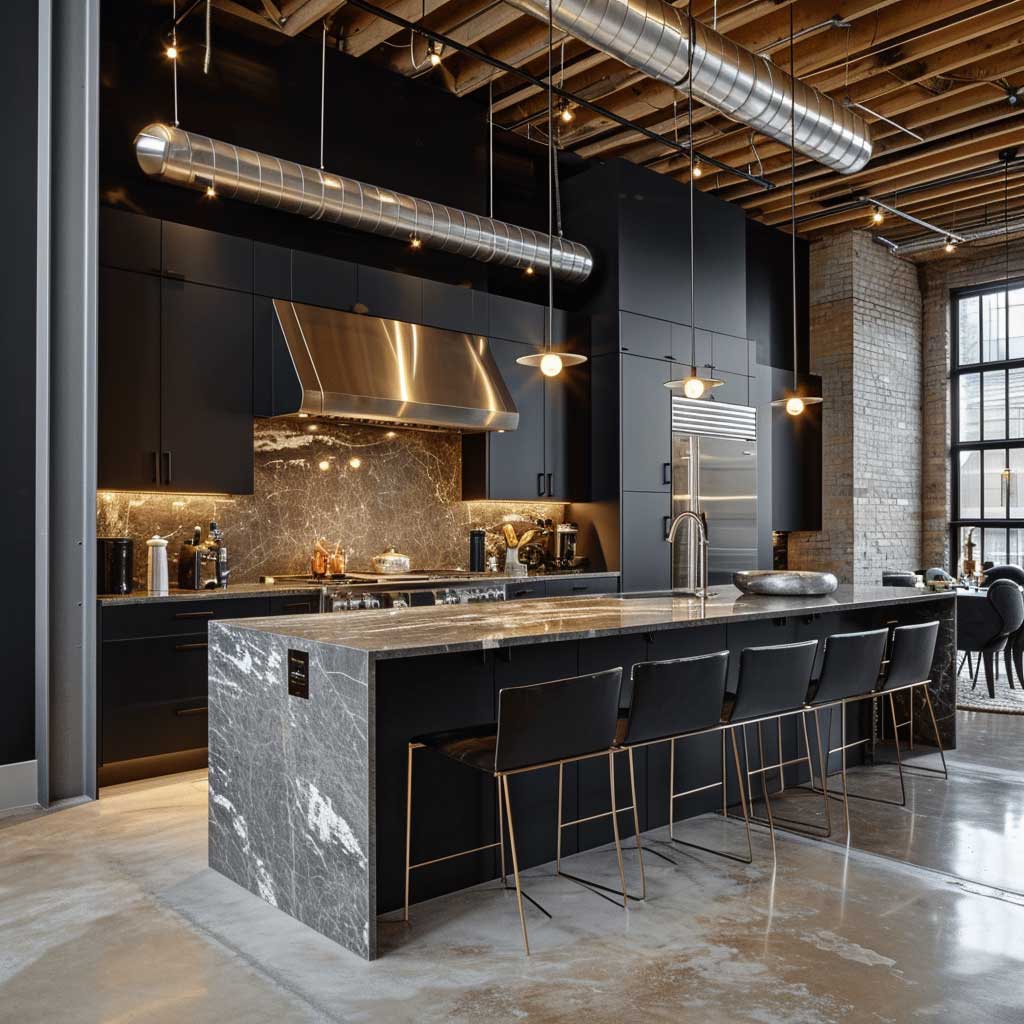


Industrial luxe interior design in the kitchen lives or dies on the island material decision. A Calacatta marble island — white ground with bold grey-gold veining — introduces the luxury half of the equation in a single stroke. The marble arrives already carrying centuries of association with wealth and craftsmanship, and it sits against stainless steel and black cabinetry the way a diamond ring sits against a bare hand. Expect to pay $90–$140 per square foot installed for genuine Calacatta; for a kitchen island running 4 by 7 feet on one surface, that’s roughly $2,500–$4,000 in stone alone before fabrication. If the budget doesn’t stretch there, Dekton’s Entzo slab at $55–$75 per square foot is the honest substitution — it mimics the veining pattern and resists heat and staining better than real marble does in a working kitchen.
Stainless steel appliances are the obvious choice for the industrial side, but you don’t need every surface to gleam. My practical recommendation: keep the range, range hood, and sink exposed in stainless — those are the workhorse elements that read as professional and industrial — and integrate everything else. A panel-front refrigerator in the same finish as the black cabinetry keeps the room quiet and lets the island do its job as the focal point. Sleek black cabinetry without hardware, or with minimal brushed-nickel pulls, adds modernity without ornamentation. The kitchen I redesigned two years ago used IKEA’s Axstad matte-black fronts at around $60 per door — twelve doors total, roughly $700 — with Blanco stainless undermount sinks at $450. Nobody has guessed the cabinet cost in the three years since.
Polished concrete floors complete the industrial side of the material argument. Raw concrete has a textural warmth that ceramic never quite matches — the slight variation in tone across a poured surface reads as deliberate rather than mass-produced. Polishing it to a low-sheen finish (rather than high-gloss) keeps it grounded and prevents the kitchen from feeling like a hotel lobby. What’s the case against real poured concrete? Maintenance. It needs sealing every twelve to eighteen months and will absorb red wine permanently if left unsealed. Caesarstone’s Cloudburst Concrete in the 4033 finish offers nearly identical visual results at $50–$70 per square foot installed, with no annual maintenance obligation.


Pendant lighting above the marble island is the junction where industrial hardware meets the opulence of the stone below it. A cluster of three black steel dome pendants at staggered heights — Rejuvenation’s Corbett in matte black runs around $180 each — hangs over the island and works as sculpture as much as light source. The warm-white bulbs at 2700K are not optional here; cool-white at 4000K turns the marble grey and makes the kitchen feel like a commercial prep station rather than a home. I’ve seen this lighting error in four separate kitchen renovations, and in every case the owner noticed it within a week and replaced the bulbs. The fixtures stayed; the colour temperature changed everything. For inspiration on how related hybrid aesthetics handle material choices, Neo Classic industrial interiors show how ornate and raw surfaces coexist in one room.
Velvet Bedding Against Concrete — the Industrial Luxe Bedroom Contrast That Actually Works

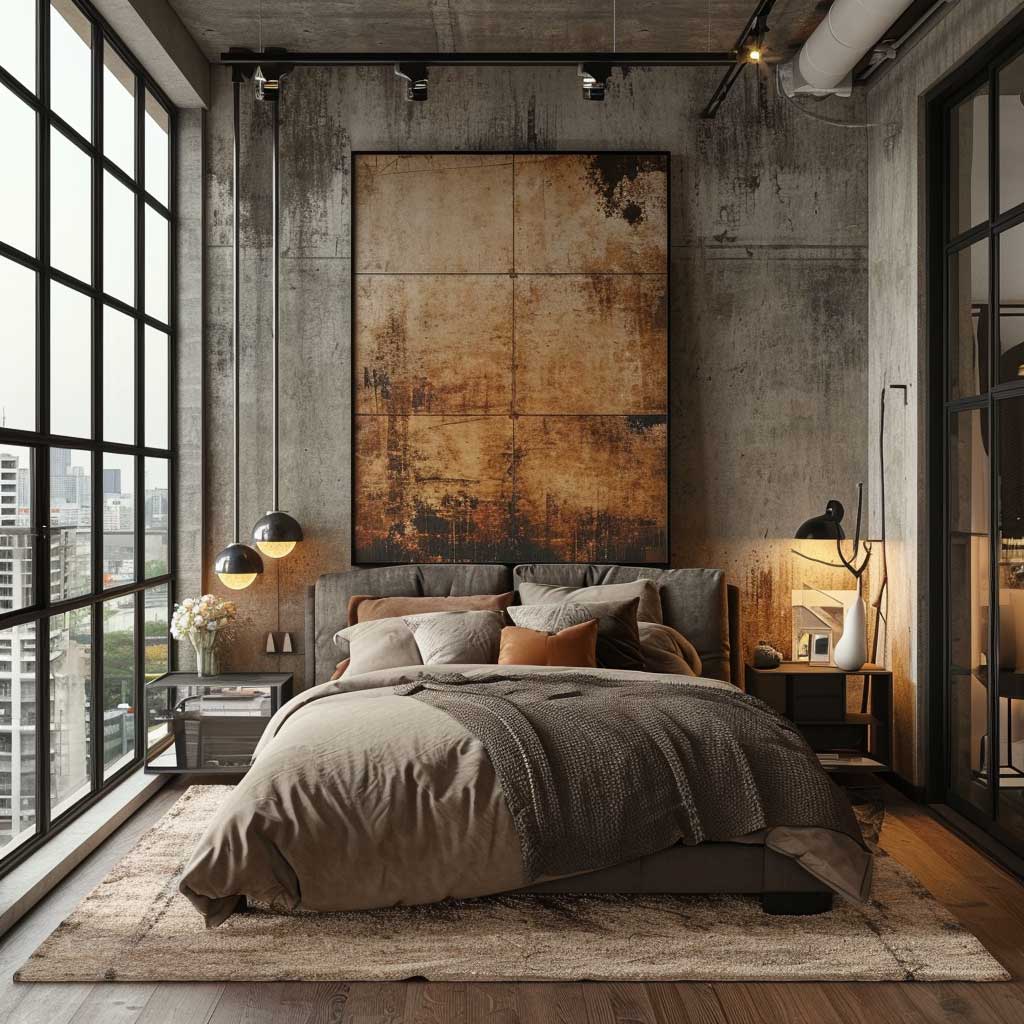
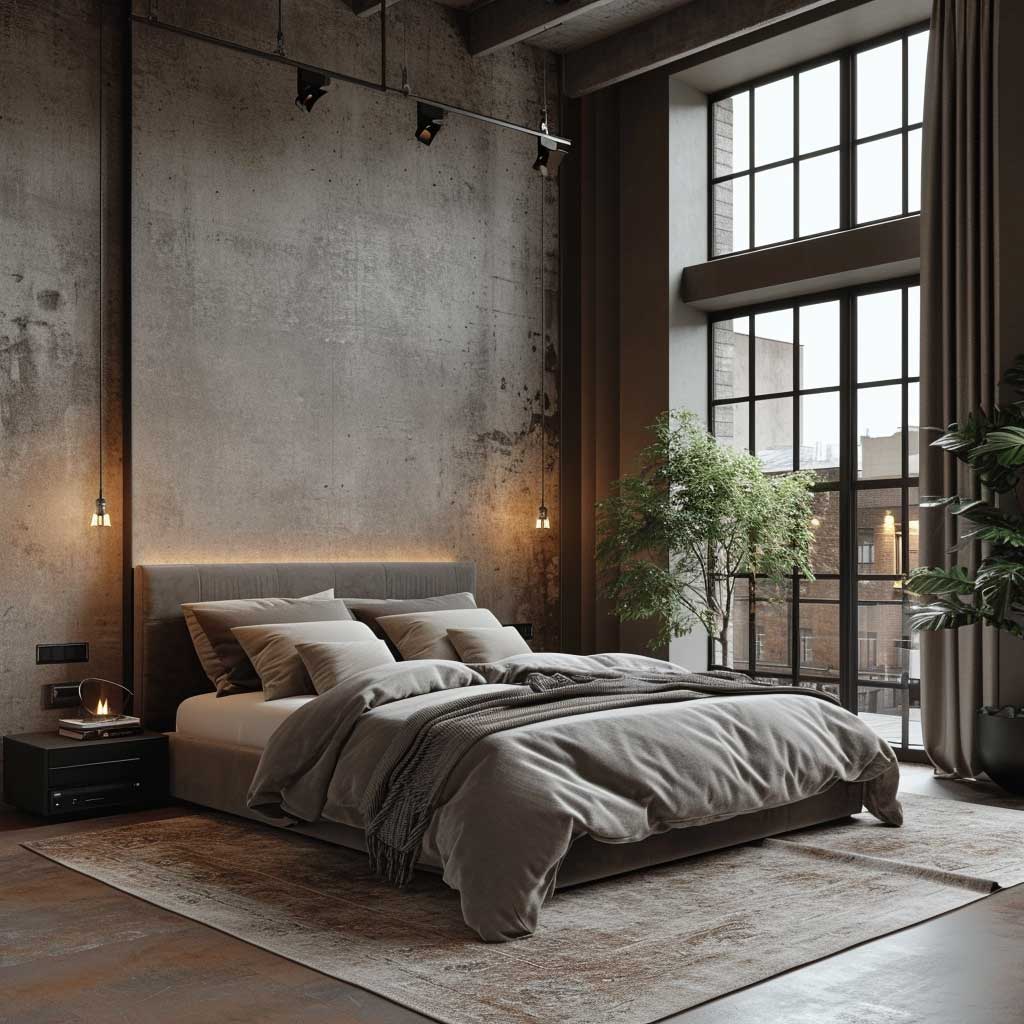
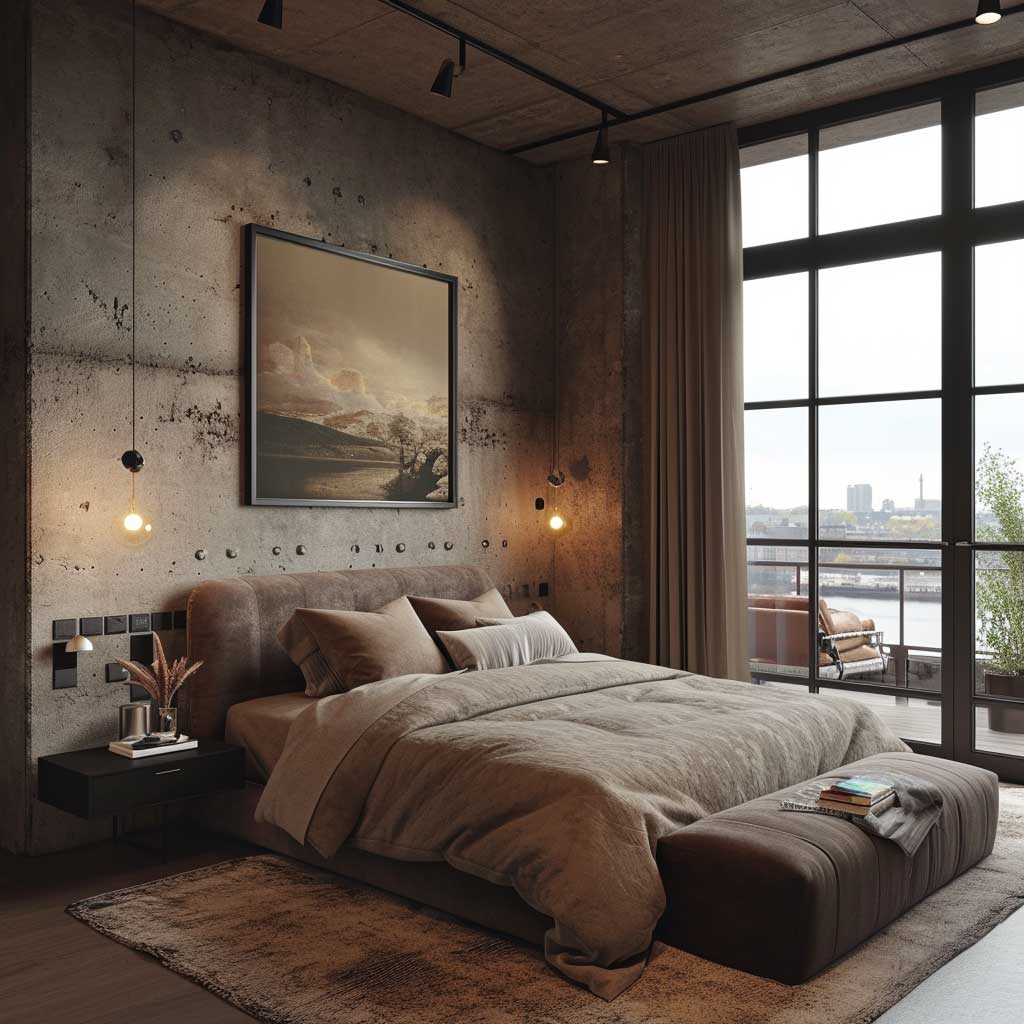
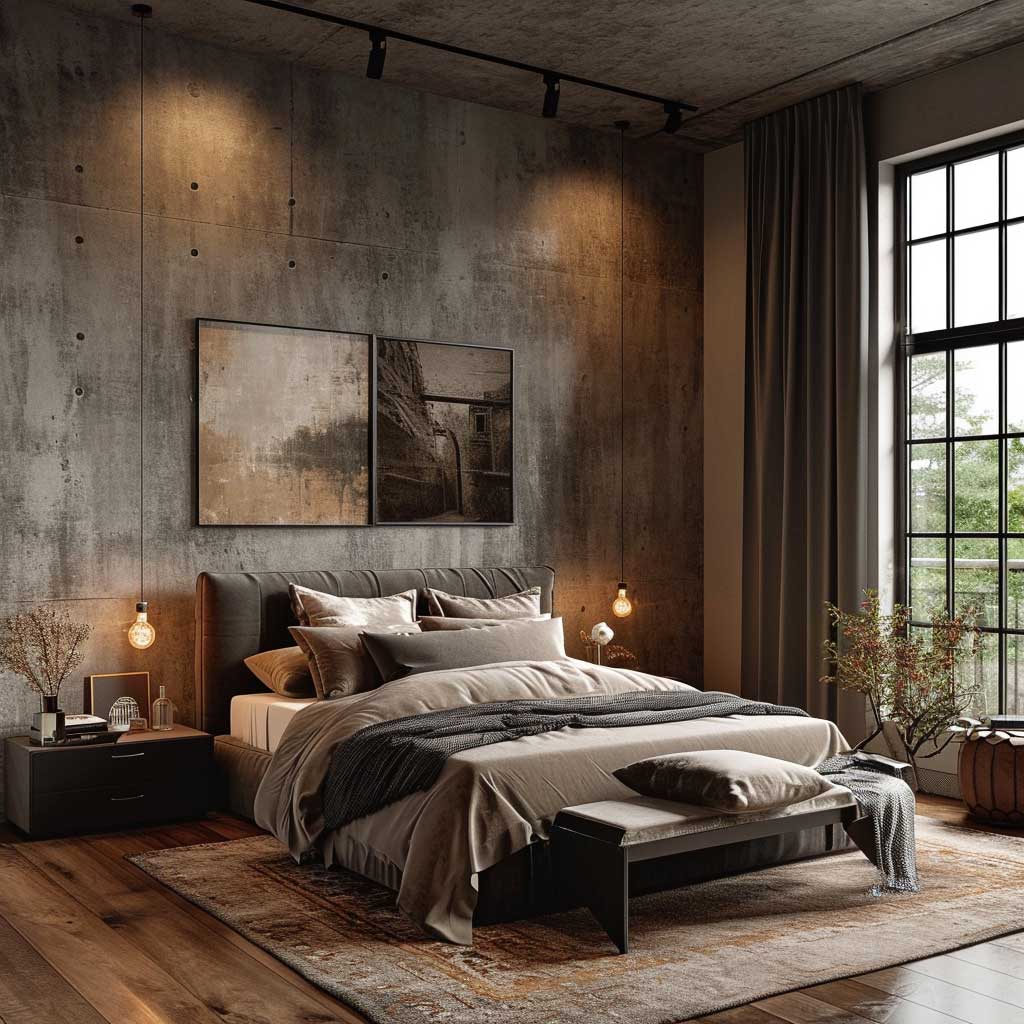
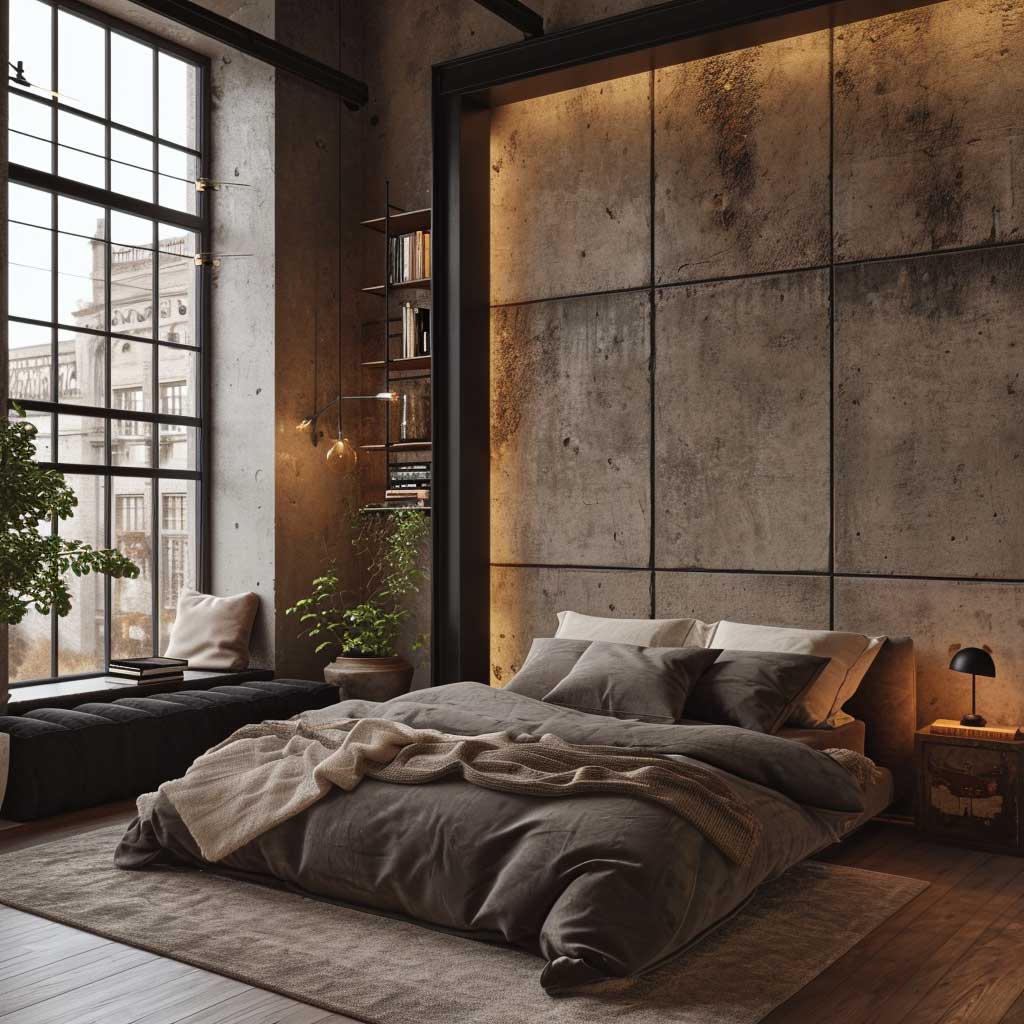
Industrial luxe interior design in the bedroom requires one textural commitment above every other: velvet bedding in a deep, saturated colour. Navy, forest green, burgundy, charcoal — all work, for the same reason. The velvet pile absorbs light where the concrete wall behind it reflects it, and that opposition is the visual engine of the entire room. Parachute’s Velvet Duvet Cover in Storm at $249 is my standard recommendation for this application — the weight is right, the colour holds after multiple washes, and the sheen level sits between matte and glossy in a way that photographs beautifully. Cheap velvet goes flat and pills; you can tell from across the room.
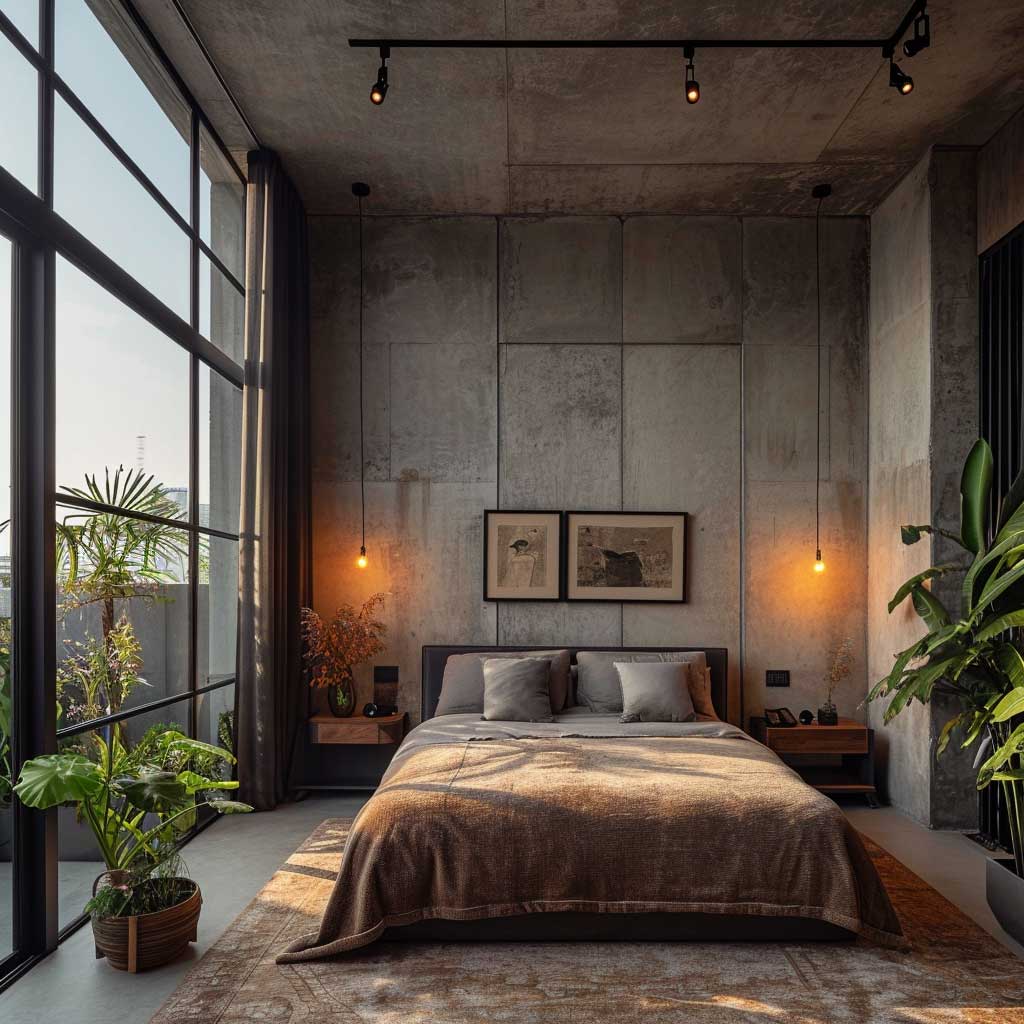
The exposed concrete accent wall is the industrial anchor of the bedroom, and it works precisely because it doesn’t try to do anything decorative. It’s structural honesty turned into a backdrop — the same principle as leaving a photograph unframed to let the image speak without the frame’s editorial commentary. Raw texture and a neutral grey-beige palette mean the concrete wall will never compete with whatever you put in front of it. The large steel-framed window is equally important: it connects this material vocabulary to the building’s architecture rather than feeling like a prop. Steel frames in black or dark bronze from companies like Hope’s Windows or Windsor Windows run $800–$2,500 per unit installed, depending on size, and they age better than powder-coated aluminium in humid environments.
Ambient lighting in the industrial luxe bedroom needs layers — not just a central fixture, but wall sconces flanking the bed, and ideally a floor lamp in a corner with a dimmer. Does a single overhead light work in this style? Technically yes, but it eliminates the drama that makes the room worth the effort. Flos’s Romeo Moon pendant in polished chrome at around $800 gives you the luxury object overhead; Schoolhouse’s Arched wall sconce in brass at $195 each gives the bedside warmth. Both are visible enough to read as design choices rather than utility fixtures, which matters in a room where the concrete wall could easily dominate. The result is a space that functions like a boutique hotel room in a building that was built for something else entirely — which is exactly the feeling industrial luxe is reaching for. For more on how the bedroom version of this style handles raw material combinations, industrial bedroom design inspirations covers eight real rooms worth studying.
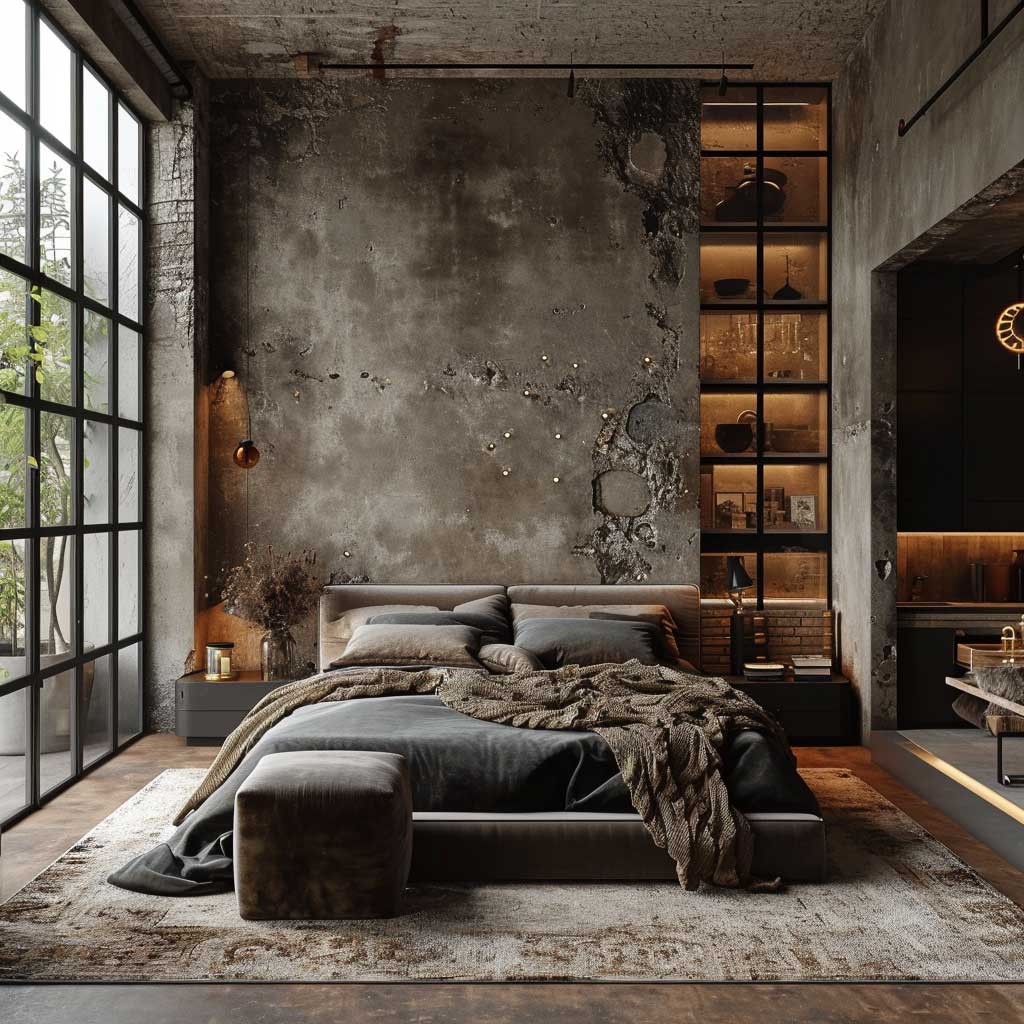
Storage in this bedroom should be either invisible or architecturally honest. Either go with built-in wardrobe panels in matte charcoal or raw oak that disappear into the wall, or choose open industrial shelving in black steel at $150–$300 per section from Pipe Decor or Floating Shelf Company — and commit to showing only what you’d put in a photo. Half-dressed open shelves with laundry stacked between books are the fastest way to undo six months of careful material sourcing. The rule I apply: if I wouldn’t leave it out when a guest comes over, it doesn’t belong on an open shelf in a room this considered. House Digest’s deep-dive on industrial living rooms making a comeback notes the same principle — modern industrial spaces succeed by being highly edited, not maximally raw.
The Takeaway
Industrial luxe works because neither side of the equation apologises for existing.
The exposed brick, steel beams, and polished concrete give each room its bones — structure and authenticity that no decorating trick can manufacture. The marble island, velvet bedding, and chandelier give each room its ambition. Strip out the industrial side and you have an expensive apartment. Strip out the luxe side and you have a loft that’s still waiting to be finished.
The practical anchor of this style is material honesty: choose real surfaces that age well — Calacatta marble, poured or Caesarstone concrete, genuine leather — rather than imitations that telegraph effort at a glance. Budget $90–$140 per square foot for real stone; spend under $200 on lighting that looks like it cost three times that.
Save this post before your next material decision.
Related Topics
FAQ
What is industrial luxe interior design?
How much does industrial luxe interior design cost?
What materials are used in industrial luxe design?
What furniture works best in an industrial luxe living room?
What lighting suits industrial luxe interiors?
Can industrial luxe work in a small apartment?
Complete guide
Loft Design Ideas That Transform Raw Space Into Home
Bedrooms, kitchens, living rooms, styles, materials, layouts — all in one place