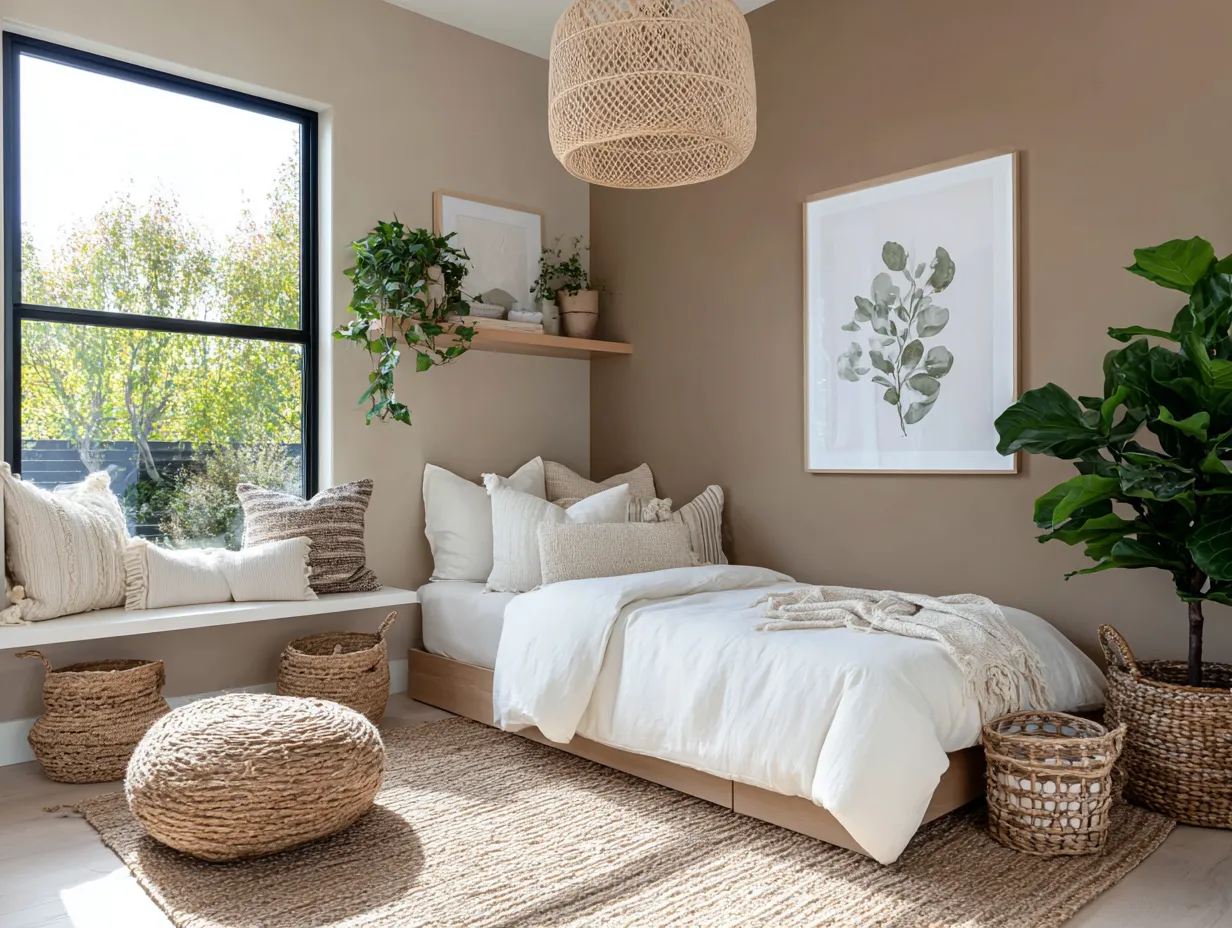
Dark green interior design works because the color carries weight without requiring anything else in the room to work harder. Walls in Sherwin-Williams Shade-Grown SW 6188 — an LRV of 8, meaning it reflects very little light — absorb the room instead of bouncing it back, making every adjacent material feel more deliberate. That’s the mechanic behind why spaces designed around deep green read as expensive even when the furniture budget was modest.
The three rooms where dark green performs best aren’t arbitrary: living rooms, minimalist bedrooms, and kitchens each demand something different from the color. In a living room it anchors; in a bedroom it quiets; in a kitchen it sharpens everything placed against it. The mistake most people make is treating it like a neutral — applying it everywhere and wondering why the result feels heavy rather than considered.
What follows covers the specific decisions that make dark green interior design work room by room — which shades to choose, which pairings to avoid, and where the color earns its place most convincingly.
- Why a dark green living room wall at LRV 8 makes velvet sofas look more expensive
- The one dark green paint move that ruins a minimalist bedroom (and what to do instead)
- Zillow data: green kitchen cabinets add ~$1,600 to home sale price vs. neutral finishes
- Benjamin Moore Hunter Green 2041-10 vs. Sherwin-Williams Shade-Grown SW 6188 — which fits which room
- Hardware pairing rules for dark green cabinetry that actually hold up long-term
What Dark Green Interior Design Actually Does to a Living Room

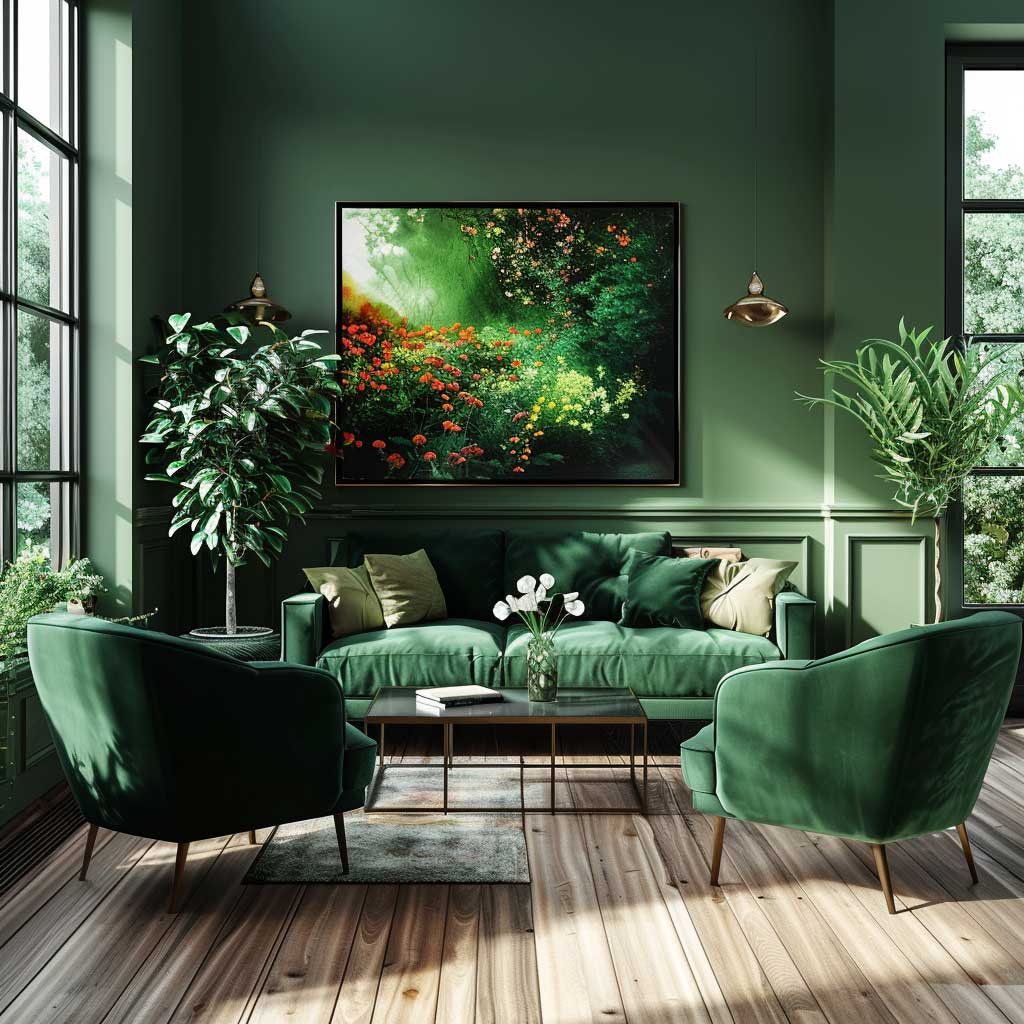
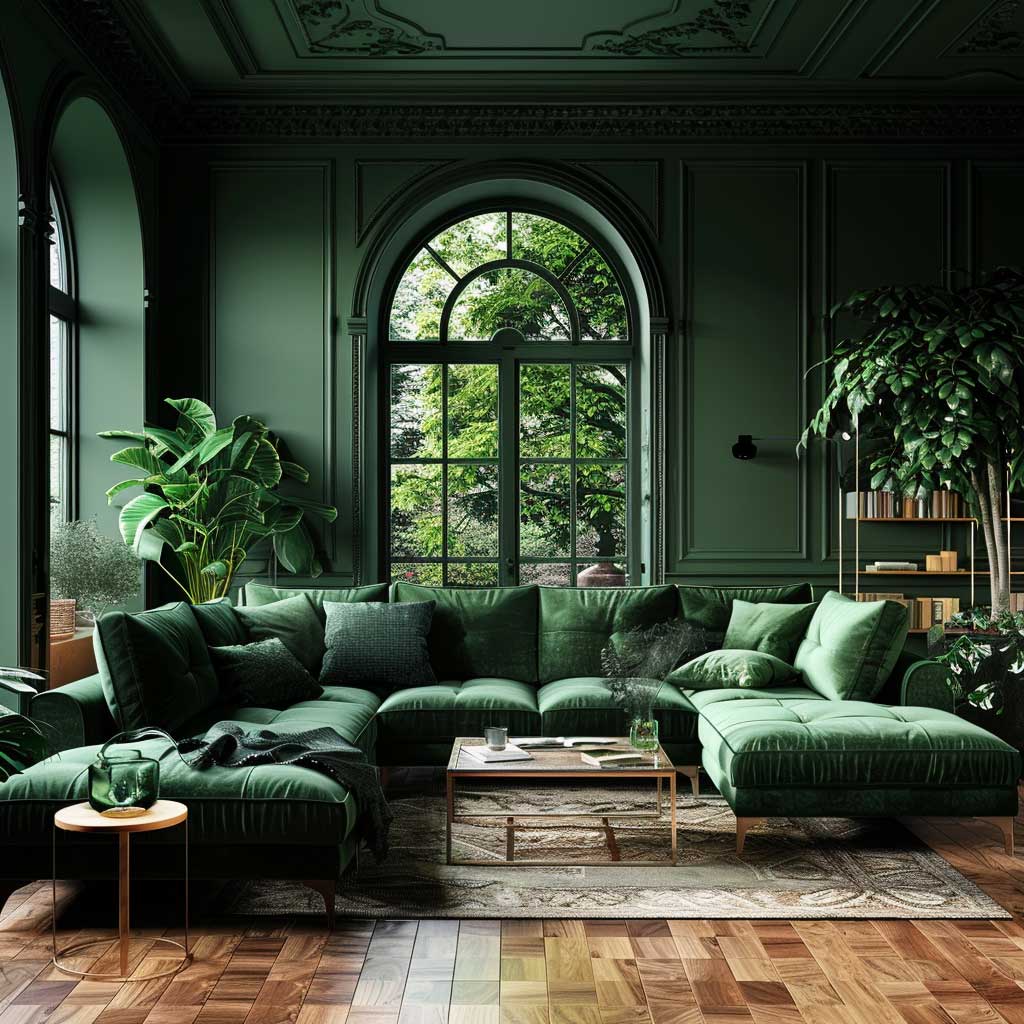

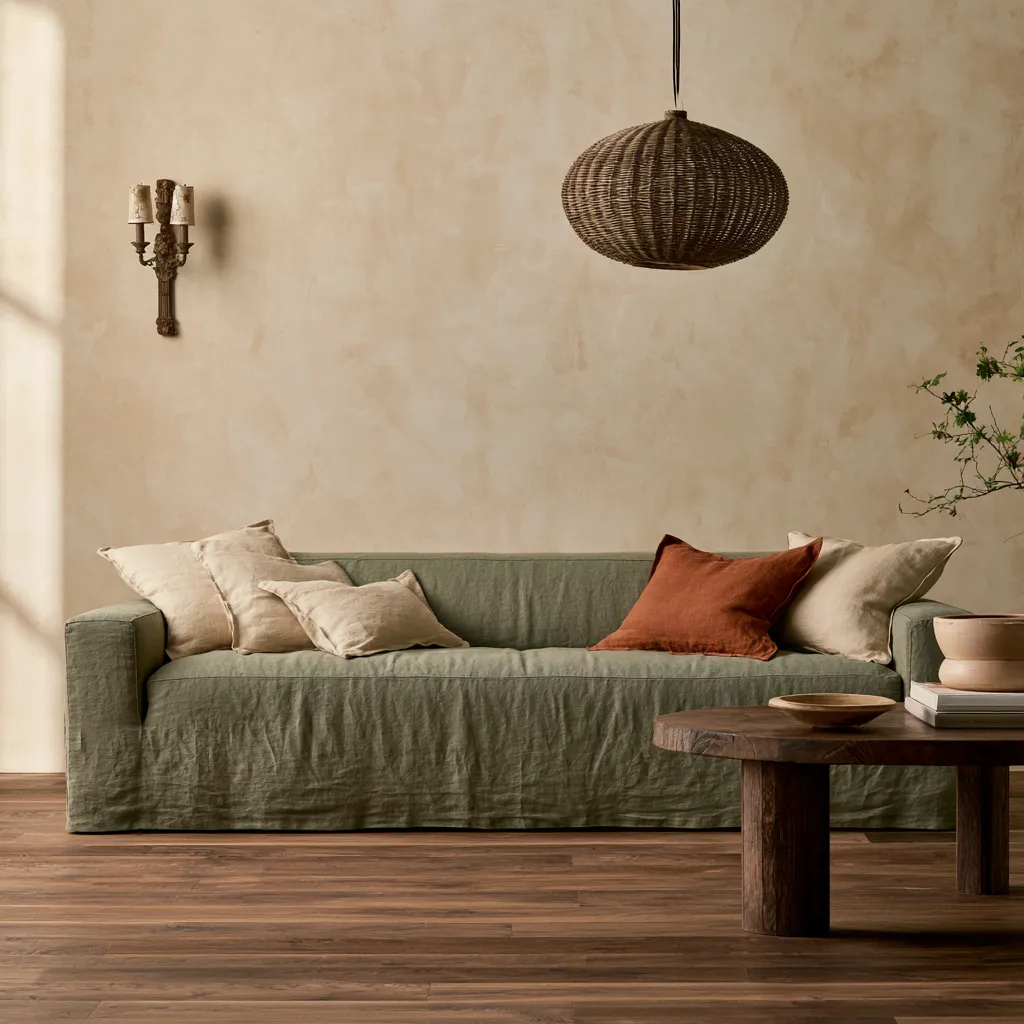
Dark green interior design in a living room operates like a good anchor on a ship: the deeper and heavier it sits, the more everything above it stays steady. Paint four walls in Benjamin Moore Hunter Green 2041-10 — LRV 4.98, hex #23372B — and the room stops feeling like a collection of furniture and starts feeling like a considered space. Neutral oak floors look warmer against it. A cream linen sofa reads as more deliberate. Even mediocre artwork picks up presence when dark green is behind it.
The practical question most people ask too late: does the room get enough light? Dark greens with an LRV under 10 absorb light rather than reflect it, which means north-facing or low-ceiling rooms can feel oppressive rather than cocooning. The safer approach in a darker living room is concentrating the color on a single feature wall or a statement sofa. Article’s Sven 88″ tufted velvet sofa in Plush Pacific Green retails at $1,399 — placing one piece at that scale gives the room the same visual anchor as four painted walls, at a fraction of the commitment. Stylists who work with this palette consistently recommend the sofa route for rooms under 300 square feet.
What’s the right texture pairing for a dark green living room? Velvet against matte paint is the combination that works most reliably — the plush surface of the upholstery picks up light while the painted wall absorbs it, creating contrast without requiring additional colors. Brass or brushed gold hardware in light fixtures and side tables adds warmth rather than competing with the green. The pattern to avoid: mixing too many greens. A forest green sofa with sage cushions and an olive throw forces the eye to arbitrate between shades instead of landing anywhere settled. Pick one dominant green and treat everything else as a true neutral.
Natural light shifts how dark green behaves dramatically — a room painted in Sherwin-Williams Shade-Grown (SW 6188, LRV 8) will read as rich forest green in the morning and closer to near-black by late afternoon. That’s not a flaw; it’s the reason the color feels alive over the course of a day. Indoor plants positioned near windows reinforce the palette without echoing it: the living green of a fiddle-leaf fig reads as a different material than a painted wall, which keeps the room from feeling monochromatic. For more on building dark green interiors in a Scandinavian minimalist framework — where the color gets stripped back to one anchor piece per room — that approach is worth seeing in full.

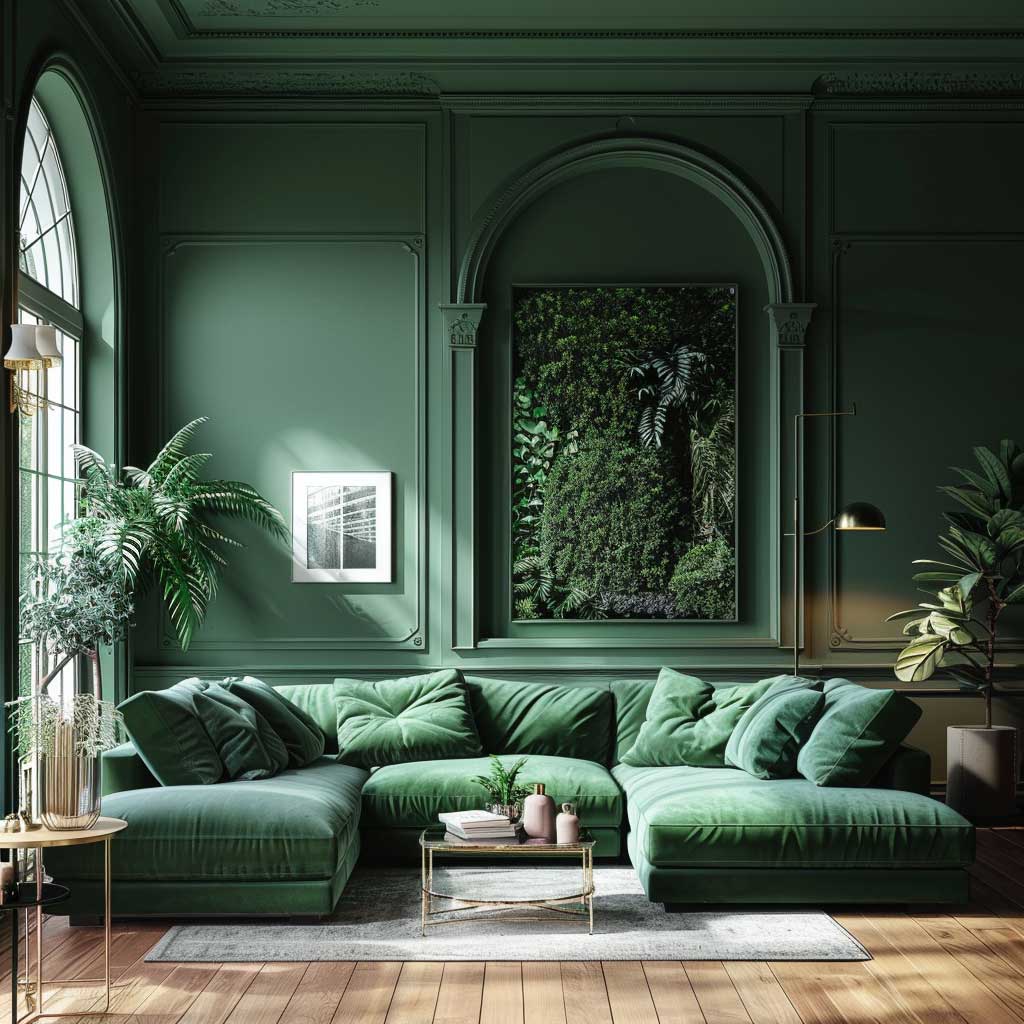

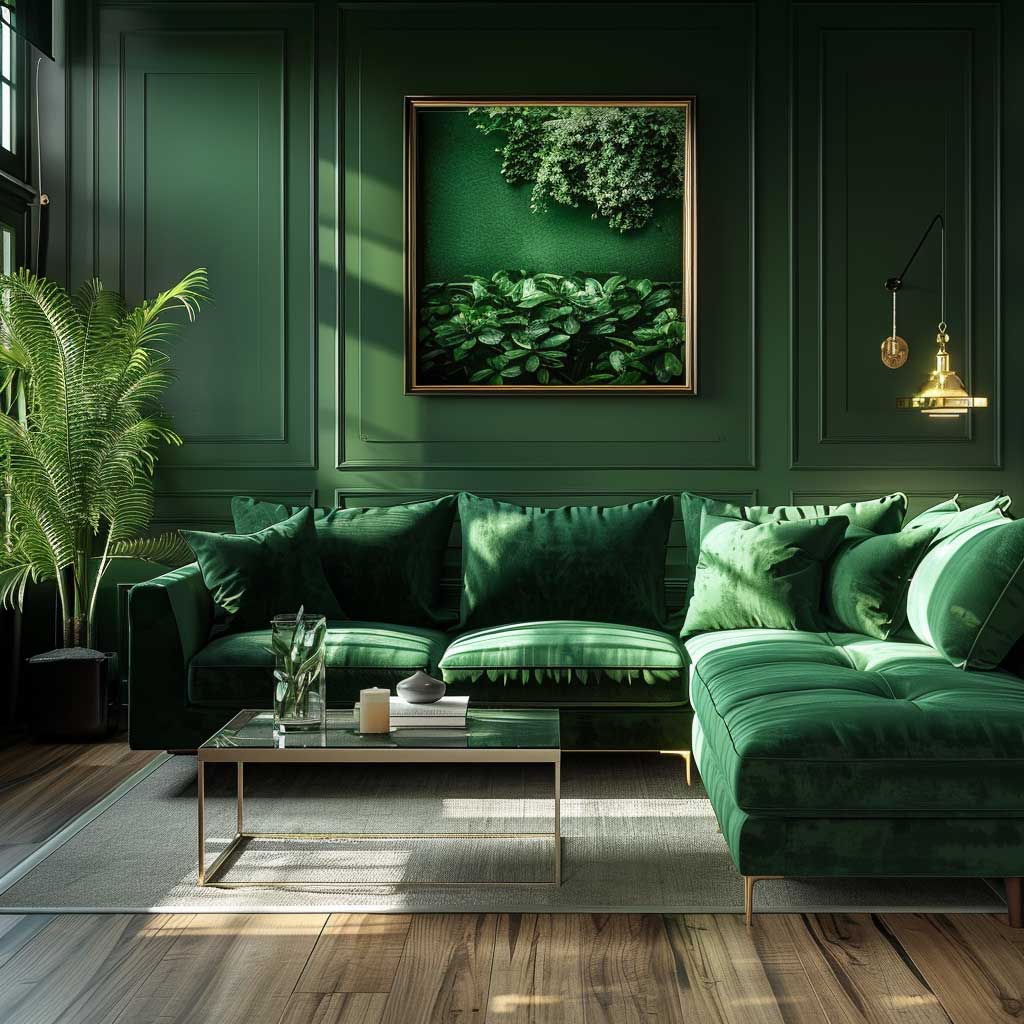
Accessories in a dark green living room follow a strict economy: fewer things, chosen with more deliberation. A ceramic vessel on a coffee table, a woven throw in oatmeal, one framed print — these read as intention. Eight items at various scales read as avoidance. The metallic accent rule is worth applying literally: one finish per room, either brass or matte black but not both, and never polished chrome, whose cool blue-white reflectivity fights directly with green’s warm undertone. Dark green is already doing a lot of work in the room; the accessories just need to stay out of its way.
Minimalism Needs Dark Green Interior Design More Than It Admits

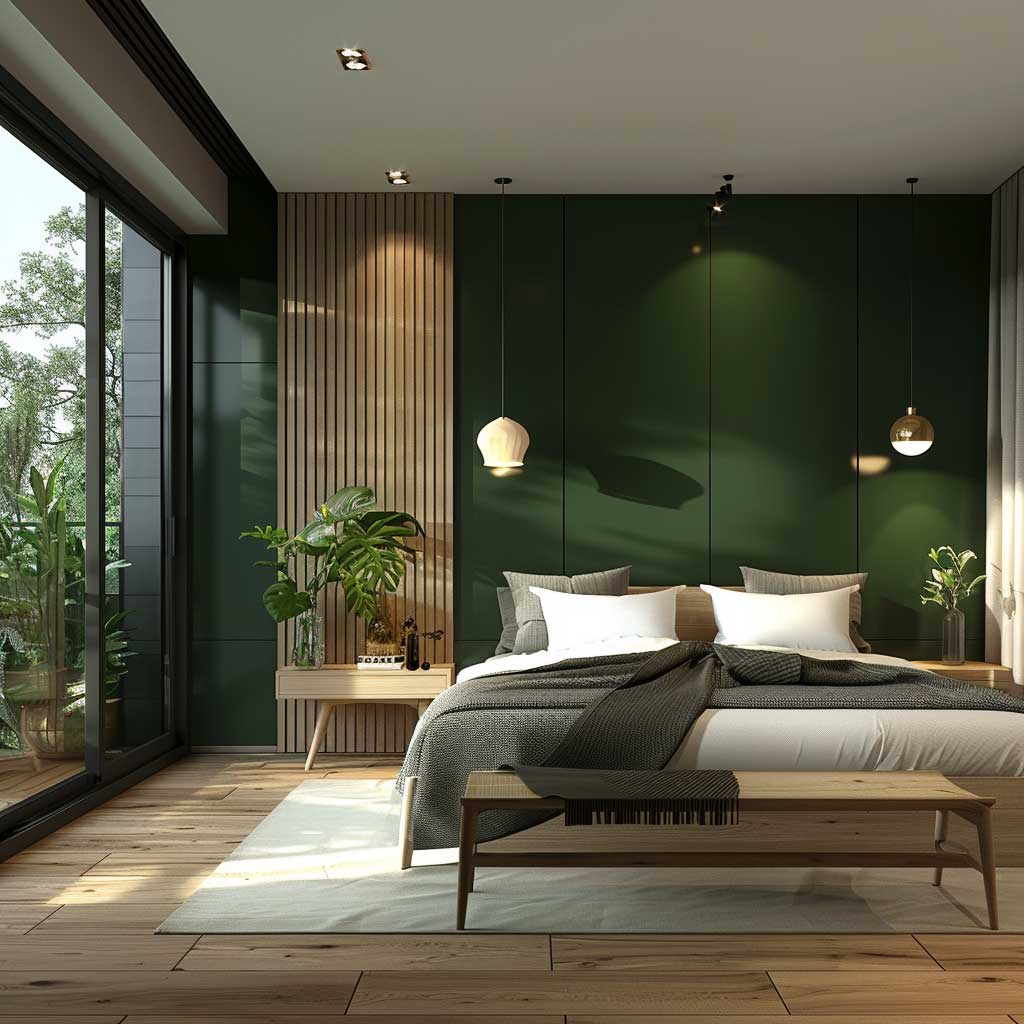
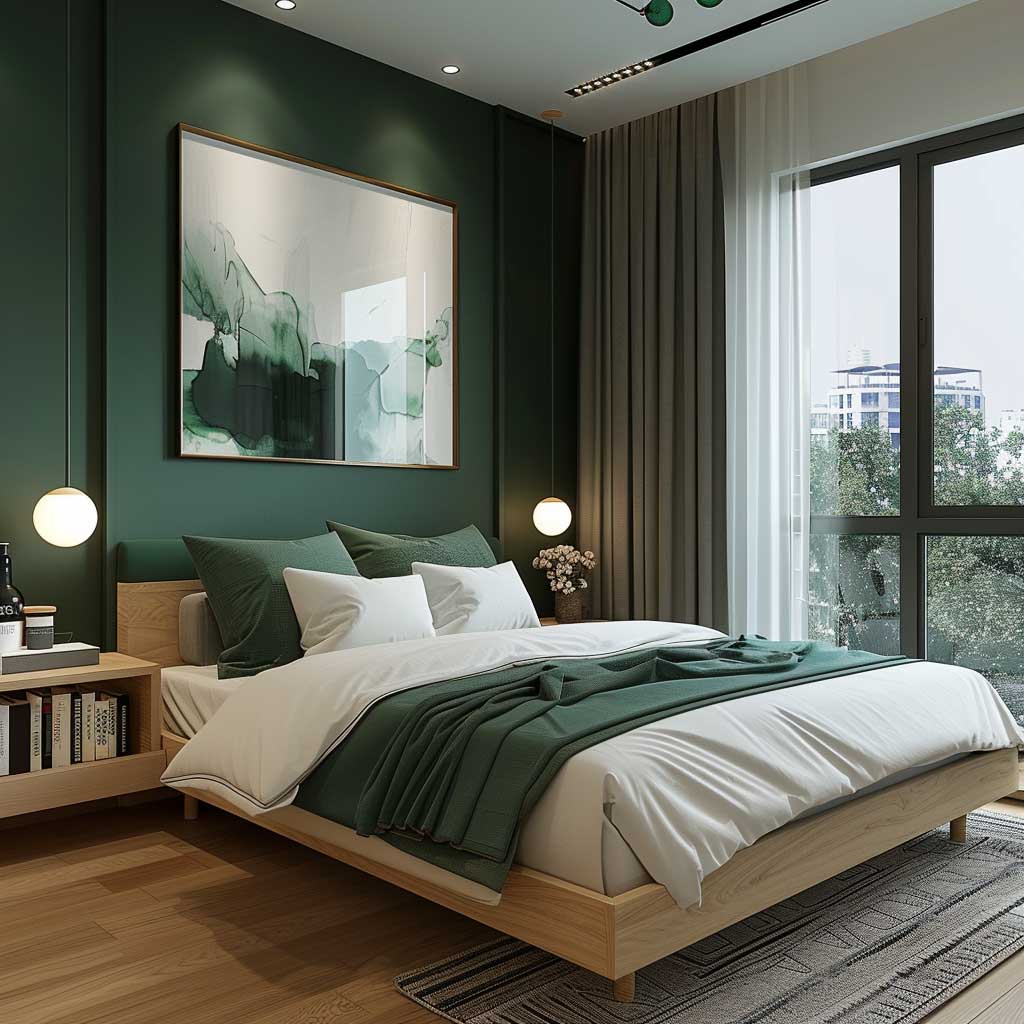
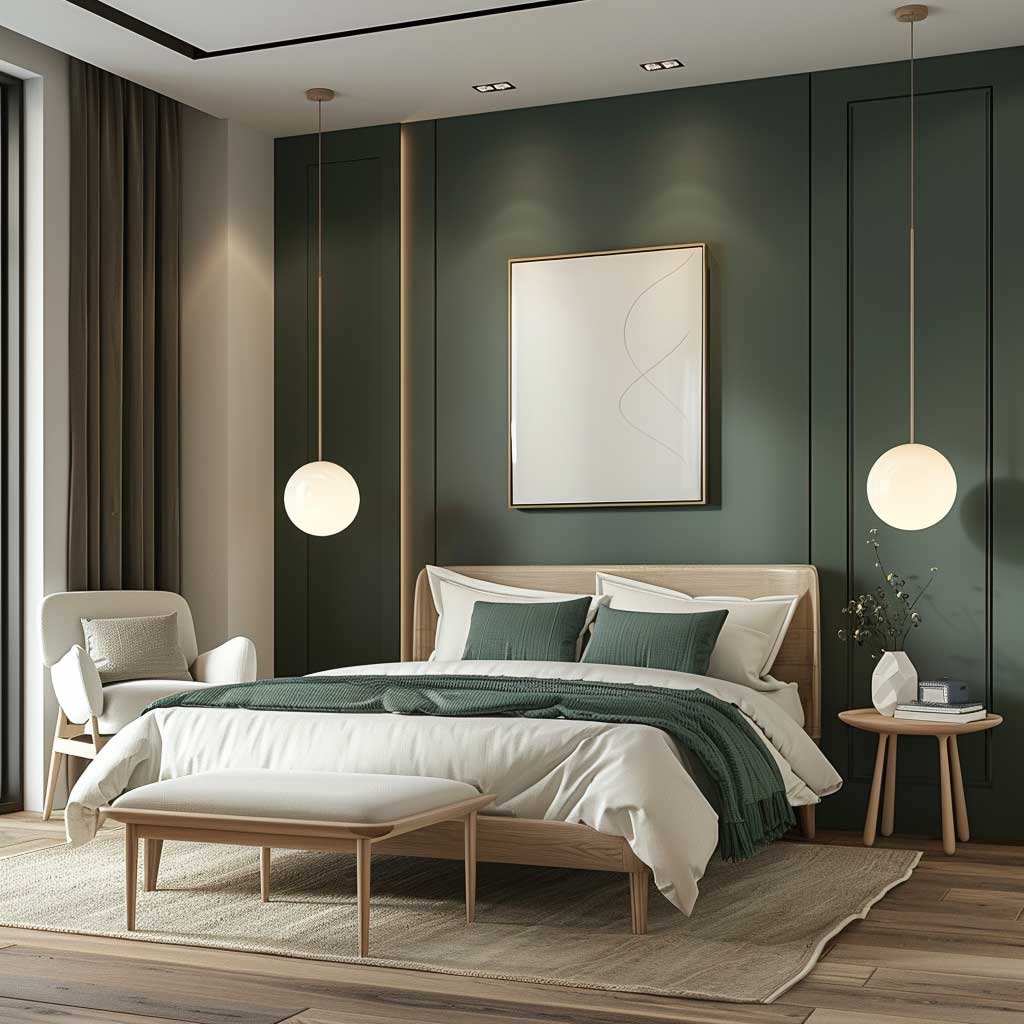
Minimalist bedrooms often fail because they remove color without replacing it with anything — the result is a room that feels unfinished rather than spare. A dark green accent wall solves that problem with a single decision. Paint just the headboard wall in Benjamin Moore Hunter Green 2041-10 (LRV ~5) and keep the other three walls white or off-white, and the room gains a visual destination without acquiring clutter. The color does what a dozen accessories would otherwise attempt — it gives the eye somewhere to land.
Does a dark green wall make a small bedroom feel smaller? In matte finish, the opposite tends to happen: colors with an LRV under 15 create a cocooning effect where the wall visually recedes rather than advancing toward you — similar to how a forest canopy feels expansive despite being dark. The finish matters more than most people realize. A flat or eggshell paint in Sherwin-Williams Shade-Grown (SW 6188, LRV 8) reads as a considered design choice; the same color in semi-gloss bounces light unpredictably and makes the green look agitated. Designers consistently specify matte for bedroom walls in dark shades — and ceiling color in off-white, not matching green, to preserve ceiling height in rooms under 150 square feet.
Furniture in a dark green minimalist bedroom should lean toward light wood and clean lines — pale ash or light oak, not dark walnut, which competes with the wall rather than contrasting it. White or cream bedding creates the strongest contrast and reads as the most restful against deep green. A wool throw in terracotta or oatmeal adds warmth without introducing another color family. The trick stylists use here: keep the floor material as the bridge between wall and bed — a jute or light sisal rug draws the two surfaces together without requiring a third color to do it.
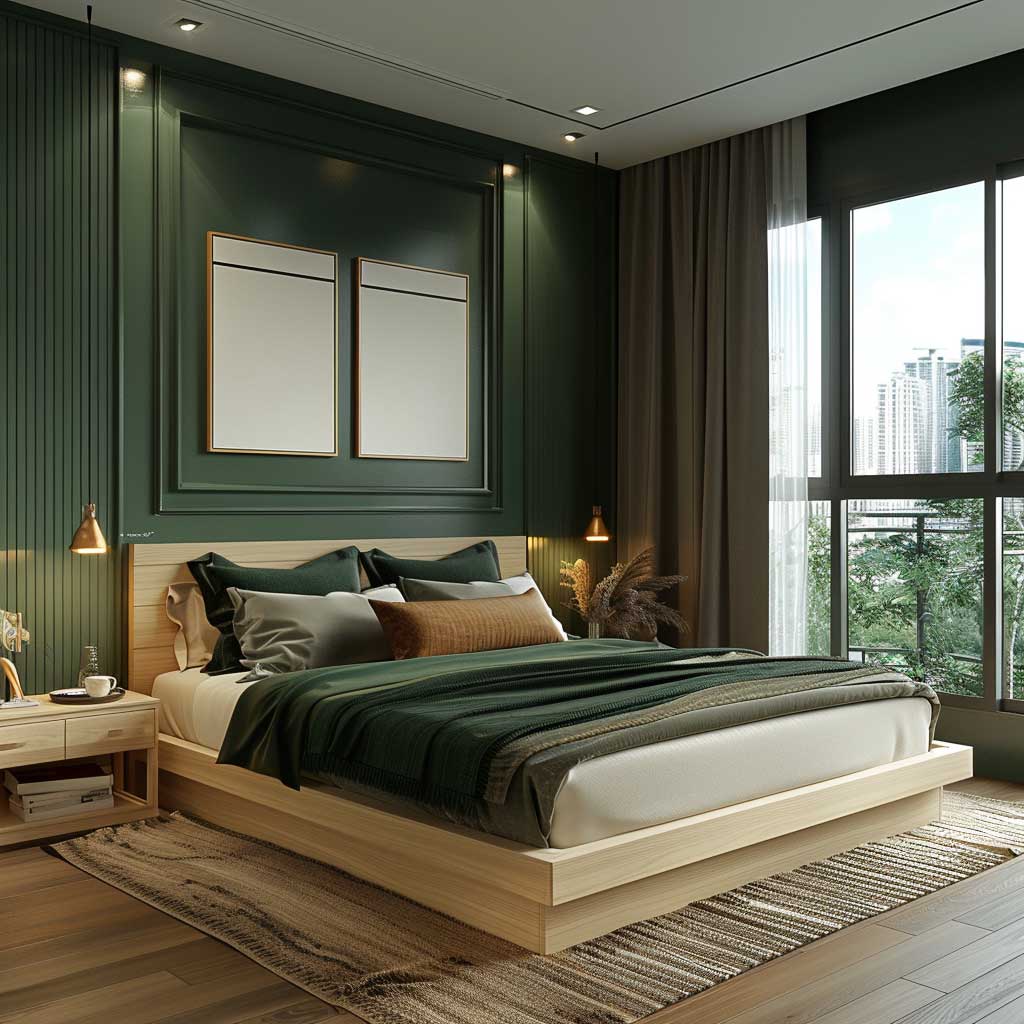
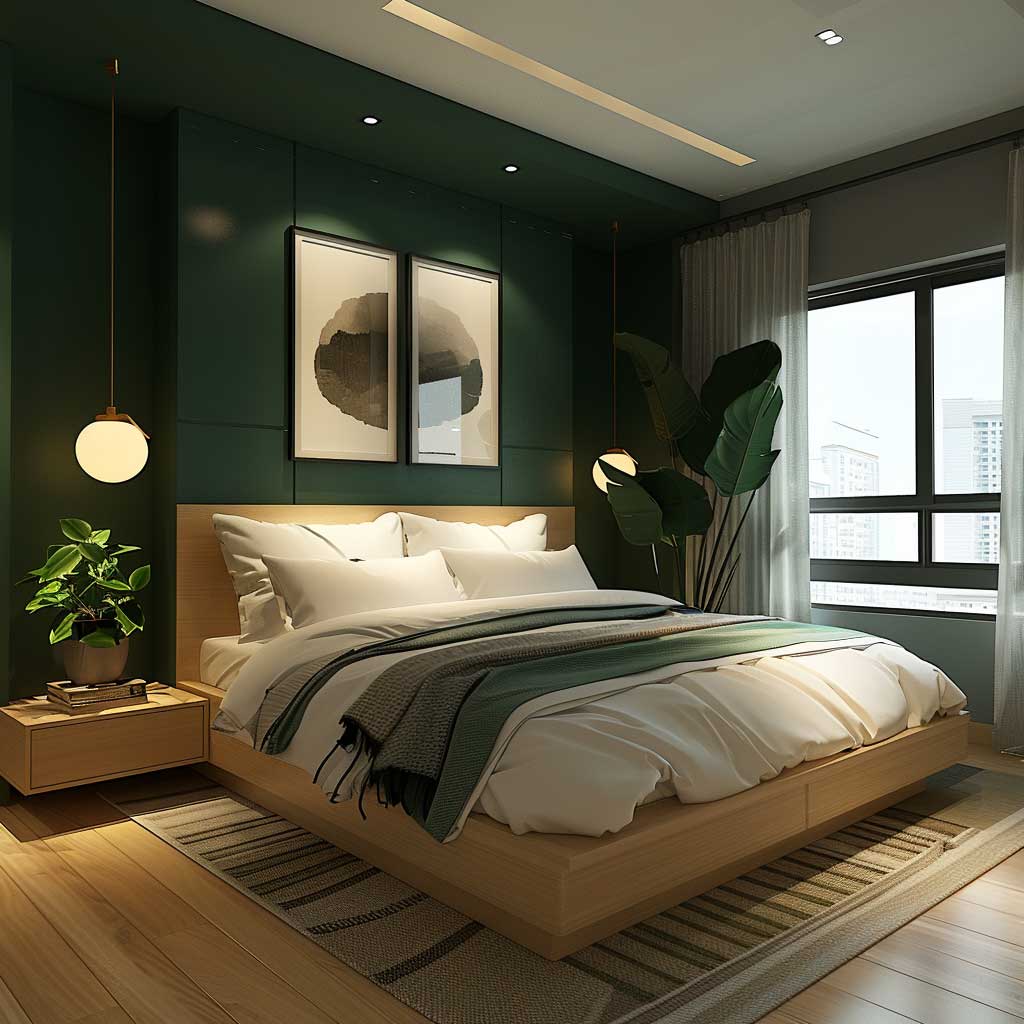

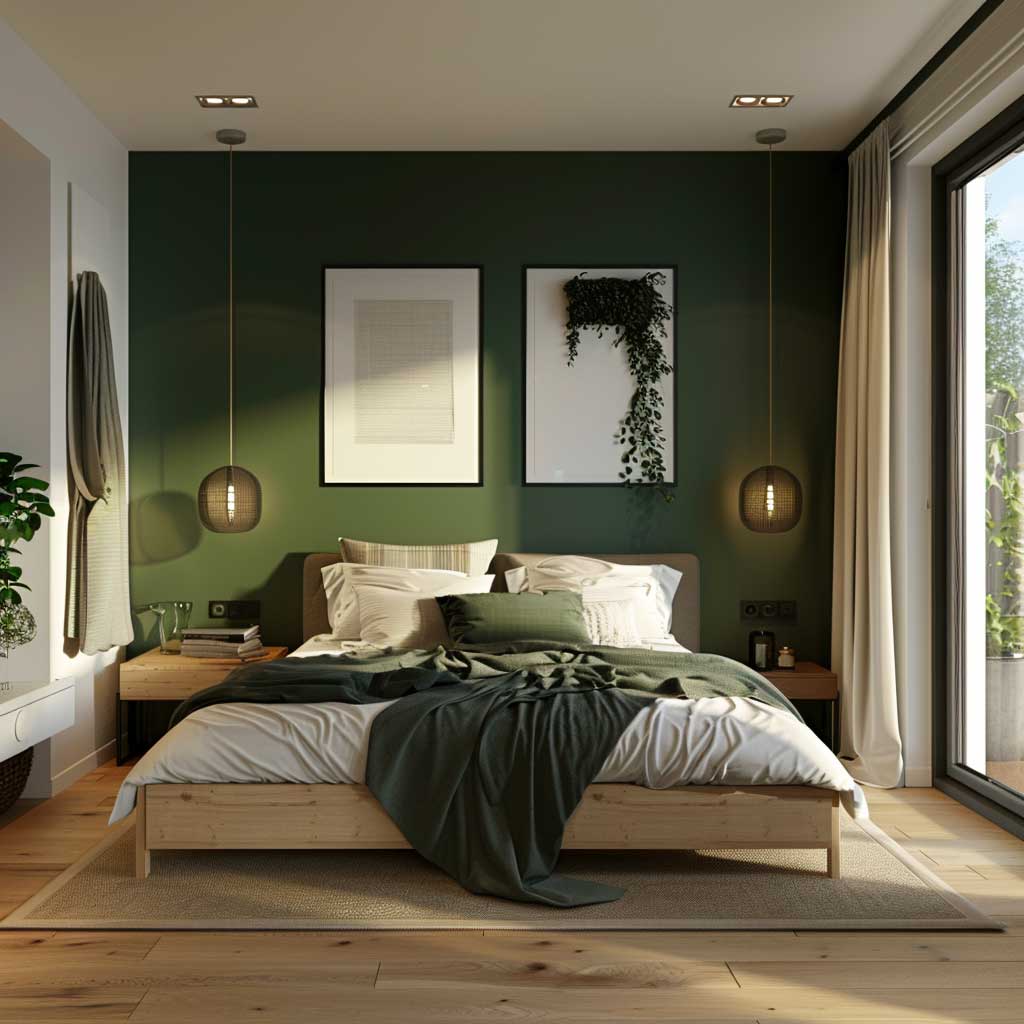
Color psychology and sleep research both point in the same direction for bedroom walls: cool greens, particularly muted forest tones, are linked to lower cortisol and easier relaxation. The Sleep Foundation identifies green as a cool-toned hue associated with calm — which is exactly what makes dark green counter-intuitive as a bedroom choice and exactly right as one. A room that feels like sleeping inside a forest canopy is not a room that takes effort to fall asleep in. Plants in simple ceramic pots (three at different heights reads as deliberate; more than five reads as a garden center) reinforce the palette and improve the room’s oxygen exchange without adding visual noise.
The one move that consistently ruins a dark green minimalist bedroom: painting all four walls and the ceiling the same shade without exceptional natural light. In a north-facing room or any space under 8-foot ceilings, full dark green immersion tips from cocooning to oppressive around the 48-hour mark of living in it. The fix is structural: one feature wall, white ceiling, and two to three carefully placed light sources (not overhead fluorescent) keep the room feeling alive. A pair of warm-toned bedside lamps in the 2700K range reveal the green’s warmth; cooler lighting at 5000K pulls it toward blue-gray and strips the color of its appeal.
Dark Green Kitchen Cabinets Happen to Be the One Color Zillow Confirmed
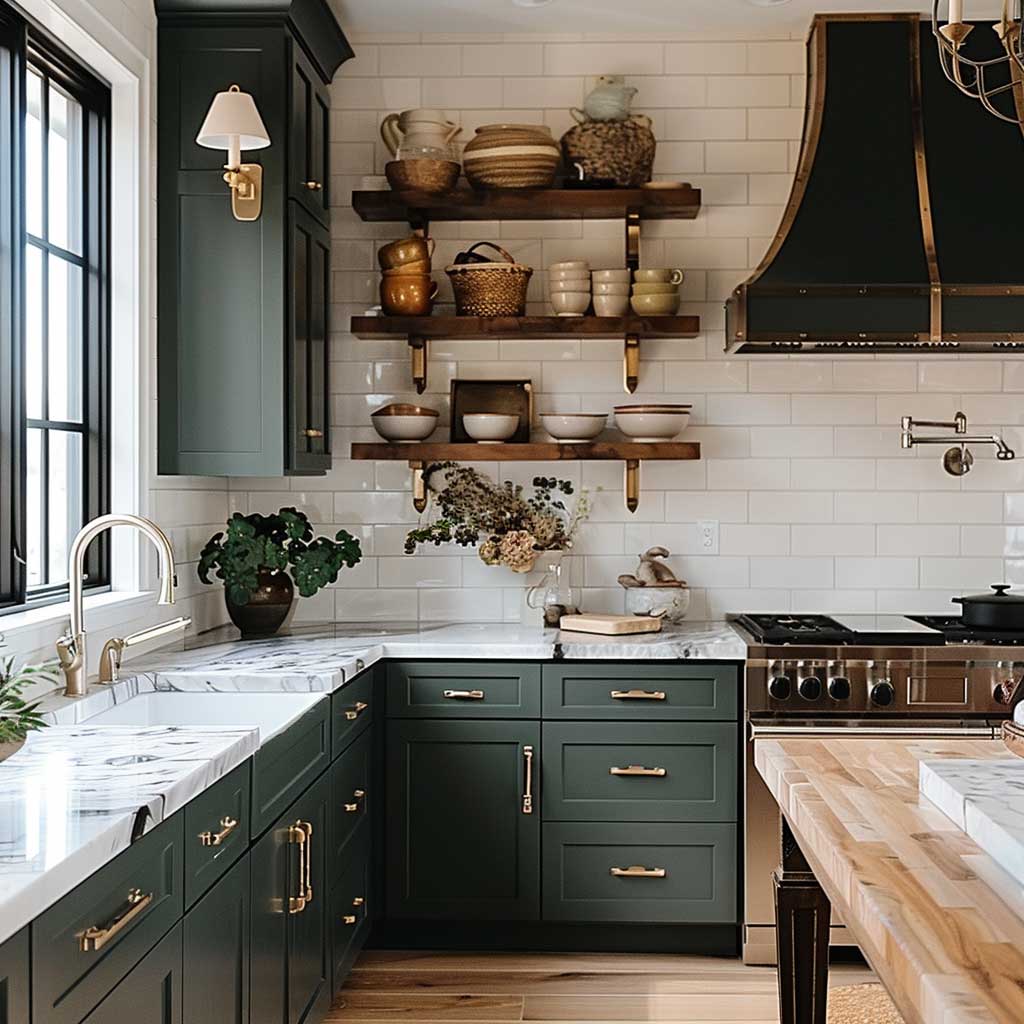
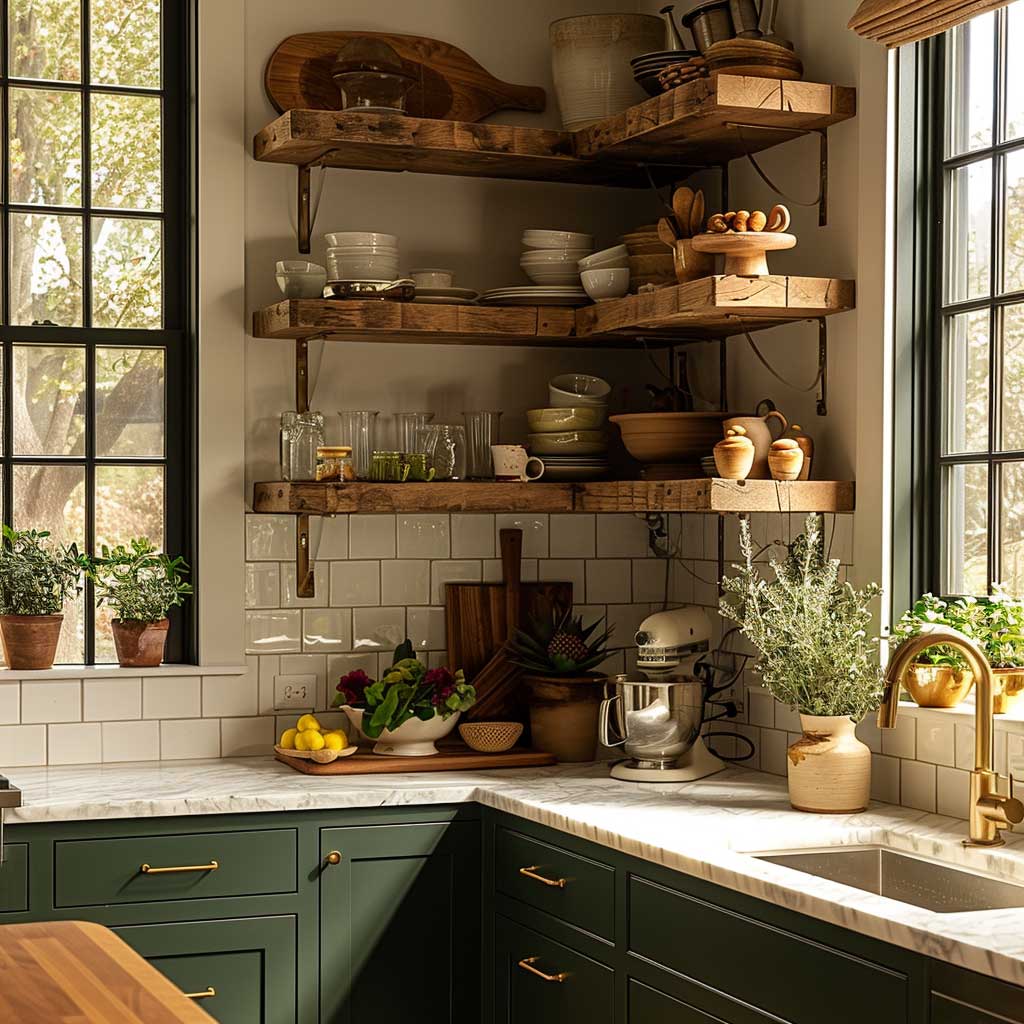
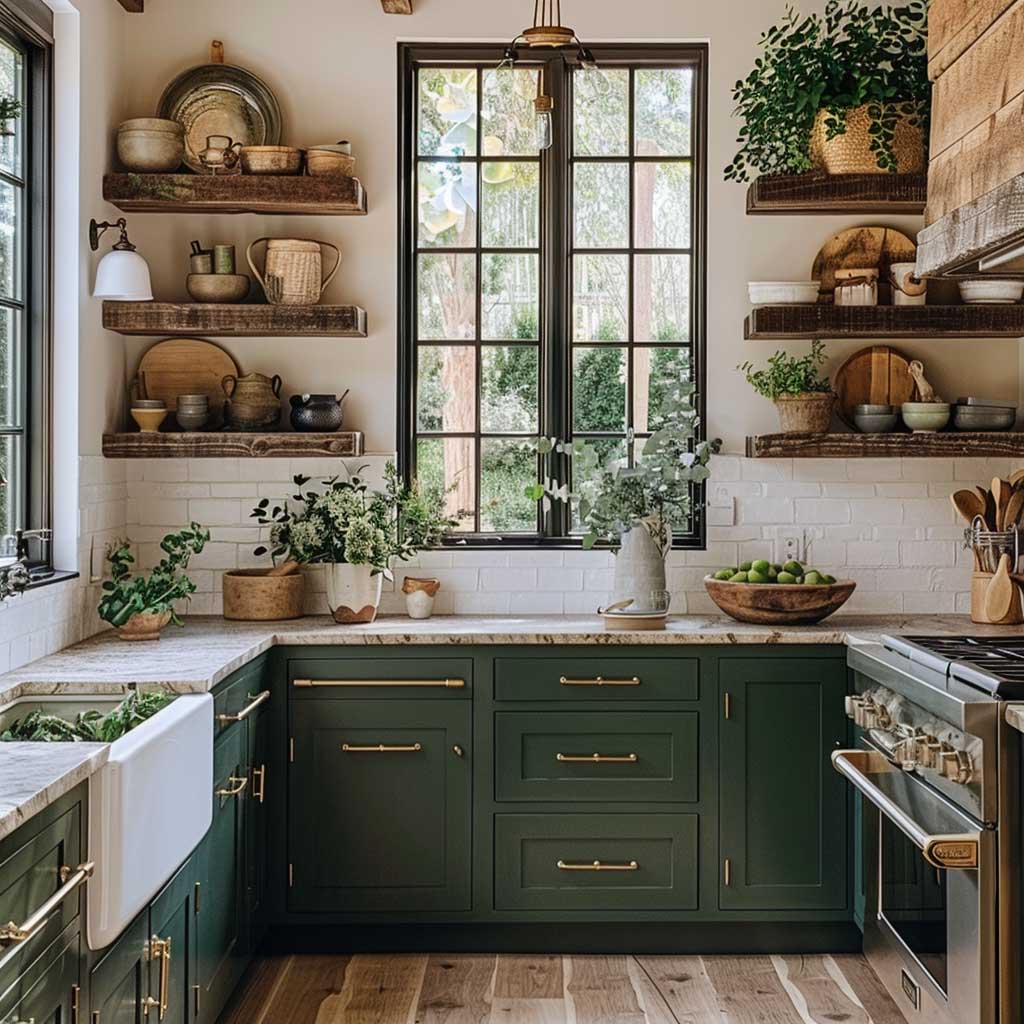
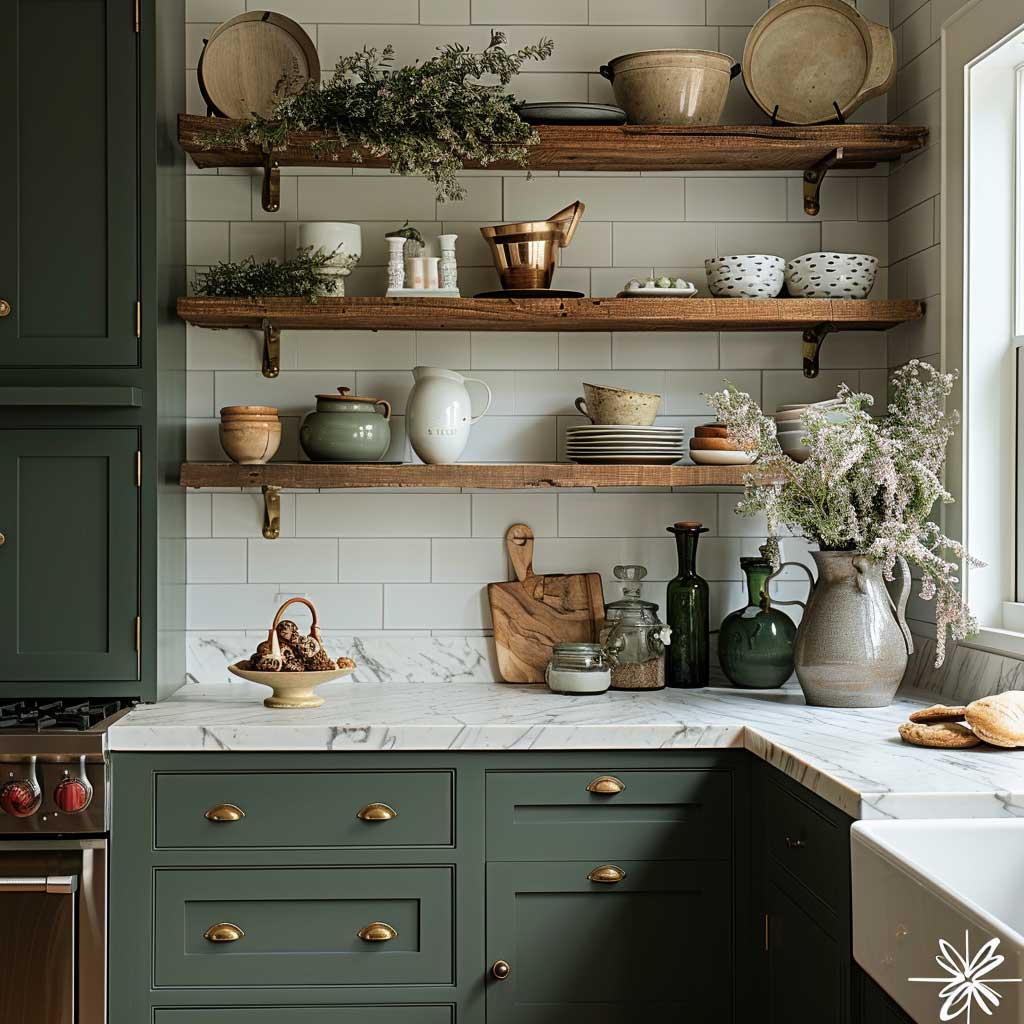
Dark green kitchen cabinets have a data point behind them that most color decisions don’t. Zillow’s analysis found that homes with olive and deep green kitchen finishes attracted more buyer interest than any other cabinet color, with green-toned kitchens selling for approximately $1,600 more on average than comparable homes with less preferred cabinet colors. That’s not a guarantee — it’s a directional signal that the color reads as current and intentional to buyers, rather than dated or overly personal. For a $2,500–$7,500 professional cabinet painting project, that ROI math is worth running.
The pairing rules for dark green cabinetry are more specific than most kitchen design advice acknowledges. White walls and marble or quartz countertops create the strongest contrast — the light surfaces make the green read darker and richer than it would against gray or beige. Brass hardware is the most reliable finish: it pulls the warm undertones out of deep greens like Sherwin-Williams Shade-Grown (SW 6188) without competing with the color. Matte black hardware works in strictly contemporary kitchens but can make a forest-green kitchen feel heavier by late afternoon in rooms with limited windows. Polished chrome is the one to avoid outright — its cool, blue-white reflectivity fights directly with green’s warm bias, and the pairing reliably looks commercial rather than residential.
Should dark green cabinets go floor-to-ceiling? The honest answer is almost never. Upper cabinets in the same deep green as lowers push the top of the room down visually, and by winter — with shorter days and less natural light — the effect becomes genuinely difficult to work in. The approach that holds up: dark green on lower cabinets, open shelving or lighter upper storage in white or natural wood, keeping the ceiling zone bright. Open shelving filled with greenery, earth-toned ceramic dishes, and simple glassware creates the cozy atmosphere that makes dark green kitchens photographically compelling — without committing the whole room to the color. For more ideas on building this palette from the cabinetry up, the emerald green kitchen interior design approach with matte black extends the concept into bolder territory.

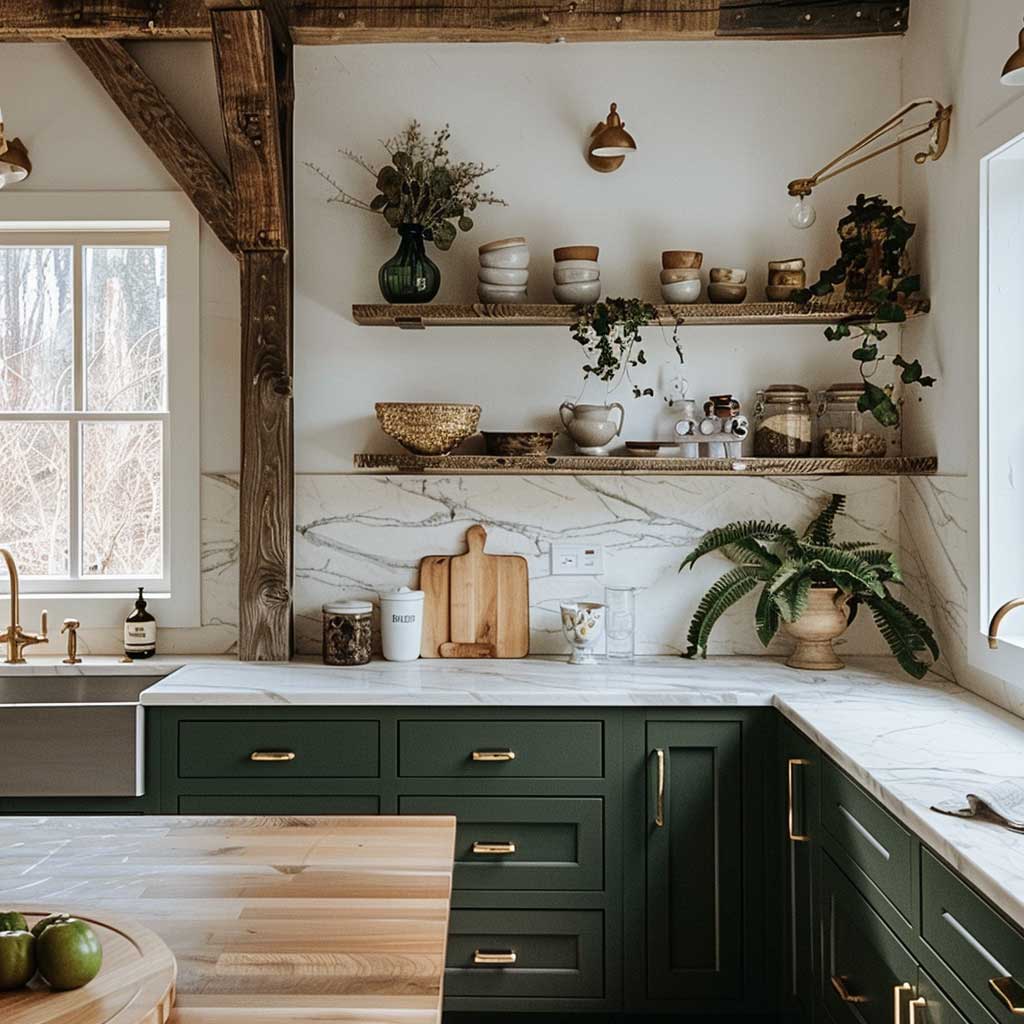


Lighting in a dark green kitchen needs two sources working simultaneously: natural light from windows to show the color’s warmth, and under-cabinet task lighting at 2700K to keep the work surfaces visible and prevent the green from pulling the room into shadow by evening. A single overhead light in a dark-cabinet kitchen almost always underperforms — it creates flat, even illumination that strips out the depth that makes dark green interesting in the first place. The most effective setup is a combination of pendant lights at the island (brushed brass or aged bronze, not matte black) and under-cabinet strips that wash the countertop in warm light, letting the cabinets stay in their darker register without the room feeling dim.
Cabinet painting costs less than most homeowners expect: professional repainting of kitchen cabinets in a dark color typically runs $2,500–$7,500 for an average-sized kitchen, and a gallon of premium interior paint from Sherwin-Williams averages around $53, or $57 from Benjamin Moore — making the material cost a relatively small portion of the total project. The larger variable is surface preparation; dark colors show every imperfection in the cabinet face more than light ones, so proper sanding and priming adds both time and cost. That’s also why darker cabinets benefit from an alkyd or oil-based formula over standard latex — the harder finish resists the humidity and minor impacts that a kitchen produces daily.
| Room | Recommended Shade | LRV | Best Pairing |
|---|---|---|---|
| Living room (walls) | Sherwin-Williams Shade-Grown SW 6188 | 8 | Cream linen sofa, light oak floor |
| Bedroom (accent wall) | Benjamin Moore Hunter Green 2041-10 | ~5 | White bedding, pale ash furniture |
| Kitchen (lower cabinets) | Sherwin-Williams Shade-Grown SW 6188 | 8 | Marble countertop, brushed brass hardware |
Choosing a specific dark green for interior use comes down to undertone: Shade-Grown SW 6188 carries a gray-olive cast that reads earthy and grounded, making it reliable across rooms with mixed lighting. Benjamin Moore Hunter Green 2041-10 leans slightly cooler and more saturated, which gives it more visual drama in a bedroom or study but can tip toward teal in north-facing rooms. Benjamin Moore’s dark green paint color collection — 162 shades and counting, from Norway Spruce 452 to Forest Green 2047-10 — is a useful reference for seeing the full range before committing. Their recommendation stands: sample the specific shade in the actual room, in both morning and evening light, before buying gallons. Dark colors shift more dramatically between light conditions than any other value range. See Benjamin Moore’s full dark green paint color collection for the complete spectrum with real room photography.
The bottom line
Dark green earns its place in one room at a time — not all three at once.
In a living room, concentrate it on a single anchor: four green walls or one velvet sofa, not both. The color carries enough visual weight on its own; the furniture just needs to stay out of its way.
In a minimalist bedroom, one matte dark green feature wall at LRV 5–8 solves the problem that neutral minimalism creates — it gives the eye somewhere to land without requiring more objects in the room.
In the kitchen, dark green cabinets have the only confirmed resale data of any cabinet color: Zillow’s analysis found an average $1,600 sale price premium for homes with green kitchen finishes. Pair with brushed brass, white countertops, and warm under-cabinet lighting. Save this post.