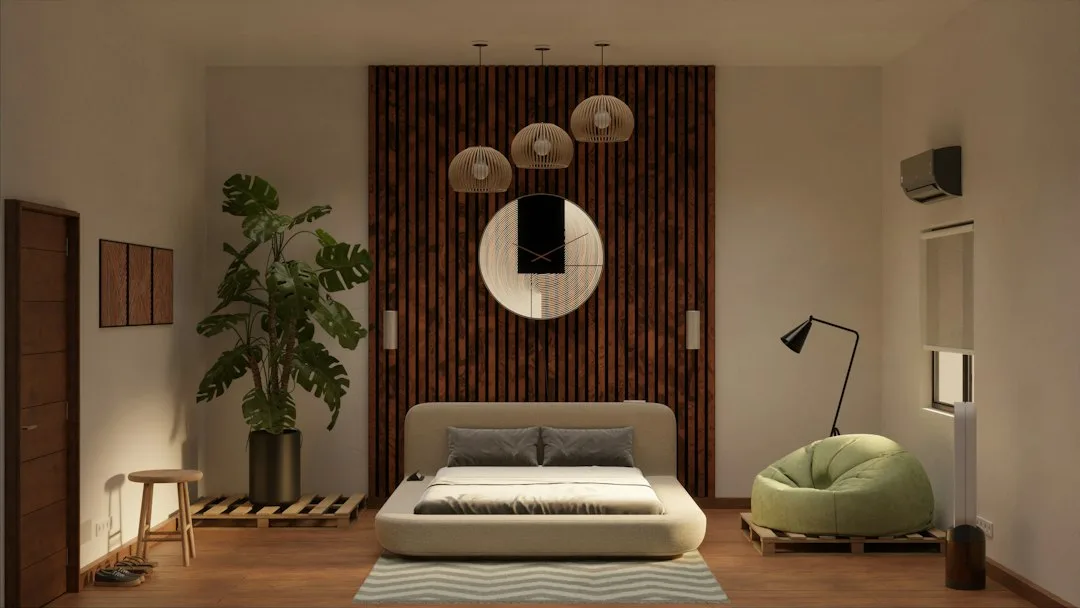
Walk into any high-end residential project completed in the past six months and you’ll notice something immediately: the walls have texture. Not wallpaper texture, not faux-finish texture from the early 2000s, but the irregular, hand-worked surface of applied plaster. What began as a niche revival among preservation-focused designers has become the dominant wall treatment of 2026, displacing the smooth, primed drywall that served as the blank canvas for two decades of minimalism.
The shift is quantifiable. Online searches for “lime wash walls” increased 347% between January 2025 and March 2026, while “venetian plaster near me” has seen consistent month-over-month growth since mid-2024. More telling: major paint manufacturers including Portola Paints, Bauwerk Colour, and Backdrop have all expanded their mineral-based plaster lines in the first quarter of this year, responding to contractor demand that CEO of Portola, Jill Beute, describes as “unlike anything we’ve seen since the gray paint boom.”
What’s Driving the Plaster Renaissance
Three forces converge here. First, there’s a broader fatigue with digital-era perfection. The algorithm-optimized interior—smooth, symmetrical, easily photographable—has lost its aspirational pull. Designers like Staci Gerkin of Studio Gerkin and Leanne Ford are vocal about this shift, explicitly rejecting what Ford calls “builder-grade blankness” in favor of surfaces that show the human hand. Plaster, which requires skilled application and produces slightly different results every time, offers built-in individuality.
Second, the material is benefiting from the ongoing sustainability conversation, though this requires nuance. Traditional lime plaster is genuinely low-impact: breathable, non-toxic, made from abundant limestone that reabsorbs CO2 as it cures. But many commercial “plaster” products are acrylic-based facsimiles. The appeal isn’t just environmental—it’s philosophical. Specifying real lime or clay plaster signals a values-driven approach to material selection that clients increasingly expect.
Third, there’s a direct lineage from European design influence. The Mediterranean aesthetic that saturated social platforms in 2023-2024—think raw linen, natural oak, chalky pastels—required a specific backdrop. Smooth drywall looked wrong. Designers who initially used plaster finishes to complete that look have now carried the material forward into projects with entirely different stylistic directions, from Japanese-influenced interiors to updated American colonials.
The Techniques Gaining Traction
Not all plaster is equal, and the market has stratified into distinct approaches. Lime wash—technically a paint made from slaked lime—is the entry point. It’s DIYable, relatively inexpensive, and delivers the matte, slightly mottled surface that reads as plaster without the commitment. Brands like Bauwerk and Kalklitir dominate here, with architects specifying lime wash even in commercial hospitality projects. The new Proper Hotel in Charleston uses Bauwerk’s lime paint throughout, a choice designer Jess Cooney made specifically to “ground the space in material honesty.”
Tadelakt, the Moroccan waterproof plaster traditionally used in hammams, has found new application in residential bathrooms. Polished to a soft sheen and naturally water-resistant, it’s replacing tile in wet areas where clients want seamless, organic surfaces. New York-based ZW Design Studio has completed seven tadelakt bathrooms since September 2025 alone, with lead designer Zara Wolfe noting that clients are “actively requesting it by name.”
Venetian plaster occupies the luxury tier. Labor-intensive and requiring genuine expertise, it produces a depth and luminosity that justifies its cost in formal spaces. Plaster artisan Nicholas Gilliland, whose work appears in projects by Roman and Williams and Studio Shamshiri, reports he’s booked into early 2027. His Instagram following has grown from 8,000 to 76,000 in eighteen months—evidence that even highly specialized trades are benefiting from this shift.
How To Approach It Without Trend-Chasing
The risk with any ascendant material is misapplication—using plaster because it’s current rather than because it serves the project. The most successful implementations share certain characteristics. They’re used on substantial wall areas, not as accent treatments. They’re specified in colors that acknowledge the material’s inherent texture rather than fighting it; deep terracotta, warm grays, and off-whites work because they accentuate shadow and variation.
Consider scale and context. Plaster reads as intentional in spaces with architectural character—older homes, high ceilings, rooms with good natural light that reveals surface variation. In a standard 8-foot-ceiling suburban bedroom with vinyl windows, it can feel imported and self-conscious. Designer Brigette Romanek, who has used plaster extensively in her California projects, is direct about this: “It needs to feel inevitable, not applied. If your space doesn’t have the bones for it, choose something else.”
Budget matters, but perhaps not how you’d expect. A full lime plaster application is expensive—$12-25 per square foot installed—but lime wash is comparable to premium paint at $4-7 per square foot. The middle ground is clay plaster, which offers similar aesthetic benefits to lime at a lower price point and with easier application. American Clay and Clayworks are the primary domestic sources.
What This Means for the Broader Interior Landscape
The plaster trend is a symptom of something larger: a move away from surfaces that aspire to industrial uniformity and toward those that acknowledge process and variability. It parallels the rise of hand-thrown ceramics over mass-produced tableware, of natural-edge wood furniture over veneered MDF. These aren’t rejections of modernity—most of these interiors include contemporary furniture and updated systems—but rather an integration of pre-industrial material languages into current design thinking.
Expect this to continue evolving. Plaster won’t replace every wall treatment, but it’s resetting baseline expectations about what walls can be. The next wave will likely involve color: saturated pigmented plasters in ochre, oxide red, and charcoal are already appearing in European projects and will reach North American residential work by late 2026. The era of the neutral, forgettable wall is conclusively over.