Contemporary garden design is the part of a modern home project that most people underestimate until the house is done and the garden looks like a leftover. The architecture gets the budget, the outdoor space gets whatever is left — usually some grey porcelain, a couple of clipped balls, and furniture that rusts by November. Ive spent years looking at what separates the contemporary garden designs that hold up from the ones that photograph once and then quietly embarrass the homeowner. The answer is almost always the same: the logic running through the interior has to keep going outside without breaking stride.
Three approaches cover the full range of what contemporary modern garden design actually looks like in practice. The sculptural minimalist layout where plant form carries the composition. The eco-urban model where native planting and water features do real biodiversity work while looking deliberately designed. And the smart-lit outdoor living space that turns the garden into a usable room after dark. None of them require a large plot. All of them require a clear decision about which one you are actually doing.
Quick Scan
- Sculptural minimalist garden — one plant species, one paving material, one lighting system
- Eco-urban design with water features — native planting, steel rill drainage, recirculating pond
- Smart outdoor living area — app lighting, modular furniture, outdoor kitchen orientation
- The one decision that kills the contemporary look before a plant goes in
- Price anchors: Philips Hue Lily ~$200 / Gloster teak dining set ~$3,200 / Oase pond pump ~$340
One Sculptural Plant Placed Right Beats Twelve Species Placed Anywhere
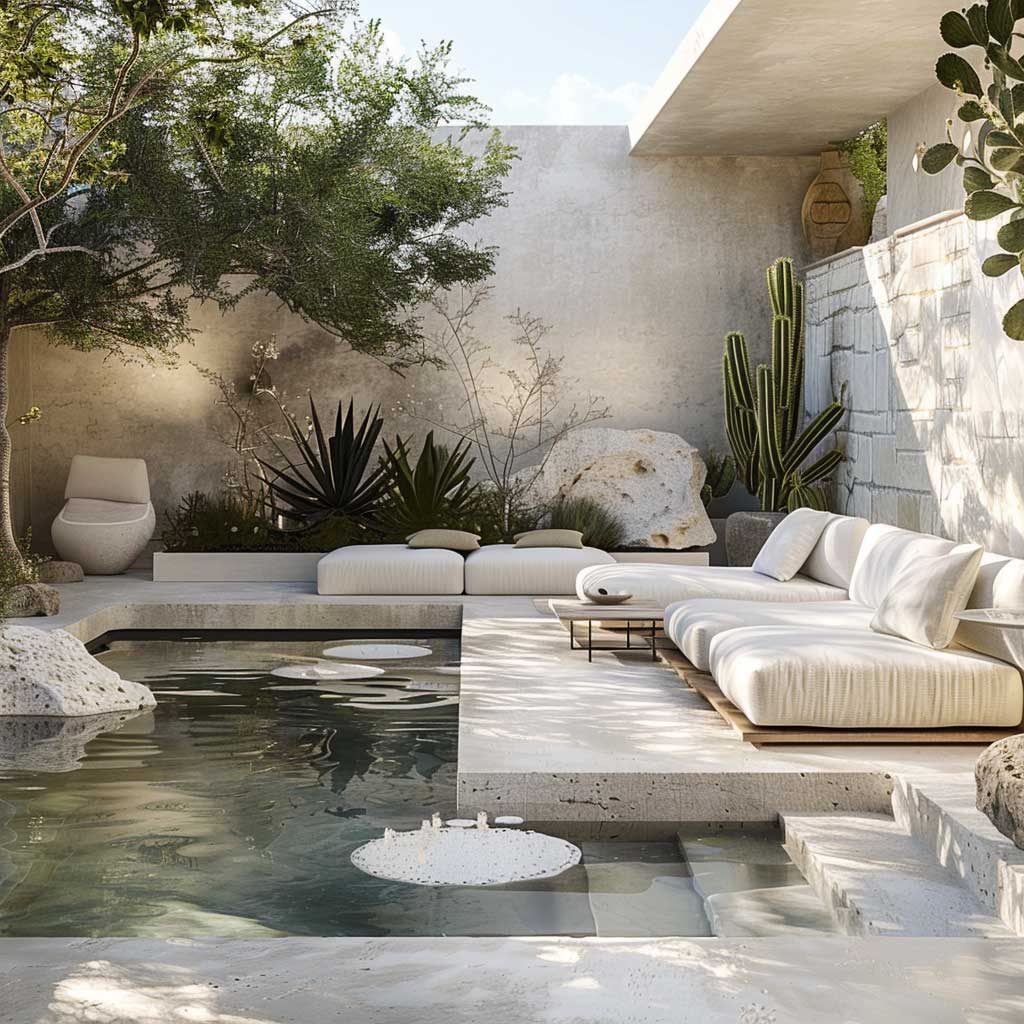
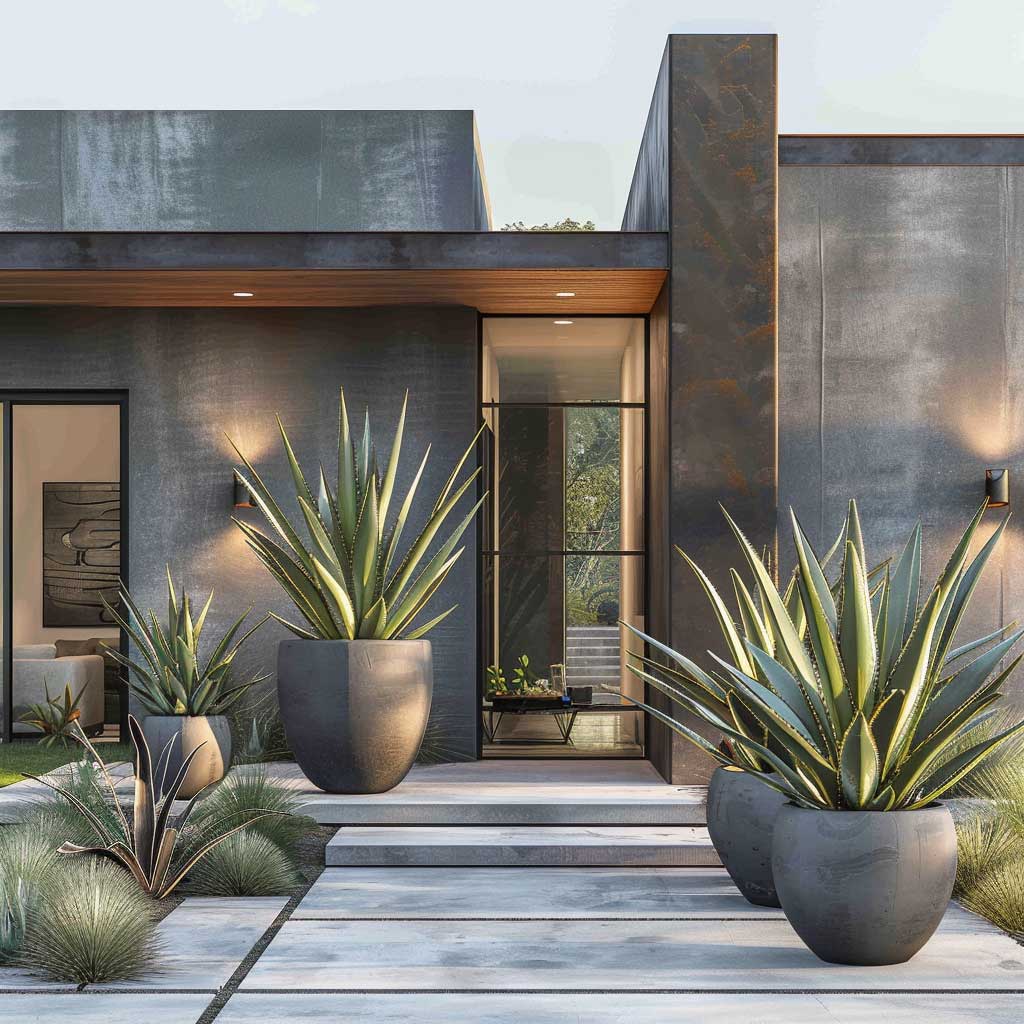
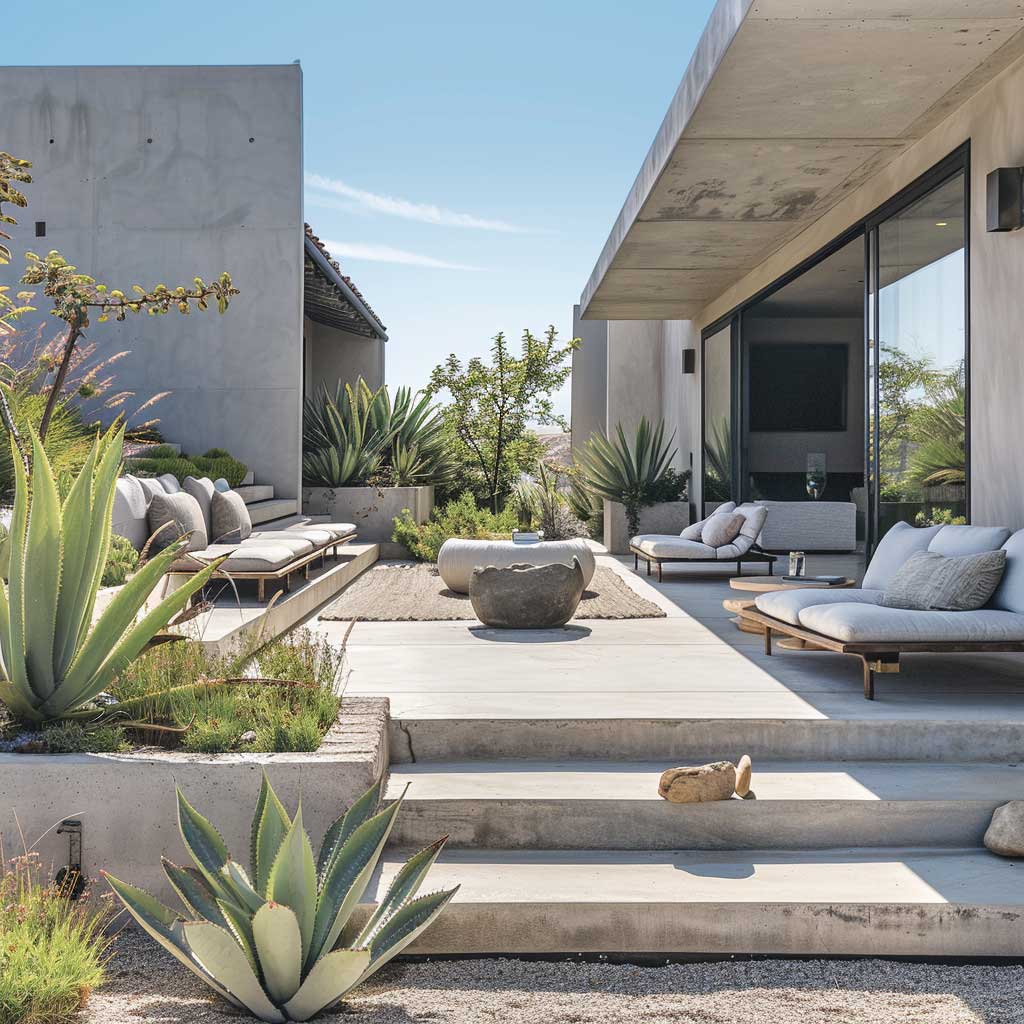
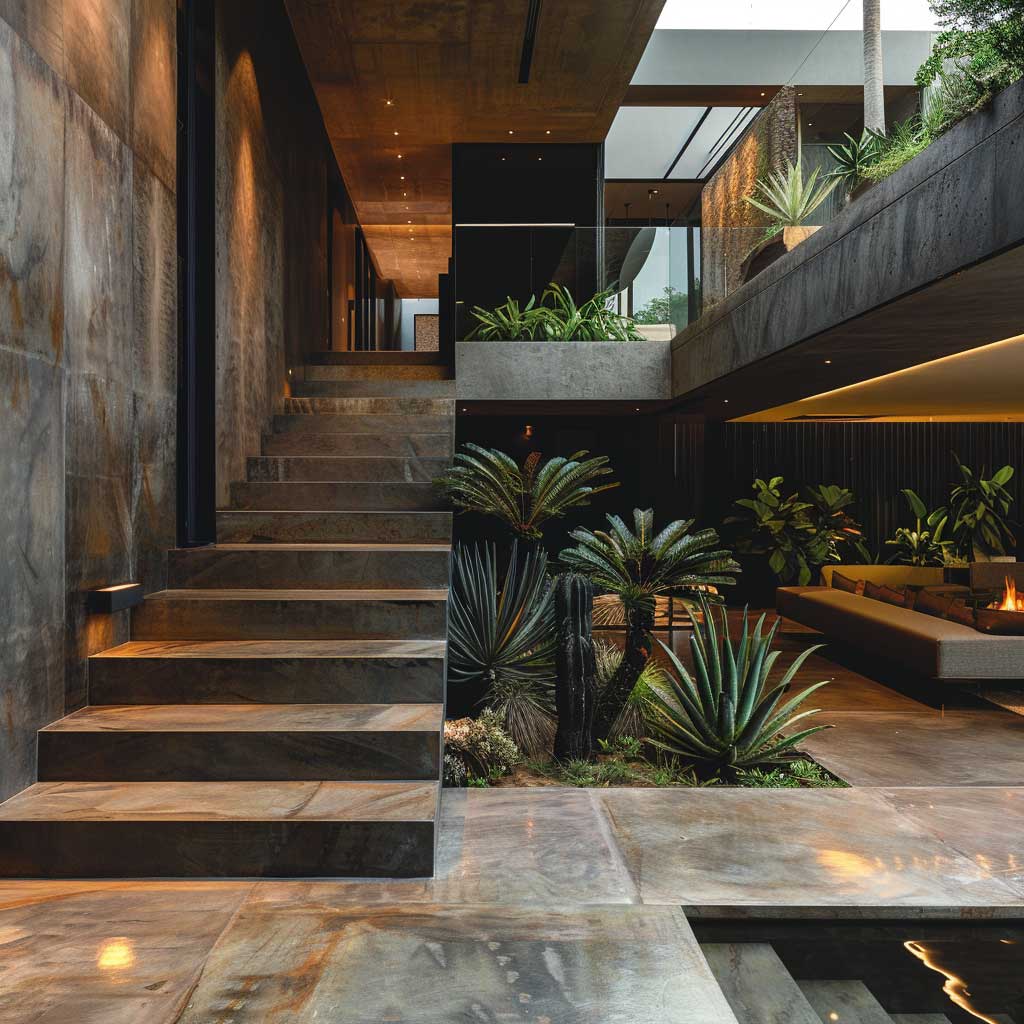
Agave americana in a square concrete planter costs about $85 at most garden centers. Plant one, leave it alone, and it does more compositional work than a full mixed border at five times the price. That is the core logic of a sculptural minimalist contemporary garden design — one strong form against a neutral ground, repeated or isolated, readable from 20 meters. Ive used this approach in front gardens where the house architecture is already dominant, and the single plant amplifies the signal rather than competing with it. The mistake most people make is adding variety where repetition would serve them better.
The floor material determines whether everything else holds together or falls apart. Calibrated porcelain in 60x90cm slabs — budget $22 to $30 per square foot installed from suppliers like Marshalls or Brett Landscaping — gives you the flatness and neutrality that lets a Phormium tenax read as sculpture. Brushed concrete works too but needs sealing every three years or it stains. Random-pattern sandstone does not work in this context. Youll notice by the second summer it looks like a pub garden regardless of how expensive the plants are.
Lighting is where budgets disappear into the wrong products. Spike spots aimed from 20cm away create a hot patch, not a silhouette. What works is a low-voltage uplighter at 1 to 1.5 meters distance, angled at 45 degrees, grazing the leaf rather than blasting it. The Philips Hue Lily outdoor kit at around $200 for three fixtures handles this and integrates with most smart home systems. The silhouette against a rendered wall at dusk is the payoff the entire layout is designed around — and it only works if the fixture placement is right.
Dont Do This
Mixing three different paving materials in one small contemporary garden. Ive watched homeowners combine porcelain tiles, sandstone, and composite decking in a garden under 50 square meters and end up with something that looks like a clearance sale. Pick one surface material. Use it everywhere. Gravel infill is acceptable as a secondary element only if the aggregate tone matches the primary paving exactly — grey granite chips with grey porcelain, buff gravel with buff concrete. Every additional material you introduce halves the perceived design intention.
Do not use pea gravel without steel edging. It migrates onto paving within one season and the contemporary garden style you were building becomes a maintenance problem that compounds annually without ever quite getting fixed.
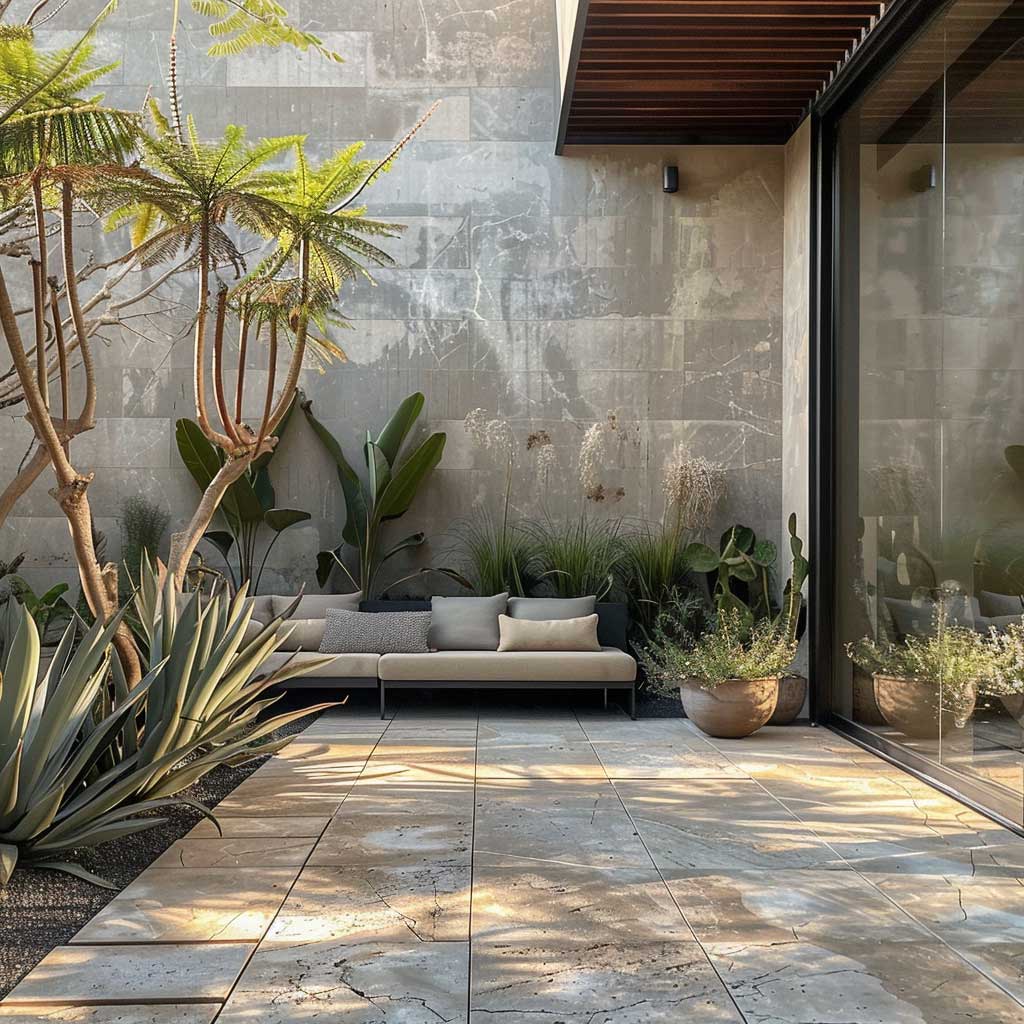
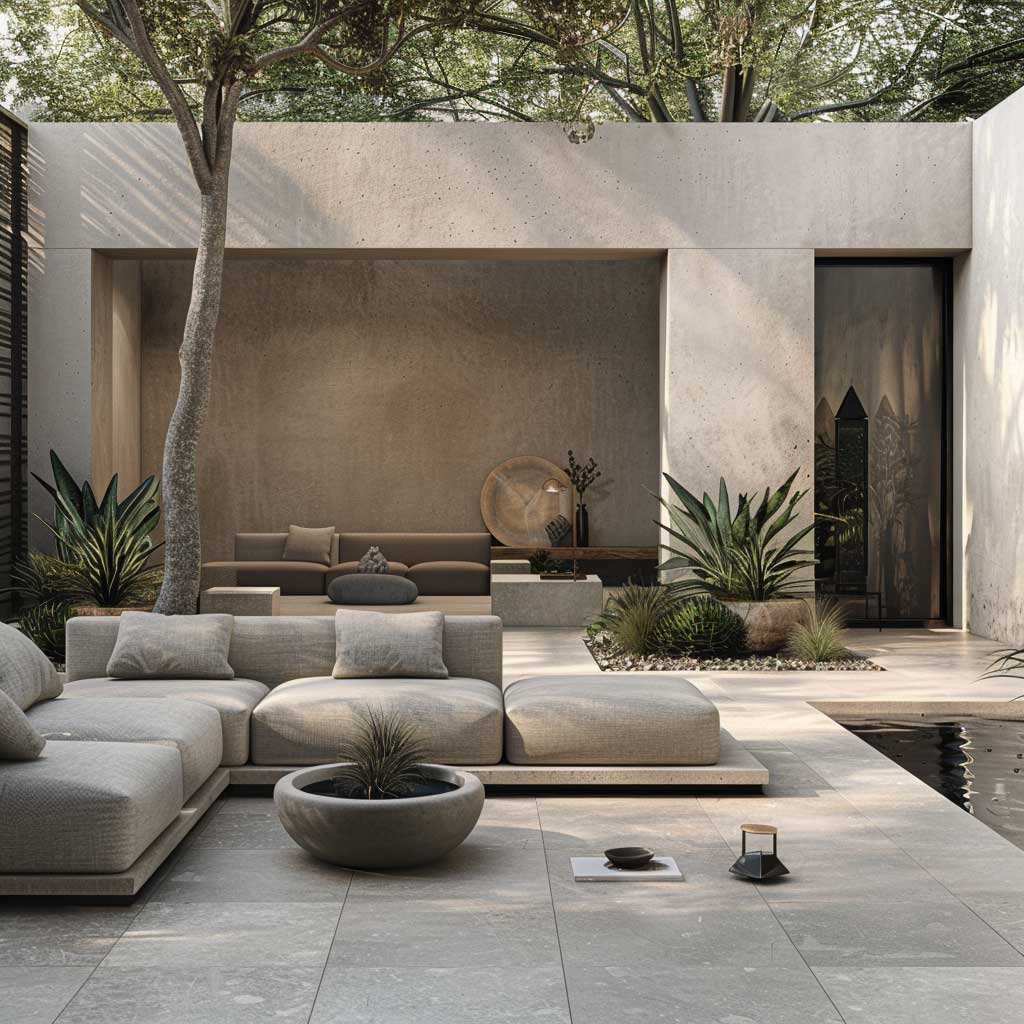
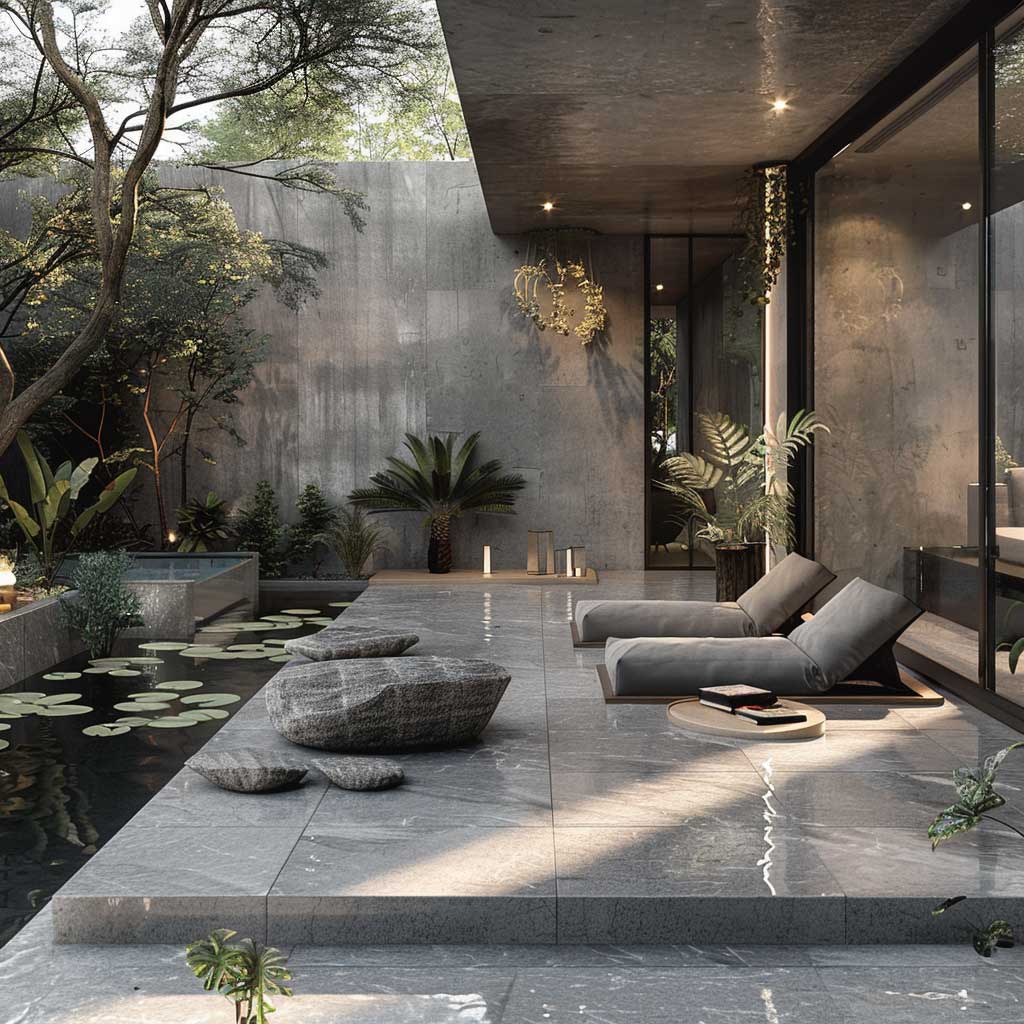
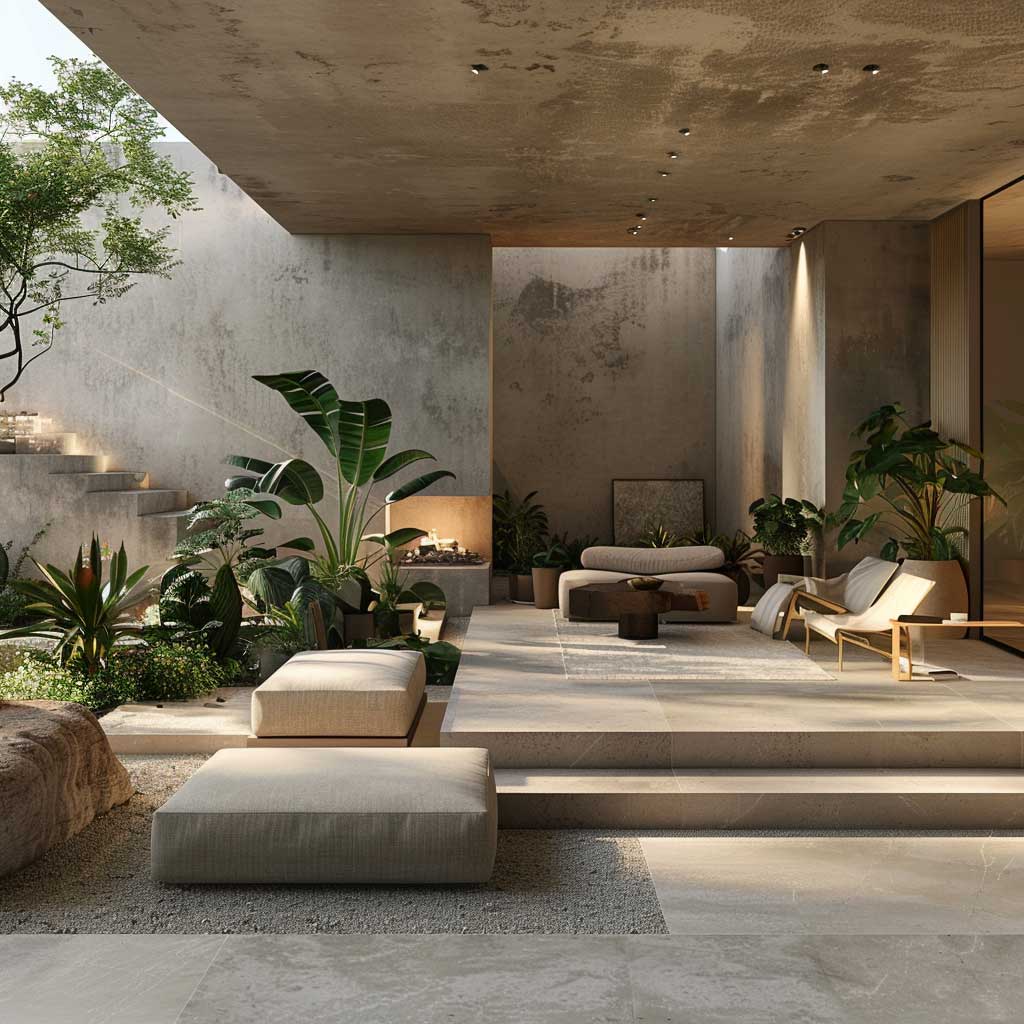
Furniture selection is where a lot of minimalist contemporary gardens collapse in practice. You spec the right bench, someone adds colorful cushions from a big-box store, and the palette breaks. My go-to rule before purchasing anything: decide on a two-color limit upfront — frame tone and one textile neutral. Anthracite frame, stone-grey cushion. Every piece either reinforces that palette or it does not belong in this garden. The discipline is free. The furniture is not always cheap, but getting the discipline wrong means replacing the furniture anyway. For covered structures above a terrace, the same material logic applies — you can see how it translates in practice in these modern pergola ideas where paving-to-structure consistency defines whether the outdoor space reads as designed or assembled.
Plant selection honesty matters more than plant selection taste. Agaves need almost nothing once established. Phormium can rot at the crown in a wet winter if drainage is poor. You need to know which problems you are prepared to manage before committing. Three of one species placed asymmetrically across a 40-square-meter patio beats twelve different species in the same space every time in a contemporary garden context. Repetition reads as intention. Variety reads as indecision.
A Steel Water Rill Solves Two Problems at Once and Looks Like It Was Always There
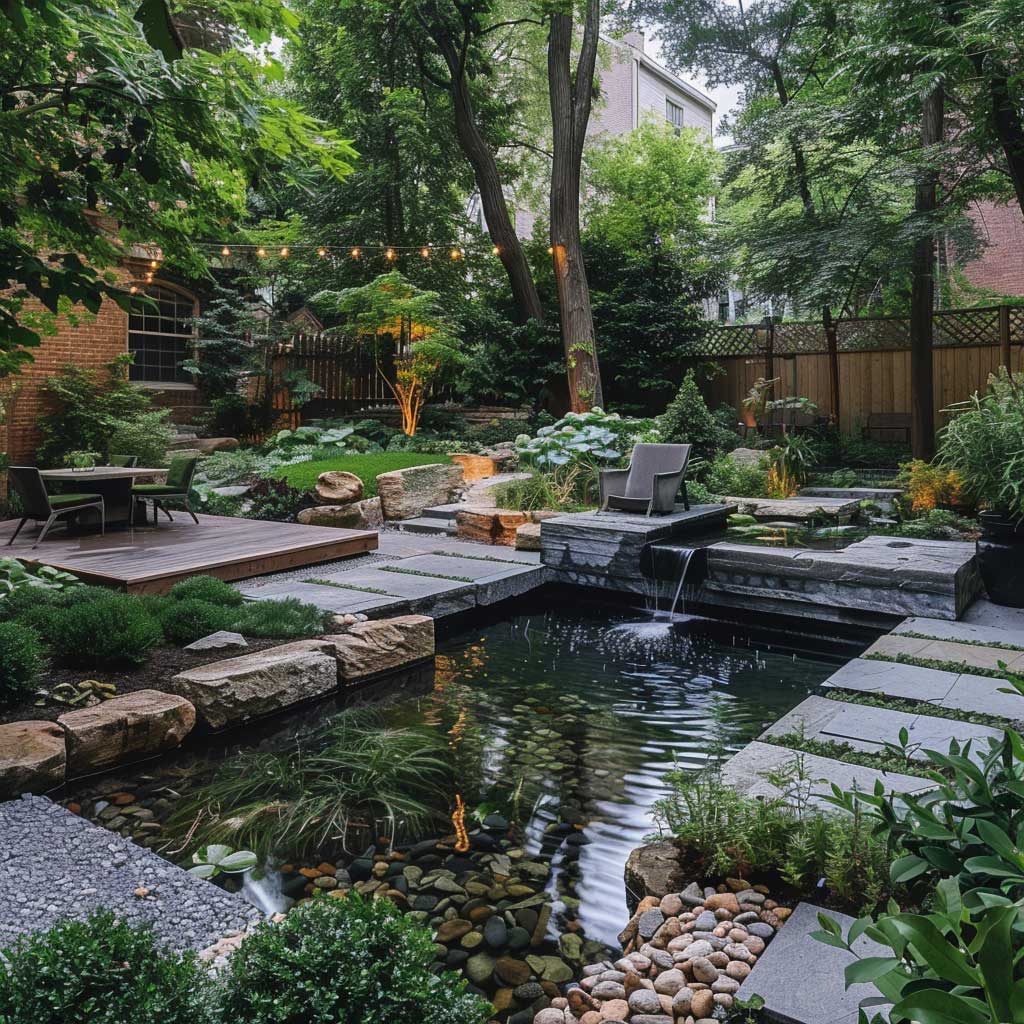


Sustainable urban contemporary garden design has a reputation problem most people never shake. They picture it as a muddy patch of wildflowers beside a recycled-pallet bench. That is a gesture, not a design. The version that actually works uses native planting and water management as structural language — every element doing at least two jobs simultaneously. I stole this approach from a garden designer in Amsterdam who built a shallow corten steel rill carrying rainwater from a downpipe across the full 6-meter width of a terrace to a gravel sump. The rill cost around $1,200 installed and replaced both a drainage problem and a missing central axis. That is the ratio worth designing toward.
Water draws wildlife faster than any planting choice you will make. Birds you have never seen in a garden before show up within two weeks of installing a recirculating fountain. The Oase FiltoClear pump and filter system at around $340 is the spec that appears most often in well-executed urban contemporary garden projects — reliable, quiet, sized for ponds up to 4,000 liters. Pair it with Iris pseudacorus, Lythrum salicaria, and Carex pendula at the margins and the garden sustains itself after the first season with no supplemental watering. According to the Royal Horticultural Society guidance on wildlife in gardens, even small water features in urban plots measurably increase invertebrate populations within a single growing season — which in practice means more birds, more pollinators, and a garden that functions as a habitat rather than a display.


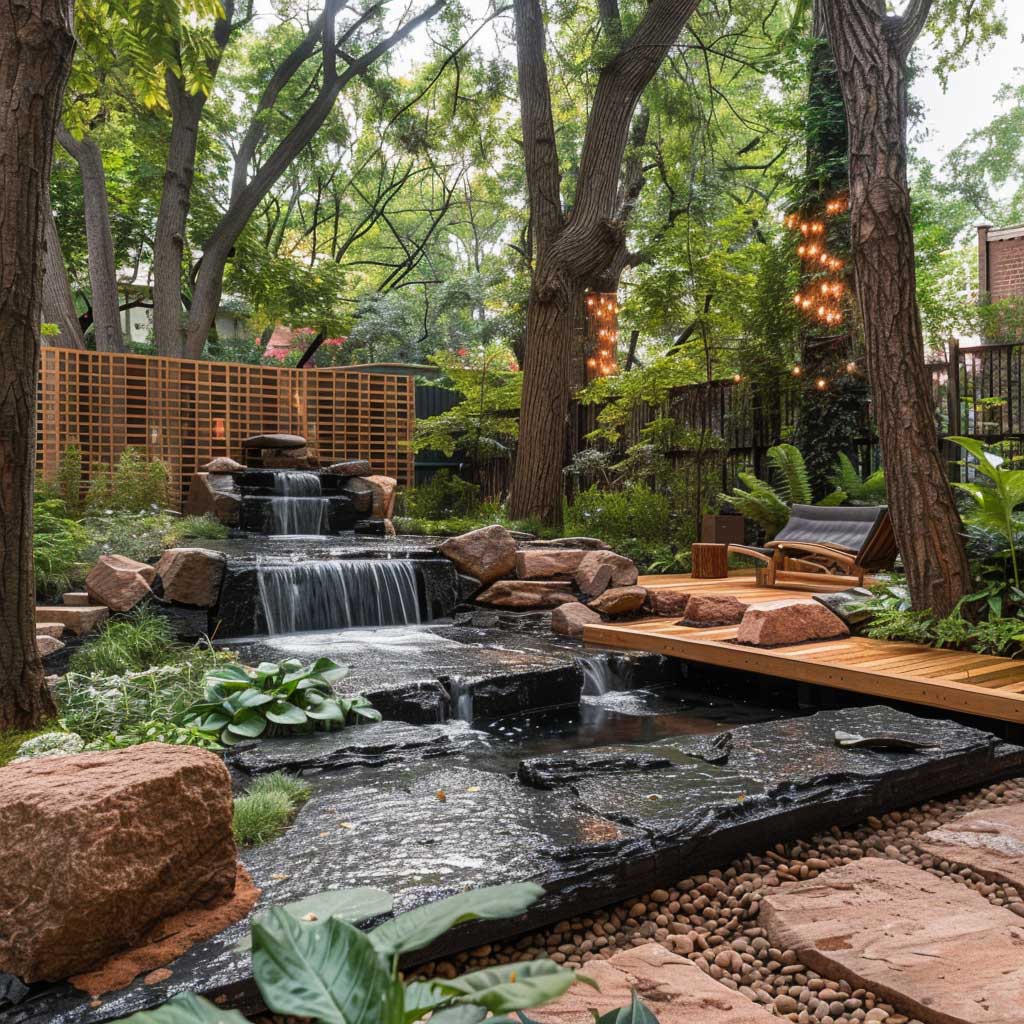
Material choices in an eco-urban modern garden carry as much design weight as the planting itself. Recycled steel edging, reclaimed engineering brick at $0.80 to $1.20 per unit in stack bond, permeable resin-bound gravel from suppliers like Addagrip at around $55 per square meter installed — these are not compromise choices forced by a budget. The reclaimed brick ages into planting better than any new material Ive tried. The slight tonal variation across old units reads as texture at distance, not imperfection. Ask for provenance documentation before signing off on any reclaimed stone — that word on a quote can mean genuine Victorian flagging or broken concrete with a brown tint applied to it.
What does not work: building the sustainability story around one token element. A beehive in an otherwise chemical-dependent garden is not a contemporary garden design decision. It is a brochure photograph. The whole system has to be consistent — soil health, water retention, planting density, material sourcing — or none of it performs the way it photographs. You can carry the same thinking into paving and furniture choices for the full property by looking at how modern garden design principles apply across different plot sizes and budgets.
Smart Lighting in an Outdoor Living Area Changes How Often the Garden Gets Used

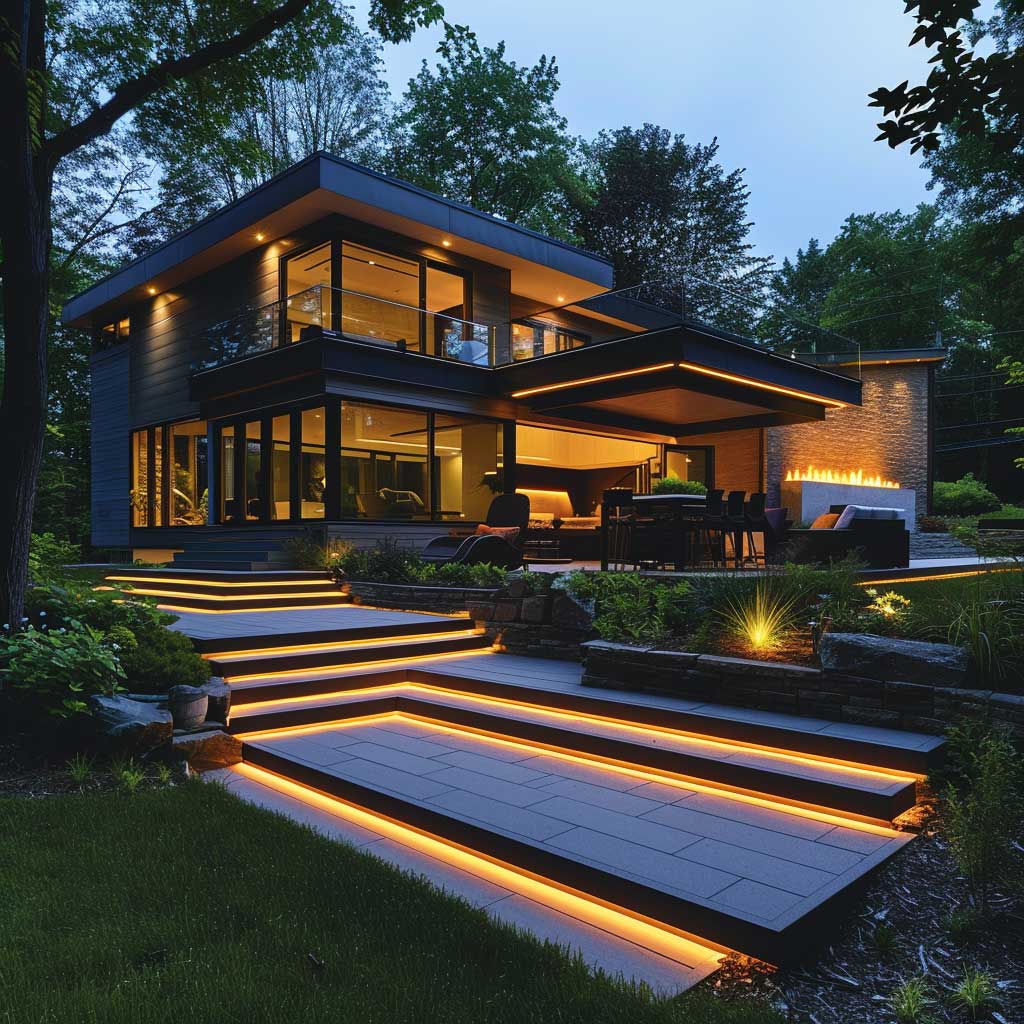


I own two of the Philips Hue Appear wall lights at about $130 each and the difference between a warm 2700K scene and a cool 4000K scene in an outdoor contemporary garden setting is roughly the difference between a garden that invites you to sit down and one that makes you feel like youre being assessed. Scene-based lighting is not a luxury feature. It determines how many evenings per week the space actually gets used. The Hue outdoor range runs on the same app as interior fittings, so transitions happen in one tap. No cable trenching required if you mount to an existing exterior wall circuit — which makes retrofitting to an existing garden a realistic afternoon project rather than a two-day installation.
Modular furniture is the second lever in a contemporary garden home outdoor living setup. The Gloster Teak Shore dining set at around $3,200 for four seats holds color and structural integrity across three seasons without annual oiling if you apply Blanchon Outdoor Wood Oil once at installation. Powder-coated aluminium frames in anything lighter than RAL 7016 anthracite show water marks from day one. Ask for the RAL reference before ordering — the finish specification determines whether the furniture reads as deliberate or provisional five years from now. Lighter colors look intentional in the showroom and apologetic in the garden.
Outdoor kitchen orientation is where contemporary garden style projects succeed or fail at the social level. A freestanding Weber Genesis is fine as an appliance. A built-in Beefeater ProLine with stainless prep surface, positioned so the cook faces the garden and the guests — that is a different spatial experience entirely. Most people spec expensive equipment in a layout that forces the host to turn their back on everyone. The orientation decision costs nothing. Getting it wrong means a $5,000 kitchen that gets used four times a year instead of forty.


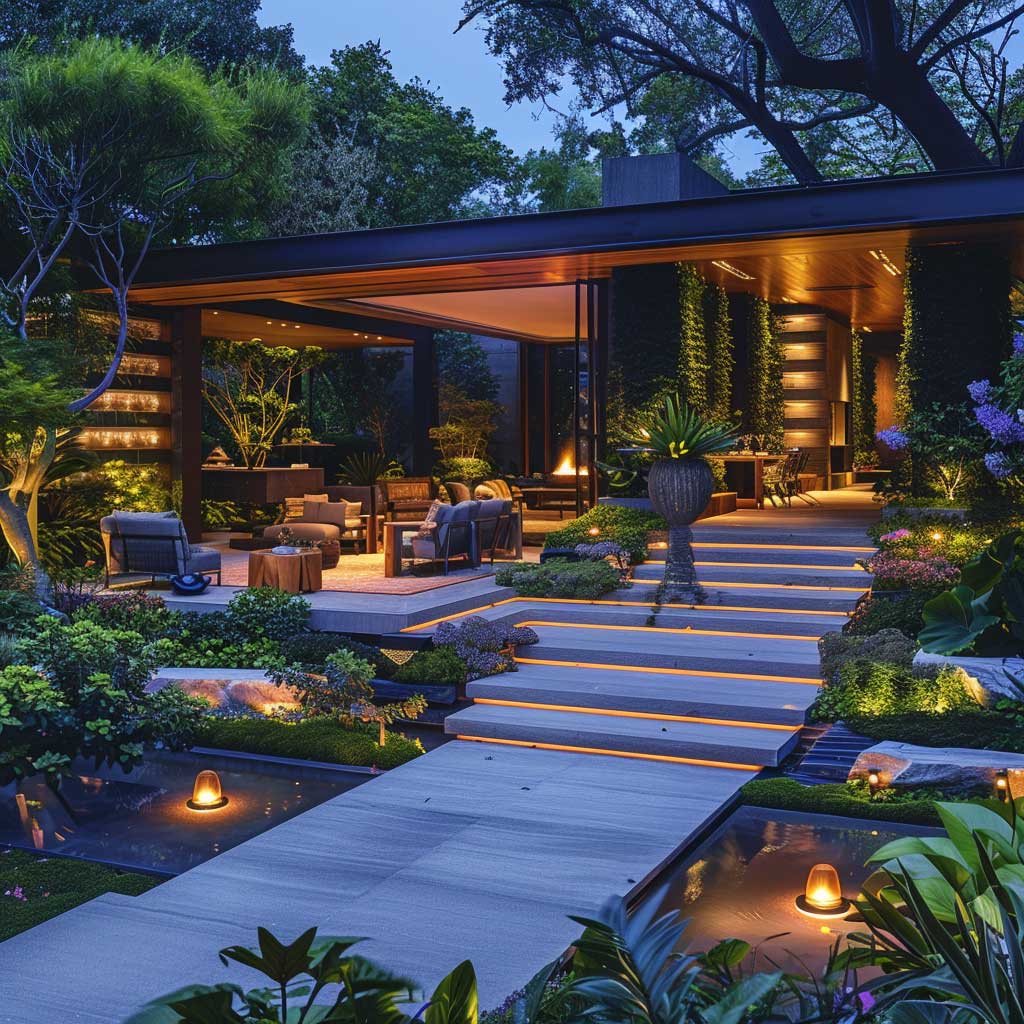
Sound is the underrated layer in a modern home garden setup. Sonos Era 100 speakers in outdoor-rated enclosures at around $250 each, mounted flush into a rendered wall or pergola beam, disappear visually while covering a 6×8 meter terrace cleanly. My rule for outdoor audio in any contemporary garden context: the speakers should be invisible and the sound should feel like it comes from the air. Any setup where you can see the housing is a setup that has not been properly integrated into the design. The technology should make the garden feel more like itself. Not more like a showroom.
Clean lines in this kind of space do not mean bare surfaces — they mean intentional surfaces. Every cable concealed. Every junction box recessed. Every speaker flush-mounted. That discipline costs nothing extra. The materials are not always cheap, but the decision to finish things properly adds no additional line item to the budget.
Final Word
Contemporary Garden Design Pays Back When the Logic Running Through the House Keeps Going Outside
Three different problems, three different approaches. The minimalist garden is about restraint. The eco-urban garden is about system thinking. The smart outdoor room is about orientation and integration. None of them are expensive in isolation. They get expensive when you do them halfway and then redo them.
The contemporary gardens that hold up share one discipline: one paving material, one plant palette, one lighting system. That costs nothing to decide. The discipline to refuse the contractor who shows you a mood board with four stone types and calls it contemporary garden design — that costs slightly more.
Save this post. Come back to it before any contractor conversation, not after.
FAQ
What is the difference between contemporary and modern garden design?
Modern garden design refers to mid-20th century Modernism — strong geometry, warm teak and stone, direct relationship to Bauhaus principles. Contemporary garden design means what is happening right now, pulling from minimalism, sustainability, and smart technology simultaneously. In practice, contemporary modern garden design uses cleaner lines than mid-century modern and integrates ecological thinking that older movements did not consider. If your house was built after 2000, contemporary reads as an extension of the architecture rather than a stylistic overlay.
How much does a contemporary garden design cost for an average home?
For a 50 to 80 square meter rear garden, budget $8,000 to $18,000 installed depending on region and material choices. Calibrated porcelain paving runs $22 to $30 per square foot laid. A corten steel water rill adds $1,000 to $1,500. Smart lighting for a full garden is $600 to $1,500. The big variable is groundwork — drainage improvement or level changes add $3,000 to $5,000 before a single plant goes in. Get three quotes and ask each contractor which cost they would cut first if the budget tightened. Their answer tells you more than the quote does.
Which plants work best in a contemporary garden style?
Plants with strong architectural form that read clearly at distance: Agave americana, Phormium tenax, Stipa gigantea, pleached hornbeam for screening, Molinia caerulea for movement without fussiness. Avoid anything that needs constant deadheading or looks disheveled after the first frost. In a contemporary garden the plant is a structural element, not decoration. Limit your palette to three species maximum in a small garden. Two of each species placed asymmetrically reads as intention. One of everything reads as indecision.
Can contemporary garden ideas work in a small urban plot under 30 square meters?
Small spaces suit contemporary garden design better than large ones because restraint is easier to maintain at 25 square meters than at 200. One large-format paving slab, one sculptural plant species in three positions, one recirculating water feature, one wall-mounted uplighter — that is a complete contemporary garden. The mistake in small urban plots is adding elements to fill space rather than removing elements to clarify it. One focal point. One surface. One plant. Stop there and the result looks designed rather than assembled.
How do I add smart lighting to an existing contemporary modern garden design?
Start with a low-voltage transformer rated 20 percent above your planned number of fittings. Philips Hue outdoor range and Lutec solar-integrated fittings both work without cable trenching if you are retrofitting to an existing exterior wall circuit. Three zones make the biggest visual difference: path-edge lights at knee height, uplighters for architectural plants at 1 to 1.5 meter distance, and one wall-wash fitting on your main facade. Control via the Hue app or integrate with Google Home or Apple HomeKit for scene-based automation. Never mix warm and cool-white sources in the same zone — the color temperature clash reads as an error.
What makes a garden eco-friendly without looking like a sustainability project rather than a design?
Treat sustainability as a structural decision rather than a decorative addition. A corten steel rill managing rainwater drainage functions as both engineering and a contemporary garden design centerpiece. Native planting massed in groups — Echinacea purpurea, Salvia nemorosa, Stachys byzantina — feeds pollinators through June to October without irrigation and looks deliberate when repeated rather than scattered. Reclaimed engineering brick in stack bond reads as a considered material choice. The sustainability becomes invisible when it is doing structural work. It only looks like a gesture when it is added on top of a design that would function without it.