A black and white farmhouse exterior works because the palette refuses to be subtle. White clapboard or board-and-batten siding against black window frames, black trim, or a charcoal roof creates a contrast that reads sharply from the road — the architectural equivalent of a clean editorial spread. What separates the houses that photograph beautifully from the ones that look like a color mistake is not the paint brand. It’s the proportion, the material logic, and knowing where to stop.
The black and white scheme has been used on farmhouse facades for over a century — Colonial-era homes in the eastern United States often paired bright white siding with black shutters and trim long before Pinterest made it a trend. That longevity is the real argument for committing to the palette. Sherwin-Williams Duration Exterior paint, one of the standard choices for farmhouse repaints, runs around $75–$100 per gallon and holds up 7–10 years on properly prepared wood siding. The color you choose matters less than the surface prep that goes beneath it.
The images in this post cover three distinct expressions of the black and white farmhouse exterior: classic contrast with traditional detailing, modern farmhouse facades with clean geometry, and black-and-white schemes warmed by natural wood accents. Each cluster pulls from a different visual logic, but all three share the same structural truth — this palette only works when the architecture has something worth framing.
- Black and white farmhouse exteriors rely on proportion and material hierarchy, not just color — get the architecture right first.
- Benjamin Moore Simply White and Onyx 2133-10 are the two most consistently recommended pairing for this palette by professional designers.
- Black window frames run 10–16% more than white frames — fiberglass and vinyl hold color better than painted aluminum in sun-exposed climates.
- Cedar shiplap exterior siding costs $5–$7 per square foot installed — a common warm wood accent that prevents the palette from reading as cold.
- A quality exterior paint job lasts 7–10 years; south- and southwest-facing walls fade fastest and need the most attention.
- The most common mistake is applying black trim to every detail — shutters, gutters, railings, fixtures — which flattens the contrast rather than sharpening it.
Elegant Contrasts That Make the Architecture Visible
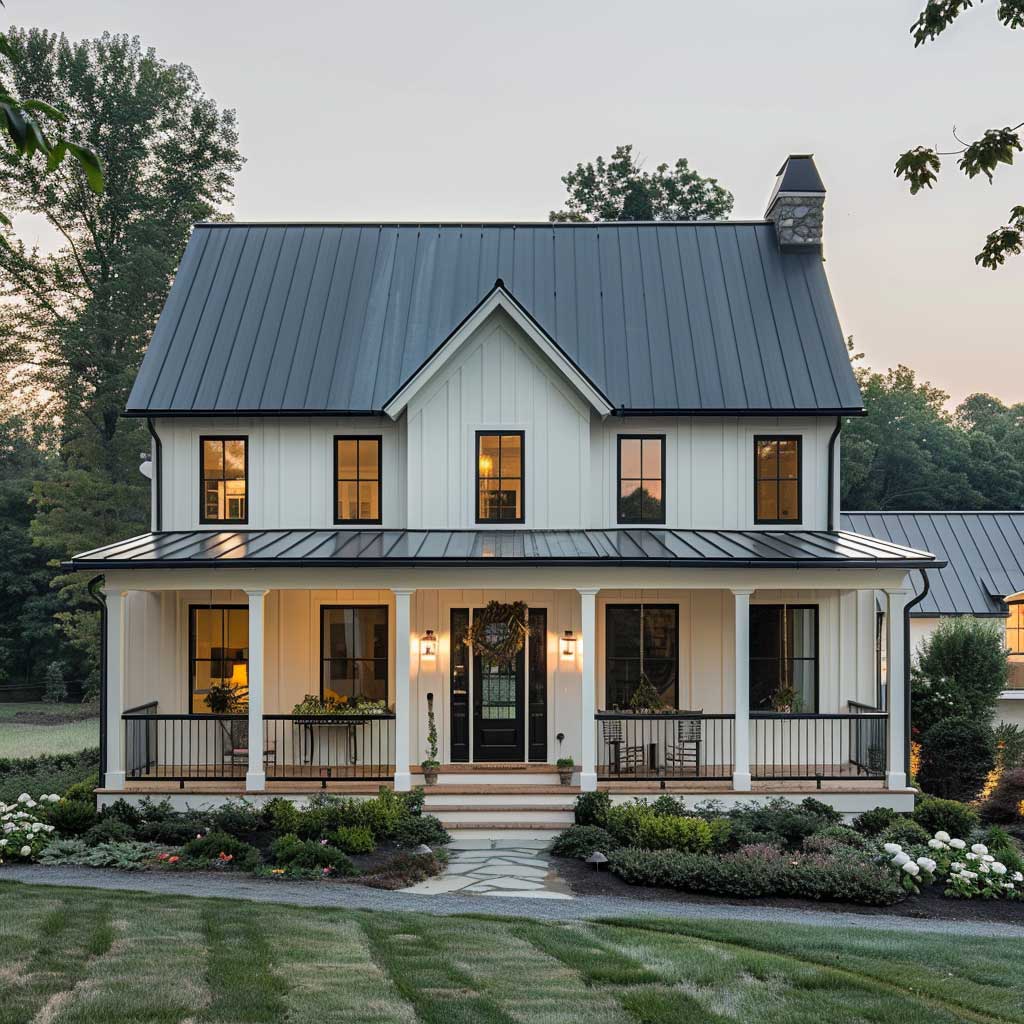


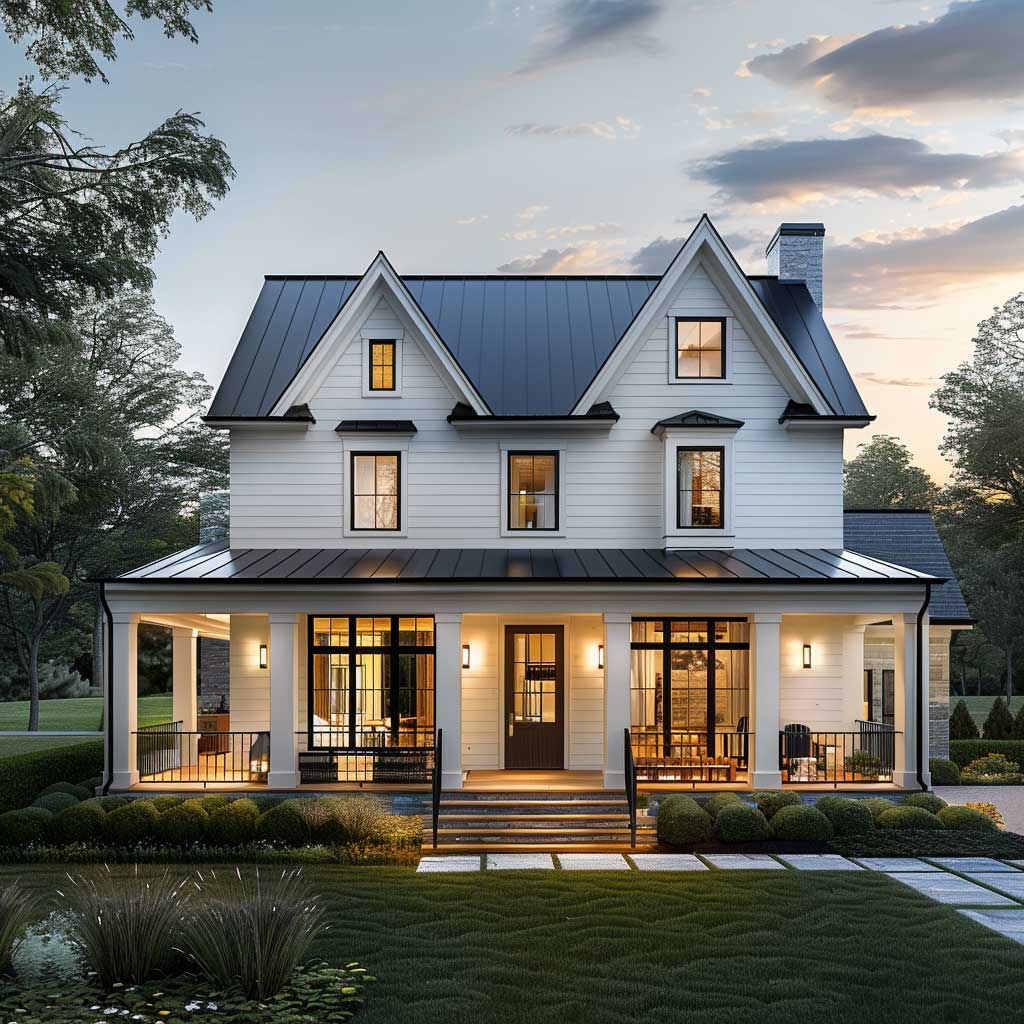
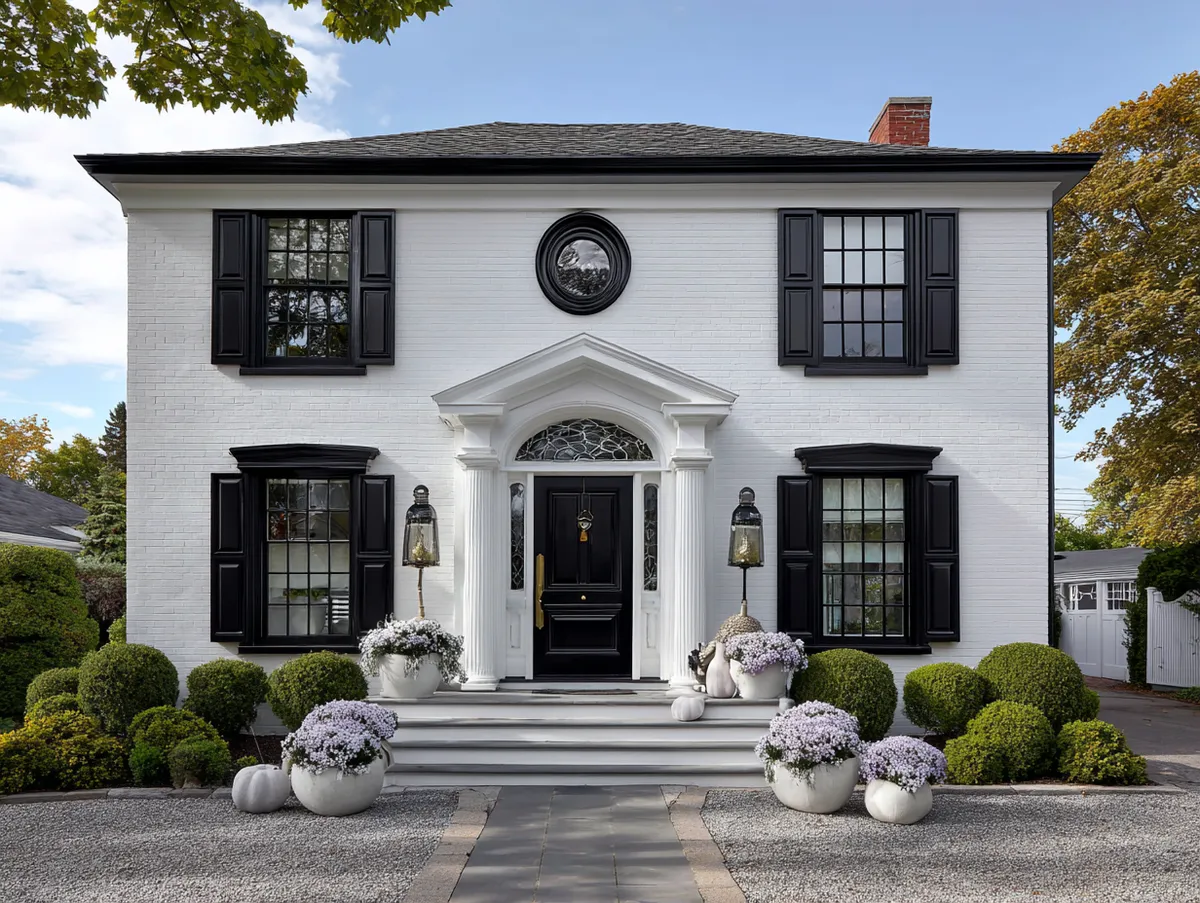
Classic black and white farmhouse contrast works when the black elements do a specific job — framing windows, defining the roofline, articulating the porch rails — rather than appearing wherever the painter had paint left over. Think of it as the difference between eyeliner and face paint. Benjamin Moore Simply White, recommended by designer Katy Byrne of Decorist as the best field color for homes with black window frames, reflects light in a way that makes the surrounding landscape read as a backdrop rather than a competitor. The black responds by absorbing that light and drawing the eye to the structure’s edges and openings.
What’s the right proportion of black to white on a farmhouse exterior? Stylists generally recommend keeping black to 15–25% of the visible facade surface — roofline, window frames, entry door, porch railing — with white holding the body. Push above that threshold and the palette starts reading as a black house with white accents, which is a fundamentally different design direction. The porch with black railings is one of the most common details in this category, and it works precisely because the railings are narrow — they contribute to the contrast without consuming it. Wide black deck boards under a white porch ceiling would tip the balance.

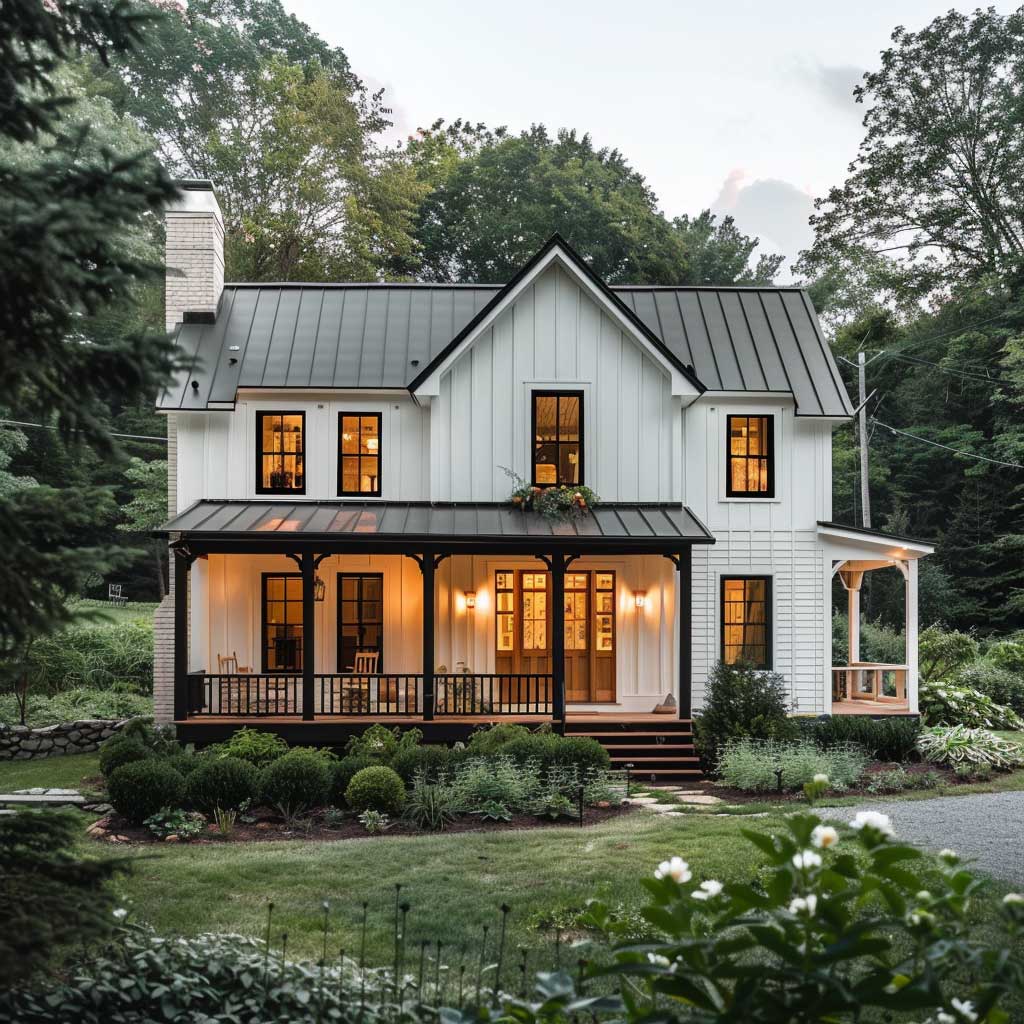
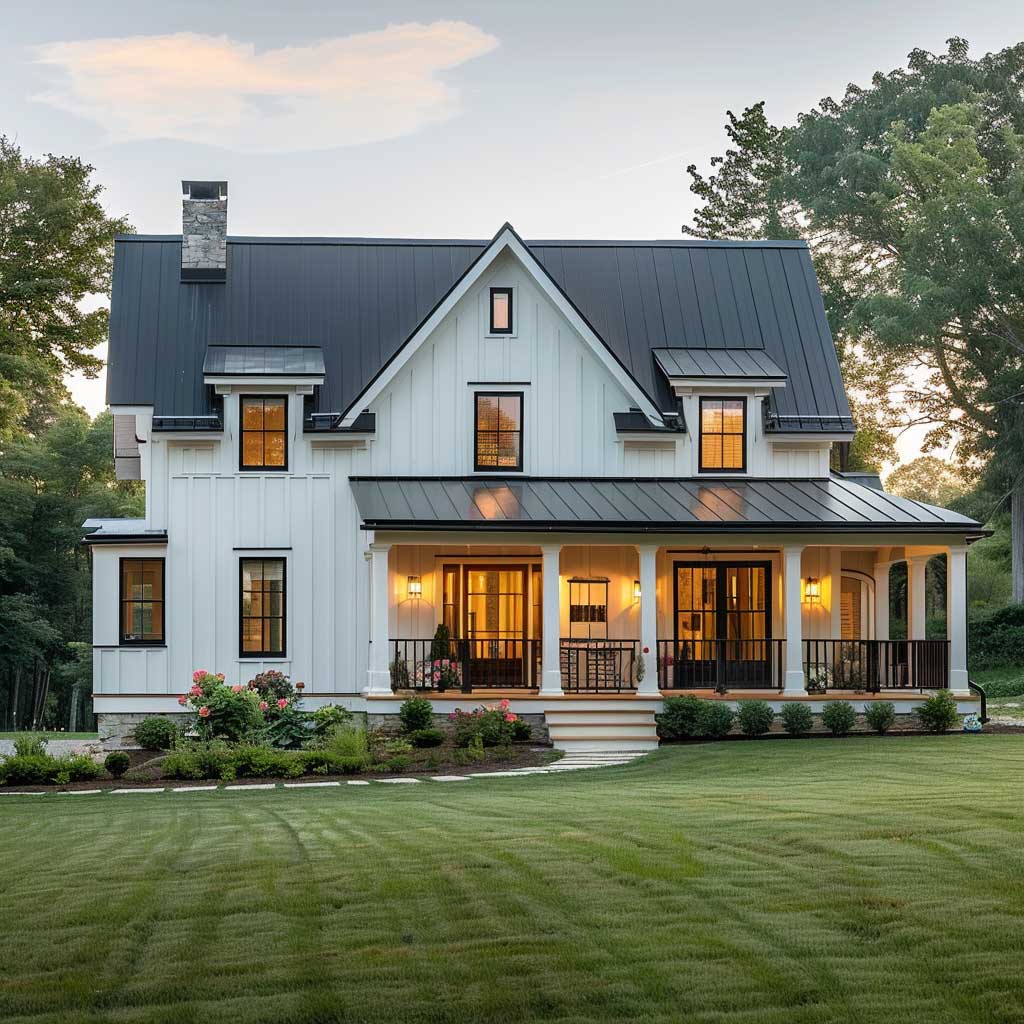

Lighting conditions change the weight of this palette in ways that photographs rarely capture fully. At midday, white siding bleaches slightly under direct sun, making the black trim appear even more saturated. In the late afternoon, the shadows on a gabled farmhouse facade create natural modeling — the same roof overhang that looks flat at noon becomes a three-dimensional element at 4 pm. Stylists recommend choosing your white based on how the facade looks at 3 pm on an overcast day, not in noon sunlight — that’s when the undertones of warm creams versus true whites become apparent, and a mismatched white will look like a primer coat against crisp black trim.
Modern Farmhouse Black and White Exterior — Where Clean Lines Earn Their Keep


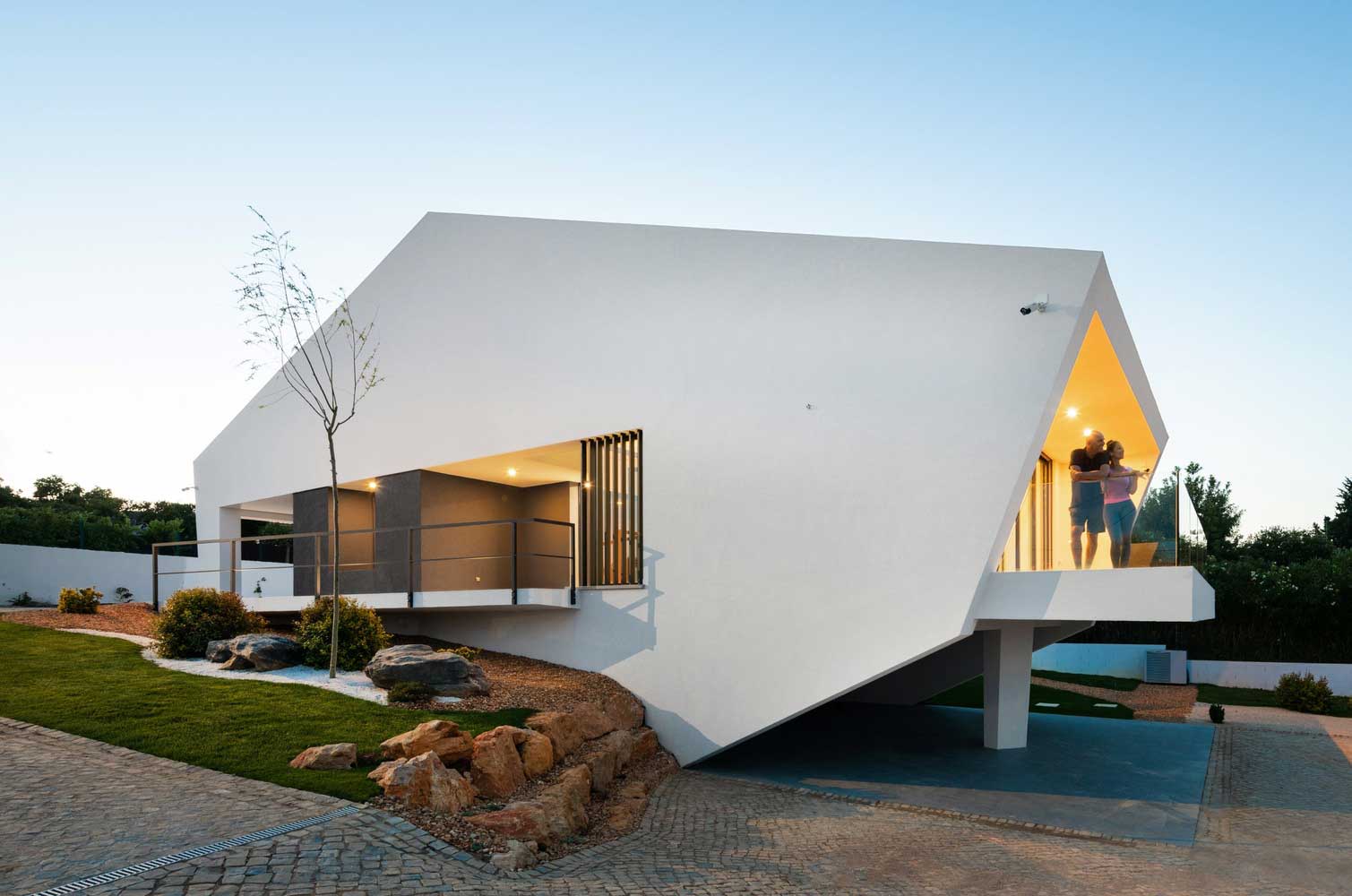
The modern black and white farmhouse exterior is the version of this palette that peaked in popularity around 2019 and produced a wave of nearly identical houses — white board-and-batten, black casement windows, charcoal metal roof, nothing else. The problem wasn’t the formula. The problem was that most executions skipped the step where the architecture actually earns the minimalism. A flat-roofed box with board-and-batten nailed to it is not a modern farmhouse. A structure with a considered roofline, deliberate window proportions, and a covered entry that reads coherently from the road — that’s a modern farmhouse exterior, and the black and white palette serves it rather than carrying it.
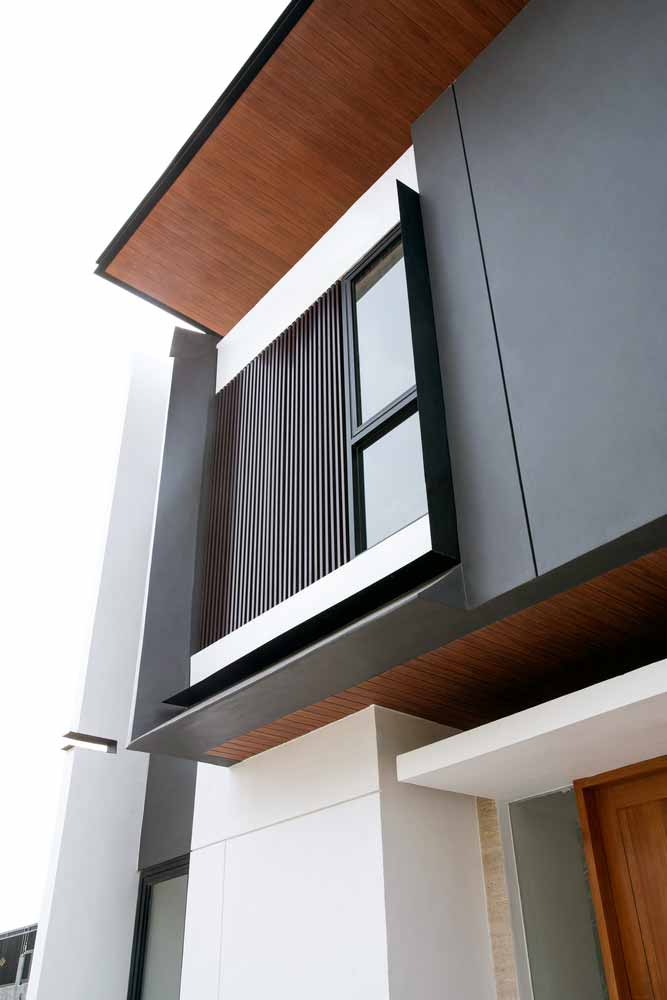
Black window frames are the defining material choice in this cluster. According to data from Hunker, black window frames run 10–16% more than traditional white frames, with the added consideration that dark finishes absorb heat, which can accelerate fading on aluminum frames in high-UV climates. Fiberglass and vinyl in matte black hold color more reliably. Benjamin Moore Onyx 2133-10 — a warm true black with virtually no undertone — is the paint most commonly applied to trim, railings, and exterior doors in this category. It pairs with crisp whites without pulling blue or brown, which is the failure mode of cheaper blacks in outdoor conditions.


The cobblestone or gravel approach path deserves mention here. A straight concrete drive reads suburban regardless of what the house behind it looks like. A path with natural materials — irregular flagstone, decomposed granite, pea gravel at $1–$3 per square foot installed — works as a material transition from the public road to the private farmhouse, and it completes the modern farmhouse exterior design in a way that no amount of black paint can substitute for. The trick here is that the approach sets the scale of the house: a wide, generous path makes the facade feel expansive; a narrow concrete strip makes even a well-designed farmhouse look cramped at the entry. For more on how black window trim exterior behaves across different architectural styles, including the material and finish considerations, that reference covers the practical decisions in detail.
- Don’t paint every detail black. Gutters, downspouts, railings, shutters, trim, AND the front door — that’s too much. Pick three black elements maximum and let the white siding do the work. When everything is black the contrast disappears and you’re left with a complicated facade, not a bold one.
- Don’t use warm whites with a true black. Ivory, cream, or antique white against Benjamin Moore Onyx will look like the white was an afterthought. For this palette to read as intentional, the white needs to be cool and clean — Simply White OC-117 or Chantilly Lace OC-65 from Benjamin Moore are the standard professional recommendations.
- Don’t skip the covered entry. An uncovered front door on a black and white farmhouse exterior reads like a renovation that ran out of budget before reaching the porch. The covered entry is not a decorative gesture — it’s the structural signal that this is a farmhouse, not a tract house with board-and-batten applied to it.
- Don’t use gloss finish on black exterior trim. High-gloss black shows every flaw in the surface preparation and ages poorly outdoors. Satin or semi-gloss is the right sheen — enough reflectivity to pop against the white without exposing imperfections.
White Farmhouse with Black Windows — Countryside Beauty Without the Postcard Clichés
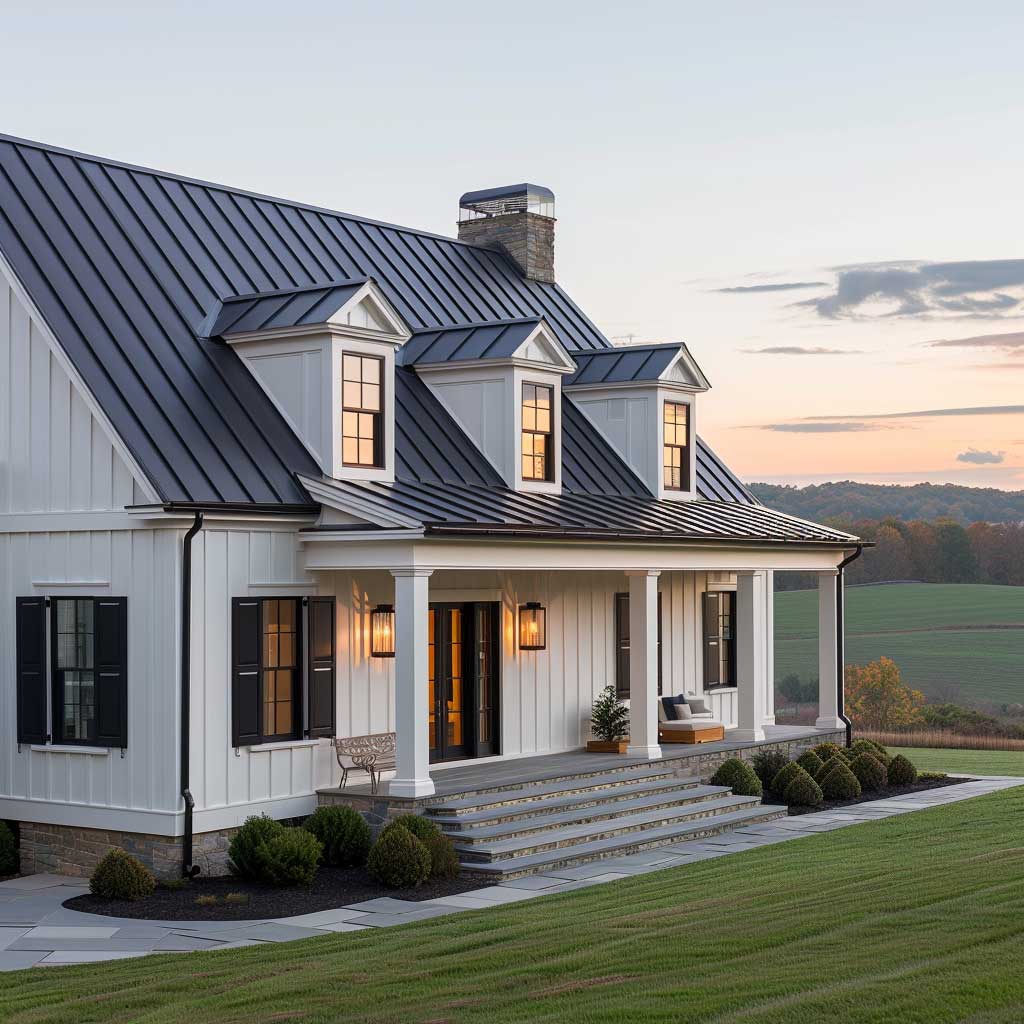

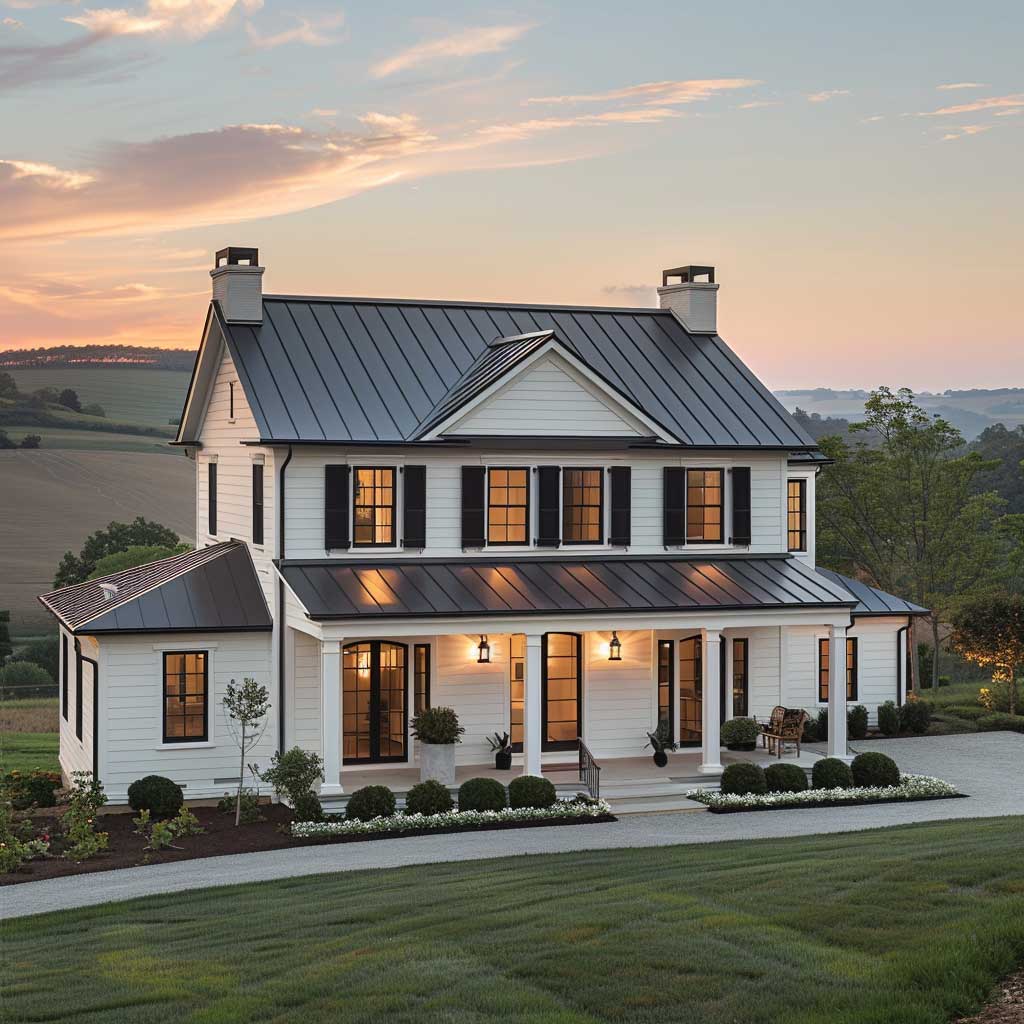

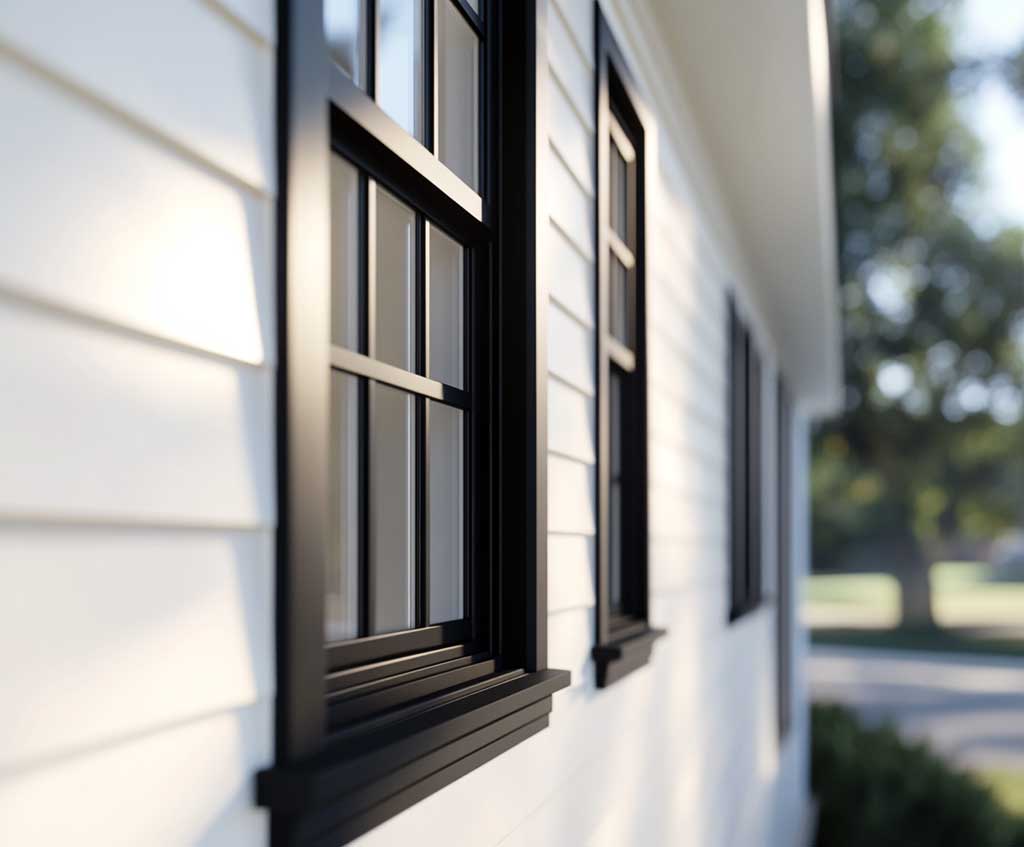
The white farmhouse with black windows version of this palette relies on one structural decision made correctly: window placement. Six-over-six double-hung windows with black frames read as a historically grounded farmhouse detail — the grid in the glass echoes the rhythm of the clapboard below it, and the black frames give each opening a defined edge against the white body. Swap those for large undivided picture windows and the same palette suddenly reads as a contemporary intervention, not a farmhouse. The window type sets the style decade; the paint colors just confirm it.
Does the surrounding landscape change how this exterior reads? Dramatically — and most homeowners underestimate the effect. Rolling hills or mature trees behind a white farmhouse with black windows create a natural frame that makes the contrast appear more deliberate. The same house on a flat suburban lot without landscaping reads as a painted box. Stylists recommend planting at least one large deciduous tree within 30–50 feet of the front facade — not for shade, but for the visual anchoring that a mature canopy provides behind a white structure. A common approach is to choose a species that turns orange or red in autumn, which creates a seasonal third color that makes the black-and-white base palette feel dynamic rather than static year-round.


Outdoor lighting is where this category of farmhouse exterior fails most visibly after dark. The cheap matte-black coach lantern from any big-box store is everywhere and it shows — thin metal, stamped not cast, proportions that shrink the facade rather than anchoring it. A wall lantern with actual weight and a glass panel that diffuses light warmly costs $150–$300 per unit and changes the entire character of a white farmhouse at night. The facade that looks restrained during daylight can read as almost luminous after dark with the right fixture — the white siding picks up the warm glow from below, and the black window frames hold the shadow. That’s the effect worth buying your way into. For a full reference on farmhouse exterior design ideas across materials and color schemes, including what not to mix, that post covers the material decisions in detail.
| Look | Best White | Best Black Element | Key Risk |
|---|---|---|---|
| Classic contrast farmhouse | Benjamin Moore Simply White OC-117 | Black shutters + porch railing | Too many black elements flatten contrast |
| Modern farmhouse exterior | Benjamin Moore Chantilly Lace OC-65 | Black casement window frames | Undivided windows lose farmhouse character |
| White farmhouse with black windows | Sherwin-Williams Extra White SW 7006 | Black 6-over-6 double-hung frames | Warm white clashes with cool black trim |
The Bottom Line
Black and White Farmhouse Exterior Rewards Material Discipline Over Paint Enthusiasm
The palette works when the black elements have a structural job — framing windows, defining the roofline, anchoring the entry — and the white does the rest. Three black details maximum. Cool white, not cream. A covered porch that earns its square footage.
Quality exterior paint on properly prepared wood siding lasts 7–10 years; south-facing walls fade first and need the most attention. South-southwest exposures are where most repaint cycles start, not the front facade.
Architecture carries this look. The palette just confirms what the roofline and window proportions already established. Save this post.
FAQ
What makes a black and white farmhouse exterior look modern rather than traditional?
How much does it cost to repaint a farmhouse exterior black and white?
What is the best white paint for a black and white farmhouse exterior?
Do black windows fade on a white farmhouse exterior?
What wood accents work best with a black and white farmhouse exterior?
What does a black and white farmhouse porch look like?
Complete guide
White Color in Home Design: Every Room, Every Style, Every Shade
Kitchens, bathrooms, living rooms, exteriors, palettes — all in one place
Complete guide
Farmhouse Style Ideas for Every Room and Outdoor Space
Kitchens, bathrooms, bedrooms, exteriors, decor, outdoor — all in one place
Complete guide
Black Home Color Ideas for Every Room and Every Mood
Living rooms, bedrooms, kitchens, bathrooms, exteriors — all in one place