Farmhouse exterior design ideas keep pulling people in because the style refuses to be just one thing. You get the wraparound porch and the weathered wood, but you also get the black-framed windows and the board-and-batten siding that photographs like it belongs on a magazine cover. I’ve spent a lot of time looking at what actually works in the real world — not just on Pinterest boards — and the results keep circling back to the same four moves: honest materials, a clear color logic, a covered entry that earns its square footage, and a facade that reads coherently from the road. Skip any one of those and the whole thing looks like a suburban house with barn doors glued to the front.
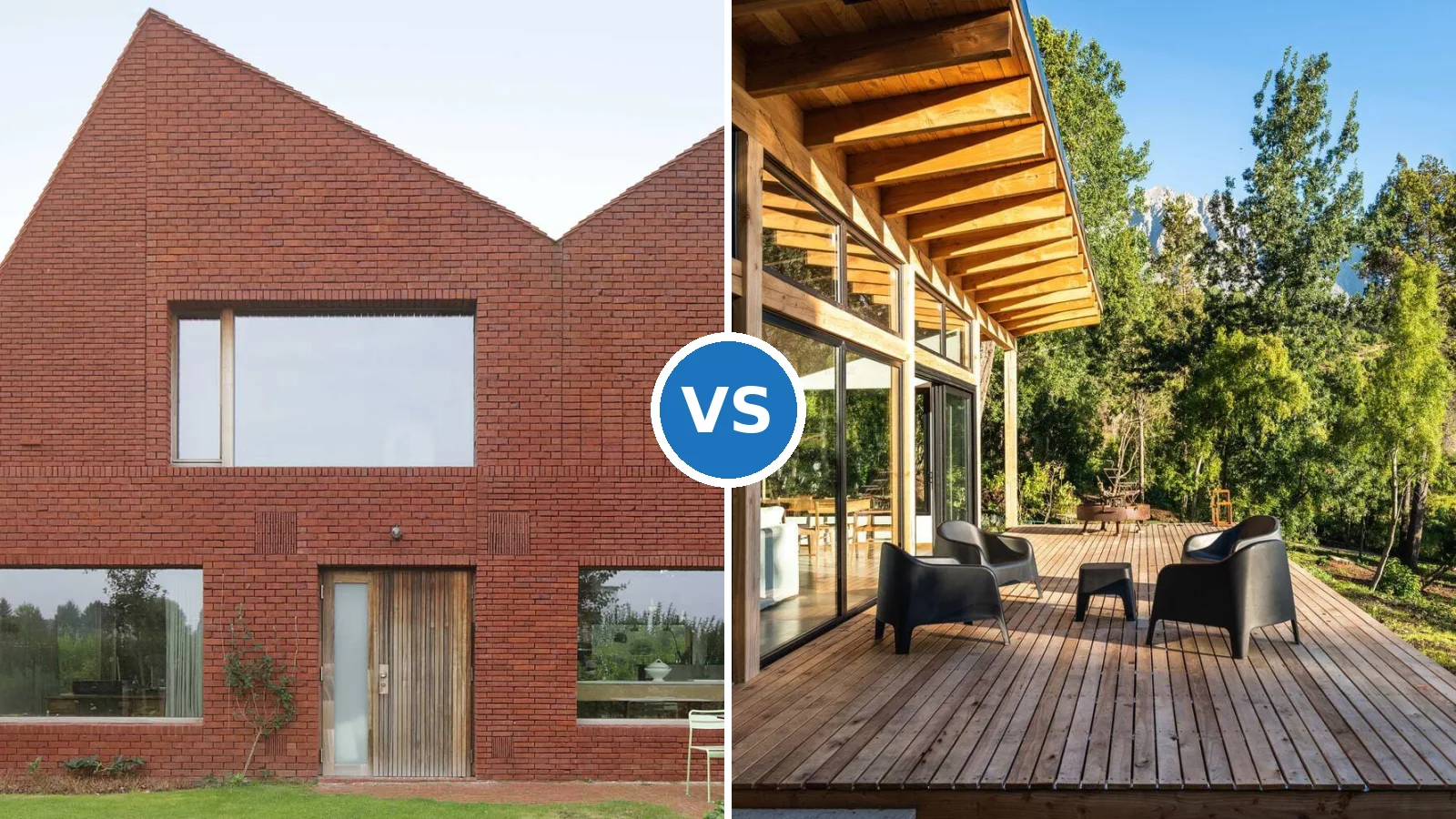
The farmhouse style homes exterior trend has split into two distinct camps, and confusing them is the most expensive mistake you can make during a renovation. Rustic farmhouses lean on reclaimed wood, stone foundations, and earth tones that read as organic. Contemporary farmhouse facades clean all of that up — white or warm gray cladding, black metal roofing, minimal trim, and a horizontal silhouette. Pick your lane and commit. Mixing freely produces something that looks like a renovation stalled halfway through.
What you’ll find in this post
- Rustic farmhouse exterior — weathered wood, wraparound porch, countryside palette
- Modern farmhouse facades — white board-and-batten, black windows, metal roof
- Farmhouse with verdant landscape — how siting the house changes everything
- Stone accent exteriors — where to use fieldstone without going full cottage
- Coastal-inspired farmhouse — blue and white done without the nautical clichés
- Material comparison table — wood vs. fiber cement vs. stone for cladding
- FAQ covering contemporary farmhouse, small farmhouse scale, and what “farmhouse style” actually means structurally
Rustic Farmhouse Exterior Built Around Weathered Wood
Weathered pine or cedar siding is the single material that defines the country rustic farmhouse exterior more than anything else — more than the porch, more than the roof pitch. The grain reads differently in morning light versus afternoon, which means the facade is never static. I borrowed this observation from a builder friend in Vermont who has sided over fifty farmhouses, and he’s right: you don’t need to paint weathered wood gray to make it look intentional. Let it go silver naturally over three to five years and the result is more convincing than any stain you can buy at a lumber yard.
Don’t make the mistake of adding a fake reclaimed wood accent panel to a house that’s otherwise vinyl. It looks exactly like what it is. Authentic farmhouse aesthetics exterior require material consistency — if the main cladding is fiber cement painted barn red, the porch ceiling can be real tongue-and-groove pine, and that’s enough warmth without the incongruence.
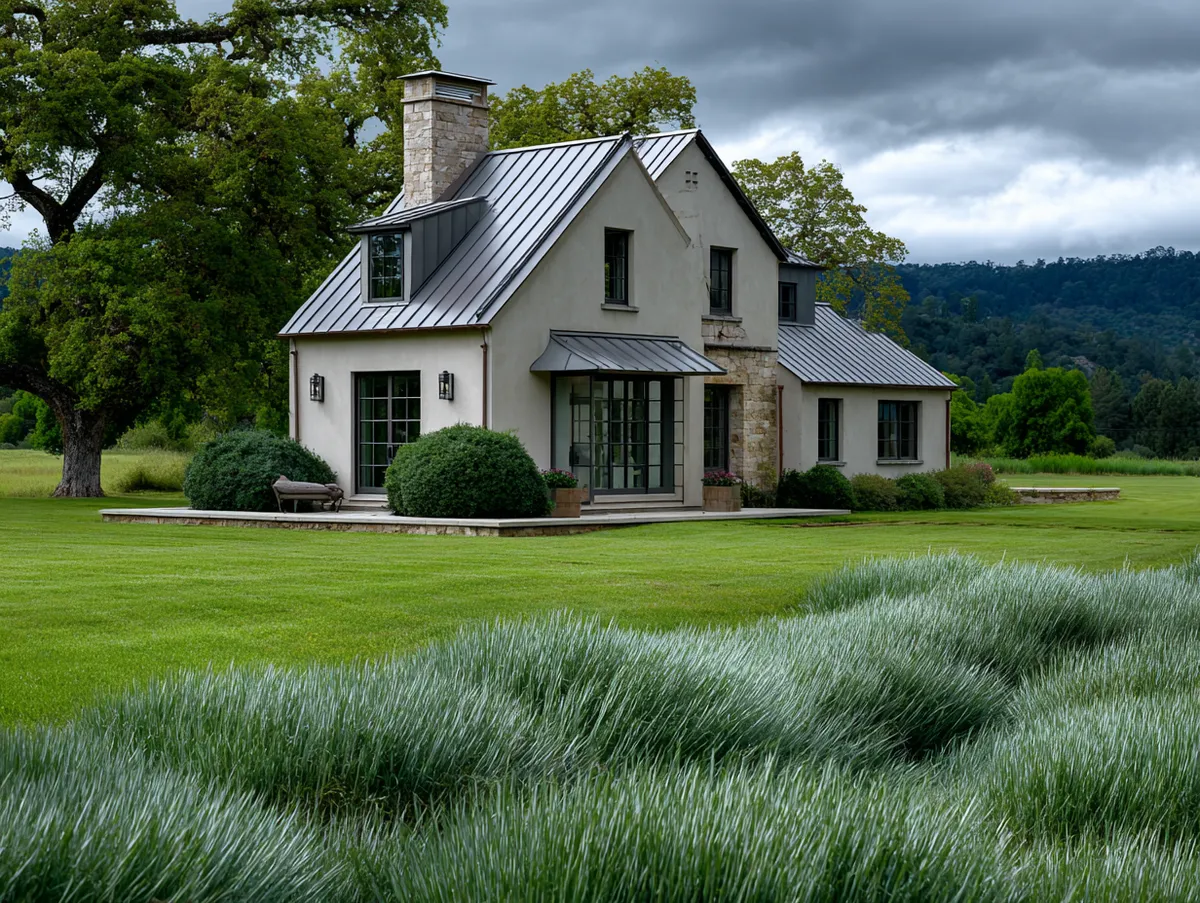
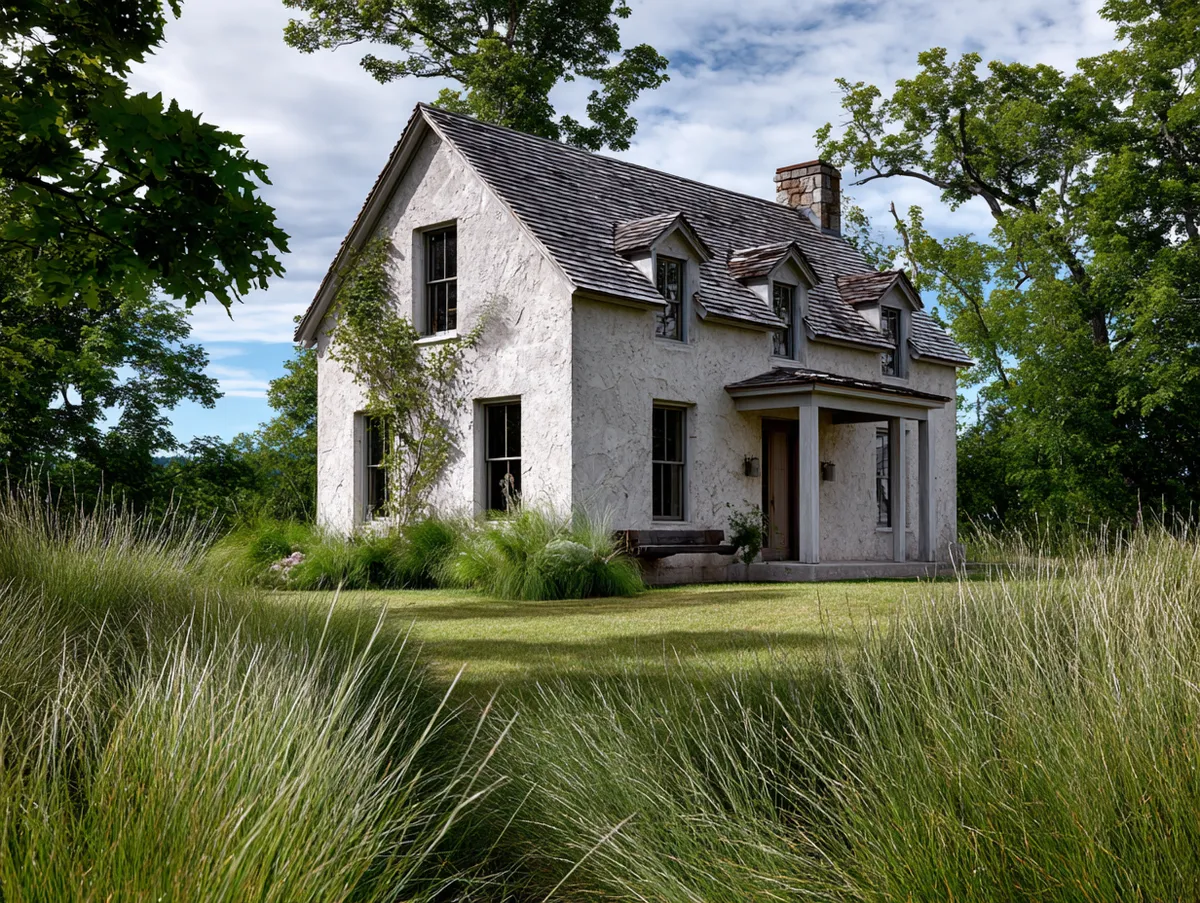
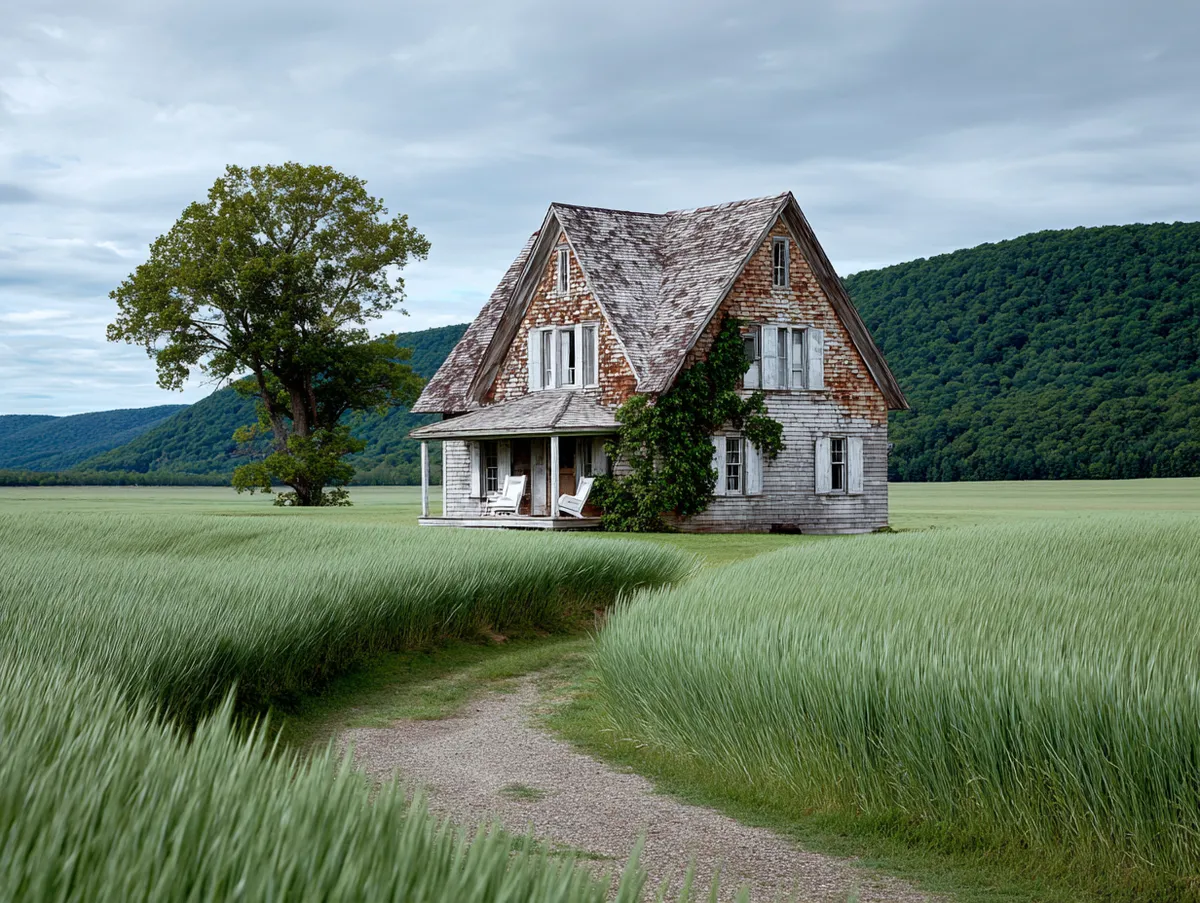
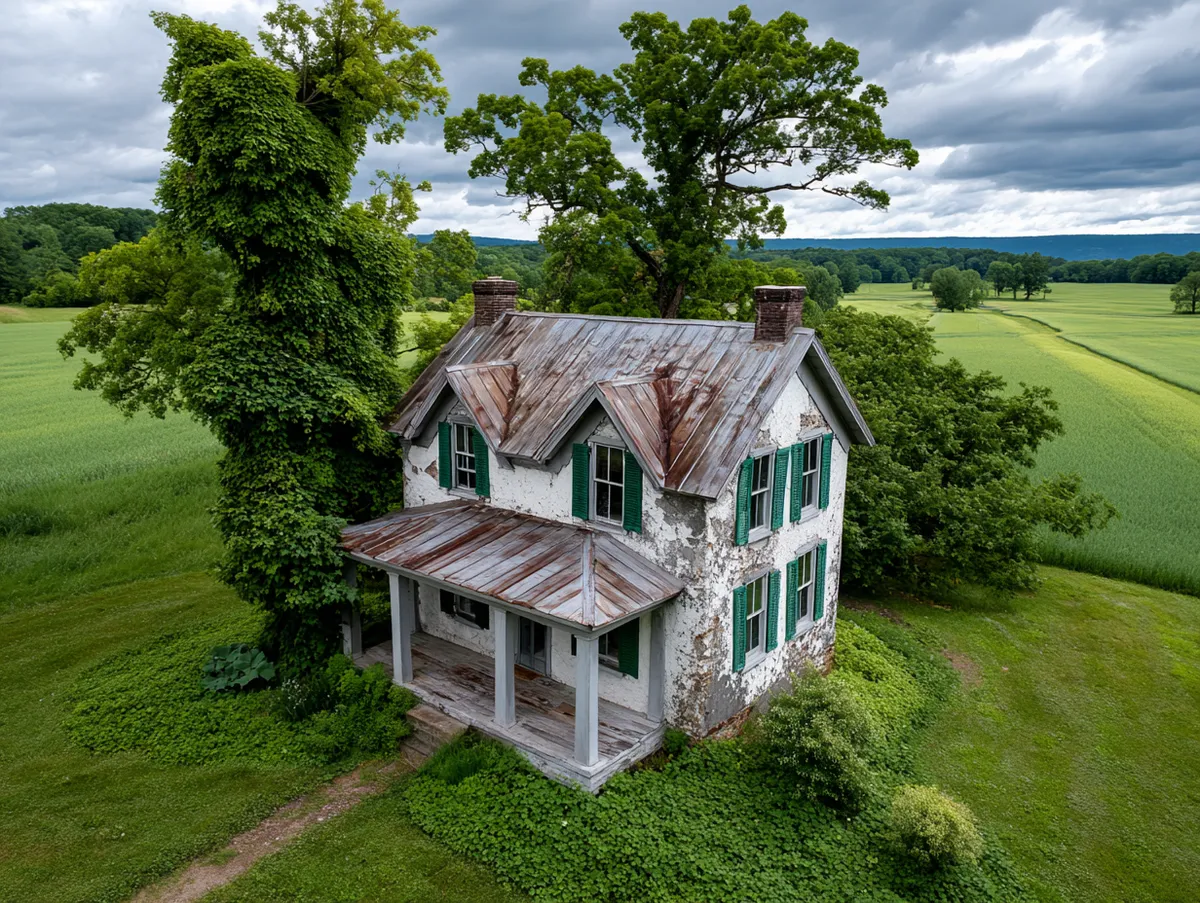
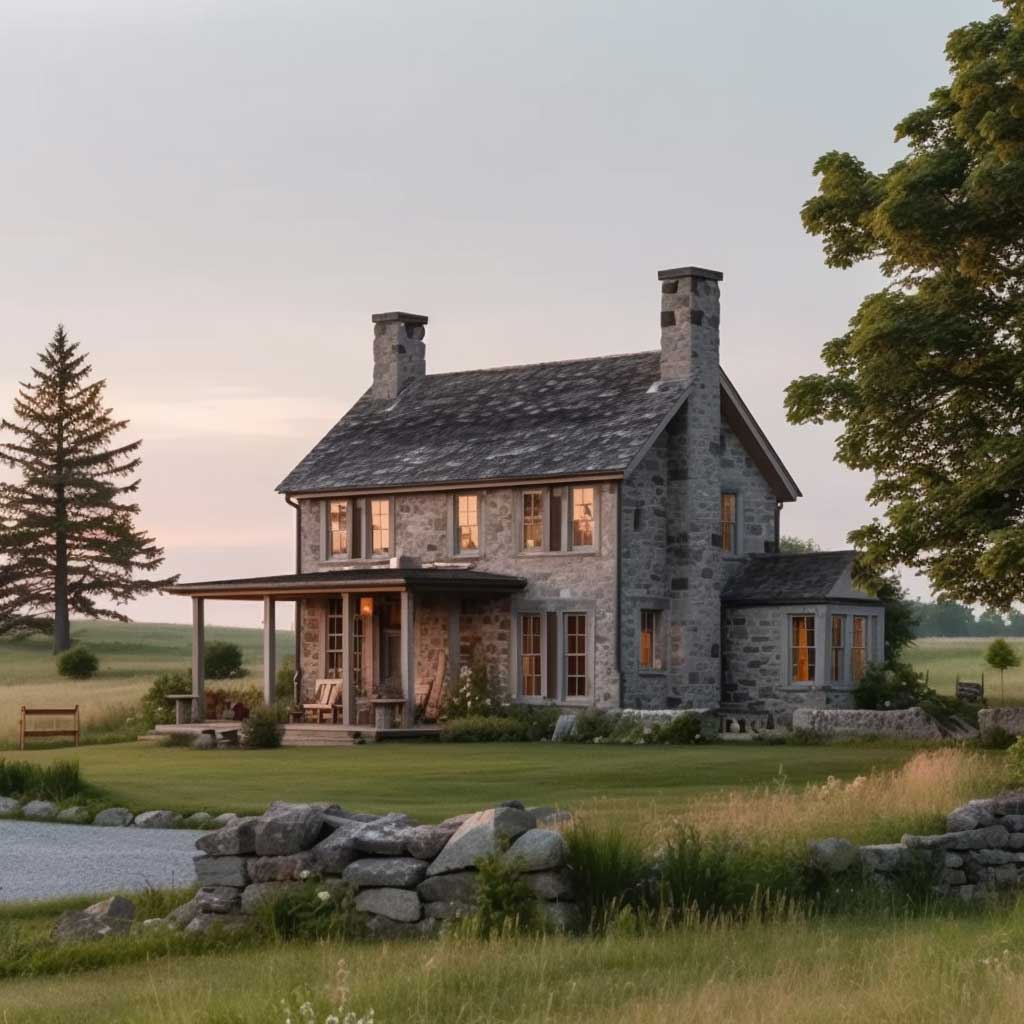
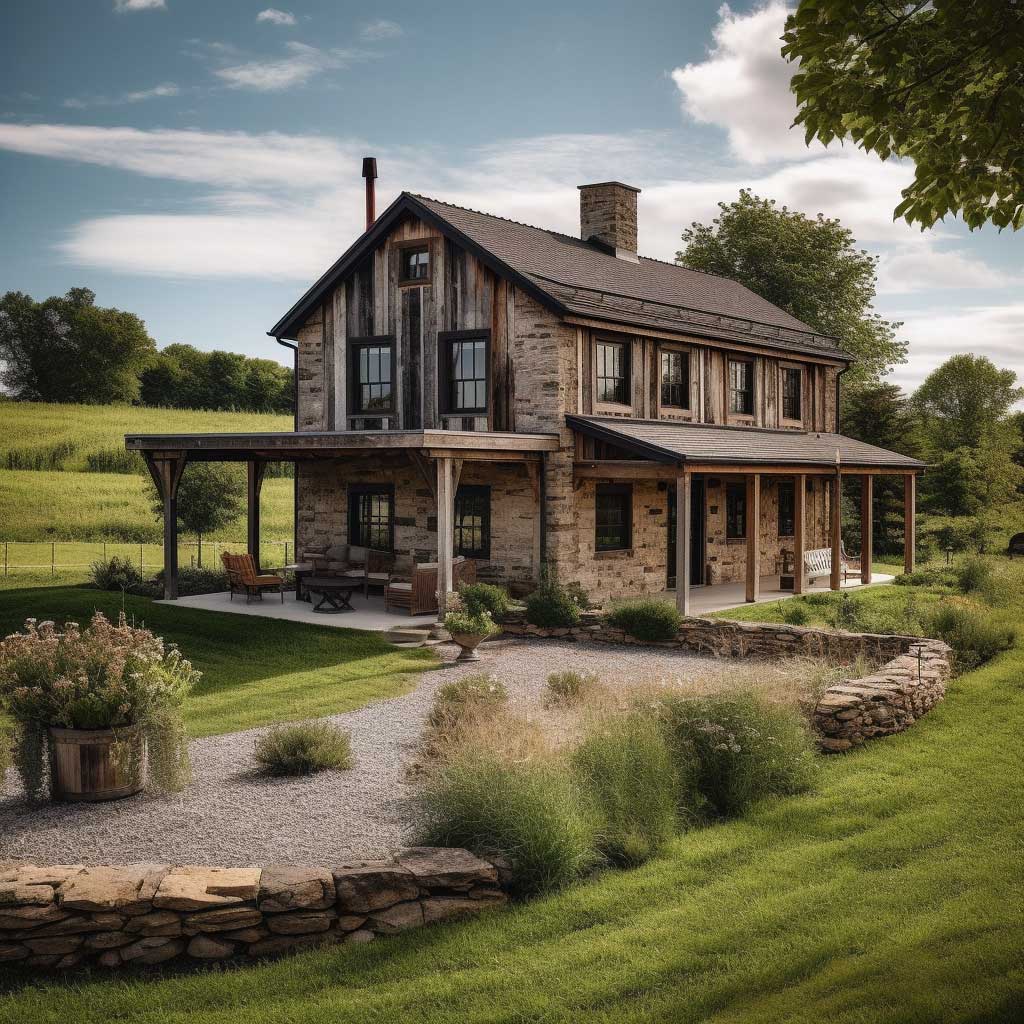
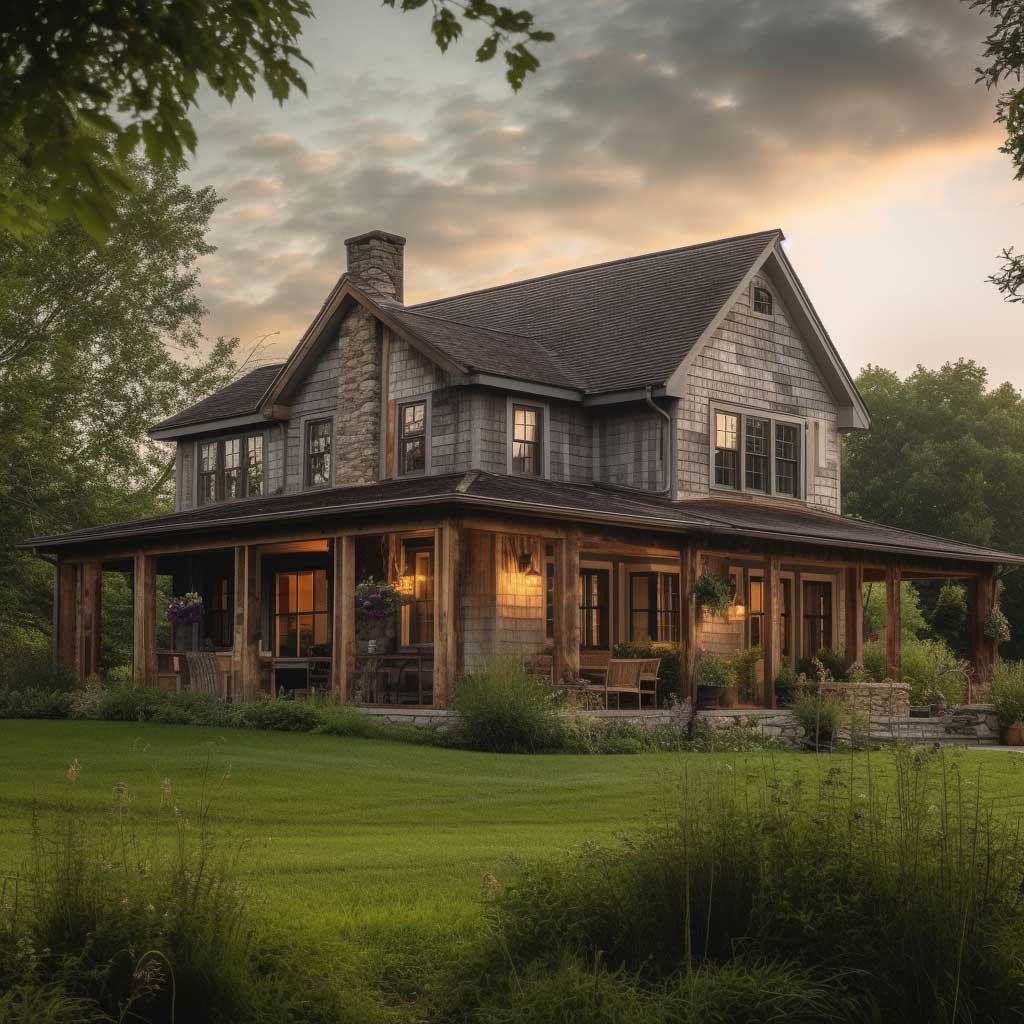
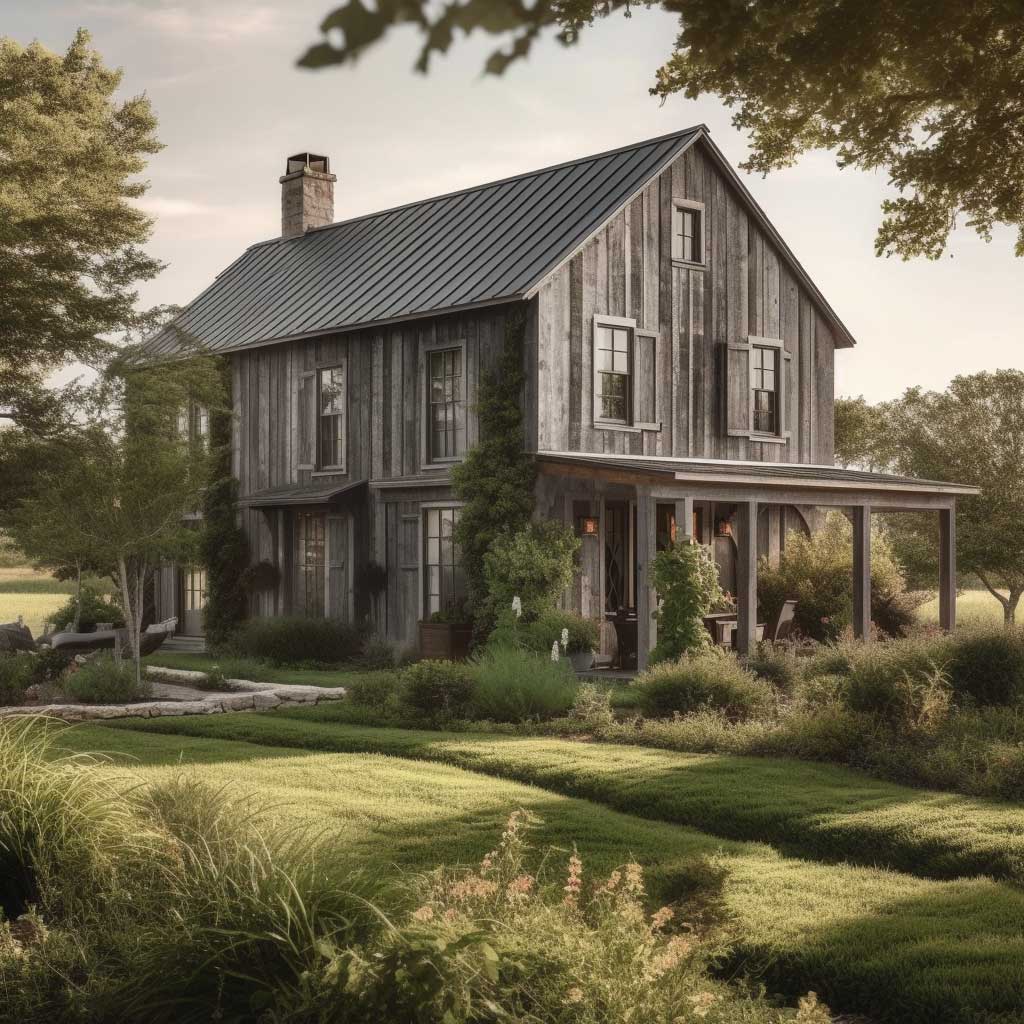
The porch is where most people overthink the rustic farmhouse exterior and end up spending $8,000 to $15,000 on something that competes with the house instead of framing it. My rule: one material for the decking, one for the columns, done. Wide columns in painted wood trim work better than turned spindles — spindles read as Victorian, not farmhouse. A porch swing in raw teak costs around $400 at most garden supply stores and takes the space from sterile to genuinely lived-in within an afternoon.
Large windows are not optional in a farmhouse styles exterior, even a rustic one. The cliché of small, dark windows in old farmhouses came from a time when glass was expensive. You have no such constraint. Six-over-six double-hungs or simple fixed-pane rectangles — both look right. A south-facing wall of windows on a rustic farmhouse can reduce your heating bill enough that the upgrade pays back within eight winters. That’s the kind of detail I wish someone had told me earlier.
Modern Farmhouse Facade Without the Generic White Box
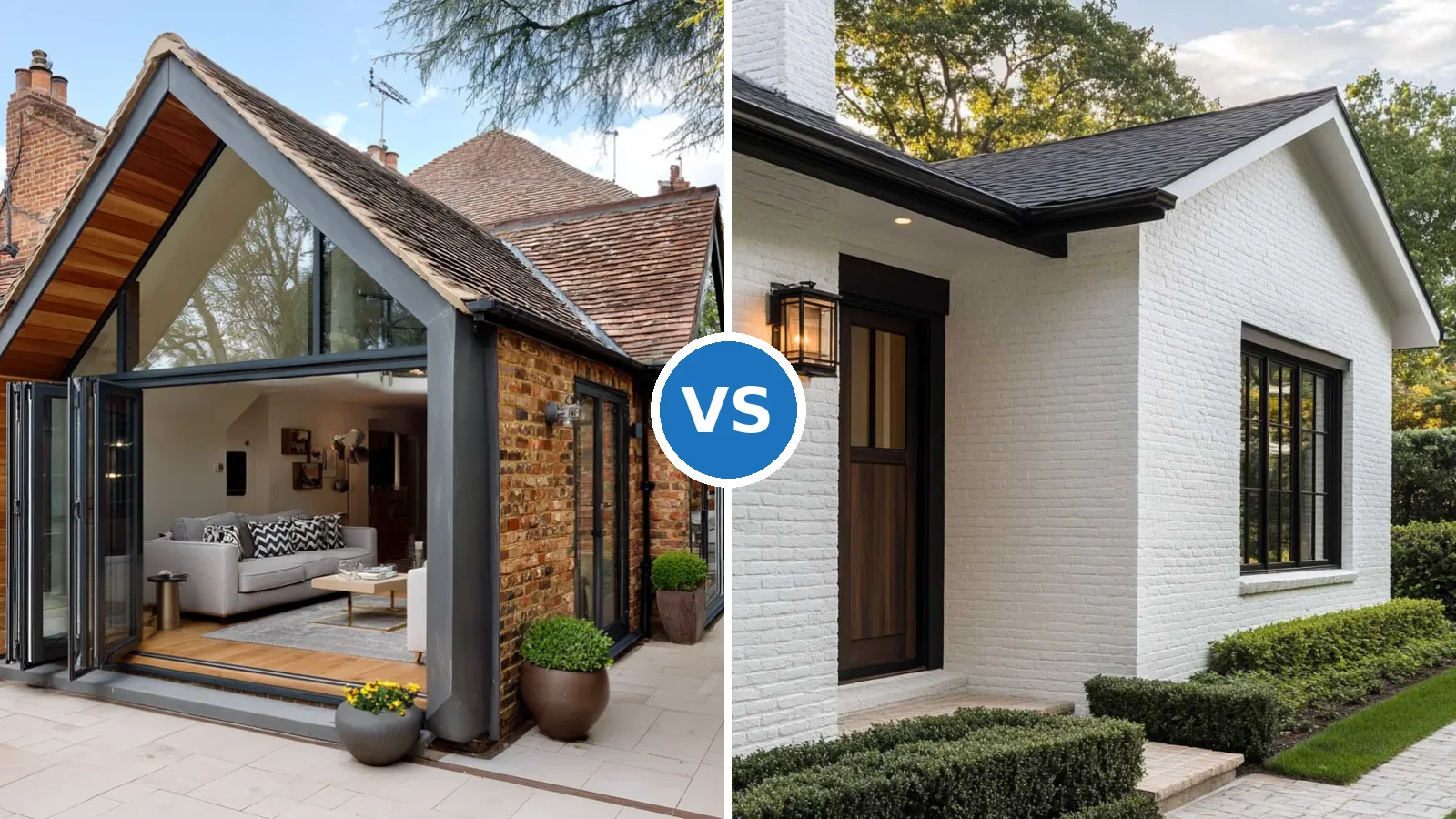
Modern farmhouse exterior design peaked around 2019 in a way that produced thousands of identical houses — white board-and-batten, black windows, black metal roof, zero personality. The style itself isn’t the problem. The problem is that most people copied the surface without understanding the underlying logic. A modern farmhouse facades works because the simplicity forces the architecture to carry the load: the roofline, the window proportions, the porch depth. Get those right and the white cladding looks intentional. Get them wrong and you have a shed with aspirations.
You’ll notice that the best contemporary farmhouse exterior examples have at least one material contrast — usually white painted fiber cement against raw wood soffits, or a board-and-batten body with a stone water table at the base. James Hardie’s HardiePlank in Arctic White runs around $6 to $12 per square foot installed, and it holds paint for fifteen years without the moisture problems you get with real wood in humid climates. That’s my go-to recommendation for anyone building new construction in the South or Pacific Northwest. Pair it with Anderson 400-series black casement windows at roughly $350 to $600 per unit and the modern farmhouse exterior design reads coherently at any budget.
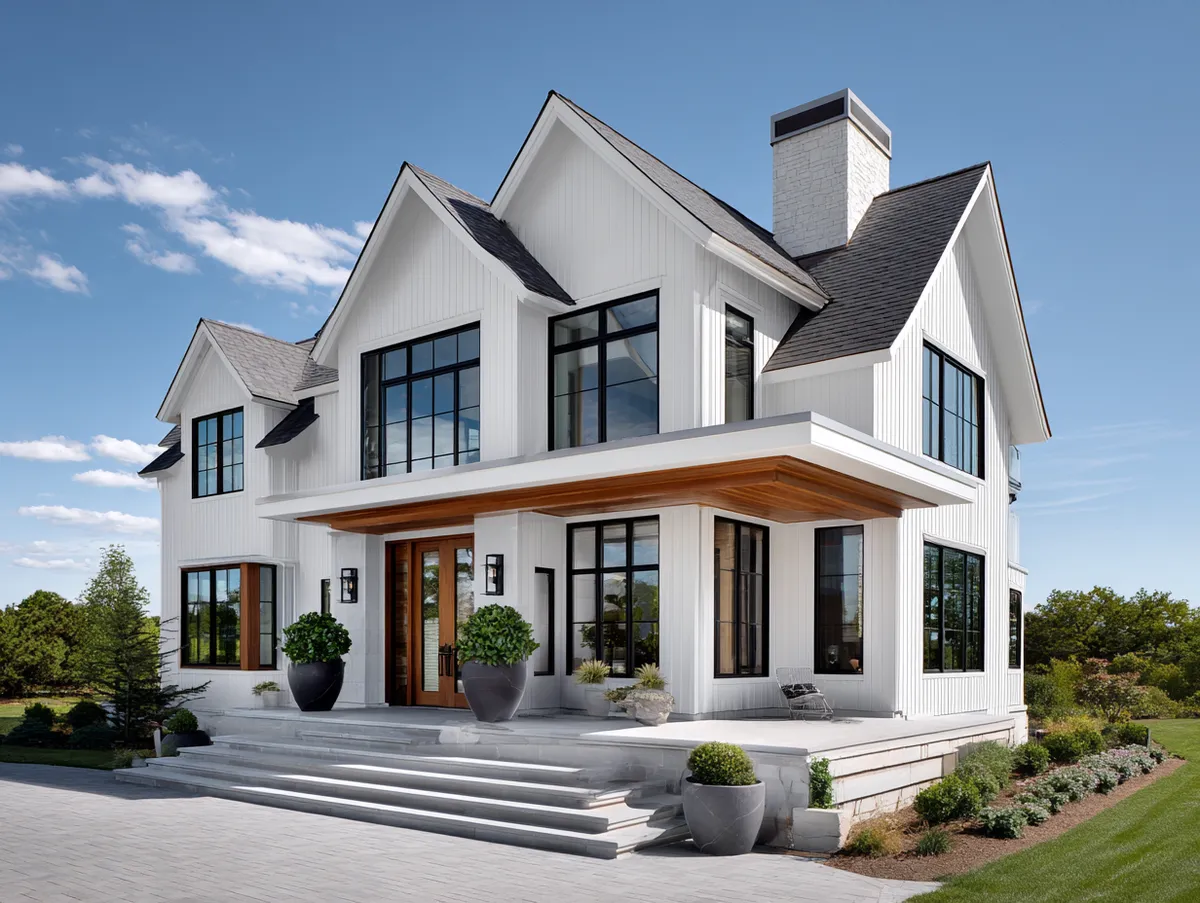
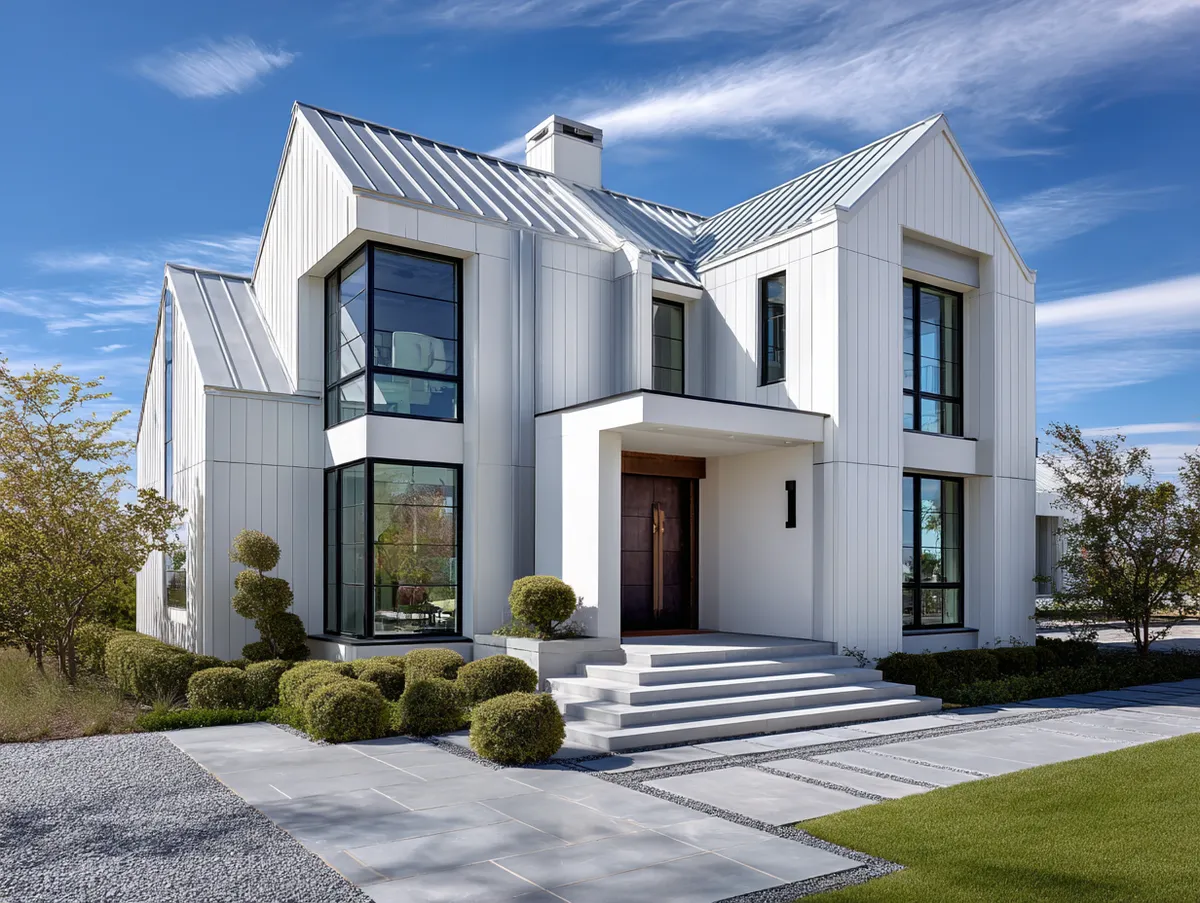
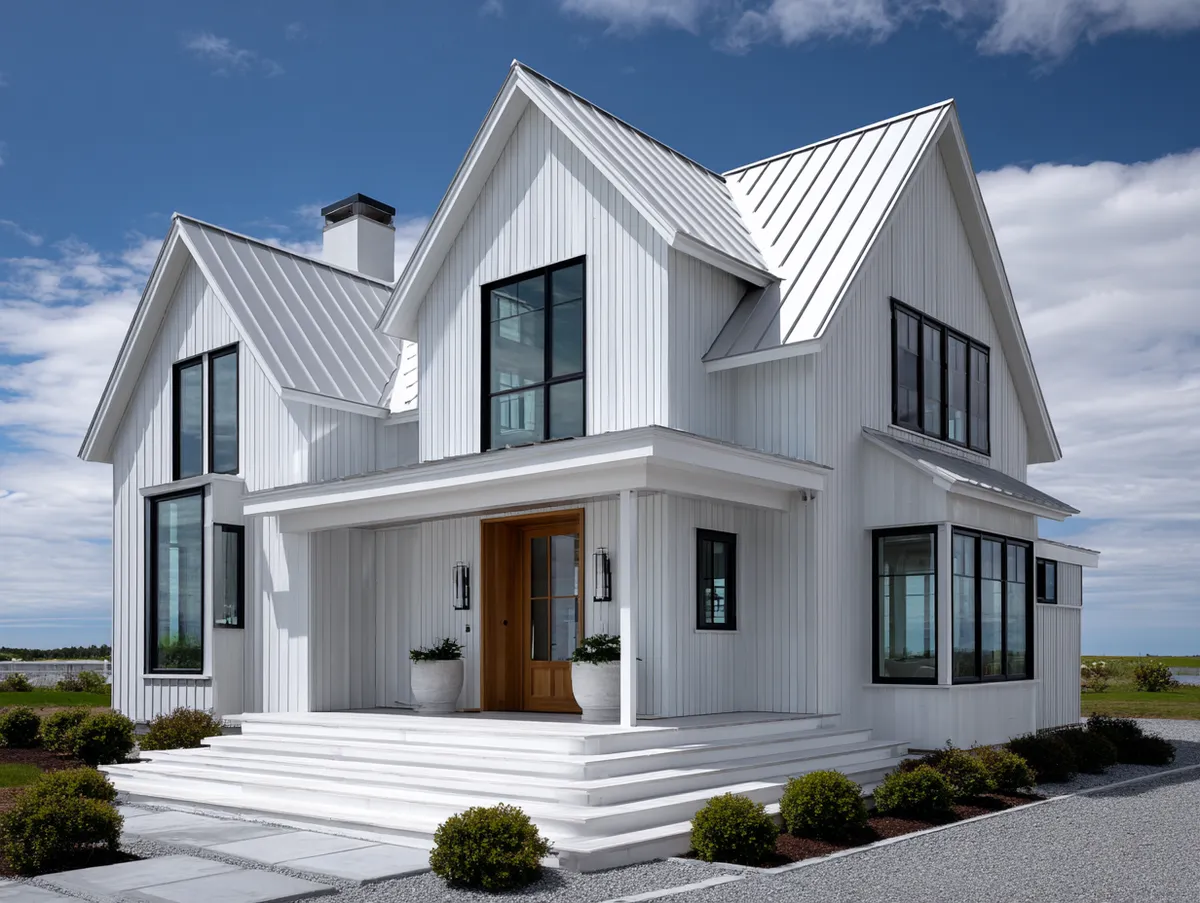
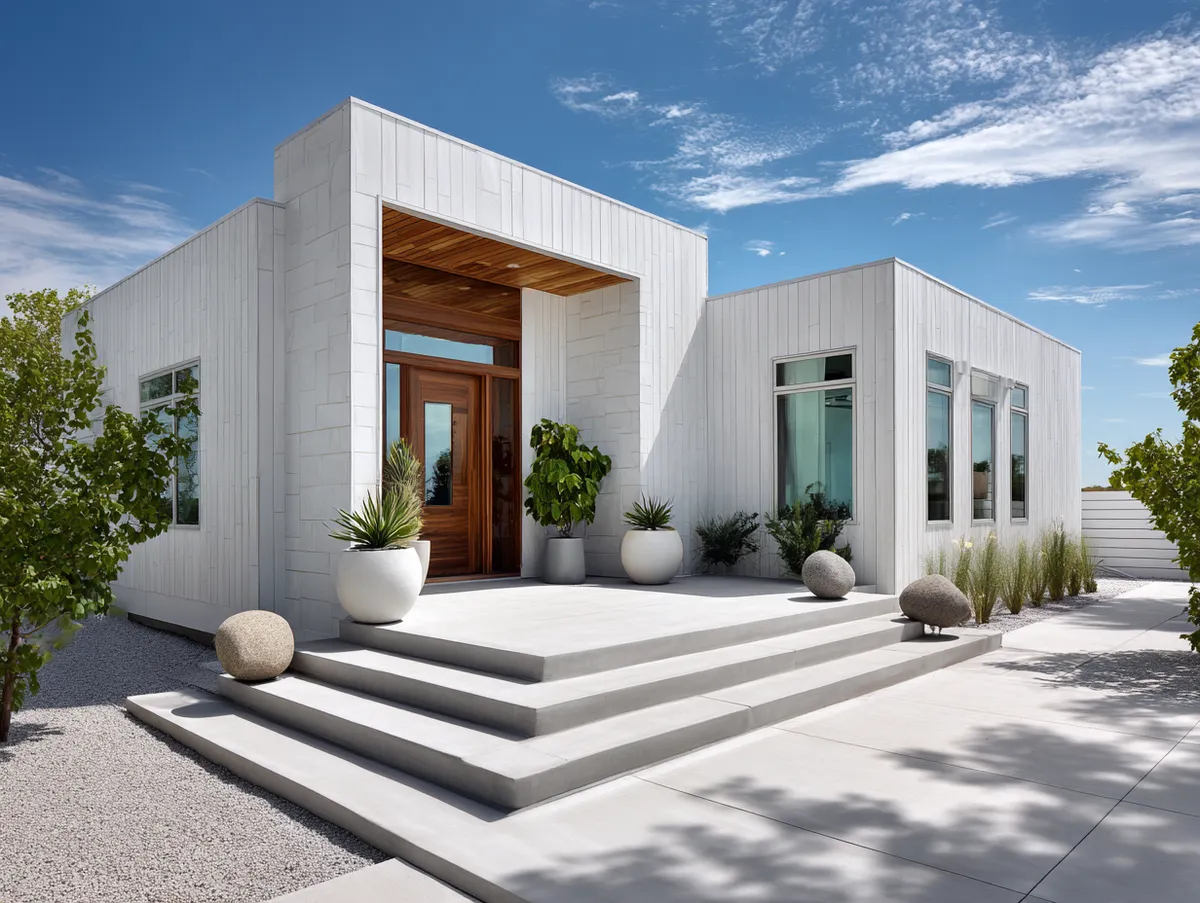
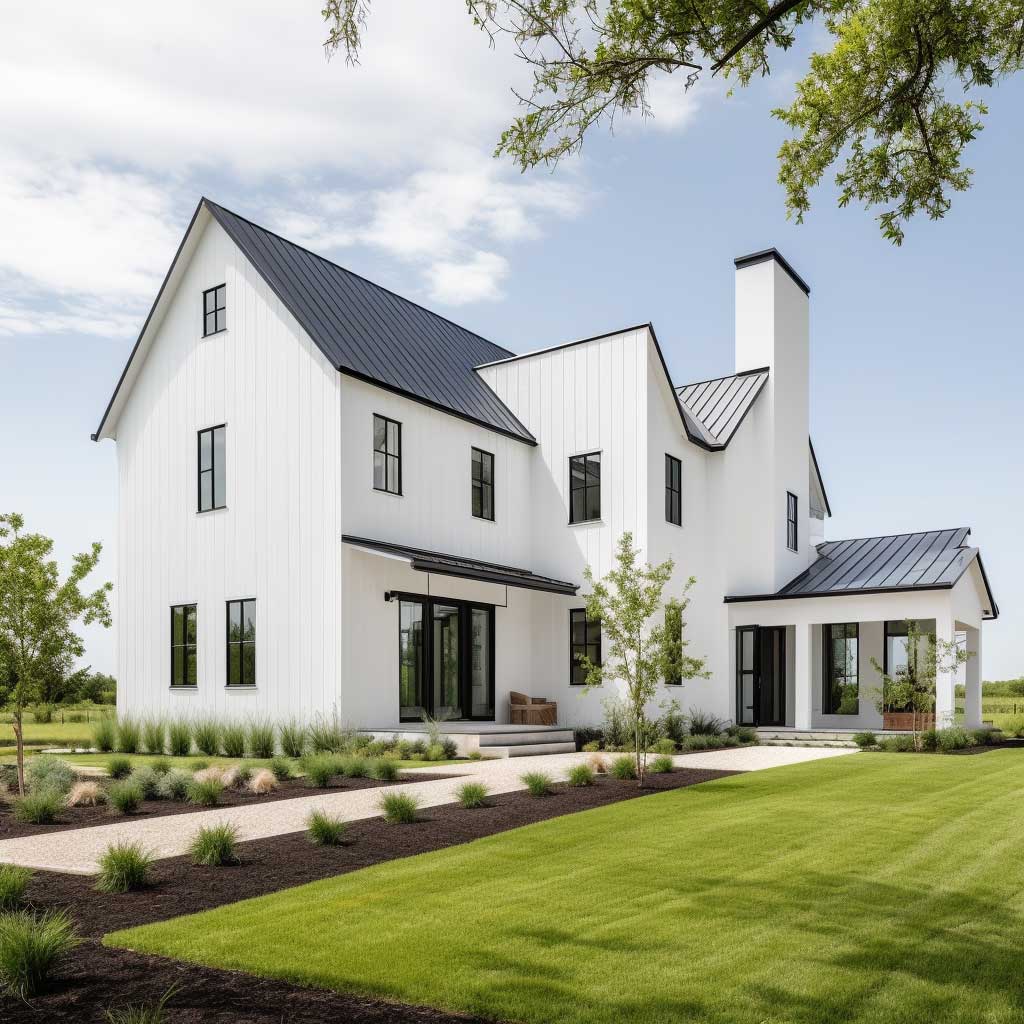
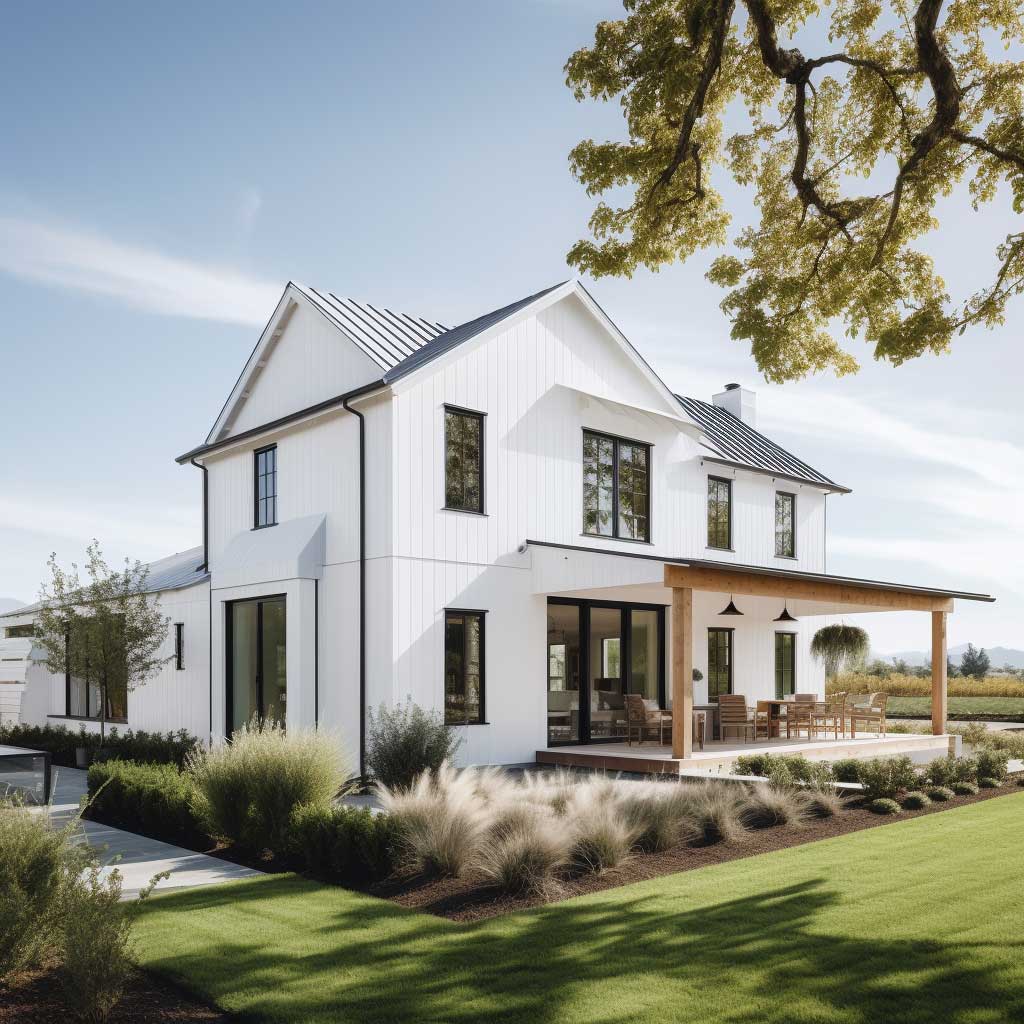
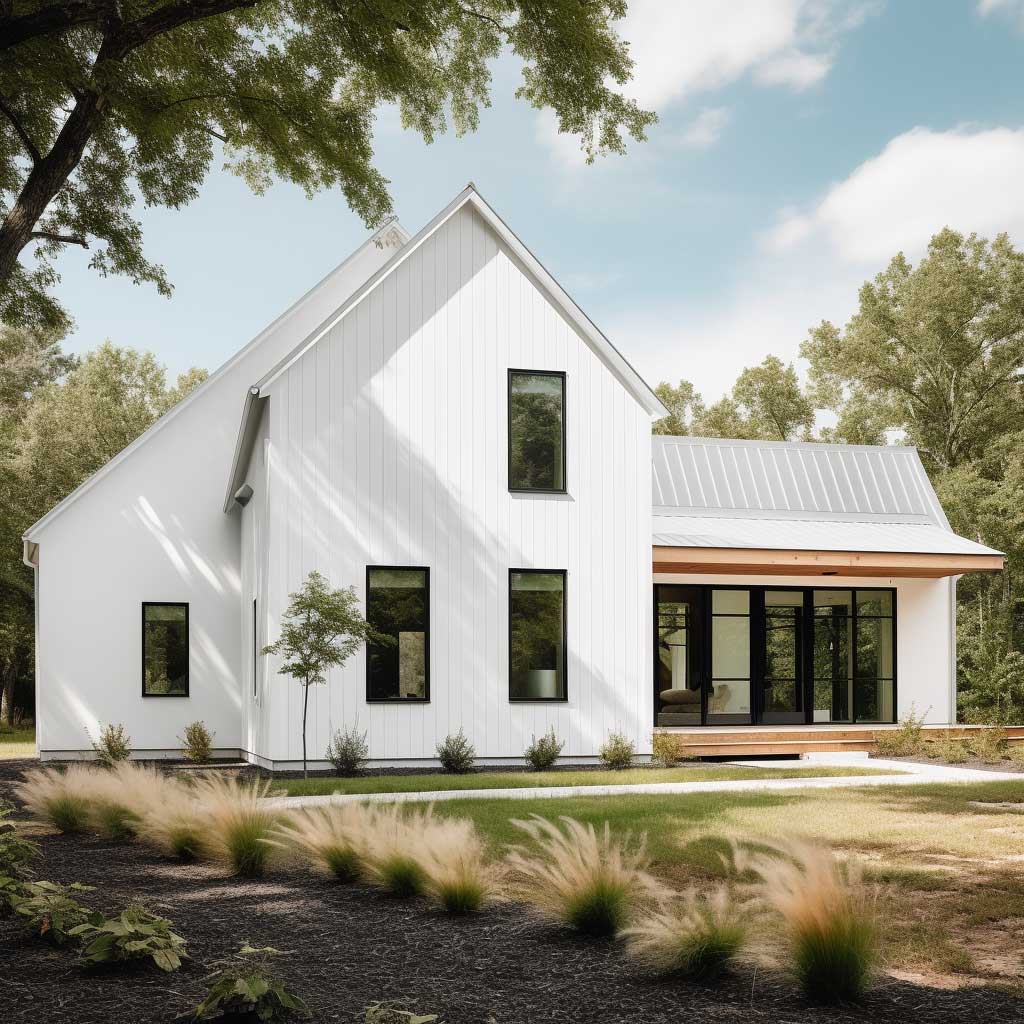
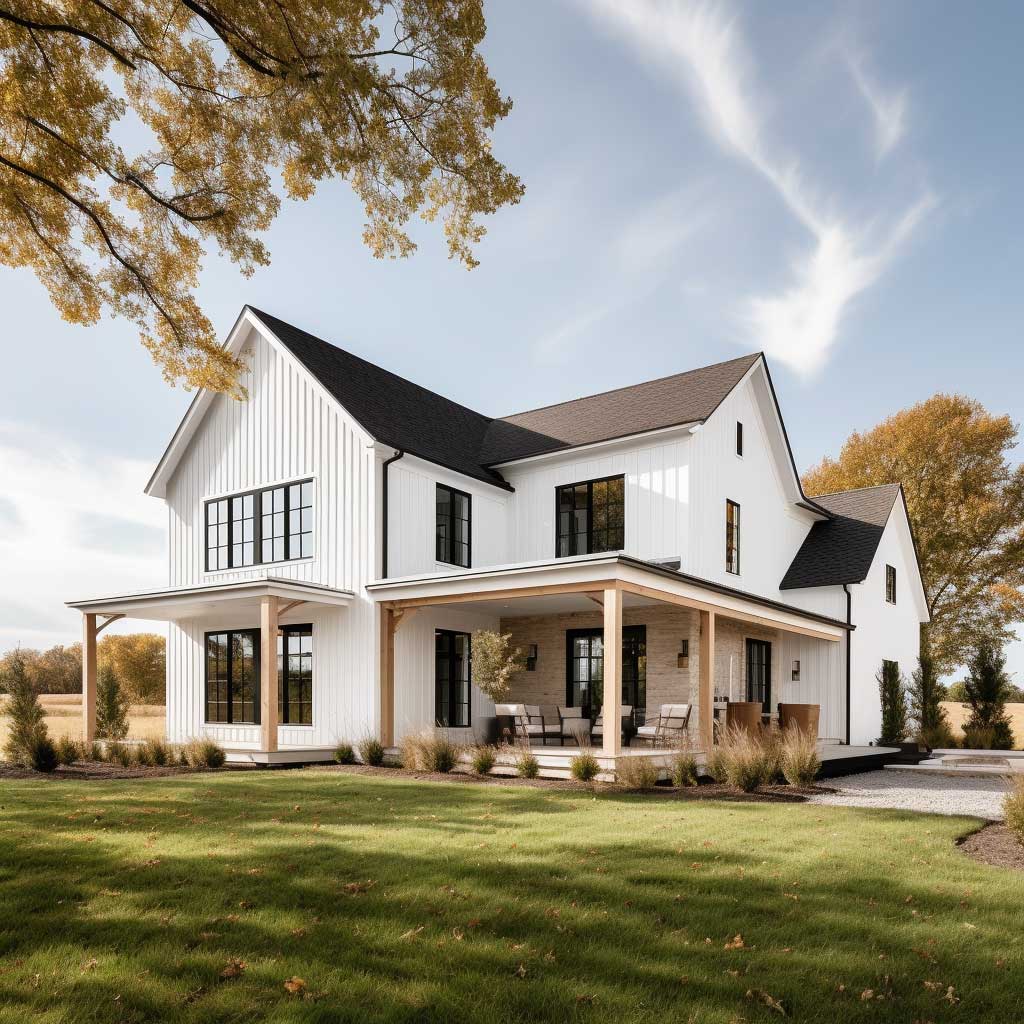
Outdoor lighting is where modern farmhouse exteriors fall apart fastest. Cheap matte-black coach lanterns from a big-box store are everywhere, and they look it. Spend the extra $80 and get the Visual Comfort Fresno wall lantern or something similar — a fixture with actual weight and intentional proportions. Good exterior lighting is a multiplier: it makes a $180,000 renovation look like $280,000 after dark. Neglect it and the reverse is also true.
The driveway surface is another modern farmhouse detail nobody talks about until it’s too late. Poured concrete feels suburban. Crushed limestone or decomposed granite at around $1 to $3 per square foot reads rural without being muddy. Single-story modern farmhouse exterior elements like low-pitch gable rooflines and wide overhangs work together with the right driveway surface to signal the style before a visitor even reaches the front door.
Don’t Do This
- Don’t mix board-and-batten with decorative shutters. Shutters are a colonial and craftsman detail. On a farmhouse facade they read as a costume piece.
- Don’t use warm white (cream or ivory) on a modern farmhouse. The whole point of the style is the crisp contrast. Benjamin Moore Chantilly Lace OC-65 or Sherwin-Williams Extra White SW 7006 — anything else and you lose the sharpness that makes the black windows pop.
- Don’t let the landscaping outscale the house. I’ve seen $40,000 front yards that made a perfectly proportioned farmhouse look like an afterthought in its own garden.
- Don’t skip the covered entry. An uncovered front door on a farmhouse exterior reads like a rental property, regardless of the cladding material.
Farmhouse Sited in a Landscape — Why the Land Outranks the House
Farmhouse ideas exterior that look extraordinary in photographs almost always have one thing in common: the house doesn’t fight its setting. It participates in it. A two-story white farmhouse with deep green shutters set against mature oaks reads like a painting because the architecture and the site were designed as a single composition. The shutters echo the foliage. The white clapboard reflects the sky. Nothing is competing for your attention because everything is playing the same note.
The gravel driveway that curves instead of running straight to the house — that’s a $2,000 decision that changes the entire experience of arriving home. A straight driveway says suburb. A curve says land. You need at least 60 feet of approach for a curve to read properly, but if your lot allows it, I’ve never heard anyone regret adding it after the fact.
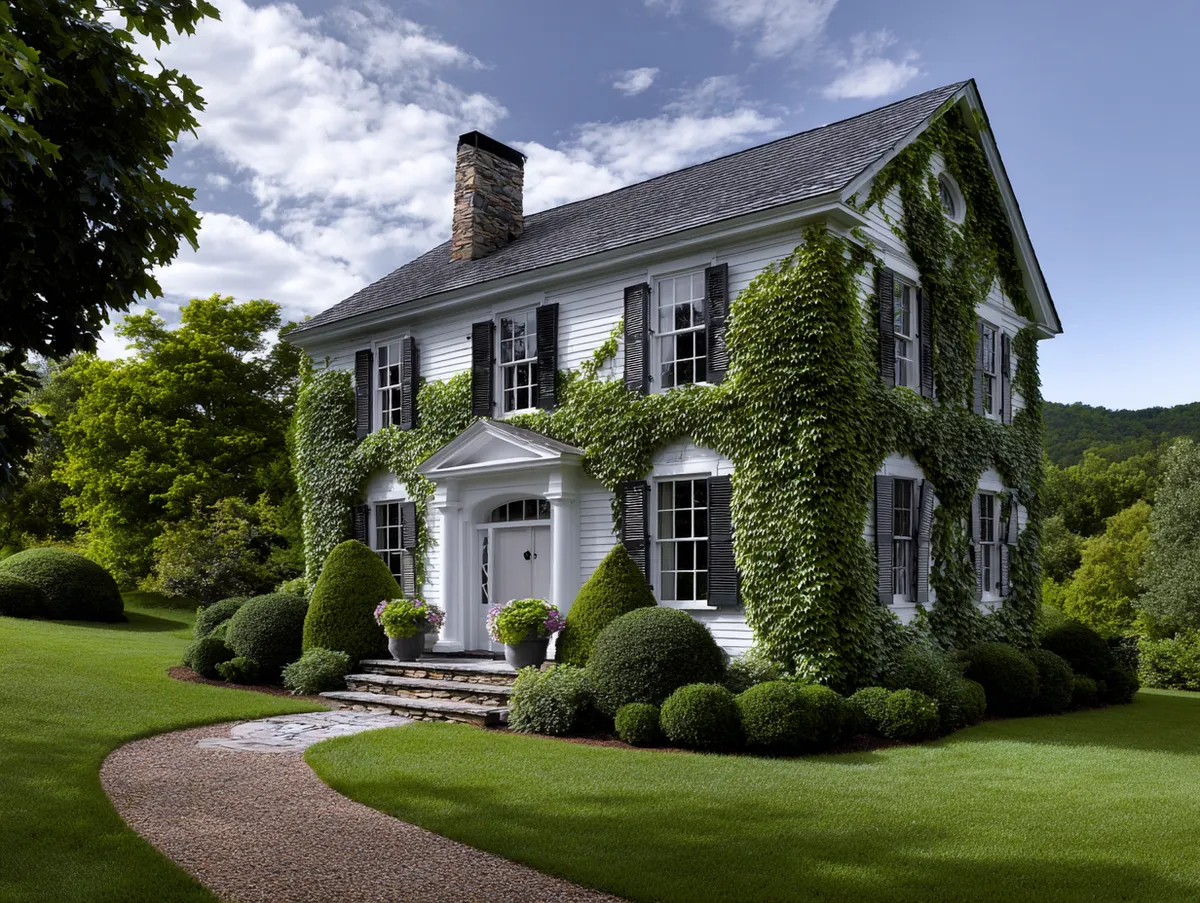
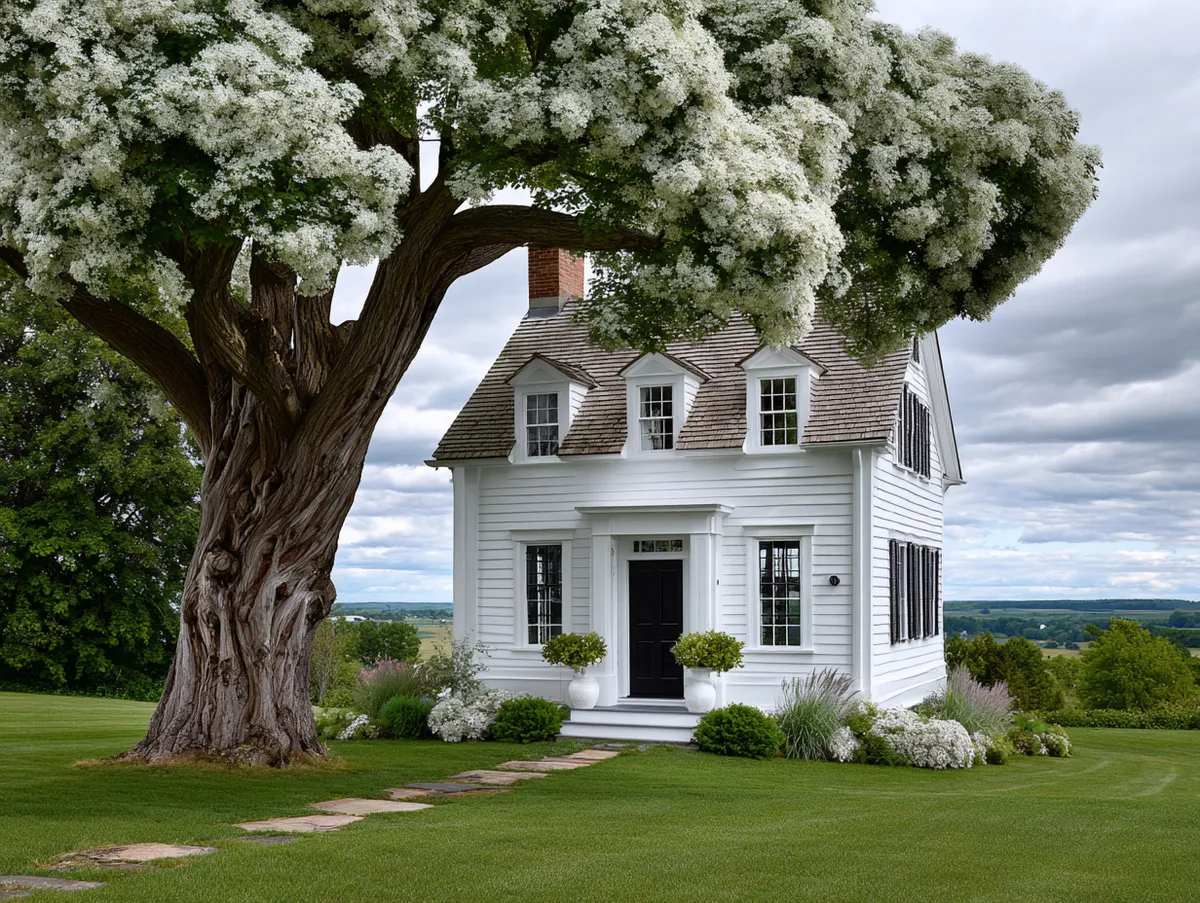
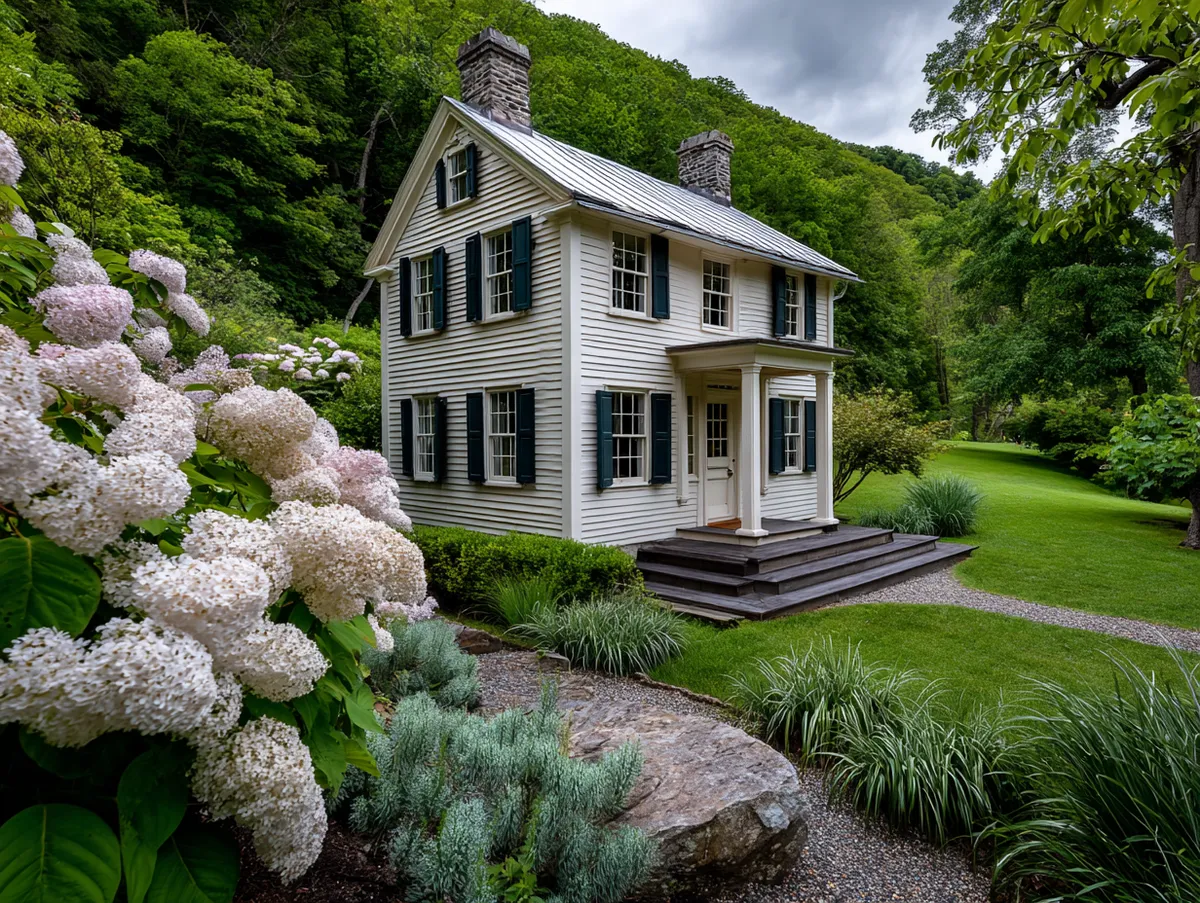
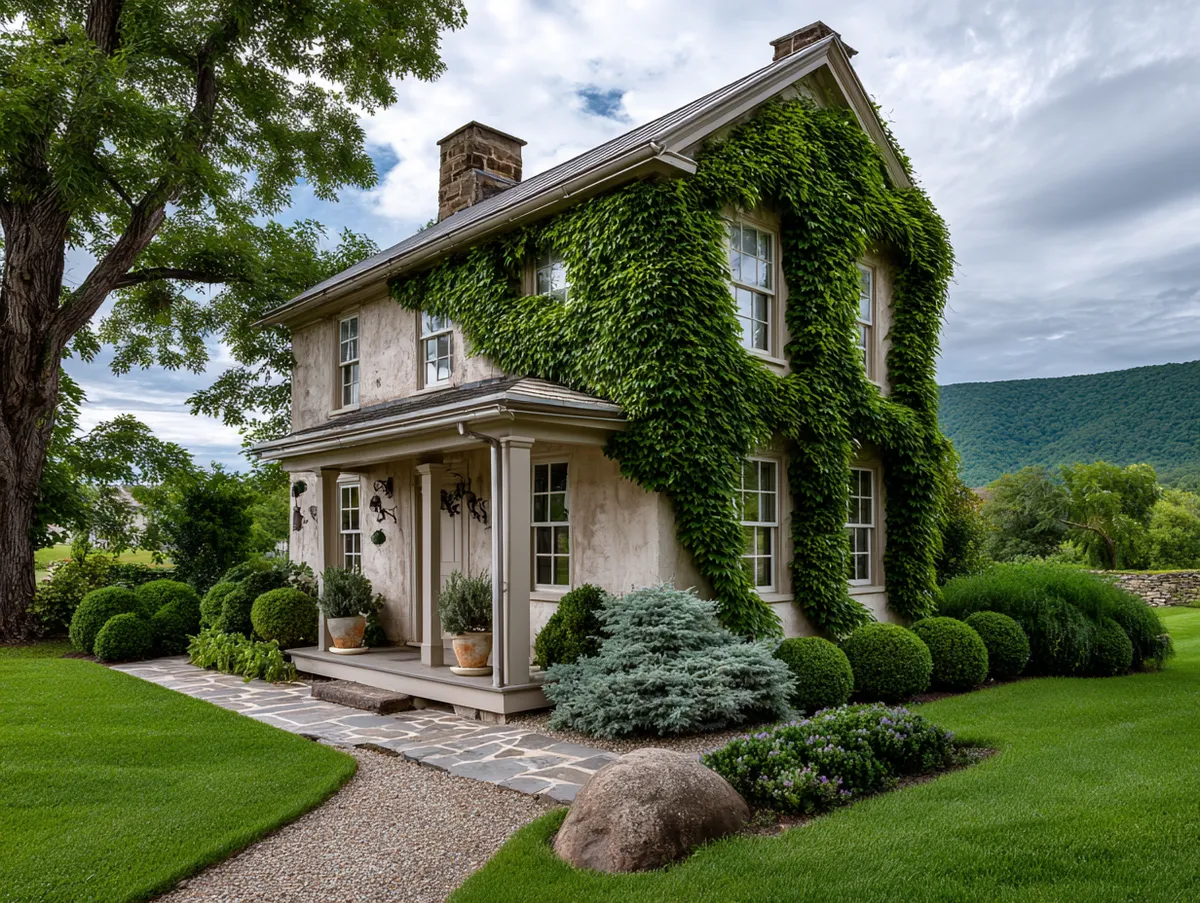
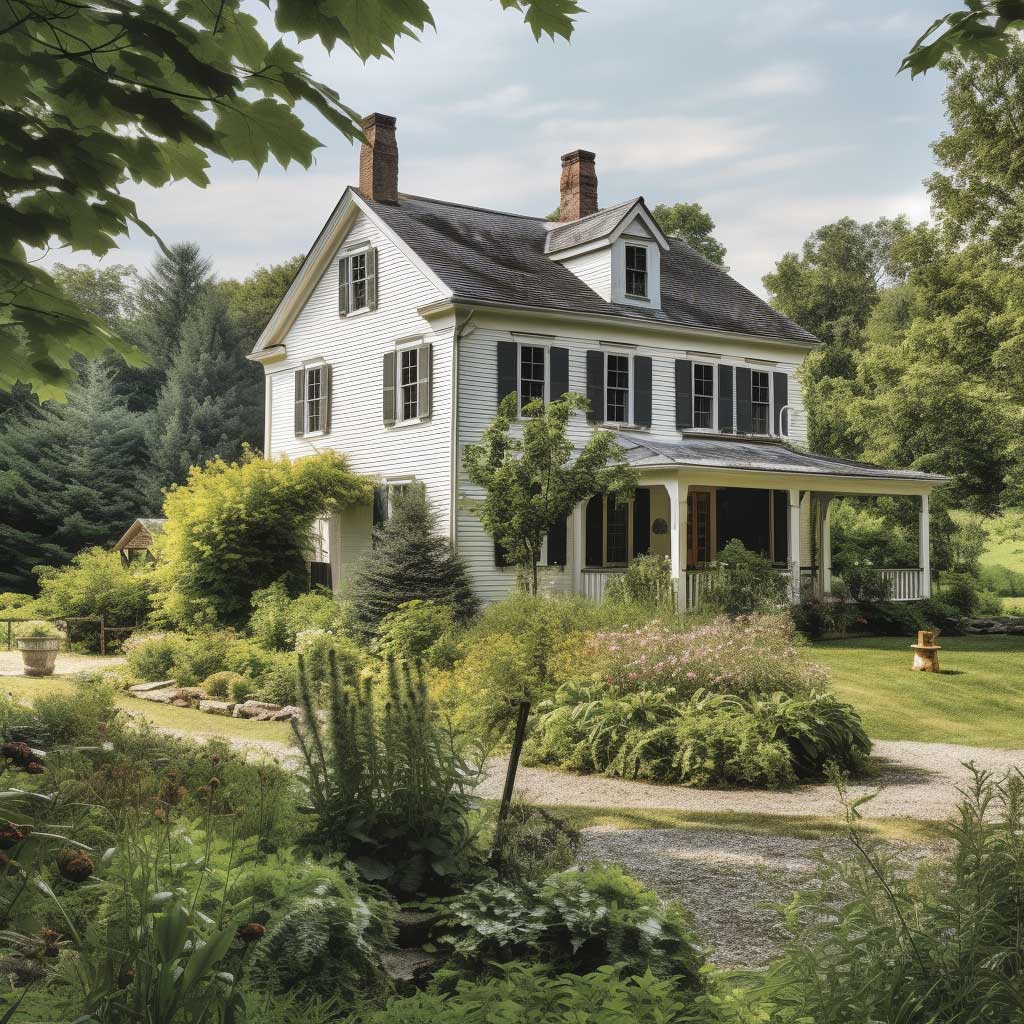
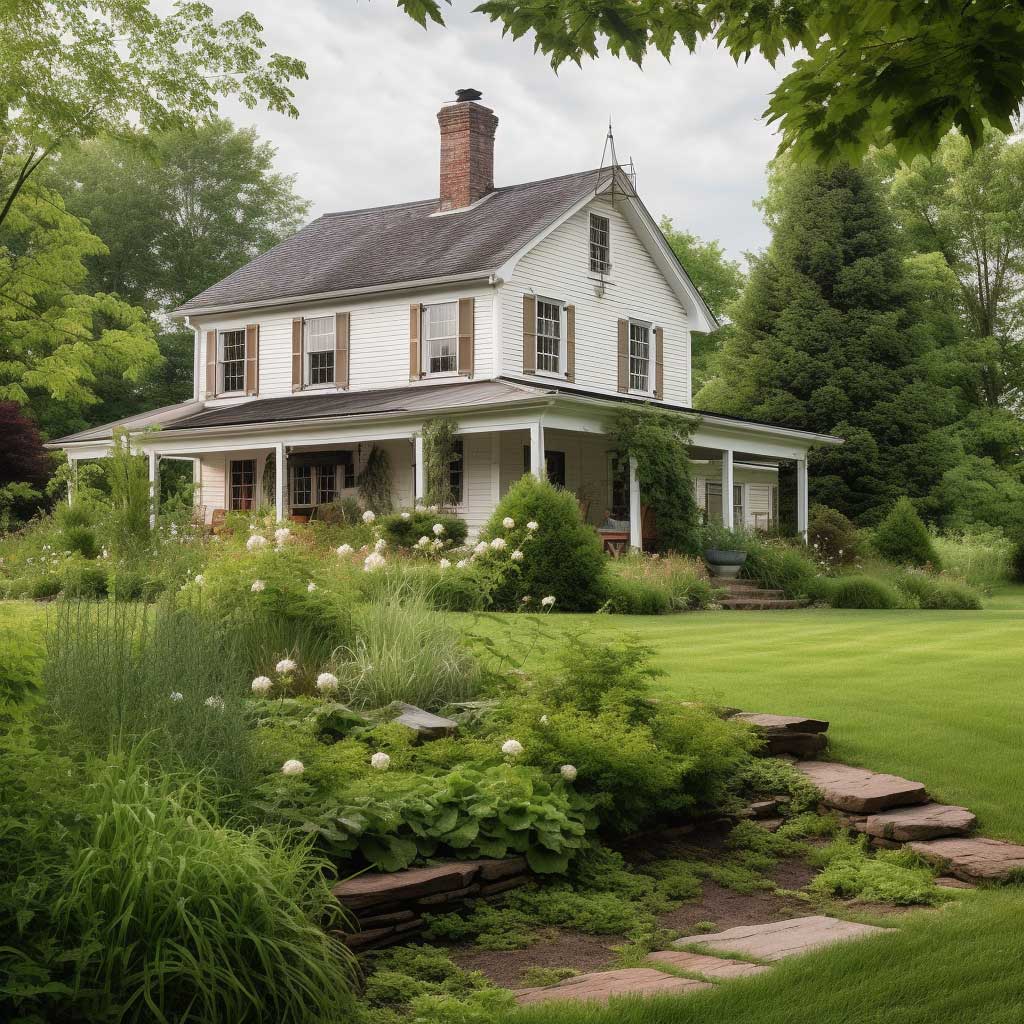
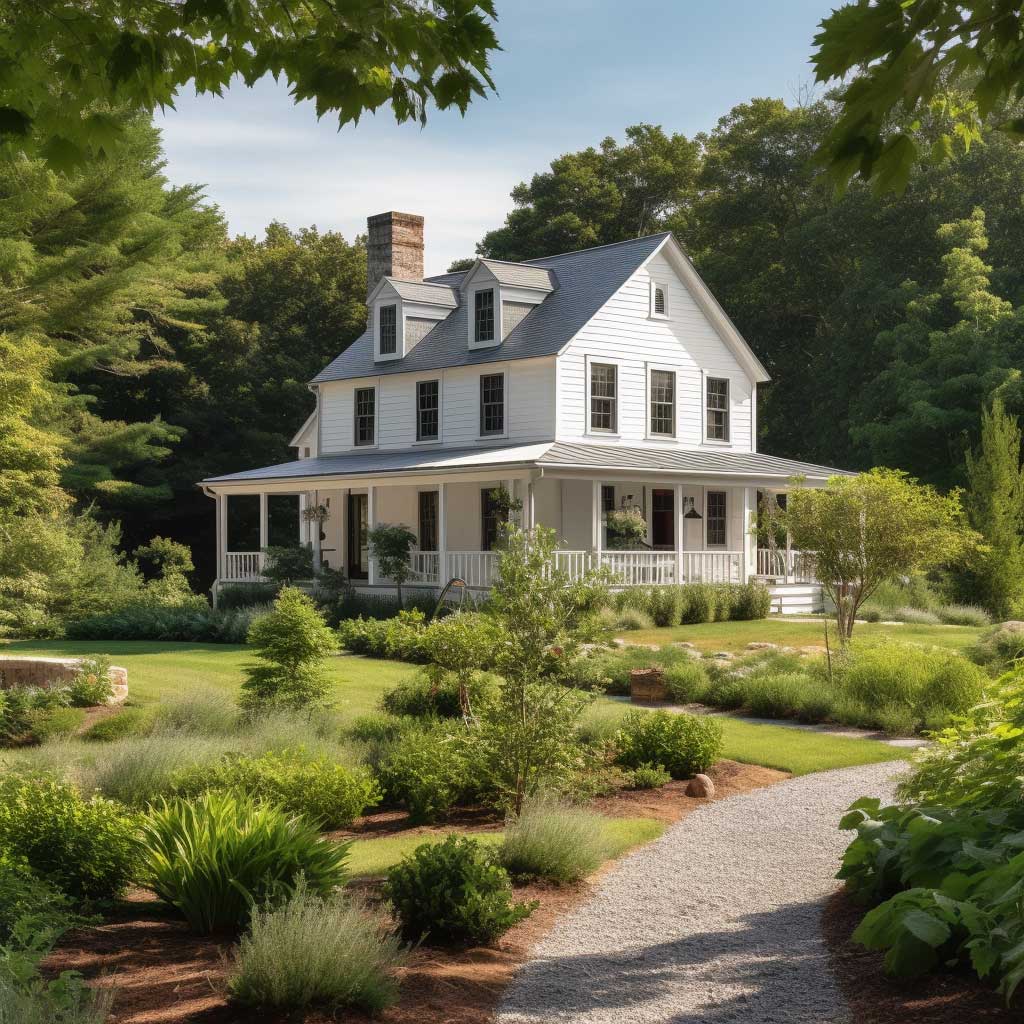
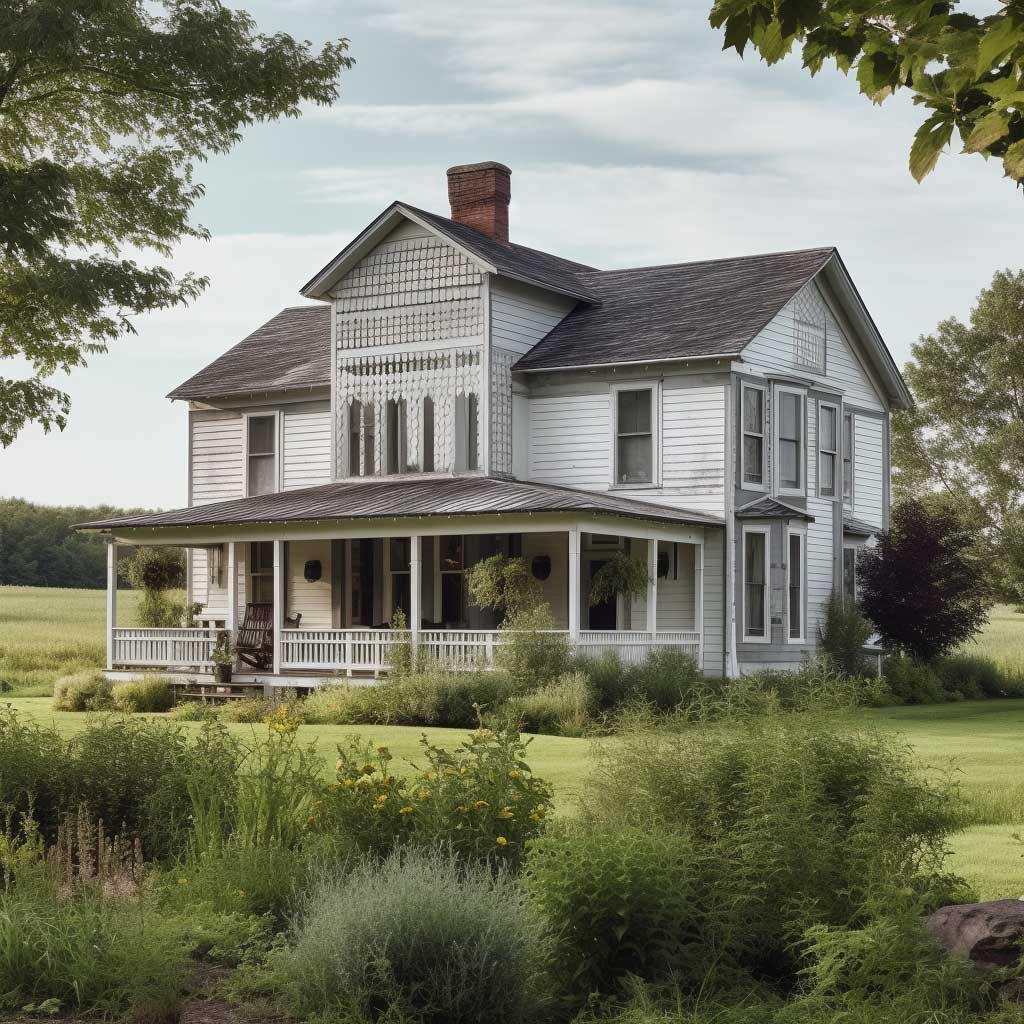
Flower beds adjacent to the foundation are a cheap move that pays visual dividends all season. Low-growing lavender, black-eyed Susans, or native grasses around the base of the porch columns soften the transition between house and ground — think of it as eyeliner for architecture. The porch rocking chairs at around $200 to $350 each from Trex or Polywood hold their color outdoors for years, which matters more than it sounds when the chair is what you see from the road every single morning.
Seclusion and privacy are part of the farmhouse look exterior promise for a reason. Dense plantings on the property perimeter — American arborvitae at $25 to $60 per plant, growing to 30 feet — create the sense of remove from the road that makes a farmhouse feel like a destination rather than just a house on a lot. That said, don’t plant trees closer than 15 feet to the foundation or you’ll spend the next decade managing root damage to your drainage system.
Stone Accents on a Farmhouse Exterior — The Material That Earns Its Weight
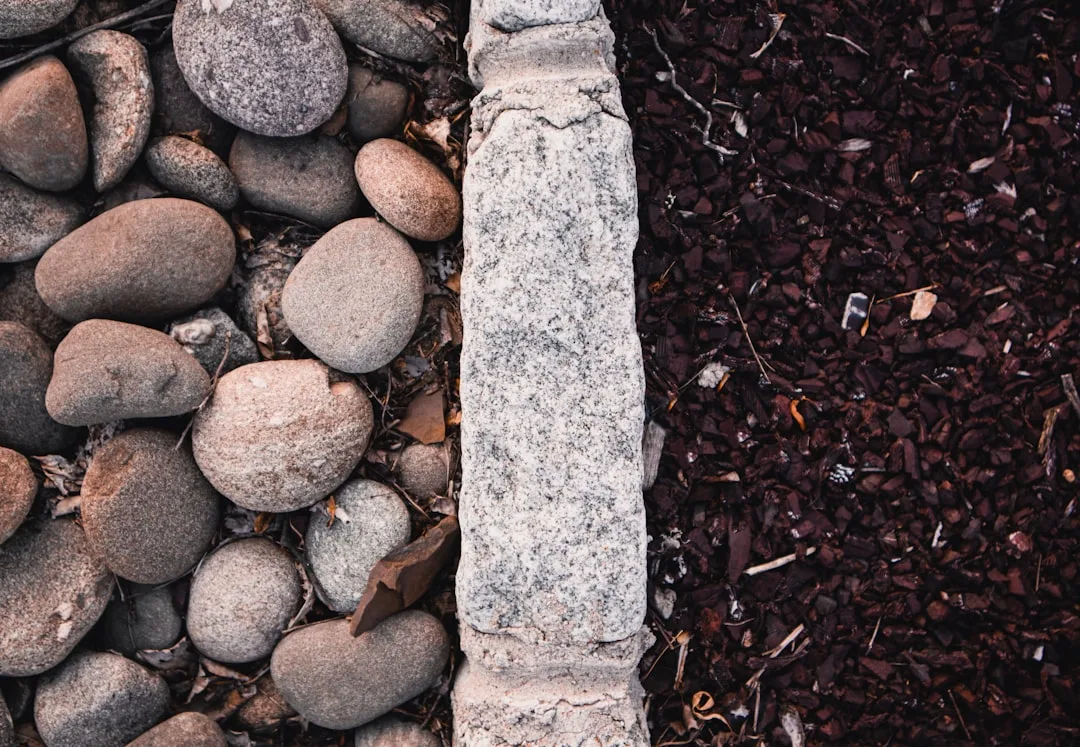
Fieldstone and farmhouse architecture have been in the same relationship for about four hundred years, and it’s held up better than most design pairings. The reason is practical: stone was locally quarried, locally laid, and served as the foundation before the wood-framed walls went up above it. That material logic is what makes stone accents on a farmhouse exterior look right — they follow the structural hierarchy. Stone at the base, wood above. Reverse that and the whole composition reads as a fabricated aesthetic choice rather than an honest building strategy.
My go-to recommendation is dry-stacked Pennsylvania fieldstone or Oklahoma sandstone for a water table at the base of the facade — typically 18 to 24 inches of stone before the wood cladding begins. Installed cost runs $25 to $40 per square foot, which is real money, but it’s the kind of detail that reads as expensive even from 50 feet away. Cultured stone (manufactured veneer) from Eldorado Stone runs $10 to $20 per square foot installed and is indistinguishable from the road. I own two properties where I chose cultured stone to save budget, and I’ve never regretted it.
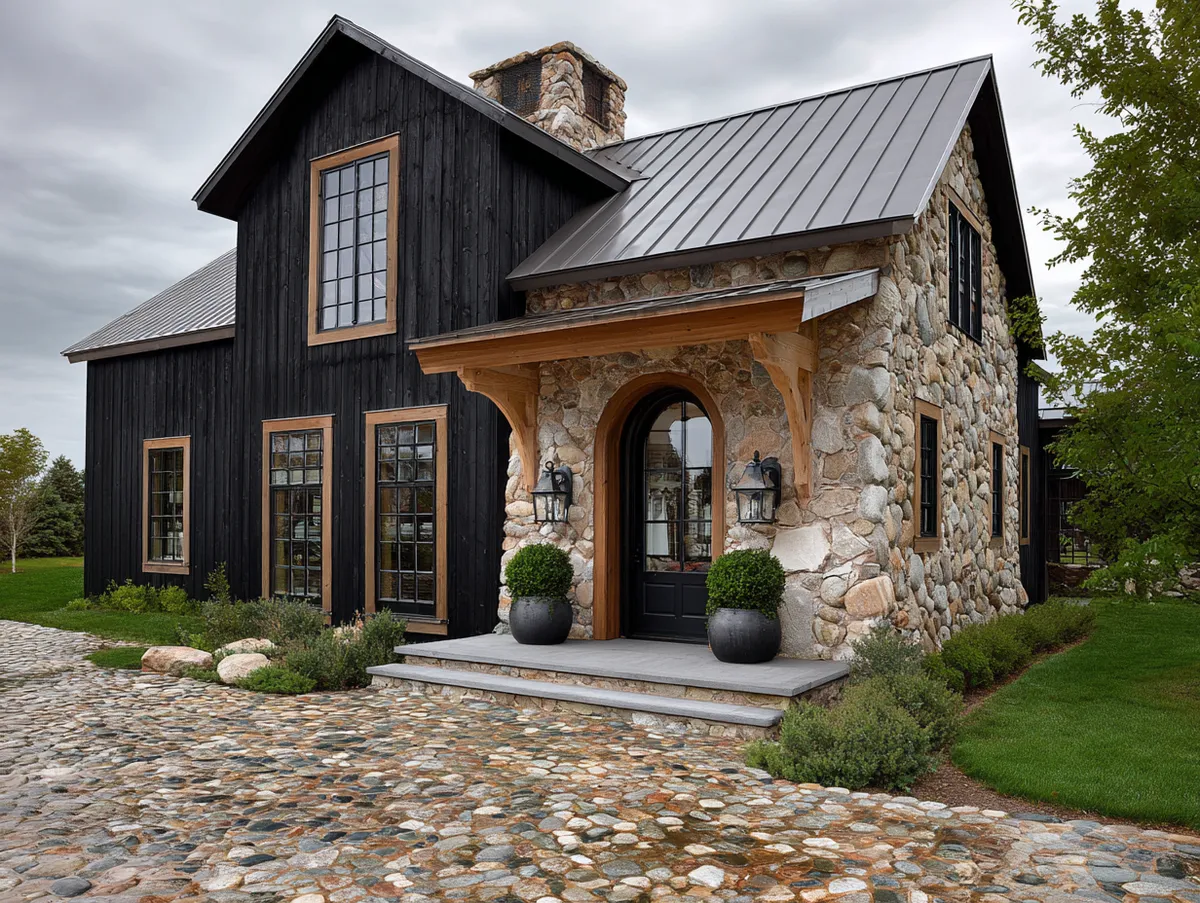
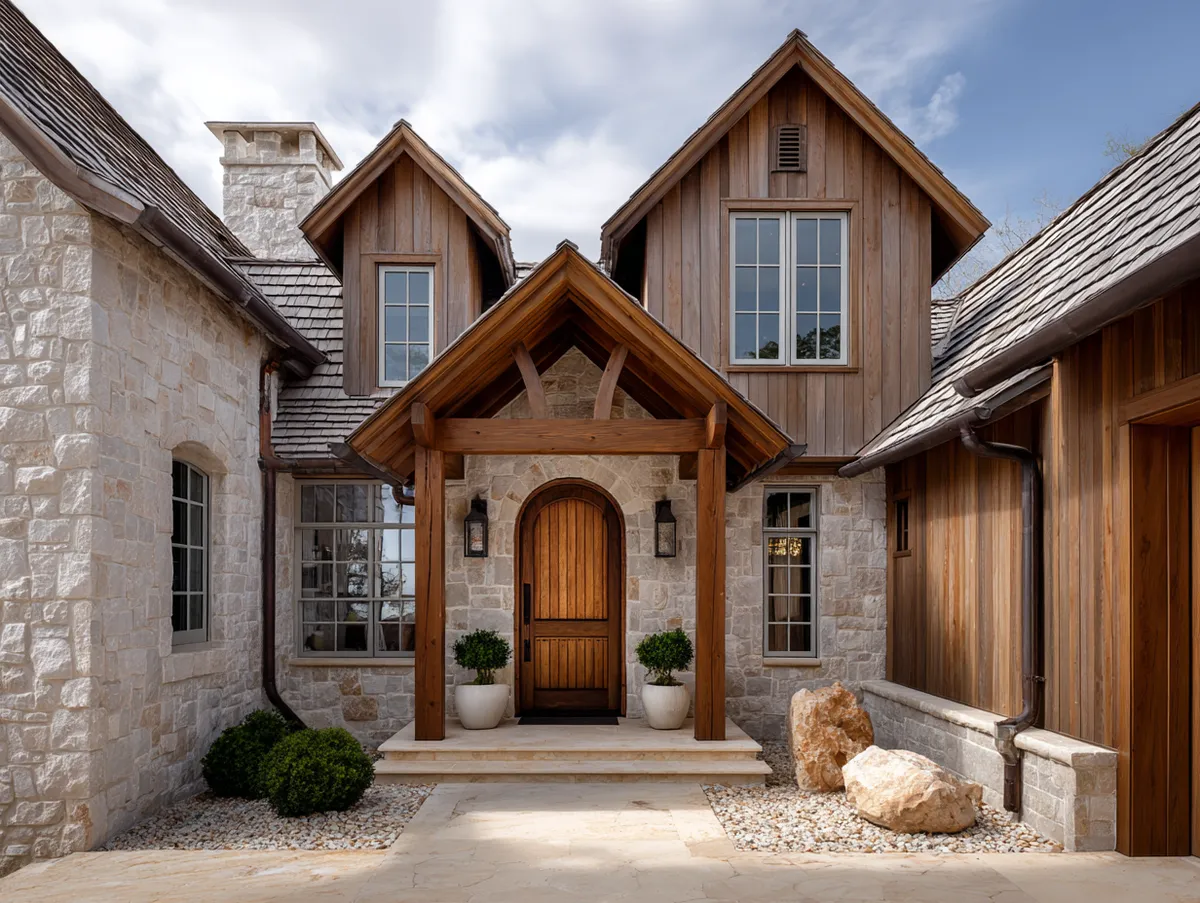
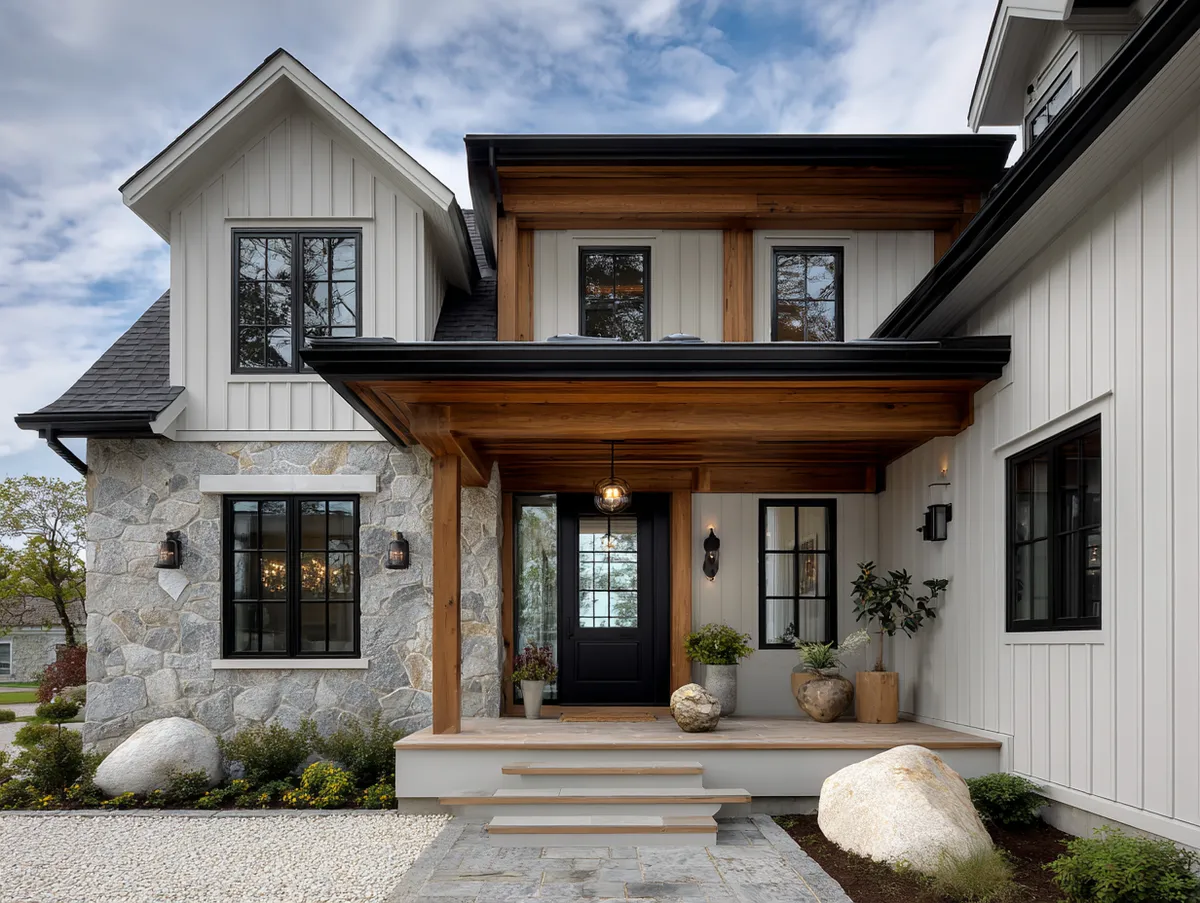
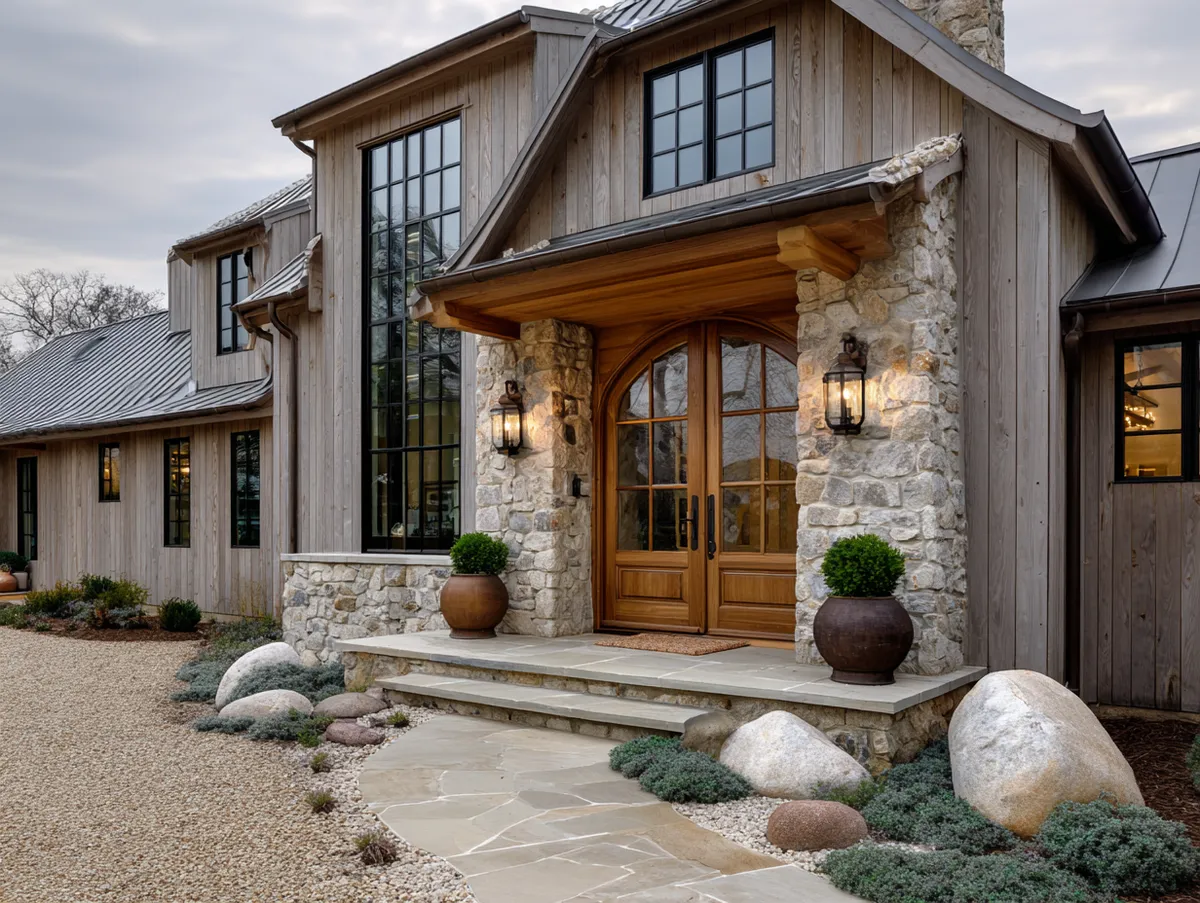
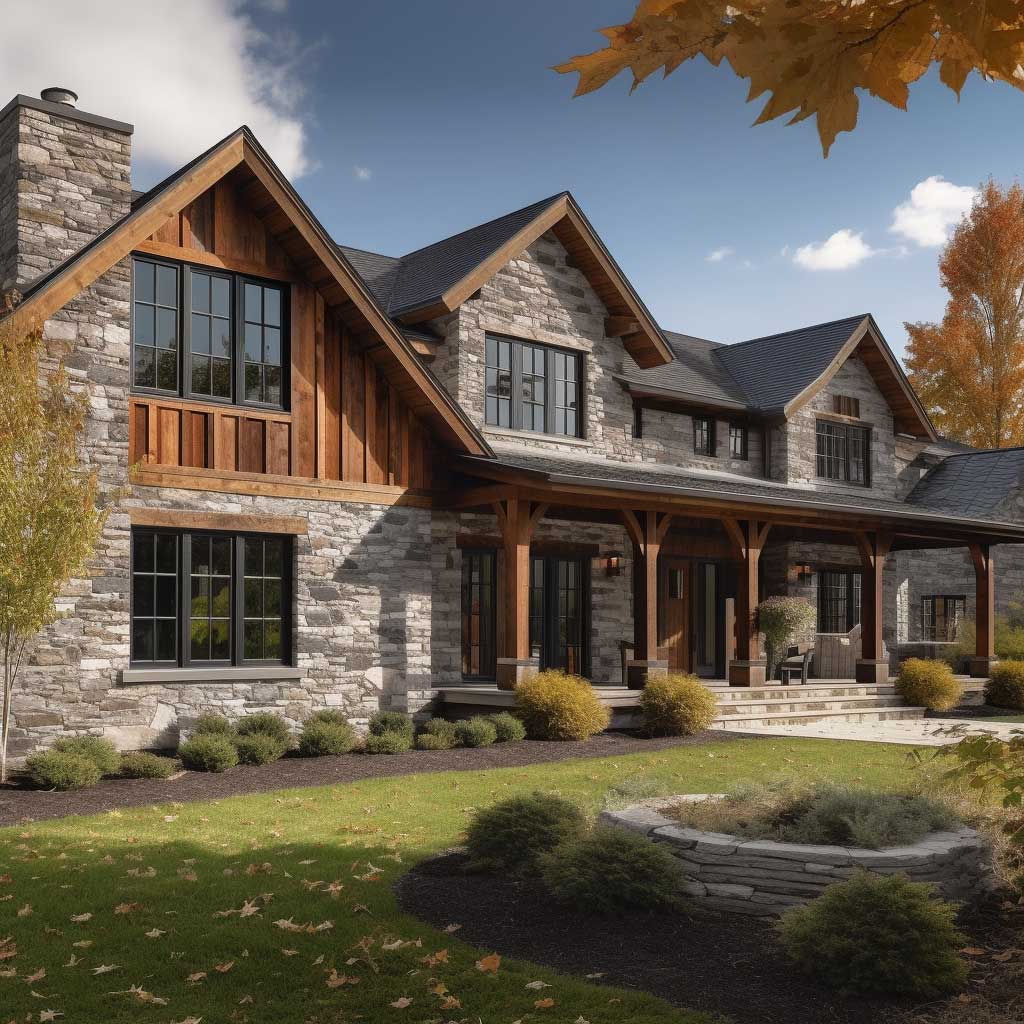
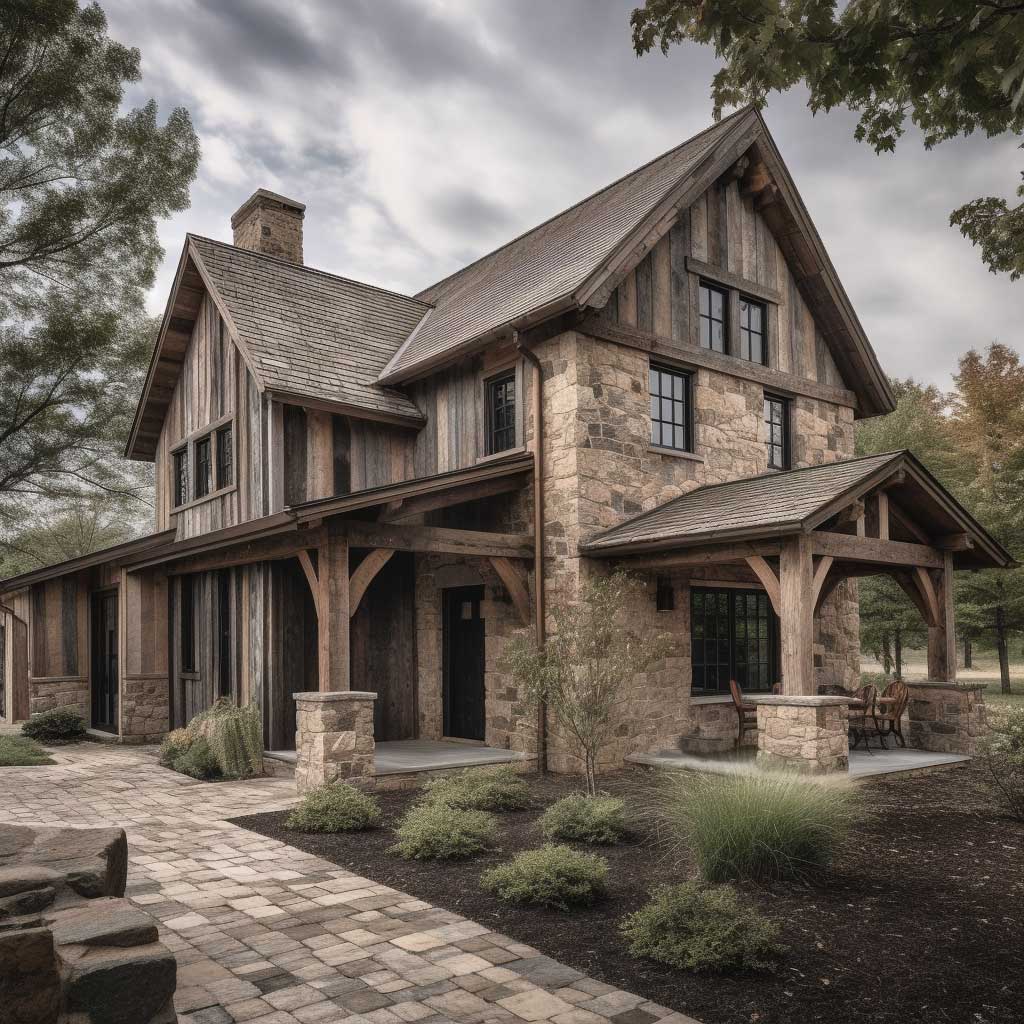
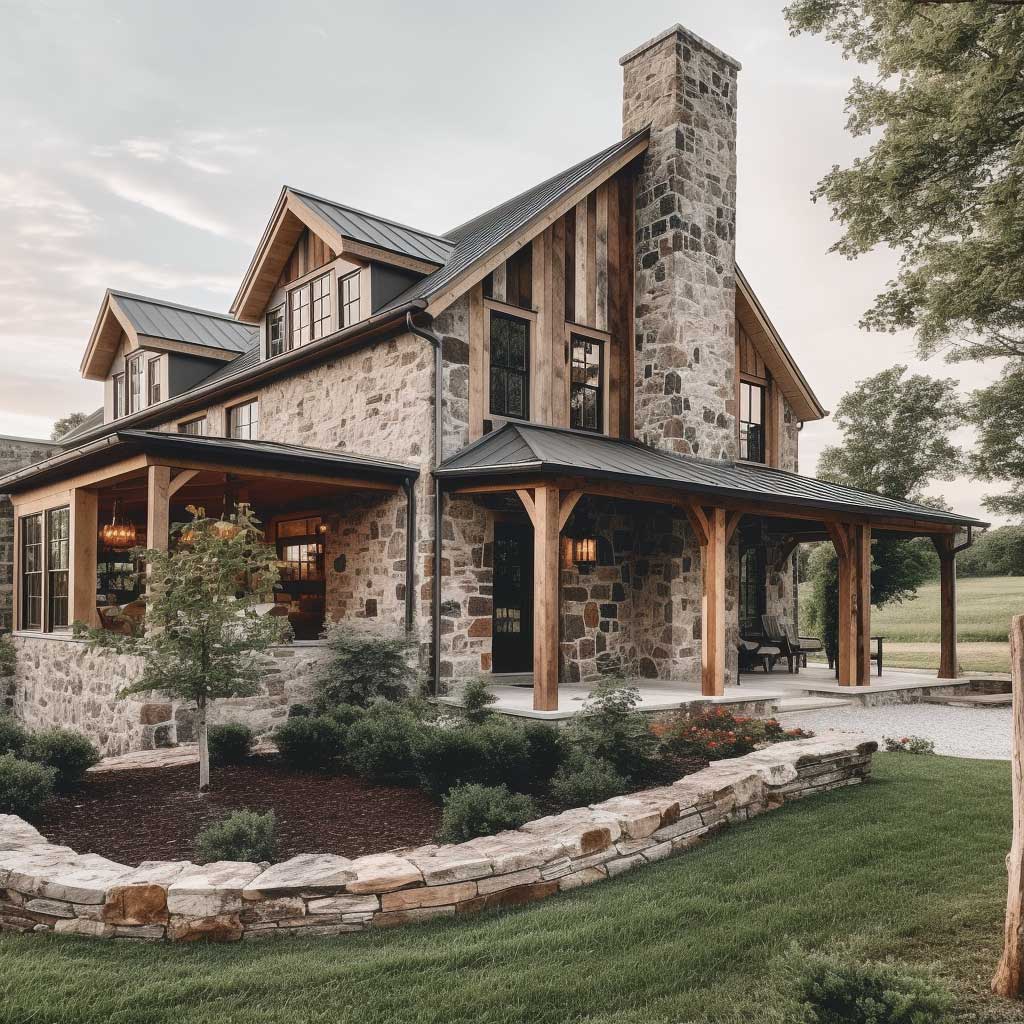
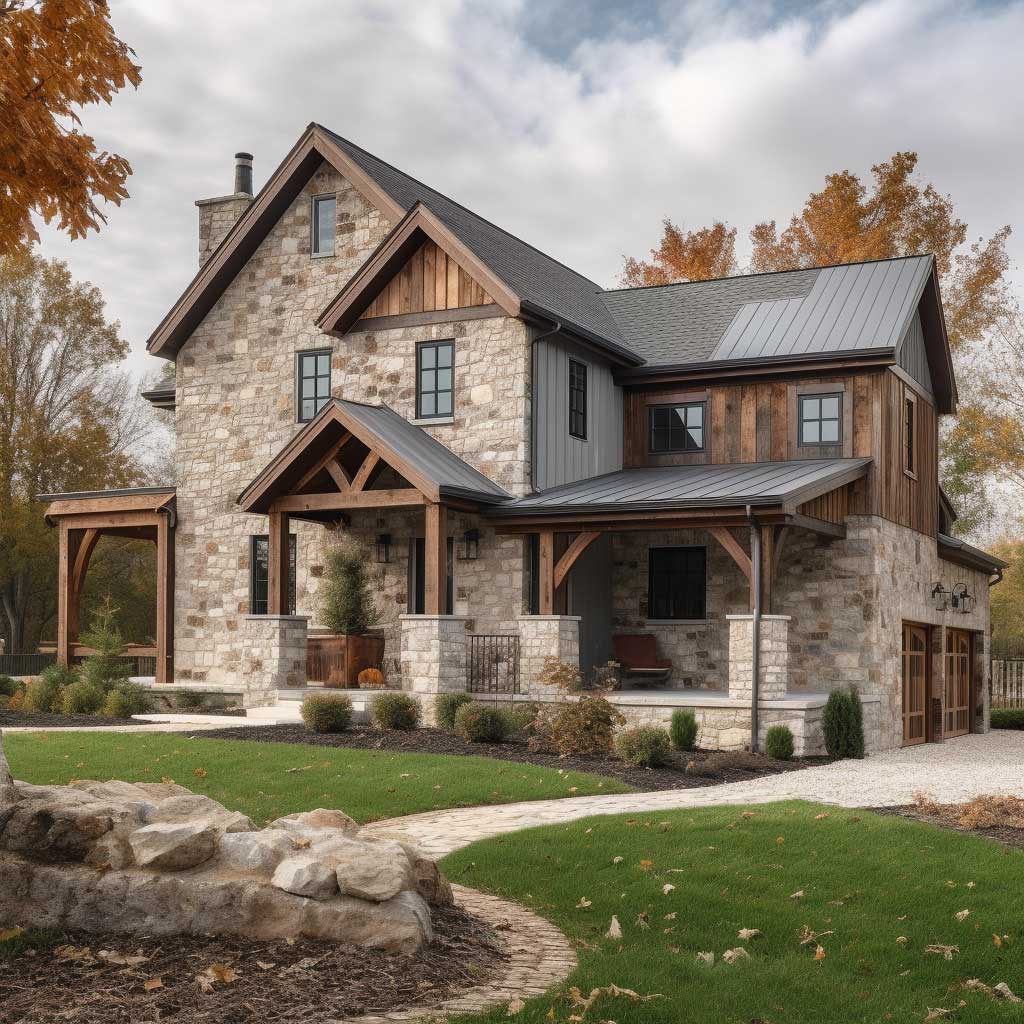
The earthy tones of natural stone do something specific to landscaping: they eliminate the need for elaborate planting schemes. Stone already contains the whole palette of the surrounding land — ochre, umber, gray, rust. Plant lavender and native ornamental grasses in that context and you have a complete exterior composition for about $800 in plants. Add elaborate perennial beds and you’ve created a second focal point competing with the stone itself. Restraint wins here, every time.
Large windows paired with stone are what make the interior feel continuous with the exterior on stone-accent farmhouses. Floor-to-ceiling glass in a stone wall reads like a modern intervention rather than a farmhouse detail — avoid it. Standard double-hung windows with divided lights feel appropriate with stone. The divisions in the glass echo the joints in the masonry, and that visual rhyme is the secret behind why stone farmhouse photos always look so resolved. For more on how materials combine on the exterior, the black and white farmhouse exterior inspirations on this site show how contrast works across different cladding systems.
| Cladding Material | Installed Cost / sq ft | Lifespan | Maintenance | Best For |
|---|---|---|---|---|
| Natural cedar / pine | $5–$12 | 20–40 yrs | High (paint or stain every 5–7 yrs) | Rustic farmhouse, dry climates |
| James Hardie fiber cement | $6–$12 | 30–50 yrs | Low (repaint every 15 yrs) | Modern farmhouse, humid climates |
| Eldorado cultured stone | $10–$20 | 50+ yrs | Very low | Stone accents, water tables |
| Natural fieldstone | $25–$40 | 100+ yrs | Very low | Foundation, chimneys, porch columns |
| Board and batten (fiber cement) | $7–$14 | 30–50 yrs | Low | Contemporary farmhouse facade |
Coastal Color on a Farmhouse Exterior Without Tipping into Nautical Kitsch
Blue and white on a farmhouse facade is either one of the most confident exterior decisions you can make or one of the most embarrassing — and the line between those two outcomes is thinner than most people realize. A saturated cobalt blue body with clean white trim reads coastal farmhouse. The same proportions in navy with navy roof reads almost Cape Cod. Add a lighthouse tower and you’ve crossed from reference into theme park. I’ve seen the lighthouse-tower farmhouse in person and it’s difficult to live in ironically.
What actually works in the rustic modern farmhouse exterior with coastal influence is restraint on the blue. Use it on window shutters and the front door — Sherwin-Williams Interesting Aqua SW 6220 or Benjamin Moore Newburyport Blue HC-155 — and keep the body white or warm gray. This way the blue reads as an accent rather than a statement, which means it can change its mind in ten years without a full repaint. White picket fencing in vinyl at around $20 to $30 per linear foot installed adds the coastal character without the maintenance headache of painted wood.
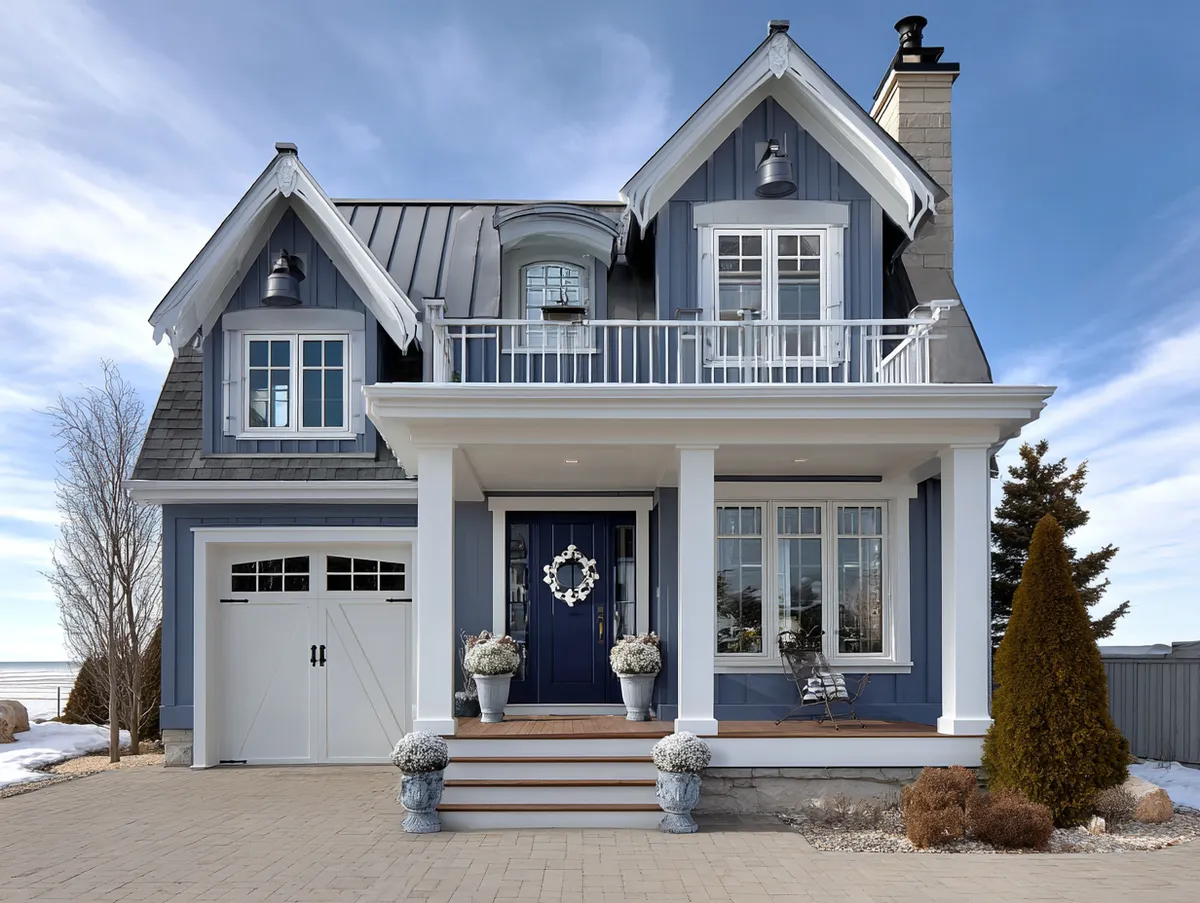
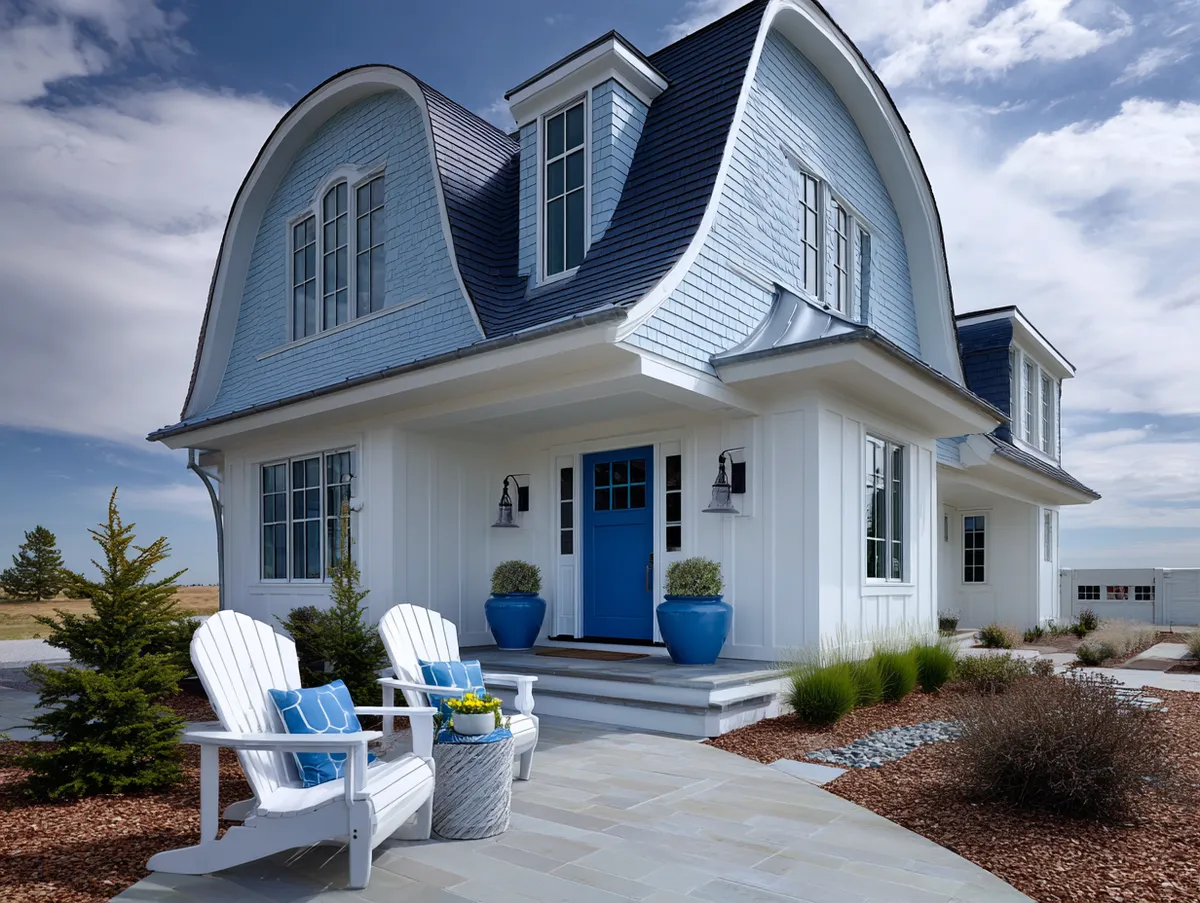
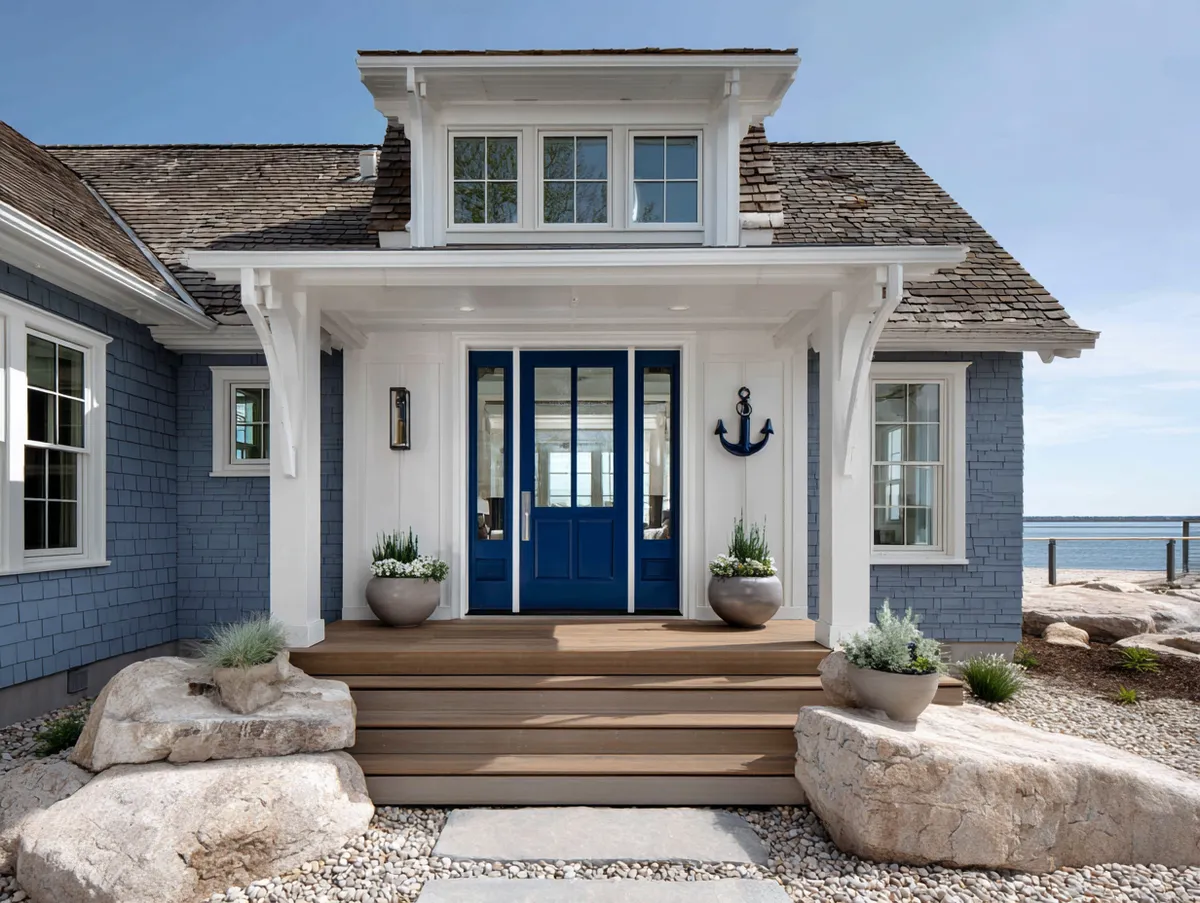
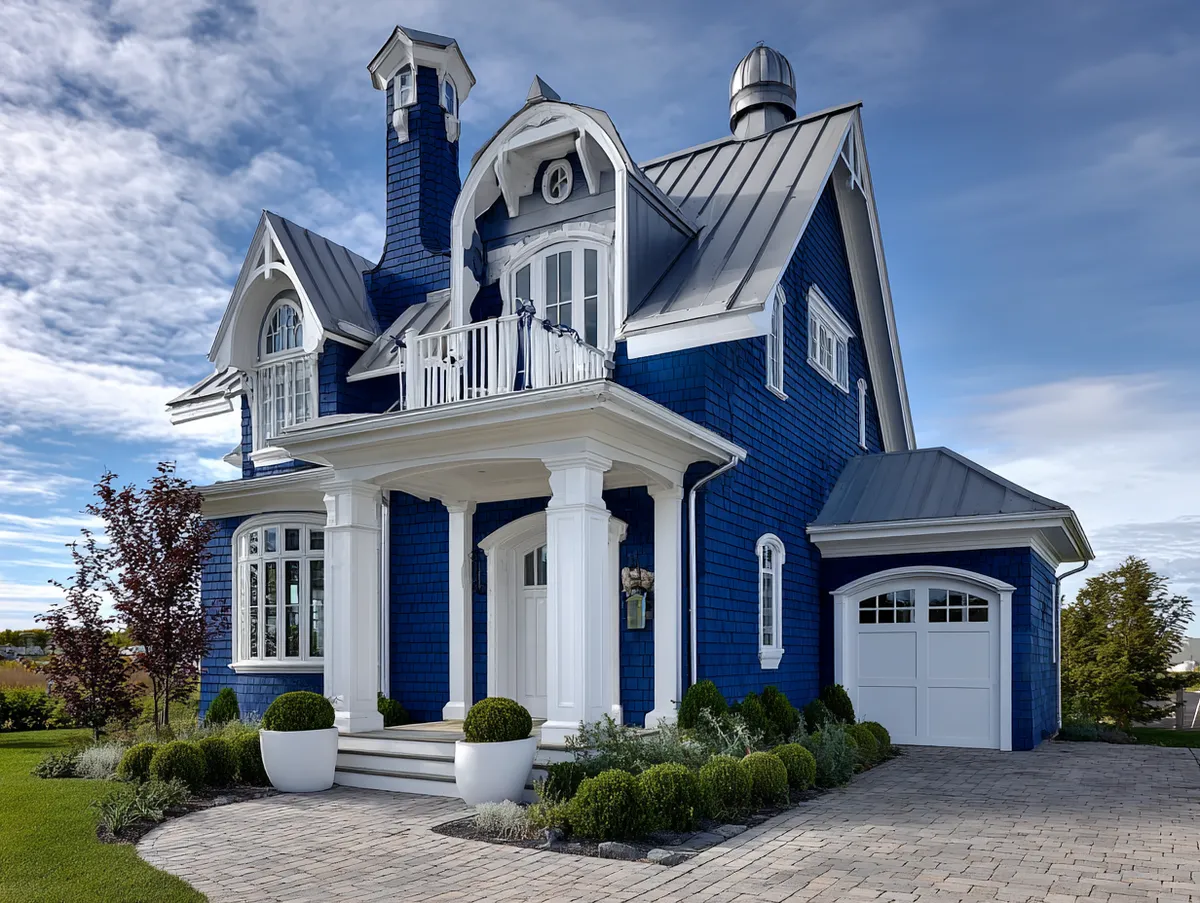
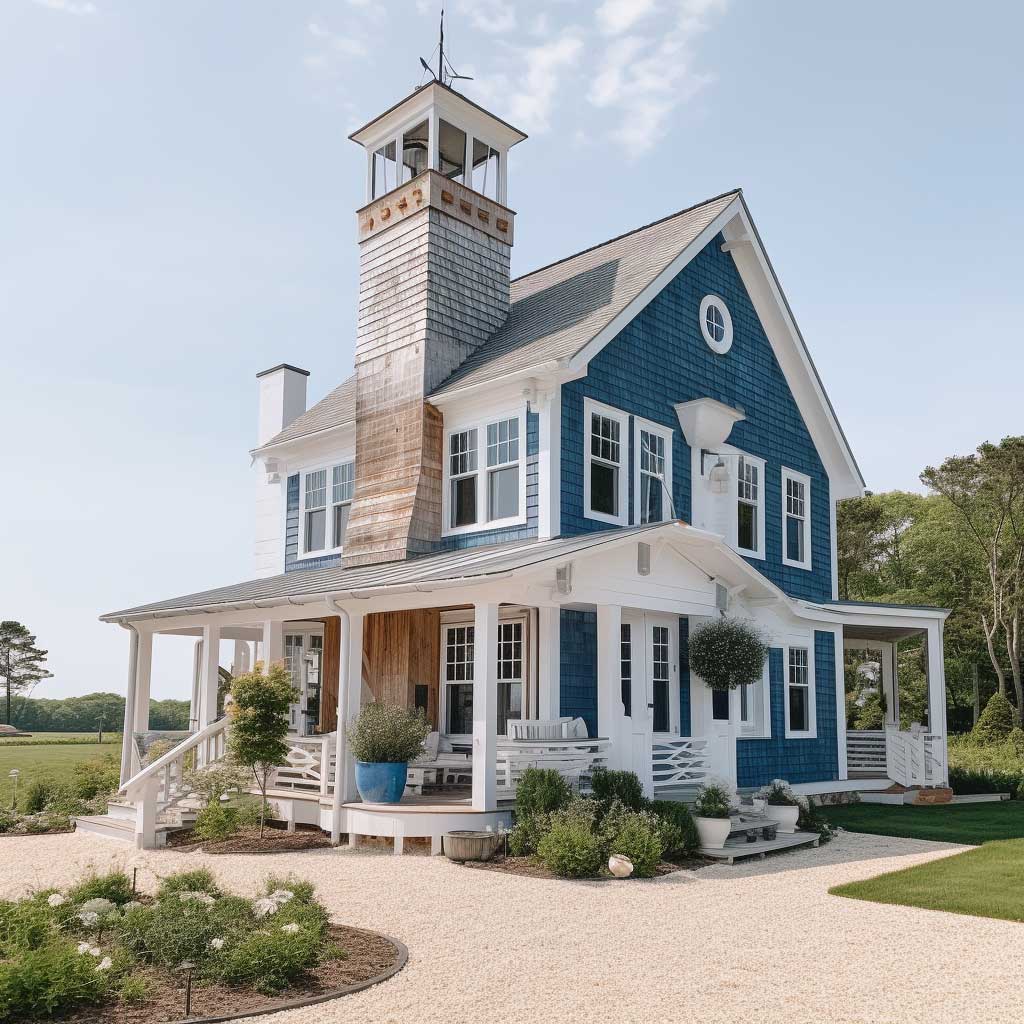
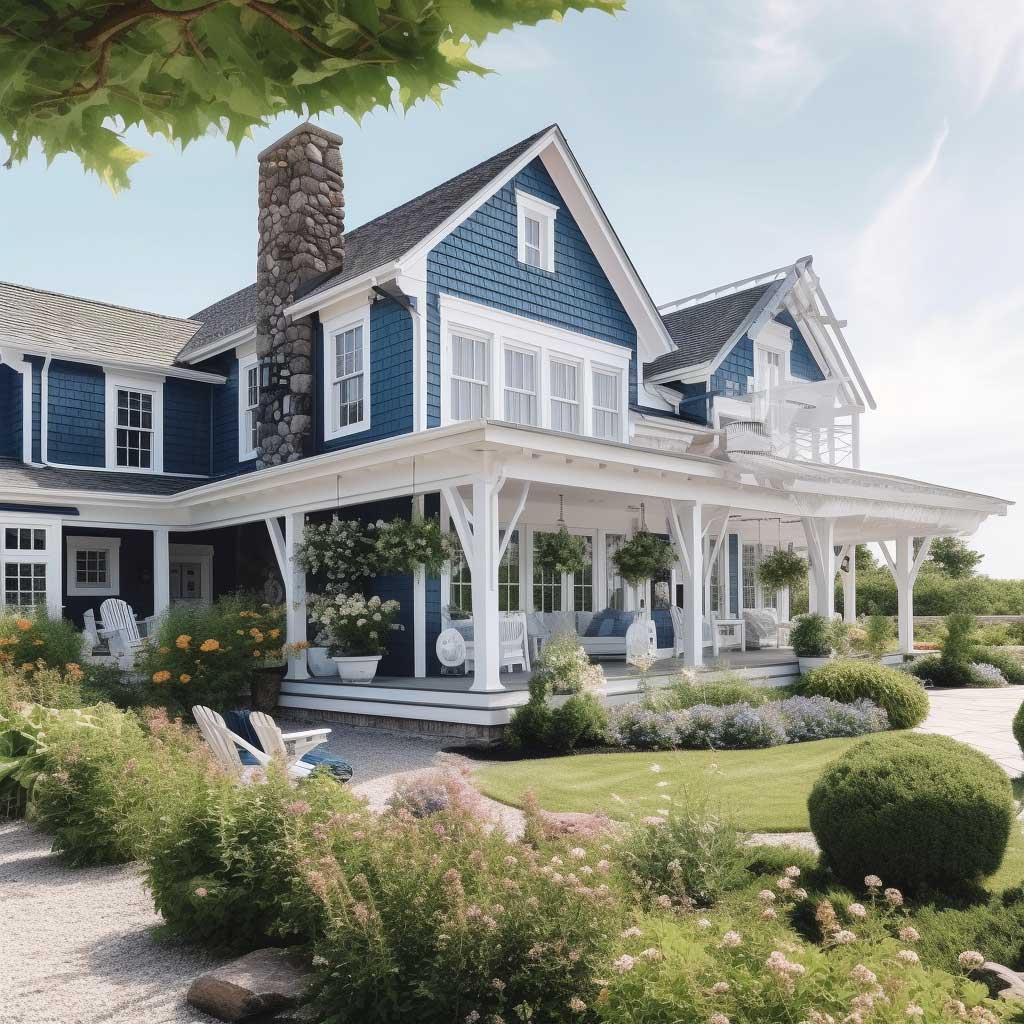
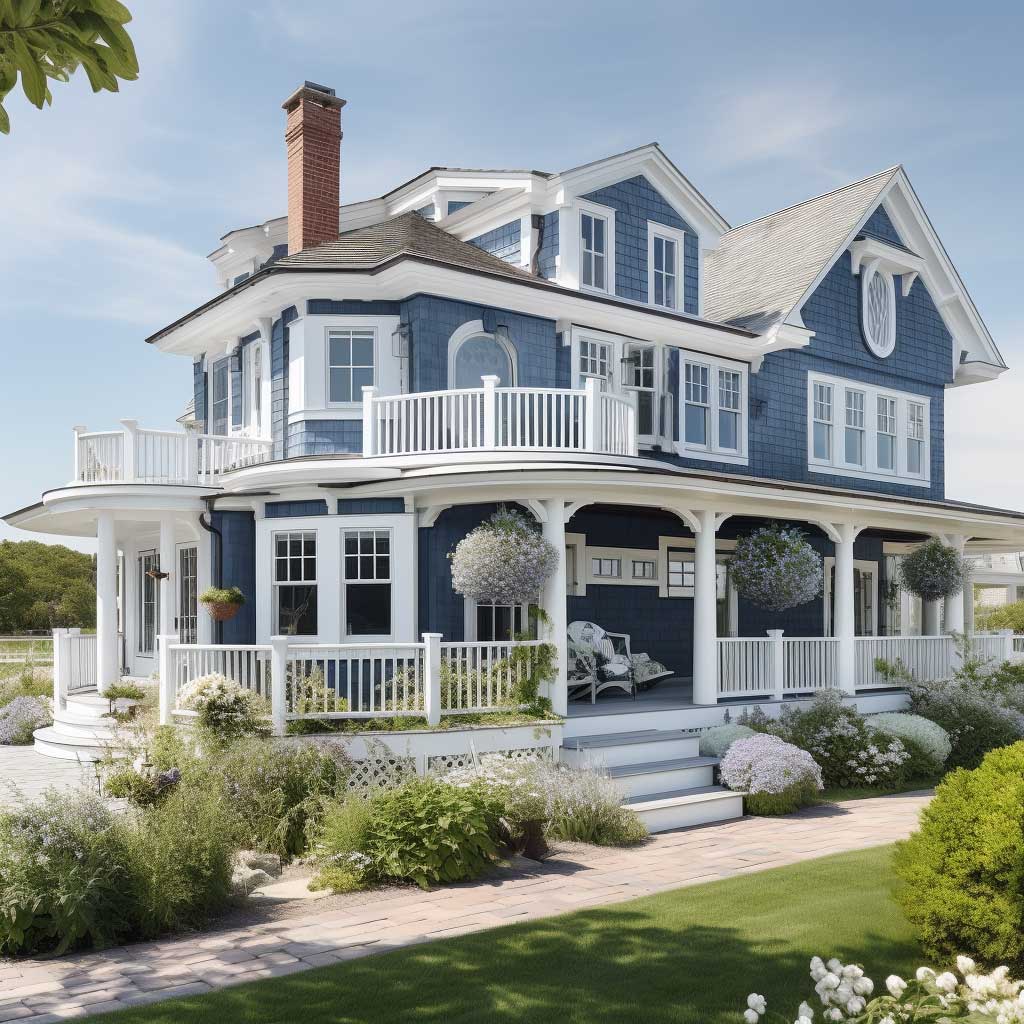
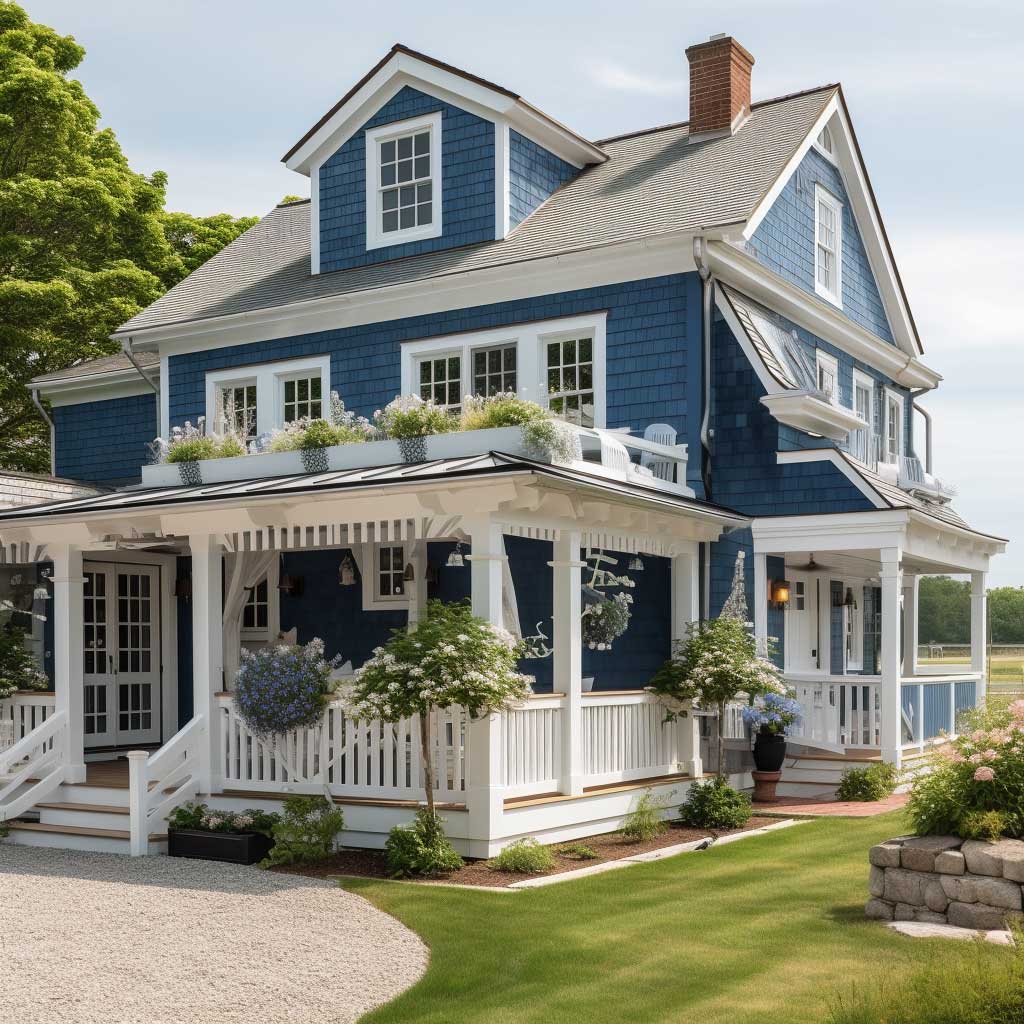
Window boxes are the single highest-ROI detail on a coastal farmhouse exterior. A planted window box costs $40 to $80 per window and doubles the visual complexity of the facade instantly — it’s the architectural equivalent of earrings on a clean outfit. Plant trailing petunias or Million Bells (Calibrachoa) in white and yellow for maximum contrast against a blue house. Red geraniums in a window box are a decorator’s cliché and I’m tired of defending people who make that choice. According to a survey of farmhouse exterior projects on Houzz, homes with window boxes and defined color accents receive significantly higher curb appeal ratings than those relying on the architecture alone.
The surrounding landscape on a coastal-influence farmhouse should stay green and informal — not clipped hedges, not formal topiaries. Low-maintenance native ornamental grasses and sprawling lavender work because they move in the wind, which adds a quality that no static planting scheme can replicate. The lush green backdrop also makes the blue of the house saturate visually. Farmhouse exterior color schemes that include a full landscape plan — not just paint colors — always produce more cohesive results than paint choices made in isolation.
THE BOTTOM LINE
Farmhouse Exterior Design Rewards Commitment to a Single Logic
Pick your lane — rustic or contemporary — and let the materials follow that decision all the way through. The house that tries to be both usually ends up being neither.
Stone, wood, and fiber cement each have a correct application. Using them in the wrong hierarchy produces an exterior that reads expensive but confused, which is actually worse than looking affordable and clear.
Curb appeal is a first-impression problem. Solve it at the foundation, the entry, and the roofline, then let the plants and fixtures fill in the rest. Save this post.
Related Topics
FAQ
What makes a farmhouse exterior look contemporary rather than rustic?
What is the farmhouse style exterior defined by structurally?
How much does a farmhouse exterior renovation typically cost?
What exterior paint colors work best on a rustic farmhouse?
Can a small farmhouse exterior look proportionate?
What are the most durable siding materials for a farmhouse exterior?
Complete guide
Farmhouse Style Ideas for Every Room and Outdoor Space
Kitchens, bathrooms, bedrooms, exteriors, decor, outdoor — all in one place