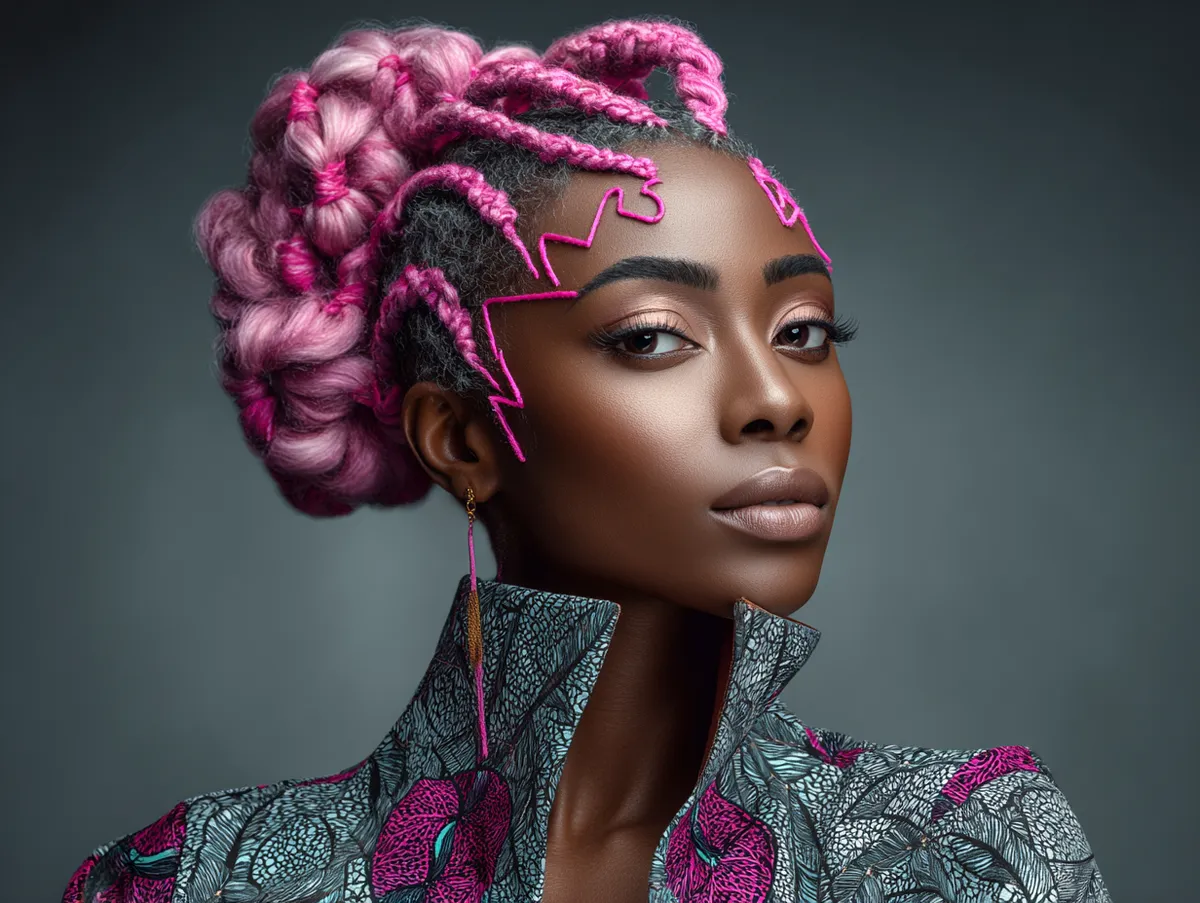
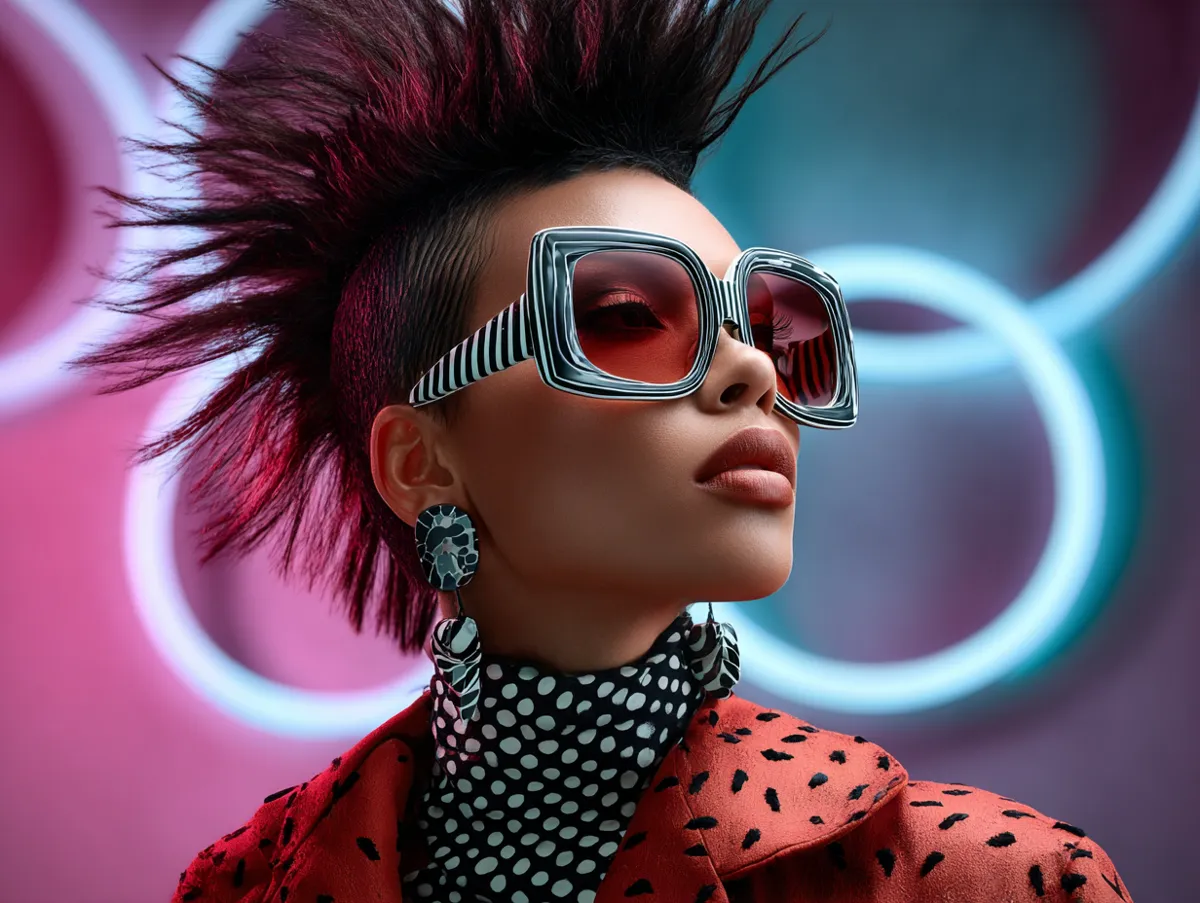
Nightclub hairstyles do more than look good in a mirror — they survive four hours of dancing, flash photography, and strobe lights without a single adjustment. African braided and textured styles have a structural advantage here: cornrows and twists lock in shape from the root, while Bantu knots and curly styles thrive under the kind of heat and movement that dismantles blowouts within the hour.
The five looks below pull from protective styling traditions and run them through a nightlife filter — electric blue, neon pink, fiery orange, lime green, purple. Each color reads differently under UV and strobes, and that’s not an accident. Stylists who work with nightlife clients specifically choose vivid tones because they absorb and throw back colored light in ways that natural hair shades don’t.
Price is part of the picture. Professional braided installs run anywhere from $100 to $500 depending on style complexity and length — and a single install can carry you through six to eight weeks of nightlife without a redo. That math works in your favor compared to weekly blowouts.
- Nightclub hairstyles in African styles hold through hours of dancing with zero structural adjustment needed
- Electric blue box braids: $100–$500 professional install, waist-length or shorter, metallic cuffs as the key accessory
- Neon pink highlights on curly afro hair: $60–$100 for face-frame highlights, $150–$350 for full color service
- Fiery orange twists last 4–8 weeks — one of the highest longevity-to-effort ratios in protective styling
- Lime green cornrows: $30–$230 depending on complexity, last 2–6 weeks with proper wrapping at night
- Bantu knots with purple accents hold up to two weeks and convert to a defined curl-out the next morning
- Avoid single-shade cornrows in dark colors under club lighting — they flatten; two-tone and neon shades read on the floor
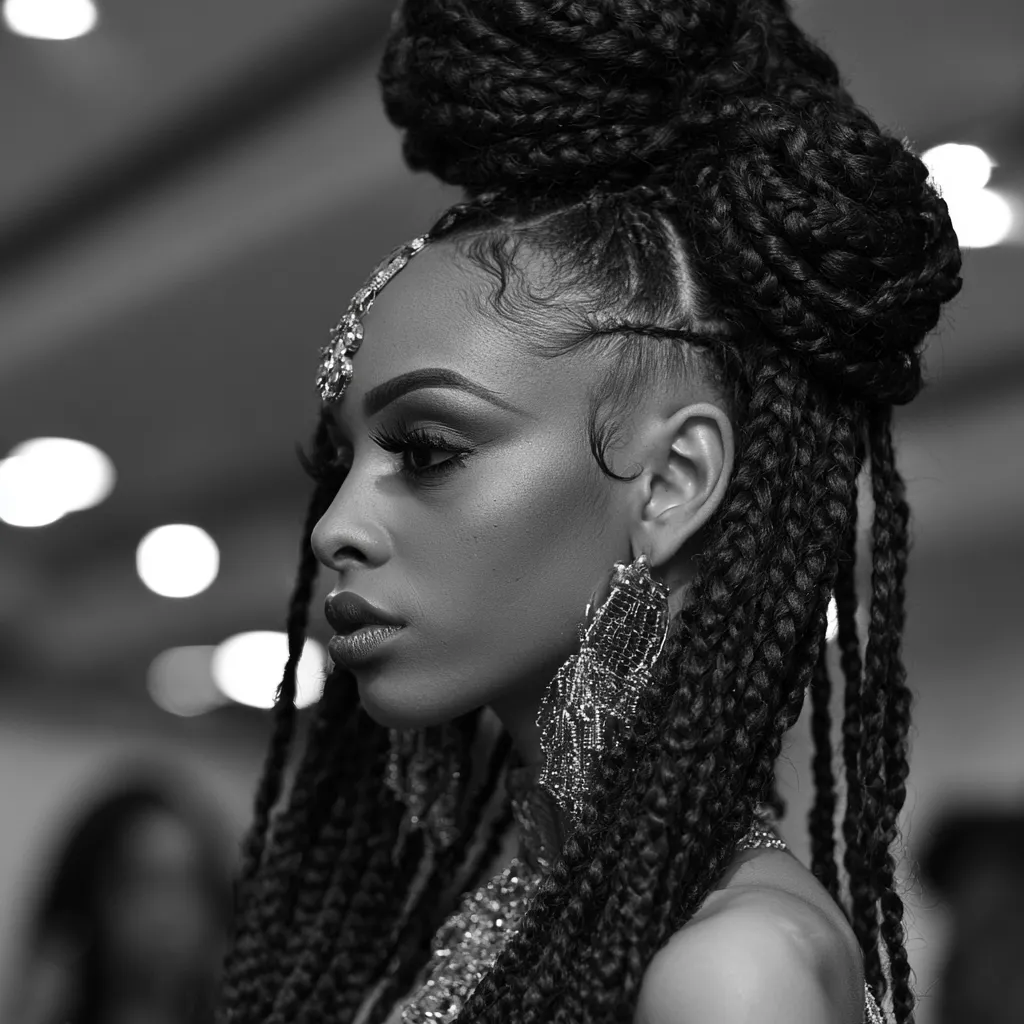
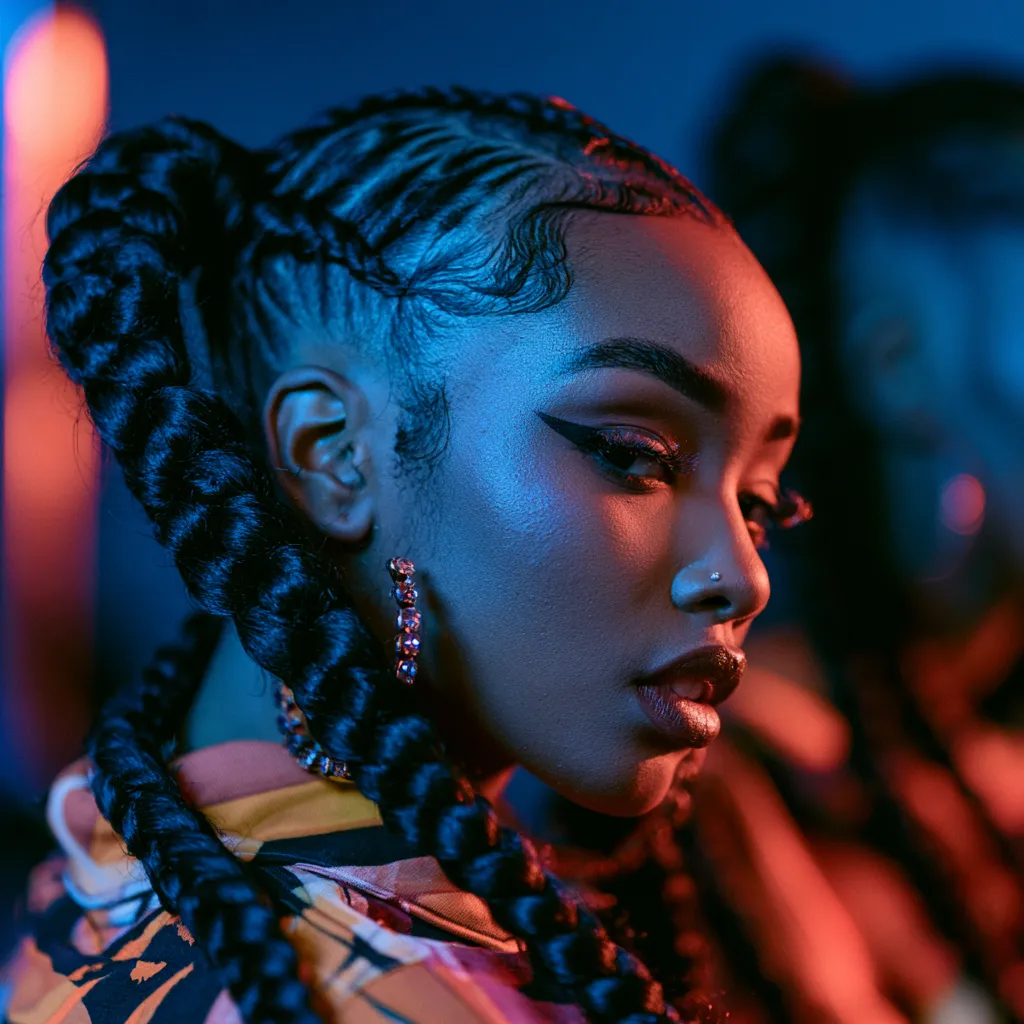
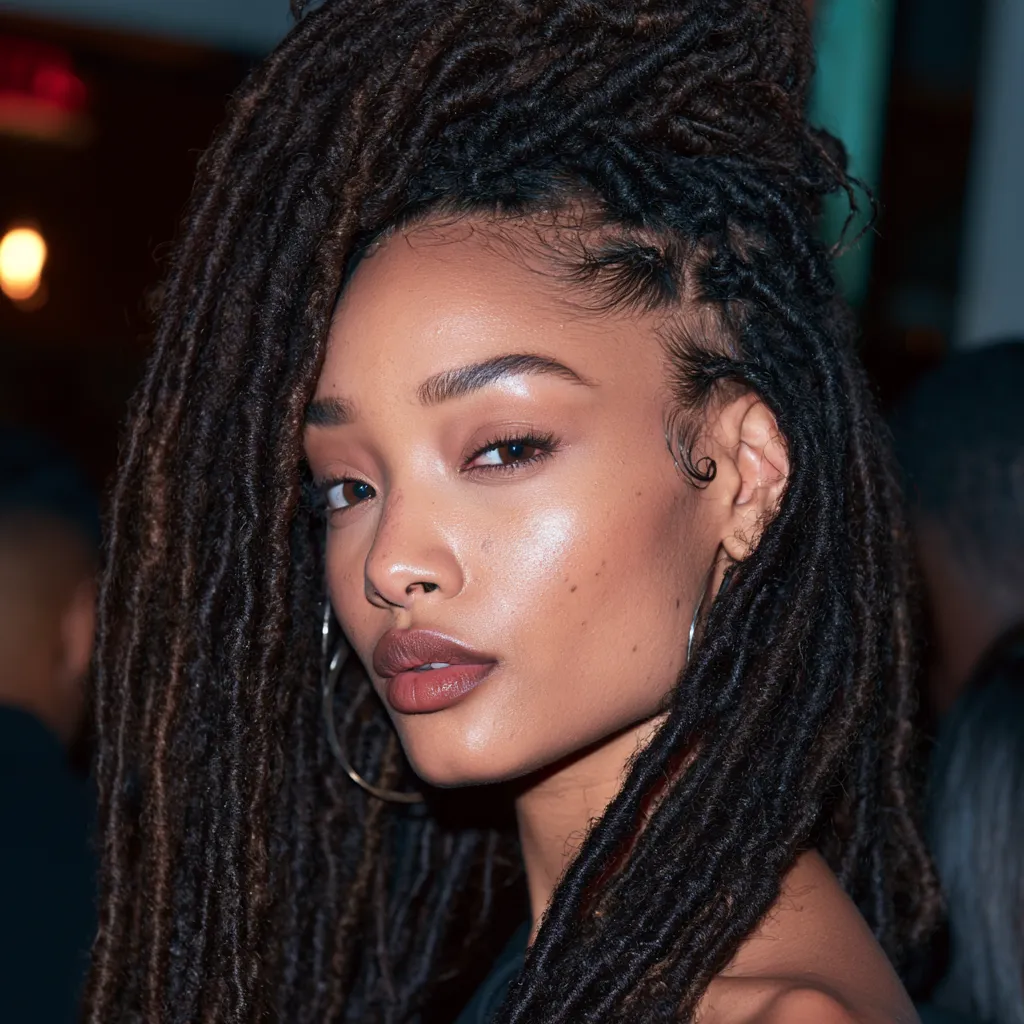
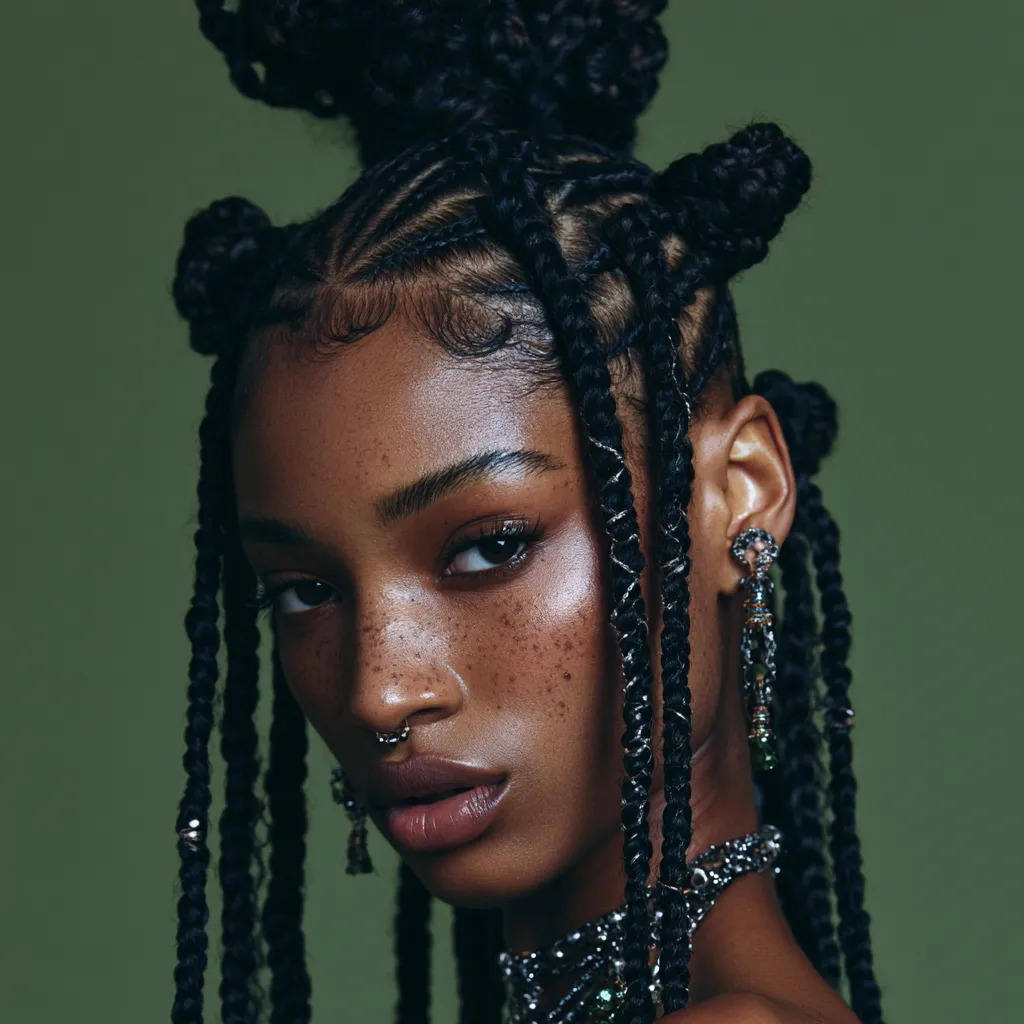
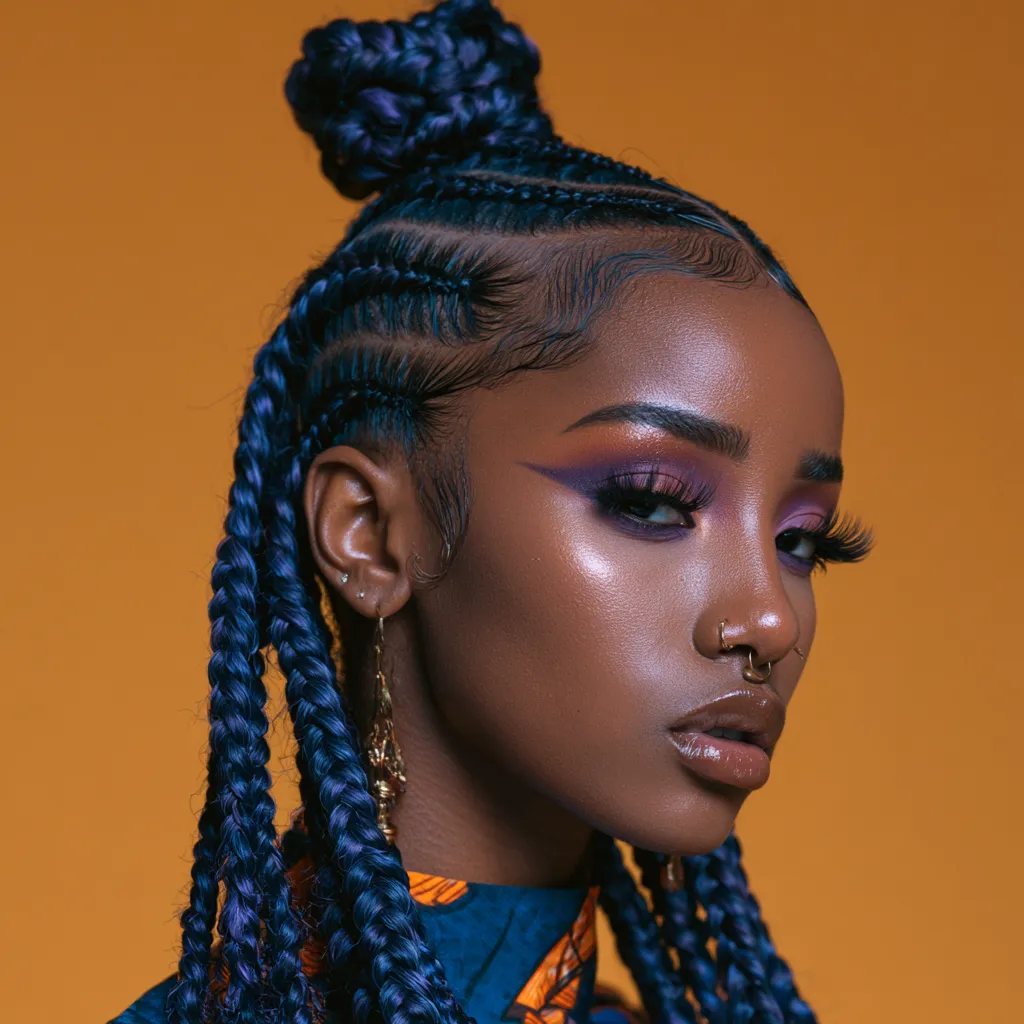
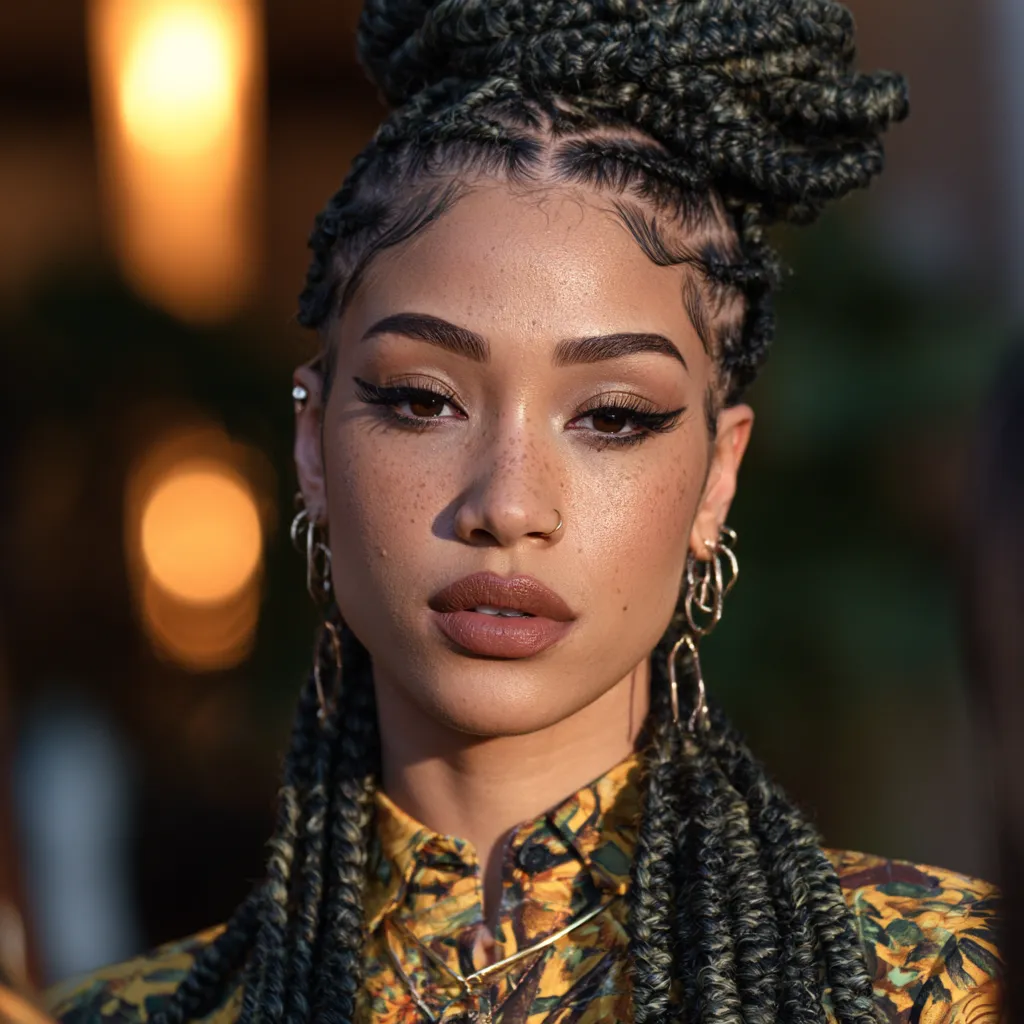
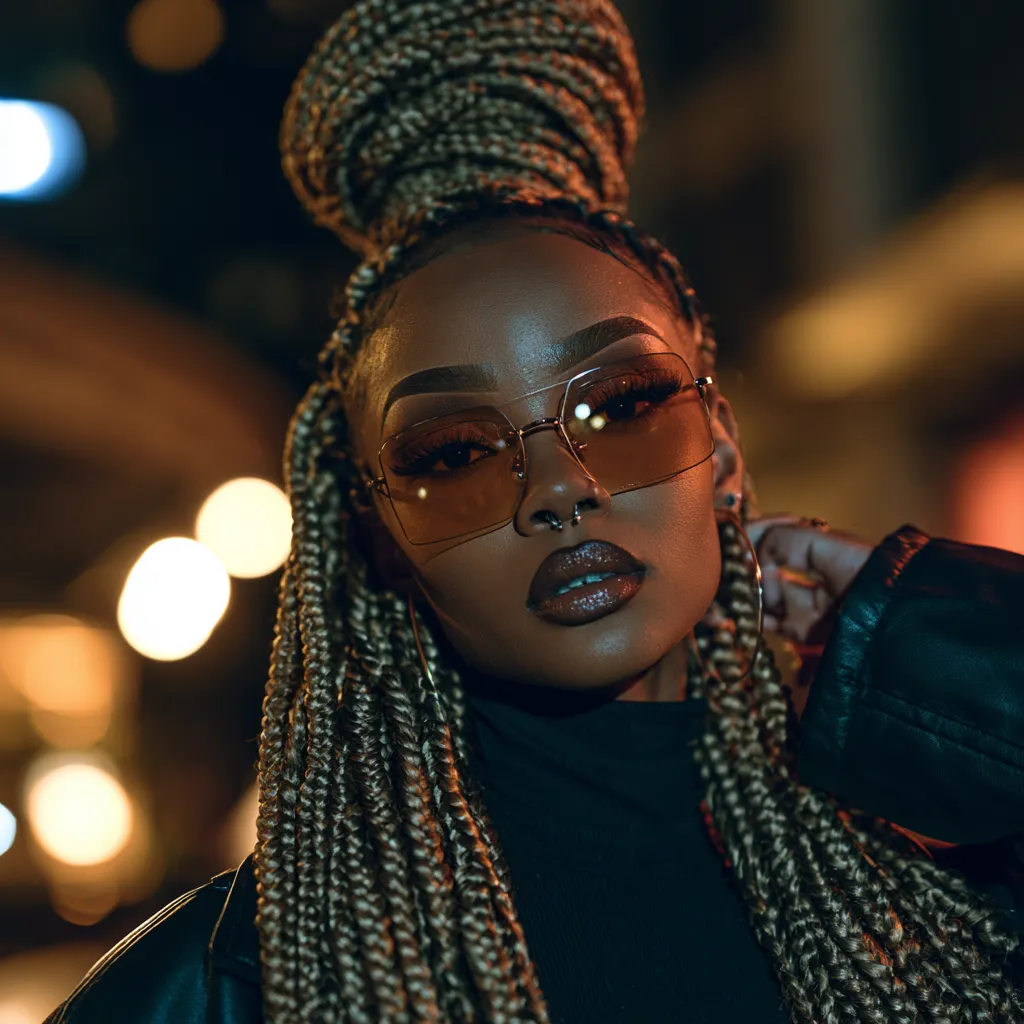
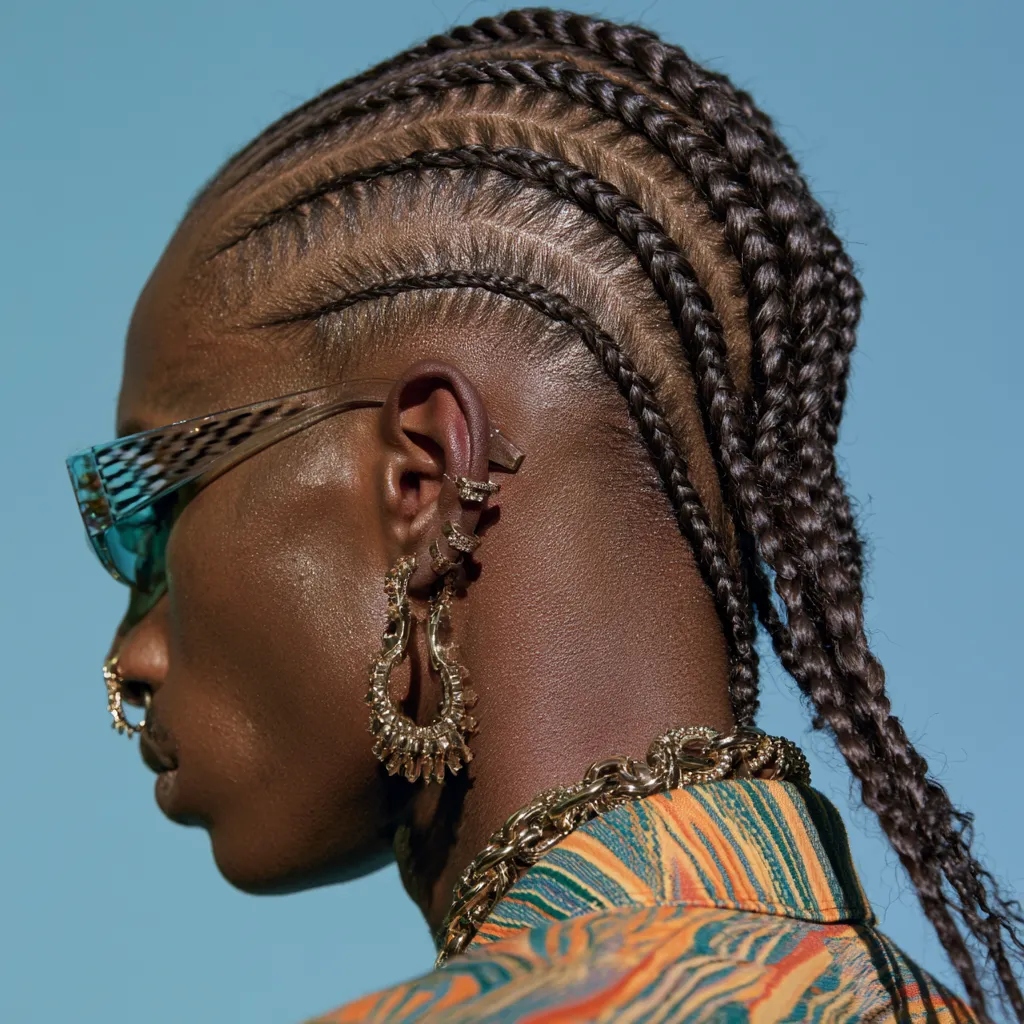
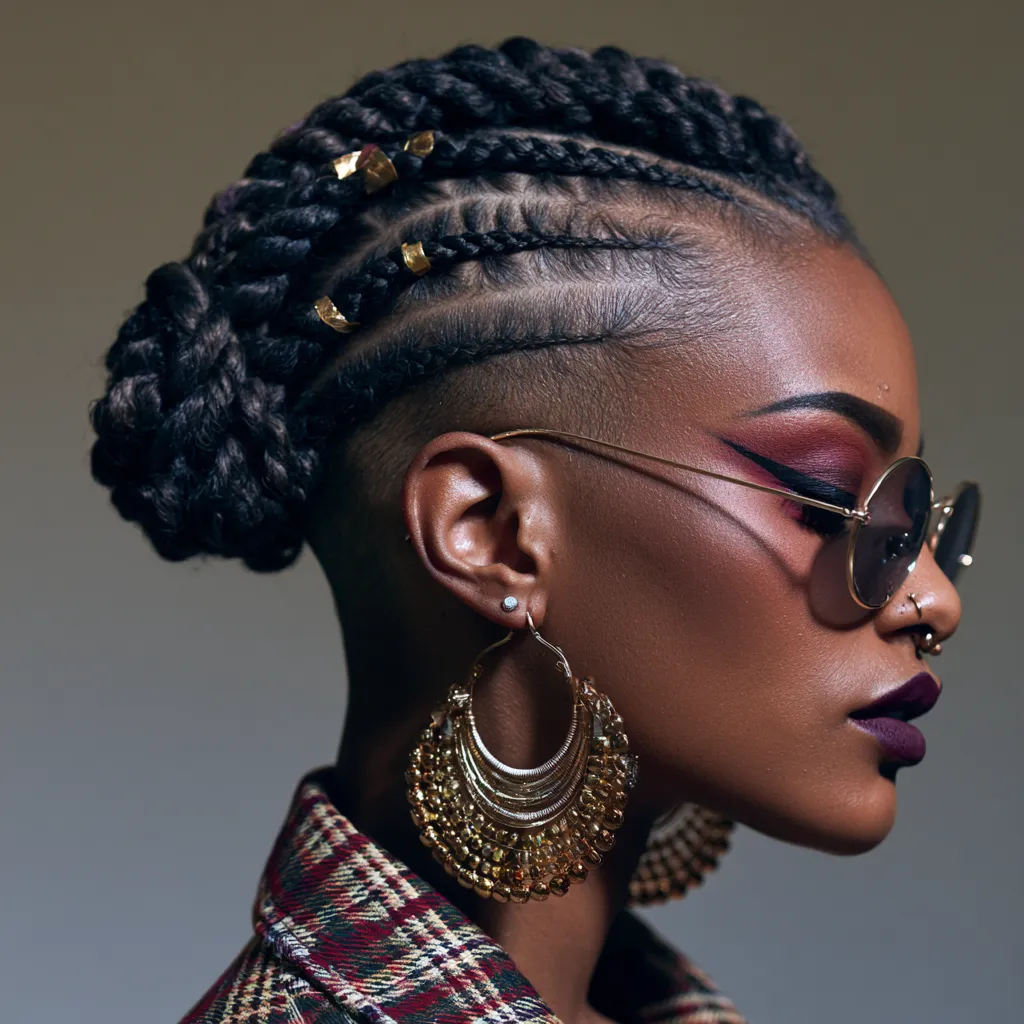
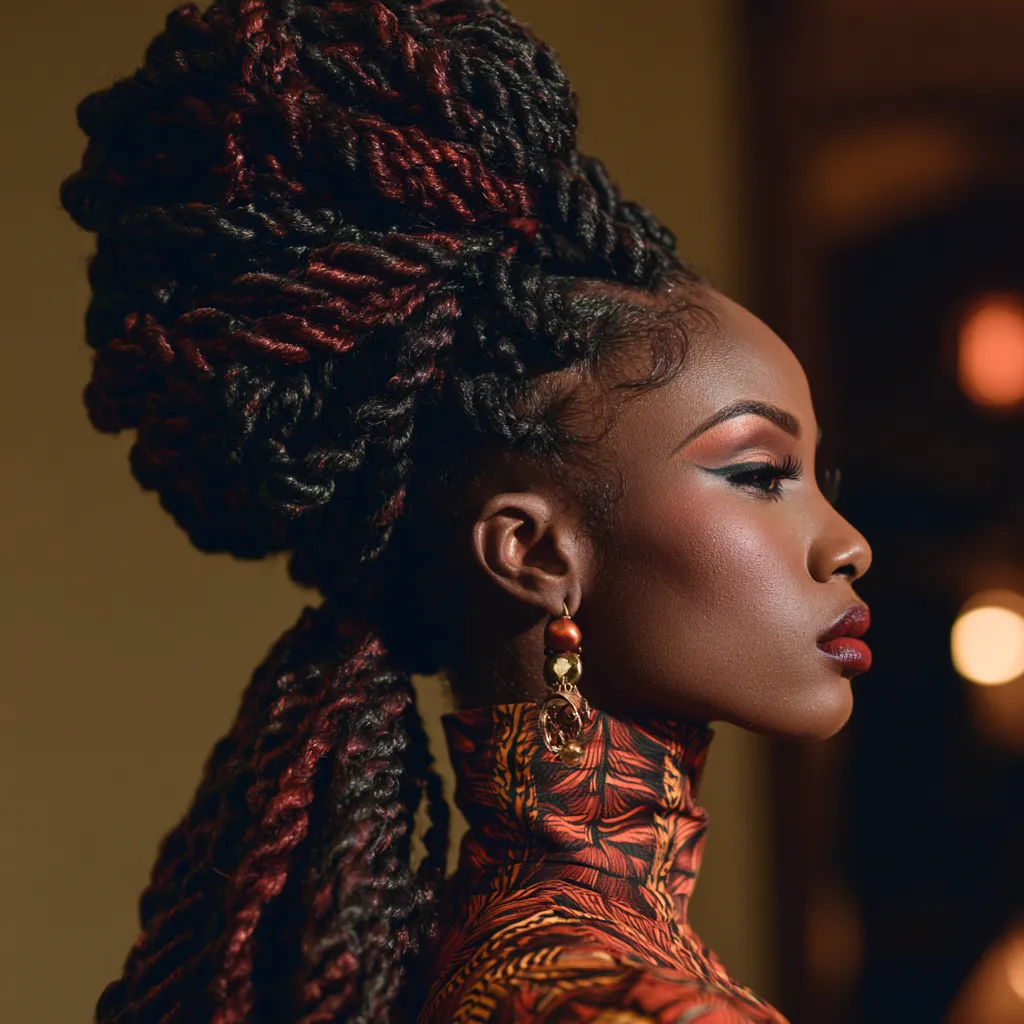
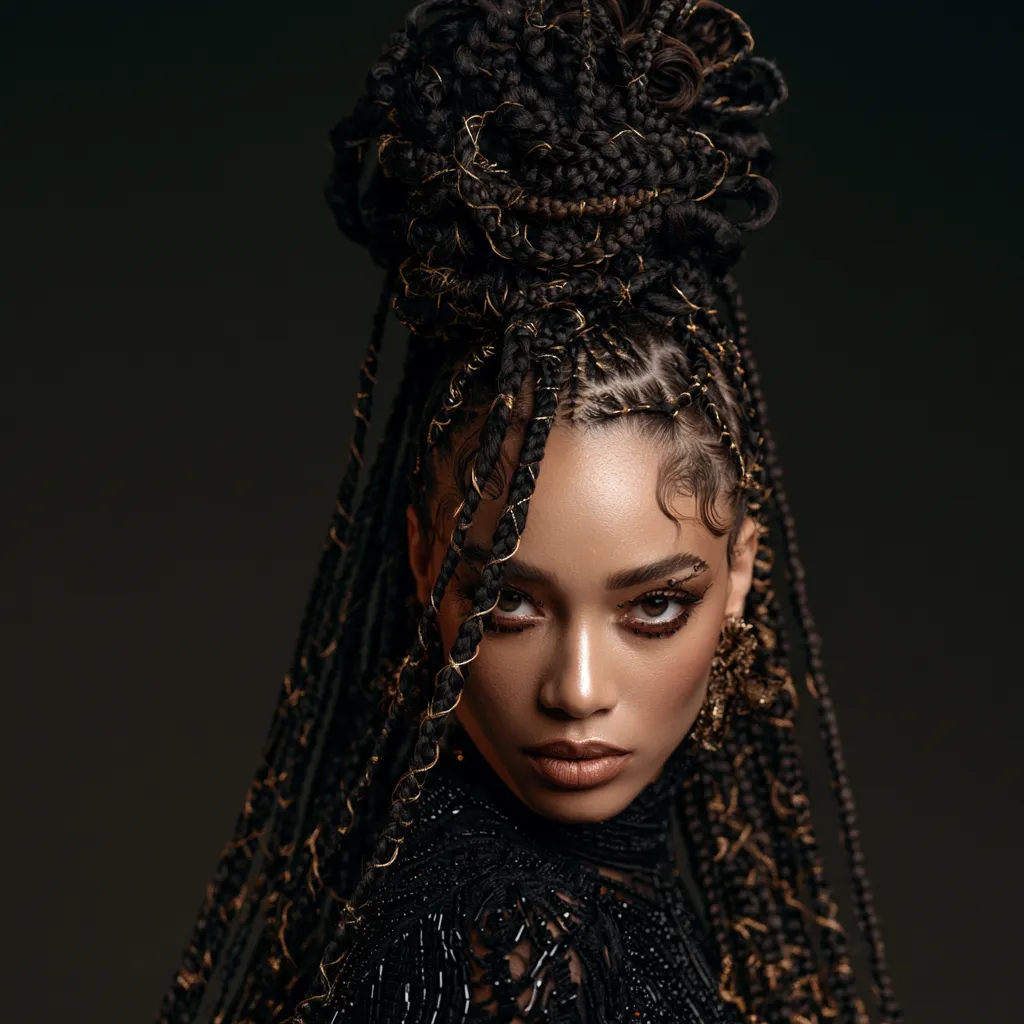
Electric Blue Box Braids Built for Nightclub Hairstyles
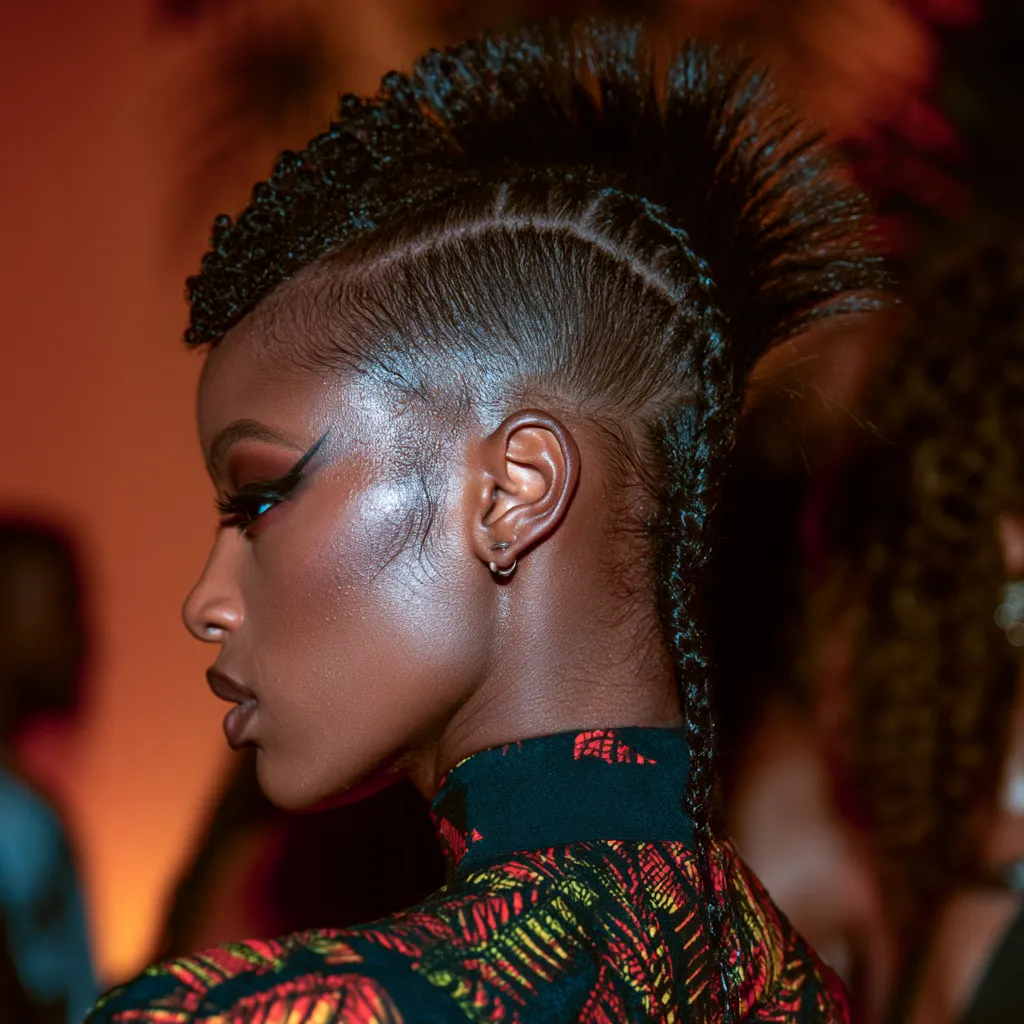
Nightclub hairstyles that actually survive the night need structural integrity first — and electric blue box braids deliver exactly that. Professional installation runs $100 to $500 depending on braid size, length, and braider experience, with install times reaching up to six hours for waist-length sets. That investment makes sense when the style holds its shape through an entire night of dancing without a single bobby pin shift.


The triangle-section cornrow base is what makes these braids perform differently from round-section box braids under strobe lighting — the geometric partings create angular shadow lines that read as visual detail even from across a room. Ask the braider to vary section size slightly from the top to the sides; perfectly uniform sections look precise up close but lose dimension under flashing lights. Gold cuffs or rings woven at intervals add another layer of light catch that moves when the braids move.
Waist-length electric blue braids create a curtain effect when dancing that shorter styles can’t replicate — the color whips and catches the light in motion. Shorter versions, chin to collarbone, work better in tight, crowded venues where long braids become a liability. Pair either length with minimal makeup and one statement earring, not two — symmetrical accessories compete with asymmetric braid movement. What doesn’t work: mixing electric blue extensions with natural dark roots that show at the base. The color story reads strongest when the braid starts at the root in full blue rather than fading from dark to electric halfway down.
- Don’t use round-section box braids for this look in a nightclub setting — triangle sections are structurally tighter and hold better through hours of high-energy movement.
- Don’t install blue braids the day of the event — freshly installed braids have visible scalp irritation along the parts for the first 24–48 hours, and a satin wrap overnight settles the look considerably.
- Don’t pair electric blue with glitter eyeshadow — both compete for the same visual register; the braids win by volume, but the eyes disappear entirely. Choose a bold liner instead.
Neon Pink Curls — the Highlight Strategy That Reads Under Strobe
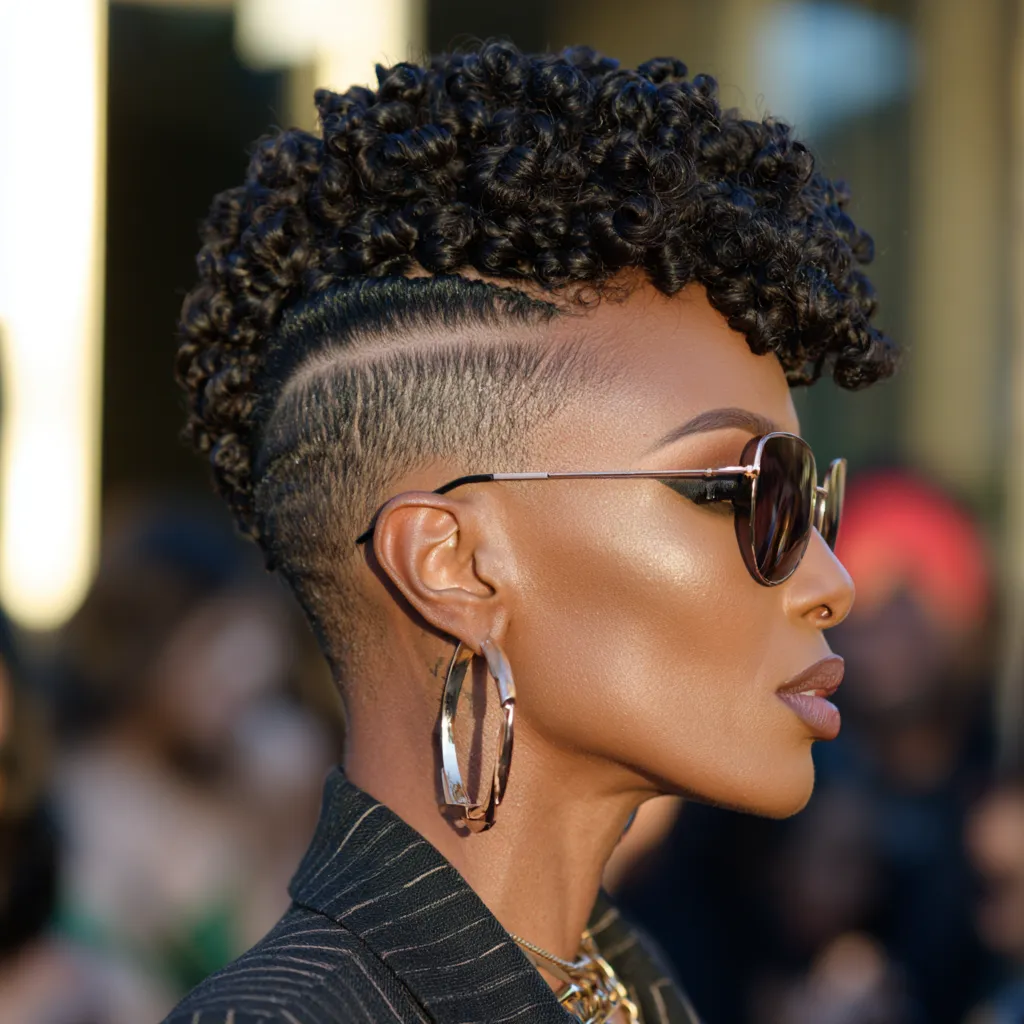
Curly afro hair with neon pink highlights does something technically interesting under nightclub lighting: the textured curl pattern scatters colored light across dozens of tiny surfaces simultaneously, so the color pulses rather than sitting flat. Face-framing neon pink highlights run $60–$100 for a small application; a fuller multi-tonal service including lightening runs $150–$350 at most salons. The cost gap reflects how much lightening is required — neon saturation needs a pale-enough base to show true on dark natural hair.


Placement determines whether neon pink highlights read as intentional or accidental. Stylists recommend concentrating them at the front sections — crown to cheekbone — where they frame the face in motion and catch forward-facing light sources. Highlights scattered evenly across the full head flatten out and look like a faded dye job rather than a design choice. Why does the face-framing strategy outperform even distribution? Because the camera — phone, professional, security — always points toward the face first, and the highlights should meet it there.
Neon tones are semi-permanent by nature and lose their saturation faster than dark pigments, especially with frequent washing. Expect to refresh the color every four to six weeks to maintain the full vibrancy, or switch to a color-depositing conditioner between salon visits to slow the fade. Pair with a sequined outfit in black or white — both colors act as a neutral backdrop that lets the pink do all the talking. A bold red lip and neon highlights compete directly; pick one or the other, and the hairstyle is the obvious choice to lead. For outfit ideas that complement bold hair at night, nightclub outfit ideas with sequined dresses pair naturally with textured color styles like this.
Fiery Orange Twists — Protective African Hairstyles With the Longest Shelf Life
Orange Senegalese twists sit at the intersection of low maintenance and high visual impact — a combination that’s harder to find than it sounds in African hairstyles made for nightlife. The style lasts four to eight weeks with proper care, and the structural twist pattern holds its definition even after hours on the dance floor, provided you’ve slept with a satin bonnet during the install period beforehand. That’s a shelf life that blowouts and loose curl sets simply can’t match.


Fiery orange sits between red and gold on the spectrum, which means it reacts to both warm amber club lighting and cool blue-UV light — producing a different read in each environment. Under warm amber, the orange deepens toward copper; under blue UV, it pops electric. That dual-environment performance is rare in a single hair color and gives this style a versatility that stays more vibrant than blue or pink under mixed lighting conditions. Beads or brass cuffs threaded into every fourth or fifth twist add acoustic texture — you hear them move slightly before the full visual lands, which is a small detail that reads as very deliberate up close.
A professional Senegalese twist install runs approximately $125–$175, with the installation taking four to six hours depending on twist thickness and length. Kanekalon or Toyokalon synthetic hair are the standard extensions used, with Toyokalon giving a slightly silkier finish that photographs better. What doesn’t work: orange twists paired with an orange or red outfit — the color gets absorbed into the look rather than standing against it. Neutral tones — cream, black, white — let the twist color carry the statement alone, which is the whole point of choosing this shade.
Lime Green Cornrows — Color and Precision That Modern African Hairstyles Deliver
Modern African hairstyles have reclaimed cornrows as a high-fashion choice, and lime green takes that reclamation to its most visible extreme. A basic cornrow install runs $30–$70 with no extensions; complex color designs or hair extensions push the cost to $100–$230. The result stays intact for two to six weeks, making it one of the most cost-effective nightlife looks per wear when divided by the number of occasions it covers.


Cornrows are flat against the scalp, which means all the visual interest lives in two places: the pattern geometry and the color. Lime green earns its position here because it’s the most visible color in the human visual spectrum, meaning it reads clearly at distance, in low light, and under a wide range of club lighting conditions. Ask for a curved or diagonal pattern rather than straight-back rows — straight lines read as basic on the floor, while curved geometry reads as intentional design. Gold or silver hair cuffs placed at the crown add a luxurious weight to the opening of each row without interrupting the pattern lower down.
Cornrows require wrapping at night with a silk or satin scarf to maintain edge freshness for the full duration of the style. Skip this step and the edges begin to frizz by week two, which is when most people mistakenly assume the style is done. What actually ends the style is the growth gap at the root — cornrows stay cleanest during the first two to three weeks. Plan a nightclub event for early in the install cycle, not the last week, and the style will look just-done rather than grown-out. Dramatic eye makeup — a sharp graphic liner or bold shadow — pairs cleanly with this look because cornrows hold the scalp line so precisely, the eye makeup doesn’t need to work hard to create structure.
Bantu Knots with Purple Accents — Symmetry Is the Statement
Bantu knots need at least three to four inches of hair to form securely, and when set correctly on natural coily or kinky hair they hold for up to two weeks. That two-week window makes them one of the rare nightclub hairstyles that can be worn on a Thursday, Saturday, and the following Friday without reinstalling — the style just needs a quick moisturizing spray and a silk re-wrap at night to stay defined. The purple accent color works best in a semi-permanent formula, which costs significantly less than full lightening services and fades gradually rather than showing harsh regrowth lines.


The grid of exposed scalp between knots is what makes this style photographically distinctive — no other hairstyle creates that geometric negative space at the same time as structured three-dimensional spirals. Under club lighting, the purple tones inside each knot absorb blue UV frequencies and reflect them back at a slightly shifted wavelength, which is why purple reads so distinctly under blacklight compared to other accent colors. Geometric earrings in gold — simple triangles or elongated drops — follow the angular logic of the knot grid and extend the pattern into the accessory zone without overcrowding the silhouette.
Bantu knots originate with the Zulu people of Southern Africa, with documentation of the style tracing back to at least the late nineteenth century. Wearing them in a contemporary nightlife context is a direct continuation of that tradition rather than a departure from it — the grid-and-coil structure has always been both functional and decorative. Stylists recommend keeping the knot sections uniform in size for the most symmetrical result; irregular sizing reads as unfinished rather than relaxed. The compact profile of this style is also its practical advantage — there’s nothing to catch on sequined fabric or brush against someone else on a crowded dance floor, which makes it the most movement-proof choice in this list. For a complementary braided style that shares the same root-healthy, tension-free philosophy, goddess knotless braids are worth knowing before your next salon appointment.
According to Glamour South Africa’s 2026 protective hairstyle roundup, modern African styles are trending toward architectural finishes and intentional structure — exactly what Bantu knots deliver at their most precise.
| Style | Install Cost | Longevity | Best For |
|---|---|---|---|
| Electric Blue Box Braids | $100–$500 | 6–8 weeks | Dramatic floor impact, high movement |
| Neon Pink Curls | $60–$350 | 4–6 weeks color | UV-reactive lighting, photography |
| Fiery Orange Twists | $125–$175 | 4–8 weeks | Warm + blue lighting, low maintenance |
| Lime Green Cornrows | $30–$230 | 2–6 weeks | Precision pattern, tight-venue stability |
| Bantu Knots + Purple | Varies (semi-perm color) | Up to 2 weeks | Multi-night wear, movement-proof |
Final Word
Color Chosen for the Light Is What Separates a Great Nightclub Hairstyle From a Good One
Each of the five styles above performs differently under the three main club lighting conditions — warm amber, cool blue-UV, and strobe white. Electric blue and lime green read furthest from the source; orange performs across mixed lighting; pink and purple reward UV environments specifically.
Protective braided styles give you the structural advantage of an install that stays perfect through dancing, heat, and crowding — no touchups, no bobby pins migrating south, no half-down ponytail by midnight.
Budget the install cost against the number of nights you’ll wear it, and the math almost always works out in the braided style’s favor. Save this post before your next salon booking.