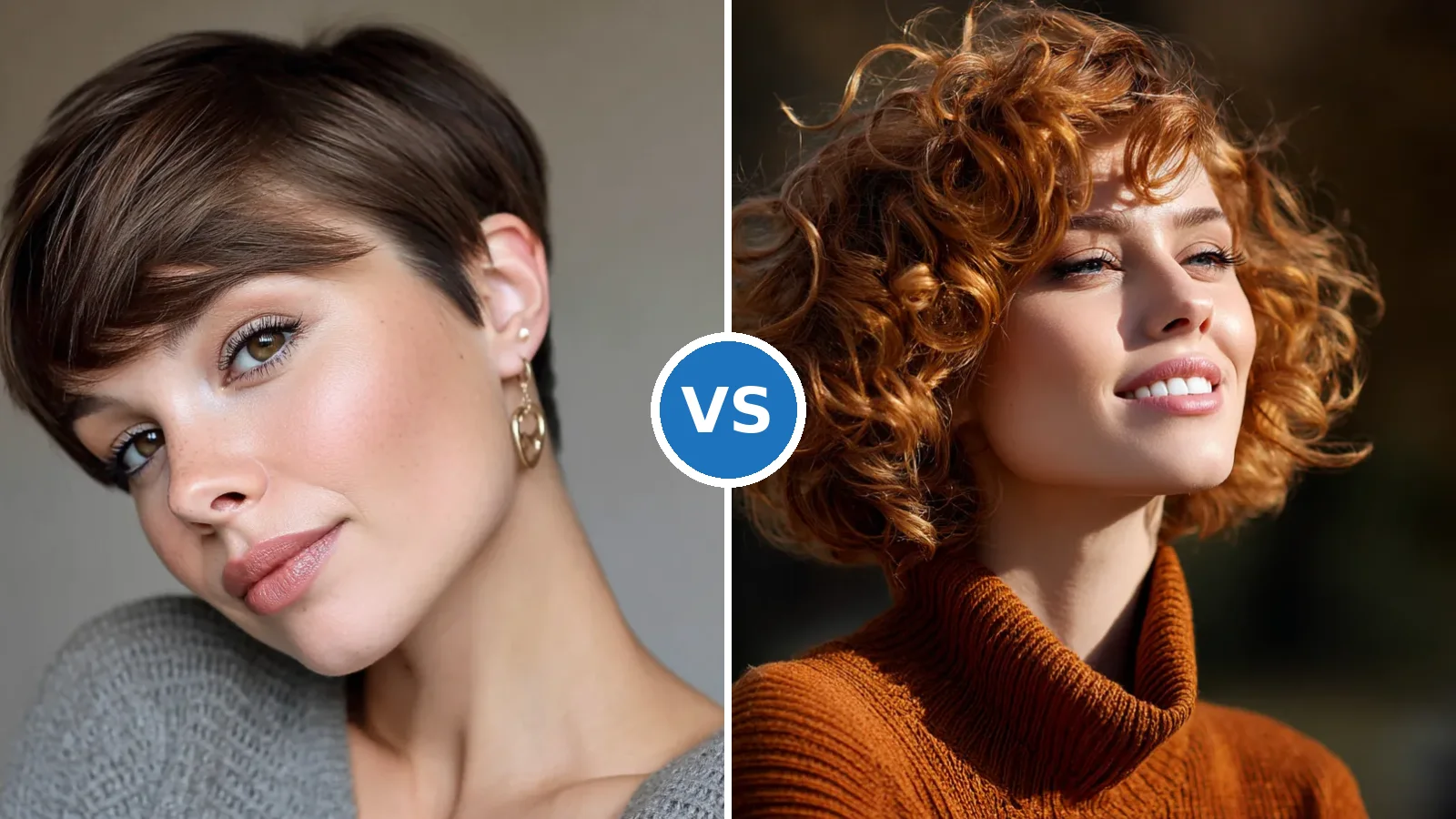
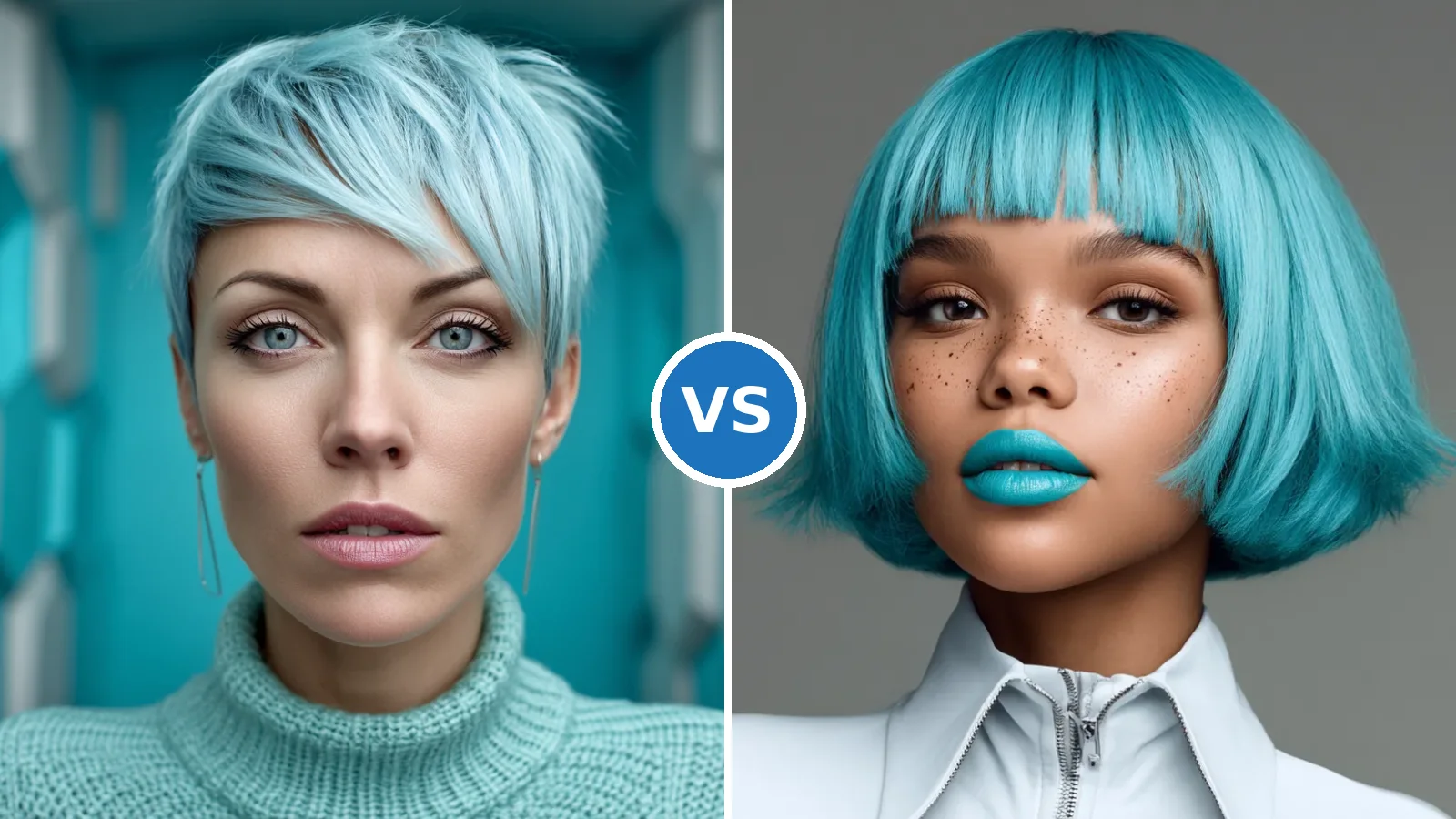
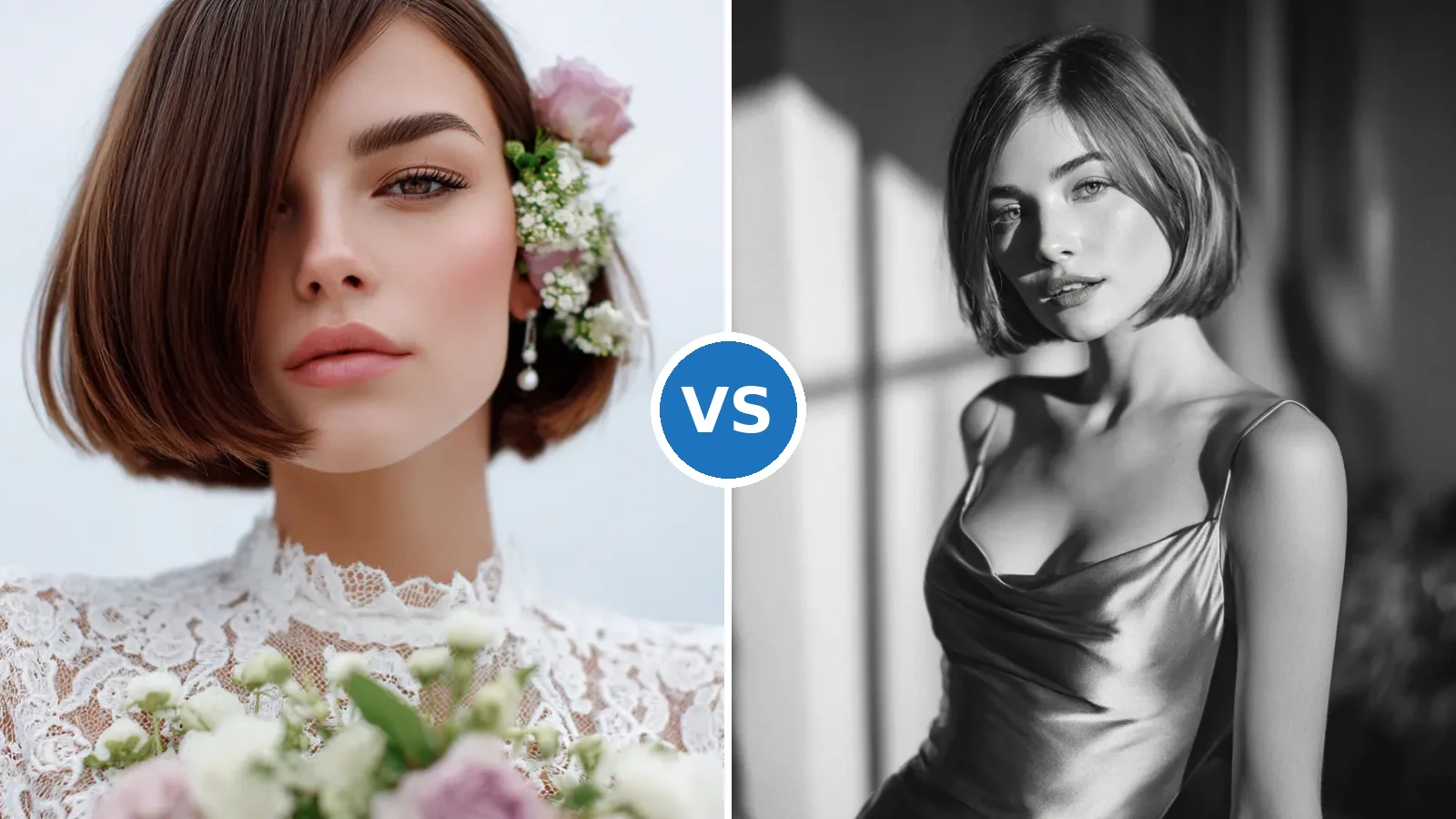
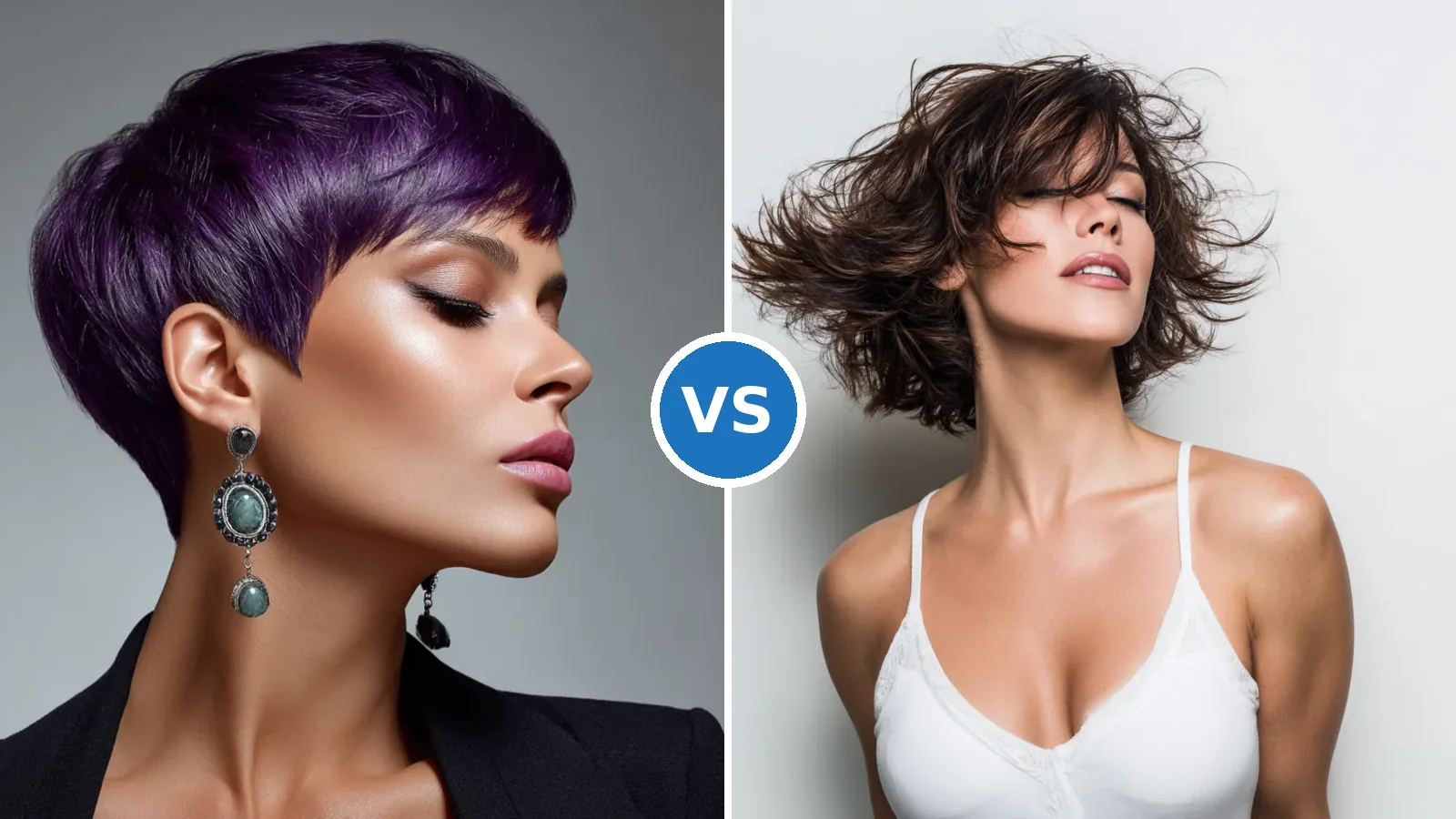
A short layered bob for round face shapes does something no highlighter can — it reshapes your silhouette every single day without touching your skin. The cut works because layers redirect the eye vertically: up at the crown, forward along the jaw, away from the widest point of the cheek. Get those three things right and the result reads sharp, defined, and completely intentional. Get them wrong — length hitting mid-cheek, volume fanning sideways — and even a beautiful color job can’t save it. I’ve had both versions, and the difference is sharper than you’d expect.
You’ll notice that every variation in this post solves the same structural problem from a different angle — auburn waves that contour with color, silver precision that slims with light, espresso texture that breaks horizontal width with movement. The short layered bob isn’t one haircut. It’s a category with very specific rules about where the weight lives and where it doesn’t.
| Variation | Key Effect on Round Face | Best Paired With |
|---|---|---|
| Auburn Waves | Vertical movement, color-based contouring | Fair to medium skin tones |
| Silver Blonde Sleek | Luminosity slims, crown draws eye up | Straight or fine hair |
| Espresso Texture | Breaks width, adds diagonal movement | Medium to deep skin tones, wavy hair |
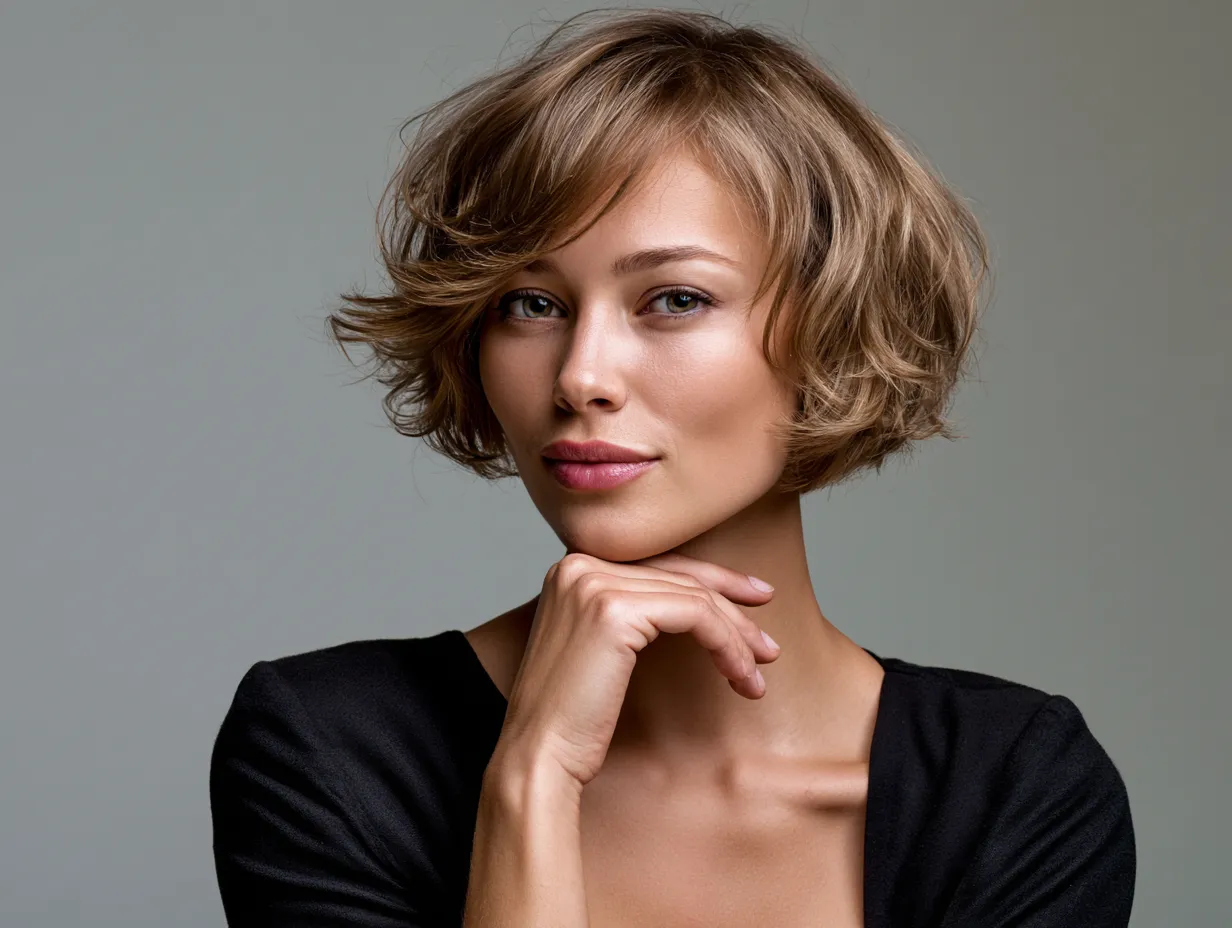
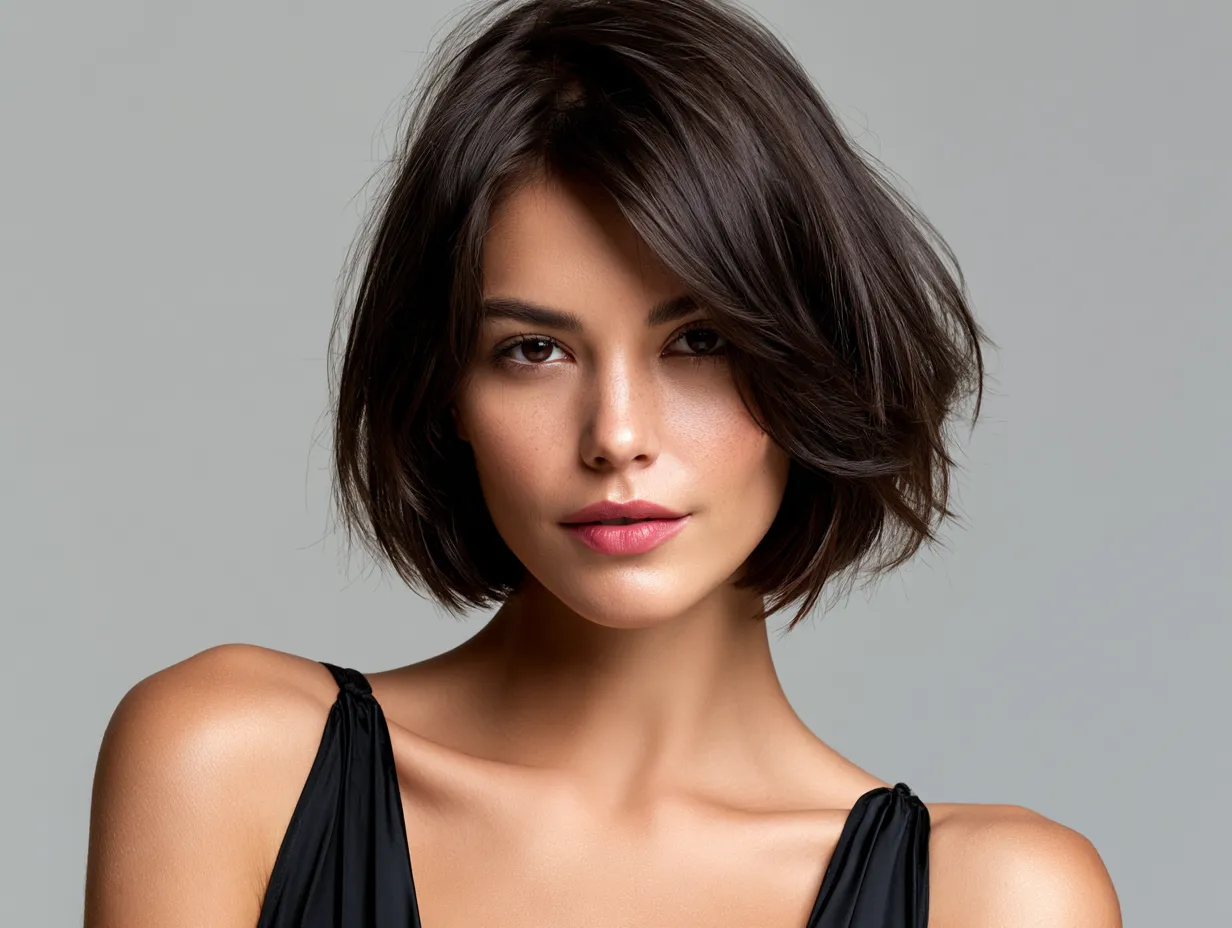
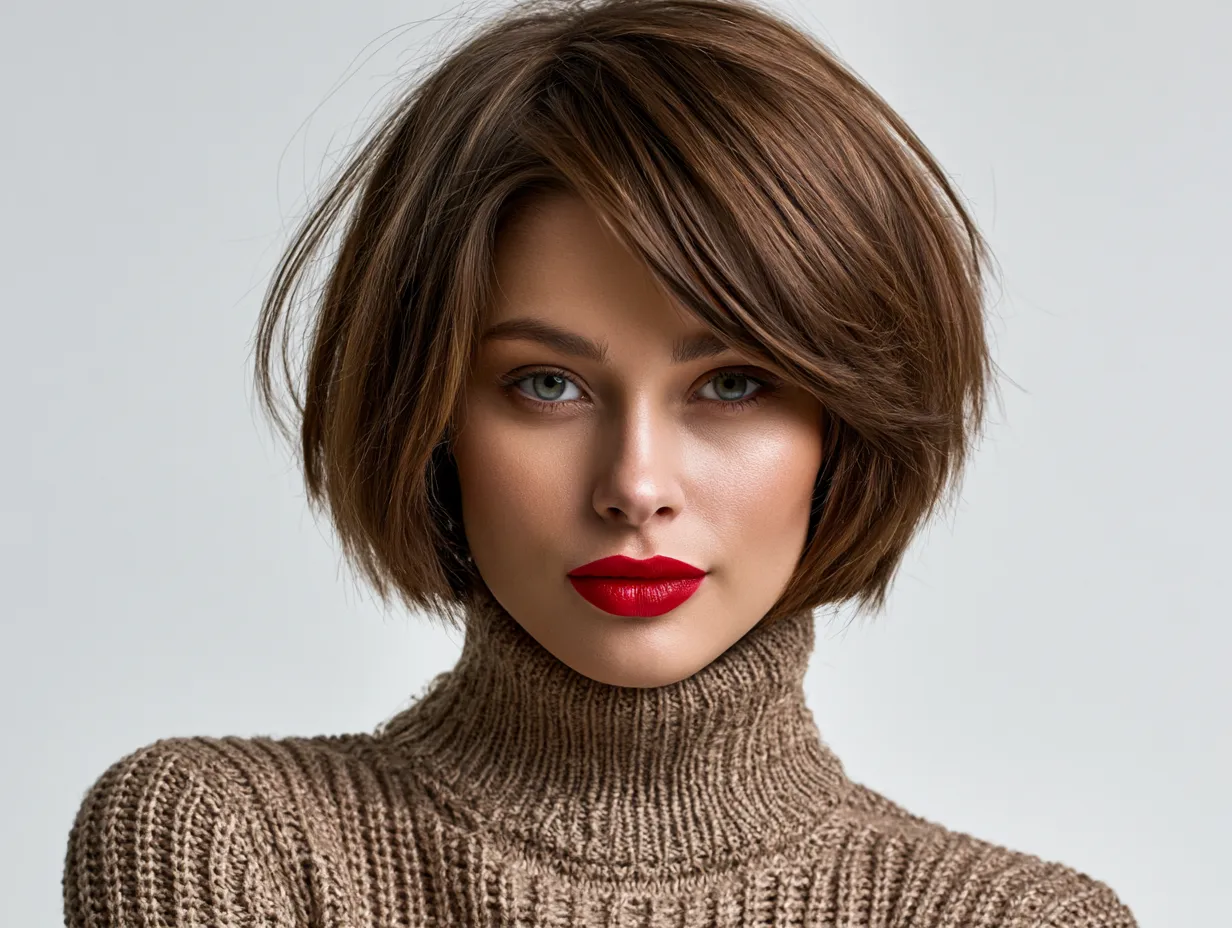
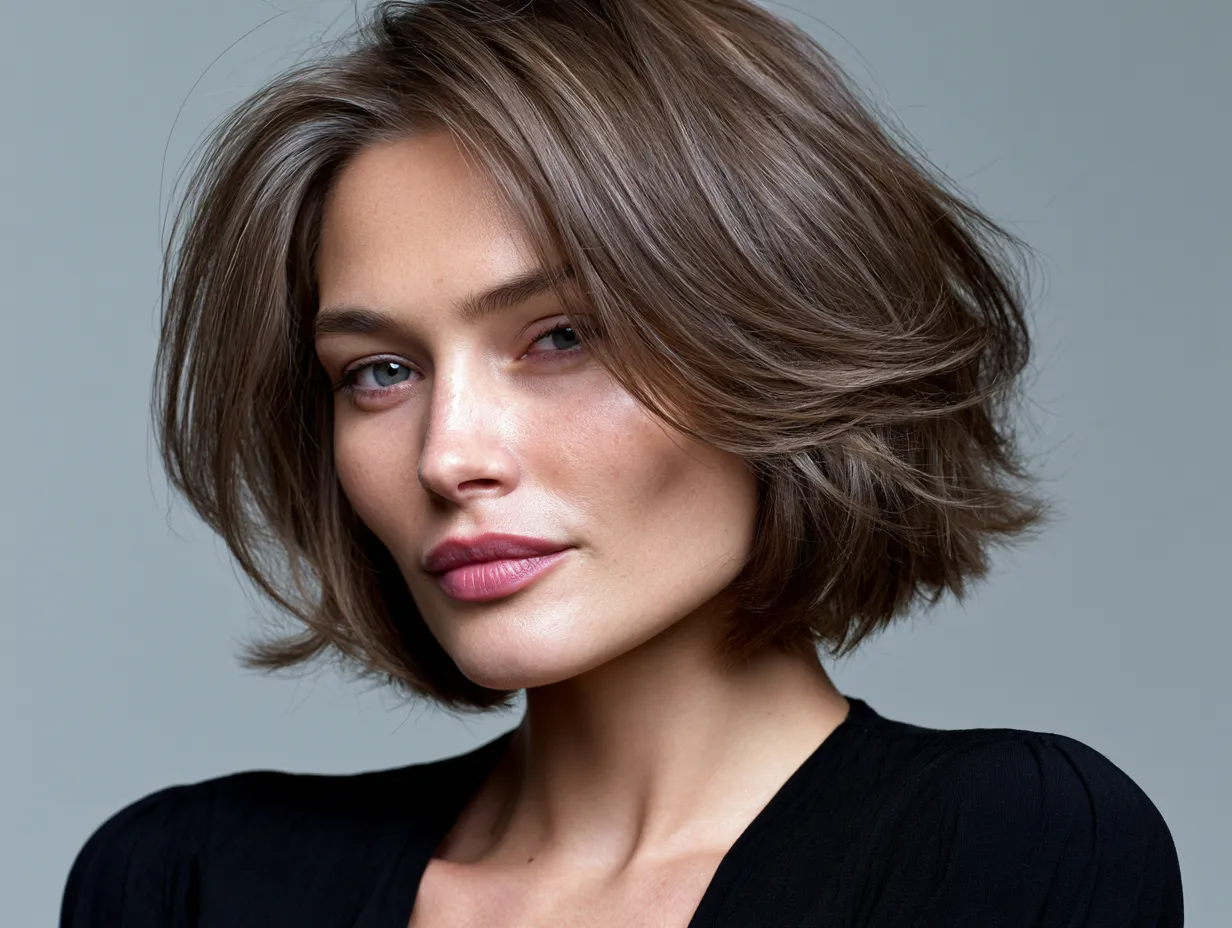
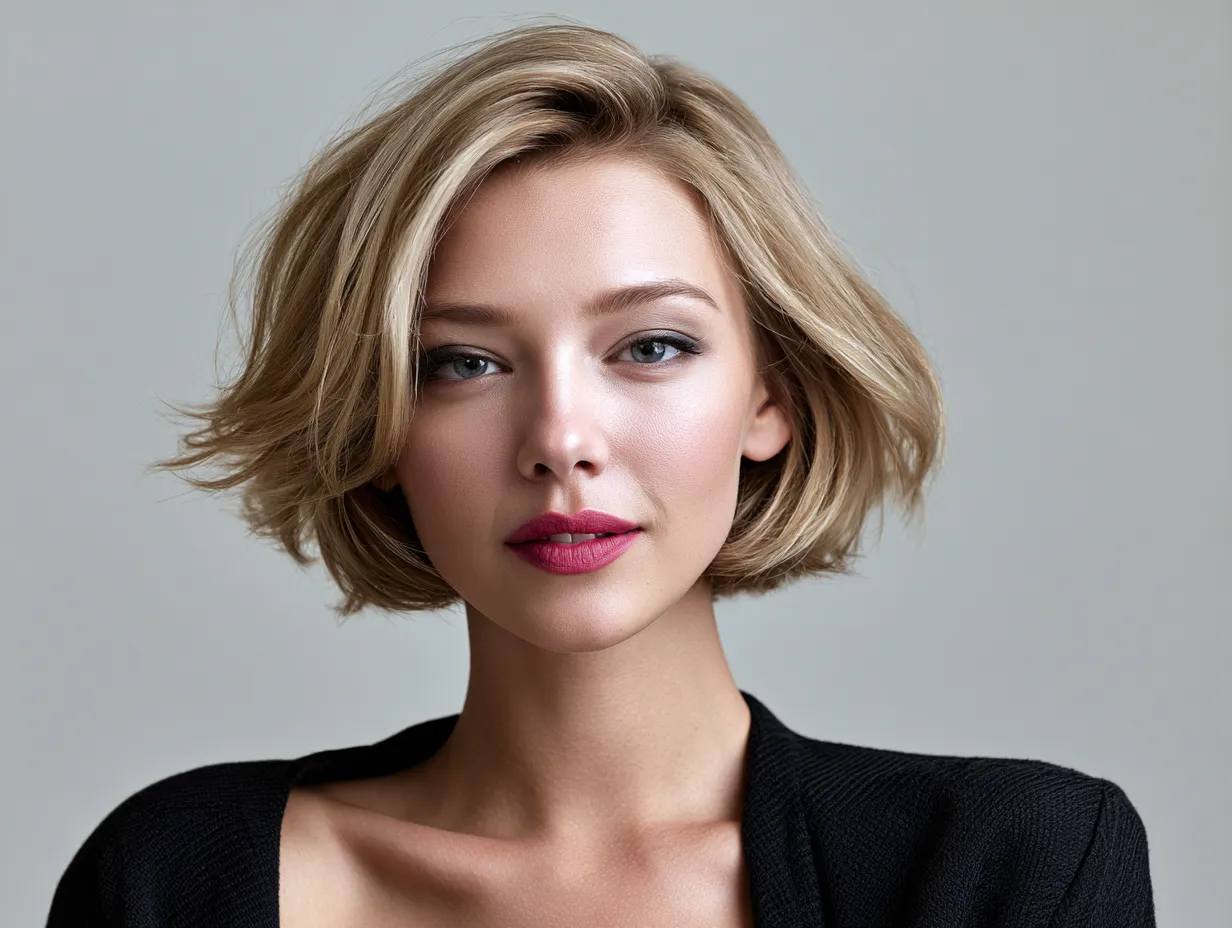
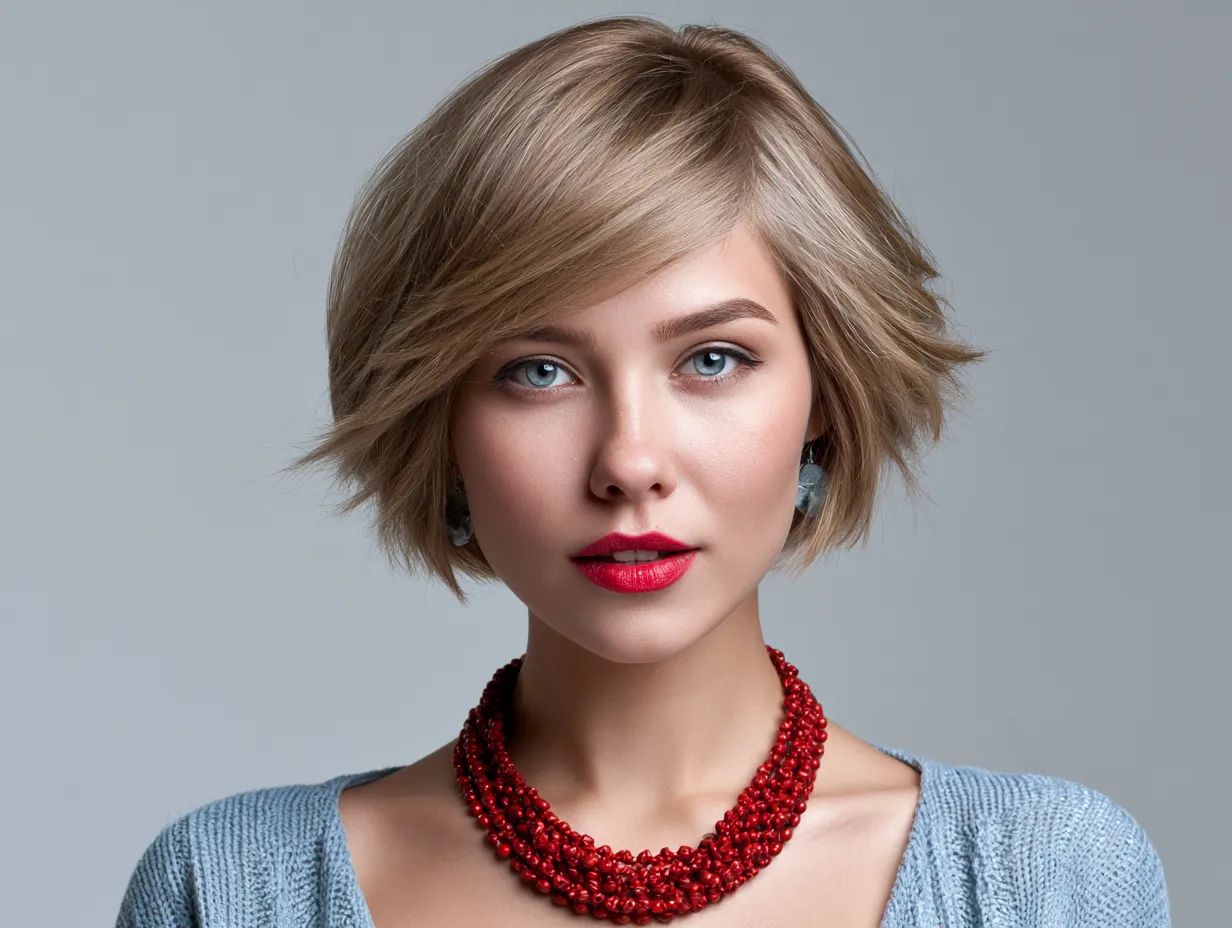
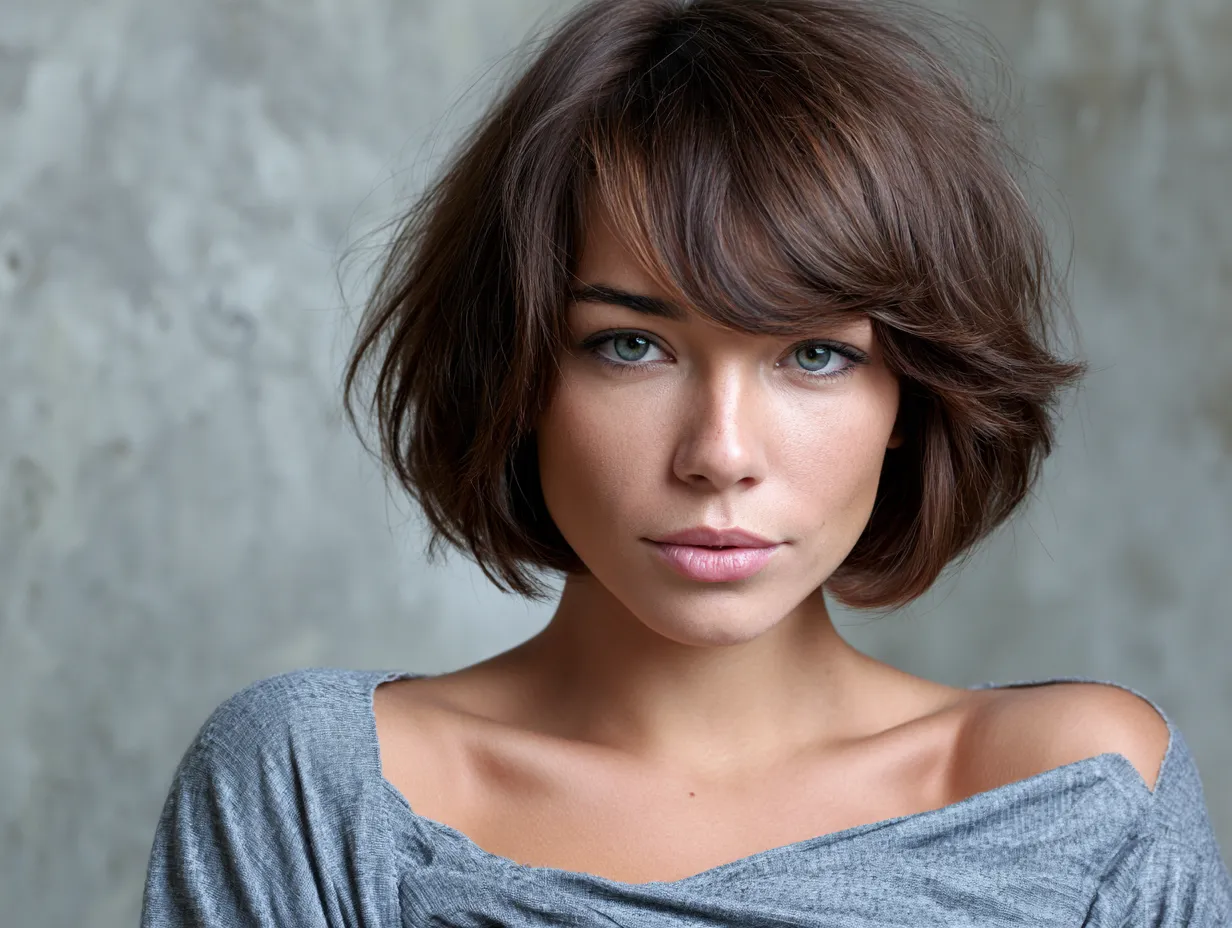
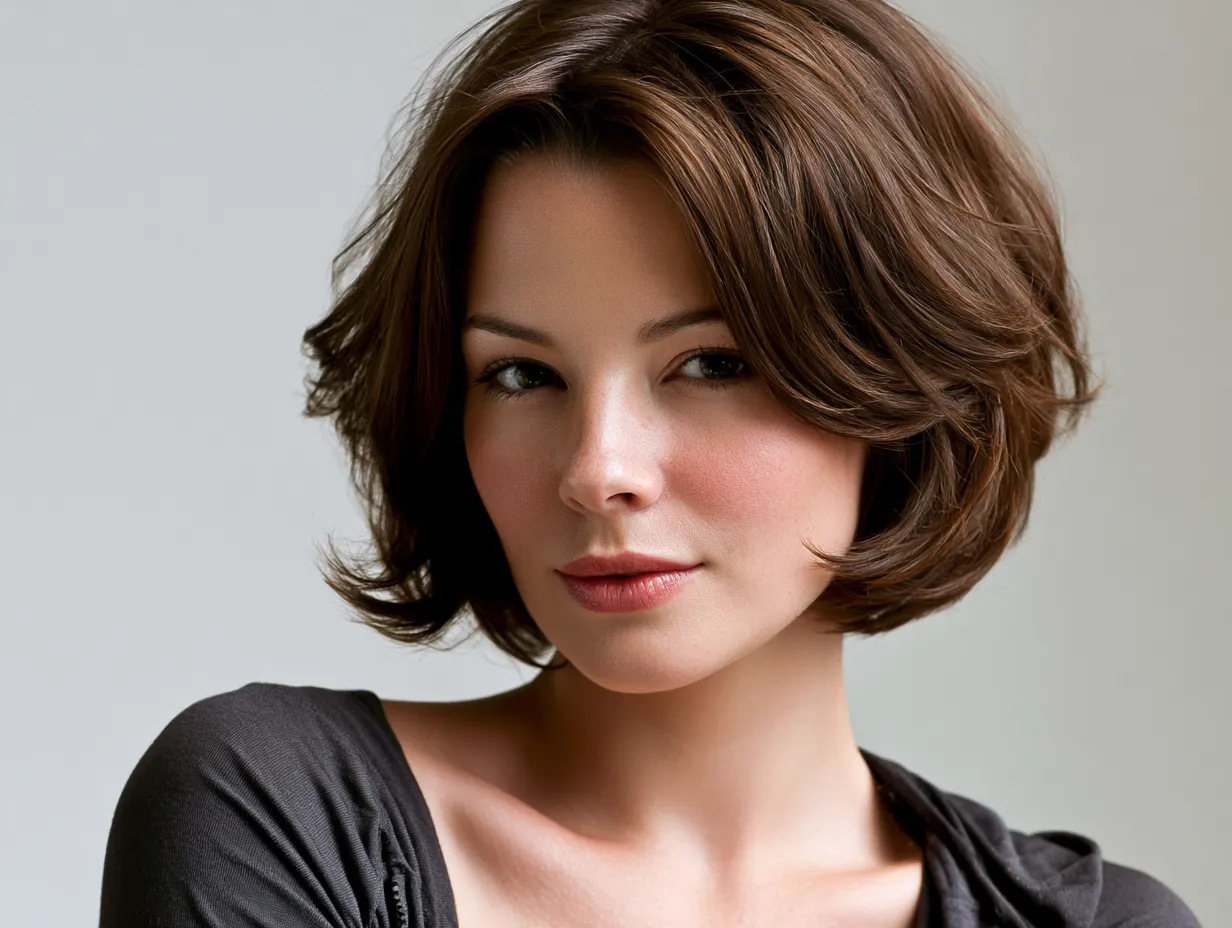
Auburn Waves and the Cut That Does the Contouring Work
Auburn is doing double duty here — it’s a color choice and a sculpting tool. Rich warm tones like these bounce light in ways cooler shades won’t, creating shadow and highlight patterns that read as cheekbone definition even on the most symmetrically round faces. My go-to for this look is a Redken Color Gels formula in the 6RR range ($18–$22 at most salons), which gives that deep mahogany-red without going full burgundy. The layered bob cut sits softly below the jaw — not at the cheek — and that one detail is the difference between elongating and widening.


The waves are the reason this cut stays face-flattering and doesn’t collapse into a puffball. Straight layers on a round face can create a bubble — even spacing, maximum width, zero elongation. Waves interrupt that bubble. They pull strands at varying angles, break any uniform horizontal line, and push volume toward the crown rather than outward at the sides. I stole this trick from my stylist at a session years ago: wrap your wand in 1.5-inch sections, alternate the direction every two sections, and never brush them out. Finger-separate only.
Styling takes about eight minutes once you know the sequence. Start with a volumizing mousse at the roots — Bumble and Bumble Thickening Mousse ($34) gives grip without the crunch — then rough-dry upward. Finish with a 1-inch curling wand and a light mist of flexible-hold spray. What not to do: flat iron the entire thing before waving. You’ll lose the root lift and the whole face-elongating geometry collapses. Flat all over, then curled ends, looks like a 2008 Pinterest mistake, not a structured layered bob hairstyle.
Auburn fades faster than most shades — plan on a gloss treatment every four weeks if you want that rich depth to stay consistent. The Wella Color Fresh Mask in Vibrant Red ($22) between appointments keeps the tone warm rather than brassy. On fair skin, this shade looks like candlelight. On medium tones, it reads almost amber. Either way, you’ll notice that the color itself does part of the jawline definition work, which is why this combination of cut-plus-color is so much more efficient than the bob alone.
Silver Blonde Precision Cuts Where Color Replaces Volume
Silver blonde does something no warm tone can: it reflects light from all directions simultaneously. On a round face, that matters because reflected light reads as dimension, and dimension reads as structure. You don’t need a padded jaw or extra volume at the crown when the color is already creating visual planes. The silhouette on this cut stays close to the head — no stacked volume at the sides — with layers concentrated at the crown and along the jawline. That’s by design. Push the layers outward on a silver blonde bob and you get a halo effect, not a face-framing one.

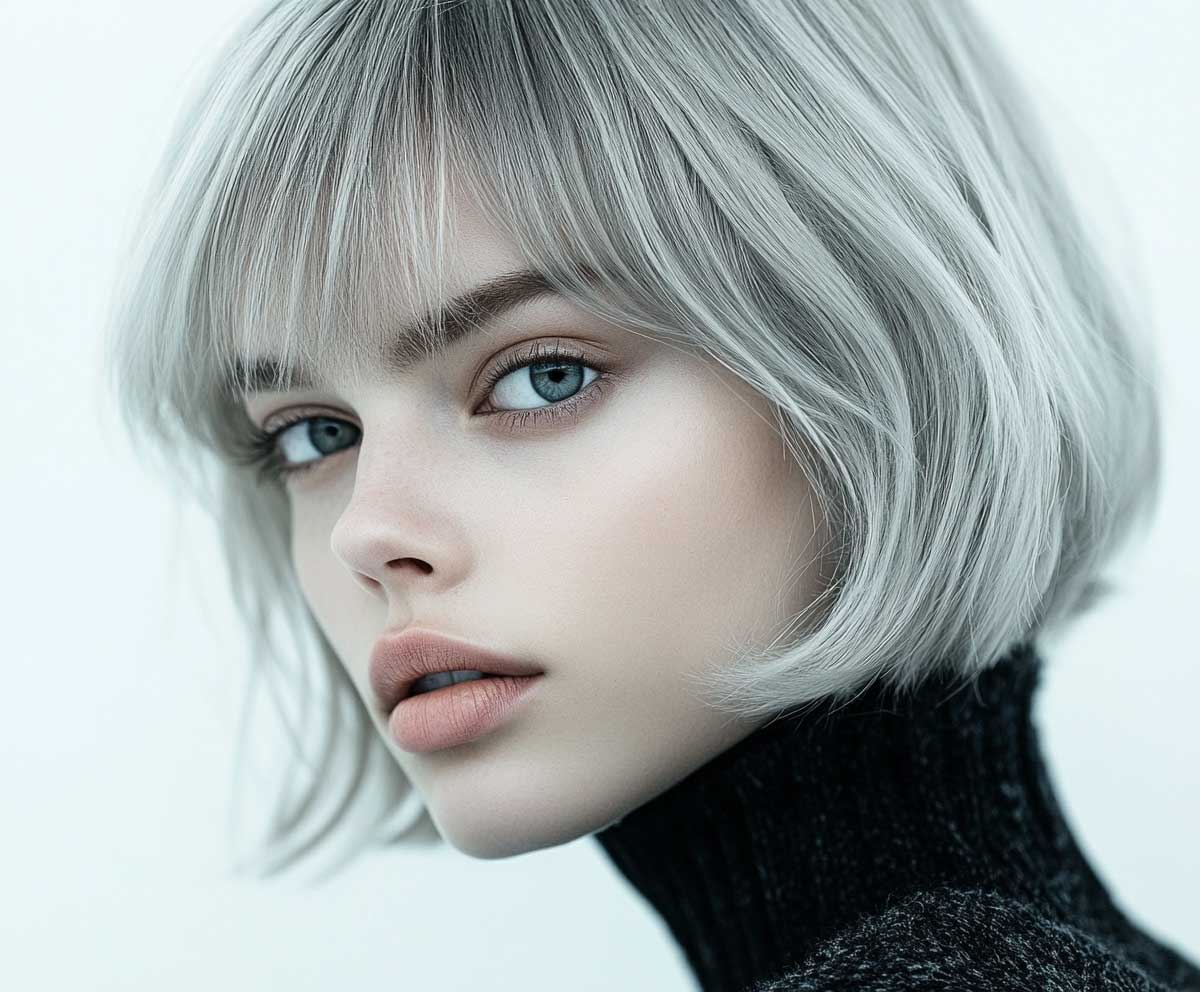
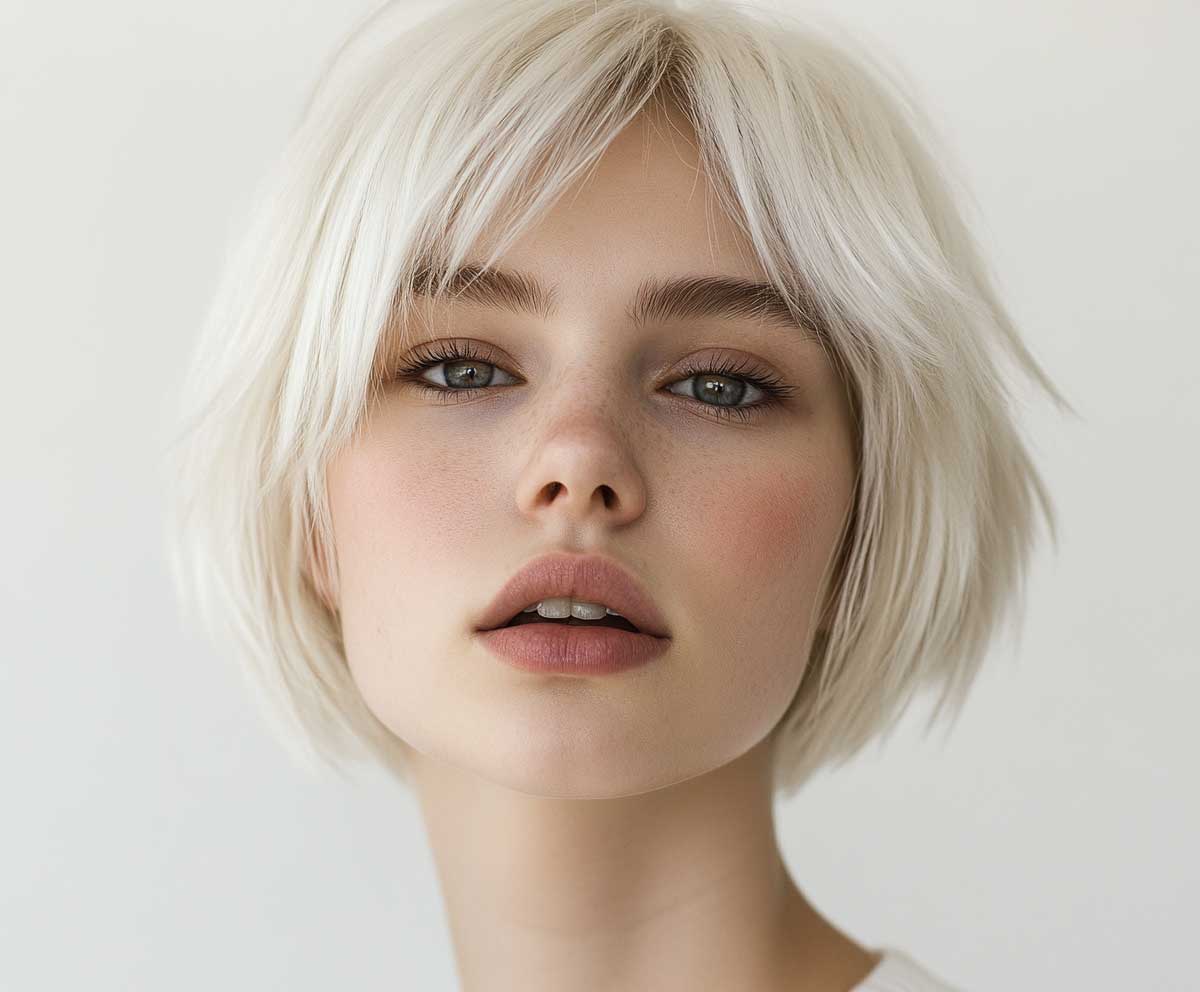
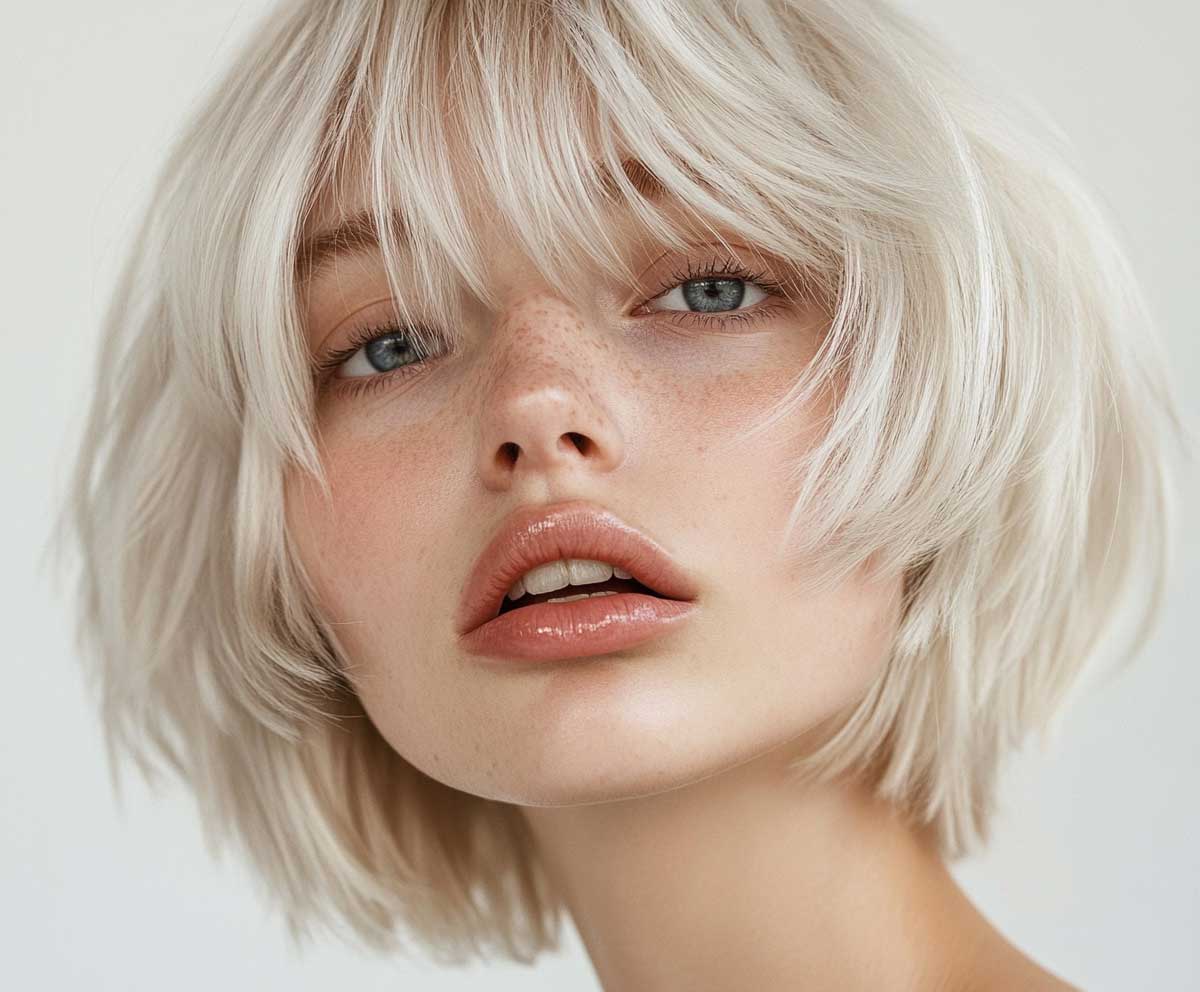
The subtle nape undercut is the under-discussed detail that makes this version work. It keeps the bob sitting flat at the back of the head rather than puffing outward, which — on a round face — would add perceived width at the crown. Ask your stylist specifically for a “disconnected nape” or “cleaned undercut” at the nape, kept about 1.5 cm shorter than the visible bob length. Most round-face clients I’ve spoken to have never requested this detail by name, which is why their silver bobs end up looking rounder than intended. Know what to ask for before you sit down.
Styling is a sleek blow-dry from root to end with a medium round brush, pointed downward. I own two of these — a Dyson-compatible 44mm and a Olivia Garden ceramic 43mm ($18) — and the difference in smoothness is negligible once you’re working with hair in good condition. Follow with a flat iron pass, but only through the mid-lengths and ends. Keep the root area free of direct iron contact: as John Frieda creative ambassador Andreas Wild has noted, styling directly at the root on this cut makes it look old-fashioned and visually rounder, which defeats every purpose of the haircut. Finish with a mirror-shine spray like Kenra Platinum Silkening Mist ($24).
Silver blonde maintenance is honest work. You’ll need a toner refresh every five to six weeks and a strong purple shampoo at home — Shimmer Lights from Clairol ($11) is my go-to, nothing fancier required. Skip the cool-toning routine for even two weeks and the silver drifts warm yellow, which kills the high-definition, face-sculpting quality entirely. The color earns its place when it’s maintained. Let it go and you’ve got a muddy blonde bob that looks like it needs a trim, not a hairstyle delivering visual contouring.
- Length landing at mid-cheek — frames exactly the widest horizontal point of the face. The bob becomes a width-amplifier, not a slimmer.
- Uniform layers cut straight across — creates a bubble shape. Ask for point-cut technique, not scissors flat across.
- Volume pushed outward at the sides — any flipping-out at the ends on a round face adds visual inches of width. Ends should flip down or stay neutral.
- Blunt straight-across fringe — closes off the forehead and adds perceived width at the top tier of the face. Side-swept fringe only on round faces.
- Skipping the off-center part — a dead-center part on a short bob creates perfect bilateral symmetry, which is the definition of a round face reading rounder.
Espresso Brown Texture Breaks Width Without Asking Permission
Dark, rich, choppy-edged — this is the version of the short layered bob hairstyle that does the least styling work and still delivers. The espresso shade gives weight at the perimeter without adding volume, which is the rare combination a round face actually benefits from. Think of it like furniture arrangement: you want visual mass low and close to the face, not floating outward. The choppy razor-cut layers break the horizontal line at the ends, creating micro-angles that pull the eye diagonally rather than straight across. Your face looks longer. It took a single appointment to understand why I’d been doing this wrong for three years.
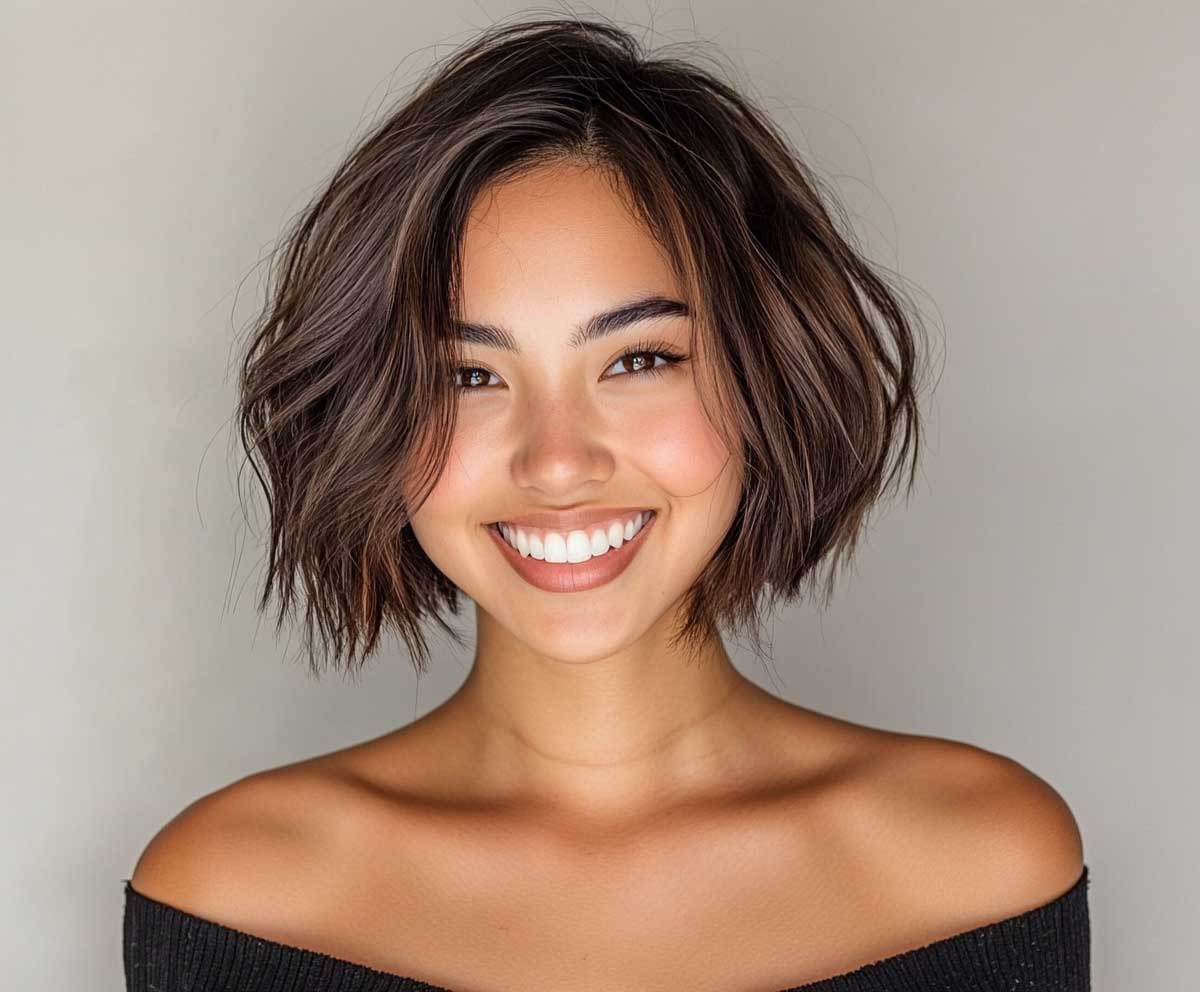
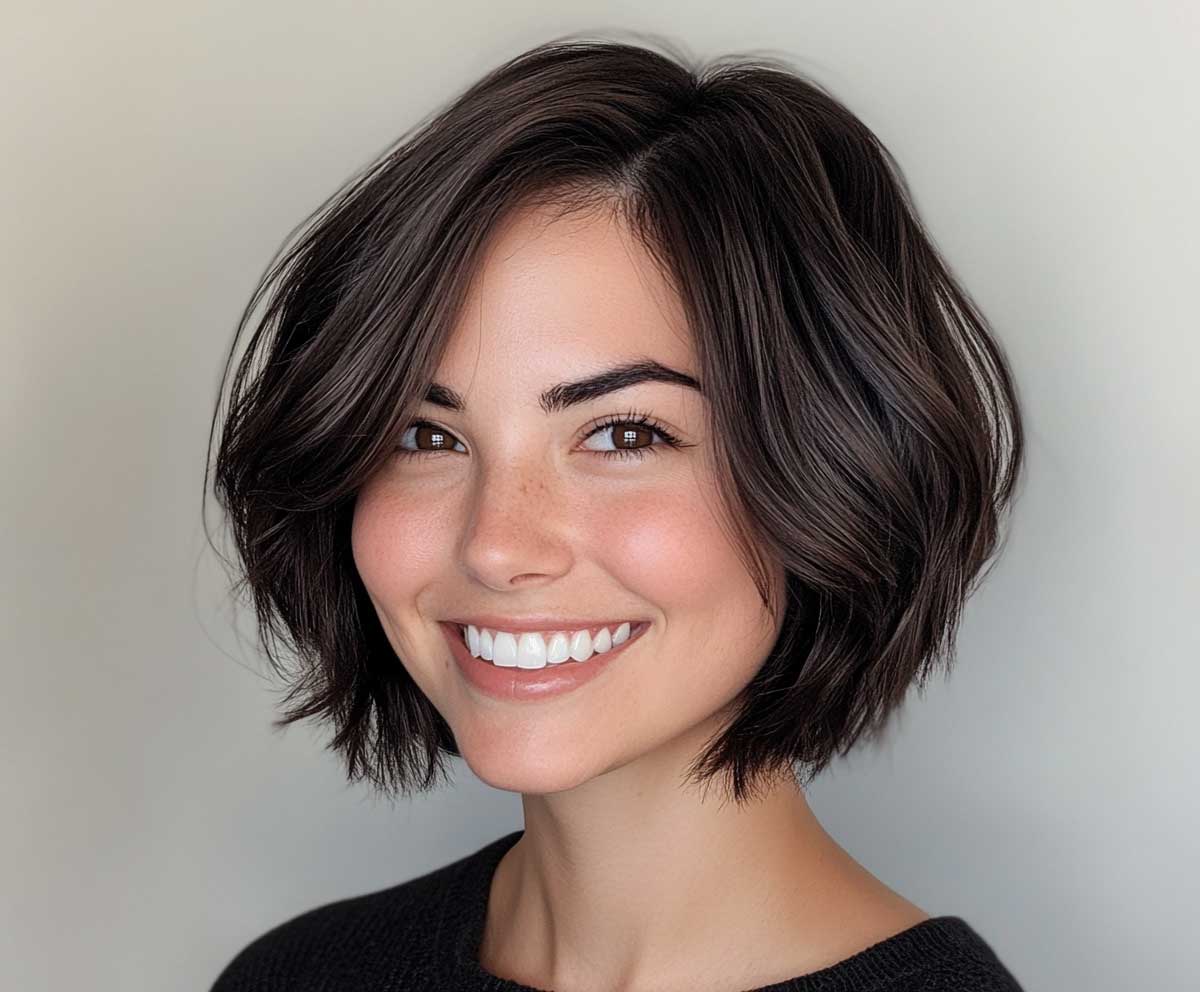
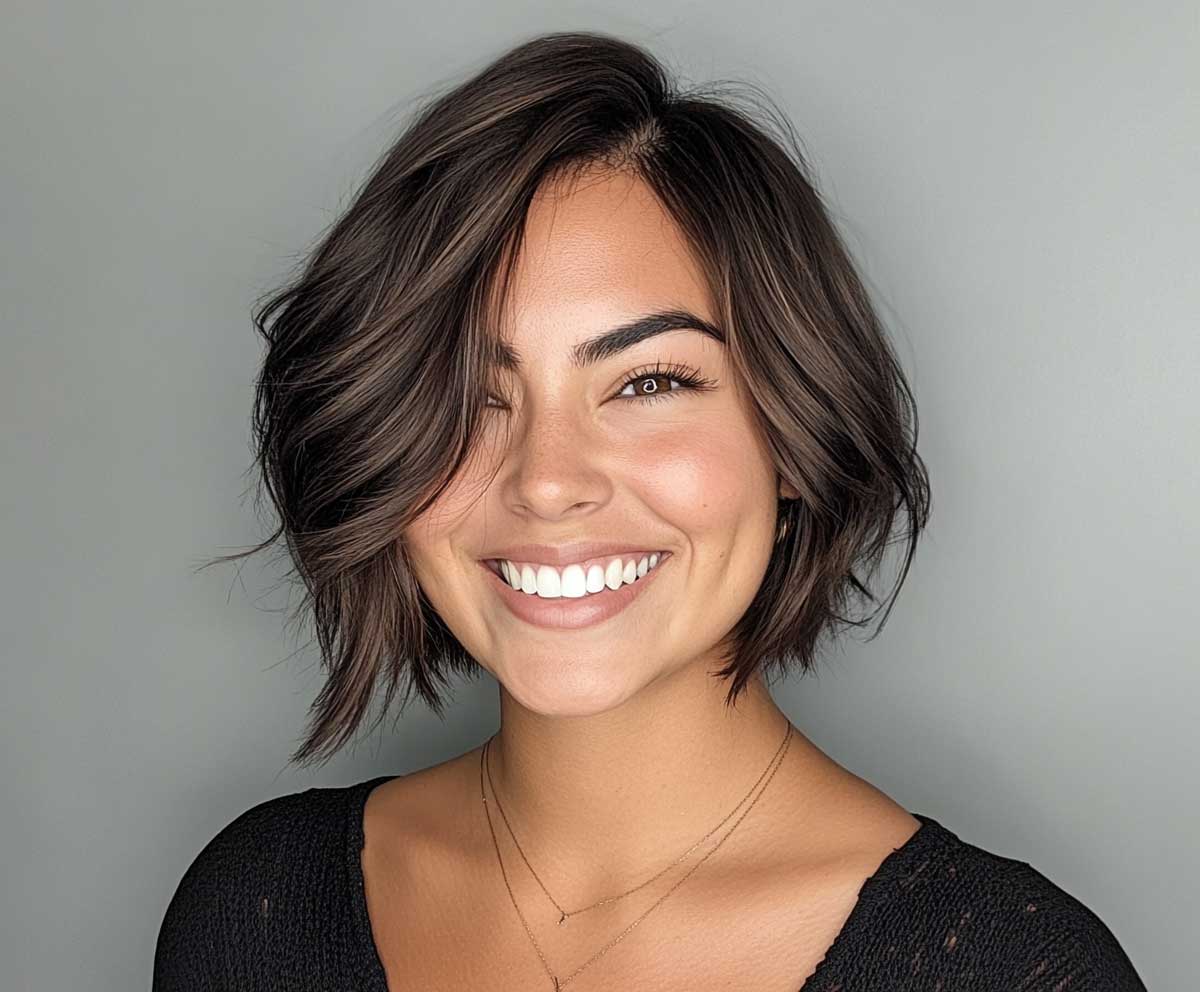
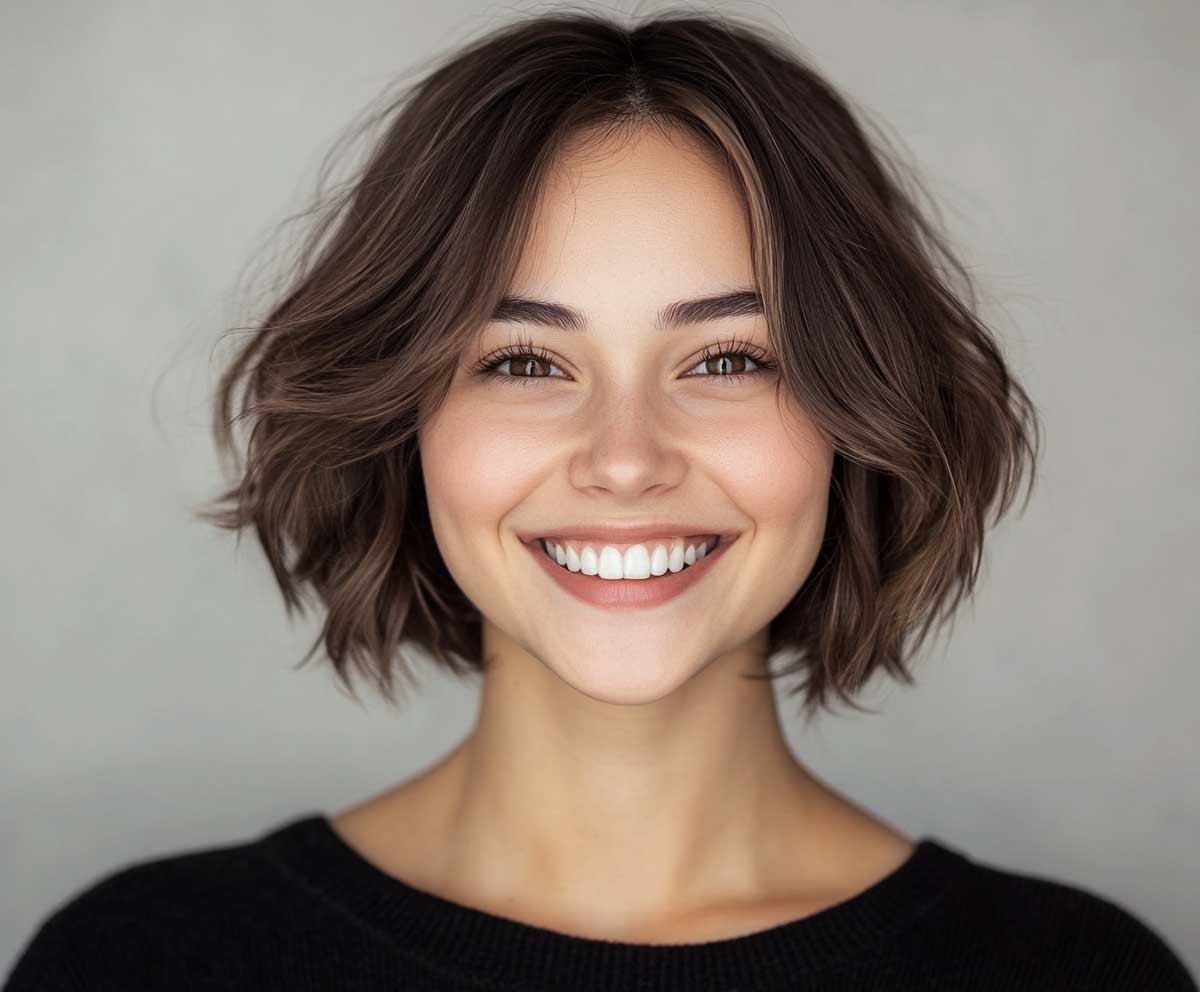
Razor shears — not scissors — are the tool that makes this possible. The razor creates frayed, uneven edges at each layer, which breaks any blunt horizontal line. Scissors held flat would give you a crisp edge that sits across the cheekbone area like a border, calling attention to width. The difference in outcome between those two tools on a round face is significant. Tell your stylist you want razor-cut ends specifically, not point-cut — point-cut softens, razor-cut fragments. Both help, but the texture in this espresso version comes from the latter. For the full breakdown of which bob geometry works on a round face and why, this roundup of bob cuts for round face shapes covers the angle, length, and wave mechanics in detail.
Styling is a 90-second investment: spritz Oribe Dry Texturizing Spray ($49 full size, $26 travel) onto slightly damp roots, scrunch from underneath, and let it air-dry. That’s the entire routine. You’ll notice the texture activates with humidity, which means this bob actually looks better on a humid day than a dry one — a rare reversal of the usual hair luck equation. For wavy hair types, even that spray is optional; a half-teaspoon of Moroccanoil Treatment ($18 small) on the ends is enough to define the texture. Don’t diffuse — heat kills the tousled randomness that makes this version face-flattering.
Espresso brown stays rich for about eight weeks before it needs a refresh, which makes it one of the more practical color choices in the short layered bob hairstyle lineup. The depth works best on medium to deep skin tones, where the contrast between hair and skin adds dimension to the face. On fair skin, I’d push it slightly warmer — a chocolate brown with a reddish undertone rather than pure cool espresso — to avoid the haircut reading too stark. See how auburn bob cuts handle that same warm-vs-cool balance for round faces with more depth and examples.
| Bob Color | Works Best On | Avoid If |
|---|---|---|
| Auburn / Warm Red | Fair to medium, warm undertones | Very cool/pink undertones — goes orange |
| Silver Blonde | Fair, cool undertones, fine hair | Deep skin — high contrast loses definition |
| Espresso Brown | Medium to deep, neutral undertones | Very fair — push warmer to avoid starkness |
John Frieda’s creative stylist ambassador Andreas Wild puts it plainly: for anyone with a rounder face shape, keeping the layers longer rather than stacking them short is the structural move that lets the cut flatter rather than fight the face’s natural geometry. Elle’s full expert guide to styling a short layered bob covers exactly how to read your texture and get the right layer placement from your stylist before the cut starts.
Final Word
The Short Layered Bob for Round Faces Earns Its Keep Because Layers Do the Geometry Work
Three colors, three different contouring mechanisms — auburn waves reshape with movement, silver blonde sculpts with light, espresso texture breaks width with randomness.
None of them work if the length hits mid-cheek or the volume fans sideways. The structure of the cut matters more than the color choice or the styling product.
Save this post.
Related Topics
FAQ
What is the best short bob cut for a round face?
Does a short layered bob haircut flatter round faces?
What color works best on a short layered bob for a round face?
How short should a bob be for a round face shape?
Is a rounded bob or a layered bob better for a round face?
How do I style a short layered bob for a round face at home?
Complete guide
The Right Haircut for Your Face Shape Starts Here
Oval, round, square, heart, long, diamond — all in one place
Complete guide
Every Bob Haircut Worth Knowing About Right Now
Blunt, layered, choppy, angled, pixie bob — every cut by length, face shape and texture in one place