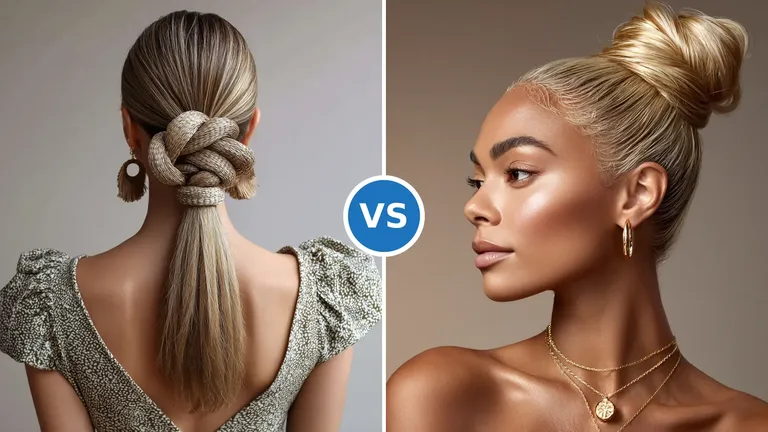
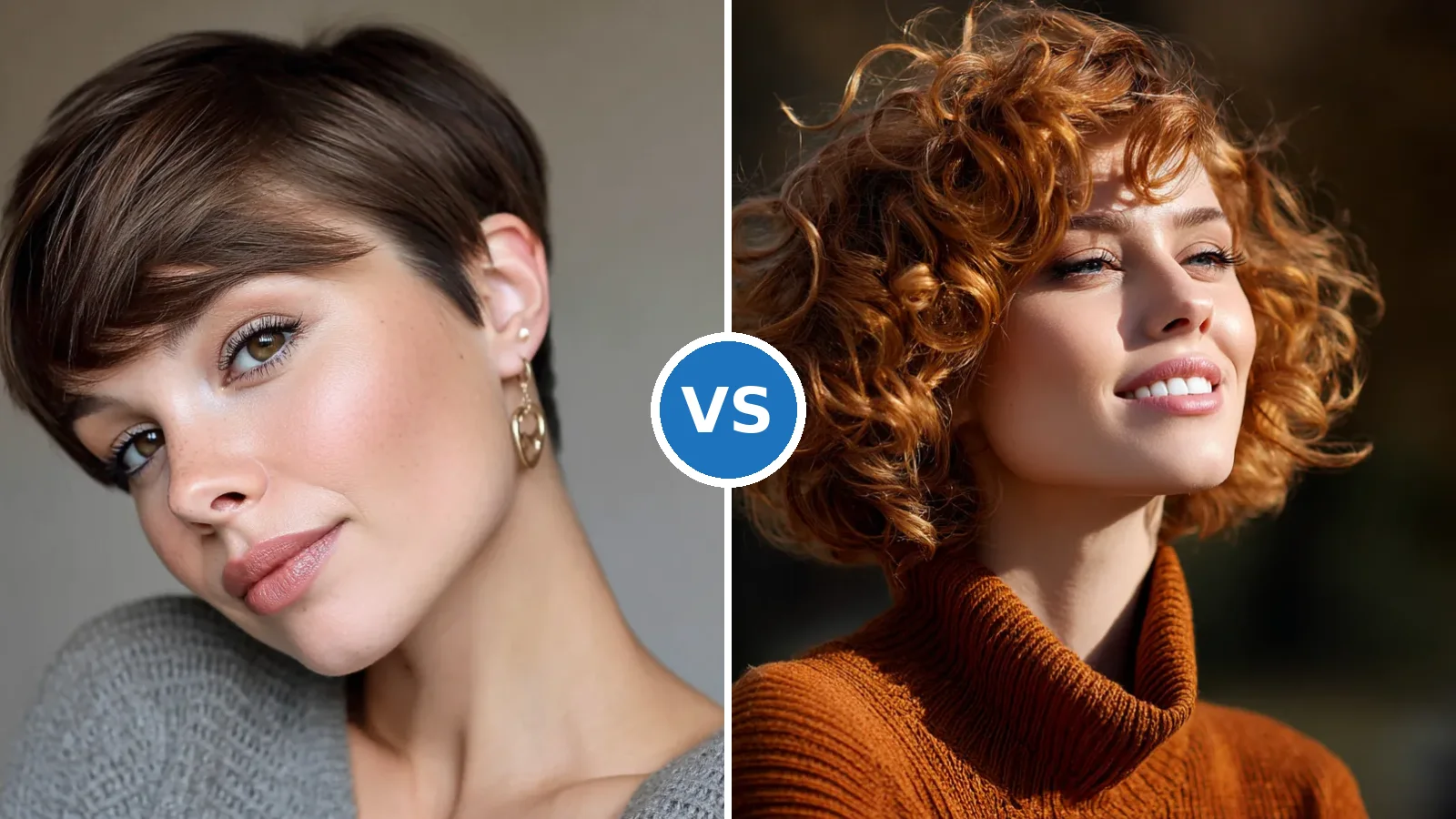
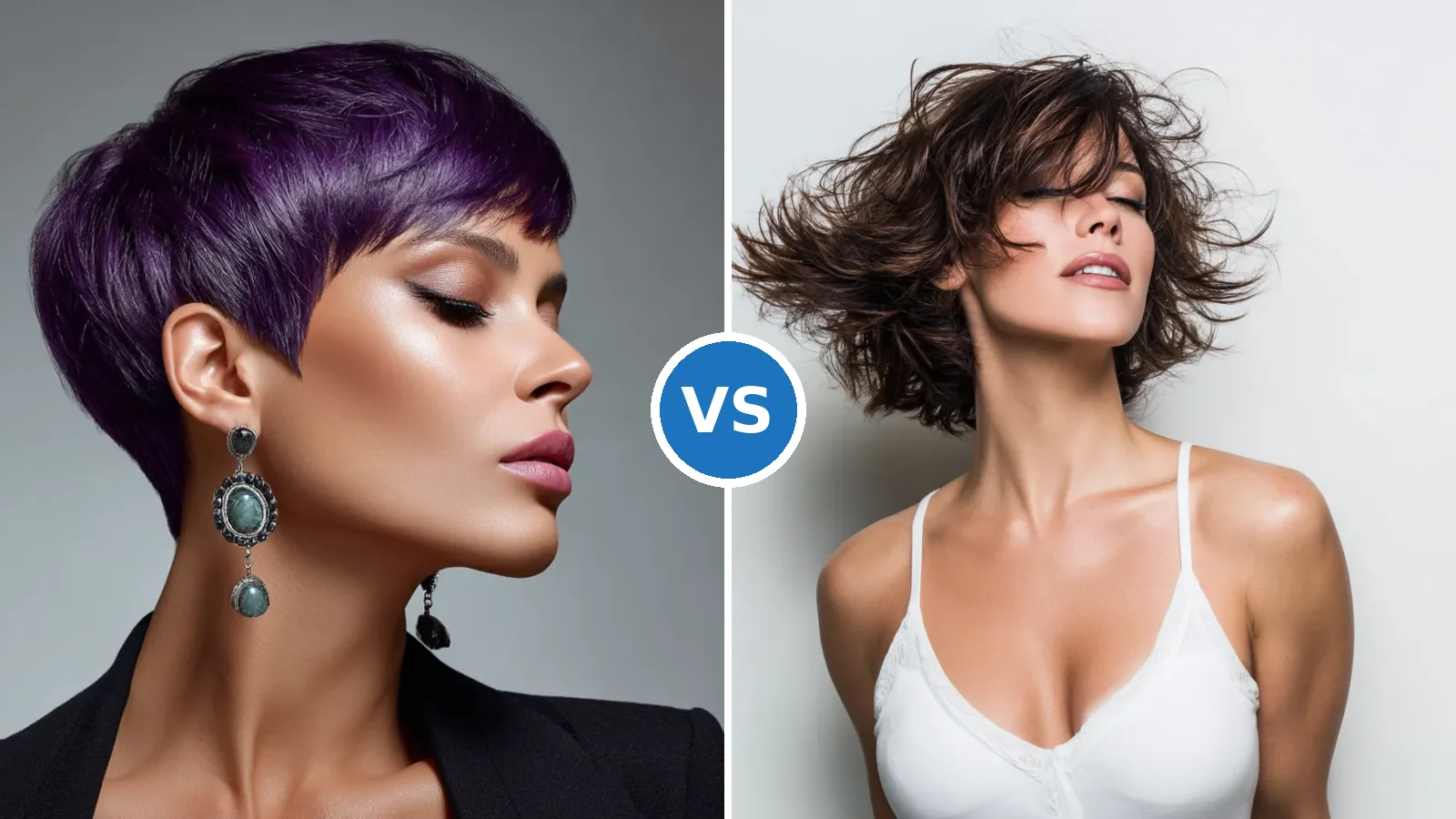
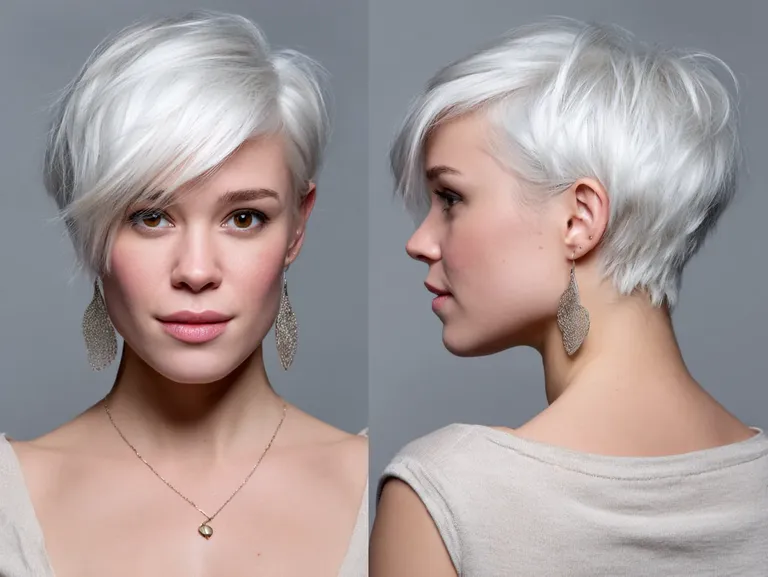
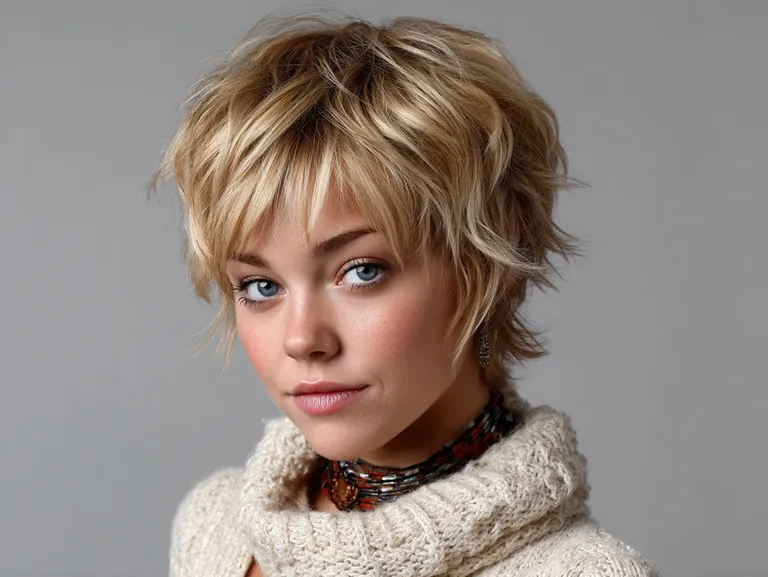
Short hair on round faces works best when the cut adds height at the crown, breaks the line at the jaw and keeps some movement near the cheeks. Cuts that do these three things make the face read longer and more balanced, while blunt, jaw-length cuts with no layers add width exactly where the face is already widest.
Three styles do this in different ways: the panel haircut, the sculpted undercut and shattered layers. They share one idea, deliberate contrast. A soft face looks sharper next to structure or texture, so there is an option for most personalities and upkeep preferences. If you are also weighing a bob, pageboy haircut vs bob shows how edge and softness change the result.
Styling matters as much as the cut. A light texturizing product on the ends and a little lift at the roots keeps the shape defined between salon visits, while skipping it can let even a precise cut fall flat by midday.
- The panel haircut uses sharp planes at the sides or back to break symmetry and suits professional settings
- The sculpted undercut removes bulk at the sides and keeps length on top, reshaping the silhouette toward oval
- Shattered layers use irregular lengths and natural movement to slim the face without hard edges
- All three cuts need crown volume, since flat roots cancel the elongating effect
- Regular trims keep the edges that make these cuts work
- The cut to avoid is a blunt, jaw-length bob with no layers


Short Hairstyles for Round Faces with Panel Haircut
Short hairstyles for round faces rarely get as architectural as the panel haircut, and that is what makes it work. Sharp planes cut along the sides or back slice through the soft roundness and create the angular contrast a round face needs, so the silhouette reads as designed rather than simply trimmed. The effect is similar to adding a straight line to a curved shape: the geometry does the visual lifting.


Day-to-day styling is simple. A panel at the back paired with light crown texture lengthens the silhouette, and a small amount of cream or pomade applied only at the structural edges keeps the lines crisp without making the hair stiff. The usual mistake is working product through the whole head, which weighs down the crown and softens the very edges the cut relies on.
The cut suits client-facing and creative settings alike because it looks intentional without looking fussy. Bold glasses, a graphic lip or sculptural hoop earrings stand out more against its clean framing, and the balance draws attention to the eyes and cheekbones, which are often a round face’s strongest features.
If movement appeals more than structure, compare the panel cut with feathered short hair for round faces, which creates a similar elongating effect through soft tips rather than hard lines. Looking at both before booking makes it easier to tell the stylist what you want.
Short Hairstyles for Round Faces with Sculpted Undercut
Short hairstyles for round faces that include an undercut are doing something structural: removing bulk at the sides, where a round face is widest, while keeping length on top to build height. The geometry is simple. Lower the weight at the widest point, raise it at the crown, and the face reads as oval rather than circular.


Care is more flexible than most people expect. The trimmed sections need periodic clipper touch-ups, while the top layers need little beyond a lightweight mousse at the roots. The undercut can stay hidden under longer layers for work and be swept back for evenings, so one haircut gives two looks. It also suits finer hair, because removing weight at the sides lets the remaining hair stand taller.
Shorter sides also cut down on styling time and heat around the neck, and with less hair at the sides there is less to expand than in a full-coverage short bob.
Some wearers add shaved patterns to the undercut section, such as geometric lines or botanical shapes, so the detail shows only when hair is tied up or swept back. The plain sculpted version is just as effective without the extra upkeep. For a comparison with a layered bob on a round face, the short layered bob for round faces post breaks down the visual differences.
Short Hairstyles for Round Faces with Shattered Layers
Short hairstyles for round faces with shattered layers work like the inverse of a rigid, structured cut. Instead of adding hard angles, they replace the face’s uniform roundness with irregular movement that reads as elongated, much like a vertical stripe on a top. Because they rely on texture rather than weight removal, they suit very fine hair that cannot carry an undercut.
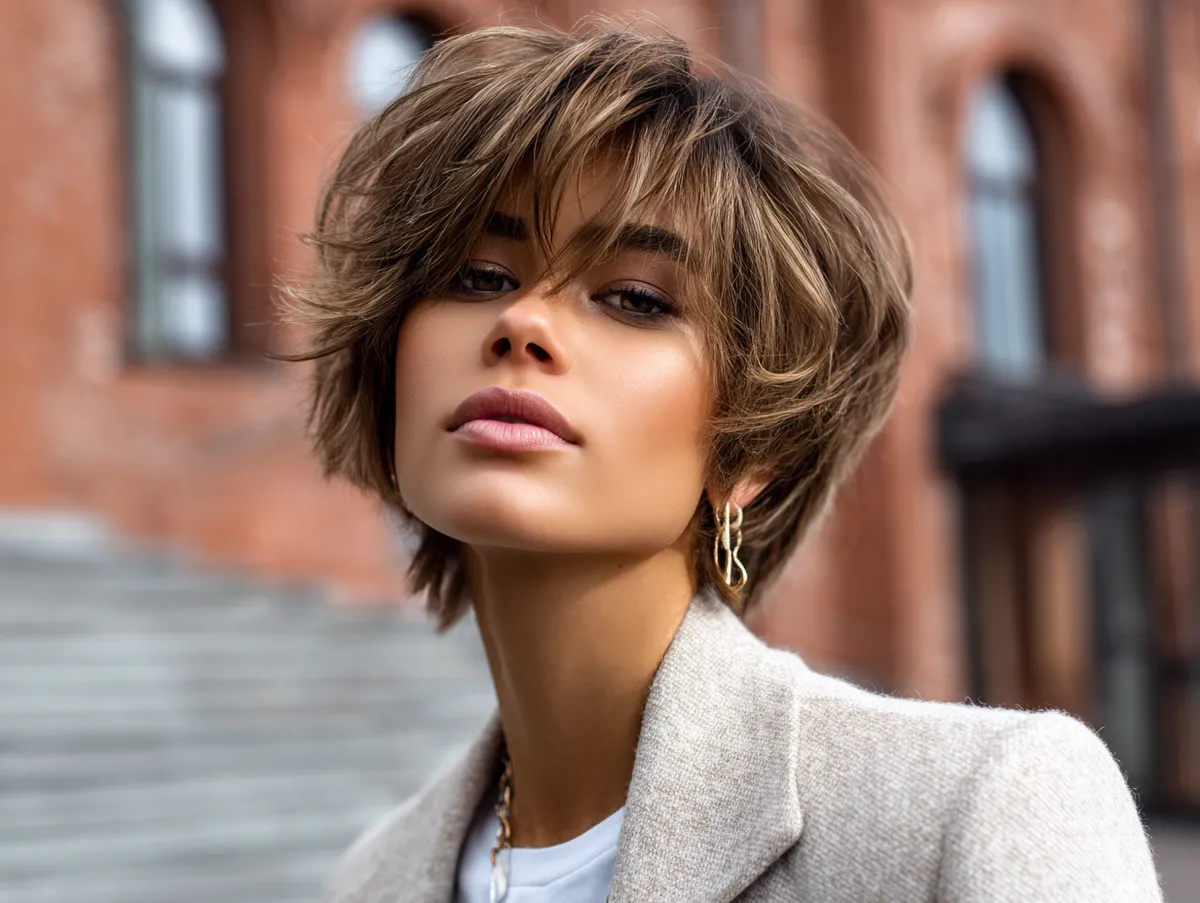


This cut suits fine through thick hair without changing technique, because the razor or point-cut method adjusts the degree of separation. On fine strands the shattered ends catch the light and suggest density. On thicker hair that puffs out at the sides, the broken layering removes weight where the face widens, which is more flattering than a blunt trim that sits like a shelf. Ask the stylist for point-cut ends rather than scissor-over-comb, which gives a softer, less defined result.
Products should support the cut rather than override it. A small amount of dry texture paste or a light serum worked through the ends emphasizes separation, while heavy wax or pomade applied throughout clumps the broken ends together and erases the texture. A dry texturizing spray, such as the Oribe dry texturizing spray product page, is one option for keeping definition between washes.
No two shattered cuts look alike, since the way individual strands catch and break differs on every head, so the cut works with natural hair texture instead of fighting it. Soft waves for the weekend, pin-straight for a formal look and tousled air-dry for everything else all start from the same cut. For similar movement principles in a short bob, beach waves short hair for round faces uses the same elongating logic with even less structure, and wolf cut vs shag compares two other texture-led options.
The Takeaway
Short haircuts don’t just work on round faces, they transform them when the structure is right
The panel cut delivers architectural contrast through sharp planes. The sculpted undercut removes width at the sides and builds height at the crown. Shattered layers replace stiff symmetry with natural, elongating movement.
Every one of these cuts depends on crown volume, so flat roots undo the effect. A mousse at the roots before blow-drying takes under a minute and is one of the simplest ways to protect the shape. Precision cuts also need regular trims to keep their edges. Save this post before your next salon appointment so you have the reference images ready.