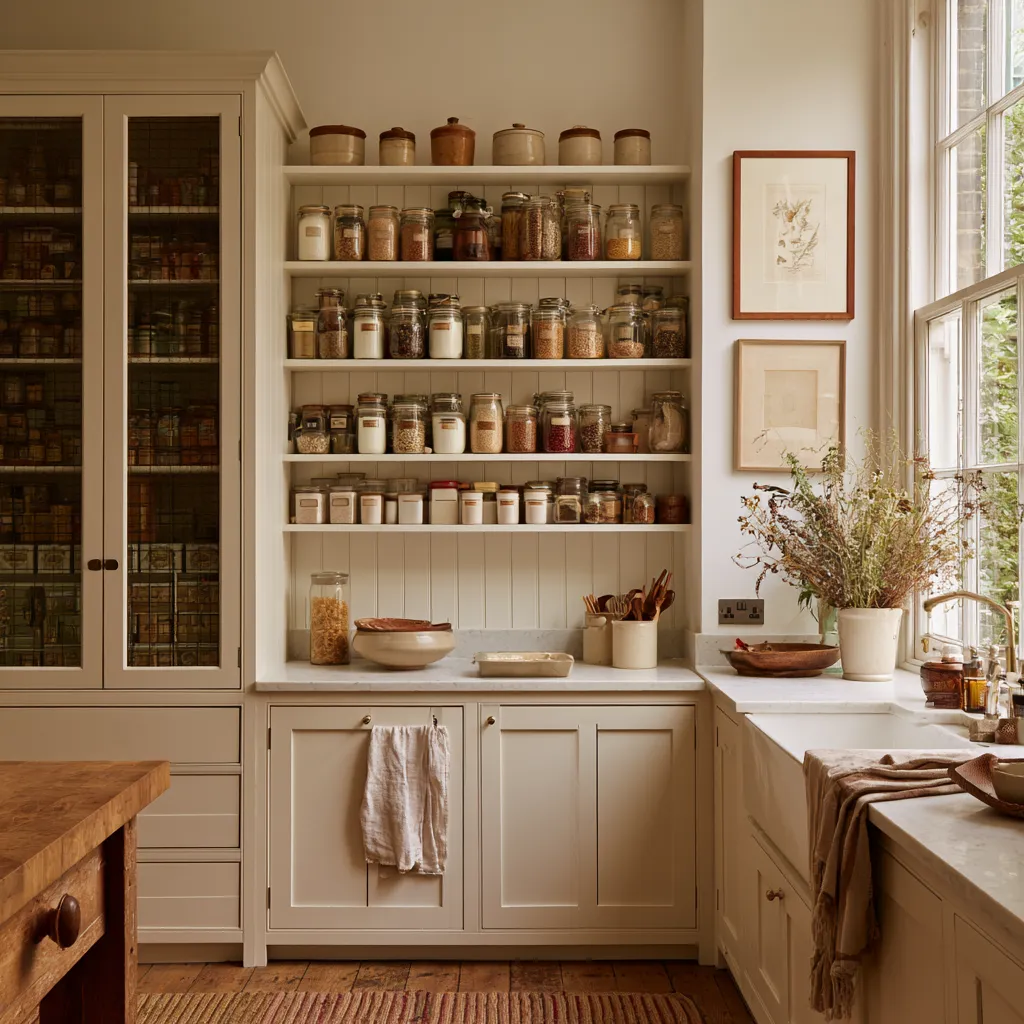
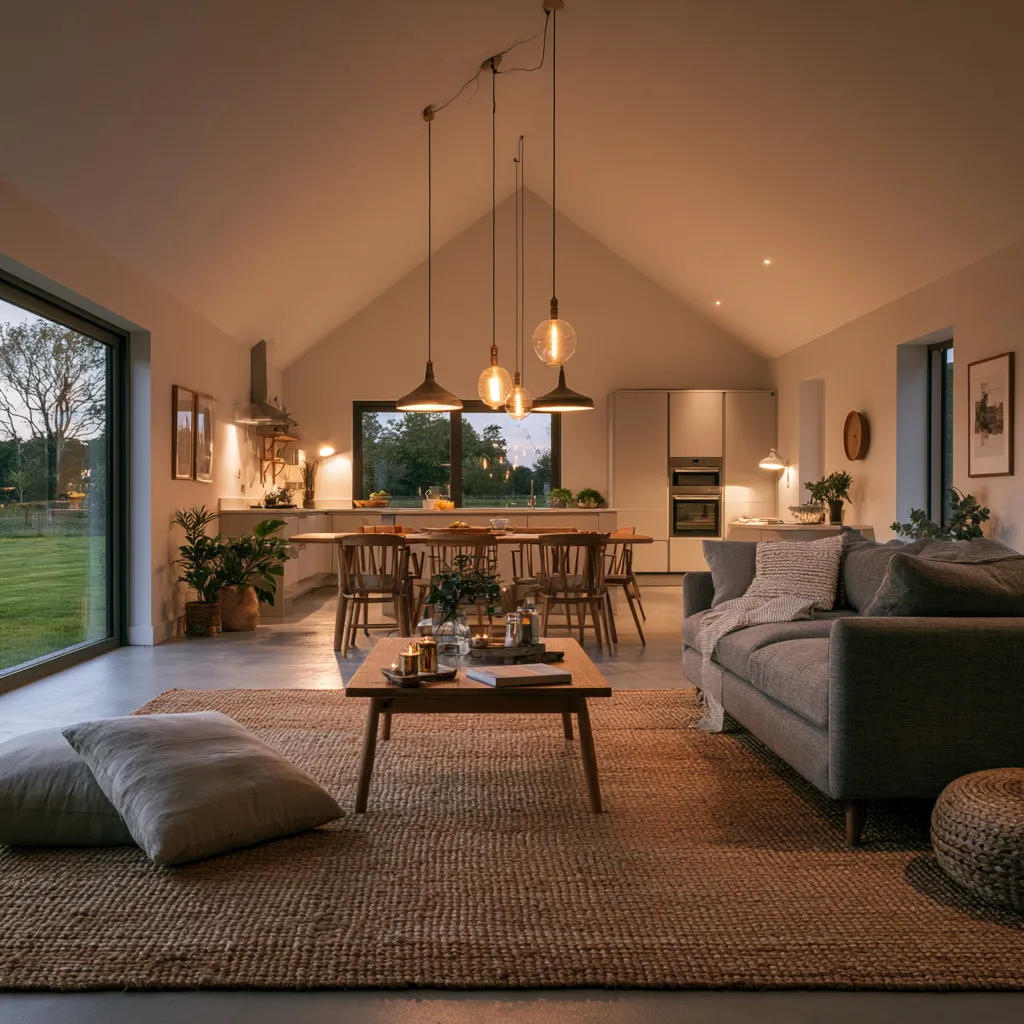
Island countertop ideas get interesting the moment you stop treating the island as a smaller copy of the perimeter counters. Because the island stands alone and is seen from every side, it can carry a material that would feel too loud along a full kitchen wall. Recycled glass in concrete, gold-veined marble, pastel terrazzo, live edge wood, stainless steel and a concrete-terrazzo blend all work here, and each one solves a different problem. Pick the material by how you cook first and by how it looks second.
Do unusual surfaces actually hold up on a working island? Most of them do, provided you accept their specific upkeep: marble and wood need sealing, concrete needs its sealer refreshed, and stainless steel needs almost nothing. Average installed prices run from about $35–$40 per square foot for wood and terrazzo to $200 for premium marble, so the gap between options is wide. Set a per-square-foot ceiling before you visit a slab yard.
Think of the island as the centerpiece on a dinner table: everything around it can stay plain if this one object has presence. The sections below cover where each material shines, where it fails and what it costs, followed by a side-by-side comparison. Read the drawbacks before the highlights, because those decide whether a surface still pleases you after five years.
Quick Scan
- Recycled glass bound in concrete averages $60–$100 per sq ft, far below solid glass slabs at $200–$250.
- Each waterfall side on a marble island typically adds $200–$600 to the bill.
- Terrazzo installs for about $40–$75 per sq ft and can last more than 75 years with care.
- Stainless steel averages around $95 per sq ft yet needs virtually no maintenance.
- Wood and marble demand regular sealing; steel and well-sealed terrazzo ask for the least attention.
- Let one statement island lead and keep the perimeter counters calmer.
Recycled glass in concrete is the eco pick among island countertop ideas
Recycled glass and concrete island countertops suspend crushed bottle glass in a cement binder, so the polished surface shows flecks of color like a creek bed seen through clear water. The concrete supplies weight and heat tolerance, while the glass catches pendant light from every angle. Average prices for a glass countertop with a concrete binder sit around $60 to $100 per square foot, well below solid recycled glass slabs at $200 to $250. Ask the fabricator for a sample polished to your exact finish, because glass density changes the look dramatically.
Is this unique countertop practical for a family kitchen? Yes, as long as the sealer is kept up, since concrete is porous and an unsealed slab absorbs oil and wine quickly. The glass itself does not stain, so the vulnerable part is always the binder between the fragments. Reseal on the schedule the fabricator specifies and keep a pH-neutral cleaner by the sink.


Color choice matters more than the exact glass percentage. Gray concrete with clear or blue glass reads coastal and cool, while warm-tinted concrete with amber or green shards leans toward a farmhouse kitchen. Skipping a full-slab mockup is the common mistake here, since a 4-inch sample hides how clustered the fragments may look across an 8-foot island. Request a photo of a finished island from the same batch before you sign.


Simple flat-front cabinetry, dark metal stools and plain pendants let the glass speckle do the decorating. If you want saturated color on the perimeter counters as well, compare colorful kitchen countertops in blue quartz, green marble and red laminate before committing, because two lively surfaces tend to compete. Keep the backsplash plain so the island stays the only patterned surface in view.
Waterfall marble with gold veining turns the island into sculpture
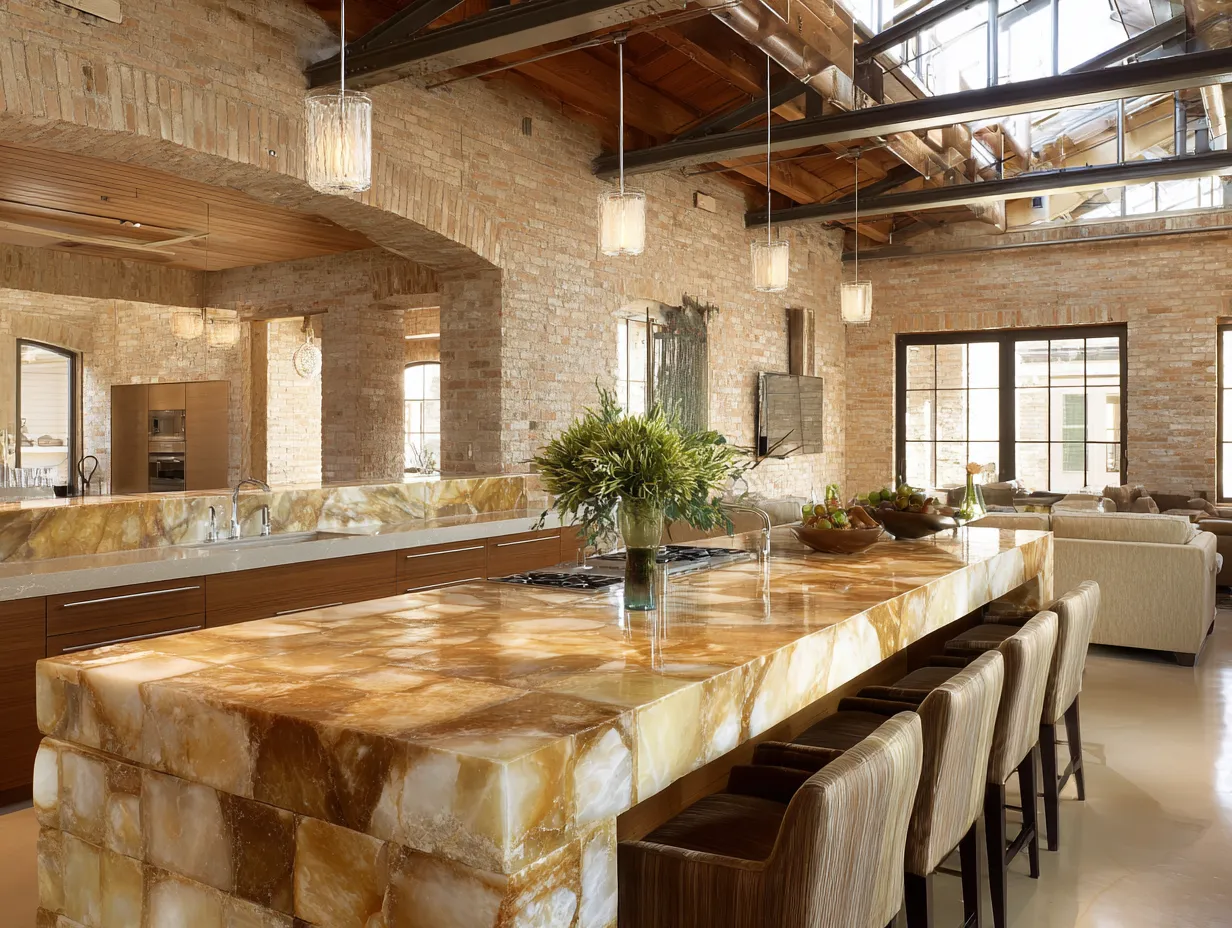
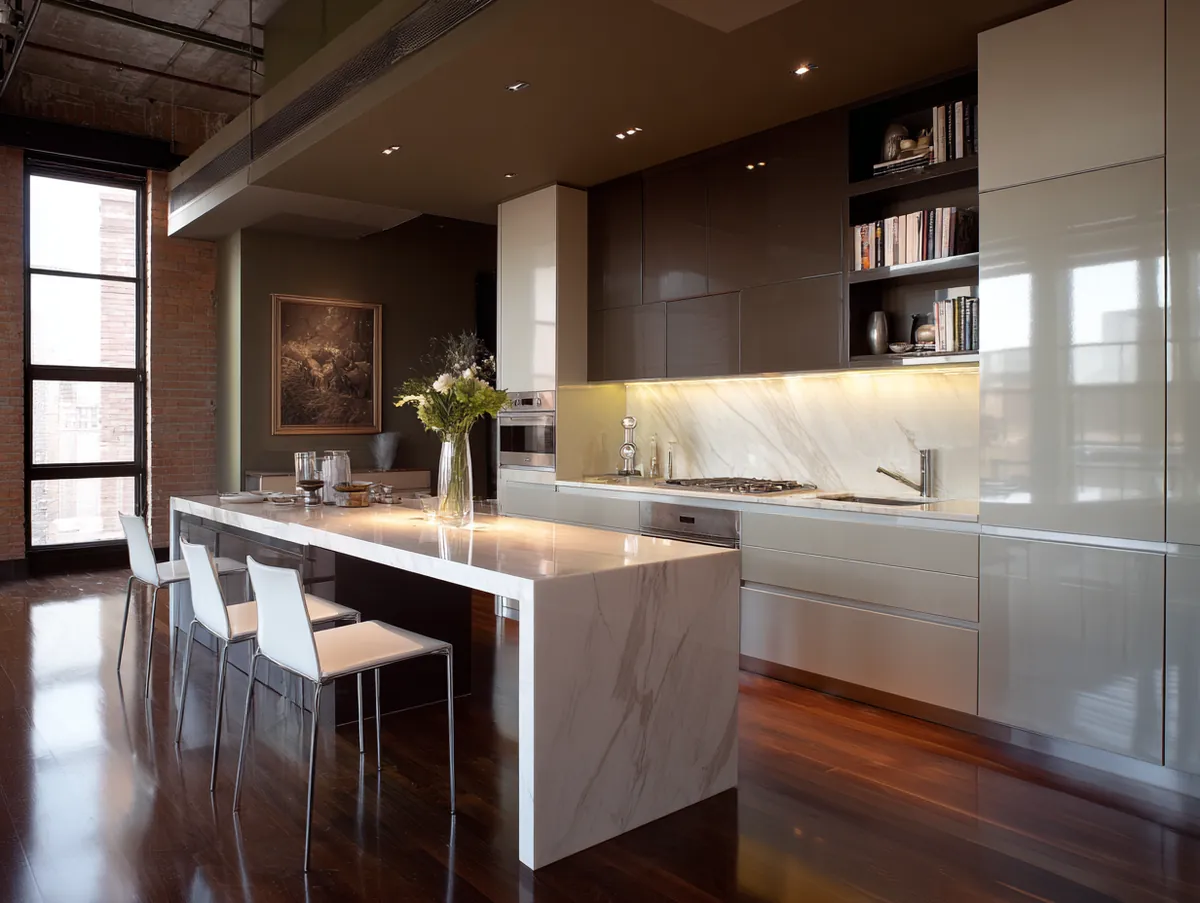
A waterfall marble island countertop carries the slab over the edge and straight down both sides to the floor, so the veining reads as one continuous ribbon. Gold-toned veins against white stone look like brass wire running through fresh snow, and the effect peaks when the veins are book-matched at the corner. Carrara-type marble generally costs $40 to $200 per square foot installed, and each waterfall side typically adds $200 to $600 on top. Budget for both sides upfront rather than adding one later.


Does marble survive daily cooking? It survives, but it changes: lemon juice, vinegar and wine etch the polish and leave dull spots even on sealed stone. A honed finish hides etching far better than a high gloss, which is why many designers specify it for working islands. Choose honed if you cook more often than you entertain.
The anti-tip worth repeating is simple: do not let the fabricator place a seam in the middle of the waterfall drop. A mitered corner with continuous veining is what makes the design look intentional, while a broken vein pattern looks like two unrelated slabs. Mark the vein layout on the slab, yourself or with your designer, before any cutting begins.


This kitchen island countertop design shines in open-plan rooms with high ceilings, where the vertical drop has space to read as architecture. Warm brass pendants and cream cabinetry echo the gold veining without copying it. In a compact kitchen, limit the waterfall to one side so the island does not feel like a solid block. Pair it with flat-front doors to keep the stone in charge.
Pastel terrazzo makes unusual countertop ideas feel cheerful again
Pastel terrazzo island countertops embed chips of marble, glass and quartz in cement or resin, then grind the surface flat to reveal a confetti pattern. Soft pink, mint and sky-blue chips create a retro-modern look that brightens kitchens with limited daylight. Installed prices commonly fall between $40 and $75 per square foot, the same bracket as mid-range quartz and granite. Compare cement and resin binders, since resin holds brighter color while cement feels more traditional.


How long does terrazzo last on an island? Properly maintained slabs often exceed 75 years of service, which makes the cost per year surprisingly low. The surface resists everyday wear well, but a heavy pan dropped on a sharp edge can chip it. Ask for a slightly rounded edge profile at the template stage.
Don’t Do This
Do not combine a patterned island top with a patterned backsplash and a patterned floor. Terrazzo, glass speckle and veined marble each need a calm neighbor, and three busy surfaces in one sightline make the room feel cluttered even when it is spotless. Pick one patterned surface per view and keep the others solid.
Keep the pastel story on the island and let walls and cabinets stay neutral, like a scoop of sorbet on a white plate. Brass hardware and light oak fronts suit the palette, while glossy colored cabinetry turns the room into a candy shop. Repeat one chip color in a single accessory, such as a vase or a stool cushion, and stop there.


Every terrazzo slab is unique, so a catalog swatch only hints at the final surface. Chip size also changes the mood: small chips read calm and refined, large chips read bold and graphic. On a small island, oversized chips can overwhelm the footprint. Approve a photo of the actual slab rather than the swatch.
Live edge wood slabs warm up open plan island counter design
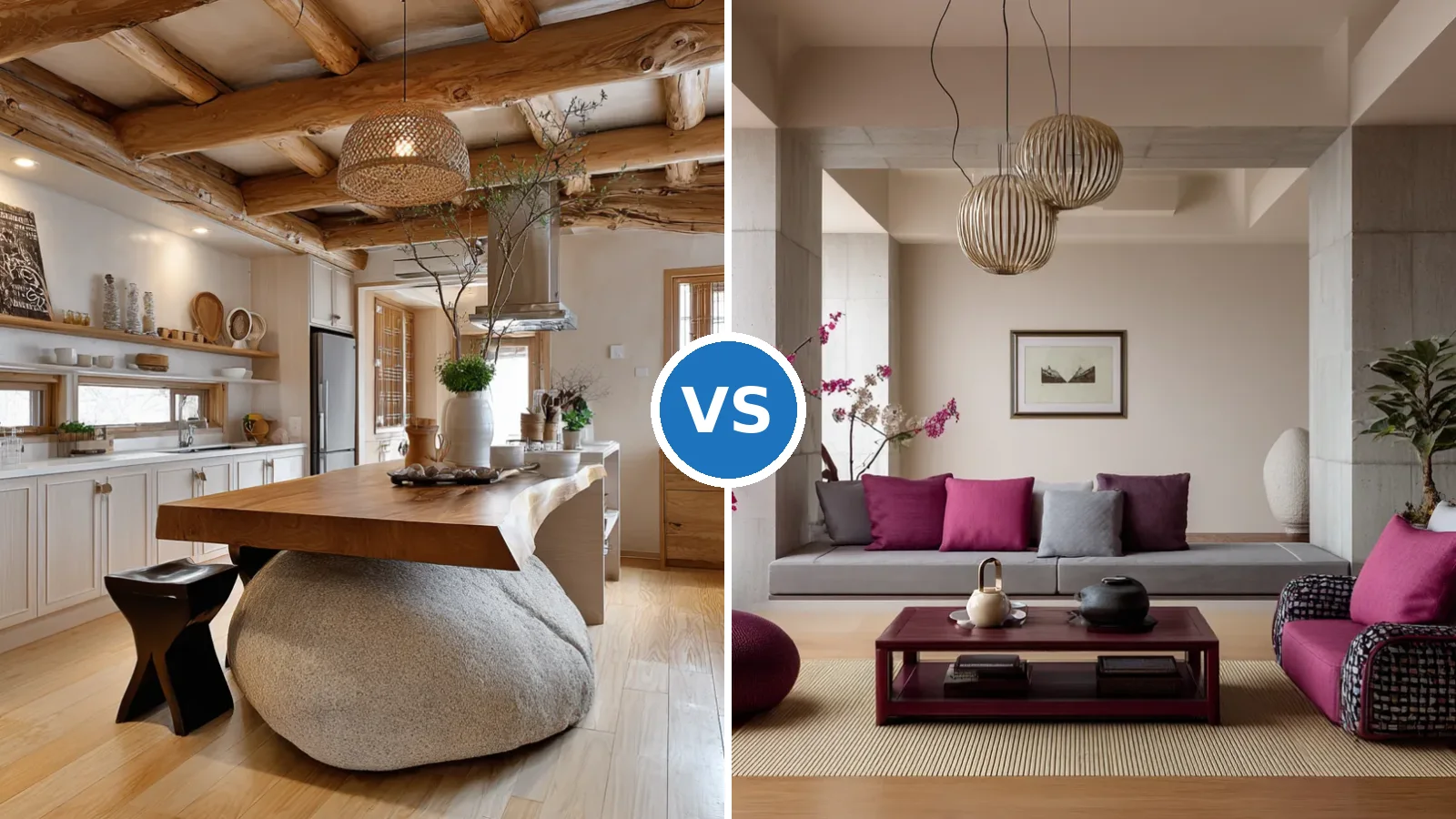
Live edge wood island countertops keep the natural outline of the tree along one or both long sides, so no two islands share the same silhouette. In open-concept layouts the slab works like a rug for the kitchen zone, anchoring it inside a larger room. Wood counters range from about $35 to $200 per square foot depending on species, finish and thickness, and custom live edge or wood-and-epoxy pieces can reach $10,000 or more. Price the slab and the finishing as separate lines, because finishing labor often surprises buyers.


Is a wood island a hygiene problem? Not when it is sealed properly and used with cutting boards, because the real risk is standing water near a sink rather than the wood itself. A film-forming finish handles daily spills better, while an oil finish suits a prep zone where you want to sand out knife marks. Keep the sink off a live edge island, or choose a film finish if the sink has to stay.
The mistake to avoid is a freshly cut slab that has not been dried properly. Wood moves with humidity, and a slab that still holds moisture can cup or crack during its first heating season indoors. Ask the supplier for a moisture reading and let the slab acclimate in your home before installation.


Steel legs, exposed beams or a brick backsplash keep a rustic slab from tipping into a cabin look. Knots and bark inclusions are part of the charm, though deep voids should be filled with clear epoxy so crumbs do not collect. Refresh the oil or finish as soon as water stops beading on the surface.
Stainless steel and matte black define modern kitchen island countertops
Stainless steel island countertops paired with matte black cabinetry give the kitchen a professional-studio feel, the logic of a restaurant line dressed for a living space. The metal is nonporous, heat tolerant and one of the easiest surfaces to clean. Average prices sit around $95 per square foot, or roughly $4,000 to $11,250 installed, placing steel among the costlier choices. Judge it on cost per decade rather than cost per slab, since it can outlast the cabinets beneath it.


Will steel scratch? Every steel top scratches, and those marks gradually blend into a soft patina that many cooks prefer. A brushed finish hides wear far better than a mirror polish, which shows every fingerprint. Choose a brushed or satin grain and always wipe in the direction of the grain.
The anti-tip here: do not specify thin-gauge steel to save money. Thin sheets dent and drum under a heavy pot, and the island sounds hollow every time something lands on it. Ask for a heavier gauge bonded to a solid substrate so the top feels as dense as stone.


Black cabinets absorb light while steel reflects it, so the pairing builds depth without adding a single color. Linear pendants and integrated appliances complete the look, and slim stools keep sightlines clean. In a small kitchen, the reflective top bounces light around and makes the footprint feel larger. Soften the steel with one or two pieces in wood or ceramic.
Concrete and terrazzo blend into unique countertops under pendant light
A concrete and terrazzo blend island countertop combines the mass of poured concrete with exposed chips of stone or glass, giving the surface both weight and sparkle. Suspended lighting brings it alive, much as a gallery spotlight picks out texture on a sculpture. Concrete counters average roughly $75 to $150 per square foot, or $5,000 to $10,000 installed, and decorative aggregate pushes the figure upward. Get the aggregate type and grinding depth written into the quote.


Can concrete handle a busy household? It copes well with heat and heavy use, and because it is cast in molds it can form curved ends, thick edges or integrated overhangs that cut slabs cannot. Its weak point is hairline cracking from shrinkage, which a skilled fabricator controls with reinforcement. Ask how the mix is reinforced before you ask about color.
Monochrome gray and black chips suit minimalist rooms, while chips that echo the cabinet hardware tie the whole space together. For more on letting one bold surface lead a mixed-style room, explore eclectic kitchen ideas built on color, pattern and mixed metals. Scattering three or more aggregate colors is the trap, because the surface starts to look like gravel instead of design. Limit the mix to two tones plus one accent.


Geometric pendants or a cluster of glass globes throw soft shadows across a speckled surface, so place them where light rakes across the slab rather than falling flat. Dimmers let the island shift from bright prep light to a softer dinner glow. Test the chosen fixtures over a sample board before final mounting.
Cost and care across these island countertop ideas
Comparing island countertops side by side makes the trade-offs clearer than any single photo. The figures below are average installed ranges per square foot drawn from contractor cost guides, and real quotes shift with region, edge work and cutouts. Use the table to shortlist two materials rather than to crown a winner on price alone.
| Material | Average installed cost per sq ft | Upkeep | Best fit |
|---|---|---|---|
| Recycled glass in concrete | $60–$100 | Periodic resealing | Eco-minded, industrial kitchens |
| Waterfall marble with gold veining | $40–$200, plus $200–$600 per waterfall side | Sealing, no acids | Open-plan rooms with high ceilings |
| Pastel terrazzo | $40–$75 | Low once sealed | Retro and color-loving kitchens |
| Live edge wood | $35–$200 | Oiling or refinishing | Rustic-modern open layouts |
| Stainless steel | About $95 | Minimal | Modern, cook-focused kitchens |
| Concrete and terrazzo blend | $75–$150 for the concrete base | Sealing, crack monitoring | Sculptural, minimalist rooms |
For wider per-square-foot benchmarks, the countertop material price ranges compiled by HomeAdvisor cover laminate, quartz, wood, steel and concrete in one place. Recycled surfaces bound in resin start lower, while natural stone slabs sit at the top of the scale. Check every quote against these ranges, then run through the list below before ordering.
- View a full slab or a finished island photo, never only a small sample.
- Confirm the sealing schedule and the cleaner the fabricator approves.
- Get edge profile, waterfall sides and cutouts priced as separate lines.
- Check that the island cabinet base can carry the weight of the chosen slab.
The island deserves one brave material
The strongest island top is the one material bold enough to lead while the rest of the kitchen supports it. Choose it by cooking habits first and by color and pattern second.
Stainless steel and terrazzo suit busy cooks who dislike maintenance, while marble and live edge wood reward owners who accept sealing and a gradual patina.
Start from a per-square-foot ceiling, then add waterfall sides, edge profiles and sealing costs before comparing quotes.
See a full slab or a finished project before signing, and keep the perimeter counters calm so the island stays the focal point.