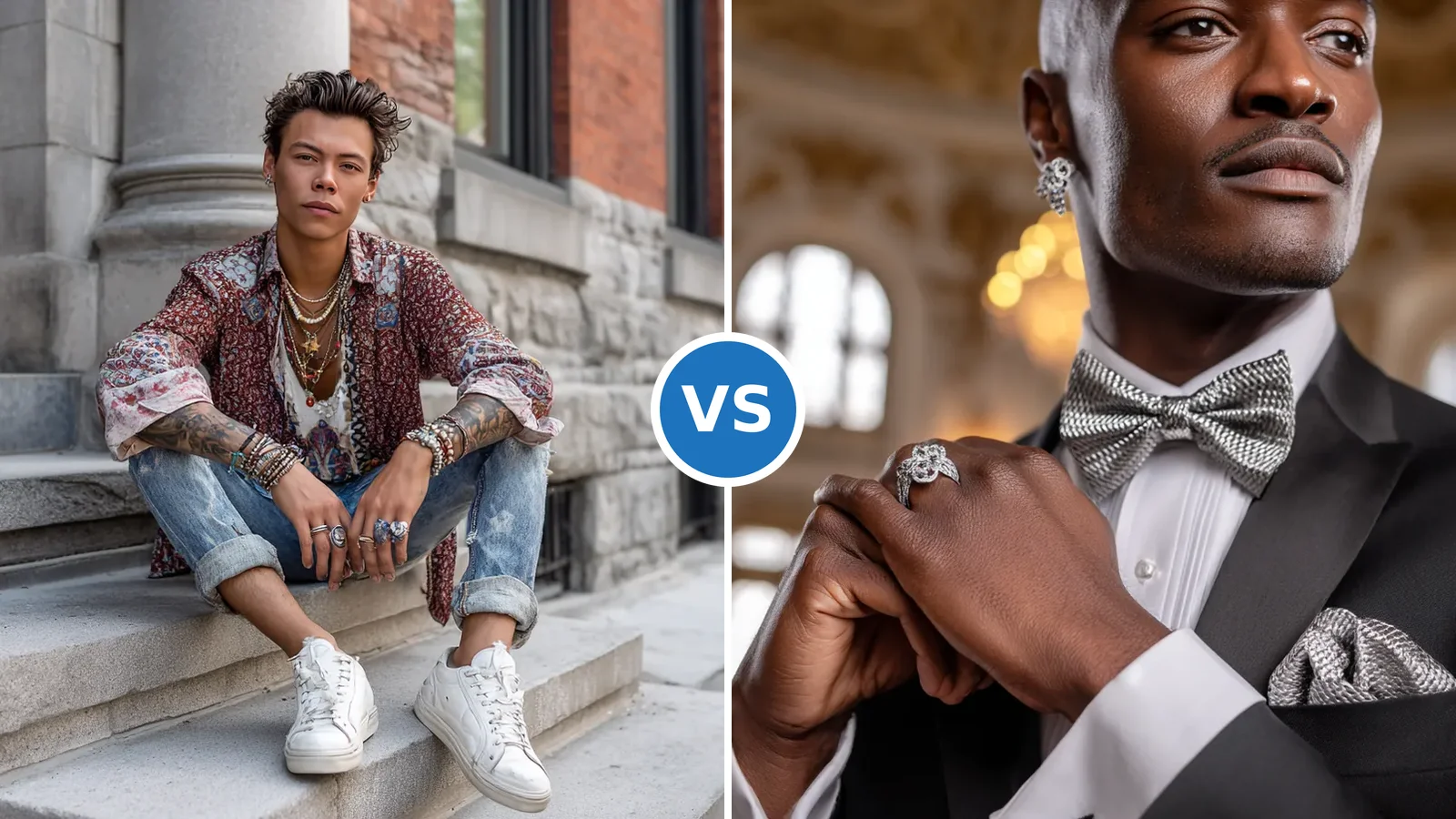
The casual vs formal question in menswear is really a question about the event, not about taste: casual outfits are built around one loud piece worn easily, while formal outfits are built around exact fit and restraint. The query is broader than the two looks compared here, which are a patterned-shirt-and-denim casual outfit and a black-and-silver formal outfit for men. In short, pick casual for everyday wear, weekends and concerts, and formal for weddings, galas, award ceremonies and black-tie work events.

What each look is
The casual look follows a simple formula described in these Harry Styles casual outfit ideas: a bold print on top, clean denim below, white sneakers and thin gold jewelry. The print is the statement, and everything else stays quiet so it can do its job. Variations include a vintage band tee with fitted black jeans and ankle boots for a concert, or an oversized sweater in a neutral shade with distressed jeans for the weekend.
The formal look is a black base lifted by silver details, covered in this breakdown of black and silver formal attire. It works through a slim black suit with a silver tie or pocket square, or a tuxedo with a silver bow tie and matched cufflinks. Black anchors the silhouette and silver draws the eye to one or two chosen points.
Quick Verdict
- Choose casual if the plan is everyday wear, a weekend or a concert, you want to build the outfit from jeans and sneakers, and you would like a lower-cost starting point.
- Choose formal if the invitation points to a wedding, gala, award ceremony or corporate black-tie event, and you are ready to get the fit and the metal finishes exactly right.


Casual vs formal on the criteria that matter
| Criteria | Casual outfit | Black and silver formal |
|---|---|---|
| Best for | Everyday wear, weekends, concerts | Weddings, galas, award ceremonies, black-tie work events |
| Core pieces | Patterned shirt, straight or tapered mid-wash jeans, white leather sneakers | Slim black suit or tuxedo, crisp white shirt, silver tie, pocket square or bow tie |
| Footwear | Clean white leather sneakers, or ankle boots for a concert | Black leather Oxfords or Derby shoes; loafers lower the formality |
| Accessories | Two to three thin gold necklaces and several rings spread across both hands | Two or three silver points, with watch, studs and cufflinks in the same metal |
| Cost signal | Roughly $180 to $270 for shirt, jeans and sneakers, using the source ranges | Sterling silver cufflinks alone run about $145 to $185; suit and shoes are extra |
| Biggest risk | Matching the shirt print to patterned shoes, which looks assembled | Silver on lapel, tie and pocket square at once, which flattens the look |
The table shows the real split: the casual look rewards one confident choice, while the formal look rewards precision across several small ones. Casual is the more forgiving of the two because a slightly off detail still reads as personal style. In formal dress, a mismatched metal or a loose jacket is noticed.

Fit, silhouette and shoes
Casual fit is relaxed but deliberate. The casual source suggests a straight-cut or slightly tapered mid-wash or indigo jean with a two-inch cuff, which reads as intentional. Pre-distressed denim competes with a patterned shirt, so save it for the sweater version of the look.
Formal fit is tighter and less negotiable. A black suit cut slim through the chest and tapered through the leg gives silver details a clean backdrop, while a jacket that pulls across the shoulders or bunches at the waist makes the whole outfit look rented.
A slim notch lapel sends the eye up the vertical line toward the silver tie, and a wider lapel on a roomier cut spreads attention out. Shoes follow the same logic: black leather Oxfords or Derby shoes keep the sharpness, and a crisp white shirt gives the silver tie a third layer of contrast.


Cost and where to spend
Casual is the easier starting point on budget. The casual source prices a shirt at $40 to $85, jeans at $50 to $70 and white leather sneakers at $90 to $115, which adds up to roughly $180 to $270 before jewelry. Its one tip for spending more is jewelry, since cheap rings oxidise and leave marks within weeks.
The formal source gives a price only for accessories, so a full formal total cannot be stated here. Sterling silver cufflinks from a specialist start around $145 for a classic round style and reach $185 for an enamel design, before suit, shirt and shoes. Budget silver accessories can also oxidize under venue lighting, so spend where metal touches skin and catches the light.

The most common mistake when choosing
The most common mistake is choosing by mood instead of the event, then landing between the two looks. A tuxedo with loafers is a concrete case: the source notes loafers drop formality by about one notch, which undercuts the satin and silver above. The opposite error is dressing the casual formula up by adding more pieces, such as matching a print shirt to patterned sneakers, which reads as a uniform and not a personal style.
If an event sits on the border, decide which side it belongs to and commit fully. A half-formal outfit gets the precision of neither look.


Who should choose which
Choose casual when the day is relaxed and you want an outfit you can build from jeans, a statement shirt and white sneakers at a lower starting cost. Choose formal when the invitation or dress code asks for it, since the black-and-silver look is built for weddings, galas, award ceremonies and corporate black-tie events and suits evening lighting.
Many wardrobes need both. If you can only buy one thing first, buy for the next event on your calendar: the casual look will earn its place in everyday wear, while the formal look pays off only when an occasion calls for it.