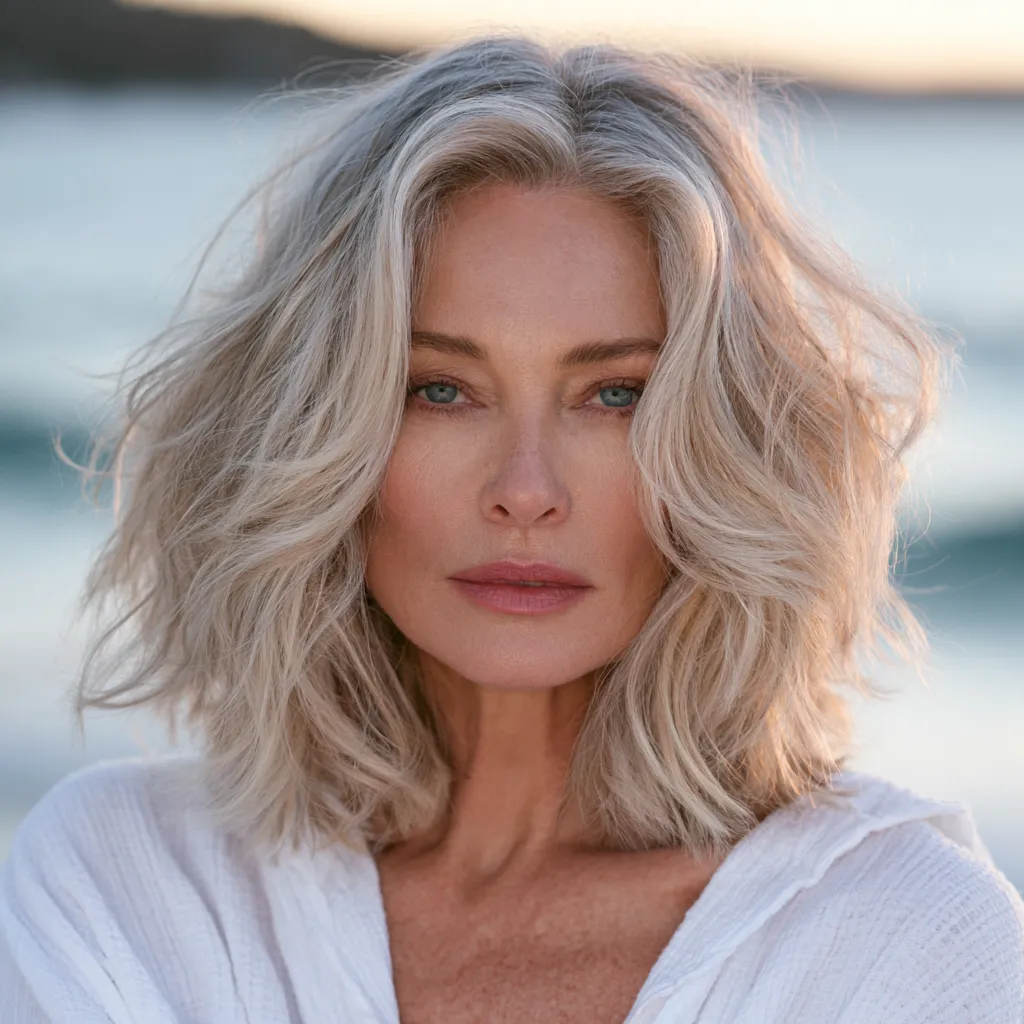
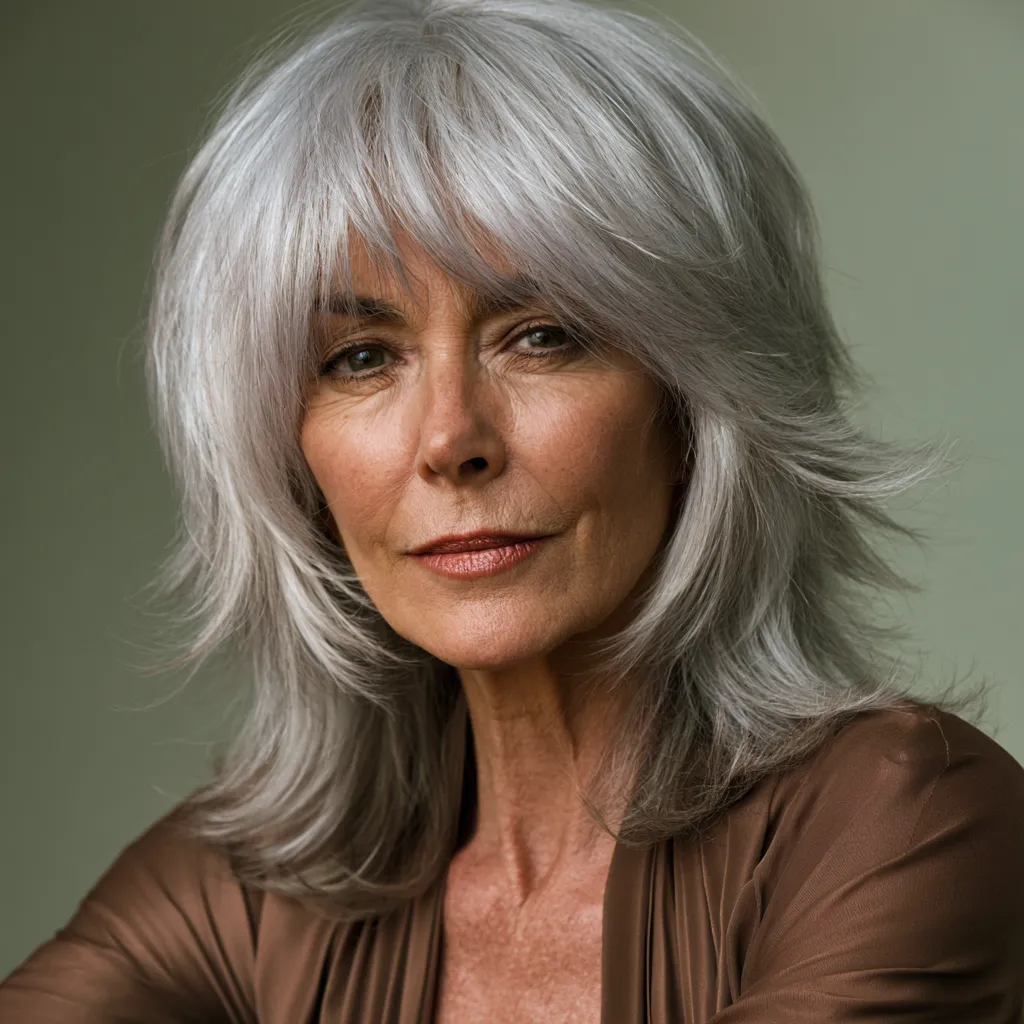
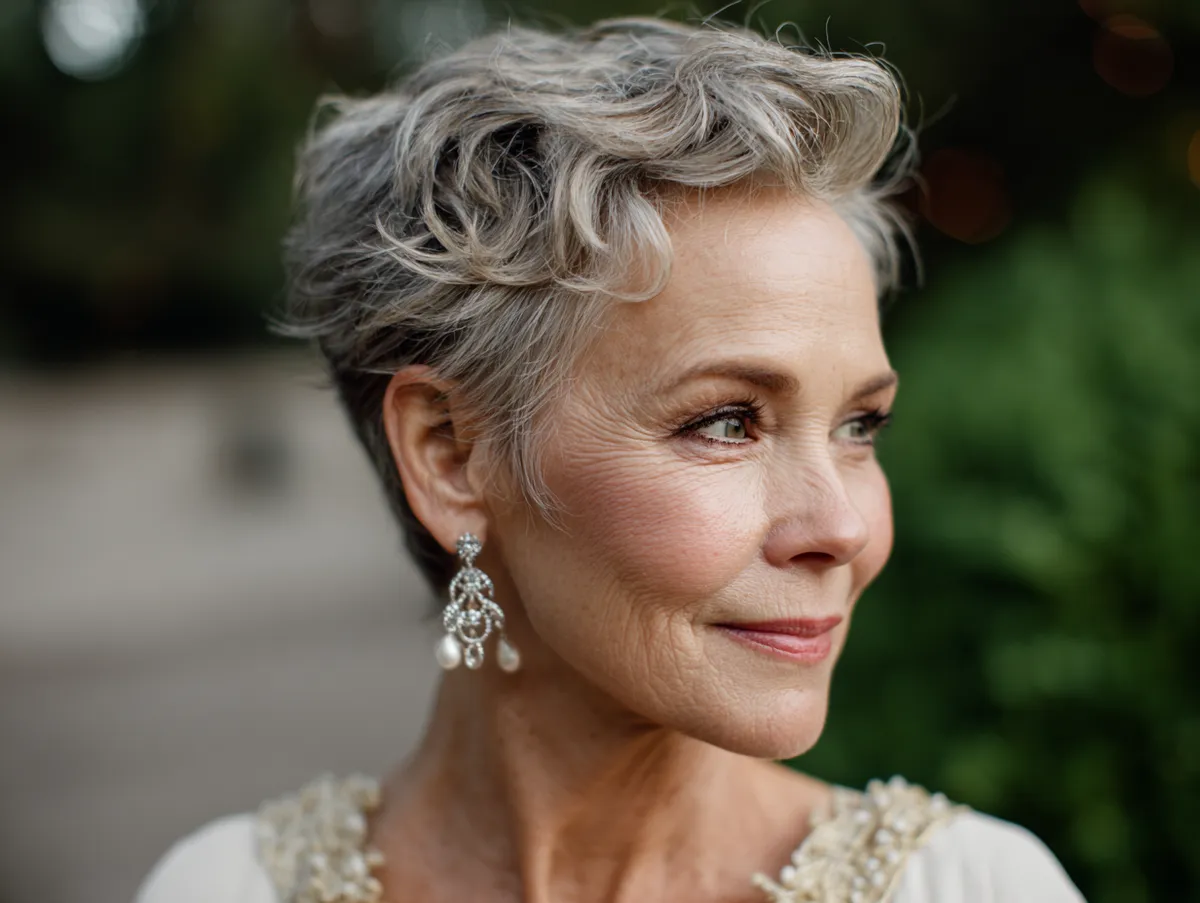
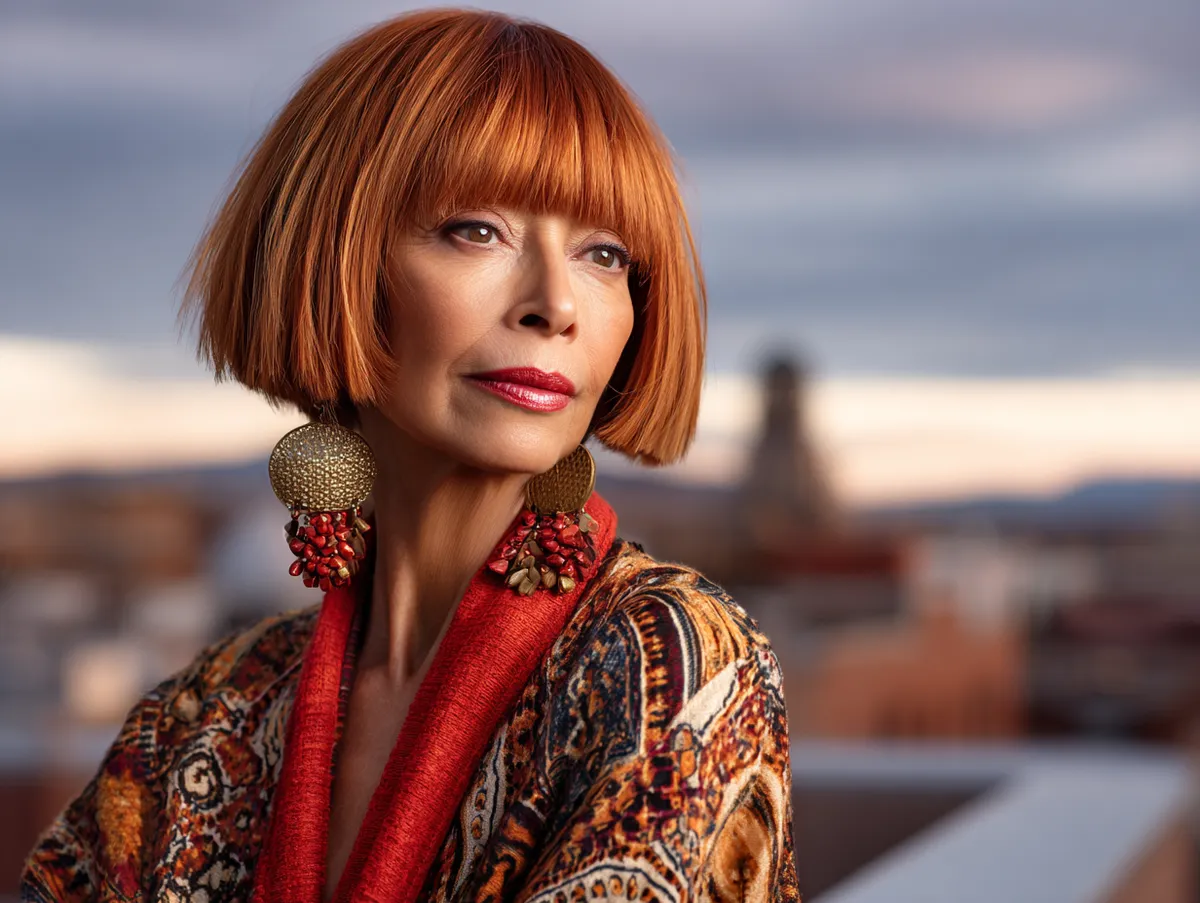
There is a quiet revolution happening in salons. Women walking in at 70, 75, even 80 are no longer asking for “something easy to manage.” They are bringing in photos. They are asking for dimension, movement, and cuts that work with who they are today — not who they were told they should be at this age. The hairstyles for women over 70 that are actually thriving right now have almost nothing in common with the stiff, set styles of past decades. They are softer, more personal, and far more interesting.
This guide covers the cuts, colors, and styling approaches that are genuinely working — the ones that address real hair changes without sacrificing style, and that look intentional rather than resigned.
Why Hair Changes After 70 and What to Do About It
Understanding the biology is the first step to choosing the right hairstyle for women over 70. Hair strands gradually narrow with age, which reduces overall volume and makes hair more prone to breakage. The scalp produces less sebum, which means hair can feel drier and more fragile. Melanin production slows or stops, transitioning hair into silvers, whites, and warm grays — all of which have different light-reflecting qualities than pigmented hair.
The good news: these changes are not obstacles. They are the starting point for a different kind of hair beauty. Silver and white hair catches light in ways that dark hair simply cannot. Fine hair, when cut correctly, moves with a delicacy that looks incredibly elegant. The key is working with these qualities instead of trying to replicate the hair of earlier decades.
The Best Short Hairstyles for Women Over 70
Short hair is genuinely popular among women over 70 — not because it is the “expected” choice, but because the right short cut does something specific: it brings attention upward, toward the face, and reduces the visual weight that longer hair can add to the neck and shoulders as posture changes with age.
The Soft Pixie
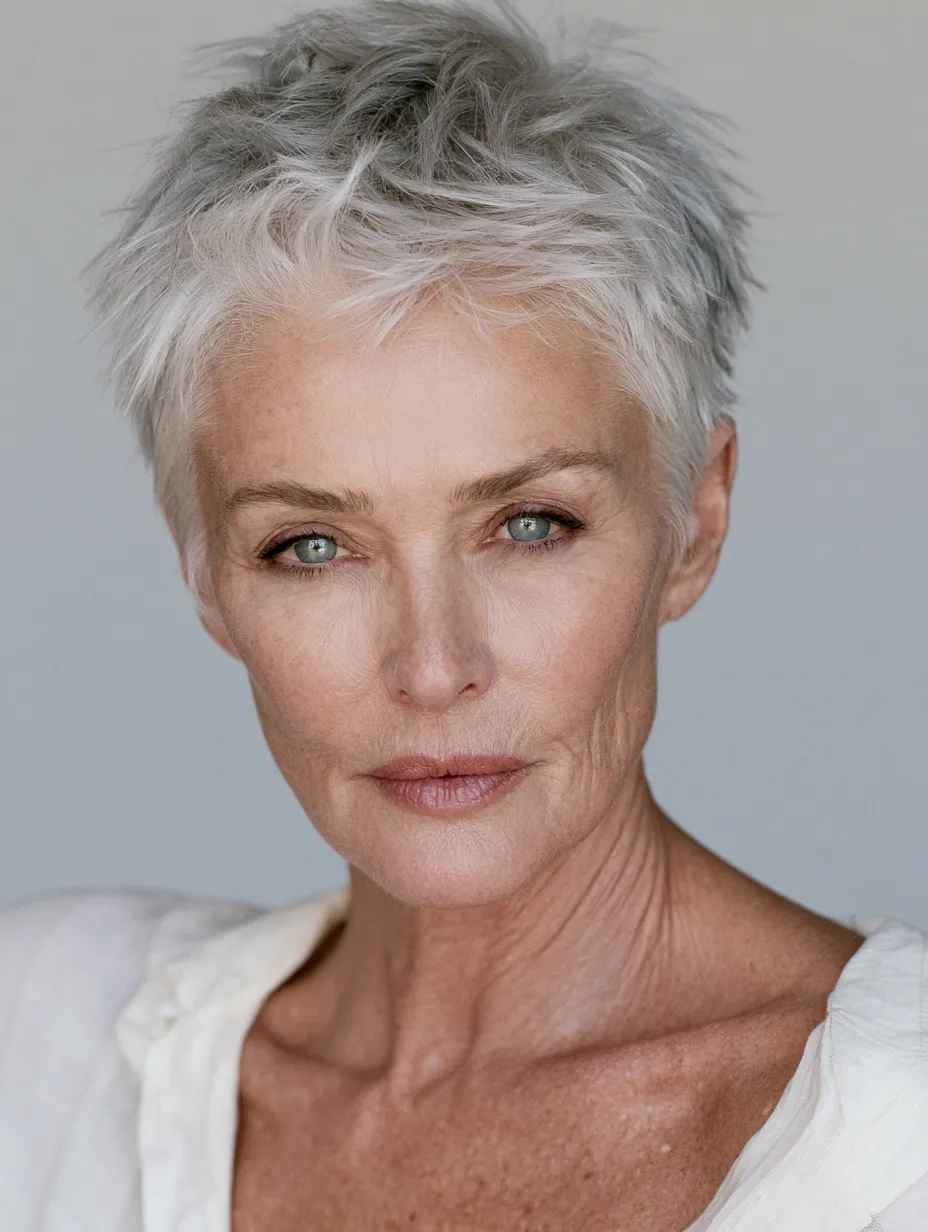
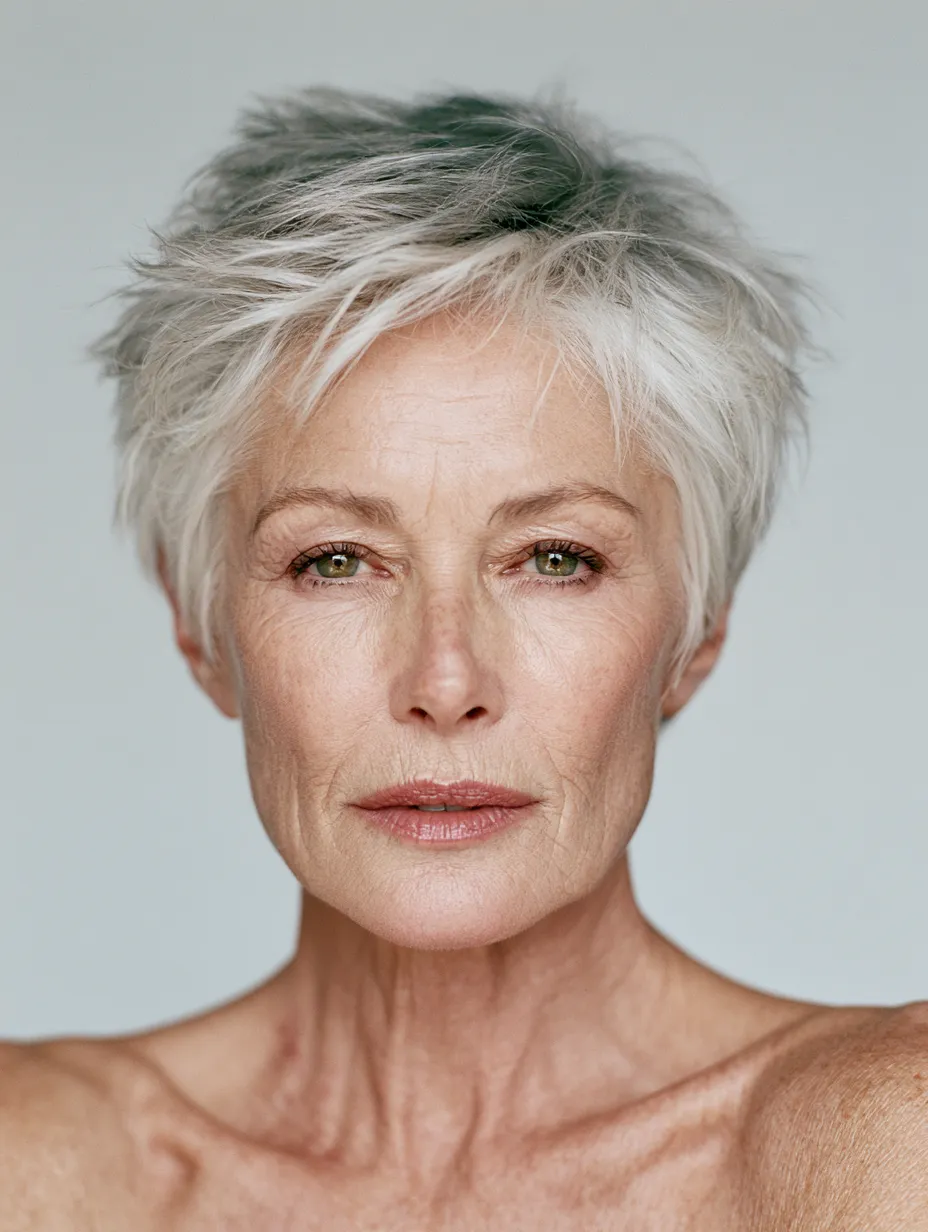
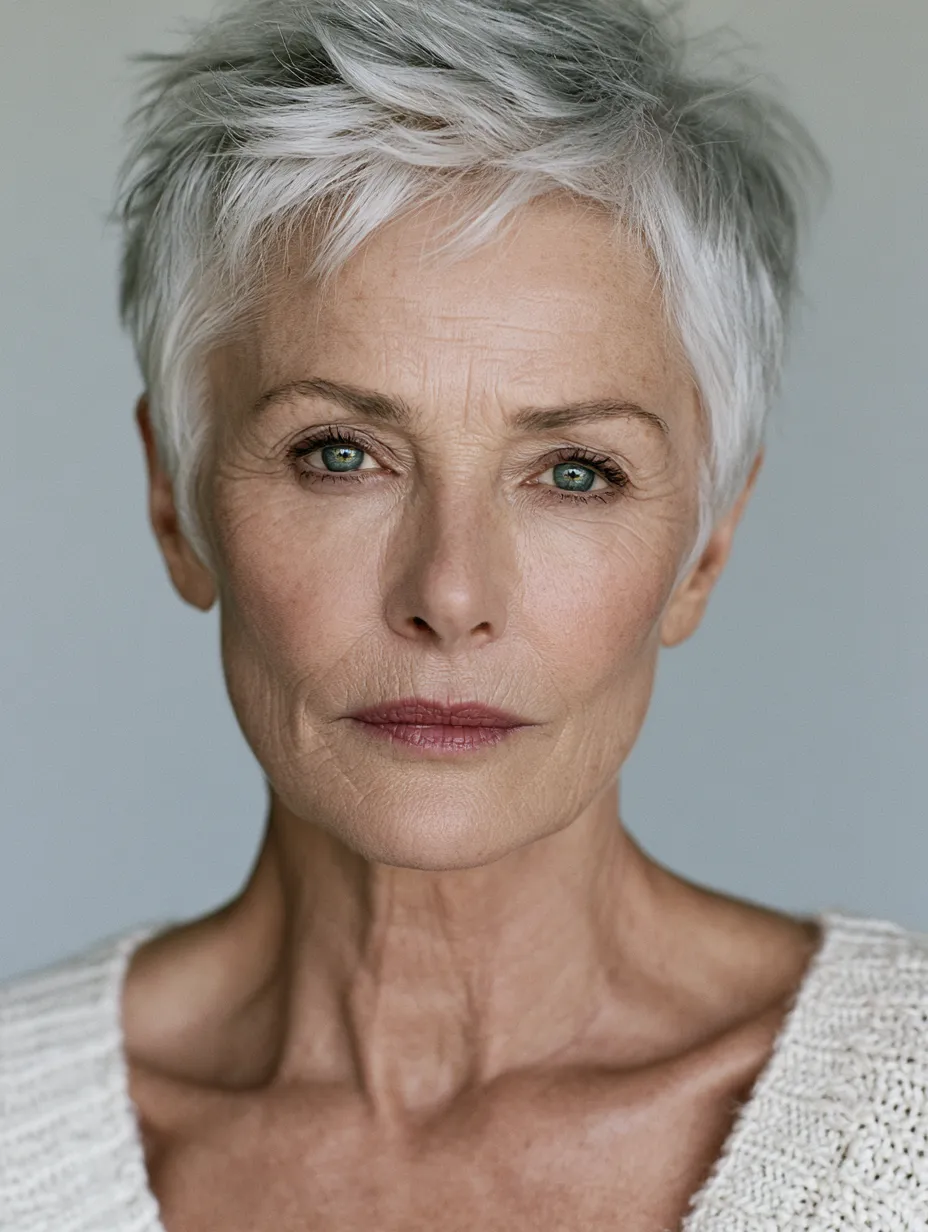
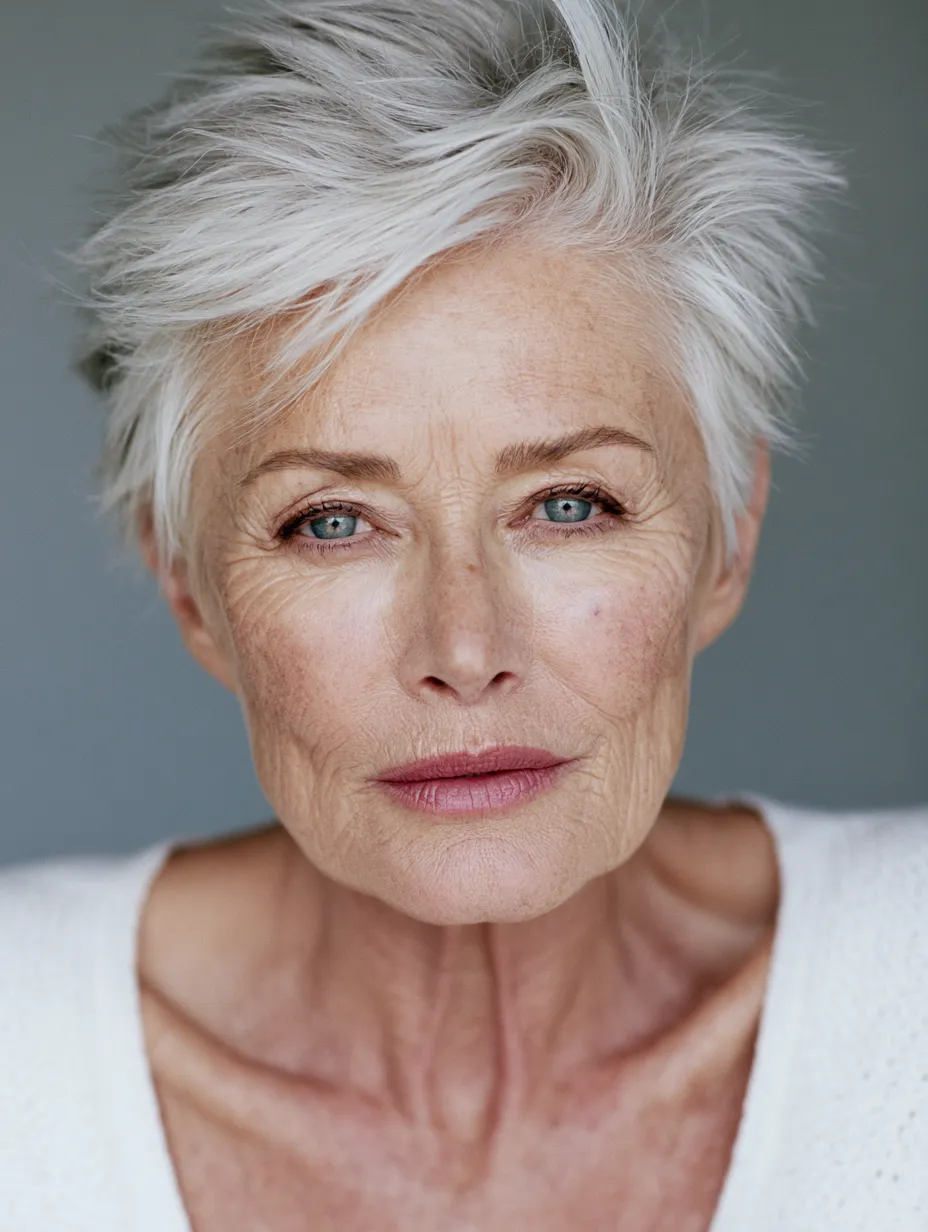
The classic pixie has evolved. The most flattering version for women over 70 is not the severe, close-cropped cut of the 1960s. It is a softened interpretation with slightly longer layers at the crown, which can be lifted for volume, and a tapered but not shaved nape. This cut works especially well for women with oval, heart, and long face shapes. For round faces, a slightly longer top with close-cropped sides achieves the same elegant effect.
Silver and white pixie cuts have a particular visual power. The natural highlights within natural gray hair — ranging from cool ash to warm cream — create dimension that colorists spend hours trying to recreate in younger clients. If you are considering elegant silver pixie haircuts for older women, the most important element is the cut itself: a skilled stylist who understands how fine hair behaves will make more difference than any product.
The Modern Bob for Women Over 70
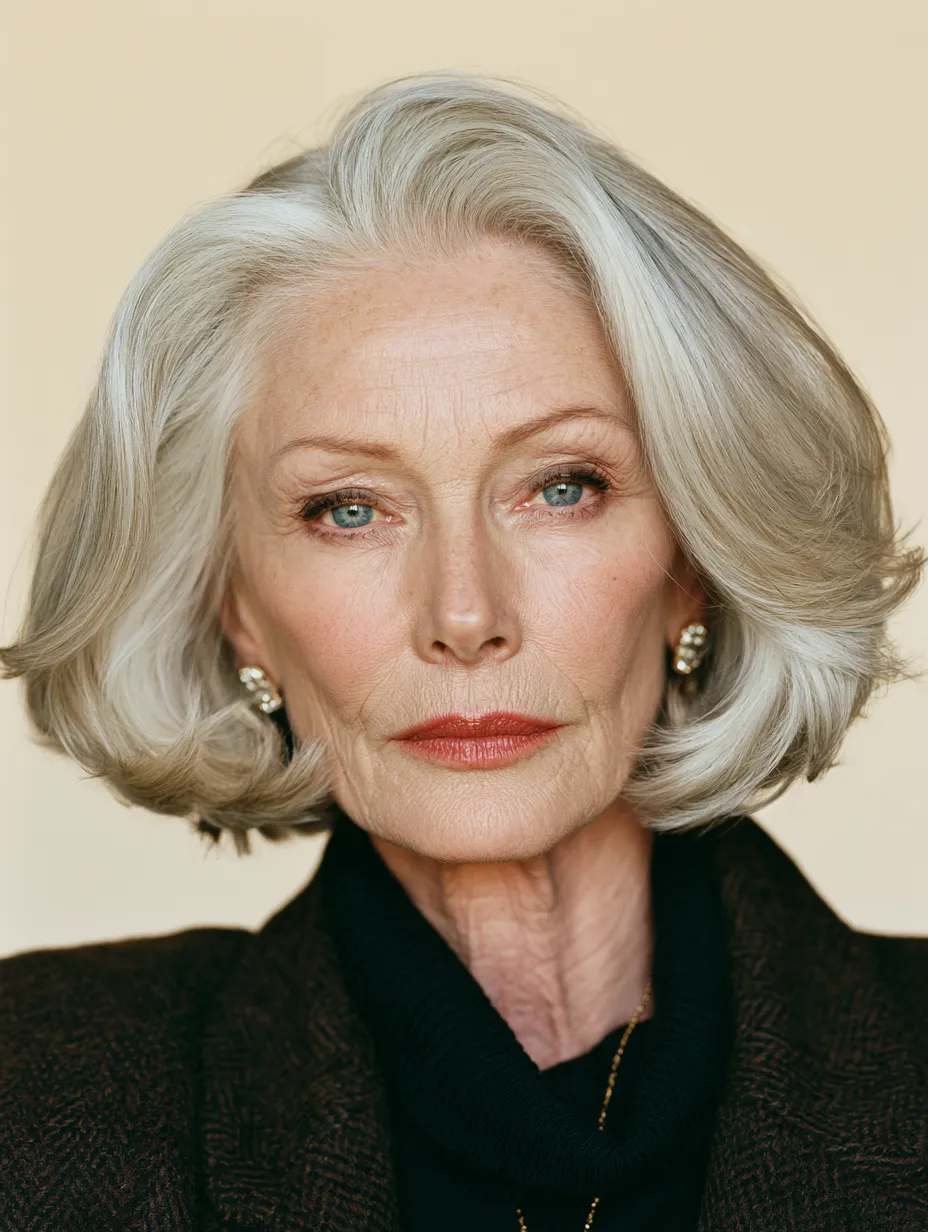
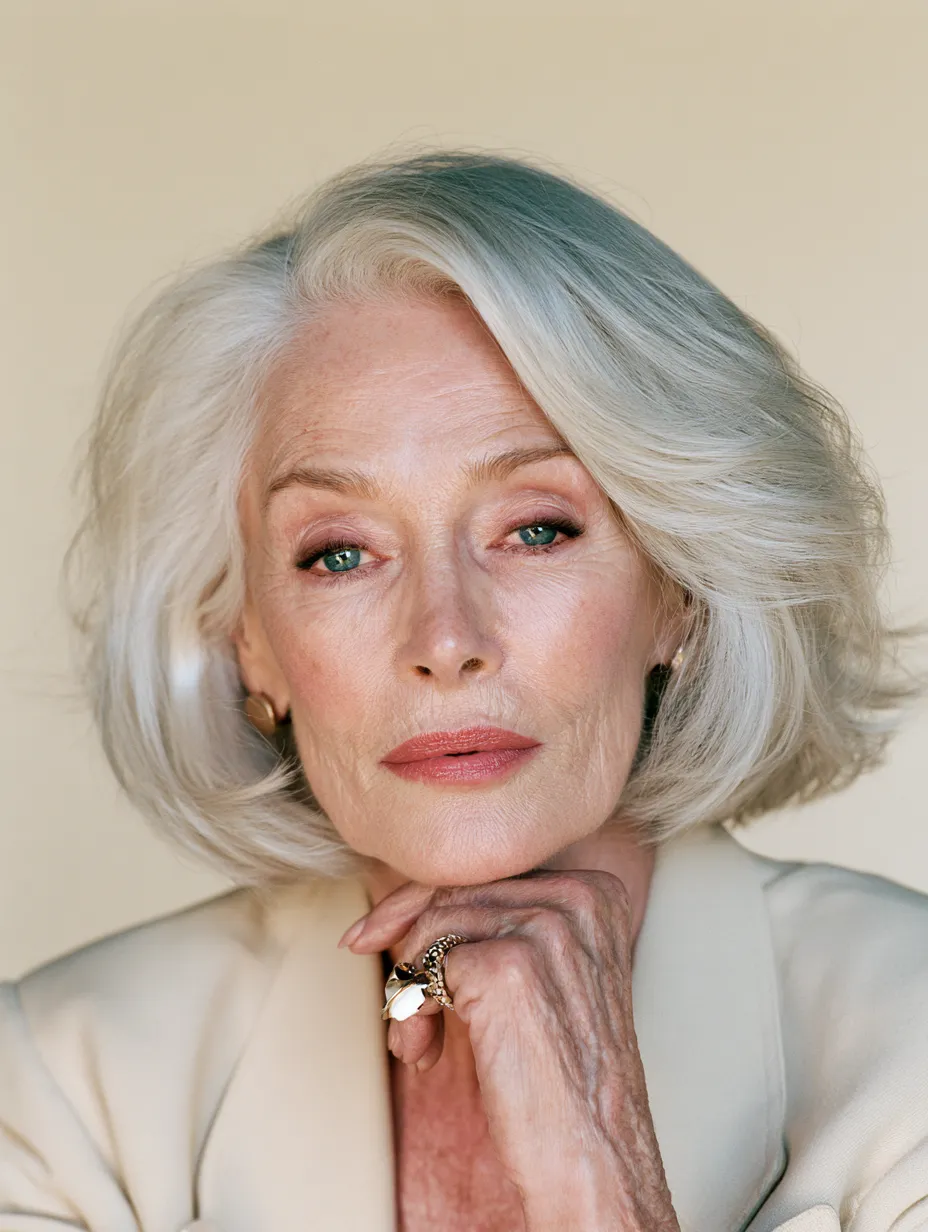
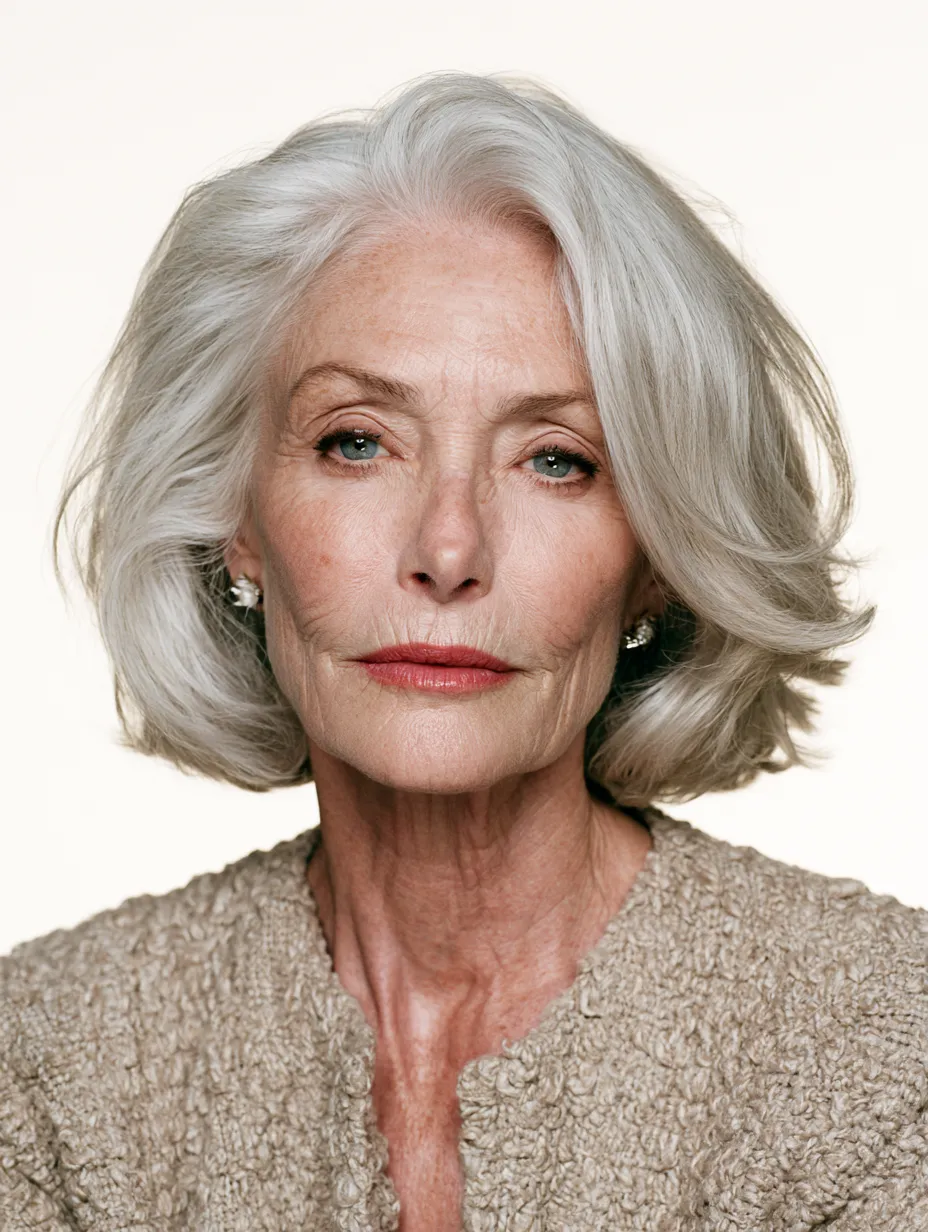
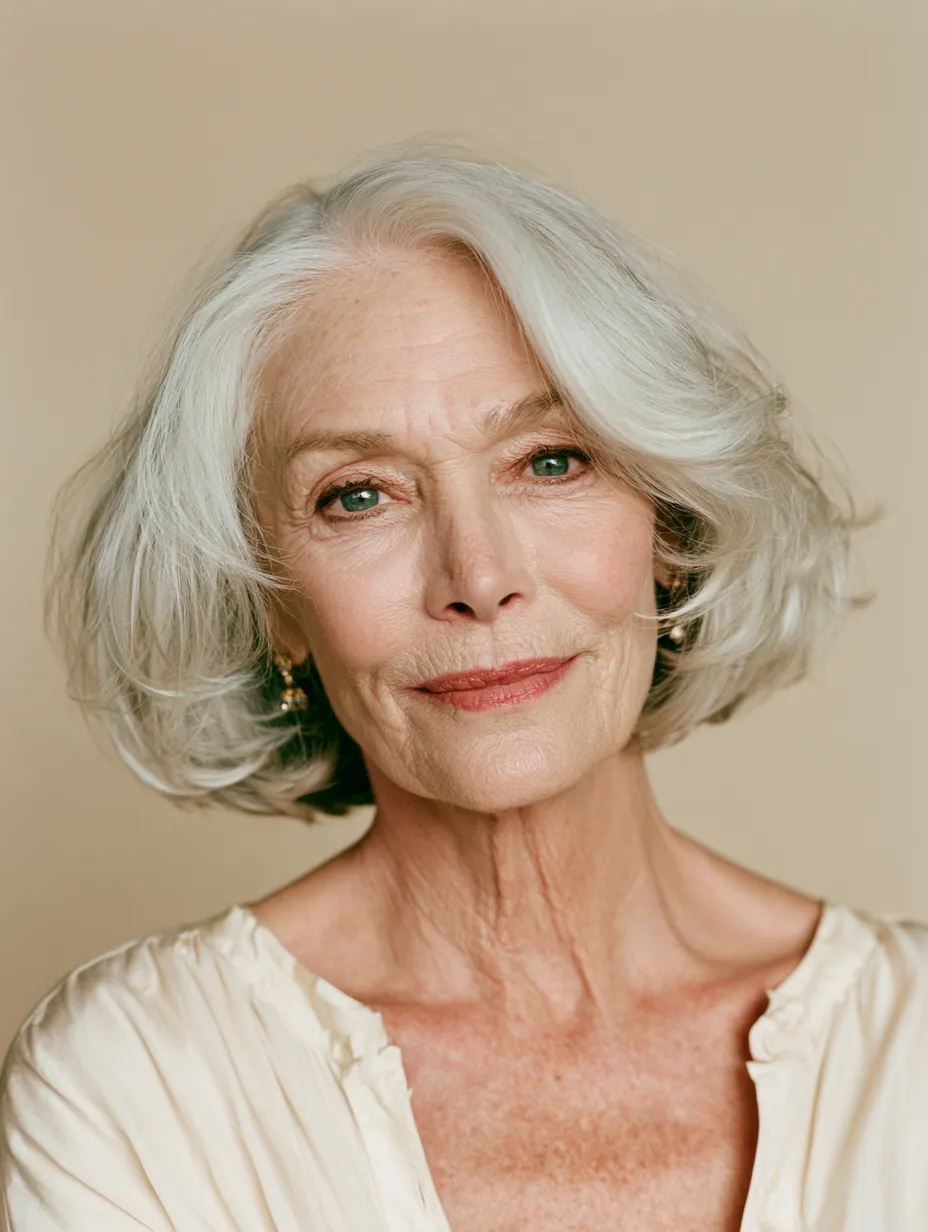
Bob haircuts have never been more varied — or more appropriate for women over 70. The key distinction between a bob that looks dated and one that looks genuinely current is texture. Blunt, perfectly smooth bobs require constant heat styling and can look stiff on fine hair. A bob with soft, piece-y texture or subtle internal layers moves naturally and photographs beautifully.
The chin-length bob deserves special mention. When cut to graze the jawline, it draws the eye to the lower face and creates an effect that is simultaneously slimming and framing. Women with fuller faces often find that a chin-length bob with a slight angle — longer in front, slightly shorter at the back — produces the most flattering result. The bob haircuts for older women that actually transform everyday style tend to have this kind of thoughtful tailoring built into the cut.
Medium Length Hairstyles for Women Over 70
The assumption that women over 70 should cut their hair short is a cultural habit, not a rule. Medium length hair — landing anywhere from the chin to the shoulders — can be just as practical and considerably more versatile. The condition is that it must be cut correctly for the hair’s current texture and weight.
Layering is essential at medium length for finer hair. Without layers, fine hair at this length tends to hang flat and limp, emphasizing its reduced density. With carefully placed layers — especially around the face — the same hair takes on movement and life. A slightly shorter layer at the crown creates lift that no product can fully replicate.
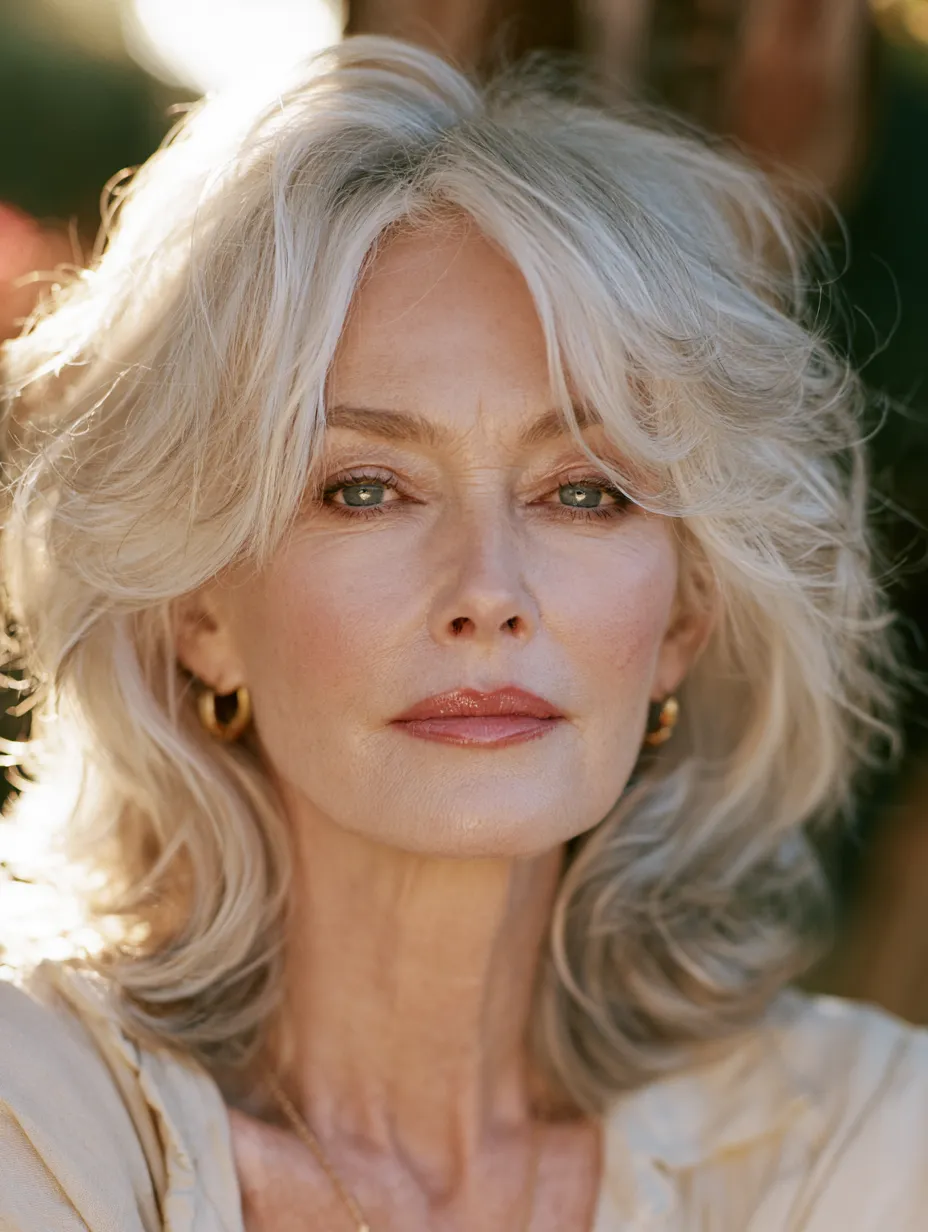
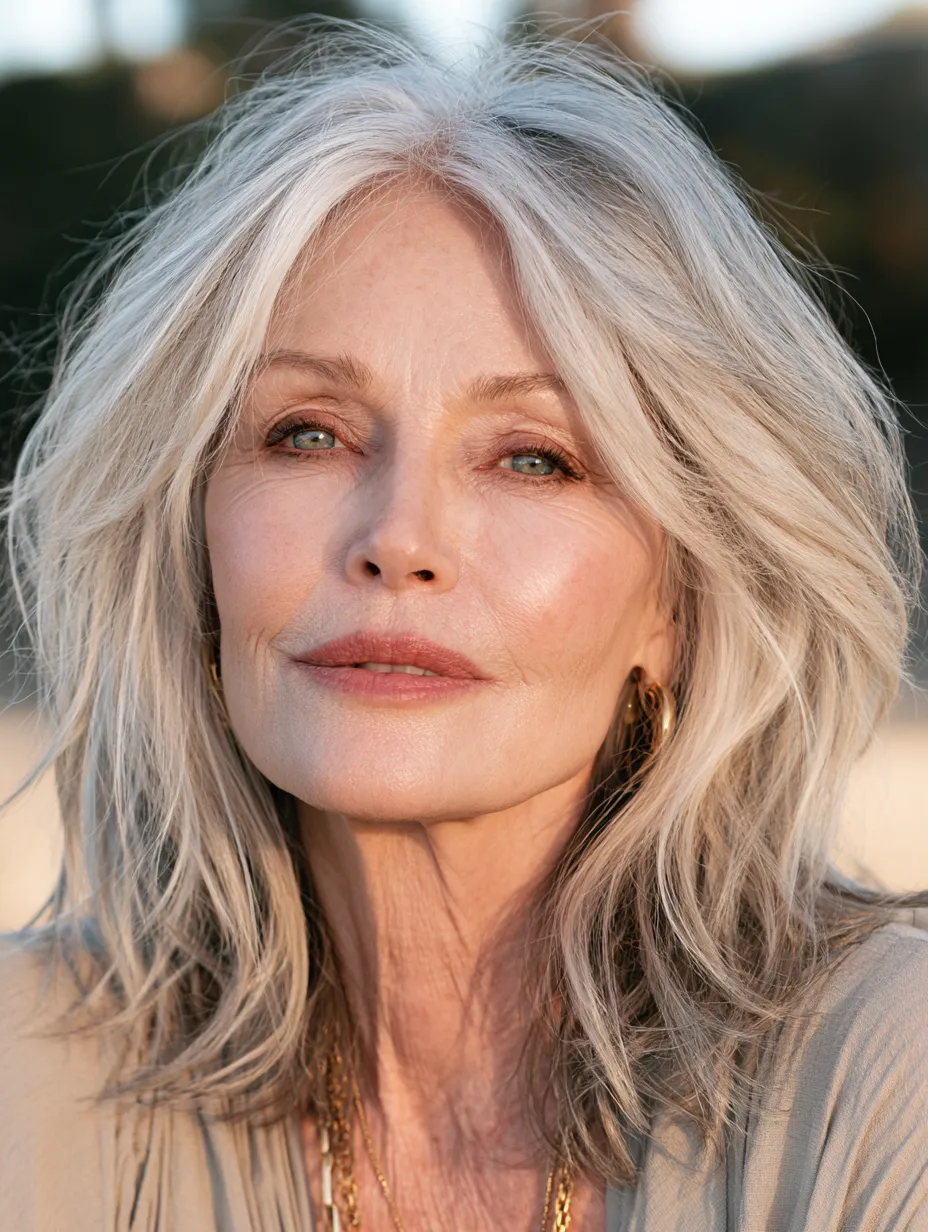
The shoulder-length cut has become one of the most requested styles for women over 70 in recent years, largely because it works with the natural behavior of mature hair rather than fighting it. Women with naturally wavy or lightly curly hair often find that cutting to shoulder length allows their natural texture to express itself fully, which reduces daily styling time significantly. For styling ideas that work at this length without requiring heavy heat tools, vintage wave hairstyles for older women offer a genuinely beautiful and approachable direction.
The Shag for Women Over 70
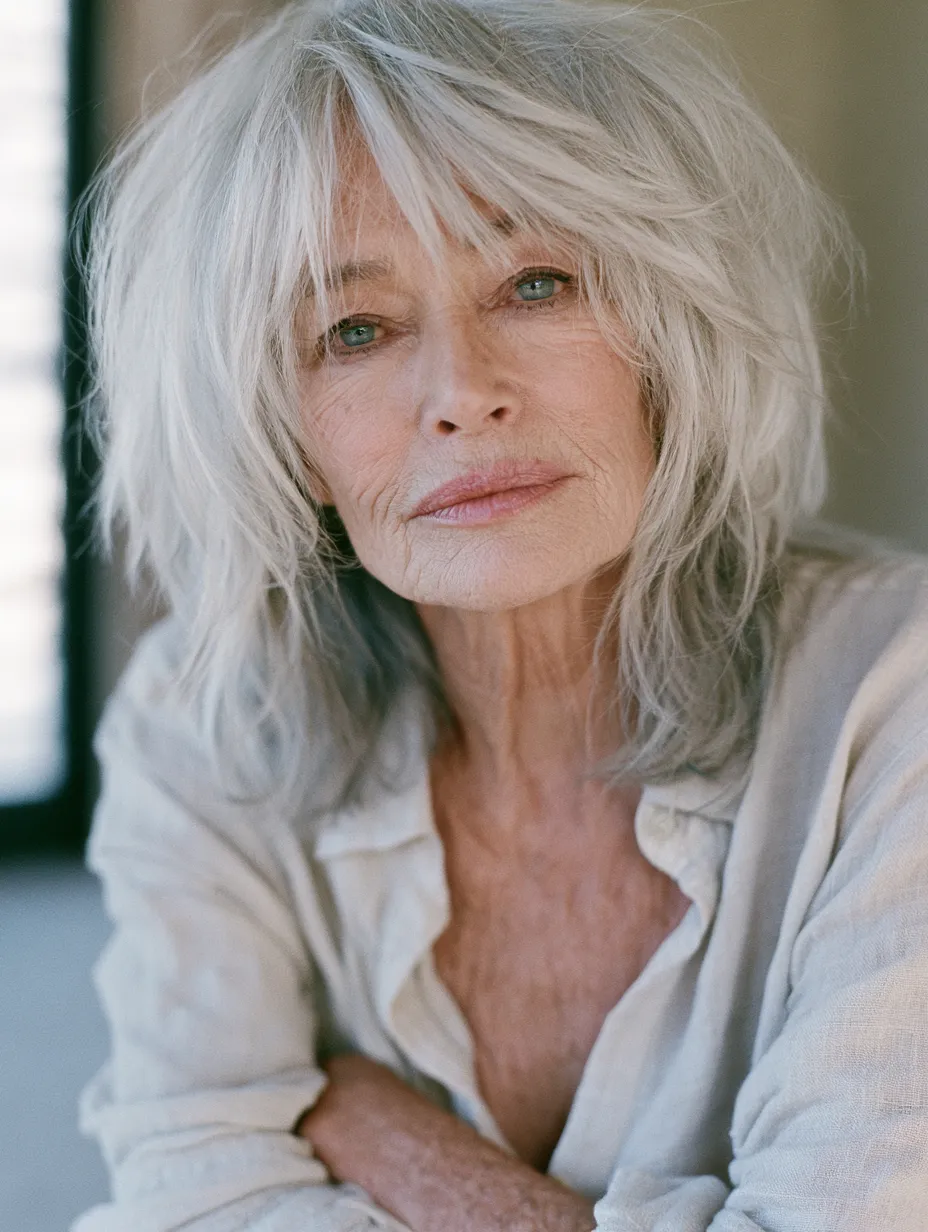
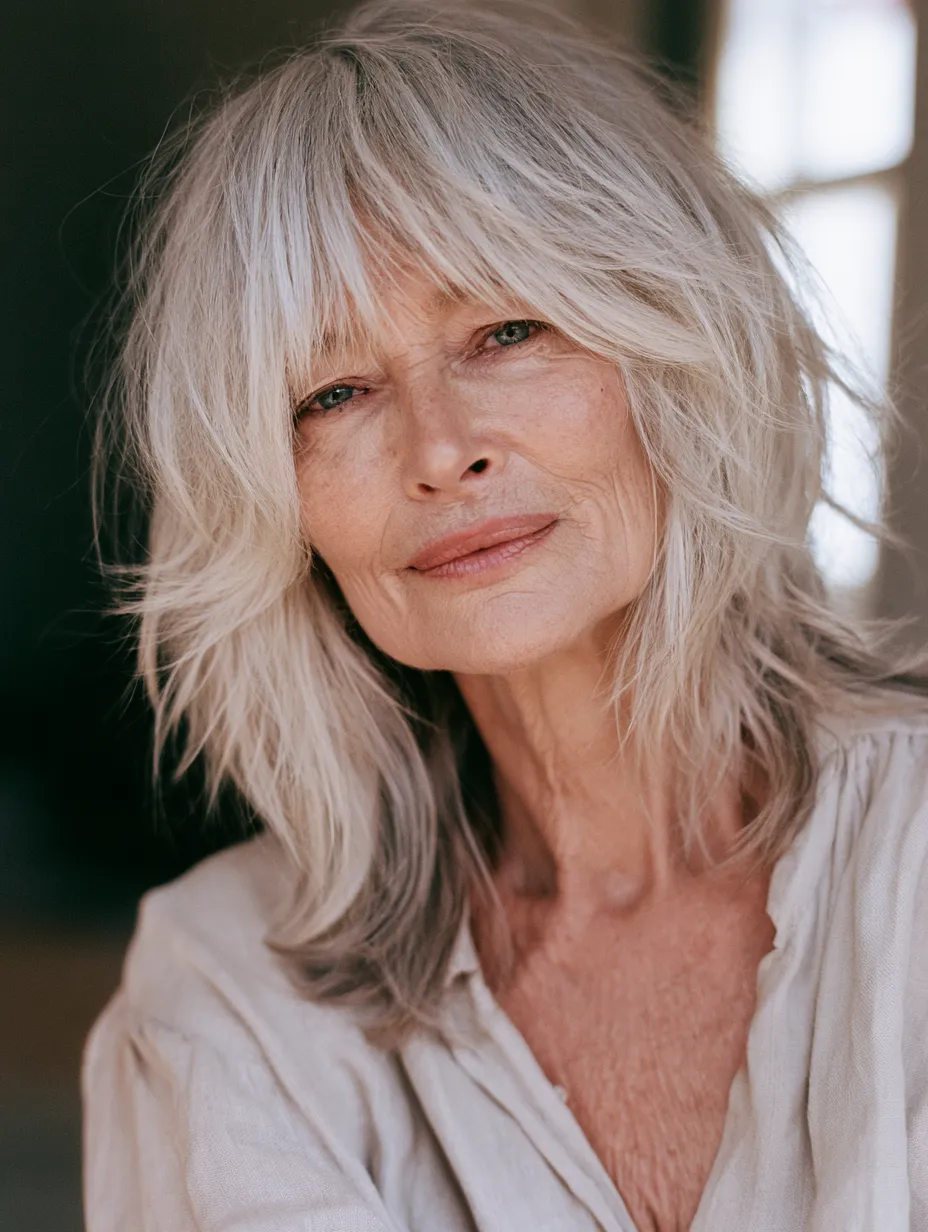
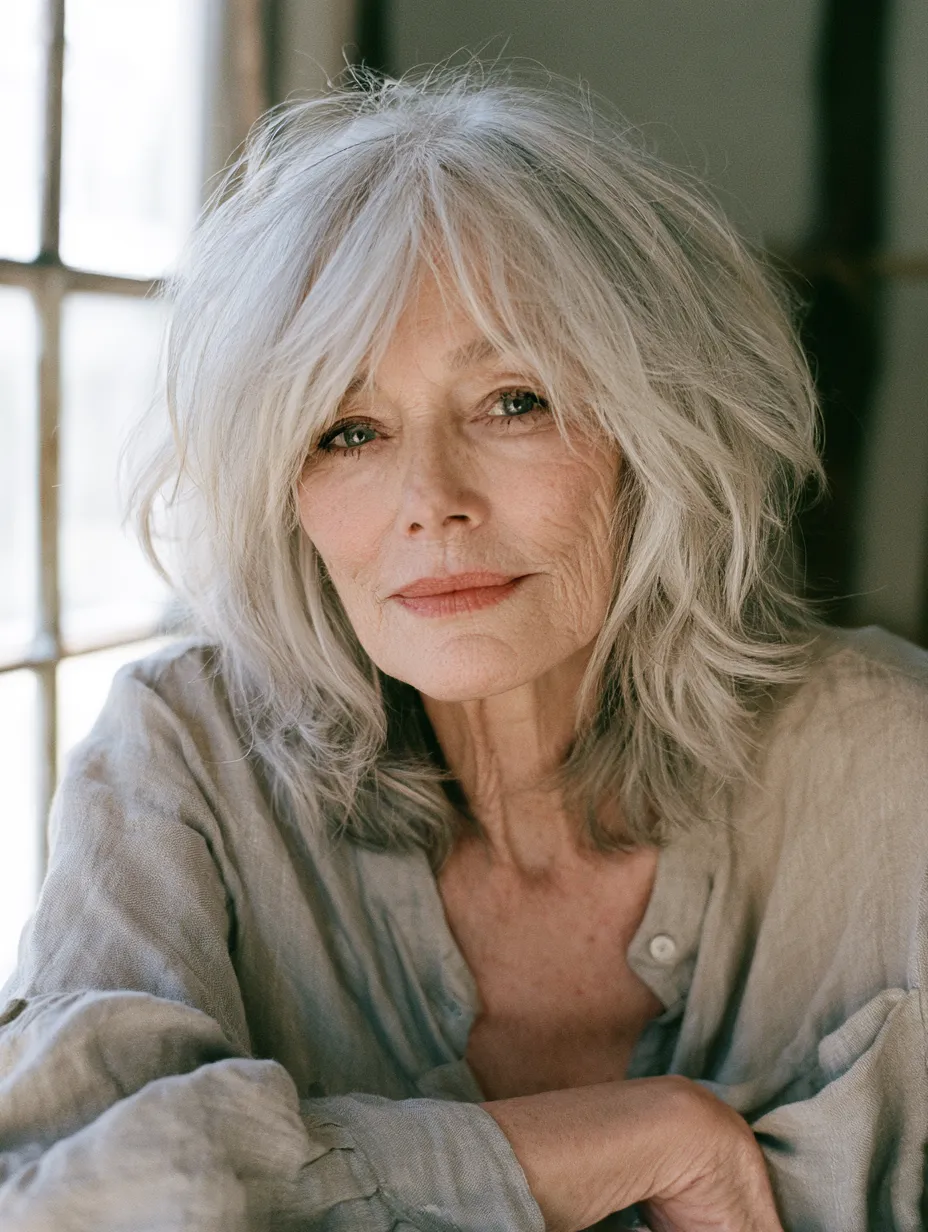
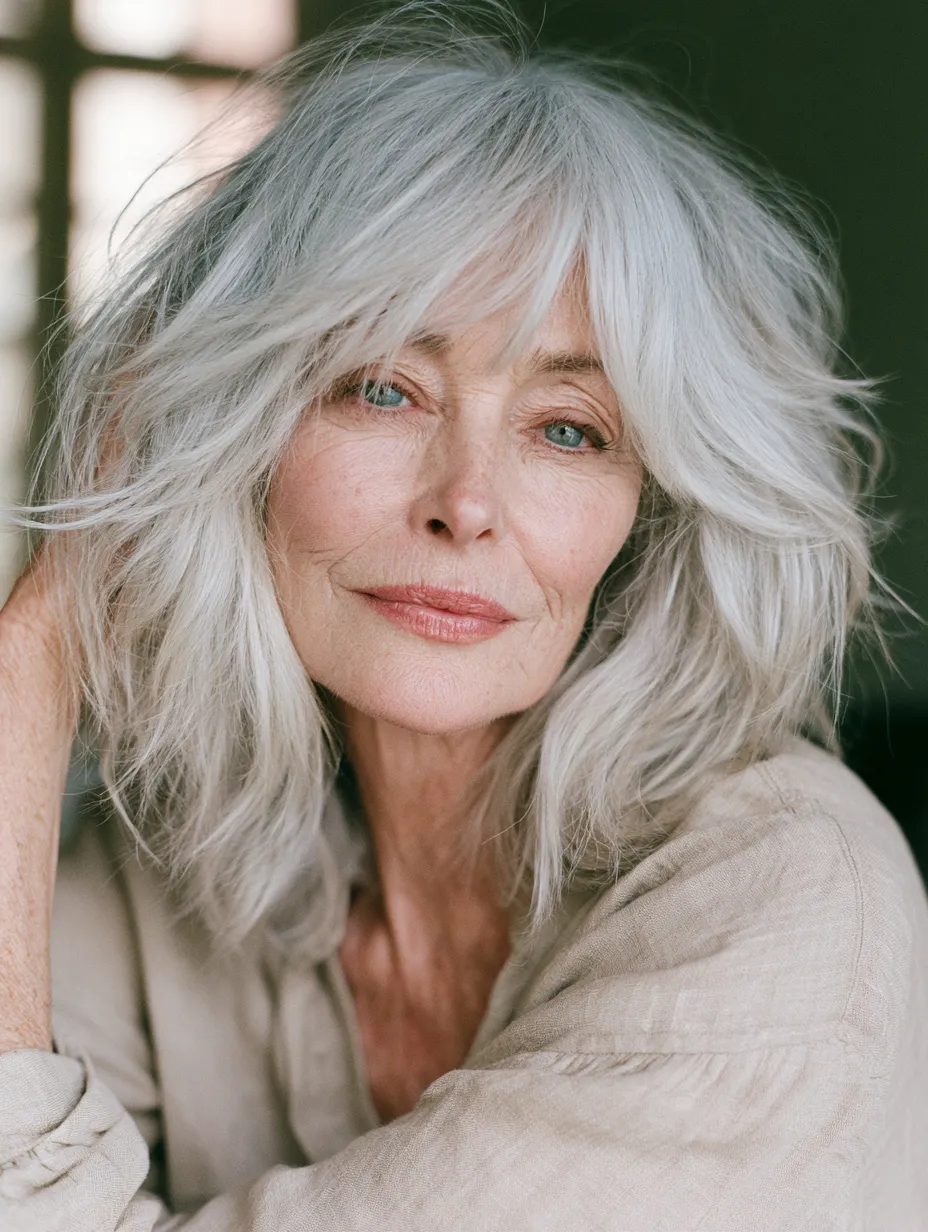
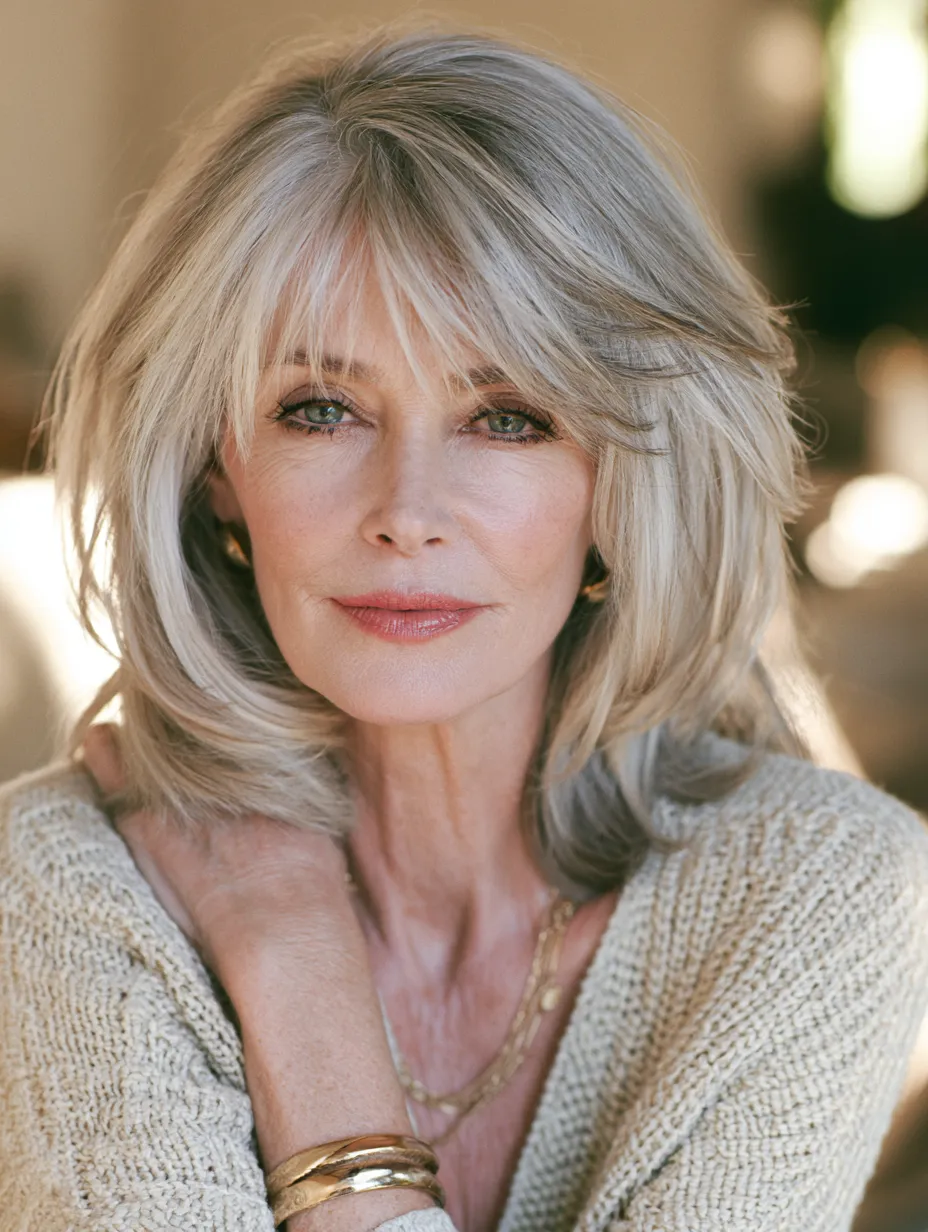
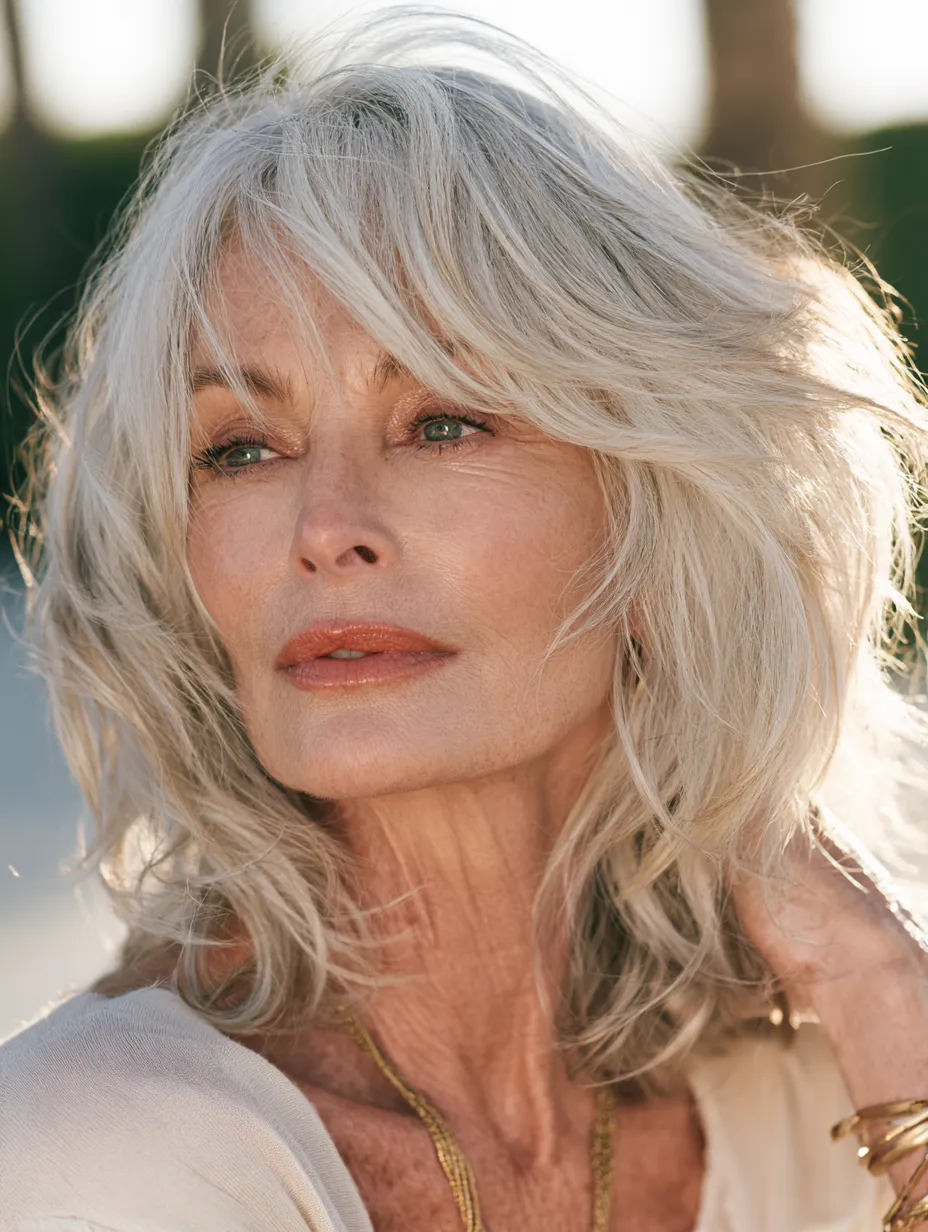
The modern shag haircut has found a devoted audience among women over 70 for very good reasons. Its defining features — lots of internal layers, a slightly lived-in texture, and soft fringe or curtain bangs — are precisely what fine, mature hair needs. The layers remove bulk from the ends where hair can look wispy and distribute volume through the mid-lengths instead. The result is hair that looks full and dimensional without the heavy, solid look of a blunt cut.
One practical note about shag cuts: they require regular trims — every 8 to 10 weeks — to maintain their shape. Grown-out shag layers can look shapeless rather than textured. But for women who are committed to the maintenance schedule, the shag is one of the most genuinely flattering cuts available at any age.
Hair Color Choices That Work With Age
The conversation about hair color for women over 70 has changed dramatically. There are no longer two camps — “dye it” or “go gray” — but a sophisticated spectrum of approaches that range from fully embracing natural silver to maintaining color with a lighter, more modern application than the solid, opaque coverage of past generations.
Embracing Silver and White
Natural gray and silver hair at 70 can be genuinely luminous when cared for correctly. The challenge many women face is not the color itself but the texture that often accompanies it — natural gray hair tends to be coarser and can have a tendency toward frizz or wiry strands. A weekly deep conditioning treatment and a purple or blue-toned toning shampoo (used once a week to prevent yellowing) are the two most impactful steps for women who want their silver to look intentional and polished rather than neglected.
Silver hair also responds beautifully to a gloss treatment at the salon. A clear or tinted gloss adds shine and softens the texture without adding any pigment — it is one of the most underrated services for women over 70 who want to keep their natural color.
Soft Color for Women Who Prefer It
Women over 70 who choose to maintain hair color will find that the techniques that work best at this age are softer and more diffused than the solid, single-process color that was standard in earlier decades. Highlights blended into natural silver create a brightening effect without requiring root touch-ups every four weeks. Soft balayage — hand-painted color concentrated around the face and on the upper sections — is another approach that looks luminous without requiring extensive maintenance.
The most flattering tones for women over 70 tend to be warm. Cool ash blondes and flat brown tones can read as harsh against skin that has naturally lost some of its warm undertones with age. Honey, caramel, warm champagne, and soft copper work in harmony with the complexion rather than fighting it.
Face-Framing Techniques That Make a Real Difference
Of all the styling decisions available to women over 70, face framing is the one that delivers the most visible change. The goal of face framing is to create soft structure around the face — to lead the eye toward the eyes and cheekbones rather than toward any features that have shifted with age.
Layers cut to graze the cheekbones are particularly effective. A few pieces that fall just at cheekbone level — whether within a bob, a shag, or a longer cut — draw the eye to the upper face in a way that a blunt, one-length cut cannot.
Bangs are another powerful option that many women over 70 dismiss before trying. The key is the style of bang. Heavy, straight-across blunt bangs can emphasize horizontal lines across the forehead. But wispy, side-swept, or curtain bangs that part in the middle or slightly off-center have a genuinely softening effect. They cover the forehead without adding visual weight, and they create a frame around the eyes that gives the entire face more definition.
Hairstyles for Women Over 70 by Hair Type
Fine and Thinning Hair
Fine hair is the most common challenge for women over 70, and there is a specific set of approaches that genuinely help. First: avoid heavy products. Thick creams and heavy oils flatten fine hair against the scalp, making thinning more visible. Lightweight volumizing mousses or sprays applied to damp hair at the roots, then diffused or air-dried, create lasting lift without weight.
Second: cut to the right length. Very long hair pulls its own weight downward, emphasizing flatness. A cut at chin or shoulder length allows fine hair to hold its shape. Third: consider a body wave perm. Modern perms are much gentler than the stiff spirals of the 1980s, and a loose body wave adds movement and apparent volume that requires almost no daily styling effort. Many of the low-maintenance haircut approaches that work for women over 60 apply directly at 70 as well — the core principles around reducing styling time while maintaining shape hold across this decade.
Thick and Coarser Hair
Women over 70 with thick hair face a different challenge: too much bulk, particularly at the ends, can make a cut look heavy and shapeless. The solution is internal thinning — layers and texture cut into the interior of the hair to remove weight without changing the overall length or silhouette. A good stylist will use point-cutting or razor techniques to create movement without the “triangle head” effect that blunt cuts on thick hair can produce.
Naturally Wavy and Curly Hair
Natural waves and curls often behave differently after 70 — the curl pattern may loosen, tighten, or change in character as hair texture shifts. The best approach is to work with whatever the current pattern is rather than fighting it. Curly-specific cuts — where each curl is cut individually when dry — produce dramatically better results than standard wet cuts on curly hair. A diffuser attachment on a hair dryer (used on low heat) and a curl-defining cream are the two tools most worth investing in for naturally curly hair at this age.
Hairstyles for Women Over 70 for Special Occasions
One of the most common questions from women over 70 is how to style hair elegantly for events — weddings, milestone celebrations, or formal dinners — without it looking stiff or overly “done.” The answer is almost always: soft texture, not hard lacquer.
Hollywood waves are having a genuine moment among women over 70, and it makes complete sense. The wave pattern is loose and romantic, adds visible volume to fine hair, and photographs extraordinarily well. The technique involves setting the hair on large rollers or a large-barrel curling iron, then brushing out gently and pinning into a side-swept shape. The result is an effect that looks expensive and intentional but is actually achievable at home with practice.
Elegant updos at this age work best when they are not perfectly tight. A low chignon with a few face-framing pieces left loose, or a twisted style that maintains some softness and movement, looks far more current than a hard, lacquered upswept look. For women with very short hair, sculptural styling — using a small amount of pomade to shape the hair into a deliberate, asymmetric form — is a genuinely beautiful special-occasion option.
The Styles That Genuinely Flatter Different Face Shapes Over 70
Face shape remains a useful guide for hairstyle choices at any age, but the considerations shift slightly after 70 because the face itself changes. Features become softer, the jawline less defined, and the overall face shape may read differently than it did at 40 or 50.
- Round faces: Height at the crown adds length. Side parts, tapered sides, and cuts that fall below the chin all elongate the face. Avoid cuts that add width at the cheeks, such as chin-length bobs with heavy fringe.
- Oval faces: Nearly every cut works. The soft pixie, the bob, the shag, and medium-length styles with layers all look proportionate on an oval face. This face shape benefits from showing off the cut rather than covering it.
- Square faces: Softness is the goal. Rounded layers, curtain bangs, and cuts that remove weight from the sides while maintaining length help soften the strong jawline that characterizes square faces.
- Long faces: Width creates balance. Side-swept bangs, cuts that fall at jaw level, and styles with volume at the sides all shorten the visual length of a long face. This is one of the face shapes where a fuller bob without bangs can look particularly good.
- Heart faces: Volume below the cheekbones balances a wider forehead. Bobs, medium-length cuts with body at the ends, and side-parted styles all achieve this. Avoid too much volume at the crown, which emphasizes the wider upper face.
Daily Styling Tips That Make Any Hairstyle for Women Over 70 Work Better
The cut is the foundation, but daily habits determine how the cut actually looks in real life. A few specific adjustments make a significant difference for mature hair.
Washing frequency matters. Many women over 70 wash their hair daily out of habit, but fine and dry mature hair actually benefits from washing every two or three days. The natural oils that the scalp produces — even if less than in younger years — condition the hair between washes and prevent the brittleness that comes from daily cleansing.
Heat tool temperature deserves attention. Most heat tools default to temperatures that are appropriate for thick, young hair but damaging for fine, mature hair. Reducing the temperature setting on flat irons and curling tools — and always using a heat protectant — preserves the integrity of the hair shaft over time.
Silk pillowcases are an underrated investment. Cotton pillowcases create friction against fine hair through the night, causing breakage and contributing to the frizz that many women over 70 struggle with. A silk or satin pillowcase reduces that friction significantly. The same principle applies to towel drying: blotting and squeezing hair gently with a microfiber towel (rather than rubbing vigorously) reduces breakage at a stage when the hair is most fragile.
For women considering a change in cut direction, exploring what is working for women a decade younger can also be illuminating. The textured shag haircuts that women over 60 are wearing this summer translate directly to women over 70 and show what the same styling philosophy looks like with slightly different hair texture.
What to Tell Your Stylist When You Want a Real Change
One of the most practical things to understand about getting great hairstyles for women over 70 is the importance of clear communication with the person holding the scissors. Stylists cannot read minds, and the word “shorter” means something different to every client. Bringing a photo — or several — is the single most effective way to bridge that gap.
But beyond the photo, three pieces of information make a consultation genuinely productive: how much time you are willing to spend styling each morning, how often you are prepared to return for trims, and whether there are specific features you want the cut to flatter or minimize. A stylist who knows these three things can adapt any inspiration photo to your specific hair and lifestyle.
If you are thinking about embracing your natural gray and want to understand what transitioning looks like in practice, the range of approaches that work at different stages — from partial coverage to full silver — is worth exploring. The frosted short hairstyles for older women in gray and platinum show exactly how sophisticated the transition can look when approached as an aesthetic choice rather than a compromise.
The Bigger Picture of Hair After 70
The most important thing about hairstyles for women over 70 is the one that no style guide can give you but every great stylist understands: the best hairstyle is the one that matches who you actually are right now. Not who you were at 40. Not who someone else thinks women your age should be. The women who look most remarkable with their hair at 70 and beyond are almost never the ones who picked the most technically “correct” cut for their face shape. They are the ones who have found a style that feels like them — and wear it with the confidence that only comes from being entirely settled in your own skin.
That is not something a magazine can hand you. But a great cut, the right color approach, and a clear understanding of your own hair can get you most of the way there.