Modern Australian kitchen designs don’t start at the cabinetry showroom — they start with the view outside the window. I’ve spent years studying what makes these kitchens feel so distinctly different from their European or American counterparts, and the answer keeps coming back to the same thing: Australian designers treat the indoor-outdoor boundary as a design material, not an obstacle. You get a kitchen that breathes, moves with daylight, and is unapologetically tied to its landscape.
That’s a harder trick to pull off than it sounds. Most renovations I’ve seen fail not because the materials were wrong but because the bones were borrowed from somewhere else — Nordic minimalism dropped into a Queensland home, or a Manhattan galley transplanted to a Melbourne terrace. Neither works. Australian kitchens earned their reputation by refusing to do that.
Quick Read
- Dominant style: Minimalist open-plan with indoor-outdoor flow — flat-panel cabinetry, natural stone or zero-silica engineered stone benchtops
- Material moment: Timber grain cabinetry (Polytec and Laminex Natural Oak are my go-to references), paired with warm-toned quartz around $250–$400/m²
- Light strategy: Floor-to-ceiling glazing + skylights reduce artificial lighting by up to 40% across the day
- Layout rule: Work triangle still applies — stove, sink, fridge within 6m total travel — but the island now absorbs the fourth corner as a social hub
- 2025 shift: Curved island benchtops, fluted cabinet fronts, and sculptural rangehoods replacing flat slab-everything kitchens
- What to avoid: All-white monochrome schemes with cold undertones — they read as sterile and photograph flat
Sleek Cabinetry Works Until the Handles Ruin It
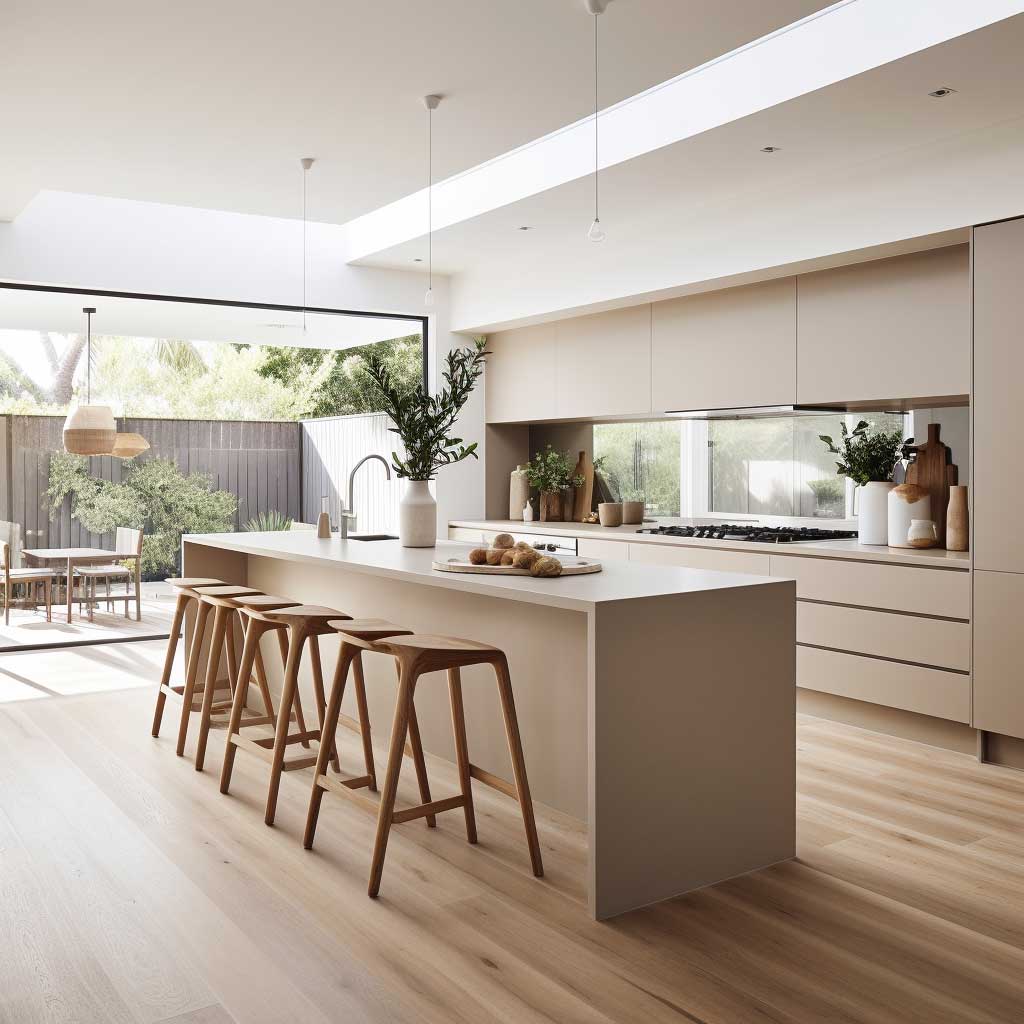
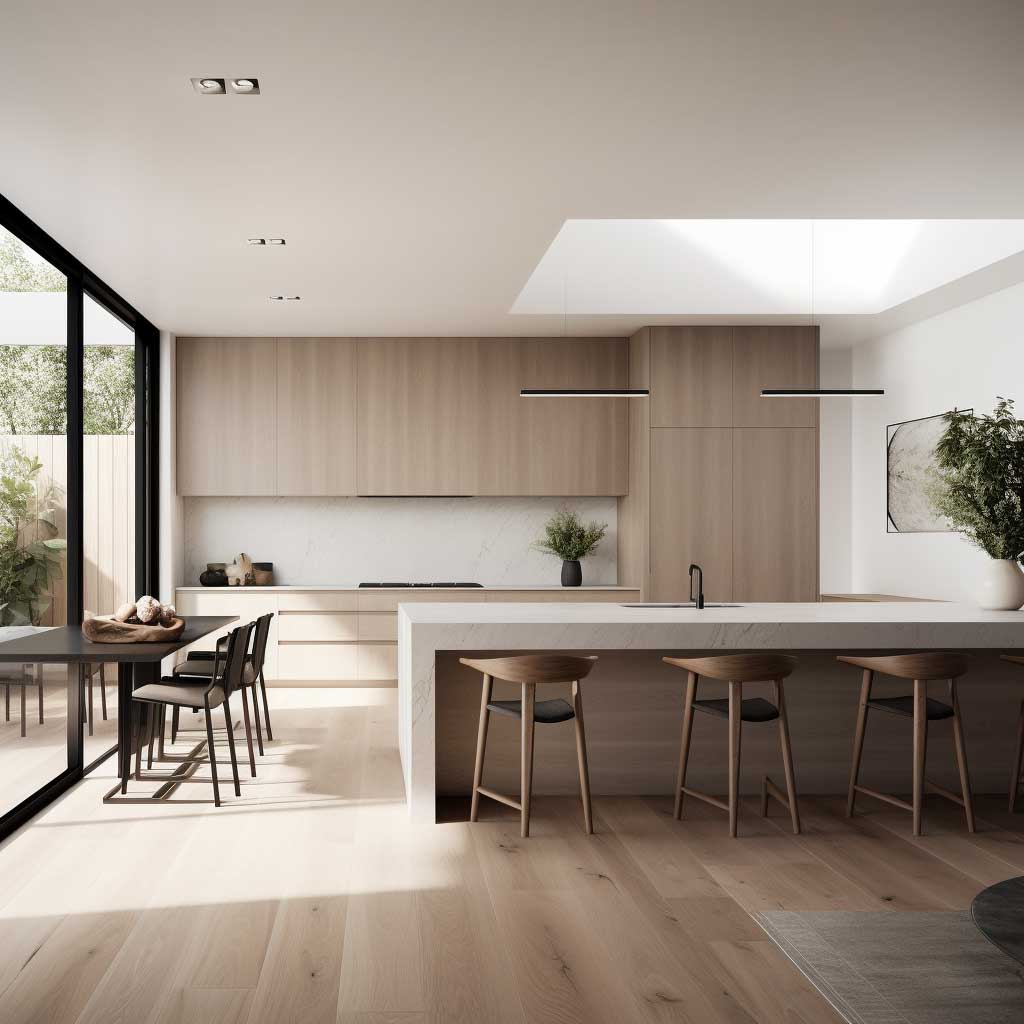
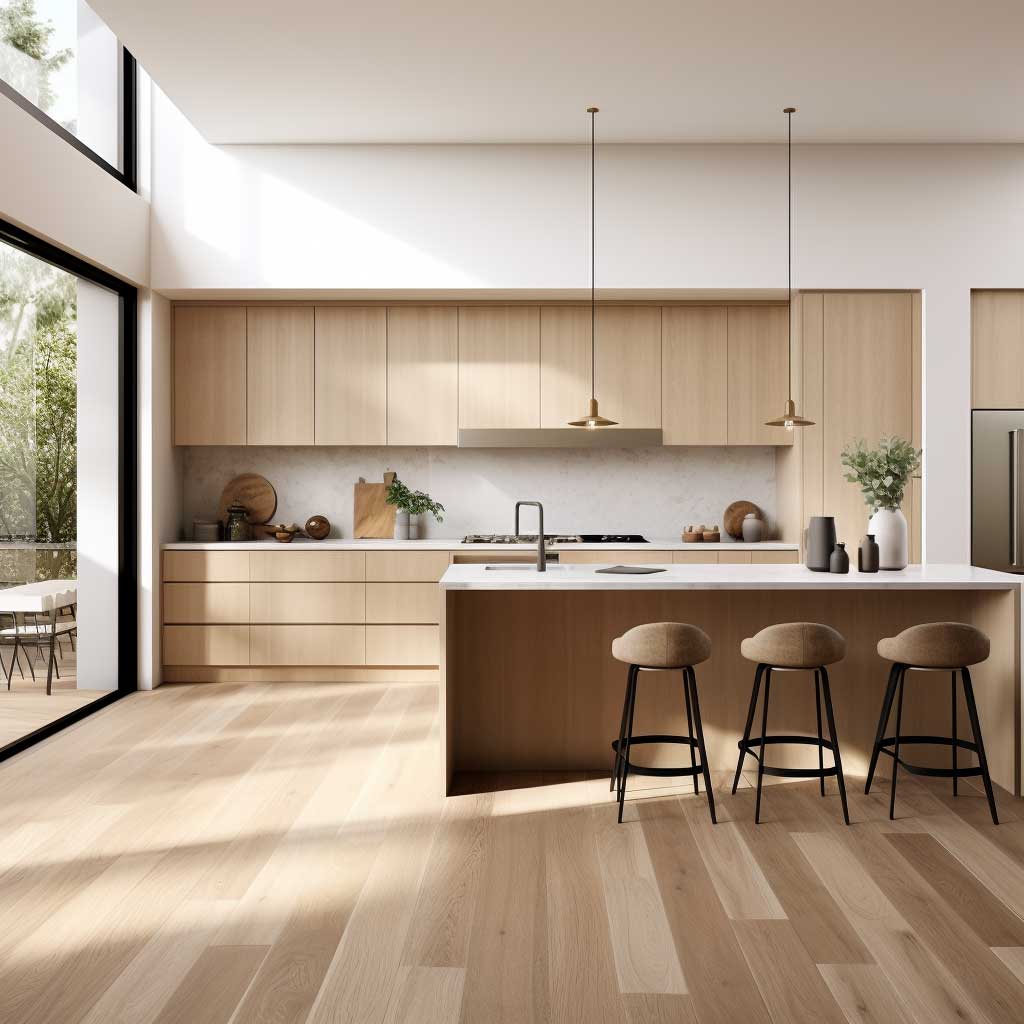
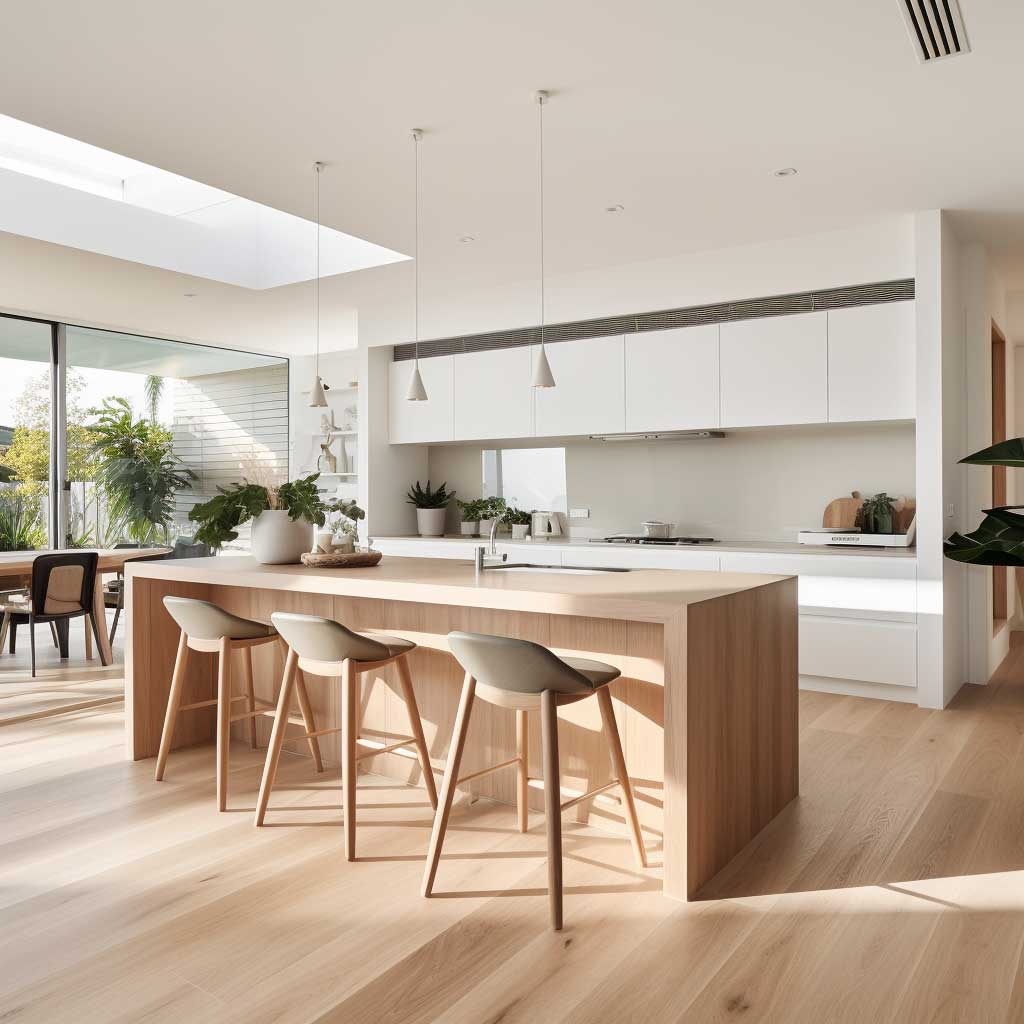
My go-to reference for Australian cabinet aesthetics is the Polytec Natural Oak range — around $180–$240 per linear metre for flatpack — because the grain reads warm under both artificial and natural light. Flat-panel doors with integrated finger pulls have replaced bar handles in most Australian kitchens I’ve tracked since 2022, and for good reason: bar handles collect grease, interrupt the sightline, and add $800–$1,200 in hardware costs for a full kitchen run. You’ll notice the absence immediately when you’re standing in one of these spaces.
The colour story matters enormously here. Cold whites — anything with a blue or grey undertone — are the single biggest mistake I see in Australian kitchen renovations. Dulux Vivid White and similar cool-toned options photograph flat and feel clinical in real life. Warm whites like Dulux Natural White or Taubmans Off White pick up the amber frequencies of Australian afternoon light and make the room feel 20% larger without touching the layout. That’s free design work. Don’t ignore it.
For countertops, the post-2022 engineered stone ban on silica content above 1% pushed the market toward zero-silica options. Brands like Quantum Zero from Quantum Quartz ($380–$480/m² installed) and Zenith Surface from Stone Ambassador ($420–$550/m²) are what I’d spec today. Natural marble is still used, but mostly for islands — Carrara runs $650–$900/m² installed and shows every scratch on a working surface. Save it for the visual moment, not the prep zone.
Lighting is where most kitchen renovations leave 30% of the design value on the table. Under-cabinet LEDs at 2700K–3000K colour temperature are the baseline — Casambi-controlled systems like the Klus B-7000 channel ($45–$80/m) let you dim them without a wall switch. Pendant lights over the island should hang at exactly 700–750mm above the benchtop surface. Lower and they become head hazards. Higher and they stop doing any useful task lighting. That specific measurement is the one I steal from every good kitchen designer I’ve worked with.
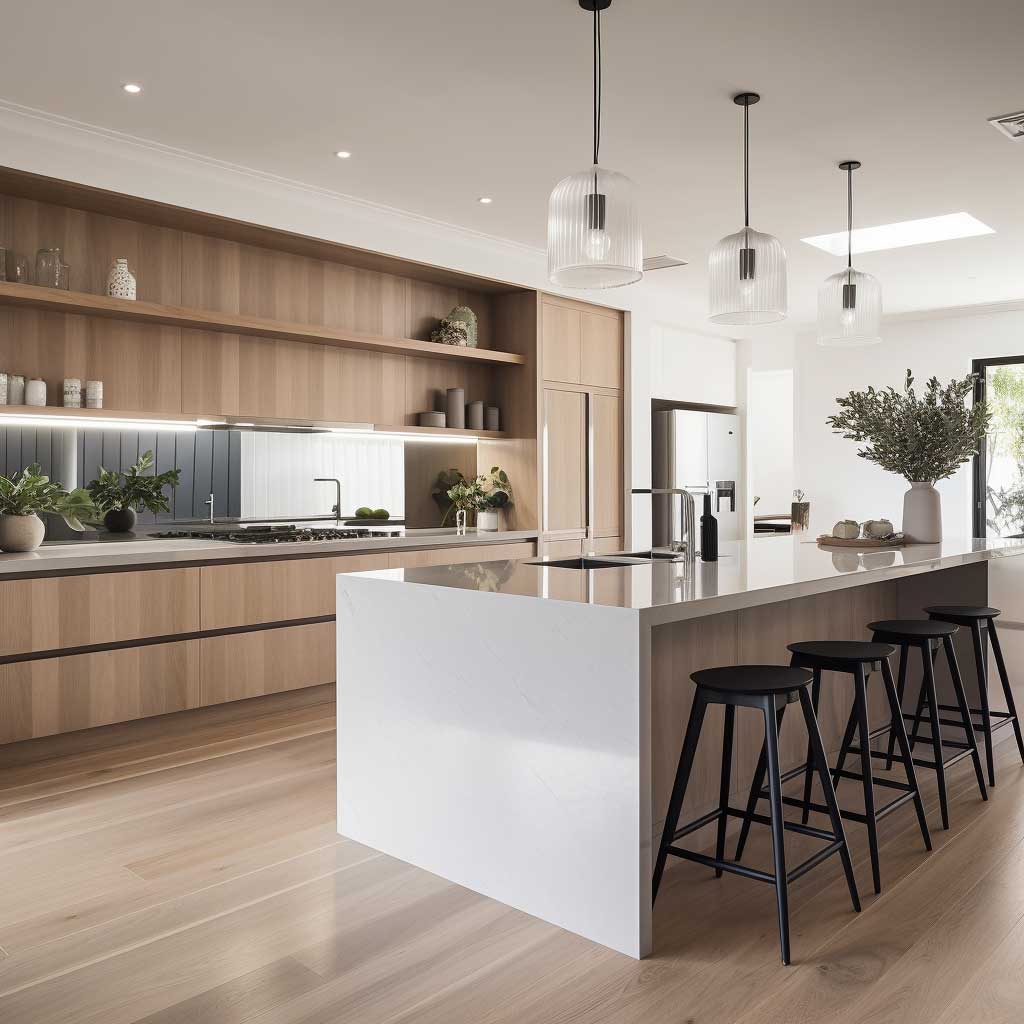
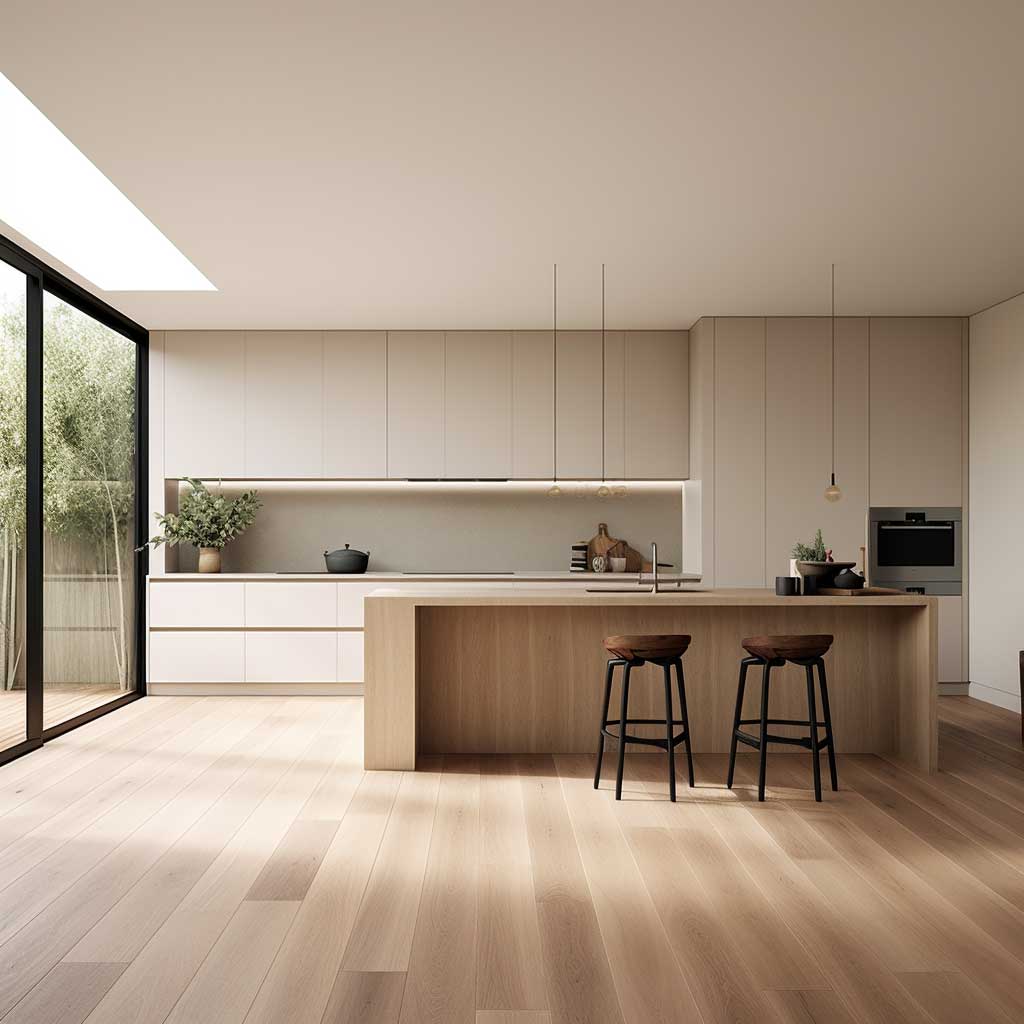
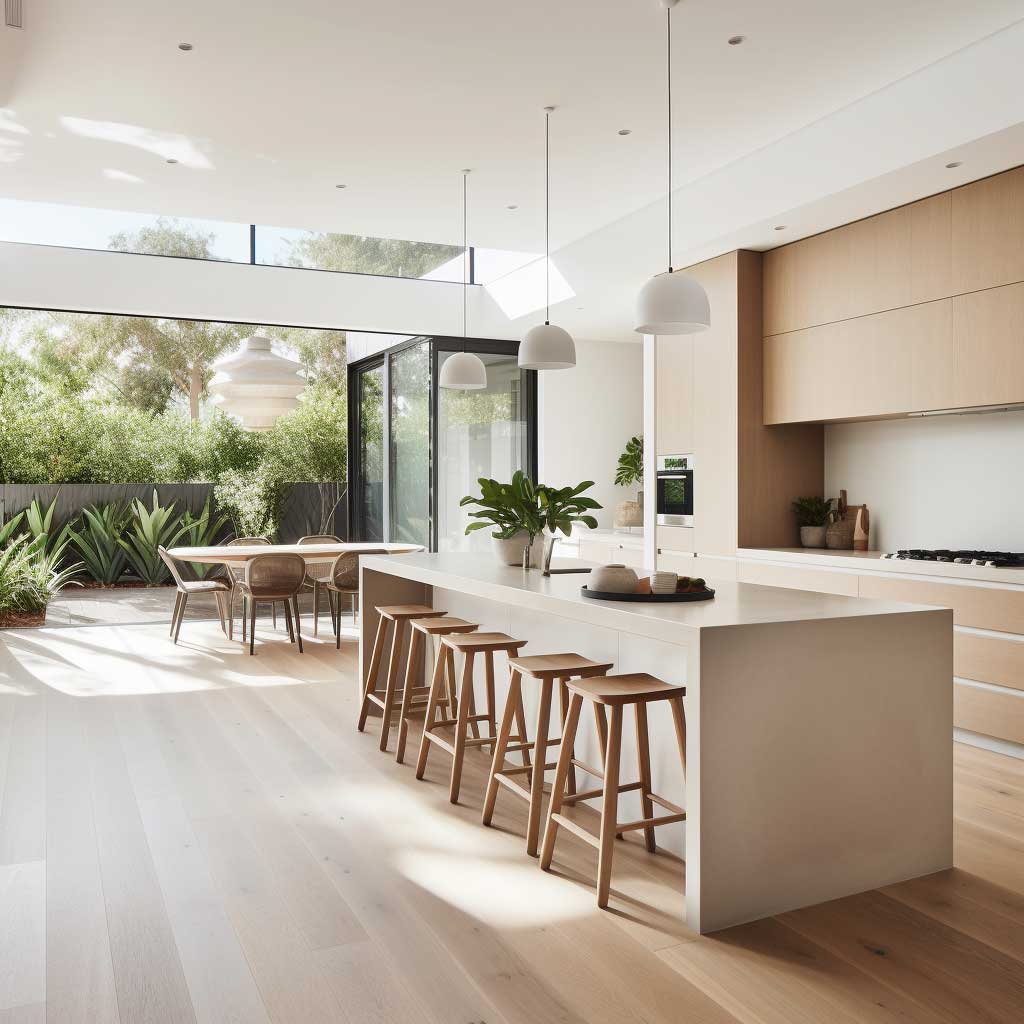
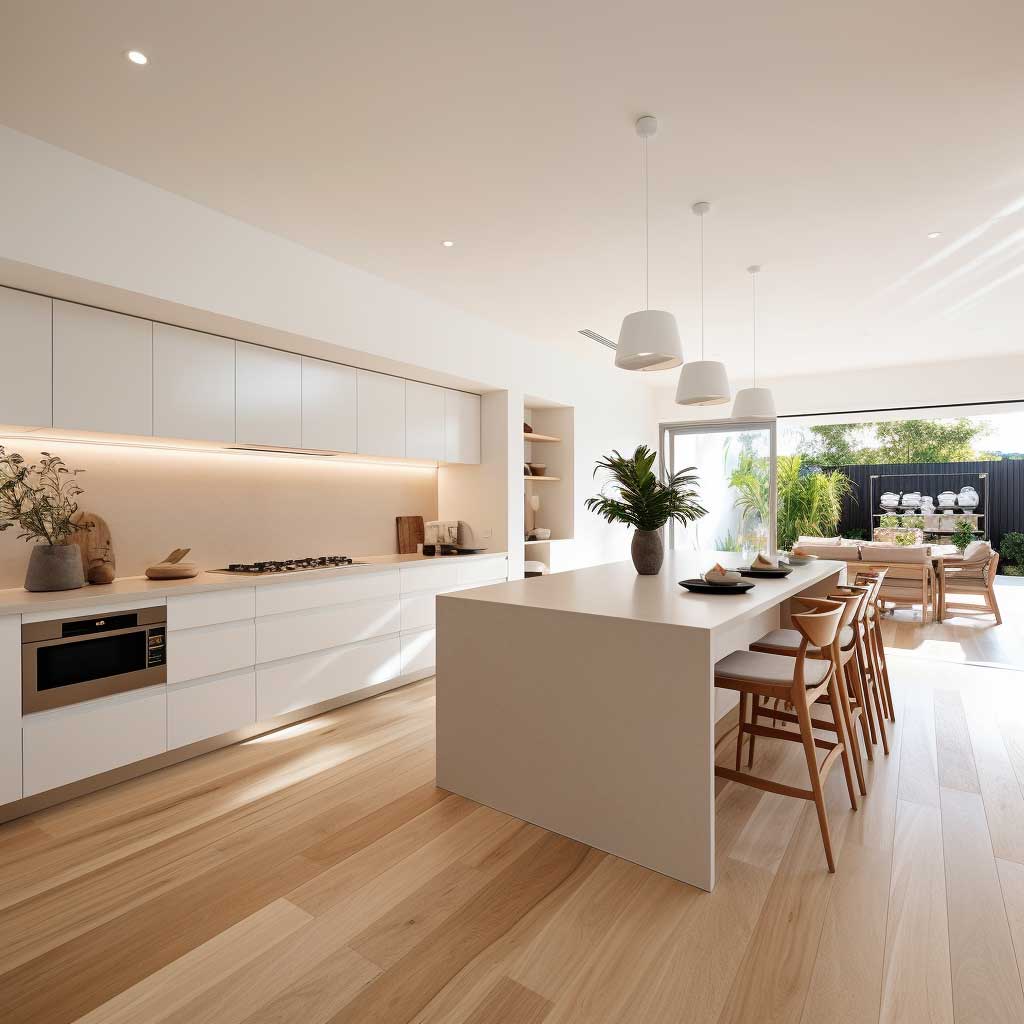
The work triangle still anchors the layout — stove, sink, and fridge within 6m total travel — but Australian designers have quietly evolved past the strict triangulation rule. I’ve bought into the zone model: prep zone, cooking zone, cleanup zone, each with its own dedicated clearance and storage. The island absorbs the fourth corner as a social hub, and that’s where the kitchen stops being a utility room and starts being the reason people stay at a party. State-of-the-art appliances like the smart kitchen range from Australian retailers integrate into this zone logic without cluttering the visual field.
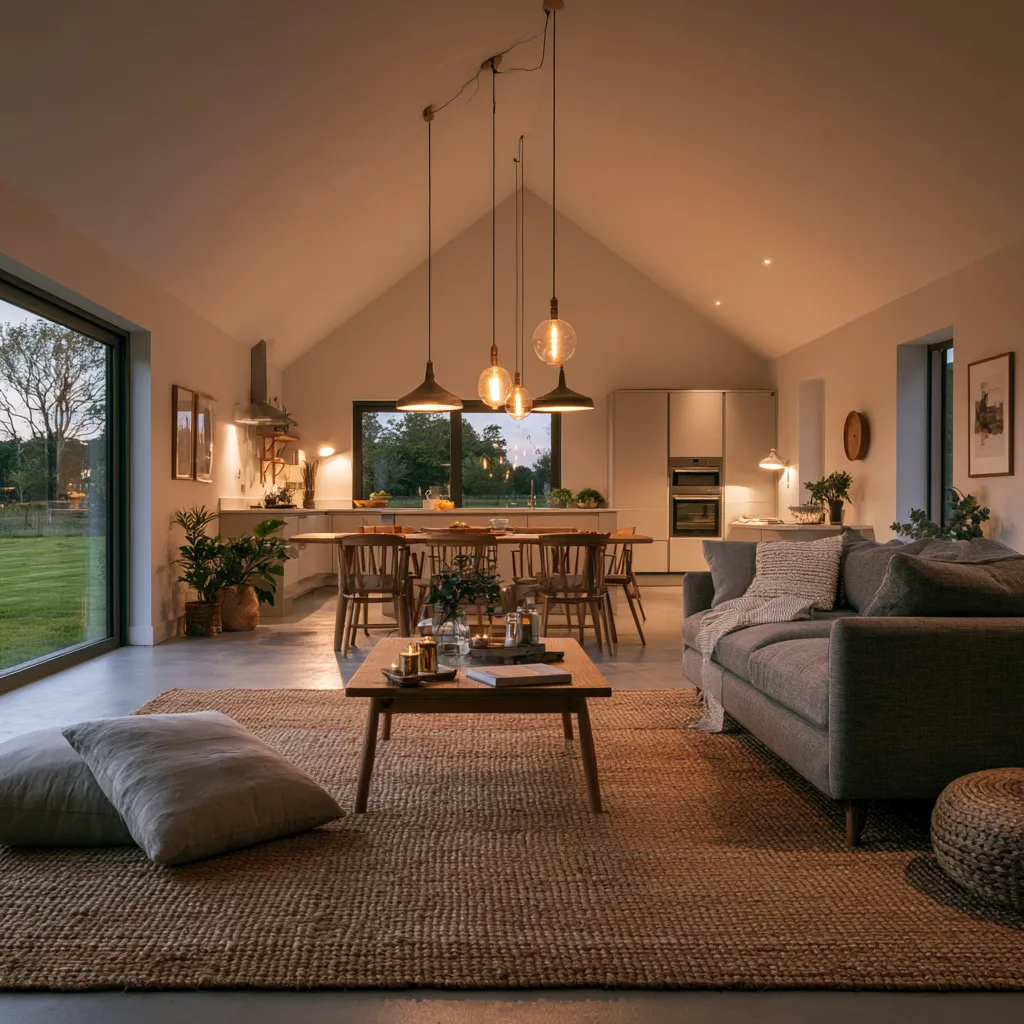
The open-plan integration has been the defining Australian contribution to modern kitchen design. Kitchens flowing into dining and living spaces allow natural light to travel deeper into the plan — which in Australian climates means you’re rarely switching on overhead lighting before 5pm. If your current kitchen has a wall between it and the main living area, that wall is costing you money in electricity and resale value simultaneously.
Don’t Do This
Don’t install overhead fluorescent or cool-white LED strips as your primary kitchen lighting. I’ve seen this in a dozen renovations — it turns every surface grey, flattens the warmth out of any timber finish, and makes food look unappetising. It’s the kitchen equivalent of a hospital corridor. Spend the $300 more to get warm-toned recessed downlights on a dimmer plus task lighting at the benchtop level. The difference is not subtle.
Don’t source your benchtop colour in isolation from the floor. I once watched a client spend $9,000 on a Calacatta Oro marble slab, only to install it above cool-grey porcelain floor tiles. The marble read green. The whole kitchen read wrong. Bring your floor sample to every material selection. Always.
Glass Doors and Skylights Are Doing the Design Work You Think Cabinetry Is Doing
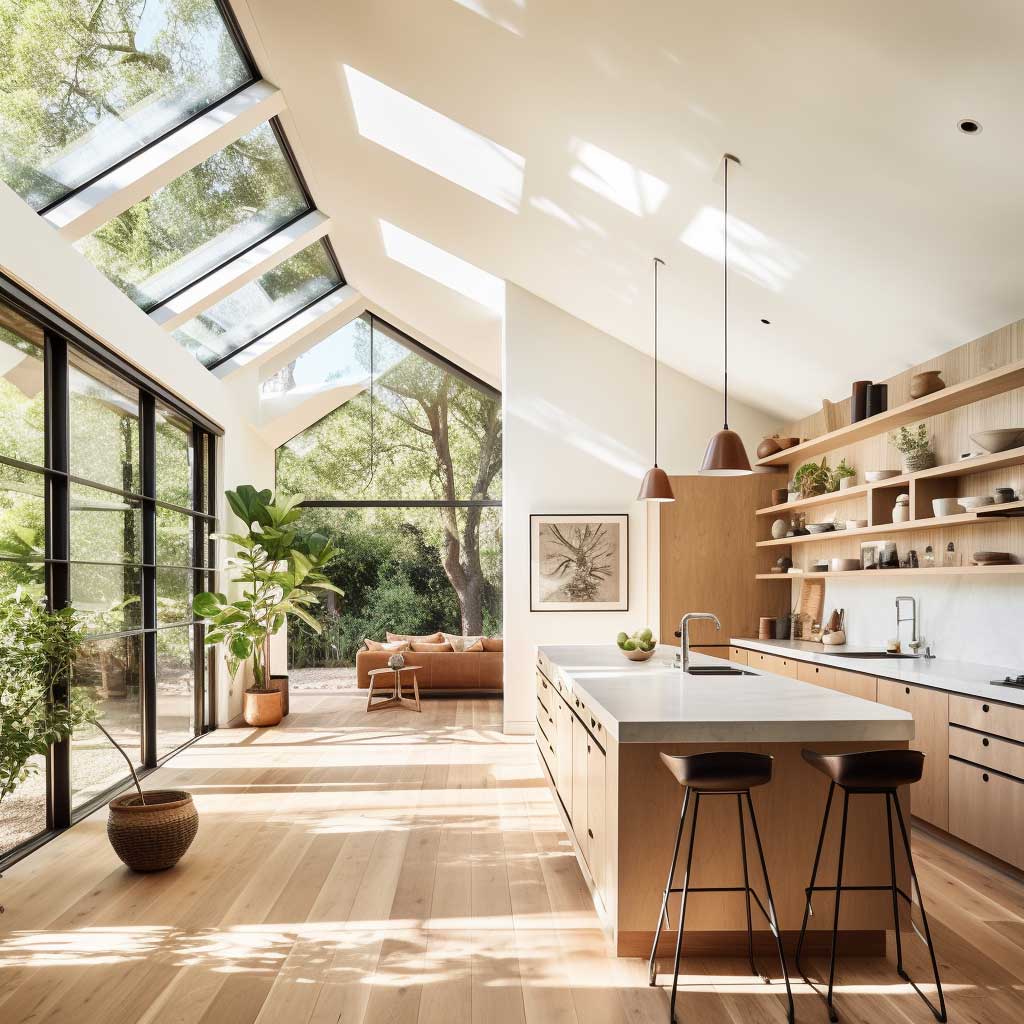
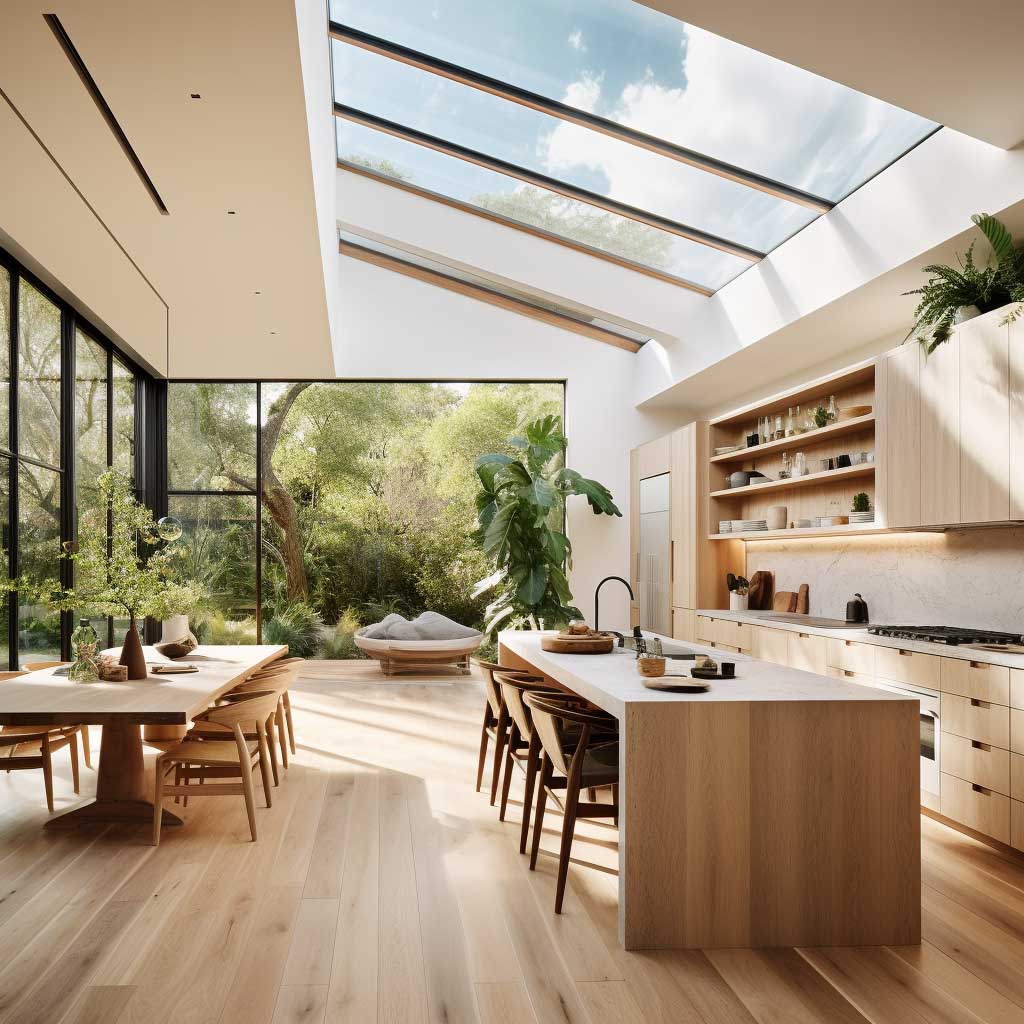
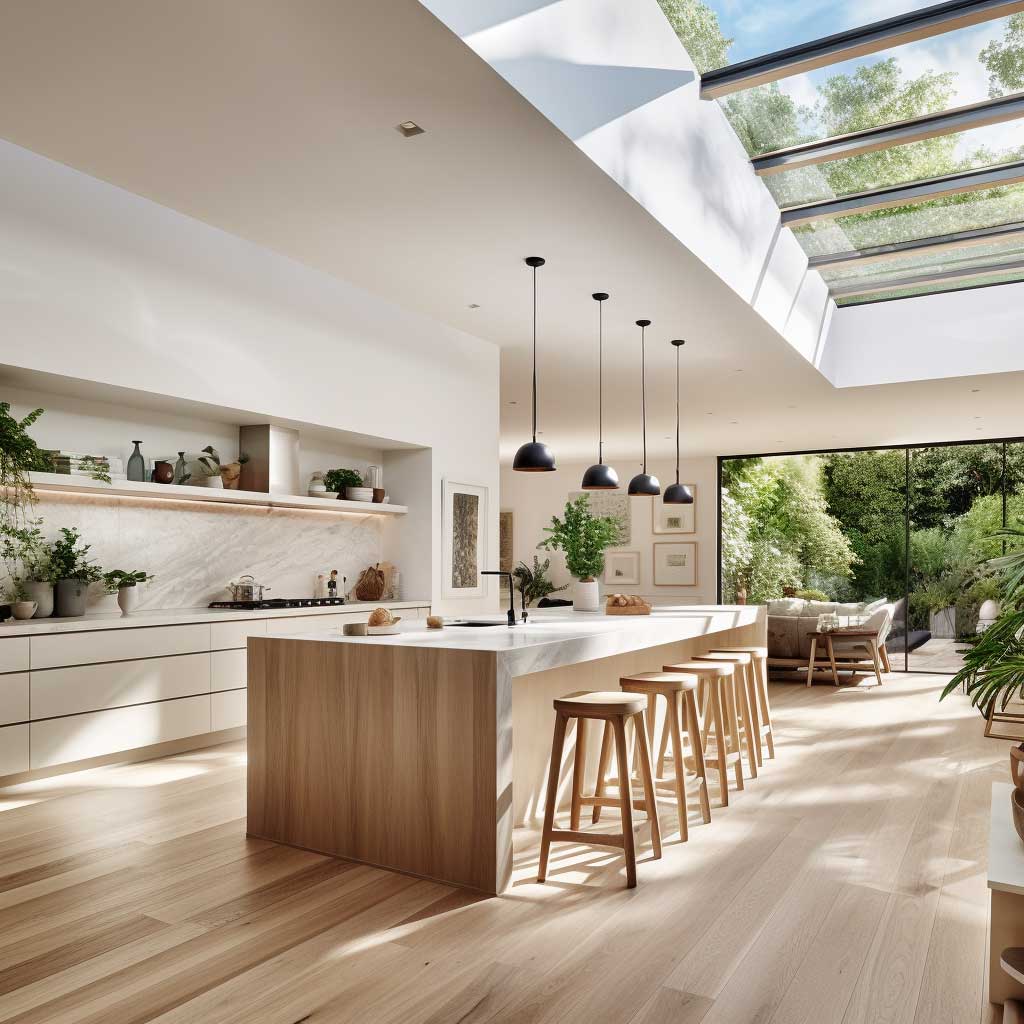

Here’s a figure I find genuinely surprising every time I quote it: strategic glazing — a north-facing skylight of just 1.5m² — can reduce daytime artificial lighting load by 35–40% in an Australian kitchen. That’s not a marketing claim from a window manufacturer. That’s physics. Light travels further through a plan when you cut holes in the ceiling than when you add more cabinetry downlights. I’ve owned two homes where we added skylights post-build, and in both cases it changed the character of the kitchen more than any renovation budget item we spent on surfaces.
Floor-to-ceiling glazing is the other tool. Aluminium sliding or stacking systems — aluminium sliding doors from suppliers like Simply Doors and Windows start around $1,800–$2,400 per panel — create a visual wall that reads as open space rather than enclosure. The kitchen stops at the glass and continues into the garden or alfresco area without a threshold moment. That perceptual trick adds square metres to a room without touching the floor plan. You’ll notice it within two minutes of standing in a well-executed version.
The question I get asked most: does all that glass make the kitchen too hot? In Queensland and northern NSW — yes, unshaded west-facing glass is a mistake. Deep eaves of 900mm–1,200mm, or retractable external blinds (Somfy motorised systems run $600–$900 per drop), solve the problem without sacrificing the light. Strategic shade is the native Australian design response to this exact problem. It’s been embedded in Queensland vernacular architecture since the 1880s. The verandah exists for a reason.
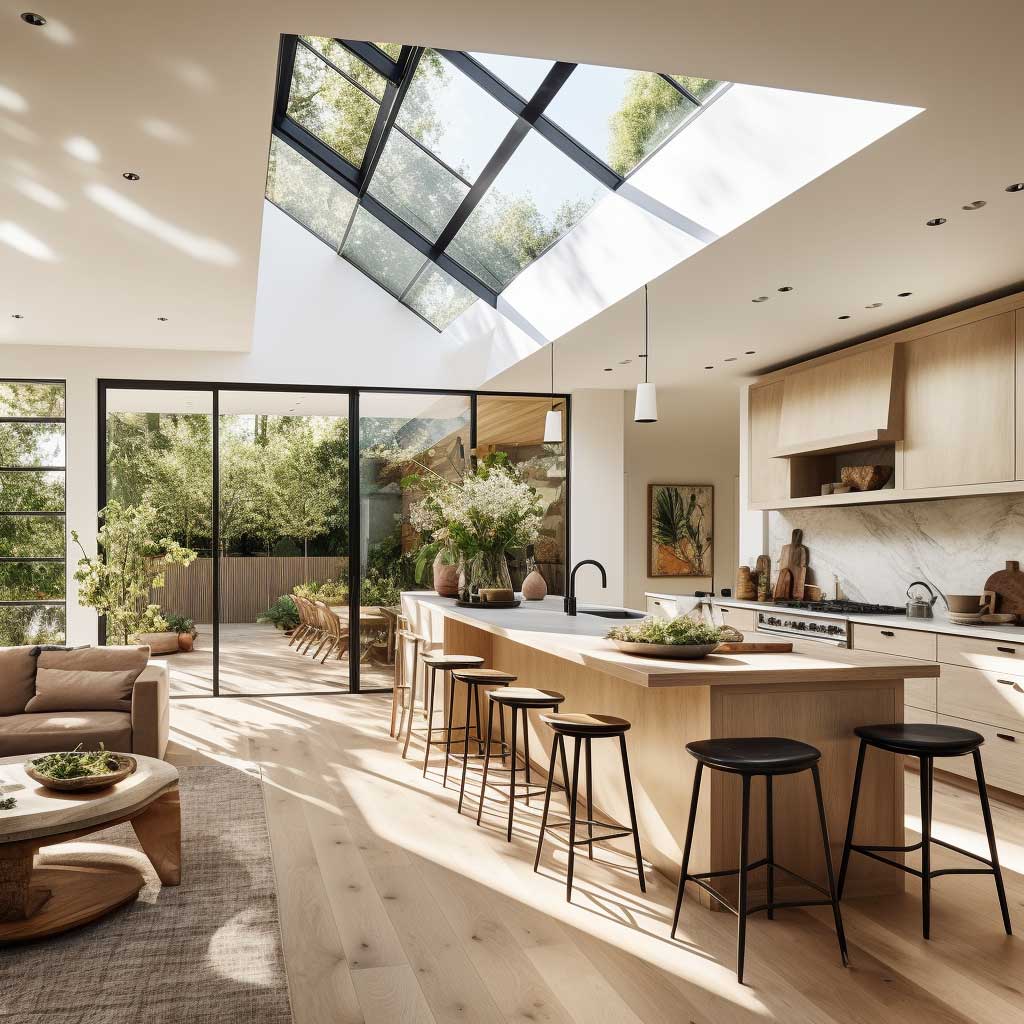
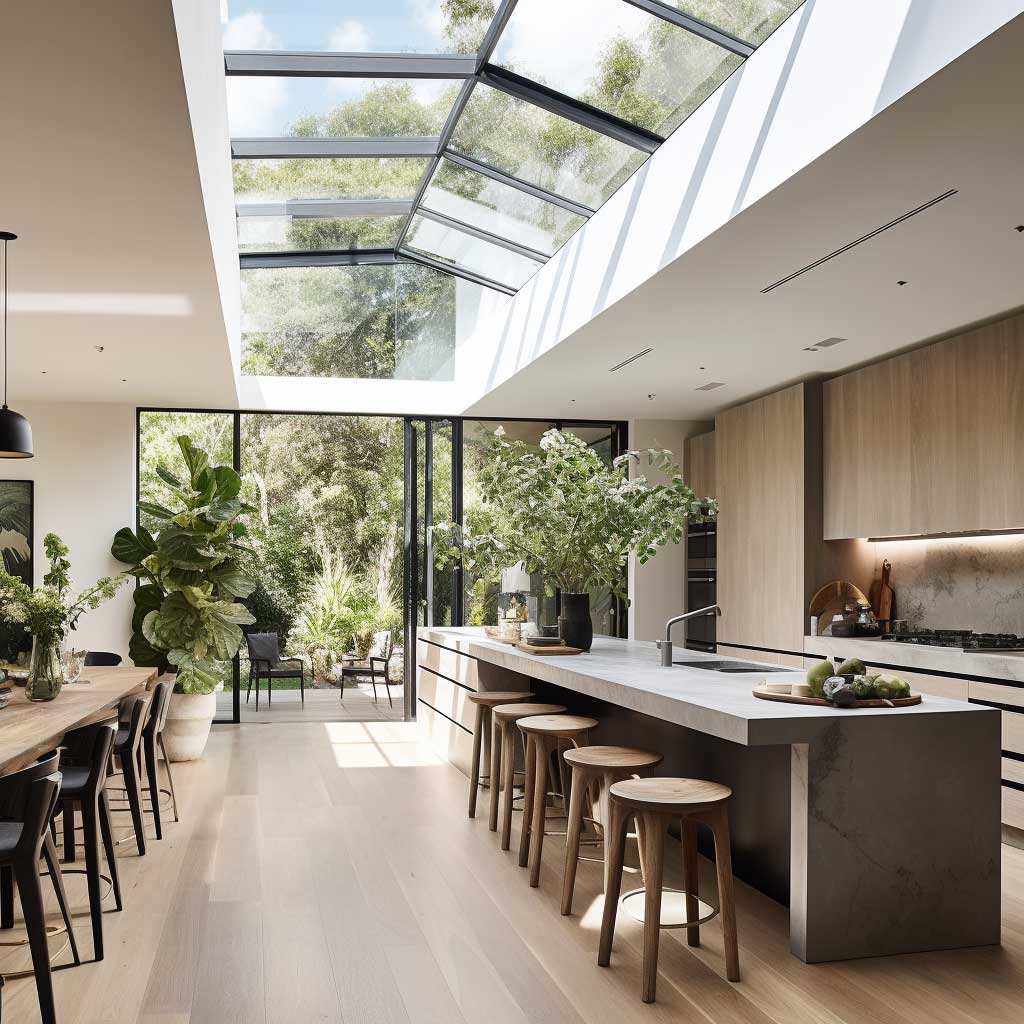
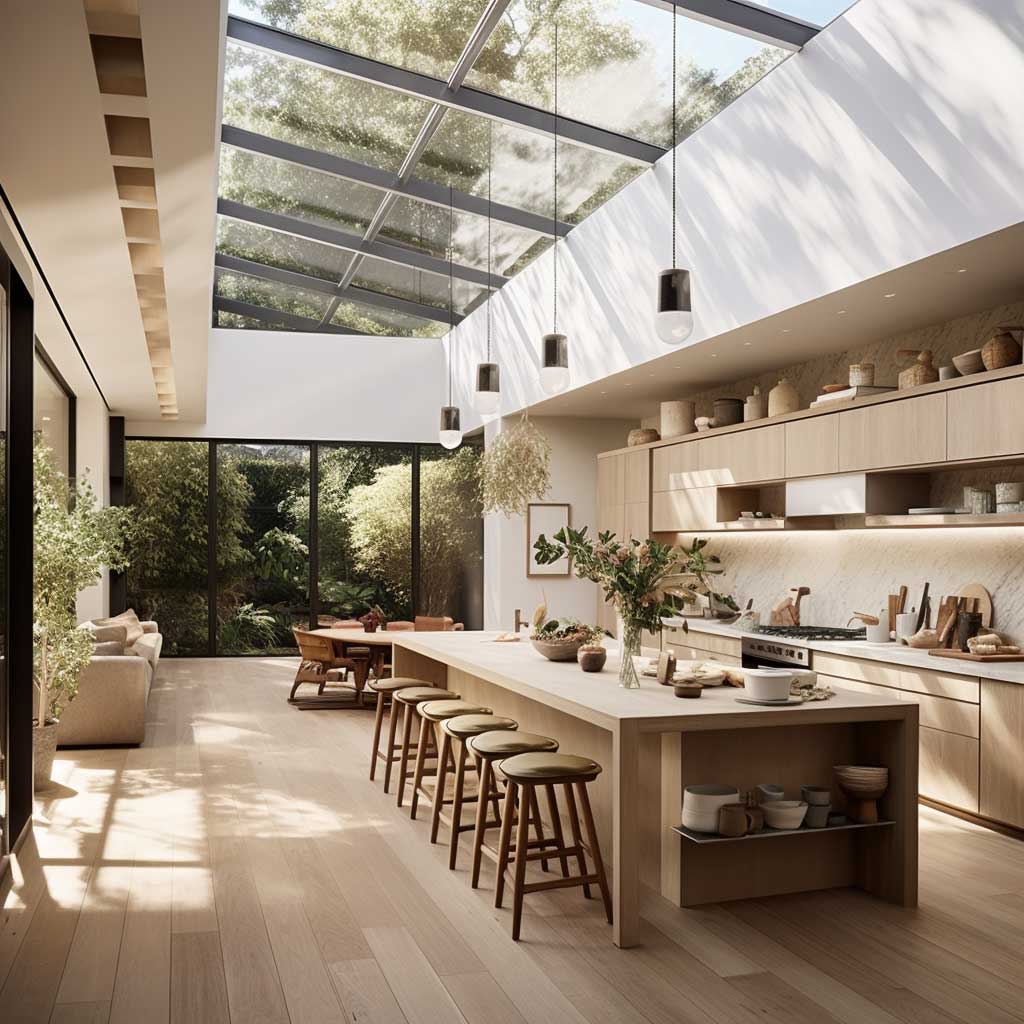
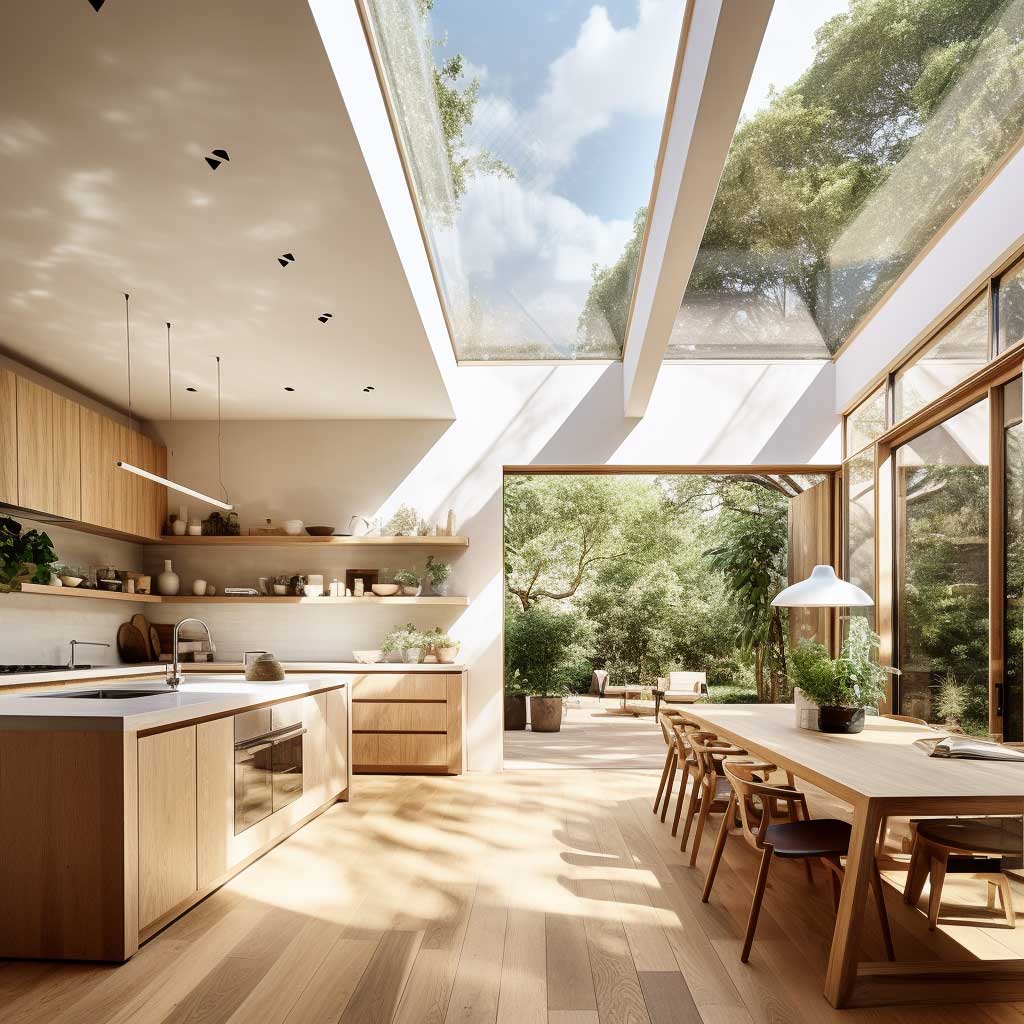
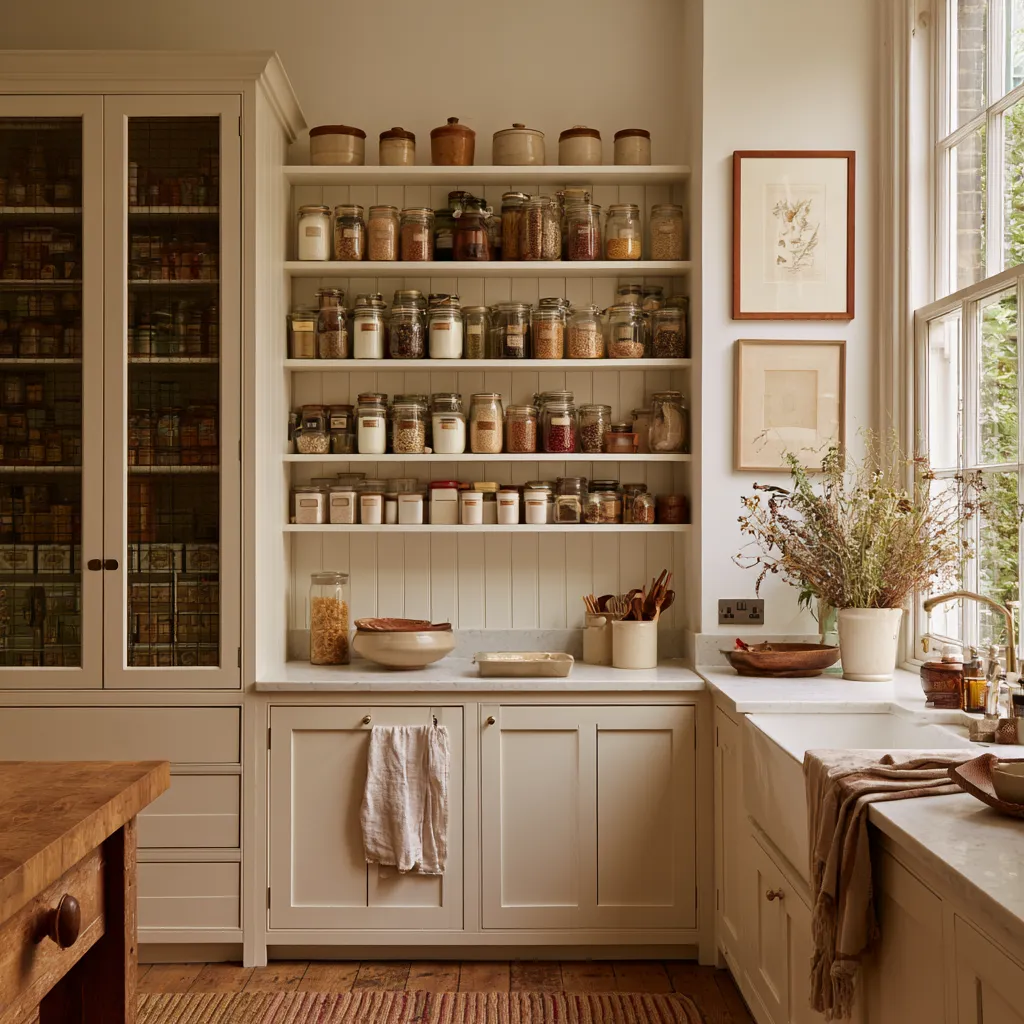
Space perception in an Australian kitchen is also about what you subtract, not what you add. Removing upper cabinetry from one wall entirely — replacing it with open shelving at $80–$150 per linear metre in timber — immediately lowers the visual weight of the room. I stole this trick from a Sydney-based designer who told me that upper cabinets are the second most common reason kitchens feel closed-in, right after incorrect lighting colour temperature. Her rule: if you have more than 4 linear metres of upper cabinets, lose one wall of them.
Open-plan kitchen integration into the dining and living zone is now standard in new Australian builds, but the execution still varies wildly. The kitchens that work are the ones where the island bench is oriented so the cook faces the living area, not a splashback. That single decision transforms the kitchen from a back-of-house utility room into the social centre of the home. For more on how to make this flow work across a full floor plan, this breakdown of open plan kitchen and living room ideas covers the zone logic in more depth.
Timber and Stone Are Not Decoration — They’re the Structural Argument for the Whole Design
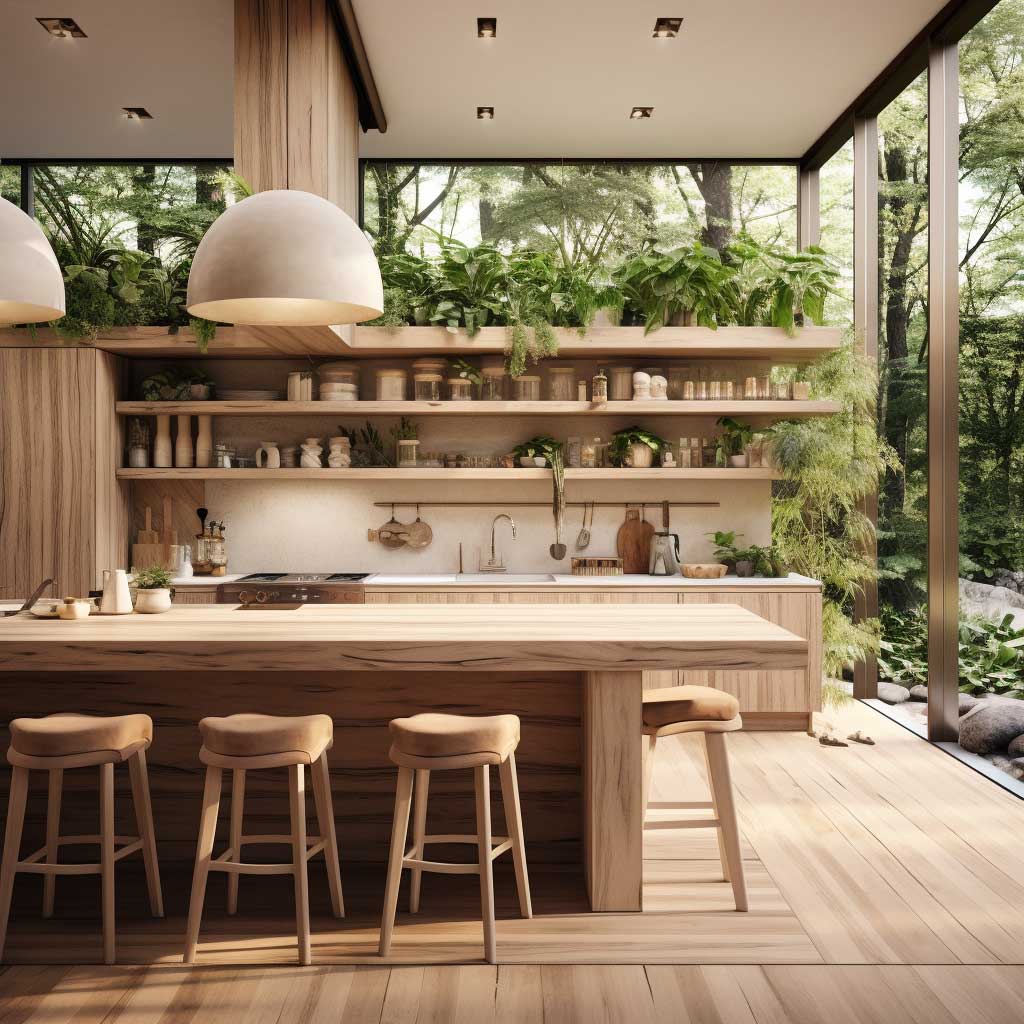
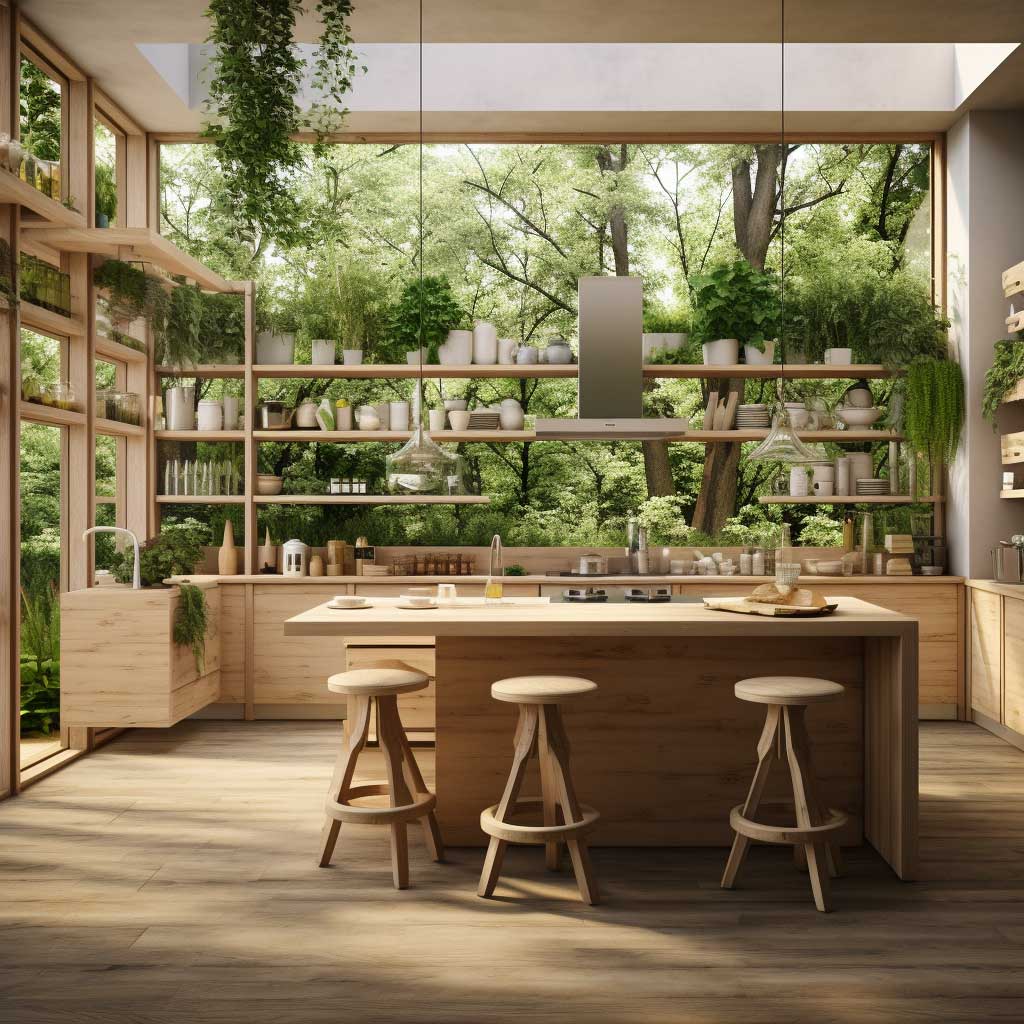


Blackbutt, spotted gum, and tallowwood are the three Australian hardwoods I’d put in a kitchen before anything imported — not because of nationalism, but because their grain patterns are tighter and more stable under humidity fluctuation than most European species. Polytec’s Natural Blackbutt laminate ($140–$180/m² for flat-pack cabinetry) gives you 90% of the visual result at 20% of the solid timber cost, and it doesn’t move with seasonal humidity changes. Solid Australian hardwood for cabinetry runs $450–$700/m² with joinery, and while it’s beautiful, the maintenance overhead in a working kitchen is real.
Greenery placement matters more than the plants themselves. I’ve watched clients spend $400 on a fiddle-leaf fig, shove it in a corner, and wonder why the kitchen still reads like a showroom. The effective placements: an herb trough on the windowsill above the sink (Ikea Socker greenhouse at $25 or a custom timber trough at $120–$200), a trailing pothos on an open shelf where it catches reflected light, or a vertical planter panel on an otherwise dead wall. Plants improve air quality measurably — a 2023 CSIRO-adjacent study showed kitchen CO2 levels dropped 18% in rooms with more than three medium-sized plants during cooking — but their bigger design job is introducing an irregular, organic line into a space dominated by right angles.
Colour in Australian kitchens has shifted noticeably between 2022 and 2025. The all-white phase is over. Designers I follow are now specifying deep forest greens (Dulux Shoji White’s antipode — think Resene Swamp around $95 for 4L), warm ochre tones, and terracotta in cabinetry, often as a two-tone split: upper cabinets in a lighter neutral, lower cabinets and island in the saturated hue. This mirrors the Australian landscape palette — red earth, gum leaf green, sandstone — without being literal about it. It’s the same logic as a good nature documentary. You don’t have to name the reference for it to land.


Sustainability in Australian kitchens isn’t a marketing checkbox anymore. The zero-silica engineered stone shift was legislated, not chosen — but it accelerated a broader move toward materials with documented environmental credentials. According to Complete Kitchens’ 2024–2025 trend analysis, reconstituted stone with recycled content is projected to dominate Australian kitchen benchtops by 2026, particularly for working surfaces. Bamboo cabinetry ($120–$160/m²) and recycled glass countertops are the other two materials picking up market share from conventional MDF-core cabinet boxes.
Energy-efficient appliances now come with a Green Star kitchen specification guide from the Australian government — Fisher & Paykel’s Series 9 integrated refrigerator ($3,200–$4,800) and Bosch Series 8 induction cooktops ($1,400–$1,900) are the reference points I’d use for a kitchen spec sheet in 2025. Natural light maximization through skylights and north-facing windows is not just an aesthetic move in Australian design — it’s an energy reduction strategy that pays back in lower electricity bills within 3–5 years in most Australian climates. For more on how organic materials work across the full home, the organic modern interior design approach at ArtFasad shows how the same material logic extends beyond the kitchen into the wider living environment.
The Takeaway
Australian Kitchen Design Works Because It Starts Outside the Room
The kitchens worth copying aren’t the ones with the most expensive stone or the most complex cabinetry profiles. They’re the ones where someone made a decision about the view from the sink before they ordered a single cabinet door.
Get the light right first. Then the materials. Then the layout. The appliances and finishes are the last 20% of the decision — and the part most people obsess over first.
Save this post before you start your next kitchen brief — and come back to the material and lighting specs when you’re sitting in your designer’s office.