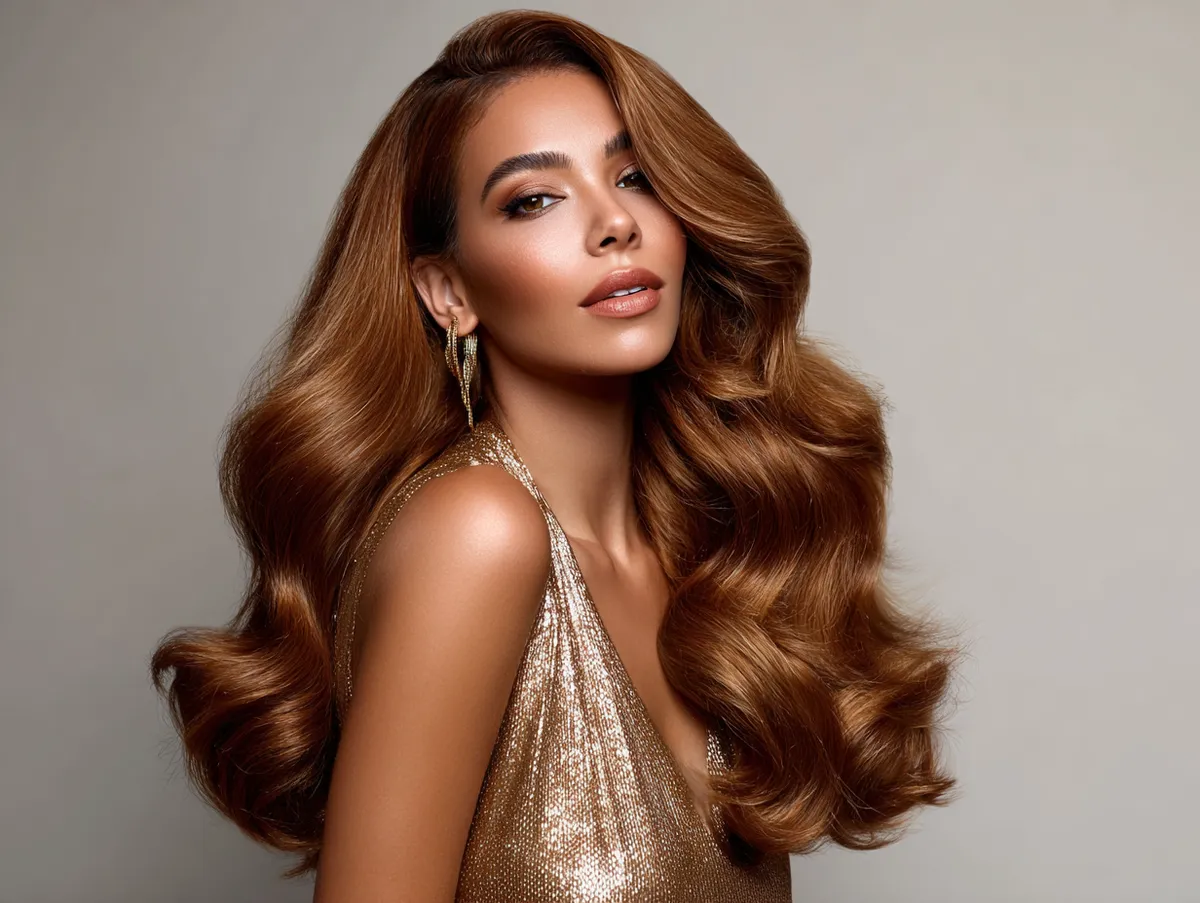
Slick back curly hair works on almost every curl pattern when you set it on damp strands, comb it in one direction and leave the ends free. Does it ruin the curls for good? No: the gel only holds the top layer, and one wash with conditioner brings the pattern back. The cleanest result needs about 3–4 inches of length on top, enough to reach the crown without springing up at the hairline. Picture a sail pulled taut, smooth across the surface but still full of shape underneath.
The look suits short cuts with a fade, shoulder-length curls and long hair gathered low at the nape. Barbers usually touch up a fade every 2–3 weeks, while the longer top only needs a trim about every 4–6 weeks. Color changes the finish more than most people expect: auburn reads warm, jet black reads glossy, and honey blonde reads soft. Pick the version that matches how often you want to sit in a chair, not only how it looks on day one.
The three color-led looks below show the same technique on different shades, followed by fade, long-hair and wavy-hair variations. A comparison table near the end puts product, finish and upkeep side by side. Read it before the first scoop of gel goes on.
- Style on damp, not dripping, hair so the product spreads evenly and the curls lie flat.
- Keep 3–4 inches on top for a short slick back; much shorter lengths spring up at the hairline.
- Gel gives strong hold and a wet look, while pomade trades some hold for higher shine.
- A fade needs a touch-up every 2–3 weeks vs a top trim every 4–6 weeks.
- Red shades fade fastest: plan a gloss around week 2 and a color top-up near week 4.
- Lightened blonde hair wants 250–300°F heat vs 370°F and up for untreated coarse hair.
- Pull back loosely, since tight and frequent pulled-back styles are linked to traction hair loss.
The Wet-Set Method for Slick Back Curly Hair
The wet-set method is the most reliable way to get curly hair slicked back, because curls lie flattest while they still hold water. Start on towel-dried hair that feels damp but not dripping, since soaking strands dilute the gel and leave patchy hold. A leave-in on the lengths keeps the cuticle smooth so the comb glides instead of snagging. Treat it like hanging wallpaper: work on a damp surface and smooth outward before anything sets.
Which product wins, gel or pomade? Gel delivers strong hold with a wet-look finish, while pomade is heavier and shinier but holds only at a medium level. Tight coils usually need gel at the roots, and loose waves can get away with a cream or a light pomade. Skip dry wax on curls, because it grabs the surface and leaves white flakes when you comb through.
- Towel-dry until hair is damp, then apply a leave-in from mid-lengths to ends.
- Work a strong-hold gel through the top section, starting at the roots.
- Brush straight back from the hairline toward the crown in long, even strokes.
- Set the shape with a dryer on the cool setting to stop frizz forming.
- Mist a finishing hairspray from about 6 inches away to lock down flyaways.
Length decides how flat the result sits. About 3–4 inches on top folds back cleanly to the crown, while a much shorter crop tends to stand up like a brush instead of lying down. Hair grows roughly half an inch a month, so a short cut needs a few months before it slicks well. Ask for trims at the sides only while the top grows in.
Auburn Curls Slicked Back With Warm Shine
Slicked back curls in auburn show off color better than almost any other shade, because the smooth top works like a mirror for red pigment. A hydrating gel on damp hair keeps frizz down so light bounces off one surface instead of scattering. Brush the front back with a boar-bristle brush and let a small wave sit at the nape for depth. The photos below also double as a slicked back hair reference for stylists and illustrators.


Red pigment washes out faster than any other color family, so auburn often needs a top-up close to every 4 weeks. A clear gloss around week 2 keeps the shine high and slows the drift toward brassy orange. Compared with brown shades, auburn loses its vibrancy several weeks sooner. Rinse with cool or lukewarm water, never hot, to keep the cuticle flat and the slick finish glassy.


Where does an auburn slick back fit best? Evening events and office settings, since the pulled-back line opens the face and sharpens the cheekbones. A few loose tendrils at the temples soften the effect without breaking the sleek top. Warm reds behave the same way on shorter cuts, as the fade timelines for short spiky haircuts in pink, auburn and teal make clear. Choose a glossy gel over a matte paste so the copper depth stays visible.
Jet Black Curls Take the Glossiest Slick Back
A curly slick back in jet black gives the most dramatic contrast of the three, since dark, smooth hair reflects a sharp band of light across the crown. Start with a moisturizing cream to stop dryness, then layer a high-shine gel over it while the hair is damp. Comb evenly so every strand lies flat, then shape the line along the scalp with your palms. A middle or side part before you comb back adds a runway edge.


Natural black sits at the darkest end of the 1–10 color level scale, while platinum lands at 9–10, so untreated dark hair skips the toning visits blondes book every 4–6 weeks. Untreated coarse hair also tolerates heat of roughly 370°F and above, compared with 250–300°F for lightened strands. Is a flat iron needed at all? Usually not: a cool-shot blow-dry sets the gel without baking the curls dry. Save the iron for the hairline only, if at all.


This is the version for formal nights and red-carpet-style events. A red lip or sharp liner matches the high-gloss finish the way polished shoes match a tailored suit. Avoid matte paste on black curls, because it dulls the very shine that makes the style work. Keep a small spray bottle nearby to re-wet and re-comb any curl that springs loose.
Honey Blonde Curls Slicked Back on Top, Loose Below
Honey blonde turns slicked back curly hair into a softer daytime look: sleek on top, springy below. A curl-enhancing serum smooths the surface, and a medium-hold gel on the top layers keeps the front in place. Comb back with a wide-tooth comb so the curl definition survives under the gel. Let the lengths fall free, like a smooth lid sitting on a lively pot.


Warm honey shades are kinder to the calendar than icy ones. Only about 5% of people in the U.S. are natural blondes, so most honey tones come from lightening, yet a warm blonde can grow out far longer than platinum’s 4–6 week toning cycle. Lightened hair still needs gentle heat, around 250–300°F, if you smooth the roots before gelling. Skip purple shampoo on honey blonde, since it cancels the very warmth that defines the shade.

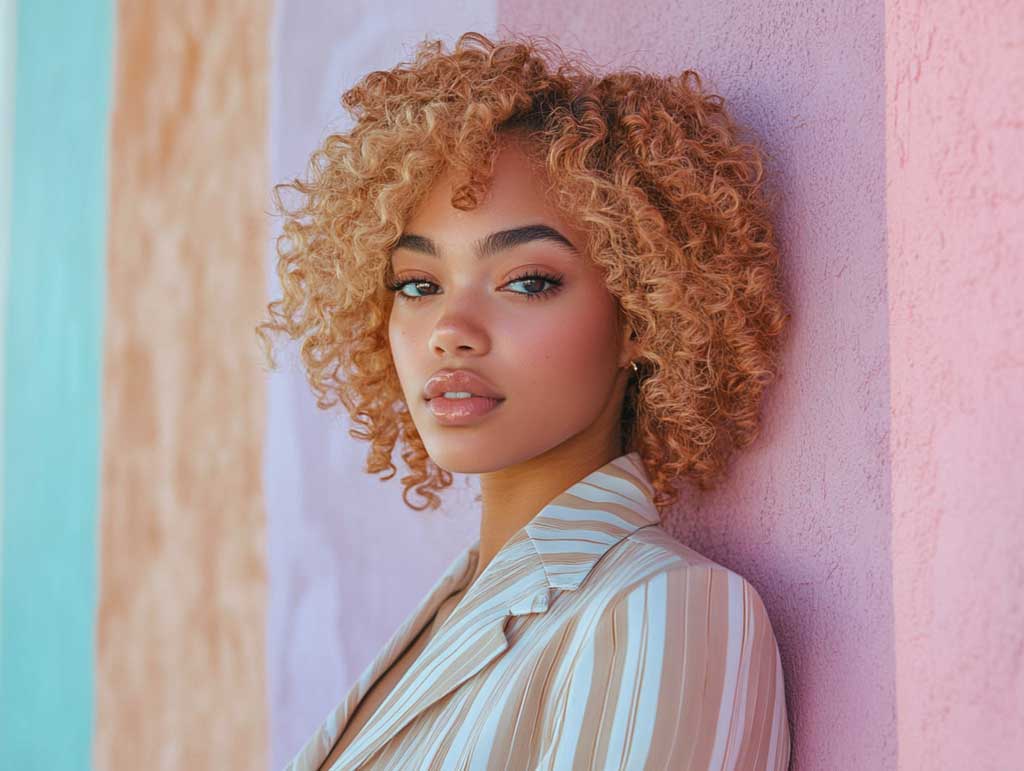
If a cooler shade tempts you, the toning schedule and heat limits for a sleek platinum blonde long bob show how much more upkeep icy blonde demands. For honey curls, delicate pins or a thin headband hold the front at daytime events without adding stiffness. Does this look need a part? No, a straight-back sweep shows the warm gradient best. Keep accessories small so the curls below stay the focus.
A Fade Keeps Slick Back Curly Hair Sharp for Weeks
A curly hair slick back fade pairs short, tapered sides with a longer top, so the combed-back curls look deliberate instead of puffy. Most barbers suggest keeping 3–4 inches on top with a low or mid fade below. Low fades grow out softer and need a touch-up every 2–3 weeks, while a skin fade often starts to blur after about 2. Think of the fade as the frame and the slicked top as the picture: a crisp frame makes the whole piece look finished.
How long can you stretch the visits? Three weeks is the comfortable limit for a crisp line, and 3–4 weeks works if a softer edge does not bother you. The top changes more slowly to the eye, so a trim every 4–6 weeks keeps enough length to fold back. Do not let the barber thin the top with a razor, because razor-cut curls frizz at the ends and refuse to lie flat.
- Ask for 3–4 inches left on top, cut with scissors rather than clippers.
- Choose a low fade for slower grow-out or a mid fade for stronger contrast.
- Book the next touch-up at week 2–3 before the line softens.
Long Curly Hair and Wavy Hair Slicked Back
Long curly hair slicked back works best when the top is sleek and the lengths either hang free or sit in a low, loose knot. Length adds weight, and heavier hair pulls harder on the scalp the moment it is tied. Wavy hair slicks back with far less product than curls, since waves flatten with a light cream and a few brush strokes. Wavy vs curly comes down to grip: waves want flexibility, tight curls want hold.
Can slicking back cause hair loss? Only when it is tight and frequent. The American Academy of Dermatology lists tightly pulled buns, ponytails and up-dos among the styles behind traction alopecia, and its guidance on hairstyles that pull advises checking every month for broken hairs at the forehead or a receding hairline. The same guidance caps tight braids at 6–8 weeks, a useful benchmark for any style that strains the scalp. If the style hurts, it is too tight, so loosen it the same day.
Getting your curls back after a slick back takes one routine: sulfate-free shampoo, a rich conditioner and a gentle scrunch while the hair is damp. A water-based gel rinses out in a single wash, while an oil-based pomade often needs a second lather. Never brush curls dry to remove leftover gel, because it splits the pattern into frizz. Wear the sleek version for events and a loose push-back on ordinary days.
Don’t Do This
- Don’t slick back dry curls: the comb splits each curl into frizz instead of flattening it.
- Don’t pull the look into a tight ponytail every day; check the hairline monthly if you wear it often.
- Don’t rinse auburn or honey shades with hot water when red tones may already need a top-up every 4 weeks.
- Don’t stretch a skin fade past 3–4 weeks if the slicked top is meant to look sharp.
- Don’t load wavy hair with as much gel as tight curls; a light cream holds waves without crunch.
Auburn vs Jet Black vs Honey Blonde Side by Side
Slicked back curls in these three shades look alike in photos and behave very differently over a week of wear. The table compares product, finish, color upkeep and heat ceiling using typical ranges reported by colorists, barbers and tool makers. Match the row to your shade first and your salon calendar second.
| Look | Main product | Finish | Color upkeep | Heat ceiling | Best occasion |
|---|---|---|---|---|---|
| Auburn curls | Hydrating gel plus flexible hairspray | Glossy, warm | Gloss near week 2, top-up near week 4 | 250–300°F if lightened | Evening, office |
| Jet black curls | Moisture cream plus high-shine gel | High gloss | No toning if natural | About 370°F untreated, cool shot preferred | Formal, red carpet |
| Honey blonde curls | Curl serum plus medium-hold gel | Soft, luminous | Longer than platinum’s 4–6 week cycle | 250–300°F | Daytime, casual |
| Fade version, any shade | Strong-hold gel or pomade | Sharp contrast | Fade touch-up every 2–3 weeks | Cool setting only | Everyday wear |
Auburn vs honey blonde is the widest upkeep gap: red needs attention around every 4 weeks, while a warm blonde can stretch much further. Which one is easiest? Natural jet black, which needs no color visits at all, much like a car that never needs a paint touch-up but still needs oil in the form of moisture cream. Avoid auburn if you wash daily and cannot switch to cooler water. Pick the shade your routine can actually support.
The Verdict on Slicked Back Curls
Slick back curly hair succeeds on damp strands with about 3–4 inches on top, and a faded version stays sharp only with a barber visit every 2–3 weeks.
Choose auburn for warm evening shine, and plan a gloss near week 2 with fresh color around week 4.
Choose jet black for maximum gloss and minimal color upkeep, with a moisture cream under the gel every single time.
Choose honey blonde for a softer daytime finish that outlasts platinum’s 4–6 week toning cycle, and keep heat at 250–300°F.
Whatever the shade, keep the pull loose and check the hairline once a month, because a slick back should feel smooth, never tight.