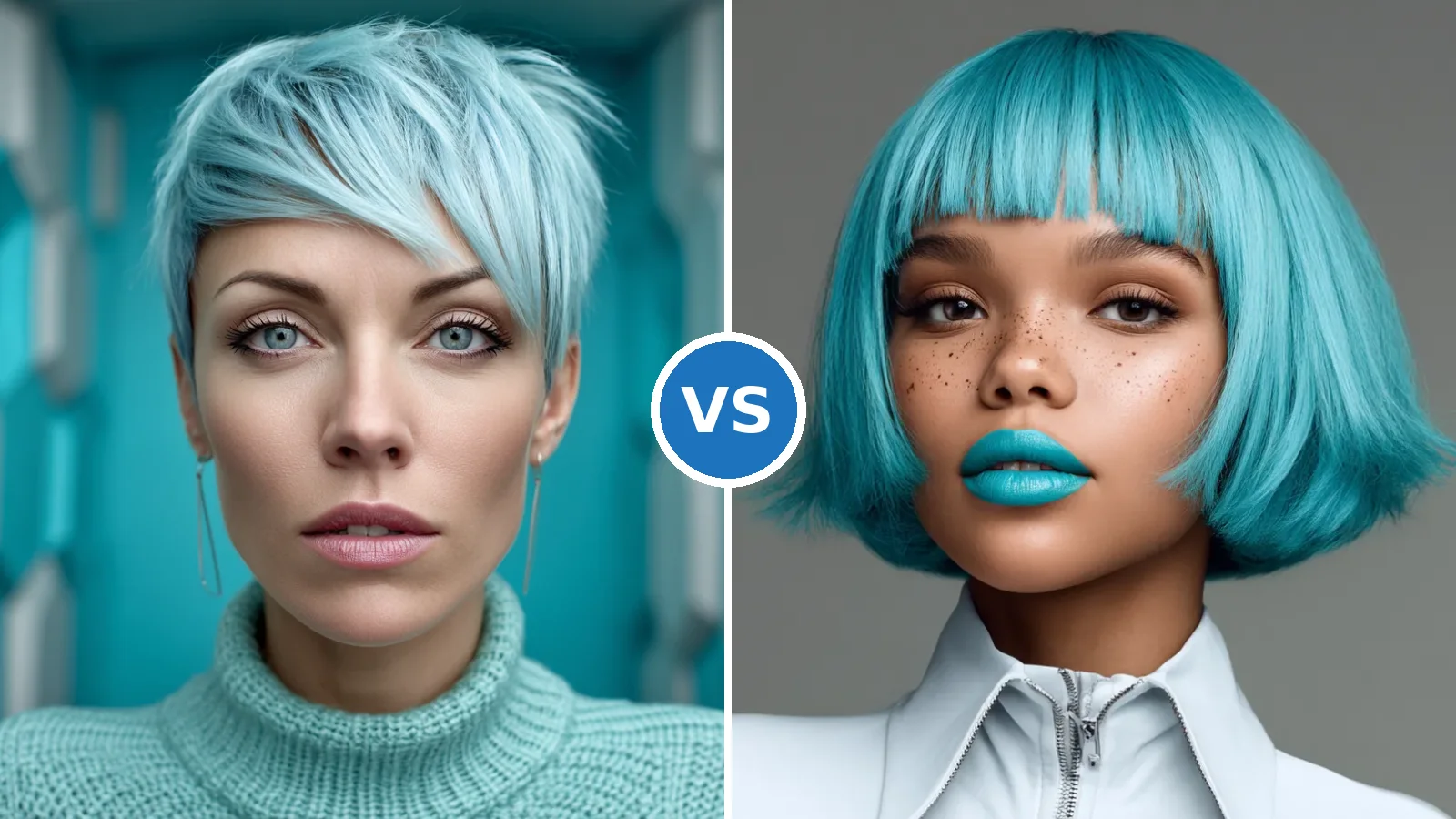
You are standing at the salon chair facing a real choice: cut into a sharp, geometric pixie that demands a trim every 4 to 6 weeks, or embrace a curly bob that grows out more forgivingly and lets color do the talking. Pixie vs bob is not just about length—they operate on entirely different principles. Understanding what each one actually requires, and where your face shape and lifestyle fit best, saves money and regret.

What a pixie and curly bob actually deliver
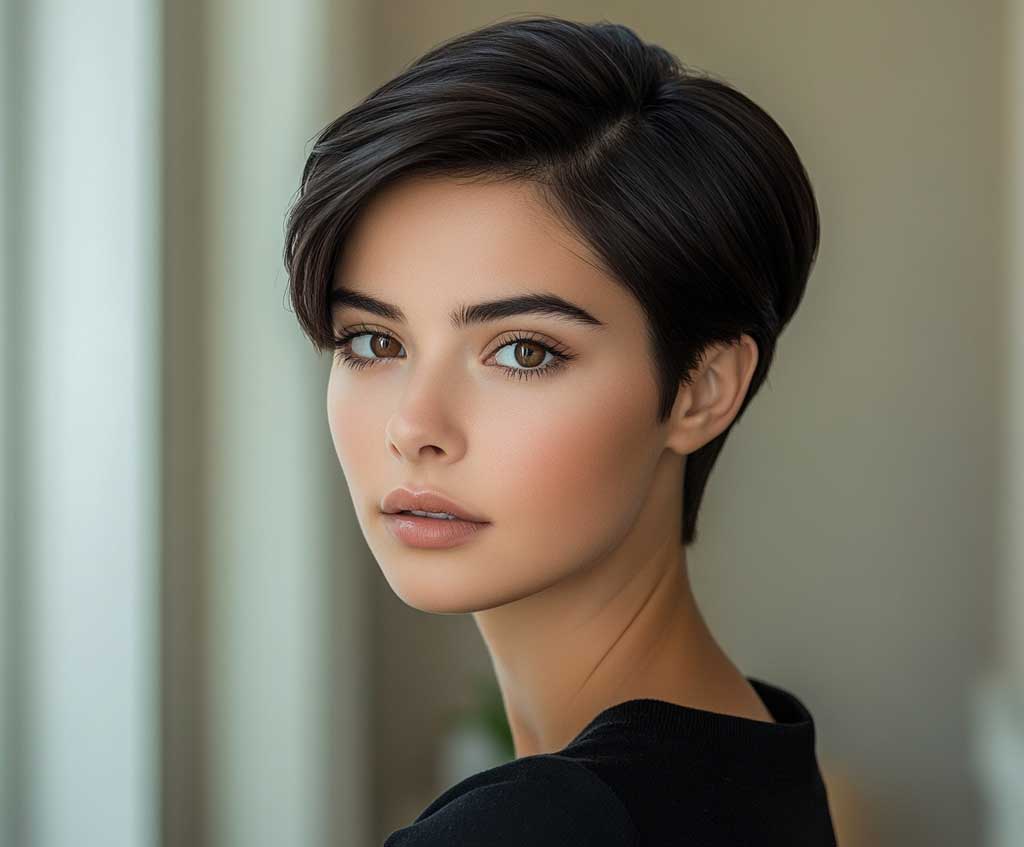
A sleek pixie cut for round face shapes works by building vertical lines instead of horizontal ones. The sides stay close while the top and fringe reach 2 to 3 inches, so the eye reads length before width. For round faces, this proportion is the whole point: the cut itself does the contouring work that makeup cannot.
A curly bob hairstyle operates on texture and color. The bob sits roughly at chin length or shorter, shaped to allow curls to form naturally, often with layers to prevent heaviness. Copper, electric blue, or natural tones catch light differently depending on how each curl falls, making the color and shape work together as one visual statement.
The pixie is a geometry problem solved by precision cuts. The curly bob is a canvas for color and personal expression through texture.
Quick Verdict
- Choose the pixie if you have 5 to 10 minutes daily for blow-drying and smoothing cream, and you can commit to salon visits every 4 to 6 weeks without skipping.
- Choose the curly bob if you prefer longer intervals between cuts, enjoy color experiments, and want a hairstyle that grows out gracefully rather than losing its shape.
- Choose the pixie if you have a round face and want the cut itself to add structure and length.
- Choose the curly bob if you want minimal daily styling and maximum flexibility in tone and texture.

Trimming schedules and cost over one year
Salon maintenance costs are where the gap between these cuts becomes most visible. A pixie with tapered sides demands a trim every 4 to 6 weeks—that is roughly 9 to 13 visits per year at salons charging $25 to $60 per cut. Even at the low end, nine trims yearly adds up faster than most people expect.
A grown-out bixie (a pixie allowed to grow into bob-like softness) stretches visits to 8 to 12 weeks, reducing annual trims to a more manageable number. A curly bob, though exact frequencies vary, does not require the same clockwork precision because subtle growth does not destroy the silhouette the way it does on a tapered pixie.
The pixie wins on daily styling speed but loses on annual trim cost. Budget for the salon chair before committing.

Daily styling, products and real time commitment
A tapered pixie takes roughly 5 minutes to style: work a pea-sized smoothing cream through damp hair, blow-dry the top in the direction of your part, finish with a round brush along the fringe. Drugstore smoothing creams cost around $13, while salon texture sprays run closer to $52. Keep a travel-size balm for evening touch-ups.
A curly bob with defined ringlets requires a different approach. You are working with curl definition products and possibly color-care shampoos and sulfate-free formulas to keep copper or other vibrant tones from fading. The styling is shorter—curls often need only scrunching and air-drying or a quick diffuser pass—but the product ecosystem is larger and the color maintenance is ongoing.
Pixie styling is faster but more mechanical. Bob styling is shorter but more product-dependent, especially for color hold.
| Criteria | Pixie | Curly Bob |
|---|---|---|
| Trim frequency | Every 4–6 weeks (9–13 visits/year) | Less rigid; grows out gracefully |
| Daily styling time | 5–10 minutes with smoothing cream | Minimal; mostly curl-dependent |
| Annual trim cost range | $225–$780 at $25–60 per cut | Lower due to fewer visits |
| Color flexibility | Any tone works; color is optional | Electric blue, copper, or natural; color is central to the design |
| Face shape advantage | Adds vertical lines to round faces | Works via texture, less shape-dependent |
| Grow-out grace period | Blurs after 6 weeks; bixie option at 8–12 weeks | Longer forgiving window |

Where the pixie cut wins
The pixie shines for anyone with a round face who wants the haircut itself to do contouring work. A deep side part draws one long diagonal from crown to brow; a center part repeats roundness by splitting the face into two equal curves. The pixie solves this with geometry alone, no styling tricks required.
Speed matters too. If you have 5 minutes in the morning and want your hair complete, a pixie dries and finishes faster than a curly bob that depends on curl-forming time. The outline is crisp and intentional.
Pixies also work for people who dislike daily product application. One smoothing cream and you are done—no color fade worries, no curl-holding serums.

Where the curly bob wins
The curly bob offers what the pixie cannot: color as a design element. Electric blue or radiant copper curls create a halo effect that changes under different light. The color and texture reinforce each other, making the hairstyle feel complete without relying on perfect geometry.
Growth is kinder. A curly bob stretched to 8 to 12 weeks between trims still reads intentional because curls absorb length change. A pixie at the same timeline becomes shapeless.
Curly bobs also suit people who love expressing personality through bold tones. The texture provides a canvas that short bobs sometimes lack.


The mistake most people make when choosing
The biggest error is underestimating trim frequency. Someone chooses a pixie because they love the sleek look in the salon chair, then skips their 4-to-6-week appointment. At half an inch of monthly growth, that six-week wait becomes eight, and the taper turns into a helmet instead of an intentional shape.
The curly bob suffers the opposite mistake: people assume it requires no maintenance because it “grows out naturally,” then neglect color upkeep. Copper and electric blue fade noticeably without sulfate-free care and regular conditioning. A grown-out, faded bob reads neglected, not gently aged.
Honesty about your salon rhythm—not your hopes—is the only measure that matters.

Final verdict for your decision
Choose the pixie if you live near a salon you trust, can commit to visits every 4 to 6 weeks, have a round face and want the cut to add structure, or simply prefer a crisp, minimal-product morning routine. The geometry pays off when you honor the schedule.
Choose the curly bob if you want to experiment with color, can stretch out time between cuts, prefer a hairstyle that grows out softly, or want texture and tone to carry your look instead of pure line. The payoff is visual richness and flexibility.
Neither is objectively better—one is a precision instrument, the other is a canvas. Your face shape, commitment level, and relationship with color will tell you which one actually fits.