Minimalist door design is the rare home decision that looks better the less you do to it. I’ve spent years staring at doors that tried too hard — carved panels, glossy lacquer, decorative hardware that screamed from across the room — and none of them aged well. The four designs in this post prove that a well-chosen minimalist wooden door design for home does more for a room than any furniture rearrangement. Pick the right wood species. Get the finish right. The door disappears into your space in the best possible way.
None of these are expensive by renovation standards. A solid white oak slab door from a local millwork shop runs $400–$800 before hardware. That’s less than a single sofa cushion swap at some boutique furniture stores. You’ll notice I’m skipping the “timeless beauty of wood” preamble — you already know wood looks good. What you need is the specific version that won’t look dated by 2030.
What this post covers
- Sleek flat-panel doors in oak and walnut — and which finish to avoid
- Natural finish doors with clear coat vs. oil vs. wax — the honest tradeoff
- Black-framed wood doors: when the contrast works and when it kills the room
- Horizontal panel doors — the one spacing mistake that makes them look cheap
- Wood species comparison table with price ranges
- FAQ covering the most-searched questions about minimalist wooden doors
Flat Panel Wood Doors Look Cheap Without This One Detail

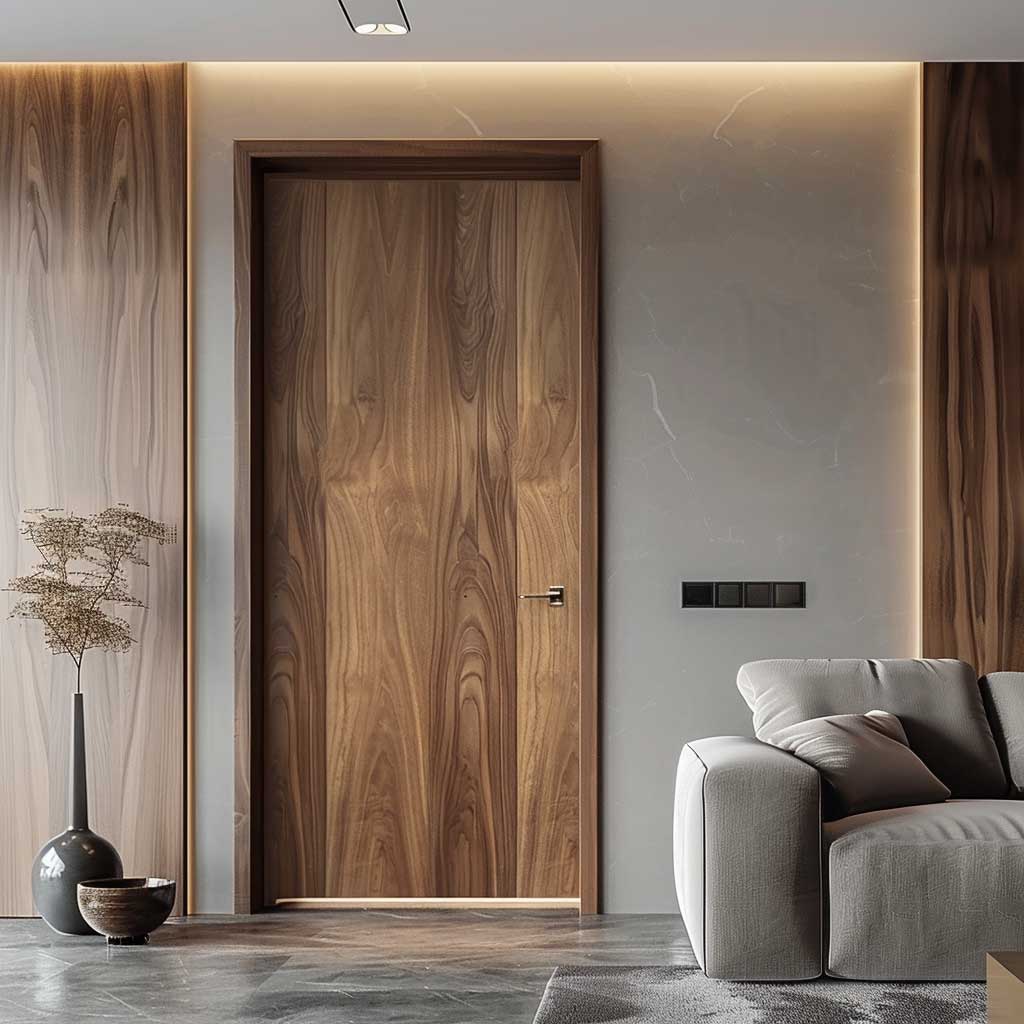
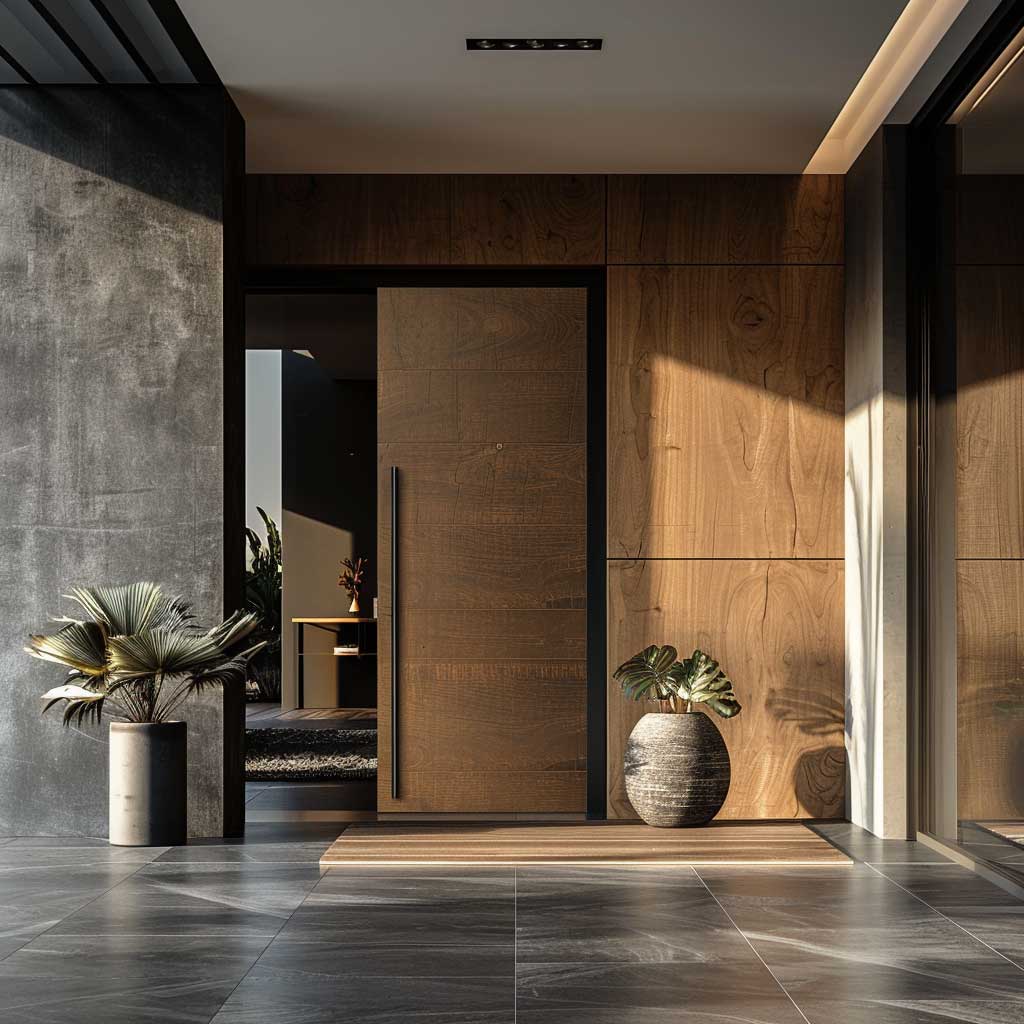
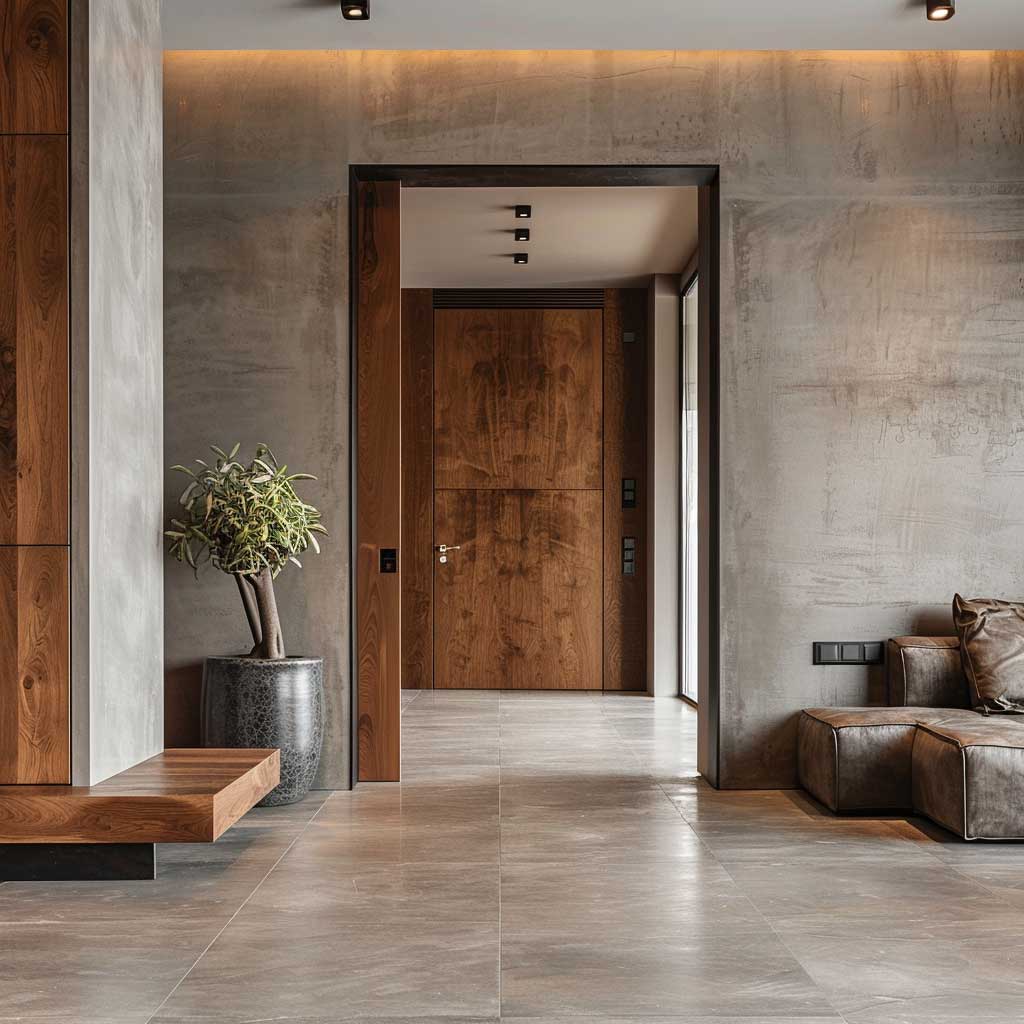
The detail that separates a $300 hollow-core door from a $700 solid slab that reads as intentional is the handle recess. Flush-pull handles — the kind that sit recessed into the panel — keep the surface completely uninterrupted. Formani makes the ONE series in PVD-coated stainless steel for around $180–$350 per unit. That’s not cheap, but I’ve watched people spend $600 on the door and $20 on a visible-rosette handle that wrecks the whole effect. Skip the rosette. Always.
For wood species, white oak is my go-to for flat panel minimalist doors. Its grain is tighter than red oak and doesn’t compete visually with a clean surface. Walnut goes darker and richer — great if your floors are light concrete or pale tile, because the contrast grounds the space. What I’d avoid: pine. It dents too easily, and the knots become a visual argument with the minimal surface you’re trying to achieve.
You’ll notice a matte or satin finish reads as intentional on these doors; gloss finish reads as a home center mistake. Matte polyurethane costs about the same as gloss but photographs 40% better and hides micro-scratches from daily use. One more thing: never pair a flat-panel wood door with heavy decorative trim molding. The trim will announce itself and the door loses its point.
Don’t Do This
Avoid staining white oak or ash a dark walnut color to “match” existing furniture. The grain bleeds through unevenly and the result looks like a budget imitation of the real thing. If you want dark wood warmth, buy actual walnut or sapele — both run around $5–$8 per board foot wholesale. Faking the species always shows.
Clear-Finish Wood Doors Age Differently Than Every Catalog Photo Suggests
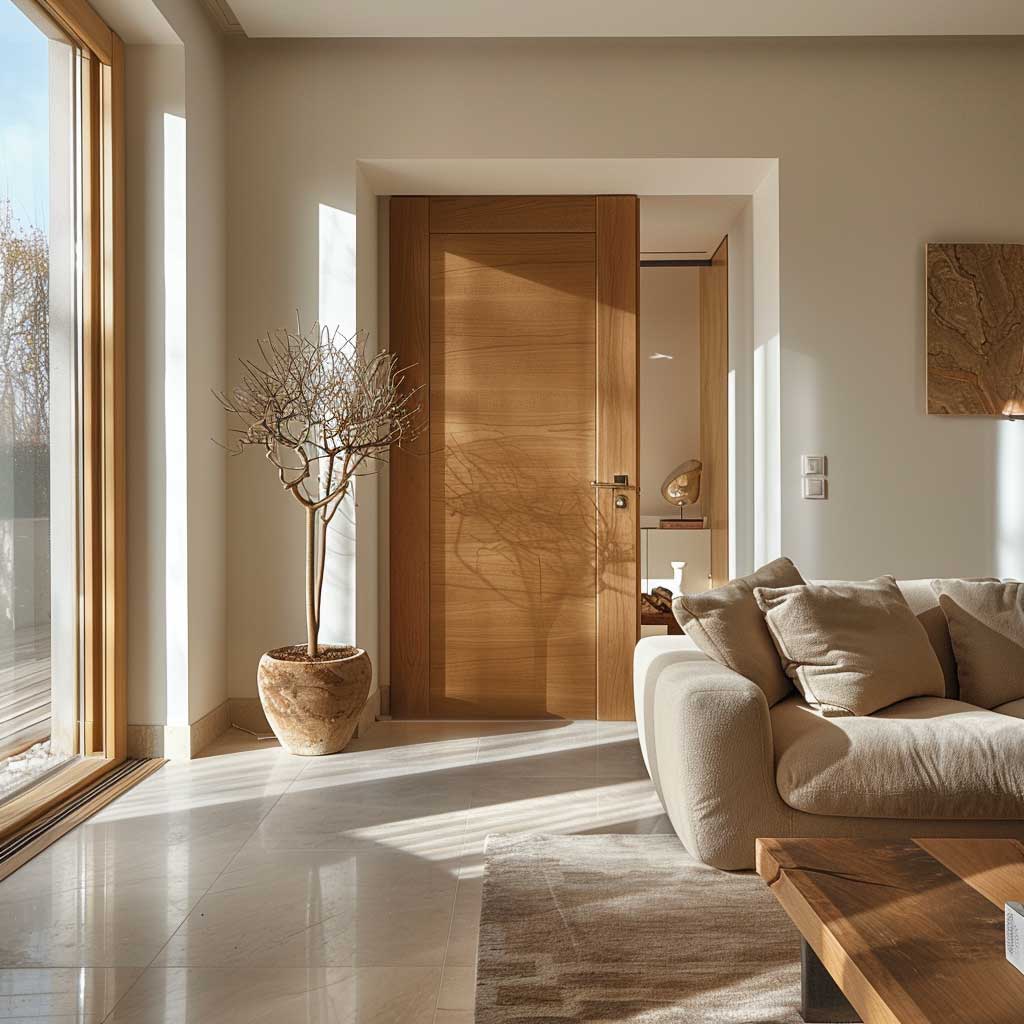
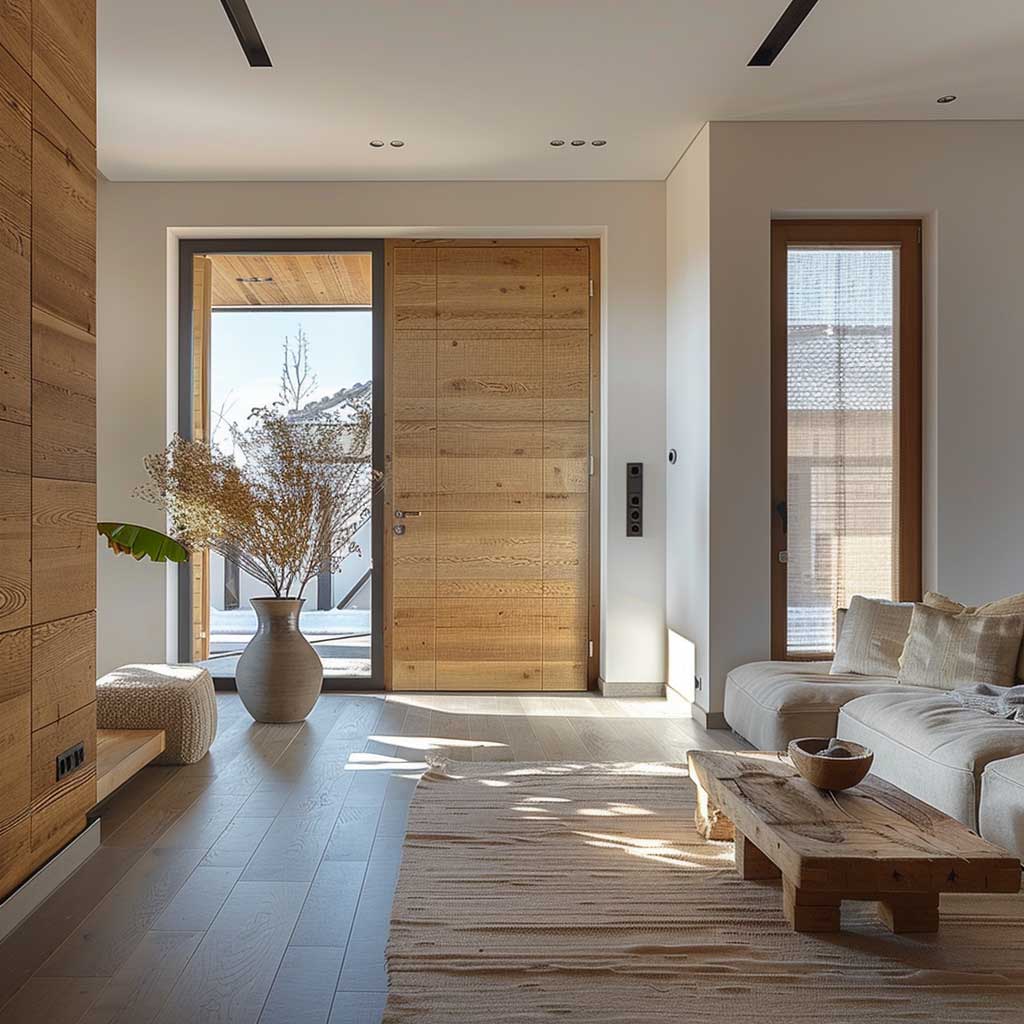


Natural finish doors are the most photographed and the most misunderstood. Here’s the honest version: a clear polyurethane coat gives you the richest initial color and zero maintenance — wipe it down, done. An oil finish (Rubio Monocoat runs about $60 for a half liter, enough for two doors) looks slightly more alive and natural, but needs reapplication every 3–5 years depending on foot traffic near the door. Wax is the most tactile but the most labor-intensive. I own two oil-finished oak interior doors and I’d do it again, but only because I actually enjoy the maintenance ritual.
What species work best here? Oak and ash both have prominent grain that reads beautifully under clear oil. Teak is warmer and denser — it’s what a lot of Scandinavian architects reach for. What you want to avoid is a clear finish on a painted or stained substrate masquerading as solid wood; the layer edges show at door perimeters within two years. Buy the real thing or go painted. No middle ground on this one.
Natural finish wood doors pair well with other raw-feeling materials — stone tile, linen curtains, rough plaster walls. They tend to fight polished chrome hardware and high-gloss kitchen cabinets. The room that pairs a natural-finish minimalist wooden door with white concrete floors and a single pendant lamp looks like a magazine. The room that pairs it with glossy laminate and chrome fixtures looks like an accident. Think of the door as the warmest object in an otherwise cool room.
I stole this finish-sequencing trick from an architect friend: apply oil finish before installing, including all four edges and the top and bottom rails. Doors that arrive on-site unfinished and get painted in after installation almost always miss the edges, which is exactly where moisture enters and warping starts. Seal every surface. Every single one.
For more on how wood door design interacts with your broader entrance, see the full breakdown of main entrance modern door designs covering material choices, U-Factor ratings, and hardware specifics.
Black Metal Frames on Wood Doors Work Until the Room Has Too Many Edges
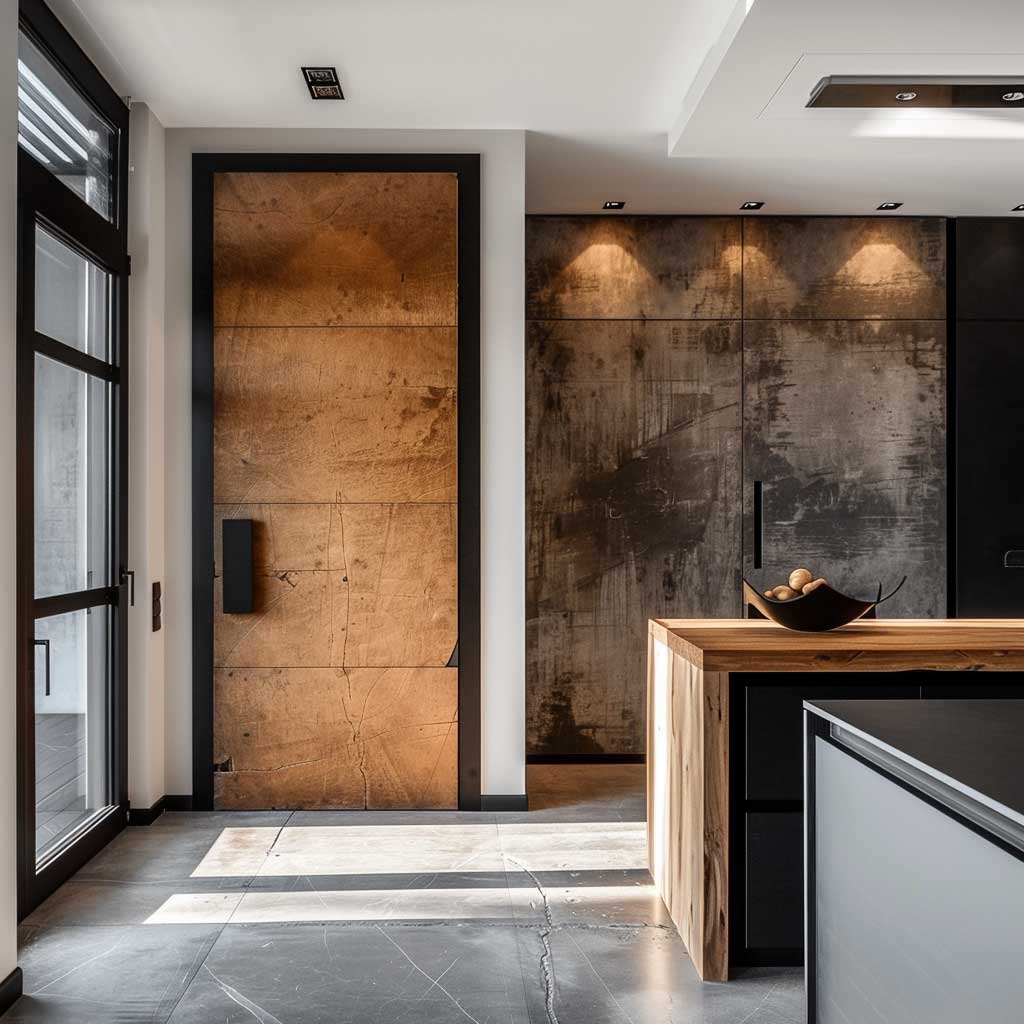
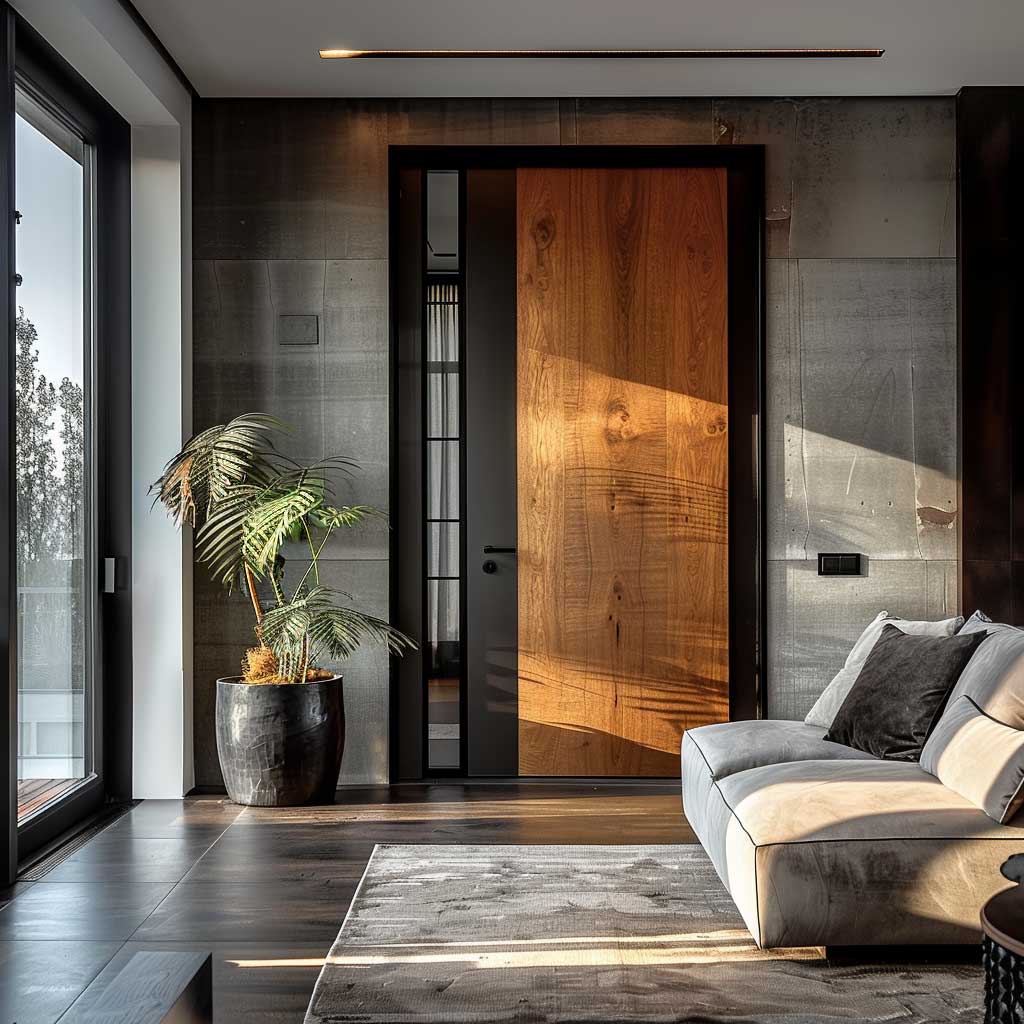
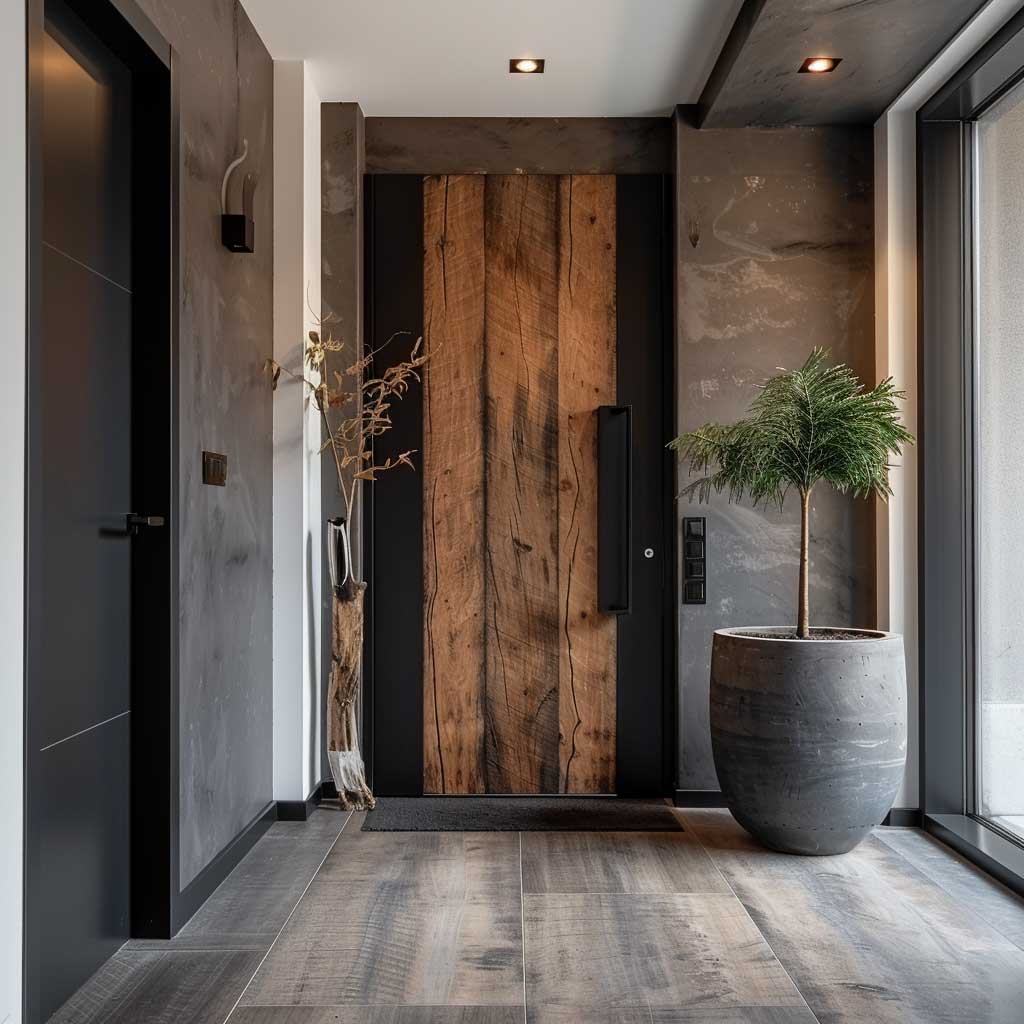
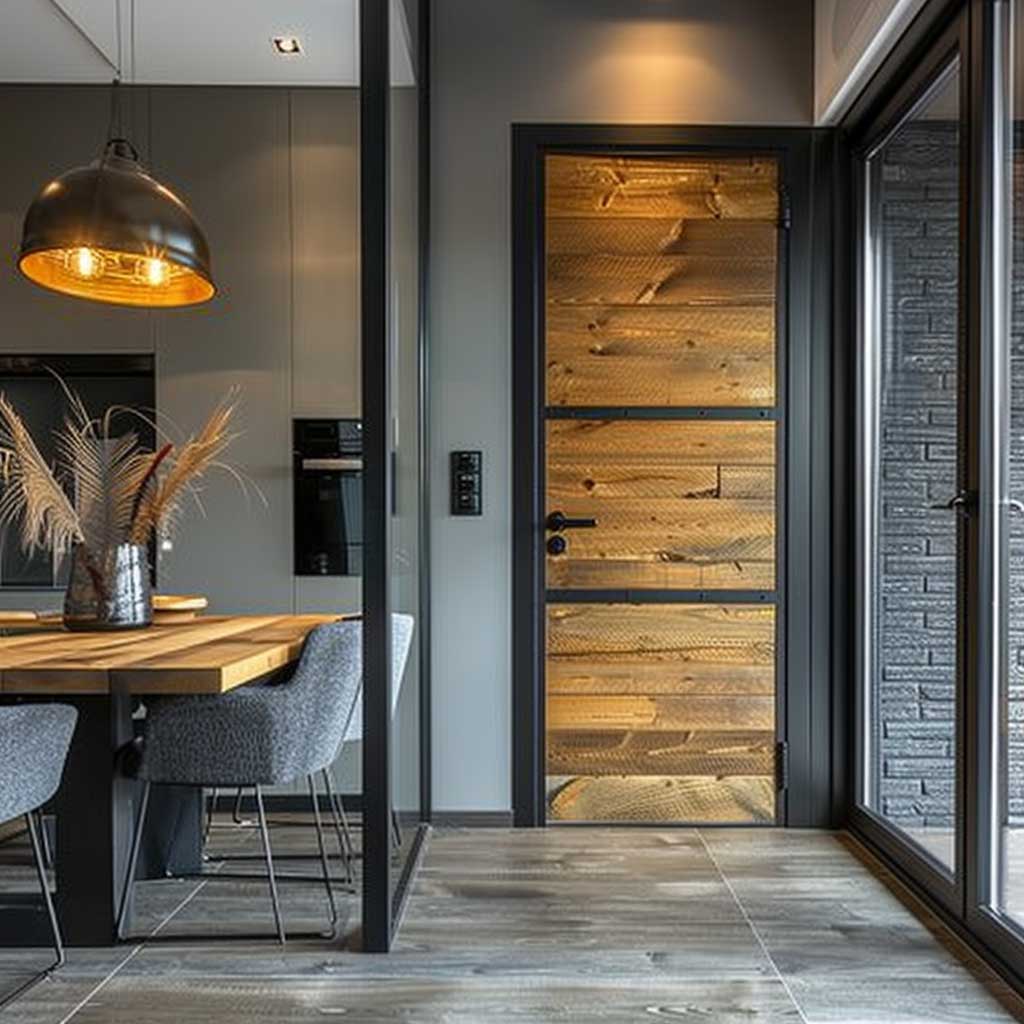
Black-framed wood doors became the design world’s shorthand for “modern but warm” around 2018 and they haven’t left. The formula works because the frame anchors the wood tone — it’s a picture frame logic. Lighter woods like maple or ash paired with a matte black frame create a high-contrast look that reads as airy. Darker woods like walnut inside a black frame read as more moody and heavy. Both are valid. The question is how much drama your room needs.
Here’s where it goes wrong: when you already have black window frames, black light fixtures, black kitchen handles, and black stair railings, a black-framed door doesn’t add drama — it adds noise. The frame stops being intentional and starts being one of six black things fighting for attention. In rooms that already have strong black accents, a frameless or natural-finish door makes a stronger statement because it’s the one quiet thing in the space.
Hardware on black-framed wood doors needs to keep matching discipline. Matte black pulls stay in family and disappear. Brushed brass against black reads as deliberate contrast and can work well in warmer rooms. Satin chrome against black frames looks unresolved — like you couldn’t decide. I’d rather see a $90 Griffwerk R8 One in matte black than a $300 brushed nickel handle that fights the frame.
Urban Front’s Oslo and Porto designs are real-world examples of how this pairing holds up on exterior doors in full minimalist houses — their European oak with concealed frames reads exactly like the photos in this post. Worth referencing if you want a finished project to show a contractor. See their minimalist door case studies at urbanfront.com.
Horizontal Panel Spacing Is Where This Door Either Looks Architectural or Cheap


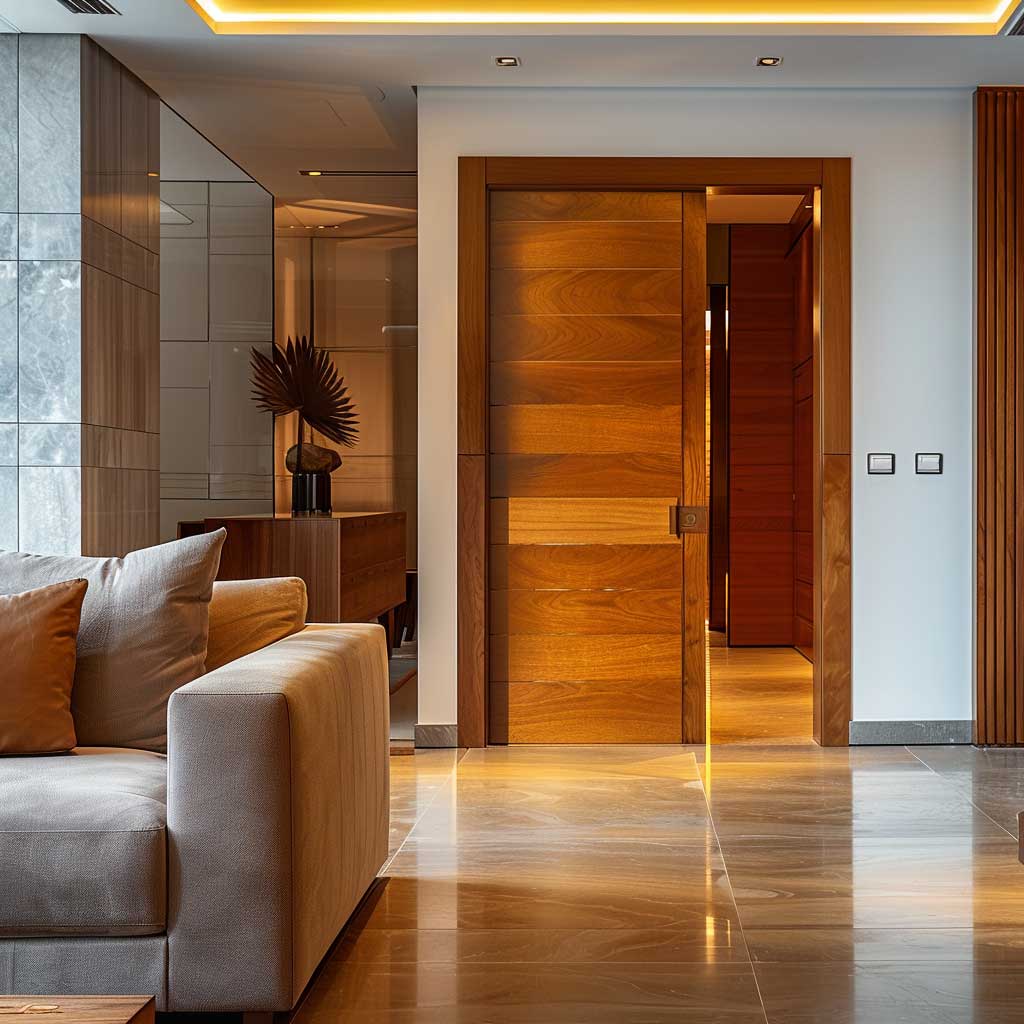
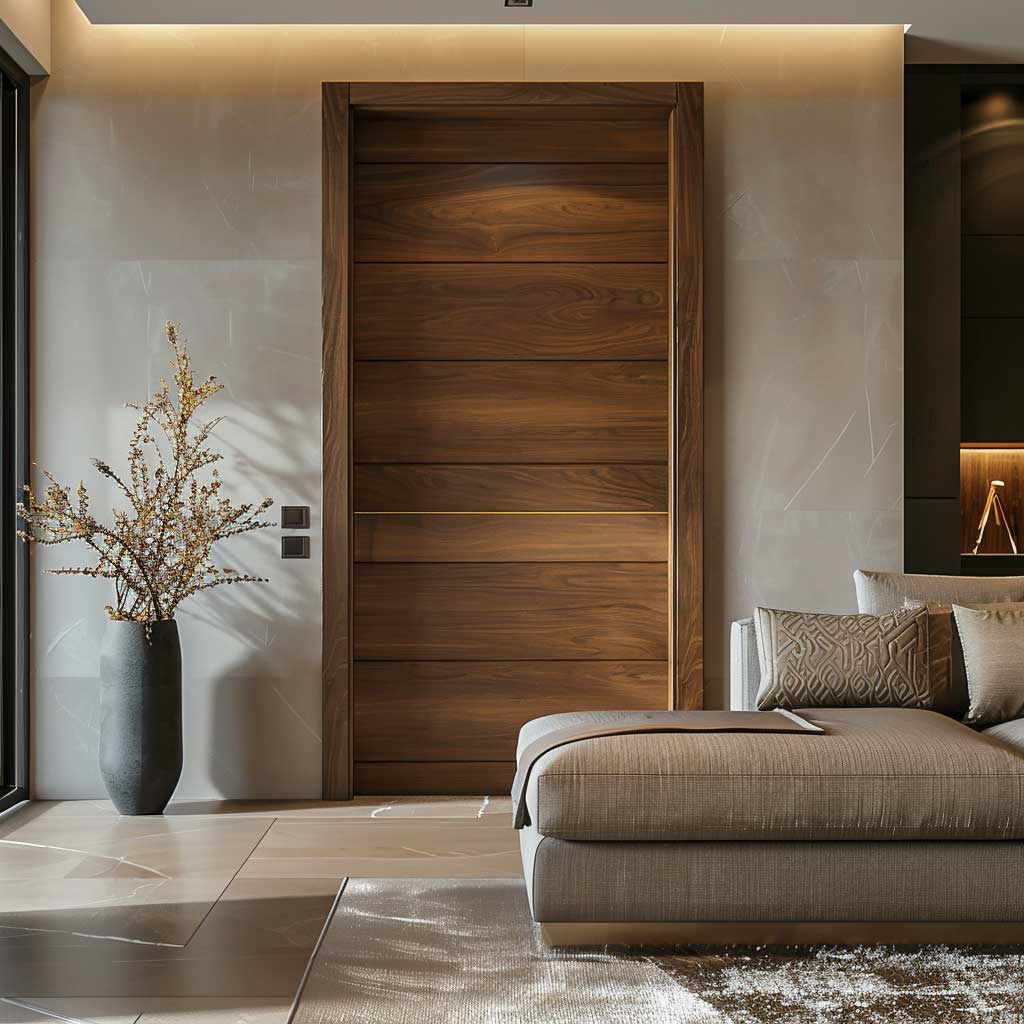
Horizontal panel doors draw the eye sideways. That’s both the feature and the risk. Used correctly in a narrow hallway or a corridor that needs to feel wider, horizontal lines on a door do genuine spatial work — the room reads as broader than it is. Used in a wide, low-ceilinged room, those same lines flatten the space further. Ask yourself what problem this door is solving before you choose the orientation.
The spacing that fails every time: equal-width panels that divide the door into thirds like a filing cabinet. It reads as bureaucratic. What works architecturally is three or four panels with a wider central panel and narrower panels above and below — something like a 20/60/20 proportion. You’ll notice that split in a lot of high-end millwork; it gives the door a visual center of gravity instead of a repeated grid.
Wood species for horizontal panel doors follow the same logic as flat-panel. Pine and birch are light and inexpensive but soft — budget around $70–$150 per door for basic pine at Lowe’s, $220+ for oak. Walnut or ebony panels cost $350–$600 but the grain running horizontally on a wide panel is genuinely impressive. Ebony is more of a statement; walnut ages into itself over years while ebony stays dramatically dark.
What doesn’t work here: adding any decorative hardware beyond a simple recessed pull or a thin bar handle. A visible door knob on a horizontal panel door looks exactly like someone ran out of budget at the last step. The horizontal geometry reads as architectural — a round knob reads as residential builder-grade. These two languages don’t coexist. Commit to one or don’t build this door at all.
For bedroom applications, a horizontal panel door pairs naturally with low-profile furniture — a platform bed, low nightstands, a ceiling-mounted pendant. The whole room becomes a study in horizontal lines that feel intentional. You can see how this logic extends to bedroom door design in the minimalist bedroom door design roundup on ArtFasad.
| Wood Species | Janka Hardness | Price / Board Ft | Best Finish | Minimalist Door Match |
|---|---|---|---|---|
| White Oak | 1,360 lbf | $7–$12 | Oil or matte poly | Flat panel, natural finish |
| Black Walnut | 1,010 lbf | $5–$9 | Clear satin poly | Flat panel, horizontal panel |
| Maple | 1,450 lbf | $3–$6 | Matte poly | Black-framed, flat panel |
| Ash | 1,320 lbf | $3–$5 | Oil finish | Natural finish, black-framed |
| Teak | 1,070 lbf | $20–$30 | Teak oil | Natural finish, exterior |
| Pine | 870 lbf | $1–$3 | Paint or wax | Budget horizontal panel |
Final Take
Minimalist wooden doors fail when the hardware fights the wood
Get the door right and then get the handle right. Those two decisions account for 80% of whether this whole project looks intentional or accidental.
Natural finish oak or walnut in a flat or horizontal panel format is the most future-proof choice — it has been right for 40 years and will be right for the next 40.
Save this post for when you’re actually spec-ing doors — these details are easy to forget when you’re standing in a showroom.
Related Topics
FAQ
What wood is best for a minimalist door design?
How do I make a flat panel wooden door look minimalist and not builder-grade?
Does a black metal frame work on wood doors in a room that already has black accents?
What finish should I use on a minimalist wooden door?
What handle works on a minimalist wooden door with horizontal panels?
How wide should the gaps be between horizontal panels on a wood door?
Complete guide
The Minimalist Style Guide That Covers Every Room, Surface and Outfit
Interiors, exteriors, kitchens, bedrooms, fashion, hair — all in one place
Complete guide
Door Design Ideas That Transform Every Entrance, Room and Style
Front doors, double doors, interior, garage, glass, wood, trim — all in one place