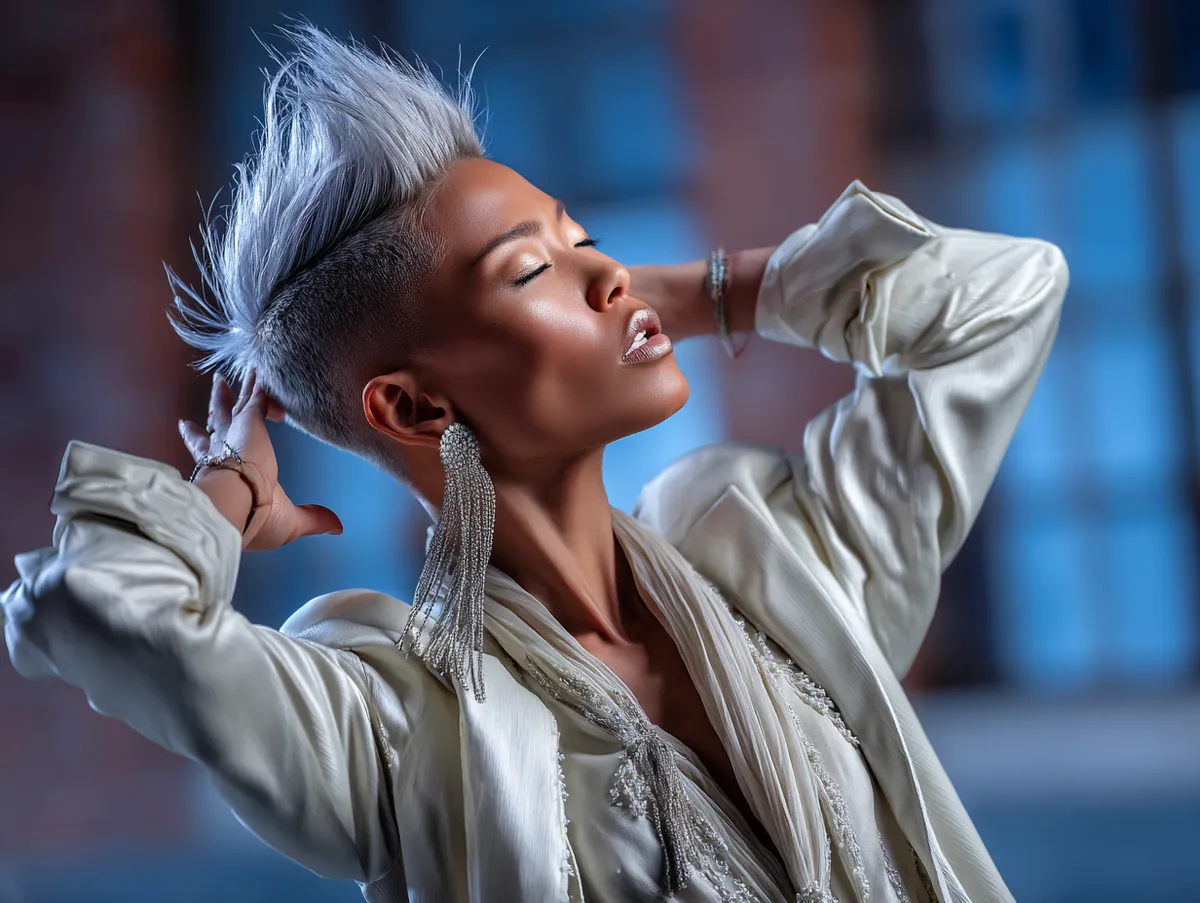
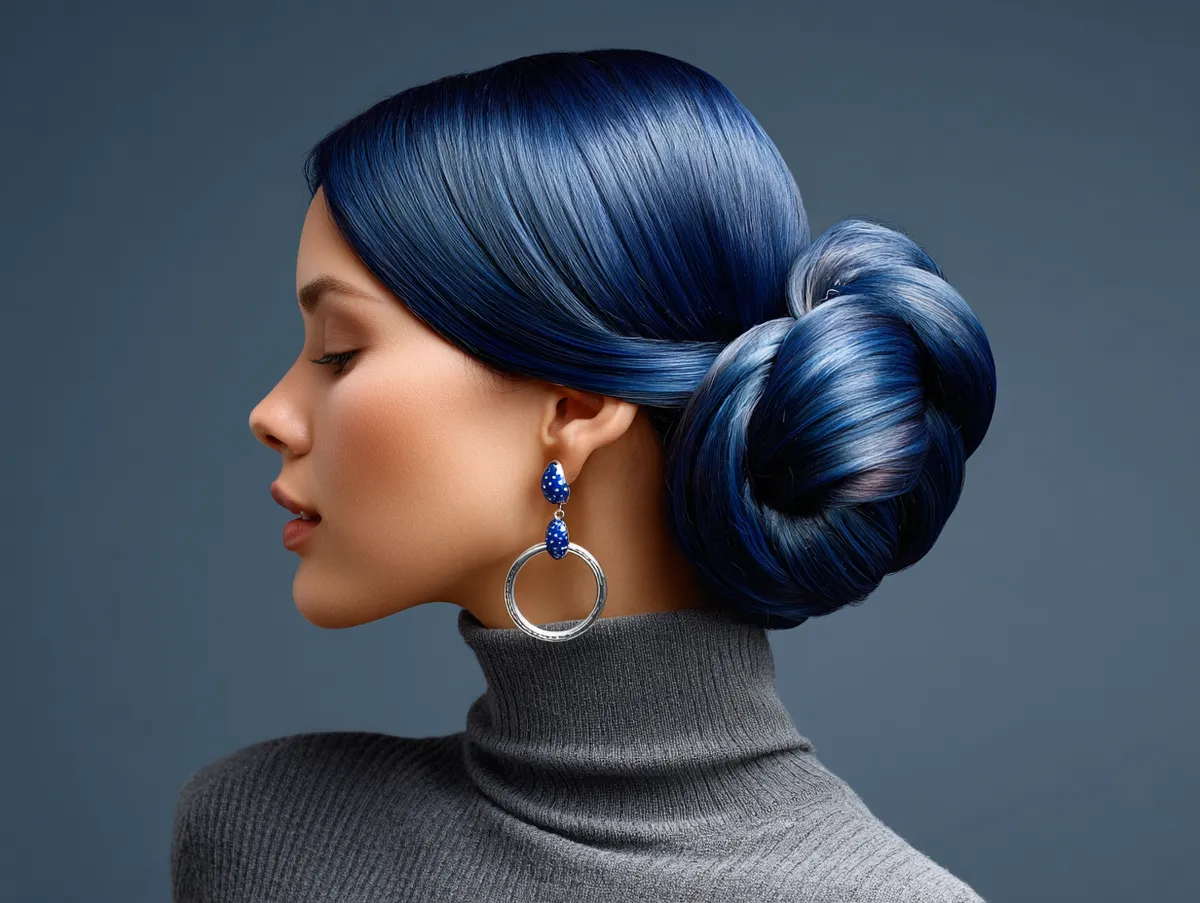
Fairy hairstyles are the single most effective way to build a whimsical, story-driven wedding look — whether you’re the bride, a bridesmaid, or a guest who wants something beyond the ordinary. These styles use braids, floral crowns, glitter-threaded strands, and nature-inspired accents to create an otherworldly effect that holds its own from ceremony to reception. The short answer: yes, they work for almost every hair length and type, and they photograph strikingly well under both natural and artificial light.
The magic isn’t in a single element — it’s in how pearls, petals, golden leaves, or butterfly clips interact with movement and light throughout the day. A fairy-inspired bridal hairstyle typically takes 60–90 minutes to set and can last 8–10 hours with proper product use. That’s a meaningful investment of time with a highly visible payoff for every photo taken at golden hour. For brides comparing styles, the five variations covered here span updos, half-up crowns, and fully down looks — so there’s a workable option regardless of hair length.
According to 2026 wedding hair trend reports, accessories like pearl clips, floral pins, and delicate combs are among the top embellishment choices for brides this season — which maps directly to the fairy hairstyle aesthetic. Brides who lean into this genre typically pair it with sheer or chiffon gowns, nature-inspired venues, and minimal, dewy makeup to let the hair remain the centrepiece. The French roll hairstyle for bridesmaids is another option worth considering if the wedding party needs a coordinated alternative that’s more structured than a full fairy look.
- Fairy hairstyles work best on medium to long hair; extensions can bridge shorter lengths
- Pearl vine braids and floral crowns remain the most-requested fairy wedding styles in 2026
- Set time runs 60–90 minutes; hold time is 8–10 hours with the right products
- Lavender and pastel-toned hair creates the strongest visual impact in garden settings
- Golden leaf accents photograph best during golden hour and candlelit receptions
- Butterfly clips and ethereal waves suit off-shoulder gowns and outdoor ceremonies most naturally
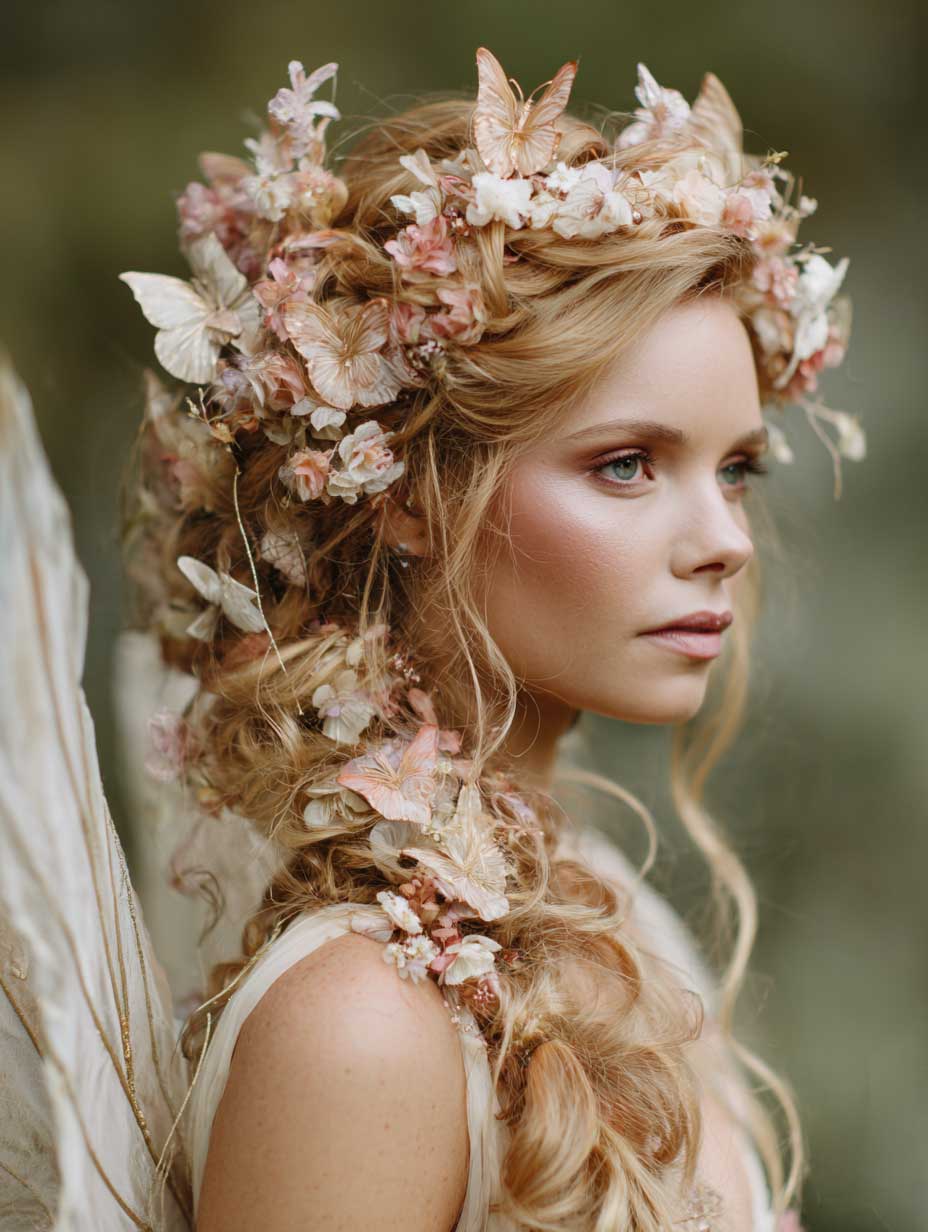
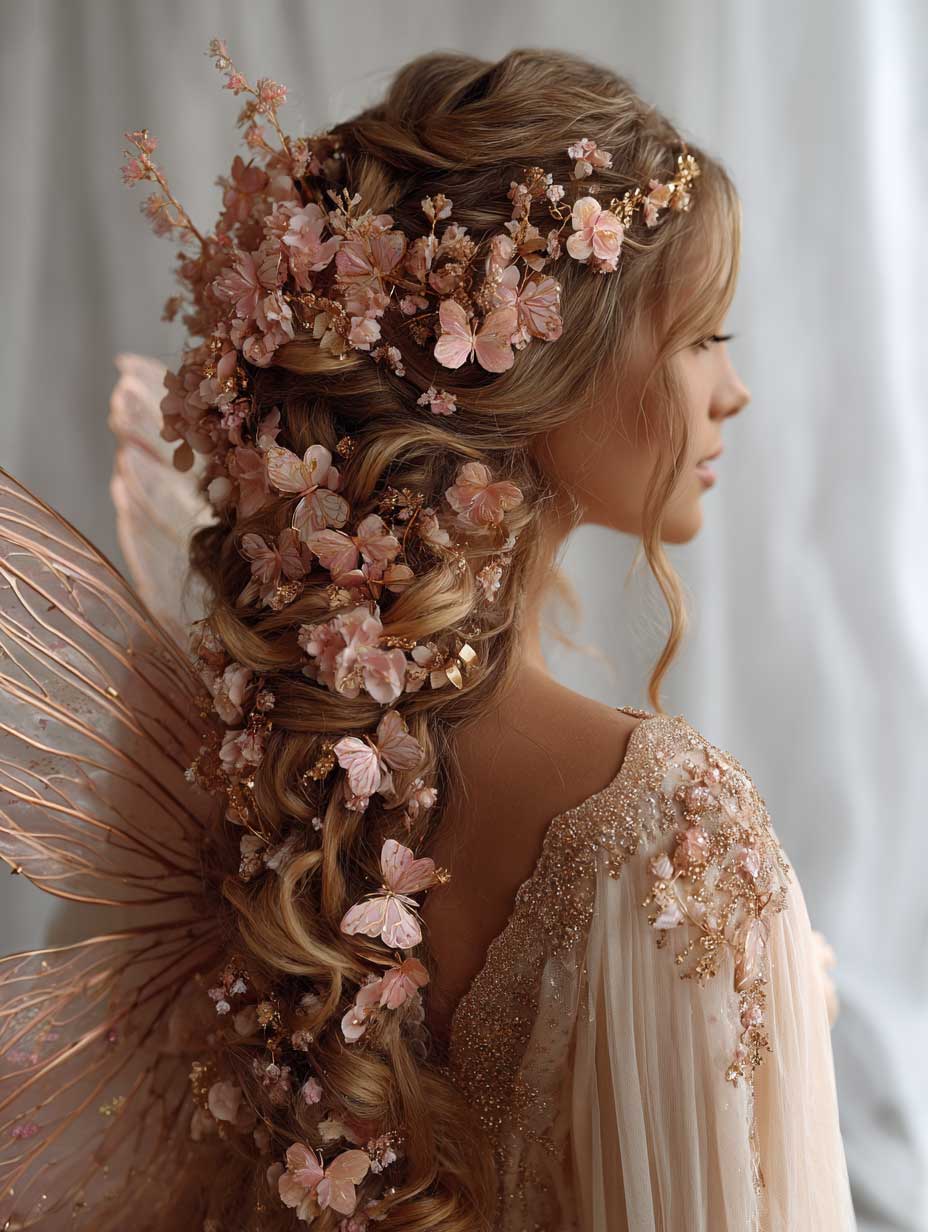
Pearl vine braids that anchor the fairy hairstyle look
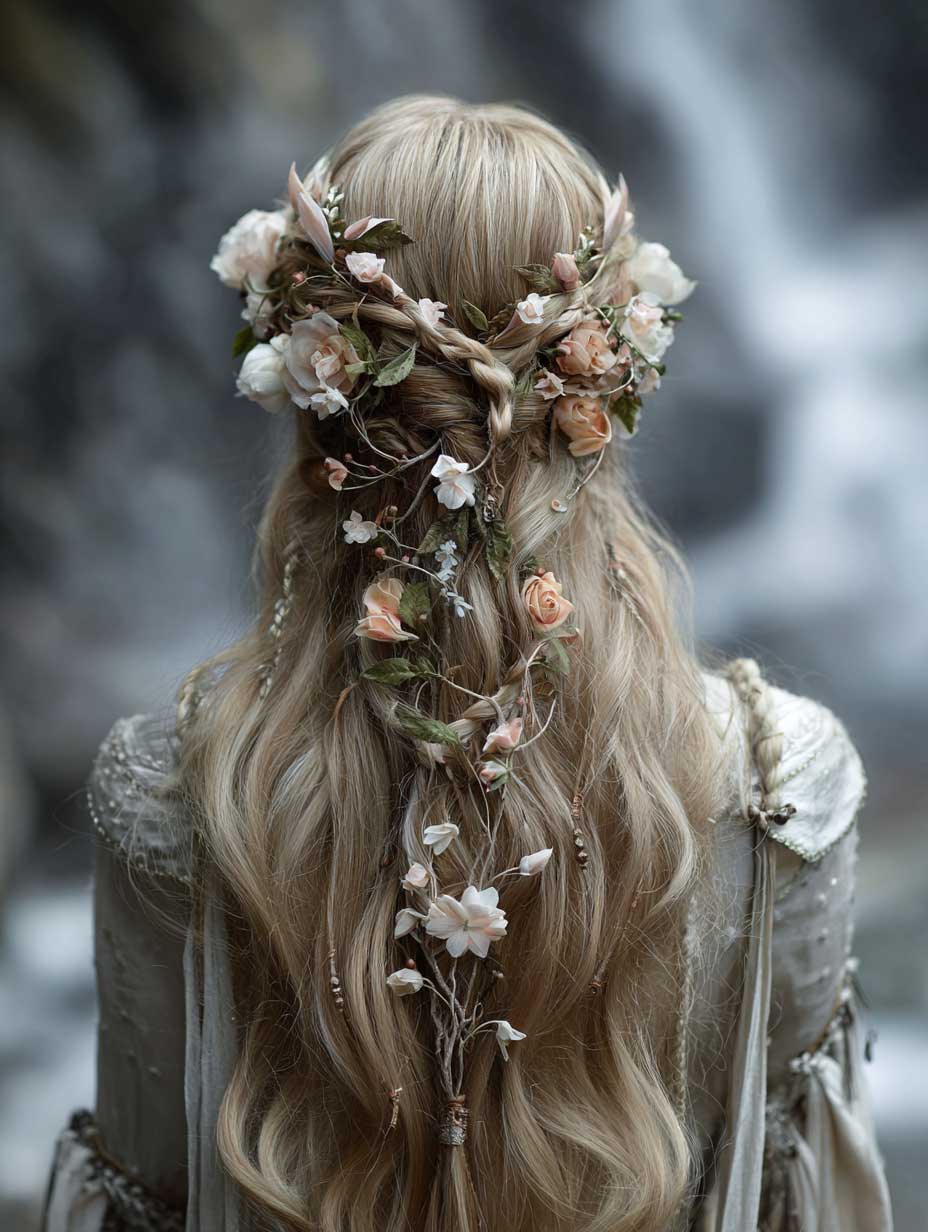
Pearl vines woven through soft braids are the defining combination in classic fairy hairstyles for weddings — and for good reason. The style balances two competing forces: the structure of a braid and the visual softness of scattered pearls. Think of it like a suspension bridge — the braid provides the architecture while the pearls distribute a subtle light at every tension point. The result reads as both deliberate and effortless, which is precisely the goal for bridal hair.
Do not make the mistake of threading pearls too densely. When each centimetre of braid carries a pearl, the look shifts from enchanted to costume, and it loses the naturalistic quality that makes this style work outdoors. A loose fishtail braid over one shoulder with pearls placed every 3–5 centimetres hits the right balance. Crown braids that circle the head entirely work beautifully for garden ceremonies where the bride is viewed from multiple angles simultaneously.
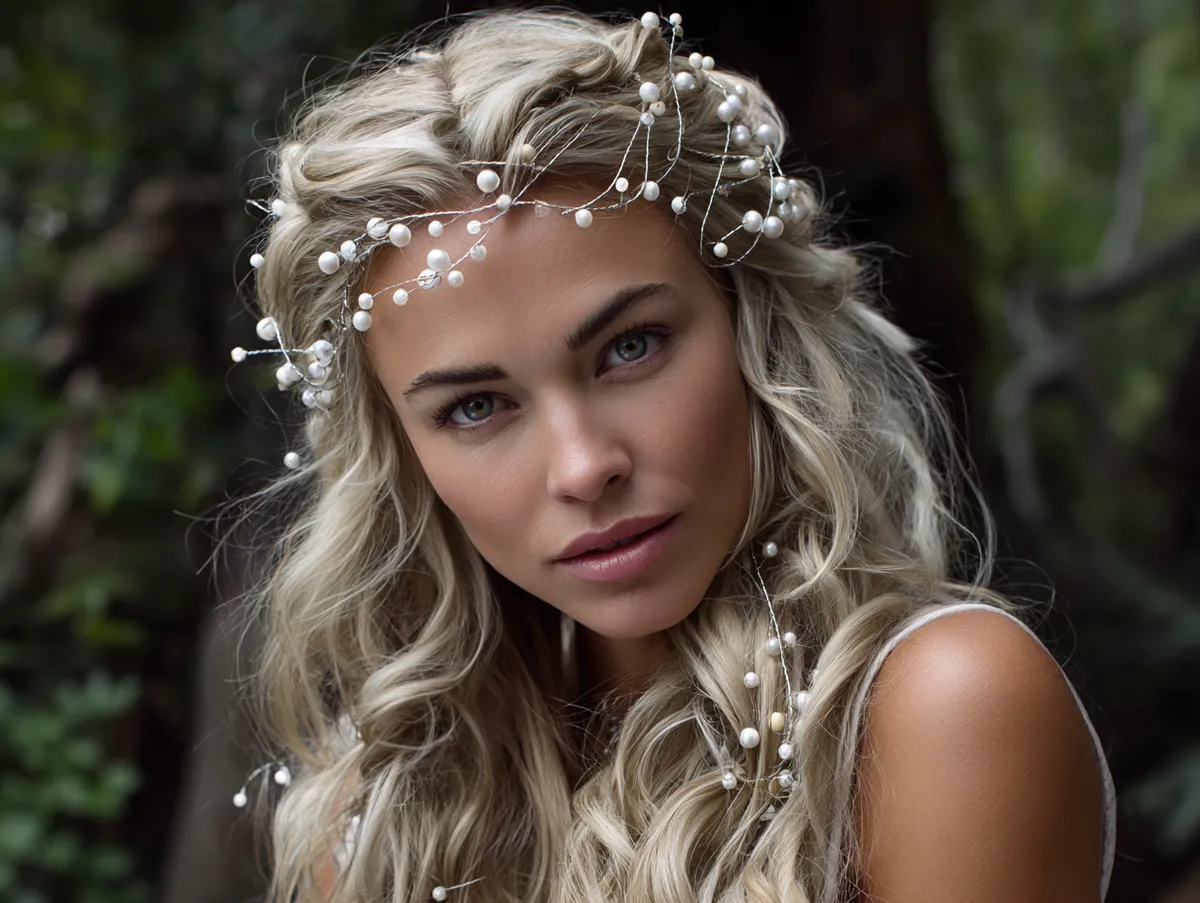


This fairy hairstyle flatters most face shapes because the braid’s direction can be customised. A side-swept fishtail elongates a rounder face. A centred crown braid softens a longer or more angular face. Bridesmaids wearing simpler versions — single braids with three or four pearls — create visual cohesion without replicating the bride’s complete look. Hair types from fine to thick all accommodate this style; thicker hair simply holds the braid with more natural volume.
Does this style hold through a full ceremony and reception? With a light-hold finishing spray over the braid (not saturating it), the structure stays intact for eight or more hours. Framing tendrils, loosened intentionally before setting, frame the face throughout without requiring mid-day touch-ups. Stylists typically charge £80–£140 (or an equivalent in local currency) for this level of finish, reflecting the time needed to thread pearl vines without disturbing the braid pattern. Pair this hair with a blush-toned lip, dewy skin, and a sheer veil for the full effect.
The pearl-and-braid combination is also one of the most transferable looks in this category: it translates equally well from a morning garden ceremony to an evening reception under string lights. The pearls catch warm incandescent light just as effectively as sunlight, which is unusual for hair accessories and makes this style a low-risk, high-impact choice across different venue types.
Lavender buns and floating petals as a fairy hairstyle statement
Lavender buns with floating petals represent the boldest colour direction within fairy hairstyles for weddings — and they perform best in natural, open-air settings where the light is diffused rather than direct. The lavender tone carries its own narrative of serenity, making it a fitting choice for brides who want the ceremony’s emotional register to begin the moment they walk in. Styled into twin fairy buns or a single high chignon, this colour draws attention upward and keeps focus on the face.
Floating petals — whether silk or fresh — are placed rather than attached rigidly, and that distinction matters. When clipped loosely to strands near the bun, they shift with each step, creating the impression of being mid-flight. Rigid placement looks staged in photographs; slight movement reads as genuinely magical. For garden or moonlit outdoor ceremonies, this motion under changing light is the whole point of the look.


Colour-matched petals in white and blush remain the most neutral option for brides uncertain about going too adventurous — they complement the lavender rather than competing with it. Deep violet petals or petals in rust and gold push the look into bolder fantasy territory and work well for autumn ceremonies. Silk petals from specialist bridal suppliers typically cost £15–£35 per set, while fresh flowers need to be confirmed with the florist 48 hours before the event to ensure availability and freshness.
This fairy hairstyle pairs most naturally with flowing chiffon or tulle gowns — structured silhouettes in satin or crepe create a tonal mismatch with the softness of the lavender and petals. Iridescent jewellery, sheer capes, and shimmer-finished accessories extend the aesthetic without overpowering it. The makeup direction is equally important: rosy blush, petal-pink lips, and a hint of violet liner echo the colour palette without duplicating it.
Stylists who work on themed weddings frequently cite this combination as one of the most technically flexible in the fairy genre, because the colour and petal count can be adjusted to suit the bride’s comfort level. A single colour lavender bun with three or four white petals is as approachable as a full floral installation. The ability to dial the drama up or down makes this a strong option even for brides who aren’t sure how committed they are to the fantasy aesthetic.
Golden leaf accents that bring fairy hairstyles into regal territory
Golden leaf details elevate fairy hairstyles from whimsical to genuinely regal — the difference between a woodland sprite and a forest queen, to use a visual shorthand most people immediately understand. Gold has historically signified worth and authority across virtually every culture, and in a wedding context it carries that same weight without feeling ostentatious when the leaves are kept small and well-distributed. This style works best for autumn and late-summer ceremonies where the surrounding colour palette already skews warm.
Twisted buns and coiled chignons provide the best base for this style because they give the gold elements a surface to anchor against. Metallic combs shaped like ivy cost anywhere from £20 to £80 depending on the quality of the finish. Real leaves dipped in gold foil by a florist or prop artist run higher — expect £40–£100 for a custom set — but they photograph differently from metal, catching light in a more organic, diffused way rather than with sharp metallic glints.


Loose tendrils curled away from the face are non-negotiable for this style. Without them, the gold elements feel geometric and rigid — more armour than fairytale. With them, the face is framed by strands that catch light in a different quality than the gold, creating contrast that reads well in photographs. A shimmering hair oil applied to the tendrils before the final set adds another dimension of light play without looking greasy on camera.
What gowns complement this look? Earth tones and jewel tones both work — deep burgundy, hunter green, and forest brown sit well beside gold and natural hair colour. Off-white and ivory bridal gowns also pair naturally; the gold reads as warmth against the neutrality of the dress. Barefoot sandals with metallic detail, or low gold heels, close the loop on the look for outdoor ceremonies. For brides who want to explore bridal options by hair length, the graduated bob haircut for weddings offers a strong alternative with different structural possibilities for shorter hair.
Photographers consistently note that metallic leaf details interact with golden hour light in a way no other embellishment does — the leaves create a secondary glow ring around the updo that appears in long-exposure or wide-aperture shots. This style delivers a visible return in wedding photography, which is partly why it remains popular among brides investing heavily in documentation of the day.
Butterfly clips and fairy hairstyles built on ethereal waves
The butterfly clip revival isn’t nostalgia for its own sake — within fairy hairstyles for weddings, these clips serve a specific visual function that other accessories can’t replicate. Placed asymmetrically through soft waves, they create the impression that something living has settled in the bride’s hair and decided to stay. That suggestion of spontaneity, even when entirely staged, is what separates this style from more structured bridal options. The waves themselves need to be loose and slightly undone — too uniform and the effect collapses into something that looks polished but not magical.
Heatless wave methods — braiding damp hair overnight, using foam rollers, or sleeping in a loose bun — produce a texture that works better for this style than iron-curled waves. The natural bend has slight irregularities that interact with the clips more convincingly. For brides with fine hair, a volumising mousse applied before the heatless set adds necessary body without stiffness. Do not use rigid-hold products on this style: the waves need to move.


Clip placement follows a logic that’s worth understanding. Three to five clips work better than eight or ten: the goal is scattered, not dense. Asymmetric placement — two on the left, one on the right, or clustered more heavily at the crown than the ends — reads as more natural than evenly distributed clips at regular intervals. Pastel tones (blush, mint, lilac) suit daytime outdoor ceremonies; iridescent or crystal-finished clips shift the look toward evening events under warmer lighting.
This fairy hairstyle pairs most naturally with off-shoulder gowns, sheer-panelled dresses, and any silhouette that extends the visual line of the bride’s neck and shoulders. Crystal necklaces and floating veils secured mid-shaft add depth without creating competition. The overall effect should feel like one cohesive visual field rather than a collection of separate accessories.
From a photography standpoint, this style performs best in motion shots. Video walkthroughs of the ceremony and any outdoor portraits taken in a breeze capture the waves and clips at their most effective. Static, posed portraits can sometimes flatten the effect. Communicate this to the photographer in advance so the shooting approach accounts for it.
- Don’t overload the hair with multiple embellishment types at once — pearls, petals, clips, and leaves all together create visual chaos rather than magic
- Don’t use rigid-hold products on styles that depend on movement — it kills the effect
- Don’t skip the trial — fairy-style accents behave differently on different hair textures; a trial 4–6 weeks before the wedding is essential
- Don’t assume outdoor light is always sufficient — overcast days flatten gold and iridescent details; discuss backup lighting with your photographer
Tiny flowers and sparkling strands as the most wearable fairy hairstyle
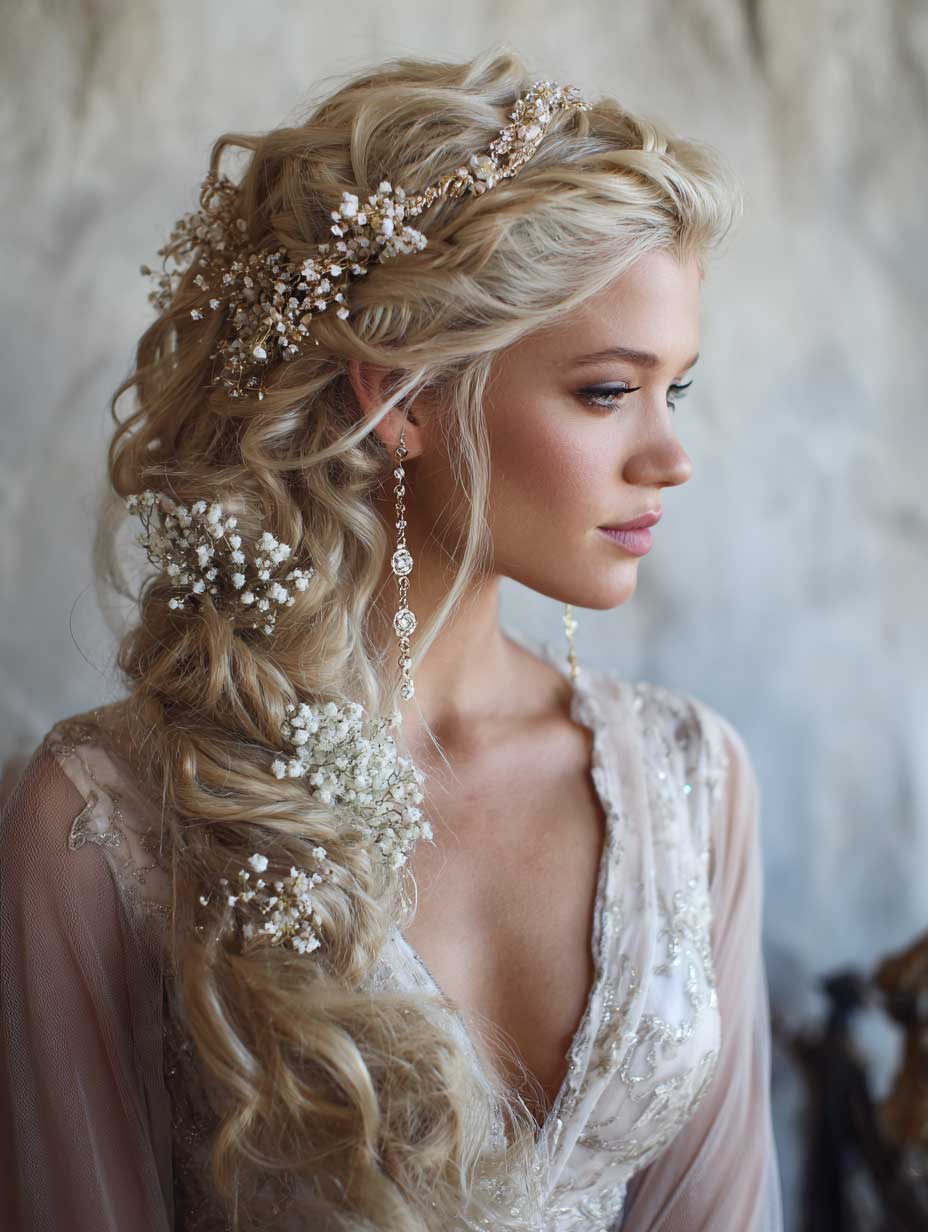
Fairy hairstyles crowned with tiny flowers and sparkling strands occupy the most accessible position in this genre — they’re the version most naturally accepted by guests and family who might find full-fantasy looks surprising, while still delivering a genuine sense of wonder. The scale is key: miniature blooms rather than large floral pieces keep the look legible as bridal rather than theatrical. Baby’s breath, micro roses, and wild daisies all work because they’re small enough to sit within the hair without dominating it.
The structure beneath can be anything — loose curls worn fully down, a half-up crown, or a low loose chignon. What shifts the look from ordinary to fairy is the distribution of the flowers and sparkling strands rather than any particular base style. Flowers placed in a scattered pattern through the mid-shaft and crown create a more organic result than lining them along a single braid. Sparkling strands — glitter-threaded hair extensions or metallic tinsel strands — should be distributed sparsely, three to five strands per section, so the twinkle reads as light rather than decoration.


Fresh flowers in hair need a plan. Cut too early, blooms wilt within two to three hours, which is a problem if the ceremony runs long or the reception continues into the evening. Floristry-grade stem sealer, or simply keeping the flowers refrigerated until 30 minutes before styling, extends freshness by two to four hours. Silk flowers eliminate this entirely and, for photography, are nearly indistinguishable from fresh when the selection is high quality. Budget for £25–£60 for a quality selection of miniature silk blooms from specialist bridal suppliers.
This fairy hairstyle is the category’s most versatile in terms of venue. It works at garden ceremonies, forest settings, coastal locations, and even formal indoor receptions where other fairy styles might feel out of place. The sparkling strands reflect candlelight beautifully, which makes the look as effective at an evening reception as it is during an outdoor ceremony. According to expert hair trend coverage for 2026, pearl and floral pin accessories are among the most-requested embellishments for the bridal category — this style sits squarely in that broader wave of preference.
Nature-inspired earrings — small leaf drops, tiny gemstone studs, or delicate floral hoops — extend the visual language of the hairstyle without duplication. Sheer gowns let the hair’s texture and movement breathe without competition. The total mood is gentle radiance, a look that photographs well across the arc of a full wedding day from morning prep to final reception song.
Final Take
Fairy wedding hairstyles work because they make the environment part of the look.
Pearl braids are the safest starting point for most brides — versatile across hair types, venues, and budgets.
Golden leaf and lavender petal styles reward brides willing to commit fully to a themed aesthetic and a photographer who can capture movement.
The flower-and-sparkling-strand combination offers the widest venue range and the longest hold time — strong practical case alongside the visual one.
For a comprehensive overview of how different bridal hair styles work across venues, roles, and formality levels, the 2026 bridal hair trends guide from Easy Weddings is a reliable external reference covering everything from sleek updos to textured boho waves.