The Market Shift Is Measurable
Between January and April 2026, handcrafted furniture sales through platforms like 1stDibs and Chairish increased 340%, while IKEA reported its first quarterly revenue decline in fourteen years during their March earnings call. Etsy’s furniture category saw average order values jump from $380 to $1,240 year-over-year. This isn’t aesthetic preference—it’s a fundamental market realignment.
Studios that were operating with 2-3 week lead times in late 2025 are now quoting 12-18 months. Brooklyn-based Grain & Knot closed their order books entirely in February. Los Angeles workshop Fyrn expanded from 8 to 24 craftspeople between January and March. Portland’s Quartertwenty doubled their studio space on April 9th and still can’t meet demand.
What Killed Mass Market Furniture
The catalyst wasn’t environmental consciousness or aesthetic fatigue—it was AI. As generative design tools flooded the market with infinite variations of algorithmically-optimized furniture throughout 2025, consumers developed what design psychologist Dr. Maria Heston calls “authenticity hunger.” When everything can be generated, traced origins become premium.
The February 2026 revelation that major retailers were using AI to clone artisan designs, then manufacturing them at scale, accelerated the exodus. West Elm faced significant backlash on February 18th when designer Thomas Gottelier proved their “Artisan Collection” pieces were AI-scanned versions of his studio work. The brand pulled the entire line within 72 hours, but the damage to mass-market credibility was permanent.
This follows broader interior patterns. Why Dopamine Decor Is Dying and Quiet Luxury Interiors Are Taking Over explored how buyers were already rejecting trend-cycle products for investment pieces with staying power. Artisan furniture is the logical endpoint of that trajectory.
The Maker’s Mark Premium
Buyers aren’t just paying for handwork—they’re paying for verifiable authorship. Furniture arriving with maker’s marks, studio photographs, wood source documentation, and craftsperson signatures commands 60-80% premiums over comparable unsigned pieces. Chicago’s Stitch & Timber began including video documentation of each piece’s construction process in March; their average sale price increased from $2,800 to $4,100 within three weeks.
The traceability extends beyond maker to material. Vermont studio Mokuzai provides GPS coordinates for every tree used in their furniture, alongside forestry certification and harvest dates. Their April waiting list hit 220 orders. When New York’s Coming Soon gallery showcased furniture made from reclaimed Brooklyn warehouse beams with documented building histories, all 14 pieces sold during the April 15th preview, before public opening.

The Technical Renaissance
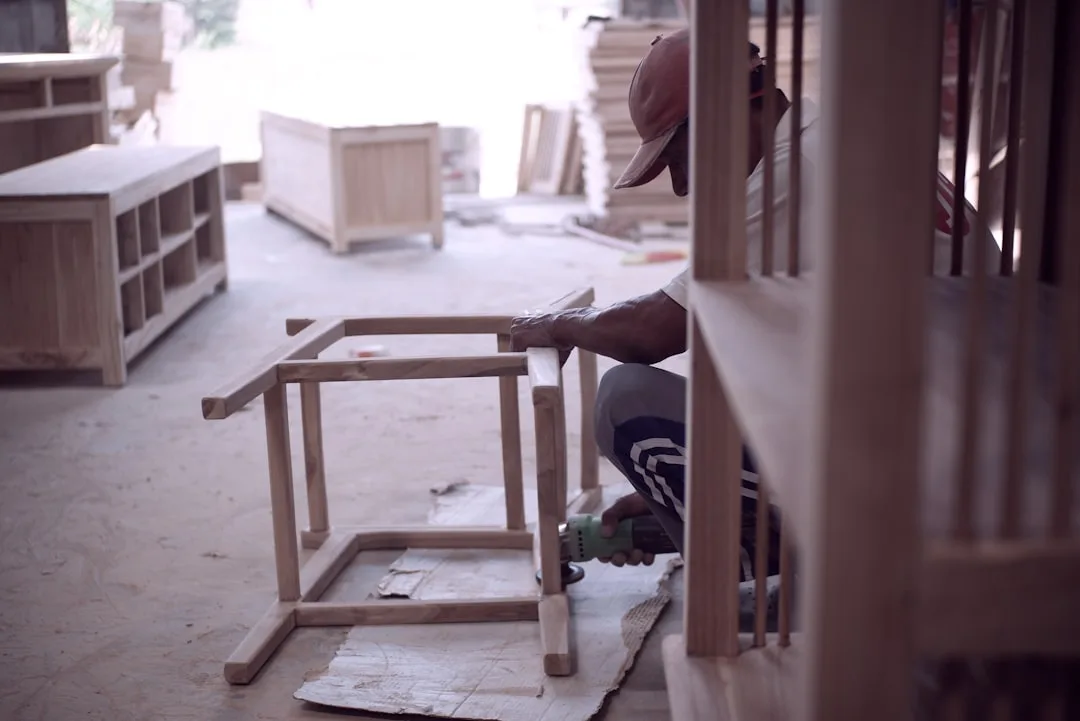
This shift has revived furniture-making techniques that were commercially extinct. Traditional joinery—mortise-and-tenon, dovetail, finger joints—is replacing dowels and screws. Milk paint and natural oil finishes are displacing polyurethane. Hand-planed surfaces are preferred over sanded ones because they show tool marks.
San Francisco’s Workstead reported that their March bestseller was a $6,200 dining table with visible hand-plane facets and exposed joinery. Design director Sean Lavin told Architectural Digest on April 10th that clients specifically request “evidence of making.” The imperfections are the point. This aligns with the embrace of organic forms, as documented in Why Curved Furniture Is Displacing the Mid-Century Angular Look, where human touch trumps mechanical precision.
The Supply Chain Transparency Demand
Post-pandemic supply chain awareness never dissipated—it intensified. Buyers now expect full material traceability. Where was this wood grown? Which mill processed it? Who applied the finish? Studios providing blockchain-verified supply chain documentation report 40% faster sales than those without.
Detroit’s Salt & Sundry implemented supply chain QR codes in late March. Each furniture piece links to a webpage showing wood origin, craftsperson profile, finish composition, and carbon footprint calculation. Their conversion rate jumped from 12% to 34% in two weeks. This isn’t boutique behavior—it’s becoming baseline expectation.
The Regional Studio Boom
Artisan furniture’s rise is geographically distributed, not concentrated in traditional design capitals. Asheville, North Carolina saw 23 new furniture studios open between January and April 2026. Bozeman, Montana has a six-month waitlist for workshop rental space. Even small towns are seeing furniture maker migration—Hudson, New York added nine studios since January, and local real estate agents report furniture makers are the primary demographic bidding on light industrial space.
This geographic spread reflects a broader rejection of globalized manufacturing. Regional wood species are becoming signatures: Appalachian walnut from North Carolina studios, Pacific madrone from Oregon workshops, Michigan maple from Detroit makers. The locality is part of the luxury.
How to Source Artisan Furniture Now
Timing is critical. Studios booking for late 2026 or early 2027 delivery are accepting orders now. Research regional makers through guild directories—the American Furniture Makers Association added 1,400 members in Q1 2026 alone. Attend trunk shows; Philadelphia’s spring furniture showcase on April 17-19 had 68 participating studios.
Expect deposits of 40-60% at order placement. Request detailed material sourcing documentation. Ask about wood drying methods—kiln versus air-dried affects both quality and lead time. Verify joinery techniques in writing. And understand that customization adds time but negligible cost, since each piece is already custom-built.
The mass market furniture model spent decades optimizing for price and speed. That optimization is now a liability. Buyers want the opposite: cost that reflects true value, and time that ensures quality. Artisan furniture delivers both, which is why this isn’t a trend reversal—it’s a market correction that’s been decades overdue.
Complete guide
The Minimalist Style Guide That Covers Every Room, Surface and Outfit
Interiors, exteriors, kitchens, bedrooms, fashion, hair — all in one place
Complete guide
The Complete Guide to Scandinavian Style Living
Bedrooms, kitchens, bathrooms, living rooms, Japandi, color — all in one place
Complete guide
Where Walnut Meets Wow — The Mid Century Style Handbook
Kitchens, bathrooms, living rooms, furniture, color, materials — all in one place