The Death of the Right Angle
Walk into any major furniture showroom in April 2026—from Hem’s Stockholm flagship to Design Within Reach’s SoHo location—and the shift is unmistakable. The crisp geometry that characterized mid-century modern furniture for seven decades is being systematically replaced by curves. Not accent curves or decorative roundness, but structural, defining arcs that reshape entire pieces.
This isn’t a gradual evolution. Industry data from the High Point Market furniture fair in April 2026 shows curved seating options increased 340% compared to 2024, while traditional angular sofas declined by 28% in new product launches. Pierre Frey introduced seventeen new curved upholstery fabrics specifically engineered for rounded furniture construction at Paris Deco Off in January 2026. The infrastructure is changing because the demand already shifted.
What’s Driving the Curve
The catalyst isn’t mysterious—it’s physiological and spatial. After years of compact urban living intensified by remote work environments, people are rejecting furniture that feels institutional. Sarah Sherman Samuel, the LA-based designer whose curved sectional designs for Lulu & Georgia sold out in February 2026 within 72 hours, puts it plainly: “Angular furniture creates visual tension. Every corner is a decision point for your eye. Curves let you rest.”
The psychology is supported by recent neuroscience. A March 2026 study from the Environmental Psychology Institute in Copenhagen measured stress responses to different furniture shapes, finding that participants in rooms with predominantly curved furniture showed 19% lower cortisol levels than those surrounded by angular pieces. When Patricia Urquiola presented her Rounded Series for Cassina at Salone del Mobile in Milan this April, she cited this research directly, noting that “comfort is no longer about cushion depth—it’s about eliminating visual aggression.”
The Silhouettes That Matter
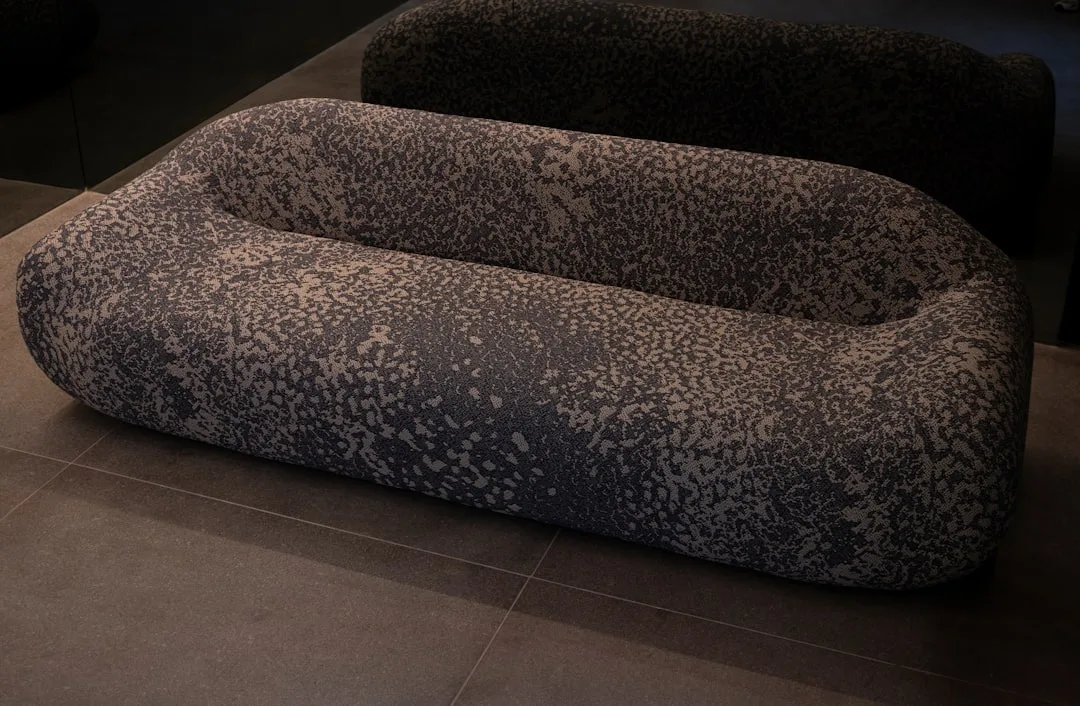
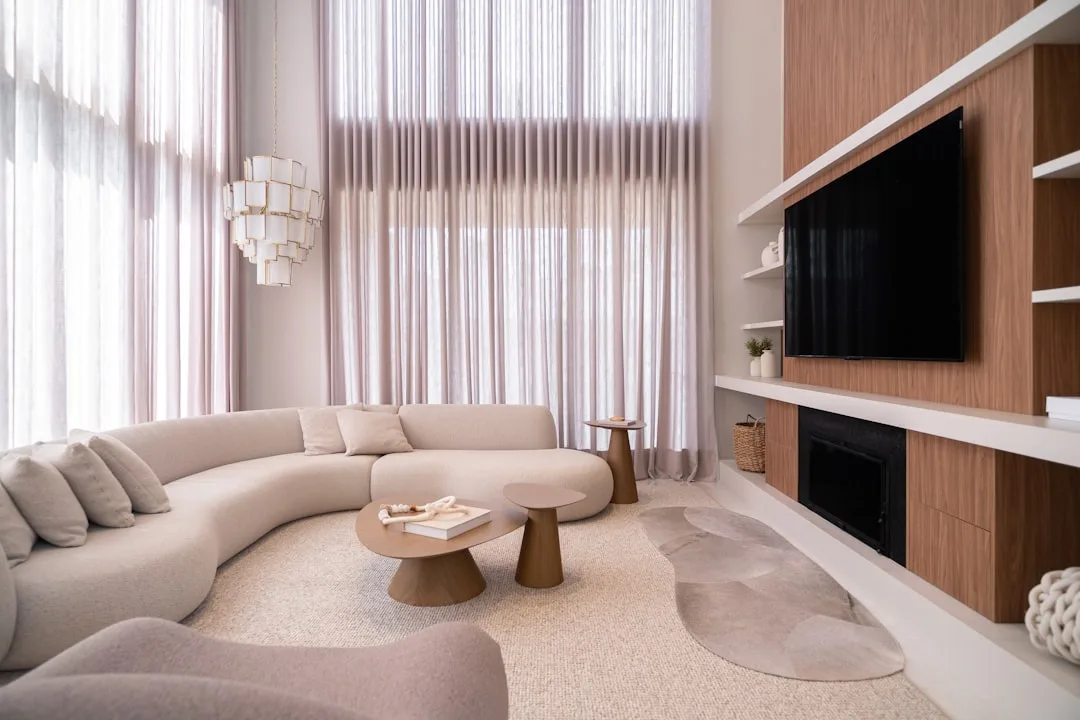
Three specific forms are dominating. The channel-tufted curved sofa, popularized by Restoration Hardware’s Cloud Collection in 2023 but now executed by everyone from Article to Burrow, has become the default living room anchor. West Elm reported in their April 2026 quarterly that curved sofas now represent 61% of their upholstery sales, up from 23% in 2024.
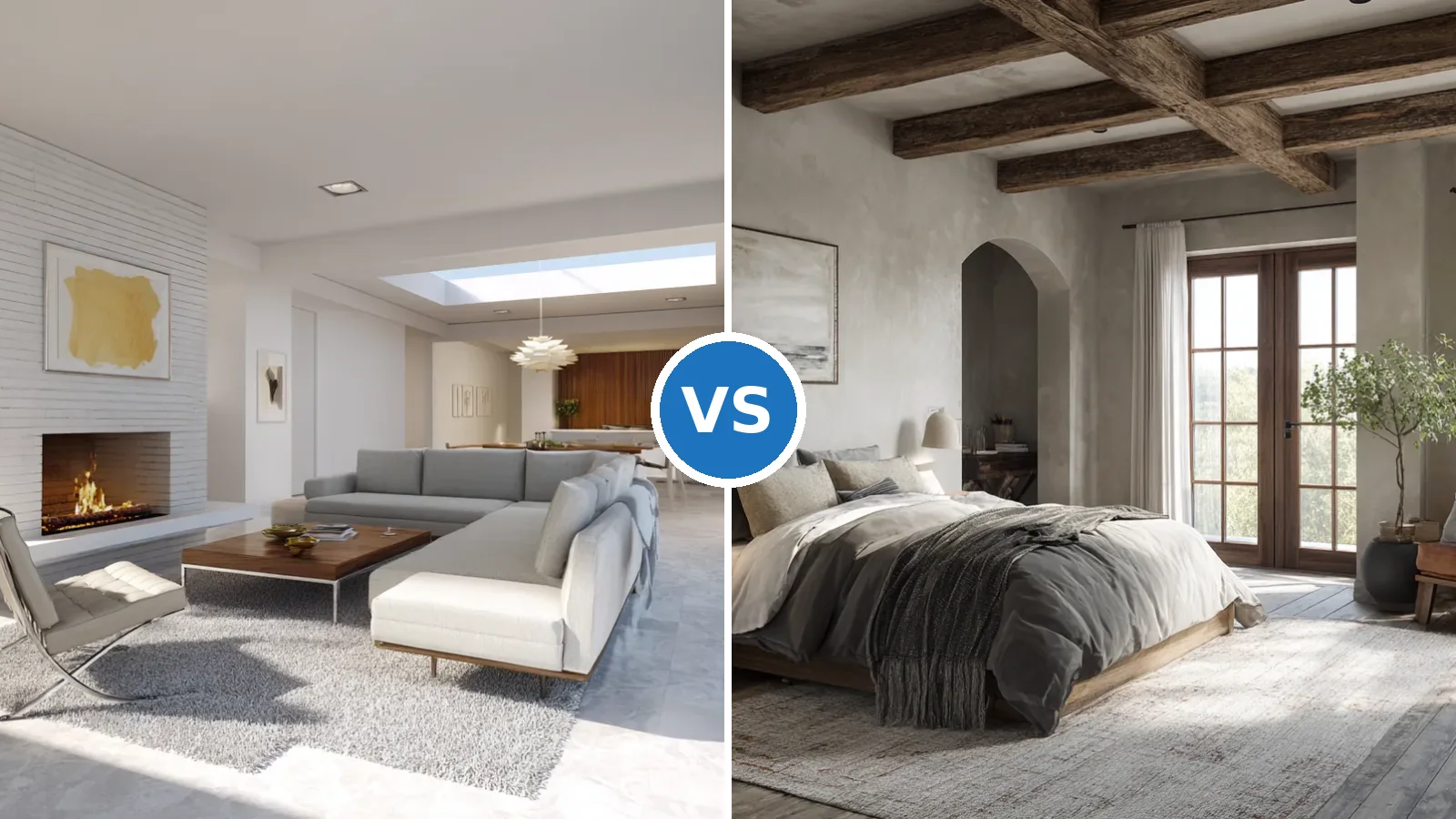
Kidney-shaped coffee tables—a direct revival of 1950s biomorphic design but executed in contemporary materials like terrazzo, solid surface, and book-matched marble—are the second pillar. When Modern Style Bedroom Trends You Need to See for Your Next Renovation examines sleeping spaces, the arched upholstered headboard appears as the bedroom equivalent: a single curved gesture that softens the entire room.
The third category is circular dining furniture. Not merely round tables—those never left—but pedestal designs with sculptural, curved bases that make the support structure as important as the top. Knoll’s reissue of Eero Saarinen’s Tulip Table saw a 290% sales increase in Q1 2026, while CB2’s Tondo collection, launched in February with seven different curved dining configurations, became their fastest-selling furniture line in company history.
Material Consequences
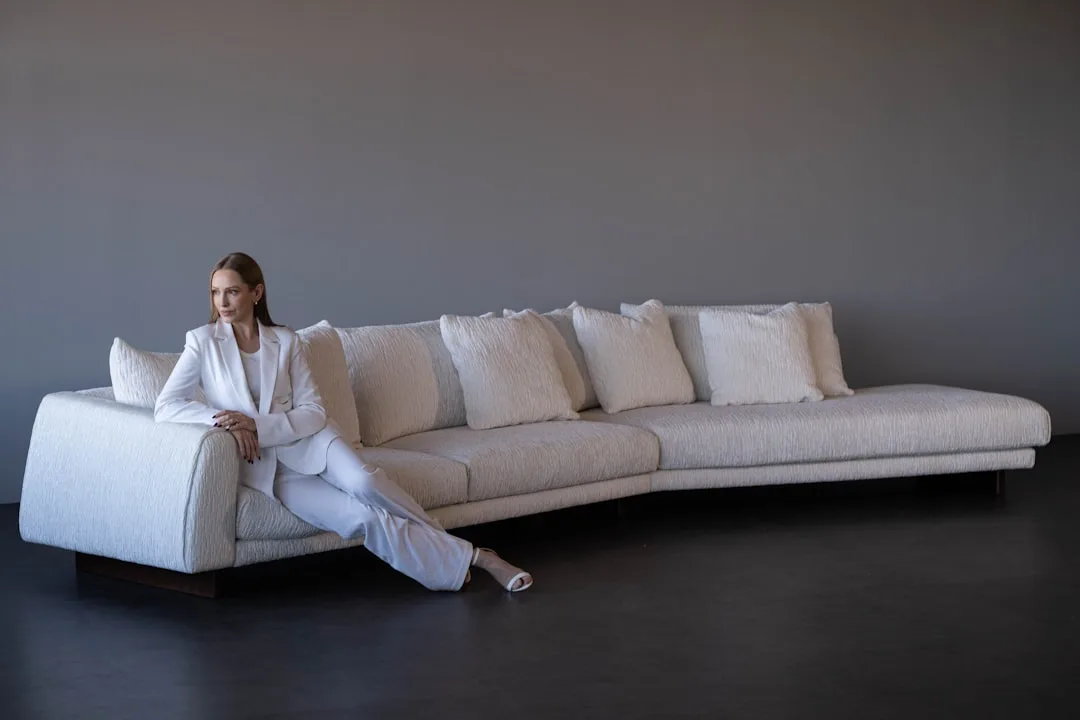
Curves demand different construction. You can’t simply round off corners of rectilinear designs—the entire structural logic changes. This is why molded plywood, which disappeared from high-design conversation around 2019, returned forcefully in 2026. Vitra’s reintroduction of multiple Charles and Ray Eames molded plywood pieces in March wasn’t nostalgia; it was response to demand for furniture that’s inherently curved in its DNA.
Upholstery construction has also transformed. Traditional bench-seat cushioning doesn’t work on curved frames. Manufacturers are adopting continuous-curve foam cutting and segmented spring systems originally developed for automotive seating. Italian manufacturer Natuzzi opened a facility in North Carolina in February 2026 specifically to handle curved upholstery production for the US market, projecting they’ll produce 40,000 curved pieces before year-end.
Bouclé and similar textured fabrics that were niche in 2023 became mainstream specifically because they handle curves better than smooth weaves. The texture disguises the complexity of wrapping fabric around compound curves. Kravet reported in March 2026 that bouclé and loop-pile fabrics now constitute 44% of their contract upholstery orders.
Where This Doesn’t Work
Small spaces are the notable exception. A curved sofa in a 200-square-foot studio creates more problems than it solves—you lose wall space and gain dead zones. This trend is overwhelmingly driven by homeowners with 800+ square feet, where curves can breathe and their spatial generosity becomes an asset rather than a liability.
Similarly, How Modern Country Bathroom Trends Are Elevating Traditional Designs shows that highly architectural spaces—particularly those with strong linear elements like exposed beams or industrial features—often resist curved furniture. The contrast can work brilliantly when intentional, but it requires more sophisticated spatial planning than most people attempt.
The Market Reality
Price has democratized faster than expected. While early curved pieces commanded 40-60% premiums over angular equivalents in 2024, competition has compressed margins. Amazon’s Rivet brand introduced a curved modular sofa in March 2026 at $1,299—expensive for Amazon, but accessible compared to the $4,000-8,000 designer versions dominating 2024.
The resale market tells the complementary story. 1stDibs reported in April 2026 that mid-century angular case goods—the credenzas, media consoles, and storage pieces that were selling at premiums through 2024—have seen prices drop an average of 31% since January 2026. Not a collapse, but a clear revaluation as taste shifts.
How to Apply This
Start with one statement curved piece rather than attempting full-room transformation. A curved sofa or arched floor mirror creates enough visual impact to shift a room’s character without requiring you to replace everything. Layer in smaller curved elements—a round side table, oval tray, circular mirror—to reinforce the vocabulary without overwhelming your budget.
Consider the negative space curves create. Unlike angular furniture that sits tight to walls, curved pieces need breathing room. Plan for 8-12 inches of clearance around curved sofas to let the silhouette register properly. This spatial generosity is part of the appeal, but it requires accommodation.
Mixing curves with angles works when you establish hierarchy. If your sofa is curved, let it dominate—support it with simpler angular side tables and lighting. Trying to balance curved and angular pieces equally creates visual confusion rather than interesting tension.
The curved furniture trend isn’t about softness for its own sake—it’s about reasserting comfort and visual calm in spaces that have felt increasingly hard-edged and transactional. Whether this represents a genuine paradigm shift or a pendulum swing that will reverse in three years remains to be seen. But in April 2026, the curve is winning decisively.
Related: Mass Timber Construction: Why Mid-Rise Buildings Are Ditching Concrete for Engineered Wood
Related: Why Dopamine Decor Is Dying and Quiet Luxury Interiors Are Taking Over